





















Cybersecurity has moved from a back-office IT concern to a frontline issue affecting public safety, economic stability and national defense. As ransomware attacks disrupt hospitals, cybercriminals target utilities, and foreign adversaries probe government networks, Oklahoma is investing heavily in education and partnerships to prepare a workforce capable of defending critical systems.
The demand for cybersecurity professionals is growing because nearly every organization depends on interconnected digital infrastructure. Power, water, transportation, banking and healthcare systems all rely on networks that allow efficiency – but also expose vulnerabilities. At the same time, attacks are becoming more sophisticated and more costly, forcing organizations of all sizes to strengthen their defenses.
“Cybersecurity is really about protecting trust,” says Christopher Freeze, Ph.D., assistant professor of cybersecurity at the University of Oklahoma’s Polytechnic Institute. Freeze emphasizes that cybersecurity is no longer simply a technical issue, but a business and national security concern. Federal requirements tied to defense contracting and infrastructure protection have raised expectations for preparedness, driving demand for professionals who understand complex systems, people and risk management.
Oklahoma’s response is shaped by its strategic importance. The state is home to critical energy infrastructure, major transportation corridors, tribal governments and several military installations, including Tinker Air Force Base and Fort Sill. Those assets make Oklahoma both valuable and vulnerable. In response, collaboration among universities, government agencies, military partners and private industries has increased, creating pathways for talent development and information sharing.
Universities play a central role in that effort, too. Programs across the state emphasize applied learning through hands-on labs, simulated environments and real-world scenarios. Students train on virtual networks, analyze cyber incidents and practice decision-making under pressure. Cyber ranges allow them to experience realistic attack scenarios while remaining in controlled settings.
“Students should graduate ready to contribute in the workplace from day one,” Freeze says.
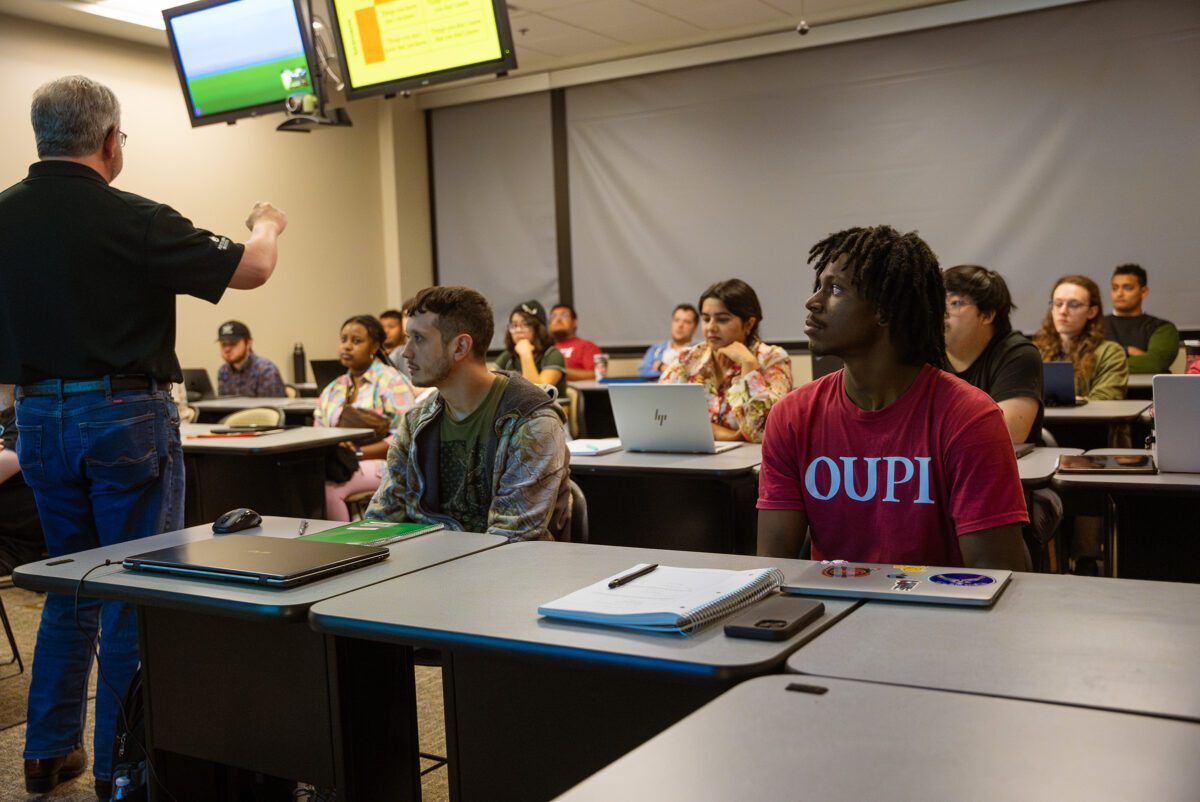
Cybersecurity education also extends beyond technical skills. Programs incorporate communication, leadership and policy training to prepare students to brief executives, justify security decisions and manage organizational risk. Certifications such as CompTIA Security+, penetration-testing credentials and leadership-focused certifications are embedded into coursework to align academic learning with industry expectations.
At the University of Tulsa, cybersecurity education is paired with research and statewide outreach. Faculty conduct research focused on protecting critical infrastructure, particularly in the energy sector, while also training students at the undergraduate and graduate levels.
“Cybersecurity is all about protecting the confidentiality, integrity and availability of information,” says Tyler Moore, Ph.D., Tandy Professor of Cyber Security and Information Assurance at TU. “Cybersecurity requires both technical skill – coding, system administration, network forensics – and organizational knowledge – economics, psychology and management.”
Partnerships with organizations such as Tinker Air Force Base, the FAA, Fort Sill and private technology firms further strengthen student preparation. Internships, research collaborations and workforce pipelines allow students to transition directly into roles supporting defense, aviation, energy and intelligence missions.
Graduates pursue careers as security analysts, risk managers, compliance specialists and leaders in government, industry and national security agencies. As cyber threats continue to evolve, Oklahoma’s growing cybersecurity ecosystem is positioning the state not only to respond, but to lead.