















At its core, barbecue is simple: meat, fire and time. But in our state, those elements merge to create something uniquely Oklahoman. With pecan wood lending a subtle signature and pit masters prioritizing technique over excess, the state’s BBQ scene is carving out its own identity. It’s a flavor profile as bold, unique and welcoming as Oklahoma itself.
OKIE BARBECUE
What is barbecue? From a scientific standpoint, it’s quite easy to understand: a cooking method centered on roasting or smoking food, particularly meat, over live fire, hardwood or hot coals, typically using low, slow and indirect heat. Pre-cooking, seasoning doesn’t need to be extensive.
“On a molecular level, salt’s the only seasoning small enough to work its way into the meat before cooking sets it. Other seasonings build the outside flavor and help create that iconic bark,” says Joshua Snead, manager of leadership development at Tulsa-born Rib Crib. “A rib a day keeps the blues away.”
Few of us think of the delicate flavors that go into barbecue when eating that particular dish – we simply enjoy it. Yet, increasingly, barbecue culture and the cooking of barbecue has become a source of pride for Oklahoma, almost as much as barbecue is for Texas, where mesquite trees are used to fuel cooking fires and barbecue sauces bordering on the gourmet are almost as important as the cuts of meat themselves.
At Albert G’s Barbecue, another establishment with roots in Tulsa, “Tulsa Style Ribs” are patterned after St. Louis Style Ribs, which are higher in fat content, and have a longer cooking time than spare ribs.
“The twist is, we’re in Tulsa, so why call them St. Louis Style?” asks owner Chuck Gawey. “We season our brisket, pork and ribs with our rub, and slow-cook the meat over pecan or hickory wood.”

Sauce, Herbs, Spice & Everything Nice
Barbecue professionals are known as “pit masters” because of the pits in which many barbecue fires are contained. Most people use a grill with a metal grate that elevates the meat when barbecuing, but in the past, barbecues were wooden, and sometimes consisted of simple roasting skewers rotating over the open fire.
Everything in that fire (and thus in the smoke) contributes to the flavor of the meat – the wood, the charcoal, even the herbs added to the cooking fire, eliminate the need for sauces, often heavy in sugar, and therefore carbohydrate, content.
“It’s true,” Snead says, “the best BBQ should taste complete before sauce touches it. Fire and smoke are the best flavors, but there are lots of good sauces out there that add a whole other dimension of taste.”
“Since we’re not trying to hide anything, we don’t put sauce on our meats,” says Gawey. “We let the meat speak for itself.”
The most popular woods for cooking over an open fire are hickory, mesquite and oak for beef, and apple, cherry or woods like mahogany for chicken. Herbs, such as rosemary, lavender and spearmint can be added to the wood itself for a more robust gourmet barbecue.
Amy Matthews, pit master, founder and CEO of Wagoner’s Smokin’ Sisters on Main, believes that pecan wood is what makes her barbecue unique to the state. Uniquely famous for flavors and recipes that are stamped with Oklahoma verve, Smokin’ Sisters on Main represents the movement of more and more female barbecue entrepreneurs taking over the industry.
Matthews finds that when faced with the choice of hickory, mesquite, oak, (or even apple, cherry or mahogany), pecan wood is best for a sort of Oklahoma dry barbecue style.
“Pecan wood has a mild flavor,” Matthews says, and this factor creates a full and arid flavor that doesn’t necessarily need barbecue sauce. Lucky for Oklahomans, pecan trees are known to grow well here.
A Community Affair: Barbecue Festivals
Snead, Gawey and Matthews emphasize the idea that barbecue is a community endeavor for Oklahoma, and nowhere is this more evident than in the rise of barbecue festivals across the state.
“In my opinion,” says Snead, “barbecue is way more than food – it’s entertainment, community and cultural pride all rolled into one. Add live music, cold beer, good weather and a little friendly competition, and you have a festival formula that’s built to grow.”
Barbecue festivals abound this summer. The Bixby Barbecue and Blues Festival, May 14-16 at the Washington Irving Memorial Park, combines great eats and music. Variations of these celebrations go on through the month of June, with the Bluegrass BBQ and Brews Festival happening on June 6 at RiverSport OKC, and The Bricktown Blues and BBQ Festival following closely thereafter on June 27 in our capital city’s booming Bricktown district.
“I think it’s because summer brings people outside and together, and that’s what BBQ is really about. Winter BBQ is fun too – you’re just warming yourself up by the fire instead of sweating over it,” says Snead.
This year, Tulsa’s Big Bite Festival on April 18 shared this competitive weekend with Oklahoma’s Rib Cookoff Association World Championship, hosted at Fire Lake Arena in Shawnee, which boasted international barbecue artisans who competed for dominance and cash prizes of over forty-thousand dollars. The winner of last year’s contest automatically qualified for an invitation to the 2026 Memphis in May BBQ World Championship Cooking Contest, happening at Liberty Park in downtown Memphis on May 13-16.
The Pro’s Favorites
Colloquially known as “poor man’s steak,” smoked bologna is surprisingly iconic to Oklahoma. Given that Tulsa is reputed to have once been the oil millionaire capital of the world, we have maintained our food staple out of a sense of humility and gratitude for abundance.
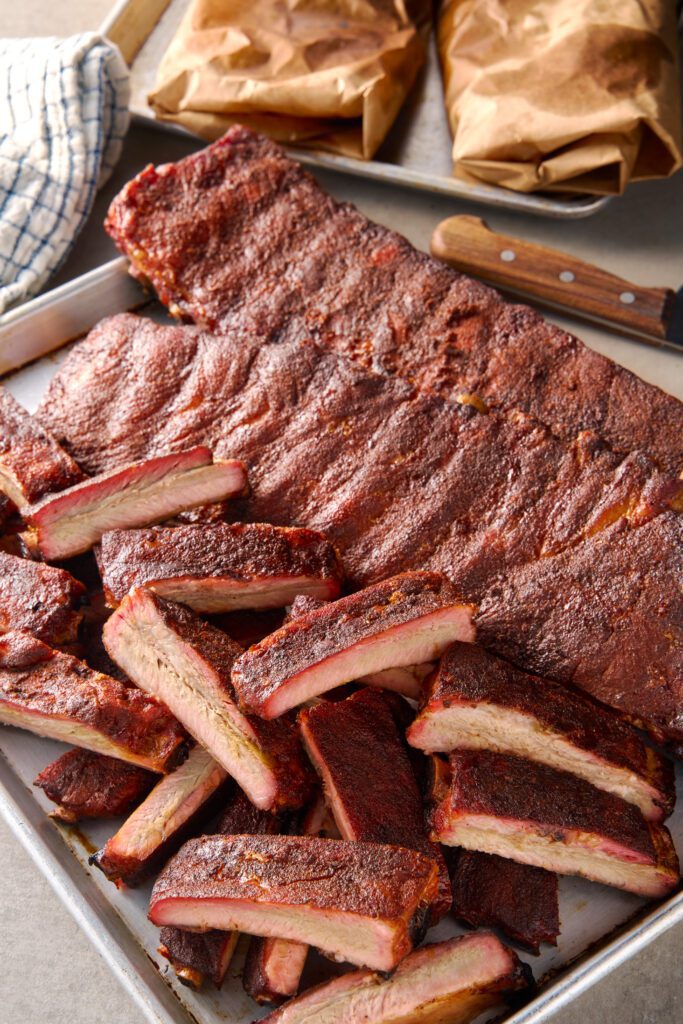
Ribs, however, are perhaps the most lauded of all barbecue delicacies in Oklahoma. Snead says his personal favorites are pork spare ribs.
“I also love a good brisket,” he says. “Both take a different level of skill to smoke, but can be appreciated for the technique and patience behind them.”
Matthews of Smokin’ Sisters loves all cuts of meat.
“I eat all of it, and I love all of it,” she says.

Accessibility through the RCOA
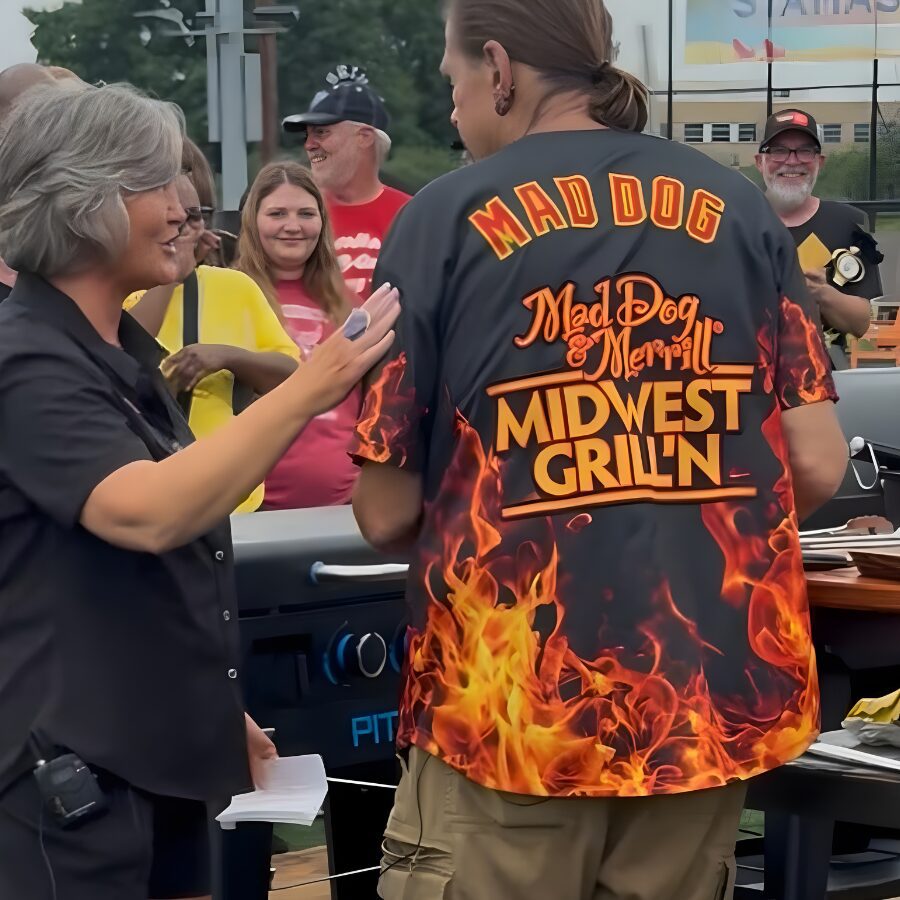
The Rib Cook Off Association (RCOA) is helmed by Jody Harris, who has been a pitmaster for more than fifteen years before co-founding her organization three years ago with partner Dirk Mullins.
“[Dirk] actually came up with this idea to have the Rib Cook Off Association, and I took my business acumen and made it all work,” she says. “Our thought process was that there were so many people out there that really want to cook,” although cost was often a factor that deterred them.
“Before we even leave the driveway, we’re already in at about one-thousand dollars,” says Harris. “With our organization, you could probably spend one hundred dollars, and you could come cook ribs and wings.”
The RCOA now consists of over 2,500 members.
“Our motivation is to have fun,” says Harris, as she pointed to a baseball cap bearing that mantra in bold. “Our first year, we had over forty contests.” The popularity only continues to grow.
“We believe it’s just because we were already in the community of cooks, and they believed in us,” says Harris. “They trusted us, and they were really excited. We launched January of 2024. By the month’s end, we probably had over four-hundred and fifty members. A lot of those members never, ever cook. They just believed in our mission.”
The RCOA believes that one of its missions is to be cooks for cooks.
“When the cook comes in, we understand what they’ve already been through for the day, what it takes to get all the meat around. We understand the stress that they have,” she says. “We organize the whole event. The community that we’ve built has really become closely knit.”
That closeness extends to the international community.
“The first year, we brought Europe on,” Harris says, “Belgium, Germany and Italy.” New Zealand’s north island and south island are also frequently represented. Harris suggests that perhaps barbecue owes its welcoming vibe to the nature of barbecue itself, going back all the way to the caveman days.
“Stepping back in a backyard or an event space, and being able to cook, to barbecue, it’s really about bringing people together. And that’s what we’re seeing,” she says.
Typically, the RCOA awards over forty-thousand dollars in prizes.
“They bring their own cuts of meat,” says Harris. “Some promoters will get ribs donated; however, the cooks are kind of picky about that for their competition. The Rib Cook Off Association has become more than a sanctioning body. It has grown into a strong and expanding community built around competition, connection and giving back.”
Like many barbecue festivals in Oklahoma, the event functions as a fundraiser, and the RCOA has taken that to new heights, raising over two-hundred-thousand dollars for meaningful causes.
“Last February, we helped one man in Decatur, Texas get ten-thousand dollars for a kidney transplant,” Harris says.
Harris feels strongly that barbecue in Oklahoma is its own unique kind of experience.
“It’s just what you like,” she says. “Anything with an open flame, whether you have that over a pit, or in an open fire setting, which a lot of those pits are now – they have the open flame. All of that’s going to be considered barbecue.”
BBQ Safety 101
Novices to barbecue, and those cooking with kids, should know that overcrowding the grill can prevent cuts of meat from searing, and can lead to disparate cooking. Contrary to popular grilling techniques, flipping too often can dehydrate cuts of meat, and that is what leads to the cover-up of excessive saucing, a common shortcut for the beginning pit master.
Those new to the world of barbecue should know their trees, and know them well, as softwoods that might at first seem appropriate for grilling, (like firs, pine, redwood, and cypress) used for cooking fuel can contain large amounts of resin oil or sap, which can create bitter barbecue and cause vomiting or episodes of non-fatal food poisoning.
Featured photo credit: At Tulsa-based Rib Crib, diners can enjoy everything from the famous ribs to chicken, turkey, hot links and chopped brisket. Photo courtesy Chandler Hospitalitty Group