





















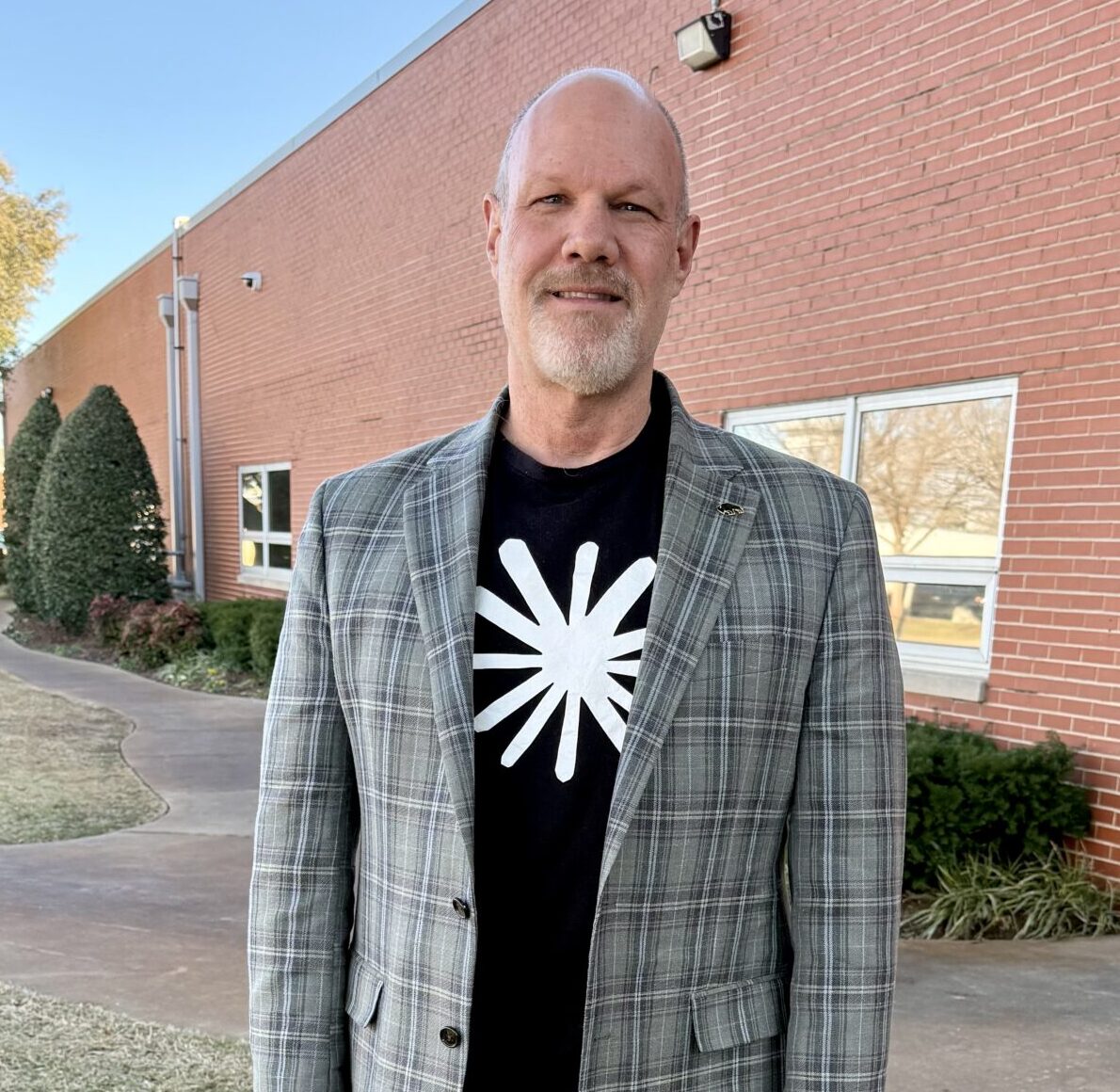
Thomas Hill III leads Kimray, an Oklahoma City-based manufacturer of oil and gas equipment that employs more than 600 people nationwide. The grandson of the company’s founder, Hill’s early pursuit of success ultimately led to a personal rock bottom, followed by a hard-won journey of recovery that transformed his life and leadership. Today, he is a passionate advocate for healthy workplace culture, mentoring emerging leaders through his book Recovering Leadership and his foundation, the Kimmell Foundation for Recovering Leadership. We caught up with Hill and got his thoughts on…
… his early understanding of ‘success,’ and how it’s changed.
Growing up as the grandson of Kimray’s founder meant I had success defined for me before I could even spell it. My family valued achievement, results and excellence. Everything got measured and compared. And somewhere along the way, I internalized the belief that my worth was tied directly to my performance.
That framework worked great until it didn’t. When I went through recovery, I discovered something uncomfortable: I had no idea who I was separate from what I could accomplish. Today, my definition of success looks radically different. It’s less about what I do and more about who I’m becoming. It’s showing up honestly in relationships. It’s being present with my kids without constantly thinking about the next work task. It’s leading from vulnerability instead of projecting confidence I don’t actually feel. The irony is that when I stopped trying to prove my worth through achievement, I became a better leader.
… how his recovery has reshaped his leadership.
Recovery taught me that you can’t separate who you are at work from who you are everywhere else. For years, I thought I could compartmentalize and be one version of myself in the office and another version at home or with my friends. That was exhausting and ultimately impossible. When I started doing the hard work of getting honest about my own struggles, everything shifted.
At Kimray, that transformation showed up in how we think about psychological safety. I realized that as a leader, I hold enormous power over people’s lives. And if I’m leading from a place of my own unexamined insecurity or ego, I’m going to damage people without even realizing it. So, we started building a culture where it’s safe to tell the truth. We talk openly about mental health. We invest in counseling resources. We’ve learned that people perform better when they feel safe and when they’re treated like whole human beings instead of just production units.
… advice he would give to young leaders.
Do your own work. Get into therapy. Find a good counselor, spiritual advisor, mentor, or someone who will tell you the truth about yourself even when it’s uncomfortable. Too many young leaders think they can muscle through on talent and ambition alone. But sustainable leadership requires ongoing personal growth.
The other piece I’d add is to focus on being responsible to people, not for them. That distinction matters because when you try to be responsible for people, you end up micromanaging or rescuing or enabling. Real leadership empowers people to own their work and their growth and then supports them in that process.
… a truly healthy workplace culture.
A healthy workplace starts with trust. Not trust as a vague concept, but trust as a daily practice. It means your people believe you’re going to tell them the truth, even when it’s hard. It means they know you care about them as individuals, not just as contributors to the bottom line. In practice, that looks like leaders who do their own work first. You can’t create a healthy environment for other people if you’re operating from your own unexamined baggage. Then it extends to how decisions get made. We push authority to the people closest to the work instead of hoarding it at the top of the organizational chart. It means clear expectations paired with genuine care. We call that healthy accountability. Healthy culture also requires rhythms of rest. Our people can’t operate at full capacity all the time without burning out. You can’t just tell people to work smarter or be more efficient. You have to actually structure the work so people can sustain it over the long haul.
… the Kimmell Foundation.
The Kimmell Foundation came out of a realization that what we’d built at Kimray shouldn’t stay inside our four walls. We have spent years figuring out – sometimes quite painfully – how to create a culture where people are valued, where mental health matters, and where trust drives everything. I kept meeting other leaders who wanted the same thing for their organizations but didn’t know where to start.
The inspiration really came from the recovery community. In 12-step programs, there’s this principle that you can’t keep what you have unless you give it away. I’d received so much help, so much grace, and so many second chances. The Foundation became a way to pass that forward. We wanted to create a space where leaders could be honest about their struggles, where they could find community, and where they could access practical tools for building healthier organizations.
… finding empathy and purpose in a ‘traditional’ industry.
There’s an assumption that technical industries like ours need hard-driving, old-school leadership, like the command-and-control approach where the boss has all the answers and everyone else just executes. But that model is fundamentally broken. It kills innovation because people are too scared to speak up with new ideas. It destroys retention because talented people leave toxic environments. And it’s completely unnecessary.
At Kimray we’ve proven that you can be technically excellent and relationally healthy at the same time. Actually, those things reinforce each other. When people feel valued and safe, they bring their best thinking to work. They’re willing to experiment, to fail, to try again. They collaborate better because they’re not competing for political survival. Our innovation doesn’t come despite our people-first culture—it comes because of it.
We’ve also learned that purpose matters more than people realize, even in manufacturing. Our team members aren’t just making valves and pumps. They’re providing a good living for themselves and their families. They’re ensuring safe, efficient energy production that powers homes and businesses. They’re making a difference through hundreds of non-profit and educational organizations that Kimray supports.
… the future of Kimray, and who will lead it.
I am excited that we’re building something sustainable. Not just financially sustainable, though that matters. I mean culturally sustainable. We’re creating a leadership pipeline where the next generation isn’t just inheriting our systems but understands the why behind them. They’re being mentored in trust-first leadership. They’re learning to lead from self-awareness rather than ego. They’re being equipped to steward what we’ve built and make it even better.
The leaders we need going forward are people who’ve done their own inner work. They can’t lead others into health if they’re not pursuing it themselves. They need to be comfortable with ambiguity and complexity, because the challenges we’re facing don’t have simple answers. They need to value relationships over results, even though results still matter. They have to understand that their primary job is creating the conditions where other people can flourish, not being the hero who solves every problem.
I’m also excited about the technical innovations we’re pursuing—the products we’re developing, the problems we’re solving, and new ways we’re serving our customers.
… advice he would give to young leaders.
Do your own work. Get into therapy. Find a good counselor, spiritual advisor, mentor, or someone who will tell you the truth about yourself even when it’s uncomfortable. Too many young leaders think they can muscle through on talent and ambition alone. They believe leadership is about having the right answers, projecting confidence, and being impressive. But sustainable leadership requires ongoing personal growth, and you can’t do that work alone.
I spent years trying to be a good leader while ignoring my own brokenness. I thought I could compartmentalize and keep the messy parts hidden while performing well at work. That approach eventually imploded. I had to learn the hard way that who you are in private is who you are in public, even if nobody else sees it yet. Your unexamined insecurities leak out in how you manage people. Your ego shows up in how you make decisions. Your fear of failure drives you to control things that aren’t yours to control.
The other piece I’d add is to focus on being responsible to people, not for them. You’re responsible for creating clear expectations, providing resources, removing obstacles, and giving honest feedback. You’re not responsible for their happiness, their choices, or their outcomes. That distinction matters because when you try to be responsible for people, you end up micromanaging or rescuing or enabling. You take away their agency. Real leadership empowers people to own their work and their growth and then supports them in that process.
If I could go back and tell my younger self anything, it would be this: Your worth is not tied to your productivity. You don’t have to prove yourself. You’re already enough. Lead from that place of security instead of trying to earn approval through performance. That’s when you’ll stop using people as tools for your success and start serving them. That’s when leadership stops being about you and becomes about them. And paradoxically, that’s when you’ll become the kind of leader people actually want to follow.