
















As a nearly lifelong horror-film fan – I saw my first scary movie when I was four years old – I’ve always been pleased when I discover Oklahoma connections to the genre. I suppose you could start with one of the greats of classic horror cinema, Lon Chaney Jr., who was born in Oklahoma City and went on to become the only actor ever to play all four of the major Universal Pictures monsters of the 1930s and ’40s – the wolfman, Dracula, the mummy and Frankenstein’s monster. In a couple of those features, he was supported by leading ladies Martha O’Driscoll (a Tulsa native) and Louise Allbritton (from Oklahoma City).
Other Okie actors have made their horror-movie mark in the intervening decades, including Tulsa’s Heather Langenkamp, the classic “final girl” in 1984’s A Nightmare on Elm Street; Holdenville’s Clu Gulager, whose long Hollywood career included such scary pictures as A Nightmare on Elm Street 2 and Return of the Living Dead (both released in 1985); and Shawnee’s Bill Boyce, star of the 1963 cult film The Slime People. (Another Shawnee native got one of his first big roles in a slasher film called Cutting Class (1989) and later starred in Interview with a Vampire (1994). That would be Brad Pitt.)
Our state is also known for horror films that were made within its borders, especially during and after the direct-to-home-video boom ignited by the Tulsa-based distributor VCI, which started a revolution in 1985 with a modest little shot-on-video chiller called Blood Cult. Intended to bypass theaters completely in favor of VHS rentals, it was a huge success, opening up the floodgates for such direct-to-video features as The Ripper, Revenge, Terror at Tenkiller, Blood Lake and Mutilations, all Oklahoma productions. After the turn of the century, Tulsa-based filmmakers Darla Enlow and Dana Pike and their Next Monkey Productions got into the act with Toe Tags, Branded, and The Stitcher, while Oscar-winning producer Gray Frederickson oversaw his own horror pictures in and around his Oklahoma City birthplace, including Soul’s Midnight and Fingerprints (both released in 2006). More recently, entries in the Children of the Corn and Hellraiser franchises wrapped shooting in our state.
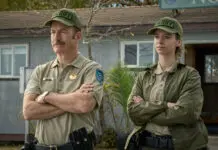
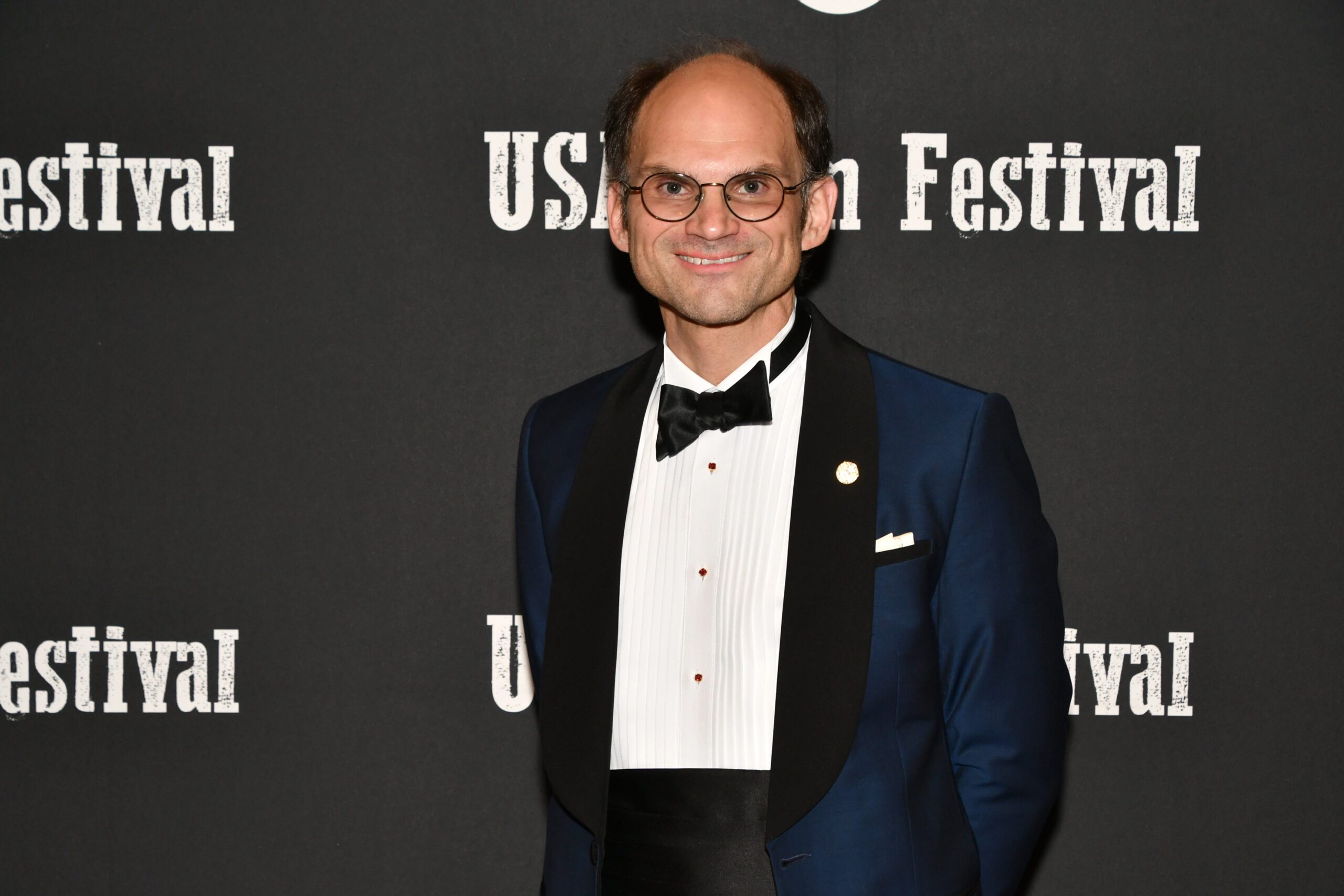
I could give lots more examples, but I want to get to the subjects of this month’s column, a couple of current Okie filmmakers affiliated with brand-new horror movies: Preston Fassel and Cory Kirk. Tulsa native Fassel, last heard from in this space as the co-author of the horror/psychology-themed book Necessary Death, is the co-scripter of Marrow, a tale about a true-crime vlogger haunted by an evil presence. Cushing’s Kirk, whose resume includes a featured role in 2025’s The Private Eye (with Eric Roberts and Matt Rife), is the lead actor and co-producer of Baggok, playing a troubled and ultimately murderous young man who takes on the persona of a chicken. (Hence the title, which refers to a chicken’s clucking.)
Although these films both fit squarely in the horror genre, and they’re both compelling pieces of work that I recommend to fans of the genre, they’re different in several ways. Marrow was shot at a lake house in Hochatown, near Broken Bow, and features a couple of actors familiar to horror aficionados, Danielle Harris (of the Halloween franchise) and Michael Ironside (Scanners, Total Recall and American Nightmare, among many other pictures). It’s got a glossy look that conveys the sterile beauty surrounding the lead character, amplifying the emptiness in her life. The California-shot Baggok, on the other hand, projects an aura that’s as gritty and hardscrabble – and often as dreamlike – as its subject matter. The film revolves around Kirk’s psychologically unstable character, and he’s excellent in the picture – even though it’s taken more than half a decade to get it into the can.
“I’ve called it the bane of my existence for the past six years,” says Kirk, who’s also one of Baggok’s producers. “This was a passion project for me and my producing colleagues, Jack Cook and Rosalinda Books Cook, made with love and our close friends. Whenever we could all coordinate a day off, we’d make it happen. We ate baloney sandwiches and did it on a shoestring budget with a skeleton crew.”
Don’t get the idea they were a bunch of amateurs running around L.A. with a camera, though. Kirk and the Cooks have all worked in the industry for years, with Kirk logging significant time as a background actor, or extra, for nearly all of the 2010s.
“I was on every cop show,” he says. “But my agent told me, ‘Cory, this town is small, and even though background acting pays the bills and you’re working every day on different studio lots, you’ve got to pivot.’ So my first part with a line was on an Amazon TV series, The Last Tycoon, with Matt Bomer and Kelsey Grammer.”
He began getting more non-extra work, including a splashy part in the YouTube documentary series Mind Field, and in the aforementioned Private Eye, which was directed by Jack Cook, his friend and Baggok co-producer. All of that activity among its creators forced Baggok onto the back burner for a while, as Kirk noted earlier.
Baggok is based on a book, The Perfectionist Hairstylist, written by the third member of its producing trio, Rosalinda Books, who was also a Private Eye co-scripter and directed and acted in Baggok. Kirk describes her novel as “real creepy,” a feeling he hopes they got into the picture. (And, for my money, they did.)
Like Cory Kirk, Preston Fassel put a bit of his own life into Marrow. He was brought onto the project after the film’s producers asked for a rewrite of the script submitted by director Mitch McLeod. McLeod, who knew Fassel, had read his horror novel Our Lady of the Inferno and figured he would be the right man for the job.
“It was great, because Mitch really had the ABC narrative structure of the story,” says Fassel. “I didn’t change anything that actually affected the narrative, but I came in and developed the relationship between Jamie [the vlogger, played by Jessica Dawn Willis] and Danielle [her hard-driving aunt, played by Harris]. In developing Jamie’s backstory, I added in a couple of other elements that were very personal to me. I turned it back over to Mitch, he showed it to the producers, and the financing was secured. Then Jessica, who was going to play Jamie, did her own final pass on the script. So it was really a collaborative effort among the three of us.”
The “personal” elements he notes involved his work with the Broken Arrow Police Department while he was still in high school. Assigned to the evidence room, Fassel did such a bang-up job that, in 2004, he received the President’s Volunteer Service Award.
“Of course, I didn’t get involved with that to help create a serial-killer script,” he says with a laugh, “but there’s a speech Jamie gives to two police officers where she says, ‘I come from a generation that grew up on Silence of the Lambs, and we all thought we were going to be Clarice Starling.’ I’ve said that so many times in interviews. There are things that Jamie says in the movie that were pulled from my own life.
“This really was so inspired by my growing up in Oklahoma,” he adds. “In a lot of ways, I took the opportunity to turn it into a sort of autobiographical love letter to my adolescence. It’s the kind of movie I would have rented from Warehouse Market in Broken Arrow back in the day.”
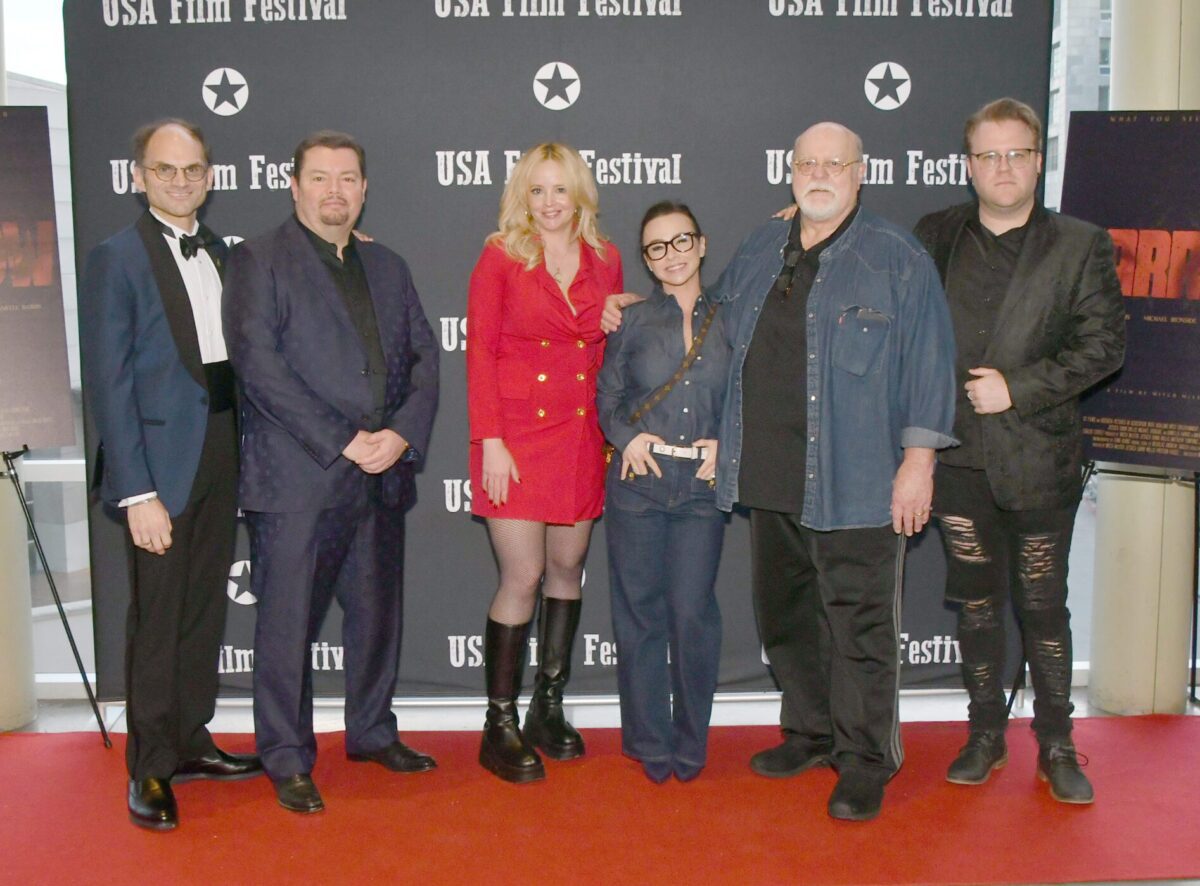
Marrow, which Fassel calls “gritty yet socially conscious horror,” debuted at the USA Film Festival in February, the same month it was offered for sale at the European Film Market in Berlin, Germany. Look for both Marrow and Baggok to become available to viewers in one form or another later this year.