


















2025 was a landmark year for our state. In fact, Oklahoma didn’t just move forward – it surged ahead. Bold, confident and visionary leaders drove that momentum, pushing industries forward, lifting communities up and proving that belief in Oklahoma’s people can take you just about anywhere.
The impact of these honorees, whether in business, sustainability, sports, leadership or education, is unmistakable, and their influence only grows as we enter 2026. These Oklahomans of the Year are doing more than leading the way; they’re setting the standard, and the state is following.
Profiles by Kimberly Burk, Tracy LeGrand and Mary Willa Allen
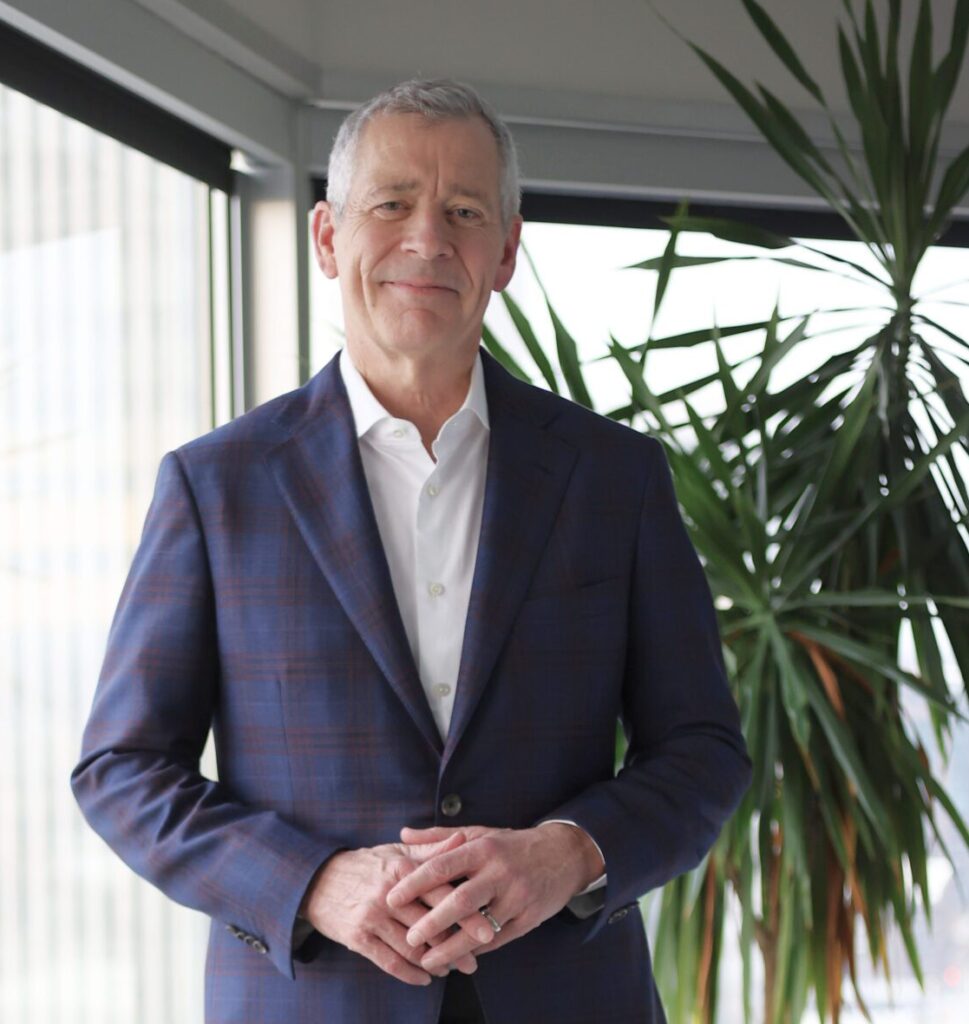
Chuck Garrett
CEO, Cherokee Nation Businesses
Cherokee Nation Businesses (CNB) thinks of itself as a “forever company,” says CEO Chuck Garrett.
“We really have to thrive in every type of economy,” he says. “To do that, you can’t really rely on just one stream of revenue. The vision is that CNB will build a portfolio of diversified companies that provides a sustainable, durable dividend for the Cherokee Nation forever.”
Garrett described CNB, with more than 11,000 employees, as “a large enterprise with several different business units, but we have one shareholder, and that shareholder is the Cherokee Nation.”
An Oklahoma native, Garrett attended the University of Oklahoma and Harvard Law School with the help of tribal scholarships. CNB, he says, provides a career path for tribal citizens.
“The Nation has invested heavily in education,” he shares. “This pipeline of talent has served the Cherokee Nation well.”
CNB, with more than 45 companies that generated $2.205B in revenue in 2025, has holdings in gaming and hospitality, retail, tourism, television and film, investment management and government contracting. CNB has contributed $1.25 billion to Cherokee Nation in the past 10 years through its 37% shareholder dividend.
“We recently purchased a company focused on cybersecurity for various federal agencies,” Garrett says.
Other recent initiatives include “the acquisition of various cloud-computing solutions that help support some of the federal government agencies,” Garrett says. “And we have made significant investments in private equity funds as limited partners. That’s a new type of investment for us. We measure very carefully our efficiencies and our margins, and we work very diligently to make sure we are running efficient and competitive businesses.”
Garrett joined CNB in 2013 and became CEO in 2019, with a background in law, commercial real estate, gaming and investment banking.
“I have been fortunate to work in many different industries,” he says. “That has certainly influenced my leadership style and my leadership focus. I’ve had a lot of good mentors.”
Garrett said he sees “a CNB in five years that has added portfolio companies in different industries, and we will have doubled the capacity of our funding for the Cherokee Nation.”
– KB
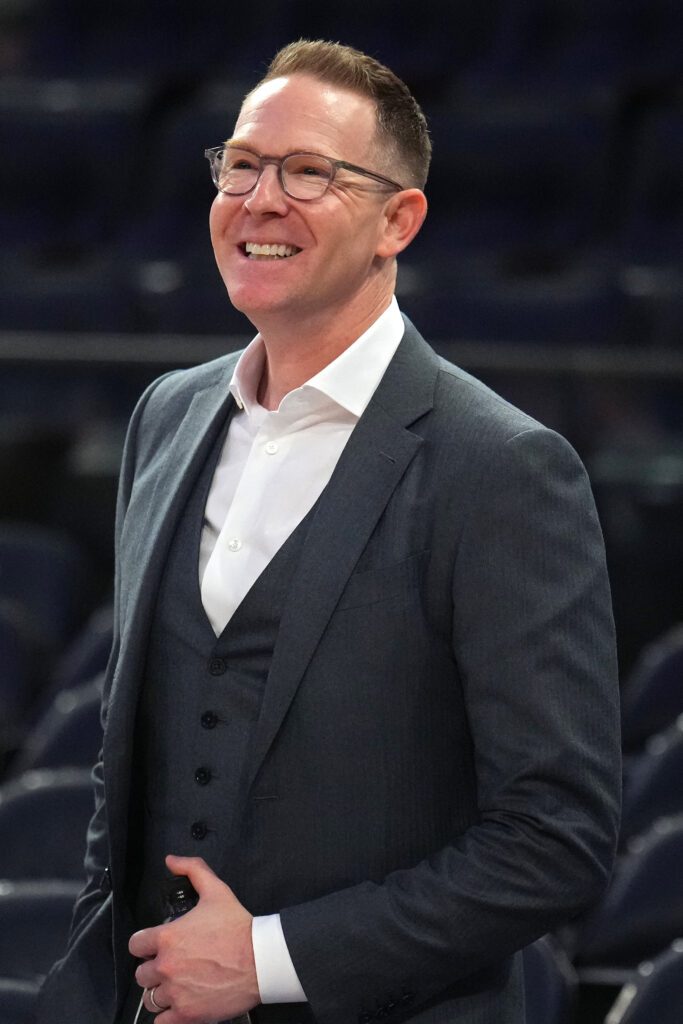
Sam Presti
Executive Vice President/General Manager, Oklahoma City Thunder
Sam Presti is intent on building a legacy.
Not for himself, but for the Thunder organization – and Oklahoma at large.
Hired in 2007 as the general manager for the Seattle SuperSonics, Presti became the second-youngest person to ever hold the position within the NBA at 30. Today, he is also the third-longest-tenured head of basketball operations in the league.
But you won’t find Presti bragging about that – or any of his achievements – although many of the Thunder’s greatest successes have hinged upon his methodical roster building and eye for scouting young talent. Presti makes it clear: He is just one part of a well-oiled machine that aims to make Oklahoma better for everyone.
“Professional sports in a small market is truly a team effort,” Presti says. “We couldn’t exist in Oklahoma without support from our sponsors, fans and friends. Our on-court success certainly helps, but our hope is our backing is not entirely transactional. We hope people see us as an additive piece to the community and grander future of the city and state, and that their support for the team is grounded in something deeper.”
The Thunder’s record-breaking 2024-2025 regular season culminated with the franchise’s first-ever NBA finals win. When the team raised the trophy at Paycom Center last June, it was Presti’s vision that helped get them there. Seven months later – with a new Thunder arena in the works poised to boost OKC tourism exponentially – the organization appears stronger than ever. It’s proof that no one, Presti included, is content to rest on their laurels.
“We look at decisions and initiatives on a continuum,” Presti says. “In other words, we are always building, iterating, adapting and hopefully, evolving from our vision for the organization. That vision was established in 2008, and although we have certainly evolved, there is a focus on building a legacy in real time.”
Community engagement is central to the Thunder’s identity, most notably through its charitable arm, Thunder Cares. All Thunder organization members participate in some capacity.
“When we talk about pursuing progress, that is not confined solely to our competitive endeavors, but also our outreach and relationship with our community,” Presti says. “Oklahoma has a beautiful heart, and beautiful intent, and a beautiful future. We always want to work together with our civic leaders and broader Oklahoma community to help recognize that future.”
Many GMs focus solely on franchise improvement: draft strategies, trades, player evaluations. And it goes without saying that Presti excels in the hard skills needed for the job. His understanding of Oklahoma City’s heart, however, is what truly separates him from his peers. Case in point: When any new player comes to the franchise, Presti sees to it that he visits the Oklahoma City National Memorial first thing.
“It’s our belief that to represent something authentically, it is imperative to understand the history and, in this case, our team simply would not be in Oklahoma City if it were not for the response to the bombing in 1995,” Presti says. “The darkest day in state history also revealed the deep powers of humanity and resilience that have long been held in this community for generations.
“The lessons from that event and the response that followed in the years thereafter are so vast, it’s only right that we ensure our people are educated and reminded that what we are doing is representing, win or lose, good years or bad, something much larger than a ball dropping through a basket.”
– MWA
Gary Batton
Chief, Choctaw Nation of Oklahoma
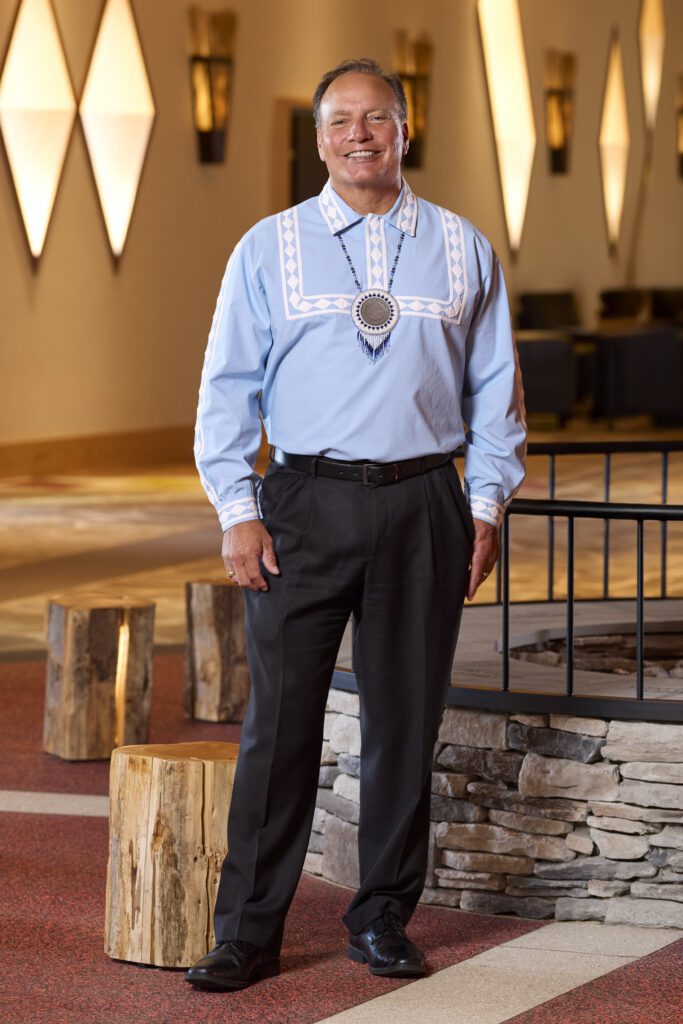
The traditional attire worn by Choctaw Chief Gary Batton features a diamond pattern representing the rattlesnake, an animal revered by the tribe.
“It’s just to remind everybody of our culture and our history, and more importantly what it stands for,” Batton says.
The eastern diamondback rattlesnake was a respected animal not only for its lethality and because it gives a warning before it strikes, but also because it helped remove hungry rodents from agricultural fields, tribal historians say.
Batton, 58, is a longtime tribal employee who was schooled early for a lifetime of service.
“We lived in a rural area,” he says. “When we went to town, we asked everybody around us if they needed anything. We picked up things for everybody.”
His mother was fullblood Choctaw, and she met Batton’s non-Native father when he was stationed at Fort Sill.
“My father really pushed my culture more than my mom did,” he says.
Batton was the first in his family to earn a college degree. He went to work for the tribe in 1987, was appointed assistant chief in 2007 and became chief in 2014.
Even now, he still has a heart for rural Oklahoma.
“We have decentralized a lot of our functions to put jobs back into rural areas,” he says. “Indian Child Welfare has 56 social workers located throughout the Choctaw Nation.”
Housing has been a major initiative, with 1,300 homes built in the past five years. Some are offered on lease-purchase contracts to help tribal citizens who had been paying higher rent rates. The tribe also builds affordable rental properties and homes for elders.
“With those three types of housing, we are committed to building 350 per year,” he says.
The Nation has 235,000 citizens and employs 13,500 people, many of whom received college scholarships and vocational training funded by the tribe. As executive director of health, Batton also oversaw construction of the first tribally-funded health facility in the United States. The tribe continues to expand its healthcare offerings, with a recent focus on substance abuse treatment and children traumatized by domestic violence.
“I make it a point twice a month to be out in the community,” Batton says. “I listen to tribal members and take notes. It’s great to get that feedback.”
In addition to the 151 businesses managed by the tribe, the economic development team works to attract private businesses. Eighteen were recruited in the past five years, including Academy Sports, Auto Zone, Braums, Starbucks and Olive Garden.
Batton bases his leadership, he says, on “faith, family and culture. If it wasn’t for God and Jesus I would not be here today. It’s in our history to believe in a Creator.”
Tribal culture is about tradition — but also about looking forward, Batton says.
“Our Choctaw people change, mature and evolve. We always say we are warriors, but warriors fight for the right reason. They don’t fight just to fight.”
– KB
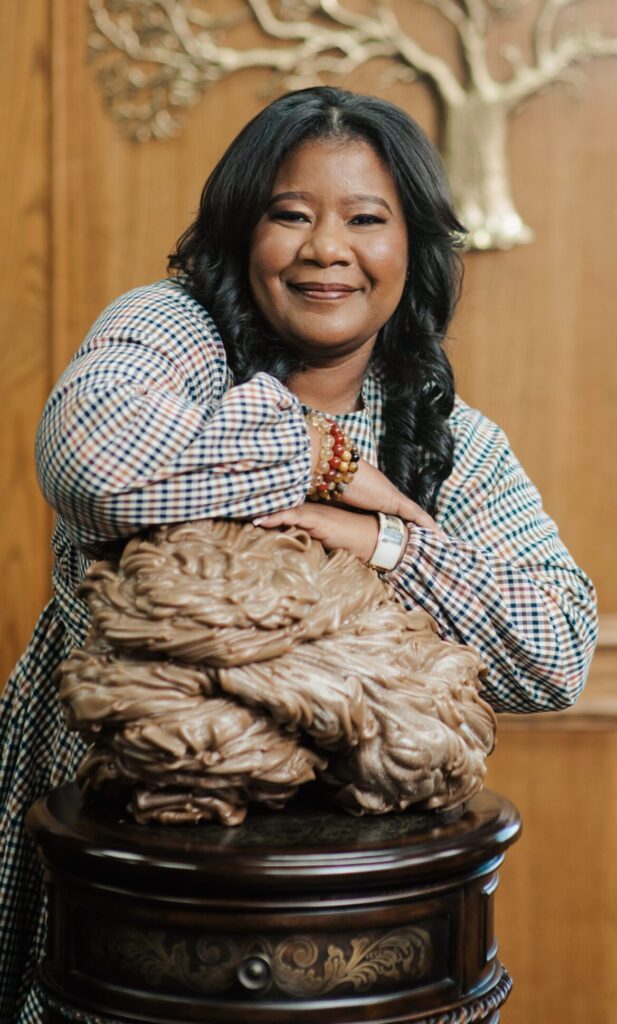
Sharina Perry
Founder and CEO, Utopia Plastix
Sharina Perry never planned to revolutionize plastics. Growing up Black in late-1980s Oklahoma, Perry first learned what it felt like to be the “other” – police stops in small towns, the weight of judgemental, unfamiliar eyes. Around the same time, she watched her grandfather, a proud landowner, hand her his legal papers and smile: “Come here, little attorney,” he said, because others had tried to take advantage of him. Those moments taught her that disadvantage usually comes from lack of access, not lack of effort and certainly not lack of worth.
“I made a promise to God,” she says. “If He helped me navigate the barriers, I’d hold the door open and make sure there were seats prepared for others who looked like me.”
That promise became Utopia Plastix. With no formal training in chemistry or engineering, Perry taught herself about the industry by reading more than 600 papers, praying in her kitchen and refusing to fear the unknown. What began as a search for plant-based health products pivoted when plastic-straw bans hit the news. One disastrous homemade straw – collapsing the moment she sipped – unlocked the breakthrough: a tough, fully plant-based material that outperforms plastic and biodegrades harmlessly. Experts later told her, “if you’d been a trained chemist, you never would have seen it.” Her perceived flaw as an outsider became her advantage.
Utopia’s patented polymers are grown on American farmland, pulling carbon from the air four to five times faster than trees. Her client farmers, many minority landowners, earn far more per acre than with traditional crops and plant with a guaranteed buyer. The result? No market risk, a higher income and the pride of feeding a closed-loop system that turns harvests into everything from cutlery to packaging.
Perry leads the way humbly. She’s the first to roll up her sleeves, and insists faith, integrity and tough questions always stay at the table.
“Sustainability without justice is just new exclusion,” she says.
So every contract, every acre, every job is intentionally steered toward equity. When people ask why game-changing green tech is coming out of Oklahoma instead of Silicon Valley, Perry smiles.
“I never looked the part—no chemistry Ph.D., no coastal pedigree,” she says. “But when you’re aligned with purpose and walking with God, you don’t need permission to change the world.”
Her hope is simple: That one day Utopia is a household name, carried forward by her children and theirs, and that every person who hears her story – especially the little Black girl in a small town – understands the gifts inside her are enough. Barriers bend, boxes break and the future can be built anywhere by anyone willing to stay true to themselves. – TL
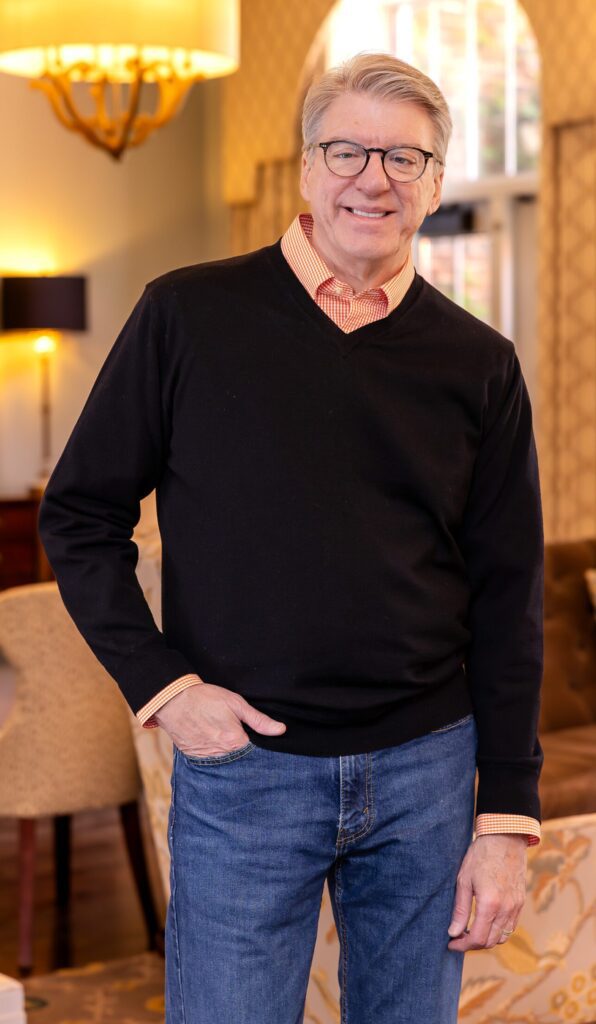
Jim Hess
President, Oklahoma State University
Since assuming the presidency of Oklahoma State University as its 20th leader last April, Jim Hess, Ed.D., has made one message clear: “Students are the reason we’re here.”
A decades-long educator and leader, Hess brings a rare blend of frontline teaching experience and proven administrative vision to his leadership.
“Every major decision we make starts with one question: What is best for our students?” says Hess. That question now fuels two overarching priorities: expanding access so every qualified Oklahoma student who wants to can attain an OSU degree, and transforming the student experience into one that feels undoubtedly like home. Expanded scholarships, enhanced academic advising and mental health investments top his agenda.
Demonstrating that commitment is Cowboys Care, the university-wide mental health initiative launched last fall by First Cowgirl Angela Hess. Knowing that his wife struggled with anxiety since childhood, Hess recognized the need for proactive support on campus.
“We know students cannot perform academically if they are not mentally well,” Hess says. “Cowboys Care was born out of a need to wrap our arms around students before crisis hits. Asking for help shouldn’t be an act of courage; it should be part of campus life.”
The initiative’s ambassador program places hundreds of trained faculty, staff, resident advisors and peers throughout dorms, classrooms and student organizations, ensuring help is always just a hallway away.
Hess’s career is marked by building what communities actually need: increased enrollment for working adults at OSU-Tulsa, filling rural physician shortages through the Center for Health Sciences, and orchestrating the complex acquisition of OSU Medical Center. Those experiences continue to inform his vision: “Where are the needs greatest, and how can OSU help?” Even small gestures reveal the professor still at his core. He surrendered the presidential parking space to students, asking, “If they’re paying to park, why shouldn’t I?”
For Hess, leading a university remains fundamentally about people.
“The greatest moral calling a person can accept,” he says, “is to change another human being’s life – to encourage them, support them and say, ‘I believe in you. Whatever your dream is, you can achieve it, and I’ll help you get there.’” – TL