








Somehow, I missed the news a couple of years ago about how Tulsa had been officially designated as the Capital of Route 66.
In case you missed it, too, here’s what happened: In April 2024, following what the City of Tulsa website calls a “process that lasted more than two years and involved exhaustive research and surveys,” the federal government approved Tulsa’s request to copyright the title “Capital of Route 66.” That process came about through the city’s Route 66 Commission, and it concluded in plenty of time for the Mother Road’s big centennial celebration, kicking off this year.
One of the first 100th-birthday celebrations comes with Route 66 in Tulsa, a new book compiled and written by Tulsans Steve Clem and Becky Hatchett. Published by the South Carolina-based Arcadia Publishing as a volume in its “Images of America” series, Route 66 in Tulsa combines vintage and a few contemporary photos with prose chapters and captions that give historical context.
Thanks to all the hubbub around the centennial and the strong Tulsa-66 connection, there’s little doubt that the release of this book was perfectly timed – which, of course, was Steve Clem’s idea all along. At least, sort of.
“A year or two ago, I did plan to write a [Route 66] book for the centennial,” he says. “But really, I started the project that became this book about a decade ago, when I began driving around Tulsa with a spreadsheet on my computer, chronicling and documenting where every old motel used to be – on 11th Street, on Southwest Boulevard, on Admiral Place. I’ve had a longtime fascination with the old motels and their neon signs, so I devised that spreadsheet and went to all those locations to see what was there now.
“I was asked [by a publisher] if I wanted to do a ‘then and now’ book about Route 66 and Tulsa, but you can’t really do that,” he adds with a chuckle. “You’d be photographing too many parking lots. So much of what was on Route 66, especially when it comes to the old motels and restaurants, were just razed.”
If that sounds like the observation of a longtime Mother Road aficionado to you, you’re right on the money. Clem has, for many years, been an admitted “fanatic” about the Main Street of America; he’s attended events with fellow members of the Oklahoma Route 66 Association for more than a quarter of a century.
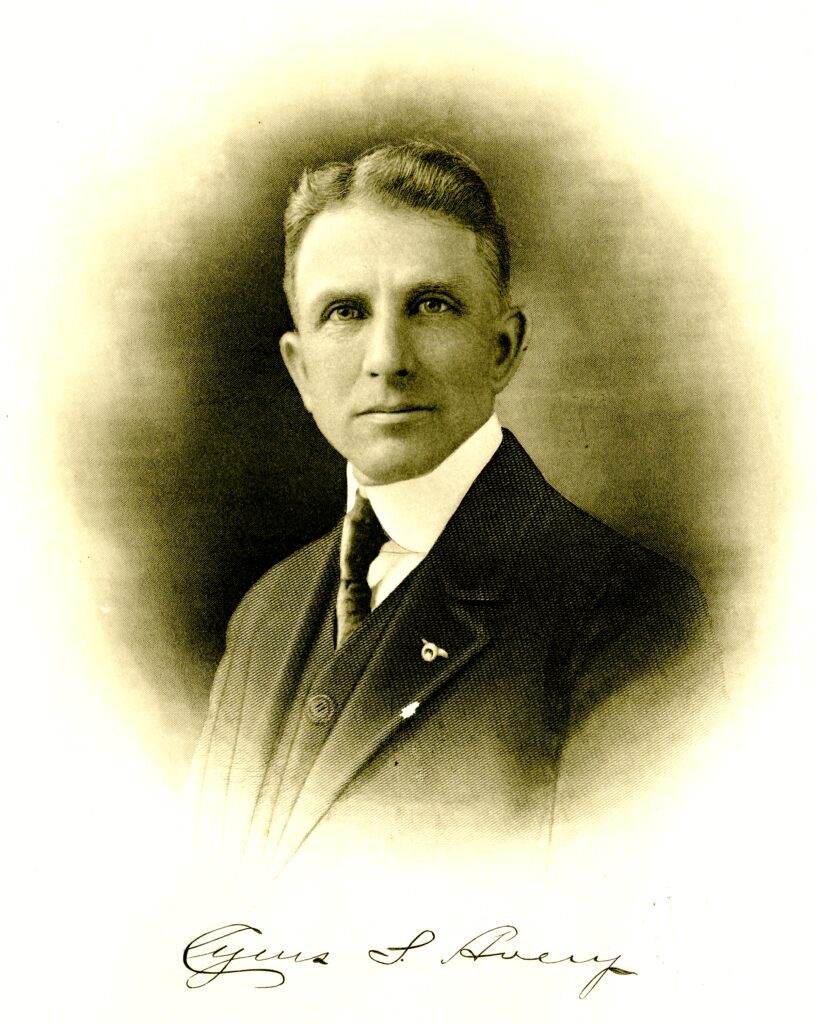
“I’ve always been fascinated with the strong connection Tulsa has to Route 66,” he says. “The father of Route 66, Cyrus Avery, was a Tulsan, and he was incredibly instrumental in not only getting Route 66 founded, but also in getting it routed through his adopted hometown of Tulsa. And the other connection is Michael Wallis, who started the renaissance of Route 66 back in 1990 with his book Route 66: The Mother Road. Both he and Cyrus Avery came from other cities to Tulsa and did some of their most outstanding work while they were living here.”
Like all of the books in the “Images of America” series, Route 66 in Tulsa is extensively photo-illustrated. Most of those vintage shots, Clem says, came from the collections of the Museum of Tulsa History and the Tulsa City-County Library.
“It was the combination of those two sources, which both do such a wonderful job with archival photos, and three postcard-collector friends of mine,” he notes. “They’re Route 66 friends I see at conferences and conventions and festivals, and they have massive collections of Route 66 and other postcards. All three of them were kind enough to lend their images to this book.”
Clem also had assistance in the text department – which is where his co-author, Becky Hatchett, first came in.
“I was searching for an expert on the west side of Tulsa,” he explains. “I research a lot of stuff, and I could’ve just researched the west side and written something about its history. But I didn’t want to be a guy on the outside looking in at that particular area of town. It’s got its own character, its own feel. There’s a kind of east-meets-west dynamic there that we mention in the book, the uptown oil interests vs. the people on the west side who worked in the refineries and had the neighborhoods. So I was looking for expertise and ran into Becky, who’s connected to the west side in so many ways.”
“Steve and I have many mutual friends,” adds Hatchett, “but we had never met each other. He was asking around for someone who could help with the west side perspective – and he knew that Westsiders are kind of sensitive about some things. We want to be called by the correct names, for example.
“People will talk about that whole side of town as being West Tulsa. That is not West Tulsa. West Tulsa is just that little area right across the 11th Street Bridge. It was an incorporated town from 1907 to 1909.
“I’m from Red Fork, and when it was annexed to the City of Tulsa in 1927, the Tulsa World, I believe, ran a contest, trying to come up with a name for the whole area. They were going to give a prize, but it was never decided,” she notes with a laugh. “I think Darla Hall, who was the city councilor over there for a long time, finally decided to just call us all Westsiders, and that’s what’s stuck. But we are all these little towns. We are not a unified whole.
“I also think that people forget we even have Route 66 over there; we have four miles of it. And we have some great attractions. Maybe a lot of Tulsans don’t know about the Route 66 Historical Village, but the people who come in from out of town and from all over the world to the Historical Village know we’re there.”
Originally, Clem sought Hatchett’s help on Chapter Four of Route 66 in Tulsa, the one that deals with the city’s west side. However, he says, “she did such a great job describing it and coming up with archival images that she just started helping me with the rest of the book, and it rose to the level that I asked her if she wanted to be a co-author. That’s how it happened.”
“It was,” says Hatchett of the co-author offer, “nice of him, gracious of him, to do that. And I’ve learned a whole lot from Steve. For instance, I don’t think I understood how important the 11th Street Bridge [spanning the Arkansas River] was to Route 66 being routed through Tulsa. I didn’t really realize the effort that it took to build the road all the way through, that it started out as all these little patchworks of roads working around people’s property lines, until the government got involved.”
The authors devote the book’s final chapter to current Route 66 roadside attractions. Some of them, like Tulsa entrepreneur Mary Beth Babcock’s giant statues and the aforementioned Route 66 Historical Village, are bona fide tourist attractions. Others are less well-known – what both Hatchett and Clem call “hidden gems.”
For example, says Clem, “There’s a wonderful historical marker near Howard Park on Route 66, which is also officially known as the Will Rogers Highway. Right after Will’s death [in 1935], Tulsans lobbied Congress to give it that name because it was a road that connected Tulsa to Los Angeles, and Will lived in Los Angeles. Then, in 2001, a few different organizations got together to place these markers along Route 66, and the one I’m talking about is a beautiful large granite marker with Will Rogers’ image – and a Michael Wallis quote.”
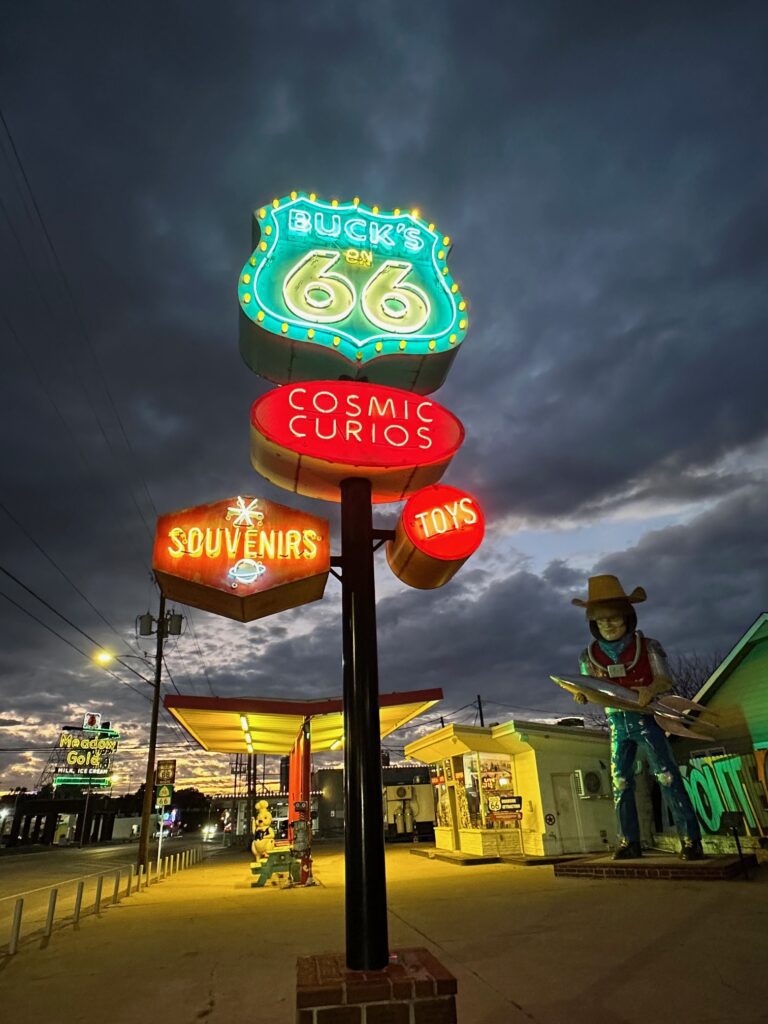
Route 66 in Tulsa is available at the Museum of Tulsa History, Buck Atom’s Cosmic Curios and online at amazon.com.
Main image cutline: This photo from the 1950s showcases Tulsa’s Meadow Gold sign in its original location on 11th St. at Lewis Ave. The sign was later refurbished and moved two miles west. Photo courtesy Beryl Ford Collection/Rotary Club of Tulsa