
















Before there were “she-sheds,” Marie Antoinette had the ultimate girl getaway: the Petit Trianon and an adjacent hamlet. This sanctuary was a recreated village paradise where France’s queen introduced her children to pastoral life, nature and simplicity while also entertaining her friends as a respite from palace life. Nowadays, we call it wellness or self care.
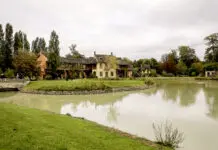
This hamlet had it all; a working farm, vegetable crops and fresh eggs in the countryside with a man-made lake. Also on site was a fisherman’s cottage, a guard house and the Marlborough Tower. They say it takes a village to raise a child … and apparently also to relax a queen.
Petit Trianon is, well, petite indeed; a miniature version of a grander manor and a mere fraction of space compared to the Palace of Versailles. Reportedly, there was a billiard house, a wooden gallery, a boudoir and a barn which served as an occasional ballroom. There were vineyards, orchards and twelve cottages: five for the Queen and seven for agriculture. The hamlet experienced a restoration ordered by Napoleon circa 1810-1812 and a second one in the 1930’s to save it from ruin. This restoration was especially sentimental, since Napoleon married Marie-Louise of Austria, a descendant of Marie Antoinette. During the nineteenth century, the farm vanished but was reconstructed in 2006.
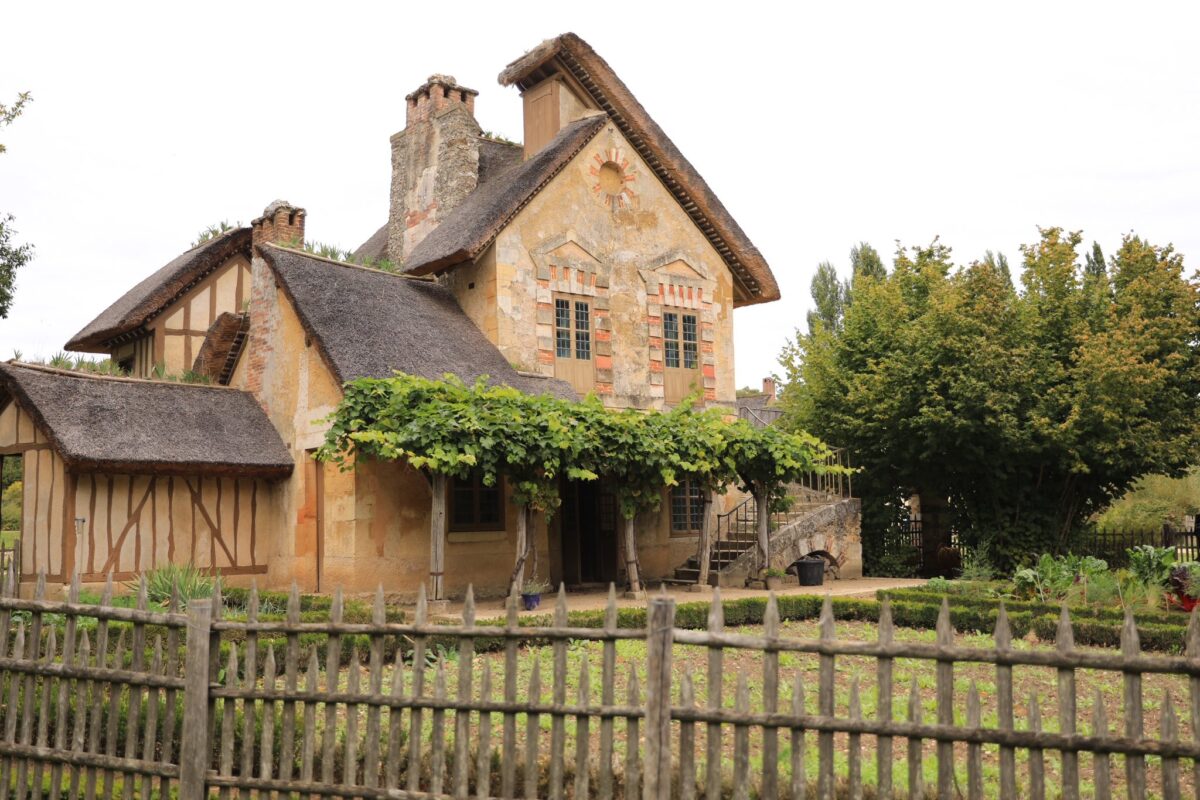
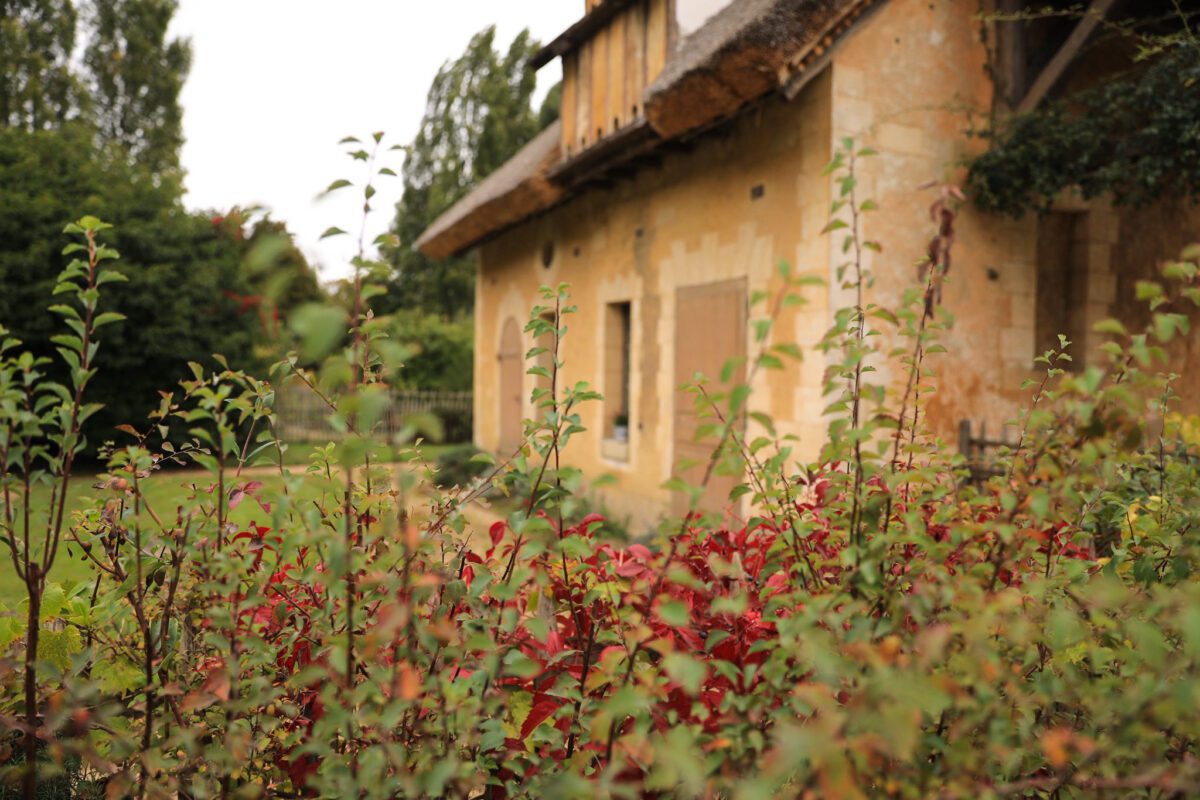
All the courtly enjoyment of this bucolic life is thanks to the architect, Richard Mique, whose design was inspired by Norman and Flemish style. A trend in art called naturalism contributed to the French aristocrats emulating the simplicity with a countrified wardrobe, like the adaptation of wearing muslin dresses and sun hats. The blandishment of this hamlet lifestyle caused rumors of the aristocrats enacting a sense of “cosplay” of being shepherds and shepherdesses while still enjoying their social rank. The sylvan charisma of thatched roof architecture and timbered facades was a vast contrast and escape from the Court of Versailles.
The hamlet is ensconced in the country, quite a distance from the Palace of Versailles and requiring a bumpy carriage ride on cobbled paths. Even today, tourists reach it by a rickety carriage ride giving tourists an authentic experience of historic times.
The distance of Versailles from Paris is significant and involves an approximate hour commute. When you arrive to Versailles and walk the grounds, you are surrounded by a wreath-like view of hilly trees in the landscape. It’s easy to see how the royals were literally unaware of local life back in Paris. After all, Versailles was chosen by King Louis XIV to be a royal dwelling purposely removed from Paris. They were distanced from it physically and mentally, perhaps. The latter surely led to their eventual demise.
While the Palace of Versailles is ostentatious, there are many impressive palaces worldwide. However, the uniqueness of the Queen’s Hamlet made more of an impression on this travel writer. The purpose behind it, the ethereal quality of its ambiance, and the vicarious understanding of the royals’ wellness retreat is a rare experience to witness.
Strolling through it, you hear visitors remark, “this is a dream job for a gardener,” and conversations regarding this ensue with the gardening staff.
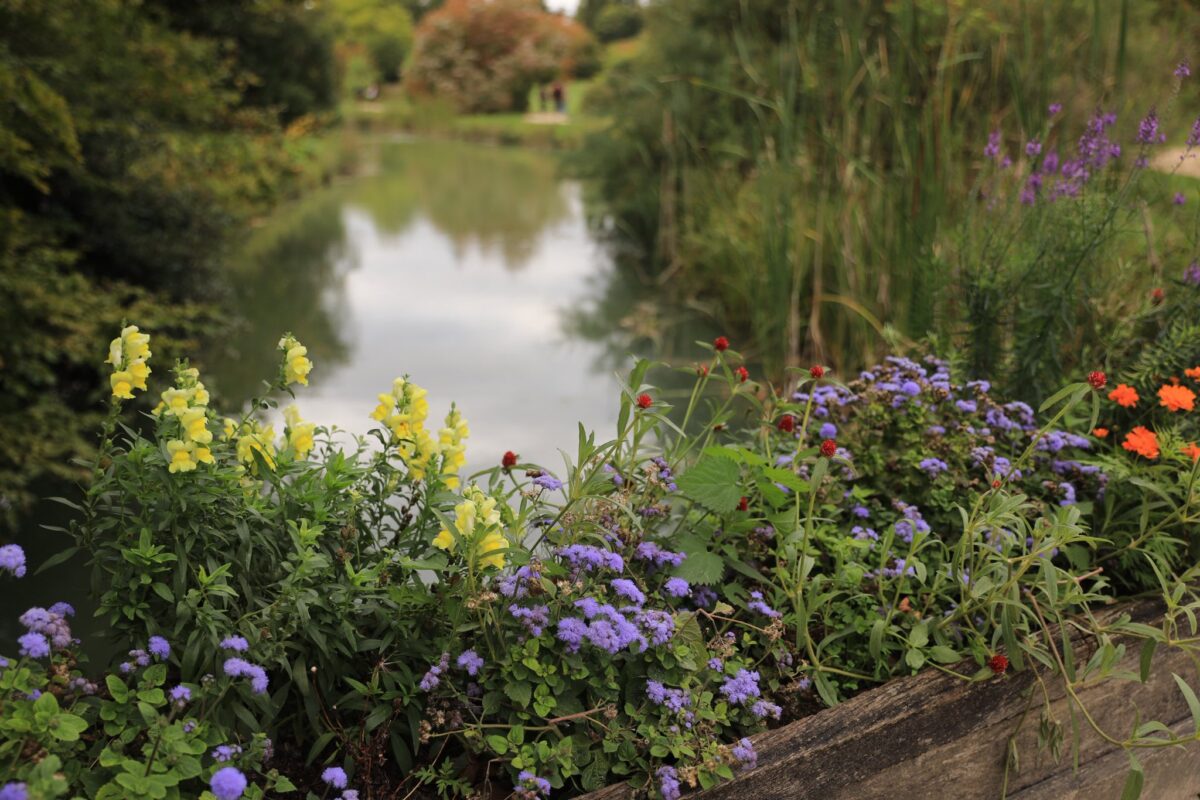
Massive pumpkins and gourds next to florals, vines and wildflowers romantically lead one around the hamlet towards the farm animal pens. What a symbolism that even royals living in a palace think the grass is always greener somewhere … and in this case, it’s not in the neighbor’s yard but in the Queen’s Hamlet. After all, Marie Antoinette experienced sitting on royal thrones to gliding in a vessel on her hamlet’s lake, seeking the simple pleasures in life.