





















Home Blog Page 3

Spring on Stage

Mamma Mia!; photo by Joan Marcus

Spring isn’t the only thing blooming this month – stages across Oklahoma are bursting to life, too.

In Tulsa, the Tulsa Symphony Orchestra launches the lineup with Schubert’s Symphony No. 9 on April 4 at the Tulsa Performing Arts Center. Celebrity Attractions brings the crowd-pleasing jukebox musical Mamma Mia! to town April 7-12. Later in the month, Theatre Tulsa presents the classic Gypsy April 24-26, followed by Tulsa Ballet performing Marilyn April 30-May 3. You can also catch Signature Symphony’s patriotic Tulsa Sings! America @250 concert April 25 at the TCC VanTrease PACE.

Over in Oklahoma City, the OKC Philharmonic offers two standout concerts at the Civic Center Music Hall: Brahms & Bronfman on April 4 and Disney in Concert – Once Upon a Time on April 17-18. Meanwhile, OKC Broadway brings the hit musical Hell’s Kitchen to town April 7-12. If you still haven’t gotten your fill, Armstrong Choral Union performs April 26 at Armstrong Auditorium.

Looking for something a little different? On April 4, head to the Wichita Mountains Wildlife Refuge near Indiahoma for the long-running Holy City of the Wichitas Easter Passion Play. Or wrap up the month with the Duncan Little Theatre’s Shakespearean Festival, April 24-25 in Duncan.

April Around Town

If your April calendar isn’t full yet, it’s about to be, with communities across Oklahoma are rolling out festivals, markets and celebrations all month long.

In Tulsa, kick things off at the Tulsa Performing Arts Center when Tulsa Town Hall welcomes journalist Steve Hartman on April 3. Flower lovers have plenty to choose from, including Art in Bloom at Philbrook Museum of Art (April 3-5), Springfest (April 10-11) at the Tulsa Garden Center and Tulsa Botanic Blooms running through April 30 at the Tulsa Botanic Garden. Later in the month, explore Native artistry at the Mvskoke Art Market (April 18-19) at River Spirit Casino Resort, or step back in time at the Oklahoma Renaissance Festival, running April 25-May 31 at the Castle of Muskogee.

In Oklahoma City, festivities start early with the Cruisin’ 23rd: Route 66 Centennial Celebration on April 11, honoring the legendary U.S. Route 66 with a car show, live music and local vendors. Celebrate the planet at Earth Fest on April 18 at Scissortail Park, then head downtown for the iconic Festival of the Arts at Bicentennial Park from April 23-26, often dubbed OKC’s “rite of spring.” The month closes with the powerful community tradition of the Oklahoma City Memorial Marathon, beginning at the Oklahoma City National Memorial & Museum on April 24-26.

Spring festivals abound elsewhere, too: the Azalea Festival continues through April 30 at Muskogee’s Honor Heights Park; the Norman Medieval Fair arrives April 10-12 at Reaves Park; the Red Dirt Film Festival screens cinematic gems April 17-19 in Stillwater; and the beloved Norman Music Festival returns to rock Main Street April 23-25.

Game Time, Oklahoma!

Zoo Run; photo courtesy the Tulsa Zoo

April is packed with action for sports fans of every stripe.

In Tulsa, equestrian enthusiasts can head to Expo Square for two major events: the Oklahoma Quarter Horse Association Spring Show (April 2-5) and the National Reining Breeders Classic (April 14-25). On the ice, the Tulsa Oilers hit the rink April 10-12 and 17 at the BOK Center, while the Tulsa Oilers football squad takes on the Fishers Freight April 18 at the same venue. Prefer to compete instead of spectate? Lace up for the ZooRun at the Tulsa Zoo on April 18, with distances for runners of all levels. The month wraps with fight-night excitement: XFN 408 on April 24 at River Spirit Casino Resort and Smoke and Guns XI – where firefighters and police square off for charity – on April 25 at the BOK Center.

In Oklahoma City, No. 1 ranked Oklahoma City Thunder close out regular-season home games April 2, 5 and 12 at the Paycom Center. Rodeo fans can catch the Cinch Breakaway National Championships April 10-12 at OKC Fair Park, while endurance athletes take over Nichols Hills Plaza for the Red Bud Classic on April 11-12, featuring running, cycling, walking and marathon events.

On the Big Screen

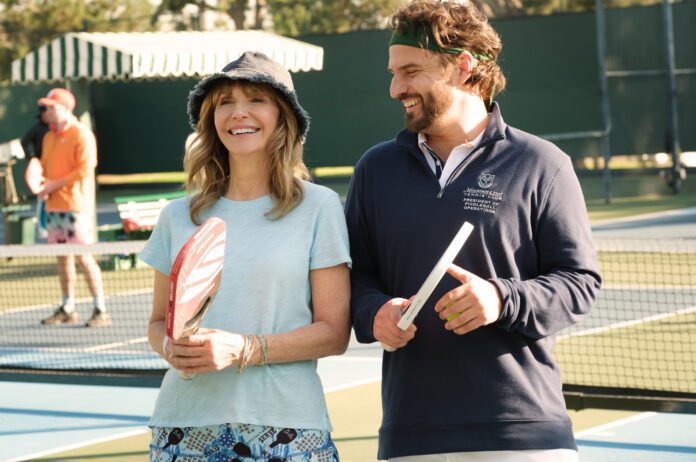
Bob Odenkirk and Jess Mcleod in Normal. Photo courtesy of Magnolia Film; a Magnolia Pictures Release.

April is here – and it’s bringing a packed lineup of films. With such a wide variety hitting theaters, there’s bound to be something worth the ticket price.

For your animation fix, check out The Super Mario Galaxy Movie. A sequel to The Super Mario Bros. Movie (2023), this new entry looks to bring back all the family fun and spectacle while heading into outer space. Chris Pratt (Jurassic World), Anya Taylor-Joy (The Menu), Charlie Day (Horrible Bosses) and Jack Black (School of Rock) all return as Mario, Peach, Luigi and Bowser, respectively, along with newcomer Brie Larson (Room) as the outer space Princess Rosalina. The animation looks slick, and plenty more Mario characters show up in what looks to be a perfect film to take the entire family to when it releases on April 1. 

For a romantic (?) dramedy, look no further than The Drama. Starring Zendaya (Dune: Part Two) and Robert Pattison (The Batman), the plot follows a couple just days before their wedding who must deal with newly discovered information about each other. The trailer is deeply uncomfortable, with the “comedy” seemingly rooted in how painfully awkward it becomes to watch two people navigate conflict on what should be one of the happiest days of their lives.We’ll all see how weird it can get when it drops on April 3.

If you want pure action, don’t miss Normal. The story follows Ulysses, played by Bob Odenkirk (Better Call Saul), who arrives in the town of Normal, Minnesota, to take over as temporary sheriff – where he learns quickly that the town has deep criminal ties. The cast also includes Henry Winkler (Barry) and Lena Headey (Game of Thrones) and should shape up to be a fun and suspenseful time at the theater. Odenkirk is a joy in his newfound action roles, so with any luck, he’ll make this worth viewing when it releases on April 17.

For a family drama with Scottish flair, we’ve got Glenrothan. The plot concerns Donal and Sandy, two brothers who have not seen each other in 35 years, reuniting in their native Scotland to make amends. Starring Brian Cox (Succession) and Alan Cumming (Schmigadoon!), this film will also be Cox’s directorial debut at the age of 79 – showing it truly is never too late to try something new. The trailer has charm and wit in droves, and the banter will likely be exquisite when it hits theaters on April 17. 

Lastly, the music biopic of the year: Michael. Telling the story of Michael Jackson from an early age to the beginning of his solo career, Michael has been mired in alleged production issues and writing changes, muddying the waters on whether this would be a sugar coated story or not. Jackson’s nephew Jaafar Jackson will play the title role, and we’ll soon see if this is just another run of the mill biopic or something that, like its subject matter, stands the test of time. It releases on April 24.

Sean Kouplen

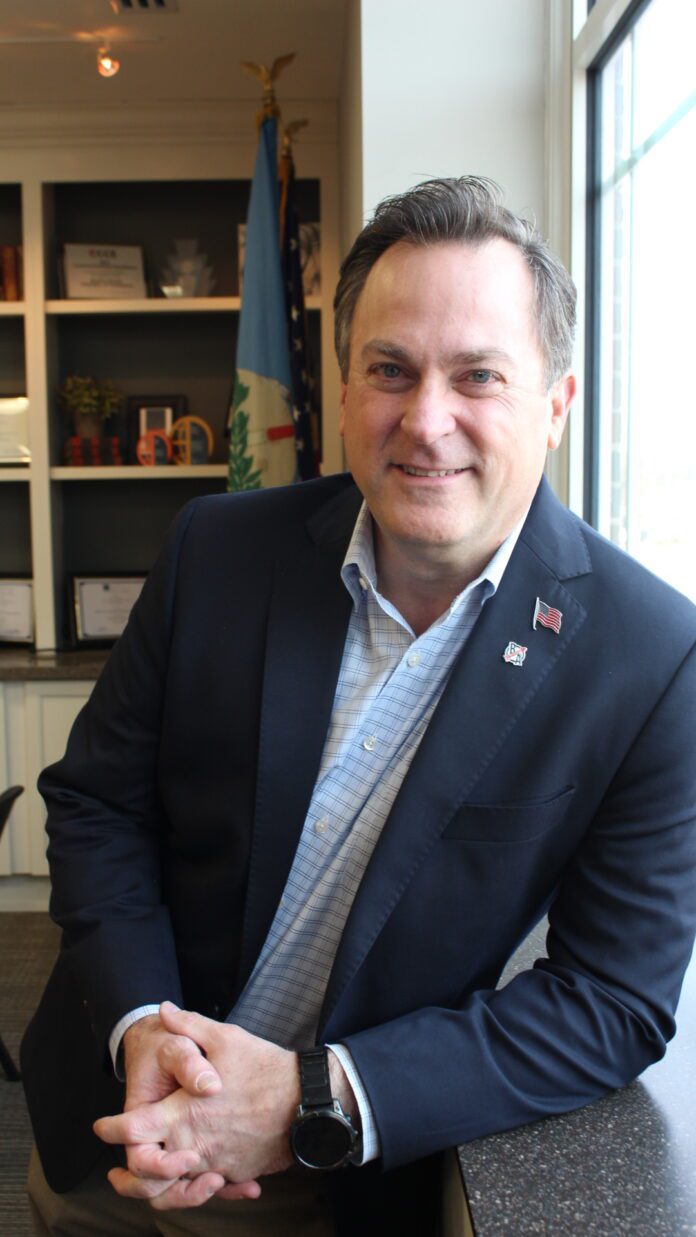
Photo courtesy Regent Bank

Chairman and CEO of Regent Bank and one of the principal organizers of Regent Capital Corporation, Sean Kouplen has lead the company since 2008. Kouplen previously served as Oklahoma’s Secretary of Commerce and Workforce Development and remains active in numerous local and statewide leadership roles. We caught up with Kouplen and got his thoughts on … 

… his proudest accomplishments.

I wish everyone could have the opportunity to live out their dream. My experience with Regent Bank has been just that. From raising the initial capital and purchasing a small community bank in Nowata in 2008 to entering our fourth state and eclipsing $2 billion in assets earlier this year, serving as CEO of Regent Bank has been one of the greatest blessings of my life. I am extremely grateful.  

We have experienced so many wonderful accomplishments including surviving the great financial crisis of 2008-2010, expanding rapidly, serving our communities and winning so many awards. But the highlight of my Regent Bank experience has been bringing my faith into the workplace. This has given our employees a greater purpose and a new level of care in our workplace. I’ve watched it change lives and save marriages. There’s nothing better than that, and this is why we developed the 94X faith at work movement so we can help other businesses experience the same blessing.  

… how his leadership style has evolved since his early days. 

Hopefully, it is a 180-degree difference. I have always loved people, but early in my career, I was very insecure. I was always trying to prove myself and make myself look good. I felt that I always had to be right and I was way too concerned with my personal brand.  

As I’ve grown older, I’ve learned that none of this makes a great leader. Leadership is about serving your employees. Today, I try to focus on listening well, being vulnerable and asking for help. Glorifying God and serving our employees is much more important than my personal reputation or standing. I am still very competitive and have high expectations, but I realize that a great company is really about building the best culture and team. The president or CEO gets way too much credit when a company is successful.  

… the responsibilities local banks have to their communities.

Where you bank really does matter. In 1990, there were over 15,000 banks in our country. Today, there are 4,379. The top ten U.S. banks control over 60% of the assets. This is concerning because community banks like Regent Bank are proven to charge lower fees, provide more credit to small businesses and support their local community at a higher level. The value of community banks is really an issue of proximity. We are all most focused and generous in our hometowns, and this is where community banks live, work, worship and play. The executives of national institutions may have never even visited Oklahoma, so they just aren’t going to be as committed to our communities. I believe the community bank is the cornerstone of the community.  Providing competitive products and access to credit for local business, nonprofits and families is critical, but so are donations of time and money to charities and involvement with local charities. 

… what Oklahoma businesses need most right now to grow.

I thoroughly enjoyed my time as Oklahoma Secretary of Commerce and Workforce Development, and I’m very grateful to Gov. Stitt for giving me the opportunity. However, I believe that the greatest impact in our community or state actually comes from the private sector. We have made tremendous progress as a state, but I was never successful in convincing our state leadership to fund a marketing plan for Oklahoma. We are competing with every other state for talent and investment, yet we don’t invest materially in developing our brand on a national scale. I think Oklahoma is one of our country’s best kept secrets and we need to do a better job of telling our story.  

When you study the largest companies in Oklahoma, you find that almost all of them started here. I believe our state should focus less on recruiting large new businesses into the state and focus more on helping our existing businesses to grow. Regent Bank has added over 220 new jobs to our economy since we started, and our state would pay millions to attract a company like that. I believe state incentive dollars should shift to help new businesses get started here and reward existing companies for growth. Finally, to grow and thrive, Oklahoma businesses need a quality workforce.  Our educational rankings are unacceptable and our state should make education the highest priority at all levels: K-12, career tech, trade schools and college/universities.

… the future of Regent Bank.

I believe Regent Bank is just getting started. We just acquired a wonderful community bank in North Central Florida and hired a fantastic team of bankers in Dallas. We are so blessed to continue attracting remarkably talented people. The bank has grown to a level where our lending limit is over $50 million per client and we can serve almost any business in our market area. We also have the resources and expertise to deploy the best in technology so our clients can enjoy the personal touch of a community bank and the best digital experience as well.

The banking industry is evolving very rapidly, and we are making some exciting investments to serve our clients more efficiently. Our executive team is one of the youngest in the industry. We are innovative and have a collaborative culture.Regent Bank is built to last for the long haul, and I truly believe the best is yet to come.  

… how he resets at the end of the day. 

I love to call my extended family, or my girls who are at college, on the way home. That always puts everything into perspective. I also pray at the end of every day to thank God for the many blessings he gave me during that day. When we live a life of gratitude, a lot of the little things that bother us during the day tend to fade away.  

Securing Oklahoma’s Digital Future

At the University of Tulsa, cybersecurity students combine technical training and research focused on protecting critical infrastructure, including energy and defense systems. Photo courtesy the University of Tulsa

Cybersecurity has moved from a back-office IT concern to a frontline issue affecting public safety, economic stability and national defense. As ransomware attacks disrupt hospitals, cybercriminals target utilities, and foreign adversaries probe government networks, Oklahoma is investing heavily in education and partnerships to prepare a workforce capable of defending critical systems.

The demand for cybersecurity professionals is growing because nearly every organization depends on interconnected digital infrastructure. Power, water, transportation, banking and healthcare systems all rely on networks that allow efficiency – but also expose vulnerabilities. At the same time, attacks are becoming more sophisticated and more costly, forcing organizations of all sizes to strengthen their defenses.

 “Cybersecurity is really about protecting trust,” says Christopher Freeze, Ph.D., assistant professor of cybersecurity at the University of Oklahoma’s Polytechnic Institute. Freeze emphasizes that cybersecurity is no longer simply a technical issue, but a business and national security concern. Federal requirements tied to defense contracting and infrastructure protection have raised expectations for preparedness, driving demand for professionals who understand complex systems, people and risk management.

Oklahoma’s response is shaped by its strategic importance. The state is home to critical energy infrastructure, major transportation corridors, tribal governments and several military installations, including Tinker Air Force Base and Fort Sill. Those assets make Oklahoma both valuable and vulnerable. In response, collaboration among universities, government agencies, military partners and private industries has increased, creating pathways for talent development and information sharing.

Universities play a central role in that effort, too. Programs across the state emphasize applied learning through hands-on labs, simulated environments and real-world scenarios. Students train on virtual networks, analyze cyber incidents and practice decision-making under pressure. Cyber ranges allow them to experience realistic attack scenarios while remaining in controlled settings.

 “Students should graduate ready to contribute in the workplace from day one,” Freeze says.

Students at the University of Oklahoma’s Polytechnic Institute train in hands-on cybersecurity labs, using simulated networks and cyber ranges to prepare for real-world threat scenarios. Photo courtesy the OU Polytechnic Institute

Cybersecurity education also extends beyond technical skills. Programs incorporate communication, leadership and policy training to prepare students to brief executives, justify security decisions and manage organizational risk. Certifications such as CompTIA Security+, penetration-testing credentials and leadership-focused certifications are embedded into coursework to align academic learning with industry expectations.

At the University of Tulsa, cybersecurity education is paired with research and statewide outreach. Faculty conduct research focused on protecting critical infrastructure, particularly in the energy sector, while also training students at the undergraduate and graduate levels.

“Cybersecurity is all about protecting the confidentiality, integrity and availability of information,” says Tyler Moore, Ph.D., Tandy Professor of Cyber Security and Information Assurance at TU. “Cybersecurity requires both technical skill – coding, system administration, network forensics – and organizational knowledge – economics, psychology and management.”

Partnerships with organizations such as Tinker Air Force Base, the FAA, Fort Sill and private technology firms further strengthen student preparation. Internships, research collaborations and workforce pipelines allow students to transition directly into roles supporting defense, aviation, energy and intelligence missions.

Graduates pursue careers as security analysts, risk managers, compliance specialists and leaders in government, industry and national security agencies. As cyber threats continue to evolve, Oklahoma’s growing cybersecurity ecosystem is positioning the state not only to respond, but to lead.

The Crossroads of Nostalgia and Necessity

Shoppers gather at Tulsa Premium Outlets in Jenks, one of the state’s thriving malls drawing visitors with retail, dining and outdoor gathering spaces. Photo courtesy Tulsa Premium Outlets

A cornerstone of 1980s suburban life, the mall was once a place for teenagers to hang out, parents to browse and where culture took shape under fluorescent lights. But these sprawling retail hubs now sit at the crossroads of nostalgia and necessity, and are being reimagined not only as places to shop, but also as places to gather and connect.

Now largely a vacant space, the Crossroads Mall in Oklahoma City is partially occupied by the Santa Fe South Charter Schools, and was purchased by the nonprofit Crossroads Renewal Project, led by school superintendent Chris Brewster. With the help of Storyland Studios, a firm specializing in strategy, architecture and design, the vision for the space is a community-focused redevelopment with housing, retail and educational offerings.

“We’ve been helping them imagine what it could look like to kind of create an indoor main street and unpaved paradise, an area that really encourages human flourishing,” says project director Zach Miller.

While the finished project will welcome folks from around the city, Miller mentions that preserving the area’s culture is a priority.

“The team at Crossroads has been very diligent in advocating strongly to make sure that what we’re doing is taking the story that’s already being told in that area, the culture that’s there and the people who are there, and shining a light on the best version of that area,” he says.

Other fledgling mall spaces aren’t so lucky, like Promenade in Tulsa. Once a thriving shopping center, Promenade shut down in 2023 due to safety violations, being deemed “unfit for human occupancy” by the City of Tulsa. It’s currently owned by Kohan Retail Investment Group, but its future remains uncertain as communication between the owner and the city has been limited.

A rendering of the proposed Crossroads redevelopment in Oklahoma City shows the former mall reimagined as an indoor main street with housing, retail and educational spaces. Rendering courtesy Storyland Studios

One concept that’s stood the test of time? The outlet mall. As traditional enclosed malls began to lose their footing, outlet centers gained momentum by offering something shoppers still want: value, simplicity and a reason to make the trip. 

A new build, Tulsa Premium Outlets in Jenks is thriving. With more than 75 retailers and casual eateries, plus a 20,000 square-foot children’s play area, green spaces for gathering, a fire pit and a fountain, people come from near and far for more than shopping.

“Today’s modern and thriving shopping centers are truly mixed-use destinations,” says Hannah Daab, director of marketing and business development for Tulsa Premium Outlets, “where all aspects work together – anchors, individual retail brands, restaurants, entertainment, lifestyle and more – which is what Tulsa Premium Outlets has brought to Jenks and beyond.”

And she says Premium Outlets will continue to boom, even in the digital age.

“Today’s consumer doesn’t want to only shop in-store or only shop online, they want both,” Daab says. “Studies show that shoppers still prefer to touch and try before they buy, so we will continually strive to provide the newest retail concepts and trend-driven experiences to our visitors.”

Weather, Simplified

A statewide network of Oklahoma Mesonet stations collects and delivers research-quality weather data every five minutes, supporting industries, public safety and communities across all 77 counties. Photo courtesy the Oklahoma Mesonet

The Oklahoma Mesonet, designed and implemented by scientists at the University of Oklahoma (OU) and at Oklahoma State University (OSU), is a world-class network of environmental monitoring stations. The entity is unique because it is the only state Mesonet operated as a 50/50 partnership between two competing flagship universities.

The Oklahoma Mesonet was commissioned on January 1, 1994, and consists of 120 automated stations covering the state, with site locations in all 77 counties in Oklahoma.

“When the Oklahoma Mesonet was created more than 30 years ago, computers and IT infrastructure were vastly different from what we have today. However, our forward-thinking founders recognized the future potential of the internet and how it could be used to disseminate weather information to core users,” says Cindy Luttrell, director of the Oklahoma Mesonet.

Early on, the station computers could only store five days of observations, but as technology evolved, so did the Mesonet, which can now store several years of data locally. It is also now possible for the weather events to be collected, processed and disseminated every five minutes, 24 hours per day, year-round.

The Mesonet monitors weather events, such as thunderstorms, wind gusts, heat bursts and dry lines that range in size from one mile to about 150 miles. The commitments between the two universities have built long-standing, trusted relationships with professionals across weather, climate, agriculture, energy, public safety and education to offer more than just simple weather monitoring.

“A core value of the Oklahoma Mesonet is providing research-quality weather observations that are useful across all industries. We maintain rigorous standards for site selection, station maintenance and data quality to ensure that observations shared with the public are accurate, representative and reliable,” says Luttrell. “Equally important, we place strong emphasis on making sure the final products are useful and actionable.” 

Although there are other networks that are now referred to as ‘mesonets’ that existed prior to 1994, their scope was typically limited to agricultural applications; however, the Oklahoma Mesonet was groundbreaking because it was designed from the outset as a statewide, multipurpose weather monitoring network built to research-quality standards that served a broader purpose and use base.

The partnership between OU and OSU have allowed for the development of tools that place weather observations into context for specific needs, including crop disease advisories, irrigation planning tools, spray drift advisories and agricultural fire management tools; prescribed burning and fire management tools for agriculture and fire professionals; weather training and visualization tools for public safety officials; and a wide range of accumulation, extremes and real-time observation products for weather and climate professionals.

These observations are delivered in multiple formats, including text products, APIs and static and interactive maps, to meet the needs of residents, businesses, and farmers in Oklahoma. 

The Mesonet data is a highly trusted resource during extreme weather events due to high observational standards that are upheld by those who monitor the Oklahoma Mesonet.

Many U.S. states and international partners have sought the guidance of the Oklahoma Mesonet in developing or improving their own mesonets, which has helped foster a collaborative community of mesonet operators who regularly share ideas and solutions.

“While our commission to provide useful, real-time weather observations remains unchanged, we will continue to adapt to new technologies and the evolving needs of our users well into the future,” Luttrell says.

Main image cutline: A statewide network of Oklahoma Mesonet stations collects and delivers research-quality weather data every five minutes, supporting industries, public safety and communities across all 77 counties. Photo courtesy the Oklahoma Mesonet

Watching Over Oklahoma’s Waters

Grand Lake O’ the Cherokees, one of three lakes managed by the Grand River Dam Authority, is monitored year-round for water quality, infrastructure performance and environmental health. Photo courtesy GRDA

Representing a fragile ecosystem, freshwater lakes in Oklahoma present a particular challenge from Oklahoma’s sometimes-extreme weather. 

With that in mind, the Oklahoma Water Resources Board (OWRB) – which oversees about 3,000 lakes and large ponds throughout the state – and the Grand River Dam Authority (GRDA) – which oversees water in eastern Oklahoma – keep a vigilant eye on water quality year-round.

Darla Whitley, administrator for the OWRB, notes that lakes, ponds and streams “touch the lives of every Oklahoman.” She says many Oklahoma lakes are formed by “jurisdictional dams” that, on average, are more than 60 years old. 

“As these systems mature, careful monitoring of structural integrity, storage capacity, water quality and ecosystem health becomes increasingly important,” she says.

Shifting weather patterns don’t help. To assist, the OWRB has developed a plan with a goal of ensuring that “communities, industries and ecosystems continue to have the water they need from our lakes,” says Whitley. 

Maintaining that consistent water quality is also the goal of the GRDA, which manages three lakes in eastern Oklahoma, including Grand Lake O’ the Cherokees, and in total, oversees some 70,000 surface lake waters.

Justin Alberty, GRDA spokesperson, says the lakes, which also include Lake Hudson and the R.W. Holway Reservoir, have fared well in Oklahoma’s fickle and sometimes harsh weather – even through extreme cold snaps such as the conditions experienced in February 2021, when temperatures plunged to near zero degrees. 

“Managing the infrastructure during such cold extremes can be challenging,” Alberty says, “but the GRDA team handled it well. [We have] a very active and comprehensive water quality monitoring program.”

Monitors check for E. coli bacteria, algae and invasive species such as zebra mussels. The association also operates a water quality laboratory at Langley and another at Northeastern State University in Tahlequah that mainly focuses on water quality of the recreationally popular Illinois River. 

Alberty says that the GRDA has several programs that support conservation, reclamation, habitat enhancement and shoreline maintenance around the shores of its lakes. 

One challenge, he mentions, presents itself mainly in spring, when Oklahoma has bouts of high water from excessive rainfall. Last year was one of the wettest years on record for Oklahoma, and Alberty says several floodgate operations were completed at the direction of the U.S. Army Corps of Engineers at the Pensacola Dam that forms Grand Lake, and at the Robert S. Kerr dam that forms Lake Hudson.

When those situations occur, Alberty says, “the Corps orders release rates that are consistent with downstream conditions and projected river crests.”

Likewise, Whitley mentions, the OWRB routinely measures water levels along with chemical and biological indicators to catch emerging problems early. The OWRB’s hazard mitigation plan for 2025 strongly emphasized the importance of water resilience, calling for sustained investment, sound science and proactive management.

Whitley says the OWRB anticipates possible consideration of legislation supporting those goals from the state legislature. 

“Updating infrastructure, strengthening monitoring programs and planning for drought, flooding and other risks will ensure Oklahoma lakes remain reliable for future generations,” she says.

For More Information:

Oklahoma Water Resources Board
405-530-8800
oklahoma.gov/owrb

Grand River Dam Authority
918-256-0911
grda.com

Longing for Something Simple

At Mi Tea, carefully prepared cups and an inviting atmosphere turn tea drinking into a modern ritual centered on wellness, style and community. Photo courtesy Mi Tea

Teatime is not just for British blokes or grannies wearing lacy white gloves. Oh, no. Gen Z and Millennials are swimming in the tea revolution as they prioritize wellness, cultural values, ceremony, comfort … and beautiful social media moments.

“TikTok/social media is a big driving force for the growth of tea culture at the moment,” says Jonathan Khalilian, who ditched a job in academia to open his Japanese tea house, Brushwood Tea, in Warr Acres. 

Social media is brimming with influencers carrying beautiful cups of tea, especially Japan’s trendy green iteration, matcha. “Teatox” influencer Kim Kardashian and her sister Kourtney frequently tout the beauty and health aspects of matcha tea on social media.

“I don’t know how matcha went so crazy so fast besides social media,” says TaNesha Rushing, a singer/songwriter who founded Mi Tea Lounge, a Tulsa Philtower Building venue that showcases musicians, sea moss and teas. One such tea is her proprietary brand crafted to relieve a scratchy throat.

“It’s a ‘richy’ looking thing … walking around with the tea and feeling demure,” says Rushing. “It’s a thing.”

A Surprising Revolution

An eye-opening restaurant trend report reveals that people drink more tea than coffee in Oklahoma and 29 other states. From Tulsa’s Art Deco elegance to Luther’s gentle countryside, Oklahomans are swapping cups of joe for natural, wellness-centered ingredients. 

At Luther’s Wild Clover Farm, herbs are grown and harvested. Owner Lisa Shelden sells them online at wildcloverfarm.com. Photo courtesy Wild Clover Farm

“Everyone just kind of went on this whole thing of wanting to eat and drink better,” Rushing says. 

Affection for tea – a beverage so coveted that Britain dispatched a botanist spy in the 1880s to steal China’s tea secrets – is grounded in today’s physical and mental health craze.

Drinking 1.5-3 cups of tea daily can lower blood pressure and cholesterol, while reducing risks of heart attack, stroke and dementia, though research shows tea drinkers’ healthy lifestyle may be a major factor. Coffee imparts similar benefits, sure, but tea provides a calmer, sustained focus without coffee’s caffeine crash, says Harvard Health.

Simple Life

In Warr Acres, Brushwood Tea fills as Khalilian mixes potions. The door swings open for William Williams, sporting a reddish beard, wire-rimmed glasses and a tailored green coat. Whisking matcha into a froth, Khalilian glances over his shoulder. 

“Hi William,” he calls out. 

Khalilian, a tea industry veteran and student at the Prague tea school Urasenke Chado School, appears composed as the crowd grows. At one table, a couple enjoys their tea and speaks in Japanese.

At a corner table, Jacob Markstone, his wife, Samantha, and son, Sam, are armed with massive tea bowls. They’re deftly swapping cards and sipping Sam’s favorite – maple bourbon vanilla matcha.

Their Saturday family tradition began after Markstone surprised Khalilian in February 2025 as he prepared to open.

“I’ve been in almost every day since then,” Markstone says. “And I’ve tried all of his teas.” 

About 30 miles northeast, the owner of Wild Clover Farm contemplates the growing tea culture.

“Tea is simple and it’s kind,” says Lisa Shelden, who sells home-grown herbs online, and eggs from hens like Hazel and Violet. “Society is in chaos. I think that people are longing for something simple.”