





















The New Higher Education Landscape
A university education is expensive, and today’s students are increasingly seeking accommodations such as flexible schedules and better mental health support.
At Oklahoma Panhandle State University, “we do not equate flexibility with less rigor,” says university president Julie Dinger, Ph.D. “We see it as a modern delivery method paired with clear expectations. We are expanding both real-time and asynchronous options that reflect how students live and work today, including jobs, family responsibilities and rural distance, while still holding firm on professional standards such as attendance, deadlines, communication and integrity.”
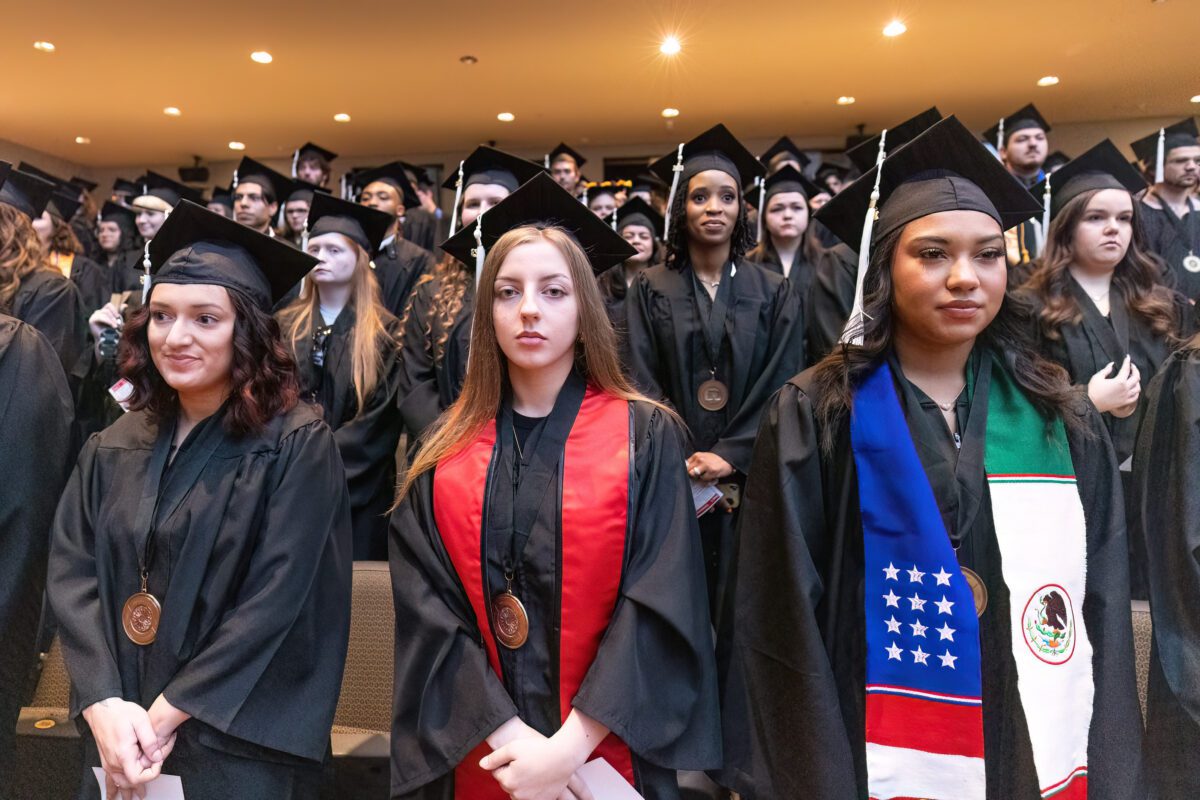
Dinger says many OPSU programs offer flexible schedules, “but they still demand performance, communication and reliability, which are the skills employers consistently seek in OPSU graduates. Real-world readiness is the through-line in all of this.”
OPSU has expanded mental health support “in ways that meet students where they are,” Dinger says.
“In addition to a full-time licensed counselor on campus, OPSU students have free, 24/7 access to virtual health and well-being services through TimelyCare. This includes on-demand emotional support, scheduled counseling and self-care resources, with no insurance required. In a rural region like ours, on-demand access matters, and it reduces stigma by allowing students to seek help privately and quickly,” Dinger says.
Today’s higher education landscape is also competitive, as students and their families search for the universities they think will give them their best return on investment.
At the University of Oklahoma, “building relationships with prospective students and their families is one of our top priorities,” says Danielle Dunn, assistant vice president and director of communications and marketing for the Division of Enrollment Management. “The earlier we can connect with students and start building those relationships, the more we can help them through the college selection process.”
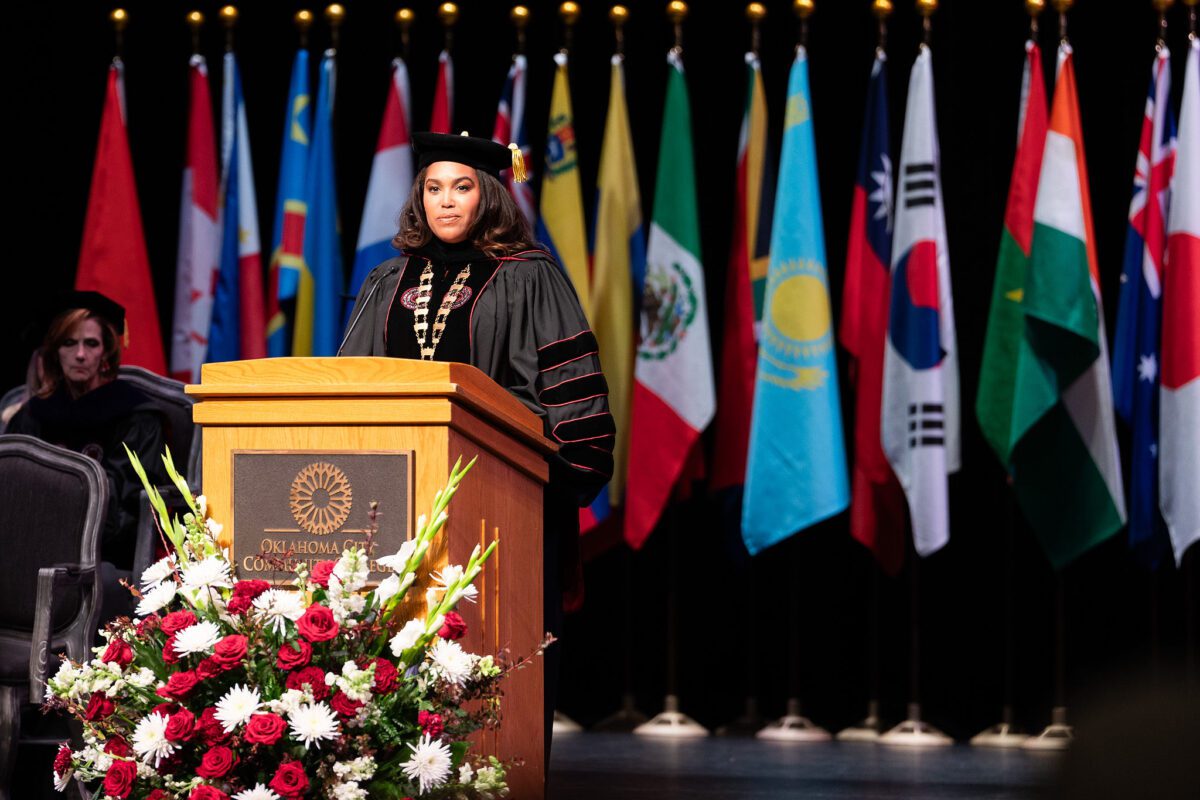
Dinger says that at OPSU, “we compete by being unmistakably clear about our value. OPSU offers a high-touch, workforce-aligned education that is affordable and truly life-changing for rural Oklahoma and the broader region. At the same time, we are doing the hard internal work required to remain strong and sustainable for the long term. One example is the expansion of career-focused pathways through programs like Panhandle Tech, which allows high school students to earn college credit while completing a career certificate before they graduate.”
Along with student and family relationships, OU works “to build positive working relationships with high school administrators, teachers and community partners,” Dunn says. “As part of the recruitment process, prospective students and their families can tour campus, meet with professors and academic deans, engage with student life, participate in events and talk with current students. It is important students start to imagine themselves as members of the OU community.”
OPSU is ranked No. 1 in Oklahoma for affordability by NASDAQ and No. 1 for social mobility by Third Way and U.S. News and World Report, Dinger says.
“These outcomes reflect our commitment to access, student success and meaningful return on investment for students and families,” she says.
Dunn says that “throughout a student’s college journey, we communicate the value of an OU education, not just for the next four years, but for a lifetime. We know college is a significant investment, and OU is committed to affordability and access.”
The Ethics of AI
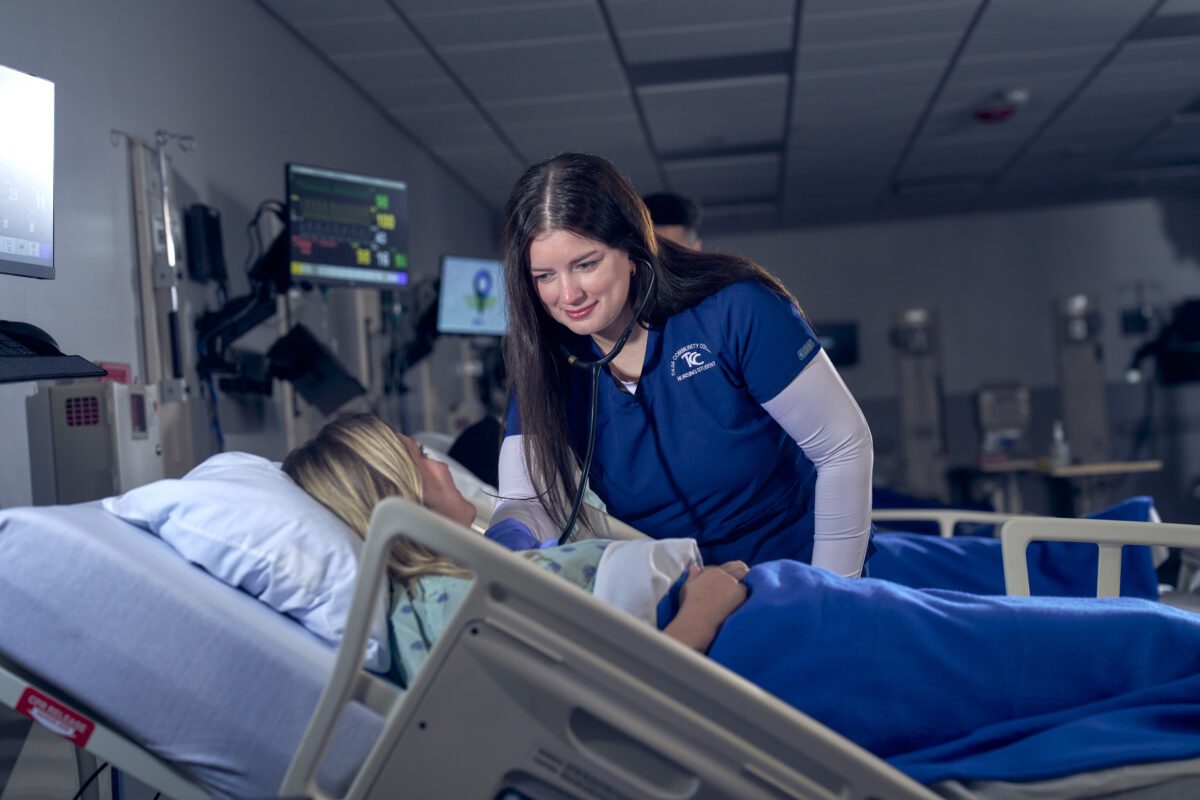
Artificial intelligence can accelerate learning and work, “but it cannot replace learning and work,” says Dinger. “We are approaching AI the same way we approach any powerful tool, by using it to raise the level of learning and service, not to bypass thinking. We are integrating AI where it improves effectiveness, such as analysis, drafting support and process efficiency, while putting guardrails in place around transparency, documentation and academic standards.”
In teaching and learning, “AI is positioned as a learning partner rather than a substitute for student effort,” Dinger continues. “It may support brainstorming, practice and revision, but mastery is demonstrated through human work such as in-class writing, oral defense, labs, authentic projects and documented learning processes. The goal is clear. AI can support the work, but it cannot replace the student’s thinking.”
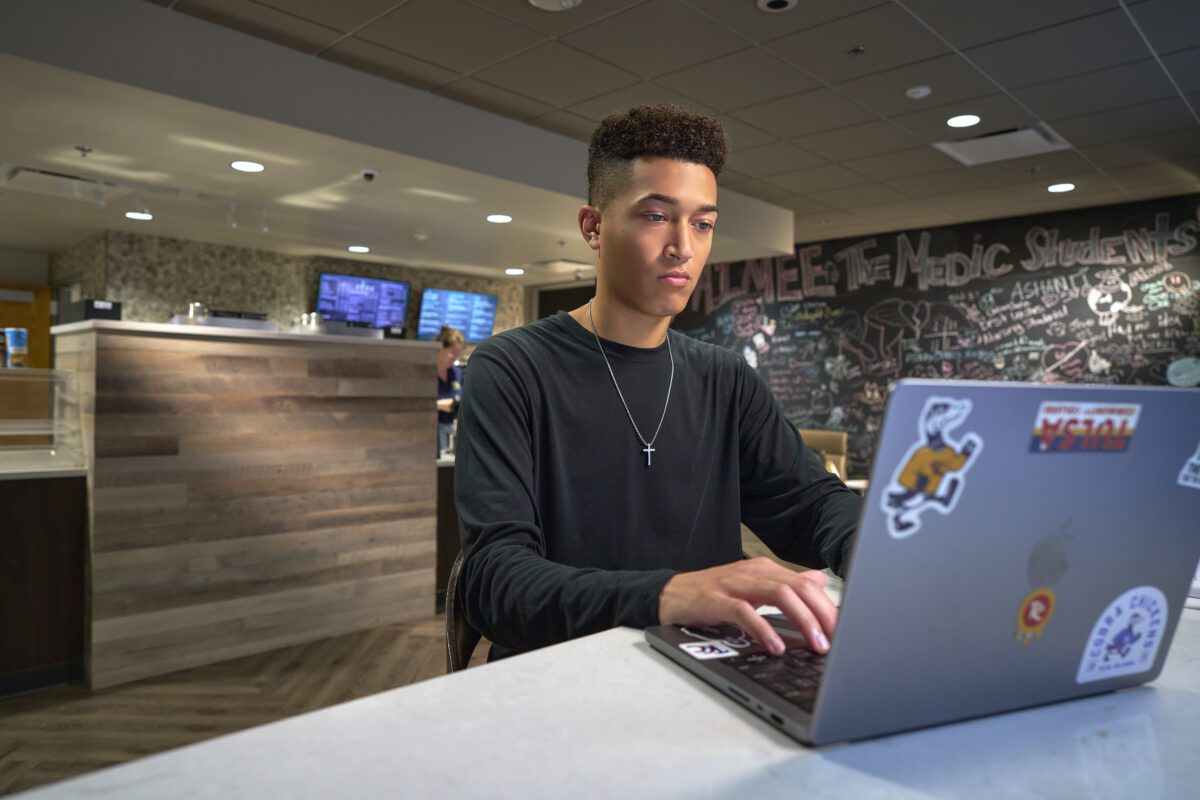
At Tulsa Community College, “the focus is on teaching students to use AI thoughtfully and responsibly,” says spokesperson Kelsey Kane. “Rather than taking a one-size-fits-all approach, faculty have the flexibility to set AI guidelines that make sense for their courses.
“AI is also being used in practical ways, such as in Career Services, where tools help students prepare for job interviews and salary negotiations. The library is introducing AI literacy sessions to explore when and how it might be appropriate to use AI for research.”
Dinger says that on the operations side, “we are focused on practical, well-governed uses. These include drafting and summarizing routine communications, streamlining administrative workflows and reducing repetitive tasks so faculty and staff can spend more time working directly with students. This aligns with OPSU’s broader focus on adapting to emerging technologies while strengthening critical thinking and technological fluency.”
Dinger says OPSU “has moved beyond discussion and into formal policy with clear alignment to academic integrity. The university has adopted an Academic Use of Generative Artificial Intelligence policy that acknowledges student access to Copilot through Microsoft 365 and clearly defines when AI use is allowed or prohibited based on the course and specific assignment.”
When AI use is permitted, “disclosure is required,” Dinger says. “Students must include a statement describing how AI was used, including prompts, outputs, how those outputs informed their work and proper citation of the tool and version.”
In the end, Dinger says, “Academic integrity serves as the enforcement backbone. Unauthorized, undocumented or unethical use of AI is treated the same as other academic integrity violations, including plagiarism. OPSU also maintains publicly available academic integrity standards and clearly defined violation categories to ensure consistency, transparency and fairness.”
Community Colleges as Innovation Hubs
Community colleges across Oklahoma are redefining what it means to prepare students for today’s workforce and tomorrow’s opportunities, says Mautra Staley Jones, Ed.D., president of Oklahoma City Community College.
“We see ourselves not only as places of learning, but as innovation hubs – responsive, student-centered institutions designed to meet the evolving needs of our communities and our state,” Jones says. “In high-demand fields such as aviation, healthcare and advanced manufacturing, OCCC works closely with industry partners to ensure that our programs align with real workforce needs. These short-term, high-impact credentials allow students to quickly gain relevant skills, earn industry-recognized certifications, and enter the workforce with confidence,” Jones says.
For many students, such programs provide immediate economic mobility while serving as a foundation for continued education, Jones says.
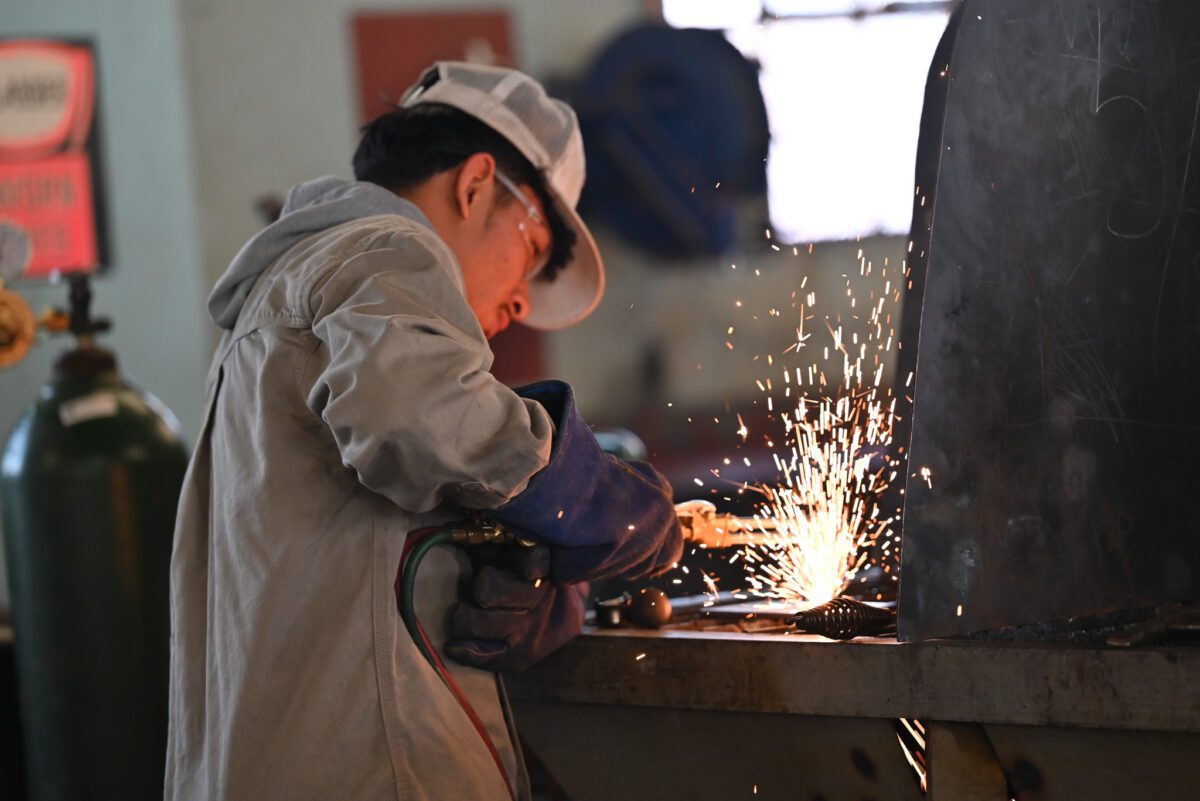
“Community colleges are well-positioned to respond to workforce needs because of our close ties to the communities we serve,” says Angela Sivadon, Ph.D., senior vice president and chief academic officer for Tulsa Community College. “At TCC, industry advisory boards help shape certificate programs in areas like manufacturing, healthcare, aviation and tech by providing input on the skills employers are looking for. These relationships allow us to launch and adjust programs quickly while giving students an accessible path to in-demand careers. We also anticipate Workforce Pell Grants to open the door for more students to afford short-term training in high-demand fields.”
Equally important is the role community colleges play in supporting transfers to four-year institutions, Jones says.
“At OCCC, we have built strong partnerships with universities across Oklahoma and beyond, creating clear academic pathways that allow students to transfer credits efficiently and with purpose,” Jones says. “Through small class sizes, personalized advising, tutoring, mentoring programs and wrap- around services, we help students identify their strengths, clarify their goals and believe in their ability to succeed at the next level. By the time they transfer, our students meet the academic requirements and arrive prepared to excel,” Jones says.
Sivadon continues: “Our goal is to make transferring from TCC to a four-year university seamless and affordable,” Sivadon says. “We work closely with university transfer partners to align coursework, so students know early which classes will count toward a bachelor’s degree. TCC offers more than 170 bachelor’s degree pathways to over 15 universities, supported by transfer maps that lay out a semester-by-semester plan.”
Students can explore options through TCC’s Transfer Map Search tool, get support at transfer centers on all four main campuses and participate in transfer events, Sivadon says.
“Through a new partnership with the Tulsa Higher Education Consortium, we can also provide transportation for students to visit university partners for campus tours and transfer preview days,” Sivadon concludes.
The Perks of Tech Schooling
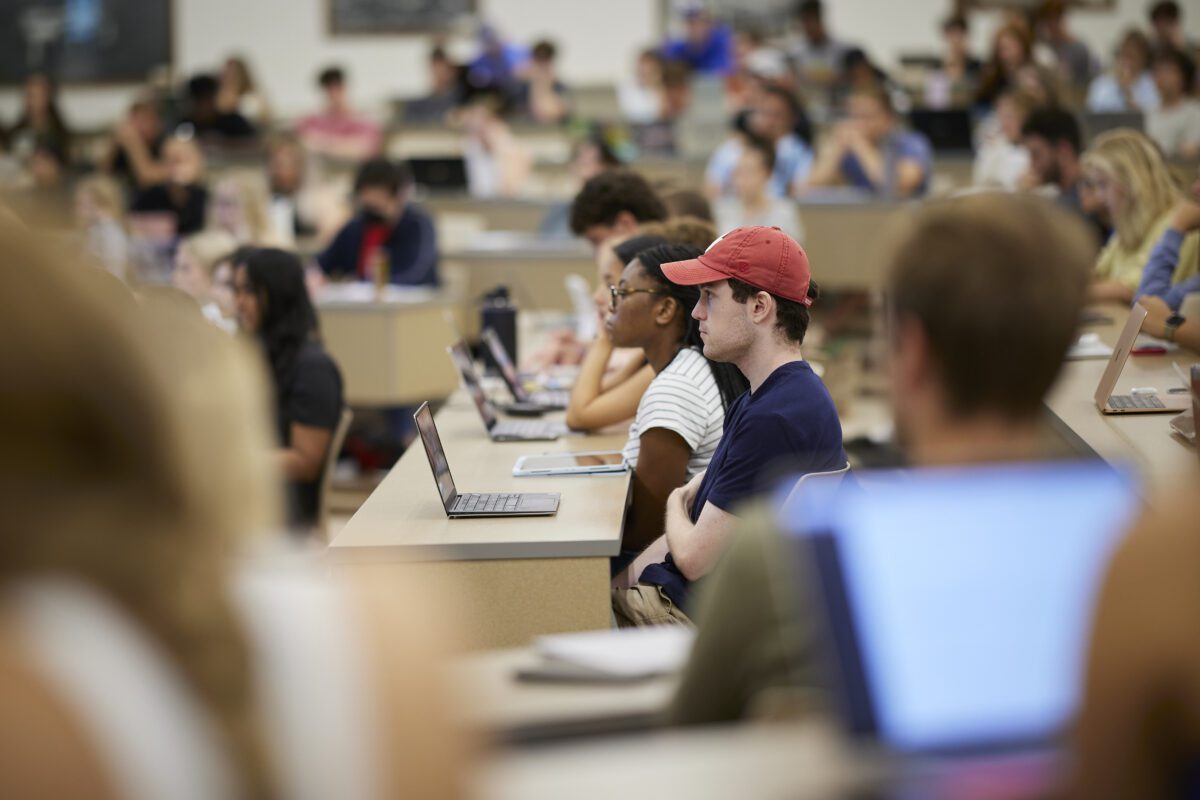
A shining star in Oklahoma’s educational landscape is its CareerTech system, a network of 29 technology centers on 63 campuses across the state.
The technology centers serve high school and adult learners with specialized career training in more than 90 instructional areas.
High school students who live within a technology center district attend tuition-free, while adults pay a nominal tuition rate.
Students receive training in such fields as aviation, health care, HVAC, automotive, agriculture, hospitality, criminal justice, manufacturing, cosmetology and information technology.
Each technology center works closely with advisers from local industries to ensure students learn the skills needed to be valued members of the workforce.
With an annual enrollment of more than 520,000, CareerTech provides nationally recognized competency-based curriculum, education and training for specialized and customized courses and training opportunities. The curriculum is developed with the input of industry professionals to identify the knowledge needed to master an occupation, according to the website of the Oklahoma Department of Career and Technology Education.

Rethinking Gen Eds
The workforce is asking for graduates who have obtained a competency-driven education, and high education is responding.
“There is absolutely momentum in higher education toward competency-driven general education, particularly in areas like communication, critical thinking, digital and information literacy, quantitative reasoning, teamwork and ethical reasoning,” says Dinger. “Employers and communities are asking for graduates who can apply what they know, not just recall information.”
At OPSU, Dinger says, “our general education foundation already emphasizes core competencies such as oral and written communication, analytical and quantitative reasoning and social responsibility and cultural awareness.