





















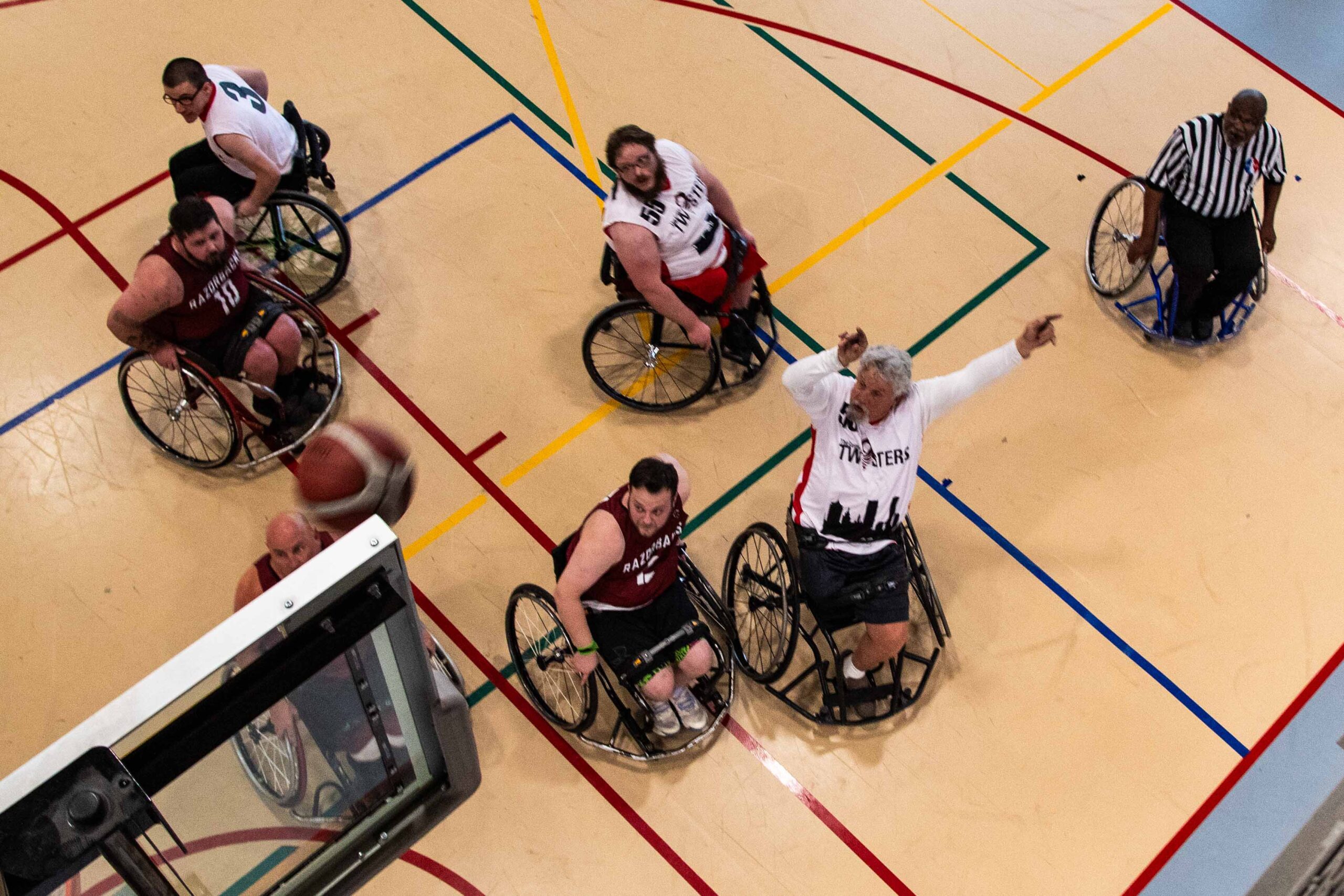
In Oklahoma, athletes with disabilities are reshaping the world of sports through creativity, resilience and innovations that make competition more inclusive than ever. Through adaptive sports, anyone with disabilities can join in on fun – or the fierce competitiveness.
“The Center offers adaptive sports at various levels of development, recreational and competitive play,” says Margie Crossno, director of programs and volunteer services at The Center for Individuals with Physical Challenges, based in Tulsa. The Center offers people with physical challenges opportunities to enhance their quality of life through adaptive and accessible programs and services. “We have ongoing sport class instruction in recreational classes as well as select competitive sport practice,” she continues.
Sporting options run the gamut – ranging from wheelchair tennis, wheelchair basketball and wheelchair softball to goalball, air rifle, cycling and climbing.
“If somebody wants to take it to the next level, we also can coach them up to where they can be connected to a USA Paralympics Team,” says Anthony Meadows, the Center’s adaptive sports coordinator.
Getting involved is as easy as expressing interest or going online to find a community.
“Athletes usually get involved by reaching out through the website,” says Cathryn Tamney, volunteer and coach at Oklahoma Adaptive Sports Association – a leading provider of adaptive sports programs for children and adults with physical disabilities. “Sometimes we meet athletes at Chicken N Pickle [an OKC restaurant with pickleball and bocce ball] at the monthly para-sports night,” she continues.
If you’re looking to get involved, the Oklahoma Adaptive Sports Association has wheelchair basketball running from September to April, as well as track and field events from February to July.
If you want to attend any of these events, you can — without digging out your wallet.
“Another beautiful thing about wheelchair sports and adaptive sports in general – there are no fees to come. There is no charge. It’s free and open to the public,” says Meadows.
Perhaps the most important thing about adaptive sports is its ability to become an uplifting and essential tool for kids, empowering them to believe in themselves.
“These leagues provide a community for people with disabilities,” says Tamney. “Sports also build character, leadership skills and grit.”
Meadows wholeheartedly agrees.
“It’s important for kids, so that they can see somebody that’s just like them,” he says. “I love to see kids in sports, especially adaptive sports, because they can finally see that ‘there is a place for me.’ I’m not just going to be put off … or just shut in at the house not having anything else to do. Everything that they see on TV is about other people doing these sports, whereas if they come and watch adaptive sports, they can see themselves, a kid with a disability, or see an adult being active as a disabled athlete.”