The RIVERSPORT Oklahoma Trailhead and Bike Park expansion opens this fall. New additions will create a trail hub in Oklahoma City’s Boathouse District, which is located at the intersection of I-35 and I-40 along the Oklahoma River, connecting to the OKC metro’s 80 miles of trails. And the construction coincides with trail completions, all while complimenting the Boathouse District’s growing cycling community.
M. Elizabeth Laurent, RIVERSPORT’s chief marketing officer, says the expansion will serve existing state trails, RIVERSPORT Bike Park users, plus the mushrooming numbers of trail users expected to gravitate to the soon-to-be-huge trail haven.
Water fountains, added shade, restrooms, an elevated trail, dedicated parking and a venue for education about statewide trail systems will be other additions, with the bonus of re-channeling cyclists and pedestrians off city streets for optimized safety.
Funded by the Oklahoma City Community Foundation Parks and Public Spaces; Recreational Trails Grant Funding; and individual donors, expansion includes the use of shipping containers to create unique spaces including a gathering hub, welcome center, nature center and ADA restrooms.
With RIVERSPORT located at one of the nation’s busiest interstate system crossroads, Laurent says the bike park’s expansion will draw travelers and be a great gathering spot for cyclists, runners and others using the trail system.
The bike park already offers a mountain bike skills course and three world-class mountain bike/BMX courses for the bike, skateboard and skate communities. As the largest of its kind in the U.S., and with an integrated timing system, the Velosolutions Pump Track is a 15,000 square foot asphalt track featuring seamless paved waves for bikers and skaters. The Momentum Pump Track, the largest composite bike pump track in the U.S., is a fiberglass mountain bike/BMX course designed with a series of berms, bumps and jumps, allowing riders to utilize gravity and body weight to “pump” rather than pedal the course.
RIVERSPORT OKC is a nonprofit project of the RIVERSPORT Foundation, offering innumerable opportunities to those who are novices, in training or even Olympic hopefuls. Located within walking distance of the Bricktown Entertainment District, RIVERSPORT is an official U.S. Olympic and Paralympic training site, with athlete training facilities and coaching.
The area venues host options for those of all ages who enjoy all levels of fitness, who want to find a sport, pursue a passion, or just have fun. Besides festivals, race events, kids’ summer camps, programs, lessons and leagues, visitors enjoy whitewater rafting, tubing, surfing, adventure courses, high speed slides, extreme jumping, climbing walls, sailing, flat-water kayaking, stand up paddle boarding and indoor alpine skiing. There’s also a 700-foot zip line crossing the river, plus a free-fall experience. Suffice it to say, entertainment options are endless.
Image cutline: The RIVERSPORT Trailhead and Bike Park expansion will create even more outdoor opportunities in OKC. Rending courtesy RIVERSPORT OKC
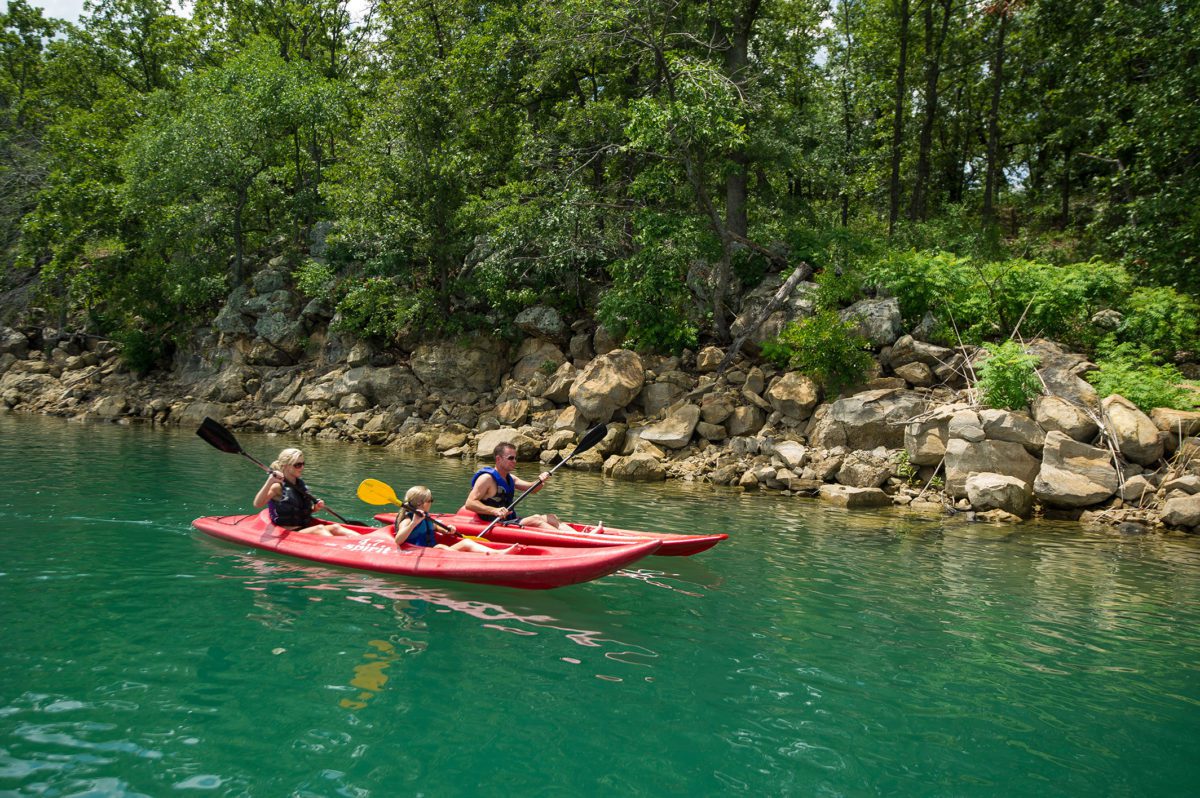
Lake Eufaula is a hotspot for kayaking, canoeing and rafting. Photo courtesy the Lake Eufaula Association
Oklahoma Lake Guide
Included below are just some of the 200+ lakes Oklahoma harbors within its borders.
Broken Bow Lake– About 14,000 surface acres and 180 miles of shoreline, located in southeast Oklahoma near Broken Bow. Mountain water feeds the lake, making it a scuba diver’s ideal location for spotting aquatic wildlife. Described as one of the most beautiful bodies of water in the state, Broken Bow boasts spectacular views from most lodging options in the area.
Lake Eufaula– Oklahoma’s largest lake with 105,500 surface acres and 800 miles of shoreline. It is located in the eastern part of the state, surrounding the town of Eufaula, stretching north towards Checotah and south near McAlester. The notable activities on or around Eufaula are: fishing, hiking, horseback riding, hunting, biking/ATV riding and golfing. Rentals are available on-site for all listed activities, including boats.
Grand Lake– 46,500 surface acres and 1,300 miles of shoreline. It is located in the northeastern part of the state in the foothills of the Ozark Mountains. Home to seven state parks, Grand Lake provides all the traditional water activities in addition to terrestrial outdoor activities, too. This lake is known for its scenic lodging and campgrounds, unique dining experiences, festivals, events and vibrant nightlife.
Hefner Lake – Located in Oklahoma City with 2,500 acres and 18 miles of shoreline. Small but mighty, Hefner offers the population an escape from city life with various waterfront dining and lodging options. Although this lake does not permit swimming, water skiing or jet skiing, boats and fishing are allowed, but require permits.
Skiatook Lake– 10,190 surface acres and 160 miles of shoreline located in northeast Oklahoma, northwest of Tulsa. Best known for its lakefront RV/camping sites and a dense sport-fish population, Skiatook attracts fishing enthusiasts from across the state.
Lake Tenkiller – 13,000 surface acres with 130 miles of shoreline located in northeast Oklahoma, just south of Tahlequah. Also known for its clear water and ideal scuba diving location, Tenkiller is a treasure worth visiting for all lake activities, plus three state parks. If relaxation is the goal, Tenkiller has multiple spa and golf opportunities surrounding the lake, in addition to a lively festival and event scene.
Lake Texoma – 93,000 surface acres with 580 miles of shoreline bordering Texas, and southeast of Ardmore. Known for bountiful fish, over 600 campgrounds and casinos headlining some of the most popular musicians in the country, Texoma offers fun for everyone.
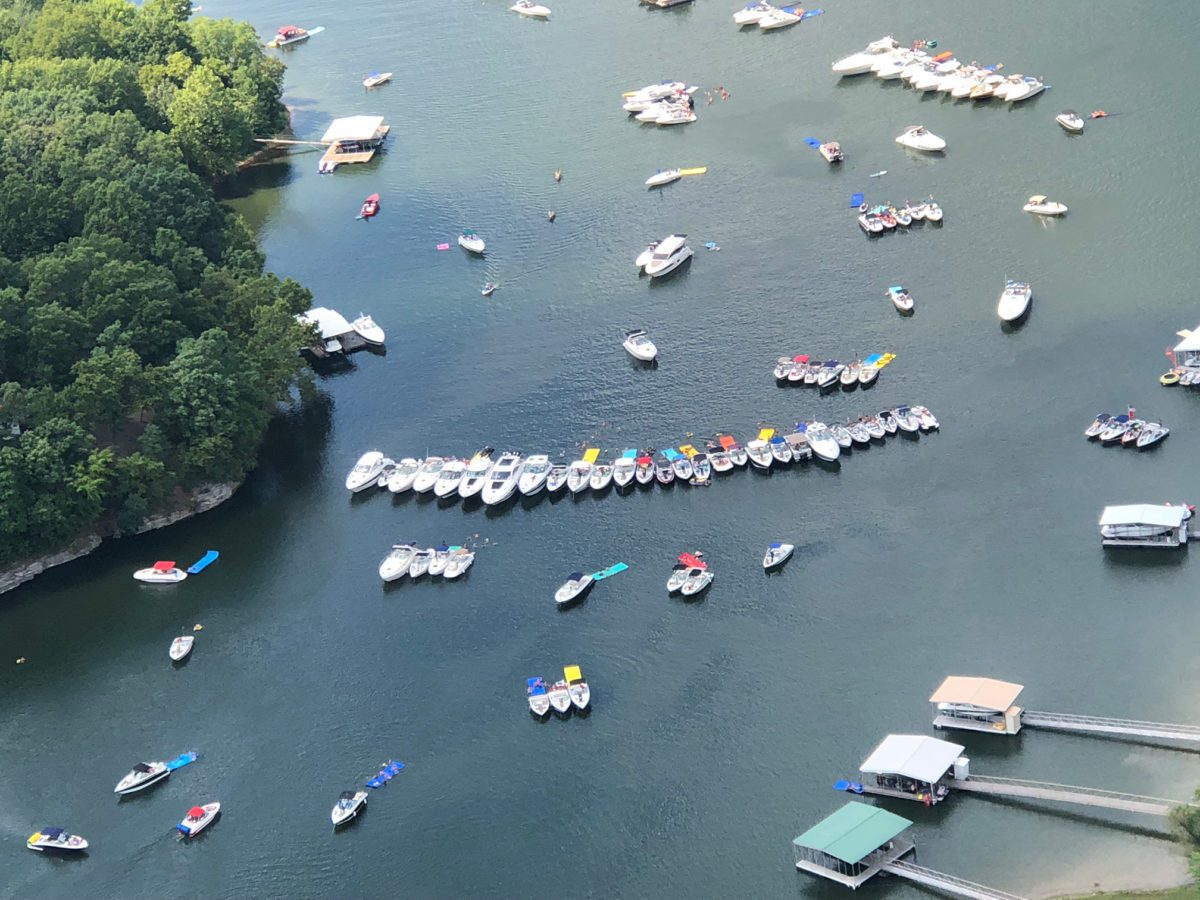
Grand Lake, one of the most popular lakes in Oklahoma, welcomes ample boaters every summer. Photo courtesy GRDA
Unique Ways to Enjoy the Lake
Oklahoma lakes and rivers offer individual and family adventure, plus competition, escape and relaxation, but you do not have to own a boat to enjoy the beautiful waters and scenic views. Here are some less traditional, but equally memorable, ways to enjoy Oklahoma lakes and rivers:
Canoe/kayak/raft rentals are a great way to interact with the waters directly. Depending on the location, visitors can experience a more relaxed or ambitious approach. Local canoe, kayak or raft rental vendors are easily found at your closest lake or river. It is an intimate way to allow participants to explore Oklahoma. Popular traditional rental locations include: along the Illinois River in Tahlequah, along the Lower Mountain Fork River and Beavers Bend State Park area.
Artificially stimulated white-water activities are ideal if you are looking to engage your competitive and athletic side. Oklahoma City’s RIVERSPORT Adventure Park offers surfing, water skiing, whitewater rafting, whitewater kayaking, tubing, flat water kayaking, flat water paddleboards, ziplines, climbing walls, a bike park, eSports and a youth zone.
Enjoy a meal on a river cruise. Oklahoma City River Cruises offer specialty trips for holidays such as Mother’s Day, Father’s Day, Halloween and more. The cruise also hosts summer “Cocktail Cruises.”
Participate in Citizen Science on a hike or camping trip. Jena Donnell, spokesperson for the Oklahoma Department of Wildlife Conservation, is one of the developers for Oklahoma’s Citizen Science, a program where people can post pictures of plants and animals on platforms such as “iNaturalist.” Donnell says programs like Citizen Science are the “easiest way to get involved and help contribute to statewide conservation.”
Water Safety
When engaging with open waters, safety is the priority. Justin Alberty, communications director at the Grand River Dam Authority, urges people to continue the pursuit of safety by staying updated with regulations as they change over time. However, a steadfast safety tip is always wearing a life jacket when engaging in open waters. Alberty urges parents to “set a good example and always wear your life jacket. Life jackets are not ‘one-size fits all,’ and a child needs a child-sized life jacket. Not something they will, ‘grow into.’”
A lesser known caution, Alberty warns, is the damage the sun can have on a person’s senses, creating imbalance in water and becoming a danger while operating around or on a boat/open waters. He encourages people to stay hydrated and wear sunscreen, a hat and sunglasses.
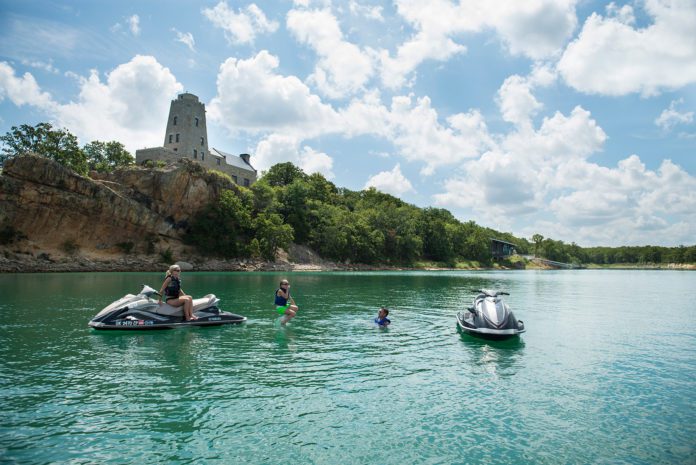
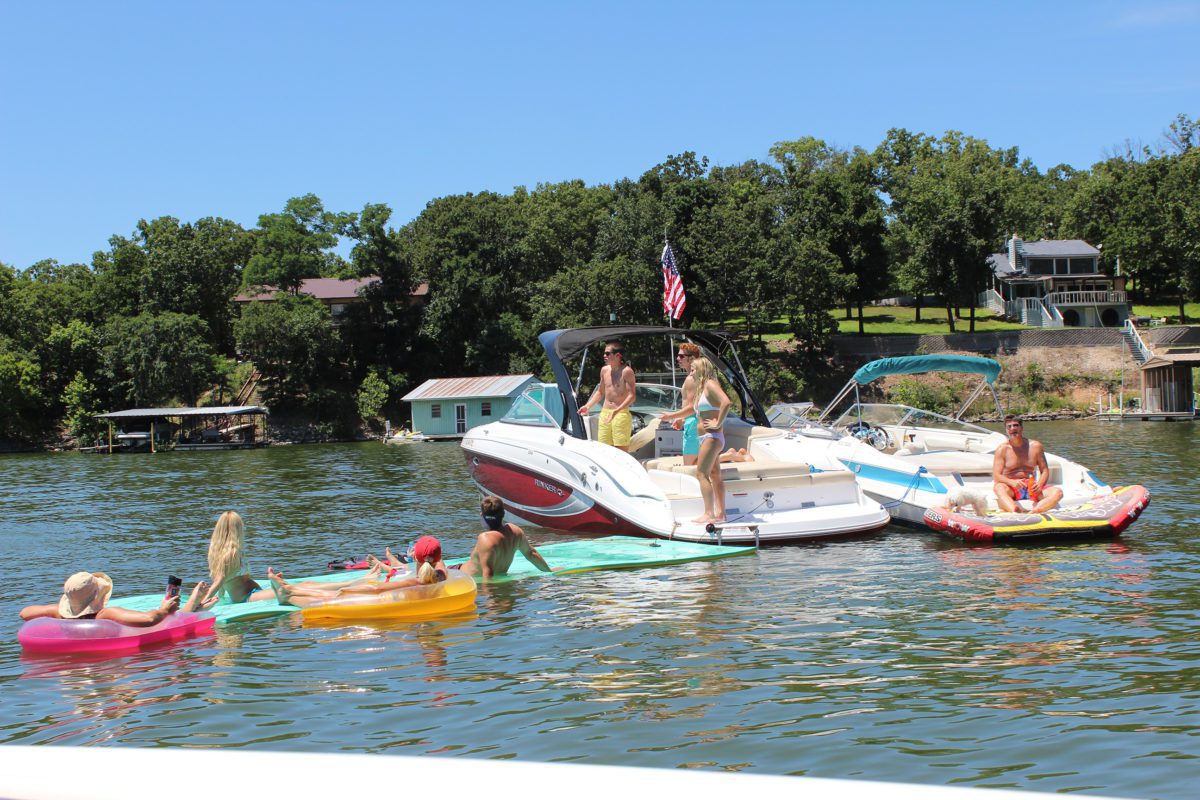
Many boats often gather together at Grand Lake for on-the-water festivities. Photo courtesy GRDA
Additional tips include communicating with a person onshore if visiting open waters by yourself, and obeying the no-wake zone markers and other designated buoy areas.
“Finally,” says Alberty, “do not drink and boat, as most recreational boating accidents are alcohol-related.”
Top Spots for Anglers
From crappie to paddlefish and a wide range of species in between, Oklahoma waters are teeming with a diverse population of fish.
Before heading to your local lake or river, make sure you get a state fishing permit or check if you are exempt at gooutdoorsoklahoma.com. You can purchase an annual or two-day license. If you are fishing in city waters, make sure you acquire additional licensure from that specific municipality. Note: fishing for paddlefish requires a specific free permit used to provide data to help track paddlefish populations.
Popular fishing locations include Lake Texoma for striped bass, Lake Eufaula for crappie, Canton Lake for walleye (this lake is also known for hosting a “Walleye Rodeo” event each year), Mountain Fork River for trout, Fort Cobb Lake for catfish and Grand Lake for paddlefish.
Kelly Adams, communication and education supervisor for the Oklahoma Department of Wildlife Conservation, unveils hidden gem locations for anglers. Guymon’s municipally owned Sunset Lake is 17 surface acres and periodically stocked with trout and catfish. Secluded in the Ouachita National Forest, Cedar Lake covers 86 surface acres and holds the state record for largemouth bass (14 pounds and 13.7 ounces, caught by Dale Miller).
Adams also shares the department’s “Close to Home Fishing Program.” According to its website, the program provides “a local pathway for sharing the fishing heritage.” Adams says the idea is to inform people of nearby “urban small lakes or large ponds that are stocked with touchable-sized sunfish and catfish, offering people places to conveniently fish.”
Oklahoma is a treasure trove for those looking to find the perfect catch.
Photo by Kelly Bostian courtesy the Oklahoma Department of Wildlife Conservation
Adams says the “Close to Home Fishing Program” is perfect for people or children who are being introduced to fishing, or want to start fishing without the hassle of long drives.
Adams and Donnell believe the Department of Oklahoma Wildlife Conservation’s “The Dock,” an online platform for anglers to post photos and reviews of their catch, is a helpful tool for novice and experts alike to share information on lakes, types of fish and current conditions.
Lake Town Guide
Come for the water, stay for the amenities. Towns and cities surrounding lakes and rivers are brimming with family-, couple- or individual-friendly activities.
Cookson is just east of Lake Tenkiller. Nestled in the Cookson Hills of Cherokee County, the town is best known for its popular scuba diving opportunities. Nautical Adventures Scuba offers scuba certification courses, scuba equipment rentals and an introduction to scuba diving events in an indoor pool. For history buffs, a visit to The Hunter’s Home, formerly known as the George M. Murrell Home, is a must-see historical home preserved by the Oklahoma Historical Society as one of Oklahoma’s last standing plantation homes through the Trail of Tears.
The city of Eufaula is known for its bald eagle sightings near Eufaula Dam as the national bird comes south for the winter, arriving in late November and staying through March. Outdoor enthusiasts should consider staying in a once-in-a-lifetime yurt at Eufaula State Park. Eufaula is an angler’s dream, priding itself in hosting an enclosed and heated dock for all-year fishing.
Kayaking on Lake Murray is open to those of all ages and skill levels.
Photo by James Pratt/Oklahoma Tourism
For the opulent vacation seekers, Monkey Island is a peninsula on the northern shore of Grand Lake and features the luxury Shangri-La Resort featuring fine dining, a 27-hole golf course, a spa and more. This island is an ideal location for special events, membership opportunities and extravagant rentals.
Whether you are looking for a relaxing getaway or an adrenaline adventure, Oklahoma open waters and surrounding cities/towns are ready to provide you with spectacular memories.
A biker’s paradise, Oklahoma offers everything from urban cycling to scenic rides and mountain trails. Riders – both professional and novice – have numerous biking options at their fingertips, all with the added benefits of enjoying Oklahoma’s stunning scenery and promoting tourism through health and cycling.
Saint Francis Tulsa Tough
June 9 through 11, the Saint Francis Tulsa Tough cycling phenomenon marks its 16th year in T-Town. The event is primarily known for its highly competitive, professional criterium (“crit”) races on closed courses downtown, with a street spectator party involved. Crit racers speed through Tulsa’s Blue Dome District on Friday and the Arts District on Saturday. On Sunday, they race through the Riverside neighborhoods, and also the infamous “Cry Baby Hill.”
Non-competitive fondo riders choose from 40, 60 and 100-mile rides through Green County, and all skill levels can participate. Free kids’ races take place on Saturday and Sunday, plus a free, five-mile Townie Ride on Sunday.
The three-day event drew roughly 3,900 crit racers and 2,200 fondo riders last year. Bikers hailed from 40 different states and as far away as Australia, New Zealand and parts of Europe.
A criterium, or crit for short, isn’t for the faint hearted. Cyclists race through downtown streets at breakneck speeds, taking tight turns at 30 miles per hour, often in huge packs. Aggressive and slightly manic, it’s one of bike racing’s fastest forms of competition, requiring navigation of corners with riders on either side and in front and back.
Wheeler Criterium
For those with the grit for more crit, saddle up in the Wheeler District for Oklahoma City’s premier cycling event – the Wheeler Criterium. Taking place weekly from spring through fall, bikers huddle up every Tuesday evening and start pedaling.
Considered a weekly festival in the 150-acre Wheeler District (which is perched on the south bank of the Oklahoma River), the events are expanding to include children plus other unique riding experiences. The landmark Santa Monica Ferris Wheel overlooks the shops, eateries and crowds, with pedestrian and bike access to the Oklahoma River Trail network.
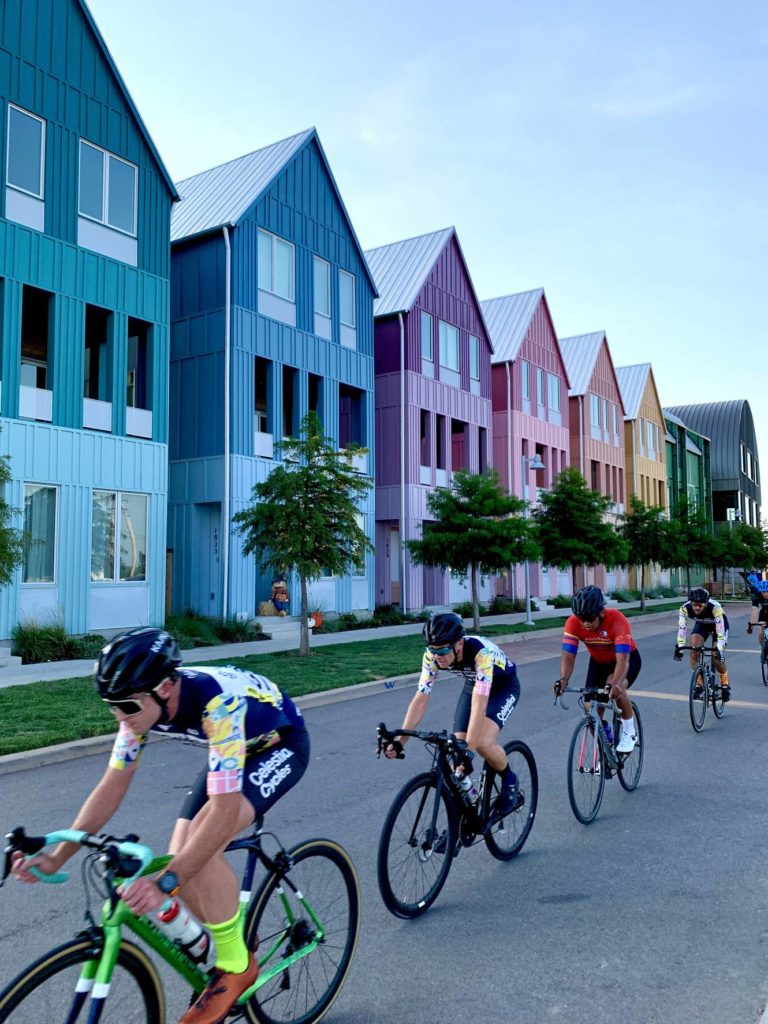
The weekly Wheeler Criterium in OKC encourages participation from cyclists of all skill levels. Photo courtesy the Wheeler District
OK Freewheel Route
Anyone hankering to challenge the outdoors will enjoy the 2023 OK Freewheel Route, which takes bikers to the roads for the 44th year from June 11 through 17. For over four decades, the seven-day trek has been Oklahoma’s only cross-state cycling touring event. Founded in 1979 to promote amateur bicycling tours, health and community spirit, bikers peddle through Chickasaw, Frontier and Green Country, with all their diverse terrain and beauty.
Hosted by No Drop Tours, cyclists pedal from the Red River to the Kansas border. Bikers start in Denison, Texas, then on to Tishomingo, Pauls Valley, Tecumseh, Perkins, Pawnee, Pawhuska, and finally to Sedan, Kansas.
Considered an outdoor camping event, bikers pop up tent cities along the route, with a hot-shower truck provided. Limited indoor camping is available. Spinners enjoy all things local at area cafés and restaurants, plus civic groups, churches and school groups also provide meals. And No Drop Tours is dedicated to removing hurdles, thus allowing children and families all that biking has to offer.
The Dehydrator
Those ready to sweat like crazy will love Duncan’s Dehydrator. Founded in 1985 and held the last Saturday every July, this year’s hot event takes place July 29. Participants get a free “famous homemade chicken spaghetti” meal, plus every-10-mile stops that include fluids, fruits and homemade cookies.
The Dehydrator includes single and tandem bike (two riders) options for 10, 25, 50, 62 and 80-mile rides through Stephens County’s rolling hills and plains, and a stretch across the Waurika Lake Dam. Proceeds go to the award-winning Duncan High School bands, as well as funding needs for the community.
Dam J.A.M.
Rain or shine, on Sept. 9, roadies will line up for northeast Oklahoma’s most scenic fall bicycle ride. For the Dam J.A.M., they’ll wheel through Mayes and Delaware counties with more than 2,500 miles of lake shorelines in the foothills of the Ozark Mountains.
Options include 33, 55, 73 and 105-mile treks with Lake Hudson, Lake Eucha, Grand and Chimney Rock lakes, and numerous dams along the way. Beginning the adventure in 1992, pals Jim, Allen and Marie (J.A.M.) created this unique event.
Saint Francis Tulsa Tough comes to town this June, welcoming world-class cyclists from around the globe. This and featured photo by Chris Barnes courtesy Saint Francis Tulsa Tough
Mountain Biking Safety
Biking’s a blast, but safety is no joke. Choose the right bike for the ride. Wear proper clothing and footwear, take your helmet, eye protection, water, sunscreen, bike repair items, first aid kit and cash. Side mirrors are a good idea, plus a pre-ride bike check-up. Ride in groups, and check the weather forecast, which is especially important for mountain bikers.
For off-the-beaten path mountain bike adventures, Tulsa’s 300-acre Turkey Mountain Urban Wilderness Area is west of the Arkansas River. With no cars, the one, two and five-mile trails are hilly, primitive, wooded, and have lots of rocks, steep climbs and descents, plus restrooms, water, and a bike tool station.
East of Edmond, Arcadia Trails, for biking, running, birding and horseback riding, includes 6.5 miles of twisting, single-track trails with a bridge, and a creek crossing (weather permitting).
Near Pawhuska, Osage Hills State Park boasts 3.5 miles of dedicated mountain bike trails. Heavily forested with wildlife, the challenging-single-track terrain has switchbacks, climbs and descents.
Senior living communities have transformed over the last few decades, as have perceptions of them. Long gone is the idea that these places are full of dim halls, bland food, few activities, lack-luster amenities and little stimulation.
Now, senior living communities are rightly known for fostering true happiness and growth for residents. Amenities range from high-end gyms to pools, activity centers and luxury lodging. Events and gatherings happen nightly, and residents are nurtured – mind, body and soul.
Easing the Transition
Making the transition to a retirement community is a big decision. It can be exciting, as seniors look forward to all the ways a supportive living arrangement will make life easier and more pleasant … but it can also bring stress when the future resident thinks about the logistics.
“The easiest way to reduce stress that often comes with moving is to prepare in advance,” says Gary Frias, executive director at Tulsa’s Cedarhurst of Woodland Hills. He recommends downsizing gradually over time to make this process easier and smoother, as well as beginning the search for the right place well before the time comes to move; this way, there is no pressure to make a snap decision.
Another way to ease the transition is to begin to make friends in the chosen community before the move in, adds Frias. By doing this, the future resident has a support system in place ahead of time.
Once the move has happened, residents can expect an informational orientation, as well as welcoming contact from several groups, including other residents, staff and even a chaplain in some cases.
Jim Kiel, a chaplain at Covenant Living at Inverness in Tulsa, reaches out to new community members as part of his role. He says it is important to “[find] out about their past — [let] them tell me their story. Then [I look] for ways to help them find commonality in all that we offer them. This would include finding out about their faith background and doing what I can to help them feel included in what is offered.”
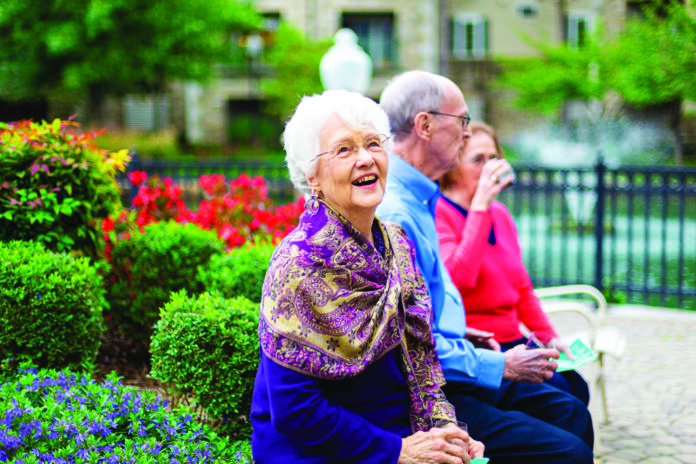
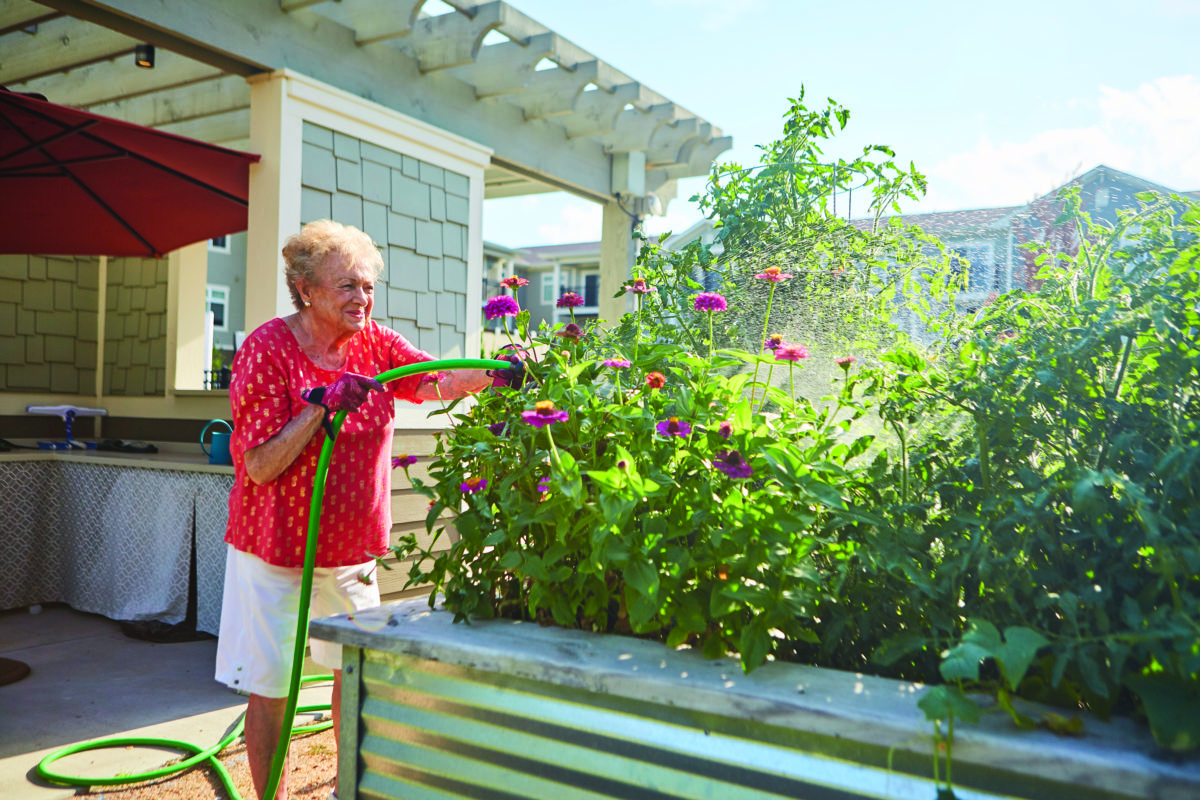
Above and below: Cedarhurst in Tulsa offers enrichment activities galore, from gardening to painting classes and everything in between; photos courtesy Cedarhurst of Woodland Hill Featured image: Covenant Living at Inverness focuses on nurturing the mind, body and soul with its multifaceted community offerings; photo courtesy Covenant Living at Inverness
Making the Right Call
Before a senior can move into a new home, a community has to be selected. This should be carefully considered.
A few obvious elements to consider would be location, qualifications of staff and what levels of care are offered. Location can come into play both in regards to safety of the neighborhood, as well as proximity to family who may plan to visit/provide care. And, depending upon the types of housing and care options available, the reality of another transition in the future should weigh into the decision.
But beyond these basic housing details, Frias also recommends really getting to know the community being considered and deciding if it is a good fit.
“Community fit can be described as the feeling you get when being there, and if you could see yourself living there,” he says. “The best way to determine if a community is a good fit for you or your loved one is to tour and experience the community for yourself. Touring also gives you a chance to interact with the people on site.”
This also gives the potential/future resident an opportunity to begin making friends and building that very important support system within their future community.
The Benefits of Senior Living Communities
Once the move has happened, it is time to start reaping the benefits. But what exactly are those benefits, and what are the best ways to take full advantage of them?
“When we ask our residents about things they would like to do; we truly believe that the sky is the limit,” says Sharon Goforth, resident life director at Covenant Living at Inverness. “Therefore, we have been skydiving, zip lining and had rides in a tethered balloon. If people want to do something, we try to make it happen.”
Through listening to their community members and possessing a sincere desire to help them meet their lifestyle goals, many of the local senior communities offer all types of beneficial amenities, including various kinds of educational and exercise classes, field trips to local attractions, outdoor activities like hiking, gardening and walking, and state-of-the-art classes to boost brain power and memory.
But even beyond the amenities provided, the sense of community and care is what many seniors value most.
Kiel mentions the social interaction with peers that includes “shared memories, as they [have lived] through the same periods in history,” and “the added care available as we age, and living with professionals trained in caring for people of your age group.”
Nurturing Mind, Body and Soul
Through all the transition and changes that come with getting older, it is important to remember to nurture the mind, body and soul in tandem. This is another way a retirement community can provide help with overall well-being.
Rick Davis, a chaplain at Covenant Living at Inverness, lists several available activities to nurture all aspects of the whole person – including tai chi chih classes, worship services, Bible studies, book clubs and movies with conversation, topical presentations, and devotions offered while walking the campus. Davis also mentions counseling options, including grief and caregiver support groups.
“Believing in the many benefits of multi-generational experiences,” adds Goforth, “we have partnered with a local homeschool group.” The children come regularly to read to residents, or have residents read to them.
With all these amenities and opportunities for interaction, the most important thing to remember is to get involved right from the start.
“After a great orientation and welcoming from our residents and staff, we recommend participating in the numerous activities we offer and engaging as much as possible within our community,” says Frias.
Elaine Graybill is sure that the collections at Alva’s Cherokee Strip Museum – where she works as the business manager – make it a must-see among museums in northwest Oklahoma.
But whether the museum, located in the building that once served as Alva’s city hospital, includes late-night supernatural activities … well, she isn’t so sure about that.
Several paranormal teams have visited the privately-owned, nonprofit museum over the past few years, she says, setting up their specialized equipment at night and waiting for something extraordinary to happen.
“I’m not going to say we’re haunted, but there are just some … unexplained things,” she says.
“Most of the ‘activity’ occurs between midnight and 2 a.m.,” Graybill tells an inquisitor. “Some rooms are more active than others.”
The Cherokee Strip Museum (and its variety of exhibits) is just one of the attractions in Alva. The city sits at the intersection of U.S. Highways 281 and 64; Tulsa is 187 miles to the east, Oklahoma City some 150 miles to the southeast. With an estimated population of about 5,000, Alva is in the part of Indian Territory that was designated as the Cherokee Strip, and was established in 1893 as a land office for the Cherokee Strip land run.
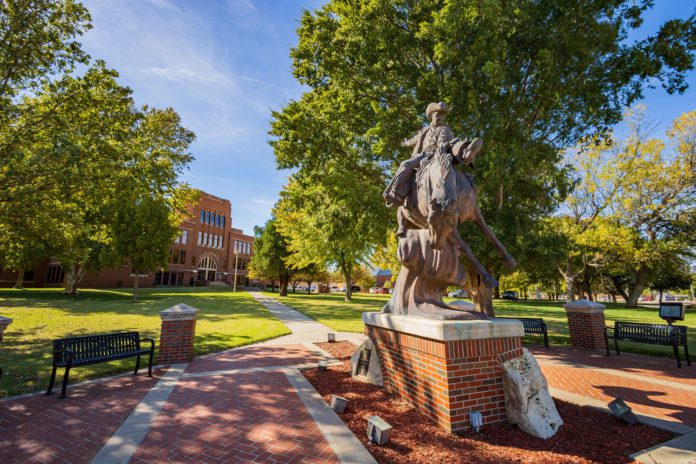
The city is also the home of Northwestern Oklahoma State University. The Museum of Natural History at NOSU contains more than 8,000 artifacts, including birds, mammoth tusks and different types of fossils and artifacts – some acquired more than 100 years ago.
What became NOSU was first established in 1897 as a “normal” school to educate future teachers, according to the Oklahoma Historical Society.
The first classes met in a local church on September 20, with three faculty members and 58 students. In 1996, the Oklahoma Legislature established branch campuses of NOSU in Enid and Woodward, with the university emerging as Alva’s largest employer in the 1990s.
It also has an arrangement with the two-year Northern Oklahoma College in Tonkawa, whereby students can transfer their credits and complete their bachelor’s degrees at NOSU.
Alva is also surrounded by some of Oklahoma’s richest outdoor life. The Alva Chamber of Commerce points out that the city is within 30 miles of some of Oklahoma’s most diverse and inviting outdoor recreation, such as Great Salt Plains State Park and Wildlife Refuge in Jet, Alabaster Caverns State Park in Freedom, Little Sahara State Park in Waynoka and the famed Selman Bat Cave.
Jo Decker, director of the Graceful Arts Gallery and Studios located in Alva’s downtown square, says the arts community in Alva is burgeoning, thanks in large part to the recent addition of visual arts as an academic major at NOSU.
“We have several students [from NOSU who] come and help us,” says Decker. The gallery pulls artists from most of Oklahoma, southern Kansas and the Texas panhandle. “The art community here is growing every year.”
The Chamber of Commerce also touts Alva’s Western credentials, with rodeos and all things “cowboy and cowgirl” as a strong local influence.
The Cherokee Strip Museum, meanwhile, continues to attract a steady number of visitors, Graybill says, with the individual rooms allowing for several specialized exhibits. One section is dedicated to a World War II prisoner of war camp for German military officers that, for 28 months, was located just outside town.
“We were known as ‘Camp Alvaraz,’” says Graybill.
The former hospital’s surgical suite now is part of the museum’s medical display, and in the opinion of the paranormal investigating teams, might – or might not – harbor spirits from the underworld.
“We have been told that we have ‘friendly spirits’ running around,” Graybill says. “I’m not a believer – yet.”
Most often, heart attacks are associated with blocked arteries. However, with MINOCA – a myocardial infarction with non-obstructive coronary arteries – this isn’t the case. And it seems that women are at an increased risk.
Michael Fogli, M.D., a noninvasive cardiologist with Ascension St. John in Tulsa, explains that MINOCA is an umbrella term applied to patients who are experiencing what looks like a heart attack but, when examined via a coronary angiogram, “they do not have an obstructing coronary plaque of at least 50% of the diameter of one of the heart arteries.”
(He adds that it’s important to understand that the 50% attribution is an arbitrary cutoff, based on history and convention.)
“We have come to realize that this type of clinical syndrome can occur due to many possible causes, including spasm or spontaneous tear – dissection – of one of the coronary arteries, or severe blockage in the tiny branch vessels that we cannot see with our contrast dye – microvascular disease,” says Fogli. “Also, sudden inflammation or stress on the heart muscle – myocarditis – completely unrelated to any heart artery problem, can mimic a heart attack.”
In addition, he says “other acute noncardiac disorders, such as a pulmonary embolus or pneumonia, can mimic a heart attack, can cause chest pain like a heart attack and can stress the heart muscle enough to lead to heart muscle injury on EKG and blood testing.”
While MINOCA is not well known, Fogli says it’s more common than people think, as it accounts for approximately 10% of patients who appear to be having a conventional heart attack.
George Chrysant, M.D., an interventional cardiologist with INTEGRIS in Oklahoma City, says while MINOCA is “largely felt to be a problem of the microvasculature,” it affects women more than men and “patients often do not have any risk factors, or at least any traditional risk factors,” associated with heart attacks.
Another condition with little to no blockages is INOCA – ischemia with non-obstructive coronary arteries.
“INOCA is very different from MINOCA, as INOCA is a chronic condition, not acute. It is characterized by ongoing symptoms of angina or an equivalent of angina, like shortness of breath, or fatigue, due to a problem of the coronary arteries that you cannot see with the coronary artery dye injection, in what we call the micro-circulation. These are the tiny microscopic blood vessels in the heart muscle,” he says. “Often, you can see evidence of a problem on a stress test, but then the coronary angiogram does not show a blockage of greater than 50% of the blood vessel diameter. More specialized cath lab testing – called coronary functional testing – can be done, but most cath labs don’t customarily perform it.”
According to Chrysant, there are several new findings in regards to INOCA and MINOCA.
“Diagnosis of INOCA and MINOCA should be confirmed with either a cardiac MRI, to look for signs of microvascular obstruction, and/or OCT – optical coherence tomography – inside the coronary arteries,” he says. “What is being found is that while angiographically, the arteries appear completely normal, a fairly significant portion of patients actually do have obstruction on OCT that is not appreciated by the angiogram. There are some new articles that go over these findings and recommendations.”
And while current treatment plans may vary, the medical community’s knowledge of these conditions continues to evolve.
“We have learned in preliminary studies that conventional treatment of coronary risk factors, such as using statins for cholesterol, ACE inhibitors or ARBs for blood pressure control, and achieving a healthy weight, eating right, controlling stress and not smoking are likely to be effective,” says Chrysant.
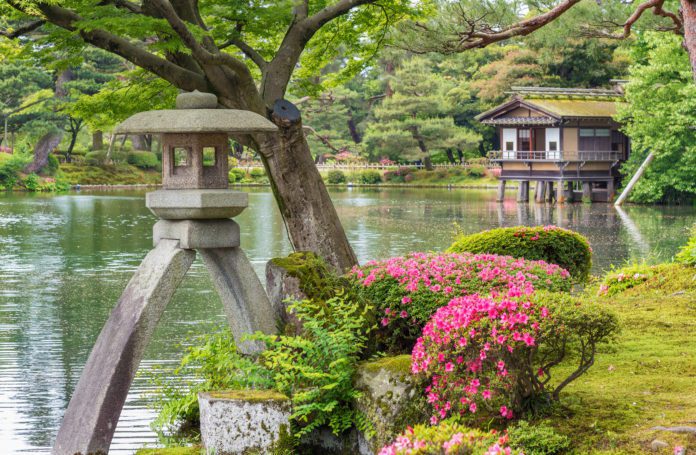
Stone Lantern in Japanese Garden Kenrokuen in Kanazawa, Japan
The temples, shrines and neighborhoods in this seaside town of half a million reflect Japan’s colorful past better than most Japanese cities, because Kanazawa, much like Kyoto, escaped destruction during WWII. The influence of the feudal lords and emperors who reigned for centuries is evident in the city’s culture, architecture and food.
Kanazawa is on the Sea of Japan, on the opposite side of the central island from Tokyo. In Japanese, the name means “marsh of gold,” thanks to an old peasant farmer who one day discovered gold leaf on the potatoes he was washing. Today, 99% of the nation’s gold leaf comes from the area. Some of it is even edible.
Bullet trains shorten the trip from Tokyo to just a little more than two hours. Pulling into Kanazawa’s station, visitors are greeted by the towering glass and steel Motenashi Dome and the equally massive, all-wood Tsuzumi-mon Gate, built to resemble traditional tsuzumi drums.
The Maeda clan ruled Kanazawa and surrounding lands for nearly three centuries until the Meiji Restoration restored imperial rule to Japan in 1868. At one point, the Maeda family controlled the largest feudal domain in the shogunate. The family’s low white castle, the moat, the large stone walls, the ponds and the gardens have been partially restored to look as they did in 1850. Striking horizontal roof gables protect the castle’s intricate wood carvings.
Directly across from the castle, on what had been Maeda family grounds, is the meticulously-manicured Kenrokuen Garden, one of Japan’s top three. It comes complete with cherry blossoms in the spring and spectacular foliage in the fall.
The Maeda clan was quite keen in their support of the arts. The peaceful D.T. Suzuki Museum with its simple, minimalist Water Mirror Garden reflects the philosopher’s theories of Zen Buddhism as a physical space.
The nearby 21st Century Museum of Contemporary Art uses circular architecture dotted with numerous doors and entrances to symbolize the many ways art can be viewed. The permanent collection includes Leandro Ehrlich’s large-scale “Swimming Pool,” a senses-defying experience above and below the surface of the water that reminds us things are not always as they appear.
At the legendary Omicho market, the only rival to the just-picked farm produce is the fresh catches from the sea. Omicho has been crammed with traders buying and selling the day’s harvests for 300 years. Restaurants in the area do a brisk business selling sushi, Kanazawa curry and bowls of rice crowned with seafood.
For dessert, have some ice cream covered with Kanazawa’s specialty, edible gold leaf. Then shop for ornamental mizuhiki knots, lacquerware and paper umbrellas.
Among Kanazawa’s inviting neighborhoods is the Nagamachi Samurai District, its streets lined with earthen walls hiding the homes where former high-ranking Samurai lived. Nicknamed “the Ninja Temple,” Myoryuji Temple is filled with secret staircases, concealed spaces and hidden passageways dating back to 1643.
The three remaining Chaya teahouse districts in Kanazawa are also very well maintained. Many geisha teahouses still open every day.
Kanazawa is the gateway to the rugged, sea-swept Noto Peninsula where locals haul in great catches of buri, yellowtail, shrimp and black scraper. Seaside restaurants serve that bounty in hot pots called oden where it meets umami-rich dashi broth and vegetables. Enjoy with local sake, hot.
Accommodations run the gamut. Simple ryokans are Japanese cottages, usually with communal baths and thick woven straw mats, called tatami, on the floors. In addition, many fine western-style hotels dot the skyline. But for my money, I’ll take the Yuzuya Ryokan Kanazawa Ryokusone, up in the trees above the city. Seven well-appointed guest rooms, each based on a theme such as Japanese Dogwood or bamboo, terrific views of city and scenery, and an excellent restaurant.grand dame in the heart of Centro. The impressive former convent is filled with patios, gardens and all the amenities in an atmosphere of French savoir-faire.
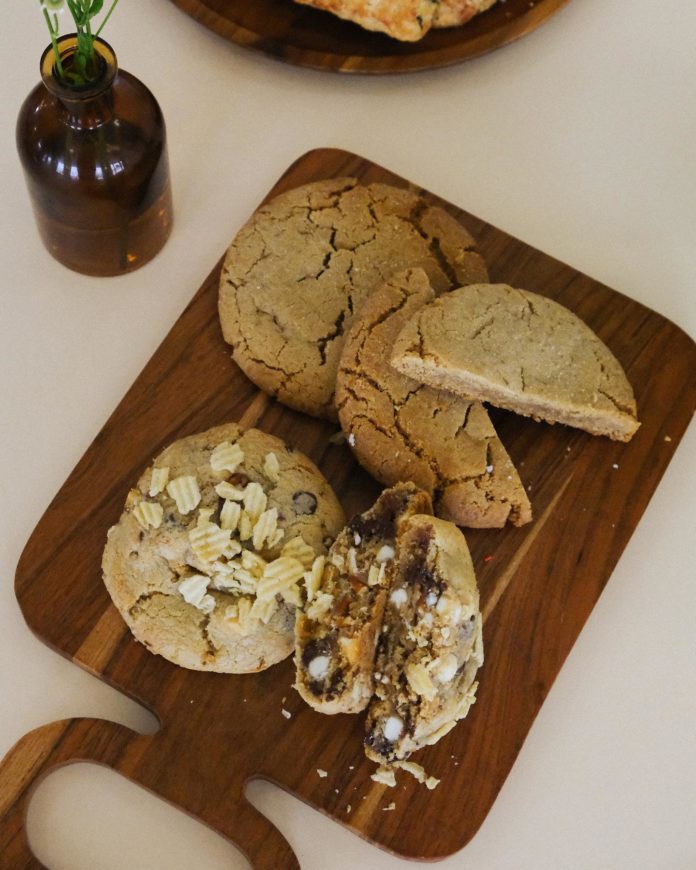
Described as a boutique bakery, espresso and pastry bar, you can find Laurannae Baking Co. in the heart of Broken Arrow’s Rose District. The bakery is best known for its cakes; customers are able to customize color palettes, favors and other modifications for the perfect fit, or order classic cakes from the menu. The bakery is bustling with goodies, from cupcakes to signature cookies, pies, rolls, cheesecakes, scones, muffins and more. If you’d rather make some creations at home, utilize the ‘take and bake’ options including cinnamon rolls and cookie dough. Stick around for a full-service espresso bar to get your caffeine kick. You can also take decorating workshops, rent out the space for events, or visit monthly socials. 112 W. Commercial St.; 1205 E. Kenosha St., Broken Arrow; lbcotulsa.com; photo courtesy Laurannae Baking Co.
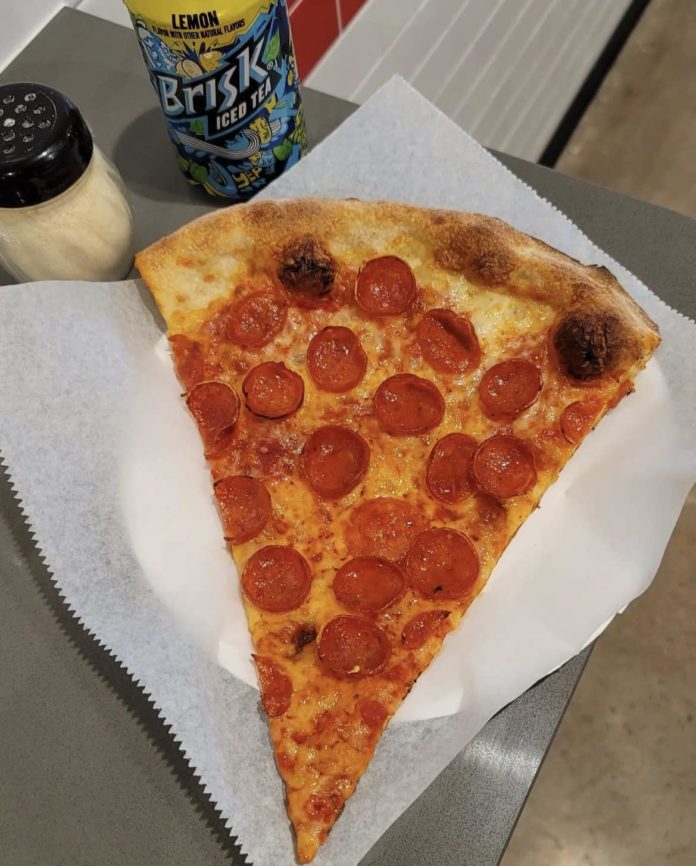
Independently owned Dado’s Pizza in OKC serves up classic New York-pies, as well as pizza by the slice. The affordable and delicious menu is led by a bevy of hand-stretched, 20” pies, with prices ranging from $3.75-$4.50 for a slice and $24-$28 for a whole pie.
Highlights include the White with grande sopraffina ricotta, aged mozzarella, oregano, garlic, black pepper and olive oil drizzle; the Buffalo Chicken with grande aged mozzarella, buffalo chicken and blue cheese dressing; and the Garden Pie with bell peppers, Roma tomatoes, red onion, black olives, cremini mushrooms and garlic oil.
Don’t forget to add both appetizers and desserts to your order, including mozzarella sticks, garlic and cheesy knots, wings, salads or zeppole – a sweet Italian pastry. 10942 N. May Ave., Oklahoma City; dadospizzaokc.com; photo courtesy Dado’s Pizza
If you’re on the hunt for a quick lunch or snack stop, Ah-Sigh-E may be your new favorite dining destination. Brimming with acai bowls, smoothies and coffee confections, the restaurant is a must-visit for health-conscious eaters.
A popular bowl is the Red, White and Blue – replete with a blend of acai, strawberries, blueberries, dark sweet cherries, banana, unsweetened almond milk and almond butter, topped with homemade granola, fresh strawberries, banana slices, hemp hearts, chia seeds and raw honey. Others opt for the Protein Bowl, which offers over 40 grams of plant-based protein with a blend of acai, cacao powder, mango, sweet cherries, banana, unsweetened almond milk and almond butter, topped with homemade granola, fresh blueberries, pumpkin seeds, almond slices, sunflowers seeds and honey. Smoothie options are endless, with a highlight being the Tropical Blend, with acai, pineapple, mango, peaches, strawberry, banana, honey and unsweetened coconut milk. The joint also sells cold brew, salad dressings and health-conscious energy drinks. Locations throughout the Tulsa metro and surrounding areas; ahsighe.com; photo courtesy Ah-Sigh-E