You’ll be sure to have a packed schedule this month, with community events galore.
In Tulsa, try the Nutcracker Festival on Dec. 5-6 at Expo Square, with holiday-themed activities, food and drink plus live presentations. Keep the festivity going with the Rudolph Run at Fleet Feet Sports Broken Arrow, where runners can enjoy a 5K or fun-run in costume. Tulsa Botanic’s Garden of Lights shines through Dec. 28; the Rhema Christmas Lights at Rhema Bible College concludes Jan. 1; and the Broken Arrow Ice Rink in the Rose District welcomes guests through Jan. 5. Non-holiday offerings include the Tulsa Dog Training Club AKC Agility Trials, Dec. 5-7 at Expo Square, and the Pickin’ in the Park: Bluegrass Acoustic Jam event, Dec. 6 at the Gathering Place.
In OKC, Downtown in December is in full swing with the Saints Santa Run — starting at 1000 N. Lee Ave. — on Dec. 6, alongside the Devon Ice Rink through Feb. 1 at Myriad Botanical Gardens. Venture over to the Oklahoma Railway Museum for The Polar Express train rides through Dec. 28, or peruse the gorgeous decor at BancFirst Tower during Red Earth TreeFest, through Dec. 31.
There are too many events to name around the state, but try the Minco Honey Festival, Dec. 6 at Minco High School; Lights on the Island, through Dec. 25 at Lake Wister State Park; the Chickasha Festival of Light, through Dec. 31 at Shannon Springs Park; or the Woolaroc Wonderland of Lights, also through Dec. 31 at Bartleville’s Woolaroc Museum and Wildlife Preserve.
The end of the year is upon us and December gifts us with a multitude of new and interesting films to see. Before or after all the festivities for the month, make sure to carve out some time to catch one (or all) of these flicks.
For a horror thriller during these jolly times, check out Dust Bunny. After a monster living under the bed of an eight-year-old eats her entire family, a young girl decides to hire her next door neighbor — who happens to be a hitman — to kill it. The film stars Mads Mikkelsen (Casino Royale) as the hitman, along with newcomer Sophie Sloan, Sigourney Weaver (Alien) and David Dastmalchian (Late Night with the Devil). The premise is wholly unique and has positive early reviews, so hopefully this family horror film will prove a good time when it releases on Dec. 12.
If a comedy-drama is more your speed, don’t miss Is This Thing On? Directed by Bradley Cooper (Silver Linings Playbook), the plot follows Alex Nova, played by Will Arnett (Arrested Development) as he goes through a divorce with his wife. Along the way, he discovers a new hobby in standup comedy and learns about himself through the process of telling jokes about his life. Laura Dern (Jurassic Park), Sean Hayes (Will & Grace) and Cooper also star in what looks to be a bittersweet film about finding new passions while trying to move forward. It releases on Dec. 19.
For pure comedy with two loveable legends, make sure to see Anaconda. A meta-reboot of the 1997 original, this plot sees Doug (Paul Rudd, I Love You, Man) and Griff (Jack Black, School of Rock) deciding to remake the original Anaconda film. Of course, a real anaconda shows up during filming and everything becomes much, much worse. The film-within-a-film aspect gives the remake a much needed change, and the two leads are sure to keep the laughs coming when this hits theaters on Christmas Day.
If you want a sports comedy-drama with some flare and anxiety, look no further than Marty Supreme. Inspired by real life table tennis champion Marty Reisman, the film is set in the 1950s and follows Marty’s journey to become the greatest player in all of New York. Starring Timothee Chalamet (Dune) and directed by Josh Safdie (Uncut Gems), the outing looks to be a tense and fun experience, with hopefully better results than his brother Bennie Safdie’s film The Smashing Machine, also released this year. Marty Supreme releases on Christmas Day.
For a timely black comedy, check out No Other Choice from South Korean director Park Chan-wook (Oldboy). Based on the novel The Ax by Donald E. Westlake, the story follows a man who has been unemployed for an extended length of time. To help his chances at landing work, he decides the best option is to take out his competition. With extremely positive reviews and a sharp critique of the corporate rat race, the film likely has high potential for awards season. It releases in select theaters on Christmas Day, before a larger release in January.
President and CEO of Leadership Oklahoma, Jodi Lewis spends her days overseeing statewide programs, fundraising efforts and community engagement initiatives. A Bristow native and Oklahoma State University graduate, Lewis has devoted herself to advancing nonprofits and fostering leadership across Oklahoma. We caught up with Lewis and got her thoughts on …
… how Leadership Oklahoma’s mission is shaping the future of the state.
Leadership Oklahoma’s mission — to connect, inspire and support a dynamic network of leaders statewide — has profound implications for the future of Oklahoma’s communities and industries. When leaders from diverse backgrounds, sectors and regions come together with a shared commitment to the state’s well-being, the ripple effects are far-reaching.
Our state has a rich tapestry of cultures and perspectives that make Oklahoma one-of-a-kind. Leadership Oklahoma helps leaders understand our unique communities and industries firsthand, breaking down silos and building empathy. This leads to more thoughtful policies and partnerships that honor the strengths of both urban centers and rural communities. When business, nonprofit, government, tribal and education leaders connect, they bring unique perspectives to shared challenges — whether it’s workforce development, healthcare access, or education reform. These collaborations often generate solutions that no single sector could develop alone.
A network of informed, connected leaders becomes a powerful voice for civic progress. Leadership Oklahoma alumni often take on roles as advocates, board members, mentors and public servants, deepening the bench of leadership across the state. Their influence encourages others to engage more deeply in community life.
… what continues to inspire her.
Working in the nonprofit sector offers a unique and enduring sense of purpose. What continues to inspire many people in this field is the opportunity to create tangible, lasting impact in communities, often with limited resources but limitless passion. Nonprofits often operate in challenging circumstances — tight budgets, shifting policies, community needs in flux. Yet, innovation thrives in this environment. The creativity and determination to “do more with less” is inspiring.
Adaptability is essential. Nonprofits must navigate changing funding streams, evolving social issues and diverse stakeholder needs. Leaders learn to stay flexible, make tough calls with limited data, and pivot without losing sight of core values. The best results come when you elevate others — staff, volunteers, partners and especially the communities you serve. Leadership is less about having all the answers and more about listening, co-creating and making space for others to lead. Ultimately, the nonprofit sector teaches you that change is slow, hard and deeply worth it. Leadership here isn’t about being in front — it’s about walking alongside.
… advice for emerging leaders.
Start with listening. Before acting, take time to understand your community’s needs, hopes and challenges. Listen to people’s stories — especially those whose voices are often overlooked. Attend local events, volunteer and have genuine conversations. Let empathy and understanding shape your approach. Lead with purpose, not position. True leadership isn’t about titles or recognition — it’s about service. Clarify why you want to lead and what values guide you. When you lead with purpose, people are drawn to your authenticity. Meaningful impact rarely happens alone. Partner with others who share your vision but bring different strengths.
Nurture trust and collaboration — progress grows where relationships thrive. Stay grounded and keep learning. Seek mentors and feedback regularly. Reflect on both successes and failures — each offers lessons. Stay humble and adaptable as circumstances and communities evolve. While this may sound cliché, it’s often true: people remember how leaders make them feel. Be transparent, fair and accountable. Always show compassion even in tough decisions — leadership with heart inspires trust. Finally, empower others to lead. The most powerful leaders create more leaders.
… ensuring each Leadership Oklahoma class represents the full diversity of Oklahoma.
Leadership Oklahoma is intentional about ensuring that each class truly reflects the diversity and spirit of our entire state. We do this by being both strategic and relational in our recruitment and selection process. Our goal is to bring together leaders from every region, industry and background — urban and rural, public and private, established and emerging — because we know that the richest learning and most innovative solutions come from diverse perspectives.
We actively recruit across all 77 counties, working closely with alumni, to identify outstanding individuals who represent the full range of Oklahoma’s talent. The selection committee then considers not just professional achievements, but also demographic, geographic and sector diversity to ensure a balanced and inclusive class. Ultimately, the power of Leadership Oklahoma comes from the conversations that happen when people with different life experiences sit at the same table. By embracing that diversity in every sense, we help build a stronger, more connected Oklahoma.
… the biggest opportunities for Oklahoma’s next generation of leaders.
Emerging leaders who understand both Oklahoma’s heritage and future possibilities will be the ones setting new benchmarks in a multitude of sectors throughout the state. Because Oklahoma is diverse in geography, culture and experience, there’s an enormous opportunity for the next generation to bridge divides. Lead by example — when you collaborate across sectors and regions, you model new forms of leadership engagement.
It’s vital for our emerging leaders to tackle the state’s future opportunities and challenges with an attitude of energy, empathy and boldness. In doing this, you’ll not only drive meaningful impact — you’ll help define Oklahoma’s next chapter.
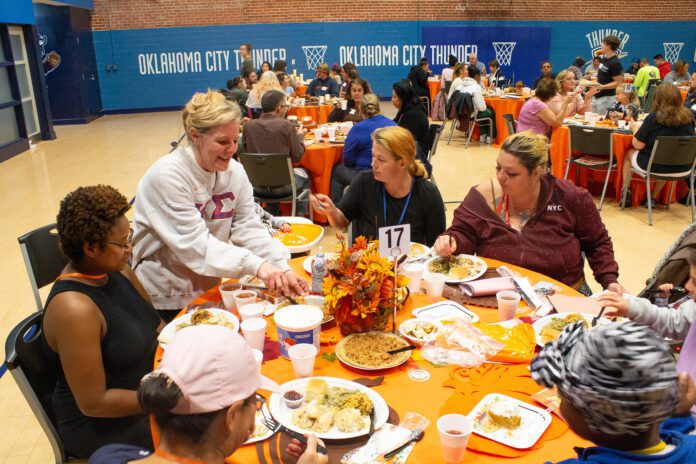
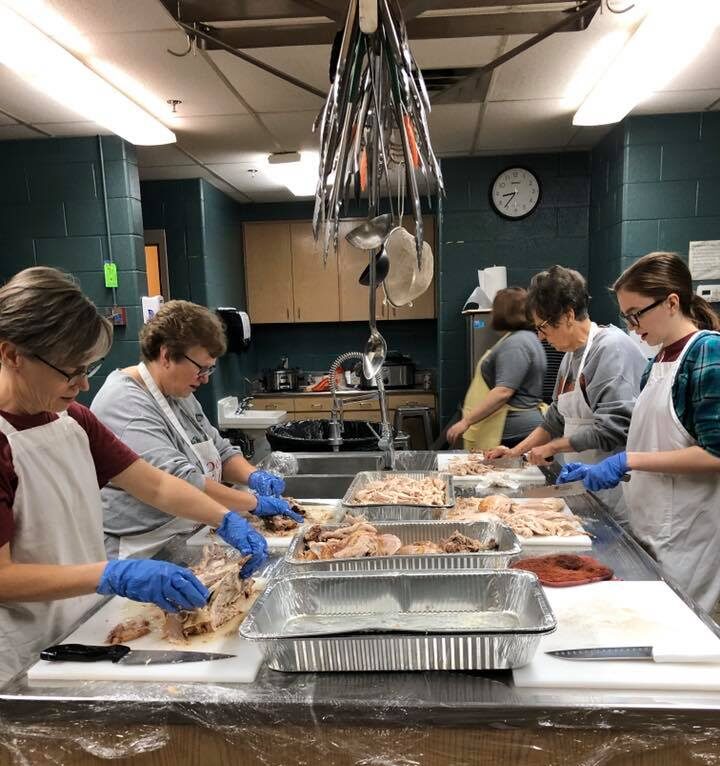
City Rescue Mission, founded in 1960, helps those experiencing homelessness with obtaining a residence and getting back on their feet. The nonprofit also hosts an annual Thanksgiving meal to celebrate clients and their hard work. Photo courtesy City Rescue Mission
In celebration of the holiday, Oklahoma nonprofits are serving up traditional Thanksgiving meals to people who need them most. For those served, a warm meal represents more than just dinner service; it’s an opportunity to connect and experience a sense of belonging.
“We’ve been serving [Thanksgiving meals] for as long as I’ve been here,” says Erin Goodin, president and CEO at City Rescue Mission in OKC. “The thought behind it is to create a community on Thanksgiving, so that no one is left eating at the table by themselves.”
City Rescue Mission
For weeks, volunteers and staff are hard at work prepping turkeys and vegetables for City Rescue Mission’s annual Thanksgiving banquet. On Thanksgiving Day — this year on Nov. 27 — the Oklahoma City nonprofit will serve free breakfast in the morning and a traditional Thanksgiving meal later in the day to its clients.
Founded in 1960, City Rescue Mission helps those experiencing homelessness in the OKC metro. The faith-based nonprofit assists its clients with obtaining safe housing and becoming self-sufficient.
Photo courtesy the Food Bank of Eastern Oklahoma
The Thanksgiving banquet gives City Rescue Mission’s clients an opportunity to gather and connect with others during the holidays.
“A lot of times the people that we serve lack a good social support system,” Goodin explains. “So we really become that for them while we try to connect them back into the community.”
The nonprofit served meals to 1,300 people last year. To make the banquet possible, the City Rescue Mission relies on hundreds of volunteers to help prepare food, set up tables, and serve guests.
“All of our volunteers give up a day that they could spend with their families to serve others,” shares Goodin. “It’s amazing to see. We have 300 people here on Thanksgiving Day that have sacrificed time at home to give back and be a part of something bigger.”
In 1981, the Paradise family organized the first community Thanksgiving dinner in Edmond, inviting anyone who wished to join. The family’s small act of kindness has turned into a long-standing tradition that has fed thousands of people over the years.
The Edmond Community Thanksgiving Dinner served approximately 900 people last year – and all are welcome to attend. Photo courtesy Edmond Community Thanksgiving Dinner
This Thanksgiving, the Edmond Community Thanksgiving Dinner will take place from 11 a.m. to 2 p.m. in the Bronco Room on the UCO campus. The meal features traditional holiday fixings, including turkey, mashed potatoes and gravy, green beans, cornbread, cranberry sauce and pumpkin pie.
In the same spirit as the first community dinner, anyone is welcome to come.
“A lot of people think that we’re just feeding people who are homeless,” says Gary Smith, who has volunteered for the organization since 2007. “Although we do get folks in those demographics, we also cater to the students at UCO who are away from their families and don’t get to travel home.”
Last year, the Edmond Community Thanksgiving Dinner Association served approximately 900 people on Thanksgiving Day. The nonprofit also relies on a robust group of volunteers to set up, cook food and provide table service to guests.
Volunteers are needed throughout November and on Thanksgiving Day. Smith encourages people to follow the Edmond Community Dinner Thanksgiving Facebook page to receive updates about volunteer opportunities.
“When you get to see another family connect — knowing that you were part of the catalyst for that happening — it gives you a special feeling that this [dinner] needs to continue,” shares Smith. “We’re doing everything in our power to make that happen.”
The Food Bank of Eastern Oklahoma has gathered over 6,000 turkeys and 2,000 hams to distribute for Thanksgiving this year. The nonprofit, which has long-served meals on Thanksgiving Day, began placing orders for Thanksgiving turkeys in February.
Dedicated to ending food insecurity in Oklahoma, the food bank has experienced increasing demand for its services.
“In the last year, we’ve seen a 26% increase in the number of guests seeking help that have never used one of our pantries before,” says Jeff Marlow, CEO at the Food Bank of Eastern Oklahoma.
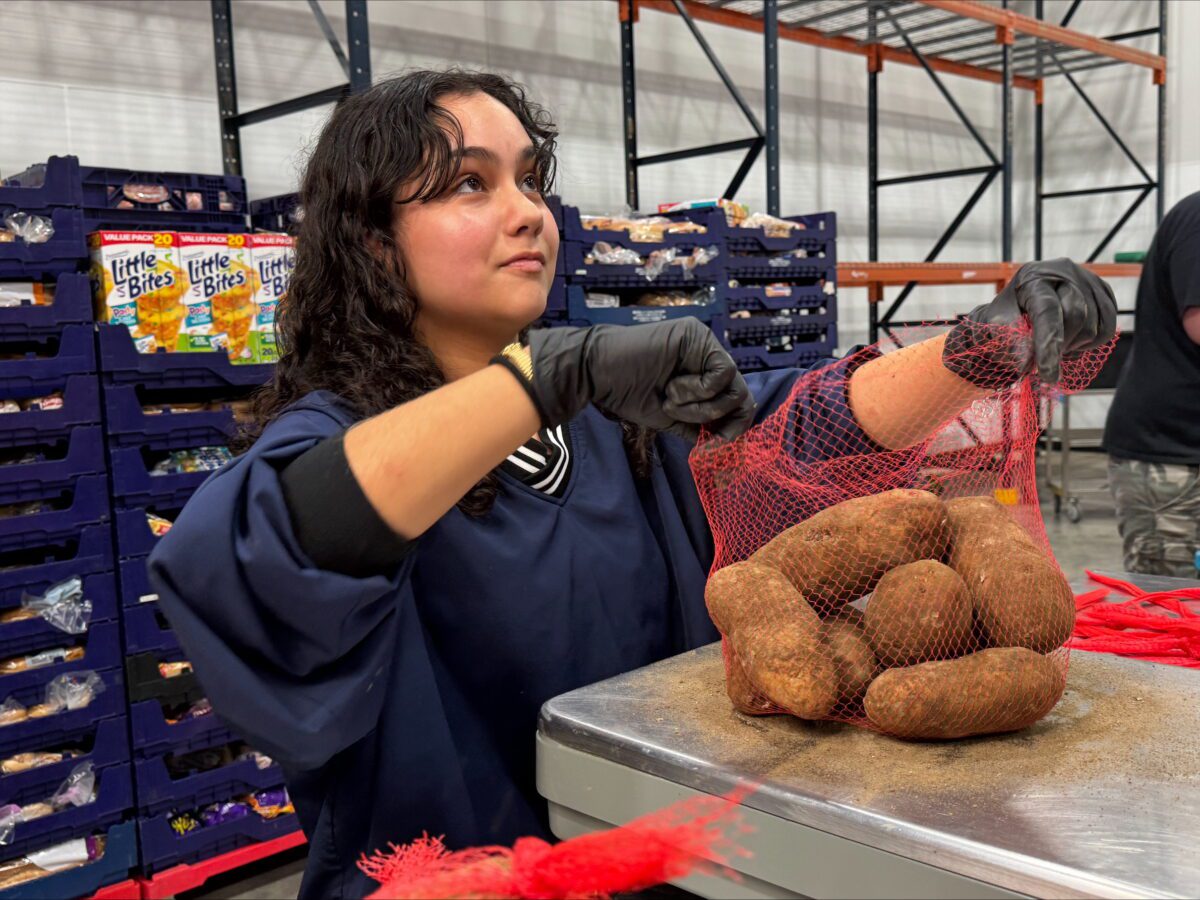
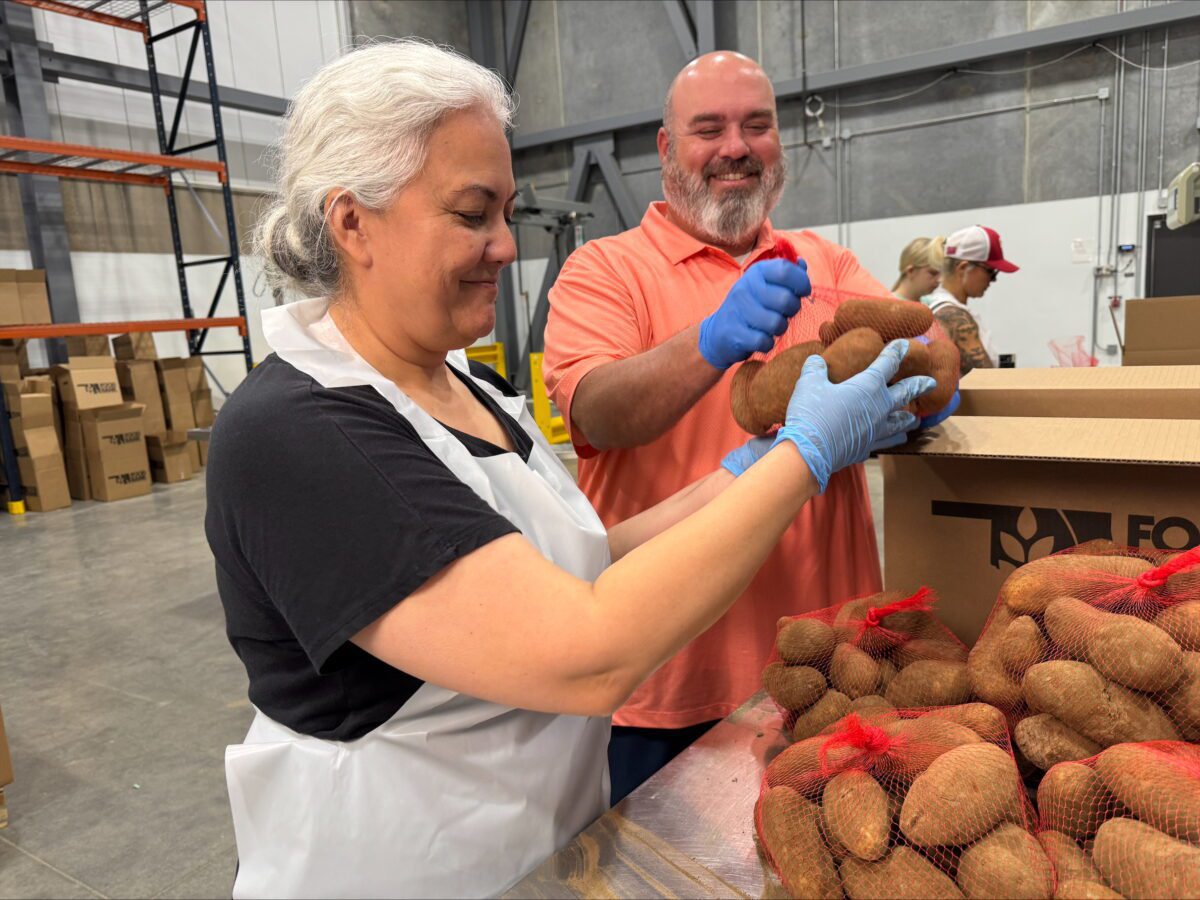
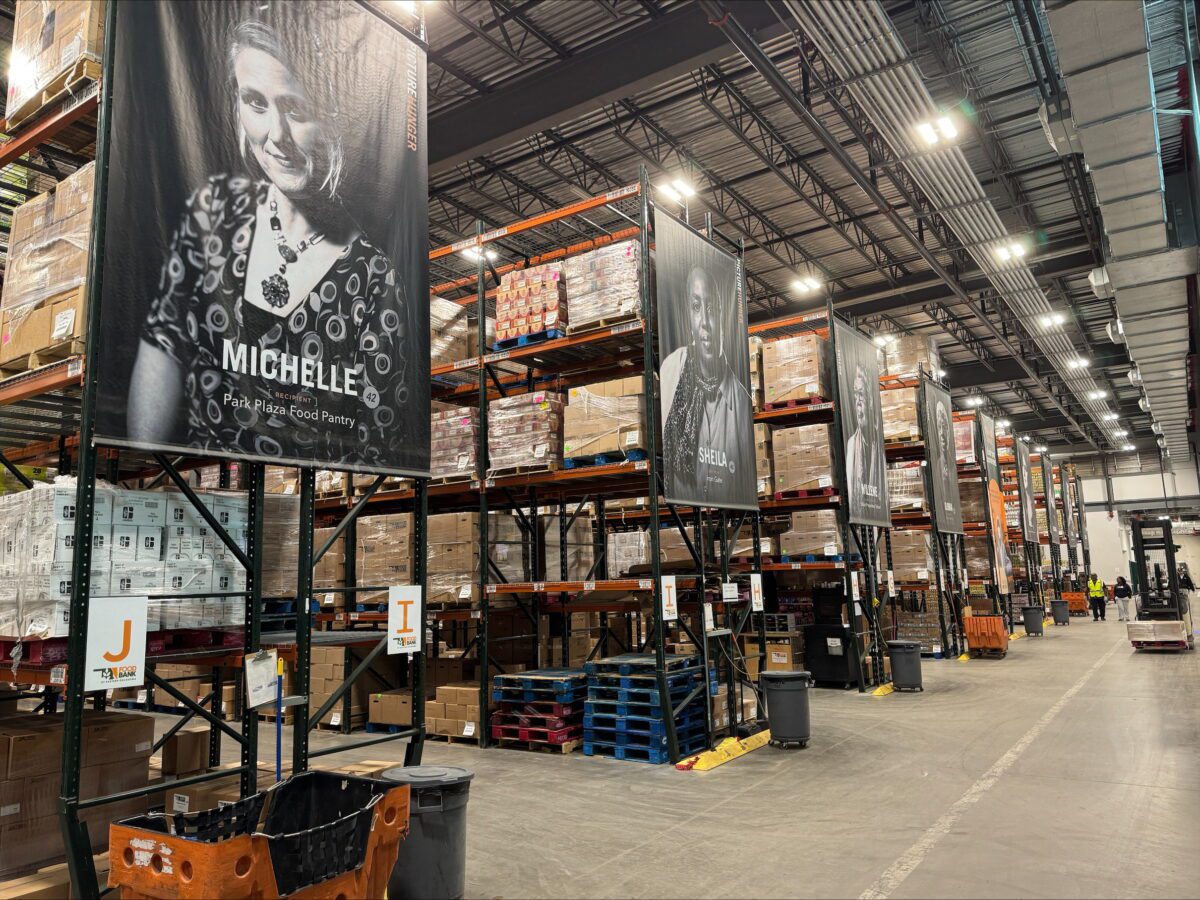
The Food Bank of Eastern Oklahoma, which has seen a sizable increase in clients over the last year, needs volunteers to help with preparing and packaging the Thanksgiving meals this year. Photos courtesy the Food Bank of Eastern Oklahoma
This year, the organization will distribute 150 Thanksgiving meals to families in need. These ready-to-eat meals include traditional proteins and sides.
“For people that may not have the resources to prepare their own fresh-cooked meals, it means a lot to them,” adds Marlow.
The food bank needs volunteers to help with preparing and packaging the Thanksgiving meals this year. People can also support the food bank by hosting a food drive or donating funds to the organization.
“Just knowing that we’re making a difference in people’s lives is what drives us every day,” reflects Marlow. “So many people out there don’t have family support … The food bank is that safety net and family support system for so many people. That’s what gets me excited and makes me want to do more every day.”
To register for volunteer opportunities, go to okfoodbank.org/volunteer.
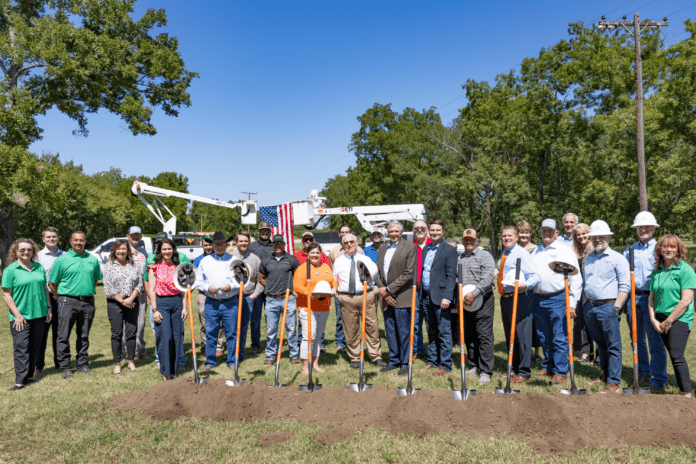
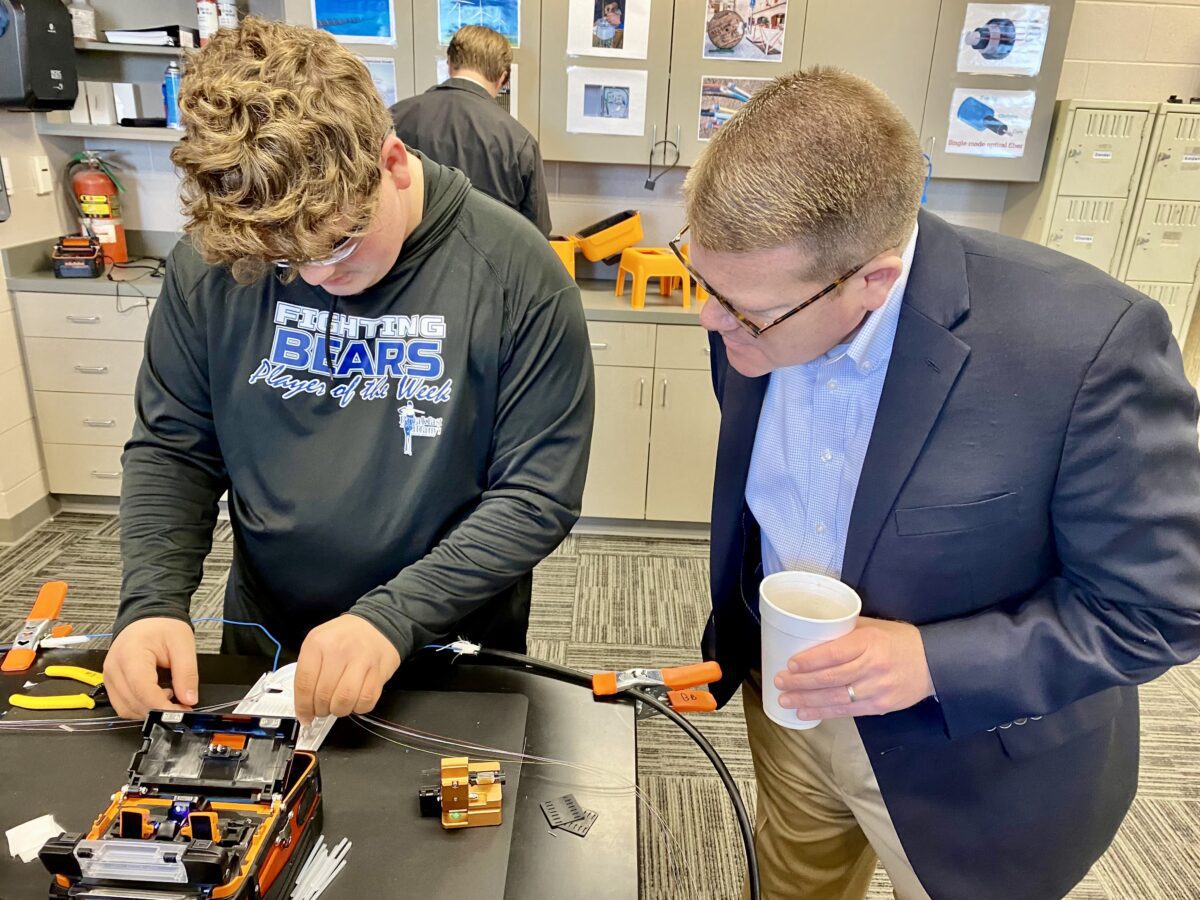
The Oklahoma Broadband Office is utilizing three grant programs to provide high-speed broadband internet connection to all of Oklahoma, including the most rural locations. Photos courtesy the Oklahoma Broadband Office
High-speed internet service is no longer a luxury — it has become almost as essential as electricity, clean water and transportation in living one’s everyday life in the U.S.
Luckily, Oklahoma will be provided with high-speed internet service through three grant programs administered by the Oklahoma Broadband Office. The programs will build out high-speed internet service to unserved and underserved areas throughout the state.
More than 69,000 locations — with the vast majority in rural Oklahoma — will be funded by American Rescue Plan Act (ARPA) State and Local Fiscal Recovery Funds and the ARPA Capital Projects Fund, covering 95% of the state.
The remaining five percent of locations in Oklahoma that still lack adequate service will be covered by the Broadband Equity, Access and Deployment (BEAD) program funding.
A mix of fiber, fixed wireless and satellite, where appropriate, will offer high-speed internet connections to Oklahomans, and the grant programs are planned to be completed by the end of 2026.
“Our grant programs are helping rural households, small towns, tribal communities and farms where high-speed access has previously been too expensive for private companies to reach,” says Mike Sanders, executive director of the Oklahoma Broadband Office.
Those living in rural Oklahoma will benefit the most from the efforts of the Oklahoma Broadband Office, which harbors a goal to ensure every home, business and farm in Oklahoma has access to broadband service.
Additionally, Oklahoma is home to 39 federally recognized tribal nations. For any BEAD project on tribal lands, Oklahoma’s Broadband Office must obtain and include a written tribal resolution of consent. The Broadband Office has been actively coordinating with tribal governments and collecting project-by-project consents as required.
“The biggest challenges revolve around the nature of rural areas — population density,” says Sanders. “When homes and businesses are few and far between, it’s difficult to connect them to service, and it is much more expensive.”
However, the Broadband Office ensures internet service providers receiving grant funds offer a low-cost option for those to be served. The providers were selected through a competitive applications process — the Benefit of the Bargain round, which focuses on the lowest cost technologies. This broadband project will build pathways to education, healthcare, jobs and opportunity to Oklahomans.
“You can run a million-dollar company, receive a college degree or have a doctor’s appointment from a laptop on your kitchen table, but you have to have access. That’s what we are doing — providing that access,” Sanders says.
In the education sector, high-speed broadband connection will enable families to access remote learning, homework assistance, virtual tutoring and dual-credit programs. On the healthcare side, connection will provide access to telehealth and connect rural patients with specialists, and support remote monitoring for seniors and veterans. On the job front, broadband will support access to online applications, remote work, business e-commerce and workforce upskilling.
“From precision agriculture to small-business growth and adult education, reliable internet is a force multiplier — it expands markets, cuts costs and creates choices for families and communities. Our investments are targeted so those benefits reach places that have been left behind,” Sanders says.
Progress can be tracked in real time on the OBO Broadband Dashboard available on the agency’s website, broadband.ok.gov.
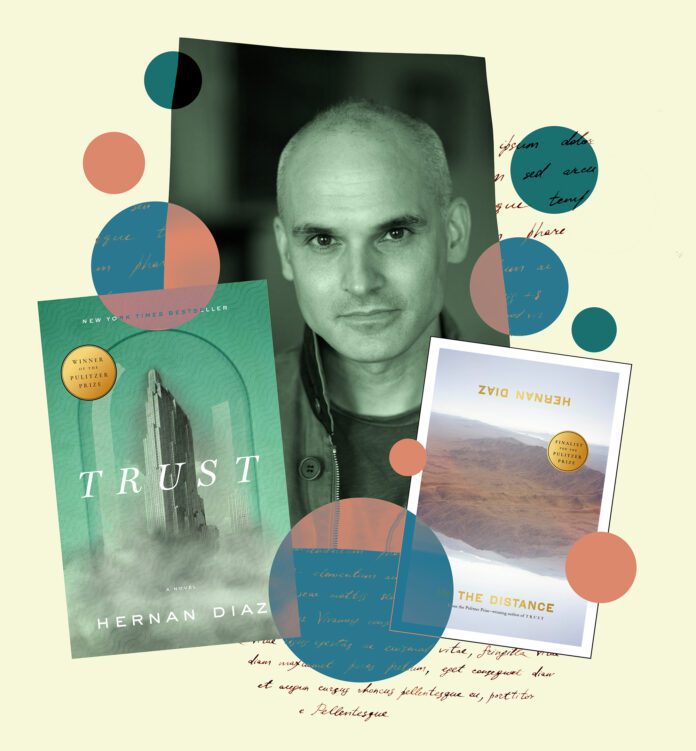
Hernán Díaz, who has won the John Updike Award and Pulitzer Prize, visits Tulsa in December to take home the Peggy V. Helmerich Distinguished Author Award.
Headshot by Pascal Perich, book covers courtesy the Tulsa City-County Library
Even before he learned how to write, Hernán Díaz knew words were his thing.
“I always knew I wanted to be a writer. I grew up in a rather bookish home, which helped. But as a child, I never wanted to become an astronaut or a firefighter. An unexplainable love of language, which has been with me forever, was my motivation,” says the Pulitzer Prize-winning and bestselling author of the novels Trust and In the Distance, and the nonfiction Borges, Between History and Eternity.
A longtime professor and academic journal editor, Díaz is this year’s recipient of the Peggy V. Helmerich Distinguished Author Award, given by the Tulsa City-County Library and Tulsa Library Trust.
“It defies belief to find one’s name in a list including so many heroes, from Toni Morrison to Kazuo Ishiguro, from Ian McEwan to Hilary Mantel. Just imagine a list from which one could produce such names at random,” says Díaz. “It is also quite special to be honored by the Tulsa City-County Library. I’ve always worked at libraries, and I still do. I have an unpayable debt of gratitude to the librarians and curators that have helped me through the years, and their service to their communities should always be remembered and praised.”
Over the past decade, Díaz has received numerous accolades, including the 2023 John Updike Award from the American Academy of Arts and Letters, given to “a writer whose contributions to American Literature have demonstrated consistent excellence.” His first novel, In the Distance, was a finalist for the Pulitzer Prize and the PEN/Faulkner Award. His second novel, Trust, received the Pulitzer Prize for fiction and was longlisted for the Booker Prize, among other nominations.
Highly acclaimed for his narrative ingenuity, intellectual depth and elegant prose, the linguaphile Díaz says he “can’t imagine writing without feeling the joy of inhabiting language, without the thrill of discovering a felicitous syntactical surprise, without the gratitude for having found the right word, without the hope of sharing these pleasures with the reader.”
Born in 1973 in Argentina, the multilingual Díaz moved with his family to Sweden when he was 2, returned to Argentina around age 9, moved to London in his early 20s and then to the U.S. in 1999, where he has lived in New York for over two decades.
“Although I’ve traveled extensively throughout the United States, I have never been to Oklahoma,” he shares. “I’m glad this grave situation will be rectified soon. I’ve always associated Oklahoma with the last pages of Amerika, Kafka’s unfinished first novel. We leave Karl Rossman, the protagonist, on a train headed for the ‘Nature Theater of Oklahoma.’ Thus, since my teenage years, the resounding name of your state has been filled with promise.”
2025 Peggy V. Helmerich Distinguished Author Award Featuring Hernán Díaz
Free Public Presentation and Book Signing Dec. 4 ● 5:30 p.m.
Author Presentation and Black-Tie Gala Dec. 5 ● 6 p.m.
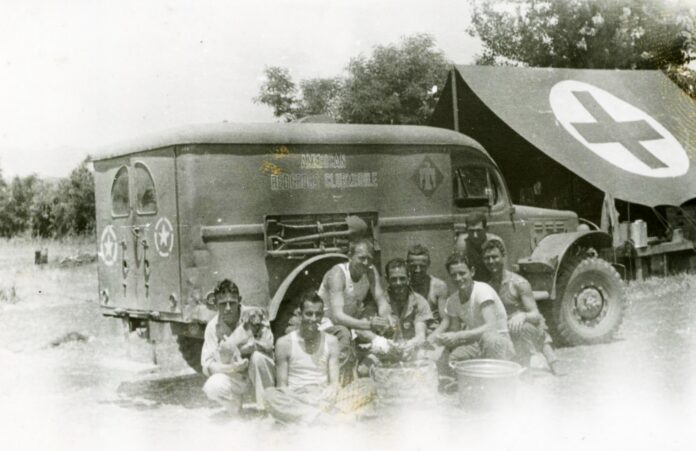
A Donut Dolly’s van with kitchen crew poses after serving the chow line lunch during World War II. Photo courtesy the Oklahoma Historical Society
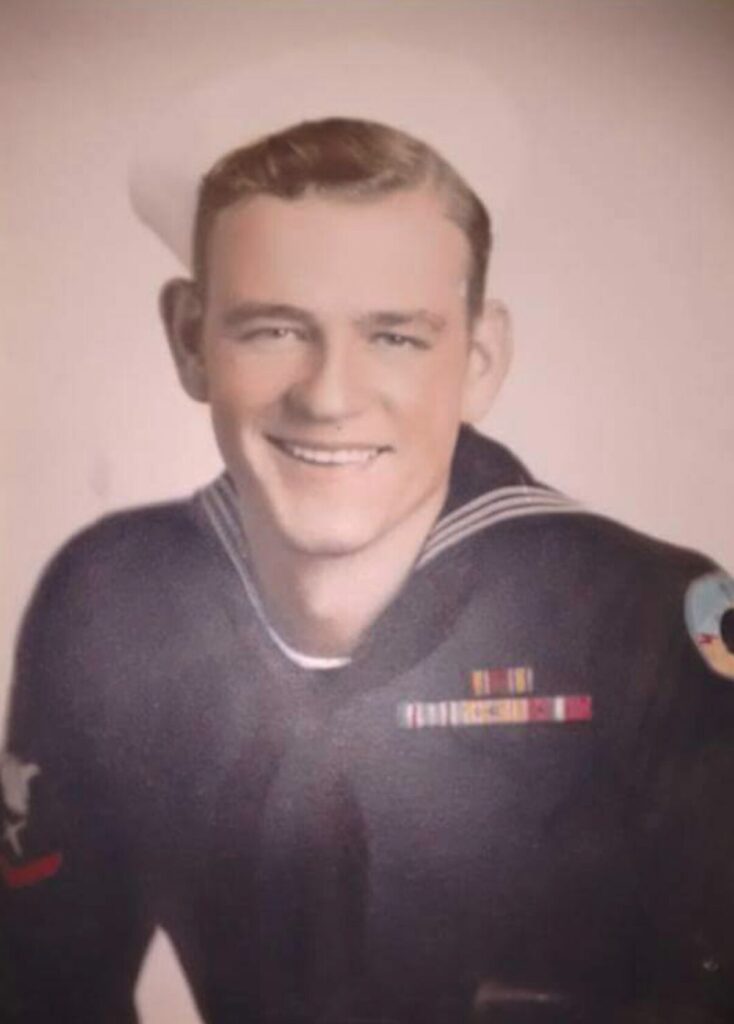
Wayne Webster, part of the 1% of World War II veterans still alive today, says his Navy crew was composed of soldiers who were “90% under 19 years old.” Photo courtesy Wayne Webster/Sand Springs Veterans Center
Wayne Webster
World War II – Navy
Before he went off to fight in World War II, U.S. Navy veteran Wayne Webster says he “did not know there was a town bigger than McAlester.”
“My life began when I went into the service,” says Webster, a Sand Springs resident who celebrated his 99th birthday this year. “The rest of it was nothing but work and plowing and raising cotton and corn.”
Webster suffered his share of deprivations as a child, but notes that “we weren’t the only ones.” His family lived for a while in a farmhouse with no running water or utilities. He was four when an older brother died, and his mother died when he was seven.
He enlisted in the Navy in 1943, “just before they drafted me,” and served as a gunner’s mate on AM 296, an auxiliary mine sweeper. Webster’s ship took part in eleven World War II invasions in the Philippines, and four in Borneo.
“We had a pretty good crew,” he says. “Ninety percent, at least, were under 19 years old.”
There were many close calls, which Webster can recall in detail.
“There was a four-engine bomber that dropped two at us,” he shares. “We heard them whistling coming down.” Both bombs narrowly missed the ship.
A senior officer once scolded him because he had gone six months without writing to his father.
“I said to him, ‘What can I write? I can’t tell him where we have been, where we are going, where we are, you can’t even discuss the weather.’”
Webster says about the only thing he could tell his dad was that he was OK, to which the officer “looked me right in the eye, and said, ‘Don’t you think your old dad would like to hear that?’”
After the war, two of Webster’s brothers left for work in California and the third remained in McAlester. He has outlived all of them. One of his two sons died last year. Growing up without sisters, Webster says, he is especially fond of his daughters-in-law.
“They are more like daughters,” he says.
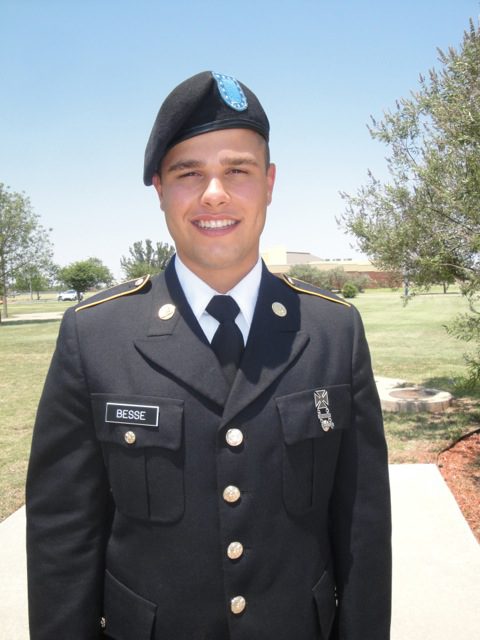
Medically retired from the National Guard after a traumatic brain injury from an IED, Kyle Besse now dedicates himself to veteran advocacy around the state. Photo courtesy Kyle Besse/Post 12, Bethany
Kyle Besse
Operation Enduring Freedom – National Guard
On a recent Sunday, Kyle Besse began his day at a homeless shelter.
“I found a veteran, took him to church, and then got his phone number to help him apply for benefits,” says Besse, 33, a veteran of Operation Enduring Freedom in Afghanistan. He spent nearly six years in the Oklahoma National Guard and was deployed in 2012-13.
Besse, who lives in Oklahoma City, was medically retired as a sergeant with PTSD and a traumatic brain injury, which happened when an IED (improvised explosive device) struck a truck he was driving. The blast injury resulted in epilepsy. He’s now a full-time volunteer, and his job is veteran advocacy.
He works primarily through American Legion Post 12 in Bethany-Warr Acres to help veterans apply for the benefits they are entitled to.
“I love working with Vietnam veterans, that is where my heart is at,” he shares. “They did not get a fair shake back in the day. We have an opportunity now to make things right.”
Besse joined the military to help with college expenses. He was a dental assistant in a medical attachment, but his role changed after deployment.
“My job was to clear the roads of IEDs and mines,” he says. “I thought I was going to die the whole time.”
But he fought to stay alive, looking forward to being with his wife, who was also serving in the military. The marriage eventually ended, but Besse says they have remained friends.
He sings the praises of the Wounded Warrior Project, a nonprofit that assists veterans who incurred a physical or mental injury on or after Sept. 11, 2001. A couple of months ago, he joined fellow Wounded Warriors at Zion National Park in Utah for an adventure therapy retreat designed to help veterans “rediscover, re-engage and recharge,” he says.
It was through the Wounded Warrior Project that he was able to begin talking about the details of his time in Afghanistan, which had been bottled up for ten years.
“I saw tremendous progress after that,” he says. “I sleep better. I have a better mood.”
Like many veterans, Besse says he would do it all over again – and he encourages other young Americans to serve.
“Our country needs them,” he says. “And it will help set them up for success in the future.”
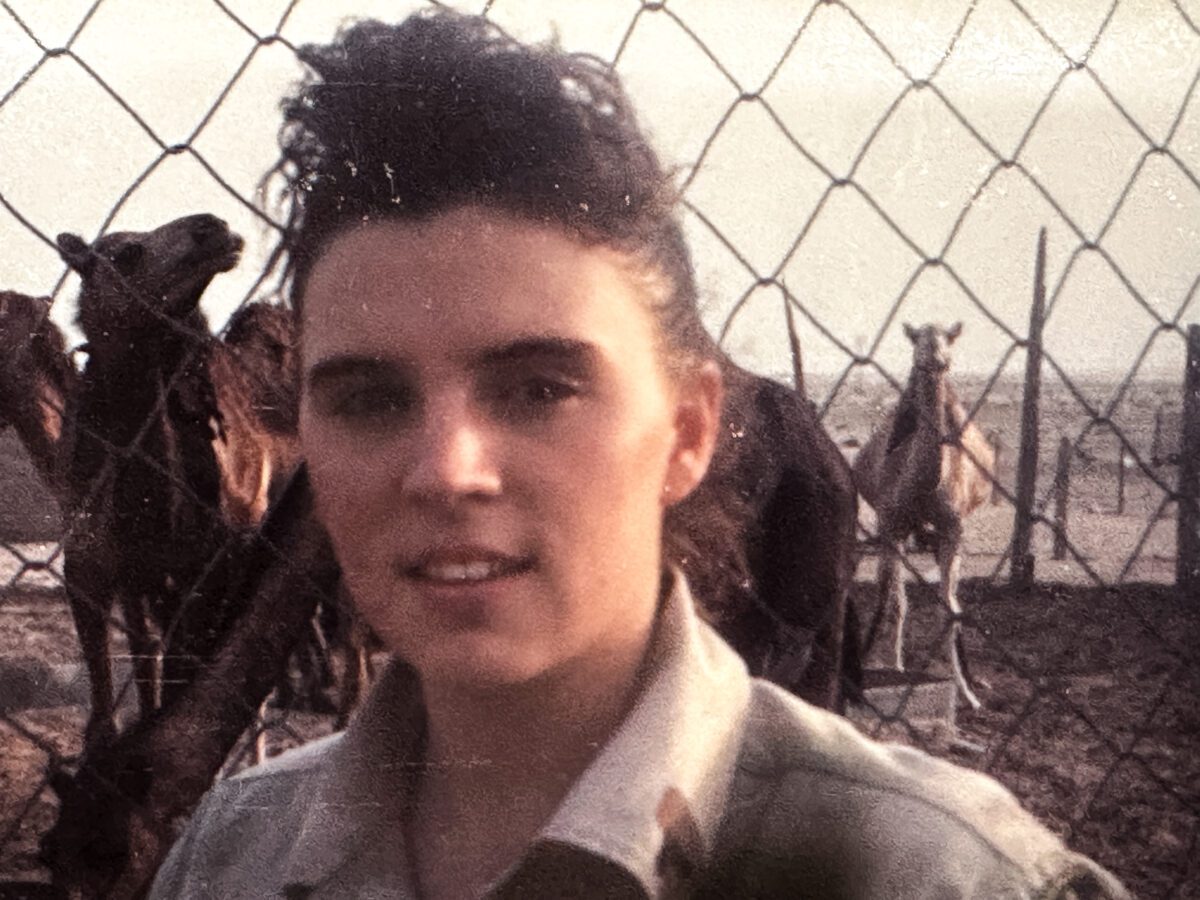
After being trained in logistics, Mary Epperly was stationed in South Korea and worked within Khobar Towers. “There were scud [missile] alerts night after night, and you ended up in the bunker,” she says. Photo courtesy Mary Epperly/Sand Springs Veteran Center
Mary Epperly
Operations Desert Shield & Desert Storm – Army
Mary Epperly was deployed during Operations Desert Shield and Desert Storm, and she draws disability pay for PTSD and other military-related conditions. Yet, she says, she loved her time in the U.S. Army.
“My military experience was awesome,” she says. “I regret nothing.”
Epperly racked up track and field records at Vinita High School that stand today — and gleaned her plenty of scholarship offers. But she had decided by her junior year to enlist right out of high school. She trained in logistics and was sent to South Korea. She grew to love it there.
“I worked for the Republic of Korea Army, we were a combat support team for them,” she says.
On her second plane ride to Saudi Arabia, she met her future husband, Robert Epperly, a Mannford native and Patriot missile operator.
“He fired the missiles, and I ordered them,” she says.
She was stationed at Khobar Towers, where “there were scud [missile] alerts night after night, and you ended up in the bunker,” she says.
Yet there are fond memories, too, of letters from home and serving with a warrant officer “who was the most amazing person I could have worked for.”
She and Robert then served in the same unit in El Paso, but left the Army rather than name a custodial guardian for their daughter in advance of a possible deployment. They wanted to be the ones to raise their child. Back in Oklahoma they found work at manufacturing plants, where their careers flourished.
“The training and experience I got in the military has been phenomenal,” she says.
She had worried she would not be suited to civilian work, but soon found the structure and camaraderie she needed. Robert is commander of their American Legion Post. Both rely primarily on the VA for healthcare, and she admits the system could use some improvement — but says it’s not the only resource available. She found support at church, and they volunteer for Vets that Matter in Sand Springs.
“We help veterans pay their rent and utility bills,” she shares. “We build wheelchair ramps, replace windows. It’s all at no cost to veterans.”
Although he originally wanted to be on the front lines of the Korean War, Terry Spradley was sent to electronics school and assigned to work on airplane radar systems. For his work, he received the Korean Ambassador for Peace Medal last year. Photo courtesy American Legion Dobbs-Adams Post 55
Terry Spradley
Korean War – Marine Corps
Terry Spradley volunteered to go to Korea because he wanted to fight. However, the U.S. Marine Corps had other plans for him … and he was not happy about it.
“I had been to Camp Pendleton for advanced combat training,” he says. “I was an infantryman.” But he was sent to electronics school, then assigned to work on airplane radar systems at a base near Pohang, far behind enemy lines.
“We played tennis,” he shares. “I had a dog. I attended a church there, and helped in an orphanage.”
By the time his two and a half years in the Marines were over, his attitude had changed.
“I was so grateful I did not have to kill anybody,” he says. “And I’ve used that electronics background all my life.”
He enrolled at the University of Oklahoma and was married during his senior year. With a family to support, he found a job at Tinker Air Force Base and switched to night classes. He completed a psychology degree at Oklahoma City University, then worked two years for the Federal Aviation Administration. He taught for a couple of years at Star Spencer High School, then earned a master’s degree from Oklahoma State University.
He launched his career in higher education at what is now Cameron University in Lawton, teaching computer hardware and software. Cameron sent him back to OSU for a Ph.D., and he was delighted to learn he had two more years of eligibility on his GI bill.
At age 50, he was offered a retirement package from Cameron that included a pension he continues to collect at age 90.
He then opened Terry’s Bicycles in Lawton, which he owned for 30 years. And he won hundreds of bicycle races, too — including state and national championships.
Last year, Spradley was awarded the Korean Ambassador for Peace Medal.
“They sent somebody from South Korea,” he says. “Two of us received it at the American Legion state convention. They told us if the U.S. had not come there, they would be part of North Korea now. They are so grateful.”
Main image cutline: A Donut Dolly’s van with kitchen crew poses after serving the chow line lunch during World War II. Photo courtesy the Oklahoma Historical Society
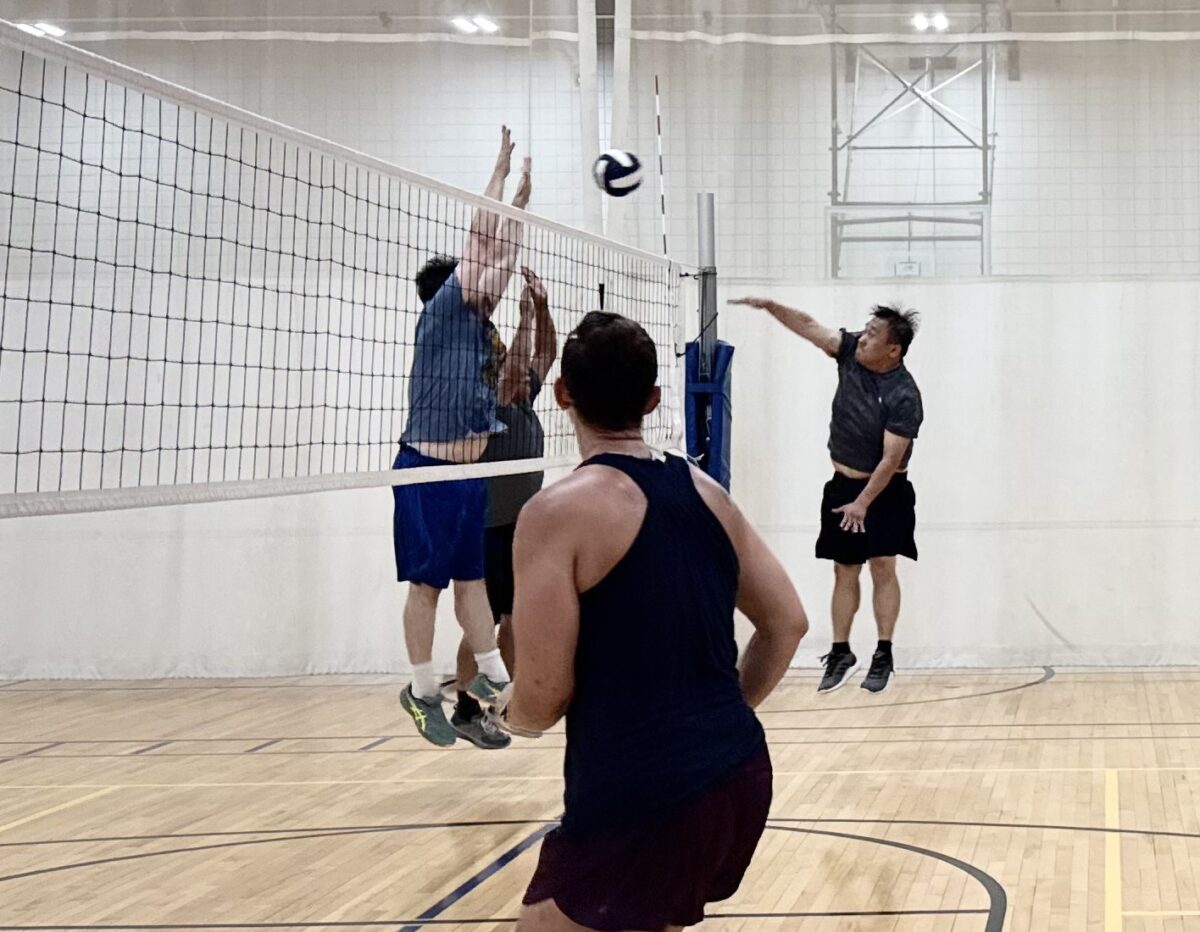
Tulsa Sports and Events offers a variety of recreational leagues, accommodating all levels of athleticism.
Photos courtesy Tulsa Sports and Events
Oklahoma plays host to a wide range of adult recreational sporting leagues, and the popularity of these clubs is only growing. A plethora of options are available for those looking to get active and make connections – including volleyball, basketball, flag football, kickball and even bowling. Whether you’re super competitive or a type B social sports enthusiast, you’re welcome to join in on the fun.
“All our leagues hold some competitiveness, but our main focus is fun and a healthy community,” says Dory Wehr, executive director and CEO for Tulsa Sports and Events, which manages recreational sports leagues and tournaments in the area. “We strive to provide space for people to continue a healthy lifestyle in a fun community.
Kensi Wells, regional sports director with OSSO Sports and Social – a similar organization based out of OKC – agrees with the sentiment.
“We cater to social sports,” she says. “Our aim is to appeal to everyone, even if they don’t fancy themselves as athletic or competitive.”
Joining a league is as simple as going online, finding the sport you like, and adding your name to the list.
“You don’t need to know anyone to join,” says Wehr. If you’ve got a big group wanting to play or you’re flying solo, you’ll be accommodated.
“We have an option to either put in a whole team or register as an individual,” she continues. “We do our best to create free agent teams every season for individual players. Once you are in the league, you meet new people and, in turn, usually end up creating relationships with existing teams, or liking your free agent teams enough to stay for the next season as a returning team.”
The cost is dependent on both the league and the sport.
“Our leagues run anywhere from $69 to $89,” says Wells. “No athleticism is required. We are here to provide a place for you and your friends to hang out, create a community and be active.”
At Tulsa Sports and Events, costs also vary by sport, and different levels of athleticism are typically split.
“We usually create different divisions in each sport, so whether you are highly athletic or just getting into it, you have a division to play in,” Wehr says.
If the social scene is another reason you want to join a recreational league, that’s also a big part of what makes them so special.
“We are all about the social scene. Our sand volleyball leagues are hosted at Pearl Beach Brew Pub in both OKC and Tulsa, and the field sports players are encouraged to come enjoy food and drinks after the games to hang out with all the other players,” says Wells.
Wehr continues: “Much of our community has been playing with us for many years. They sometimes do drink nights after games or their team is very close knit and will go out to dinner with their families after games.”
In the end, friendly competition and a place for personal growth are paramount.
“Our primary focus is on health and wellness and fostering a positive environment for all participants,” says Wehr. “This genuine dedication is what keeps our community returning year after year.”
The Oklahoma City Silent Book Club encourages members to meet, read their own books quietly, then discuss together after. Photo courtesy the OKC SBC
Oklahoma is home to a diverse and thriving community of social clubs, many of which go beyond the typical to embrace unique and niche interests.
Of those, Tulsa Modern Quilt Guild (TMQG) board member Jenelle Abbott says their guild is a 130-members-strong local chapter of the National Modern Quilt Guild, with monthly meetings and guild activities including quarterly sew-days, retreats, swaps, workshops and social activities centered around the love of sewing and quilting, whether by hand or machine sewing. Abbott mentions that TMQG harbors a diverse demographic of both women and men who share a love of quilting. Monthly meetings include different locations and speakers.
“It’s artists, hobbyists, and a general love for all things creativity with a whole lot of laughs and friendships thrown in,” Abbott says.
You can check out TMQG on the first Thursday of each month at Fellowship Congregational Church at 2900 S. Harvard in Tulsa. Members will also be displaying their creations at Quilts on the Lawn at their monthly meeting on Oct. 25. On Jan. 9-10, the group will host a quilt show at Southwoods Landscaping at 91st and Lewis.
Another unique club was created for the average reader without imposing monetary or time constraints: The OKC Silent Book Club (OKC SBC).
“OKC SBC is a free organization that invites readers of all ages to gather and enjoy time reading and chatting about literature and life,” founder Meredith Dennis says. “Most members love attending OKC SBC because there’s no pressure to read a certain book by a certain date. You can simply show up with a book and read at your own pace while enjoying a drink or meal. Some members bring their partner for a date night. Others meet their friends and chat about life. Solo attendees use the time for some R&R and escape their typical home routine.”
Find twice-monthly OKC SBC meetings by following the club’s Instagram or Facebook page @OKC.SBC. Members quietly read their own book choices for an hour and a half, then join together for 30 minutes of interaction. Each meeting is held at a new location for members to enjoy, developing their love for Oklahoma City.
Bolstering Business
“OKC SBC was also created to support the community,” says Dennis. “Instead of asking for membership fees, each member is encouraged to possibly buy a drink, treat or book from the location in which we meet. We like to gather in locally-owned businesses that make Oklahoma unique, such as breweries, cafes and bookstores. Over the past year, we have held 19 meetings in 16 locations. OKC SBC brings members out of their routines and introduces them to new places across the metro.”
Abbott continues: “TMQG participates in the community through educational outreach, Tulsa Sews, in which we sponsor junior sewists 10+ years old to learn the craft and teach them sewing techniques. In addition, we give over 100 quilts to St. Francis NICU unit annually, all made by our members and their donations. In 2025, we launched an outreach to make lap-size quilts to donate to local nursing homes in the Tulsa area.”
If you come across an injured animal – be it an amphibian, small mammal or a bird – the Oklahoma Department of Wildlife Conservation offers a list of licensed animal rescuers to help.
Reptile rescuer Annie Chesher of Oklahoma City has some advice for people who adopt pets — reptiles in particular — then tire of the novelty.
“Most people think of them as throwaway pets, but some can live ten to 20 years,” says Chesher, who operates Abigail’s Angels Reptile Rescue out of her home. “You’re not just purchasing a pet. You’re purchasing a member of the family for a lifetime – possibly your lifetime.”
Chesher is one of more than 100 Oklahomans listed as licensed animal rescuers by the Oklahoma Department of Wildlife Conservation, and is passionate about what she does. For her, it’s an all-in commitment, even though she donates her time.
“I do this full-time,” she says. “I laugh that I work eight hours a week at a real job so I can work 80 hours a week with the reptile rescue.”
She is also heavily involved in working with the public “to educate people before they purchase a reptile.”
The Wildlife Conservation Department’s rehabilitators list includes about 30 folks who specialize in reptiles. The list also includes those who help other kinds of native and exotic species, including large and small mammals, amphibians, birds and other fowl.
Chesher says anyone who finds an injured animal or one that needs some kind of personalized attention can find rescuers through the department’s website, wildlifedepartment.com, or on social media.
Her staff, she says, only consists of herself, her husband, her grandson and one other employee. The team takes in “turtles, snakes, lizards,” Chesher says, “just about any invertebrates or any non-venomous reptiles that are exotics — anything you can buy in a pet store or reptile show.”
Rescuers are required to work with a veterinarian, she says.
For most people, she mentions, “it’s illegal to try to rehab an animal without a license. The goal is to treat the animal sufficiently so it can be released back into the wild.”
Laura Ramsey of Moore is among the listed wildlife animal rescuers, operating Ramsey Wildlife Rehabilitation. She specializes in eastern cottontail rabbits, and her rescue work includes eastern fox squirrels, porcupines, turtles, opossums and skunks.
“I feel like I educate the public in a lot of different things,” Ramsey says, helping people who find an injured animal “and feel helpless.”
Ramsey mentions that she can handle some types of reptiles, but isn’t big on rehabilitating snakes.
“I will do lizards and turtles, but I just feel like snakes is not my niche,” explaining that it’s hard to get a snake hydrated, and that snakes have other issues.
“There are people that are better at rehabbing [snakes] than me,” she shares.
Ramsey currently has five domestic bunnies in her care.
“They were foster bunnies that were in a hoarding situation,” she explains.
Chris Rauh of Durant says he has become known in his area of southern Oklahoma for his ability to remove snakes and other reptiles from people’s property. He has fostered a life-long love of reptiles, and obtained licensure to be able to legally capture the wildlife other people find in their yards.
Rauh is in his second year as a licensed handler, but says that he’s been catching snakes all his life. He removes copperheads, rat snakes and turtles, and says he relocates them to “a place where they can’t get run over or encounter anyone.”
Ramsey says she garners great satisfaction in her work.
“I find so much joy and happiness in [saving] an animal that’s near death, orphaned or injured,” she says. “They kind of speak to you, if you’re willing to listen.”