Cars and Coffee, a group of auto enthusiasts, meets every first Sunday at Tulsa’s Best Buy on 71st Street. Photo by J. Moore
Photography
On any given weekend in Oklahoma, it’s not hard to find collections of stunning old cars lined up in rows like shiny jewels. These aren’t just cars; they’re stories on wheels.
From Tulsa to Tishomingo, antique car lovers gather at car shows, swap meets and parades, typically stationed in small towns and city parks. They come in muscle cars from the 1960s, shiny Model A Fords from the 1930s, pickup trucks that once hauled hay bales, and everything in between. Some of these cars are more than 100 years old, yet still run like champs and allow their owners to show them off. Oklahomans love their historical narratives, and antique cars are a way to keep history alive. Each one has its own story.
Photo courtesy Cars and Coffee
Bill Ruedy, member of the Tulsa regional chapter of the Antique Automobile Club of America – TRACCA – and editor of their newsletter (who likes to show off his 1913 Ford Model T Touring Car, if you’re asking), shares that stories are a component of what brings people to their club. Participants share an “interest in antique automobile preservation, opportunities to show our cars and talk about their history, and fellowship of people with like interests,” he says.
And speaking of history, with the centennial celebration of Route 66 coming up in 2026, many clubs are planning related events. TRACCA board member Michael Halley shares that their club will be rolling out for the Tulsa Veterans Day Parade in November 2026, which will be celebrating the Route 66 Centennial. In the past, the club has showcased more than 20 vintage vehicles ranging from a 1913 Model T to a 1970 Datsun 240Z, says Halley. They hope to bring out even more for this special celebration.
But if you don’t want to wait for 2026, Halley says, “there are more car shows, Cars & Coffee style get-togethers, cruises, benefit poker runs and other events in northeast Oklahoma than one can shake a stick at.”
The VW Club of Oklahoma, which serves Volkswagen enthusiasts of all ages, hosts monthly get-togethers, cruises and car shows. They also sell all kinds of fun VW-themed merchandise for those who love the “funky little car that brings a smile to people’s faces,” says Angela Bumgarner, who helps run the club.
Bumgarner shares how this love of vintage automobiles can spark conversations, transcend age and allow the older generations to pass on the love and hobby of cars to the next generations.
Antique car culture in Oklahoma isn’t so much a hobby as a way of life. It teaches respect for craftsmanship, pride in hard work and the joy of sharing stories across generations. It’s history you can touch, smell and drive.
Photo by J. Moore Photography
How to Get Involved
There are plenty of ways to get involved in antique car culture within Oklahoma. Whether you have an old car you would like to show off or you want to learn more about the stories behind these cool conveyances, the internet is the place to go to find out more.
Search online for a Cars and Coffee (or occasionally Coffee and Cars) event near you to try out an easy, casual way to meet people and see cool cars.
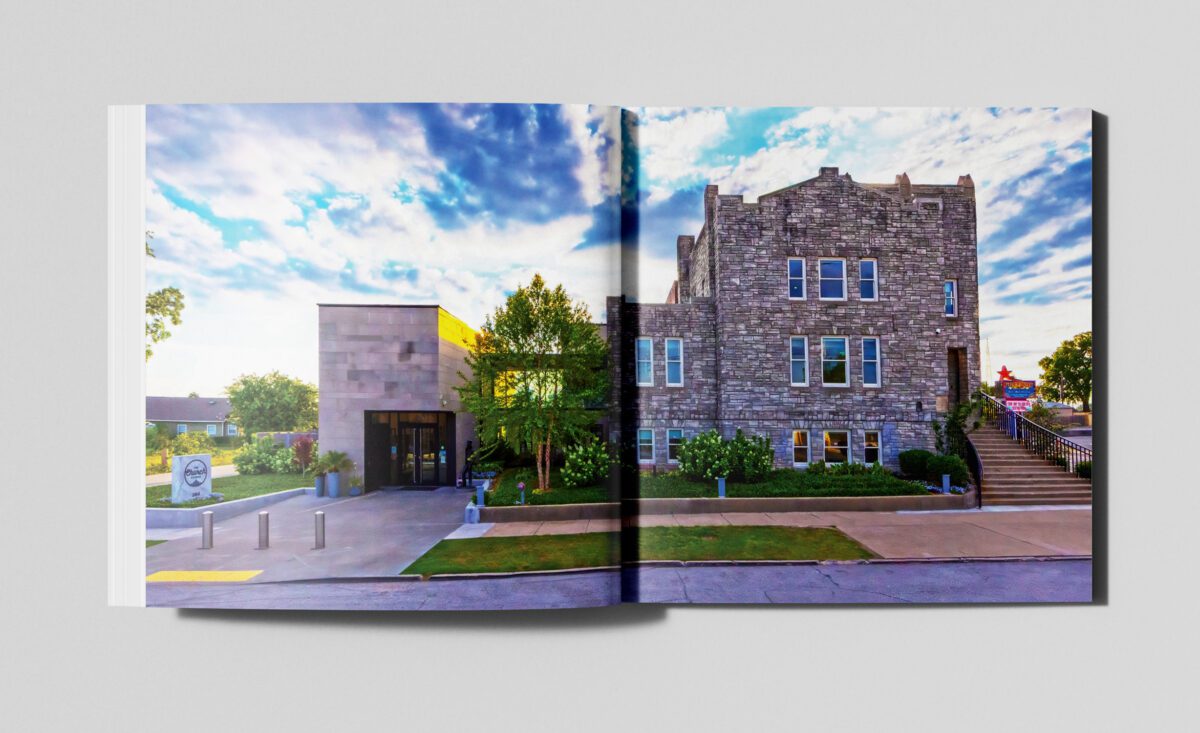
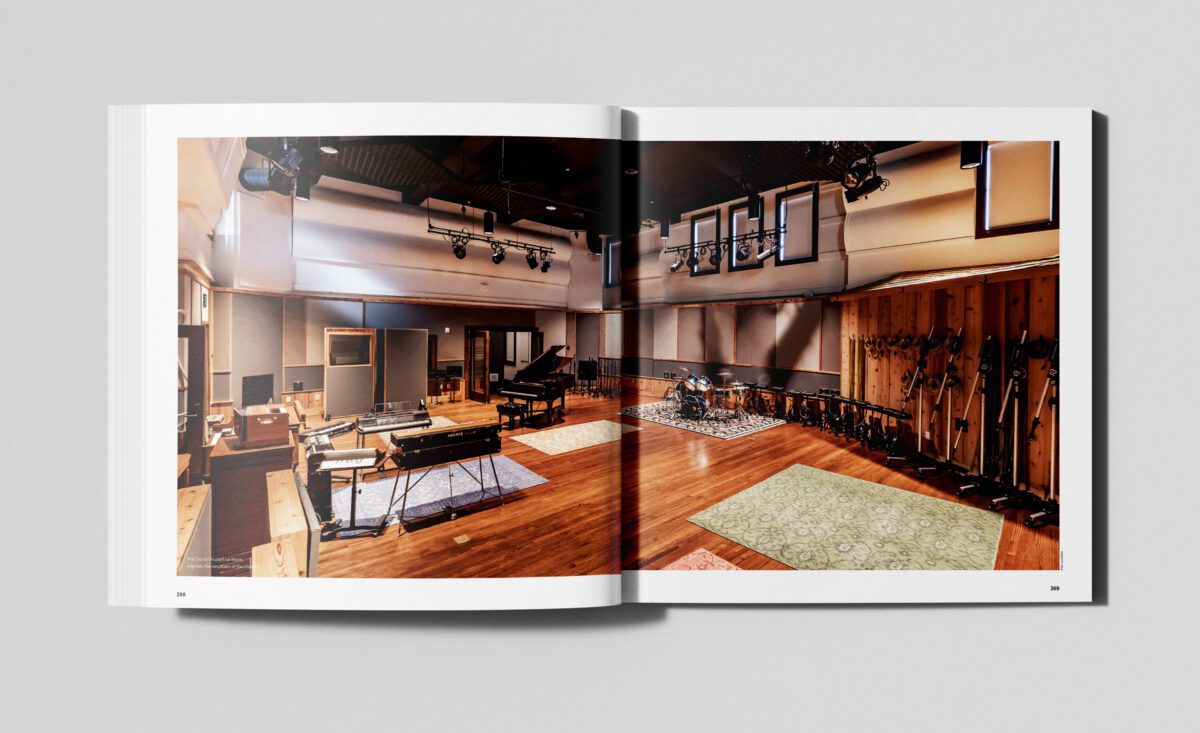
Teresa Knox purchased the dilapidated Church Studio in Tulsa back in 2016 and has renovated it to its former glory. The journey is memorialized in her new book, Sanctuary of Sound. Photos courtesy Teresa Knox
As I’ve written in this space before, it’s generally a fool’s errand to try and pin down just exactly when something began. What usually happens is that just after your research leads you to a good starting place, you run onto a hitherto unknown fact that jumps up and kicks a hole in it.
I mention this because Teresa Knox tells me she first began putting together her new book, Sanctuary of Sound, during January of this year. But, really, its origin story stretches back decades, to the mid-’70s, when she was a youngster growing up under challenging circumstances in Tulsa.
“I was eight when I bought a Slurpee from 7-Eleven, and there on the cup was Leon Russell – someone from my hometown,” she recalls. “At the time, 7-Eleven was doing a series of cups with rock and pop stars, and to have someone from Tulsa, Oklahoma, on there was really cool. It was inspiring.”
On that very day, Knox believes, she became a collector of Leon Russell and related Tulsa rock ‘n’ roll memorabilia. Which led to her, many years later, buying Russell’s former studio, fully restoring its capacity as a live-music and recording venue, and turning it into a bona fide tourist attraction. From there came Sanctuary of Sound, a massive, seven-lb.-plus collection of words and images about the building — the latest manifestation of the inspiration sparked within her eight-year-old self by the Russell Slurpee cup all those years ago.
And, as has been the case with a lot of other collectors, she realized early on that her collecting interests were something she had some control over, even in the midst of financial and other familial challenges.
“I had a little radio where I slept, and I remember when a deejay would say, ‘And now, from Tulsa, Oklahoma,” introducing a new record, and, I don’t know, I just got into it all. I couldn’t control my circumstances, my environment, the adults that were around me, but this was something I could control and something I could be proud of. So I just started collecting anything [about Tulsa rock ‘n’ rollers] I could get my hands on.
“I dedicated the book to my brother Larry, who unfortunately passed away a few years ago,” she adds. “He was 18 years older than me and almost like a father. He taught me to read music and play instruments, and he’d tell me about all these artists – J.J. Cale, Leon Russell, Jim Keltner. And I’d be like, ‘Wow. People from Oklahoma, like us, are famous?’”
However, while she sought out material on all those Okie artists, Russell began as and remained her top priority.
“He was the one who was really . . . interesting, you know?” she says with a laugh. “And the more I looked around – at garage sales, thrift stores, people’s houses – the more Leon stuff I found.”
Knox went on to become a dental technician. Then, divorced and a single mother at 21, she started adding other jobs to support her family. One of those extra gigs fit right into her love for Tulsa music and the people who made it.
“I was so enamored of the music industry that I got a job at a club on Peoria called the Sunset Grill,” she explains. “That’s where I met [Jimmy] Markham, [Tom] Tripplehorn, [David] Teegarden. I met Bill Davis, Bill Snow. I met Jamie Oldaker. Dwight Twilley even came through there. He was not living in Tulsa at the time, but he was in town and he’d sit in with the Mystery Band.
“I didn’t have a super-close relationship with any of them. I was just the waitress who’d serve them drinks and that sort of thing. Then, a couple of years after that, I started a business, and while I continued to collect [Tulsa music memorabilia], I really was busy. I didn’t reconnect with any of those musicians until a decade ago, when I bought the Church Studio, and David Teegarden came by. I asked him, ‘Do you remember me?’ Jamie came by, too, and they reintroduced themselves. So we reconnected, and it was really amazing. It’s kind of weird that a little job I had way back when gave me more street cred than my 30-year career in higher education and the other businesses that I started.”
An involvement in renovating classic Tulsa buildings – along with a conversation she had with her brother Larry – led her to the Church, which she ended up buying sight-unseen from its then-owner, Randy Miller. He initially told her, she says, the building wasn’t for sale but that he was looking for a partner.
However, notes Knox, “I couldn’t see myself sharing that with anyone.” So she continued to negotiate for full ownership.
“I got almost obsessive about it,” she admits with a chuckle. “About what it could be, and cleaning it up and doing something to really honor the legacy of Leon and [Shelter Records founder] Denny Cordell, and what transpired in the ’70s.”
Finally, on August 25, 2016, as the new owner of the Church Studio, Teresa Knox walked through its weathered doors for the first time. In her introduction to Sanctuary of Sound, she describes the goosebump-inducing moment: “It wasn’t just the musty smell, the breezy air, or the old wood finishes. I felt this peculiar mix of comfort and curiosity. I knew this place had lived a hundred years of history. It held joy, sorrow, sound, and silence. Its walls remembered what time has forgotten. It moved me, and it made me want to understand everything that had come before.”
And “everything” is exactly what she tackles in Sanctuary of Sound, beginning with the building’s construction as an actual Methodist church in the 1910s, and going forward into the present, a journey propelled by both words and pictures. As might be imagined, the Russell years are spotlighted, with Knox sharing photos of much of the memorabilia she’s collected over the years. There’s also a nice section covering the time when Steve Ripley – Leon’s former engineer, among other things – and his group the Tractors, which initially included such internationally known, Tulsa-based heavyweights as pianist Walt Richmond, bassist Casey Van Beek, guitarist Ron Getman, and drummer Oldaker, used the Church to record their eponymous 1994 debut disc, a multiplatinum effort that remains the bestselling record ever to come out of Tulsa. During his 18 years at the helm of the studio, Ripley produced, engineered, and recorded an impressive array of acts, including but hardly limited to the Tractors.
There’s also a section devoted to the Church’s little-known life as a Christian-music studio throughout much of the ’80s, as well as other phases in its long history. But, again, the focus is on the Russell period, which saw him and his Shelter Records partner Cordell bring through a wild lineup of rock superstars, top Tulsa talent and acts in between. It was a time when, as I’ve written before, Russell triumphantly returned from the West Coast and sprinkled stardust over his hometown.
Knox notes in the book that music was a part of the Church from the very beginning, as was a sense of, well, sanctuary, the liberating feeling of a safe place to, at first, worship, and later to create. Even the Church-affiliated label’s name, Shelter Records, indicated an environment where artists could work without being second-guessed by executives in the sound booth.
“When I did this book, I wanted to establish the legacy of Leon and Shelter Records in Tulsa, Oklahoma,” she says. “It was very short-lived, ’72 to ’76, but it was very important. And I really wanted people to know that a building can be more than brick and mortar. It can be this living sanctuary where the history and the musical art come together for the community.
“The building is really the star of this book,” she adds. “I think the power of that place is an important takeaway.”
Sanctuary of Sound is available for $59.00 from schoolofhardknox.com and at the Church Studio gift shop.
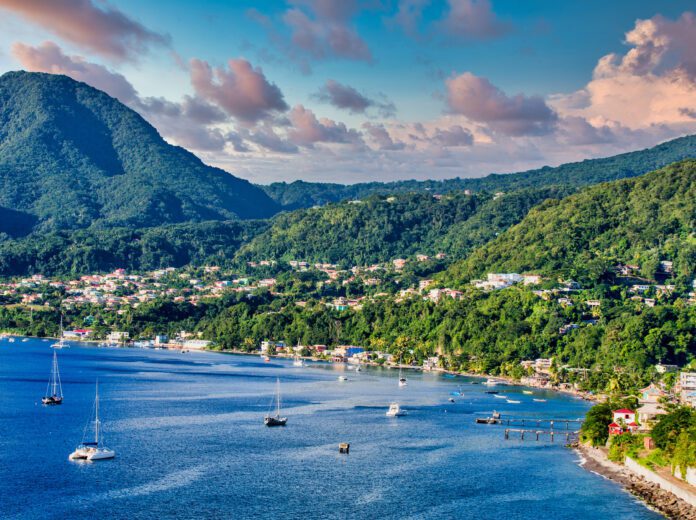
Dominica – not to be confused with the Dominican Republic – is a small Caribbean island with plenty to do and see, including the stunning green hills of Rosseau (above).
Not all Caribbean islands are alike, and that is often the misconception from tourists who don’t dive into the distinctions of a destination. Dominica, not to be confused with the Dominican Republic, is definitely one of those unique island countries. If visited on a cruise ship itinerary, you can spend the day doing several excursions that reveal the essence of this country.
The port town is a veritable postcard image of quaint homes under a cloud covered mountain peak. The first impression of Dominica is its profusely forested landscape. The ascent into the hilly villages takes you to various natural formations and excursions. Natural hot springs, rainforests and rivers, plus archeological and heritage tours, are some of the highlights. The soil is rich with volcanic minerals, which contributes to the fertile landscape. An example of the latter is the pumice, which is a significant commercial product and can be seen on the boulders as you drive through the island.
A bus tour is an excellent way to take in the diverse highlights of Dominica, as you’ll see pumice on one side of the road and tropical trees planted inside painted car tires on the other. Another roadside attraction is the sprawling estate of the Caribbean’s first female prime minister, Eugenia Charles.
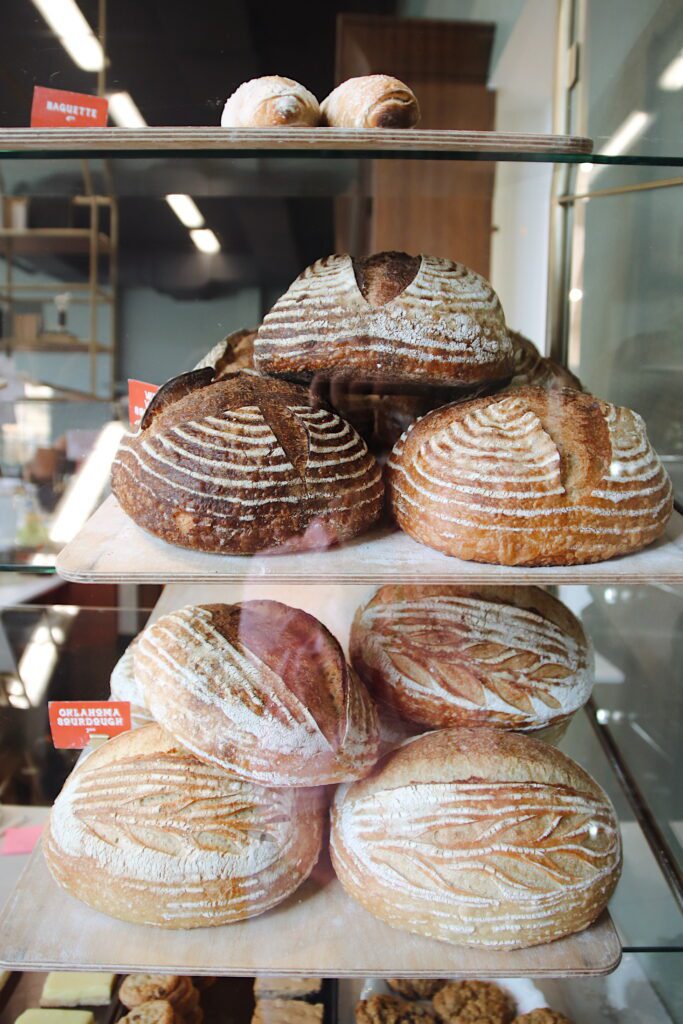
While you’re absorbing the visuals of this charming country, you’ll also learn factoids about the citizens’ lifestyle nuances. For example, Dominica has a resolute pride about freshly baked bread. Not only do they prefer and prioritize this daily, but reportedly, they also practice it as a twice daily ritual. Bread is baked in a wood fire stone oven daily except on Sundays. It’s also sold out of vans and cars to villagers.
Other options in Dominica are whale watching and sea turtle hatching. Dominica is reportedly the only country in the world where the sperm whale resides all year long. Sightings typically occur between November to March while sea turtle hatching takes place between March and October.
The World Creole Music Festival happens every October and showcases Indigenous music. Other ways to honor the authenticity of the island is to immerse yourself in a Kalinago tribe village excursion.
Hikers will enjoy visiting the second largest boiling lake in the world. It’s a rigorous hike in this flooded fumarole, but an unforgettable one at this World Unesco site.
Perhaps the most significant cultural fact about Dominica is that it’s the only island that has a distinct group of Carib Indians who descended from the island’s first inhabitants long before colonization began. In fact, the word “Caribbean” is derived from the name of the tribe, “Carib.” The Bois Cotlette Heritage tour is a recommended way to experience Dominica’s history, archeology and agriculture.
Known as the oldest surviving estate on the island, the approximately 290-year history of the land has produced cocoa, sugar cane and coffee. Situated 1,000 feet above sea level on a volcanic terrain, the estate beckons historians and archeologists who both appreciate what it offers. From steep escarpments to what feels like a private sanctuary, the estate holds strong historic echoes to the 1700s. Tour guides walk you through the former plantation, identifying archeological details of the structures. A sample of rum with a local snack is provided within a pavilion that doubles as an art gallery and small market of locally made chocolates and products.
As you descend the mountainous village roads, the forest scenery stimulates and relaxes you at the same time. Farm animals and tropical plants decorate the trails and paths, creating a hypnotic forest retreat as you circumnavigate the bucolic country island.
Loneliness was declared a public health epidemic in 2023 by the U.S. surgeon general and has remained a national health concern. According to the American Psychiatric Association, one in three Americans feels lonely every week and younger adults, ages 18 to 35, revealed feeling lonely every day or several times a week.
The loneliness epidemic stems from several social factors: shrinking social networks, declining participation in community activities and individuals reporting to have fewer close friendships.
Britta Ostermeyer, M.D., chief of psychiatry for OU Health in Oklahoma City, shares how changes within the family structure have also played a role.
“Families are now smaller and family members may no longer live in the same city,” she says. “Due to greater and easier mobility, family and friends are moving more often, and at times far away, for education or work. More frequent moves disrupt family and social ties.”
In addition, she says increased work demands leave people with little time for social events and that the internet, social media and COVID-19 have led to more online and less face-to-face interactions.
“These online relationships, however, are usually of a superficial nature — often not conducive to supportive and fulfilling relationships,” says Ostermeyer. “Social isolation and loneliness deprive us of much needed support from others and cause distress and suffering, often causing negative thought patterns and feelings of hopelessness.”
Ostermeyer says loneliness is recognized as a significant factor contributing to mental illnesses, such as depression, anxiety, substance abuse, cognitive decline, insomnia and suicidal behavior.
“Also, there are physical health problems that can develop with loneliness, such as cardiovascular diseases and weakening of the immune system,” she adds.
Social isolation and loneliness have been linked to heart disease and stroke — with reports of a 29% increased risk for heart attack and/or death from heart disease and a 32% increased risk for stroke.
To address these health risks, it’s necessary for individuals to recognize when loneliness becomes concerning, try to build social connections and seek professional help, if needed.
“Combating loneliness is a gradual process that involves taking proactive steps to connect with others and nurture your mental and emotional well-being,” says Ostermeyer. “However, even small, consistent efforts can lead to significant meaningful changes over time and improved wellbeing. It is important to reach out to others in the community and connect.”
She encourages in-person interactions and simple ways to get involved in the community.
“Join a church, synagogue, mosque or temple, or a club to play music or sports,” Ostermeyer says. “Be active in your community; volunteer and attend community events; foster social connections and relationships with others; help others, and ask them for help when you need it.”
There are many ways to connect with others and build relationships through local activities and community involvement.
However, if feelings of loneliness feel overwhelming or persistent, consider reaching out to a mental health professional for support and guidance.
Photos courtesy the Oklahoma Frontier Drugstore Museum and Apothecary Garden
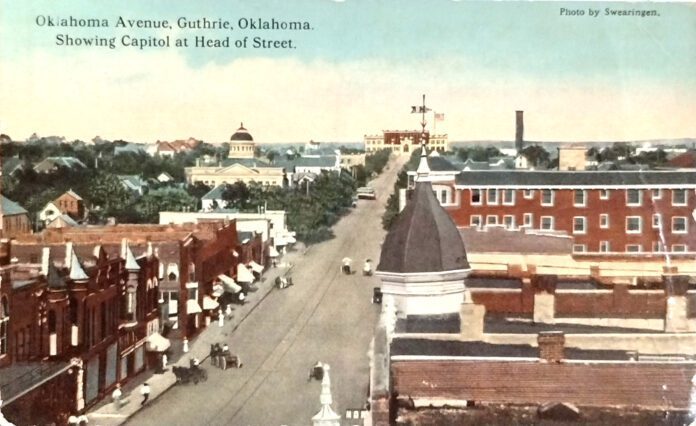
Situated in central Oklahoma just north of Oklahoma City, Guthrie blends historic appeal with unexpected happenings. Once the territorial capital, the Guthrie of today is best known for its lovingly preserved downtown – the largest Historic Preservation District in the nation – where brick-lined streets and ornate Victorian buildings invite visitors to linger, shop and explore. Yet beyond the echoes of the past, Guthrie pulses with energy, offering everything from adrenaline-fueled outdoor sports to festive holiday traditions that light up the community.
For a change of pace, travelers to Guthrie can visit Avid Extreme Sports Park, one of the premier paintball and airsoft destinations in the midwest. Photo courtesy Avid Extreme Sports Park
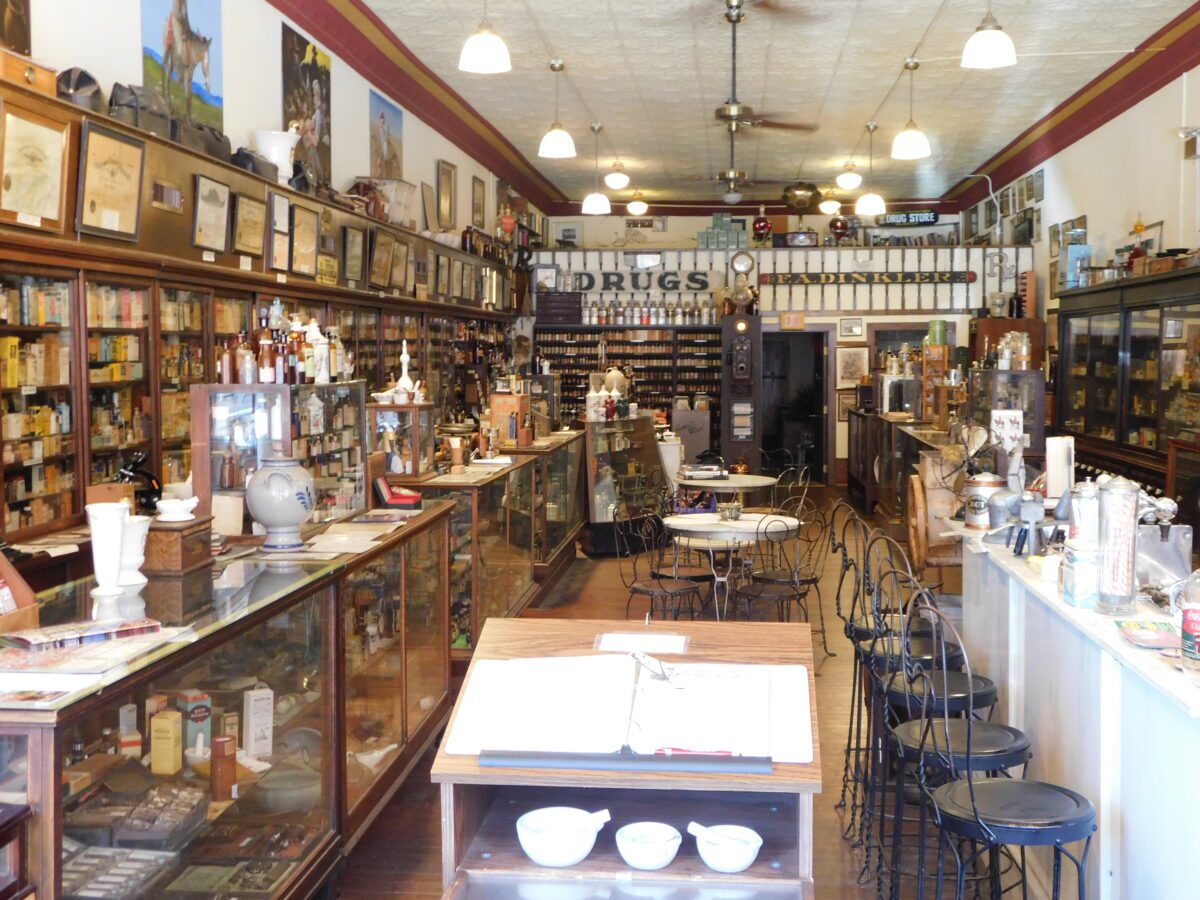
The city’s historic roots run deep. Guthrie’s early statehood story comes alive at the Oklahoma Territorial Museum and Carnegie Library, where exhibits highlight the Land Run of 1889 and the town’s role in shaping Oklahoma’s identity. Nearby, the Oklahoma Frontier Drugstore Museum and Apothecary Garden offers a glimpse into 19th-century medicine, when pharmacies served as both remedy dispensaries and social hubs.
“The goal is to preserve the pharmacy history, specifically within Oklahoma,” says Sandi M. Colby, volunteer and Oklahoma Drugstore Museum board of directors vice president. “We have guests from all walks of life that come [to visit], and all of our docents have tons of stories on Oklahoma history, as well as Oklahoma’s ties to national history. We try to make it as friendly to all guests as we can.”
But Guthrie is far from a town that rests on its history. Just outside the city center, thrill seekers find their playground at Avid Extreme Sports Park, one of the premier paintball and airsoft destinations in the midwest. Set across wooded landscapes and open fields, the park’s innovative courses and obstacle-filled arenas are designed to test teamwork, strategy and skill. Whether for a family outing, birthday celebration or corporate team-building event, Avid delivers high-energy fun that contrasts and complements Guthrie’s historic downtown charm.
Seasonal celebrations also play a central role in Guthrie’s appeal, none more enchanting than the Guthrie Territorial Christmas Celebration. Each winter, the city transforms into a Victorian holiday postcard, as lamplight carolers fill the streets and shopkeepers in period costume welcome visitors for the beloved Victorian Walk Nights on Dec. 7 and 14. The Christmas Parade of Lights takes place on Nov. 30 and brings the community together in dazzling style, while families make memories visiting Santa and enjoying time-honored festivities.
The Oklahoma Frontier Drugstore Museum and Apothecary Garden showcases the world of 19th-century medicine. Photos courtesy the Oklahoma Frontier Drugstore Museum and Apothecary Garden
Beyond its headline attractions, Guthrie offers plenty of surprises. More than a dozen charming bed and breakfasts, many set in restored Victorian homes, extend the historic experience into overnight stays. Antique shops, galleries and specialty boutiques line the downtown district, ensuring that each stroll brings new discoveries.
“Guthrie has all the small-town charm and warmth you could hope for, paired with a surprising variety of fun things to do,” says Missy Hancock, tourism coordinator for the city of Guthrie. “Known as a place with ‘a festival for every season,’ Guthrie celebrates year-round with everything from classic car shows and the Oklahoma International Bluegrass Festival to spirited ghost walks and our much loved Victorian Walks, where the windows come alive with Victorian scenes and visitors stroll the historic streets in their finest period attire. There is always something to celebrate in Guthrie.”
PSO is deploying smart grid technology to improve system efficiency and resiliency, as well as accelerating clean energy adoption through large-scale wind and solar assets, customer-facing renewable programs and smart grid innovation. Photo courtesy PSO
Evolution of the Oil Industry
While the global energy transition raises questions about the future of oil, Oklahoma’s legacy has stood the test of time. For more than a century, its oilfields have powered economies, built cities and shaped communities — making petroleum a big part of the Sooner State’s identity. We dive into the timeline of Oklahoma’s oil reign.
Early Discoveries of Oil – Late 19th Century
Oklahoma’s story as an oil powerhouse began in the late 19th century. The first commercial oil well in the state, Nellie Johnstone No. 1, was completed in 1897 near Bartlesville in Indian Territory. Drilled by the Cudahy Oil Company, it marked the state’s entry into the petroleum age and ultimately produced more than 100,000 barrels before being capped in the 1960s, according to the Oklahoma Historical Society (OHS).
The momentum accelerated in 1905 with the discovery of the Glenn Pool field south of Tulsa, one of the richest oilfields of its time. Production was so abundant that pipelines, refineries and entire communities sprang up almost overnight, propelling Tulsa into its new role as the “Oil Capital of the World,” according to the Tulsa Historical Society (THS).
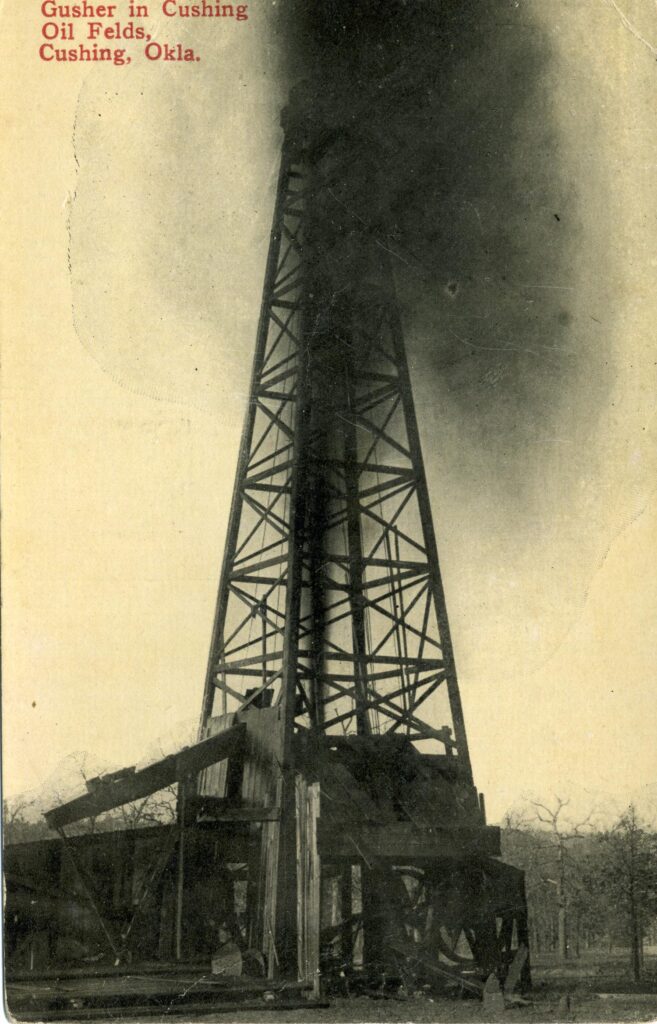
Photograph of a gusher in the Cushing Oil Field after it was shot with 100 to 200 quarts of nitroglycerin. Photo courtesy the Ira M. Spangler Collection, Oklahoma Historical Society
Boom Years – 1910s to 1930s
The early decades of the 20th century brought explosive growth. Discoveries at the Cushing-Drumright, Healdton and Oklahoma City oil fields fueled surges in drilling, storage and refining capacity. By the 1920s, Cushing was known as the “Pipeline Crossroads of the World,” a hub that moved crude to refineries across the country, according to the American Oil & Gas Historical Society (AOGHS).
Oil wealth transformed Oklahoma’s cities: skyscrapers rose in Tulsa and Oklahoma City, banks flourished and philanthropists endowed universities and museums. By 1927, Oklahoma’s annual production peaked at nearly 278 million barrels, cementing its role as a cornerstone of America’s energy economy, according to AOGHS records.
Mid-Century – 1940s to 1970s
During World War II, Oklahoma’s oil was essential to the Allied war effort. Its fields provided the fuel that powered tanks, planes and naval vessels. After the war, new drilling technologies, including secondary recovery methods like water flooding and gas injection, extended the life of mature fields. The mid-century period saw steady growth, as petroleum revenues bolstered state budgets and thousands of Oklahomans worked in oil-related jobs, according to the Oklahoma Geological Survey (OGS).
Energy Crises & Declines – 1980s to 1990s
The 1980s ushered in a painful downturn. Following a global oil glut and collapsing prices, Oklahoma’s once-booming industry went bust. Banks failed under the weight of unpaid energy loans, oil companies shuttered and thousands lost jobs. The collapse devastated towns reliant on oil and left skyscrapers half-empty in Oklahoma City and Tulsa. By the mid-1990s, according to the U.S. Energy Information Administration (EIA), annual production had dropped below 90 million barrels — a fraction of its former highs.
Shale Revolution – 2000s to Present
The early 21st century brought a renaissance through the shale revolution. Horizontal drilling and hydraulic fracturing unlocked previously inaccessible reserves in areas like the Woodford Shale of the Anadarko Basin. Production soared and Oklahoma’s output more than tripled between 2005 and 2019, peaking at over 217 million barrels that year, according to the EIA. Today, the state ranks among the top U.S. producers of both oil and natural gas. At the same time, Cushing, Oklahoma remains one of the most important crude oil storage and pricing hubs in the world, according to the EIA.
Innovation in Energy
Oklahoma has long been at the forefront of energy production, and recent technological advances are driving a new era of efficiency and innovation in both oil and gas and electric power.
From sophisticated drilling techniques and enhanced pipeline monitoring to automated grid management and energy storage solutions, technology is transforming how energy is produced, transmitted and managed across the state. These developments are helping Oklahoma maintain its position as a critical player in the nation’s energy infrastructure.
Drone technology is changing how Public Service Company of Oklahoma will prevent and respond to outages.
“Our recent winter storm drill highlighted drone-in-a-box technology that allows us to autonomously launch drones to survey power lines and look for issues, improving reliability and reducing outages for our customers,” says Leigh Anne Strahler, president and COO.
PSO is deploying smart grid technology to improve system efficiency and resiliency.
“We’re also exploring future AI-enabled solutions that could create even more efficiencies for PSO and our customers, ensuring they get the most out of every megawatt generated and every kilowatt consumed,” Strahler says.
OG&E launched its Grid Enhancement Plan in 2020, featuring AI-powered upgrades.
“OG&E’s smart grid technology, balanced power generation and electric vehicle fleet upgrades are all designed to strengthen the electric grid for the growing communities we serve,” says Ford Benham, OG&E’s Director of Environmental Operations. “The technology we’re implementing reduces outages and accelerates recovery after extreme weather. Serving communities with reliable, efficient energy at low costs is how we drive economic development now and in the future.”
NextGen Gas is one way Williams Companies, a Tulsa-based energy infrastructure company that owns and operates one of the largest natural gas pipeline systems in the United States, is revolutionizing its industry. NextGen Gas, a term coined by Williams, refers to natural gas that has been tracked and certified by an independent auditor as having low emissions across its entire value chain using technologies like blockchain, satellite monitoring and internal operational data.
“We’re talking end-to-end,” says Zach Keith, director of business development and sustainability at Williams. “Production through the midstream, through treatment and processing, transportation and delivering it to the user, whether that be a utility, an LNG shipper or a gas-to-power type of application.”
That’s technologically revolutionizing the industry, Keith says, by delivering trust through transparent and high veracity emissions data, which provides actionable insights.
“It incentivizes investment, not just in infrastructure, but in clean, affordable and reliable energy,” he says. “It really gets you into the nitty gritty about what we can do to continue to do better without sacrificing affordability or reliability.”
While AI is revolutionizing the oil and gas industry in the areas of exploration and drilling, Williams Companies is also harnessing its power internally for things like market intelligence and to empower employees through automating tasks and returning their time back to them for better collaboration and creative thinking, Keith says.
Power Innovation is a Williams initiative that involves providing turnkey natural gas-fired power generation solutions, infrastructure and energy services to meet the increasing demand from data centers and other high-energy industries.
“It’s sitting at the end of our traditional business and contemplating how Williams can participate in providing reliable power, affordable power and clean power to the end user, not just gas,” Keith says. “Taking our core competencies of rotating equipment and moving gas and applying them one step further to turning that gas into power. So we can actually do lots of different behind the meter applications.”
Renewables and the Energy Mix
While technology continues to revolutionize traditional energy production and delivery, Oklahoma is also exploring how innovation can shape the next chapter of its energy story. From wind farms to solar installations and advanced energy management systems, the state is applying the same forward-thinking approach to renewable resources, blending cutting-edge research with practical applications to meet evolving energy demands.
PSO is accelerating clean energy adoption through large-scale wind and solar assets, customer-facing renewable programs and smart grid innovation.The company recently expanded its renewable energy portfolio with nearly 500 MW of new wind and solar assets.
“We use a diverse mix of energy resources, including clean and efficient natural gas, alongside renewables to ensure grid resiliency and affordability,” Strahler says. “Our energy-saving programs help Oklahoma customers lower their energy bills and improve comfort year-round through rebates, free upgrades and personalized solutions for homes, businesses and communities.”
The company’s smart grid technology is also being deployed to enhance efficiency and reliability across all its systems, helping the environment by reducing carbon emissions through increased use of wind and solar energy.
“PSO’s customer programs and smart grid innovations promote energy efficiency and conservation,” Strahler says. “We continue working with customers to explore additional ways to reduce energy use during extreme temperatures.”
That helps reduce the amount of peak energy it needs to generate, which not only keeps prices affordable but also is environmentally sound.
“Our diverse energy mix, including renewables and clean natural gas, further supports a resilient and sustainable grid,” she says.
Environmental stewardship also is top of mind at OG&E where the company is decarbonizing its energy mix and engaging in biodiversity, habitat and community-based environmental initiatives in collaboration with local organizations to protect and preserve habitats and support pollinators, Benham says.
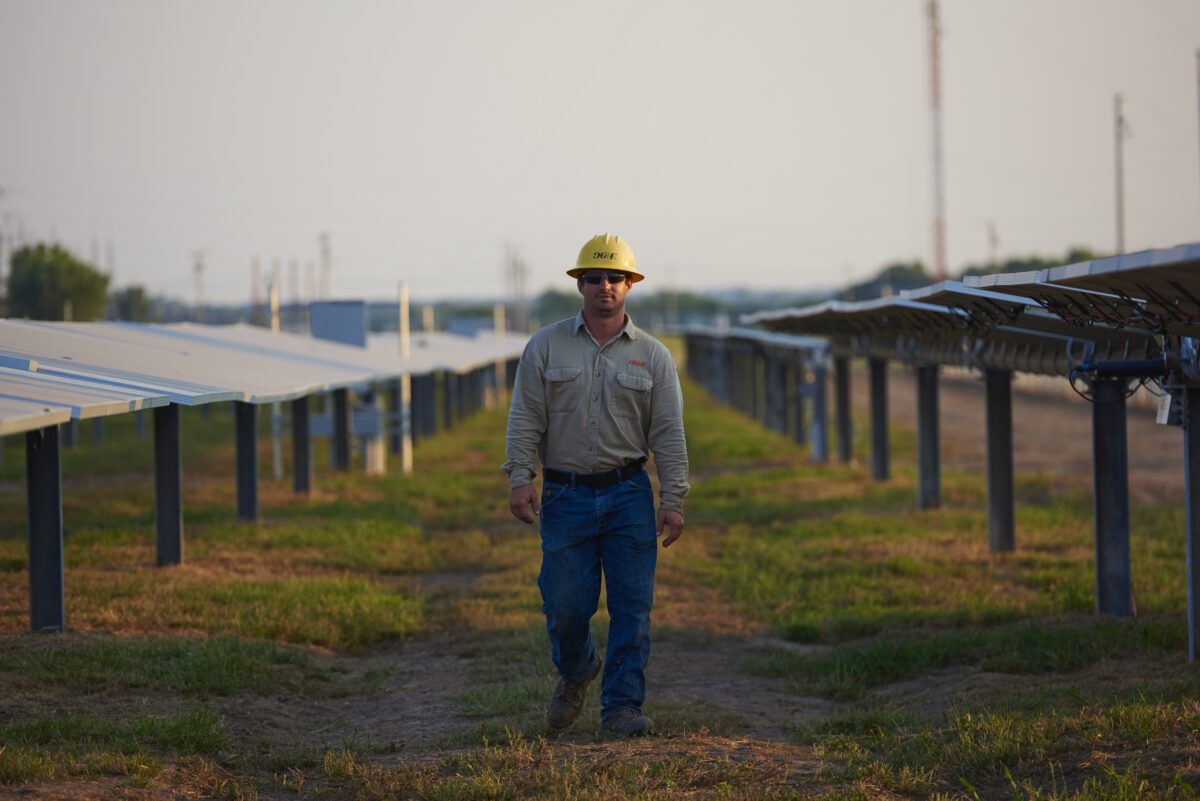
Environmental stewardship is top of mind at OG&E, where the company is decarbonizing its energy mix and engaging in biodiversity, habitat and community-based environmental initiatives in collaboration with local organizations to protect and preserve habitats and support pollinators. Photo courtesy OG&E
“As Oklahoma pioneers in wind and solar energy, today our all-of-the-above approach includes implementing more efficient and lower-emitting natural gas generation,” he says. “We also support water conservation, recycling and educational partnerships.”
That includes energy efficiency programs with the Oklahoma Thunder and community clean-up events.
“These efforts help reduce our environmental footprint while empowering communities to build a more sustainable future together,” Benham says.
Williams Companies is aggressively deployed across technological innovation, emissions reduction, clean energy infrastructure and ESG leadership.Williams is also committed to doing the right thing when it comes to land, Keith says.
“When we build assets, let’s say we build a pipeline through an area, we do some surface work,” he says. “We’re pulling up some of that grass, pulling up some of that native vegetation. But we always come back and reclaim that whole area. We want to make sure that native species are then replanted, monitored and measured for several years after construction is over to make sure we’re returning that back to its original state as much as possible. And a lot of that is in coordination and engagement with the local communities.”
Key Companies in Oklahoma’s Energy Market
ONE Gas
Spun off from ONEOK in 2014, ONE Gas is a regulated natural gas utility serving millions of customers in Oklahoma, Kansas and Texas. The company focuses on safe, reliable delivery of natural gas while leveraging modern pipeline monitoring and customer service. Its strategy emphasizes infrastructure investment to strengthen system resilience and efficiency. ONE Gas takes pride in sustainability initiatives that reduce emissions for a cleaner future.
ONEOK
Founded in 1906 as Oklahoma Natural Gas Company, ONEOK has evolved into one of the largest midstream energy companies in the U.S., specializing in natural gas gathering, processing and transportation. The company has been a pioneer in expanding interstate natural gas pipelines and developing integrated midstream infrastructure that supports the nation’s energy markets.
Continental Resources
Founded in 1967 by Harold Hamm, Continental Resources is a leading exploration and production company headquartered in Oklahoma City. The company played a central role in developing the Bakken and STACK shale plays, employing advanced horizontal drilling and hydraulic fracturing techniques to unlock significant oil reserves.
Devon Energy
Devon Energy, founded in 1971 and headquartered in Oklahoma City, is a major independent oil and gas producer focused on onshore U.S. operations. The company has been at the forefront of unconventional resource development, leveraging technological innovations in drilling, completion and production optimization.
Helmerich & Payne
Established in 1920, Helmerich & Payne is a Tulsa-based drilling contractor known for its innovative FlexRigs, which allow for faster, safer and more precise drilling in challenging environments. The company has been a leader in deploying automation, directional drilling and advanced rig technology across domestic and international markets.
Williams Companies is aggressively deployed across technological innovation, emissions reduction, clean energy infrastructure and ESG leadership. Photo courtesy Williams
Expand Energy
Expand Energy is an independent Oklahoma-based energy company focused on exploration and production of oil and natural gas. The company emphasizes operational efficiency through the use of advanced well completion and production technologies in key U.S. basins.
Williams Companies
Founded in 1908 and headquartered in Tulsa, Williams Companies is a major energy infrastructure firm specializing in natural gas processing, transportation and storage. The company has been a leader in building extensive interstate pipelines, compressor stations and gas processing facilities that support reliable delivery to markets across North America.
Featured photo caption: PSO is deploying smart grid technology to improve system efficiency and resiliency, as well as accelerating clean energy adoption through large-scale wind and solar assets, customer-facing renewable programs and smart grid innovation. Photo courtesy PSO
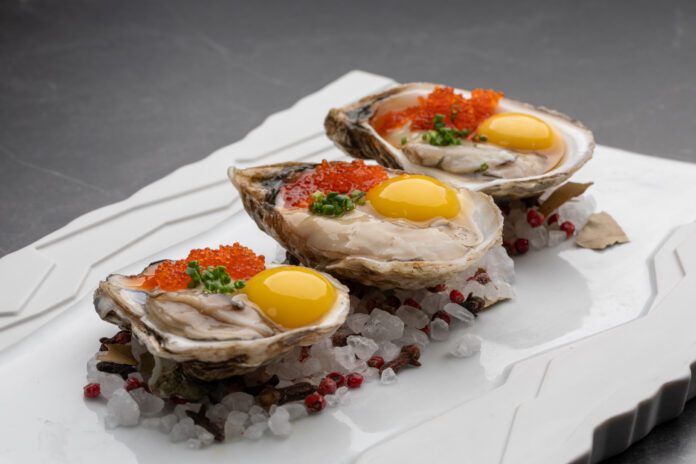
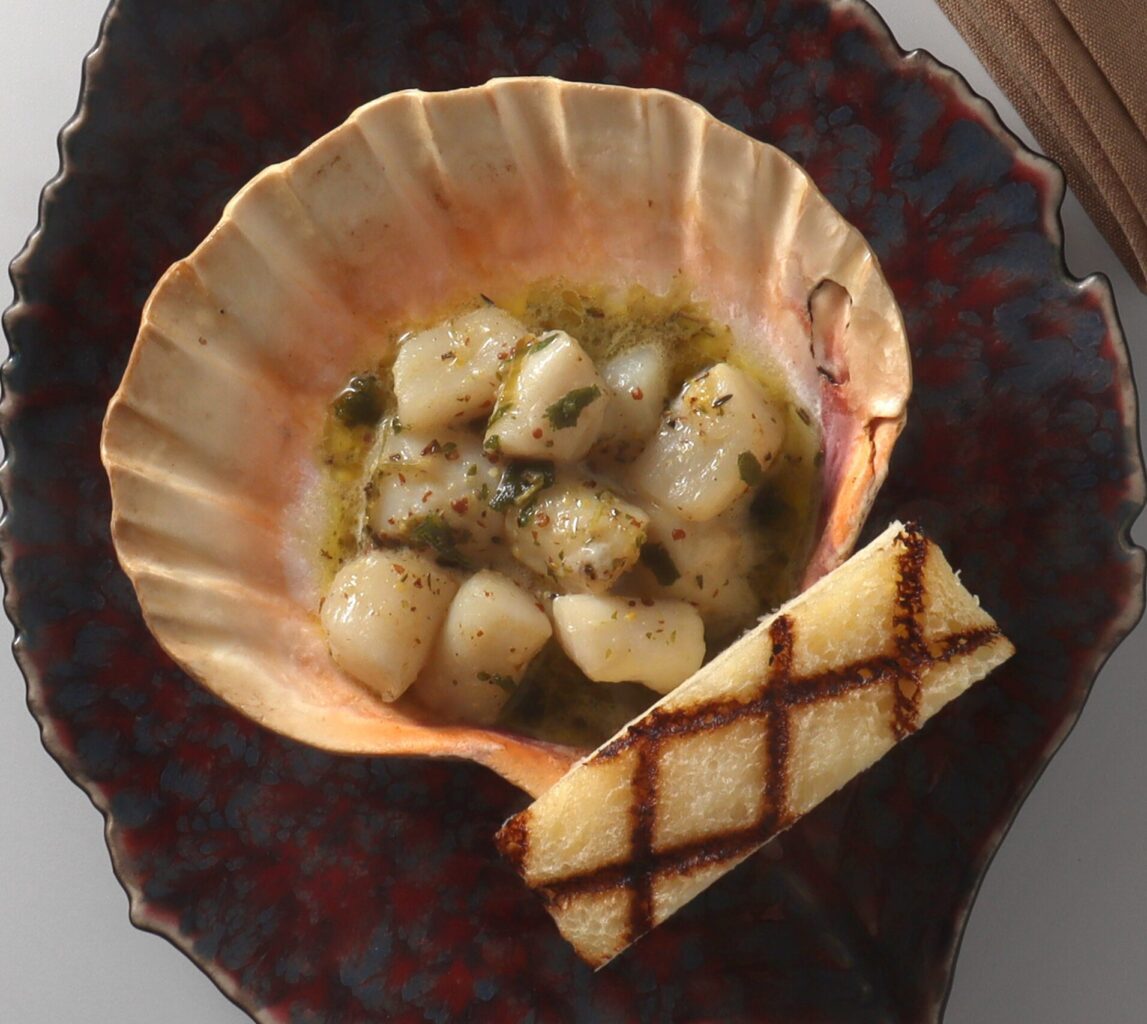
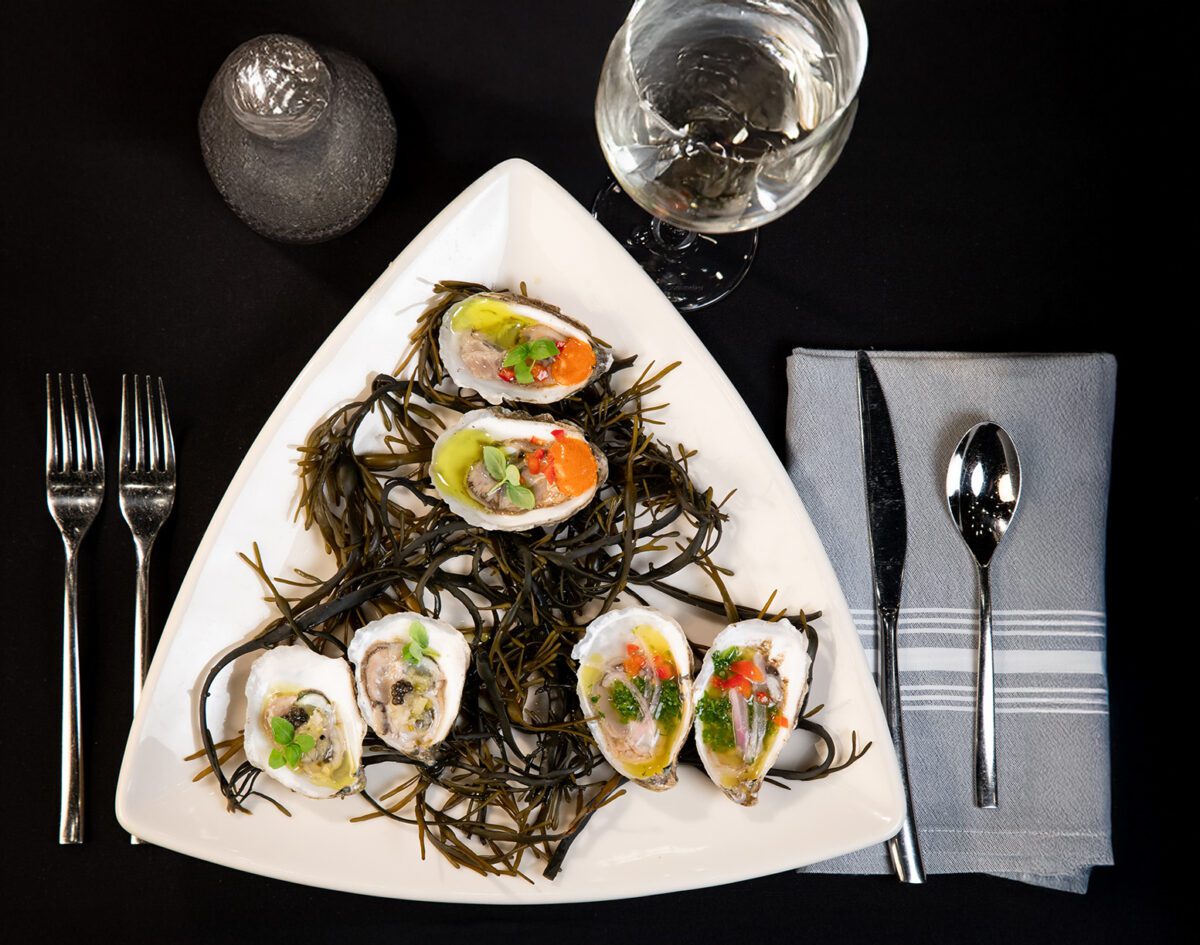
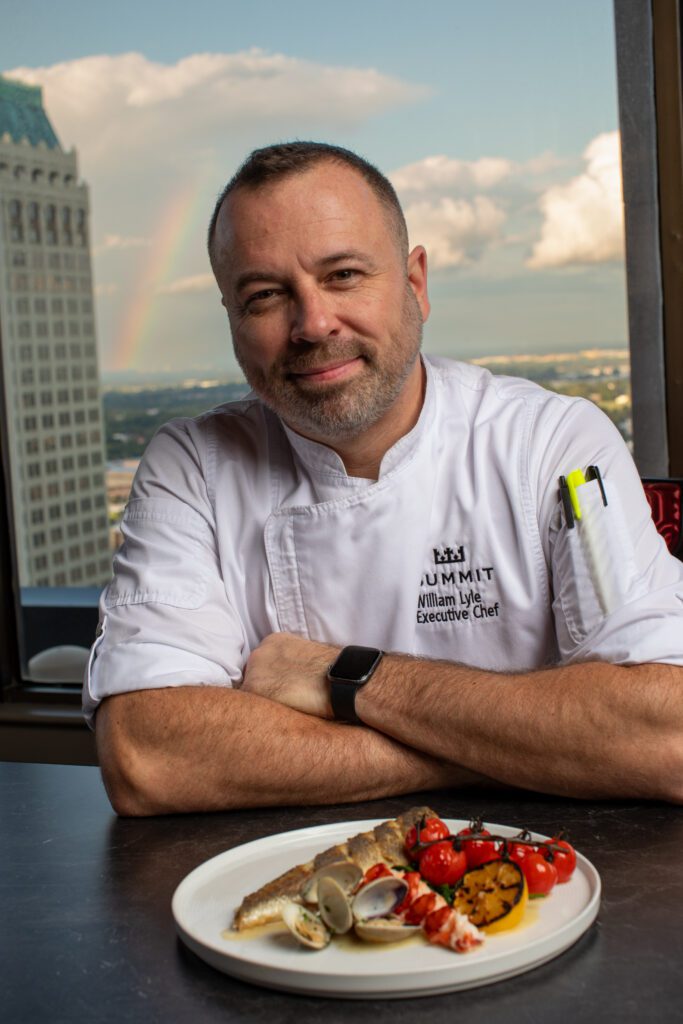
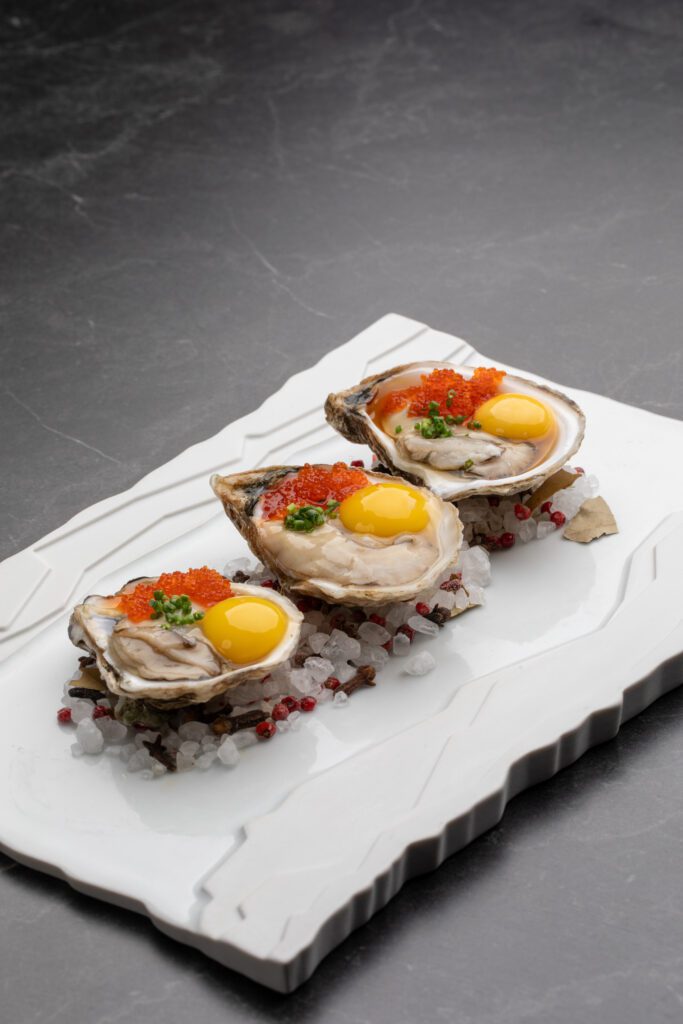
At the Summit Club, diners can enjoy delicacies from chef Bill Lyle, including a Japanese oyster shooter with quail egg, tobiko, sake and shoyu glaze. Photo by Brent Fuchs
Breakfast & Brunch
Queenie’s, Tulsa
Tulsa
Queenie’s Queenie’s has been an iconic breakfast spot since Ruth Young founded it well over 40 years ago. When Brian Hughes took over circa 2020, he kept all the old and well-loved menu items, including the Q-hop, with pancakes, eggs and sausage, and added a few new dishes, such as huevos rancheros and pain perdu (custard French toast).
Savoy The Kelamis family served breakfast to soldiers going off to fight in World War I. Now, four generations later, they’re ready to serve you. Everything is made from scratch. For their cinnnamon roll French toast, they bake the rolls, put on custard, then topped with strawberries and homemade whipped cream.
Wildflower Cafe When it opened four years ago, Wildflower Cafe owner Heather Linville just hoped people would enjoy what she had to offer. And they did. The restaurant now has too many customers for their bright, homey location on Peoria and will soon relocate downtown. Wherever they are, you can get fresh, made-from-scratch breakfast items such as eggs Benedict, quiches, crepes and baked goods.
Prism Cafe, Tulsa; photo by Miranda Due
Prism Cafe Aimee Hunter, a big city chef who’s cooked in New York City and Colorado, came to Tulsa on a whim and never left. Her charming cafe serves an ever-changing roster of whimsical dishes made, whenever possible, with produce fresh from the farm. Her late breakfasts include a full roster of sandwiches, though the most famous, the heirloom tomato BLT, is served only in summer.
Bramble Breakfast & BarJohnna Hayes opened Bramble a dozen years ago, and they’ve been serving delicious breakfast options ever since. They have all the standard items, such as omelets, eggs Benedict and chicken-fried steak, but there’s also one you rarely see west of Azerbaijan. It’s Khachapuri, a Georgian dish made from a freshly-baked loaf of bread which is topped with egg yolks that cook as the bread bakes, plus three-cheese fondue.
Cheever’s Cafe This beloved OKC institution opened a Tulsa outpost earlier this year. Everybody loves it. Brunch is a special treat, featuring Southwest dishes such as shrimp risotto with masa cakes and poached eggs, or Juan’s Queso Chihuahua, a layered cheese and bean dip. They also offer regular dinner menu items including their famous chicken fried steak.
Ava June The soothing light of the Mediterranean is captured on the walls of this pleasing French bistro. Provencal in decor and serving Alsatian dishes, Ava June was opened this year by the people who brought us Lowood. Their breakfast menu is unique, at least on this side of the Atlantic. It features tartines served with eggs and baguette, croques madame, croissant souffles and more.
Ava June, Tulsa
Oklahoma City
The Press A casual Plaza District eatery with a big patio, the Press offers Southwest comfort fare like pot roast, chicken fried steak, burgers, salads and quesadillas. Here’s what’s special: they serve brunch all day, every day! Breakfast tacos, breakfast hash, breakfast burritos, lots of eggs and cereals — yours all day.
Picasso Cafe Chef Ryan Parrott, a veteran of many OKC fine dining kitchens, helms a restaurant popular for its farmer’s market fresh, made-from-scratch, artistically plated entrees. Sunday brunch is famous, perhaps too famous because it’s packed, as diners enjoy Benedicts, smothered biscuits sided with pulled pork and roasted peppers, Bananas Foster waffles, fried goat cheese, and more. Bring your dog; there’s a special doggie menu.
Waffle Champion, OKC; photo courtesy Day One Concepts
The Mule A whole army of sandwiches, many hot with melted cheese, awaits, along with poutine, chips and dips, and bacon cheese fries. Their weekend brunch menu features, in addition to all that, a cheese omelet with a Philly steak, a stacked sandwich with layers of over easy eggs, avocado, goat cheese, smashed tomatoes and more.
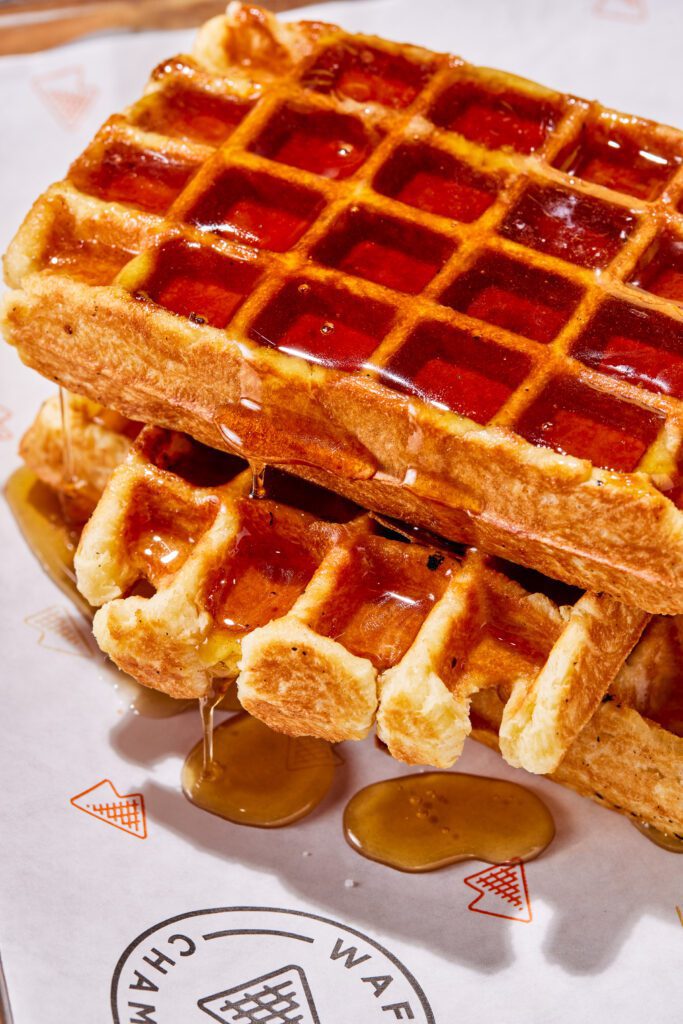
Waffle Champion A decade ago, Todd Woodruff, sous-chef at Cheever’s, quit to establish a food truck. He served waffles. It was such a success he started a restaurant. Their brunch features waffles in many incarnations: topped with gourmet treats such as a farm egg scramble with garlic spinach and mushroom or crispy tenders with pickles and sassy slaw; or made sweet with caramel apples or strawberries with cream or even s’mores.
Cafe Kacao In 2011, Veronica Zelada, an immigrant from Guatemala, saw a huge, abandoned tire shop in OKC. She bought it and converted it into Cafe Kacao. Now, after a decade of hard work and delicious meals, it’s a wildly popular brunch spot. She starts with family recipes from Guatemala, adds a few culinary touches from El Salvador and Cuba as well as the U.S. and these tasty meals are her recipe for success.
Cafe Antigua It’s rare for a city to have even one famous Guatemalan restaurant. OKC has two, and they’re related. Cafe Antigua is owned by the son in law of the owner of Cafe Kacao. Each restaurant has their partisans, and there are a lot of people waiting patiently outside Cafe Antigua during brunch hours, hoping to sample the skirt steak topped with eggs, the carne adovada, the waffles and the Spanish omelet.
Frida Southwest Chef Quinn Carroll has run the kitchen of this highly regarded Paseo District gem since the day it opened. He describes his food as a tapestry of Southern comfort and Mexican-inspired dishes. Creative brunch plates include Southwest spring rolls, heart of palm ceviche, stuffed French toast made with challah bread, and stacked enchiladas with pulled chicken.
LUNCH
Tulsa
Rib Crib Bret Chandler founded Rib Crib in 1992 with a a smoker and a handwritten barbecue recipe. The delicious BBQ has been drawing crowds ever since, and those crowds leave happy, and with full bellies. Lunch offers somewhat smaller portions of items such as the signature ribs, chicken, loaded baked potatoes and even a salad.
Rib Crib, Tulsa
Mondo’s Lou Aloisio couldn’t afford to hire a construction firm, so in 1969 he and his friends build Mondo’s themselves. Tulsans have packed the restaurant ever since, and it’s still run by the Aloisio family. Mondo’s features the rich Italian-American fare you’re used to, but with a twist. Lou’s father was a chef in one of the best hotels in NYC, and so the recipes incorporate French fine dining elements. Lunch has smaller portions.
Sisserou’s Eben Shillingford’s family came from the tiny verdant Caribbean isle of Dominica. He opened Sisserou’s to showcase the food of his home and of the surrounding islands. Island fare such as callalou soup, oxtail, and jerk chicken are done with flair, so well that the chef-owner was a James Beard semi-finalist.
Ti Amo, Tulsa
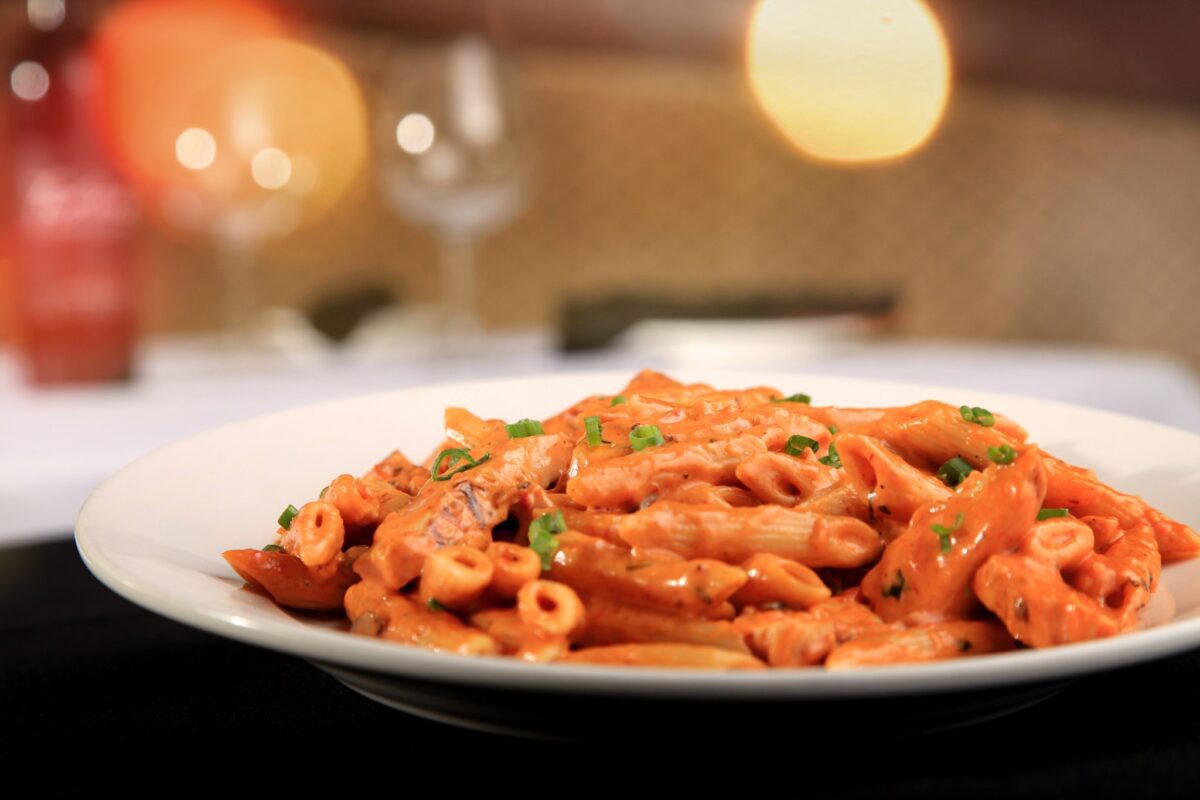
Ti Amo For almost 40 years, Ti Amo’s has been enchanting Tulsans with hearty, well-made Italian food and touches of white-table elegance. There’s tuna, salmon, flounder, ribeyes, osso buco, veal romano, chicken with parmesan cream sauce. Lunch offers a few international specials such as fish tacos and pastrami sandwiches.
Lone Wolf It started as a lone food truck, so successful that customers lined up before the truck arrived. Now it’s a restaurant with several branches. You can still get the same delicious Vietnamese banh mi sandwiches that made the truck famous. A choice of tasty fillings comes on a French baguette with cucumber, slaw and sauce. There’s also kimchi fries and fried rice bowls.
Polo Grill, Tulsa
Polo Grill An upscale Tulsa dining staple, Polo Grill offers refined American cuisine with global flair. Polo may be best known for its award-winning wine list, paired with elegant ambiance and impeccable service. While most would recommend Polo for dinner, it’s lunch menu also delights. Try the tenderloin burger, grilled shrimp and grits or spinach and strawberry salad.
Smoke Smoke marries fine-dining quality food with a casual ambiance where everyone feels welcome. In fact, they were a semi-finalist for the James Beard hospitality award. Lunch offers intriguing appetizers such as bacon jam with herbed goat cheese and fried cauliflower with Korean gochujiang. Entrees include lamb sliders, fried pork chops and various pastas.
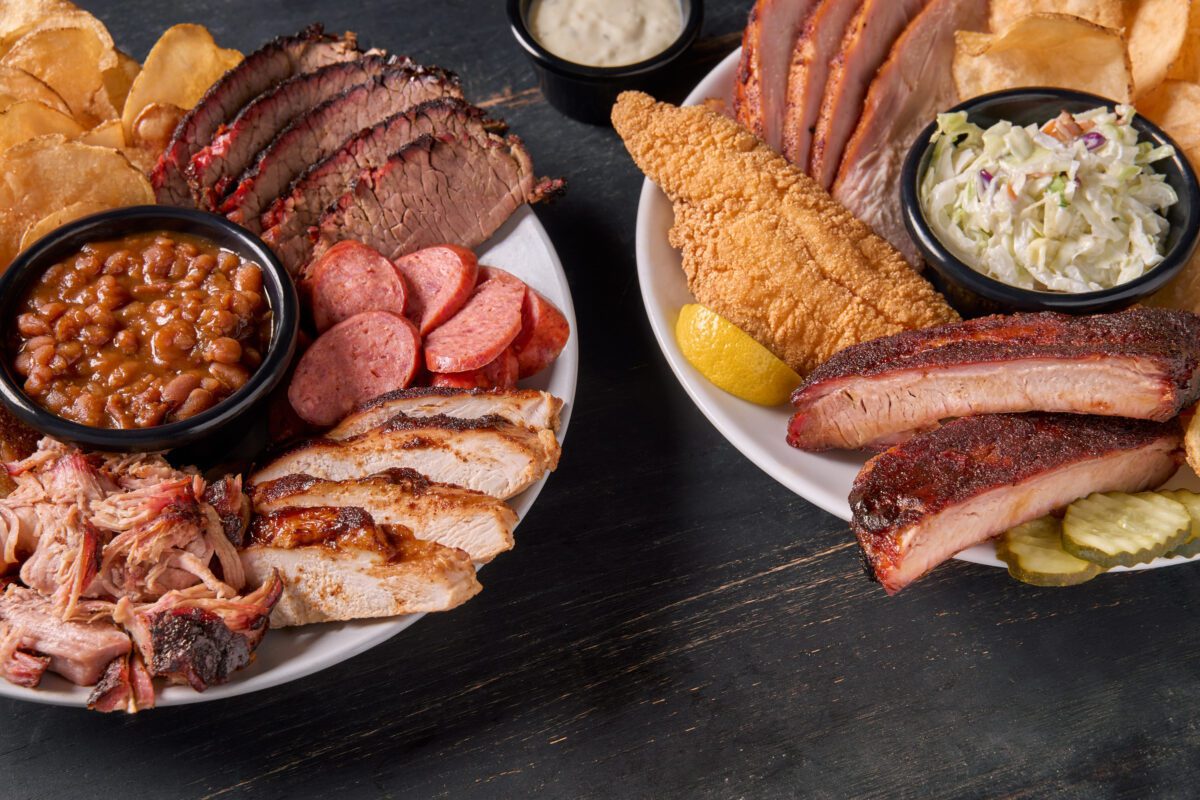
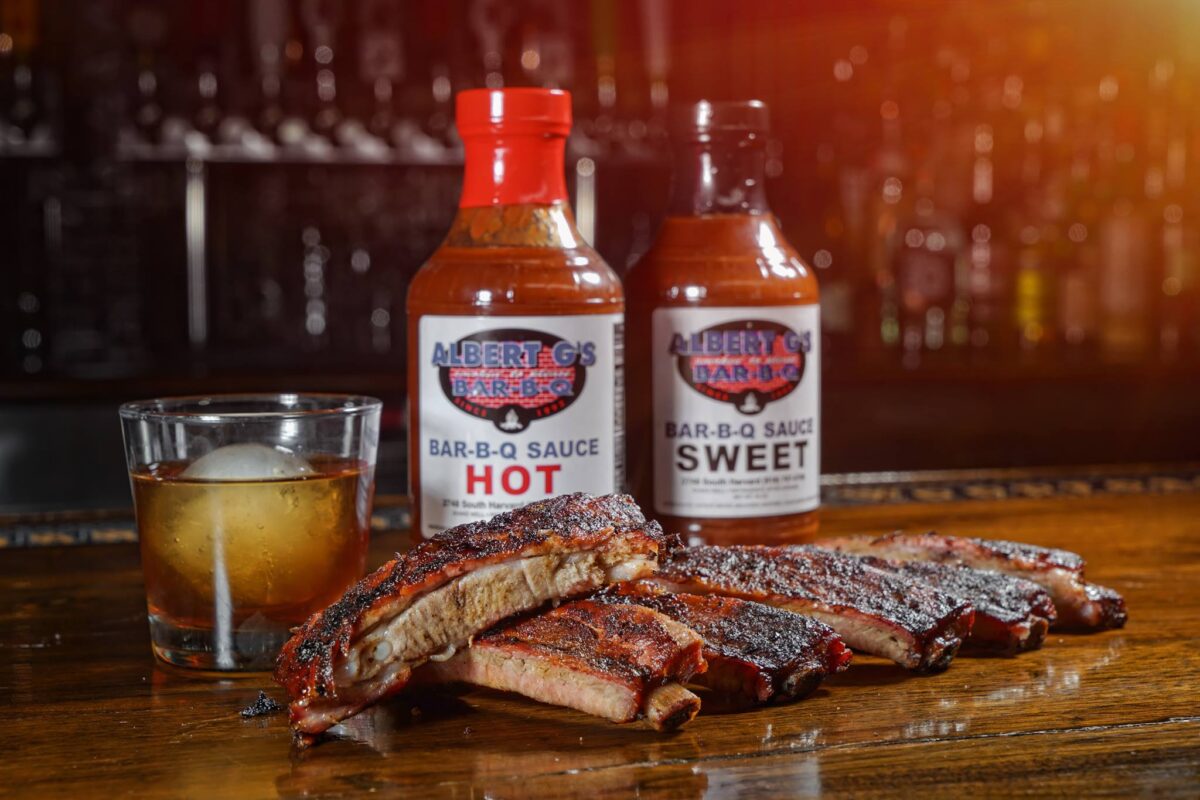
Albert G’s Chuck Gawey’s cousin owned beloved steakhouse Jamil’s, so he knew how to run a restaurant; he taught himself to barbecue. In 1992 he opened Albert G’s. That high-quality ‘cue gained such a reputation that he opened several more branches. As you’d expect, it’s slow-smoked meats and sides (try the tabouli). Great sandwiches include the mammoth “Fat Albert G’s.”
Albert G’s, Tulsa
Oklahoma City
Perle Mesta, OKC; photo courtesy Day Date Inc.
Perle Mesta Take the city’s most storied hotel, add a James Beard Award-winning chef, and you’ve got a recipe for success. The dining room is a study in elegance. The menu lives up, featuring what chef Andrew Black calls “possibility cuisine,” pushing the boundaries with unusual ingredients and techniques. The lunch menu is somewhat more conventional, offering bacon slab sandwiches, jerk steak frites and brick-roasted chicken.
Guyutes For the past decade, Guyutes has been serving up elevated street food. That means dishes like Tequila Sunfryz, which features waffle fries, Tequila queso, pulled pork, cilantro crema and a sunny side up egg. Lunch offers sliders and tacos named after famous movie stars, and a variety of creative things like adobo-seasoned chopped cheese egg rolls, beet hummus and grilled okra with lemon.
Naija Wife Kitchen ahnee Francis married a man from Nigeria and fell in love with his country’s cuisine. She went from cooking Nigerian recipes for church socials to running a tiny food stall in an obscure food court to being a nationally famous James Beard semifinalist. Her soups, stews and rice dishes have introduced Americans to the rich, hearty complexity of Nigerian food — and made them love it too.
Patty Wagon Patty Wagon takes the idea of gourmet burgers seriously. The meat comes from grass-fed cows on local ranches. Burgers are made to order, and there are lots of inventive preparations such as the Jailhouse Blues Burger, with melted bleu cheese and thick-cut hickory smoked bacon. Don’t like burgers? No problem. You can feast on chicken tenders, turkey sandwiches and more.
Sheesh Mahal Some people say that the best of the rich creamy curries that most of us think of when we want Indian food is made by Pakistani chefs, and those people will love Sheesh Mahal. There are a few delicious dishes specific to Pakistan, such as haleem, nihari and tawa chicken, as well as wonderful renditions of well-loved Mughal dishes such as butter chicken and palak paneer.
Nic’s Grill Nic’s is an iconic burger joint that does one thing and does it superbly: an onion burger that food writer Louis Fowler calls “a sizzling, cheese-smothered onion-packed masterpiece.” The Oklahoma onion burger has become world-famous, and some people say the best you can get is served at Nic’s.
Edge Craft Barbecue Zach Edge grew up in Norman but spend his childhood watching his Texan family cook central Texas barbecue. After a decade cooking in fine dining restaurants, Edge decided to open a BBQ showcasing his family’s recipes, using little more than meat, smoke and oak wood fire. Expect delicious brisket and ribs. Regulars know to arrive early and wait in line.
DINNER
Tulsa
Daigoro The show-stopper at Daigoro is chef Phillip Phillips’s creative dishes, which are inspired by the cuisines of East Asia. There’s a big smoker in back, so you’ll find such dishes as smoked ribs glazed with Korean barbecue sauce. Other dishes offer strange and delicious surprises. There’s a Singapore dish made with shrimp, chili peppers and Malaysian baby cereal; a foie gras and eel baguette; and a stunning hamachi crudo.
Bodean Bodean has been a culinary landmark for forty years, yet the innovative entrees are still cutting edge, thanks to chef Tim Swepston. Fish is flown in fresh every day from the world’s oceans, and it finds its way into such entrees as king crab stroganoff; bouillabaisse; and seared cold-smoked Chilean sea bass with roasted beets and jicama in a blood orange vinaigrette.
Juniper For fifteen years, Juniper, the flagship of highly regarded restaurateur Justin Thompson’s restaurant flotilla, has paid homage to chef-driven creativity. In fact, Thompson and his team have by now created some two thousand dishes. Seasonal and always changing, the menu offers such delights as smoked duck breast with pea puree and farro, and a grilled pork chop with cider brine, cheesy polenta and pomegranate demi-glace.
Dalesandro’s, Tulsa
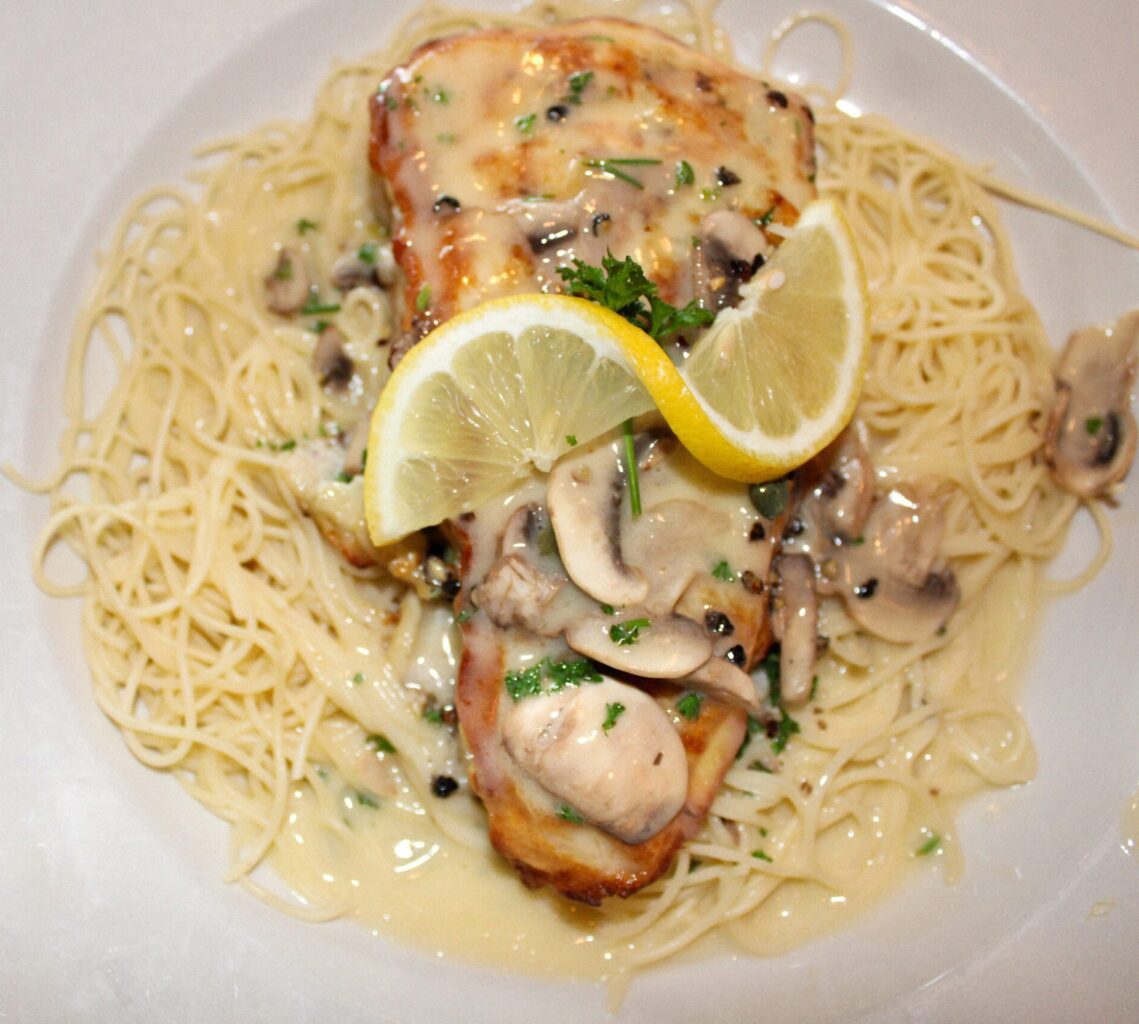
Dalesandro’s The menu never changes, yet regulars come week after week for decades. The fresh, vibrant flavors of the carbonara, the lasagna, and, star of the show, the perfect swordfish piccata, are as exciting the hundredth time as the first.
Copper Dome Set in verdant rolling hills west of Tulsa, Copper Dome looks like a vacation getaway. Inside, three genius chefs offer a dining experience that ranks with any in the region. On Friday and Saturday, an eight course tasting menu is a parade of dishes, any of which is an exemplar of envelope-pushing creativity. Sundays are far more casual, with six courses served family style, all you can eat, for $28.
Noche It’s vibrant and full of energy, with high ceilings, brightly painted walls, upbeat music and a huge horseshoe bar. It’s been acclaimed in the New York Times and was a semifinalist for the James Beard Award for the nation’s best new restaurant. But it’s the flavorful Mexican dishes that keep people coming back.
Summit Club It’s exclusive – but it’s worth the effort. The setting is one of quiet elegance. You are cosseted, pampered, treated like royalty. Chef Bill Lyle and his staff will serve you some of the best food in the region. Ingredients and recipes come from every corner of the world. They dry-age their own steaks. And backdrop to it all? A panoramic view of the city from the 30th story dining room.
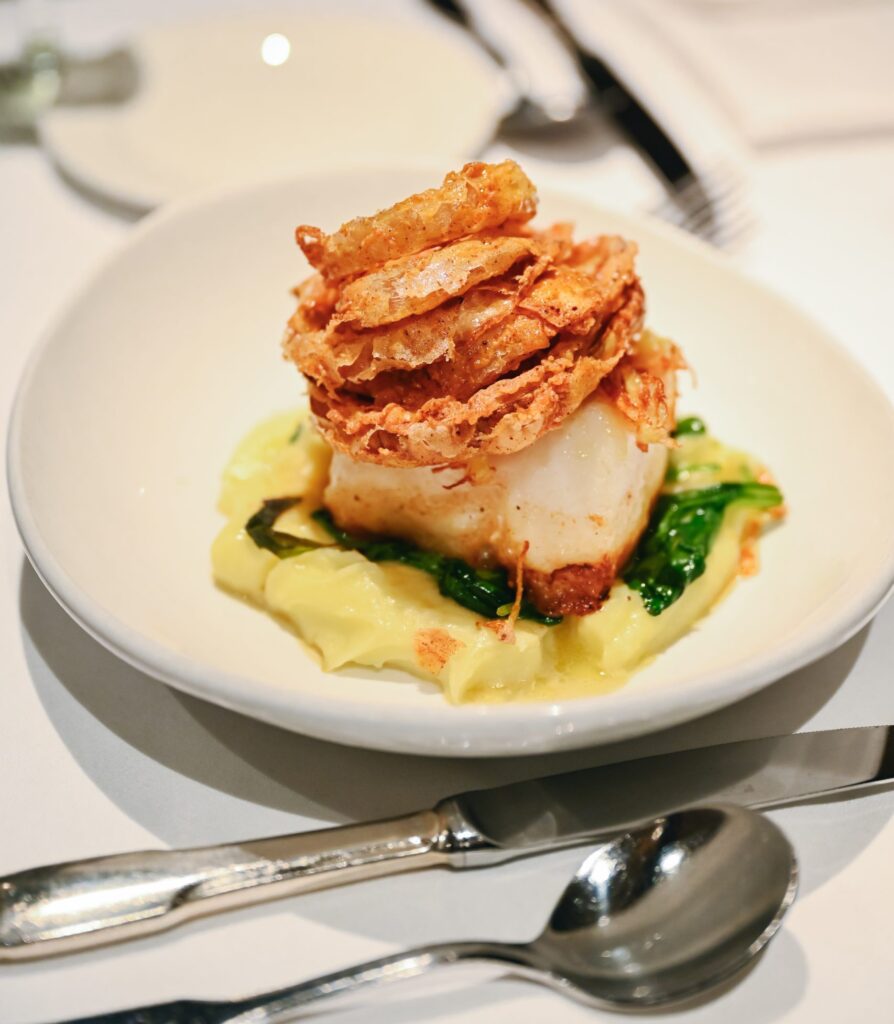
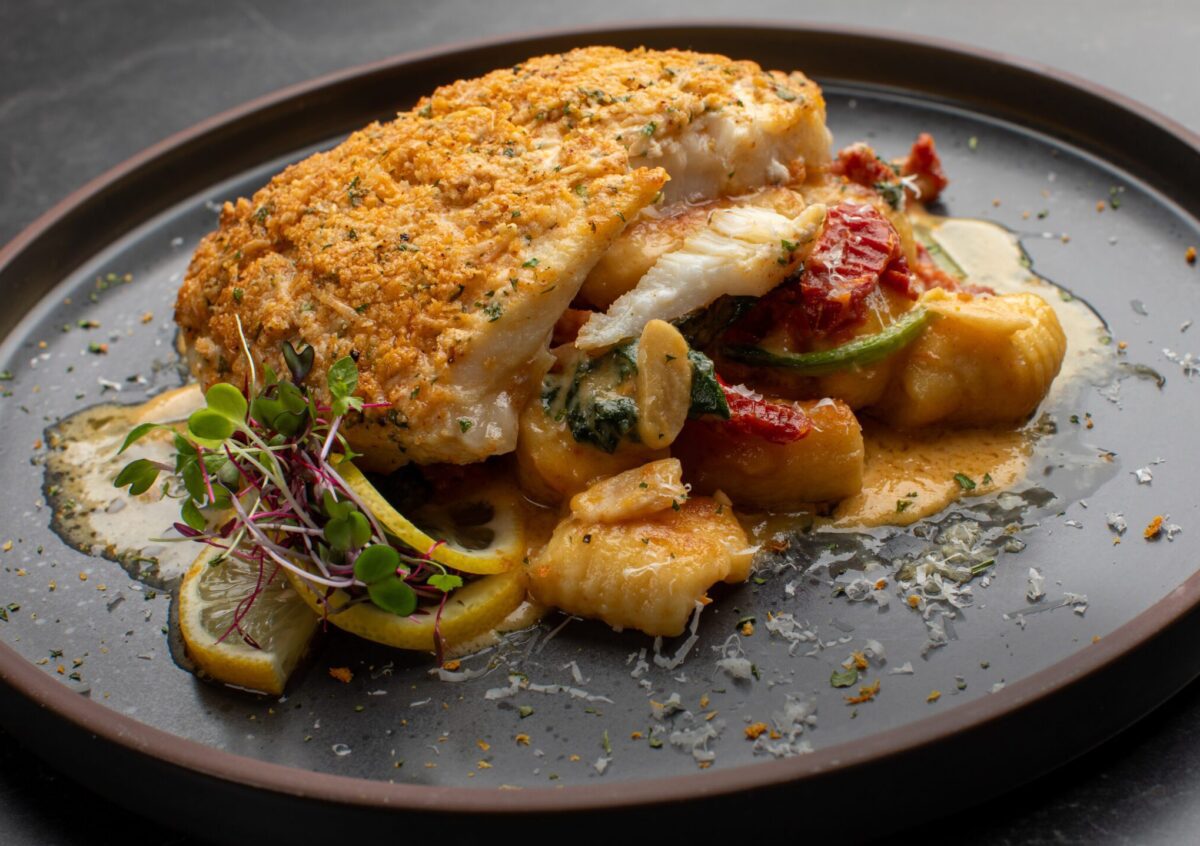
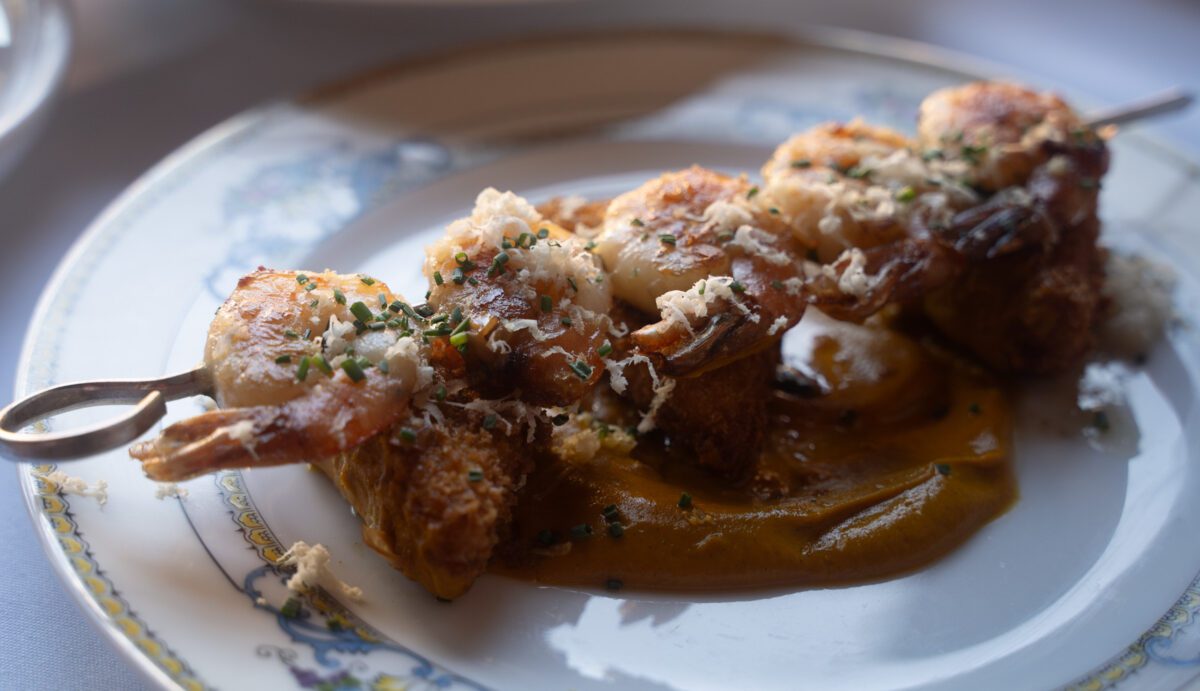
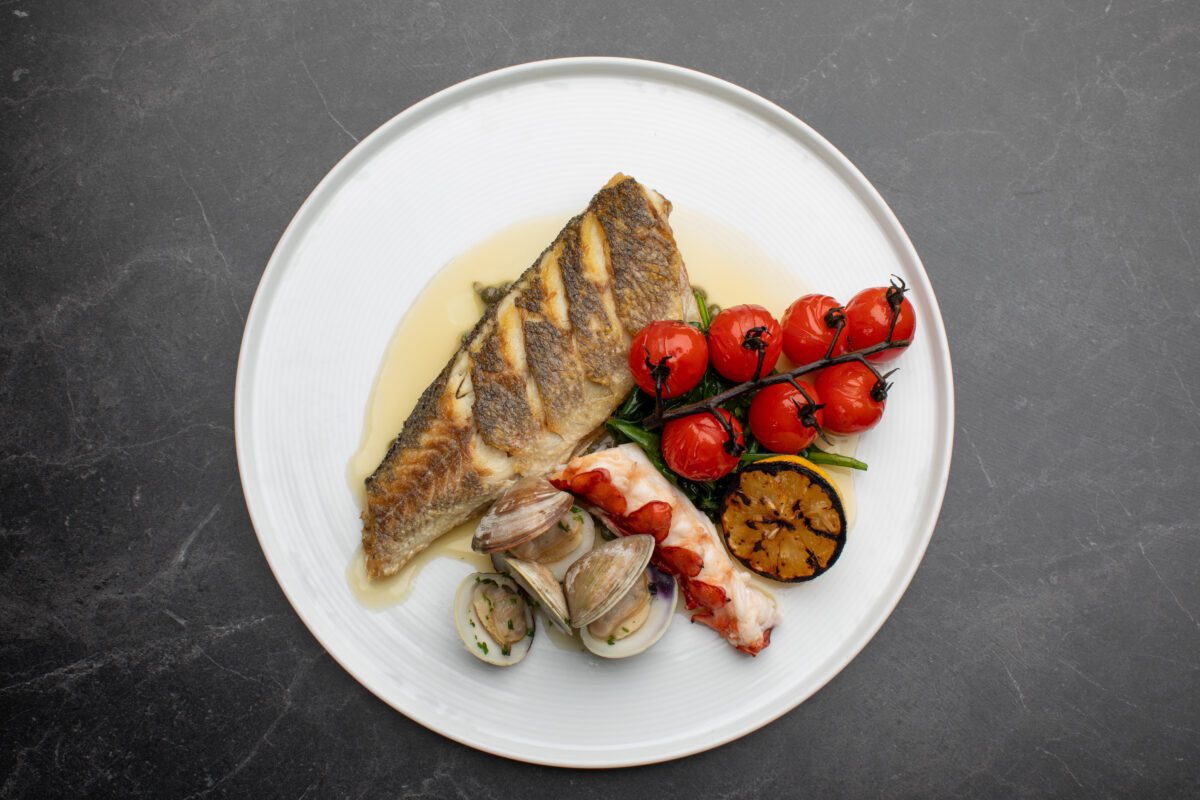
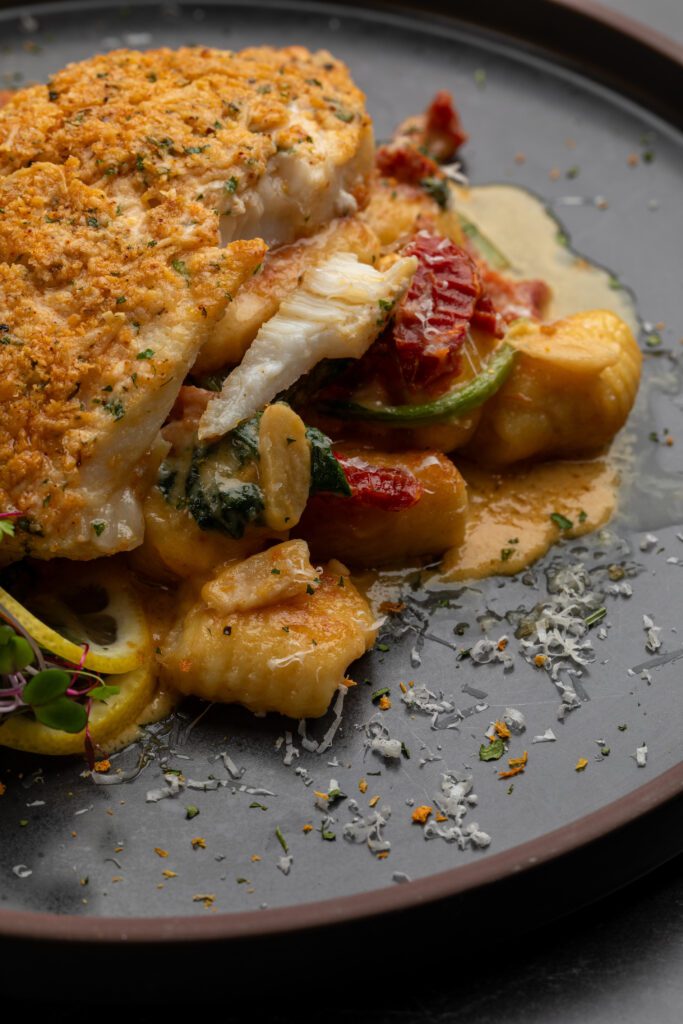
Halibut with Parmesan crust, sun-dried tomato and ricotta gnocchi with baby spinach; Summit Club, Tulsa; photo by Brent Fuchs
Barons on 1st, Tulsa
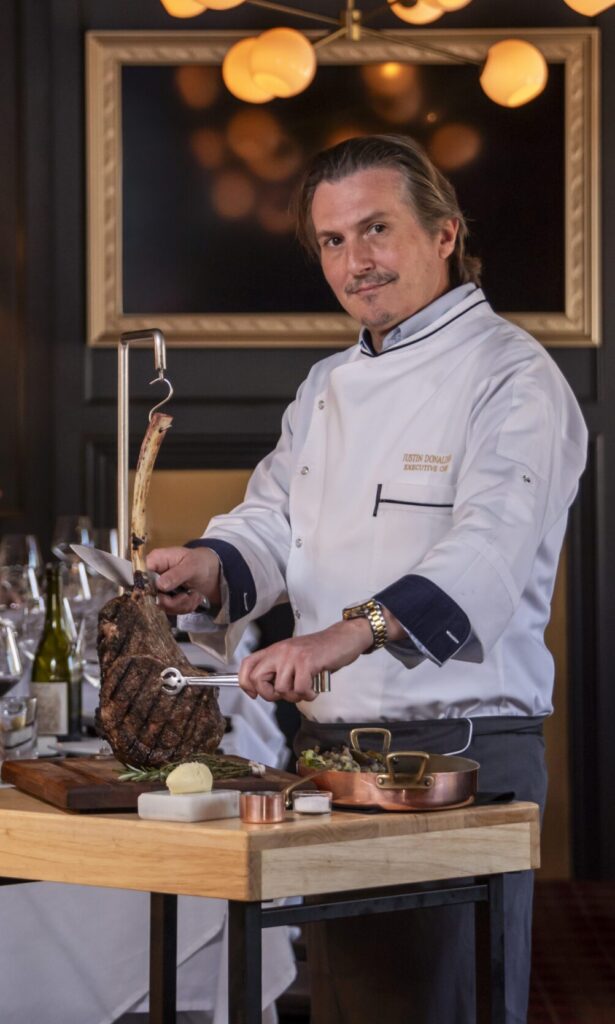
Barons In opulent ambiance comes exquisitely plated entrees that are some of the finest in the land. Chef Justin Donaldson, who once worked with legendary chef Gray Kunz in NYC, offers treats such as foie gras lollipops, a lamb rack cooked to perfection with an elegant French sauce, and Cornish hen roulade with beurre rouge. If you’re famished, there’s always that huge tomahawk ribeye, carved tableside.
Amelia’s Three James Beard nominated chefs have worked at Amelia’s. One, executive chef Andrew Donovan, still does. He and his culinary team are wizards of creativity, putting forth magical dishes full of flavor surprises. Expect exceptional dishes such as red deer tartare with togarashi, soy-cured quail egg, and smoked onion and miso aioli; and bison and burrata ravioli floating in a sauce of charred corn, caramelized onions and white wine butter.
Amelia’s, Tulsa; photo by Halle Frieden-Frieden Films
Oklahoma City
Ma Der Lao, OKC; photo by Quit Nguyen
Ma Der Lao James Beard finalist. Hailed by the New York Times as one of the best restaurants in the country. Who would have thought that a tiny casual Laotian eatery in Oklahoma could receive so much attention? Well, it deserves that and more. Shimmering with intricate unnameable flavors, the bold and brightly colored soups, noodles and other entrees are not only some of the best southeast Asian food around but also some of the best food around.
Nonesuch It started with three immensely talented chefs planning envelope-pushing menus over bowls of pho. And, almost a decade later, that’s about what it is today (with more chefs). From pickling and preservation to maceration and a robata grill, they use every cooking method imaginable and every ingredient imaginable to produce ineffable flavors you’ve never dreamed of. Their ever-changing 9 course tasting menu is always a masterpiece. Sedalia’sWe’ve all seen movies where a genius painter slashes at the canvas with bold strokes and bright colors, and somehow creates a masterpiece. The delicious dishes at Sedalia’s, intensely creative, featuring the freshest seafood, and brimming with sharp unforgettable flavors, are like that. From tuna conservas to octopus anticuchos to snapper crudos, just expect the unexpected
Grey Sweater, OKC
Birdie’s For decades, Kevin Lee worked in other people’s restaurants. Finally, at Birdies, he is doing what he wants, flexing his creative muscles to the max. He draws inspiration from Korean, Italian, and American cuisine. You might choose hamachi crudo with chojiang, then go on to sweet potato burrata, or tteokkboki, Korean rice cakes, served with a rich Italian ragu. None of that appeals? Birdies offers a full range of huge delicious steaks
Akai Oklahomans never dared hope to enjoy a sushi experience as rarefied as what you’ll find in NYC or Los Angeles, until Chef Shinichi Okamoto, with 25 years of training under his belt, opened Akai. The creative dishes go beyond nigiri or rolls. You might find eggplant confit with sesame and miso, a salmon “pizza” with ponzu aioli, and a bite of seared Japanese A5 wagyu with caviar on top.
Kanji Kanji aspires to be Japanese cuisine at its finest. You put your fate in the chef’s hands with the 20 course omakase dinner. It’s mostly sushi (nigiri, to be more precise) with the finest fish flown in from different regions of Japan, from Hokkaido to Okinawa. But there’s more. A delicate Hokkaido scallop seared in Wagyu fat dissolves on the tongue. Salmon roe, dashi, soy and tuna combine with eggs to form an ethereal custard. Grey SweaterThis is the sort of hushed, very elegant temple to gastronomy you’d expect to find in New York or Paris. Chef Andrew Black won a James Beard award and the artfully plated, inventive entrees, which combine wonderful flavors, live up to the billing. There’s no menu and every course is a surprise.
Grey Sweater This is the sort of hushed, very elegant temple to gastronomy you’d expect to find in New York or Paris. Chef Andrew Black won a James Beard award and the artfully plated, inventive entrees, which combine wonderful flavors, live up to the billing. There’s no menu and every course is a surprise.
Symmetry Dark, high-ceilinged and glamorous, Symmetry is a fine setting for the food that awaits. The menu is more creative than the usual steakhouse. Appetizers include Korean duck wings, roasted bone marrow with gorgonzola, and “lobster cargot.” The steaks are the star of the show. The meat comes from the Linz Heritage Angus Ranch in Byers, Oklahoma. The cattle are grass-fed and then fed for a few weeks on corn, so the meat is rich, flavorful and glorious.
Symmetry, OKC
Dessert & Late Night Bites
Tulsa
Society Burger Thick juicy burgers. Enough said. But if not, let us tempt you with the variety. Classic, Theta (with a cheddar cheese skirt on top), Okie (onion), Turkey Verde (turkey patties with avocado ranch and roasted chiles), Everything (cream cheese, jalapeno, onions and mayo), Peanut butter and bacon, and two vegan burgers. Made -from-scratch sides, too. Tina’sAnthropologists studying hip trendy youth would do well to start here. It’s a popular bar open late. The thing to order here is the smashburger. Impossibly thin, bursting with flavor, and made by Alex Koch, formerly of Et Al. At least one of Tulsa’s finest chefs will secretly tell you that he can’t make a burger as good at this.
El Viejon Colorful and bursting with energy, El Viejon specializes in enticing seafood specialties. The seafood is fresh and comes in so many varieties that the menu is ten pages. Seafood stack, seafood boil, seafood-stuffed pineapples and coconuts, even green spaghetti with seafood. (Yes, that is authentic Mexican, and hard to find.)
Country Bird Bakery Cat Cox’s fabulous bread and pastries won her the James Beard Award given to the best pastry chef in the United States. Her confections take days to make. She works all week to make the baked goods that are sold out in about an hour Saturday morning. The bakery is open only Saturday morning (and sometimes Thursday morning, too). Patisserie by Shelia AnneAfter a full career in real estate and politics, Shelia Dills decided to become a baker. She went to Paris, studied, then came back to Jenks and opened a cafe that’s as close to Parisian as she can make it. Croissants take three days to make. There are also macarons, lemon meringue “tacos” and even savory crepes.
Country Bird Bakery, Tulsa; photo by Molly Thrasher
Oklahoma City
Harvey Bakery & Kitchen, OKC
Harvey Bakeshop Alyssa Ulrich fell in love with baking when, age 9, she watched her grandmother bake. Working at Hall’s Pizza Kitchen, where she developed a big following, she dreamed of starting a full-service bakery. Four years ago, she and the owner of Hall’s bought a big Chrysler showroom built in 1947. Ulrich bakes incredible pastries, as well as muffins, croissants and breads.Jones Assembly“If there’s one single space that exemplifies OKC’s unexpected coolness,” says travel writer Matt Kirouac, “it’s the Jones Assembly.” It sprawls past bars, overstuffed armchairs, dining room, dance floor and has what’s probably the highest ceiling in town. Dinner is up to fine dining standards (or you can get pizza, wings and burgers) and the cocktails, with names like Electric Feel and Disco Nap, have a city-wide rep for creativity and taste.
R & J Lounge Dimly lit and plushly upholstered, washed with crimson light, with retro (and delicious) drinks including a perfect Manhattan, the Lounge quite deliberately hearkens back to midcentury days. But the owner, Russ Johnson, was the chef at OKC’s fine dining landmark Ludivine, so you can expect a 21st century sophistication in drinks, food and service.
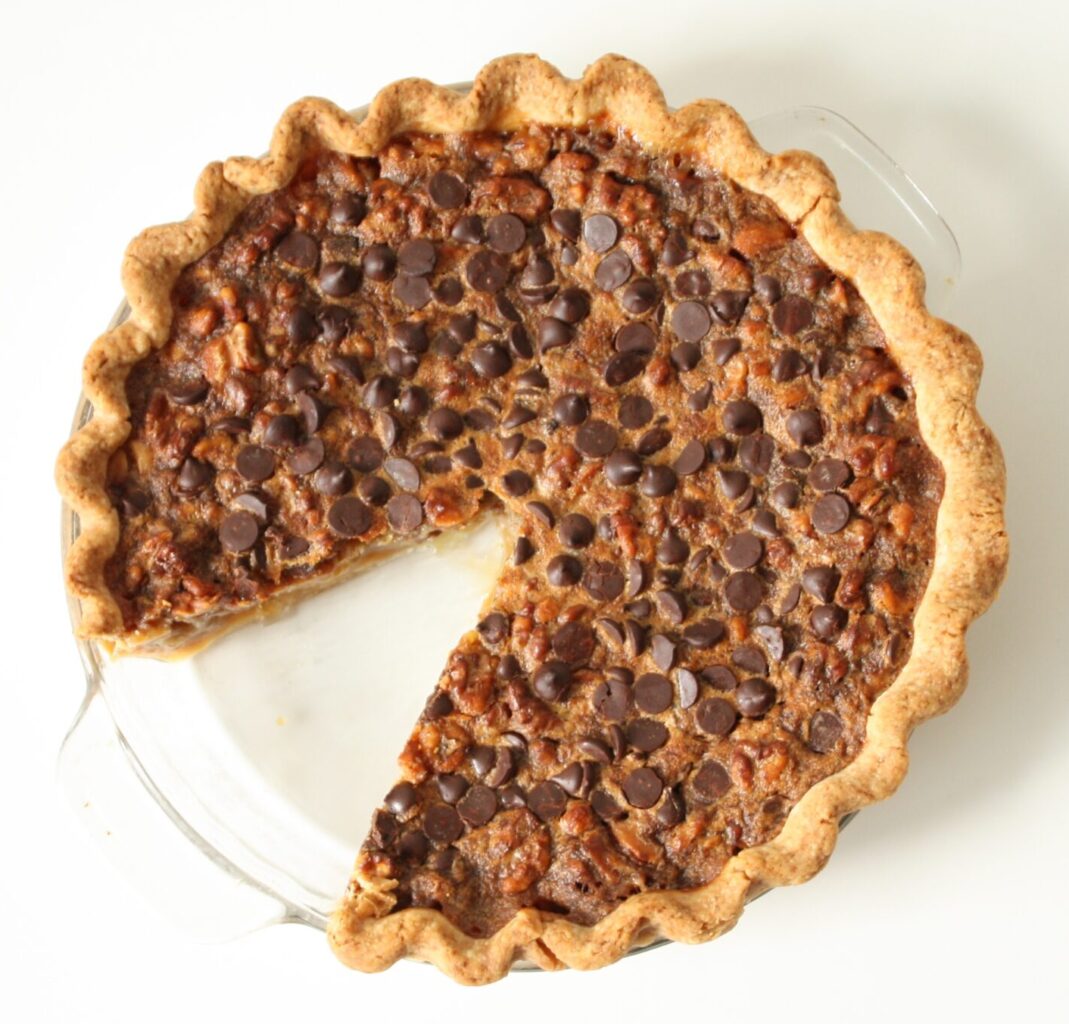
Pie Junkie Like the infamous pie shops of Kathmandu, Pie Junkie dazzles all comers with a huge selection of made-from-scratch pies. They mainly sell whole pies, both ready to eat and take and bake, and quiches too, but they also have an assortment of pie slices ready to serve the hungry.
The Jones Assembly, OKC;
photo courtesy Konjo ConceptsPie Junkie, OKCFait Maison, OKC
Fait Maison Olivier Bouzerand, born in France, worked at Michelin three-star restaurants in Paris. Later he won a star of his own. His newest venture, Fait Maison, is a temple to French fine dining. A meal there is an experience you’ll treasure forever. It might take four hours and feature four different preparations of foie gras — but certainly worth it.
Where the Chefs Eat
Chef Bill Lyle, Summit Club; photo by Brent Fuchs
We asked some lauded Oklahoma chefs: “Where can we find you out to eat on a day off?”While you may think they’d be reluctant to shine a light on their ‘competition,’ that couldn’t be further from the truth.
“Justin Donaldson’s lamb at Barons on 1st is the best around. Sonny Dalesandro’s asparagus salad, anything chef Roque Heidler prepares with foie gras at Boston Title, and Dona Gloria’s gorditas de tripa.” Bill Lyle — Summit Club
Chef Andrew Black, Grey Sweater/Perle Mesta
“Don’t be afraid to talk to the locals — strike up a conversation at 30th Market in the Paseo District and you’ll uncover the best spots to eat, explore and shop. I love grabbing a coffee at Willow Coffee in Deep Deuce. For food, DesiCorner in Edmond has some of the best Indian food I’ve had lately, and Raven on Western is a new hot spot I’ve really been enjoying.”
Andrew Black — Grey Sweater
Chef Justin Donaldson, Barons on 1st
“My go to spot is El Rio Verde on North Trenton Ave — and crushing their wet burrito!”
Justin Donaldson — Barons on 1st
Featured photo caption: At the Summit Club, diners can enjoy delicacies from chef Bill Lyle, including a Japanese oyster shooter with quail egg, tobiko, sake and shoyu glaze. Photo by Brent Fuchs
BONUS PHOTO GALLERY
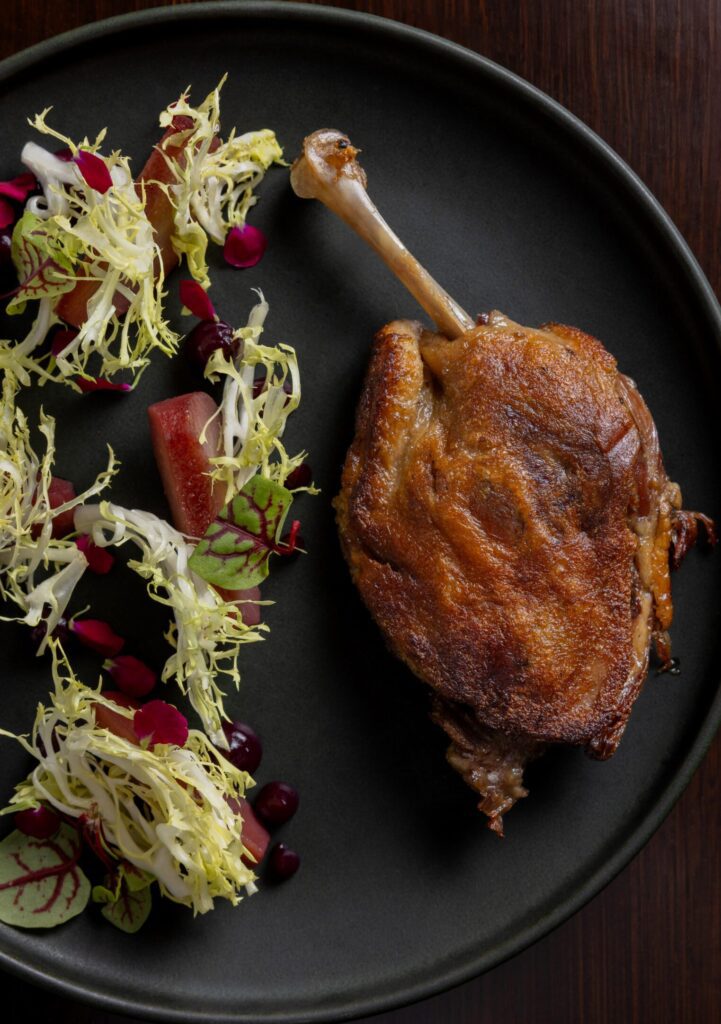
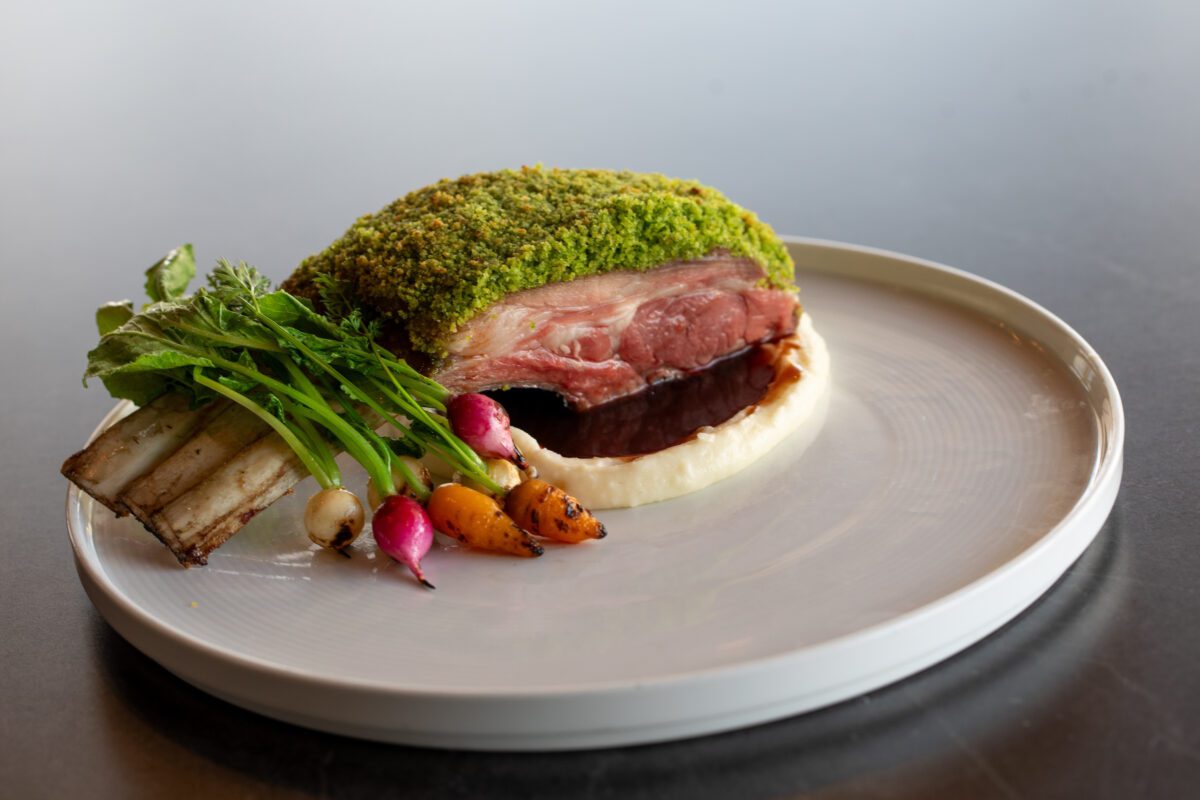
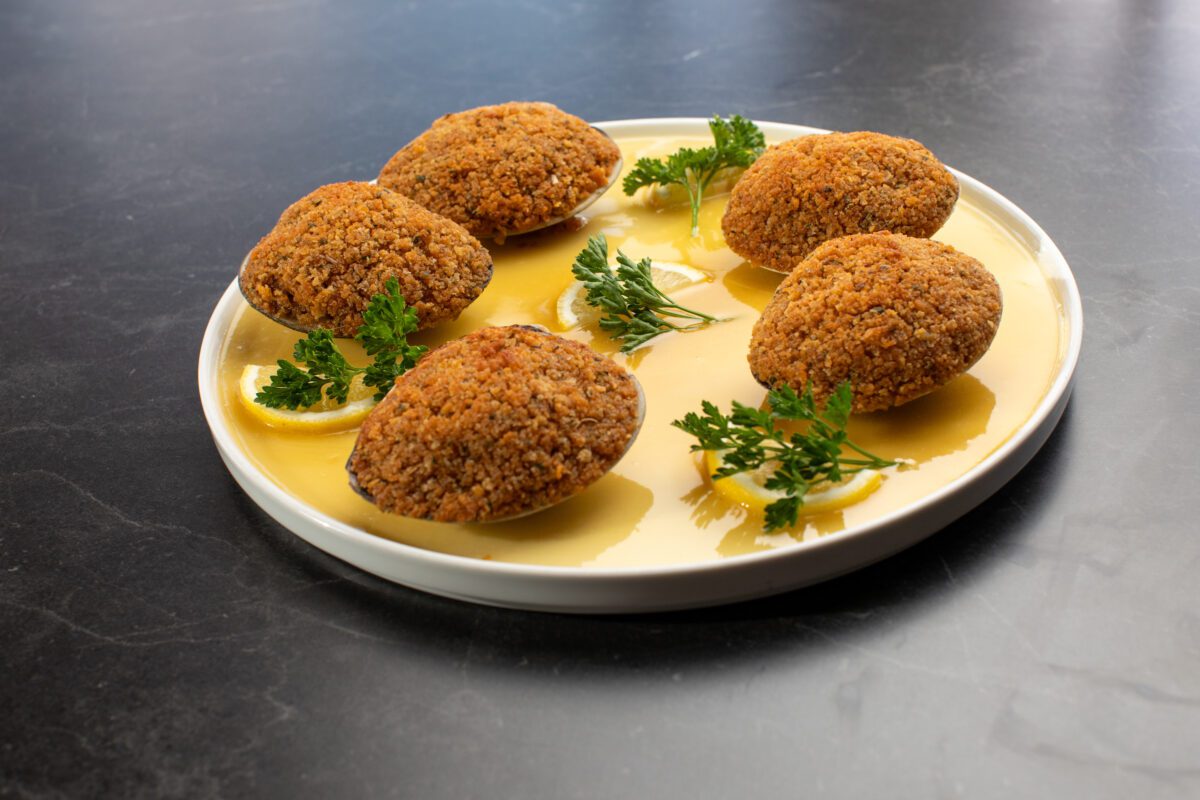
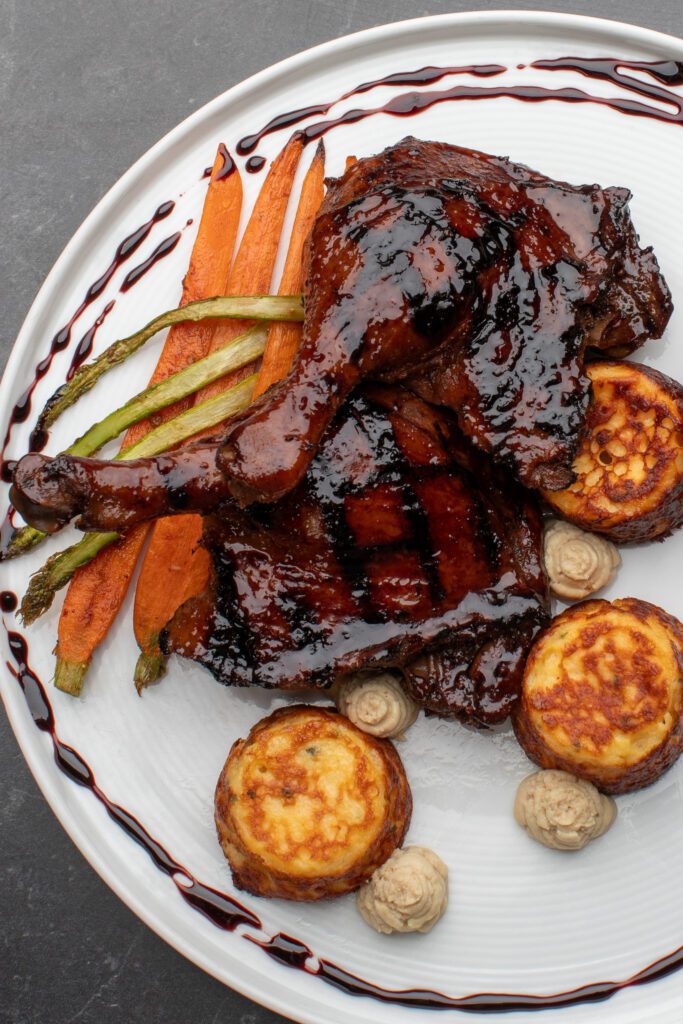
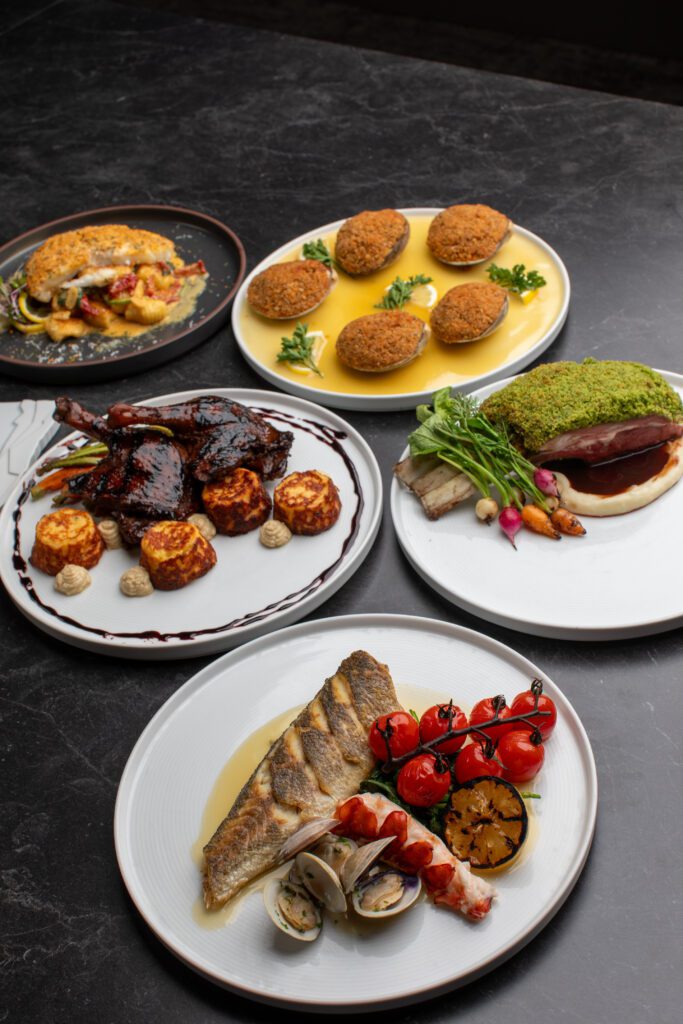
Herb roasted rack of lamb,grilled root vegetables, parsnip puree, lamb demi-glace; Summit Club; photo by Brent FuchsCherrystone clams oreganata, white wine, lemon; Summit Club; photo by Brent FuchsHalibut with sundried tomato and ricotta gnocchi Parmesan crust, baby spinach; Summit Club; photo by Brent FuchsJapanese oyster shooter quail egg, tobiko, sake, shoyu glaze; Summit Club; photo by Brent FuchsCherry smoked duck legs, orange-bourbon braise, foie gras mousse, potato cakes, roasted vegetables, dark cherry gastrique; Summit Club; photo by Brent FuchsHalibut with Parmesan crust, sun-dried tomato and ricotta gnocchi with baby spinach; Summit Club; photo by Brent FuchsSummit Club, Tulsa; photo by Brent FuchsDaigoro, TulsaFrida Southwest, OKCPicasso Cafe, OKCThe Press, OKC
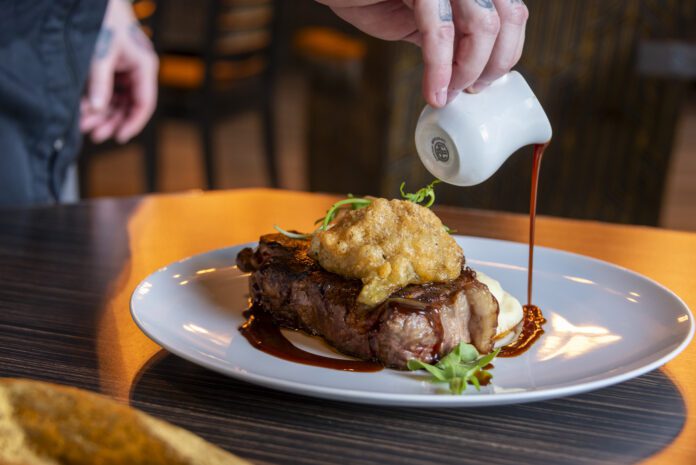
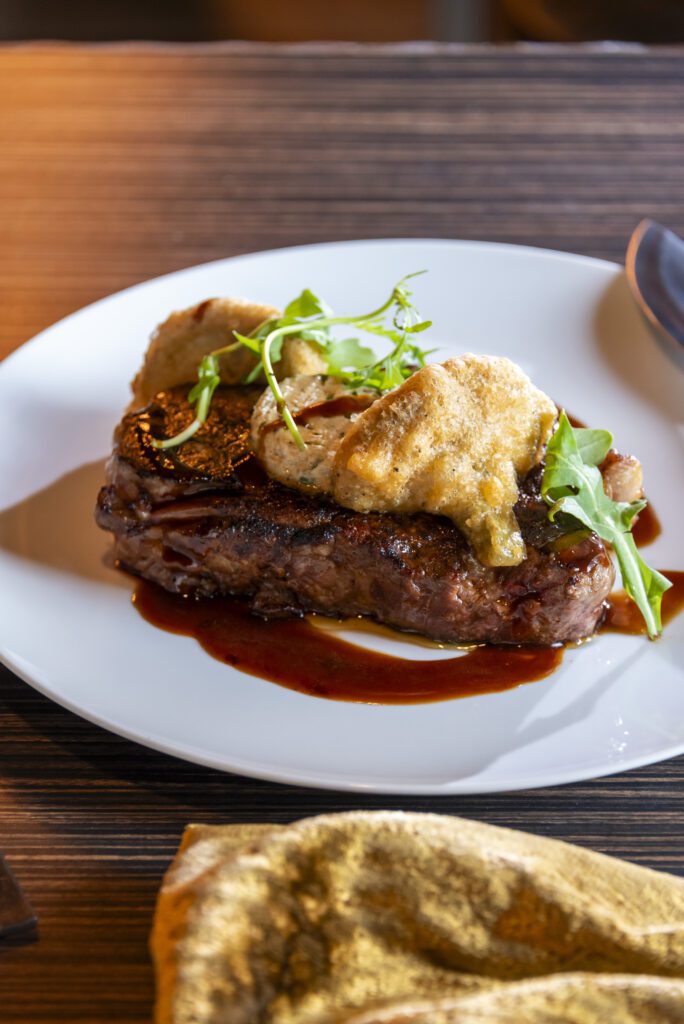
The porcini rubbed beef striploin is 14 ounces of prime beef, with horseradish parsnip purée, artichokes and black garlic
rosemary butter. Photos by Stephanie Phillips
In 1925, F. Scott Fitzgerald published The Great Gatsby. It’s a complex tale, with elements of Faust and forbidden love, and that’s why it’s considered a great novel. But the reason it has such a great hold on our imagination — the reason people read and reread it one hundred years later — is the richly evoked ambiance of decadent, jaded elegance.
That same year, the Mayo Hotel opened. Back in the day, when Tulsa was the oil capital of the world, anyone who even dreamed of being anyone stayed there. John F. Kennedy, Katherine Hepburn, Charlie Chaplin, Harry Truman, Elvis Presley, Eleanor Roosevelt Mae West — all that gilded, long-gone elite.
It became an oilman’s hangout. Frank Phillips and Bill Skelly had a drunken fistfight in the lobby. Pretty Boy Floyd never stayed there, but when he was on the Ten Most Wanted list, the FBI sent agents to check, reasoning that the hotel was so luxurious that he would risk arrest and certain conviction to enjoy it.
But by the time I got to Tulsa, the party was over. I used to walk by the abandoned downtown shell and try to peer through the boards that covered the entrance, hoping for a glimpse of the ghosts that surely haunted it, bygone shades dancing at long-forgotten balls, just like that old Kubrick flick The Shining.
In 2001, Tulsa businessman John Snyder purchased the Mayo for $1. His friends told him he overpaid. In the next decades, he and his family poured $40 million into a loving, careful, slow restoration, returning the Mayo to the glory of bygone days. The soaring, stunning lobby, gleaming with stark black and white decoration, still makes jaded visitors gasp in awe. But one thing was missing: a truly glamorous restaurant to fill the space of the original Mayo’s elegant dining room.
Now, after years of work by John Snyder and his daughter, Macy Snyder-Amatucci, the work is complete. Dimly lit, high ceilinged, with lots of gilt work and chandeliers, the new restaurant awaits any passing Gatsbys. Its name: 1925. Its main attraction: the food.
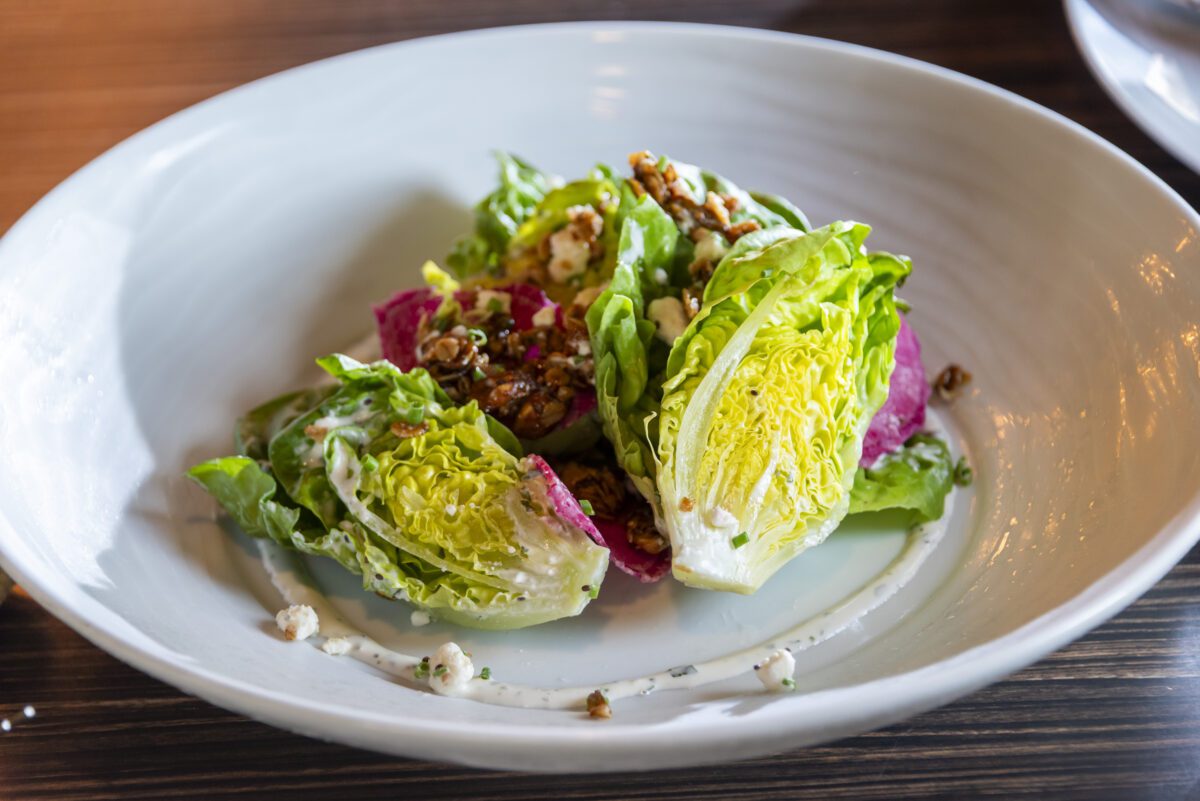
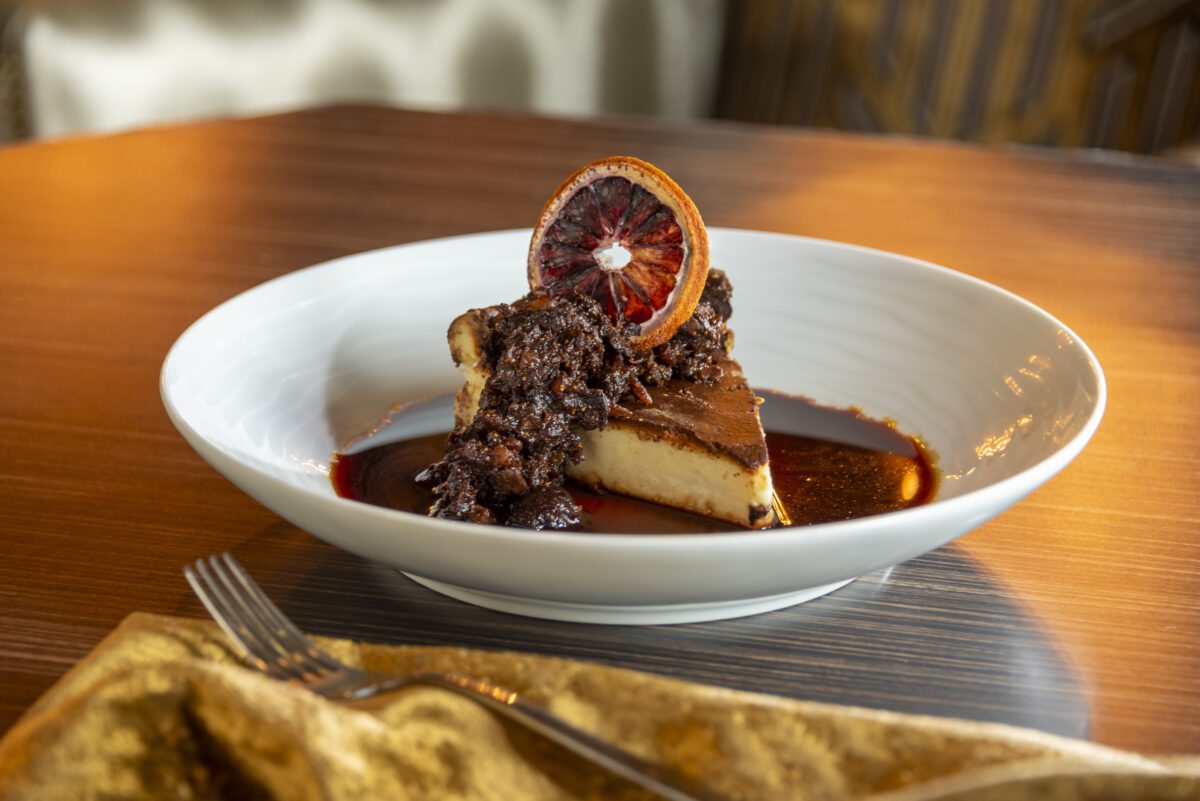
The baby gem salad offers pistachio seeded crumble, radish, feta and buttermilk herb dressing. All photos by Stephanie PhillipsCameron Werry says that as the leader of 1925, he doesn’t “want to be like the guy next door. I’ll leave the shrimp cocktail and hummus dip to him.”To end the evening, 1925 diners can indulge in the cheesecake, replete with fig and walnut jam, plus burnt orange sauce.
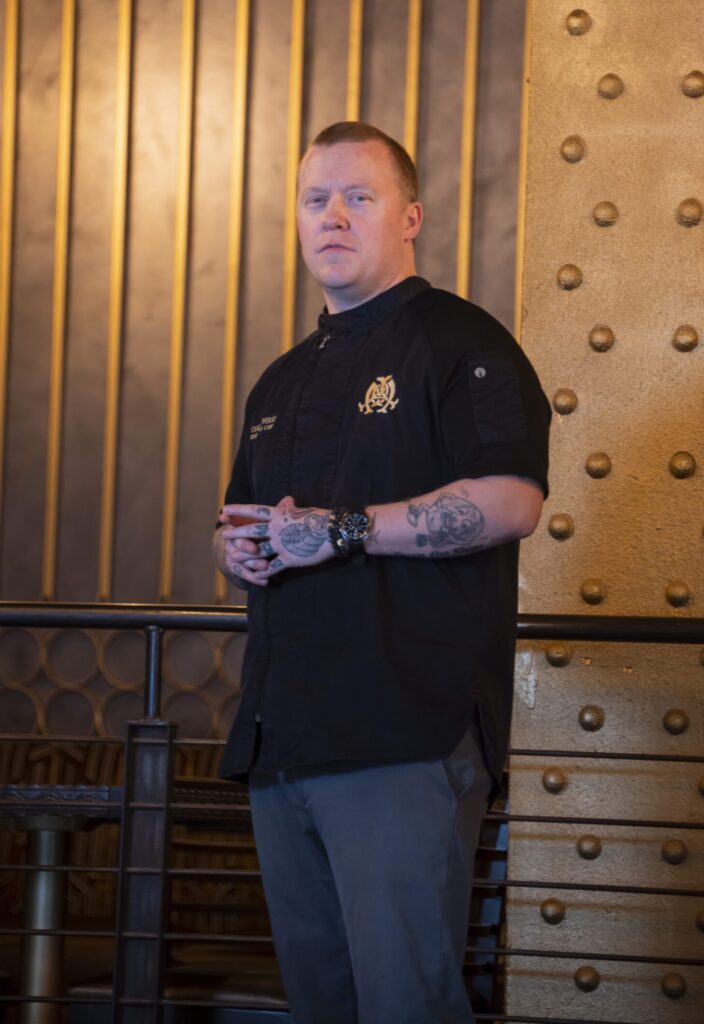
The Snyders picked Cameron Werry to be executive chef, responsible for overseeing the food of the entire hotel (including room service) and wisely gave him great creative latitude. Werry was born in Banff, a resort town in the province of Alberta, Canada, and grew up in the kitchens of his restaurateur father’s many kitchens. He never considered any career other than chef.
“I always felt at home in the kitchen,” Werry says. “I love the camaraderie, culture and teamwork.”
Werry’s worked just about everywhere, from a Michelin two-star restaurant in San Francisco to the Chalkboard to the Tulsa Zoo, where he brought fine dining touches to every concession stand. Werry designed this menu to be different.
“I don’t want to be like the guy next door,” he says. “I’ll leave the shrimp cocktail and hummus dip to him.”
What sets the dishes apart is their creativity and the skill and time it takes to execute them.
Only the best ingredients are found at 1925. Beef is USDA prime. Halibut was swimming in the ocean 48 hours before.
“And I have a guy in Skiatook who’s growing special varieties of lettuce just for me,” Werry says.
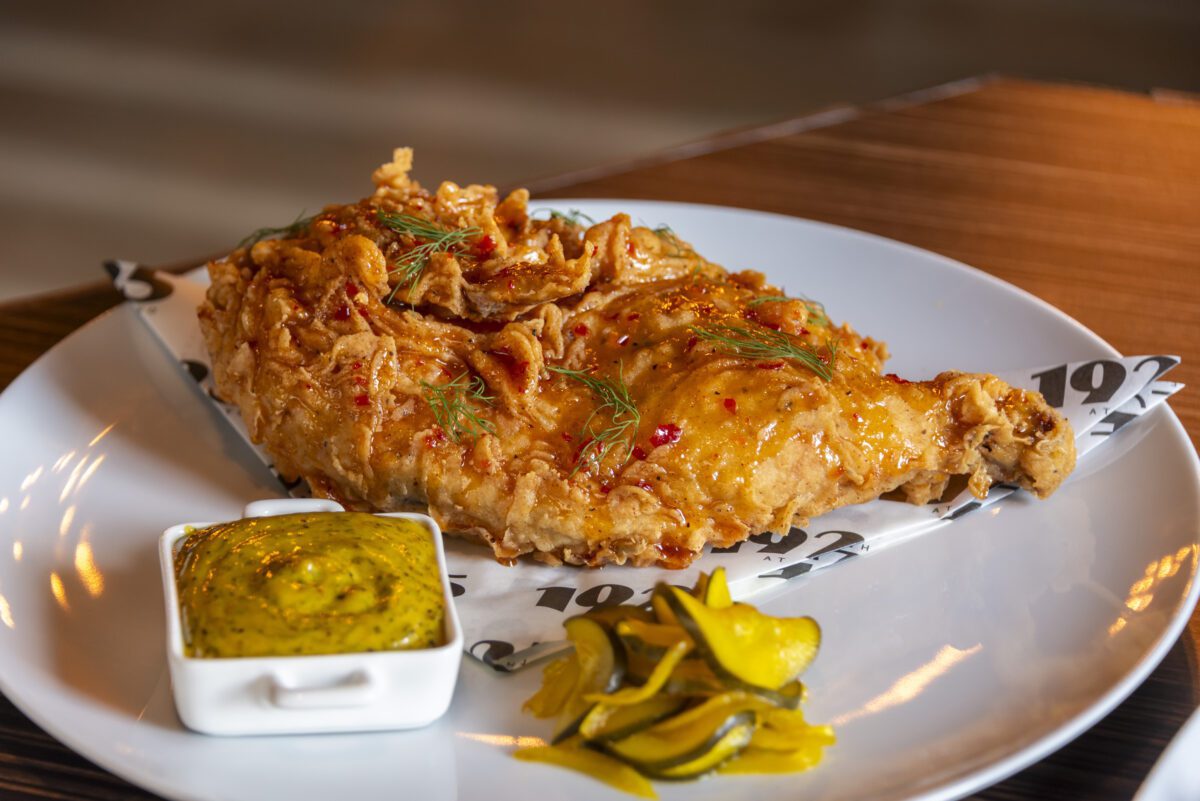
That halibut comes in a rich, silky smooth classic French beurre blanc with salmon roe on top. Other dishes were being prepared while that fish was still in the ocean. There’s a decadently rich slice of unctuously smooth pork belly that takes three days to cure and slowly cook. It’s served with honey dijon glaze, a piquant peach chow chow, and a tasty corn purée. There’s fried chicken too. It is slowly cooked sous vide for four hours, then lightly fried. It’s spectacular.
“I wanted to have a dish that, when they bring it to the table, people say ‘wow,’” Werry remarks.
Actually, all those dishes have that ‘wow’ factor. The careful, colorful presentation and plating will thrill any foodie. Service, from that consummate gentleman Evan Pigford who runs the bar, to every server who guides you through your meal, is impeccable. The first thing Werry tells every interviewer is, “it’s not fine dining.” And yet, it is.
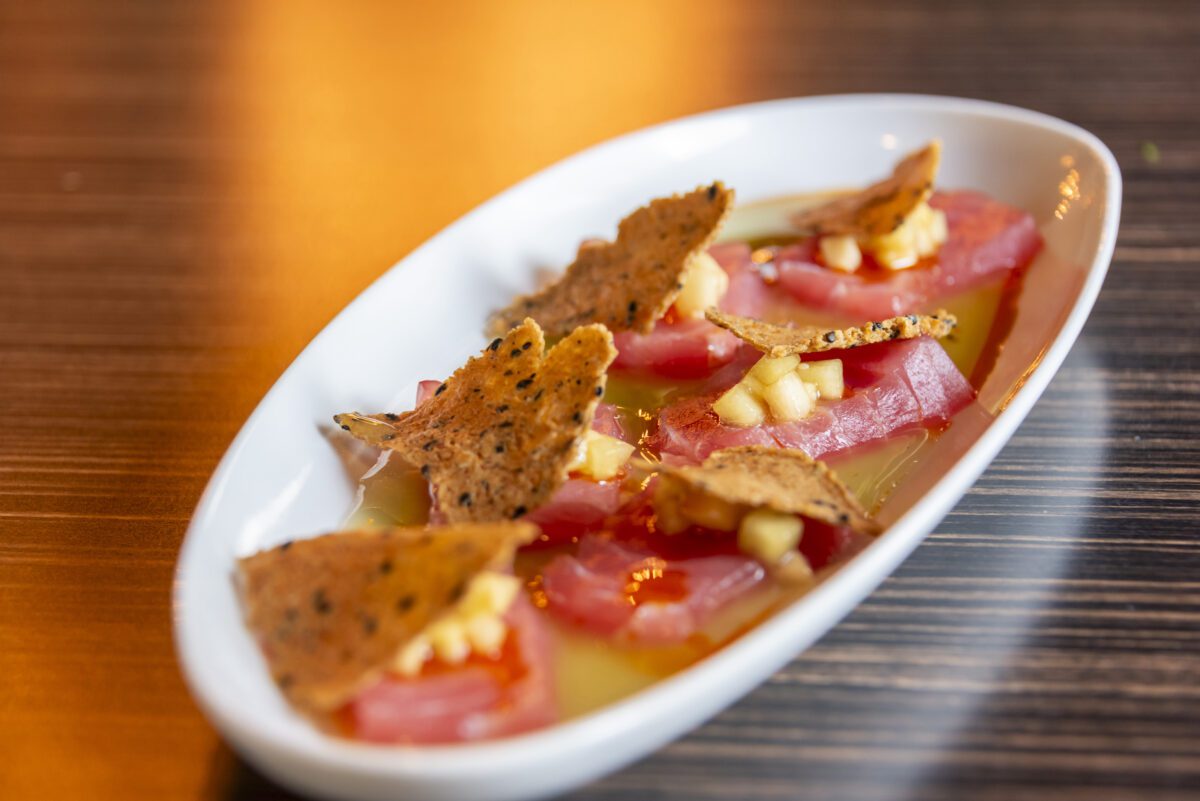
The tuna crudo offers melon gazpacho and sesame-ginger relish.A favorite at 1925, the fried half chicken offers fermented pepper and honey glaze and zucchini pickles.The porcini rubbed beef striploin is 14 ounces of prime beef, with horseradish parsnip purée, artichokes and black garlic rosemary butter.
If you’re looking to step outside your culinary comfort zone, Notes of Marrakesh on Tulsa’s Studio Row should be your next go-to destination.
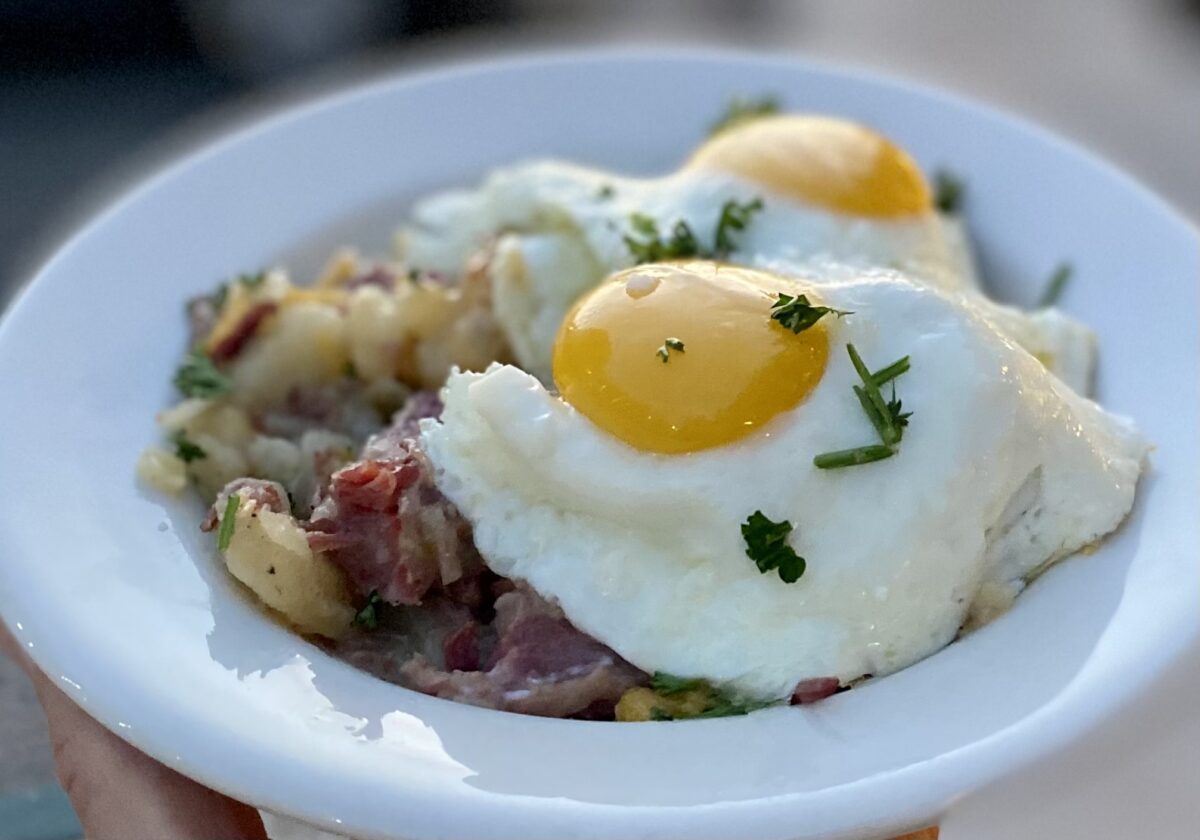
Described as a Moroccan bistro and bar, the restaurant welcomes diners with its stylish digs, warm ambiance and authentic eats not found elsewhere in the metro. The restaurant is open at 9 a.m. daily except for Sundays, offering early morning options including the Moroccan and Turkish breakfast plates. The former comes with scrambled eggs, lamb sausage, cumin, cream cheese and black olives, and the latter offers fried eggs with Turkish-style beef sausage.
Lunch/dinner entrées are appealing. Try the beef pastila — crispy phyllo dough stuffed with beef stew, alongside almond paste topped with honey. Another highlight is the meatball tajine, with Moroccan-style meatballs, homemade tomato sauce, fried egg and cumin. Other options include the Royal Burger, a lamb burger with goat and cheddar cheese, fig jam, tomato, avocado, blackberry glaze and Marrakesh sauce, and the Kabsa – a traditional Saudi Arabian dish consisting of goat and rice, slow cooked with raisins and Middle Eastern spices.
Photo courtesy Frankie’s Italian Restaurant
Notes of Marrakesh also offers a full bar, with craft cocktails like the fig pomegranate martini and Moroccan mule, alongside ample beers and wines.
Frankie’s Italian Restaurant
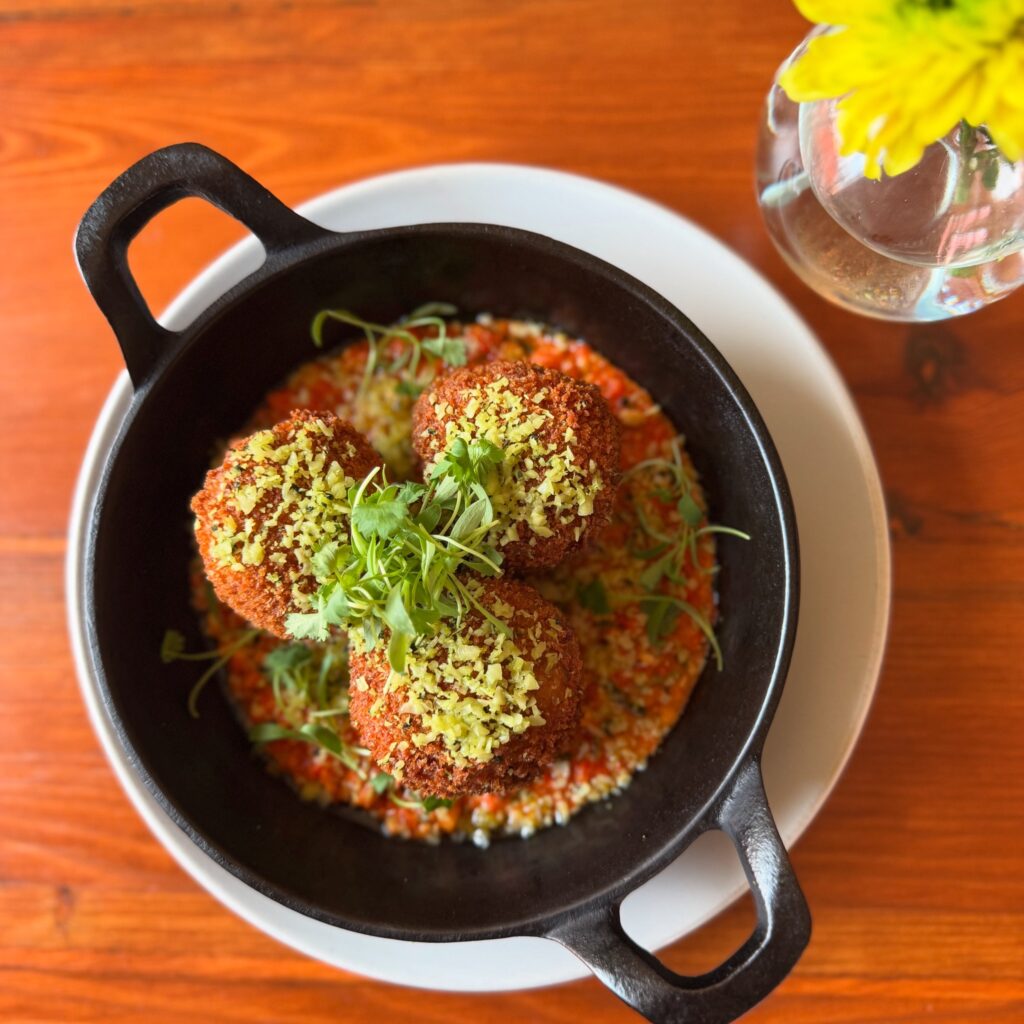
Nestled upon West Britton Road in OKC, Frankie’s Italian Restaurant is ideal for a cozy date night or a group outing with friends and family.
Start with classic appetizers like bruschetta, garlic bread, a caprese salad or buffalo wings. If you want to stay on the light side, try the Caesar or Greek salad.
Baked pastas are sure to tempt – with offerings including lasagna, manicotta, eggplant Parmigiana or baked penne. If you just can’t choose, indulge in the Pasta Sampler with manicotta, cannelloni and lasagna. House specialties shine, too; try the chicken piccata, marsala or cremora. If you’d prefer the build-your-own option, you can choose your pasta, sauce and add-ons for a specialty creation.
Looking to veer away from pasta? Frankie’s also has a handful of subs, including the Italian sausage, the meatball and the chicken Parmigiana.
Don’t forget to end the night with dessert. The Italian creme cake, tiramisu or cannoli are can’t-miss.