



















Home Blog Page 28

Julie Watson

Photo courtesy INTEGRIS Health

Chief clinical officer of INTEGRIS Health, Julie Watson, M.D., MPH, has a long tenure with the health system – previously serving as Chief Medical Officer at INTEGRIS Baptist Medical Center and as Vice President of Medical Affairs. A native Oklahoman, Watson received her medical degree from the University of Oklahoma College of Medicine, after which she completed her pediatric residency at Rush University Medical Center and her neonatal-perinatal fellowship at Northwestern Feinberg School of Medicine. She holds a master’s degree in Public Health from the University of Illinois – Chicago. We recently caught up with Watson and got her thoughts on … 

… what interested her most about neonatal-perinatal medicine and healthcare leadership.

I grew up on a farm in Oklahoma, and even though no one in my family was a doctor or in medicine, I remember being clear from a young age that I wanted to be a doctor. I saw how both of the family doctors in my hometown, Dr. Rice and Dr. Fox, used their skill and scientific knowledge to help others in very meaningful ways and I couldn’t imagine doing anything else. 

Growing up, you could find me in the church nursery and babysitting as often as I could, so pediatrics was always on the radar. I fell in love with neonatology on my first day in the NICU during my pediatric internship, though. Taking care of sick newborns and preterm infants became my passion, and I never looked back after that day.   

I’ve sought out leadership roles throughout my educational and professional journey – from serving as the president of a volunteer fraternity at OU, serving as a trustee for Region IX of the American Medical Student Association in med school, to becoming the president of over 500 residents and fellows at Rush University Medical Center. After five years of focusing on my clinical career in neonatology when I returned to Oklahoma after fellowship, I caught the leadership bug again here at INTEGRIS Health. I served as the department chair for Pediatrics for five years before becoming the chief medical officer of INTEGRIS Health Baptist Medical Center. The opportunity to combine my clinical expertise with leadership roles has been incredibly fulfilling and aligns to my passion — improving the conditions around me so that others fulfill their purpose and collectively improve the lives of our patients, colleagues and the community. 

… a day in the life.

I start every morning with a tiered huddle that allows me to get the pulse of the entire organization by 9:15. After that, it’s off to the races working on strategy and projects designed to help us deliver on our mission – partnering with people to live healthier lives. 

I oversee the ‘Evidence-Based Clinical Excellence’ strategy and co-lead our ‘Partnerships for Healthy Communities’ strategy. I get to work with initiative owners who design innovative work to drive key outcome improvements. I also get to lead our teams that oversee safety, quality, infection prevention, experience, clinical programs, medical staff and APP governance, community health and partnerships and more. Suffice it to say, it is never a dull day, and it typically involves a lot of meetings.

… the best part of her day.

I feel so blessed to work with the teams around me. I don’t think you could find more dedicated, mission-driven people. The days that I get to round on our caregivers and clinicians bring me the most joy. That’s what I get up to do every day – remove obstacles and improve their conditions, so that they can take great care of our patients and each other. Seeing them in action is what keeps me going. 

… advice for young physicians interested in clinical care and administrative leadership.

I have been blessed to do both. I spent a decade as a full-time neonatologist before shifting into part-time administrative work and then full-time administrative work during the pandemic. I loved the time I spent taking care of patients and their families one by one. 

As my leadership roles and scope grew, I realized that I also loved solving big problems, creating teams and spaces that tackled systems needing improvement, that could lead to large-scale impact for the better. My advice is two-part: You absolutely can do both and we need physicians and APPs to do both! And you can start by raising your hand, sharing your ideas on how to make a process better, contributing your perspective to help solve a problem, volunteering for a committee or workgroup. You never know where it will lead you!

… her proudest moments. 

In 2020, I lead our team of physician leaders through the journey of modernizing our medical staff governance structures and processes, which help ensure the quality, professionalism and health of the medical staff within a healthcare organization. It took 18 months to align all of our hospital medical staffs, but it has paid dividends. We have state-of-the-art processes that help physicians and advance practice providers govern themselves and the clinical care given to our patients. It has transformed our culture and contributed to how we perform clinically.

In the clinical enterprise, we have seen significant improvements in the last five years in safety and quality. We have reduced serious safety events by 74% and are performing in the top quartile and decile in central-line associated bloodstream infections (CLABSI) and catheter-associated urinary tract infections (CAUTI), improving from the bottom quartile. Our ambulatory quality metrics have also improved significantly in the space of diabetes management, cancer screening and depression screening and follow up. 

I am also passionate about helping develop the next generation of health care leaders — both physicians and advance practice providers (APPs). In 2021, we were the first in the state to establish an Office of Advanced Practice. In 2022, we established the INTEGRIS Health Physician and APP Leadership Institute. Our Emerging Leader Academy has graduated 92 physicians and APPs in the last three years; 26 have gone on to hold hospital, medical group and system-level leadership positions. We just started our fourth cohort and will graduate another 35 leaders in June of 2026.  

… life outside work.

You can find me spending time with my family or being active. My kids are very active and it keeps us busy! Pilates, yoga, running and strength training help me keep my sanity. I love to travel any time I get the chance.


Tanninger Entertainment Announces Development of Oh l’amour – The Erasure Musical

Photo by Phil Sharp

Tanninger Entertainment to develop long anticipated, Oh l’amour – The Erasure Musical, a bold new theatrical work featuring music and lyrics of the iconic British synth-pop band duo Vince Clarke and Andy Bell of Erasure. The production is being developed in partnership with Sony Music Publishing.

With a book by Paul Lavoie and creative consultation by Tony Award-winning producer Nick DemosOh l’amour follows Sam, a wide-eyed college student who leaves the safety of home to pursue his dreams amidst the chaotic promise of 1987 San Francisco. In a city pulsing with desire, romance and heartbreak, Erasure’s electrifying, nightclub-inspired catalog surges alongside Sam’s journey of self-discovery and survival among an ever-expanding family of choice—at a time when love itself was an act of defiance. The story unfolds through a continuous mix of Erasure’s chart-topping hits—including A Little RespectAlways, Chains of Love,and the title song, Oh l’amour, published by Sony Music Publishing.

“I have been staggered by Paul Lavoie’s tenacity, force of will and dogged determination which is exactly what a production of this caliber requires, and I am thrilled that Tanninger Entertainment has had the foresight and courage to invest in his vision. This is not a jukebox musical. The way the story intertwines with such sensitivity and power is like experiencing a living tapestry of song, sound and vision, and I cannot wait to see it on stage. I am thrilled to be working with Tanninger Entertainment on Oh l’amour – The Erasure Musical, and I’m very much looking forward to working with them to bring the show to the stage.” — Andy Bell, Erasure

A developmental workshop is slated for December 2025 in partnership with the University of Oklahoma’s acclaimed Weitzenhoffer School of Musical Theatre. The development creative team includes Brooklyn-based director & writer Hunter Bird (Masquerade associate/resident director, The Pansy CrazeBronco Billy: The Musical ) and music supervisor, Grammy Award winning producer (2015), Tony and Emmy nominated composer/orchestrator, Dominic Fallacaro (& Juliet co-orchestrator/music director). A date for the industry workshop presentation will be announced soon, as the production targets first-class commercial launch on Broadway & internationally.

About Tanninger Entertainment

Based in Tulsa, Oklahoma Tanninger Entertainment is a Tony & Olivier award-winning production company led by Jay Leland Krottinger, Ryan Jude Tanner & Patricia G. Chernicky. Known for bold, modern, visionary work across theatre, film, documentary and live entertainment, Tanninger’s Broadway and international credits include the highly anticipated The Queen of Versailles starring Kristin Chenoweth opening on Broadway this fall, The Outsiders (2024 Tony Award, Best New Musical), The Sign in Sidney Brustein’s Window (2023 Tony Nominee), Come From Away (2016 Olivier Award, Best New Musical), Waitress (2015 Tony Nominee), Memphis West End(2015 Olivier Nominee) and the Tony Award-winning revivals of Oklahoma! (2019) & Pippin (2013)and theBody Electric doc(2023 SoHo Int’l Film Fest, Nominee). For updates, visit TanningerEntertainment.com.

Deep-Fried Delights & Sky-High Rides

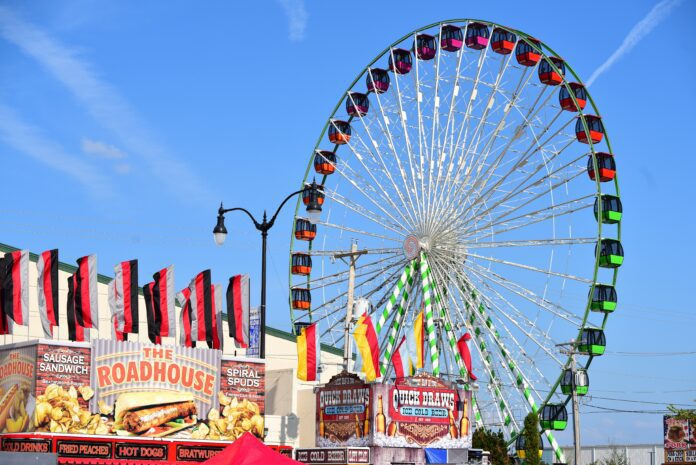
Drawing nearly one million guests in 2024, the Oklahoma State Fair is ready to produce another family-friendly, high-quality event. Photo courtesy the Oklahoma State Fair

There’s nothing more American than a good, old-fashioned fair. The Oklahoma State Fair and Tulsa State Fair, both founded before statehood, draw a combined millions of attendees annually.  

This year, the family-friendly fun is in full swing. Get ready for agricultural competitions, musical performances, rides and plenty of mouthwatering dishes you can’t find anywhere else. 

Oklahoma State Fair

“Eat, Ride, Repeat!” is this year’s theme at the Oklahoma State Fair, which returns Sept. 11–21. Each day is jam-packed with old favorites, from carnival rides to corn dogs, along with a few exciting new attractions. 

“We’ve been a part of the fabric of the community for a long, long time,” says Scott Munz, executive vice president of marketing at the OKC Fair Park. “We take our responsibility very seriously and try to put on the best state fair possible for the people of Oklahoma.” 

For the first time ever, the OG&E Coliseum, which opened in June, will host two performances in partnership with the Oklahoma State Fair: Disney on Ice Presents Let’s Dance and the PBR Teams Challenge Event with the Oklahoma Wildcatters. Tickets are required for both shows and include gate admission to the fair. 

“This is the first time we’ve done any family entertainment there,” shares Munz. “We’re excited about it.” 

Sandra Lee, a celebrity chef, will also pay a visit to the Oklahoma State Fair. She’ll serve as a judge in the Great TASTE of Fair food competition and as a guest speaker at the Think Pink for Women’s health symposium. 

To increase accessibility, the Oklahoma State Fair will offer several discount days in recognition of veterans, first responders, senior citizens and more. 

“For the amount of entertainment that we provide – the excitement, the thrills, the spills, the sights – nothing else matches,” says Munz.

For more information about what to expect, check out okstatefair.com. 

Tulsa State Fair

As the city’s largest annual event, the Tulsa State Fair is pulling out all the stops this year, bringing together hundreds of shows, rides and competitions from Sept. 25-Oct. 5. 

“A lot of families don’t get the opportunity to travel,” says Amanda Blair, vice president and chief operating officer at Tulsa’s Expo Square. “We are Green Country’s Disney World. We strive to be the best we can be … and elevate our product every year.” 

In addition to classic rides like the Zipper and Himalaya, the fair is introducing a roller-skating rink in the SageNet Center for the first time. The Tulsa State Fair will don another new amenity this year – the Carousel Club, an exclusive lounge that will include a bar and live music. 

Fair-goers will also get the chance to try out unlikely food combinations, including a salmon roll sundae, a grilled Nutella-and-marshmallow sandwich and Hot Cheeto corn-on-the cob. 

“Come hungry,” advises Blair. 

Drawing over an estimated 1.1 million people in 2024, the Tulsa State Fair has a massive impact on the local community. Last year, the fair awarded over $450,000 in scholarships to high school students and employed upwards of 700 people.

“Our team produces a high-quality, family-focused event every year,” says Blair. “We’re constantly making sure that we stay current by bringing in new attractions while staying true to our agricultural roots as well.” 

See what else the Tulsa State Fair will have to offer at tulsastatefair.com. 

Some Fair Advice

Whether you’re going to the fair once or every day of its run, be prepared with these tips from organizers:

• Plan your day ahead. Both the Oklahoma and Tulsa State Fairs offer a full list of their activities on their websites. 

• Dress appropriately. Wear comfortable walking shoes and check the weather forecast before arriving. “The only time the fair goes into pause is if there’s lightning in the area,” explains Munz.

• Take advantage of the complimentary shuttle service. Both fairs have designated shuttle pick-up and drop-off areas, which can help fair-goers avoid high volume traffic and skip the hassle of parking.

• Always keep an eye on your children. Blair recommends that parents take a photo of their kids before arrival, in the event they get separated from the group. “Everyone always gets reunited, but it’s always good to have a current picture of them… that way we can give very specific details about what they’re wearing,” she explains. 

• If you see something, say something. “Be aware of your surroundings and keep your eyes open,” says Munz. “If you hear a noise, move away from it, and not towards it. We take safety and security very seriously.” 

• Bring your friends and family for an all-around good time. “Some of the things that are happening in the world today are just crazy,” reflects Munz. “It’s nice to have a fun experience and see people enjoying themselves, forgetting some of their day-to-day worries by coming to the fair and seeing all that we have to offer.” 

Featured photo credit: Drawing nearly one million guests in 2024, the Oklahoma State Fair is ready to produce another
family-friendly, high-quality event. Photo courtesy the Oklahoma State Fair

Oklahoma After Dark

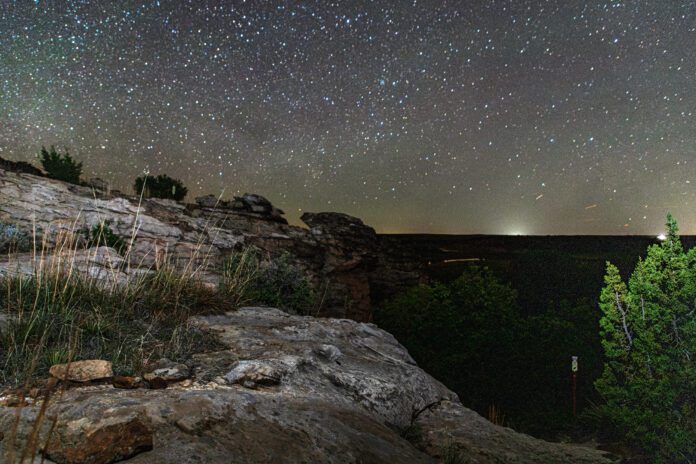
Fall’s ample astronomical events can be viewed at many outdoor locations – including Black Mesa State Park, pictured here. Photo courtesy Oklahoma Tourism & Recreation Department

Stargazing has always been a popular way to spend an evening in Oklahoma – no matter the time of year or location. This fall, there are quite a few astronomical events to look out for, along with plenty of stunning locations to catch them. We offer a helpful location list for your autumnal outdoor adventures. 

Black Mesa State Park

Located in Kenton, this park is perfect for an evening of gazing at the Milky Way and meteor showers. The park has some of the darkest skies in the state, as there are no major nearby towns to pollute the view, and is also home to the Okie-Tex Star Party, happening this year on Sept. 19-27; it’s a community astronomy event featuring speakers, great food and giveaways. 

Robber’s Cave State Park

Located near Wilburton, this is another ideal stargazing spot with extremely dark skies for optimal viewing conditions. If you want to make a weekend out of it, the park also has hiking trails, mountain biking and rock climbing, as well as plenty of space for camping in the Sans Bois Mountains. Fun fact: This was also the hideout for notable outlaws Belle Starr and Jesse James in the late 1800s.

Roman Nose State Park

Located near Watonga, this park is named after highly respected Southern Cheyenne Chief Henry Roman Nose. With elevated plateaus and a location that’s a sizable distance from the lights of OKC, this is another beautiful spot to spend a weekend staring into the skies. The park is also full of strong cultural heritage to soak in, as well as the Cherokee Trading Post & Travel Mart, which has unique Native American clothing, décor and accessories.

Wichita Mountains Wildlife Refuge

Nestled in Lawton, this 59,000 acre land is ideal for a variety of nature-centric activities. Camping on Charon’s Garden Trail is the best way to see the clear night sky, and since no more than ten people are issued a camping permit within a three day period, overcrowding won’t be an issue. At approximately 525 million years old, the mountains are home to a vast array of plants, birds, fish, reptiles and amphibians, all waiting to be in your next Instagram photo … from a distance, of course. 

Ouachita National Forest

Located near Hodgen, this is the oldest national forest in the southern United States and has some truly breathtaking views. Not only will your evening be filled with stars dancing in the sky, the day can be used to take the Talimena Scenic Drive, a national scenic byway that spans 54 miles from Oklahoma into western Arkansas and contains some of the most beautiful autumnal foliage the state has to offer. 

Gloss Mountain State Park

Located in Fairview, this unique park has miles and miles of prairie and native red dirt, a unique setting for your stargazing getaway. Sometimes called the Glass Mountains, the area has high selenite content which can look like shiny glass in the right lighting. Make sure to travel to the top of Cathedral Mountain for some spectacular views and a great photo opportunity of Lone Mountain Peak. 

Main image cutline: Fall’s ample astronomical events can be viewed at many outdoor locations – including Black Mesa State Park, pictured here. Photo courtesy Oklahoma Tourism & Recreation Department

The Perks of Painting Wall Flowers

Oklahoma native Patrick Gordon offers his first-ever retrospective at the Philbrook starting in September. Photo by Bhadri Verduzco

As Shakespeare wrote: “A rose by any other name would smell as sweet.” The same can be said for Tulsa’s own Patrick Gordon. You may know him as Pat, Patrick, or p.s. — or the name may be new to you — but his brilliant, luminous paintings carry a powerful impact and have been favorites in the Tulsa community for more than 40 years. 

Born in Claremore in 1953, Gordon hosted his own art exhibit and sold his first painting for $60 at age twelve. He was barely out of his teens when he began exhibiting at prestigious galleries in New York City. Today, working ten hours a day, every day of the week, Gordon creates beauty in his home studio in Tulsa. While he is anything but a wallflower, the paintings that he has created over the last fifty years will grace the Helmerich Gallery in the Philbrook exhibition Wall Flowers: Patrick Gordon Paintings.

Walk through the exhibition, and you will discover towers of roses, a giant tulip and huge, lush peonies; sensitive portraits; delicate shading that takes your breath away; and knock-out still life paintings full of surprising objects: a feather, chair, marble, or model of the Statue of Liberty. These objects are not simple knickknacks; they fill Gordon’s paintings with symbolic meaning. 

In Gordon’s artwork, beauty is more than a surface layer — it becomes the structure. His paintings are composed with such precise attention to flowers, textiles and ornament that, rather than simply frame the subjects, these lush environments build an emotional architecture around them. A wallpaper backdrop, a saturated bloom, the gentle tilt of a head — all are deliberate gestures of care and presence. Gordon constructs spaces where stillness conveys feeling and where beauty, with such structural resonance, moves beyond the painting to deeply affect the viewer.

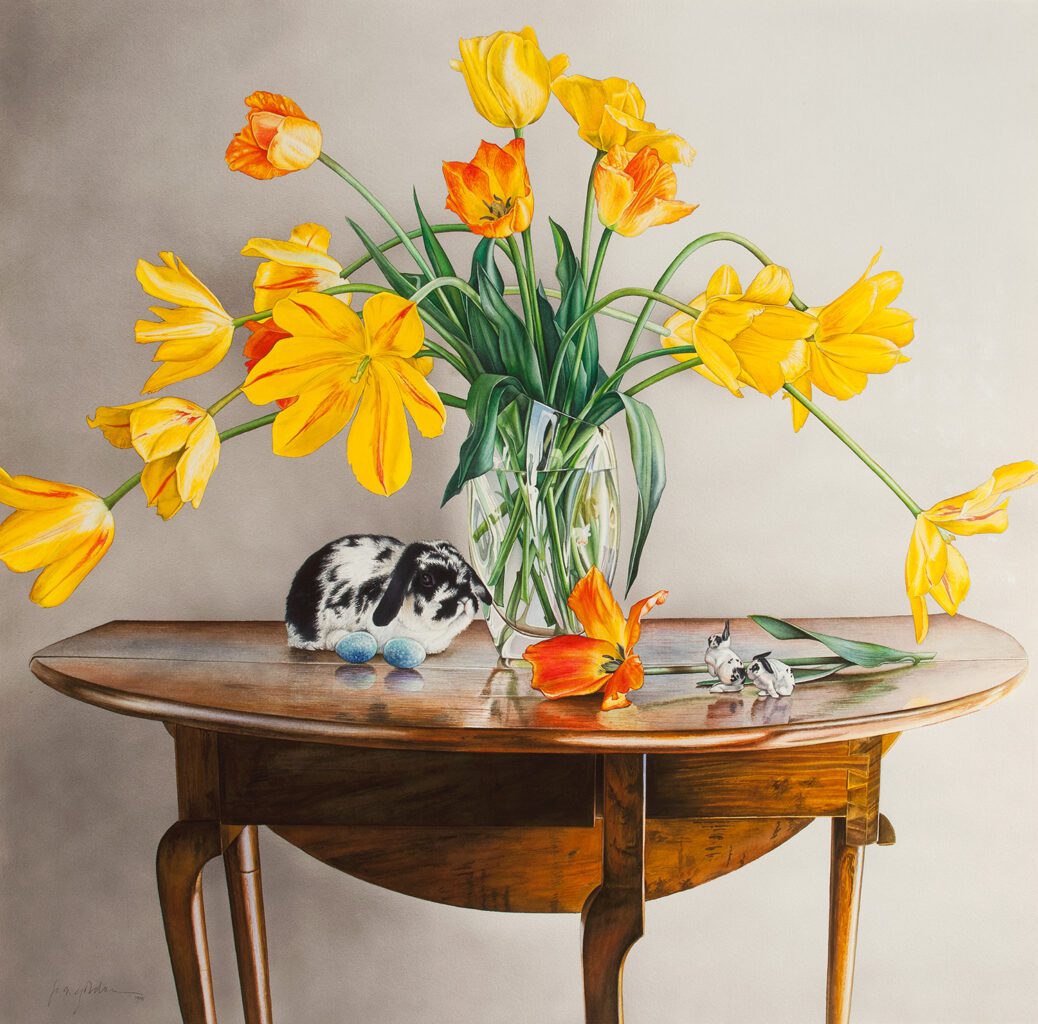
Patrick (p.s.) Gordon (American, b. 1953). Hocus Pocus, 1995. Watercolor on paper, 42 1/2 x 43 x 2”. Philbrook Museum of Art, Tulsa, Oklahoma. Bequest of Marylouise Cowan, 2010.9.8. © p.s. gordon

This approach places Gordon in dialogue with traditions of still life and portraiture stretching back to the Dutch Golden Age, where arrangements of flowers, fruit and objects were rich with allegorical meaning. Gordon, like his predecessors, uses this iconographic language to express what cannot always be said outright or is more powerful using a visual language. His portraits and still lifes blur the line between object and subject, body and bouquet, challenging rigid genre hierarchies. In his self-portrait Fried Green Tomatoes (1993), Gordon assembles flowers and objects that have deep personal meaning. While the painting in itself is a masterful watercolor and stunning still life, its power lies in the symbolic meaning of each object. We can appreciate each item as exquisite, but we can never fully grasp the references to memories, beloved family and friends, or other evocative significances that the objects hold for Gordon himself. 

Gordon has created a home studio, which itself is like a still life, and the exhibition will include a portion of his working studio, relocated into the gallery. Not only will visitors be able to explore the creative space in which he works, Gordon will be regularly creating within the exhibition, and visitors can glimpse the artist’s creative process.

Wall Flowers: Patrick Gordon Paintings opens September 24 at Philbrook Museum of Art. Visit philbrook.org for more details.

Tasty Tidbits

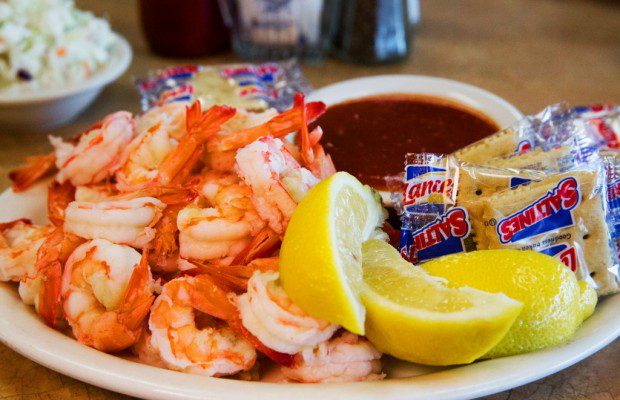
Photo courtesy White River Fish Market

White River Fish Market

Family owned and operated since 1932, White River Fish Market is the place to be in Tulsa for high-quality, delectable seafood. 

Now with two locations — at 17th and Sheridan and in Broken Arrow — White River offers just about any seafood iteration you can think of. Start with cocktail shrimp or fried oysters, then venture over to the ‘fried dinners’ section for catfish, red snapper, soft shell crab or tilapia. You can also try broiled, grilled or smoked options, from Alaskan cod to flounder, rainbow trout and scallops.

Po’boy meals are abundant, as well as salads including the shrimp Caesar and smoked salmon. Stick around for gumbo and beans and rice, and desserts like buttermilk pie and red velvet cake. The best part? You can venture over the market and take some goodies to go. 

Photo courtesy Granny’s Kitchen

Granny’s Kitchen 

A Stillwater staple that has two additional locations in OKC, Granny’s Kitchen is a down-home comfort food joint perfect for the pickiest of eaters, specializing in breakfast, brunch and lunch.

For the ravenous, try the Cowboy Skillet – complete with two eggs, fried potatoes, bacon or sausage, plus toast, biscuits or pancakes. A popular choice, the Crab Benedict includes an English muffin, imitation crab, spinach and onions topped with Hollandaise sauce. Other goodies range from chicken fried steak and pork ribeye to chicken crepes, three egg omelets, breakfast quesadillas and burgers. No matter what you choose, you’ll leave satisfied. 

Photo courtesy Dwelling Table Photography

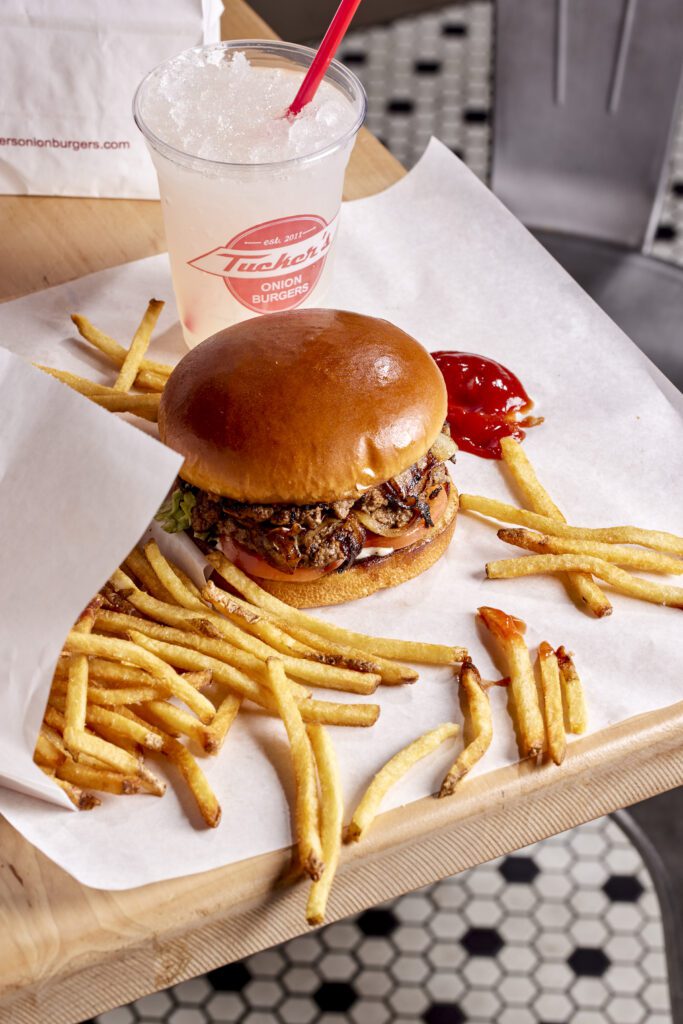
Tucker’s Onion Burgers

An OG restaurant from the ever-popular A Good Egg Dining Group based in OKC, Tucker’s Onion Burgers is Oklahoma’s first premium onion burger restaurant. The star of the show at Tucker’s is, if you can believe it, their burgers – which come with your choice of shredded lettuce, tomato, pickles, grilled jalapenos, ketchup, mayo and mustard. 

Try the single or double onion burger with or without cheese, or the Mother Tucker, which is just over one pound of pure deliciousness. Other options include the Impossible Burger, the all-natural turkey onion burger, the Tucker’s Clucker – a chicken sandwich with special seasoning on a Brioche bun – as well as the One Salad, with red onions, shredded cheddar, diced tomatoes, pinto beans and Fritos. Finish off with a hand-dipped shake or some homemade lemonade.

Bon Broth Bar

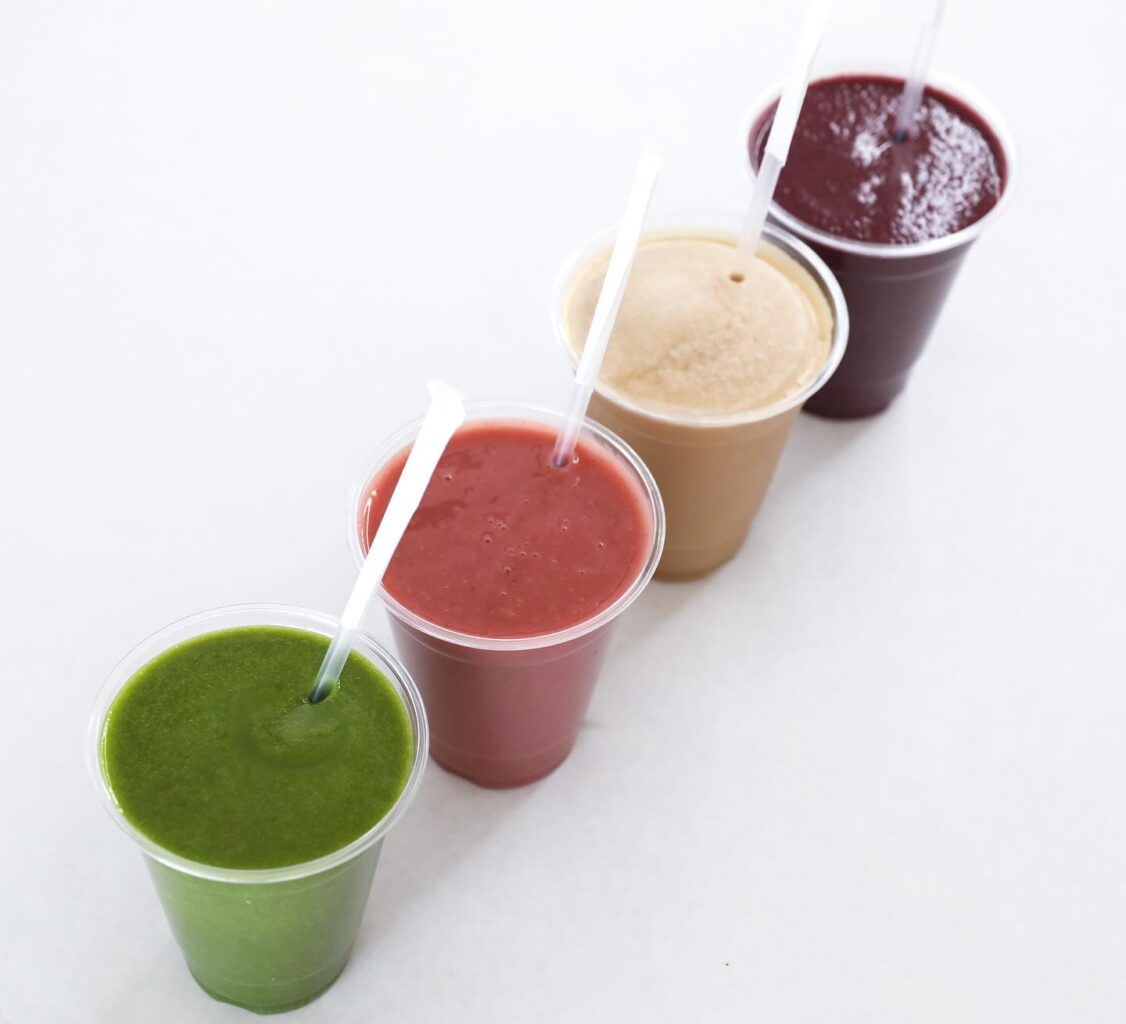
Locally sourced, high quality and antibiotic free, Bon Broth Bar is south Tulsa’s go-to for the healthiest of options. Bon Brother proudly offers food and drink with no artificial flavors, dyes, preservatives or sweeteners. 

Photo courtesy Bon Broth

Drinks run the gamut, from espresso shots to mochas, cortados, smoothies and teas. Dishes include sourdough toast, avocado toast, and the roast beef and cheddar sandwich.

If you prefer to build your own experience, try the broth bowl – choose between beef, chicken or veggie broth, then select your meats, grains, micro-grains and sides. Do the same with a salad bowl for a heartier option.

Monarchs on the Move

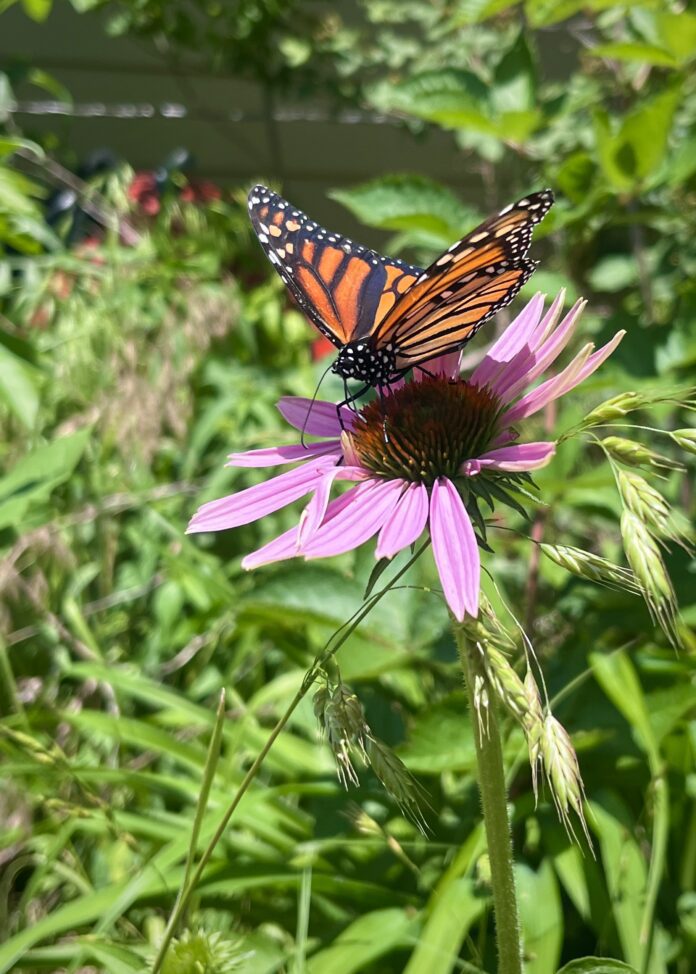
A monarch lands on a coneflower during its annual migration. Photo by Stefanie Leland courtesy the Oklahoma Monarch Society

Oklahoma plays a key role in monarch butterfly migrations in both spring and fall. The peak of their autumnal migration typically occurs in late September and early October — so you’ll be able to see them in flight soon. 

“Monarch butterflies have been making this incredible migration for thousands of years, a journey that spans up to 3,000 miles across North America,” says Stefanie Leland, director of marketing and communications at the Oklahoma Monarch Society. “Oklahoma is centrally located right in the heart of their migratory pathway, making our state a vital stopover for these butterflies.” 

Janet Horner, a Canadian County Master Gardener and past president, is also a 2018 Certified Monarch Hero, a 2024 Certified Pollinator Steward, and lead for the BlueSTEM Pollinator Garden and Monarch Waystation at Fort Reno. Horner and her husband raise monarchs from eggs in their own garden, and participate in monarch tagging events in Canadian, Kingfisher and Oklahoma counties. 

Horner says during the spring, monarchs fly from “their overwintering sites in Mexico through Oklahoma. The females lay eggs on milkweed. During the fall migration, the super generation of monarchs make the return trip through Oklahoma back to Mexico for the winter. It’s vital to their survival for Oklahomans to provide lots of nectar sources for them. They store fat — nectar — to survive the winter in Mexico.”

Leland continues: “The monarch migration is important to Oklahoma’s ecosystem because monarchs contribute to the pollination of native plants. as they feed on nectar during their journey, supporting biodiversity and healthy plant communities.”

In short, the importance of monarch butterflies can’t be overstated. 

“Monarchs serve as an indicator of ecosystem health, in that declining monarch numbers can signal broader environmental issues with not just monarchs, but our native bees, moths and other insects we rely on for pollinating our crops,” says Leland. “In addition, the native plants that monarchs rely on, such as milkweed and wildflowers, provide critical resources for many other pollinators and wildlife species. Monarchs also serve as an ambassador for other species, drawing attention to the importance of protecting habitats and ecosystems that support a diversity of life across Oklahoma.”

Horner adds that monarchs are a source of food for some birds and insects, and they help in the reproduction of wildflowers, vegetables and fruits.

To help monarchs, Horner stresses the importance of “having lots of fall blooming annuals and perennials like goldenrods, asters, sunflowers, blue mistflower and zinnias.” 

Because monarch populations are declining, Leland says it’s important to help them during their migration. She says to avoid harmful chemicals, including spraying for mosquitoes with toxic chemicals, and adds that monarchs “need milkweed, which is their host plant and the only plant their caterpillars can eat. A great place to find plants they need is found at
okiesformonarchs.org.”

Where to Spot the Monarchs

This fall, Horner says the public may see monarchs mainly along the I-35 corridor. Plus, a variety of parks, gardens and businesses hold monarch-centric fall festivals, including OKC’s Myriad Botanical Gardens, Tulsa’s Monarchs on the Mountains, Yukon’s Molly Spencer Farms, and Claremore’s Will Rogers Park.

Leland adds that fans may spot monarchs “nectaring in gardens, roosting overnight in trees or flying in a strong directional manner. Look for clusters of butterflies in trees, especially during the evening as they settle in for the night.”

Main image cutline: A monarch lands on a coneflower during its annual migration. Photo by Stefanie Leland courtesy the Oklahoma Monarch Society

United by Food and Football

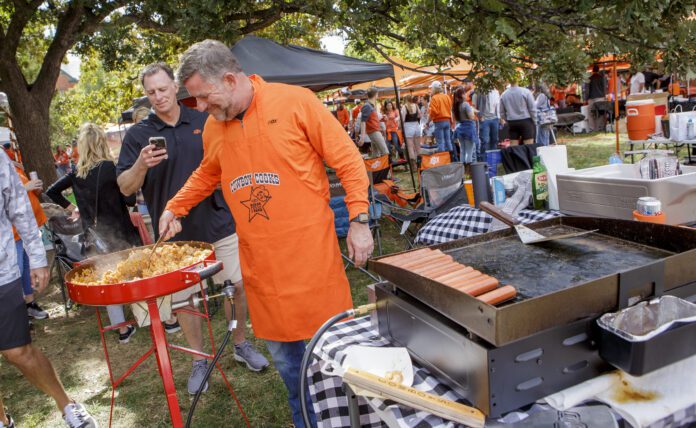
As OSU, tailgating is a weekly event during football season, but homecoming is when things really ramp up. Photo courtesy Oklahoma State University

Football season means it’s time again for tailgating at universities and colleges around the country. Some would say that none do it better than Oklahomans. 

“Tailgating at homecoming football games has always served as the culmination of homecoming week at LU, Oklahoma’s one-and-only-historically Black college and university,” says Kyle Taylor, the department of athletics director at Langston University (LU). “It serves as one of the largest family reunions in Oklahoma, with countless alumni, fans and visitors all stopping in to visit the Marketplace, grabbing something to eat, watching the Marching Pride band and cheering our Lions onto victory.”

Taylor continues: “For tailgating at homecoming, we’re typically at anywhere from 5,000 to 10,000 visitors during that time frame.” 

At Oklahoma State University (OSU), Jesse Martin, senior associate athletic director, says that “tailgating has been a thing at OSU for decades, but it really exploded in the early 2000s, when the football program started to rise under Mike Gundy. Once Boone Pickens Stadium got its facelift, everything leveled up, from the facilities to the fan base. Cowboy fans started showing up earlier, bringing bigger setups and really turning tailgating into a full-day — sometimes all-weekend — event.”

Martin says that homecoming at OSU is “the biggest week of all. We call it ‘America’s Greatest Homecoming,’ and I don’t think that’s an exaggeration. Tens of thousands of alumni and fans come back to take in the campus atmosphere and memories. The Friday night Walkaround is huge, with attendance rivaling the football turnout, and the tailgating the next day is next-level.”

Both Taylor and Martin say that, without a doubt, tailgating is a major deal at their schools. 

“Many tailgate fans have elaborate setups that rival glamorous outdoor events seen on television,” says Taylor.

Martin adds: “A lot of people have had the same tailgating spot for years. It’s like a mini neighborhood every Saturday. Picture this: Rows of orange tents, folding tables covered in food, people tossing cornhole bags. Everyone’s laid back, super friendly, and just excited to be together. Brisket, pulled pork, burgers, cowboy beans — you’ll smell it all, and don’t be surprised if someone invites you over for a plate.”

All in all, tailgating isn’t just about football. 

“It’s about community,” says Martin. “It’s where old friends reconnect, students make memories and total strangers become part of your Cowboy family.

The History of Tailgating

The over-100-year-old tradition dates back to at least the late 19th century with horse-drawn wagons. But tailgating began to take off when Ivy League schools dominated football in the early 20th century and, simultaneously, “motorized buggies” hit the scene. 

By 1906, tailgating started to draw interest, initially with well-heeled fans. But as time progressed, mass production of automobiles, portable grills and plastic coolers added to the allure, with before-the-game, temporary tent cities popping up in stadium parking lots across the nation — making tailgating accessible to everyone. 

Gridiron fans began creating community by sipping their favorite drinks, eating, reconnecting and celebrating hopeful victories on the field. The tailgating concept is now a time-honored tradition for many college and university communities, and often lures alumni back to their alma maters. 

Main image cutline: As OSU, tailgating is a weekly event during football season, but homecoming is when things really ramp up. Photo courtesy Oklahoma State University

Disc Domination

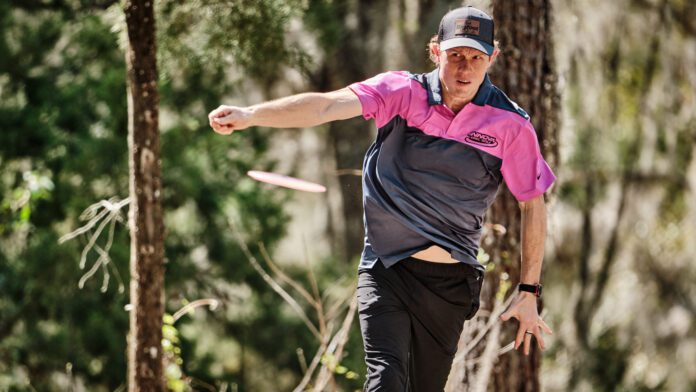
Between its affordability and its accessibility, disc golf continues earning enthusiasts around Oklahoma. Photo courtesy Sooner Disc Gol

Began in the 1960s, disc golf is quite popular in the U.S., with over 7,300 venues to play nationwide. (Consequently, that’s 75% of the world’s total courses!) In Oklahoma itself, disc golf’s avid enthusiasts are spreading the word about this ever-growing activity.

Disc golf is a sport in which players throw a disc at an intended target, aiming to complete a course with the fewest throws – similar to traditional golf. During regulated play, courses are typically 9 or 18 holes. Alongside the fact that it’s just plain fun, there are a bevy of reasons why disc golf continues to gain fans. 

“I would say one of the biggest draws to disc golf is that it is one of the more affordable sports to get into playing,” says Billy Engel, president of the Sooner Disc Golf group. “The majority of the courses are free to play in, and the discs can be very affordable. Buying used discs from people or stores is a great way to start and see what you think.” 

Passionate leaders across the state are doing a stellar job promoting just how entertaining the sport can be. 

“In Oklahoma specifically, it is so popular now because we have a solid bunch of clubs and individuals who are grinding every day to grow disc golf and provide the best events,” says Kyle Young, an administrator of the Tulsa Disc Sports Association. “While continuing to have locals as top priority, we want to host more major events and bring in the rest of the world, and show them that Oklahoma is the top disc golf destination.”

For beginners, the best course of action to start is to buy a used or cheap disc as Engel suggested.

“If you’re just getting into disc golf, all you need are a few discs and a basic understanding of golf,” seconds Young. 

You can easily find courses near you on the PDGA and UDisc websites – pdga.com and udisc.com – to get your journey started, as well as by checking Facebook to find communities to join. 

“The next step would be looking into tournaments, getting into one and seeing what the tournament experience is like,” says Engel.

Like any sport, practice is an important part of improving your skills.

“I would say that putting is one of the most, if not the most, important thing about disc golf,” explains Engel. “I would definitely practice putting and getting confident. Then, I would say being able to control the disc and throw straight shots.”

There are plenty of online resources to teach you the fundamentals, but it all comes down to the time you spend on the field. 

“For the fastest improvement, you just have to practice,” says Young. “That means regular sessions of throwing in a field and putting in a basket. That’s where you learn how discs fly and get dialed in with your bag of discs.”

Plenty of local tournaments are still left in 2025. 

“Some of the bigger notable ones would be the Oklahoma Open in Tulsa in October [24-26] and the Buffalo Run in McAlester,” happening Sept. 20-22, says Engel. The PDGA and DiscGolfScene websites (the latter is discgolfscene.com) are the most reliable places to find information on upcoming tournaments. 

Main image cutline: Between its affordability and its accessibility, disc golf continues earning enthusiasts around Oklahoma. Photo courtesy Sooner Disc Golf

A Different Kind of Desert

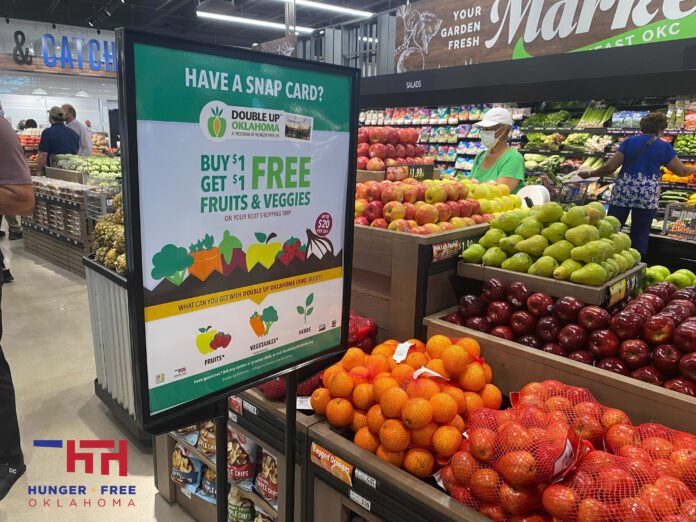
Hunger Free Oklahoma’s mission is to solve the hunger issue in-state by finding solutions to ensure all Okies have access to quality nutrition. Photo courtesy Hunger Free Oklahoma

When you picture a desert, it’s usually a hot, dry and desolate place with no water, smack dab in the middle of nowhere. What many don’t know is that there are actually deserts right here in Oklahoma — ones that have buildings and trees and are full of people. They are called food deserts, and like more traditional deserts, people might have to travel for miles and miles before finding sustenance to fulfill their nutritional needs.

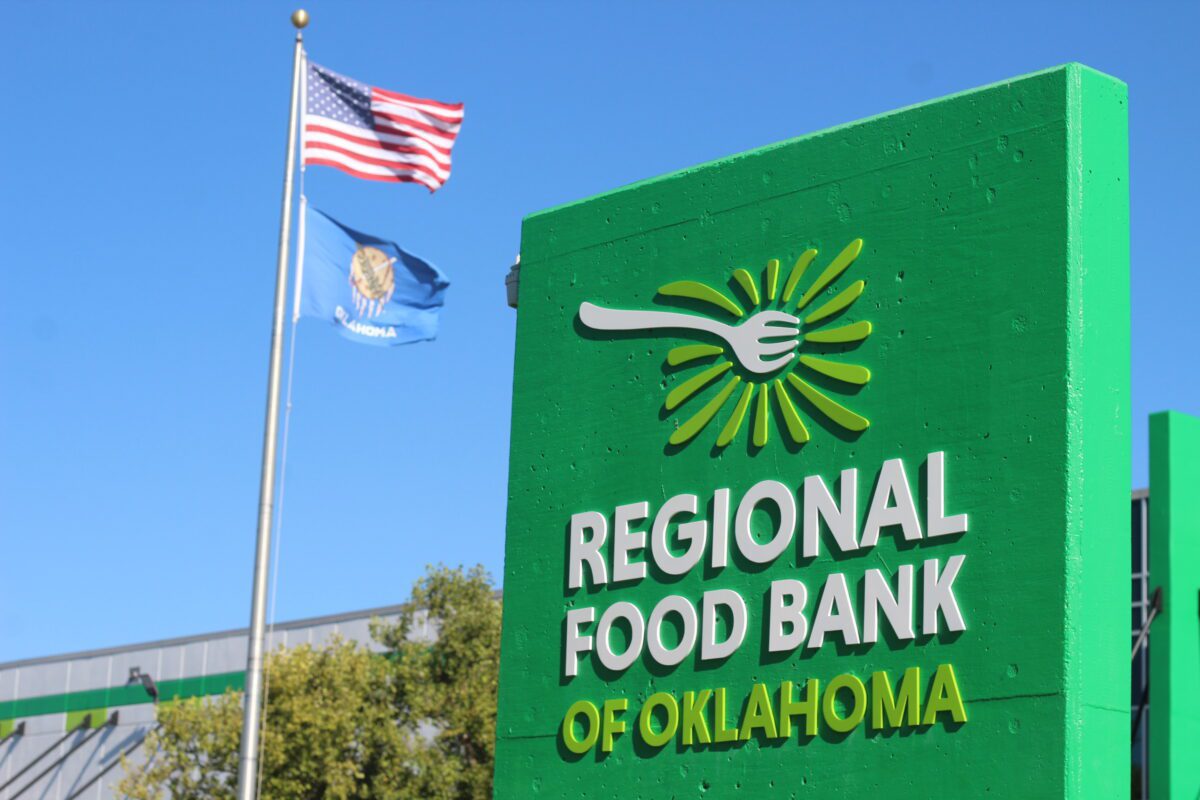
The Regional Food Bank of Oklahoma distributes, on average, 50 million pounds of food to its partners each year. Photo courtesy the Regional Food Bank of Oklahoma

According to the Feeding America Network, 745,000 Oklahomans are living with food insecurity. That’s 18% of the state, and many among them are living in food deserts.

“Food deserts are areas where people do not have access to a full array of healthy food and groceries to buy for themselves and their families,” says Chris Bernard, president and CEO for Hunger Free Oklahoma, a state-wide organization dedicated to solving the issue and finding solutions to hunger, ensuring all Oklahomans have access to affordable, nutritious food.

Food deserts, he mentions, aren’t always obvious, because an area may have convenience stores and fast food places nearby. However, these establishments don’t ‘count’ when coming up with criteria for a food desert. A food desert is, in fact, defined by the amount of time or distance that someone is from a grocery store that sells produce and other groceries, adds Austin Prickett, director of communications at the Regional Food Bank of Oklahoma. The entity serves 53 counties in central and western Oklahoma.

The USDA identifies a food desert as a low-income area where a significant portion of residents in an urban area live more than a mile from a supermarket or large grocery store, or more than 10 miles in rural areas.

“Most of north Tulsa is a food desert still,” Bernard says. “Large swaths of west Tulsa, northeast Oklahoma City, though it’s open to grocery stores recently, still has areas that are food deserts based on the USDA’s definition. And most of rural Oklahoma — we have whole counties that are food deserts, but almost every county in western Oklahoma has a food desert in it.”

Access to nutritious food is the key, and organizations like Hunger Free Oklahoma and the Regional Food Bank of Oklahoma are working to establish partnerships that can change the landscape and lead to pathways of self sufficiency for people facing hunger. 

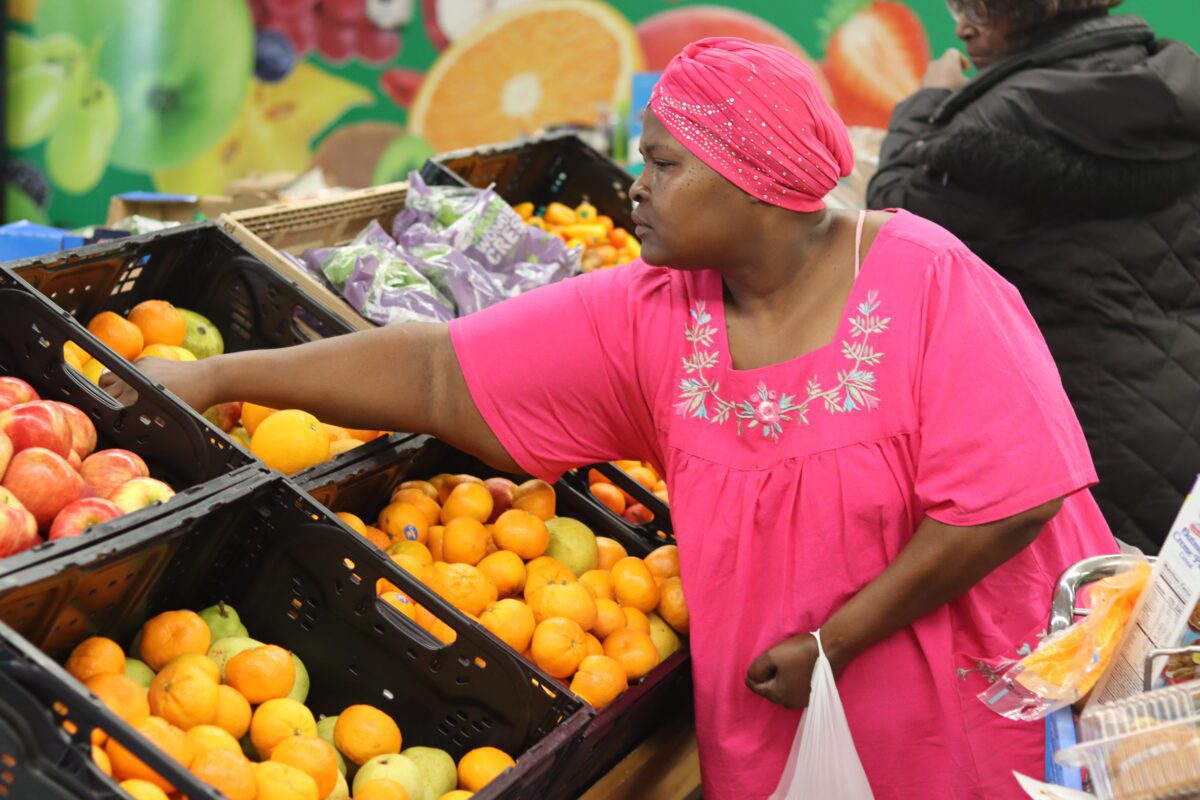
Photo courtesy the Regional Food Bank of Oklahoma

“We have 1,300 partners across our area,” Prickett says. “They could be churches, schools, any organization. We’re looking for partners that can serve as our boots-on-the-ground in their community. We drive the food to our partners and they distribute it to the people who need it. We’re making deliveries every day of the business week.” 

Through those efforts, Regional Food Bank of Oklahoma distributes, on average, 50 million pounds of food each year. 

Hunger Free Oklahoma’s approach, Bernard says, is leveraging the largest resource pool that exists to address hunger: the federal nutrition program. 

“That includes SNAP, WIC, school meals, after-school meals and summer meals,” Bernard says. “We run the Double Up Oklahoma program, which matches SNAP dollars, dollar for dollar, with a benefit that’s only good to go towards fresh produce. I think we’re one of the largest nutrition incentive programs in the country.”

Main image cutline: Hunger Free Oklahoma’s mission is to solve the hunger issue in-state by finding solutions to ensure all Okies have access to quality nutrition. Photo courtesy Hunger Free Oklahoma