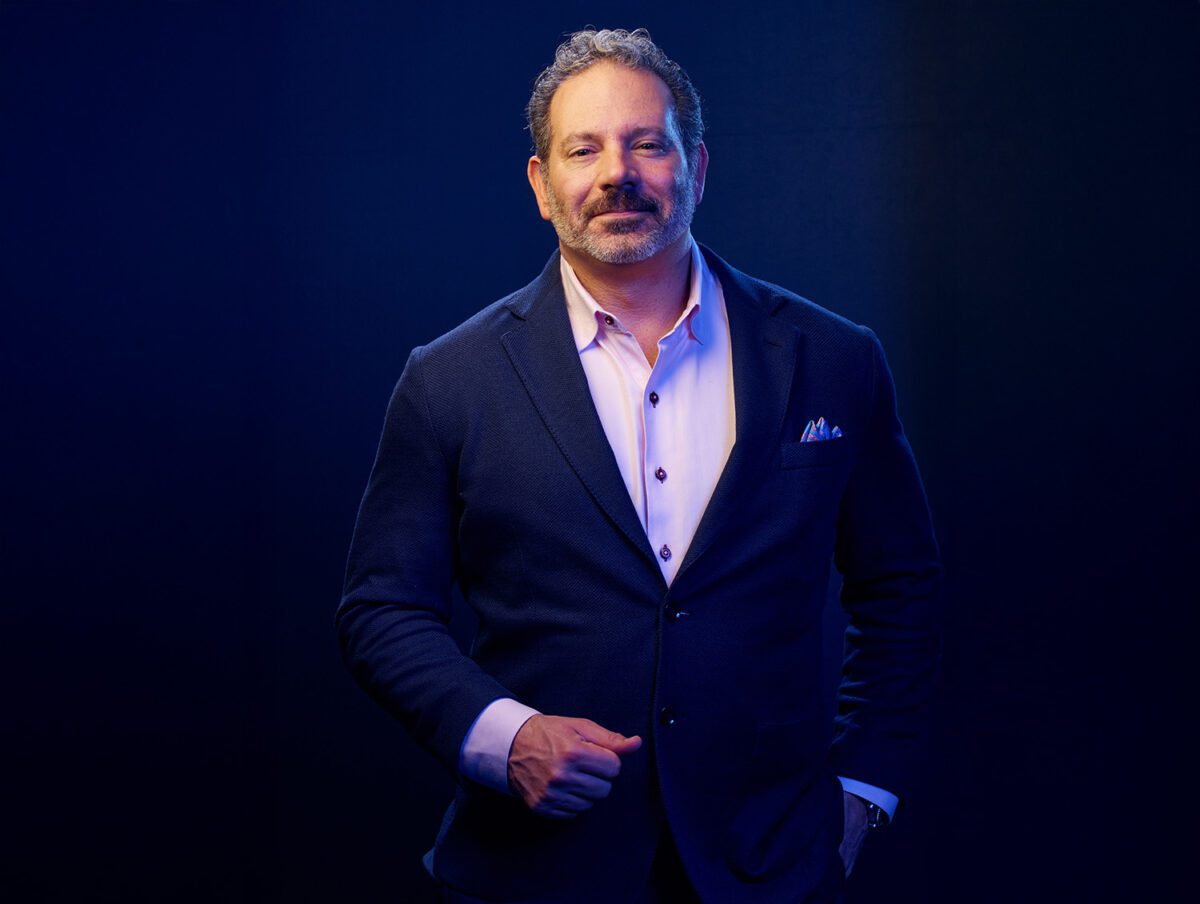
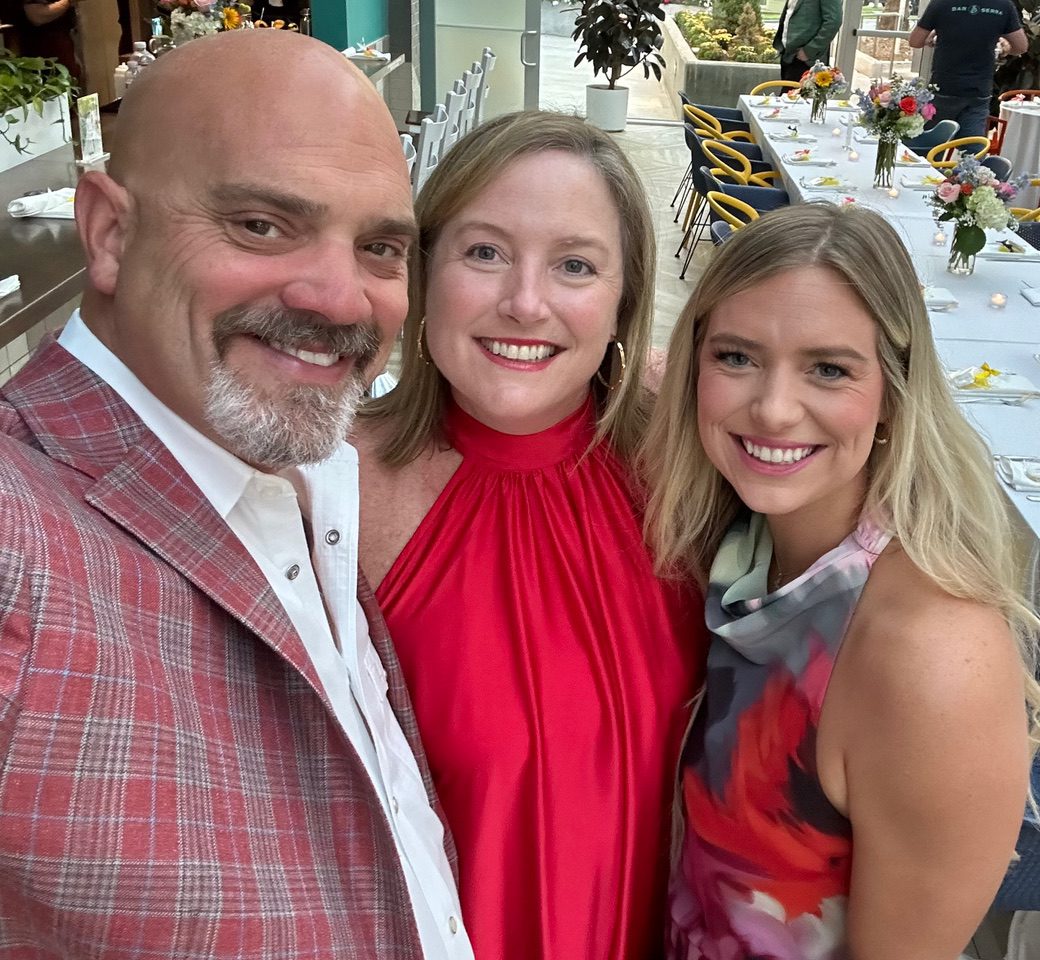
Within the last few years, Tulsan Rania Nasreddine has had an impressive run at poker tournaments across the country – and the world. Photo by Spenser Sembrat/8131 Media
“It’s not mutually exclusive,” shares Rania Nasreddine, “be a girly girl in a great outfit while metaphorically crushing souls at the poker table.”
A former Tulsa-based attorney turned professional poker player and tech innovator, Nasreddine blends sharp intellect, entrepreneurial vision and a commanding presence, inspiring women to play fiercely, win big and look fabulous while doing it. Known as one of poker’s most fashionable players, Nasreddine’s charisma and strategic brilliance make her a standout in an industry that’s heavily male-dominated.
“You find all kinds at the poker table,” Nasreddine observes. “Billionaires, celebrities, or a 24-year-old risking their last $1,000. Most players hide in hoodies and ballcaps, but I bring my own flair. While many are courteous, the biggest winners can sometimes be the least gracious.”
Her knack for numbers sparked her poker passion in college and grew during her legal career at Tulsa’s GableGotwals, a law firm specializing in energy, oil and gas, and real estate litigation.
Her poker journey started gaining momentum with client team-building games alongside her colleagues.
“My assistant pushed me into local casino tournaments, and that’s where it took off,” she says. Now a mother of two, she balances family life with a selective schedule, competing in elite tournaments in Las Vegas and Europe, peaking during the July summer season.
In 2024, she secured 16 in-the-money finishes, including placement at five final tables. Her standout results include third place at the EPT Monte Carlo Main Event ($473,639) and fourth place at the EPT Barcelona Main Event ($572,962), achieving rare back-to-back EPT final tables, among other wins.
“Tournaments are really, really hard to win,” she says. “I’m aiming for a World Series of Poker bracelet and a champion’s title, not just a final table.”
Her 2024 Global Poker Awards nomination for Breakout Player of the Year reflects her meteoric rise.
Outside the world of poker, Nasreddine’s entrepreneurial vision drives Yooze, a patent-pending app launched in 2017 to revolutionize word-of-mouth referrals. Yooze enables service providers – contractors, tutors, consultants – to collect verified recommendations effortlessly, while also addressing fake reviews.
“Yooze is the best place to get and give trusted referrals,” she says. “Our tool is so simple that if you can’t get referrals, you might need to rethink your craft!”
Free for users, Yooze is funded by Nasreddine personally to ensure accessibility. The app is enhancing its referral system, with plans to expand into new industries and add features like advanced analytics. Her goal is a global network of trusted professionals. Nasreddine additionally supports charities through poker events.
With elegance and tenacity, Nasreddine redefines poker’s hard-lined image.
“You can wear a stunning outfit and still outplay everyone,” she asserts. Her Instagram, with nearly 10K followers, showcases tournament triumphs, family moments and her signature style. With Yooze poised for growth and more poker victories ahead, Nasreddine proves that brains, boldness and glamour are the ultimate winning hand.
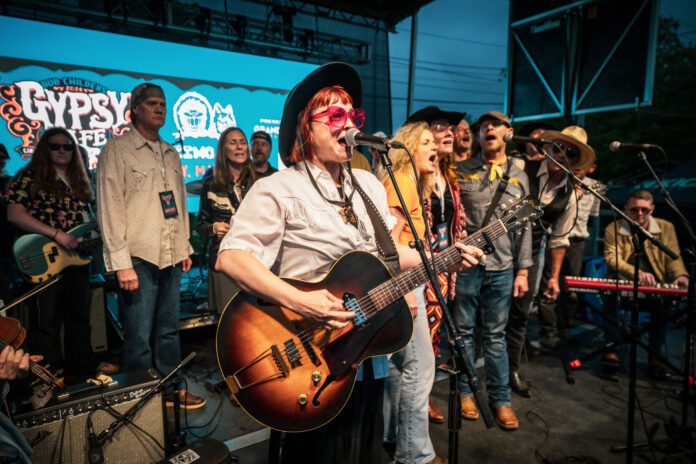
Oklahoma’s Red Dirt community comes together for the Red Dirt Relief Fund, which recently passed the one million dollar mark in aid efforts. Photo by Greg Bollinger, Press Pause Films
Just how much is the Oklahoma music scene worth to the folks at the Red Dirt Relief Fund?
The answer: At least a million bucks.
That’s how much the Tulsa-based nonprofit organization has provided in emergency financial assistance to the state’s music-industry pros since 2012, when it all began.
“I think we started with $10,000,” says Katie Dale, the group’s co-founder and executive director. “And we just gave that away until we needed to raise some more money to help people. It’s kind of wild to think of where we are now.”
Indeed. Where they are, 13 years later, is 100 times that start-up figure – and counting.
“At one point, I was like, ‘Do we really want to celebrate the fact, as a milestone, that we’ve spent a million dollars trying to help people who were really struggling? That seems kind of strange,’” she says. “But the flip side of it is that there are enough people — volunteers, artists, board members, venue owners, sponsors — who want to support these efforts at taking care of our music community. And I figure that’s worth celebrating.”
Dale was living in Tulsa and working for Red Bull when, she recalls, “they gave me the assignment to tell a roots-music story that was local to our market. I’m not from Oklahoma; I grew up in Arkansas. But I thought that the story would be the story of Red Dirt music. And that’s how I met John Cooper.”
Cooper, of the long-lived Stillwater band the Red Dirt Rangers, picks up the narrative.
“Katie knew the Red Dirt scene was a really strong singer-songwriter scene, and she said, ‘I want to do a singer-songwriter festival,’” he recalls. “Red Bull would be allowed to film it and use what they shot in their promotions, which they did all around the world. Katie contacted Tim Holland, who runs the entertainment at Eskimo Joe’s [in Stillwater], and said, ‘Hey, I want to do this festival. Who do I talk to?’ And Tim said, ‘You need to talk to John Cooper. He knows everybody.’”
Cooper chuckles self-effacingly when he says that, but indeed, as a pioneering figure in the Red Dirt scene, Cooper does know virtually everyone involved in that Stillwater-born musical genre, a down-to-earth style that combines elements of rock, country, folk and blues with strong and honest lyrical content. He, Dale and Holland arranged a meeting out at the Farm, a venerable landmark that for years was the epicenter of the Red Dirt movement, and the first Gypsy Cafe event, taking place in a number of Stillwater venues, was born.
“I worked with Coop to put together the lineup that first year, which was pretty much a who’s-who of Red Dirt,” she says. “We had Jimmy LaFave, Evan Felker, Stoney LaRue, Cody Canada, Jason Boland, Tom Skinner — the whole list. Red Bull said that we could take the ticket proceeds and give it to a charity that the musicians respected and supported, and Coop said, ‘Let’s start our own.’
“That’s when he told me the story of their helicopter crash, and how MusiCares helped them.”
In 2004, Cooper and his bandmates, Brad Piccolo and Ben Han, had been involved in a horrendous accident when the helicopter they were riding in clipped some power lines and plunged into the Cimarron River outside of Cushing. The pilot and a passenger died, and all three Rangers sustained life-threatening injuries.
“The old saying is that when musicians get hurt, their insurance policies are other musicians throwing benefits for ‘em,” Cooper notes with another chuckle. “We got help from all over the country — benefits for us, money coming in, it was amazing. It was humbling.
“During that period, Dave Sanger, who was the drummer for Asleep at the Wheel, told us about MusiCares, which is a national [musicians’ support] organization that’s run out of NARAS [the National Academy of Recording Arts & Sciences, Inc.] He said, ‘You guys should apply.’ We did, and we got the funding, and we were like, ‘Wow. There’s somebody who can really help.’ Then, when Bob Childers’ trailer caught on fire, in 2006 or 2007, we put on a benefit for him, and I’m standing there with Mike McClure [of the Red Dirt band the Great Divide] and batting around the idea of how we needed something for our own people, some kind of fund.”
A few years later, the opportunity came along, and Katie Dale got wholeheartedly behind the creation of what would be dubbed the Red Dirt Relief Fund.
“I had access to a law firm that would help us with a 501(c)3, and we had the money to start a bank account,” she remembers, “so that’s what we did.”
Red Bull came back the next year to sponsor a second Gypsy Cafe event, and then, explains Dale, “They wanted to tell some different stories. And because I was on the board of the Red Dirt Relief Fund, I said, ‘We’d like to take over this event.’ And they said, ‘Sure.’
Since then, Bob Childers’ Gypsy Cafe, named for one of Red Dirt’s godfathers, and Skinnerfest (honoring the late Tom Skinner, another Red Dirt pioneer) have come along in the spring and fall, respectively, to help fill the RDRF coffers. Other major support has come from the likes of the George Kaiser Family Foundation, the Kirkpatrick Foundation, the Albert & Hete Barthelmes Foundation, the Kerr Foundation, and the Mervin Bovaird Foundation — in addition to individual contributions, many made by some of the 900-plus Oklahoma music figures who have themselves been helped by RDRF.
“If you have a job with a corporation and you get sick, you might get some paid time off,” says Dale. “If you’re a musician and you get sick, or something else bad happens, all the gigs on your calendar are canceled. And that’s not just for the artist. It’s for everyone else associated with that tour or that event. If you wipe out a month’s worth of gigs, rent money is nowhere to be found.
“So that’s where I think we’ve made a big impact, and it’s why when we help people they generally become pretty big supporters — they’re honestly often surprised that we can do what we say we’ll do. It’s within our board’s mission to get funds into someone’s hands within five business days from the time we receive the application and whatever documentation is required. We understand that it’s an emergency. Their phone bill’s due, they need food, they need to pay rent. So they can’t sustain a six-week waiting period.”
The Red Dirt Relief Fund — which, incidentally, is set up to help all music-industry Oklahomans, not just those affiliated with Red Dirt music — has provided financial assistance to people experiencing everything from blown-up vans and burned-down homes to major surgeries and other medical emergencies. Its biggest challenge to date, notes Cooper, was the COVID-19 pandemic, when music professionals in every genre found themselves unable to perform for audiences.
“The music industry stopped,” says Cooper, who’s also a longtime RDRF board member. “We [the Red Dirt Rangers] had a year’s worth of bookings completely fall off, and so did everyone else. So we gave grants to more than 550 people, just gave all we had away. We got rid of everything — and it came storming back. All these different foundations contacted us, asking, ‘What can we do to help?’
“Giving all our money away was the biggest thing we ever did to help the fund,” he adds. “But that’s how it works, you know. In this world, you get what you give.”
To be eligible for RDRF’s emergency assistance, a person has to have worked in the music industry for at least five years and be an Oklahoma resident. For more information, visit reddirtrelieffund.org.
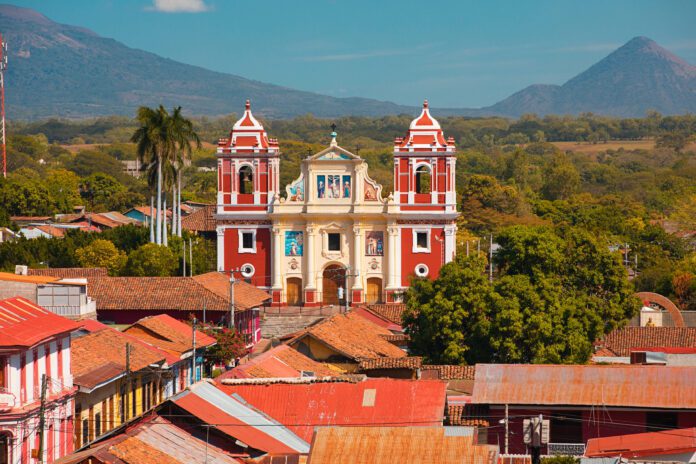
The enigmatic city of León, Nicaragua, is a bohemian bastion and a university town to boot. Artists, poets and revolutionaries created León’s panache.
Waking up in León delights the senses and brings promise to a new day, as street washers clean the debris from the prior evening’s crowds. Being a pedestrian-friendly city laid out on an easy grid, one thing you have to do is count the blocks, as there are no street names. A safe city with little to no need for tourist police, León allows you to meander freely past many street food vendors offering enormous chicharrones, enticing stews and exotic fruits. A bit claustrophobic and bustling, the city startles you at first — then grows on you.
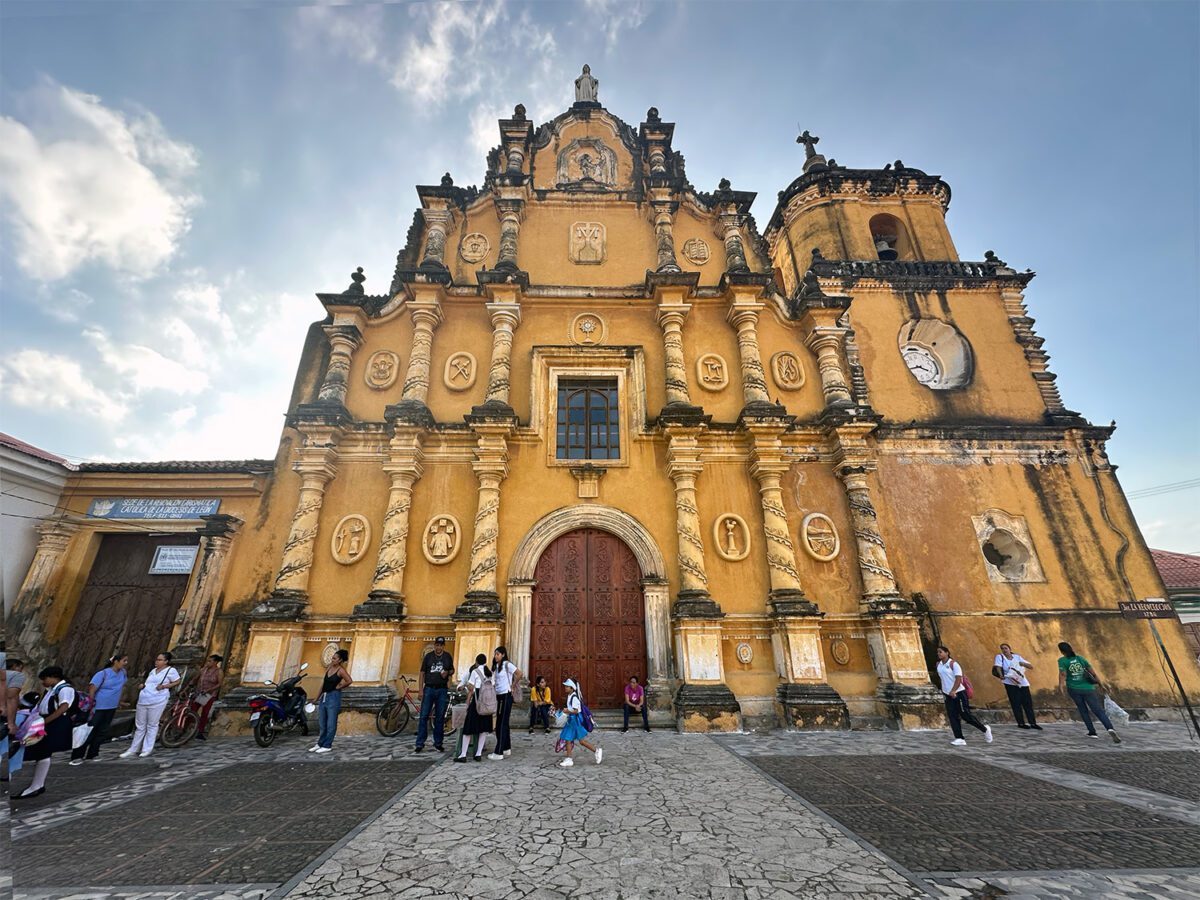
Cathedrals on corners command the attention of all, but the showstopper is the UNESCO site, Cathedral de León, the largest cathedral in Central America. Lion statues “guard” various entrances and appear to salute the center square with their imposing, roaring expressions. Ascend the narrow stairwells to the rooftop for panoramic views where there are only two rules: remove your shoes and don’t climb on the domes. You’ll feel instantly appreciative of this sacred place. The balustrades, domes and bell tower impress, but nothing fascinates as much as the Giants of León; muscular male statues supporting the rafters. Ceremonial gunshots drive flocks of birds perched onto the cathedral rafters into a frenzy as they swoop through the sky in a cyclonic formation.
Traditional architecture in LeónBeach views in LeónIglesia de La Recolección; photo by Gina Michalopulos KingsleyStreet vendors in León; photo by Gina Michalopulos KingsleyA traditional dancer in front of the León Cathedral
In the square, you’ll amble past the revolutionary street art and murals. The toppled statues from the revolution are now displayed in the art museum. Broken pieces are remnants of a bygone era and provoke complex emotions as they lay near a video demonstrating footage of the revolution in action. The heat is intense. When you tire of it, drop into Hotel El Convento, a former convent now boutique hotel. A posh dining room set among Victorian artifacts, antiques and an indoor garden offers delicious cuisine and blessed air conditioning.
After siesta, it’s museum time! Lauded the best contemporary art museum in Central America, Museo de Arte Fundación astounds you with a collection so massive it’s housed in two buildings. Your mind is stimulated by all of the mediums as you view the galleries with birds flying over the indoor gardens.
When night cools, the food trucks heat up. The array is mesmerizing and reminds you that it’s OK to forego the restaurants for casual simplicity on the go. The street cleaners begin their work as vendors, vagabonds and locals participating in rallies and festivals have added their grit and grime to the streets. The sound of fireworks removes any fatigue and signals a new dawn.
Mornings bring the aroma of the Nicaraguan desayuno (breakfast) and pastries. The short drive to Las Peñitas beach reveals a landscape of volcanoes and farmlands, but you’ll also spot a quaint village market along the way. The peaceful beach town has vibrant murals and villas where you’ll observe fishermen and boats in the cove. Virginal beaches with massive waves startle you with their untouched, natural beauty. Unequipped and serene, you marvel that there are still places in the world that are this authentic.
Linger through breakfast, lunch, drinks and free parking for a few dollars or cordobas. Boulders clustered together beckon you to climb on them while massive waves crash over the boulders’ crevices creating a waterfall effect. Skilled surfers glide along the rip-roaring waves like nature’s ballet. What Belize and Honduras are to scuba divers, Nicaragua is to surfers!
Return to León for evening strolling through cobblestoned streets of chromatic buildings with ornate doors. More ceremonial gunshots or fireworks fill the night sky saluting the pomp of León.
A good night’s sleep is essential to one’s health, and according to the Centers for Disease Control and Prevention (CDC), 1 in 3 American adults don’t get enough sleep. To help learn why sleep is so elusive, many people turn to sleep tracking tools via wearable devices and mobile apps.
Wearable devices include rings, wristbands, headbands and smartwatches that work with a supporting mobile app, while using a mobile app alone relies on a smartphone’s sensors. Gathering data while you sleep, sleep trackers can provide users an analysis and overview of sleep patterns and rhythms, sleep disruptions throughout the night and information on sleep stages – light sleep, deep sleep and REM (rapid eye movement) sleep.
Some apps also monitor breathing rates, blood oxygen levels and body temperature. Many offer additional features such as sleep sounds and meditations, personalized recommendations and strategies, a digital sleep coach, and journal prompts to track how coffee, alcohol, stress and other factors may be affecting sleep quality.
Viral Doshi, M.D., is the medical director of INTEGRIS Health Sleep Medicine in Oklahoma City. He says sleep tracking tools can be very beneficial – “especially when improving regular sleep timings and making sure adults are getting at least seven hours of sleep within 24 hours,” says Doshi. “However, in my opinion, there is not much accuracy regarding sleep stages, and focusing too much on sleep stages isn’t useful.”
He says if you’re not getting good quality sleep and/or experiencing symptoms such as having difficulty falling or staying asleep, excessive sleepiness during the day or disruptive sleep such as snoring, then you should be evaluated by a sleep medicine provider to rule out the possibility of a sleep disorder.
Most sleep trackers come with the disclosure that users should not rely on the tracker for medical advice or diagnosis and/or consider it a replacement or substitute for professional medical care. Instead, it should be used as a reference point and resource for at-home sleep improvement. Some sleep apps allow users to download personalized reports in order to share with a physician, if needed.
Growing in popularity, the American Academy of Sleep Medicine reports that more than one-third of Americans have used an electronic sleep-tracking device, and the majority of those who have tried a sleep tracker found it helpful – with many saying they changed their behavior because of what they learned.
These are encouraging findings, as the CDC considers insufficient sleep a public health concern and links insufficient sleep to an increased risk of anxiety, depression, obesity, heart disease, injury and other serious conditions. Current sleep recommendations by the CDC suggest nine to 12 hours for school-aged children, eight to ten hours for teenagers and seven or more hours for adults.
The Prairie Patch offers flower-picking and agritourism. Photo by Creative Light Photography
Tucked in the heart of eastern Oklahoma just 40 minutes south of Tulsa, Okmulgee is a destination rich in cultural depth, natural beauty and small-town charm. Its name comes from the Muscogee word oki mulgi, meaning “bubbling” or “boiling water” — a reference to the area’s natural springs and flowing creeks that still define its landscape today.
The city has long been the cultural and political heart of the Muscogee Nation, which established its capital there in 1868 following forced relocation. Today, visitors can explore this heritage at the Creek Nation Council House Museum, a National Historic Landmark that showcases traditional art, tribal governance and stories of resilience. Downtown Okmulgee – with its 20-block district listed on the National Register of Historic Places – reflects the city’s boomtown heyday during the early 1900s oil rush, when Okmulgee boasted more millionaires per capita than anywhere else in the country.
“The Muscogee Nation completed an extensive renovation and restoration of the Council House in 2018. The interior spaces and rooms have been restored to reflect the original floorplan and use during the years 1878-1907,” says curatorial manager John Beaver. “Visitors will learn about post-removal Muscogee Nation history and daily life in Indian Territory. The restored spaces and current exhibits spotlight key tribal government activities and historical events that took place within the Council House and across the Muscogee Nation and Indian Territory during the 1878-1907 time period and their connections to today’s Muscogee people and tribal government.”
Okmulgee’s natural beauty shines at the Deep Fork National Wildlife Refuge, a 10,000-acre sanctuary protecting one of Oklahoma’s last remaining bottomland hardwood forests. Here, bird watchers and hikers enjoy a peaceful escape among oxbow lakes, wetlands and rare wildlife. Outdoor enthusiasts can also head to the Okmulgee and Dripping Springs Lakes and Recreation Area, where scenic trails, fishing spots and campsites offer a perfect weekend retreat.
Photo by Kelsey Eakin
Photo by Kelsey Eakin
“Deep Fork Nation was established to protect the bottomland hardwoods along the Dee Fork river and also the associated wetlands,” says refuge manager Todd Gallion. “We do allow hunting, fishing, wildlife observation, wildlife photography and [educational opportunities] to the public. We try to accommodate different school groups on the refuge.”
Cultural celebrations are rooted in this community. The Okmulgee Pecan Festival, happening Oct. 10-11, blends old-fashioned fun with hometown pride. From pecan pie baking contests and live music to carnival rides and the quirky “Best Cookie Ever” showdown, the festival is a highlight of the fall season. In 2025, the festival plans to revive fan-favorite events from its 1984 debut, adding even more nostalgia to the festivities.
Don’t miss the Prairie Patch, a you-pick flower farm and agritourism destination, as well as the Redstick Gallery, a local boutique that highlights handcrafted Native American art and jewelry.
Whether you’re drawn to Okmulgee for its rich Native heritage, scenic outdoor offerings or festive community spirit, this under-the-radar Oklahoma city delivers a memorable and meaningful experience – bubbling with stories just waiting to be discovered.
While you’ll likely still be able to cook an egg on the sidewalk this month, it’s also the time to start prepping your home for the fall and winter. After all, Oklahoma’s weather is mercurial, and it’s just as likely to snow in October as it is to be 85 degrees. That said, here are a few ways to prepare your space for what’s to come.
Weatherproofing 101
Before the chill sets in, inspect your home’s doors and windows. Seal any gaps you may find with weatherstripping or caulk to keep the elements where they belong: outside. If you want to go a step further, consider adding insulation where appropriate. Check your attic, as well as crawl spaces and walls, and insulate exposed pipes to prevent potential freezing.
Next, inspect your roof. Do you notice missing shingles, dark or discolored areas, rust or moss growth? From the interior of the home, are you noticing water stains or the smell of mildew? If you answered ‘yes,’ to any of those questions, it may be time to get a professional out to repair or replace your roof. Oh, and while you’re up there, don’t forget to clean your gutters!
Keeping it Warm
Imagine this: It’s a cozy weekend morning in the dead of winter … and you wake up shivering. The heat’s out! If you don’t prepare your heating system before you need it, that may very well be your situation sometime soon.
That said, have your furnace or central heating system serviced or inspected by a professional this month. You should also air change filters monthly and test your thermostat, upgrading it if necessary.
Additionally, if you have a chimney or fireplace, clean it before first use for the season, and make sure it’s inspected, too. No house fires here!
Preparing for Outages
Often, power outages are totally beyond our control, even if we’ve winter-proofed our homes to the max. That said, you can prepare for outages by gathering and organizing the following items:
• Battery-powered lighting with extra batteries;
• Backup power options like a generator, especially if outages are common in your area;
• Portable phone chargers/power banks to ensure you stay on the grid;
• Plenty of warming agents like sleeping bags, blankets and hand warmers;
• Alternative heat sources like battery-powered space heaters.
Deterring Pests
As the weather cools, many animals may be in search of a warm place to ride out the winter. To deter pests from seeking refuge in your home, try the following:
Seal all the entry points of your home, and inspect for holes and cracks in vents, the foundation, doors, windows and pipes. Pay special attention to your garage, as many critters find their way inside through it.
Be smart about your food storage. Use glass, plastic or metal containers with tight lids, and don’t leave food out overnight – even your pet’s.
Fix leaks, even little ones. Animals can live off even the smallest amounts of water.
Take your trash out regularly, and ensure your bins are closed and sealed tight before you head back inside.
Declutter messy areas of the home – whether that’s the attic, the basement, the garage or the living room. Pests love clutter.
Trim tree limbs or shrubs that touch your home or overhang onto your roof. These can act as a bridge for animals to get into your house.
Set out traps or bait stations if you’ve noticed pests in your home. Just make sure these traps are set up correctly, and educate any kiddos in the house about proper safety beforehand.
Since OU football moved to the SEC, Bedlam match-ups with OSU are rare, “but we’re looking forward to renewing the series as soon as we can,” says OU’s associate AD Mike Houck.
Photo by Joshua Gateley/OU Athletics
The Changing Tides of Oklahoma Football
The University of Oklahoma football team, a member of the Big 12 Conference since 1996, made the move to the Southeastern Conference (SEC) in 2024. That shift had “an extremely positive impact on our football program and our fan base,” says associate athletics director Mike Houck. “When you’re a part of the best conference in the country, everything truly does mean more. We see it from our coaching staff and our players with the way they attack each day and the investment they’re making to be the best. And, like we knew they would, our fans have reacted very positively.”
Houck says there was “an even more electric pre-game atmosphere outside the stadium last season and an unmistakable energy inside it. There’s nothing like fall Saturdays in Norman, and they’re only going to get better.”
The OU-Texas football series became more exciting, too, Houck mentions, “when both schools joined the SEC last summer. More and more people across the country, especially in SEC territory, are being exposed to the great showcase that is the Red River Rivalry.”
However, not playing Oklahoma State University in football last year “was very different,” Houck says. “But we’re looking forward to renewing the Bedlam series as soon as we can. It’s meant so much to our state and is a rivalry that’s treated OU well. We’re also excited about generating new intra-conference rivalries.”
Gavin Lang, associate athletic director for communications at OSU, says the past 20 or so years “represent the best run of prolonged success in the history of Oklahoma State football. We’re proud of how far our program has come and how it has established itself as a regular contender on the Big 12 and national levels.”
Lang says that OU’s move to the SEC hasn’t affected the way they run their program, and that recruiting “isn’t tethered to anything that happens at other schools. We have fantastic selling points to share that are very uniquely OSU and set us apart in the recruiting space.”
Looking ahead, Lang says part of what excites leadership about the coming football season “is the quality of depth on the roster. Oklahoma State has become accustomed to success, and the infusion of several high-quality new players, paired with the continued development of returning players, gives reason for optimism that this year’s group can build on the existing foundation of success.”
The OSU Cowgirls’ Equestrian Team recruits some of the best riders in the country. Photo courtesy OSU Athletics
Not Their First Rodeo
Oklahomans love horses, and the state’s collegiate rodeo and equestrian teams are competitive at the conference and national levels.
The OSU Cowgirl Equestrian Team was founded by Larry Sanchez, who, during his 25 years in Stillwater, has led riders to dozens of Big 12 championships, individual titles and the 2022 overall national title. Students compete in Eastern and Western riding events sanctioned by the National Collegiate Equestrian Association, says Laura Brainard, associate head coach for the Division 1 equestrian team.
“We recruit the best riders in the country,” she says. “I’m incredibly blessed to be able to work every day with such a phenomenal team.”
The 50-woman group competes in about a dozen events during the school year, and in March will host the Big 12 championships, Brainard says.
Cody Hollingsworth is head coach of OSU’s rodeo team, which competes in the Central Plains Region in the nine men’s and women’s events available to college rodeo athletes.
“We’re very competitive,” Hollingsworth says, mentioning that OSU consistently wins regional championships and qualifies riders for the College National Finals Rodeo.
Both coaches say OSU’s programs are well-supported by the community. Members of the equestrian team train and compete on 60 horses, all of which were donated to the university.
Harrah native Mike Visnieski, a former professional bull rider, returned to his alma mater, Southwestern Oklahoma State University in Weatherford, and became head coach in 2011. He has coached men’s and women’s rodeo teams to national championships and reserve championships as teams and in such individual events as barrel racing, saddle bronc and bull riding.
Southeastern Oklahoma State University’s rodeo teams wrapped up a competitive season in June at the College National Finals Rodeo in Casper, Wyo., with the women finishing fifth and the men coming in at 13th.
After earning the best record in the regular season and the No. 1 seed spot in the playoffs, the OKC Thunder locked down its first NBA championship in June – becoming the youngest team to win the chip since the 1970s. Photo courtesy Getty Images/NBAE/OKC Thunder
NBA Champs at Last: The OKC Thunder
The Oklahoma City Thunder’s NBA championship was a reflection of the team’s relationship with the community, executive vice president and general manager Sam Presti said during a June 30 press conference.
“It’s well-documented that when we arrived in 2008, we didn’t have a team name. We didn’t have a logo. We had no place to practice. But what we did have immediately was a connection to the community that we represent, and that is something that hasn’t changed since we arrived here,” Presti says.
In June, the Thunder won its first NBA title, beating the Indiana Pacers in Game 7 by a score of 103-91.
“The city itself and the state itself are the reasons why we exist,” Presti says. “The ultimate rebuilding job was done by the city leadership many, many years ago. They’re the people that allowed the city to recover from 1995 and the tragedy that occurred here, and put in place the vision for the city to be able to have an NBA team one day in the future.”
As for the players themselves, Presti says, “that team is built on deep relationships, an appreciation for differences and idiosyncrasies. All of our guys are very different people. They might not even be hanging out together if it weren’t for the fact that they play and have a common goal together.”
Thunder players who hail from Canada, Serbia, the West Coast, the East Coast, Middle America, France and Australia “all come together for a collective goal. There’s a cowboy toughness, a self-reliance that comes from being homegrown, and an essential sense of goodness,” Presti says.
Repeat NBA championships are rare, but the Thunder is an early favorite to break that streak in 2026.
Steve Aschburner, writing for NBA.com, says the Thunder “deserve to be the favorites next season. The youngest bunch to win the title since the Portland Trail Blazers in 1977 has everyone under contract for 2025-26, which is a great way to start. More than that, there is an earnestness to this team, a palpable focus on the group over the individual that lends itself to scaling the mountain again.”
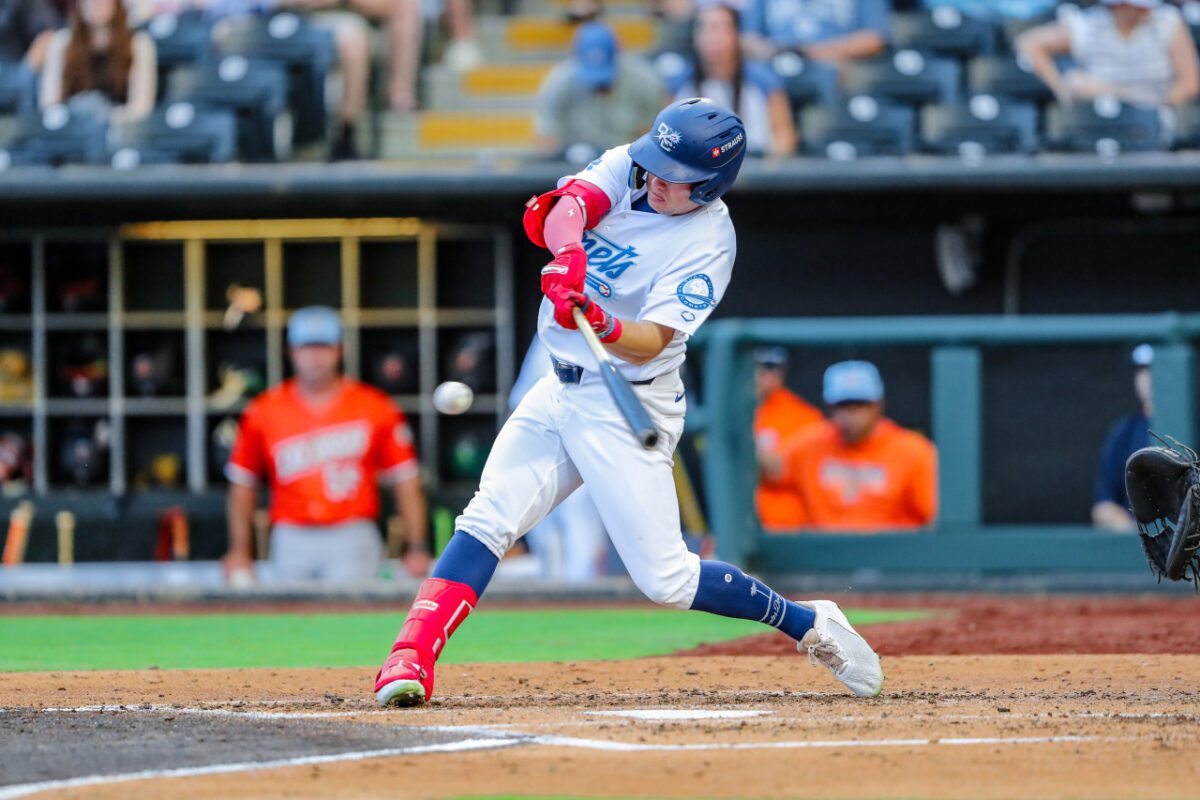
The OKC Comets round out their season this month, but athletes train year-round. Photo courtesy OKC Comets
America’s Favorite Pastime
Oklahomans support professional baseball, says Alex Freedman, director of communications and broadcasting for the Oklahoma City Comets.
The city’s first team, the Mets, was established before statehood, and minor league baseball has had a continuous presence since 1962, when the current franchise was founded.
“Chickasaw Bricktown Ballpark was the first major project funded by the original MAPS,” Freedman says of the municipal capital improvement program that since the 1990s has been funded by a dedicated sales tax. “It showed people what could happen through MAPS. It led the way for other MAPS projects. The ballpark is now 27 years old – and it’s held up well.”
The OKC Comets round out their season this month, but athletes train year-round. Photo courtesy OKC Comets
The Comets is a Triple-A affiliate of the Los Angeles Dodgers that plays 150 games a year from late March to late September, with 75 home games that draw an average attendance of nearly 6,000.
“The July 4 game was the largest in six years, with more than 10,000 people attending,” Freedman mentions.
The Pacific Coast League is the largest in the country geographically, Freedman says, “so there’s a lot of long travel involved in our league. And a lot of our players are constantly going back and forth between us and the LA Dodgers. It can be grueling.”
The 120 minor league teams are a great asset to fans in the cities where they are located, Freedman says.
“The price is lower, and there’s better access to get up close and personal with the players and coaches,” he says. “And at our level, Triple A, these are players that have either spent significant time in the major leagues or are going to.”
During the off-season, Freedman says, “the players train for the next season.” Many live in Arizona, near spring training facilities.
“It’s a full-time job,” he says. “They are always looking to get better, making sure they can hold up for the course of the next season.”
The Tulsa Drillers, founded in 1977, is a Double A affiliate of the LA Dodgers that plays at ONEOK Field. They belong to the Texas League and have been league champions four times since 1982.
A Different Kind of Sport
Esports offer the same lessons students can get from playing any traditional sport, says Pooyan Nikjou, esports and gaming coordinator for the University of Tulsa.
“It helps them with time management. It helps them work in group settings and team environments,” Nikjou says. “I tell parents, ‘This is going to give you all the life lessons and values you get from playing traditional sports.’”
Collegiate and professional esport teams are rising in popularity. At TU, about 60 students compete annually. Photo by Kelly Brown courtesy TU
But, Nikjou added with a chuckle, “the risk of getting injured is extremely low.”
Ten years ago, esports could be a difficult sell to school administrators, says Holden Craig, head esports coach at Rogers State University. RSU was the first college in Oklahoma to adopt esports as a school-sponsored activity. Today, about a dozen of the state’s colleges and universities have esports teams, as do many high schools.
“I don’t have to pitch it anymore,” Craig says. “Administrators have embraced it. We are not just playing games, we are trying to build students with it. The school puts a lot of resources into it.”
Competitive video gaming can become a career, with the first player reaching a $1 million salary about six years ago, Nikjou says. But the chances are about the same as that of a college football player turning pro, he says. RSU offers scholarships and partial tuition waivers to its best players.
“We are a regional state school, so recruiting is big for us,” Craig says. “We can attract students with this.”
Some tournaments are in-person events, but most competitions are online, Nikjou says. Free livestreams are coordinated by his students at twitch.tv/utulsaesports. Students provide commentary during the matches.
About 60 students compete every year for TU, and 45 for RSU. TU’s program is under recreation and at RSU it’s in the student affairs budget. TU has a public esports lounge, open 12 hours a day during semesters.
About 90% of TU’s team members are majoring in the STEM field, with about half of those studying computer science or cybersecurity, Nikjou says. TU has a game design program, and RSU offers an esports emphasis under its business information technology degree.
Featured photo credit: Since OU football moved to the SEC, Bedlam match-ups with OSU are rare, “but we’re looking forward to renewing the series as soon as we can,” says OU’s associate AD Mike Houck.Photo by Joshua Gateley/OU Athletics
Cropped portrait of a group of businesspeople standing in the office.
Oklahoma’s many success stories are written by those who keep their heads down and their communities moving forward. Among them are visionaries, problem-solvers, work horses and innovators who pour their talents into creating the greatest possible experiences, products, services and outcomes for their clients.
Whether they’re performing cutting-edge surgery, advocating for their clients in the courtroom, creating a building to soon dot the Oklahoma skyline, helping a family find their dream home, or perfecting the art of the perfect plate of ribs, these leaders shape the way we live, work and play – all for the better.
The Faces of Oklahoma special section is our way of honoring these titans of Oklahoma culture. Here, you’ll meet the professionals whose skill, passion and dedication make them the unmistakable faces of their industries.
The Face of Medical Aesthetics
Radiance Medical Aesthetics
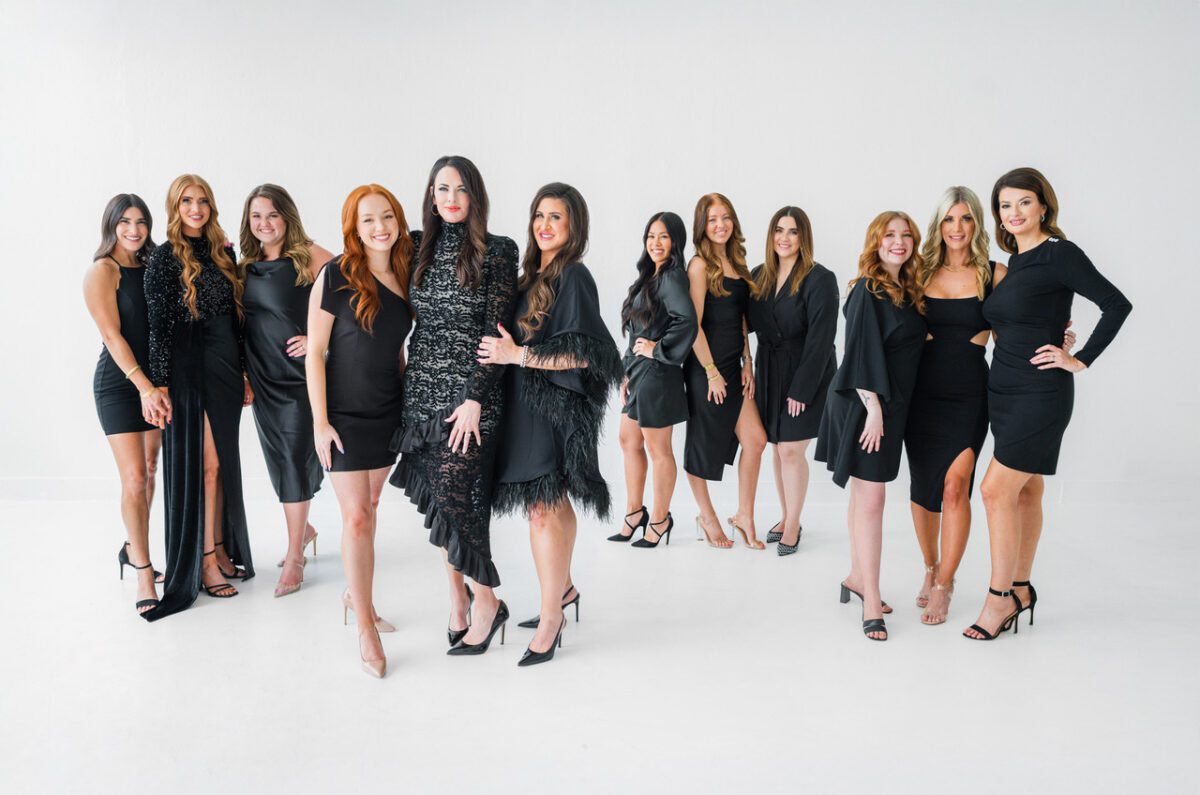
Radiance Medical Aesthetics is proud to bring Beauty by the Best!® to Oklahoma City as the premier destination for aesthetic treatments. With over 70 years of combined experience, the professionals at Radiance are dedicated to helping their patients feel and look their very best with results-driven treatments. Radiance was founded by Kasey L. Swayden, PA-C, in 2020. With more than a decade of experience in Aesthetic Medicine, Kasey dreamed of opening a Medical Spa that was centered on skin health and built around a professional team that delivers advanced cosmetic treatments in a beautiful, spa-like atmosphere. Today, Kasey’s dreams have become reality, and patients travel from all over for the advanced aesthetic treatments at Radiance Medical Aesthetics. Under the supervision of a board-certified dermatologist, Radiance offers a variety of industry-leading treatments and technologies to achieve the best results for their patients.
From state-of-the-art Sciton lasers, to injectables like Botox and dermal fillers, HydraFacial, Diamond Glow and more, the team of professionals have curated a comprehensive selection of treatments designed to address various aesthetic and skin concerns. Since opening, Radiance Medical Aesthetics has evolved into one of Oklahoma’s most recognized names in Aesthetic Medicine. As the official medical spa of Miss Oklahoma and Miss Oklahoma Teen, Radiance has earned many accolades. These include being named OKC’s “Best Medical Spa” and “Best Aesthetician” by Oklahoma Magazine and earning national recognition for its anti-aging results. Radiance is conveniently located just off the John Kilpatrick Turnpike at Portland and Memorial.
To learn more about Radiance Medical Aesthetics of Oklahoma, view their services or schedule a consultation, visit www.rmaok.com.
405-807-6265 | 3308 N.W. 135th St. Suite 100, OKC | RMAOK.COM
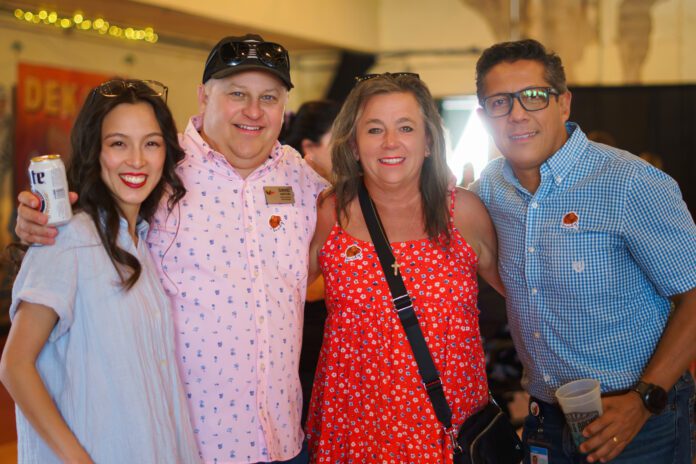
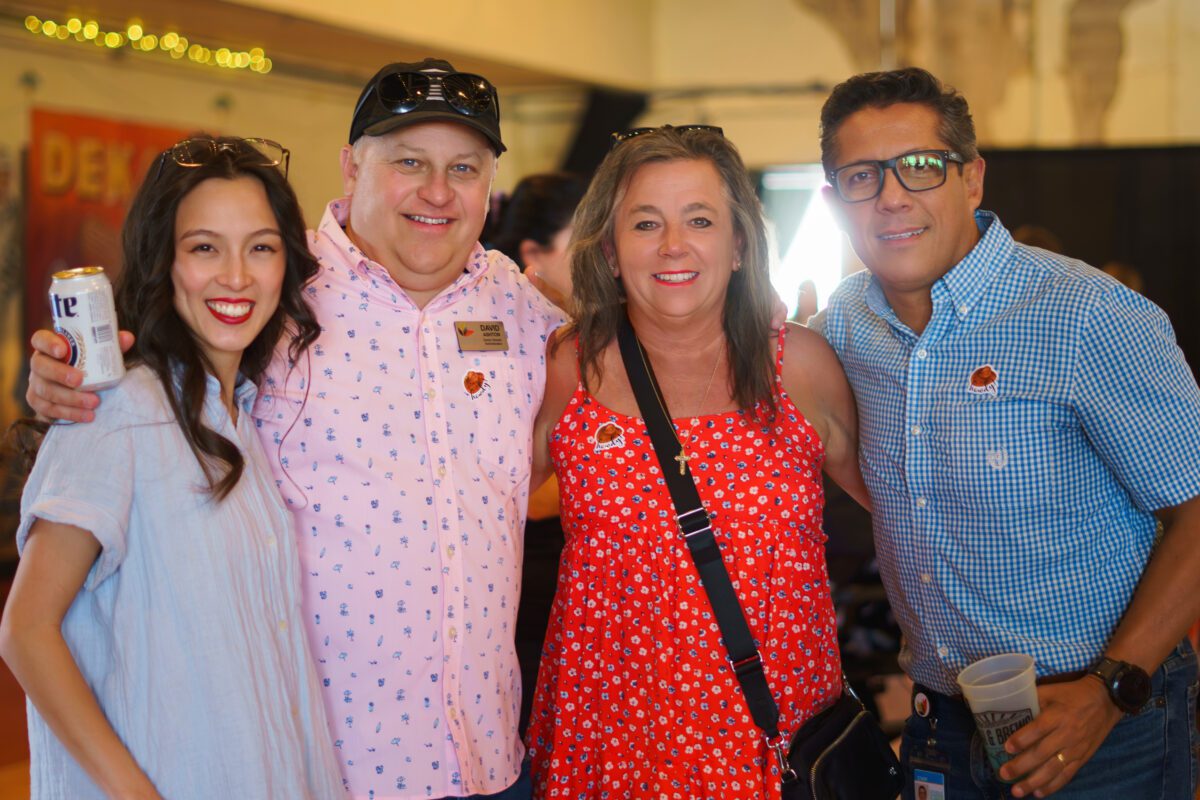
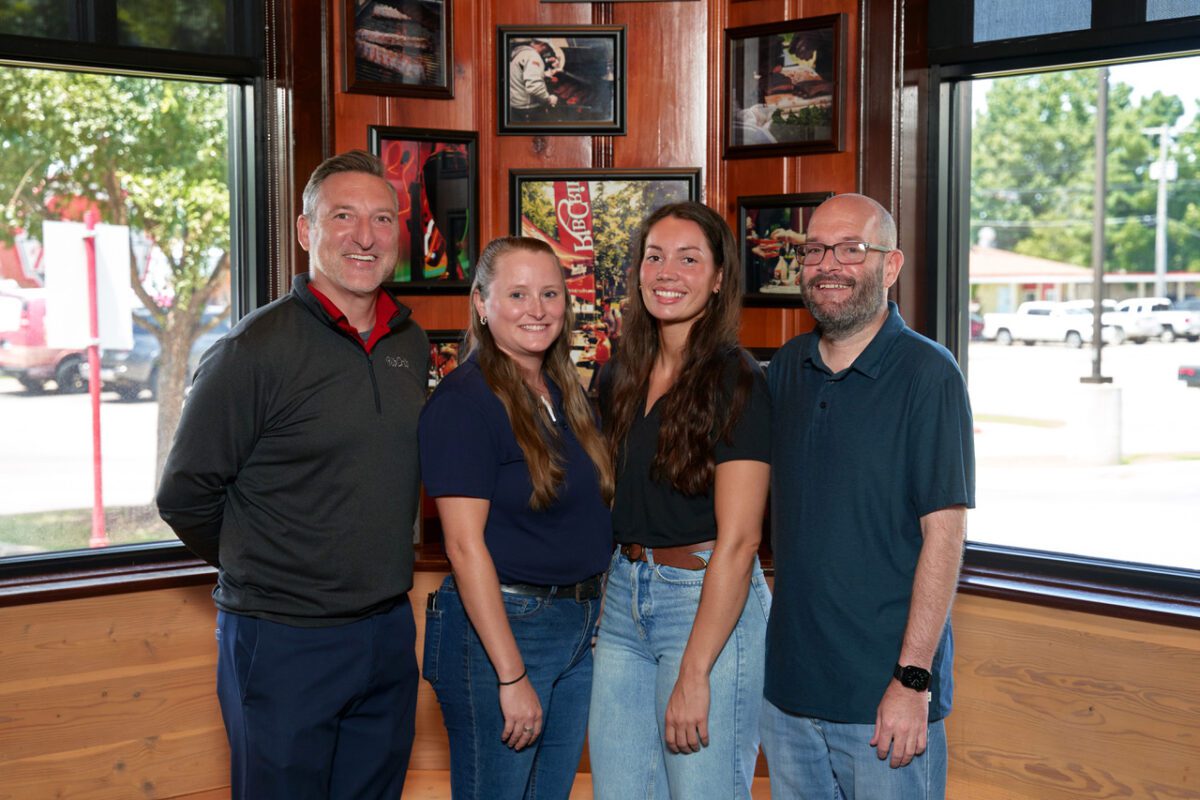
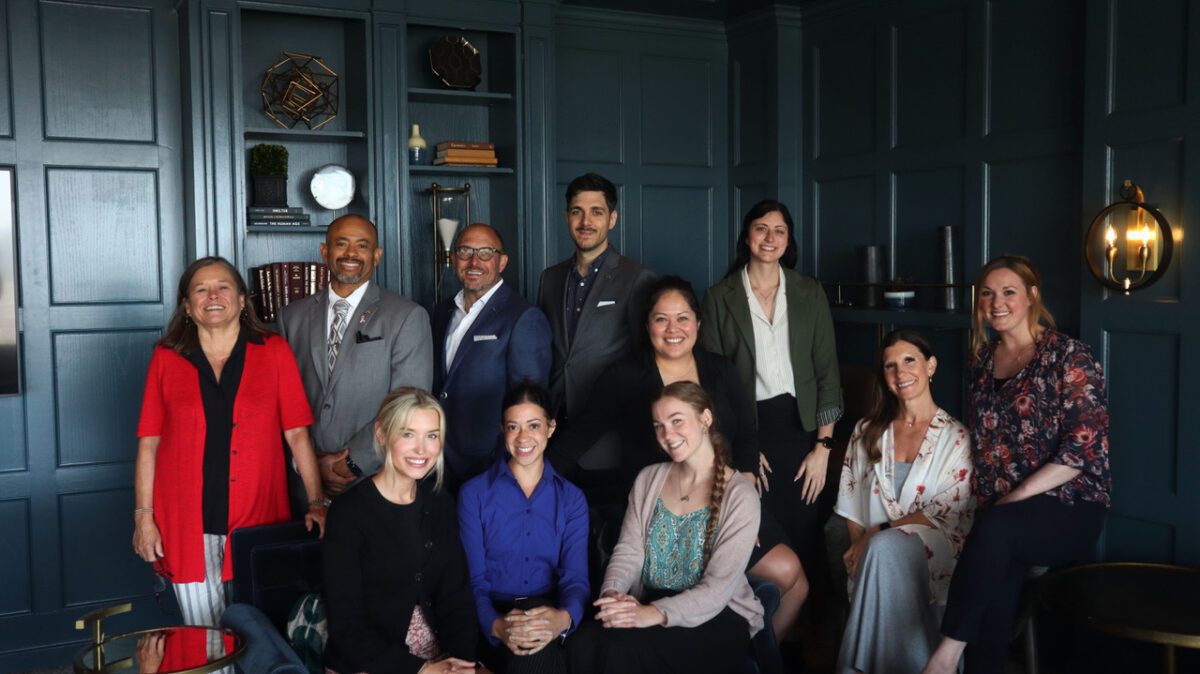
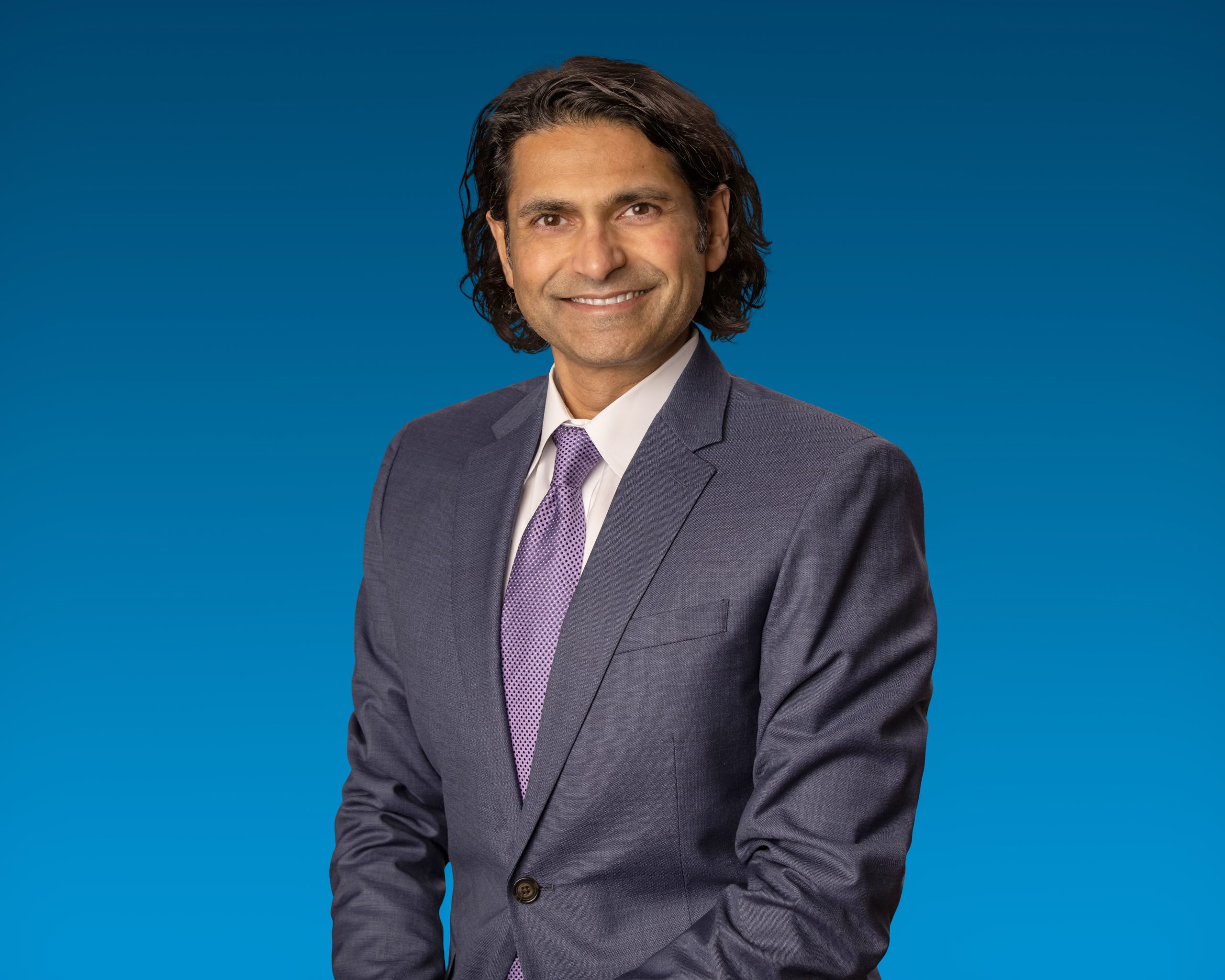
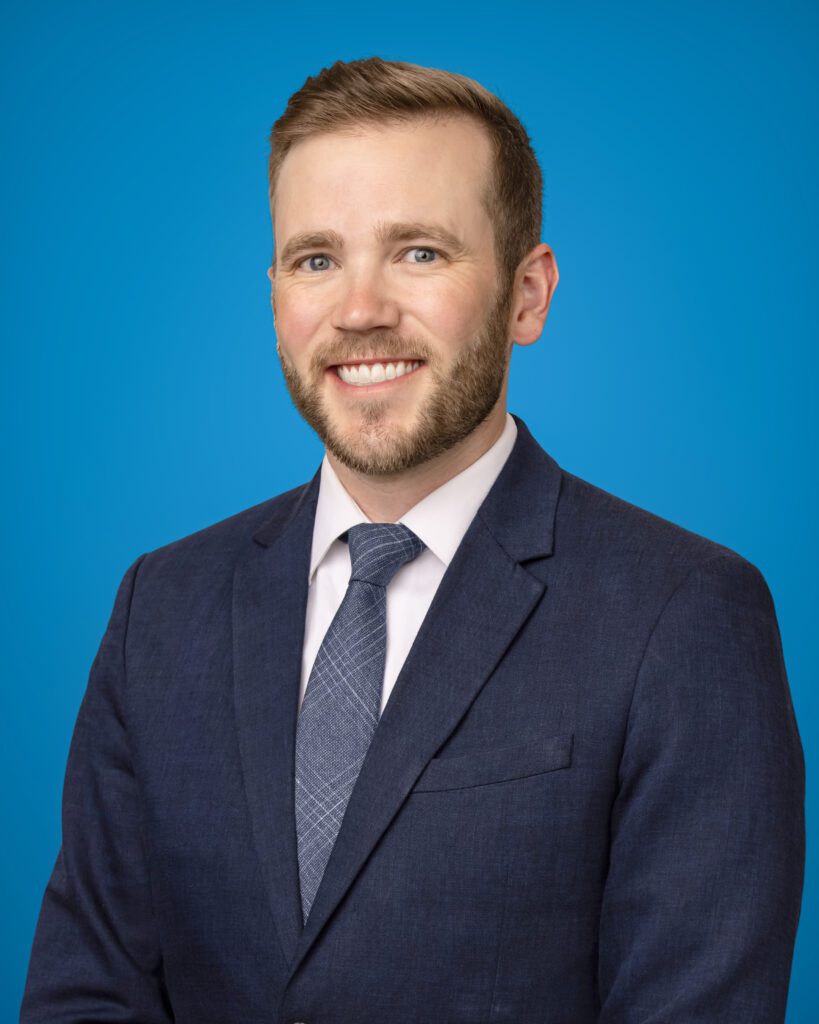
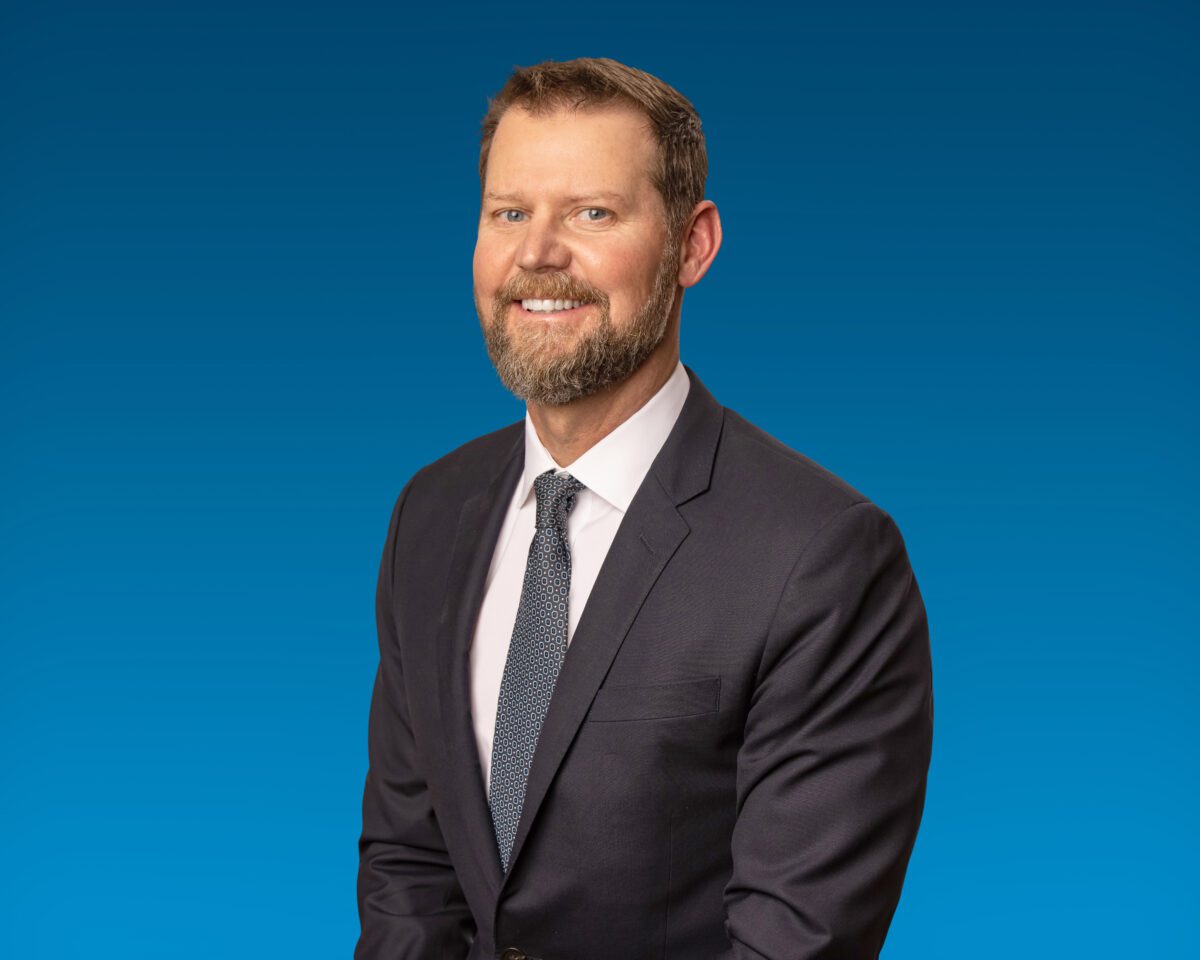
Pictured left to right: Matt Patterson, Beth Harvey, Bailey Epps, Jeff Baird
The Face of Barbecue
RibCrib
For over three decades, RibCrib has been serving slow-smoked barbecue that reflects Oklahoma’s unique personality. Founded in Tulsa by Bret Chandler in 1992, the restaurant has expanded to almost 50 locations across Oklahoma and surrounding states, but its commitment to barbecue remains unchanged—every single location smokes its meats fresh daily.
“What sets RibCrib apart is our dedication to authenticity,” says Jeff Baird, Vice President of Operations. “We want to keep making great barbecue for another 30 years. We simply don’t cut corners. Every brisket, every slab of ribs, every sandwich is crafted with the same care and attention we’ve maintained since day one. It’s important that never changes.”
That commitment to excellence extends beyond the smokers. RibCrib has embraced new technologies to stay competitive, recently implementing an advanced cloud-based point-of-sale system and launching an updated mobile app with enhanced functionality. “These upgrades help us modernize the way we serve our guests while staying true to our time-tested smoking methods,” Baird explains. Moreover, community involvement remains close to RibCrib’s heart. From regularly feeding local youth sports teams to supporting school fundraisers, the brand nurtures community roots in every market it serves. This grassroots approach reinforces their belief that strong communities create strong businesses. Of course, innovation extends beyond technology as RibCrib continuously refines their craft. Whether perfecting their homestyle sides or exploring new regional barbecue experiences, the team never stops improving.
“We’re always looking for ways to elevate our ‘cue while honoring the traditions that got us here,” Baird notes. As RibCrib looks toward the future, their vision remains clear: delivering exceptional barbecue through a balanced blend of time-honored techniques and modern convenience, ensuring every guest experiences the righteous flavor that has made them Oklahoma’s barbecue destination for 33 years.
On ladder: Sarah Gould (CEO) Left to Right: Kate Cofer, Lauren Pursley, Morgan Kidder-Brown, Christy Wills | Photo by: Adam Murphy
The Face ofCommercial Architecture
Ethos Architects (formerly KKT)
KKT Architects is now Ethos Architects – a new name that reflects the same purpose-driven team known for creating meaningful spaces across Oklahoma and beyond.
“We changed our name to Ethos to better reflect our values and our vision for the future,” says CEO Sarah Gould, who leads the Oklahoma-based firm alongside COO Kate Cofer.
Founded in 1989 as Integrated Space Design, the firm later became KKT to represent its partners. Today, the name Ethos marks a return to purpose, with a renewed focus on designing with character, collaborating with intention, and creating places that enrich lives.
“This rebrand is about aligning who we are with how we work,” says Gould. “Ethos captures our commitment to thoughtful design, strong partnerships, and community impact.”
With a team of more than 70 architects, interior designers, and professionals across offices in Tulsa and Oklahoma City, Ethos Architects continues to lead in commercial, civic, educational, healthcare, and nonprofit design.
The multi-year rebrand was a major undertaking, incorporating strategy, design, and storytelling.
“It involved deep thinking, outside expertise, and an incredibly dedicated internal team – Christy Wills, Morgan Kidder-Brown, and Lauren Pursley, pictured here,” Gould notes.
While the name is new, everything clients value remains: the same people, the same high standards, and the same dedication to design that matters.
“Ethos is a name for the future – grounded in the values that have always driven us,” says Gould.
For Inner Good (FIG) Medical Spa, located in Tulsa, is known for its expertise in the science of anti-aging for face and body rejuvenation. Under the direction and supervision of Cristie Lehr-Hawkins M.D., Fig offers the latest treatments for the face, hair and body.
The staff at Fig brings multiple years of experience in patient care and is dedicated to providing the most innovative treatments for their patients. Fig is honored to have won numerous awards for Best Medical Spa, Skin Care, and Wellness Center in Tulsa, the state of Oklahoma and nationally. Fig has also been awarded Oklahoma Magazine’s The Best of the Best Award in 2021, 2022, 2023, 2024 and 2025.
Medical and wellness services offered at Fig include dermal fillers, injectables, microneedling, PDO threading, weight loss programs and hormone therapy. They also provide a full range of laser treatments and aesthetic services.
Some of the newest treatment modalities at Fig include Opus Plasma and TED. Opus Plasma is a skin resurfacing treatment using plasma energy and radio frequency to repair photodamage and treat the signs of aging with minimal down time. Fig is also the only medical facility in Tulsa to offer TED (Transepidermal Hair Restoration). This new treatment uses ultrasound technology to stimulate hair growth. The TED treatment is painless and needle-free with no downtime. TED is quick and beneficial for any individual suffering from hair loss or wanting to improve the appearance and health of their hair.
Fig carries numerous skin care lines such as SkinCeuticals, Caudalie, Revitalash, ZO Skin Health, iSClinical, Skin Medica, and Revision. Fig also has the SkinCeuticals SkinScope LED Lamp. With the help of the aestheticians and The SkinScope lamp, patients can learn about their visible and underlying skin imperfections and what products will work best for them. FIG recently launched its own skincare line, Fig MD. This medical-grade skincare line is both preventative and corrective. Fig MD products are built on a layered system of the highest quality ingredients resulting in healthy and beautiful skin.
To learn more about Fig’s services or purchase products, please visit their website figtulsa.com. To schedule an appointment for a service or free consultation, call 918-932-8810.
918-932-8810 | 8921 S. Yale Ave., Suite B., TULSA | figtulsa.com
The Face of Dentistry
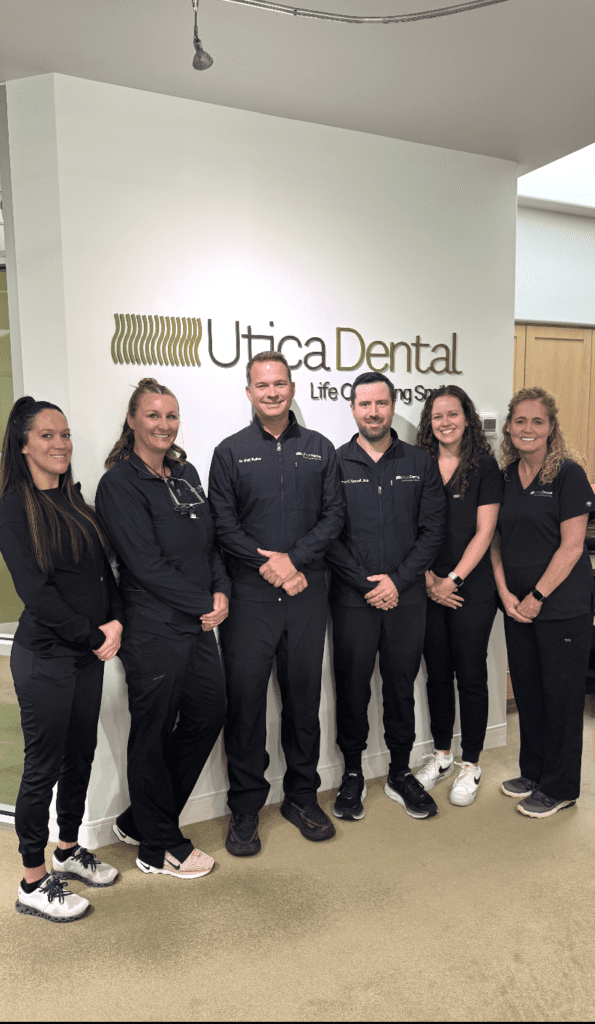
Utica Dental
At Utica Dental, Dr. Matthew Walker, Dr. Brian Gosnell, and their outstanding team provide a dental experience rooted in excellence, innovation, and compassion. Their shared mission is simple yet powerful: to deliver high-level, modern dentistry while treating every patient like family.
Located in the heart of Midtown Tulsa, Utica Dental offers a serene, spa-like setting with floor-to-ceiling windows, calming amenities, and state-of-the-art technology. Patients are greeted with warm smiles and leave with even brighter ones, thanks to personalized, comprehensive care that blends comfort and clinical precision.
From preventive hygiene care and cosmetic makeovers to advanced restorative procedures, Invisalign®, implants, and full-mouth rehabilitation, Utica Dental is equipped to handle it all – beautifully. The practice also prioritizes patient comfort with options like nitrous oxide and streaming entertainment, making each visit stress-free and even enjoyable.
With a dedicated hygiene team known for their skill, empathy, and gentle approach, patients of all ages receive top-tier preventative care in a welcoming and supportive environment. Every team member brings their own strengths and passion for service, ensuring a tailored experience for each person who walks through the door.
Utica Dental proudly upholds the highest standards of infection control, using the latest sterilization technologies and CDC protocols. Dr. Walker and Dr. Gosnell are committed to creating a safe, clean, and caring environment, because your health and peace of mind matter.
Named one of Oklahoma Magazine’s “The Best of the Best,” Utica Dental continues to raise the bar in general and cosmetic dentistry. Whether you’re new to the area or simply ready for a better dental experience, we invite you to discover the Utica Dental difference – where innovation meets heart, and every smile tells a story.
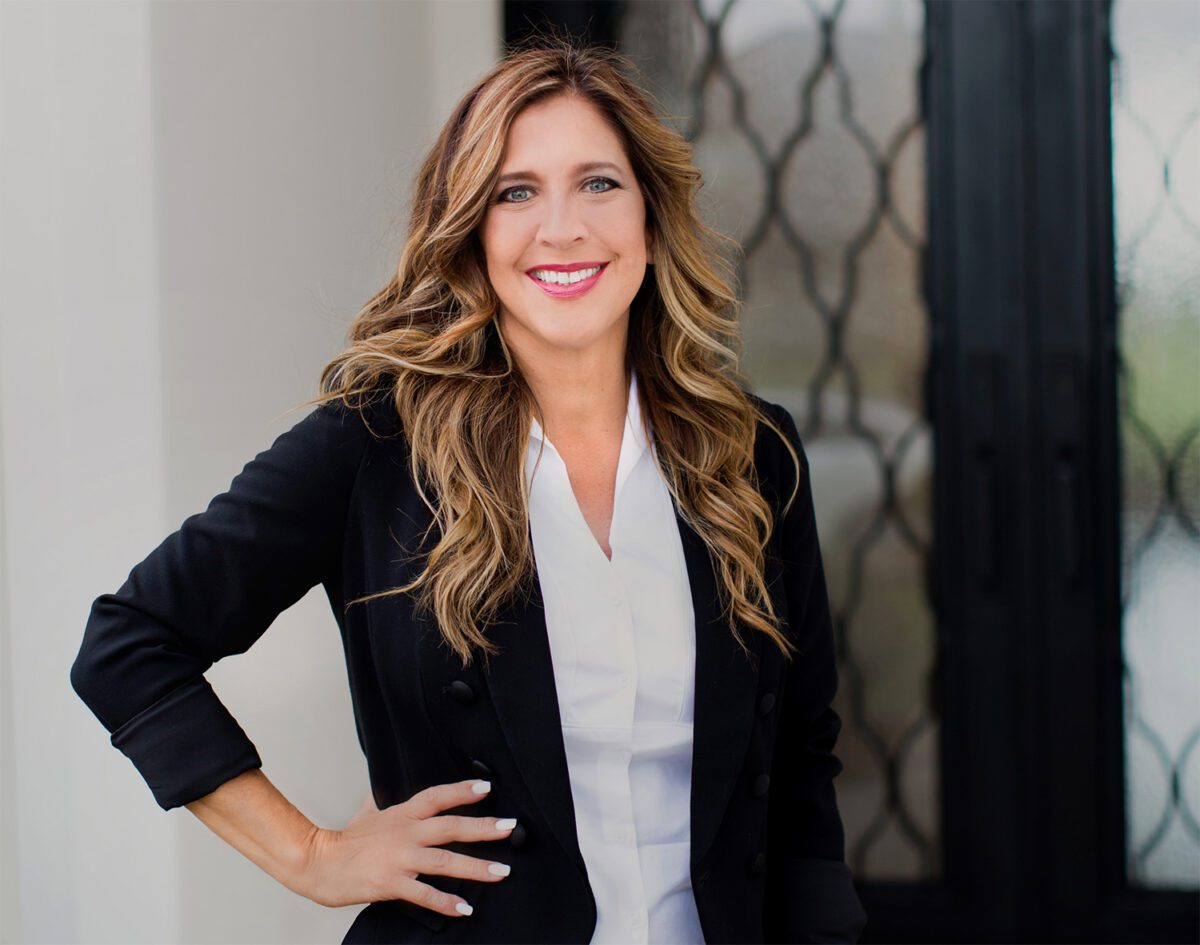
Have a unique business location or property to showcase? Let’s talk! Despite our unpredictable market, Heidi continues to excel as a top-tier Realtor in both commercial & residential markets.
As a Top-Producing Listing Specialist, McMurray was recruited to Host “The American Dream,” a Telly & Emmy Award-Winning Television Network.
Heidi loves to grow partnerships by showcasing her client’s unique properties, marketing their local businesses & filming Oklahoma Lifestyles.
While “Selling Dreams in Oklahoma,” Heidi features local entrepreneurs and the incredible people who are making our state a coveted place to live.
Heidi’s expertise is vast, ranging from land, new construction, resale to renovations, and interior design. Working with a wide variety of clientele, she is the consistent pro-active partner while helping others achieve their vision for life and future.
A trusted guide, Heidi harbors a keen understanding of microeconomic factors impacting Oklahomans: marketing strateties with AI & Social Media, our shifting realty values, various finance options, hot selling metro locations and consumer motivations. “It is difficult for locals to imagine how much our market is changing, but Oklahoma is becoming a rockstar choice amongst families across the U.S. We are experiencing historical growth – a reverse migration back to the Heartland,” she says.
Continuously offering her time and energy, Heidi boasts an extensive professional network, streamlining the sales process from preparing to list to proven results at the closing table. She is dedicated to a seamless experience, lifting the many stressors which accompany making a big local or out-of-state investment.
Heidi holds a passion for exceeding expectations — her sharp ability to negotiate benefits her clientele. “I love people! Serving clients at various stages of life is what I do. There is nothing more rewarding than to watch dreams unfold and people’s lives change for the better!” she explains.
Whether that dream is to invest in a thriving business location, enjoy sprawling acreage, live in OKC or Tulsa, or buy a first home, Heidi’s desire is to make her client’s dream come true.
“We may start as partners in real estate, my goal is to end as friends.”
At Tulsa-based Conrad’s Roofing, every single roof is backed by the owner’s name: Conrad. With core values that include aggressive authenticity, passion and customer obsession, Conrad’s Roofing puts the same care, attention to detail and premium workmanship into every job, whether it’s locating and repairing a small leak, or a total tear-off and replacement of your roof.
Conrad’s provides personalized service with its expert roof installations, touting the resources, financial strength, and stability that make them a leader in the industry. The business is fully licensed, bonded and insured, meaning that clients can rest easy knowing only the best are working on their homes. Only Conrad’s Roofing can guarantee and deliver this kind of personalized service. In short, they’ll get the job done – affordably, safely and thoroughly.
“My team and I have had many years of trial and error,” says owner Ken Conrad. “We pride ourselves on keeping the local business aspect, while having an operation that runs as efficiently as possible. I have only one option available for myself and every roof we touch: my word and my work.”
Dedicated to serving Tulsa and surrounding areas, Conrad’s has installed 21,792,000 shingles with over 12,000 satisfied customers. Services range from roof installations to leak detections and gutter design and installation.
With a promise to put the same effective, efficient practices into every job, Conrad’s is laser focused on client satisfaction, which is evident in their exceptional customer service, free estimates and free 22-point roof inspections. The team also understands that a new roof is a major investment – which is why they offer a variety of financing options to ensure you get the services you need at the right price.
Reputable, reliable and results-driven: Conrad’s Roofing.
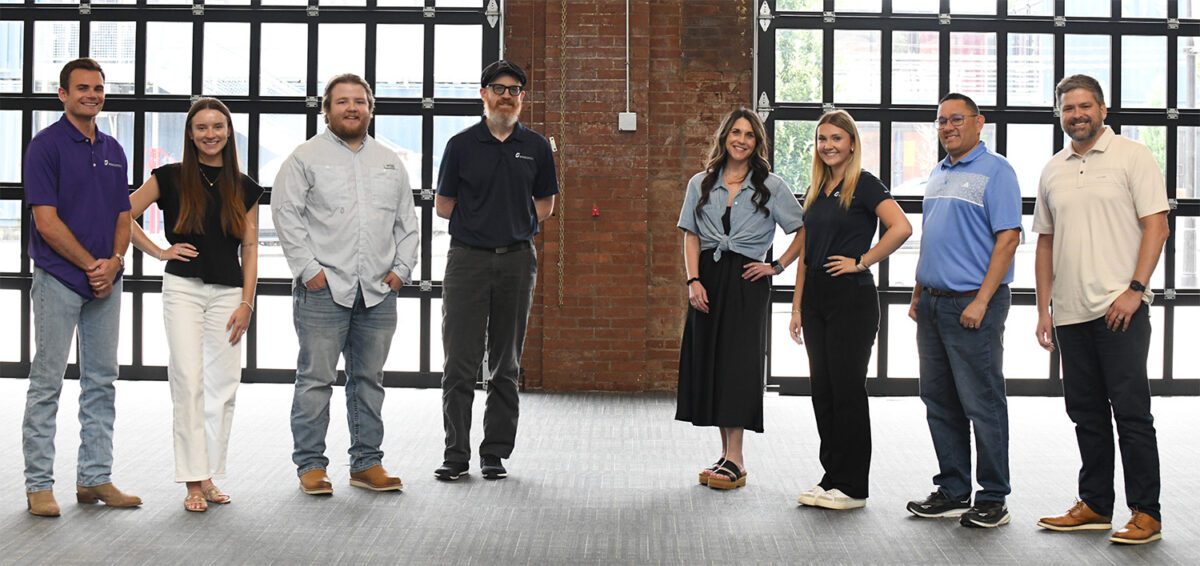
From left to right: Connor Thiessen, Samantha Duke, Will Thomas, Ken Lane, Shea Light, Marissa Christian, Chris Sharpe, Bobby Spurlock
The Face of Construction Companies
Ross Group
Ross Group began as a small contracting company based out of Catoosa, Oklahoma, in 1979, when Jesse Ross founded J. Ross Acoustics and Drywall. The company specialized in carpentry and interior finishes and quickly earned a reputation for quality construction, professional excellence, and good, old-fashioned hard work. In 1996, Warren Ross joined his father in the business and The Ross Group Construction Corporation was incorporated in the great state of Oklahoma. Building on each other’s strengths, the father/son duo used their knowledge and reputation to make a seamless transition into general contracting. Since its incorporation, Ross Group has evolved into a development, engineering, and construction firm serving government, energy, industrial, and private/commercial clients under the leadership of CEO Warren Ross. Working hand-in-hand with our clients, we provide industry-leading solutions in a variety of markets, such as oil and gas, industrial, manufacturing, aerospace, government, medical, aviation, hospitality, and education. By offering an integrated suite of services to fit any need in any market, we commit to achieving our client’s vision for each project.
While our company has grown to include more than 140 employees spread across two offices, we are still a roll-up-our-sleeves and get-to-work kind of place. Just like our founder Jesse, our leadership and staff realize that companies don’t build projects. People do. We are team players who will help anyone who asks, regardless of our titles, because we know we all succeed or fail together. With that in mind, Ross Group’s dedicated employees continue to build our firm’s reputation through our actions, while delivering tangible benefits to our clients as a one-stop-shop for project delivery. Visit us at www.withrossgroup.com to learn more about how Ross Group can help your make your vision a reality.
Headquarters: 510 E. 2nd St., Tulsa | 918.234.3811|620 W. California Ave., OKC | 405.235.0726 | withrossgroup.com
The Face of Fine Dining
The Summit Club
Since 1967, The Summit Club has been Tulsa’s premier destination for exceptional dining and social experiences, nestled in the heart of downtown. Perched on the 30th, 31st, and 32nd floors on the corner of Sixth Street and Boulder Avenue, our club offers breathtaking panoramic views that serve as a stunning backdrop for any occasion. Whether you’re savoring an intimate dinner, attending a grand event in our elegant ballroom, or enjoying a handcrafted cocktail in the Penthouse, each visit promises a memorable blend of sophistication and warmth.
Our culinary team crafts fresh, chef-prepared menus using the finest ingredients and techniques, complemented by an impressive selection of premium wines, handcrafted cocktails, and mocktails.
Our staff at The Summit Club brings a wealth of industry experience and professional training, delivering top-notch service to every member and guest. Whether you’re here for a casual outing or a special event, our team is committed
to making every moment memorable.
Membership at The Summit Club is more than exclusive dining access – it’s an invitation to join a vibrant community of professionals and socialites. Our club serves as a hub for networking, celebrating milestones, and enjoying the camaraderie of fellow members. With its blend of refined ambiance, exceptional service, and unparalleled views, The Summit Club stands as Tulsa’s premier city club. Discover the benefits of membership today.
As a trusted leader in specialized care, Eastern Oklahoma Ear, Nose, and Throat (EOENT) is proud to provide exceptional healthcare services to Oklahoma residents. Since our founding in 1975, we have served the community with dedication and excellence, growing over the past 50 years to become the largest single-specialty otolaryngology practice in the region. Our team of experienced
providers is committed to delivering compassionate, patient-centered care that meets the unique needs of every individual we serve.
At EOENT, we specialize in the diagnosis and treatment of pediatric and adult ear, nose, and throat conditions, both medical and surgical. In addition to extensive experience in the treatment of head and neck cancer, hearing tests,
hearing aid fittings, and cochlear implants, we provide comprehensive care for ear, nose, and throat allergy and sinus issues.
We also offer advanced surgical services including rhinoplasty, facial paralysis surgery, skin cancer reconstruction, cosmetic surgery, thyroid and parathyroid surgery, and skull base surgery.
918-492-3636 | 5020 E. 68th St. & 9343 S. Mingo Rd., Tulsa | eoent.com
Steven R. Sarkisian, Jr., MD
The Face of Cataract and Glaucoma Surgery
Oklahoma Eye Surgeons
Steven R. Sarkisian, Jr., MD is the Founder and CEO of Oklahoma Eye Surgeons, PLLC and specializes in premium laser cataract surgery and minimally invasive glaucoma surgery, or MIGS. Dr. Sarkisian is passionate about helping people get rid of their glasses by performing premium cataract surgery. He was the first surgeon in the state to perform the PanOptix trifocal lens, the iStent, iStent Inject, iStent Infinite, the XEN Gel Stent, and canaloplasty. He was the first in the USA to use the OMNI device and the first in the world to use the TRAB360 and VISCO 360 surgical systems, the predicate devices to the OMNI. He was also among the first in the world to perform the iDose sustained-release implant after FDA approval. In 2024, Dr. Sarkisian acquired the first Direct Selective Laser Trabeculoplasty (DSLT) device in Oklahoma, one of the first in the country.
Dr. Sarkisian is the former director of the glaucoma fellowship, and former Clinical Professor of Ophthalmology at the University of Oklahoma in Oklahoma City.
He obtained his undergraduate degree from Wheaton College, outside Chicago, IL, received a Certificate in Christian Studies from Westminster Theological Seminary in Philadelphia, PA, received his medical degree from Jefferson Medical College in Philadelphia, PA and completed a residency in Ophthalmology at the State University of New York (SUNY Downstate) in Brooklyn, NY, followed by a fellowship in glaucoma surgery at UT Memphis.
Due to his involvement in the development of new glaucoma technology, he has been active in presenting and publishing his work both in America and internationally. He co-authored the book “Minimally Invasive Glaucoma Surgery, a Practical Guide.”
Dr. Sarkisian currently serves on the Editorial Board of the Journal of Cataract and Refractive Surgery (JCRS), and on the Editorial Board of Glaucoma Today, Glaucoma Physician, and Ophthalmology Management. Dr. Sarkisian is listed in Woodward/White’s Best Doctors in America and Castle and Connolly Top Doctors.
He and his wife Anne have four children and reside in Edmond, Oklahoma.
Rusty Smith, Michael Barkett | Photo by McKenzie Jo Photography
The Face of Personal Injury Law
Smith Barkett Law Group
Representing clients across Oklahoma, Texas, and nationwide, Smith Barkett Law Group’s founders, Michael Barkett and Rusty Smith, have secured millions of dollars – including seven- and eight-figure awards – in both jury verdicts and settlements. The Smith Barkett Law Group is a premier law firm, with recognized expertise in personal injury and wrongful death cases, including car, trucking, and industrial accidents, oil and gas explosions and fires, traumatic brain injuries, paralysis, medical malpractice, unlawful termination, and defamation. Smith and Barkett have also won
numerous awards for their work – including selection into the prestigious Super Lawyers rankings. With offices in Tulsa and Muskogee, Oklahoma, contact the Smith Barkett Law Group. Consulting their firm is free — justice for you is their top priority.
2021 S. Lewis Ave., Suite 630, Tulsa | 555 W. Okmulgee Ave., Muskogee |918-582-6900 | smithbarkett.com
Chris Johnson, Kristi Johnson, and Kylee Johnson
The Fact ofFurniture Stores
North Carolina Furniture Mart
North Carolina Furniture Mart is a family-owned business in Bixby, Oklahoma, that is currently operated by a third-generation owner, Kristi Johnson. They are proud to have consistently provided quality merchandise and exceptional service to their customers since Kristi’s grandfather, Ike Eichhorn, opened the store in 1990.
Kristi spent a lot of her youth in the store, watching her family and learning various aspects of the furniture business. In 1996, she officially joined the business, focusing on sales, service, purchasing and design. She worked closely with her grandfather, father and aunt to learn the ropes, and continues to provide consistent customer satisfaction to this day. In 2013, Kristi and her husband, Chris Johnson, took over the business. They continue to expand their customer base and offer custom furniture, lighting, art, outdoor living, as well as interior design consultation. The business name, North Carolina Furniture Mart, comes from Kristi’s grandfather, who named the store after the luxury furniture brands he sold that were based in North Carolina. Now, the store represents brands in North Carolina and beyond, still maintaining the goal of selling first-rate furniture. North Carolina Furniture Mart offers the finest in-home furnishings including living room, dining room, bedroom, home theater/entertainment, home office, and outdoor living furniture.
They also offer a full array of area rugs, lighting, artwork, mattresses and accessories. The business has a strong reputation for providing fairly priced, exceedingly well-made pieces that are designed with timeless durability. North Carolina Furniture Mart is proud of its non-commissioned, hardworking team who work closely with customers to create custom furniture pieces to fill their homes. Visit them to consult with their specialists and curate your perfect space!
918-369-3305 | 12109 S. Memorial Dr., Bixby | ncfmtulsa.com
With rising costs outpacing American salaries, old budgets no longer suffice. We consult the experts for practical budgeting strategies tailored to 2025’s economic realities.
“Start by tracking your spending for a full month,” says Andrew Iven, senior vice president and director of product strategy at BOK Financial. “That snapshot helps you understand where your money is actually going and creates a foundation for making changes. From there, frameworks like the 50/30/20 rule can serve as a helpful guide. This method allocates 50% of your income to needs, 30% to wants and 20% to savings or debt payments. The most important thing is to adjust as your financial situation evolves rather than locking yourself into rigid monthly expectations.”
It is also important, says First Fidelity Bank’s (FFB) chief innovation officer John Symcox, to “make any money you have work on your behalf. It is always important to identify the places you can cut expenses — but additionally, are there any options to create new channels of income? These are always questions you have to start with in any economic environment.”
Iven suggests using credit cards for budgeted, big-ticket items and cash or debit for daily spending to avoid debt and earn rewards. If your budget falls short, consider cutting lifestyle costs, delaying discretionary purchases or finding creative ways to save.
The Psychology of Spending
Many people, whether consciously or not, spend money they do not have or overspend on items they don’t need.
One way to avoid overspending “is by setting limits in advance and intentionally directing a portion of any change in income toward savings or debt repayment,” says Iven. “Pay yourself first. Allocate a majority percentage of your increase to savings, retirement or debt reduction first and then use the remainder towards more discretionary focuses. That kind of planning doesn’t mean cutting out fun altogether, but it does help ensure you prioritize your financial goals.”
Symcox mentions that many financial institutions have resources to help identify overspending habits.
“We have a tool called Money360 that allows customers to see where they are spending their money and even set up a budget with targets and alerts to stay on track. This is not an industry standard, however many banks and credit unions offer these tools, called ‘Personal Financial Management,’ that bring these features to the customers mobile app or online banking.”
Overspending often creeps up due to convenience, emotions or lack of structure, especially during relaxed periods like summer, says Iven. Credit cards worsen this by distancing spending from repayment, risking budget strain or debt. Tracking expenses and using cash or debit for daily purchases helps maintain awareness and control.
Emergency Funds
An emergency fund remains a critical financial tool, especially with rising daily costs and harder-to-absorb unexpected expenses, says Iven. Recommendations include saving three to six months of essential expenses, adjusted for job and income stability and personal risk tolerance.
Start by assessing current monthly costs to set a savings target, and identify potential cutbacks. Even small, consistent contributions, like $20 or $50 per paycheck, can grow over time, especially with automated savings or tools that round up debit card purchases.
Tax refunds and bonuses can further boost savings, which should be kept in a separate, accessible account to avoid spending on non-essentials. Once the emergency fund is complete, consider longer-term options like IRAs for better returns, but prioritize building that immediate financial safety net first.
Finance in Oklahoma: Engaging the Youth
Bridging the Financial Literacy Gap
Oklahoma schools and community organizations continue to evolve ways to educate the youth about finances through programs like Oklahoma Money Matters, Passport to Financial Literacy in K-12 schools and the Oklahoma Financial Educators Council.
“The truth is, a lot of young people, especially in underserved communities, aren’t getting the financial education they need,” says Iven. “Even though Oklahoma has a statewide requirement, that doesn’t always mean students walk away with real understanding or confidence to manage their own finances. There are gaps. That’s why community organizations stepping in and doing their part is so important.
“At BOK Financial, we work closely with Junior Achievement to send employees into schools and community centers through our Learn for Life program to teach financial wellness. These are hands-on sessions where students get to practice budgeting or think through real-life financial scenarios. There’s still work to do, but these efforts give students exposure to skills they may not learn anywhere else, and that’s an important start.”
Symcox and First Fidelity Bank also advocate for Junior Achievement in addition to broader, more consistent school programs to make finance less intimidating, stressing that early and ongoing education helps young people become comfortable with spending, budgeting, saving, investing, loans, insurance and other financial topics.
Investing & Wealth-Building Beyond the 401(k)
Retirement today calls for a more strategic and diversified approach than in the past. Relying solely on a 401(k) is rarely enough, says Iven. Diversifying across a mix of stocks, bonds, cash and international assets helps manage risk, especially during market volatility. One increasingly common strategy is the bucket approach, which separates savings into short-term cash or money market funds, mid-term (bonds) and long-term (growth-oriented investments). This helps ensure liquidity for immediate needs while giving long-term investments time to grow and recover from downturns.
“Using HSA accounts is a way to get a ‘triple tax advantaged’ account that doesn’t lock money up completely, but still limits usage. It’s one of the fastest growing savings vehicles,” says Symcox. “It does come with annual limits, so people have to understand many different methods for savings. We are actively working on ways that we can use financial literacy and gamification to help people understand the best strategies for them. It is always about finding ways to save money in as many ways as possible, so you live the lifestyle you can but still save discreetly. The other aspect that is becoming more and more common is that families are beginning to search for new additional income sources that don’t limit their lifestyle or are based in some activity that they love.”
Iven continues: “Outside of employer-sponsored plans, IRAs and Roth IRAs provide flexibility and tax advantages. Traditional IRAs offer pre-tax contributions, while Roth IRAs offer after-tax contributions which allow for tax-free growth and withdrawals, making them especially valuable in the face of rising tax uncertainty.”
Financial Technology: AI Tools vs. Old-School Resources
Tools like ChatGPT and AI-powered apps are dubbed as ‘fintech’ (financial technology), and are changing personal finance.
“AI-powered tools are making personal finance feel more approachable,” says Iven. “People who might never sit down with a financial advisor now have a way to ask questions, get budget help or understand investment basics on their own time and in plain language. That kind of accessibility matters, especially for those just getting started or trying to make sense of multiple financial priorities.”
But, of course, AI has its limitations.
“They aren’t a replacement for personalized advice from a financial professional,” Ivan continues. “The answers from AI-powered tools are only as good as the questions being asked, and sometimes people don’t know what they’re missing. That’s where working with a professional still adds tremendous value.”
Tech applications allow advisor and client to have much more flexibility in their collaborations, says Jessica Jones, senior financial advisor with BOK Financial, especially in communication and availability in a world that expects everything on demand.
“However, it’s not all positive views from the advisor perspective,” says Jones. “The other side of tech advancements is that it is also providing clients with options such as “Robo Advisors” and the ability to use AI to build their own portfolios and seek advice. We see more and more that the younger generations are relying on tech and AI to provide financial and investment advice. In these instances, AI options don’t offer the personalized or industry tested solutions that an advisor would.”
In short, technology apps and AI cannot replace the human connection, although they help with accessibility.
“There is something to be said for sitting down across the desk from your client and being able to listen to their tone, read their body language and see their face as they explain their goals, fears and needs,” says Jones. “As incredible as tech is and all that it has to offer, it is not providing the emotional connection so many clients desire.”
Symcox continues, saying reviews are mixed on fintech from the pros themselves.
“There are many advisors that definitely don’t feel that fintech options are good for their clients. Typically these concerns come from the erosion in potential income,” he shares. “There are a number of advisors and firms that have embraced fintech to enhance and augment services. I feel like this is the bulk of advisors — because they see the value of individuals and having access for advice with more efficient engagement.”