















Home Blog Page 31

A High-Octane Start to Summer

From the World of John Wick: Ballerina; photo courtesy Lionsgate Films, all rights reserved.

June is here and brings with it more big films to spend your time with. Will they all be good? Perhaps. You’ll have to hit the theater and find out for yourselves! 

Coming out the gate shooting, we have From the World of John Wick: Ballerina. Taking place between John Wick: Chapter 3 – Parabellum and John Wick: Chapter 4 (I mean, wow, these titles are too long), this film follows Eve Macarro (Ana de Armas, Knives Out), an assassin who begins her training to exact revenge for her father’s death. Several actors from the John Wick franchise will make appearances, including Anjelica Huston (The Addams Family), The Wire’s Lance Reddick (in his final and posthumous performance), and Keanu Reeves. De Armas is no stranger to action, having turned in a scene-stealing role in the James Bond film No Time to Die, so I imagine this will have her pulling some excellent stunts. The world of John Wick has likely expanded a bit too far, but this should still be an adrenaline-pumping time when it lands in theaters on June 6.

If you’re looking for a violent animated film, check out Predator: Killer of Killers. Directed by Dan Trachtenberg (Prey), the film appears to take place in three distinct timelines – one with Vikings, one with Samurai, and one during World War II. Each of them involves the Predator sneaking around and, presumably, having a lengthy and bloody battle with the poor souls of each era. The trailer shows off some slick and unique looking animation punctuated with stomach-turning brutality. It’s nice to see animation made for adults and hopefully this one will be a fun time. It hits Hulu on June 6.

For a romantic comedy, don’t miss Materialists. Written and directed by Celine Song, whose directorial debut was the critically acclaimed Past Lives, this film follows a matchmaker played by Dakota Johnson (Fifty Shades of Grey) whose business runs into trouble when she finds herself in the middle of a love triangle. Chris Evans (Avengers: Endgame) and Pedro Pascal (The Last of Us) also star in what looks to be another wonderful and emotional film for Song. It releases on June 13.

If you’re searching for a sequel eighteen years in the making, look no further than 28 Years Later. Following 28 Days Later and 28 Weeks Later, this new entry will also contain a fresh set of characters dealing with the fallout of a virus that caused infected people to become erratic and violent. Starring Jodi Comer (Killing Eve), Aaron Taylor-Johnson (Nosferatu) and Ralph Fiennes (Conclave), the movie boasts a masterclass in trailer etiquette: clips presented out of context with nothing given away. Hopefully this long-awaited sequel can live up to the hype when it releases on June 20.

Lastly, don’t miss the racing film F1. Starring Brad Pitt as a man coming out of retirement to mentor an up-and-coming racing prodigy, the film looks to have some beautiful cinematography and tightly wound racing scenes to make anyone’s blood start pumping. Joseph Kosinski directs, and if his action scenes from Top Gun: Maverick are any indication, we should be in for a high-octane racing story. It release June 27.

Erin Oldfield

Photo courtesy the OKC Thunder

Starting with the Oklahoma City Thunder in 2017, Erin Oldfield is the organization’s vice president of community engagement and the executive director of the Thunder Community Foundation. Leading her team in executing extensive community outreach efforts, Oldfield handles everything from sponsored programs to player engagement, the Thunder Fellows afterschool program, and enrichment programs addressing learning gaps for Oklahoma youth. We caught up with Oldfield and got her thoughts on … 

… her initial interest in working for the Thunder. 

I have worked for non-profit organizations my entire career, and when I saw the opening at the Thunder, I jumped at the chance to work for a world class organization that truly embraces and emphasizes the importance of making a positive impact within the community.

… what has surprised her the most about the job. 

I was blown away when I learned about the sheer scale of coordination required for a Thunder game night. The level of teamwork is mind boggling. It really hit me that what the fans see on the court is just the tip of the iceberg compared to the logistics going on behind the scenes.

… her main responsibilities.  

I take a lot of pride in the Thunder’s community initiatives that impact thousands of Oklahomans every year. My day-to-day responsibilities revolve around fostering meaningful connections between the team and our community. However, there really isn’t a “typical day.” One minute I might be strategizing with my team on upcoming community projects or meeting with local leaders to strengthen collaborations, and the next, I’m in a grocery store with a Thunder player taking a family on a shopping spree. 

… the Thunder Community Foundation.  

The mission of the Thunder Community Foundation is to positively impact youth in the communities where they live and play. Since 2009, the foundation has provided financial resources to renovate spaces for nonprofits that serve youth. These renovated spaces expand opportunities for academic enrichment such as reading, STEM, creative arts and other essential services in underserved areas. In addition, the Thunder Community Foundation has installed or refurbished 31 basketball courts in 17 counties across Oklahoma.

… how everyday Oklahomans can get involved with the Foundation. 

Fans can get involved with the Thunder Community Foundation through various initiatives including bidding on in-game and online auctions, purchasing raffle tickets and supporting our general fund. Our work is made possible thanks to the support of generous fans, community and corporate partners.

… goals.

I am currently in the process of creating a new strategic plan. It’s important for us to take the time to investigate our current plan of action so we can maximize impact through an awareness of our community’s changing needs. We are intentionally building upon the strong foundation of the Thunder’s community engagement platform to create an even more robust impact moving forward.

… the Thunder’s excellent season. 

Winning is fun! We are a basketball team, so of course we want to win games, but it’s bigger than that. We often say that we can’t control what happens on the court, but we can provide the highest level of entertainment experience for our fans, drive economic impact and inspire moments that resonate far beyond the court.

Scene

Drs. Matthew & Cyndi Wilkett; Tulsa Heart Ball, American Heart Association

Tasty Tidbits

Photo courtesy The Chowhouse

The Chowhouse

The Chowhouse has been a downtown Tulsa staple since 2004. Family-owned and led by fourth generation restaurateurs, the Chowhouse is the place to be for comfort food done right. 

Appetizers range from classics, like fried green tomatoes and cheese fries, to downright funky, like ‘pucker chips,’ a.k.a fried pickles, and ‘Great Balls of Fire,’ a.k.a. calf fries with buffalo hot sauce. 

Entrees are a dream – try Mom’s Meatloaf, replete with onion rings, mashed potatoes and green beans, or Pop’s Pot Roast with glazed carrots and mashed potatoes. Other must-tries include the fried catfish, chicken and waffles, Southwest burger and PBT sandwich with pimento cheese, jalapeno bacon, fried green tomatoes and lettuce. Cocktails, beer, wine and dessert are also available – and delicious. 

L’Arc Pâtisserie

Photo courtesy L’Arc Pâtisserie

Find modern French desserts in a warm and welcoming environment at OKC’s L’Arc Pâtisserie in the Village. Described as a boutique dessert shop “where tradition meets innovation in the world of French desserts,” L’Arc is unlike anything you’ve seen before.

Some desserts are almost too pretty to eat. Try the ‘Basil Inspiration’ with lime sponge cake, basil ganache and strawberry compote, or the ‘Russian Tale,’ with chocolate sponge cake, dark chocolate mousse, mango cream and raspberry coulis. Other must-tries include the ‘Cloud Petite,’ with cream cheese mousse, mango purée, berry coulis and sablé cookie, as well as the ‘Pistachio Heaven,’ with pistachio ganache cream, cherry compote, pineapple cream and almond sponge cake. You can also enjoy entire (beautifully designed) cakes, plus scones, tartes, coffees and teas.

Protecting What Matters

The Oklahoma Conservation Commission (OCC) aims to conserve, protect and restore Oklahoma’s natural resources, working in collaboration with the conservation districts and other partners on behalf of the citizens of Oklahoma. The OCC is a non-regulatory agency dedicated to voluntary, locally led conservation initiatives, says Justine Anderson, the commission’s public information manager.  

“Through a common-sense approach, the OCC focuses on protecting Oklahoma’s natural resources, like habitats, air, soil and water resources,” she says.

An average day at OCC varies significantly depending on the employee, she says. 

“Many of our employees interact with landowners every day to help address their conservation concerns,” Anderson says. “We want the public to view us as a resource for helping them bring conservation to their land, no matter how big or small. You’ll often catch us at various events throughout the state, educating people about the different impacts you can make on our state’s resources.” 

The OCC supports our state’s 84 conservation districts in the ever-increasing demand for responsible care of Oklahoma’s natural resources.

Main image cutline: OCC Water Quality staff performs various tests on a stream to determine water quality. Above photo: OCC staff help lead courses in grazing management through a partnership with the Noble Research Institute. Photos courtesy OCC

“Conservation districts are the primary local unit of government responsible for the conservation of renewable natural resources in Oklahoma,” says Anderson. “In close collaboration with local landowners, local government units and other agencies, they help provide resources and technical and financial assistance for things like controlling and preventing soil erosion, preventing impairments of dams and reservoirs to prevent damage from flooding, preserving and promoting native vegetation, and more.”  

She continues: “The Oklahoma Conservation Commission is filled with people who are passionate about conserving the natural resources of Oklahoma.”

These people range from researchers and practitioners to implementers and advocates, who are passionate about providing technical and financial assistance, accurate data and engaging educational experiences – all with the common goal to conserve the renewable natural resources of our state and help fill the conservation advocacy pipeline. 

“They do so through things like educating landowners about sustainable farming best practices, like no-till farming, and identifying, prioritizing and managing waters in Oklahoma impacted by non-point source pollution, such as sediment, nutrients and animal waste,” says Anderson. “And also by providing and implementing cost-share programs for landowners who install conservation structures, engage in conservation practices or best management practices on their land; assisting landowners with concerns about invasive species; or developing conservation and nutrient management plans that address resource concerns of Oklahoma landowners.”

Across the Radio Waves

WKY, based in OKC, was the eleventh broadcast station in the United States and the first to be licensed for regular programming west of the Mississippi. Photos courtesy the Oklahoma Historical Society

The communications revolution set in place by the advent of radio transformed the world. Many in Oklahoma were at the forefront of these changes, even as the state itself was coming into its own at the beginning of the 20th century.

WKY radio, which crackled to life in Oklahoma City as experimental station 5XT in April of 1921, was one of those forerunners. The Department of Commerce granted their license, and in March 1922, the station would receive the call letters it still claims today.

“The granting of the license gave the station the distinction of being the eleventh broadcast station in the United States and the first to be licensed for regular programming west of the Mississippi,” writes Donald K. Tolman in his article for The Chronicles of Oklahoma, Through the Ether: The Birth of Radio in Central Oklahoma. 

Earl C. Hull and his business partner, H.S. Richards, started WKY in the garage of Hull’s home with just 20 watts of power. Hull gained experience with radio technology during his military service in World War I. He came home to Oklahoma, started the Oklahoma Radio Shop with Richards, and hooked up a voice transmitter in his garage to broadcast weather, live music performances from local talent, sports scores, news and recorded music from a Victrola.

Radio-like transmissions began connecting people over long distances as far back as 1891. All public radio use was stopped during WWI so that the transmissions could be utilized for military purposes. But after the war, people like Hull and Richards were ready to use radio for entertainment and to share information with far-away audiences.

The WKY radio station later moved from Hull’s garage into its first business location in the Huckins Hotel in downtown OKC. Edward K. Gaylord purchased it in 1928, and the station hit the big time with increased wattage and other enhancements as the years went on.

“The viability of the new medium was evident, as the station made a profit during the early years of the Great Depression,” writes Bill Moore in the article on WKY in The Encyclopedia of Oklahoma History and Culture. “As a result, Gaylord added more up-to-date technology again in 1936, making the broadcasting facility one of the nation’s most sophisticated.” 

WKY moved to its current location on Northwest 64th Street in Oklahoma City in the early 2000s and today broadcasts daily as The Sports Animal. Safe to say the history of this long-lived radio station is as varied and interesting as the history of radio itself.

WKY, based in OKC, was the eleventh broadcast station in the United States and the first to be licensed for regular programming west of the Mississippi. Photos courtesy the Oklahoma Historical Society

A Famous Connection

According to an article by Bill Moore for the Encyclopedia of Oklahoma History and Culture, a household name in the news spent time on WKY early in his career. 

Walter Cronkite, despite his inexperience, was hired to give play-by-play commentary on University of Oklahoma football games in October 1937.

“When he called that first ‘live’ game between OU and the University of Tulsa, the results were less than desirable, but he improved,” writes Moore. “He finished the season, soon moved to Kansas City, covered World War II as a war correspondent, and later anchored the CBS evening news on television.”

Style with a Mission

Above and facing page: OKC-based designer Nicole Moan began her career creating decorative tiles and wall sculptures, but has since become known for her wearable art. Above photo courtesy Nicole Moan; facing page photo by S.E. Detweiler.

Fashion design is art, and Dante Biss-Grayson and Nicole Moan are fashion designers because, well, art would not leave them alone.

“I didn’t grow up wanting to do fashion,” says Biss-Grayson, who is a member of the Osage Nation and spent part of his childhood with his grandparents in Pawhuska. “I grew up wanting to be an artist.”

Moan’s parents were artists, and when she was 11, she started sewing her own clothes. She knew she had a creative spark, but she also sought stability.

“I went to school for automotive and engineering, because I was afraid of not being able to make ends meet.” But art, Moan says, “came back and just bit me. I can’t get away from it.”

Both artists give the world beautiful things to see and wear – and both create with philanthropic missions in mind.

Biss-Grayson attended the Institute of American Indian Arts in Santa Fe, where his mother was a student, as well as the Gerrit Rietveld Academy in Holland. He spent 12 years with the U.S. Air Force and as a Department of Defense contractor, and after multiple deployments, recognized in himself the symptoms of post-traumatic stress disorder.

He turned to art, but not just to heal himself. He wanted to help fellow veterans, and the Missing and Murdered Indigenous Women (MMIW) epidemic was heavy on his heart. Military veterans have a high suicide rate, and homicide is among the top five causes of death among young Native women. 

Dante Biss-Grayson, who spent much of his childhood in Pawhuska, created the Sky-Eagle Collection to help fellow veterans and raise awareness for the Missing and Murdered Indigenous Women (MMIW) epidemic. Photo by Tyler Simnick courtesy Dante Biss-Grayson

He and his wife, Yanti, created the Sky-Eagle Collection, and his first piece was a skirt printed with the red hand that is the symbol of the MMIW movement.

“The red hand symbolizes the connection between the physical world and the spiritual world,” according to the MMIW website. “Native Americans believe that the dead can see red, so by wearing red, we invoke the help of our ancestors and spiritual guides.”

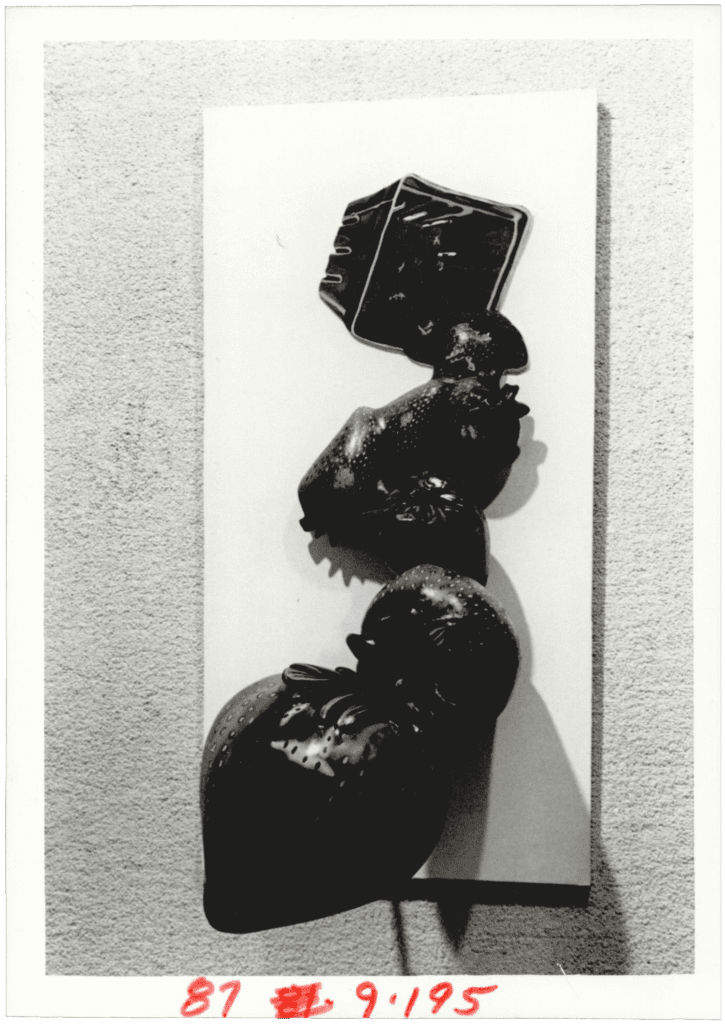
Moan, based in OKC, studied art at Oklahoma City Community College. Her first pieces were decorative tiles and wall sculptures, but she’s since become known for her wearable art.

“I made my first ceramic corset in 2000,” she says. “I was making custom tile, and we needed something to wear to an event. When you are a poor artist, you learn how to make ends meet.”

When she showed up wearing her first creation, “we definitely had everybody talking to us,” she recalls. “I still have the first ones, they are hung up on my wall. They are kind of barbaric looking,” she adds with a laugh. 

Ceramic corsets had been around for a while, but Moan says she was the first to make a wearable version. She’s since branched out to design matching skirts and headpieces, along with jewelry and handbags.

Biss-Grayson started with ribbon skirts, including sponsoring a project to design and manufacture 400 skirts to donate to battered women’s shelters on reservations.

“Ribbon skirts are good medicine,” he says. “But they have evolved, and there are contemporary ones that I’m designing, and I design couture ribbon dresses.”

The Sky-Eagle Collection now includes dresses, scarves, neckties, track suits and men’s ranch shirts, in vivid colors with Native-inspired motifs. Biss-Grayson’s designs have been seen on the red carpet at the Cannes Film Festival and on Oscar night, and twice at New York Fashion Week.

“We’ve evolved from a brand to an actual fashion house,” Biss-Grayson says of the business based in Taos, N.M. “We do business consultation, brand development, media marketing. We produce fashion shows.”

Biss-Grayson’s rise has been part of a renaissance in Indigenous fashion. 

“Native fashion shows are popping up all over the place,” he says. “Our motto is ‘Native fashion is for everybody, for all ages and sizes.’”

OKC-based designer Nicole Moan began her career creating decorative tiles and wall sculptures, but has since become known for her wearable art. Main image photo courtesy Nicole Moan; above photo by S.E. Detweiler.

After he does a show that includes those outside the “usual” model body type, Biss-Grayson says, “a lot of people message me and thank me for opening up the runway for everybody. I think everybody should have a chance to look good and feel good.”

Moan has exhibited at fashion weeks in Dallas, Kansas City and Los Angeles. Every day she works, preparing for the next festival or fashion show. This was her first year to be chosen for the Oklahoma City Festival of the Arts.

In the midst of all that industry, Moan finds contentment. She lives in a house filled with plants that she has owned since she was 19. Her studio, powered by solar energy, is on her property, as is a garden and lots of animals. She walks five miles every morning and evening, often stopping to greet her neighbors and their pets. She recently acquired a loom and plans to start making her own fabric from found items.

And she finds the time to share her skills. When friends give up sewing, they donate their fabric to her, and sometimes even their sewing machines. She teaches others how to sew, then gives them a machine. She does the same thing with kilns – thermally insulated ovens most often used for pottery and ceramics. 

“We have to work as a community, right?” she asks. 

Biss-Grayson continues to paint, with an exhibition of his expressionist landscapes planned for November at the Taos Art Museum. His newest fashion creations include trench coats and high heels, and he recently designed neckties for employees of the Osage casinos.

Flour Power

A Tulsa mainstay, Pancho Anaya Bakery, run by the Anaya family, began in Mexico in 1912 and expanded to Oklahoma 25 years ago. Photos courtesy Pancho Anaya Bakery

For some, baking is a family tradition, while others get into it for the creativity and to fill a niche in the community. Katia Anaya Braga’s family has a long history in the bakery business, dating back to Mexico in 1912. Their company, Pancho Anaya Bakery, expanded to Tulsa about 25 years ago. 

“We were welcomed in Tulsa from the very beginning,” says Braga, now the bakery’s human resources manager. That support “allowed us to grow to where we are now,” she says.

Pancho Anaya Bakery has three locations in Tulsa and has expanded into manufacturing, working with state wholesalers and national distributors.

Deniece Blasko’s Bluebird Bakery marked a homecoming for the southeastern Oklahoma native. Blasko served in the Navy and worked in the aerospace industry before moving back to Oklahoma and opening the Mill Creek storefront in 2021. She enjoyed baking as a hobby and felt like she was being nudged into creating the business; after hosting a soft opening for the bakery, the positive community response helped further convince her about committing to the business. 

The dream of opening the Harvey Bakery & Kitchen in Oklahoma City grew, in part, from the popularity of desserts that were available at Hall’s Pizza Kitchen, also in OKC, says Molly Grenier, CEO of Halls Kitchen Group. Grenier says the appeal of the house-made desserts, along with bringing in pastry chef Alyssa Ulrich, led to a shared dream of starting the bakery in 2021.

“Oklahoma City is so welcoming to local creative places like Harvey,” Grenier says. “This community supports our restaurant and truly has made Harvey its place.”

Rising to the Occasion

A Tulsa mainstay, Pancho Anaya Bakery, run by the Anaya family, began in Mexico in 1912 and expanded to Oklahoma 25 years ago. Photos courtesy Pancho Anaya Bakery

Experts agree: Long, long hours await anyone who wishes to run a bakery. Pastry chef Jean-Baptiste “JB” Saint Amon starts his day quite early. 

“I bake everything for the store between 3 and 7 a.m,” says Saint Amon, owner of Saint Amon Baking Co., a French bakery in Tulsa opened in 2016. After baking, it’s time to open the shop, work on orders, do inventory, complete payroll and sometimes train interns, he says. During busy periods, Saint Amon mentions that he’ll often stay at work until 9 p.m. The payoff after those long days? Hearing compliments from bakery patrons.

“My favorite part of the job, at this point in my career, is to hear the feedback from customers, when they say things like they just came back from Paris and our pastries taste as good, if not better,” says Saint Amon. “That’s the kind of feedback that makes it worth having 15- to 16-hour days.”

Tasty Treats & Traditions

Another reward of this line of work, owners agree, is the chance to be creative, to share their culture and to offer Oklahomans a place to gather.

Braga says one of her favorite aspects of the business is “being able to make these delicious products and then share them with our community.” 

Blasko says she loves channeling her creativity into her baked goods. 

“I’m a perfectionist,” she says. “I want my items to be beautiful and taste amazing at the same time.”

Grenier enjoys seeing the interactions among people who visit the bakery, whether they’re meeting up with old friends or enjoying lunch with coworkers.

But, the biggest question remains: How do those in the business work around the constant cravings?

“I make sure I have a big breakfast before I come to work,” Braga says with a laugh.

National Okie Acclaim

One of Oklahoma’s bakeries has garnered national attention: Tulsa’s Country Bird Bakery was named one of the 22 best bakeries in the United States by the New York Times and its owner, Cat Cox, is currently a finalist for Outstanding Pastry Chef or Baker in the distinguished James Beard Awards. 

An Animated Field

OSUIT’s Associate of Applied Science degree program prepares students for careers in everything from illustration to film, architecture and product modeling. Photos courtesy OSUIT

Animation and digital design, like most special skills, have evolved over time. What used to be an expertise rooted solely in traditional artistic talents has progressed to require knowledge of advanced computer technology. Luckily, students have opportunities to learn and master the craft right here in Oklahoma.

Oklahoma State University Institute of Technology (OSUIT) in Okmulgee offers a 100% online Associate of Applied Science degree (AAS) in the subject. 

“The 3D modeling and animation program at OSUIT is more than just an education – it’s a launch pad for creative careers,” says Heather Ortiz, Ed.D., the interim dean of the OSUIT School of Creative and Information Technologies. “By blending hands-on learning with industry-driven curriculum, our students graduate with the skills, experience and professional connections to make an immediate impact on fields like animation, game design and visual effects. At OSU Polytech, we don’t just teach; we prepare innovators and storytellers for the future.” 

The 79-credit-hour, two-year program is designed to provide a deep immersion into the subject, and is built specifically around industry needs. Perks include small class sizes, cutting-edge software and hands-on training that allows for personalized instruction. 

“Obtaining an AAS degree in 3D modeling and animation from OSUIT is … about mastering the art of visual storytelling, refining technical skills and building a portfolio that speaks to industry standards,” says instructor Tony Galindo. 

Oklahoma City Community College (OCCC) currently offers an in-class AAS degree in Digital Media Design, and the college is in the process of building a focused certificate just for animation.

“This skill set involves being able to plan; understanding arcs, timing and spacing; when to apply squash and stretch; and the anticipation or overlapping of action,” says Chloe Elimam, a professor of Digital Media Design and 3D Art. “We currently offer courses that focus on the pipeline of creating an animation. In Fundamentals of Digital Drawing and Design, students learn design principles to create characters, worlds and storyboards, and color scripts for an animation using digital drawing tools and software. Students have used the Applied Animation course to expand their knowledge on that subject, working with industry standard tools to practice 3D modeling and texturing.”

The door is wide open for potential designers – all you need is curiosity and determination. 

“If you’re interested in animation, absorb as much as you can about it,” says Elimam. “Learn the names and careers of some of the most influential animators of our time, watch everything, and watch it again to pay attention to the motion and the acting, specifically. Listen to interviews, attend workshops, draw in your sketchbook, look for motion in the real world and start to develop your eye as an artist. Be inspired and recreate it.”

Career Options in Animation

“The career options for someone with training in animation include being a 2D/3D animator, motion graphics designer, character designer, environment designer, art director, storyboard artist, background colorist, color script artist, visual effects artist, visual development artist or a concept artist,” says Elimam.

OSUIT’s curriculum equips students with real-world skills applicable to careers in illustration, film, architecture, product modeling, special effects, pre-visualization and environmental design, says Galindo.

“Through hands-on projects, real-world internships and expert guidance, students graduate with the confidence and experience to step into animation, game design, digital media and more.”

The Great Equalizer

Diadem Pickleball Complex in Tulsa offers pickleball leagues, clinics, classes and professional training. Photos courtesy Diadem Pickleball Complex

Pickleball has been around since 1965, but the funnily named sport doesn’t have a ball-shaped pickle or a pickle-shaped ball in use – and most of the time, said ball isn’t even green.

“Pickleball is a blend of tennis, badminton and ping-pong, played with a paddle and a perforated plastic ball, or wiffle ball, on a small, netted court,” says Michael Manglardi, co-founder and vice president of operations at Diadem Pickleball Complex, which has locations in Tulsa and Coconut Creek, Fla. 

There are also special rules to the game. 

“We have a unique two-bounce rule regarding the serve and return of serve,” says Casey Murchison, a pickleball coach at the Premier Pickleball Academy in OKC. The game is primarily played as a doubles game, although singles is a popular option as well. 

“Pickleball is loved for its accessibility, easy-to-learn rules and socialness,” says Manglardi. “Once you start playing, you won’t be able to stop – trust us!” 

Pickleball is the great equalizer when it comes to sports: players of all ages, sizes and athleticism levels can have fun getting out and playing, says Manglardi. It’s especially friendly to beginners who want to see fast improvement and want to take up a new sport without needing hundreds of hours of lessons and practice. Since pickleball appeals to all ages – from kids to seniors – it makes for the perfect sport to bring people together. 

Diadem Pickleball Complex in Tulsa offers pickleball leagues, clinics, classes and professional training.
Photos courtesy Diadem Pickleball Complex

Murchison agrees. 

“The general demographic here in the Oklahoma City metro area for pickleball is older, but the sport is attracting more and more young people all the time,” he says. “The biggest growth is in the 25-34 age group.”

Manglardi has also noticed a substantial rise in participation from elder Gen Z and younger millennials. 

“Over recent years, the average player’s age has dropped into the 30s and is getting younger each year,” he says.

Alongside being an equalizer for players of all skill levels, pickleball is also an accessible sport for different income levels. 

“Yes, you’ll also see varying levels of athleticism, from former pro athletes to first-time competitors; pickleball welcomes all,” says Manglardi. “Also, because all you need is a paddle, some balls and a pair of shoes, most anyone can get out and play with a minimal investment in equipment and court times.”

Historically, pickleball was known as a ‘retirement community’ sport intended for senior players. Although many high-end resorts and country clubs are adopting pickleball, the sport can be as fancy or as bare-bones as you want it to be.

“You can play pickleball anywhere you have a 20’ x 44’ flat, smooth concrete slab,” says Murchison. “You can put four pickleball courts on one tennis court as long as you bring your own portable nets. Some churches allow pickleball to be played in their gymnasiums on certain days and times.”

According to Murchison, you can find pickleball gear at most retail sports, or you can always purchase gear where classes are taught.