Bermondsey became “London’s larder” in the 1860s when large brick warehouses were built on the Thames to store the spices, coffee, fruit, grain and sugar destined for shipment around the world. So-called provisions trades flourished in the district, including food processing, tanning, leatherworks and baking – especially baking.
The Peek Freans bakery in west Bermondsey introduced the world to an innovative fruit-filled biscuit (what Americans call a cookie) in 1861. It caught on, and the firm built a large factory, employed hundreds and filled the air around Clements and Drummond Roads with such sweet smells, people started calling the neighborhood “Biscuit Town.”
Elsewhere in the district, some of the murkier Bermondsey streets served as the inspiration for the setting of Charles Dickens’ Oliver Twist. And it was from these banks of the Thames that J.M.W. Turner painted his The Fighting Temeraire, immortalizing the final voyage of the once-mighty warship on its way to be scrapped in 1838.
Gratefully, early visionaries saw fit to protect and ultimately repurpose many of the early dwellings and warehouses in Bermondsey, creating spaces for what has become a somewhat Bohemian mix of art galleries and studios, foodie adventures, indie shops, lofts and riverside flats.
Most of the action is up on Bermondsey Street, a six-minute walk from Tower Bridge. Sweet little cafes, robust restaurants, small intimate shops and interesting pubs line the cobblestoned thoroughfare.
An unusual, 58,000-square-foot former warehouse on this street is now the White Cube Bermondsey art gallery, specializing in the work of contemporary artists such as Anselm Kiefer and Tracey Emin as well as emerging artists. The exhibitions fill three really large display areas complete with sweeping courtyard. There’s another White Cube in central London and several worldwide.
Nearby, the renowned Maltby Market is only open on weekends but it’s worth the wait. Mom and pop vendors set up shop betwixt and between Victorian railway arches along a sliver of alley called Ropewalk. There, all kinds of tastiness is sold, sometimes waffles and empanadas, sometimes oysters and fresh fruit.
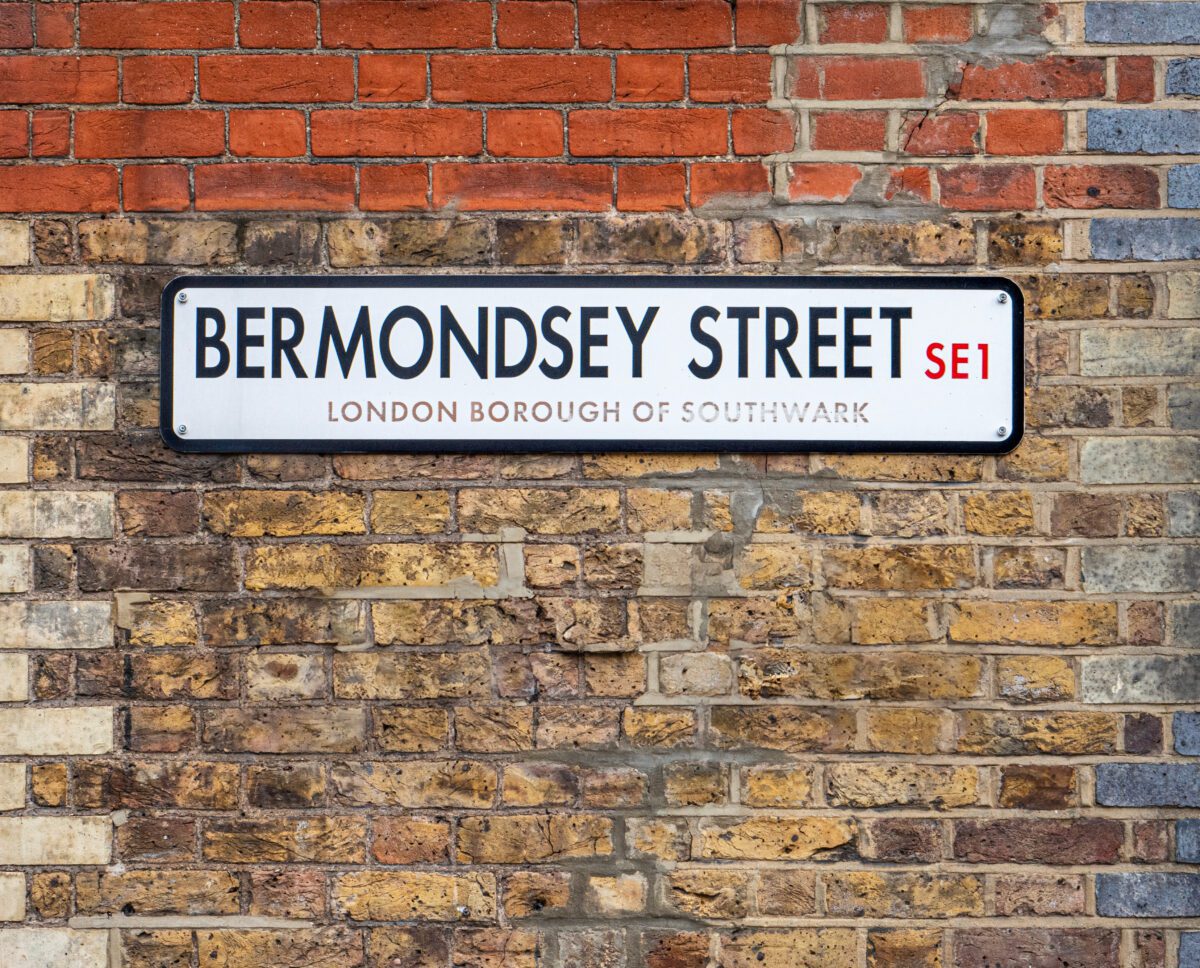
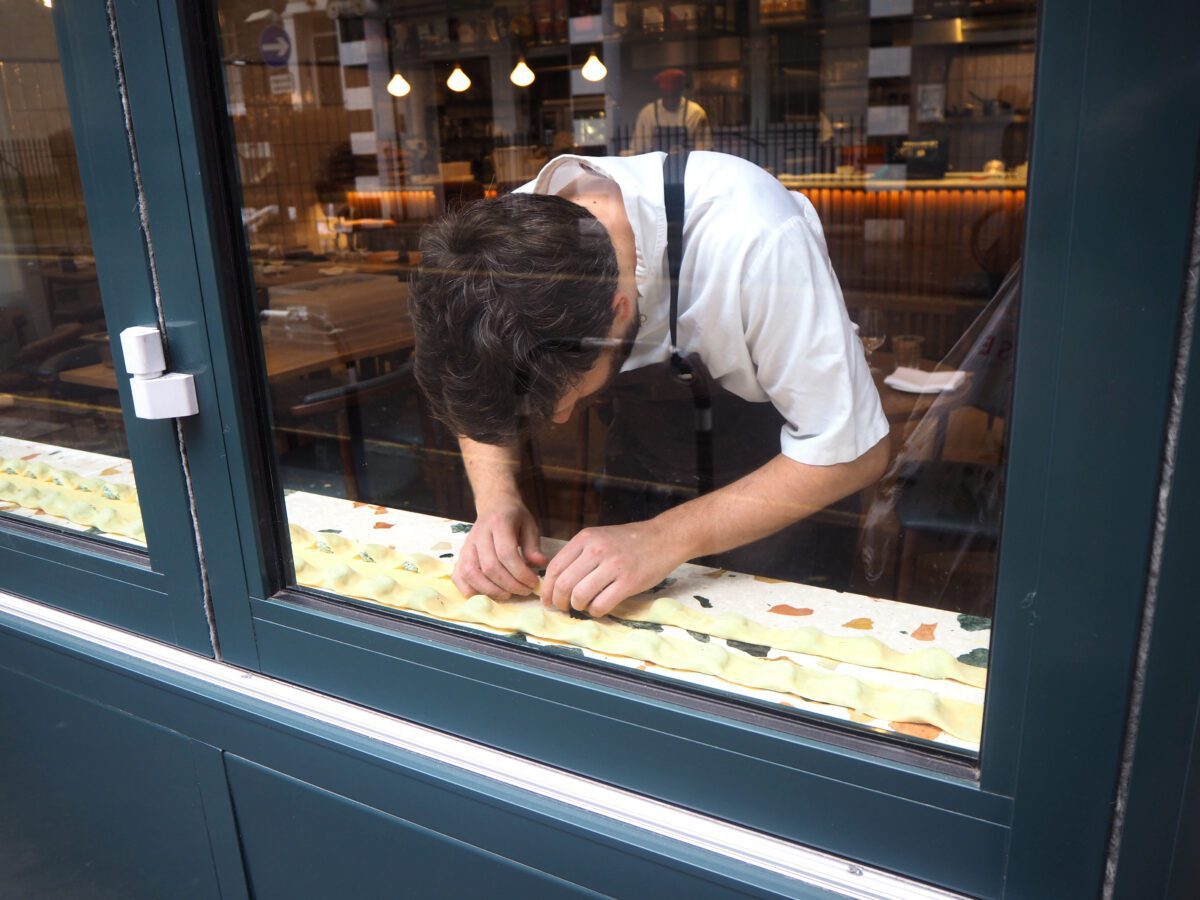
Local architectureBermondsey Street Shad Thames Street A Bermondsey-based chef making ravioli
Another short walk away and we’re faced with even more weekend food choices at Spa Terminus (which is not a spa at all). This spa sells dover sole, artisanal breads, pasta, wine, craft spirits, spices and ice cream.
Bermondsey Square on Tower Bridge Road stands on a site where an 11th-century abbey once operated, near the south end of Bermondsey Street. This is where the first Bermondsey Market was held in 1948, trading primarily in antiques, collectables and gold. Now, it’s a cozy collection of shops, small restaurants, offices and a boutique hotel. The market is still open every Friday morning, and on Sundays there’s live jazz.
A little further up Bermondsey Street, the quirky Fashion and Textile Museum takes a deep dive into the impact of international textiles on fashion. Mexican architect Ricardo Legorreta designed the signature orange and pink building. And while you’re in the area, swing by the London Glassblowing Gallery for a glimpse of some of the best glass and finest glassblowers in the United Kingdom.
The Tower Bridge we all know, love and can’t resist photographing crosses the Thames just north of Bermondsey. Its twin Cornish granite-clad 231-foot towers support the drawbridge in the central span that opens for passing ships. Glass-floored walkways run 135 feet above the Thames, connecting the two towers and providing terrific 360 views of London. Tours are available. The newest London Bridge (built in 1973) is just a wee bit upstream from Tower Bridge.
Stay at the LaLit London, a very nicely appointed boutique hotel designed in the early 1900s by the architect of the Old Bailey. You’ll enjoy two restaurants, two bars, a full spa and short walks to both Tower Bridge and Bermondsey Street.
Whether an illness comes on gradually or you’re faced with a sudden medical emergency, knowing when and where to find the right level of care is the first step to support a positive outcome.
Kelli Koons, M.D, an internal medicine and pediatric specialist with SSM Health St. Anthony Hospital in Shawnee, says healthcare is best delivered when patients utilize the appropriate level of care for their specific needs. The most common healthcare options include emergency care, urgent care and primary care.
“Each setting – an emergency department (ED), urgent care clinic and primary care provider (PCP) – serves a distinct purpose in the healthcare system,” says Koons. “The emergency department is designed to manage life-threatening or severe medical emergencies. Patients experiencing symptoms such as chest pain, difficulty breathing, stroke-like symptoms, neurological changes, open or displaced fractures, or suspected poisoning/overdose should seek immediate care at the nearest ED. Emergency departments are equipped with advanced diagnostic and treatment capabilities to rapidly address complex and critical conditions.”
Urgent care clinics were introduced in the 1970s and have slowly expanded in presence and popularity. These clinics are known for treating immediate, non-emergent needs.
“Urgent care or express clinics are most appropriate for minor, acute illnesses or injuries that require prompt attention but are not emergencies,” says Koons. “These facilities are ideal when over-the-counter treatments have failed or when a rapid clinical evaluation is needed. Common conditions treated in urgent care include minor infections, mild asthma exacerbations, sprains and minor lacerations. It’s important to recognize that urgent care is not intended for chronic or complex medical issues, and patients with more severe symptoms may ultimately be referred to the ED or their primary care provider.”
When it comes to consistent, life-long health management, Koons emphasizes the role and benefits of having a primary care provider.
“Primary care serves as the foundation of long-term health management,” she says. “PCPs are uniquely positioned to provide comprehensive care, as they are familiar with a patient’s medical history, medication regimen and prior interventions.”
Along with routine health maintenance such as annual physical exams, PCPs manage vaccinations, chronic diseases, medication adjustments and coordinated referrals to specialists when needed.
“Primary care providers also monitor trends in laboratory and diagnostic results, enabling early detection of disease and more effective intervention,” says Koons. “A significant advantage of primary care is its ability to deliver both preventive and acute care in the context of a patient’s overall health picture. In fact, most conditions seen in urgent care can also be effectively managed in a primary care setting, often with greater continuity and follow-up.”
She explains that while urgent care clinics offer convenience, relying on them exclusively for healthcare can result in fragmented and reactive care.
“Urgent care visits typically focus on a single concern and may lack the context of a patient’s broader medical history,” says Koons. “As a result, underlying or developing health issues may go undetected. In contrast, primary care is inherently proactive and relationship-based. PCPs provide continuity of care, monitor trends in health data and offer early interventions that can prevent disease progression.”
She believes forming a positive relationship and receiving consistent care from a PCP can be key to detecting subtle changes in a patient’s health, behavior or functional status.
Koons says, “Establishing care with a primary care provider fosters trust, improves communication and enhances the quality and efficiency of care across a patient’s lifespan.”
Beavers Bend State Park is just one of ample tourist attractions in Broken Bow. Photo courtesy Oklahoma Tourism
Tucked away in southeast Oklahoma, Broken Bow is a small city with a lot to offer thrill-seekers and history buffs alike. It’s a haven for outdoor enthusiasts and, as the gateway to Beavers Bend State Park, attracts visitors year-round.
Located between the Kiamichi and Ouachita mountains, Broken Bow offers a vibrant mix of natural beauty, cultural heritage and outdoor recreation, making it an ideal getaway for travelers of all interests.
Now part of McCurtain County, Broken Bow was originally inhabited by the Choctaw Nation in 1830 after a treaty with the United States resulted in the tribe’s relocation. By 1911, the city was incorporated, and less than a decade later had a population of more than 1,900. Herman and Fred Dierks were among the early residents, renaming the city after their hometown in Nebraska. The Dierks brothers also established the Choctaw Lumber Co., which drove early development efforts and remains an essential business in the area.
Beavers Bend State Park is a must for those who enjoy the great outdoors. Hiking, fishing, boating and camping are all popular activities, set amid a landscape of towering timbers, clear lakes and rugged terrain. The park is located along the shores of Broken Bow Lake and the Mountain Fork River and features Beavers Bend Lodge, the 18-hole Cedar Creek Golf Course and 26 miles of hiking trails along the David Boren Trail. The Forest Heritage Center, located within the park, offers a look into the area’s forestry history through art and historical artifacts.
“The Forest Heritage Center has been a community anchor in southeast Oklahoma for 50 years,” says Brianna Reed, the center’s curator. “Today, we continue the mission of our founders by educating the public through monthly programs, special events, gallery exhibitions and taking every opportunity to educate the public about the positive impact of the forest and its products on our daily lives.”
Visitors can also experience Broken Bow from a unique vantage point with Broken Bow Balloon Rides, located just minutes from U.S. Highway 259. The Kiamichi mountain range, Broken Bow Lake and other scenic vistas are visible during the aerial journey. For those apprehensive about flying, owner Morgan Snipes offers a suggestion.
“I would suggest finding a festival or event to try a tethered balloon ride that only goes up 50 feet or so,” Snipes says. “All of [our] flights and activities are public, so we also invite prospective passengers to the launch sites and to follow or ride along during the chase with the crew to get a better idea of how it works.”
Be sure to also check out the Maze of Hochatown and Rugaru Adventures. Just outside of Broken Bow, the Maze is a giant wooden, outdoor labyrinth that offers a fun and challenging adventure for families, friends and thrill-seekers of all ages. Rugaru Adventures is an exhilarating zip line tour offering six thrilling lines through the forest – including a heart-pounding ride over Broken Bow Lake – with trained guides ensuring both safety and excitement.
Whether you’re seeking outdoor thrills, rich cultural history or a peaceful retreat in nature, Broken Bow delivers an unforgettable experience. With its stunning landscapes, engaging attractions and deep-rooted heritage, this southeast Oklahoma gem is a destination worth exploring.
Enjoying Oklahoma wildlife can be part of the overall experience of living in-state. With a few tips from local experts, or from doing a little research on your own, that experience can be greatly enhanced and keep everyone – and thing – as safe as possible.
“Oklahoma is a bit of a melting pot of habitats,” says Jena Donnell with the Oklahoma Department of Wildlife Conservation. “The state’s mix of forests, woodland, shrublands, grasslands and aquatic habitats allows an even broader mix of fish and wildlife to call Oklahoma home. While some species may be habitat specialists and are only found where that habitat occurs, others are generalists and can be found statewide or nearly statewide.”
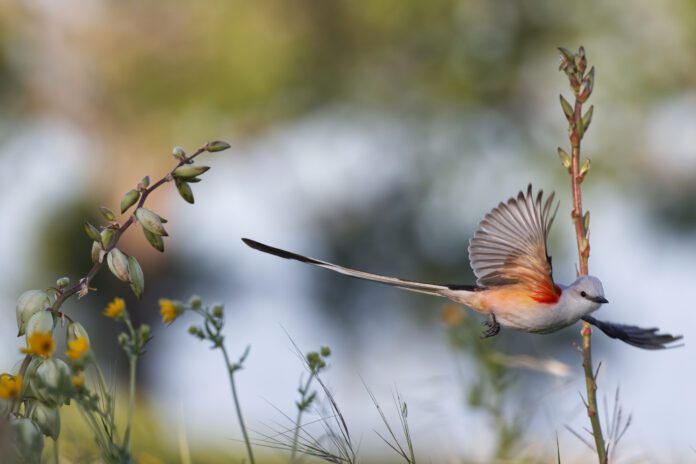
Donnell points out the scissor-tailed flycatcher, Oklahoma’s state bird, is one such species.
“It migrates to Oklahoma in late March to early April and can be seen flying out to catch insects or sitting on fenceposts, tree branches and even tall flower stalks across the state through October,” explains Donnell. “Other birds, like the red-tailed hawk, Oklahoma’s state raptor, are found in Oklahoma year-round.”
According to Donnell, staying quiet and paying attention to one’s surroundings can increase the opportunity to have a ‘positive wildlife encounter.’ She suggests listening for sounds the animal may be making and watching for movement nearby.
Having a general idea of the wildlife you could encounter and how to interact with them is important, too.
“It’s exciting to get close enough to really appreciate the animal and maybe snap a photo, but it’s also important to not get too close and be a perceived threat,” stresses Donnell. “For coyotes, you’ll want to make noise to scare them off, but with bobcats, it’s best to be quiet and leave immediately.”
Donnell notes spotting the critters on or along our paths is frequently a two-way street.
“Most wildlife will detect us first and either hide or run or slither away before we even know they’re in the area,” she says. “But if we happen to surprise wildlife or they don’t have an easy escape route, it’s important to stay calm and slowly back away and give the animal enough space so that it feels less threatened. Once you’ve given it space, you can quietly watch it, take a few pictures, and then go around it and let it get on with its day.”
When children or dogs are part of your walkabout, Donnell offers the following guidelines.
“If you’re exploring with kids on a trail, it may be a good idea to station an adult at the front and rear of the group,” she says. “Keeping dogs on leashes can also help limit negative wildlife experiences.”
To entice wildlife to your yard, Donnell suggests choosing native plants that bloom at different times of the year, maintaining older trees or standing snags, and providing nest boxes or bird feeders.
“Living with the wildlife in your area requires balance,” says Donnell. “If you see wildlife more as pests than welcomed visitors, it’s time to think about what is attracting the animals and adjusting the habitat you’re offering. If those habitat changes don’t help, it may be time to call animal control or a nuisance wildlife control operator.”
Deterring Pests
• Secure your trash and trash bins.
• Feed your pets indoors.
• Keep your lawns trimmed and well-maintained.
• Rake leaves and remove debris from around house foundations to limit habitats for snakes and other wildlife.
• Install motion-activated lights to deter animals from making homes in your yard.
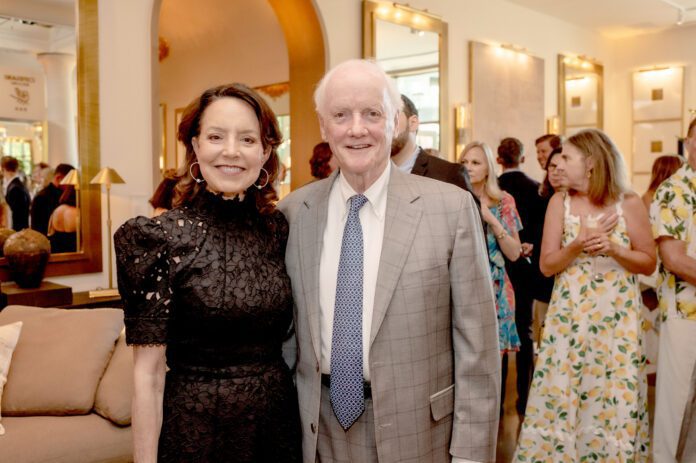
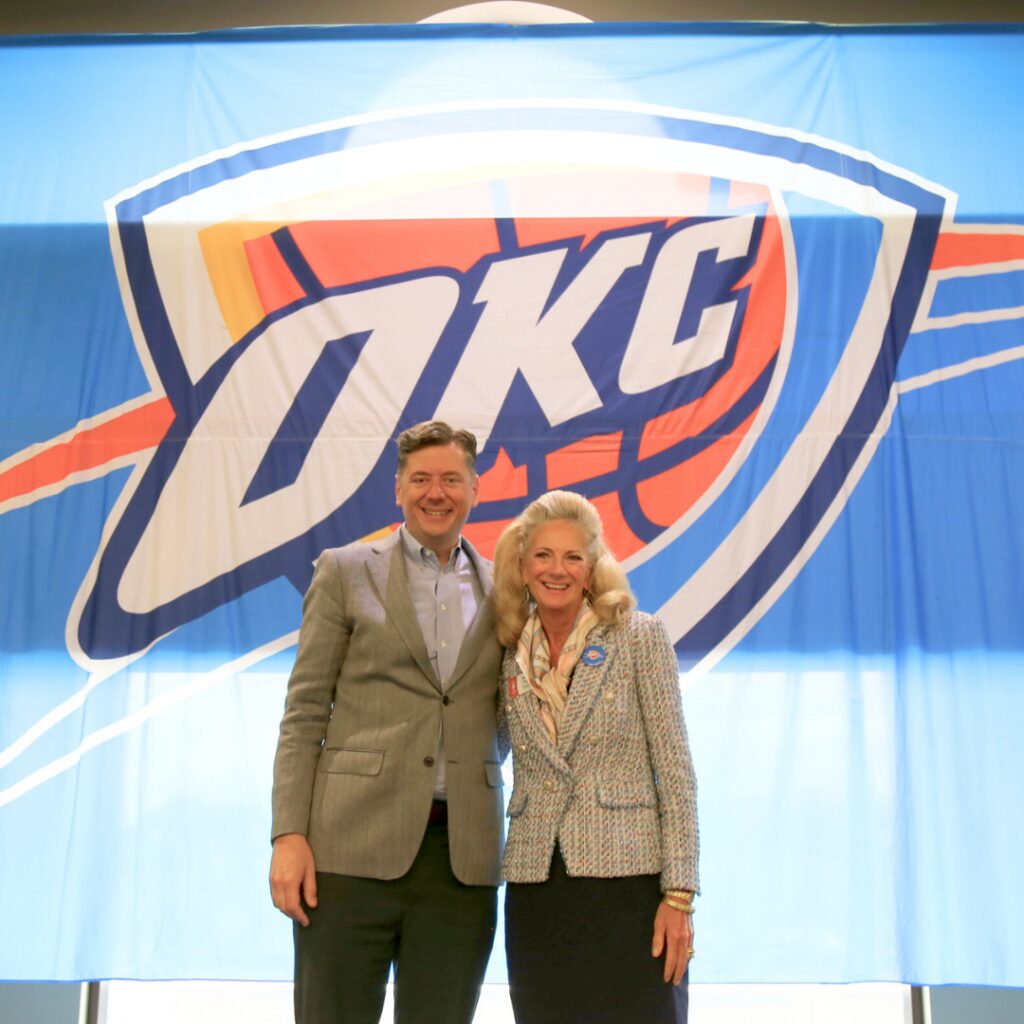
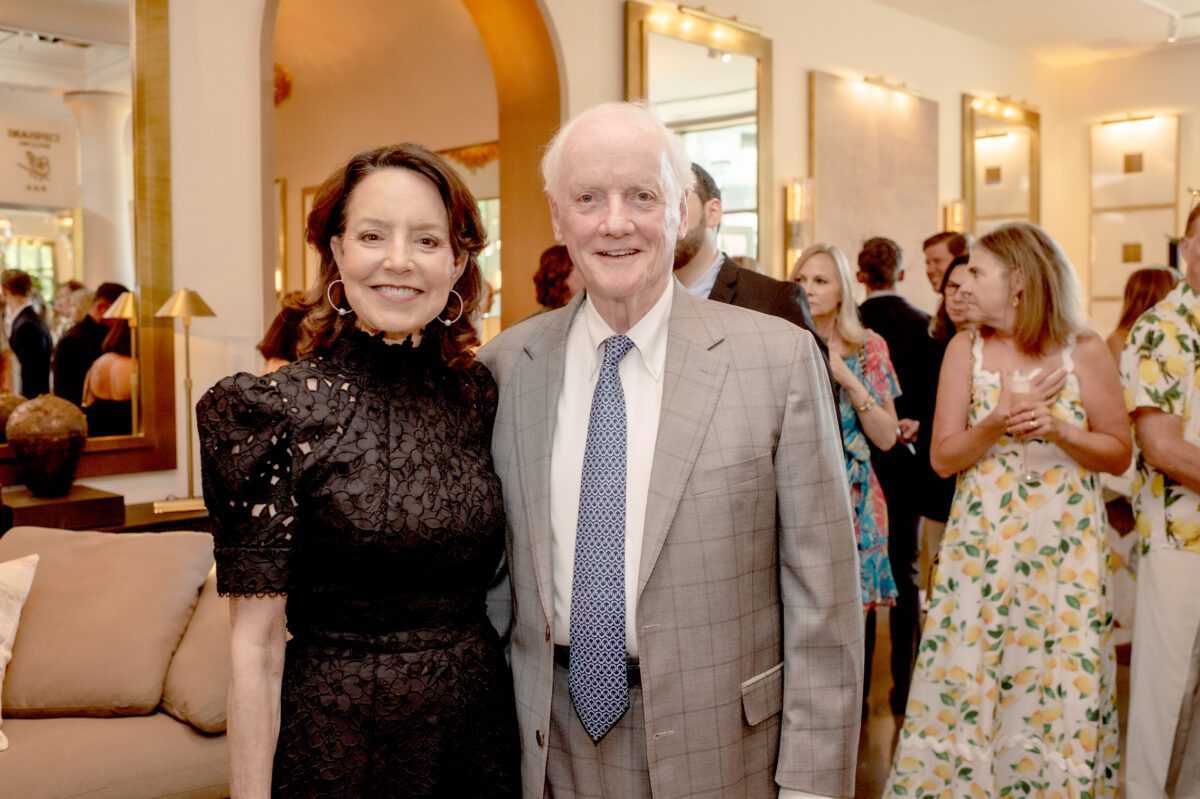
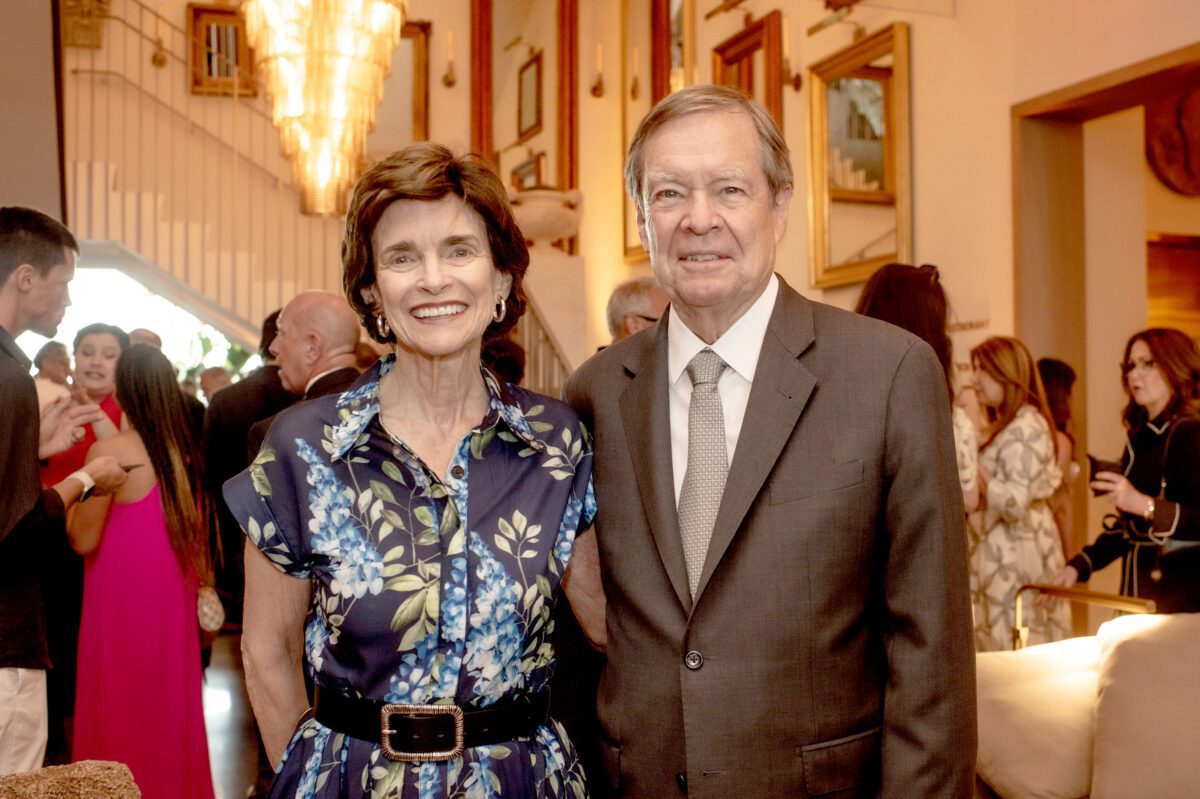
Cathy & Frank Keating;
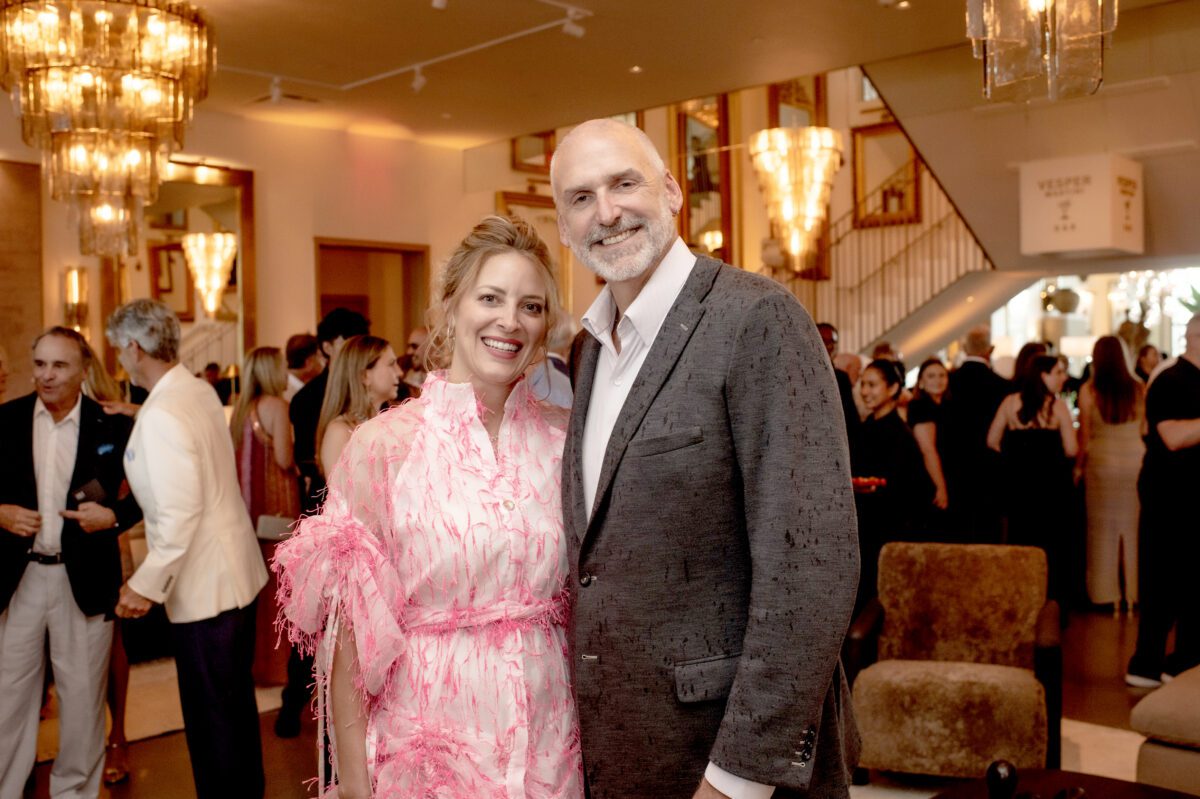
Grand Opening VIP Party, RH, OKC
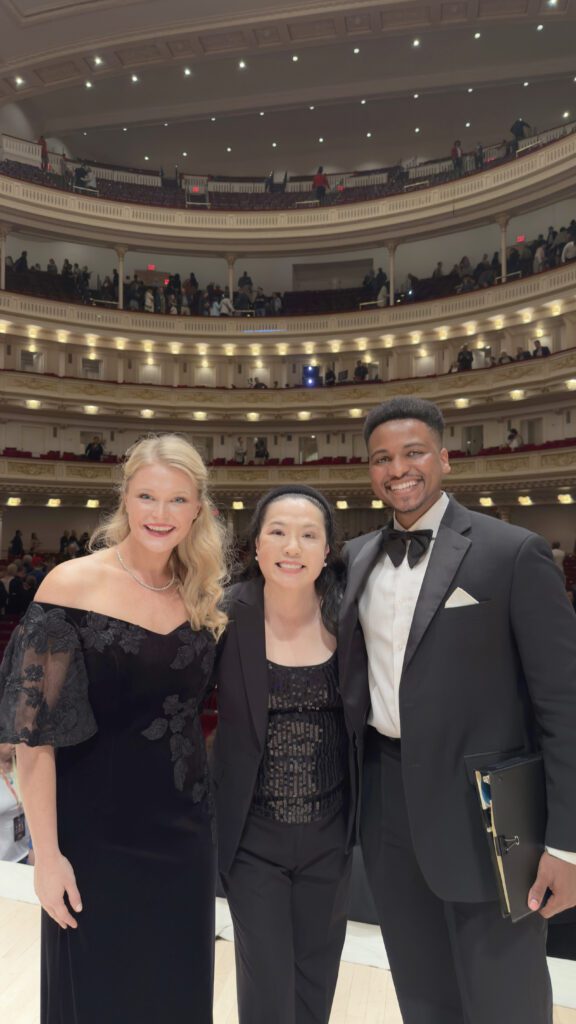
Courtney McPhail, Dr. Julie Yu, Justin Bell;
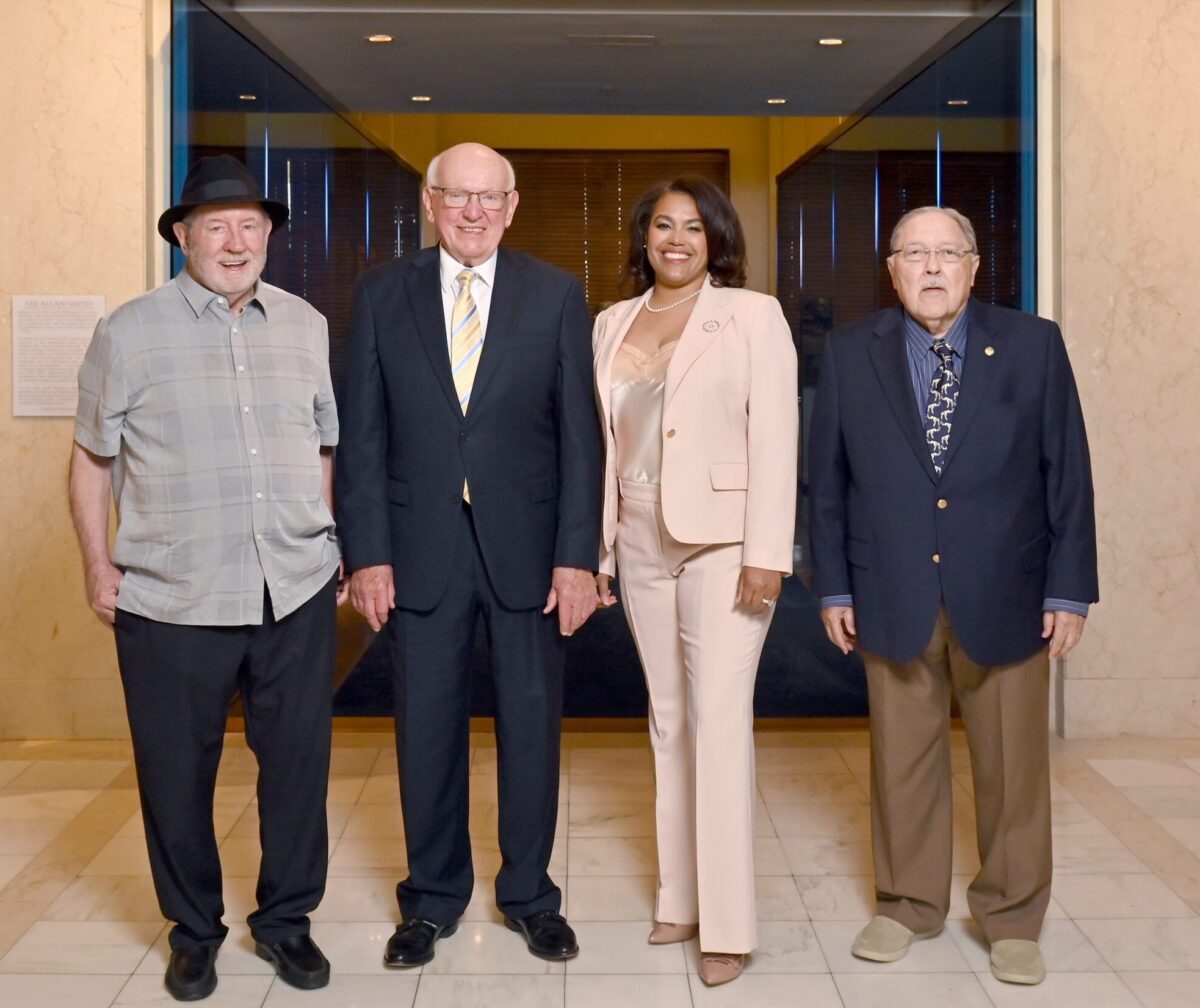
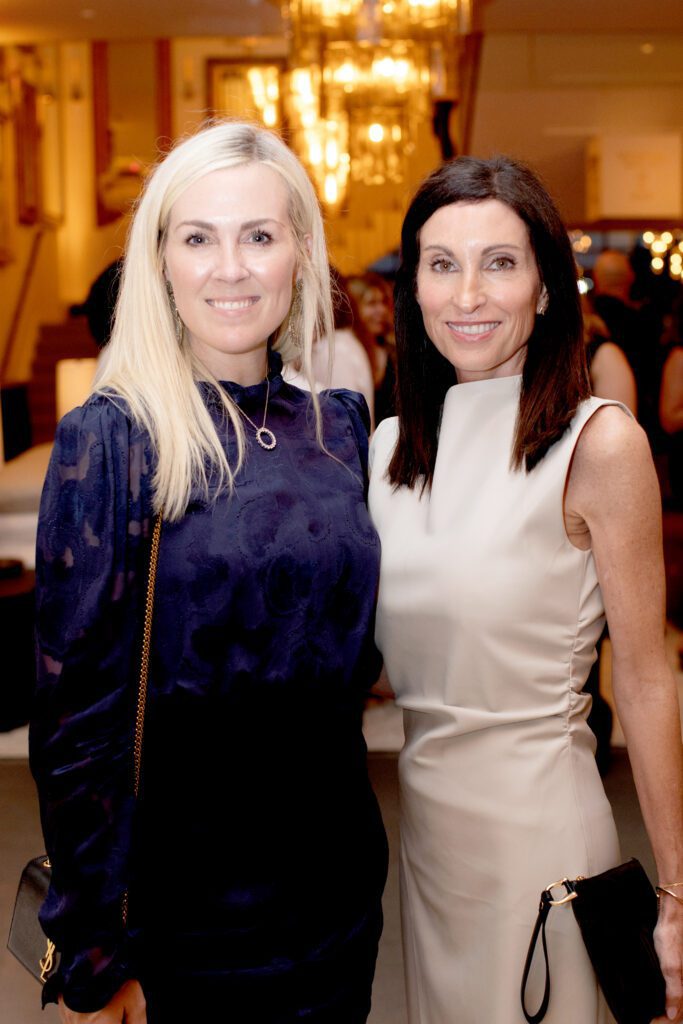
Canterbury Voices at Carnegie Hall, OKCTiffany Bjorlie, Eric Hilaire, Wendi Fralick, Stuart & Dana Solomon; Inspire: A Night of Entertainment, The Center for Individuals with Physical Challenges, TulsaMayor David Holt, Marnie Taylor; Nonprofit Law & Finance Conference, Oklahoma Center for Nonprofits, OKCEddy Gibbs, Bert Mackie, Dr. Mautra Staley Jones,
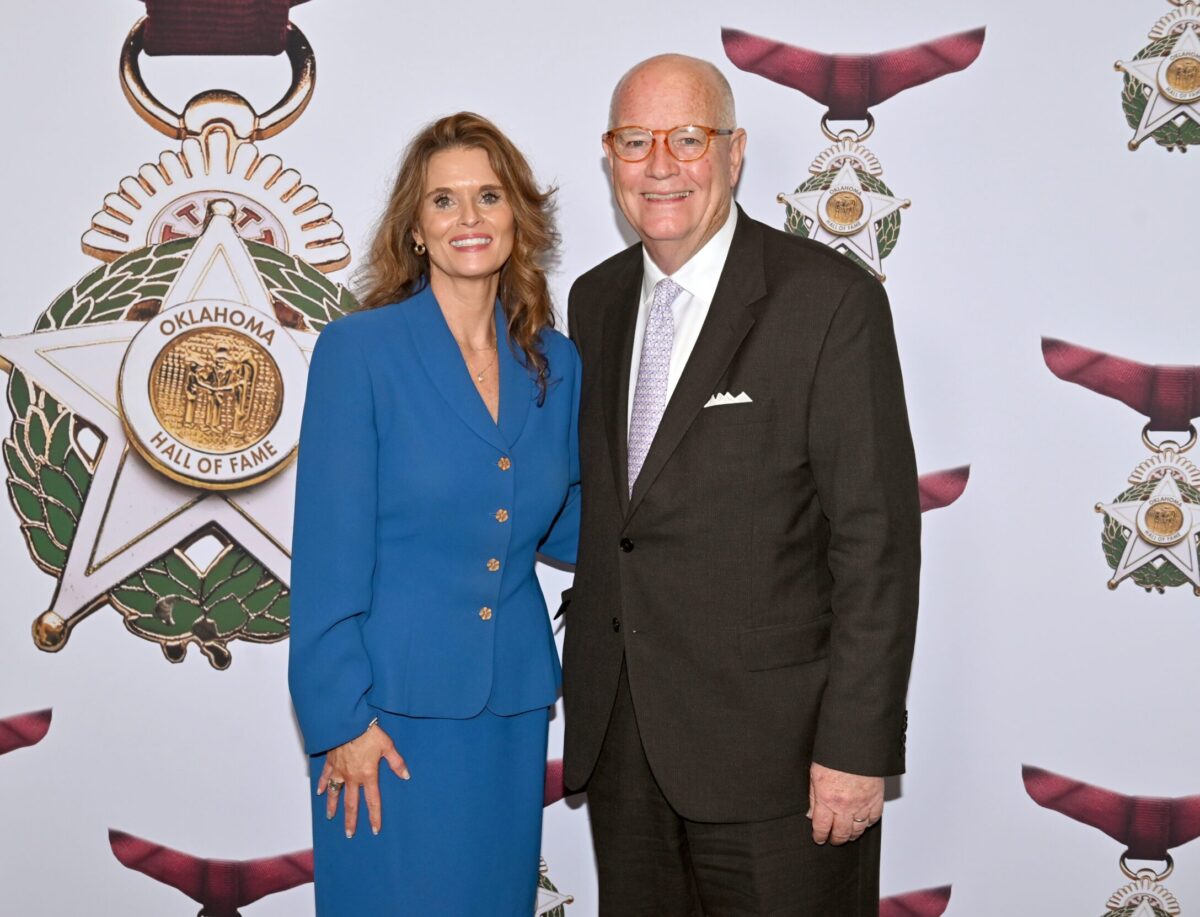
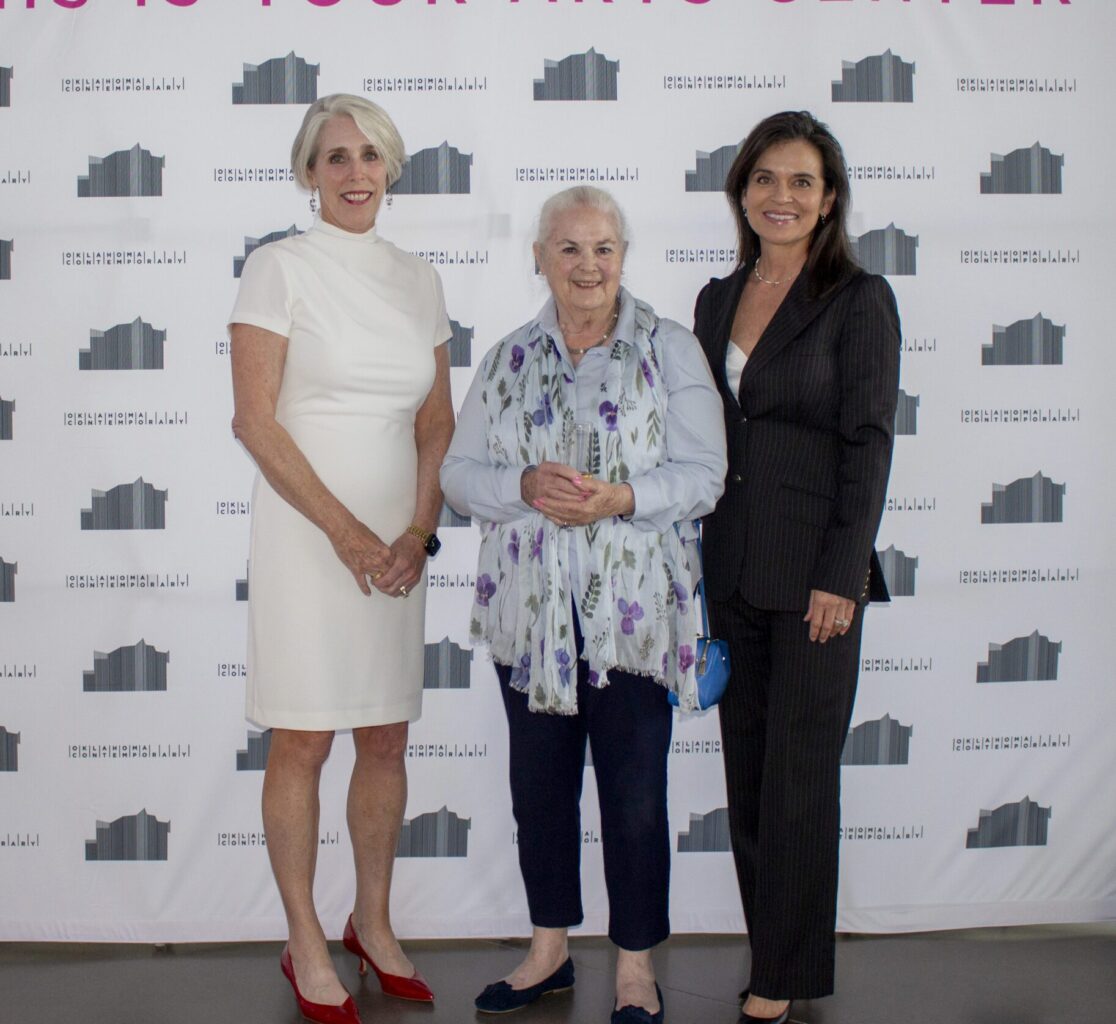
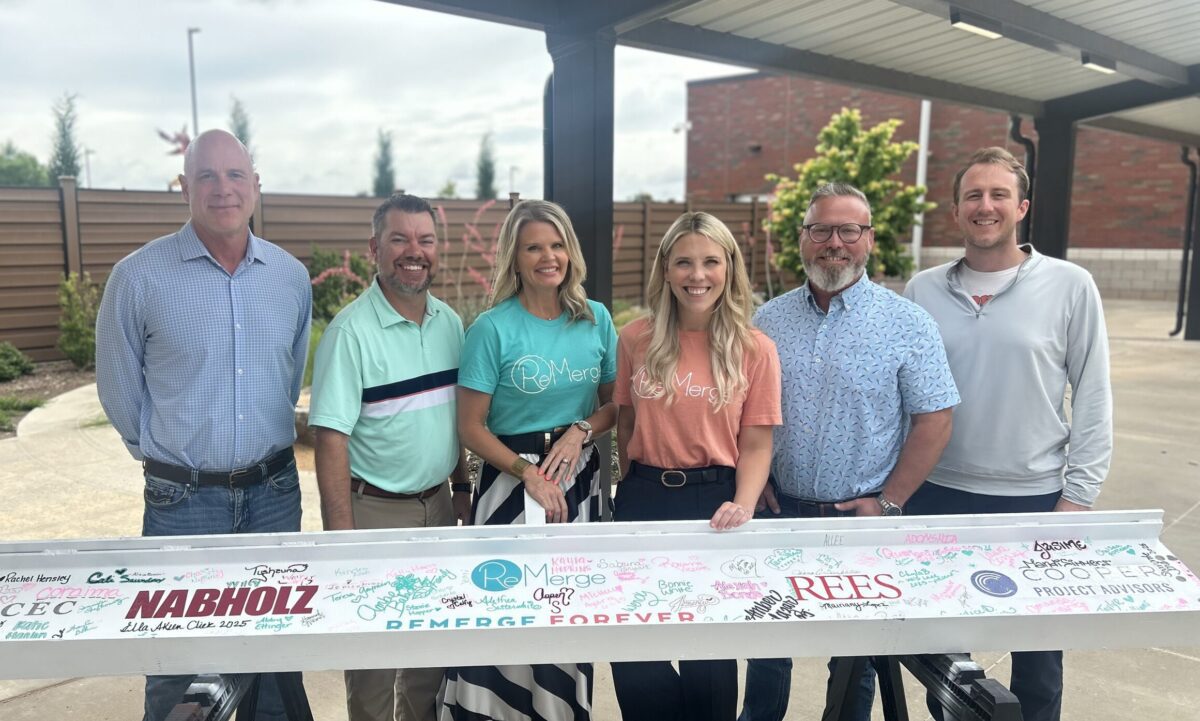
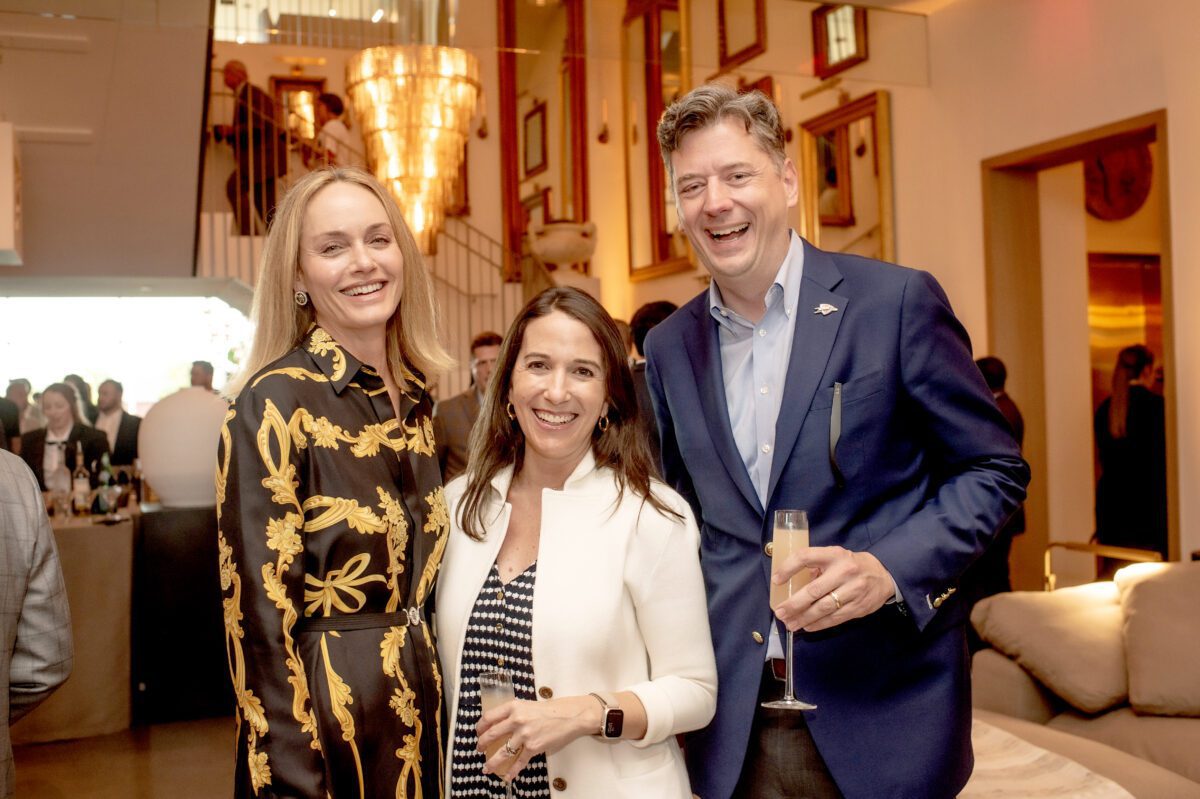
Dr. Michael A. Mares; Class Announcement Luncheon, Oklahoma Hall of Fame, OKCShannon L. Rich, Bruce T. Benbrook; Class Announcement Luncheon, Oklahoma Hall of Fame, OKCMary Ellen Gumerson, Peg Maloy, Kim Bruno; Founders Day Celebration, Oklahoma Contemporary, OKCJames Bennett, Matt Harp, Erin Engelke, Shannon Taylor, Jonathan Musgrove, Tyler Tokarczyk; Topping Out Ceremony, ReMerge, OKCAmber Valletta, Rachel & Mayor David Holt;
Grand Opening VIP Party, RH, OKCCathy & Frank Keating;
Grand Opening VIP Party, RH, OKCKim Garrett-Funk, Bob Funk Jr.; Grand Opening VIP Party, RH, OKCPolly & Larry Nichols;
Grand Opening VIP Party, RH, OKCRachel Cannon, Katy Boren; Grand Opening VIP Party, RH, OKC
Oklahoma’s Native American nations are continuously remolding the cultural and economic landscape of our state through their innovation, resilience and tradition. From thriving business enterprises to groundbreaking work in everything from film to mental health to language preservation, Native tribes are leading Oklahoma boldly into the future.
Native Business Updates
Media outlets were abuzz in June with stats from the latest Tribal Economic Impact Study. The numbers are well-known to Choctaw Chief Gary Batton, who is perpetually enthusiastic about tribal contributions to Oklahoma’s economy and infrastructure.
“The tribal nations of Oklahoma were responsible for an incredible economic impact of more than $23.4 billion in 2023 alone,” according to the report. Tribes based in Oklahoma employed more than 56,000 people in 2023, paying out wages and benefits totaling $3.3 billion.
The Choctaw Nation employs 13,500 workers, Batton says, totaling more than $1 billion in wages.
“We as the Choctaw Nation do not tax our people,” Batton says. “It’s important to generate revenue to deliver services to our people. The Choctaw Nation has grown by 600 employees over the past four years.”
More than 400 jobs were created by the 2024 opening of the Choctaw Landing Luxury Resort and Casino in Hochatown. But Batton is just as proud of the Nation’s smaller ventures such as the Three Rivers Meat Company in Smithville, a USDA meat processing and retail operation that opened last year and provided 24 jobs.
“We raise our own beef as well,” Batton says. “If we can supply the meat processing plant with enough beef, we can put that in our grocery outlets and sell it, and maybe take that nationwide. We are working with local farmers and ranchers to grow the same quality of beef” to help supply Three Rivers Meat Company, he shares.
In February, the Chickasaw Nation opened the OKANA Resort and Indoor Waterpark on the grounds of the First Americans Museum in Oklahoma City. The 100,000-square-feet indoor waterpark features rides, interactive water features, a heated pool and a lazy river.
The outdoor waterpark, which opened in May, offers resort guests The Lagoon beach experience, ziplines and a slide that drops into a deep pool, an inflatable obstacle course and a swim-up bar. Lodging options include junior suites, multi-room family suites and bunk suites, and restaurants range from Mexican to Asian to tribal cuisine. Both parks are open to the public with day passes.
Tribes also support the economy by investing in infrastructure and bolstering education, Batton says.
“We give to every fire department and every law enforcement agency across the Choctaw Nation,” he says. “We give to all of the 89 school districts in the area.”
Oklahoma tribes have invested millions in infrastructure projects, according to the economic impact study.
For example, the Chickasaw Nation spent $13.5 million to fund improvements to Interstate 35 at the Oklahoma/Texas border; the Cherokee Nation donated $12 million to improve Tulsa’s I-44 and 193rd Street interchange; and the Citizen Potawatomi Nation funded $8 million worth of improvements at Interstate 40 and State Highway 102 near Shawnee.
“We think like Cherokees, and if we are truly doing that, we are thinking about our neighbors,” says Cherokee Deputy Chief Bryan Warner.
“If we don’t do that, we can’t heal a community. In the smaller communities, we see the needs for housing, and community buildings and sidewalks. We’ve got to make sure the lights are turned back on in those communities,” Warner says.
The Cherokee Nation employs 14,500 people between its business and governmental functions.
Suite Shots Golf, which opened in April in the Riverwalk Crossings in Jenks, is a joint venture between the Muscogee Nation and the North Dakota-based golf entertainment company. Muscogee Nation press secretary Jason Salsman says the tribe’s Onefire Holding Company business arm has helped to totally revitalize the shopping center, which now includes Muscogee cultural identifiers in its décor.
A March opening is planned for a new four-story, $85 million tribal headquarters and Muscogee citizen services building in Okmulgee, Salsman says.
Chickasaw Nation leadership aims to build trust with the youth – reflecting the Nations’ broader commitment to uplifting future generations. Photo courtesy the Chickasaw Nation
First Americans on the Silver Screen
A conversation during a baseball game was a reminder to Cherokee Nation’s Warner of the importance of Cherokee Film. That’s the umbrella organization for the Cherokee Film Commission, Cherokee Film Incentive, Cherokee Film Studios and Cherokee Film Institute.
“I was talking to an individual, a great person. I could tell he didn’t know anything about tribal nations, but he was curious,” Warner says. “Movies tend to depict everybody as being in a Plains tribe. I told him that each tribe has their own story of what has happened to them. We want to make sure we tell the right story.”
The Cherokee Film Commission scouts and promotes movie locations in Oklahoma and connects filmmakers to skilled Native talent and crews. The Cherokee Film Incentive incentivizes filming within the boundaries of the Cherokee Nation, offering up to 25% cash back for production expenditures in addition to the incentive programs offered by the state of Oklahoma. The state-of-the-art Cherokee Film Studios in Owasso offers soundstages and a studio space with editing and audio suites, hair and makeup suites and catering facilities. And the Cherokee Film Institute provides workshops and on-set training to build a skilled workforce for every level of the industry.
Cherokee Film, Warner says, “serves a purpose of messaging.”
Chickasaw Nation Productions resulted from Gov. Bill Anoatubby’s vision to use film production to preserve the stories of the Chickasaw people.
“The goal of Chickasaw Nation Productions is to educate audiences by producing feature films and documentaries with accurate, positive portrayals of Chickasaw people, history and culture,” according to its website.
In November, Choctaw Nation’s Chief Batton took to social media with some news about the film industry.
“I’m proud to announce that Brave will be the first-ever film to shoot on the Choctaw Nation Reservation,” Batton posted on Facebook. “This film represents a historic milestone for our tribe. It’s a powerful step forward in our efforts to defend sovereignty, ensuring our stories are told authentically by our own people.”
The Bureau of Indian Education
The nearly 1,000 students who are enrolled in the Bureau of Indian Education’s (BIE) tribally-run schools in Oklahoma “develop pride in their heritage, build leadership skills and deepen their connection to their communities and cultures,” according to a spokesperson for the Bureau of Indian Affairs.
BIE directly operates Riverside Indian School, a fourth through 12th grade residential campus in Anadarko that serves Native students from across the country. In addition, BIE funds and supports four residential tribal schools: the Cherokee Nation’s Sequoyah High School in Tahlequah; Jones Academy (Choctaw Nation) in Hartshorne; Choctaw Children’s Village in Kingston; and Eufaula Dormitory (Creek Nation) in Eufaula.
The passion of Muscogee Nation’s youth represents the carrying on of tradition as the Nation invests in its culture and community. Photo courtesy the Muscogee Nation
“While their respective tribal nations manage them, BIE provides support through funding, compliance monitoring and technical assistance,” the spokesperson says.
A $65 million building and renovation project underway at Sequoyah High School will include a performing arts center, a new academic building and remodeled dormitories, says Corey Bunch, chief of staff of the Cherokee Nation. Bunch expects the work to be complete by the end of 2026.
In addition to its musical endeavors, “in the last decade or so, we have developed a terrific drama program,” Bunch says. “We’ve been needing to give them a better place to perform.”
The 9th- through 12th-grade campus has an enrollment of 330, many of whom are commuter students from Tahlequah and surrounding counties, Bunch says.
“We have a high expectation for our students,” Bunch says. “We want them to make a commitment to get the most out of their education and be prepared for the next level, for some form of higher education.”
Students with an interest in aviation have spent the past two years building an airplane in a hangar in Tahlequah. It’s a partnership with the Spartan School of Aeronautics in Tulsa and Tango Flight, a nonprofit designed to inspire the next generation of aviation workers.
Students built a two-seater, single engine plane that will be sold so a new kit can be purchased for the next class, Bunch says. He says he would also like to make flight lessons available to the students while they are building the planes.
Native students benefit from attending schools that “honor and uplift their identities,” the BIE spokesperson says. The schools incorporate Native language instruction, tribal history and cultural practices into their curriculums, including traditional arts, storytelling, powwows and regalia-making.
BIE also supports cultural training in public schools.
“These initiatives provide funding and technical assistance to tribes and eligible institutions, including public schools with high Native enrollment, to promote Native language preservation, cultural education and student support services that reflect tribal values,” the spokesperson says.
More than 400 jobs were created by the 2024 opening of the Choctaw Landing Luxury Resort and Casino in Hochatown. Photo courtesy the Choctaw Nation
Keeping Language Alive
A showpiece campus for the transfer of the Cherokee language from one generation to the next is taking shape in Tahlequah.
The Cherokee Language Immersion School will soon be expanded with a $30 million middle school where traditional culture will be infused into a modern-day curriculum that meets and even exceeds mandated federal education standards, says Howard Paden, executive director of the Department of Cherokee Language. The school is expected to open in the spring of 2026.
Students will study the fine and performing arts, including learning how to rap in Cherokee. They will plant corn, singing the same song their ancestors did 6,000 years ago. Fresh water for ceremonies will be drawn from the aquifer below. A life skills curriculum will teach traditional cooking and sewing.
“We want our kids to be able to look up in the sky and know what stars are out, and be able to walk through the woods and look at the plants and know which way is north because moss is growing on that side of the tree,” Paden says. “We are in the middle of building a Cherokee renaissance. It’s about the past, the here-and-now and the future. We aren’t throwing technology out. We are going to make technology Cherokee.”
The tribe’s Durbin Feeling Language Center houses all language preservation programs including the immersion school, the master apprentice program for adults and the translation department. About 150 employees run 16 language programs.
Paden felt called as a child to learn Cherokee. His father took him to visit elders who were first-language speakers. He practiced with others during stomp dances. He says students now can learn in a month what it took him 20 years to pick up on his own.
The Nation is losing about 78 first-language speakers every year, but graduating only 24 from its apprenticeship program, he says. He’s reminded of that often, because a bell is rung in Tahlequah every time a Cherokee speaker dies.
“Families might drive an hour and a half to stand outside and our whole group will mourn with them,” Paden says. “It happens every week, sometimes twice a week.”
Choctaw’s Chief Batton has a goal for all 13,500 employees of the Choctaw Nation to learn to speak at least a few words or phrases in Choctaw – ranging from ‘hello’ to ‘please,’ ‘thank you’ and ‘until we meet again.’ A few weeks ago, his heart melted as he maneuvered his vehicle alongside the drive-up window of a fast-food restaurant. “Halito,” the woman on duty said. That’s Choctaw for hello.
“For me, as a tribal leader, the most important thing is preservation of our culture and history,” Batton says.
The tribe’s language preservation program includes paying apprentices to show up every day and study Choctaw. Typically, they become fluent in about four months.
“They tell us that when it clicks, it clicks,” he says.
Chickasaw Nation officers help the tribe’s efforts to build, educate and support communities across Oklahoma. Photo courtesy the Chickasaw Nation
The Nations & Mental Health
Services to people in need of mental health and substance abuse treatment are a priority with Oklahoma tribes, several of which are building or have opened specialized facilities.
The Cherokee Nation’s $25 million residential drug treatment center is scheduled to open by the end of the year in Tahlequah. The tribe created a $5 million endowment to get more workers certified in treating substance abuse disorders.
The Choctaw Nation’s Chahta Himmitoa Aiahli Tohnochi (CHAT) program works to prevent youth delinquency by using counseling techniques that are trauma-focused and age-appropriate. Services are for students in kindergarten through high school.
The Muscogee Nation’s Behavioral Health Facility in Okmulgee provides family counseling, mental health care and prevention and treatment services for substance abuse, trauma and suicidal ideation. Similar care is available at seven Indian Health Service clinics across the reservation, says Muscogee’s Salsman.
A Place for Healing, a Chickasaw facility in Paul’s Valley, is an adolescent transitional living center where young people ages 14-19 can focus on treatment and recovery in a tranquil setting.
Reclamation Efforts
The Muscogee flag now flies over city hall in Macon, Ga., says Salsman. Street signs in downtown Macon are worded in both English and Muscogee.
Such partnerships are part of the tribe’s efforts to reconnect with its roots in the American Southeast and to educate the people now living there about the tribe’s history and culture, Salsman says. The Muscogee people are, after all, descendants of the mound builders who inhabited parts of Alabama, Georgia, Florida and South Carolina before forced removal to Oklahoma.
A vital partnership now in the works would expand the Ocmulgee Mounds National Historical Park near Macon to national park and preserve status, to be co-managed by the tribe and the Department of Interior.
The effort is part of a global movement known as Land Back that seeks the return of homelands to indigenous people through ownership or co-stewardship. In the past decade, nearly 4,700 square miles were returned to tribes in 15 states through a federal program.
Featured photo credit: Cherokee Film does everything from scouting and promoting in-state movie locations to creating tax incentives for shooting within the Nation, offering soundstages and studio space, and hosting workshops to build a prepared, skilled workforce for every facet of the film and TV industry. Photo courtesy the Cherokee Nation
Influence, when wielded well, uplifts communities, inspires people and creates lasting change. Oklahoma’s most impactful leaders, whether their areas of influence surround tribal affairs, healthcare, politics, education or business, use their platforms not for personal gain, but for building bridges and expanding opportunities for all.
We profile a few such leaders in our new Oklahoma’s Most Influential People spotlight, a two-part series concluding this month.
By Kimberly Burk and Faith Harl
Photo courtesy the Chickasaw Nation
Bill Anoatubby
Governor, the Chickasaw Nation
Leading a nation of 85,000 tribal citizens is a joy for Chickasaw Nation Governor Bill Anoatubby.
“The thing I like most is just being with the people,” says Anoatubby, who was first elected in 1987.
In May, Anoatubby dropped in on an annual training program, where 300 tribal employees were honing their leadership skills.
“I enjoy being with the youth,” he says. “And the senior citizens when they hold events. We have a veterans’ conference. October is our annual meeting and festival, when I give the state of the nation address. I have so much fun, just going and sitting with the people.”
The OKANA Resort, which opened in OKC in February, added 400 jobs to the Chickasaw Nation’s roster of 14,500 employees.
“It was about a $400 million investment, not just in the building itself but in the Oklahoma economy, in the Oklahoma City tourism market,” Anoatubby says.
The Chickasaw Nation launches businesses to create jobs, “and to add revenue that can be utilized by the nation to operate programs, such as healthcare and education and caring for the seniors,” he says. “We have a commitment to our people, to enhance the overall quality of life of the Chickasaw people.”
The investment in education starts with preschool and Head Start, and continues through the post-graduate level.
“We have about 5,700 Chickasaw students receiving scholarships and other assistance,” Anoatuby says. “We spent $32 million last year on grants and scholarships.”
The tribal healthcare system includes a hospital and three clinics, with another hospital soon to be built in Newcastle.
Anoatubby says he is able to manage his myriad priorities with the help of a cabinet system, with departments overseen by people with specific expertise.
“You fill out your whole operation with people who know what they’re doing, and then give them the opportunity to do it,” he says.
His longevity in office means he’s able to enjoy seeing the fruits of the nation’s labor.
“It’s really rewarding to go to events and see the effects of the things the tribe is doing. You see the students graduating and going on to their chosen professions, and the seniors having a good time at their senior sites and when they go on trips.”
Anoatubby believes in partnerships that improve the lives of people in the community as well as tribal citizens.
“We work with counties and cities, with educational institutions. I subscribe to the thinking that a rising tide raises all boats,” he says. “It’s all about relationships and being able to establish them, to work on common goals. That’s how you should be using any power and influence you have, is to work with others and try to make things better.”
– KB
Photo courtesy Oklahoma City Public Schools
Jamie C. Polk
Superintendent, Oklahoma City Public Schools
Students know the drill when greeting Jamie C. Polk, superintendent of Oklahoma City Public Schools.
“I want them to shake my hand, share their name, look me in the eye, and then tell me what good book they have read,” Polk says.
It’s a good way to promote literacy, and helps her find out what the kids are interested in. Understanding what students have on their minds is crucial to her leadership style.
“I don’t ask students what they want to be when they grow up,” she says. “I ask them what problem they want to solve.”
Students might tell her they want to help the homeless, or create government forms that are easier to fill out.
“It’s usually something close to their hearts, about helping their families,” Polk says.
The school board held community listening sessions in preparation for the district re-setting its goals.
“As the OKCPS Board of Education sets its goals for the next five years, those priorities will be shaped by the values of the families, staff and communities we serve,” Polk says. “We are committed to ensuring that our goals, strategies and communications reflect that direction – focused on results, responsive to our community and rooted in the belief that every student deserves a real chance to succeed.”
Polk leads a district with more than 33,000 students and 4,600 employees.
“It truly is a great responsibility, and an even greater privilege,” she says. “I approach this work with deep gratitude, knowing that every decision we make has the potential to impact a student’s future or uplift an educator’s path. If someone says I have a big job, I say I have a big commitment. I’m committed.”
Meeting often with campus principals is another way to stay focused on students.
“Our principals are what actually drive our daily work,” she says. “We are here to support them.”
The concept of equity figures prominently in the district’s vision for itself.
“For me, educational equity is about ensuring opportunity,” Polk says. “It means making sure every student – no matter their starting point – has access to the support, resources and learning experiences that will help them reach their full potential. This is about focusing on what matters most – ensuring every student has what they need to graduate ready, whether that means enlisting in the military, enrolling in higher education or entering a rewarding career.”
As the strategic plan is revised, Polk will emphasize the reporting of student outcomes.
“I will make the numbers transparent. Sustainable results come from clear goals, aligned actions and honest reflection.”
When public education works, Polk says, “everything around it gets stronger. That’s why I’ll keep fighting for the resources our students need, expanding programs that prepare them for life after graduation, and ensuring we’re growing the next generation of leaders in Oklahoma.”
– KB
Photo courtesy the George Kaiser Family Foundation
George Kaiser
President/CEO, George Kaiser Family Foundation Board Chairman, BOK Financial Corporation
Businessman and philanthropist George B. Kaiser is on a mission to make the world a more equitable place. As the son of Jewish immigrants, Kaiser is a first-generation American and lifelong Oklahoman.
After earning an M.B.A. from Harvard Graduate School of Business, Kaiser became the president and principal owner of his family’s business, Kaiser-Francis Oil Co. In 1990, Kaiser purchased the Bank of Oklahoma – a decision that made him one of the wealthiest people in America.
As of 2025, Kaiser’s net worth is valued at $15 billion. He serves as Chairman of the Board of BOK Financial and Bank Of Oklahoma and controls 59% of the bank’s shares.
To combat generational poverty, Kaiser formed the George Kaiser Family Foundation, which funds community projects and early childhood development programs. Kaiser also played an instrumental role in forming the Tulsa Community Foundation. Following the lead of other billionaires, Kaiser has signed the Giving Pledge, promising to give away at least half of his assets to charitable causes.
– FH
Photo by Charlie Neuenschwander courtesy the City of OKC
David Holt
Mayor, City of Oklahoma City
As the 38th mayor of Oklahoma City, David Holt is making an impact that is not only felt at the state-level, but across the nation. Holt is the city’s first Native American mayor and, at the time of his election in 2018, was the youngest elected mayor of a major U.S. city. Holt’s commitment to bipartisan policies is what has captured the support of both Republicans and Democrats alike. During his first term, Holt ushered in the most ambitious plan of MAPS 4, which provides funding for 16 public projects totaling $1.1 billion.
Holt also worked to secure the Oklahoma City Thunder as the city’s NBA team for the next 30 years – an accomplishment that aided in Oklahoma winning its first-ever national professional title in June via the Thunder. In return, Holt proposed a plan to build a $900 million sports arena, which was approved by 71% of voters.
For his influence in politics, Holt has earned dozens of recognitions. Among these includes a spot on the Times Next 100 List. He’s also been elected to the Board of Directors of the National League of Cities and serves as President of the United States Conference of Mayors. – FH
Photo courtest of The Oklahoma Hall of Fame
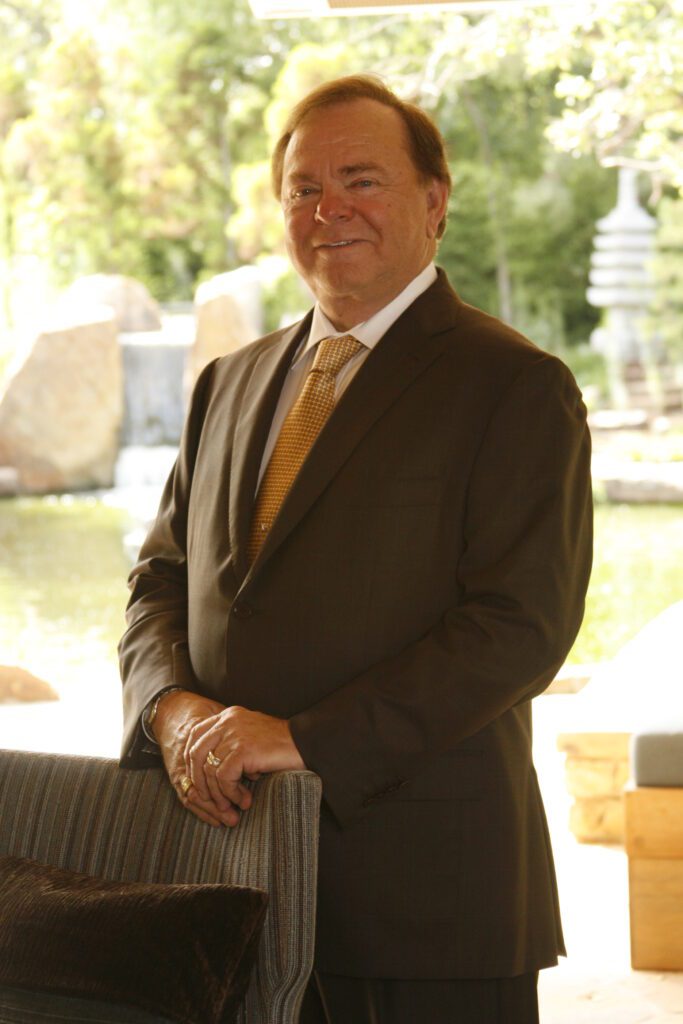
Harold Hamm
Founder and Chairman, Continental Resources
Continental Resources founder and chairman Harold Hamm recognized early on that people who share make the world a better place.
His father, a tenant farmer and lay minister, “was most recognized for his generosity,” Hamm says. “We never had anything extra because my father always found someone who was worse off than we were.”
Hamm moved to Enid at age 16, where he took note of the philanthropy of such oil and gas industry leaders as Frank and Jane Phillips. Starting out in oilfield services, Hamm worked his way up, and by the 1990s had the vision to use horizontal drilling and hydraulic fracturing in North Dakota, transforming the oil industry.
Following the example of his early mentors, Hamm has given to such causes as diabetes research and higher education. In 2016, he was an Horatio Alger Award recipient. In 2012, Time magazine named him among the 100 most influential people in the world. He was inducted into the Oklahoma Hall of Fame in 2011.
– KB
Photo courtesy Tulsa Public Schools
Ebony Johnson
Superintendent, Tulsa Public Schools
As a former student at Tulsa Public Schools, Ebony Johnson is passionate about helping others attain academic success. Johnson held multiple leadership roles at TPS for over 20 years before becoming the Superintendent in 2023. Johnson is the first Black woman to secure the position.
Johnson started her educational career teaching at Monroe Middle School in 1999. She then went on to serve as Executive Director of Student and Family Support Services and Chief Academic Officer at TPS.
With the goal of giving back to her community, Johnson implemented strategies that reduced out-of-school suspensions by 27% district-wide. Paramount to Johnson’s success is her commitment to supporting students’ emotional and social wellbeings.
Since becoming the Superintendent, TPS has seen improvements in student attendance and enrollment. For her transformational work, Johnson has received numerous accolades, including the Hall of Honor award from 100 Black Men of Tulsa in 2014; the Madam President award from the League of Women Voters of Tulsa in 2022; and the e NSU Centurion Award in 2022.
– FH
Photo courtesy the Oklahoma State Department of Health
Keith Reed
Commissioner of Health, Oklahoma State Department of Health
Keith Reed was appointed the Commissioner of Health for the Oklahoma State Department of Health in 2021. Upon stepping into his role, Reed was faced with leading the agency through the transitional phase of the COVID-19 pandemic.
Under his leadership, the OSDH partnered with the private sector to help over 2.5 million Oklahomans get vaccinated and distribute protective equipment to frontline workers. Reed continues to drive transformation across the agency, focusing on opportunities for efficiency and innovation.
Prior to becoming the Commissioner of Health, Reed held several leadership roles at the OSDH. A lifelong Oklahoman, he draws on his personal experience to understand state residents and their unique health needs.
Reed also serves as a Colonel in the Oklahoma Air National Guard and Commander of the 137th Special Operations Medical Group at the Will Rogers Air National Guard Base in Oklahoma City. He’s supported major military operations, including Operation Enduring Freedom and Operation Iraqi Freedom.
Oklahoma’s higher education landscape is in the midst of a quiet transformation, driven by shifting workforce demands, advanced artificial intelligence technology and a renewed focus on innovation. Colleges and universities statewide are rethinking how they educate students, strategically partnering with businesses and preparing their graduates for an uncertain future. We explore just a few ways they’re swiftly adapting – whether that’s embracing the perks of skills-based learning or fostering entrepreneurship through a dynamic curriculum.
Skills Based Hiring Vs. Traditional Degrees: The Best of Both Worlds
In response to a major shift in the approach to knowledge, employability and learning, Oklahoma colleges and universities are reshaping some of their degree plans to include opportunities to gain job-specific skills and experience to accompany a diploma.
“As the workforce increasingly values practical, demonstrable skills over traditional degrees alone, colleges are adapting by integrating skills-based education into their offerings,” says Mautra Staley Jones, Ed.D., president of Oklahoma City Community College (OCCC). OCCC has expanded its micro-credential programs, allowing students to earn industry-recognized credentials in high-demand fields.
“These bite-sized certifications, often in partnership with employers, enable students to develop job-ready competencies quickly,” Jones says.
OCCC is the state’s largest provider of micro-credentials, granting nearly 18,000 in the last 18 months, she adds.
Tulsa Community College (TCC) is also working with local employers to get graduates job-ready more efficiently than ever before.
“TCC works with local employers to offer students training that aligns with industry standards and leads directly to jobs,” says Pete Selden, Ed.D., vice president of workforce development at TCC. “We also offer stackable micro-credentials that allow students to gain specific … skills in a shorter and flexible timeframe.”
As employers look to prioritize hands-on experience, technical fluency and job-ready certifications, Oklahoma State University (OSU) has expanded OSU Polytech, a workforce-driven initiative offering more than 60 programs across OSUIT, OSU-OKC, OSU-Tulsa and online platforms.
“What makes OSU Polytech uniquely powerful is that it isn’t merely reacting to workforce trends, it is actively shaping them in partnership with Oklahoma’s employers,” says Kyle Wray, senior vice president of system affairs for the university.
Wray says OSU has taken an economy-driven approach to the issue and turned it into opportunity.
“Each year, nearly 10,000 Oklahoma high school graduates transition directly into the workforce without earning a degree or certification – a statistic that highlights a significant opportunity gap, not just for individuals, but for the state’s economy,” he says.
Students often cite barriers such as cost, family obligations, geographic constraints or a lack of interest in traditional academic paths, Wray adds.
OSU Polytech is designed to meet students where they are – geographically, financially and academically, offering over 60 programs across all campuses and online.
At Northeastern State University (NSU), Carla Swearingen, Ph.D., provost and vice president for academic affairs, says her institution is focused on providing education for students that will lead to careers in the state and region.
“While it is true that not every job requires a degree, the majority of the critical occupations in Oklahoma do,” Swearingen says. “These are also the jobs that tend to provide higher salaries, which helps students, their families and the communities they live in and thrive. NSU regularly works with local businesses and tribal partners to assess their workforce needs and ensure that our educational offerings are relevant.”
In addition to offering critical occupation majors, NSU provides a wide variety of micro-credentials and certificates that help upskill employees. All of these measures help us retain a talented workforce in the area and grow the economy, too.
Applied learning experiences, such as internships, apprenticeships and capstone projects, enable students to showcase real-world experience, OCCC’s Jones says.
“Strong advisory boards composed of industry professionals help align the curriculum with evolving workforce needs, ensuring students graduate with both knowledge and employability,” she concludes.
University & Business Partnerships
Oklahoma’s educational institutions are fostering partnerships with businesses to enhance student opportunities and drive economic growth.
In a move to position Oklahoma as a hub for advanced manufacturing, OSU’s Hamm Institute for American Energy has partnered with Divergent Technologies Inc. to accelerate the adoption of next-generation manufacturing processes in the state.
“This partnership not only brings cutting-edge technology to Oklahoma,” Wray says, “but also creates opportunities for OSU students to engage with transformative manufacturing practices.”
Divergent’s Adaptive Production System leverages AI-driven design, additive manufacturing and robotic assembly to produce high-performance structures more efficiently than traditional methods.
OSU’s Hamm Institute for American Energy has partnered with SK E&S, a leading South Korean energy company, to advance energy research and innovation. This multimillion-dollar, five-year collaboration focuses on energy policy and security, with SK E&S funding research grants and joining the Hamm Institute Advisory Board.
“Through these and other strategic partnerships, OSU is not only responding to the current needs of industries but also proactively shaping the future workforce,” Wray says. “By integrating practical experiences into its educational programs, the university ensures that its graduates are well-equipped to meet the demands of a dynamic job market.”
TCC also has established strong partnerships throughout the college, with one example being in the healthcare field.
“We partner with local providers to give our students clinical experience right in the community,” Selden says. “In turn, our healthcare partners benefit from a strong pipeline of well-prepared healthcare graduates who are ready to join the workforce.”
In the manufacturing sector, TCC recently partnered with DMI Industries, a global manufacturer of air duct systems and components with a facility in Wagoner.
“As part of the partnership, TCC developed two micro-credential programs, Lean Manufacturing and Industry 4.0,” Selden says. “More than a dozen DMI employees from both the Wagoner and Pittsburgh, Penn., facilities completed the programs.”
At OSU, leadership has taken an economy-driven approach to its multi-campus curriculum to ensure students gain the skills necessary to snag high-earning jobs following graduation. Photo courtesy OSU
The University of Oklahoma (OU) has built a dynamic range of partnerships with businesses to create transformative opportunities for students and measurable impact for companies, according to Danielle Dunn, assistant vice president and director of communications and marketing for the division of enrollment management.
“In the Michael F. Price College of Business, we offer the Tom Love Scholars with Love’s Travel Stops, the Business Consulting Practicum and Ronnie K. Irani Center for the Creation of Economic Wealth’s (I-CCEW) data-driven, growth strategy projects,” Dunn says. “Students engage in high-impact learning while businesses benefit from fresh insights and strategic solutions.”
Collaborations with companies like Deloitte, Northrop Grumman, 7-Eleven and RealFoundations have led to internships and full-time roles, while initiatives like the Pathways to Price program and the First Fidelity Bank Integrated Business Core prepare students for successful careers in business.
“Partnerships across different areas, such as finance, accounting, entrepreneurship and innovation, equip students with real-world experience, leadership development and industry access, while helping companies cultivate top talent and drive growth in Oklahoma’s economy,” Dunn says.
Strategic partnerships are one of OCCC’s greatest strengths as well, Jones says.
“Our healthcare partnerships with local hospitals have led to clinical placement pipelines and job offers for students before graduation. Through tech collaborations, students get access to real-world tools and mentorships, such as those with Alias Forensics, Bob Moore Chevrolet, the City of Oklahoma City, the City of Edmond, the Department of Defense, Dell OKC and Eskridge Honda.”
TCC offers a variety of classes and clubs that promote problem-solving, critical thinking and entrepreneurship across multiple disciples. Photo courtesy TCC
AI Integration
The integration of AI is reshaping how students learn, how educators teach and how institutions operate in a rapidly changing landscape.
From personalized learning opportunities and faculty empowerment to privacy concerns, academic integrity apprehensions and over-reliance on AI to function, the list of pros and cons is both exciting and daunting.
“TCC views AI as a tool that can support student learning and our work as educators, but not as a replacement for the human element,” Selden says. “AI has the potential to personalize learning and help faculty manage time-consuming tasks. At the same time, concerns include the over-reliance on AI and its ethical use. Moving forward, we believe students and educators need to be AI-literate to understand what these tools are capable of and when their use is, or is not, appropriate.”
Swearingen says NSU also believes in the power of AI – when used for good.
“The world of artificial intelligence has evolved so quickly that most higher education institutions are just trying to keep up,” she says. “There is tremendous power in utilizing AI, particularly with sorting through large amounts of data that would require unrealistic human hours. However, as with any new and evolving technology, there need to be ethical boundaries in place.”
Jones says OCCC holds incredible promise for AI’s role in higher education, and is approaching its integration with both enthusiasm and caution. Some of the pros, she says, are personalized learning pathways that adapt to each student’s pace and strengths, predictive analytics that help identify at-risk students and intervene early, as well as administrative efficiency to free up faculty for more meaningful student engagement.
“We’re also mindful of the cons, such as data privacy risks tied to AI-driven platforms, the danger of over-reliance on technology at the expense of human connection and judgment and equity gaps if AI tools are not accessible to all students,” Jones said. “Moving forward, we are piloting AI tools within tightly regulated frameworks, pairing machine intelligence with faculty oversight and ethical training to ensure that human values remain central to the educational experience.”
Fostering Entrepreneurism
Oklahoma colleges and universities are increasingly becoming hubs of innovation and entrepreneurism by providing students, faculty and alumni with the resources and environments needed to launch and grow startups.
One way OU’s Price College of Business is unique is that it has its own entrepreneurship department.
At NSU, leaders understand that AI can be used as a tool for good, as long as ethical limitations are put in place. Photo courtesy NSU
“We recognize the importance of entrepreneurship in that it’s become its own academic division,” says Keith Brigham, Ph..D., director of OU’s Tom Love Division of Entrepreneurism and Economic Development. “We offer a major, a minor and this year, we started a brand new Master of Science in Entrepreneurship and Innovation. So we’ve got a lot of established programs in entrepreneurship.”
Students come to the program, he says, with either an idea that they want to develop more or just a passion for entrepreneurship.
“We teach them the skills to help them succeed. But entrepreneurship is also a mindset,” he says. “It’s not just a particular set of business skills, but it’s also the ability to identify opportunities and recognize those opportunities, evaluate those opportunities and then pursue them.”
Fostering an entrepreneurial spirit is crucial for both job creators and job seekers, OCCC’s Jones says.
“OCCC supports this through the Career Success and Workforce Development Division, which provides students with the resources, guidance and support they need to navigate their career paths successfully,” she says. “Whether a student wants to launch a nonprofit, start a small business or innovate within a larger company, we are committed to cultivating creativity, initiative and problem-solving skills across all disciplines.”
OCCC is the state’s largest provider of micro-credentials, granting nearly 18,000 in the last 18 months. Photo courtesy OCCC
TCC encourages entrepreneurship and innovation by providing practical learning, modern facilities and strong faculty support.
“Two TCC students were recently selected as the only finalists from Oklahoma in the AACC Community College Innovation Challenge,” senior vice president and chief academic officer Angela Sivadon, Ph.D. says. “Under the guidance of a faculty mentor, they designed a smart-home drone delivery system and earned a spot at an innovation boot camp in Washington, D.C. We also have a student-led combat robotics team, founded by engineering students and advised by our Fabrication Lab manager, that is growing thanks to campus recruitment and community events.”
TCC offers a variety of classes and clubs that promote problem-solving, critical thinking and entrepreneurial skills across disciplines, Sivadon adds.
“We also recently opened applications for the fourth cohort of the Cox Small Business Leadership Academy, supported by Cox Communications,” Sivadon says. “This program helps small business owners learn about marketing, finance and management to improve their businesses.”
Main image cutline:Partnerships between OU and area businesses help students gain hands-on experience before graduation. Photo courtesy OU
Intended major: Movement science on a pre-athletic training and physical therapy track. I’ve always enjoyed working with people, especially in the athletic realm, and the functions of the human body, so this seemed like a great way to combine these.
Proudest achievement:I received the Chancellor’s and Trustee’s Scholarship from the John V. Roach Honors College at TCU, valued at more than $320,000.
I would trade places for one day with: Tennis legend Roger Federer. As one of the best tennis players of all time, a successful business man, globetrotter and a father, experiencing his life in his professional prime would be one of the most interesting and gratifying experiences.
Twenty years from now, I’d like to be: In a secure career raising a family and following God’s plan in my life.
Unique characteristics: I think I matured very quickly from struggles I faced in my personal life, so that, and my ability to interact and bond with most everyone around me has blessed me with a drive and natural ability to reason and thoroughly think through any situation.
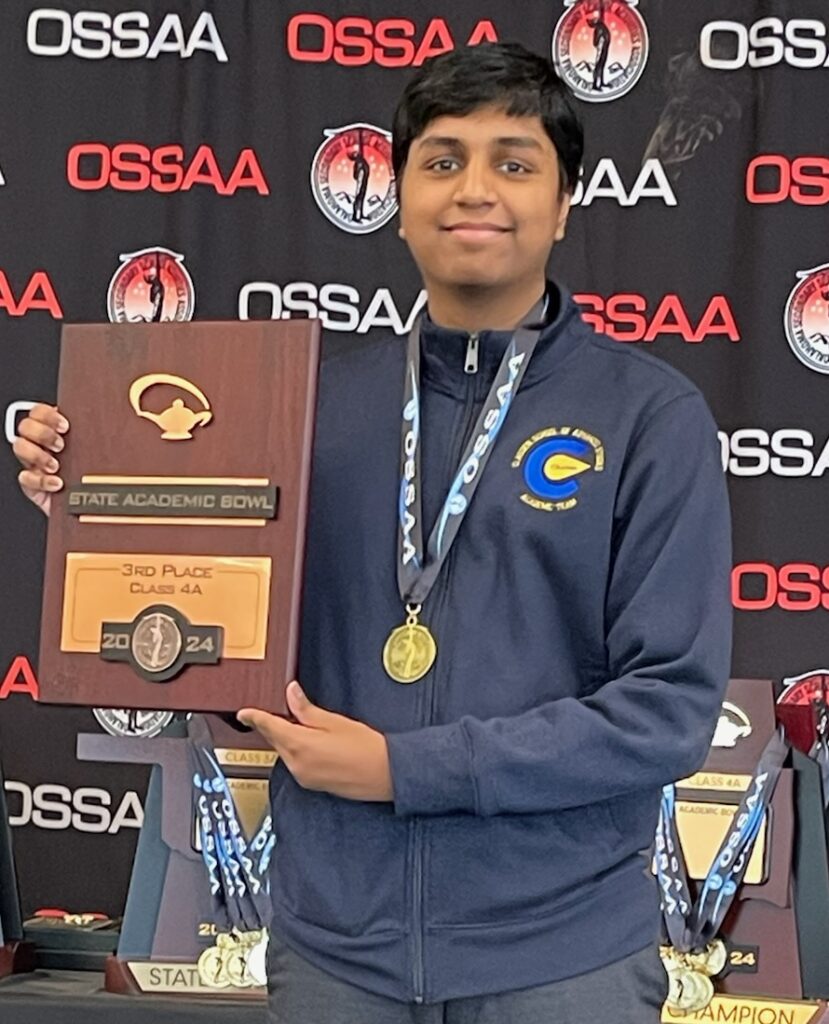
Hobbies and passions: I enjoy tennis. I also am very involved in my church youth group and its global missions and retreats. Bonus tidbit:During the summer of COVID, I participated in a virtual summer camp for academic bowl that had people from all around the U.S. and I won a semi-competitive tournament at the end of the week. From there on, I told everyone that I was a national champion in academic bowl – stretching the truth to sound more impressive – but was quickly knocked off my pedestal by a friend who had attended the camp with me.
Divya Thomas
Bishop Kelley High School
Attending: Texas A&M University
Intended major: Biomedical engineering. Through God’s grace, I am part of E2EnMed, where I am set to graduate from Texas A&M College of Engineering Medicine in 2033 with an M.D. and masters of engineering.
Proudest achievement: Doing graduate level research since the age of 12 at OSU with Dr. Vazquez. I contributed to the discovery of a potential link between serum and brain BDNF levels with addiction and depression and went on as the youngest person to win 1st Place Best High School Student at the TABERC Biomedical-Neuroscience-Physiology Conference.
I would trade places for one day with: Srinivasa Ramanujan. As a fellow Tamil from South India, I admire his extraordinary intuition and groundbreaking insights in mathematics.
Twenty years from now, I would like to be: An interventional radiologist because it involves a profound understanding of applied physics in medicine.
Unique characteristics: I am insatiably curious about all aspects of the world – art, literature, architecture, geography, world history – especially math, physics, chemistry and biology.
Hobbies and passions: I enjoy playing tennis with my little sister, playing piano and exploring non-Euclidean games on my computer.
Bonus tidbit: I played on Google Earth so much when I was younger that I accidentally memorized the world map and can still draw it from memory.
Noah McReynolds
Bishop McGuinness Catholic High School
Attending: The University of Oklahoma
Intended major: Petroleum engineering. Since I was a small child, I enjoyed tinkering with things, taking everything I could apart, and figuring out how to put it back together. Additionally, math has always been my favorite subject. So, when researching careers, engineering was my go-to.
Proudest achievement: Throughout my high school years, I have been faced with more adversity than most my age. This has led to me learning about resilience and perseverance. Nonetheless, I was able to maintain my grades and continue to take challenging classes with all that life threw at me, as well as start on the varsity football and soccer teams.
I would trade places for one day with: Dwayne Johnson. I want to see what it feels like to come all the way from rock bottom, where your family is living paycheck to paycheck, and then become a man with money, fame and success. He is a person who solves problems and never backs down, and that’s something I truly admire.
Twenty years from now, I would like to be: Settled down in a nice home with a family of four to five, and a nice job. I want to send my kids to a good high school and have a membership at a local country club/golf course.
Unique characteristics: My skills to persevere and my charming sense of humor.
Hobbies and passions: This summer I’ve committed my time to the golf course, as well as hanging out with my friends and family before college.
Eva Mahajan
Jenks High School
Attending: Brown University
Intended major: Economics on the business track. Brown has concentrations instead of traditional majors, so I chose econ as it can easily be paired with other interests of mine. I hope to take courses within the international and public affairs program as well.
Proudest achievement: My organization: Leap. Leap is a pen-pal program between high school students and elementary students in the English Language Learners program. Letter-writing is a fun and engaging way to learn English and build connections between Jenks students. The pilot year has proven to be successful, and we ended the year with over 1,000 letters being exchanged and 200 participants total. I really enjoyed launching my own program, and I learned so much about how to lead an organization. It was stressful but also incredibly fulfilling.
I would trade places for one day with: Anna Wintour. I think it would be incredible to see how the chief of America Vogue lives her life, and I would love to choose the cover of Vogue.
Unique characteristics: I’m not shy when it comes to talking to others at all. I love starting conversations with strangers, whether I’m out shopping or waiting in line at a cafe. I believe you can learn a lot from everyday interactions and build community with people you never expected to meet.
Hobbies and passions: Seeing everything Tulsa has to offer. Every weekend I’m either at a flea market, a new cafe or the park with my friends.
Bonus tidbit: My hidden talent is that I’m currently learning how to fly a plane! I’m hoping to eventually get my private pilot license.
Erina Katoh
Booker T. Washington High School
Attending: Massachusetts Institute of Technology
Intended major: Computer science. My older sister began to major in computer science, and because I was interested in learning more about it, I joined the programming sub-team in First Robotics Competition robotics. After participating, I found myself increasingly becoming interested in it.
Proudest achievement: When I can help explain difficult concepts like math or literature analysis to someone and see them suddenly brighten up with joyful realization and a big “Ohhhhh.”
I would trade places for one day with: The child of a successful business leader so that I could understand the family dynamic of those whose parents are in high demand and learn about the overlooked struggles of those often seen as ‘privileged.’
Twenty years from now, I would like to be: Living a fulfilled life, bringing smiles to more people while helping them feel seen and accomplished.
Unique characteristics: I am curious to listen and learn about the details, whether it be the historic origins of the civil war in Sudan or the diverse interests and styles people have.
Hobbies and passions: I recently got an electric bicycle and have gotten into bicycling around Tulsa. I find it calming to feel the wind blowing through my hair as I feel the occasional bump of every crack on the Oklahoma roads and discover new pathways in areas I thought I once knew.
Bonus tidbit: I admit that I stand at a colossal height of 5’2 and weigh around 5 watermelons, but I can give you twenty pull-ups right now, and can do some Judo.
Mark Romanishin
Broken Arrow High School
Attending: United States Naval Academy
Intended major: Aerospace engineering. I always had an interest in aviation and want to pursue a challenging path while building a foundation for a career in test piloting.
Proudest achievement: Gaining admission to the United States Naval Academy. It’s a huge honor for me and my family and I’m excited for the challenges ahead.
I would trade places for one day with: Neil Armstrong to experience his walk on the moon.
Twenty years from now, I’d like to: Have a successful career in aviation and fly my family around in my own plane.
Unique characteristics: My ability to put my head down and get to work.
Hobbies and passions: I enjoy working out and playing piano, and I also work as a lifeguard.
Krish Kalpesh Patel
Casady School
Attending: Johns Hopkins University
Intended major: Computer science and biology. I love building things – whether it’s software or machine learning (ML) models, and strongly believe that technology, especially ML, will help introduce new life-saving treatments.
Proudest achievement: Seeing Patai & Patel et al. projected in a lecture hall full of Ph.D., M.D., and graduate students at OU’s Neuroscience Symposium. Publishing a peer-reviewed, co-first-author research paper while finalizing two other manuscripts showed me that, with proper mentorship and determination, a high schooler can make a significant impact in the field of science.
I would trade places for one day with: Dario Amodei, the co-founder and CEO of Anthropic, a company committed to creating safe and ethical artificial intelligence.
Twenty years from now, I’d like to be: Leading my own start-up that leverages advanced technologies to support physicians and researchers in improving quality of life.
Unique characteristics: I try to live by my favorite quote: Do things “not because they are easy, but because they are hard, because that goal will serve to organize and measure the best of our energies.” – J.F. Kennedy.
Hobbies and passions: I’ve been swimming competitively for the past five years and playing the cello for the past six years! Recently, I’ve also picked up hiking with friends.
Bonus tidbit: I can read Latin! Additionally, during the first week of the COVID-19 lockdown, my brother and I managed to finish a TV show with a 70-hour runtime in a week.
Nelson Liu
Holland Hall High School
Attending: University of Pennsylvania
Intended major: Finance and accounting with a minor in behavioral economics and/or Chinese. I am interested in behavioral economics because learning how people think with their money will help me make informed decisions. The minor in Chinese is more of a need to reach bilingual fluency in my native language.
Proudest achievement: Winning regionals two years in a row in tennis and qualifying for state. The main reason is because I started during the summer following freshman year. It was one of the first things in my life that I personally decided to pursue and ended up being one of the greatest things I could add to my life.
I would trade places for one day with: Warren Buffet – he has been an inspiration to me as an investor and I would love to see his day in the life.
Twenty years from now, I’d like to be: In the penthouse of a Manhattan skyscraper. I was born in New York, but moved when I was five, so the city has always felt so close yet so far.
Unique characteristics: My unwillingness to give up in the face of almost certain adversity. It is a characteristic that has been lost somewhere in the 2000s and has helped me work through many of my personal and academic struggles.
Hobbies and passions: I love playing pickleball and am looking to play in a few tournaments soon. I also loved participating in academic team.
Drew A. Merrill
Augustine Christian Academy
Attending: Rogers State University
Intended major: Political science with the aim of going to law school. I decided to pursue this after discovering my interest in law and legal studies.
Proudest achievement: My 56-page thesis on federal Indian law I wrote for a senior thesis class at Augustine Christian Academy. I spent a year studying that thesis starting in July 2024 and earned the title of keynote speaker.
I would trade places for one day with: My ancestor, William Thomas (1573-1651) who funded the Mayflower voyage and Plymouth Colony. I spent a fair few months researching his life a couple of years ago and desire to know if my speculations about his life were correct.
Twenty years from now, I would like to be: Working as a lawyer, ideally for the Choctaw Nation.
Unique characteristics: I am diligent and hard working. I enjoy reading and research. I try to learn from everything I do.
Hobbies and passions: I like to read history books (all kinds) and listen to Supreme Court oral arguments. I enjoy learning languages, including Choctaw, Biblical Greek and German.
Bonus tidbit: I have spent almost a year studying and learning the Choctaw language. I am a descendant of Rhys ap Thomas who ended the War of the Roses by killing King Richard III. I’m also a descendent of the former Choctaw Chief Moshulatubbee, who signed the Treaty of Dancing Rabbit Creek.
Charan Sai Pratapaneni
Classen School of Advanced Studies
Attending: Emory University
Intended major: Chemistry on the pre-med track. Throughout all of high school, chemistry class has always been fascinating to me, and I love how challenging chemistry is because it motivates me to become a better learner. My ultimate goal is to become an endocrinologist.
Proudest achievement: Aside from getting into my dream school, my best academic achievement has been placing 13th at the High School National Championship Tournament for Quiz Bowl. It’s the highest placement any team has gotten in Oklahoma’s history.
I would trade places for one day with: Warren Buffett, because the stock market has always intrigued me, and one of the best ways to learn is to put yourself in the eyes of an expert. Also I always wondered how billion dollar companies were run on a day to day basis.
Twenty years from now, I’d like to be: A practicing physician with my own clinic. I want to own my own house and be able to take care of my parents financially.
Unique characteristics: I love learning about all aspects of academia, whether its art, literature or science.
Hobbies and passions: Going on walks, listening to music (my favorite genres are R&B and rap), watching sports and hanging out with my friends.
Bonus tidbit: My name means “at God’s feet” in Sanskrit. My grandmother chose this name because it symbolizes devotion and humility to God, as it’s a common gesture of respect to bow down and touch the feet of elders in Hindu culture.
Murphy Link
Crossings Christian School
Attending: University of Arkansas
Intended major: Business with a minor in marketing. I love working with people and hope to manage or run a company some day.
Proudest achievement: Making the Razorback college cheer team.
I would trade places for one day with: The CEO of a large company or top designer to see how they run their business.
In twenty years, I’d like to be: Married with children. I hope to raise my kids to know the Lord and hopefully run a successful business for work.
Unique characteristics: I believe a few characteristics that make me stand out is my strong Christian faith and love for kids.
Hobbies and passions: I personally love cheerleading, playing tennis or pickleball for fun, and going on walks outside to enjoy nature!
Bonus tidbit: I have played the piano for 10 years!
Photo by Meredith Fink Wullkotte
William Santiago Baker
Edison Preparatory School
Attending: University of Tulsa
Intended major: Mechanical engineering. I have always loved math and learning about the way things work. Plus, it would be foundational to further study in architecture – which has always interested me.
Proudest achievement: Participating in and placing third in the regional Next Narrative competition. Living with cerebral palsy, I’m also proud of my hard work learning to walk when I was around ten years old.
I would trade places for one day with: Brian Regan to experience what it’s like to be a comedian on tour.
Twenty years from now, I’d like to be: Living in a big city doing some type of performance art alongside my professional career.
Unique characteristics: I love taking my time with people and indulging in long conversations without looking at our phones.
Hobbies and passions: I love music and constantly have a song stuck in my head – usually from a musical.
Bonus tidbit: I love doing stand-up. I always have a “tight fifteen” routine ready and am looking forward to hitting up some open-mic nights this summer.
Reagan Smith
Metro Christian Academy
Attending: Baylor University
Intended major: Kinesiology in order to later go into sonography and become an ultrasound technician.
Proudest achievement: Being a part of Metro’s varsity pom team and winning state all four years of high school.
I would trade places for one day with: My two-year-old niece, Noa, who suffered a traumatic brain injury in utero. I’m sure she has a very unique look at life and experiences the world in such a different way than most. It would be so special to me to understand Noa much deeper and be able to educate others for her benefit.
Twenty years from now, I would like to be: Involved in travel sonography, so I can experience so many different places while doing what I love.
Unique characteristics: I believe my intentionality sets me apart from others my age. Whether it be my studies, relationships or faith, I have always made an effort to live with purpose. What has also made me stand out is my quiet consistency, being present and actively trying to better myself in whatever environment I am in.
Hobbies and passions: Outside of school, I danced competitively from the age of two all the way to graduation. I also volunteer at the Sapulpa Church of the Nazarene with the children’s program and nursery. The rest of my time is spent babysitting my niece and nephew, whom I adore.
Mary Ruth Copeland
Mingo Valley Christian
Attending: Tulsa Community College
Intended major: English, because I love studying literature and would love to become an English teacher or professor. My own high school English teachers were such a special part of my education, and I hope someday I can help students savor the great books they encounter in the classroom.
Proudest achievement: Receiving the highest grade in each of my English classes all three years I attended Mingo.
I would trade places for one day with: Donna Tartt, a favorite author of mine. It would be interesting to try her routine, which is known to consist of writing for at least three hours in the morning.
Twenty years from now, I’d like to be: A professor of English literature, having both written and published at least one work of fiction. I also hope to be a wife and mother, reading stories like Narnia, the Lord of the Rings, and Harry Potter to my family.
Unique characteristics: My Nana says I am a very gifted deep thinker. But she has to say nice stuff like that, because after all, she’s my Nana!
Hobbies and passions: I love to read a variety of genres but usually find my way back to classics by the likes of Jane Austen, John Steinbeck and C.S. Lewis. I also had a blast singing in high school musicals like Beauty and the Beast, The Sound of Music and Cinderella.
Bonus tidbit: I am named for two of my great-grandmothers, Mary and Ruth. I am told that they were both great ladies, but complete opposites: Ruth, a tough and fiery entrepreneur, and Mary, a calm and nurturing teacher. I like to think that God gave me a perfect balance of that fire and ice.
Photo by Kendra Catron, KJ Design
Kyle Brayden Harjo
Oklahoma Christian School
Attending: Oklahoma Baptist University
Intended major: Business with a concentration in computer information systems. I’ve always been interested in how technology and business work together to solve problems and improve efficiency. One of the biggest influences was learning code with my dad.
Proudest achievement: Graduating cum laude, which reflects the hard work, discipline and perseverance I’ve put into my education.
I would trade places for one day with: Truett Cathy, the founder of Chick-fil-A. I’d want to experience how he combined faith, leadership and business on such a large scale. I’d be curious to see how he made tough decisions, stayed true to his values, and led with purpose.
In twenty years, I’d like to be: Living a life that reflects my faith, with a strong and loving family at the center of it. My goal is to be a faithful leader, both at home and in my community, using the gifts I’ve been given to make a positive impact.
Unique characteristics: My dedication, dependability, honesty and maturity, whether it is academics, work, sports or helping others.
Hobbies and passions: I’ve been involved in tennis, track and golf, which has been a great way to challenge myself and stay competitive. I also spend time serving at Wings Special Needs Community and help at Project 66 Food Pantry, making sure families have what they need.
Bonus tidbit: I will be continuing athletics at OBU, competing in track and field. I’m excited to start training in a new event, javelin, which will push me physically and mentally in a whole new way.
Mia Osita
Oklahoma School of Science and Mathematics
Attending: Duke University
Intended Major: Biology with a concentration in biochemistry. I’ve always had a passion for biology and excelled in every course I took. When I enrolled in biochemistry and earned a 100% in the course, I realized it was the perfect blend of my interests.
Proudest achievement: Receiving a full-ride, four-year scholarship to Duke through the QuestBridge National College Match. Going to college out of state never felt possible for me because it was too expensive, and my family tradition was to attend OU, teach English in Japan for a year, then begin a career. However, breaking tradition and achieving higher education without worrying about any financial difficulties is an ineffable blessing.
I would trade places for one day with: Jalen Hurts. I’ve always loved football and played quarterback on my intramural flag football team.
In twenty years, I’d like to be: A cardiothoracic surgeon. I also hope to be a public advocate, encouraging meaningful conversations on the issues that matter most. Beyond my career, I envision marriage and a happy, beautiful family to call my own.
Unique characteristics: I’m a very thoughtful person, and I make it a point to listen carefully, remember details, and notice the little things.
Hobbies and passions: I love grabbing an iced matcha latte and getting lost in a good book. I also enjoy solo dates where I listen to uplifting podcasts while exploring local food spots. And cooking—pasta is my go-to dish. I can whip up pretty much any American dish, but I really want to learn how to cook Nigerian food to connect more with my roots.
Bonus tidbit: My middle name is Amarachi, which means “a miracle from God” in Igbo, a Nigerian tribe.
Jackson McGillen
Riverfield Country Day School
Attending: Oklahoma State University
Intended major: Architecture with a minor in business. I have always loved the idea of making something, so much so that when I was asked what I wanted to be when I grew up, I always responded with something that allowed me to use my imagination and create something.
Proudest achievement: Learning to play basketball, which I began my junior year. I had no experience and was honestly terrible at first, but I was determined to improve. I spent nearly all my free time in the gym, practicing and pushing myself. Eventually, I was invited to join the team.
In twenty years, I’d like to be: Running my own architecture firm, where I play an active role in client meetings and project discussions. At the same time, I hope to have built a large, happy family and maintain close relationships with loved ones.
Unique characteristics: My ability to embrace discomfort. When I was diagnosed with Type 1 diabetes (T1D) at the age of ten, my world was completely turned upside down. But instead of letting it define me or hold me back, I chose to face it head-on. Embracing the uncomfortable helped me grow stronger, more resilient, and more confident in who I am.
Hobbies and passions: I really like to play basketball and soccer, play drums and draw as much as I can. I am also a Breakthrough T1D Advocate, where I use my voice to help raise awareness about Type 1 diabetes and its symptoms. I even got to speak on live TV about it!
Bonus tidbit: I have run into not one but two poles and gotten scars from both around my right eye. One of them gave me 18 stitches!
Grace Elizabeth Blacet
Union High School
Attending: Pittsburgh State University
Intended major: Social work. What led me to pursue this is my deep desire to help others. I feel like my purpose is to be there for others, supporting those going through challenges.
Proudest achievement: Being a state champion in the 4x400m relay at the 2025 Oklahoma Track and Field State Championship. We broke the school record for the third time that year, running a 3:48.12. We were so broken down and hurting towards the end, and that was our final push. We took home the gold and so many cherished memories!
I would trade places for one day with: My fifth-grade self. I was so free, and I didn’t have a single care in the world. My worst fear was missing the school bus. I would go ride my bike and stay out until the streetlights come on!
In twenty years, I’d like to: Have a family and a welcoming home. I want family and friends to constantly be over, where we can all do life together. I want to have a job that I absolutely love, getting to help people every day.
Unique characteristics: I’m rarely ever mad. I physically cannot be mad for longer than 3 minutes. I love being happy, I love smiling, I love laughing and I love being funny.
Hobbies and passions:I (somehow) actually enjoy running. I also love art and being able to create gifts for others! I would love to learn how to play the piano!
All photos courtesy the students unless otherwise marked.
The Pirates of Penzance, Tulsa Opera; photo courtesy Tulsa Opera
Tulsa Opera’s newest season is “lively and lighthearted,” says Cindy Sadler, the organization’s director of communications. “We’re opening with the beloved classic The Sound of Music … then, we have the hilarious Gilbert and Sullivan favorite, The Pirates of Penzance, which is filled with silly fun, swashbuckling romance and memorable tunes.”
The Voices After Dark recital series is another stand-out, and “gives audiences three opportunities to experience some amazing music and artists in an intimate setting.”
The small but mighty team at Tulsa Opera works diligently to deliver top-quality opera performances every season.
“At our staff meeting this week, we are already discussing the 2027-28 season,” says Sadler. “Opera is one of the most complicated art forms to produce. Every single person on our staff, board of directors and contractors, and our amazing volunteers, contributes to creating what the audience sees on stage.”
Combine all that hard work, and it’s clear Tulsa Opera is producing its best season yet.
“Opera has always been a mirror of the human condition set to some of the most divine music imaginable, and it encompasses every other art form: dance, poetry, literature, drama, architecture, fashion, visual arts, you name it,” she says.
For more information on the season, visit tulsaopera.com.
Philbrook Museum of Art
A cultural institution in Tulsa, Philbrook welcomes discerning art lovers, families, solo visitors and everyone in between. In the coming year, the excellence continues.
“One of the key parts of the Philbrook experience is the variety of exhibitions and programs we provide throughout the year,” says Jeff Martin, the museum’s online communities manager. “In the coming months, guests will experience everything from a career retrospective of Tulsa artist Patrick Gordon to a show of work by legendary Civil Rights-era photographer/filmmaker Gordon Parks. We’ll also be celebrating the 100th anniversary of Route 66.”
Curators at Philbrook work months, and even years, in advance to bring stellar exhibitions to Tulsa.
“The same can be said for our education team and the weekly offerings they provide for all ages, many connected to current exhibitions,” says Martin.
When considering what exhibitions and programming to curate, Martin says the team often asks themselves: ‘What can Philbrook provide to the community that no one else can?’ And work from there.
“When you see iconic shows from the likes of Frida Kahlo, Claude Monet or Japanese Samurai armor, that’s us answering that question,” he says.
The Oklahoma City Museum of Art stuns with compelling exhibitions this year.
Running through Sept. 28, Discovering Ansel Adams features over 100 photographs that share Adams’s most celebrated works while revealing aspects of his development that are often overlooked. Another major exhibition, Paul Reed: A Retrospective, runs from Nov. 22 to April 12.
“This major retrospective, the first devoted to the artist, will present a survey of Reed’s art and accomplishments from his early days as a graphic designer in 1950s New York to his success as one of the founding artists of the Washington Color School in the 1960s, to the aesthetic reinventions of his later work,” according to the museum. “Reed’s life was devoted to art and endless exploration of the many and varied properties of and approaches to form, color and light. Throughout his career spanning more than eight decades, Reed worked in a wide variety of mediums, including painting, sculpture, photography, printmaking, collage, graphic design and computer-generated and enhanced imagery.”
As well, visitors to the OKCMOA are always able to view Dale Chihuly: The Oklahoma Collection, which features three decades of the prolific artist’s sculptures and works on paper from the museum’s permanent collection.
The Neil Diamond Musical, Celebrity Attractions; photo by Jeremy Daniel
Drama. Intrigue. Romance. Action. You’ll find it all in Celebrity Attraction’s 2025-2026 season.
After a season opener of musical Kimberly Akimbo on Sept. 2-7, one highlight many Oklahomans will want to see is The Outsiders, which kicks off its national tour in Tulsa Oct. 7-12. A jam-packed season also includes Beauty and the Beast, Jan. 27-Feb. 1; The Neil Diamond Musical: A Beautiful Noise, Feb. 17-22and The Notebook The Musical, June 16-21.
Coordinating several national touring productions is hard work, says Kristin Dotson, Celebrity Attraction’s CEO.
“We handle everything it takes to present these shows in Tulsa, from the initial deal negotiations, marketing and advertising, coordinating ticket sales and setting up press and promotions,” she shares. “We manage the show when it’s in town from the moment the first truck pulls up to load-in the show all through when the trucks pull out to head to the next city. Our job is to provide the best experience possible to all theatregoers.”
And, she says, the pure beauty of live theater really can’t be beat.
“Something magical happens when 2,300 people come together in one space and collectively experience the live performance on stage at the same time,” she says. “There is nothing else like it. It’s that moment of community that unites us right then and there.”
Oklahoma Contemporary’s upcoming season “offers a bold mix of international collaborations, emerging local talent, beloved programs and signature events,” says the organization’s executive director, Trent Riley. “A major highlight is Anthony McCall: Solid Light, a groundbreaking sensory exhibition presented in partnership with Tate, marking the first North American venue for this acclaimed body of work.”
Another must-see is The Black Land, which “celebrates the powerful photography of rising Oklahoma artist Jakian Parks, whose work exploring Black rodeo culture has been featured by Louis Vuitton and Timberland,” he continues.
Producing these high-caliber exhibitions is an often years-long process that “demands creative vision, strategic planning, cross-departmental coordination and deep community engagement,” says Riley. “It’s not just about showcasing art, it’s about reshaping what’s possible for cultural life in Oklahoma.”
For Oklahoma Contemporary, work focuses on adding value to the arts community and the broader cultural landscape of the state.
“Oklahoma Contemporary adds tremendous civic value by attracting tourism, contributing to the creative economy and helping shape a more vibrant, dynamic Oklahoma,” he says. “We are not just reflecting culture, we are actively helping build it.” Learn more at oklahomacontemporary.org.
Tulsa PAC
The Tulsa PAC; photo courtesy TPAC
The Tulsa Performing Arts Center bustles with ample performances throughout the year. Alongside playing host to a variety of performing art companies and their works, the Tulsa PAC Trust presents several shows themselves: Ragtime, Aug. 8-24; Home Free and the Longest Johns, Sept. 18; Straight No Chaser Holiday Road, Nov. 13; and Sam Harris: Beyond the Rainbow on Nov. 22.
Beyond planning and hosting events, the TPAC is committed to providing arts for all through community engagement programs.
“The arts are fundamental: they bring us together, they enhance childhood development and they heal wounds,” according to TPAC’s website. “To ensure everyone in our community has access to learn about, take part in, and experience the performing arts, we offer an array of programming, aimed at providing art for all who want to take part.”
Programs include Any Given Child, which helps the TPAC put on free productions for all TPS kindergarteners; Broadway Senior, which allows thespians over 65 to rediscover a love for the stage; and Brown Bag It, a free lunchtime concert series in the Westby Pavilion. To learn more, visit tulsapac.com.
OKC Phil
During OKC Phil’s upcoming season, visitors are invited on “an exhilarating journey that spans centuries, continents and emotions,” says Jenni Shrum, the organization’s marketing and PR director. “From timeless orchestral masterworks to bold contemporary works, our programs offer something for everyone.”
OKC Philharmonic 2024-2025 season performance; photo courtesy OKC Phil
Season highlights include Legends: Ortiz, Rachmaninoff, Janacek, Tchaikovsky on Sept. 20; Oklahoma Stories: Celebrating Our Future on Oct. 25; and Mahler’s Resurrection Symphony on May 2, an “awe-inspiring collaboration with Canterbury Voices to close the season and celebrate life,” says Shrum.
The programming for the OKC Phil, Shrum says, requires “a full-scale collaboration between artists, staff, volunteers and the community. So much goes into bringing high-caliber philharmonic performances to Oklahoma City that audiences never see.”
OKC Phil’s musicians, Shrum says, are also heavily involved in OKC’s arts and education scenes in other ways outside the philharmonic.
“Many are educators, private instructors, perform at churches and weddings, and inspire people of all ages to enjoy or play music,” she says. “An orchestra is an evolving institution that reflects and elevates its community.”
To learn more about the upcoming season, visit okcphil.org.
Tulsa Ballet & OKC Ballet
Both Tulsa and OKC Ballet’s seasons are gearing up to be incredible – with beloved classics and new works to enjoy.
Tulsa Ballet’s highlights include Giselle, Oct. 30-Nov. 2; The Nutcracker, Dec. 7-21; and the season closer, Marilyn, April 30-May 3.
“With an original score, stunning choreography and iconic themes, [Marilyn] offers an emotional journey through the highs and lows of [Marilyn Monroe’s] life, making it a must-see tribute to a 20th-century legend,” according to Tulsa Ballet’s website.
In OKC, some classics to look forward to include David Nixon’s Dracula, Oct. 17-19; The Nutcracker, Dec. 13-23; and Devon Carney’s Romeo and Juliet, Feb. 20-22 – “just in time for Valentine’s Day,” says Lestari Kusumawardani, OKC Ballet’s marketing director. “ And in May, as part of Shorts, audiences will get to witness a 50-minute, contemporary version called Radio & Juliet, all to the music of Radiohead.”
For those not sold on the idea that ballet is the right entertainment fit, Kusumawardani says it’s all about perception.
“Ballet is one of the richest artforms to exist, as it brings together music, movement, costuming, set design and storytelling, all in one performance,” she says. “We strive to keep ballet accessible and engaging by breaking traditional ballet stereotypes and showing OKC that ballet can be modern, sexy and fun.”
For more info, visit tulsaballet.org and okcballet.org.
Featured image photo credit: The Neil Diamond Musical, Celebrity Attractions; photo by Jeremy Daniel
2025-2026 Season Schedule
108 Contemporary
Still: Lissa Hunter, Jane Sauer, Jo Stealey, & Carol Stein Aug. 1-Sept. 20
Clayton Keyes: Subterfuge Oct. 3-Nov. 22
The State of Craft 2025 Dec. 5-Jan. 24
Alicia Kelly Feb. 6-March 21
Shawn Smith: Entangled Ecologies April 3-May 23
Fiberworks 2026 June 5-July 25
American Theatre Company
A Christmas Carol Dec. 4-23
The Outsiders March 19-22
Irena’s Vow May 7-10
5 Lesbians Eating a Quiche July 11-13
Armstrong Auditorium
Mariachi Herencia de Mexico Sept. 18
The Queen’s Six Oct. 30
Edgar Meyer, Tessa Lark, Joshua Roman Nov. 20
Canadian Brass Feb. 3
Venice Baroque Orchestra Feb. 11
Three Italian Tenors Feb. 19
Jazz at Lincoln Center March 5
Time for Three March 16
Armstrong Choral Union April 26
BOK Center
Hank Williams Jr. Aug. 22
James Taylor and His All-Star Band Sept. 16
Jonas Brothers Oct. 16
Mumford and Sons Oct. 25
Tate McRae Oct. 29
Brandon Lake Nov. 8
Billie Eilish Nov. 10-11
A Day to Remember and Yellowcard Nov. 20
Billy Strings Dec. 10
Canterbury Voices
Dies Irae: Songs of the Shadows Oct. 30
George Frideric Handel Messiah Dec. 7
Canterbury Voices on Broadway March 21
Crescendo: An Evening with Canterbury May 14
Celebrity Attractions
Kimberly Akimbo Sept. 2-7
The Outsiders Oct. 7-12
Beauty and the Beast Jan. 27-Feb. 1
The Neil Diamond Musical: A Beautiful Noise Feb. 17-22
Mamma Mia! April 7-12
The Wiz May 5-10
The Notebook The Musical June 16-21
Chamber Music Tulsa
Aya Piano Trio Sept. 27-28
Isidore String Quartet Oct. 24-26
Maxwell Quartet Nov. 21-23
Brooklyn Rider Jan. 30-Feb. 1
Boarte Piano Trio March 6-8
WindSync April 17-18
Circle Cinema
A Journey Through Route 66 Screenings Through Sept. and Oct.
Civic Center Music Hall
Events listed are presented by the Civic Center Music Hall or out-of-state organizations; events presented by other performing arts companies happening at the Civic are listed under the according company
Steve Litman Presents & Martin Media: Herb Alpert and the Tijuana Brass Aug. 3
Storyteller Theatre OKC presents: A Little Princess Aug. 15-24
Outback presents: Henry Cho – The Empty Nest Tour Sept. 12
The Civic Center Foundation presents: Michael W. Smith Sept. 27
Tobin Center & Red Tail Entertainment presents: Frankie Valli and the Four Seasons Sept. 28
Innovation Arts & Entertainment presents: Harry Potter and the Prizoner of Azkaban in Concert Oct. 3-4
MEGA Events presents: The Rock Orchestra by Candlelight Oct. 6
Outback presents: Nurse Blake Oct. 25
The LOL Podcast presents: Laugh Out Loud World Tour Nov. 8
AWR Music Productions presents: A New World – Intimate Music from Final Fantasty Nov. 22
Emporium presents: Tommy Emmanuel Dec. 3
Discovery Lab
Educator Appreciation Night Aug. 7
Tinkerfest Sept. 20
Noon Year’s Eve Dec. 31
Mad Scientist Ball May 2
First Americans Museum
Indigenous Peoples’ Day Celebration Oct. 13
Winter Holiday Art Market Dec. 6-7
OKLA HOMMA Ongoing
WINIKO: Life of an Object Ongoing
21st Century Mound Builders Ongoing
Vessels that Carried Us: Kiowa Cradleboards Ongoing
Fred Jones Jr. Museum of Art
A Colorful Dream Through Aug. 10
Nicolai Fechin: An Artistic Journey Oct. 3-April 5
Greenwood Rising
Still We Rise Ongoing
The Greenwood Spirit Ongoing
The Arc of Oppression Ongoing
The 1921 Tulsa Race Massacre Ongoing
Changing Fortunes Ongoing
A Journey Towards Reconciliation Ongoing
Jasmine Moran Children’s Museum
Worldwide Day of Play Sept. 27
Free Day Nov. 23, Feb. 15
Noon Year’s Eve Dec. 31
Living Arts
Olivia Maday & Josiah Bolth Aug. 1-23
Val Esparza & Austin Gober Sept. 5-Oct. 11
Dia de los Muertos Arts Festival & Exhibition Nov. 7-22
Vincent Frimpong & Allison Ward Dec. 5-20
Lyric Theatre of Oklahoma
Oklahoma! Through Aug. 3
The Rocky Horror Show Oct. 2-Nov. 1
A Christmas Carol Nov. 28-Dec. 28
Beehive The Musical Feb. 11-March 1
Annie June 16-21
Sister Act July 7-12
Sweeney Todd July 28-Aug. 2
Mabee Center
ORU Summer Camps Aug. 24
The Complete Beatles Experience Sept. 7
Mabee-Gerrer Museum of Art
Art of the Ancient World Collection Ongoing
Ancient Art of the Americas Collection Ongoing
Spanish Colonial Art Collection Ongoing
American Art Collection Ongoing
McKnight Center for Performing Arts
Hugh Jackman Sept. 12
Sutton Foster & Kelli O’Hara Sept. 13
Ashley McBryde Oct. 3
United States Marine Band Oct. 19
Seoul Chamber Orchestra Oct. 29
Seoul Philharmonic Orchestra Oct. 30
Jazz at Lincoln Center Orchestra with Wynton Marsalis Nov. 9
Mandy Patinkin in Concert Feb. 14
Hadestown Feb. 17
Orpheus Chamber Orchestra Feb. 27
The Music Man March 10
The Philadelphia Orchestra March 27
Chris Thile April 11
National Cowboy and Western Heritage Museum
Prix de West Invitational Art Exhibition and Sale Through Aug. 3
Traditional Cowboy Arts Exhibition and Sale Sept. 26-27
Small Works, Great Wonders Nov. 7
OKC Ballet
Ballet Under the Stars Sept. 12
David Nixon’s Dracula Oct. 17-19
The Nutcracker Dec. 13-23
Devon Carney’s Romoeo and Juliet Feb. 20-22
Future Voices: A Choreographic Showcase March 13-22
Shorts: A Night of Premieres May 8-10
OKC Broadway
Kimberly Akimbo Sept. 9-14
Elf Nov. 18-23
Beauty and the Beast Jan. 20-25
The Neil Diamond Musical: A Beautiful Noise March 3-8
Dolly Parton’s Threads: My Songs in Symphony Nov. 7-8
Joel Levine Conducts Tchaikovsky Nov. 15
A Very Merry Pops Dec. 5-6
Mozart’s Rivals: Race to the Top Jan. 10
Tango Caliente! Jan. 30-31
The Fire of Love: Romeo and Juliet Feb. 14
Classical Mystery Tour Feb. 27-28
Masters of Music: Italy March 14
Symphonicon: Music From Comics, Sci-Fi, and Games March 27-28
Brahms & Bronfman April 4
Disney in Concert: Once Upon a Time April 17-18
Mahler’s Resurrection Symphony May 2
OKC Town Hall
Reed Timmer Sept. 18
Shannon Bream Oct. 16
Tony Perkins Nov. 20
Kris Martin Feb. 19
John Bramblitt March 19
Nicole Malachowski April 16
Oklahoma City Museum of Art
Discovering Ansel Adams Through Sept. 28
Land Use: Humanity’s Interaction with Nature Through Sept. 28
Paul Reed: A Retrospective Nov. 22-April 12
The Three Shades Through Aug. 26, 2026
Dale Chihuly: The Oklahoma Collection Ongoing
Postwar Abstraction Ongoing
Oklahoma Contemporary
ArtNow 2025: Materials and Boundaries Sept. 18-Feb. 16
Jakian Parks: The Black Land – Rituals and Rejoicing in African American Rodeo Culture Nov. 6-June 1
Anthony McCall: Solid Light March 12-July 27
Neufs for Oklahoma Autumn Through April 13
Denise Duong and Gabriel Friedman: Formless Matter and Its Devastating Gestures May 14-March 1, 2027
Oklahoma City Repertory Theatre
In partnership with Oklahoma Contemporary
Life Sucks Oct. 9-19
RepFest 2025 Nov. 20-23
Under the Radar: On The Road Jan. 22-24
Every Castle, Ranked April 10- 19
Oklahoma Shakespeare in the Park
Love Labour’s Lost Aug. 7-17
The Lion in Winter Oct. 9-19
An Actor’s Carol Nov. 28-Nov. 29
Jane Austen’s Christmas Cracker Dec. 4-21
Painted Sky Opera
The Magic Flute Aug. 14-15, 17
Proving Up Oct. 2-3, 5
Paycom Center
Cirque du Soleil: OVO Sept. 11-14
Lil Wayne Sept. 22
Whiskey Myers Sept. 26
Stevie Nicks Oct. 15
Riley Green Nov. 21
Brandon Lake April 10
The Pembroke Players
Romeo & Juliet: Forever Sept. 5-14
Shakespeare in Love March 6-15
Juliet and Her Romeo June 5-14
Philbrook Museum of Art
Samurai: Armor from the Collection of Ann and Gabriel Barbier-Mueller Through Aug. 3
Japonisme: New Perspectives from the Land of the Rising Sun Through Aug. 3
Wall Flowers: Patrick Gordon Paintings Sept. 24-Jan. 3
Wyeths: Textures of Nature Through Dec. 28
Eduardo Sarabia: Ceiba Sagrada Through Dec. 28
Earth Embodied Through Dec. 28
Homeward to the Prairie I Come: Gordon Parks Photographs from the Beach Museum of Art Feb. 18-May 24
Sam Noble Museum
Walking in Antarctica Through Aug. 10
SNOW: Tiny Crystals, Global Impact Through Aug. 27
The State of Water Our Most Valuable Resource Sept. 1-Oct. 26
Aliento a Tequila Sept. 1-Oct. 26
Formed in Stone Nov. 8-Jan. 4
Tree Houses: Look Who’s Living in the Trees! Jan. 17-May 10
Ocean Bound! May 23-Sept. 20
Science Museum Oklahoma
Out of the Toybox: The Toy Photography of Mitchel Wu Through Aug. 3
SMO21+ Aug. 23
Discoverfest Sept. 27
Sherwin Miller Museum of Jewish Art
Bashert: The Art of Jewish Love Through Sept. 30
Temple Israel Songbook Illustrations Through Dec. 31
Theodore Fried: Art in Hiding Through Dec. 31
Signature Symphony
Tulsa’s King Cabbage to Chicago Sept. 13
Christmas in Tulsa Dec. 12-13
Copland and the Wild West Jan. 24
Route 66 to Hollywood March 7
Tulsa Sings! — America @250 April 25
Spotlight Children’s Theatre
Storytime at the Spotlight Aug. 1, Oct. 3, 12
The Stinky Feet Gang Aug.1-3, 8-10
Eerie Academy Oct. 3-5, 10-12
Tiny Tim’s Christmas 12-14, 19-21
Theatre North
Othello Oct. 18-19, 25-26
Nat Turner in Jerusalem Feb. 21-22, 28, March 1
The Colored Museum May 23-24, 30-31
Theatre Tulsa
The Crucible August 15-24
Hairspray Sept. 12-21
Musical Laboratory Oct. 17-18
Rent Nov. 14-16
Masterclass Teen Cabaret Nov. 21-22
Frozen Jan. 9-25
Love Letters Feb. 13-22
You’re A Good Man Charlie Brown March 13-22
Gypsy April 24-May 3
Seussical Jr. May 8-10
Tulsa Air and Space Museum
2025 CAF AirPower History Tour Sept. 4
Ray Booker Flight Lab Ongoing
Bernouilli’s Principle Ongoing
James E. Bertelsmeyer Planetarium Ongoing
Tulsa Ballet
Creations in Studio K Sept. 19-28
Peter & The Wolf Oct. 10-11, April 10-11
Giselle Oct. 30-Nov. 2
The Nutcracker Dec. 7-21
The Sleeping Beauty Feb. 12-15
Casanova March 26-March 29
Marilyn April 30-May 3
Tulsa Botanic Garden
Autumn in the Botanic Garden Sept.-Oct.
Botanic Garden of Lights Nov. 24-Dec. 30
Tulsa Botanic Blooms March-April
Tulsa Chorale
Voices of Our Time: Contemporary American Composers Sept. 27
Shakespearean Songs: English Composers’ Settings of Elizabethan Bards Jan. 17
Franz Schubert: Mass No. 6 in E-flat Major April 18
Tulsa Opera
Voices After Dark: Music from the Shadows Oct. 25
The Sound of Music Nov. 15
The Pirates of Penzance Jan. 30, Feb. 1
Voices After Dark: Spanish Nights – The Vocal Music of Manuel de Falla Feb. 28
Voices After Dark: Route 66 – Music from the Mother Road April 18
Sing Me A Waltz May 16
Noah’s Flood June 5-6
Tulsa PAC
Events listed are presented by the TPAC; events presented by other performing arts companies happening at the TPAC are listed under the according company
Ragtime Aug. 8-24
Home Free and the Longest Johns Sept. 18
Sugar Skull! A Dia de Muertos Musical Adventure Oct. 21-22
Channeling our Ancestors Nov. 7
Straight No Chaser Holiday Road Tour Nov. 13Sam
Harris: Beyond the Rainbow Nov. 22
Wind in the Willows Jan. 27
Aesop’s Greatest Hits Feb. 27
Tulsa Spotlight Theatre
The Drunkard and the Olio Every Saturday
Tulsa Symphony
Brahm’s String Quartet No. 2 Sept. 20
20th Anniversary Celebration with Amanuel Ax Oct. 4
Holst’s The Planets Nov. 8
Dahl’s Music for Brass Instruments Nov. 15
Brahm’s Symphony No. 2 Jan. 10
Harberg’s Suite for Wind Quintet Jan. 17
Celebrating Black History Feb. 7
Daughtrey’s Edge of the World for Percussion Ensemble Feb. 12
Stravinsky’s The Firebird March 14
Schubert’s Symphony No. 9, The Great April 4
Mahler’s Symphony No. 2, Resurrection May 2
Tulsa Town Hall
David Pogue Oct. 3
McBride & Fedarko Nov. 14
Georgia Hunter Feb. 6
Peter Heihan March 13
Steve Hartman April 3
Tulsa Youth Symphony
Prestige Performance Series Nov. 15, March 28
Fall Concert Dec. 7
Winter Concert March 1
Spring Serenade May 3
Weitzenhoffer Family College of Fine Arts
Oklahoma Festival Ballet featuring A Midsummer Night’s Dream Sept. 26-28
The Turn of the Screw Oct. 16-19
Mel Brooks’ Young Frankenstein Nov. 7-9
A Christmas Carol Dec. 5-14
Young Choreographers’ Showcase Jan. 30-Feb. 1
La Clemenza di Tito Feb. 19-22
Company March 6-8
The Birds April 3-12
Contemporary Dance Oklahoma May 1-3
Woody Guthrie Center
Hip-Hop America: The Mixtape Exhibit Through Sept. 7
John Mellencamp and Woody Guthrie Ongoing
Have You Heard? The War is Over: Phil Ochs and the 1960s Peace Movement Ongoing
My Eye to a Lens: Music Photography of David Gahr Ongoing