















Home Blog Page 34

The Month of Festivals

Photo courtesy Tulsa Mayfest

No matter your special interests, May has a community event for you. 

In Tulsa, visit 1429 Terrace Dr. for Germanfest, running May 2-4. Then, venture downtown for one of the most anticipated events of the year: Tulsa Mayfest, May 9-11. Other Tulsa offerings include the Oddities and Curiosities Expo, May 10-11 at Expo Square; the Oklahoma Renaissance Festival, through June 1 at the Castle of Muskogee; and Florigami in the Garden, a new exhibit at Tulsa Botanic Garden through Sept. 21. 

In Norman, celebrate the LGBTQ community at Norman Pride Festival Weekend, Nov. 2-4 in various locations citywide. Take a quick trip to OKC for the Oklahoma City Flower and Garden Festival, May 10 at Myriad Botanical Gardens. If you’re looking to impress mom, enjoy the Mother’s Day Dessert Cruise, May 11 on the Oklahoma River. Can’t-miss festivals include the Oklahoma Craft Beer Festival, May 24 at the OKC Fairgrounds; the Chuck Wagon Festival, May 24-25 at the National Cowboy and Western Heritage Museum; and the Paseo Arts Festival, May 24-26 in the Paseo Arts District.

Looking to road trip? Visit the McAlester Italian Festival, May 9-10 at the Southeast Expo Center; the tail-end of OSU Museum of Art’s exhibition Ralph Steadman: And Another Thing through May 10 in Stillwater; the Arts for All Festival, May 9-11 at Lawton’s Shepler Park; the Stilwell Strawberry Festival, May 10 in downtown Stilwell; the Bixby BBQ and Blues Festival, May 15-17 at Washington Irving Memorial Park; or the Magnolia Festival of Oklahoma, May 29-31 at Durant’s Choctaw Event Center.

A Whole ‘Lotta Action

Karate Kid: Legends; photo courtesy CTMG Inc./Sony Pictures Entertainment, all rights reserved

May arrives with nicer weather and plenty of new movies to catch. An eclectic group of stories ensures there should be something for everyone this month. 

First off, strap in for a weird time with The Surfer. Starring Nicolas Cage as the titular surfer, the plot concerns his desire to return to his childhood beach to catch some waves with his son – but things quickly go awry. Early reviews are positive, with the film tackling themes of toxic masculinity and what is sure to be another wildly interesting performance from Cage. It releases on May 2. 

If you need a hit of adrenaline at 35,000 feet, look no further than Fight or Flight. Josh Hartnett (Black Hawk Down) stars as a washed up hitman tasked with bringing in a high value target on a flight. However, the plane is full of other hitmen – all aiming to do the same thing. Appearing to be similar in style to Bullet Train (2022), the movie looks to have some fun action, plenty of bullets firing, and a very game Hartnett giving it his all. Whether or not this is a good time is up in the air. The film takes off on May 9.

For a different kind of high-octane action, check out Mission: Impossible – The Final Reckoning. Tom Cruise returns as Ethan Hunt, an IMF agent ready to do the impossible to save the world yet again. The story continues from the previous film, Mission: Impossible – Dead Reckoning Part One, with Hunt and his team off to do insane stunts. Big set pieces, a huge cast and one of the biggest estimated budgets for a feature film ever, The Final Reckoningis shaping up to be a true summer blockbuster. Although the movie was originally presented as a send-off to the main character, Cruise doesn’t seem so sure he’s ready to hang it up yet. Either way, the movie should be a good time when it releases on May 23.

If you need a legacy sequel I didn’t think we’d see, don’t miss Karate Kid: Legends. Taking place three years after the events of Cobra Kai (2018-2025) – the spin off TV show about the now adult Daniel LaRusso (Ralph Macchio) and Johnny Lawrence (William Zabka) and their revived rivalry – the film follows a new protagonist named Li Fong (Ben Wang, American Born Chinese) and his desire to learn martial arts. Jackie Chan returns as Mr. Han following his appearance in The Karate Kid (2010), a film that wasn’t an established part of the canon but now, apparently, is, as well as Macchio as LaRusso, both there to guide Fong on his path. Hopefully this will hit all the right marks when it releases on May 30.

Lastly, another film from Wes Anderson called The Phoenician Scheme drops this month. Billed as an espionage thriller, the cast list, as usual, is stacked. Names include Benicio del Toro, Michael Cera, Tom Hanks, Bryan Cranston, and Bill Murray. I’m sure Anderson’s iconic style will be on full display when this hits theaters on May 30.

Stephanie Stump

Photo courtesy Discovery Lab

Stephanie Stump, a lifelong Tulsan and labor and employment attorney, is currently serving as Discovery Lab’s interim executive director and CEO, helping lead the search for the museum’s next leader. No stranger to the Discovery Lab, Stump is the former board president and a founding board member of the museum, and even served as president during the museum’s expansion, overseeing the successful openings of the Owen Park and Riverside locations. We caught up with Stump and got her thoughts on… 

… the founding of Discovery Lab.

I like to think that Discovery Lab was community inspired, community driven and community built. It was a collaborative effort between parents, educators and community members who dreamed of creating a world-class science museum in Tulsa. Learning is not a one-size-fits-all process, and we wanted to be a place where every child, regardless of background, could explore, learn and play.

… how Discovery Lab has grown.

Discovery Lab was initially conceived as a museum without walls. We began by taking our small, traveling exhibits to local events and schools and asking everyone we interacted with how we could make an impact in the local educational landscape. We also engaged top consultants in the field to undertake studies on educational impact and learning philosophy, as well as created a master plan and business plan. 

In 2012, we opened our first site in a former recreational center at Owen Park which the City of Tulsa let us rent for $1 per year. We renovated the building and built our own exhibits, which is where our famous tape tunnels (an elaborate structure made of packing tape) were born! 

After seven years of learning and “making mistakes as fast as we could,” we opened our current 57,000-square-foot facility on Riverside, just south of the Gathering Place. We are currently in our third year of operations and have welcomed over 500,000 visitors so far. And we still have the tape tunnels, but the tape slide is much higher and faster, much to the kids’ delight.

… positive surprises in her interim CEO role.

Although I have been involved with Discovery Lab in several ways over the past 16 years, getting to know our amazing staff on a deeper level over the past couple of months has been the greatest gift to me. Everyone here believes in our mission and works tirelessly to inspire wonder and curiosity in each child, whether they come for a week-long camp, a field trip, or participate in one of our outreach programs. Our staff make our mission a reality.  

… a day in the life.

Honestly, every day is so different, but we begin each day in our lobby with an all-staff meeting, which is a way for everyone to connect and know what is going on that day. After that, each day is an opportunity for me to dive in and learn about all the ways we are making an impact in our community. We are also using this period of transition to touch base with our donors and strategic partners to discuss our successes over the past year and as well as what the future holds for Discovery Lab. But my favorite part is sneaking away between meetings and working the entrance of the tape tunnels. Seeing the kids’ faces light up as they race into the tunnels is such a joy. 

… Discovery Lab’s objective.

Our mission is to inspire children, connect families and build community through exploration, exhibits, programming and play. I think we accomplish this by creating experiences that are so unique and fun that children don’t realize they are learning, collaborating and discovering new things.  

Through our outreach programming, we bring the fun right to kids through our over twenty community partners, such as Women in Recovery and Boys & Girls Clubs. One in five children in Oklahoma live below the poverty line and many don’t have adults in their lives who can take the time to just play with them. Through our partnerships with organizations that provide necessities for families, when our educators show up and “play” with them, we remind the kids and their adults that they deserve more than the basic necessities; they deserve to have fun and to experience joyful curiosity. No one does that better than Discovery Lab.

… Discovery Lab in 20 years.

At Discovery Lab, we fabricate our own exhibits that are unique to Tulsa and uniquely Tulsa. I hope that stays the same, as well as our core value of accessibility. We want to be a place where everyone who comes through our doors feels like they belong and can learn and play in a safe, positive environment. In 20 years, I hope the children who discover their love of STEAM today are now the top innovators, problem solvers and leaders in our community.

…goals.

I look forward to welcoming the next great leader of Discovery Lab.  My goal during this period of transition is to keep Discovery Lab doing the great work it has been doing – inspiring the children of Oklahoma, one at a time!

Use Your Noodle

The Okie Noodling Tournament, set for June 13-14 in Pauls Valley, brings together the region’s top noodlers for two days of competition. Photos courtesy the Pauls Valley Chamber of Commerce

Jennifer Samford of Pauls Valley decided last summer to try her hand – literally – at one of Oklahoma’s most unusual and sometimes nerve wracking variations on fishing: noodling.

Noodling is fishing by hand, without the use of rods, bait, nets or any other kind of equipment. A wise addition is a pair of cotton gloves – and bravery, because in the words of veteran Oklahoma noodling guide Nate Williams of Shawnee: “There can be beavers or snakes or turtles or other kinds of fish down there. You just reach in and see what’s in there.”

The ideal prize is a variety of catfish, with some weighing as much as 40 to 50 pounds, or more.

“It’s a lot of fun,” Williams says. 

Noodlers are required to have a valid state fishing license, says noodling guide Bobby Sparks of Walters, plus a lake license if one is required for that body of water. June and July are the best months for catching channel, blue and flathead catfish, he mentions.

Samford, who serves as Pauls Valley’s Parks and Recreation director and helps with the city’s massive, annual Okie Noodling Tournament, says she decided to try the sport herself with the help of a noodling guide, one of several who operate in the state, mostly in warm-weather months.

“You’ve gotta be brave enough to get in the water and put your hand in the hole,” she explains, “and be willing to catch something in your hand.”

Samford eventually wound up with a catfish that weighed nearly 40 pounds.

“I was lucky enough to go with people who knew what they were doing,” she says. “I’d do it again!”

State regulations say noodling is legal year-round in all Oklahoma waters during daylight hours, unless locally restricted.

Sparks says he’ll start lining up noodling tours this month, and likes to stick to groups of no more than four novice noodlers. He mentions that he prefers to noodle in the lakes and ponds of southwest Oklahoma, mostly avoiding rivers and creeks where dangers such as water currents, cottonmouth moccasins and beavers may be lurking.

“Lakes are a little safer,” he says, because they contain natural bank holes and manmade structures that make good catfish hideouts. “Creeks [and rivers] are for more experienced people.”

Sparks says the primary danger in noodling is drowning, and because of that possibility, he holds a safety briefing before taking anyone into the water so he can review what to watch for.

“If a person goes underneath the water, I don’t go under the water until I see you come back up,” he says. Any injuries on his tours have only been scratches or a shin scraping a rock.

Planning for this year’s Okie Noodling Tournament, scheduled for June 13-14, is well underway.

The event, begun about 20 years ago at a local barbecue restaurant and now staged in Pauls Valley’s Wacker Park, is a two-day affair with food vendors, games and other attractions, making it a major tourism draw. Samford mentions that the popular affair can draw 8,000 to 10,000 people.

Events in 2025, according to the tournament website, include the Okie Noodling Queen contest, a catfish cook-off and a catfish-eating contest for children. Contest rules state that fish must be caught in Oklahoma waters, and must be at the park weigh-in station by 6 p.m. on weigh-in day.

Samford is looking forward to the tournament – and possibly another noodling adventure.

“If you love Oklahoma outdoors, this is another way to appreciate it,” she says.

For More Information:

Okie Noodling Tournament
405-238-6491
okienoodling.com

Adrenaline Rush Noodling
Guide Service
918-623-6946

Sparks Noodling
580-647-6356

The Wonders Beneath the Waves

While international scuba and snorkeling trips are great, regional destinations like Tenkiller Lake, Broken Bow Lake and Lake Murray are excellent spots for Oklahoma water enthusiasts to snorkel and scuba. Photos courtesy Scuba Savvy

Snorkeling and scuba diving are exciting ways to explore the underwater world, but safety should always come first. Whether you’re floating on the surface or diving deep below, knowing how to protect yourself is critical for the best experience possible.

Safety Precautions

Before heading into the water, ensure your gear is in excellent condition. Snorkels, masks, fins and wetsuits should fit comfortably and function properly. For scuba divers, having a serviced regulator, tank and buoyancy control device (BCD) is essential. Always use equipment designed for your level of expertise.  

Know your physical fitness and limitations. Scuba diving, in particular, requires cardiovascular and respiratory strength. If you have medical conditions such as asthma, heart problems or claustrophobia, consult a doctor before diving. It’s also recommended to research the body of water you’ll be exploring. Be aware of local currents, tides and potential hazards such as jellyfish or coral.

Assessing Dive Safety and Training Requirements

To ensure it’s safe to dive, assess the conditions. Clear water, minimal currents and good visibility make for safe snorkeling and diving experiences. Avoid entering the water in stormy weather or when waves are high. Local diving professionals or marine forecast tools can guide you about ideal conditions.

Scuba diving requires proper certification. Beginners should enroll in courses such as the PADI Open Water Diver program, which teaches basic skills, underwater communication and emergency procedures. 

“During a scuba certification course, one learns the necessary precautions to take while diving, as well as how to handle common issues like water in a mask and how to control one’s buoyancy when underwater,” says Chadwick Bailey, owner of Scuba Savvy in Broken Arrow. 

Snorkeling does not require formal training, but learning how to breathe efficiently and swim with fins is helpful.

“We teach snorkeling classes, which teach students proper fin kicking techniques, mask clearing techniques, as well as some basic breath hold skills that allow even more freedom when out exploring the underwater world,” Bailey says. 

Safe Descents and Ascents

“Proper ascending and descending techniques are a crucial part of scuba training,” says Frank Campbell, owner of Frank’s Underwater Sports in Edmond. “Learning how to do these skills properly is a key part of scuba training.”

Entering the water safely depends on the environment. If snorkeling, glide into the water feet-first from a boat or gently wade from the shore. For scuba diving, a controlled, feet-first descent helps maintain proper buoyancy. Use a rope or guide, if available, to descend steadily and avoid damaging marine life.  

When ascending from scuba dives, safety stops are critical. A three-minute pause at around 15 feet allows your body to release nitrogen and reduces the risk of decompression sickness. Never ascend faster than your bubbles. Snorkelers should surface slowly to avoid overexertion or inhaling water. 

Finding Your Team and Destination 

Whether snorkeling or scuba diving, joining those of like minds can increase your enjoyment. If your friends and family don’t like the water, there are avenues available to connect with those that do. 

“Your local dive center is the ideal place to meet your diving community,” Campbell says. “Local lakes in our region are ideal ways to explore our amazing world underwater.”

Regional destinations like Tenkiller Lake, Broken Bow Lake and Lake Murray are great spots for Oklahoma water enthusiasts to snorkel and scuba. Be sure to contact a local dive center if you have questions or to schedule your activities. 

And remember: By respecting the underwater environment and following safety guidelines, you can explore the wonders beneath the waves safely.

Harboring A Lot of History

Photos courtesy the Oklahoma Historical Society.

As the long-time home of the United States Army’s Field Artillery, Fort Sill is a major army training installation located in southwest Oklahoma. A mere 90 minutes from Oklahoma City, the fort encompasses over 94,000 acres and is adjacent to Lawton, which is the county seat of Comanche County. Fort Sill is the nation’s most complete original fort remaining from the Indian Wars period, and the site was designated as a national historic landmark in 1960.

The installation hosts the Marine Corps’ Field Artillery MOS (Military Occupational Specialty) school and the U.S. Army Air Defense Artillery School, and is home to the 31st Air Defense Artillery Brigade and the 75th Field Artillery Brigade. Fort Sill is one of four locations for Army Basic Combat Training and many other tenant activities.

Since 1869, Fort Sill has played a significant role in American conflicts. 

Fort Sill, not without its divisive history, was named a National Historic Landmark in 1960. Photos courtesy the Oklahoma Historical Society

“During World War I, more than 50,000 soldiers trained at Fort Sill, and in 1917, the Army Air Service constructed Post Field as a home for army aviation,” says Lance Janda in the Oklahoma Historical Society’s Encyclopedia of Oklahoma History and Culture. “The Infantry School moved to Camp [now Fort] Benning, Georgia, in 1918, but the School for Aerial Observers took its place, and in 1919, the School of Fire became the Field Artillery School.”

In World War II, thousands of students took courses at the fort. In 1945, the U.S. Army Aviation School was added, and in 1946, the U.S. Army Artillery Center emerged to test new equipment and doctrine.

“During the 1950s, Fort Sill lost its aviation school to Camp [now Fort] Rucker, Alabama, but remained active, supporting U.S. forces during the Korean War and expanding its artillery mission by acquiring responsibility for army missile and atomic warhead training,” says Janda. “As part of that training, soldiers from Fort Sill fired a live 280-millimeter atomic round at Frenchman’s Flat, Nevada, in 1953; it was the only time a live atomic artillery shell was ever tested.”

The fort supported American activities in Vietnam and globally throughout the latter half of the 20th century. With a host of famous names moving through its gates through the decades, the fort is now home to tens of thousands of military and civilian personnel and military family members.

Open to the public, the Fort Sill National Historic Landmark and Museum is located on site. It is a 19th century frontier army post with approximately 50 buildings and grounds.

A Divisive History

Amidst westward expansion after the Civil War, violent exchanges increased between settlers and Native American tribes. So, in 1869, the military established Fort Sill as a frontier cavalry post. In an area frequented by tribes, and initially known as Fort Wichita, the tribes called the fort “the soldier house at Medicine Bluffs.” 

The fort was meant to provide support for federal tribal pacification policies, and the construction is entwined with the controversial and disruptive Indian Wars of the latter 19th century, giving the fort a divisive origin story. During the 1870s, the renowned Buffalo Soldiers helped construct the fort, which is the only active army base remaining from installations built during the Indian Wars of the 1860s and 1870s.

A Passion in Glass

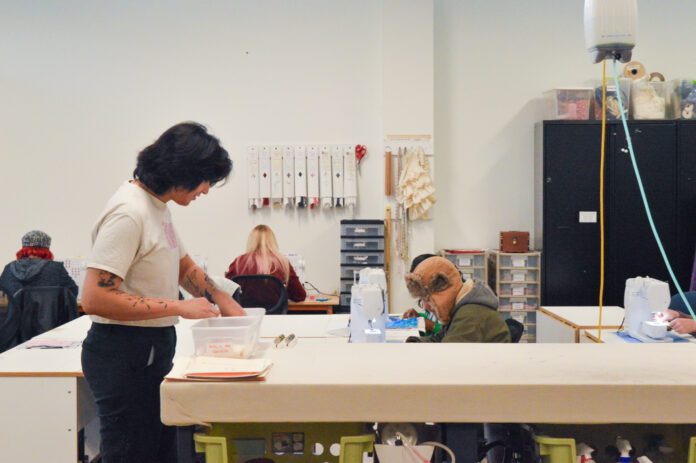
Tulsa Glassblowing School is a nonprofit organization and open-access studio, meaning anyone interested in learning more about the art form can take lessons. All photos by Stephanie Phillips unless otherwise marked

For centuries, glassblowing was shrouded in prestige and mystery. Known as masters of the craft, Venetian glass blowers were isolated on the island of Murano in an attempt to keep their trade secrets safe. They faced severe consequences, including death, for sharing their techniques. 

Artists from around the world have since reclaimed the art form, rediscovering old techniques and forging new ones of their own. Oklahoman artist Chris McGahan, and Janet Duvall, director of the Tulsa Glassblowing School (TGS), are passionate about preserving the centuries-old craft.  

“Anything that you can imagine, you can make out of glass,” says Duvall. “You just have to have the skill for it.” 

The Basics

Glassblowing originated in Syria in the 1st century B.C. The art form quickly became a booming industry for many countries, yielding thousands of hand blown goods like vases, platters and sculptures. 

Examples of glassblowing can still be found just about everywhere. 

“Anytime you see a glass bowl or ornament, all those started with the same kind of clear glass and a small bubble,” explains Duvall. 

To shape and mold glass into intricate designs, extreme temperatures are required. Glassblowers use furnaces to heat batches of glass to above 2,100 degrees Fahrenheit. McGahan shares that getting used to the heat comes with time and recommends wearing long pants and close-toed shoes. 

In OKC, Bella Forte Glass Studio, helmed by Chris McGahan, has made products for the likes of Robert Downey Jr. and Kristin Chenoweth. Photo courtesy Bella Forte Glass Studio

First, beginners learn how to gather molten glass out of a furnace with a long, steel pipe. Duvall compares gathering molten glass to working with honey. 

“You’ve got to keep it hot… so it’s still malleable, and you can make it do what you want,” she explains.

Molten glass can be shaped by blowing air through a blowpipe, manipulating it with pliers or rolling it across a flat surface. Glassblowers can also layer in different materials to add color to their designs. When the glass begins to dip in temperature, it must be placed in a kiln or annealing oven, where it slowly cools over 14 hours. 

The end results can be surprising. 

“Not every piece turns out exactly like you envisioned it,” says Duvall, “but it’s still beautiful when it’s done.” 

An Artist’s Journey

The beauty and exclusivity of glassblowing is what first piqued McGahan’s interest in 2004. 

“I owned a restaurant for 19 years… and I wanted to create my own pendant lights that hung over the booths,” he shares. 

He took lessons at a nearby studio and gained experience as an apprentice. Eventually, he purchased a used furnace, which he installed in his backyard. His love for glassblowing has evolved into a thriving career; he now runs Bella Forte Glass Studios in Oklahoma City, and his creations are on display at the Myriad Botanical Gardens and the Will Rogers International Airport. 

In 2009, he developed his signature technique, ‘redento raffinato,’ which translates to ‘redeemed elegance’ in Italian. The technique capitalizes on reviving broken glass pieces that would otherwise be scrapped. 

“I’m saving these pieces from the ultimate demise in the city dump and making something beautiful out of them,” he explains. 

McGahan has been commissioned by the likes of Robert Downey Jr., Kristin Chenoweth and James Langford. He has also created vases for the Thrive American Foundation Inaugural Gala in Washington D.C.  

“If I could’ve foreseen where I would be going with glassblowing, I would’ve been amazed,” he says. 

Opportunities for Beginners

Novices don’t need to invest thousands of dollars into equipment to get started in glassblowing. Many studios, including TGS and Bella Forte Glass, are making the craft accessible to the public. 

At Bella Forte, beginners can enroll in workshops to create Christmas ornaments, paperweights and glass flowers. The studio welcomes both individual learners and groups. 

“We’ve had 11- and 12-year-olds take classes with their parents, and even 80-year-old seniors come in,” says McGahan. 

TGS is also engaging learners of all backgrounds since relocating to a new facility in McClure Park. 

“It’s been a really nice transition for us,” says Duvall. “It has allowed us to expand our programming substantially and our outreach, not only in the Tulsa and northeast domain, but throughout the country.” 

TGS is a nonprofit organization and an open-access studio. Anyone interested in learning about glassblowing can take lessons. After demonstrating a level of experience, learners can then rent the studio for their own personal use. The nonprofit also offers free lessons to veterans and first responders. 

“[Our classes] give them a sense of community and hope,” Duvall says. 

TGS will soon host its fourth annual series of summer workshops, which bring renowned artists from around the world to Tulsa. For one week, they’ll lead workshops at TGS and share their techniques. This year’s instructors include Shelley Muzylowski-Allen and Granite Calimpong. 

During regular business hours, visitors are welcome to drop into the studio to observe. 

“There are a lot of life lessons that you get out of glassblowing,” says Duvall. “It’s rewarding to know that we’ve helped [our students] find a path that they may not have found otherwise. You just never know who’s going to find a passion in glass.”  

Entering Danzy Estates

Oklahoma designer Marshall Danzy Taulbert labels much of his branded clothing with ‘South Tulsa, California,’ a nod to both his hometown and his current place of residence. Photos by Menelik Puryear

In February, brand Abercrombie & Fitch launched a new clothing line, co-designed with a native Tulsan and Los Angeles-based fashion designer: Marshall Danzy Taulbert. Taulbert says getting to this milestone was an experience he didn’t see coming. 

In November of 2023, Taulbert learned that Abercrombie might consider him for a new collaboration – but it wasn’t until March of 2024 that he knew he had about two weeks to pitch a collection. 

“I didn’t pitch them clothing,” says Taulbert. “I wanted to pitch them a world first, the world of Danzy Estates, and the clothes people would wear there. It’s about the world that people would be part of when they purchase this collection.”

The Abercrombie team was, of course, enamored. Taulbert was designing the collection by May, flying back and forth between LA and Abercrombie’s corporate offices in Ohio. 

Taulbert, who anchors his designs in real or imagined places, says the line, Abercrombie x Danzy Design Studio, a.k.a Danzy Estates, reflects “what I believe [downtown Tulsa’s] Black Wall Street would be if it were still around, like some kind of subdivision that would be there,” he shares. 

L-R: Kwaku Ansong and Samantha Archibald model some of Taulbert’s newest line, Danzy Estates, in collaboration with Abercrombie.

Danzy Estates is a collection of smart staples with a nod to retro sportswear, Taulbert says – a 26-piece collection that is mostly mix-and-match, unisex (except for a few dresses, skirts and tank tops), in classic, preppy and tailored styles. Think polo collars, rugby stripes and collegiate looks in hunter green, navy, gray and white. Each piece is marked with “Danzy Estates,” “D.,” and “1981” – his birth year.

Taulbert envisions a day in his line: The morning routine might involve coffee, and perhaps a workout class, while wearing a gray pair of sweats or fleece shorts. Then, there’s a change of clothing for transitioning to work – whether working from home and connecting to employees via Zoom meetings or heading to the workplace. No matter the situation, Taulbert has everyone ready with rugby shirts, V-neck cable knit sweaters, blue slacks, varsity bomber jackets and a double breasted blazer. A third portion of the line involves clothing for after-work plans. 

Danzy Estates is part of the Abercrombie Vol. 28 recurring clothing collection designed to amplify Black voices and culture, featuring clothing inspired by Black artists and style. Taulbert’s inspiration includes several photos of his parents, who still live in the south Tulsa home where he grew up. 

“Both my parents are very classily dressed people,” he says. “There’s a picture of my mom in the ’90s, wearing a bright red, double breasted blazer with gold buttons. And a picture of my dad wearing a navy blazer with a pair of old Levi jeans and cowboy boots. That’s where I got the idea of a double breasted blazer.”

Taulbert’s own Danzy Design Studio in LA produces clothing labeled with his creative ‘South Tulsa, California,’ moniker. 

“That is my overall city,” he says. “But I’ve created subdivisions within that, and Danzy Estates, for Abercrombie, is one of those – like Utica Square.”

Looking towards the future, Taulbert is prepping for New York Fashion Week in September. 

“People can expect to see a little bit more tailoring from Danzy,” he shares. “Right now, I’m a little more known for the casual and the sweat brand. But they’ll start to see the maturation within my brand.”

Changes Coming

The Oklahoma National Stockyards was established in 1910 and generated 2,400 jobs in a city of only 60,000. Photos courtesy the Oklahoma National Stockyards

The Oklahoma National Stockyards is for sale, but “new ownership does not mean that everything has to change,” says president Jerry Reynolds. 

“There has been a lot of interest, and we have had offers. We are not under contract,” Reynolds said in late February. “All the people that have expressed interest, they know the importance of the stockyards continuing on as is, or at least some close variation of that.”

The stockyards company was founded in Oklahoma City in 1910, in conjunction with the opening of a packing house by the Chicago-based Morris and Company, now known as Armour. A second packing house opened the next year, and the stockyards and packing plants generated 2,400 new jobs in a city with a population of only 60,000, according to the nonprofit Stockyards City Main Street. 

While the board chairman is a direct descendant of the founder, Reynolds mentions that no one in the family has an interest in taking over the operation. The board of directors of the publicly-traded company made the decision to sell, “but it’s not like we are trying to have a fire sale and dump that thing off.”

The stockyards handle 350,000 to 400,000 head of cattle every year, with the biggest sale day on Monday, Reynolds says. Multiple generations of a family will attend the sale, “then go by Cattleman’s and get a steak, and go to Langstons and buy a pair of jeans or a cowboy hat. It’s a destination location.”

The stockyards and Stockyards City are destinations for tourists as well as cattlemen. 

“We get Route 66 tourists every week,” Reynolds says. “You wouldn’t believe the amount of agritourism we get every week – people who want to see the sale. The television series Yellowstone has reinvigorated people’s appreciation for the West.”

Stockyards City Main Street promotes the area southwest of downtown Oklahoma City as a cultural and business destination and sponsors events including business workshops, a Christmas Tree lighting, a “Wines of the West” festival and the Stockyards Stampede event. 

Stocker feeder sales of 329,000 head last year were down 10% from the previous year, Reynolds says, but the Oklahoma National Stockyards remains one of the largest in the nation. Cows and bulls are also sold through the auction house.

“Joplin did more head than us last year, but they have a video auction and we don’t,” Reynolds says. “In size, we are as big or bigger than Joplin. But it’s not a competition to me or us.”

More than 130 families are supported by employment at the stockyards.

“The economic impact is well over $1 billion a year,” says Reynolds. “We are very sustainable.”

One thing that makes the operation unique is that “nine commission firms sell out of our facilities,” Reynolds says. “Commission firms have the connection with the producer, with the customer. They have been helping sell cattle here for a long time.”

The west side of the property is undeveloped, and Reynolds says he can imagine new ownership creating something in that area. 

But, he says, the board would be unlikely to accept an offer “if they had any inkling that someone would come in and just doze it all down,” Reynolds says. “The potential lies solely in it being a stockyards.”

Making Cents of Cryptocurrency

Confused about cryptocurrency? Baffled by Bitcoin? Dumbfounded by Dogecoin? Join the crowd. Digital currency is an interesting, inventive and perplexing field.

As a currency, crypto is still in its infancy; the technology was only created in 2008 and began circulating in 2009. Awareness has grown about the uses and potential of cryptocurrency but, with that, concerns also have arisen about hacking, scams and a lack of protections for consumers. We explore some of the basics to keep readers up to speed. 

Meaning and Uses

Cryptocurrency is digital or virtual currency that utilizes cryptographic techniques to allow for secure and decentralized transactions, giving people the ability to make financial transactions independent of banks, financial firms or a central government. Cryptocurrencies are supported by a technology known as blockchain, which maintains a transparent and immutable record of transactions.

Bitcoin emerged as the first digitally circulated currency about 16 years ago, and awareness has grown through the years.

“I do think more people know about it and are interacting with it,” says Andrew Morin, Ph.D., research assistant professor of cyber studies at the University of Tulsa.

In Oklahoma, for example, Gov. Kevin Stitt signed into law last year HB 3594, designed to safeguard digital asset usage in the state, such as prohibiting the state government from impeding on citizens’ ability to use crypto or digital assets to purchase goods or services, or imposing additional taxes on payments used with digital assets.

Choosing Cryptocurrency

Individuals interested in using the digital currency can buy it through avenues such as traditional investment platforms, cryptocurrency exchanges or mobile payment services. Some users see the currency as a way to invest or make a profit. Others like the ability to make quick payments or to avoid transaction fees that traditional banks may charge.

People can also use cryptocurrency to buy different products and services – such as on technology and e-commerce sites that accept Bitcoin as a payment method. Home Depot also accepts Bitcoin payments, and some car dealers and insurance companies accept cryptocurrency, as well.

Morin says that while cryptocurrency is innovative, there are some concerns with protections for users and the prevalence of scams and fraud.

“It exists in a regulatory vacuum,” he says. It’s a space that doesn’t offer as many protections for consumers and investors as traditional methods, such as those provided by the Electronic Fund Transfer Act, he mentions. The act protects consumers from unauthorized electronic fund transfers.

For example, if you need to dispute a purchase with your credit card, the credit card company has a process to help you get your money back. Cryptocurrencies typically do not come with such protections, often leaving people with no clear path to restitution. 

“By and large, you’re gambling your money in a very consumer-unfriendly environment,” he says.

Another major concern is cryptocurrency fraud and scams, such as through fake websites, virtual Ponzi schemes or online dating scams where criminals try to persuade people they meet on dating apps or social media to invest or trade in virtual currencies.

Morin says that overall, he is “cautiously optimistic” about the future of cryptocurrency and does believe there are efforts to develop legitimate uses for the currency. But he also believes better protections, security, transparency and regulations will be needed to make it a safer space for consumers and investors.