Home Blog Page 67

The Arts in Bloom

Photo by Matthew Murphy and Evan Zimmerman for MurphyMade, 2022

From stand-up to dance, musicals and symphonies, May is jam-packed with goodies. 

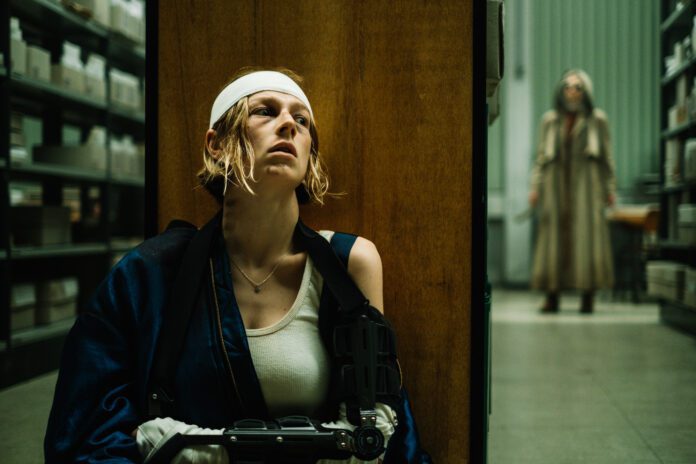
At the Tulsa PAC, visit May 3-12 for American Theatre Company’s rendition of Under the Skin. May 4 brings Golden Girls: The Laugh Continues, with a repeat performance at OKC’s Civic Center the next night, and you’ll see Tulsa Symphony’s season closer, Mahler 5, on May 11. Celebrity Attractions brings the heat with Tina – The Tina Turner Musical from May 14-19, and Theatre Tulsa Academy offers Willy Wonka Jr. from May 24-26. 

Around town, head to the Lorton Performance Center for Tulsa Ballet’s Signature Series on May 9-12, which features works from Luciano Cannito, Joshua Bergasse and Andrew McNicol. Comedian Bert Kreischer also visits the BOK Center on May 17 (or you can see him the night before at Durant’s Winstar World Casino and Resort). 

At the OKC Civic Center, begin the month with An Evening with Bernadette Peters, May 3-4. She’ll join the OKC Philharmonic for a night of unforgettable music and entertainment. Stick around for OKC Phil’s second performance of the month, Tosca, on May 18. OKC Ballet brings its annual Shorts performance May 10-12, and you won’t want to miss the musical Mamma Mia! from May 21-25, brought to town by OKC Broadway. Lastly at the Civic, watch Canterbury Voices’ Crescendo on May 30.  Lyric Theatre of Oklahoma’s Gaylord Academy presents two shows this month: Mean Girls on May 3-5 and High School Musical Jr. on May 10-12. In Edmond, enjoy Celtic Throne on May 5.

Batter Up!

Photo by Mike Houck courtesy OU Athletics

It’s the perfect time (and temperature!) to enjoy some outdoor sporting events in Oklahoma.

Baseball and softball rule the May calendar. At Tulsa’s ONEOK Field, watch the Drillers play America’s favorite pastime on May 1-5, 14-19, 27 and 29-31. In OKC, the Oklahoma City Baseball Club (formerly the OKC Dodgers) play at Chickasaw Bricktown Ballpark May 1-5 and 21-26.

There’s plenty of collegiate games in May. The Sooners and the Cowboys play baseball at home – L. Dale Mitchell Park in Norman and O’Brate Stadium in Stillwater, respectively – on May 10-12. And you can catch the reigning champs, the OU Sooners softball team, at home on Love’s Field May 3-5. If you’re missing the Cowgirls, worry not –the Big 12 Softball Championships return to the USA Softball Hall of Fame Complex from May 8-11 in OKC. 

But more sports than baseball and softball take center stage. Visit Tulsa’s BOK Center for Tulsa Oilers football on May 3, and return May 11 for Bulls, Bands and Barrels – offering bull riding, barrel racing and live music. At Expo Square, watch the OKRVA regional volleyball championships on May 3-5 and the Breeder’s Invitational May 11-25. At the OKC Fairgrounds, you won’t want to miss the 24th Annual Cowboys of Color Rodeo on May 4 and the Route 66 Morgan Classic Horse Show on May 23-25.

Around the state, other sporting events to enjoy include the Special Olympics Summer Games, May 15-17 at Stillwater High School; the Will Rogers Stampede PRCA Rodeo, May 24-26 at Will Rogers Stampede Arena in Claremore; and the Twister City Roller Derby Bout, May 18 t Edmond’s Arctic Edge Ice Arena.

Fun for All, All for Fun 

Photo courtesy Tour de Tulsa

Grab your family, friends or partner and visit a variety of community events this month.

Kick your month off at the German American Society-Tulsa’s Germanfest, May 3-5. Then, walk over to River West Festival park for the annual Tour de Tulsa, a cycling event that’s been truckin’ for more than 30 years. One of the city’s most anticipated events, Tulsa International Mayfest, returns to downtown from May 10-12. Visit Expo Square for the Oddities & Curiosities Expo, May 11-12, as well as the Tulsa Festival of Kites at Tulsa Wind Riders headquarters, also on May 10-12. The John Hope Franklin National Symposium closes out the month on May 31 at the Lorton Performance Center. There, you can discuss racial reconciliation and learn about active advocacy efforts to heal racial divides worldwide. 

In OKC, the Downtown Edmond Arts Festival kicks off May 3-5 at15 W. Campbell St. in Edmond. Make a short trip to enjoy the Norman Pride Festival, May 3-5 citywide. Circle back around to OKC for the Oklahoma Craft Beer Festival, May 18 at the OKC Fairgrounds; the Chuck Wagon Festival, May 25-26 at the National Cowboy and Western Heritage Museum; and the Paseo Arts Festival, May 25-27 in the historic Paseo District.

Around the state, enjoy a panoply of other events, ranging from the Tumbleweed Calf Fry, May 2-4 at Stillwater’s 5212 W. Lakeview Rd.; the Prague Kolache Festival, May 4 at Main Street at City Park; the McAlester Italian Festival, May 10-11 at the Southeast Expo Center; or the Stilwell Strawberry Festival, May 11 in downtown Stilwell. Other goodies range from the Bixby BBQ and Blues Festival, May 16-18 at Washington Irving Memorial Park and Arboretum, or the Magnolia Festival of Oklahoma,May 30-June 1 at the Choctaw Event Center in Durant.

Viewer’s Choice

Kingdom of the Planet of the Apes; photo courtesy 20th Century Studios, all rights reserved

May has arrived and with it, a variety of films to enjoy. There are a panoply of genres this month, so grab some overpriced – but entirely necessary – popcorn and head into the theater. 

Start the month off with a bang and check out The Fall Guy. Based on a 1980s television series of the same name, the film stars Ryan Gosling as Colt Seavers, a past-his-prime stuntman who finds himself trying to locate the missing star of Jody Moreno’s (Emily Blunt) new movie. The trailer offers a lot of action set pieces and Gosling has charm to spare. The film is directed by David Leitch, known for John Wick and Bullet Train, who is no stranger to excellent action choreography, so hopefully it shines through when it releases on May 3. 

For your spooky fix, make sure to catch
I Saw the TV Glow. A horror-thriller distributed by A24, the movie revolves around two teens who reminisce about a TV show they used to watch. The trailer shows off some bizarre imagery, seemingly blurring the lines between reality and fiction as strange events happen. The horror element might be light, as the tone feels more coming-of-age in a wholly unique fashion, but we’ll find out together (and hold hands if it’s scary) when it comes out on May 3. 

For some science fiction with a long and unwieldy title, look no further than Kingdom of the Planet of the Apes. The fourth film in the Planet of the Apes rebooted series and set nearly 300 years after the last film, the story shows that ape civilizations have grown rapidly while humanity has regressed to a feral state. When the leader of the apes begins to enslave certain clans, a chimpanzee decides to take action. The CGI and motion capture on display is, as it was in previous films, phenomenal. Andy Serkis, who played the lead role in the other entries, will be sorely missed this time around, but hopefully this story can stand on its own when it releases on May 10.

For a biographical drama, make sure to see Back to Black. The film tells the story of the meteoritic rise and tragically early end of singer-songwriter Amy Winehouse, played by Marisa Abela. The film will likely hit all the highs and lows of her life, including the creation of her international hit “Rehab.” It co-stars Jack O’Connell and Eddie Marsan and is directed by Sam Taylor-Johnson, who also directed a (moderately) well-received biopic about John Lennon. It hits theaters on May 17.

Lastly, get your post-apocalyptic fare with Furiosa: A Mad Max Saga. Starring Anya Taylor-Joy as a young Furiosa, a character that first appeared in Mad Max: Fury Road played by Charlize Theron, the prequel looks to tell her origin story as she tangles with Warlord Dementus (Chris Hemsworth) and tries to find her way home. George Miller returns to direct and it looks to be an action packed thrill ride. It releases on May 24.  

Main image: Kingdom of the Planet of the Apes; photo courtesy 20th Century Studios, all rights reserved

Brian Lee Whisenhunt

Photo courtesy the University of Tulsa/Gilcrease Museum

Tapped as Gilcrease Museum’s newest executive director, Brian Lee Whisenhunt began his tenure on April 15. Most previously, Whisenhunt was the executive director at New York’s Rockwell Museum, serving on the board of directors of the Museum Association of New York and as a peer reviewer for the American Alliance of Museums Accreditation Commission.

A Tulsa native, Whisenhunt received both his bachelor’s and master’s degrees in art history from the University of Oklahoma before working at such institutions as the Wichita (Kansas) Art Museum, the Blanton Museum of Art at the University of Texas at Austin, the Swope Art Museum in Terre Haute, Ind., and the Museum of the Southwest in Midland, Texas. We caught up with Whisenhunt and got his thoughts on … 

… what he’s looking forward to right off the bat. 

It’s an exhilarating moment as I step into the role of executive director, ready to lead the Gilcrease team into an exciting new chapter! In my first few months, I’ll be pursuing two distinct paths: immersing myself in our ongoing construction projects and connecting with the vibrant communities we serve.

… returning to his hometown and helming Gilcrease. 

Gilcrease and the other cultural institutions of Tulsa were a lifeline to me growing up – a bridge to a world of ideas, culture and expression. Coming back to lead Gilcrease means the world to me. It’s so much more than a professional opportunity. This is a passion project! My mission is to spark inspiration in the next generation of museum goers, encouraging them to pursue their passions and interests with the foundation of the self-awareness and community regard that only an innovative museum experience can provide. 

… specific Gilcrease pieces he’s excited about seeing.

I’m so excited to see so many ‘old friends’ familiar to me from growing up with the Gilcrease collection, but also eager to learn how the collection has evolved in the past few years. I’m particularly interested in artists bringing new perspectives and innovation to traditional techniques and materials. I won’t play favorites – or at least not yet!  

… moving back to Tulsa. 

There is so much of what I loved about growing up in Tulsa still foundational to the experience of the city – but also so much that has been added! I can’t wait to revisit my old haunts like Cherry Street and Philbrook, but I’m also thrilled to get to know the new organizations and community spaces that have grown up in the time I’ve been away, like the Woody Guthrie Center and Gathering Place. I also can’t wait to explore Tulsa’s expanded food scene. (Please invite me to lunch at your favorite spot!) The city has such a vibrant and evolving culinary culture.

… how Gilcrease can transform Tulsa.

In 10 years, the community will see their experiences at Gilcrease as essential and integral to their lives and the community in a way they may not currently. The continued expansion of the collections will help people to truly see themselves and understand the world around them more clearly. Plus, I know the rich and varied exhibitions, innovative programs, signature events and creative activities in development will be an even stronger part of the true Tulsa experience. 

… his free time. 

You’ll find me and my husband, Mitchell, enjoying the city’s trails and parks with our two dogs, Stella Jo and Nova Dee. We’ll most certainly be regulars at the Farmers Market, looking for the best Oklahoma produce (bring on the okra!) to serve family and friends. Likewise, dining out at all the great restaurants with new and old friends alike will certainly be a part of our routine. And of course, we’re eager to engage in the abundant arts and cultural programming and events offered in my beautiful hometown. 

The Beau Monde of St. Moritz

Landwasser Viaduct; all photos stock

The Swiss alpine village that pretty much invented winter tourism is still at it – and still doing it better than anybody else. When it comes to this splash of posh high in the Alps, superlatives reign: St. Moritz is the most storied, most picturesque, sunniest, glitziest, most like a fairytale, the crème-est de la crème.

Lucky explorers first stumbled upon the therapeutic mineral waters at St. Moritz some three thousand years ago, but it wasn’t until 1864 that hotelier Johannes Badrutt dared his summer guests to do something preposterous – come back to St. Moritz that winter for fun and games. Well, they took him up on his bet, had a glorious time in the valley’s winter sun, and the games were on. 

The Bernina Express

Olympic bobsled events were held in 1928 and 1948 and before that, in 1904, the St. Moritz-Celerina Olympic Bobrun was created for British tourists. The run has hosted 24 world championships. If you’re feeling adventurous, grab a friend and climb on board a four-person sled (with a driver and a brakeman) for an exhilarating one-mile run down icy chicanes at speeds surpassing 80 mph.

The red narrow-gauge Glacier Express from Zermatt brings you to St. Moritz in style. It takes eight hours for the train to make the 180-mile journey, but with alpine scenery like this, you’ll be thinking even 22 mph is too fast. Raclette and wine are waiting in the dining car. 

When it’s time to leave town, consider the handsome red Bernina Express to Tirano, Italy, over the 7,400-foot Bernina Pass. Using innovative methods like spiral (helical) tunnels, the grade has been reduced considerably, but in some places it’s still as much as seven percent, the steepest in the world for electrified trains without cogwheels. 

Lake St. Moritz

The most photographed of the Bernina railway line’s 196 bridges is the Landwasser Viaduct built in 1902, a gently curving limestone bridge featuring six tall, graceful arches. For its technical and architectural achievements, the route from Thusis, Switzerland, to Tirano has been named a UNESCO Heritage Site.

Lake St. Moritz is a natural draw. It’s great fun in the summer to circumambulate the snow-fed lake and watch the sailboats, paddleboards and canoes. The three-mile saunter will set you up nicely for dinner. Beyond the lake, summertime diversions include golf (four courses in the area), indoor ice skating, hiking, mountain biking, tennis, horseback riding and fishing the Inn River, whose waters ultimately join the Danube.

Lake St. Moritz

Winter brings a bit more variety: skiing (Nordic and alpine, naturally), ice hockey, ice skating, polo on ice, horseracing on ice, greyhound racing on ice, even cricket on ice. The mountains cradling St. Moritz offer more than 200 miles of ski runs. But to be fair, the gondolas, ski lifts and funiculars stay just as busy in the summer as they do in the winter.

Shopping in St. Moritz is, as you might guess, both exclusive and expensive. All the big designer names are on hand along with shops selling watches, jewelry and things like gnarled folkloric woodcarvings of natives in Swiss costumes.

Plazza de Scoula

The resort community is old-school, dominated by large grande dame hotels. Remember Johannes Badrutt? His namesake is the city’s crown jewel, Badrutt’s Palace Hotel, opened by his son on Lake St. Moritz in 1896 and where Alfred Hitchcock liked to winter. Indoor/outdoor infinity pool, first-rate spa, numerous bars and gourmet restaurants. 

Also consider Suvretta House, an elegant Belle Époque ski-in and ski-out hotel with shopping boutiques and wellness center. And a third choice: the legendary Kulm Hotel in the heart of St. Moritz, a splendid property Johannes Badrutt opened in 1856 that comes complete with its own nine-hole golf course. But be forewarned: the word Kulm comes from the Latin for “hill.”  

Understanding the Spectrum

According to the Centers for Disease Control and Prevention, one in 36 children in the United States have Autism Spectrum Disorder (ASD) – an increase from the previous rate of one in 44 – and boys are nearly four times more likely to be diagnosed with autism than girls. A complex condition with no definitive cause, autism is known as a spectrum disorder because the type and severity of symptoms can vary greatly by individual. 

“Often, symptoms are noticeable by 18 months, and autism can be reliably diagnosed by professionals by age two. Unfortunately, the average age of diagnosis for most children is closer to five years old,” says Robyn Cowperthwaite, M.D., a child and adolescent psychiatrist at Oklahoma Children’s Hospital OU Health and division chief of Child and Adolescent Psychiatry at the University of Oklahoma Health Sciences in Oklahoma City.

She says a child with autism demonstrates persistent difficulties with social and emotional interaction and communication, as well as restricted or repetitive behaviors and interests.

“A lack of social/emotional reciprocity can look like limited social interest, lack of back-and-forth conversation, reduced sharing of interests and emotion with others, or failure to start and respond to social interactions,” says Cowperthwaite. “Reduced understanding and sharing of non-verbal communication is notable to include abnormalities in eye contact, body language, gestures and facial expression. Those with autism also show difficulties with developing, maintaining and understanding relationships. Restricted and repetitive patterns of behaviors can be demonstrated by the need for things to always be the same – this can include the need for behavioral rituals and routines, feeling overly stressed by small changes or having highly specific areas of interest. Many children demonstrate repetitive or stereotyped movements.”

She says early intervention is critical and allows for earlier assistance in skill building to reduce the impact of communication deficits.

“Early intervention in speech and language therapy can increase skills with verbal communication at school and with caregivers,” says Cowperthwaite. “Occupational therapy can better determine sensory sensitivities and teach skills to allow a child to be as independent as possible with dressing, eating, bathing, writing and relating to people. Applied Behavior Analysis can assist schools and families with increasing more socially appropriate and adaptive behaviors. These therapies combined can increase the child’s enjoyment of and participation in more typical childhood activities.”

There are three functional levels of autism to help identify the level of support a patient needs. Level 3 requires very substantial support, Level 2 requires substantial support, and Level 1 requires support. For example, a child with a Level 3 diagnosis may be non-verbal and need assistance with many daily activities. 

“This could require several specialized therapies throughout the week and the need for near-constant supervision,” she says. “Support can look like assistive technology to aid in communication or a specific classroom environment. Some children show significant mood swings, irritability or aggression when exact routines and rituals are interrupted or when faced with unliked activities.”

For all levels of autism, Cowperthwaite says an individualized education should be developed and implemented in the school setting.

If a parent suspects their child may be autistic, a discussion with their primary care physician is a great place to start. 

“Pediatricians are completing developmental screenings at the 9-, 18- and 30-month mark at the recommendation of the American Academy of Pediatrics and autism specific screens are recommended at 18- and 24-months,” says Cowperthwait, adding that the CDC has materials available to help parents track their child’s developmental milestones in order to share concerns with their child’s physician. 

“A primary care doctor can then refer to a specialist who can complete a more in-depth evaluation,” she says. “Developmental pediatricians, child neurologists and child psychiatrists can all diagnose autism, and often recommend confirming the diagnosis via psychological testing with a pediatric psychologist or neuropsychologist.”

Giving Mad Props

Like a lot of other nostalgic adults, Tom Biolchini – a Tulsa-based banking executive and immediate past president of the Tulsa Regional Chamber of Commerce – made the happy discovery some time ago that he could pick up lost pieces of his childhood via the vendors on eBay. During his youth, for instance, he’d had a nice collection of action figures representing the characters on the popular ‘80s animated series, He-Man and the Masters of the Universe. 

To his joy, he found he could put it together again. 

“I loved He-Man,” he remembers, “and when I went on eBay, I saw I could get something like 20 of these action figures for 18 bucks. I was saying, ‘Look at these. Look how much fun this is!’ And my wife was rolling her eyes.” He laughs. “Then I got into action figures from the movies. I got the whole set from The Goonies. And Rocky Balboa from Rocky IV, and Ivan Drago, and Clubber Lang from Rocky III. I knew these weren’t wise investments, but it was fun for me.”

Assembling a movie-based action-figure collection, he says, was “an absolutely gateway” into collecting actual film props. Although they cost considerably more, Biolchini found he could acquire them in the same way. 

“About 10 years ago I was on eBay, looking around, and I saw Mel Gibson’s gun from Lethal Weapon, the first one,” he says. “And I said, ‘Well, that’s the coolest thing ever.’ So I contacted the seller. He’d worked on the movie set, and he came with credentials. I bought it. That was my first prop. I used to bring it around to parties and say, ‘Hey, can you guess what famous actor used this famous gun in a famous movie? If you get it right, I’ll buy you a drink,’ or whatever.” 

And so began Biolchini’s adventures in prop collecting. He continued picking things up from eBay, which eventually led him to the Prop Store in London, an auction house specializing in authentic pieces from theatrical features. 

“I watched how these auctions went off for a couple of years, and then I started bidding,” says Biolchini. “I noticed the prices on these things were getting ridiculous – I mean really high – and I’d be missing out on all these items. 

“I thought, ‘Who’s doing all this?’ So I dove deeper, and I saw that it was going all over the world. I was competing with people in, you name it – the Middle East, Africa, Europe.”

As he got savvier, he began winning more and more pieces. At the same time, he was becoming acquainted with other collectors and finding himself more and more intrigued with and enthusiastic about the whole worldwide prop-collecting culture. Finally, he became convinced that it would make a dandy topic for a television series.  

So, Biolchini wrote an outline and got it to his former Cascia Hall classmate Juan Pablo Reinoso, a producer, director, writer and actor who’d recently returned to Tulsa after working for more than two decades in New York. 

“He came to me and said, ‘What do you think? Is there a TV show here?’” recalls Reinoso. “I told him, ‘Yeah, but the problem is that the two most impossible businesses to get into and really have any sort of success are music and TV. Television is so incestuous that unless you already have your foot in the door and know somebody, or you’re a legacy, it’ll take you years and years to even direct an episode of anything, much less pitch a real show.’

Reinoso suggested that instead of trying to launch a TV series, Biolchini’s idea might be better realized with a feature-length documentary. “‘That way,’ I said, ‘you might actually be able to make something off of having a movie, and we could use it as a way to pitch an eventual TV show, because we’d have something tangible that they could see.’”

And that’s how the brand-new doc, Mad Props, became a reality. 

It’s tempting to define Mad Props as a movie about movie props. However, that’s not wholly accurate. With Reinoso directing and Biolchini as the on-camera narrator and interviewer, Mad Props takes viewers to prop-intensive locations in various cities in America and around the world, from sites like a tattoo parlor in San Marcos, Texas, and a prop museum in Las Vegas to Italy, France and the U.K, presenting along the way not only a relentlessly upbeat and fascinating look at movie props, but lots of affectionate glimpses of the people who love them. Biolchini and the crew also travel to Hollywood, where he talks to some original prop creators and brings in veteran character actors Robert Englund, Lance Henriksen and Mickey Rourke to give some Tinseltown sheen to the proceedings. 

“My producer and partner out in L.A., Keli Price, has relationships with all the major agencies, and we brought him in to help produce on Mad Props,” notes Reinoso. “We basically said, ‘Here’s a laundry list of [actors] who would be great.’” 

Henriksen and Englund were “obvious” choices, he adds, because of Henriksen’s starring roles in three of the Alien movies, whose props are extremely popular with collectors. And, of course, Englund will be forever known as Freddy Krueger, from another series with highly collectible props, the Nightmare on Elm Street franchise. Krueger, as it turns out, was one of young Biolchini’s absolute favorite movie characters. 

For the documentary, he says, “I got to go out and find the other nerds who collect these things, and they treat them as art, just like I do. But then to talk to the guys who got to use the props, to actually talk to him [Englund] and say, ‘So what did you do with your first glove [from the original Elm Street]?” He laughs again. “And then, to talk to the people who created them – it was all really intriguing to me.”

Although collectors in other areas – baseball cards and comic books, to name a couple – can be ruthless, there’s none of that aggressiveness in Mad Props. In fact, it’s just the opposite. Prop aficionados, including Biolchini himself, are presented as helpful and kind to one another – competitive, maybe, but hardly to a fault. 

“I think that’s the absolute truth,” says Biolchini. “That’s what we discovered on our journey. With the people we interviewed, it wasn’t like, ‘I’m trying to turn a 200% profit.’ It was more like, ‘I hope it’s worth something, but I just love having it.’ And they’d geek out about other people: ‘What do you have?’ 

“I’m not a collector, so when we started making the film, part of it for me was making the discovery behind the ‘why,’” adds Reinoso. “I understood the sentimentality, because there are movies that I’ve seen a million times, and I wanted to see whether it correlated with the financial aspect – to figure out what it was really more about.”

It all came home for him, he says, when Biolchini interviewed a man at a live Prop House auction in London, who was there to bid on only one thing – a relatively inexpensive technical drawing from a lesser-known British TV series, Blake’s 7. 

“That to me was the summary,” says Reinoso. “There’s really something for everybody, and everybody has a different connection to everything. It just makes it [prop collecting] so universal.”

It’s indeed universal, but Biolchini wants viewers to know that the movie about it came out of his hometown.  

“The documentary’s not about Tulsa,” he says, “but I try to do my best to show where it came from – wearing my Tulsa cap, and talking about Tulsa, that sort of thing. Just a little nudge to anybody who’s outside the state.” 

Mad Props played Tulsa’s Circle Cinema in March, part of what Reinoso describes as a series of “staggered theatrical dates across the country.” By the time you read this, it should also be available on DVD and via streaming services.  

Wiping Out Absenteeism

Missing large amounts of school is a problem for students. And being chronically absent – defined as missing 10% or more of instruction in an academic year – can have serious ramifications for students in a variety of ways. 

Tulsa Public Schools, the state’s largest public school district, has a student population in which 40% are categorized as chronically absent. But leadership is working hard to change that.

TPS, the City of Tulsa and ImpactTulsa, a nonprofit dedicated to building equity for children, have partnered together on the Attend to Win program to address the multifaceted problem that is chronic absenteeism, says Stephanie Gregory, TPS Director of Family Attendance Supports. The program itself is also multifaceted.

The first question the team addressed was this: Why are students missing so much school? After research, the district identified what they call ‘The Big Four’ common barriers to getting to school: lack of transportation, poor physical or mental health, safety, and housing insecurity.

One way that the Attend to Win program will fight absenteeism is through an awareness campaign. In many cases, the supports are in place to help families, but they may not know it. The program’s website both raises awareness and serves as a resource for families.

“It’s about leveraging systems for families that need them, and raising awareness about those systems,” says Gregory. For example, the TPS Parent Resource Center is where struggling families can turn for practical things like gas cards.

Tulsa Public Schools is enacting a new program to help combat chronic absenteeism: Attend to Win.
Photos courtesy Tulsa Public Schools

The TPS district is also deploying a team of Attendance Recovery Coordinators, a position that is a re-imagined truancy officer. Gregory defines this team as “the folks who are going out and knocking on doors and supporting schools with a data-driven response to students who are chronically absent.”

Schools within the system are also doing their part by ensuring that faculty and staff who know these students and the challenges they are facing effectively communicate these issues to leadership.

And, finally, since chronic absenteeism is a community-wide issue, everyone has a part they can play. The Attend to Win website (tulsaschools.org/student-and-family-support/bell-times/attend-to-win) offers opportunities for individuals and organizations to help through volunteer opportunities or by donating to the Foundation for Tulsa Schools.

There are multiple reasons that school attendance is important for children. Not only is attendance a leading indicator of student academic outcomes, explains Gregory, but there are social development implications too. They miss out on plugging into friend groups, as well as important school culture activities such as class rewards or important assemblies. This can lead to students feeling “out of the loop” even when they do attend, she says.

“We want school to be a place where your kid wants to be, and if there is something that is making that not the case, then we want to hear from families,” says Gregory. 

Cast a Line

As warmer weather approaches, seasonal recreation begins anew. A popular activity in Oklahoma that offers generally low stress and low buy-in is fishing. There are over 200 different bodies of water to cast your line, all of which are documented on the Oklahoma Department of Wildlife Conservation (ODWC) website. 

“[Website visitors] are able to filter their location according to region, or they can search by specific lake or river name,” says Heather Gaylord, a communication and education specialist at ODWC. 

Paying a fee for a fishing license in Oklahoma is common, but doing some research ahead of time is never a bad idea. 

“Some municipalities charge an access fee or have a separate fishing permit in addition to a state fishing license,” says Gaylord. “OK State Parks may also charge for access to waters within the park. My best advice is to consult their websites or call to find out what they require before you visit.” 

Regardless, you’ll want to carry the licenses with you when fishing.

Once you’re out on the water, you should try to keep some sustainable practices in mind. Make sure to always follow the ODWC fishing rules and regulations at all public bodies of water, and only harvest what you can utilize in a reasonable amount of time. 

“Catching the limit just to boast is wasteful,” says Gaylord. “Catching and killing just to brag is also wasteful. Take a picture and release it unharmed.” 

Don’t forget to leave your campsite, dock or fishing pier better than you found it. 

“Places will close down and disappear if we don’t take care of them. We are all stewards of the environment around us and the future depends on us,” says Gaylord.

When fishing, consider sustainable practices like catch and release, as well as common courtesy behaviors like leaving your dock cleaner than you found it.
Photos courtesy Oklahoma Department of Wildlife Conservation

Although there are plenty of different fish throughout the state, there are a few you’ll see more often than others. 

“The most prevalent fish in Oklahoma are bass (largemouth, smallmouth, striped and hybrid), crappie (black and white), catfish (blue and channel), and trout,” says Gaylord.

And if you want the best chance at catching them, you’ve got two time options. 

“Generally, the best time to catch fish is first thing in the morning, or in the evening, thirty minutes before dark,” says Gaylord. “However, fish are not always predictable.” 

Lastly, fishing advice for your first time or your hundredth can make the process easier and a bit more fun. Make sure to use lures appropriate for the time of year. Always check your boat for lifejackets, charged batteries, fuel, fishing licenses and other essential items. Never throw trash in the water and always pay attention to the weather. Most importantly, however, is remembering to be safe.

“Get out there, take a buddy and have fun!” says Gaylord. 

Close to Home 

If you don’t have the time or means to venture to a faraway lake, ODWC also runs a program called Close to Home, offering access at 46 locations around Oklahoma.

“These are small lakes or ponds that are located in more urban areas that have been cleaned up and stocked and are a convenient way for people just to get out on the water and be able to fish,” says Gaylord.

Through agreements with multiple municipalities, Close to Home offers fishing access in areas ranging from Bartlesville to Harrah,  Tulsa, Moore, Enid and Oklahoma City. For a full listing of Close to Home fishing locations, visit
wildlifedepartment.com/fishing/regs/close-home-fishing.