


















In a world where information is at our fingertips and virtual meetings are the norm, it is vital to have a grasp on general etiquette – and just how we present ourselves to the world on a day-to-day basis.
“The internet can be an excellent resource for etiquette information,” says Carey Sue Vega of Expeditions in Etiquette based in Oklahoma City. “However, I would proceed with caution when it comes to just ‘Googling it.’ Remember, there is a lot of outdated information out there – and just because it’s on the internet doesn’t make it true.”
Vega goes on to explain that a local, reputable etiquette coach or expert will have years of training and experience in the rules and guidelines for manners –both old school and modern. Such coaches keep up to date with current trends and can typically answer any questions you may have, or help you prepare for an occasion or event you might be anticipating.
“Mastering the art of the ‘soft skill’ is a critical first step on the road to real life business success,” says Vega. “Personal networking is the one skill you can never outsource. Building relationships is the foundation of networking and knowing how to create comfortable conversation will build relationships.”
According to Vega, these soft skill basics apply at business meetings, social gatherings and networking events.
“The bottom line is that people want to do business with people they’re comfortable with – people they know, like and trust,” she says. “You can’t create true connection without comfortable conversation.”
Vega believes learning general conversation skills, and having the confidence to use them, will make you memorable, thus setting you apart from the rest of the crowd.
“Also remember, it’s not only what you know – it’s who you know,” she says. “Developing good working relationships is an integral part of networking success. In our youth, high school and young professional programs, I work with students, teaching them the importance of polite conversation, eye contact, body language, a firm handshake. All the things they need to feel confident when meeting others in both formal and informal settings.”
Susan Ellis of Good Manners, LLC, in Tulsa agrees that soft skills are integral to etiquette, which is thus integral to success and development.
“If you are a person who values culture and wants to make a positive impression on others, you probably know and follow basic etiquette rules in various settings,” she says. “Proper etiquette is linked to good manners, good behavior, strong values, kindness and respect. Etiquette training should start in childhood and continue throughout life as a learning process.”
A few simple steps can be incorporated into our daily routines to get us on the right track, says Ellis.
“Respect others’ time and avoid oversharing information,” she says. “Familiarize yourself with company policies and procedures, work on your pitch, and actively listen to build rapport. Learn proper dining etiquette to avoid vulgarity and disrespect. Invest in taking a class if you don’t know something. Presenting the best version of yourself takes knowledge and guidance. Your future self will thank you for making the right choices now.”
America is home to a myriad of regional barbecue styles including what many call the big four: Kansas City, Memphis, the Carolinas and Texas.
RibCrib, statewide; photo courtesy Chandler Hospitality Group
Kansas City style is known for its slow-smoked, sweet-seasoned rubs on meats, often cooked with a brown-sugar based sauce with the heat kept low to avoid caramelizing. Burnt ends are the favored K.C. meat, along with thick cuts of bacon made by pressing and smoking pork shoulders. KC-style pitmasters also tend to choose hickory wood for smoking.
Memphis style, also referred to as Tennessee barbecue, is dominated by pork cuts, especially the quintessential Memphis style pulled pork sandwich adorned with creamy coleslaw, and pork ribs prepared in styles both wet and dry. Wet ribs are sauce-slathered before, during and after slow smoking. Dry ribs coat the meat with spices before cooking to allow the true meaty flavor to dominate.
The Carolina style literally goes ‘whole hog’ by slow roasting the entire pig for at least 12 hours – and this ancient style of cooking requires a moistening mop sauce during the process that can last up to 24 hours.Western North Carolina eschews the aforementioned method and instead focuses on pork shoulder. Both tend to use the thin ‘mop sauce’ with varying ingredients including vinegar, apple cider, tomato juice and beer.
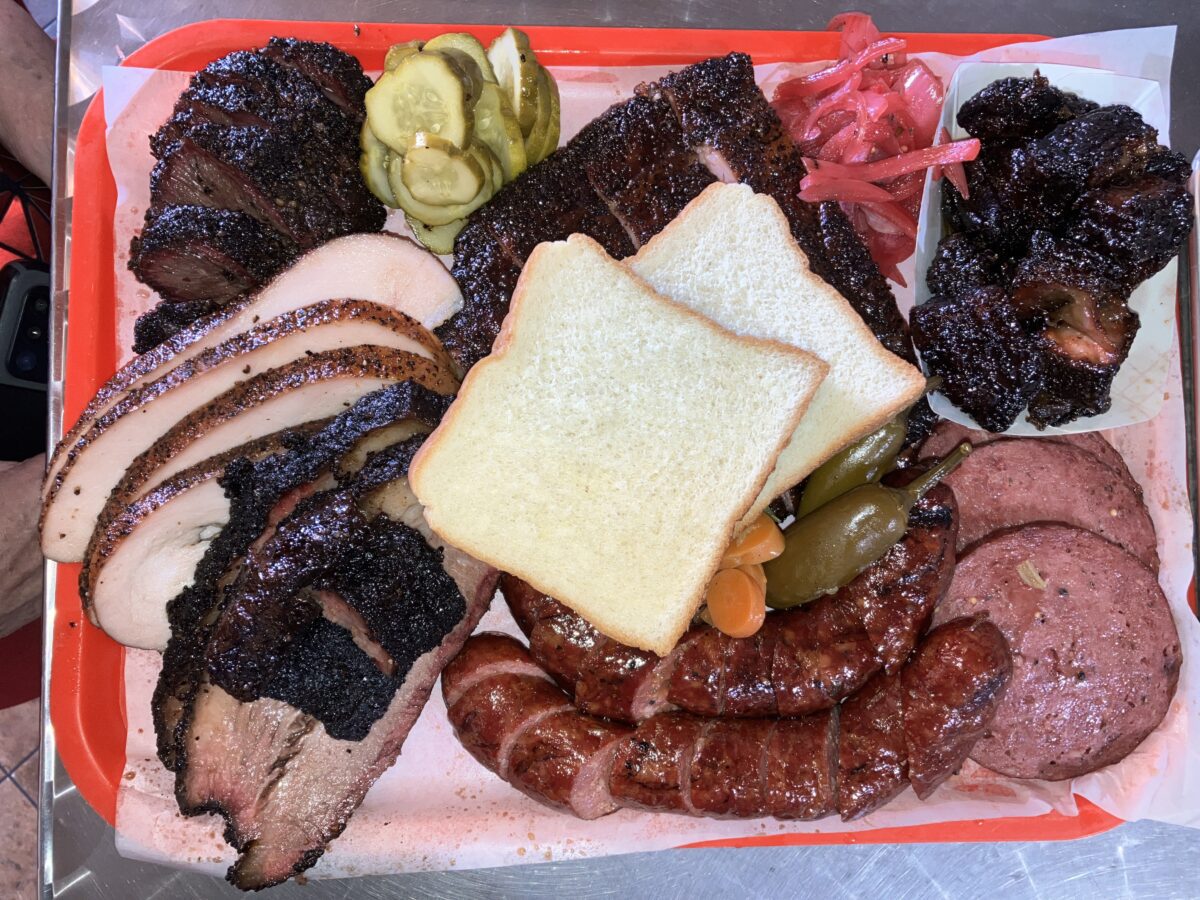
Oklahoma’s southern neighbor produces Texas-style barbecue known for an emphasis on east Texas hot links, beef ribs and especially brisket. Favored methods include smoking over coal and serving sans sauce while others prefer the flavor of Mesquite-smoked meats. Some Texas-style pitmasters choose to focus on chopped smoked beef sandwiches dripping in a vinegar-based sauce.
The Sooner State, however, has its own style – with Oklahoma-based BBQ restaurants putting a twist on the classics.
“We are uniquely Oklahoma BBQ – smokin’ since 1996,” says Leslie Curtis, general manager at Earl’s Rib Palace in Edmond.
Football legend and barbecue aficionado Billy Sims says of his restaurants, Billy Sims Barbecue: “We are Oklahoma style – so in our opinion its low and slow; we cook 10 to 12 hours. Our meats are smoked fresh daily with pecan wood.”
Albert G’s Barbecue, Tulsa; photo courtesy Albert G’s
Chuck Gawey, owner of the Tulsa-based Albert G’s Barbecue, keeps a tradition of seasoning with in-house rubs and then, he says, “we use a lot of ‘go low and slow,’” he says. “Brisket and pork cook overnight with hickory wood, and we load up the smoker with ribs, turkey and bologna. Our sauce has been the same for the last 32 years.”
Oklahoma BBQ behemoth RibCrib uses a blend of methods according to Matt Thompson, vice president of operations for Chandler Hospitality Group.
“We’re a blend of classic Oklahoma and Kansas City styles, plus our own ideas. RibCrib has never been afraid to do its own thing, and that’s served us well. We love Kansas City barbecue, so we pay special attention to our sauces and frequently experiment with new barbecue flavors from regions like Tennessee, Carolina and Alabama.
“Something that also sets us apart is our choice of wood,” Thompson continues. “We use split green hickory rather than pecan or oak preferred by lots of other places in Oklahoma and Texas. For us, green hickory smoke is a flavor that’s every bit as important as our slathers and rubs – we’ve got to have it. It gives our meats their distinct RibCrib flavor.”
What Sides Reign Supreme?
For many barbecue lovers, side dishes can make or break a meal. Popular choices range from cowboy caviar (seasoned bean salad) to mashed potatoes, coleslaw and beyond.
Sims himself favors baked beans made daily with morsels of smoked brisket, brown sugar, sweet and mild sauce and “a few other secret ingredients,” he says.
At Earl’s, “all of our famous sides are homemade,” says Curtis. “Mustard potato salad is our favorite, but our bestselling side is fried okra.”
Potato salad is the biggest selling Albert G’s side dish, Gawey says, followed closely by coleslaw, baked beans and tabbouleh.
“My favorite side is currently our coleslaw,” says RibCrib’s Thompson. “We’ve been developing new recipes for coleslaw, potato salad, mac ‘n’ cheese, pickles and more. I’d say it’s evenly split between the coleslaw and the potato salad right now. Our seasoned fries have always been popular, but our new fresh-fried potato chips have been gaining on them since we introduced them in 2023.”
The 2024 CES event – a large consumer technology show – unveiled new grilling gadgets to get excited about, including smart indoor smokers for winter grilling; high-end electric grills; battery powered grills; hybrid grills, mixing wood pellet smoke with electric heating; and even some artificial intelligence-powered grills.
Some barbecue producers run old school, while others in the state embrace new technologies.
Thompson says at Rib Crib that “each location is using instant-read thermometers and timers, but that’s about as hi-tech as it gets for us and barbecue,” he says. “The smokers used are made by Ole Hickory – think of a giant rotisserie with racks of ribs, pork, and all that good stuff constantly turning. We load the firebox up with hickory to generate the smoke, and the smoker uses a fan to circulate it through the main chamber, then up and out the chimney.”
Sims says that “at the moment, we are old school – but never closed minded to the future. I know there are some technologies coming.”
Meat Substitutes: Yay or Nay?
Nationwide, many restaurants are offering meat substitutes for vegan and vegetarian diners, as well as offering more smoked or grilled vegetables and tofu. But do the meat-loving BBQ enthusiasts see the hype?
“I’ve tried those plant-based protein burgers,” says Gawey at Albert G’s. “They’re not bad, and I don’t mind trying different things.”
Thompson says Rib Crib is always on the lookout for new ideas “but we’re not trying to replace meat at the ‘Crib. If we bring in a barbecue vegetarian option, we want it to be delicious and distinct, instead of a meat imitation.”
Sims agrees: “We are bare bones barbecue so its traditional meats and sides. I’m not opposed to meat substitutes, but I have not seen many items that can be smoked to my knowledge.”
Getting Saucy
The five types of well-known barbecue sauces are defined by their ingredients. Tomato-based sauces are sweet and go well with sugary rubs, while vinegar-based tends to be strong and astringent. Mustard-based is peppery, and for a creamy component, mayonnaise-based does the trick, usually offering a kick of horseradish. Worcestershire-based is often all of the above with a sweet, bold and slightly acidic kick.
Okie-style sauce tends to have echoes of a Western North Carolina iteration, with that emphasis on ketchup and vinegar, as well as that Memphis influence.
For Albert G’s, there’s no real secret to the sauce.
“We don’t use anything crazy, and personally I don’t think our ribs need sauce,” says Gawey. “But our sauce does go well with pork, and a lot of our customers like to mix our sweet and hot sauces together. We do make a sauce for our wings that has sriracha in it, and it’s a little spicier than our hot sauce barbecue. The wings are smoked and then dropped in the fryer to make crispy.”
Trends in BBQ
Across the country, barbecue trends are expanding to include more vegetables and seafood, and we’re also seeing more AI products helping at the grill. But fads come and go, and many are focused on what they know works.
“When it comes to trends, ours is sticking to what we do best,” says Gawey with Albert G’s. “We take our great basics and do some daily special variations like a turkey club with smoked bacon on Mondays. On Tuesdays, we do pulled pork tacos and for Wednesdays, it’s our take on a Philly steak sandwich. We do a burger day and with everything else we do, it’s all barbecue related.”
Some pitmasters eschew trends and computer assisted cookery – as with Earl’s. When asked about implementing new technology for the barbecue, Curtis laughs: “If you mean salt, pepper and smoke – yes!”
According to Gordon Food Service, a prominent foodservice distributor based in Wyoming, traditional American barbecue is having a global moment, and slow-cooked barbecue – with the use of wood, oak and charcoal – is being combined with international world flavors, spices and ingredients including influences of Asian flavors as well as the Indian notes of cinnamon, coriander, ginger and cardamom.
Fueling the Fire with Competition
Learning from fellow grill-masters and utilizing family recipes creates strong grilling expertise. Some folks take it a step further, expanding and learning from barbecue and grilling competitions. Many restaurants have short term classes, and the Oklahoma Barbecue Society is the grand old dame of the state’s grilling competitions.
Created by judges involved in the Bixby BBQ’n Blues Festival, the Oklahoma Barbecue Society has offered competitions for more than a decade, expanding statewide and involving both passionate amateurs and experienced commercial food producers. The group’s website keeps interested parties up to date with Oklahoma’s competition circuit.
Upcoming competitions include Oklahoma’s Smokin’ On The Route at the Route 66 Heritage Festival, July 26-27 in Miami, and the 37th Annual Cherokee Strip Cook Off in Ponca City September 20-21.
Albert G’s Barbecue, Tulsa; photo courtesy Albert G’sBilly Sims Barbecue, statewide; photo courtesy Billy SimsIron Star Urban Barbecue, OKC; photo courtesy A Good Egg Dining GroupBedlam Bar-B-Q, OKC; photo courtesy Bedlam Bar-B-Q
What to Imbibe
Beverage pairings with barbecue enhance the culinary experience – whether enjoying a house made lemonade or a cold beer.
The Kentucky Mule – a mélange of Wild Turkey (Kentucky bourbon), fresh lime and ginger beer – is a great pairing with barbecue ribs, as the smoky flavors mingle with the zesty citrus and smokey bourbon. Citrus and fruity beverage elements bring out the best in barbecue, it seems.
“Any of the local beer goes great with our nachos and wings,” says Albert G’s Gawey. “Our downtown store features about 90 different bourbons and we make several bourbon-related drinks, too.”
Non-alcoholic drinks are also suggested and at Earl’s, “it’s the sweet tea, of course,” says Curtis.
Sims continues: “Currently, we are Pepsi vendors, but are testing a few locations with fresh lemonade,” he says. “The most popular beverage sold across all our restaurants is Dr. Pepper.”
Veggie Power
When it comes to grilling vegetables, there are specific, long-handled metal baskets that get the job done, as well as aluminum foil packets for another tried-and-true method. The Kingsford brand of charcoal recommends certain vegetables for hardiness and standing up to heat, including corn on the cob, artichokes, eggplant, onions, bell peppers, squash zucchini, mushrooms, asparagus and tomatoes.
Preparing the vegetables includes lightly brushing them with olive oil. For corn, remove the husks and silk or just place husk-intact corn over the coals, turning every few minutes until the husk is partly blackened. Smaller veggies like tomatoes, mushrooms and cut peppers do well on skewers.
In addition to side dishes or even as an entrée, vegetables can also be an adornment.
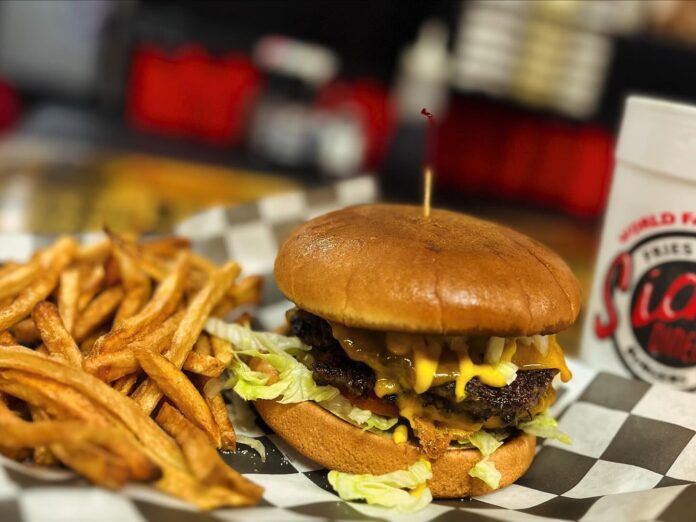
“We love grilling up onions and jalapeños,” says Curtis at Earl’s, “especially when topping our half-pound cheddar burger.”
Created to address women-owned business challenges, OKC Women in Business is a “community dedicated to empowering women in the OKC metro area to thrive in their business endeavors through collaboration, networking and education,” says the group’s founder and CEO, Meagan Veoukas. “The online directory on our website – okcwomeninbusiness.com – is a convenient place for business owners to advertise, but also for our community to visit when looking for a local business they can trust.”
Going strong at 5,000 members, the group also offers seven female-only networking events across the metro.
With offices throughout Oklahoma, REI Women’s Business Centers offer resources for financial opportunities, commercial space rentals, home ownership and general guidance when starting a business. In the past 40 years, the entity has built a reputation as one of the most comprehensive economic development organizations in Oklahoma and the nation, focusing on cultivating an environment conducive to economic growth and job creation.
The OKC Women in Business group works to empower female business owners with the resources they need to succeed. Photo courtesy OKC Women in Business
The Kerr Foundation, Oklahoma International Women’s Forum and Oklahoma State University’s (OSU) Center for the Future of Work created the award-winning Women’s Business Leadership Conference, which is now part of OSU’s Spears School of Business. Open to the public, the conferences bring women together to hear from speakers who are known locally and nationally for their entrepreneurial success, women’s health knowledge and business development acumen. The conferences provide professional development experiences for women from Oklahoma corporations, government agencies, nonprofits, universities and more.
Anyone who owns a company or business may get involved by becoming a sponsor or having a booth at the conference. The event welcomes women from all walks of life – ranging from students at the Oklahoma School of Mathematics to OSU undergraduate and graduate students, women in entry-level, mid-range and higher leadership positions from all industries, and those who are retired. Bringing women together from diverse backgrounds, the conference allows participants to build skills and network, and learn strategies and techniques applicable professionally and personally.
Photo courtesy OKC Women in Business
During the 2024 conference, CEO of Good Girl Chocolate, Tabatha Carr, ND, MBA, PMP, spoke on how women can be bold by conquering self-doubt, dissolving fear and empowering themselves to live a healthier, more productive life.
Alongside the conferences, the Next Level Women’s Leadership Certificate program aims to equip women with leadership and strategic competencies needed to excel in their organization and rise to any challenge. This is a cohort-based program where participants from any industry are nominated by someone in their network (or themselves).
Headquartered at Southeastern Oklahoma State University in Durant, and with offices across the state, Oklahoma Small Business Development Centers are funded by the U.S. Small Business Administration, State of Oklahoma and public partners. Their resources include education, tools, no-cost confidential consulting, tech launch and international trade help.
Gaining Certifications
The Oklahoma Department of Commerce (ODOC) certifies women-owned businesses in Oklahoma. The program may benefit businesses that have traditionally faced extra barriers to market entry or participation. Some companies and state agencies use certifications to ensure diversity in their selection of contractors, vendors and suppliers. The purpose of the certification program is to help women-owned businesses gain visibility and increase opportunities by being associated with the certification and its network.
“This program is a state-legislated program, and it isn’t affiliated with any other national, SBA or other certification program,” says Becky Samples, ODOC’s director of marketing and communications. “In order to apply, the business must be 51% owned and operated on a day-to-day basis by one or more women. To apply, business owners submit an application to the Oklahoma Department of Commerce, which requires financial statements, organizational documents and any other reasonable records necessary to confirm that the business is primarily owned and operated by one or more women.”
Upon receiving certification, the company name and contact information will be listed on the website.
Women In Business: The Biggest Hurdles
A November 2023 article in Forbes explains that female entrepreneurs outperform males by building businesses that generate more revenue and create higher job growth. The average return on investment for female-owned businesses is double that of male-owned businesses, with women-owned businesses contributing trillions of dollars to the U.S. economy.
Despite these positive outcomes, 95% of venture capital partners are male, and 90% of venture capital investments go to male-founded businesses, according to Statista, a German online platform that specializes in data gathering and visualization. So, it’s clear there are obstacles for women business owners in accessing capital and finding the right networks. No matter the difficulty, women are rising to the challenge.
“I designed the Next Level Women’s Leadership Certificate program, knowing that some of these women will be more than their title,” says program coordinator Alexis Hightower. “They are moms, caregivers and/or have a life outside their jobs. I wanted to ensure the program wouldn’t interfere with those other roles.”
Hannah Barnthouse, founder and owner of the gem and jewelry business Feed Me Gems in Edmond, highlights that point.
“I started my business with $200 in supplies at my kitchen table,” she says. “The biggest hurdle I’ve faced is work-life balance. I’m a mama, wife, business owner and human being. At first, I had a hard time knowing where my work ended and life began. I knew I needed a structured work-life balance with clear boundaries. Leasing office space created a healthy balance, and this is one of the most important parts of longevity with my business.”
Barnthouse says in a male-dominated space, it’s no small task to be a female business owner. But she adapted, pivoted, grew and changed to meet the challenges.
Photo courtesy OKC Women in Business
“Consistency, hard work and passion fueled my business,” says Barnthouse. “Most of what I do, I’ve learned by merely doing.”
Alongside the expectation of balancing outside commitments, curating a community of like minded women can be a tough undertaking … alongside dealing with and bucking tired stereotypes.
“I can really relate to not having any network of support for a female-owned business,” says Stephanie Hale, founder and owner of Urban Oak on 66, a salon and boutique perched on Route 66 in Yukon. “Another issue is the building where my business is located. Anytime I have to deal with repairs or maintenance on my building, contractors would initially call my husband. But now I have trained them to call me, and they believe that I know more about plumbing and electrical than my husband does. It is just a long, overused stereotype that men are more handy than women – that is untrue, and needs to die with other gender identity roles that put women in a box.”
OKC Women in Business works to diminish those and other hurdles by creating a built-in support network.
“OKC Women in Business was founded to create a safe space for women to find resources and support, to navigate the unique challenges of being an entrepreneurial female business owner,” says Veoukas. “Our members come for the networking, to advertise and grow their businesses, but stay for the community of women who advise in navigating difficult situations.”
Women Entrepreneurs in Oklahoma
The 2024 Women’s Business Leadership Conference speakers pictured here are
experts in a wide array of topics and industries. Photo courtesy OSU
Of Oklahoma’s female entrepreneurs, Veoukas says, “Jean Florea, owner of FG Electric and founder of WorkHers United, saw a need for the support of women in trade industries, and started WorkHers United to provide just that, along with educationship, mentorship, and fellowship.”
Veoukas continues: “Cori Maag, owner of Hello Beautiful Social Media Agency, and founder of We Rise Collective, saw a need to create a space for women to empower each other and rise together. She thoughtfully crafted a unique conference experience that ignites female entrepreneurs, propels their businesses forward, and forges connections with like-minded women. Finally, Kalee Isenhour is owner of Kalee Isenhour Photography. She also founded the Self Love Club, which is a female only group created to connect women and support one another in their self-love journey that has now extended beyond a virtual group into uplifting and encouraging events, dinners, galas and more. Kalee’s group has an incredible impact on the self-love, self-image and self-confidence of women in our community.”
How To Get Funding
Polishing one’s pitch and business plan are key to securing funding. A July 2023 Forbes article stresses that investors need to know whether or not a business will make money. So, a female business owner’s biggest objective should be to figure out whether or not there is a viable market for her service or product, also with strong enough customer interest. Owners should highlight their unique value in the market, conduct thorough market analysis, illustrate a competitive business model, and describe a clear execution strategy.
Developing a strong network is critical as well, because it enables women to access funding opportunities. Consider groups, networking events, conferences and meetups as venues to meet potential investors and increase knowledge of the funding landscape.
Part of this process also involves mentorship, through which business owners find guidance, get advice and learn how to wisely use investment monies. Mentors can help perfect pitches. Creating and maintaining a strong online presence is as important, as well as proactively sharing one’s accomplishments. Snag every opportunity for public speaking, too.
“Life takes a village, and business is no different,” Veoukas says. “We created a unique support system for women in business to cultivate strong relationships and thrive in their businesses because we all know that we are better together.”
Things like osteoporosis, breast cancer, polycystic ovarian syndrome (PCOS) and urinary tract infections are well known diseases, infections and illnesses that most know about when speaking on common health issues for women. But others, including uterine fibroids and primary ovarian sufficiency, are more prevalent than people may expect. We dive into symptoms, side effects and treatments.
Uterine Fibroids
According to the U.S. National Institutes of Health (NIH), by the age of 50, an estimated 70 to 80% of women will have uterine fibroids.
Susan Chambers, M.D., an OB/GYN with INTEGRIS Health Lakeside Women’s Hospital in Oklahoma City, says uterine fibroids are uterine leiomyomas – growths in the muscle portion of the uterus that are almost always benign or noncancerous.
“They can be silent and without symptoms or can cause heavy bleeding, irregular bleeding, painful periods and pelvic pain,” she says. “They can occur at all ages of women in the reproductive age range, but start to shrink in menopause.”
Sarah Mashburn, M.D., an OB/GYN and colleague of Chambers, says risk factors for uterine fibroids include increasing age, premenopausal status, family history of fibroids, obesity and hypertension.
“Black women are also two to three times more likely to have fibroids than white women,” she says. “Parity or number of pregnancies and the use of oral contraception or injectable hormonal contraception are associated with lower rates of fibroid development.”
There are a variety of ways to treat uterine fibroids and the appropriate plan depends on the size, location, symptoms and a woman’s future reproductive desires, says Mashburn.
“There are many non-surgical options including medications that target bleeding only, as well as medications that treat bleeding by attempting to shrink the fibroids,” she says.
In some cases, Chambers says procedures such as a myomectomy, uterine artery embolization or hysterectomy may be needed.
“A myomectomy removes the fibroids if childbearing is still a consideration,” she says. “Myomectomies can be done laparoscopically sometimes while other times a larger incision is needed. An interventional radiology procedure called uterine artery embolization basically cuts off the blood supply to the fibroids.”
Mashburn emphasizes that there are risks and benefits to all treatment plans.
“It is important that patients and their providers discuss all options for treatment to find their best option,” she says.
Primary Ovarian Insufficiency
Mashburn says primary ovarian insufficiency (POI) is a dysfunction of the ovaries that causes periods to stop spontaneously before age 40.
“The most common symptom of POI is what we call primary or secondary amenorrhea, meaning either someone never gets a period or may have periods initially but they go away,” she says. “Some patients, but not all, may also experience hot flashes or vaginal dryness. It is very important that if someone does not have a period by the age of 15 or three years after the start of breast growth, or if someone who previously has had periods goes three months without a period that they be seen and evaluated by an OB/GYN.”
There are many potential causes for primary and secondary amenorrhea, says Mashburn, and a diagnosis is typically achieved through blood work, ultrasound and physical examination.
“In POI we see an elevated FSH level – the hormone that signals the ovaries – and a low estradiol level – a hormone produced by the ovaries,” she says. “Treatment of POI consists of hormonal therapy to optimize bone, heart and sexual health, as well as attention to reproductive desires and the emotional distress the diagnosis can cause. This often involves a referral to a reproductive infertility and endocrinology (REI) specialist as well as counseling or therapy.”
Even with a diagnosis of POI, Mashburn says there’s always a chance of spontaneous ovulation, so if an individual doesn’t desire pregnancy then contraception should be used.
“Luckily, many of the hormonal treatment options for POI not only provide protection for bone and heart health but contraception as well,” she says.
Pregnancy Do’s and Don’ts
With so much information out there, it’s hard to tell what’s good and not-so-good when it comes to behaviors while pregnant. But a few are tried and true do’s … with others are hard stop don’ts.
Do take a prenatal vitamin. During pregnancy, women need more vitamins and minerals such as folate, iron and calcium, which can be supplemented through a healthy diet and prenatal vitamins.
Do gain a healthy amount of weight. Gaining too little or too much weight during pregnancy can cause serious health problems for both the mother and the fetus.
Do get regular prenatal checkups. Prenatal care should begin as soon as a woman knows or thinks she is pregnant and regular visits with a healthcare provider helps identify, prevent and/or treat any health problems.
Do stay physically active.Being physically active during pregnancy can have many health benefits including lowering the risk of gestational diabetes and postpartum depression. Talk with a healthcare professional about what exercises might be best.
Do ask your doctor before using any herbs and plants as medicines. The safety of herbal and plant therapies isn’t always concrete, and some herbs and plants may be harmful during pregnancy, such as bitter melon (karela), noni juice and unripe papaya.
Don’t smoke.Women who smoke during pregnancy are more likely to have a miscarriage and to have a child born with birth defects, as well as an increased risk of low birth weight – which increases the child’s risk of health problems.
Don’t drink alcohol.There is no known safe amount of alcohol a woman can drink while pregnant. Alcohol consumed while pregnant passes to the baby through the umbilical cord and can slow growth, affect the brain and cause birth defects.
Don’t drink too much caffeine.Limit drinks with caffeine to less than 200 mg per day – the amount in about 12 ounces of coffee.
Don’t eat foods that can cause illness.Avoid soft cheeses made from unpasteurized or raw milk; raw cookie dough; undercooked meats, eggs and seafood; deli salads; as well as any kind of raw sprouts such as alfalfa, clover, radish and mung bean.
Don’t eat fish that may have high levels of mercury.Limit white (albacore) tuna to six ounces a week and do not eat king mackerel, marlin, orange roughy, shark, swordfish or tilefish. You may eat up to 12 ounces of seafood per week, choosing from safer options such as cod, salmon and shrimp.
Source: National Institutes of Health
Prenatal Care
“Early and adequate prenatal care are some of the most important contributors to good pregnancy outcomes, however, about 15% of pregnant people in the U.S. do not receive adequate prenatal care,” says Stephanie Pierce, M.D., MS, an OU Health maternal-fetal medicine specialist and assistant professor of maternal-fetal medicine at the University of Oklahoma Health Sciences in Oklahoma City. “We know from research studies that women without adequate prenatal care have higher rates of many pregnancy complications, including preterm birth and low birth weight for the baby. In addition, women who do not receive regular prenatal care may have a delay in recognizing issues like preeclampsia and preterm labor, and they may miss important screenings that happen at prenatal visits, like testing for gestational diabetes and syphilis.”
Pierce says it’s important for women to educate themselves about pregnancy complications and interventions to help them serve as their own healthcare advocate – asking questions and taking steps to reduce their risk.
“For example, for women who have risk factors for preeclampsia, taking a low-dose aspirin daily starting at 12 to 13 weeks of pregnancy can decrease their risk of preeclampsia by 15-20%,” she says. “Importantly, women who have underlying risk factors like chronic hypertension (high blood pressure) and diabetes should be aware of their pregnancy risks and should work with their healthcare team to optimize their health before attempting to conceive.”
Understanding Maternal Mortality in the U.S.
Maternal mortality rates in the United States continue to be a concern. According to the Centers for Disease Control and Prevention (CDC), the maternal mortality rate for 2021 was 32.9 deaths per 100,000 live births, revealing an increase compared with the rate of 23.8 in 2020 and 20.1 in 2019.
“The rates of maternal mortality in the United States are alarming, particularly in light of the fact that the United States is one of the highest-resource countries in the world, and we are also among the top spenders on healthcare costs per person,” says Pierce. “With those statistics, we should expect to have some of the best pregnancy outcomes and lowest maternal mortality in the world – however, the fact that our mortality rates are higher than many other countries with similar resources means that we must investigate the quality of our medical care and Americans’ ability to access healthcare. Importantly, many maternal deaths are preventable, and we need to invest in finding solutions to prevent these tragic deaths.”
Inequities in healthcare, racial and socioeconomic disparities, as well as an increase in chronic conditions, and the ‘advanced maternal age’ of some women are all cited as contributing factors to the country’s high maternal death rate.
“Social determinants of health like poverty, education status and access to safe housing, transportation and nutritious food all play an important role in an individual’s risk for adverse outcomes in pregnancy,” says Pierce. “Some groups, such as non-Hispanic black women, are disproportionately affected by these issues due to historical and structural factors that affect their access to healthcare as well as the way they are treated within the medical system.”
As reported by the CDC, the 2021 maternal mortality rate for non-Hispanic black women was 69.9 deaths per 100,000 live births – 2.6 times the rate for non-Hispanic white women. In addition, regarding a woman’s age, the rate for women aged 40 and over was 6.8 times higher than the rate for women under age 25.
“The rate of pregnancy complications such as gestational diabetes and preeclampsia increases slowly across a woman’s lifespan, however, women aged 40 and older are at the highest risk,” she says. “In addition, the rates of chronic medical conditions like chronic hypertension and diabetes become more common as women get older, and these lead to higher risks during pregnancy.”
Postpartum Care
Pierce also shares another caveat to understanding maternal deaths and how there’s a critical need to help support a woman’s mental health after pregnancy.
“Many people are not aware that approximately 30% of pregnancy-related deaths occur in the first year after birth, beyond the 42 days post-birth that is used to define the traditional ‘postpartum’ time period,” she says. “Therefore, women should know that close medical follow-up after pregnancy is also crucial, especially if they had complications during their pregnancy. Mental health conditions and substance use are heavily involved in these deaths, so pregnant and postpartum women, as well as their friends and family, should know that as always, they should take any mental health concerns seriously and seek emergency care if needed.”
The American College of Obstetricians and Gynecologists (ACOG) currently recommends that postpartum care – often called the ‘fourth trimester’ – be an ongoing process. Women should be in contact with their OB/GYN or other obstetric care provider within the first three weeks postpartum and then follow up with a comprehensive postpartum visit no later than 12 weeks after birth.
This visit should focus on a variety of points including one’s mood and emotional wellbeing, sleep and fatigue, physical recovery, infant care and feeding, sexual contraception and birth spacing, chronic disease management and overall health maintenance. Once this appointment is completed, a woman should transition to ongoing well-woman care.
When it comes to getting your financial house in order, there are many aspects to consider. Budgeting and taxes come to mind, as well as topics such as insurance, savings and spending. But one subject should top the list of important financial considerations: investing for your future.
Truths vs. Myths: Investing
When it comes to investing, many people get confused or overwhelmed purely because they believe one or more pervasive myths. We dive into a few and explain why they’re just that: myths!
Many people have the idea that all investing opportunities are too full of risk to be valuable. Kirk Israel, senior client advisor with Arvest Wealth Management, confirms that all investments do have some risk, but the key is to understand how much or how little risk is appropriate for each investor.
“[The important thing is] understanding the risk that you’re taking, whether it be very conservative or more aggressive,” he says.
Another related idea is that money is always safer in a savings account instead of in any kind of investment. But the fallacy here involves the idea that money in a savings account, earning a low rate of return, may not keep up with inflation. So, while the total in a savings account does not go down over time, the amount you can buy with that money does.
“Over a longer period of time, five- to ten-year range, inflation will be higher than the return you’ve been able to get in a savings account,” explains Israel. “So your ability to be able to buy a hamburger is slowly eroded, where other investments give us a better opportunity to keep up or even outpace inflation.”
Some people may have overcome the idea that investing is too risky, but believe it to be complicated and overwhelming.
Fidelity Investments, a financial services corporation with offices in Oklahoma, offers this advice in an online article about investing myths:
“Investing can be really complicated. But it’s only as complicated as you want to make it.” The article suggests utilizing diversification options such as mutual funds or exchange-traded funds, or even target date funds to accomplish investment goals with a minimum of personal time or expertise needed.
“Both types of funds offer a professionally managed, diversified mix of investments based on your goals and financial situation but target date funds gradually shift to a more conservative mix over time,” says the article.
Another notion that many people have about investing is that they need a lot of money to get started. Israel debunks this myth by encouraging people to start with what they have now.
“A five percent return on five dollars doesn’t seem as much as a five percent return on $100,000, but it’s still the same percent return,” he says. “Don’t worry about having a significant amount of capital to get started, it just takes time and consistently putting money into the account.”
Similarly, many may believe they need to wait for a particular time to invest – a time when all the conditions are just right. Israel contends that there is a right time to invest – and that time is now.
“There’s always going to be an economy to worry about or an election to worry about or any number of other things that can keep you from not wanting to put money into the market, but the best time to invest truly is now, especially when you’re younger and have a longer time horizon,” he says.
How Investing Changes as You Age
Now that some of the myths around investing have been cleared up, one real consideration investors should take into account is how their plans should, and will, change as they age.
In an article about investing at every age on Investment information site Investopedia, Zina Kumok – a freelance finance writer – says that “investing for retirement is important at any age, but the same strategy should not be used for every stage of your life.”
The article outlines a simple strategy that should be used as a very rough guideline.
Your 20s, Kumok says, is the time to get started on retirement planning. This is the decade when investors likely have the most time to allow investments to grow. Kumok recommends spending the next decade with a career focus and maxing out your retirement contributions.
As workers get into their 40s, it’s time to make sure they are on track for retirement investments. Kumok recommends buckling down now if you haven’t saved yet or work on building that portfolio if you are already on track.
As retirement nears in the 50s and 60s, it’s time for more conservative investments, as there’s less time for down-turns to self-correct. For those who may need to catch up on retirement savings, the IRS allows for more income to go into investment accounts, according to Kumok.
Once you get into retirement in your 70s, 80s and beyond, the focus should go from growth to maintaining income from your investments.
“When you’re young, your goal is about growth of capital, growth of your investments,” agrees Israel. “When you are near retirement, it becomes about preserving and keeping your investment.”
Israel further explains that typically, the five years before your retirement date and the five years after are an important time to re-evaluate goals. Investors may need to shift from a growth mindset to how their investments can provide an income in retirement, or how they can continue to increase wealth to leave a legacy for the future.
Goals: What to Strive For
While it may be tempting to want to grow all your savings through high-yield investments, it is important to have a plan for when you will need the money. Money that needs to be available quickly – or that you are planning to use in the near future – should not be put into the stock market.
“House money and emergency savings money is not investment money,” advises Israel. “Whenever an emergency happens, it often times will happen when the stock market is also down, so your account value is down. So we don’t want you to be drawing on your investments for an emergency.”
Israel explains that because the stock market can be volatile from one year to the next, it is important not to invest money that you plan to use within the next five years or so.
But, he says, for money that can stay invested for longer than that, a lot of the bumps in the market get smoothed out and it becomes more likely that your money will grow over that time.
While some long-term goals such as college tuition for children or grandchildren, starting a business, or starting a family may make sense for investing, Israel emphasizes the importance of making sure your retirement savings is taken care of before saving for some of these other important goals.
Making a Plan: Where to Start
When you are ready to get started in the investing world, a good place to begin is simply checking with your employer. Many employers offer retirement savings products such as a 401K or 403B, and some even offer matching contributions. So, for example, if you contribute five percent of your income, the company will match that amount into your retirement savings.
“Check your company to see if they have a retirement match, and if they have that, go after that money and take advantage there,” says Israel. “If they’re offering a five percent match, take advantage of that five percent match and put your percent in, and then work to increase your contribution every year.”
There are other options for retirement savings, such as an IRA or Roth IRA if your employer does not offer a savings plan or you are self-employed.
Israel recommends starting your stock investment journey with mutual funds or exchange traded funds, called ETFs, which are groups of stocks. This allows for diversification of your portfolio which reduces risk.
“There’s additional risk whenever you only buy [stock from] one individual company [because] it could go up significantly, but it can also go down. That’s usually where a lot of the risk happens, so we like diversification,” he says.
There are many online calculators to help you assess your risk tolerance or even help you determine how much you need to save for retirement. But always consult a professional to determine what’s best for your individual situation. Israel recommends reaching out to your bank to get connected with a financial advisor who can help.
What it Takes to be a Financial Advisor
A financial advisor is an important part of getting started on your investment journey. When asked what it takes to be a financial advisor, Israel mentions that most firms will require a bachelor’s degree, but not necessarily in finance. Once an advisor has completed their basic licensure, there are many different designations and credentials they can pursue to further their education and to specialize in specific areas. But one area of expertise stands out. Financial advisors need to be good with numbers, of course, but more importantly, with people.
“Being able to work with people is why I show up every day,” says Israel. He describes how he gets to build relationships with people as he helps them with their financial goals. He gets to celebrate with them, as well as grieve with them. “They become part of your family and you become part of theirs,” he says.
Zach Hutton and wife Kayla will soon open a new fine dining restaurant, Alma, while keeping the popular GHST Restaurant and Bar as an event and catering space. Photos courtesy Zach Hutton/GHST
In November, the beloved Scratch Paseo in OKC closed suddenly. For chef Zach Hutton and his beverage-expert wife Kayla, the abrupt end to the hyper-local, seasonal and locally sourced Paseo Arts District favorite came as a blow.
The pair didn’t stay down for long, however – because bouncing back from what so many people think is impossible is the norm for this duo.
They gathered their Scratch Paseo staff, dusted themselves off, and opened GHST Restaurant & Bar mere weeks later.
With Zach in the kitchen and Kayla behind the bar, many of GHST’s menu items and drinks may seem familiar to Scratch fans – like the upscaled popcorn, elote corn dogs, classic cheeseburgers and chicken and donuts. Located in the old Ludivine building, GHST offers up two bar areas featuring Kayla’s witchy, stunning and delicious concoctions. However, Zach says the public shouldn’t get too used to the location. Just months after opening, he’s already set his sights on something bigger.
In late spring or early summer, the Huttons will open Alma, a new high-end dining experience in downtown Oklahoma City, keeping GHST as only a special events and catering space. Alma, named in honor of Zach’s grandmother, will showcase the Hutton talent on a whole new level.
“We’re leaning into fine dining, and I’m going to bring Michelin here,” he says. “We are revamping the concept toward something I’ve been working on for most of my career. It’s going to be the culmination of everything that I’ve been working on.”
Backing up some years, you’ll find Zach in Apache, growing up on a close-to-500-acre cattle ranch. Life was isolated, but he learned early the art of living off the land. Receiving a copy of Kitchen Confidential by chef Anthony Bourdain in high school changed Zach’s course. He decided culinary school was where he needed to be and attended Platt Culinary Institute on Northside when it was still accredited. But Zach’s career trajectory had a few swerves.
“When I started, I thought I wanted to do French, I thought I wanted to be classy. I thought I wanted to do something with roots in something more than the things that I grew up on,” he says. “The moment I started being successful, I realized that things that I grew up on were the same things being done in fancy cuisine, just done in a different region. It’s poor food reimagined by passionate people.”
Life as a budding chef nearly killed Zach, however. Like many others working in the high-stress environment of hospitality, he fell into drinking. Things came to a head when he was diagnosed in 2016 with severe pancreatitis at age 26, and spent 30 days in the hospital.
“I lost 80 pounds just in the first four weeks,” he says. “They sent a priest into my hospital room. I was killing myself with drinking and had something that happens to 55-year-old alcoholics.”
After his hospital stay and recovery, Zach took back control of his life and became the driving force behind Scratch Paseo with Kayla at his side.
“I had to rewrite every recipe for an existing menu, but then I started leaning into local products,” says Zach. “I said, ‘If it’s called Scratch, just make everything from scratch.’ So that’s when I finally started leaning into my childhood and my grandmother’s handwritten memoirs and recipes.”
Zach Hutton and wife Kayla will soon open a new fine dining restaurant, Alma, while keeping the popular GHST Restaurant and Bar as an event and catering space. Photos courtesy Zach Hutton/GHST
Those heady days of buying local and creating “Oklahoma-centric” cuisine crashed the weekend before Thanksgiving 2023 when the owner decided to close the restaurant. But Zach and Kayla refused to stay down for long.
“When we first came into GHST, we immediately started,” says Zach. “It took us six days to clean and rewrite the menu completely.”
And GHST was, indeed, a hit. With success, however, came growing pains, and Zach realized early on that the current space wasn’t big enough. Thus, the creation of Alma’s. He plans to bring back the local ingredients and the relationships with the nearby farms.
“I feel like as a chef, you should be obligated – if you’re from here – to cultivate your cuisine into something specific to where you’re from, instead of just trying to recreate some other crap,” he says. “Make it Oklahoma.”
Inspired by the colorful cuisine of the island of Dominica, Sisserou’s is a culinary institution nestled in the Tulsa Arts District.
Appetizers are sure to whet your whistle; start with coconut shrimp, beef patties, jerk chicken or fish cakes. Soups, salads and sandwiches are excellent lighter options for lunch or dinner fare. Try the butternut squash soup, seared tuna salad or callaloo soup, with spinach, okra, herbs and coconut cream, topped with lump crab and a Parmesan crisp. Sandwiches range from classic burgers to Cubans, chicken curry salad and the Caribbean dip – thinly sliced ribeye topped with escovitch style bell peppers and carrots inside a hoagie.
Main entrees shine at Sisserou’s. Highlights include the mahi mahi, the shrimp curry and the Escovitch red snapper. Sides range from fried plantains to street corn, potato yam mash and fresh fruit.
Along with a medley of craft cocktails and non-alcoholic offerings, dessert will hit all the right notes with chocolate lava cake, coconut creme brulee, rum cake, sorbet or banana bread pudding.
With the mission to spread happiness one meal at a time, OKC’s Taquitos Feliz is just the ticket for authentic Mexican fare.
Begin your culinary journey with an antojito (appetizer). Options include chicken flautas, mulitas, tortas and quesadillas. After, the world’s your oyster. Peruse a variety of item sections, from fajitas to burritos, tacos and enchiladas. Fillings include skirt steak, chicken, fried or marinated pork, beef tongue or veggies. Those who are extra hungry should try the combo plates – ranging from chimichangas to enchiladas, burritos, carne asada and carnitas.
Other draws of Taquitos Feliz include the excellent deals. Visit for Happy Hour, every day except Tuesday, from 3-6 p.m. for .99 cent carnita, chicken and adobada tacos. Taco Tuesday means this deal happens all day long! There are also weekend specials, junior deals and other goodies that ensure you leave with a full belly and a happy wallet.
Chef Alex Figueira, owner of Dr. Kustom, was recently named a James Beard Award semi-finalist. Photos by Stephanie Phillips
Tuesday evening, 8:00 p.m. The crowds have long departed, and quiet falls over the vast hall of Tulsa’s Mother Road Market. But in one corner, a few lucky diners – all of whom have reserved their place months before, all excited to have dinner prepared by a James Beard semi-finalist – gather around a table set with fine linen. In the tiny, immaculate kitchen of Alex and Gi Figueira’s emporium of all culinary things Brazil – called Doctor Kustom – an event named Chef’s Table begins.
“I love to talk to my customers, and that’s one thing I love about Chef’s Table,” says Alex – debonair, intelligent and full of energy – as he takes a steak and deftly minces it. The tiny pieces will be mixed with bone marrow and spices and served as the first course of an elegant fine-dining banquet. As Alex and Gi, his wife and co-chef, prepare the dazzling procession of dishes, talk to them. You’ll learn a lot.
You’ll learn that Alex was born in Rio Grande do Sul, Brazil’s southernmost state, a land of cattle drives and cowboys not that far from Buenos Aires. His parents struggled hard to put food on the table. One day, when Alex was five, his father was injured at work and his mother had to care for him. Alex offered to help and quickly learned to cook rice and beans for the family.
Over the years, he learned many recipes from his mother and grandmother, and often cooked for family and friends.
“Sunday, we cooked a lot,” he recalls, “the whole family was in the kitchen.”
But he never thought of being a chef. He went through college, got a degree in chemistry, studied information technology along the way, got a job with Cisco Systems. He met a young woman online, a biologist, and one day they met in person. It was love at first sight, and they’ve been together ever since. As Alex cooks, you’ll see the date they met, December 9, 2001, tattooed on his arm.
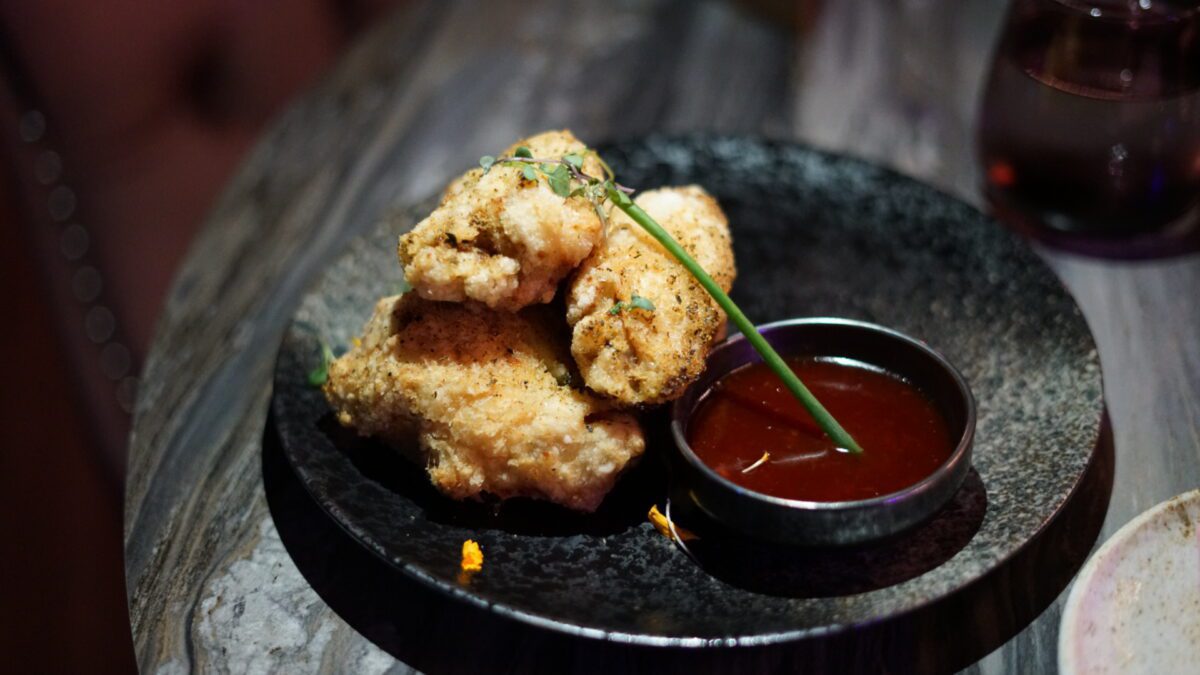
Must-tries include the pastel, stuffed with chicken pastel, cheese, cream cheese, jalapeño slices and corn, and the salted cod fritter (below) with confit garlic mayo, coconut charcoal, caviar and chives.
“I need to have projects to do,” he says. “Sometimes I have five or six in my mind. Some I never do but many I finish.”
One such idea led him to build motorcycles. He started a motorcycle company in 2013, also named Doctor Kustom. Another idea led him to Tulsa, where he became chef of the local branch of Texas de Brazil. And then, one day in 2019, he thought: I can cook and I can build motorcycles, so I can build a food truck. And he did. A year later, the culinary iteration of Dr. Kustom found a permanent home at Mother Road Market.
There’s a kind of pastry in Brazil called a pastel. Everyone loves them, so that’s what the Figueiras decided to sell first. But they’re not easy to make – they’re built in layers like a croissant. Every morning, Alex stretches a ten foot sheet of dough on the table, drizzles it with cachaca (“that’s my secret ingredient,” he says), rolls, folds, slices, puts in a variety of fillings and finally cooks. These are still the restaurant’s most popular product, with the possible exception of the picanha sandwich.
Every Thursday morning, Figueira hand-cuts enough picanha steaks for 50 sandwiches. Since each sandwich has around seventy paper-thin slices, that’s well over 3,000 slices. (“That’s all my arm can do,” he says.) Rich and bursting with flavor, picanha – or sirloin cap – is a neglected cut of beef, and some have called this the best sandwich in Tulsa.
“And we just bought a dry-ager for steaks!” exults Alex. So a great thing will get even better.
It’s late on Tuesday evening, and Chef’s Table is winding down. The diners have feasted, perhaps on a huge sizzling tomahawk steak cooked tableside or perhaps on moqeca, a savory seafood stew, made with tomatoes, lime, coconut milk and coriander and brought from Angola to Brazil. No matter what has been made, though, everyone leaves Alex’s table happy.
“Everyone’s a little nervous before the first course is served,” he says, “but by the end everyone has bonded and it’s like a big family meal.”
Available at Chef’s Table dinners, try the aged picanha aged with yucca mousseline, heart of palm grilled in smoked butter, black truffles and açaí sauce.Chef Alex prepares a Picanha Sandwich.The popular Picanha Sandwich is only served on Thursdays. The popular Picanha Sandwich is only served on Thursdays. Pastels are a best seller at Dr. Kustom. Chef Alex at work.
Serving food that “loves you back,” Plant is an all-day cafe with a variety of plant-based, gluten-, soy- and dairy-free, locally sourced goodies. The menu begins with the beverages, from freshly squeezed orange juice and chai lattes to boozy offerings like wine, champagne and sangria.
Smoothies and smoothie bowls are another popular get, with a variety of add-ins to tempt, ranging from almond butter and kale to chia seeds, ashwagandha and cacao powder.
For those looking for something heartier, check out the breakfast menu, served all day. Options include a breakfast hash, burrito, waffles and oatmeal. Toast variations range from the classic avocado to the hummus and pesto, banana and almond, or caramel and apple. Lunch bites include chickpea salad, plus black bean and sweet potato tacos and a veggie burger. Stick around for lunch bowls, alongside specialty brunch items only available on weekends.
Sidecar Barley and Wine Bar
Photo courtesy Sidecar Barley and Wine Bar
A distinct and welcoming institution with locations in OKC, Tulsa and Jenks – with more venues opening soon – Sidecar Barley and Wine Bar is the perfect stop for afternoon snacking, a swanky late night drink or something in between.
Many may not know Sidecar has plenty of food options alongside the extensive drink menu. Starters have a variety of highlights –most popularly the mighty butcher board, complete with cured meats, cheeses, roasted tomatoes, artichoke, olives, figs and pita. Other goodies include salmon, smoked trout dip, stuffed mushrooms, bruschetta and chips and dip. Flatbreads and sandwiches will also entice; try the BBQ chicken flatbread or the grilled cheese panini.
But Sidecar has the word ‘bar’ in its name for a reason. Specialty and signature cocktails run the gamut, from the Maker’s Manhatty – with Maker’s Mark, vermouth and angostura bitters in a smoked highball – to the Rendition, with whiskey, spiced rum, blended Amaro’s, espresso, vanilla syrup and chocolate bitters. As its name suggests, there are plenty of wines by the glass and bottle, as well as varied spirits and beer.
Photo courtesy The Tavern
The Tavern
A beloved Tulsa institution, The Tavern is the go-to for after-concert late-night bites, a major celebration, cocktails with friends or a family meal.
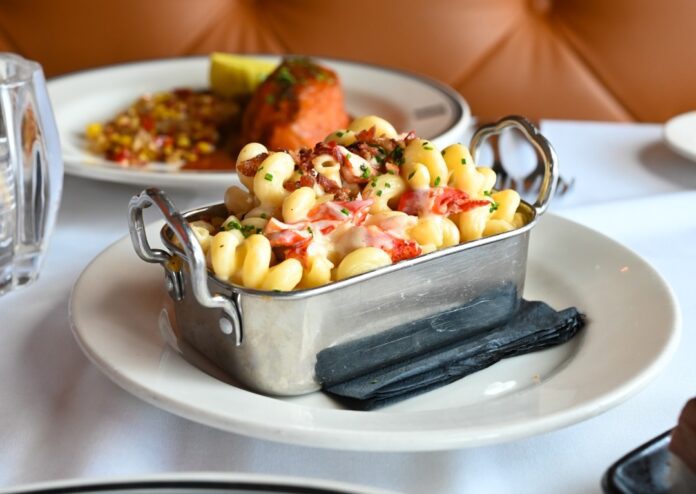
Although the menu changes seasonally, some staples remain all year-round. To start, try the deviled egg trifecta or the angry mac and cheese, with smoked gouda, garlic, fontina and bread crumbs (a note from a wimpy diner – this one’s spicy). Popular dinner orders include the strip steak for two, the Tavern burger and the fish and chips. For lunch, try the French dip, the pastrami sandwich or the chicken fried steak.
Alongside hearty meals to suit any palate, the joint has signature cocktails, plus ample wine, beers and spirits. Try the Summer Babe, with your choice of vodka or gin, plus aperol, elderflower or lime, or the Bengali Gimlet, with gin, curried nectar, lime and lemon.
Photo courtesy The Mug
The Mug
For a laid-back atmosphere and a sports pub vibe, visit OKC’s The Mug.
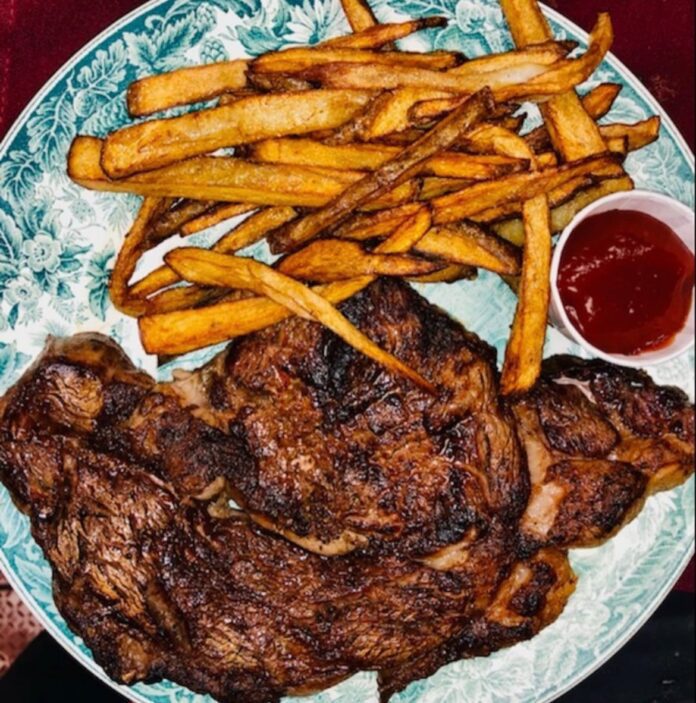
For starts, try the nachos, fried pickles, housemade Southwestern egg rolls, wings or a sample platter of everything. For those hankering for a steak, try the ribeye or sirloin, served with a Caesar salad and your choice of side, like mash potatoes, shrimp skewers, coleslaw or okra.
Other can’t-miss entrees include chicken fried chicken, catfish, beef tips, plus an assortment of pizza, burgers and sandwiches. Leave room for dessert: cheese cake, s’mores skillets, carrot cake or bread pudding await you.
If you’re on the hunt for a great deal, The Mug also offers Happy Hour everyday from 3-6 p.m. and 11 p.m. to midnight, with the deal extending all day on Saturday. During these times, you can enjoy $2.50 pints and $3.50 domestic draft beers.