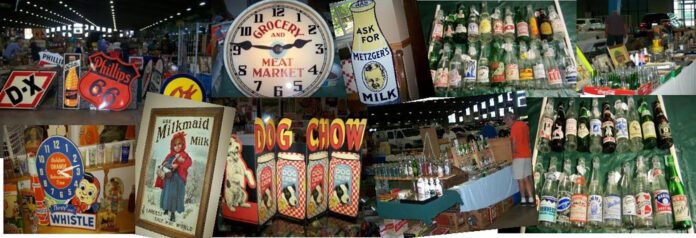
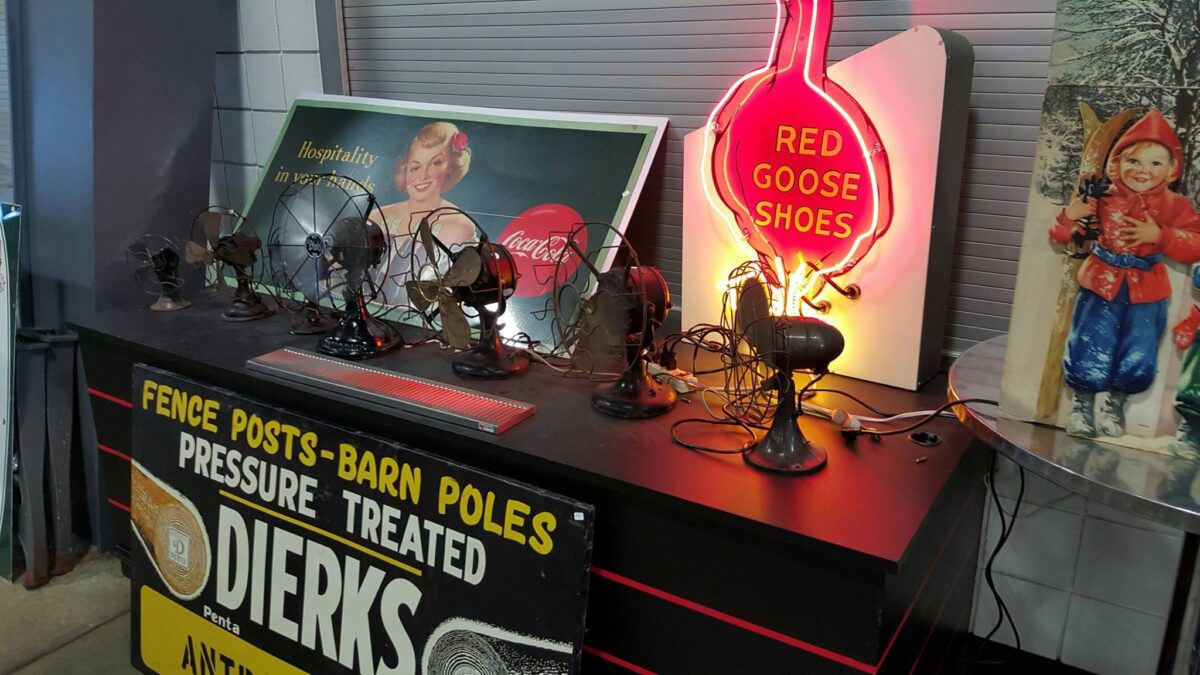
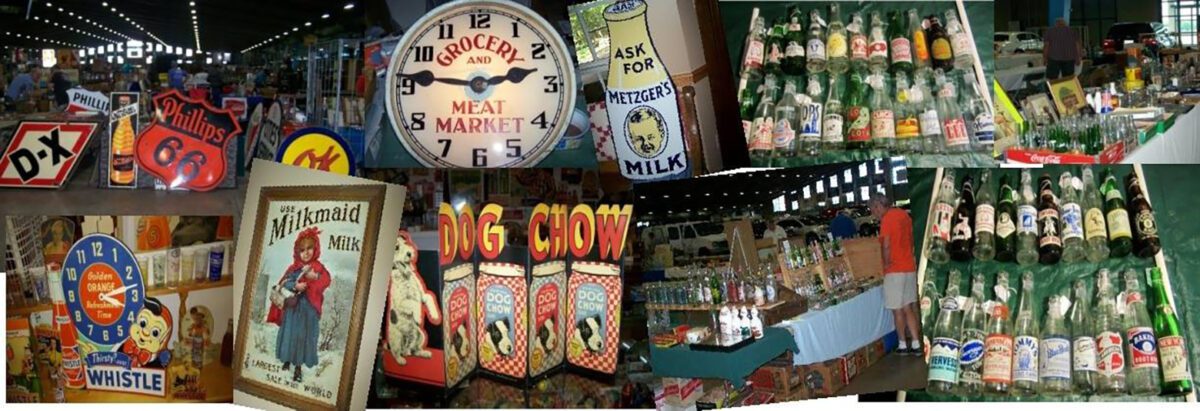
Henry Tankersley has a collection of items from late 19th and early 20th century drugstores – glassware, old advertising signs and even some antique Coca-Cola items.
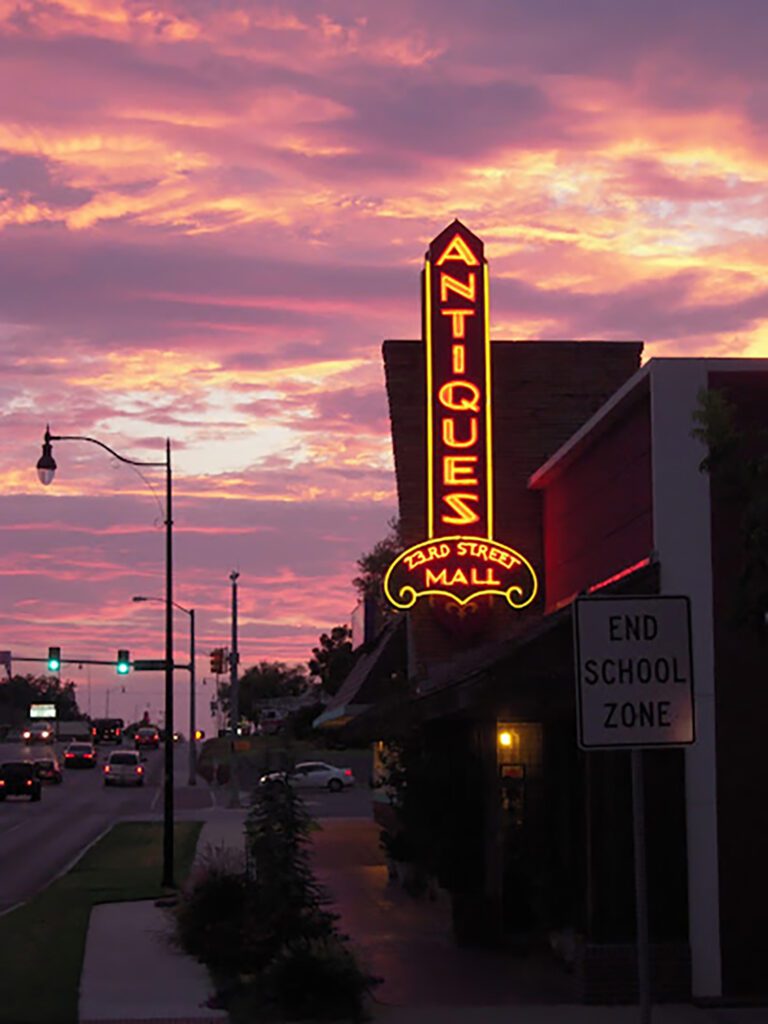
Run by husband and wife Bill and Denny McConnell, 23rd Street Antique Mall offers a bevy of unique treasures. Photo courtesy 23rd Street Antique Mall
“I have an entire museum at my house,” he says.
But his favorite piece is a four-foot-tall mortar and pestle, made from colorful stained and leaded glass, lit from the inside. It was a piece that originally hung outside a drug store in Indiana.
Tankersley has turned his passion for glass collecting into a chance to build community as the president of Tulsa Antiques and Bottle Club. The group creates an opportunity for collectors to socialize and learn from each other.
“We collect antique bottles of all types, every kind you can imagine: medicine bottles, milk bottles, soda pop bottles and [all kinds of] jars,” says Tankersley. “Lots of glass items, as well as a variety of other non-glass antiques [such as] advertising signs and anything made of paper that has to do with antique items or a promotional product.”
Another enthusiast, Bill McConnell, got started collecting at a very young age.
“Even when I was a little kid, I used to drag in all kinds of stuff, but mostly junk at that time,” he says with a laugh.
Today, he and his wife, Denny, own 23rd Street Antique Mall in Oklahoma City. But their passion for collecting isn’t limited to the business side of things.
Today, McConnell’s tastes are a bit more refined. The couple collects antique furniture from the 1870s and 1890s, as well as a highly specialized brand of glassware.
The Tulsa Antique and Bottle Club meets to share neat finds and form a community. Photo courtesy the TABC
“It’s called Wave Crest,” says McConnell. “It was only made [between] 1891 to 1916, and they’ve never reproduced it. So it’s a fun thing to collect,” he says.
At 23rd Street Antique Mall, antiques lovers can find furniture and jewelry, as well as silver glassware, pottery and toys of all kinds from a wide variety of dealers.
While collectors’ clubs saw their heyday in the 1970s, according to Tankersley, there are still groups for people who enjoy antiques and other types of collectibles. These groups tend to congregate around specific types of collections, such as various types of glassware or furniture. They hold periodic meetings and some have newsletters to disseminate information, says Tankersley.
For those who may be intrigued by these cool collections, the Tulsa Antiques and Bottle Club holds its Antique Advertising and Bottle Show every summer at the Tulsa County Fairgrounds. This event is a great way to shop, learn about antiques and get to know others with similar interests.
Photo courtesy the TABC
Excelling in Antiquing
When it comes to learning about antiques and finding those special, one-of-a-kind items, it seems experience and practice win the day. Visiting stores and shopping for the things that get you excited are the best ways to learn more about the hobby.
“How I’ve learned about [antiquing] is just years of experience,” says McConnell. “We were collecting long before we got into the antiques business and we’ve been in the antiques business almost 35 years, so just [through] years of experience we’ve learned [what] things are reproductions, and how to tell the real deal from the not-the-real deal. And so the experience is key for me.”
Competitive figure skating is a captivating sport that demands a unique blend of grace, strength and precision. Behind the mesmerizing performances on the ice lies a world of dedication, devotion and relentless training.
“Competitive figure skating requires a commitment to training, on- and off-ice, specific to our sport,” says Jackie Brenner, the director of figure skating at Arctic Edge Ice Arena and Blazers Ice Centre, located in Edmond and OKC, respectively. “Balance through motion, extreme athleticism and the desire for excellence are at the core of what makes competitive figure skating so exhilarating.”
Aspiring figure skaters in the Oklahoma City area can access these two premier arenas, where they can begin their journey to mastery – or even just proficiency. These arenas not only provide top-notch facilities but also offer a supportive environment for skaters to thrive.
“Anyone interested in private instruction can contact either arena for assistance in coordinating training,” says Brenner. This accessibility to professional guidance underscores the commitment of the skating community to nurture talent and foster growth at every level – not just the pros.
According to Brenner, Oklahoma has a vibrant community of recreational and competitive skaters, all driven by the shared goal of reaching the pinnacle of their sport. Many aspire to compete at the prestigious U.S. Figure Skating regional, sectional and national events, where they can showcase their prowess on a larger scale.
“Training often allows skaters to hone their craft for competitive, test and professional opportunities,” says Brenner.
The meticulous training regimen prepares skaters for competitions and opens doors to various avenues within the skating world, including professional performances and even coaching careers.
Competitive figure skating is more than just a sport – it’s a lifestyle characterized by discipline and an unwavering passion. Every jump, spin and glide on the ice is a testament to the countless hours of dedication and perseverance invested by skaters.
Before You Glide
It’s no secret that ice skating can be a bit scary as a beginner. After all, ice isn’t the softest cushion. Here are a few tips to ensure maximum safety:
1. Make sure your skates fit well. Too big of skates can lead to wobbling and twisted ankles; too small of skates can cause blisters and an uncomfortable glide. Additionally, make sure your blades are sharp – dull blades will lead to falls.
2. Speaking of falls – learn how to do them safely. Yes, you’ll bite it on the ice sooner or later. But knowing how to fall to protect what matters can save you a trip to urgent care. If you’re falling backwards, tuck your chin into your chest and aim to land with most of the weight on your bottom. If you’re falling forward, ensure you’re using your arms to protect your head. And never attempt to grab another skater to regain balance.
3. Avoid skating on natural frozen bodies of water unless they are surveyed and approved by a professional. You won’t be able to see how deep the freeze is, which can lead to potential breaks in the water and an unexpected cold plunge.
4. Don’t be afraid to wear safety gear, like helmets and knee, wrist and elbow pads. Worried about looking dorky? We guarantee it’s better to be safe than sorry!
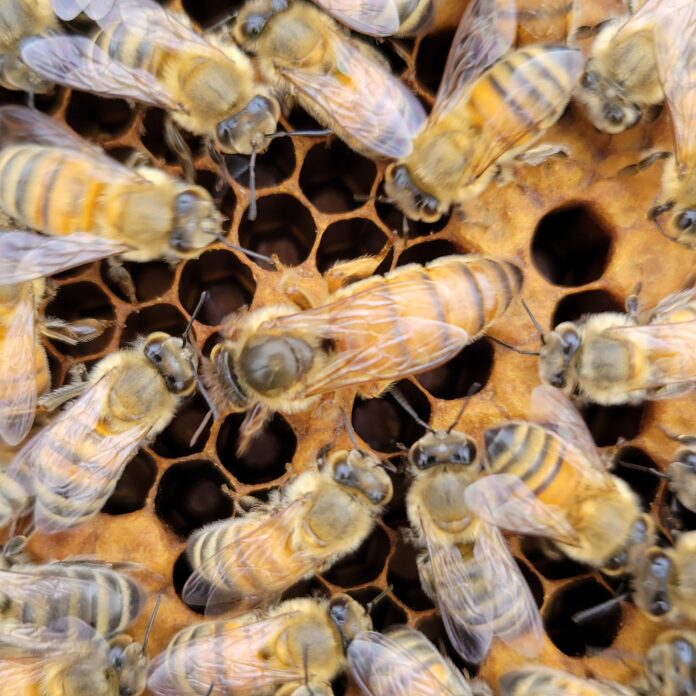
European honey bees are the most commonly used species as a U.S. pollinator. In fact, bees are used to pollinate over 100 commercially grown crops in North America, making beekeeping one of Oklahoma’s activities with the most buzz – whether as a hobby or a business.
“The Oklahoma Apiary Act allows any Oklahoman to have bees,” says Steve Easom, owner of Easom Farms in Slaughterville. “As livestock, bees need to be managed properly, and if not, there’s an 85% national death rate of bees.”
Rules and regulations for keeping bees are straightforward.
“The Oklahoma Department of Agriculture administers a very friendly set of guidelines,” says Patrick Tickel, secretary of the Oklahoma State Beekeepers Association, president of the Texoma Beekeepers Association, and vice president of the Noble Beekeepers Association. “With the U.S. Department of Agriculture classifying bees as livestock, it can afford beekeepers the chance for federal assistance.”
But both Tickel and Easom encourage people to study before diving into the activity.
“To get started, have at least one year without bees,” says Easom. “Take one year of knowledge and mentorship, and then get with a bee club to find out what type of equipment you’ll need.”
Tickel, who owns his own beekeeping business, advises novices to “find a support group, like a local or regional club. Monetary commitment can be a consideration. Weekly time commitment may range from one hour to three or four, depending on the number of colonies you manage.”
As for the care and keeping of the bees themselves, “honey bees need to be inspected once every 14 to 18 days,” Easom says. “Inspections take somewhere between five to ten minutes for the owner. With a mentorship, you’re going to see the different approaches to be able to achieve the inspection effectively.”
Tickel says risks include stings, but also not having time to manage hives on a schedule, and losing bees to pests and diseases.
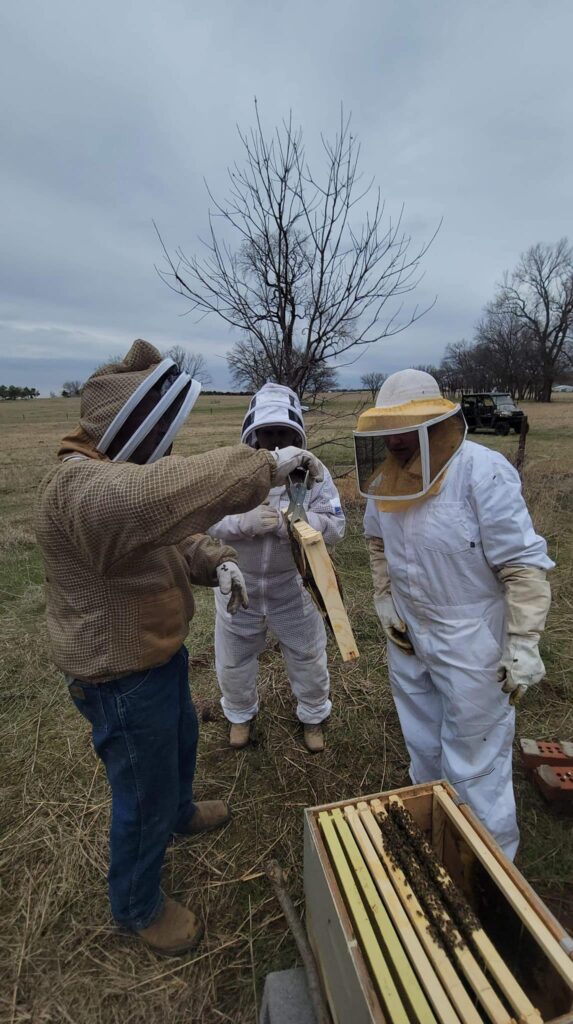
Both experts advise to wear appropriate protective gear including a beekeeper suit, a veil and gloves every time one interacts with bees.
“Have an idea of whether or not you’re allergic to bees, and if allergic, take appropriate measures,” says Easom. “And don’t overfeed your bees. When there’s nothing to forage on, many people feed them too much, and they feed them sugar, which has zero nutrition.”
Oklahoma State University Extension has a plethora of beekeeping resources, plus white papers on the website.
Beekeeper Steve Easom’s program Heroes to Hives helps veterans gain new life purpose. Photo courtesy Steve Easom
Making a Difference
In 2022, Easom’s family began their free program designed to cater to veterans and first responders with life challenges. Using their farm’s facility to train new beekeepers, the program has positively impacted a variety of Oklahomans, helping them to refocus and gain new life purposes. The next classes, which include a virtual component, begin March 31 and meet once monthly until November. Classes run from 10 a.m. to 5 p.m. Team Easom funds the equipment, and people don’t even have to be exposed to bees if they don’t want to.
“Our program is a pathway for them to finish the course, and come back into the program as mentors if they desire,” says Easom, who is also a veteran. “It’s the opportunity to give back, which makes a difference for the challenges they face. The public is also welcome, but we don’t provide equipment for them like we do for veterans and first responders.”
Easom’s Tru Bee Removal is the only state certified company that extracts and relocates problematic bees. Find Easom at 405-830-0151, and sign up for classes at trubeeremoval.com.
Little Sahara State Park. Photos courtesy Oklahoma Tourism & Recreation
When March arrives, it usually brings some blessedly warmer weather with it. It’s also the month of spring break for the kiddos, which means it’s time for a quick vacation. If traveling outside the state isn’t in your plans, Oklahoma has plenty of excellent spots to visit.
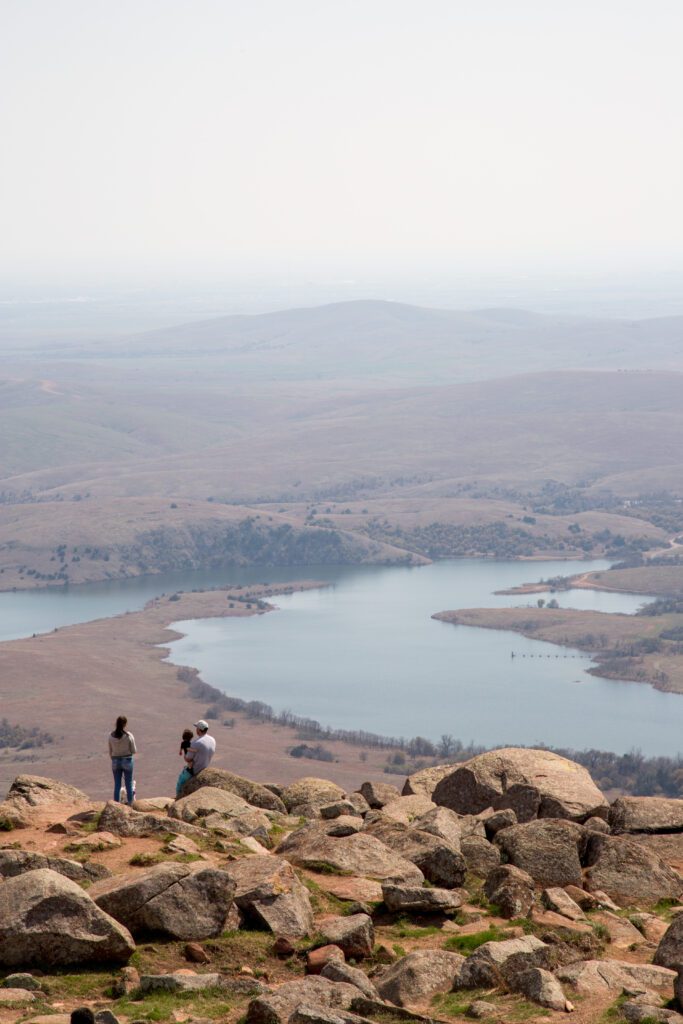
Wichita Mountains Wildlife Refuge & Visitors Center
Located near Lawton, the mountains offer a variety of activities for both solo and group outings. Hunting, fishing and backpacking are perfect for the spring weather, and there are free educational programs for people of all ages, including scavenger hunts and indoor birding. There are plenty of trails with campgrounds as well.
Medicine Park
Located in Comanche County and near the Wichita Mountains, Medicine Park was founded in 1908. With plenty of outdoor and indoor activities, this is a perfect family getaway. One of the most popular attractions is ParkStomp, a bluegrass celebration from March 15-17.
“Our first festival is perfect for spring break,” says Kaylee Horn, administrative assistant for Medicine Park. “It’s the kickoff to our busy season.”
There are also overnight options for those looking for a longer stay.
“There are rentals for couples to get away or a cabin for the whole family,” she says.
Beaver’s Bend State ParkLittle Sahara State ParkMedicine ParkWichita Mountains Wildlife Refuge & Visitors Center. All photos courtesy Oklahoma Tourism & Recreation
Little Sahara State Park
Located in Woods County, this park is perfect for the thrill seekers looking to drive across 1,650 acres of sand dunes.
“Visitors can bring their own ATV or rent one on site, and ride dunes ranging from 25 to 75 feet,” says Chase Horn, the communications director for the Oklahoma Department of Tourism and Recreation.
There are seven campgrounds if you want to stay overnight, complete with water and electricity.
“You won’t want to get off the dunes,” he says. “It’s a blast to be on an ATV in the mini-desert atmosphere.”
Carlton Landing
Located in Pittsburg County, this resort-style town is perfect for relaxing over your well-earned break. The location has plenty of coastal vibes and a big selling point is the boat club, offering members access to luxurious ski and pontoon boats.
With a fleet of ski and pontoon boats, the water adventure route is a wonderful choice for a family looking to get some sun. There are also plenty of events, including Cinema on the Lawn and Saturday morning crafts.
Beaver’s Bend State Park
Located in McCurtain County, Beaver’s Bend is one of the most popular parks the state has to offer.
“With activities like hiking, horseback riding, fishing and golf, there is something for everyone at Beaver’s Bend,” says Chase Horn. The activities truly are endless, and there are plenty of booking options if you want to spend a few nights.”
He also offers a must-see suggestion.
“You can’t visit Beaver’s Bend without stopping at the nature center to see some of the animal ambassadors,” he says. “Our naturalist always has activities that are fun and educational for kids.”
If you plan to return, Beaver’s Bend will also be in the path of totality for the 2024 total solar eclipse on April 8.
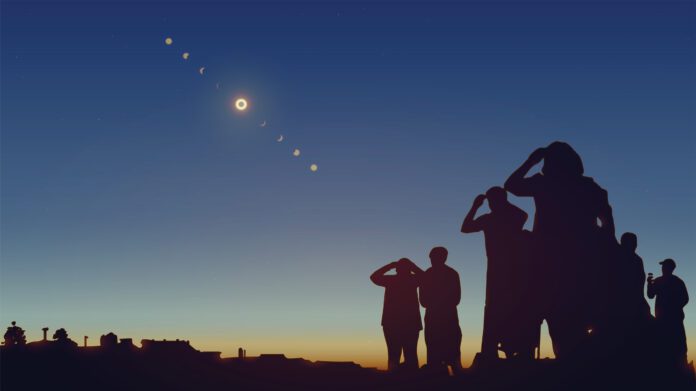
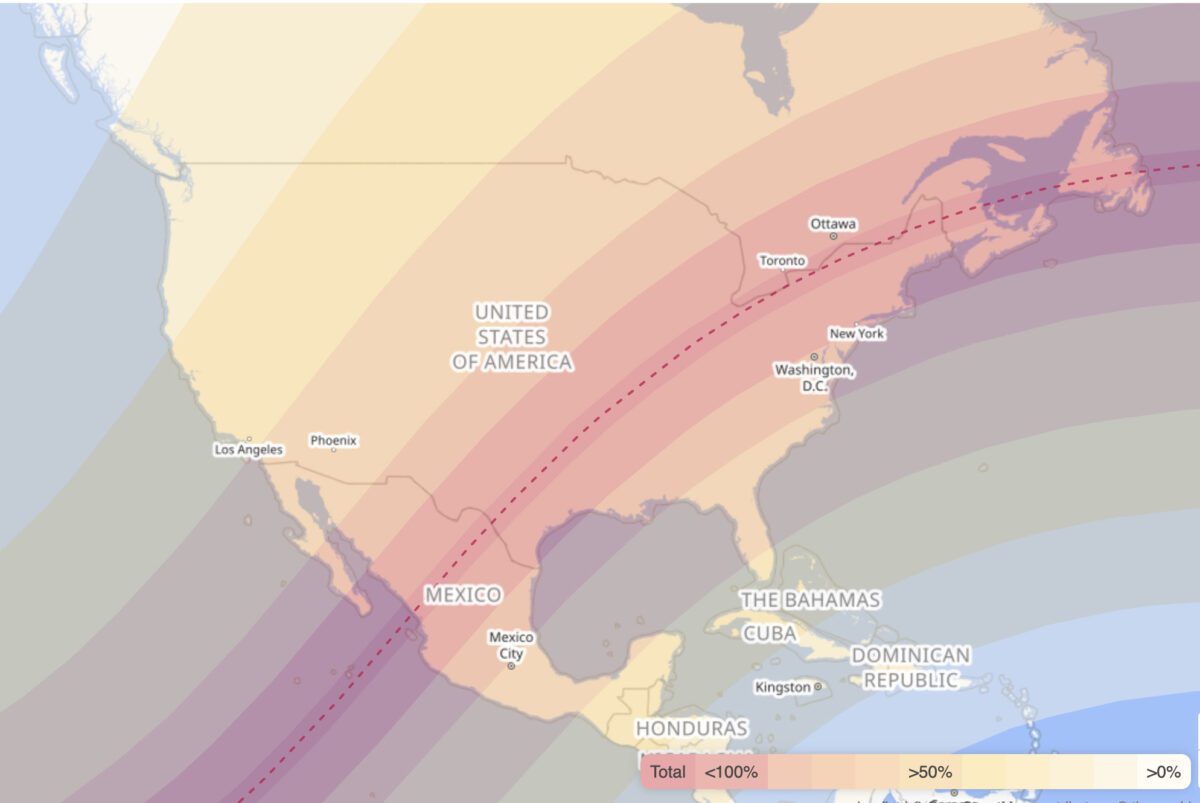
On April 8, Oklahomans will experience the Great North American Eclipse, which will last one hour, seven minutes and 58 seconds. As a total eclipse of the sun, the path of the solar eclipse in its totality may be viewed from Sinaloa and Coahuila, Mexico, into the Del Rio, Texas area, all the way through northeastern Maine, and into Ontario and Newfoundland, Canada.
A solar eclipse occurs “when the sun, moon and Earth are aligned just right, so that we see the moon pass in front of the sun,” says Brad Ferguson, public relations officer with the Oklahoma City Astronomy Club. “When the moon completely blocks the sun, the eclipse is total. If the blockage is not complete, it is partial.”
The entire state of Oklahoma will experience at least a partial eclipse of the sun in the early afternoon on April 8, says Ferguson.
“In Oklahoma City, the duration will be from about 12:30 p.m. to 3 p.m. on that day, and the depth of the eclipse will be quite noticeable, with the moon blocking more than 95% of the sun’s disc at mid-eclipse, which will occur about 1:45 p.m.”
A total eclipse will be visible in far southeastern Oklahoma, where the area will go completely dark at mid-eclipse. According to NASA, Idabel will experience this totality between 1:45 p.m. and 1:49 p.m., with the entire process, including partial eclipse, ranging from 12:28 p.m. to 3:06 p.m.
Of the viewing areas, Ferguson says: “The farther southwest you are, the better the view. The best possible spot is in western Mexico.”
There will be a partial eclipse across almost all of North America and a small part of western Europe, as well as the north of South America, and areas of the Pacific, Atlantic, and Arctic oceans.
This map shows where in the U.S. viewers can experience a full (red line) and partial (shades of yellow) eclipse. Photo courtesy TimeandDate.com
Ferguson says that during the eclipse, “the air will get cool, animals will react and street lights will come on.”
If you happen to miss this one, you’ll have to bide your time for quite awhile.
“The next total solar eclipse in the U.S. will be during August of 2044, and Oklahoma will enjoy a total solar eclipse again in 2045, if you can wait that long,” says Ferguson.
A solar eclipse always occurs about two weeks before or after a lunar eclipse, or eclipse of the moon. From Earth, we may view two types of eclipses – solar and lunar. During most calendar years, there are two to five solar eclipses, and each may be viewed from a limited area of the Earth.
Viewing Safely
“Looking at the sun is always dangerous, except for those few minutes when the disc is entirely covered,” says Ferguson. “One should only use special eclipse glasses, or project an image of the sun on a screen of some sort. For those staying in Oklahoma City during the eclipse, Oklahoma City Astronomy Club members will be stationed at Science Museum Oklahoma to assist the public with safe viewing of the event.”
Looking directly at a solar eclipse will severely harm a person’s eyes. Search online for helpful instructions on how to make a pinhole projector or a box pinhole projector, and other ways to safely view the eclipse.
Mallory Eagle says she fell in love with music “in the womb.”
The story goes that when her mother was pregnant with her, she attended a ZZ Top concert. Her mom told her later that “she kicked through the entire show – on beat.”
Eagle is still kicking up fun through her own music, which she describes as “roots country with Americana influence.”
The Oklahoma-City based artist, who has been working for about a decade in the industry, says her influences include Alison Krauss, Bob Wills, Marty Stuart and “the queens,” – Dolly Parton and Reba McEntire.
Eagle says one of her career highlights was when she performed with the bluegrass band Kate and Forrest O’Connor in a showcase for the International Bluegrass Music Association.
“All my heroes were there,” she says.
Another proud moment for her – and a goal for many musicians – was performing at the iconic Cain’s Ballroom.
“There’s just something about playing in a venue that you went to as a kid in your home state,” she says.
Eagle says that when on stage, her most consistent emotions are excitement and gratitude.
“It’s a joyful thing to be a songbird and get with other songbirds and make things happen,” she says. “It’s a gift, and I treasure it.”
Also OKC-based, Penny Pitchlynn says a bond forms between herself and fans when she’s onstage.
“It’s really energizing,” she says. “I think that’s the place I feel very connected to others. There’s a bit of peace once I’m up there.”
Pitchlynn’s audiences have varied from her performances at open-mic nights when she was in college to international venues while touring and playing bass with indie rockers BRONCHO. There are also her performances with LABRYS, her solo songwriting project.
Her audience has expanded to TV in recent years, as some of her work was featured on popular shows like Reservation Dogs and Better Things.
Alternative and classic rock influenced her growing up, but Pitchlynn says she’s “always listened to everything.”
During her 14-year career in music, Pitchlynn says an experience that stands out was during her international tour with BRONCHO.
“The opportunity to travel and play music everywhere we go never ceases to be amazingly fulfilling,” says Pitchlynn, who advises anyone with a musical dream to shoot for the stars.
“Just do it. Just make the music,” she says. “If you really work on your craft, it will pay you back eventually.”
Branjae has always been drawn to dynamic performers. Growing up, she was influenced by Michael Jackson, Prince, Diana Ross, Freddie Mercury and Tina Turner – inspired by their artistry, energy, vision and storytelling.
Photo courtesy Branjae
Those influences are apparent in her music and performances.
“I’m a multi-genre artist,” says Branjae, who describes her sound as “Black American music” that fuses genres such as soul, jazz, R&B and reggae. Performing brings her joy and purpose.
“I am my best self when I’m on stage,” she says.
Branjae has worked in the industry for 20 years, and says one of her proudest moments was performing at the famous Apollo Theater in New York City, soaking up the energy and appreciating the history of the artists who came before her.
She says another burst of pride comes for her “when I see young female artists and young female fans grow into their own artistry – that is the best accomplishment to me.”
Branjae hopes others take notice and support female artists who often face challenges in the male-dominated industry.
“I just really want people to pay attention to women. Listen to what we’re saying,” she says. “Women are making some amazing music.”
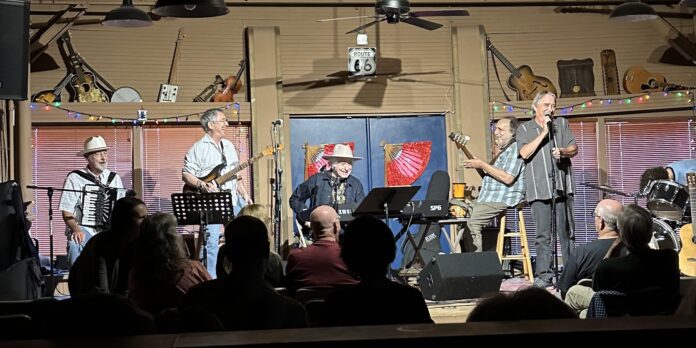
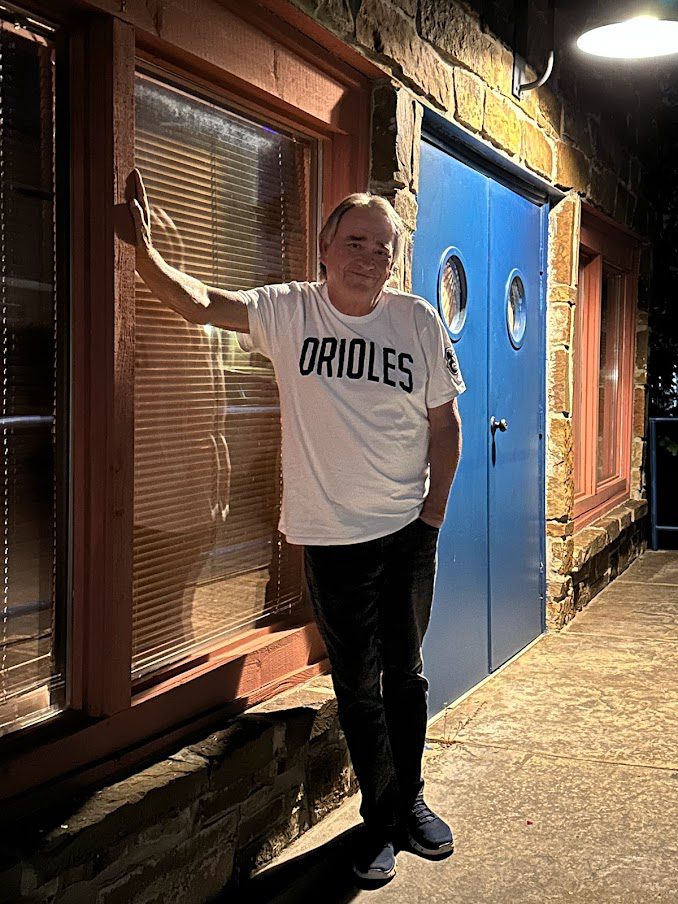
Smaller live music venues give local musicians a platform to thrive. Photos courtesy the Blue Door
The live music experience is one that’s hard to match. Something about the atmosphere, hearing the music being played right in front of you and the sense of community in the crowd gives you goosebumps. Luckily for live-music-lovin’ Okies, there’s a wealth of talented folks in the state – and they could be playing right in your neighborhood.
Thelma’s Peach, a music venue and bar located in Tulsa’s Kendall-Whittier district, is the brainchild of owner Andrew O’Meilia. Thelma’s aims to please all of the senses, “carrying the living room-style feel,” says O’Meilia. “Really comfortable, good lighting, good sound and good drinks. [Thelma’s Peach] has a multifaceted approach as a bar.”
Thelma’s – or the first iteration of it, anyway – began as a DIY show space in O’Meilia’s backyard.
“There’s a shelf life of having shows in one’s backyard,” he says. The current venue, he says, “allows us to build a brand and a business.”
And although O’Meilia is a music enthusiast, he’s no music snob.
“We have an all-inclusive environment,” he says. “Everyone’s welcome, as long as you’re not acting like a jerk.”
Ensuring that patrons are not, indeed, acting like jerks is so important to O’Meilia that it’s printed right on the door. Why? Because “[Thelma’s] is a place for everyone to let their hair down and be themselves,” he says.
Another local venue that encourages patrons to just be is the Blue Door out of Oklahoma City.
“When I started doing this, I wanted to provide a place for songwriters to build their audience and a place for the community to come and find great music that they otherwise would not know about,” explains owner Greg Johnson. “The most important thing is connecting with the audience and developing a space for that to happen.”
While the Blue Door leans more toward the folk and Americana genres when booking acts, Johnson explains that he’s really just looking for good musicians.
“All a person has to do is show me their songs, and if I like them, I’ll book them,” he says. “We’ll try to get people to come see [the show]. That’s how you become part of the Blue Door scene – you write good songs.”
If you plan to head to the Blue Door, or any local music venue, Johnson encourages you to stay open-minded.
“I want to see listeners get curious about music they’ve never heard before,” he says.
Greg Johnson, owner of the Blue Door in OKC
The ‘next Nashville or Austin?’
When attempting to find comparisons for Oklahoma’s burgeoning music scene, many say our major metros are the ‘next Nashville’ or ‘next Austin.’ Both O’Meilia and Johnson have spent some time in those cities, and have unique perspectives on how Oklahoma’s music scene compares.
“The wealth of talent, in Tulsa in particular, is through the roof,” says O’Meilia. “Within our community, I think we can keep the momentum going in the right direction and hopefully elevate a handful of artists that can take us to the next level.”
As for Greg’s perspective: “There’s so much great music in Oklahoma, I don’t like to split it up between Tulsa and Oklahoma City. If you’re a good player, you can jump into a scene, be known and get your songs heard. That’s where the music community comes in. It doesn’t matter whether [Oklahoma] has publishing houses or record companies, as long as there’s a community of musicians to meet each other, that’s what makes the Oklahoma music scene – in Tulsa and Oklahoma City – cool.”
Jim Millaway created beloved characters like Sherman Oaks, Mr. Mystery and Stan Sharpe. Photos courtesy James Millaway
His name was Jim Millaway, but to a generation of Oklahomans, he was Sherman Oaks, or Mr. Mystery, or even sportscaster Stan Sharpe (“It’s not whether you win or lose, it’s whether you beat the point spread”), a character he created during his time as a morning-drive personality on radio station KMOD. His media visibility began in 1970 and ran for somewhere around a decade and a half, establishing him as a comedic cult figure known for his off-trail humor and unique angle of vision. Millaway, who died on December 23 of last year, will be remembered with fondness by a ton of Tulsa-area baby boomers for a good long time.
Almost from the beginning of his Tulsa media run, I knew him. And for about two decades, from the ’80s into the dawning of the 21st century, we were best friends.
I first met Jim in the summer of 1970, only a couple of months after a late-night show called The Uncanny Film Festival & Camp Meeting had debuted on KOTV, Channel 6, in Tulsa. Hosted by Dr. Mazeppa Pompazoidi, created by Jim’s friend Gailard Sartain, and featuring Millaway’s characters Mr. Mystery and Sherman Oaks in support, the Mazeppa show – as it would soon become popularly known – came squarely out of the tradition established in the late 1950s with a national effort called Shock Theater. It was an invention of the Screen Gems company, which had released a package of old theatrical monster movies to TV and suggested that local television stations use their own talent to introduce the films. Soon, dozens of horror hosts doing ghoulish and ostensibly funny sketches around segments of the films had popped up all over the country (including on KOTV itself, where the characters Igor and Hornstaff did the honors).
Sartain, Millaway and their cohorts took that basic Shock Theater premise and put a youthful, subversively irreverent, and wildly humorous spin on it. It wasn’t long before word got out and kids all over northeastern Oklahoma were tuning in. It was comedy that belonged to them, not their folks, and they dug it.
Coincidentally, the Mazeppa show’s three-year run dovetailed with a magical time in Tulsa – the legendary, if brief, period that saw Leon Russell, who’d become a wildly successful international superstar, return to his hometown, blanketing the city with rock ‘n’ roll stardust. He became a fan of the Mazeppa show, leading to one of its most memorable episodes, the 1970 Christmas special.
In that one, Millaway, as the ski-masked Mr. Mystery, spends much of the show bragging about how he knows “Paul McCartley” and other famous rockers whose names he consistently butchers. At the end, he pulls off his mask, and it’s Leon Russell himself, who then sits down at the piano and does a song. My group out of Oklahoma State University, the Beef Squad, guested on that same episode; we had been the first band to play the Mazeppa show, and I believe that was our last appearance, as I went on active military duty the next year.
By the time the holiday number aired, Gailard, Jim and I had become good friends. I remember coming home on leave in 1972, fresh out of Vietnam. Jim took me to Boston Avenue Market, a live-music club at 18th and Boston. There, I saw firsthand how Leon Russell’s return had altered Tulsa’s reality. The entire clientele seemed to be made up of unemployed backup singers and young members of the British nobility.
At one point in the evening, looking around the noisy, uber-hip scene, Millaway told me, “You know, if you could somehow get Rolling Stone a week early, you’d own everyone in this place.”
By the time I finished my active duty, in December of ’73, the Mazeppa show was no more. Sartain had gone on to join the cast of the nationally syndicated country-music variety show Hee Haw and was beginning to find the sorts of film roles that would establish him as an enduring Hollywood character actor. Another Mazeppa show cast member, Gary Busey, was also starting to see the first stirrings of his own long-term cinema success.
Millaway, however, took his opportunities around his hometown, except for a brief foray to the West Coast in the late ’70s, where he became a staff writer for the Shields and Yarnell television show, “writing comedy for mimes,” as he sardonically described it to me at the time. (Sartain was a cast member on the program.) I also remember doing a radio appearance with Gailard and Jim after my military service; I believe that series was called The Unfilmy Can Festival. The two of them spent most of our interview time remarking about how my face had cleared up since I’d gone overseas.
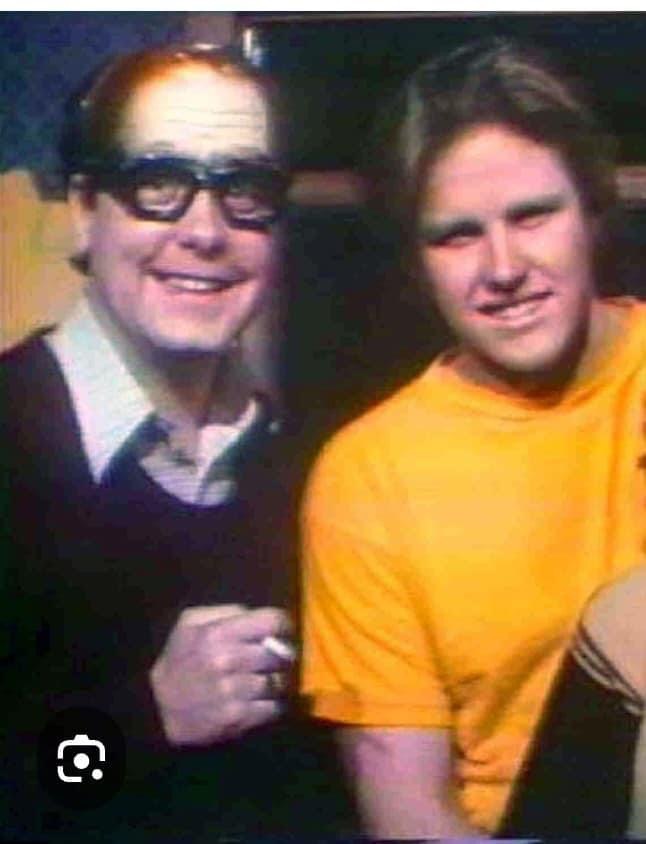
Jim Millaway poses with a young Gary Busey.
In the subsequent years, Millaway wrote material for country stars Roy Clark and Hank Thompson, had the aforementioned morning-show run at the top-rated KMOD, and spun that gig off into a job as the host of Creature Feature (later Groovy Movie), another sketch-comedy series wrapped around old theatrical features. Airing on KOKI, Channel 23, and co-starring Steve Pickle, it featured an exceptionally talented young woman going by the name of Jeannie Summers, who’d been working with Millaway at KMOD. Under her real name, Jeanne Tripplehorn, she would go on – like Sartain and Busey before her – to a notable and lasting career in the movies.
In the mid-’80s, Millaway hosted an hour-long special, The Sherman Oaks Comedy Network, which guest-starred Sartain, who appeared in a Spam-carving segment. The one-shot program also utilized a couple of 16mm films from my collection – an episode of the ‘60s ABC-TV series Expedition called “The Vanishing Musk Ox,” and an instructional short called “How to Twirl a Baton.”
Collecting and watching old 16mm films, especially in the days before home video became fully established, was one of the things Jim and our families enjoyed sharing. We also got into baseball – cards, games, and a fantasy league with some other friends – along with comic books and, especially, pulp magazines, those garish all-fiction publications that thrived in the ‘30s and ‘40s. Together, Jim and I traveled to a number of pulp-magazine conventions, where we never failed to have a fine old time.
Jim – who for some reason called me “Jabbo” – was one of those guys who would blurt out stuff for comedic effect wherever he was, especially if he knew it would make you a little uncomfortable. I remember, for instance, being in a crowded elevator with him when he started asking me, in a loud voice, if I’d gotten any new items for my “hats of the world collection.”
“I just got one in from Chad that I’m real proud of,” he said, and continued to chatter about headgear until we mercifully reached our floor.
Although he rarely imbibed more than one or two beers at a sitting, for many years Jim was a member of the Drinklings, a loose group of writers and musicians who gathered regularly after work to hoist a few. Sipping at his beer, he would dispense acerbic, off-kilter wisdom, something he really seemed to enjoy. I remember, also, that he was a very open-fisted guy, the kind who was quick to pick up a tab.
When I think about him, though, I keep going back to an incident that happened on a flight we were taking to a pulp-mag convention in Ohio. Later on, we found out that there had been a pinhole leak in the cabin; however, at the time the plane went into a virtual nosedive, losing hundreds of feet of altitude in seconds, we had no clue about what was happening. The oxygen masks wriggled down and an obviously flustered stewardess came through, exhorting us all to put them on immediately.
Jim and I did. And as the plane continued streaking downward, with kids screaming and people shouting all around us, he looked at me and said, “I like the flight better where they serve lunch.”
Colorful vistas, crystal clear water and ample shopping excursions comprise a luxurious vacation in St. Barts.
Photos by Gina Michalopulos Kingsley
What do you get when you mix a little Beverly Hills with a little Caribbean island? St. Barthélemy, known as St. Barth to the French and St. Barts to Americans. No matter what you call it, it’s indisputably the posh headquarters of the Caribbean. Although it’s known for being a French locale, the capital town of Gustavia actually has Swedish origins.
This travel writer arrived in St. Barths by cruise ship tender – a perfect crescendo of anticipation along the gleaming sea to the port. Super yachts in view also helped define the glamor of this tropical haven. Although it is said that St. Barts is where “the billionaires go to get away from the millionaires,” there are many polite, friendly locals who dispel that image. Every shop you enter, you’re greeted with a heartfelt “Bonjour!” and the merchants at even the highest end shops are happy to help you.
Designer label stores define the shopping area, along with local boutiques showcasing trendy and whimsical wares. You instantly become a part of the vibe of all things posh in St. Barts. Patisseries, creperies and cafes adorn the sidewalks, as well as a modest tavern or two. Find the perfect spot in the shade after some time on the beach, or visit a wine cellar, like the Lounge Barons de Rothschilds. A spoonful of caviar with a chilled glass of white wine or champagne is the ultimate way to relax and absorb the joie de vive of the locals. The winery and restaurant owners can give a delightful “tutorial” on your wine or caviar choices.
Photos by Gina Michalopulos Kingsley
Spend time on the white, sandy beaches, or better yet visit, on Shell Beach. The tiny, smooth shells are entrancing to look at and step on as you enter the most buoyant water that keeps you constantly afloat. The cove set within its boulders is magical. Cactus trees growing on the boulders where goats perch is quite the tableau for the sunbathers below. A profusion of tiny, yellow butterflies emerges from the boulder while iguanas slither in and out of crevices.
Just as you’re reveling in all the natural beauty, you’ll start to notice the beauty of the people, too. Schoolchildren with their teachers carry kayaks out onto the beach for a field trip. Angelic faces astound you as they walk hand in hand across the street following their guides.
St. Barts is not only a playground for the glitterati but it’s also where New Year’s Eve is celebrated in grand style. The extravagant vessels in the marina prove this exclusivity.
One of the reasons why St. Barts is so popular is because of the water, which is considered perfect for sailing. With more than 300 sunny days a year, the island offers several beaches along less than eight square miles of land. The crystalline, turquoise waters are inviting for snorkeling or swimming. Even in November, the water is walk-in ready temperature.
Amble through the streets to enjoy the neighborhoods and architecture. Do some people-watching, buy exotic cigars, and let the magic of St. Barts sink into your spirit. You’ll soon be planning your next vacation there – whether it’s a couples getaway, friends trip or solitary retreat. The island is also known as an idyllic honeymoon destination. No matter what the reason to visit – just do it!
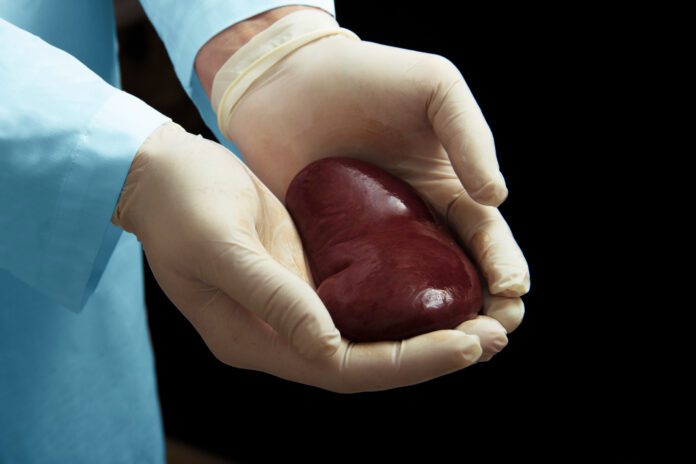
Organ, eye and tissue donation helps ease suffering – and it drastically improves and saves lives, too. According to the Organ Procurement and Transplantation Network (OPTN), more than 100,000 men, women and children are on the national transplant waiting list – more than 700 being Oklahomans – and 17 people die each day waiting for an organ. OPTN shares that a deceased donor can save up to eight lives through organ donation and improve over 75 more, while a living donor can donate a kidney, lung, pancreas or part of their liver to someone in need.
More than 85% of people on the national transplant waiting list are in need of a kidney, and kidney and liver transplants are the most common type of living donor organ procedures.
Shea Samara, M.D., a kidney transplant surgeon and the medical director of living kidney donation with INTEGRIS Health Nazih Zuhdi Transplant Institute in Oklahoma City, says their program has an extensive multidisciplinary approach to organ transplantation, especially living donor transplants.
“The process of becoming a living donor may take a few months due to the variety of medical tests that are required to ensure compatibility,” says Samara. “The donor is assigned a Donor Advocate that will assist them throughout their journey, making sure they are well informed during each step.”
One of the opportunities for a living kidney donation is through a paired exchange.
“We did Oklahoma’s first paired exchange 15 years ago on Valentine’s Day,” says Samara. “For patients enrolled in paired exchange, they have a living donor but they aren’t a match, usually because of blood group incompatibility or antibody tissue incompatibility. Through the use of OPTN’s national kidney paired donation system, we’re able to search throughout the country for potential matches.”
He says in the past, donors and recipients typically knew each other or were related, but with today’s social media landscape, new connections are being made.
“It’s amazing how many people reach out on social media and find a donor,” says Samara. “A few years ago, we had a transplant recipient who met their donor through a gaming chat room. It’s been wonderful to see the new ways people are searching because it’s expanded the pool of potential donors.”
He adds that it’s important for donors to know that they can remain anonymous, and their information is never shared with their intended recipient – and that if a donation occurs, they can look forward to a full recovery.
“If we do our job correctly, whoever is donating a kidney should feel comfortable knowing that they’re going to live their life normally, even with one kidney,” he says. “The vast majority of kidney donor surgeries are done laparoscopically, which is a minimally invasive approach with small incisions. The average hospital stay is two nights, with the ability to drive in two weeks, and resumed normal activities in four to six weeks.”
Join the Registry
LifeShare Oklahoma, a nonprofit organ procurement organization dedicated to the recovery of organs and tissue for transplant purposes, shares the three simple ways you can join the donor registry.
1. When getting your driver’s license, state ID or Real ID, you can say yes to organ, eye and tissue donation, as indicated by a red heart on your license or ID.