“Let thy food be thy medicine and thy medicine be thy food” – words of wisdom from Hippocrates. Herbs and spices have been around since antiquity and have been used for medicinal purposes, trade, gifts, sacrifices and to flavor food. Spices are made from roots, seeds and bark, while herbs are from leaves and stems of young plants.
My favorite herbs and spices fall within the “great eight” category: parsley, rosemary, thyme, cinnamon, ginger, dill, turmeric and oregano. Oregano, cinnamon and parsley contain a high oxygen radical absorptive capacity. This value is a number based on the antioxidant activity or power of the herb or spice. Antioxidants help remove cell destroying particles from our bodies.
Rosemary, when added to food, can decrease the heterocyclic amine production during grilling by 40 percent. Parsley and thyme contain apigenin, a cancer-fighting phytochemical. Thyme can be used as a mouthwash, antiseptic and a fumigant. Cinnamon may be used to help stabilize blood sugars, while ginger soothes the stomach and improves digestion. Turmeric is believed to fight against Alzheimer’s, and dill weed adds great flavor to just about any salad.
Spices and herbs are also wonderful replacements for salt. Americans consume two to four times the recommended amount of sodium, mostly from processed and restaurant foods (77 percent). Try using herbs in place of high sodium marinades for your summer grilling.
– Suzanne Forsberg, RD/LD, CDE, St. John Healthy Lifestyles
Vegetable Marinade
1/4 c. dry white wine 1/4 c. white wine vinegar Salt and freshly ground black pepper to taste 2 cloves crushed garlic 1/4 tsp. dried basil 1/4 tsp. dried thyme 1/4 tsp. dried oregano 1/3 c. olive oil
Bring all ingredients to a boil over high heat for 1-2 minutes. Pour over vegetables of choice. Serve hot or cold.
From The Complete Book of Sauces by Sally Williams
Looking for innovative solutions for living is what SR Hughes Design Group has always done best and continues to do. The company constantly seeks new ideas and inspiration, which is what keeps them going back to Salone Internazionale del Mobile.
The annual, worldwide furniture show was held April 12-17 at the 50-acre Rho Fairgrounds in Milan, Italy. Brian Hughes has attended the show for the past decade and says that with it having more than 2,500 exhibitors displaying modern, chic designs for inspiration, the company has plenty of reasons to continue to attend.
“We’re trying to comb the world for the best kind of answers to contemporary living,” he says. “Sometimes, I get on the plane and think, ‘Can I really go and still be caught sideways?’ And it always happens. The ideas and the showmanship and the way it is done, the way the city lives and breathes it, is amazing. I just don’t know anything else like it in the world.”
Hughes’ grandmother, Sarah Rodgers Hughes, and two aunts began the design group more than 30 years ago. They asked Brian to join them about 12 years back when they were looking to reinvent the showroom. He says the company is “about being able to offer things to people in Oklahoma that they hadn’t had the opportunity to be exposed to on the local level.”
SR Hughes outfits a variety of customers.
“It goes across the spectrum of who we are and what we offer,” Hughes adds.
The design firm and Salone are about innovative and creative solutions for living, he says.
“It means you’re no longer constrained to contemporary or traditional,” Hughes explains. “It means you’re using interesting ideas to help people live the way they want to live or work the way they want to work. It isn’t restricted to indoor or outdoor.”
Attending the show is as much about getting ideas as it is about seeing the new trends in person and thus having less of a skewed opinion of them. Milan is the design leader of many things, according to Hughes, and the people there teach how to stop and take notice.
“It is what leads and the rest of the world follows,” Hughes says. “You usually see it there first. We don’t always jump on a trend. We consider carefully what things are, how they work, why we love them, and we wait to make sure we’re emotionally connected to them. We at least know what the trends are. It is nice to understand the trends.”
The showroom is open to patrons from 10:30 a.m.-5:30 p.m. Tuesday through Saturday. The company is located at 410 S. Peoria, Suite 100 in Tulsa. For more information about SR Hughes visit www.srhughes.com or contact 918.742.5515.
When Tom Novak began working in the restaurant business back in the early ‘90s, he had no idea that one day he would be turning his hand to artistic expression.
A Connecticut native, Novak began working at the Fountains on Lewis Avenue for David Ingram while attending school in Tulsa. From there, he worked at several other restaurants until it became clear that he was ready to take a leap.
In 1991, Novak, along with partner Kyle Phillips, opened Brookside by Day. Since then, BBD, as it is affectionately called by local patrons, has become well known as one of the best breakfast places in town.
“This year will be 20 years that we will have been open,” says Novak. “We have a good following. But, I am going to turn 54 and getting around is a little more difficult. The restaurant business is not an easy job. I started to do mosaics a year ago with a friend of mine after he made one for my wife, Yolanda, and I for our anniversary.”
His friend encouraged him to try his hand at creating a mosaic mirror of his own, but Novak was reluctant to try it because, at first, it seemed too much of a challenge. For reasons that he can’t quite explain, though, Novak finally gave it a try, and since then he has made between 30 and 40 mirrors for friends, family and patrons at BBD.
“I was looking for something to do, and this has become a very fun project for me to be involved in.”
Brookside by Day is a perfect place to display these unique mediums of artistic expression, and the response from diners was immediate. Patrons at the restaurant began to buy up the mirrors on display very quickly, and soon Novak found himself with a possible new career path.
“I was looking for something to do, and this has become a very fun project for me to be involved in,” says Novak.
Novak has launched a website (www.mosaicsbynovak.com) where interested buyers can view his work and make purchases online at their convenience.
Novak stresses that there are many new pieces soon to be featured on the site for excited patrons who have been waiting patiently for his work.
One of the unique elements of Novak’s creativity, and certainly a reason for the high demand, is the originality of each of his works. Every mirror that he makes features a unique theme and design because Novak prefers not to duplicate them. Some sample mirrors feature names and corresponding themes such as: The Crown Jewel, The Fiesta (made from tile purchased at Habitat for Humanity), The Blue and The Eye of the Tiger.
The mirrors are exquisite in their intricate detail and in the wonderful myriad colors that Novak uses to carry each theme.
Whether he is working as a restaurateur or designing these beautiful mirrors, it would seem that Novak has a knack for creating elements that delight the hearts and souls of Tulsans. BBD has drawn patrons for 20 years and continues to do so. Now that same creative energy is being channeled into pieces of art that reflect a heart that loves making things that bring joy to others.
“Designing and creating these mirrors relaxes my mind, and makes me feel that I am able to create something beautiful,” says Novak.
Grocery bills account for a sizable chunk of the typical family’s budget each month; next to housing and transportation, it’s often the largest expense of a household. With such importance, it’s wise to approach grocery shopping with the same fervor you would when looking for a place to live or a car to drive.
“It’s going to vary on the size of the family, but a typical household should plan on spending 10 to 15 percent of its budget on groceries,” says Margo Mitchell, president and CEO of Consumer Credit Counseling Service of Oklahoma.
1. Make a list; check it twice. Going to the grocery store without a list is like building a house without blueprints. You know you need food, but what foods do you need to make healthy and nutritious meals? Set aside time to plan a menu – including breakfast, lunch and dinner – for each week. “Plan menus in advance,” advises Mitchell. “Make a grocery list from those menus and stick to that list when you go to the grocery store.”
2. Be prepared. Like the Boy Scouts, you should always have essentials ready to go in case you need to whip up an impromptu meal. Keep track of what you do have in your pantry, spice cabinet and refrigerator that you use frequently. If you are running low on any items, be sure to add them to the grocery list so you can replenish your supplies.
3. Shop smart. By purchasing a Sunday paper for around $2 each week, you can make your money back and then some by taking advantage of the newspaper’s coupons. Remember that coupons only save a shopper money when they are for items that are already on the shopping list. Saving $1 on two boxes of cereal that are not necessary is not really saving money. Also in that Sunday paper are circulars advertising specials at discount stores. Coupling those specials with coupons can result in big savings. Local grocery stores often send circulars in the mail throughout the week advertising specials, so be on the lookout for those as well.
4. Shop seasonally. One of the easiest ways to save on produce at the market is to buy produce that is in season. During the summer, there is a reason that produce like berries, melons and tomatoes are so reasonable at local markets. Conversely, prices for those items rise during the colder months because crops have to be shipped from farther away. Shopping for produce seasonally is good for your wallet, the environment and your health.
On The Rise
Saving money on food purchases has never been more popular. The increase in energy costs coupled with the growing demand for commodities such as wheat and corn are causing prices at the grocery store – from items such as eggs and cheese to coffee and pre-packaged meals – to go up.
Those rising prices are also causing restaurants and fast food chains to pass increased food costs along to customers.
Margo Mitchell, president and CEO of Consumer Credit Counseling of Oklahoma, says that one of the most cost-effective things to do to save money on food is to prepare it at home.
“It costs a lot of money to eat out for lunch or dinner,” Mitchell says. “Even if it’s just $5 a day, that adds up to more than $100 a month.” Preparing lunches at home and taking them to work is a very cost-effective way to dine. Mitchell also suggests considering an alternative meal to dinner when dining out.
“Dinner at a restaurant can be very expensive, especially if you order that appetizer and dessert,” she says. “Eating lunch or even breakfast at a restaurant is often much less expensive.”
Money-Saving Resources
With the rise in popularity of coupons has come several websites that help novice coupon-clippers by pointing out deals and matching in-store specials to clipped coupons.
Money Saving Queen: Sarah Roe shares local deals in both Tulsa and Oklahoma City metro areas on her website, www.moneysavingqueen.com.
Consumer Queen: Melissa Garcia shares steals and deals on her website, www.consumerqueen.com. Garcia also gives presentations in the Oklahoma City area on how to begin clipping coupons.
Coupons.com provides free coupons provided by manufacturers daily. Be sure to find out what your market’s coupon policy is; some may have rules about accepting coupons printed from the internet.
So, you have just moved to Oklahoma and are looking to fit into the delicate social fabric. You’re still riding the fence between OU and OSU, at least until you see the recruiting classes. But you’ve learned the important things. You know there is no chicken in Chicken Fried Steak. You now that church is not only on Sundays. And you have learned that ranch dressing is good on a whole lot more than just salad. Now comes time to look the part of an honest to goodness Okie. It starts with boots. Cowboy boots are as ubiquitous to Oklahoma garb as berets are to the French (or at least to French as envisioned by Okies). Getting fitted for cowboy boots made of leather from one critter or another is a rite of passage for many in Oklahoma. Just because you’re a late arrival doesn’t let you off the hook. And while you’re at it, since you really want to fit in, you will need to treat yourself to a whole Western wear makeover. Hey, it isn’t just for the extended cab and lasso crowd. In Oklahoma, Western wear occasionally substitutes for formal wear at fancy events. But don’t worry because Oklahoma is rich in cowboy couture shops with staff members willing to help you fit right in: Drysdales, Tener’s, Sheplers, Langston’s and many, many more. You might not feel quite like a million bucks walking out in your ostrich boots, but you should definitely feel like more of a native.
Be a Super in a Tulsa Opera Production
Got a voice that’s best left in the shower but a hankering for your chance at the big time? You could have a role in a Tulsa Opera production and never sing a note. Super is short for supernumerary. These are non-singing, non-speaking actors that are used to create the scene in an opera – in layman’s terms, an extra. You might be a picador in Carmen, a geisha in Madam Butterfly, a guest at a fabulous party in La Traviata or something decidedly less glamorous – a slave or prostitute, perhaps. Most operas require at least a few supers, so the company is frequently on the lookout for volunteers. Nope, you won’t get paid for your stage debut, and you’ll have to go to several rehearsals, but, hey, a superstar has to start somewhere.
Eat Fried Chicken At Eischen’s Bar
One could make a theoretical argument that tiny Okarche has only avoided being gobbled up by Oklahoma City because of this small bar and eatery situated in a long-closed grocery store that doesn’t put much emphasis on things like service or plates. But Eischen’s Bar is the oldest bar in the state of Oklahoma and famous for its secret-recipe fried chicken. Food Network’s program Diners, Drive-ins and Dives voted this fried chicken the best in the state of Oklahoma, and most diners agree. Served with a generous portion of pickles and white bread, it makes for a satisfying meal.
Survey The Panhandle From Black Mesa
At almost 5,000 feet, the state’s highest natural elevation provides panoramic views.
Root for a Home Team at a Union-Jenks High School Football Game
Sure, football is king in Oklahoma. But generally when you see a manic level of fan behavior associated with high school football, it’s in small towns where there is little else and where the entire population graduated from the one high school within 50 miles. But in a city where there are countless other activities, including semi-pro and pro sports? South Tulsa isn’t the panhandle, but still this noteworthy rivalry sucks in players, students, parents, families, alumni and even the unaffiliated who just happen to live in the appropriate school district, and fills them with swagger that reminds one of the relationship between “fan” and “fanatic.”
Go Noodling
It isn’t that this extreme sport is exclusive to Oklahoma. There’s noodling going on across the southeast U.S. Noodling is particularly Oklahoma, though, because before 2001, it was largely a country curiosity that was practiced by a few stalwarts who had learned it from their dads. What happened in 2001? That’s when Oklahoma filmmaker Bradley Beesley blew the lid off the whole thing in his critically acclaimed documentary Okie Noodling. At that point, Oklahoma pretty much had to own it. It actually makes sense because Oklahoma has the perfect combination of resources for noodling to really take root: lots of murky creeks and streams, plenty of catfish and canned beer sold in what look like steamer trunks with flap handles. For the uninitiated, noodling is a type of fishing in which the noodler reaches into an underwater hole that presumably holds a large, stealthy catfish (usually), stuffs his hand in the fish’s mouth (or allows the fish to engulf his hand), reaches through the gills and pulls the fish out. Like snipers, noodlers often use spotters who help find good noodling holes and remove the fish from the gobbled fist. Presumably they are also on hand for those occasions when there is something else living in a hole. No, Hemingway never waxed poetic about noodling; but it’s only legal in a handful of states, and with our cultural association with it, it warrants consideration for the official state sport.
Chase A Tornado
Since these days they always seem to be chasing us, it’s time to turn the tables on these quintessential Okie squalls. Besides, there could always be a Helen Hunt sighting. We’ve got cows.
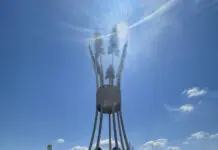
See the World’s Largest Peanut at Durant City Hall
Okay, so it’s a statue of a really, really large peanut that probably wouldn’t be the world’s largest even if it were organic. It’s still not something you see every day.
Find Bigfoot
Every year there are inevitably a handful of reported Bigfoot sightings in southeast Oklahoma around Honobia, Talihina, the surrounding forests and Kiamichi Mountains. But while the primitive hominid manages to elude his local pursuers, the quest itself through the surrounding pristine wilderness can be terrifically exciting. Also, no chamber of commerce can let rumors of Bigfoot (Bigfoots? Bigfeet?) go to waste, so the Talihina Chamber of Commerce throws a popular Bigfoot Festival every year, complete with tchotchkes like Bigfoot Crossing signs and Bigfoot air fresheners.
Sling It at the World Championship Cow Chip Throw
Since 1970, the Town of Beaver has come to be known as the “Cow Chip Throwing Capital of the World,” a piece of braggadocio not to be easily messed with.
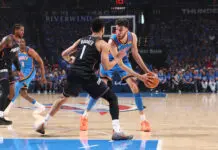
Cheer On the Thunder at a Home Game
Who would have imagined a decade ago that professional basketball would reach Oklahoma before professional football? That’s exactly what happened when the troubled Seattle Supersonics NBA franchise was purchased by Oklahoma’s Clay Bennett, had a run-in with government out west and subsequently relocated to Oklahoma City and launched as the Oklahoma City Thunder in 2008. After some struggling baby steps, the “new” franchise has taken off, qualifying for the playoffs in 2010 and in 2011. More significantly, Oklahoma has embraced the NBA, and the Thunder enjoys some of the most loyal crowds in the league.
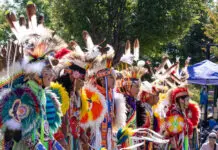
Attend A Powwow
Have you ever been driving in traffic, gotten frustrated in the lane behind an out-of-state tour bus and thought, ‘Wow, tourists sure do come a long ways to see the world’s largest peanut in Durant!’ Well, they probably aren’t really here to survey gargantuan legumes. Instead, the impetus for Oklahoma’s rising popularity as a tourism destination is something that most states don’t offer much – a living and breathing Native American populace and culture that simultaneously embraces its storied past and its future. Of course, lots of states have Native American casinos, so the future is readily visible elsewhere. But the history is here and, sadly, even many non-Native American residents here haven’t invested the time to really immerse themselves in the many tribal cultures that make their homes here. The powwow is arguably the singular defining event for many Native Americans, a time when they shed their weekday identity and embrace the very best of their cultural legacy. Friends and families gather together, sing, dance, tell stories and eat traditional food. Although they differ based on tribe and specific ceremony, powwows are universally times of good, family, multi-generational celebration. They are also extremely welcoming of participants from outside the tribe, simultaneously passing on traditions to younger tribe members and delighting and educating all guests. Next time, it might be worth following that tour bus instead of just tailgating it.
Hunt For Rose Rocks
It’s barite crystal formations that lend these indigenous (and official State) rocks their distinctive rose-like patterns.
Buy An Okie T-Shirt
The most prevalent t-shirts around the state tend to assert loyalty to either OU or OSU, but several artists, like Tulsa’s Steve Cluck and Oklahoma City’s Bombs Away Art and Warpaint, are creating real homegrown products that prompt civic and state pride.
Shake Hands With A Billionaire
There are no fewer than eight billionaires currently residing in Oklahoma, and with a population of roughly 3.5 million – give or take – that means that one in every 437,500 of the state’s residents is worth beaucoup bucks. You may have to do a little detective work (remember, stalking is illegal) to cross this feat off the list, but the odds are really not that absurd that you will be able to stand face-to-face with one of the state’s billionaires. It may be small, but we’re saying there’s a chance.
Visit A Museum
Oklahoma is as rich in museums as it is in sources of energy, cattle and Sonic Drive-Ins. Art, history, culture and the occasionally offbeat all warrant museums here, and it’s a challenge to spotlight just a few. Tulsa’s Gilcrease Museum houses the most comprehensive collection of art and objects from the American West. But Muskogee’s Five Civilized Tribes Museum tells the flipside of the story, as do numerous other tribal museums. Of course then there is the National Cowboy & Western Heritage Museum. Also in Oklahoma City there are the Oklahoma City Museum of Art, the Oklahoma City Railway Museum and more. How could one survey state museums without mentioning Philbrook Museum of Art?
Find Bobo And Eat His Chicken
Finding Bobo is not dissimilar to searching for Waldo – if, when you found Waldo, you got some amazing food with only a slightly elevated risk of being assaulted by drunken club kids out on a post-bar closing adventure. Bobo is an OKC icon, the purveyor of some highly addictive honey-soaked, smoked-fried chicken and thick-cut fries. Bobo’s “restaurant” is a red trailer, and he tends to switch up locations, although generally in the vicinity of 23rd Street near Martin Luther King Jr. Blvd. He also keeps his own hours, something like 7 p.m. to 4 a.m. on Friday and Saturday nights. The chicken is legendary. And rumor has it that it tastes better the later you go, leveling off when the bars close and a legion of revelers begin their nocturnal pilgrimages. Of course, the neighborhood isn’t Beverly Hills (or even Nichols Hills, for that matter), but it’s well worth the risk.
Take a Ride on the Heartland Flyer
The trip from Oklahoma City to Fort Worth is scenic and relaxing – and the only passenger train service available in Oklahoma.
Launch A Spontaneous Hootenanny at WoodyFest
Woody Guthrie was neither a cowboy nor a Native American, never struck oil, had an affiliation with Rodgers and Hammerstein or recorded a pop country CD. Instead the folk music icon embodied the working class progressive sentiments of the mid-20th century in Oklahoma and tragically passed away in 1967 before seeing how his music and activism influenced artists like Bob Dylan, Bruce Springsteen and many others. The “Dust Bowl Troubadour” was an Okemah native, and today the town annually hosts WoodyFest – the Woody Guthrie Folk Festival, complete with the biggest and most legit folk acts of the day. What better place for a hootenanny?
Chase Spooklights
The earliest published report of this visual phenomenon dates to 1936, although the story verbally goes back 70 years prior to that. To this day, many residents of “Devil’s Promenade” on the border between southwestern Missouri and northeastern Oklahoma west of Hornet, Mo., claim that looking west from just across the border in Oklahoma (parked on Oklahoma East 50 Road) will reveal a single ball of light or a tight grouping of lights shortly after dark. Spooklight chasers inevitably report that the lights disappear when approached, but the quest itself is the adventure.
Run Into Garth And Trisha
In Oklahoma, they need no last names. Rumor has it the best place for a random sighting is at a Braum’s in Owasso. Don’t tell them we told you.
Grab A Choc In Krebs
Until they find a way to incorporate gravy into a beer bottle, Choc Beer must be considered the quintessential Oklahoma beverage. Choc Beer dates back almost a century to when its Italian immigrant founder was first inspired by native Choctaw brewing styles and the abundance of golden wheat around his Krebs home. At first brewed for local coal miners, Choc has gone on to be enjoyed by locals and aficionados, despite all the legal hurdles of prohibition and of “home” brewing in state history. Now, it is a statewide treasure, with more than a dozen different handcrafted varieties, Choc Beer is the granddaddy of the Oklahoma craft beer renaissance.
Climb Rocks in the Wichita Mountains
The Wichita Mountains Wildlife Refuge (WMWR) is one of the finest rock climbing areas in the southwest U.S. The WMWR’s high-quality granite and wilderness setting provide outstanding opportunities for vertical adventures. Thousands of climbing enthusiasts visit the WMWR each year to experience the exceptional climbing found at Mt. Scott, the Narrows, Elk Mountain, Crab Eyes, Lost Dome and other classic sites. It’s a good idea to remember that wildlife is intrinsic to a “wildlife refuge,” which can complicate things, when not accessing a cliff face.
Get Soaked at the Pawnee Bathhouse and Waterpark
This beautiful, historic 1939 WPA sandstone rock bathhouse at Pawnee Lake is on the National Historic Register but has some nice, modern flourishes that make it worth the trip from anywhere in the state. The structure is built from hand-cut and coursed native stone, and an intricate system of stone steps and walls lead from the building to a two acre fresh water pool complete with a sandy beach, water slide, high dive, water trampoline, diving board and paddle boats.
Eat Your Body Weight In Chicken Fried Steak
Every year either the state or its capital gets named as home to some of the unhealthiest people in the United States. Here, it’s a badge of honor. How else to explain away a state in which “buffet” could be named the official cuisine? The studies show that eating poorly is a major contributor to our low marks on annual health report cards. That’s no surprise considering that Okies delight in mammoth portions of beef and all things – emphasis on all – fried. But even here, where fried catfish is considered diet food and fried okra and pickles are perfectly acceptable vegetables, it has got to be Chicken Fried Steak that is ultimately responsible for bulging waistlines. Sure, fried chicken, barbecue and chili are also huge here, but other states can claim those as their own primary sin. In Oklahoma, though, even some Mexican restaurants also serve Chicken Fried Steak, and if it isn’t on your favorite Chinese buffet, it might be soon. Tenderize a slab of beef, season, coat and fry it fried-chicken style, then smother it with a gravy of choice and you have something that would repel First Lady Michelle Obama faster than an invitation to dinner at Rush Limbaugh’s house.
Survive Oktoberfest
Many Oklahomans really, really look forward to the annual Oktoberfest bacchanalia in Tulsa. A clue to this is the countdown clock on the event’s official website that begins ticking down the days, hours, minutes and seconds until the next Oktoberfest, which begins not long after the immediate past fest has wrapped up. What’s not to like at the fall festival celebrating all things Germanic (excepting that flirtation with fascism)? Beer is free flowing at the River West Festival Park, plus food, entertainment and general good cheer. But it’s the brew that gets most people doing the Chicken Dance, and which makes surviving Oktoberfest (with minimal day-after drunken regret) a challenge.
Tour the John Frank Home in Sapulpa
The Frankoma Pottery founder made sure his love for pottery was overtly reflected in this quirky home designed by architect Bruce Goff. The home is on the National Register of Historic Places.
Catch A Foul Ball At ONEOK Field
The Drillers are great, but their wonderful new Art Deco-style stadium would be a great place to chase foul balls even were the team affiliated with the Dodgers.
Meander the OSU Homecoming Walkaround
OSU campus Greeks (think fraternities, not baklava) go all out decorating their houses for this annual mobile house party extravaganza.
Celebrate Bob Wills’ Birthday At Cain’s Ballroom
The House That Bob Built has become a top small venue destination for touring artists, legendary for its iconic past and place in history. While one is more apt to catch a rock concert there nowadays, in the ‘30s it was known as the home of Western swing, thanks to a Texas transplant by the name of Bob Wills. Each year since his death in 1975, Cain’s Ballroom has celebrated Wills’ birthday in March with a Western swing concert.
Ride The Silver Bullet At Frontier City
With the loss of Tulsa’s beloved Zingo, thrill-seekers’ roller coaster options in Oklahoma are going the way of elected Democrats.
Eat the Unhealthiest Item Available at the State Fair
The Oklahoma-Texas rivalry in, well, everything, extends to the food world, as it seems every year the states’ fairs garner some attention as home of the numbers one and two most unhealthy specialty food items at any state fair in the country. Deep fried bacon and fried candy bars? Pfft, childs’ play. Once Deep Fried Butter made it on to one fair’s menu a couple of years ago, the ante was upped. Grab a Zantac or six and get out to the Oklahoma State Fair or the Tulsa State Fair.
See Oklahoma! In Oklahoma At The Official Home Of Oklahoma!
If you have even a passing interest in theater, then there are reasons to take in the Rodgers and Hammerstein masterpiece besides the obvious ironic kitsch of seeing it at our own Discoveryland. Oklahoma! was a game-changer with which its creators forever and fundamentally changed the nature of musical theater. Before it, dainty music was just a distraction from the plot; with Oklahoma!, the dainty music was actually integrated into the plot. Think that’s no big thing? Cultural historians point out that when discussing the history of theater, this variation is recognized as a change of epochs. How often does that happen?
Decode The Heavener Runestones
It’s a long shot, but since no experts have been able to come up with an explanation, why not try your own philology skills? Decades ago, runic script that appears Scandinavian was found on a stone in what is now a state park on Poteau Mountain; and smaller examples were found nearby. The runestones inspired many theories about the possible presence of pre-Columbian Scandinavians wandering the state, leaving the equivalent of Post-it notes. Scandinavians scholars reject the evidence of the script, but it has remained a curiosity for many years. Unfortunately, the state is set to close the Heavener Runestone State Park on Aug. 15 due to budget cuts, so hurry up.
Run Up Your Charge Card At Medicine Park
This quirky little oasis near Lawton is a great getaway for many reasons. The fun of explaining the charges at Chaps My Ass, Rusty Buffalo, The Branded Bear and The Laughing Lizard to your significant other is just one.
Bass Fishing At Lake Keystone
Lake Keystone was initially envisioned to be much grander than it turned out to be, but bass sure do seem to like it. It’s referred to by some as the Striped Bass Capital of the World.
March in the Ghouls Gone Wild Parade
Almost 55,000 people attended this spooktacular Halloween parade in Oklahoma City last year, so there is a decent chance you might have already made the march. That number seems only likely to increase in subsequent years since Ghouls Gone Wild gets featured by entities like MTV, CNN and other media. Why not join in the cavalcade of creepy, kooky fun that comes complete with elaborate floats?
Take A Haunted Tour
Despite not being that old of a state, Oklahoma has had time to attract and retain a decent number of alleged Undead-Americans who haunt various homes, hotels and properties around the state. They are the oft-uncooperative stars of the scores of haunted tours available to the curious. What, scared?
Relive Ranch Days At The 101 Wild West Rodeo in Ponca City
There is no better place to relive the frontier era than at this annual rodeo and festival. That’s because the original 101 Ranch was home to what is believed to be the nation’s first rodeo, and it also exported a traveling show that introduced the wider world to American West life. The namesake 101 Ranch was established by Col. George W. Miller in 1879 on the banks of the Salt Fork River southwest of Ponca City, with thousands of acres of land both leased and purchased from his friends — the Ponca, Tonkawa and Osage tribes. In 1905, Miller’s sons staged what they called a “round-up” or “buffalo chase” as an entertainment incentive for a National Editorial Association convention. An estimated 60,000 people attended and were treated to a recreation of real ranch life. Over the decades to follow, the 101 Ranch Wild West Show went on the road, first around the country and then around the world. Beset by repeated tragedies and internal family conflict, the show eventually petered out completely despite affiliations with figures like Tom Mix, Bill Pickett and Buffalo Bill himself. Eventually the massive ranch was parceled and sold and the last remaining original structures destroyed. Still, the 101 Ranch remains inscribed in history, and the annual 101 Wild West Rodeo is a wildly popular means of commemorating this unique Oklahoma legacy.
Geek out at The Okie-Tex Star Party
Part genuine curiosity and part nerds on parade, this annual stargazer event sponsored by the Oklahoma City Astronomy Club brings out a whole different crowd than your average tractor pull, making it a verdant environment for astronomy enthusiasts.
Climb The Cavanal Hill In Poteau
Cavanal Hill is the world’s highest hill because at officially 1,999 feet in elevation, it is as tall as a hill can be; once it hits 2,000 feet, a hill becomes a mountain. How it is that an enterprising local hasn’t piled some even dirt across the top and become The Oklahoman Who Went Up a Hill and Came Down a Mountain remains a mystery.
Count The Mullets At Rocklahoma
Rocklahoma’s rich lineup of performers does attract fans of all stripes – as long as they’re fans of music played really, really loud. But as diverse an audience as the massive outdoor concert attracts out to Pryor, there is still guaranteed to be a gaggle of mullet-coifed locals who still really, really don’t get it.
Race Through Oklahoma’s Sand Dunes
An appropriate vehicle might be called for if you intend to race through the dunes at Little Sahara State Park or Oklahoma’s other under-exposed sand dunes.
Go Deco
When you think of locales with world-renowned, remarkable architecture, Oklahoma probably doesn’t rank high on that list. Heck, it probably doesn’t even make the list. But it should. In the perfect convergence of time, place and money, the Sooner state boasts one of the world’s top collections of Art Deco architecture, particularly in Tulsa and Bartlesville. Tulsa boomed in the 1920s at just the time Art Deco became all the rage. Flush with oil money, Tulsans constructed a range of buildings, from office towers to public buildings to private residences, in this cutting edge style. The trend continued into the 1950s, giving the city examples of all the various forms of Art Deco. You don’t have to look far to go Deco in Tulsa. Perhaps the most spectacular example is the beautiful Boston Avenue Methodist Church – the largest Art Deco church in the world. Will Rogers High School, Union Depot, Fire Alarm Building and the Blue Dome building are also standout examples of the style, as are the Frank Lloyd Wright designed Westhope home, Adah Robinson studio and the John Duncan Forsyth residence. Bartlesville boasts Price Tower, Frank Lloyd Wright’s only skyscraper, and a number of residences and buildings designed by Oklahoma architect Bruce Goff, a Wright protégé. The Tulsa Historical Society has developed a number of walking and driving tours of Art Deco attractions in Tulsa and Bartlesville to help you check this one off your list. You can find the lists at www.tulsahistory.org.
Have Dinner At The Haunted House
Word has it that it’s safer to dine at this converted Oklahoma City mansion than it was to live in it, given the less-than-savory end that came to the couple and their stepdaughter who died under mysterious circumstances and inspired the appellation. Oh, and you’ll need reservations.
See Your Shadow at Science Museum Oklahoma
The Shadow Stopper exhibit at Science Museum Oklahoma has been a favorite for decades. Strike your wackiest pose against a white screen, wait for the flash, and then run around to the other side of the screen to see your shadow captured. Repeat many times.
Visit The Oklahoma City Memorial
Remind yourself that the horrors of terrorism can strike anywhere.
Attend A Bedlam Football Game
As if anyone hasn’t attended one. Right?
Survive the Visual Onslaught of the Rhema Christmas Lights
Many “sophisticated” cities these days only permit white holiday lights, considering the standard multi-color ones garish. Wouldn’t it be fun to take the mayors from those cities to see the two million rainbow lights at Rhema Bible Church’s Christmas Lights Extravaganza?
Watch Eponymous Film At The Red Fern Festival
Believe it or not, there was a time when Oklahoma was portrayed on film without the appeal of grown men sticking their fists into underwater holes and shoving them into catfish’s mouths – and without a single rhythmic dancer from Brooklyn in a cowboy hat. Tahlequah area native Wilson Rawls’ Where the Red Fern Grows is a timeless classic young adult novel (and 1974 film) that brings to life early 20th century living in rural Oklahoma as much as it does the wonder and heartache of childhood. Before there were video games and urgent texts to be sent, young Billy Coleman’s sole desire for his own red-bone hound hunting dogs and his pursuit and ultimate destiny with them makes up both the backbone of the story’s plot – and the impetus for this annual festival. Participants relive the Red Fern era with hound dog field trials, car show, old-time games, entertainment, vendors and the ultimate fan experience – and outdoor screening of the movie. It’s a celebration of country life in Oklahoma and fun for the whole family. Even lifelong urbanites can’t help but get swept up in the wave of nostalgia this festival prompts and it’s best to suspend the cynicism and just go with it.
Eat A Meersburger (Or Two)
A hundred years ago, the Meers Store served a bustling population of miners, the support industry and the town that grew up outside the Wichita Mountains. Today, Meers Store and Restaurant is the last vestige of the tiny town. Although Meers Restaurant serves a wider variety of food now than it did back when it started dishing out the burger, it is still this big patty of Texas Longhorn beef served to order that packs in diners.
B&B in Oklahoma’s First Capital
The scenic and historic town is Oklahoma’s Bed and Breakfast Capital, with more than a dozen B&B options right in the middle of everything Guthrie has to offer.
Watch The Buffalo Roam on the Tallgrass Prairie
There isn’t all that much prairie left in the country at all considering it used to cover much of the American West, and the largest contiguous block of it is here near Pawhuska at The Tallgrass Prairie Preserve, owned by The Nature Conservancy. Here you can see what Oklahoma looked like before chain restaurants, convenience stores and indoor plumbing. But to really capture the whole experience, you’ll need to watch some of the couple thousand bison on the preserve mosey along and somehow support 2,000-pound bodies by eating grass. Rethinking your Atkins Diet yet? Pack a salad for lunch and head out to graze with the buffalo. Last word of advice: Don’t taunt buffalo – that whole brush with extinction left them with no sense of humor.
Immerse Yourself in Native American Culture At Red Earth Festival
Many people already consider Oklahoma to be the center of Western Native American life. But there is no question about the state’s lofty position in Indian cultural terms during this mammoth annual festival. Representatives of tribes from all over the country assemble in Oklahoma City for a long weekend of arts and cultural showcases, sales, entertainment and demonstrations. The Red Earth dance competition features the very best in the art form pitted against one another. The art and culture are great, but the dance competition is a chance to cheer for Oklahoma’s first home team.
See a World Premiere at deadCENTER Film Festival
Earn some cultural street cred from this festival, dubbed by MovieMaker magazine as one of the world’s top 20 coolest festivals.
Spend The Night With Frank Lloyd Wright At The Inn at Price Tower
After all, it is Wright’s only skyscraper.
Ring in the New Year with Flaming Lips’ Freakout
Who said Oklahoma only produced country-Western music stars these days? The state’s unofficial house band, The Flaming Lips have made this annual Oklahoma City kick-off to a new year a musical and cultural classic. While the band has a vibe all its own, the raucous nature of Freakout can’t help but conjure up some of the feel of classic Lollapalooza or other loosely organized and offbeat musical festivals, evidenced by front-man Wayne Coyne urging the audience to mimic frog noises last year.
Wear Your Team Colors While Downing Billy Sims’ Boomer-Q
You have to hand it to Billy Sims. The former Sooners back might have had his Pro Bowl NFL career cut short by injuries back in the early 1980s, but that isn’t enough to keep the former Heisman Trophy winner down. Among his ventures is this statewide series of family-friendly barbecue joints serving up “Boomer-Q” complete with massive amounts of OU sports memorabilia. Sure, the theme might keep OSU fans away. But a better idea might be to sport your Cowboys hat right into the Billy Sims nearest you.
Detox in the Healing Waters Around Sulphur
They didn’t go outside the box when it came time to name the town of Sulphur in the heart of the scenic Arbuckle Mountains. After all, Native Americans were first attracted to the site because of the clear bubbling springs and the black mud of spring-fed creeks. White settlers also believed in the healing powers of the waters, congregating in the area and leading to the founding and flourishing of the town. Could that many people be wrong?
Dig For Crystals In The Great Salt Plains
But the real challenge is finding one that looks like Kate Middleton.
Beat the House in a Casino
Can you imagine that not that many years ago, one of the most-heard complaints residents would voice about Oklahoma was that there wasn’t enough nightlife? Ever since Native American tribes got the go-ahead for gaming, though, pursuing high-stakes entertainment has been as easy as taking the nearest highway. Once there, you’re sure to find a casino. Some are large and opulent, complete with stages, theaters and grand productions evocative of Las Vegas. Others are small and utilitarian like…well…the airport in Las Vegas. Wherever they are, they will usually be filled with people at all hours – all trying to beat the house odds and take home more than they arrived with. If that’s also your goal, then if casino conventional wisdom holds true in Oklahoma, your best odds are on the slot machines. For those dead-set against gambling, identifying the best casino restaurant buffet could be your assignment. With celebrity chefs’ upscale eateries taking over in Vegas, there needs to be a new home for the $6 steak dinner and the two-story buffet line.
Keep Your Hands off the Merchandise at a Rattlesnake Roundup
At worst, rattlesnakes in Oklahoma can be dangerous nuisances. At best they can be the source of great entertainment for the whole family. This, thanks to a number of rattlesnake round-ups historically held around the state each year, in Waynoka, Waurika, Okeene and a few other locales. You might want to ease into the rattlesnake roundup circuit initially, though, enjoying solid snake cuisine and serpent-laden demonstrations and “entertainment.”
Float The Illinois River
It’s a good idea to wait for the flooding to pass. Then the only threat is toxic runoff from chicken ranches and drunken frat boys. Still, the natural beauty of the river and the fun of getting all your buddies in canoes makes it worth it all.
Live Through Tulsa’s Day of the Dead Festival
This interpretation of the classic Mexican national holiday keeps getting bigger and bigger every year and comes complete with parade, arts and culture exhibitions, vendors, street dancers and both kids-oriented and edgy entertainment. It’s a fun time, particularly considering the holiday is meant to honor the dead, which might rankle the sensitivities of some non-Mexicans. Tulsa does ethnic celebrations big, and few bigger than Mexico’s Dia de los Muertos.
Visit the Original Hideaway in Stillwater
If your son or daughter is off at OSU and you need to find him or her fast, try Oklahoma’s oldest pizzeria, a Stillwater institution since 1957.
See Leon Russell Perform
If recent Rock & Roll Hall of Fame inductee and Lawton native Leon Russell was the only musician ever produced by the state, Oklahoma would still be way cooler than most others. Russell’s a legend and a quintessential sideman and collaborator, but even his solo tours attract millions. He’s worked with the biggest names in the industry during his career, from Sinatra and Dylan to Elton John. But it’s his unabashedly cool quotient, often stashed behind sunglasses and cowboy hat, that make him Oklahoma’s only coolest man in any room.
Live Like An Oil Baron
During Oklahoma’s Oil Boom days, there were scads of oil barons in the state building mansions and establishing a larger-than-life way of living in Oklahoma. Today, you can craft your own tour of some of Oklahoma’s notable spots that were created or popularized by oil barons. Philbrook Museum of Art was originally built by Waite Phillips as a home for the oil pioneer and his wife. Today it houses a collection of world renowned art. Woolaroc, located outside Bartlesville, was built by Frank Phillips, founder of Phillips Petroleum Company. Originally built as a ranch retreat for the oil tycoon, Woolaroc is now a nature preserve and museum housing art collections, Western artifacts and items that tell the story of Woolaroc’s history. Just a short drive west of Woolaroc is Ponca City and the home of Marland Mansion, which was built by E.W. Marland, a baron who found oil on land leased from a Ponca Indian. Known as “The Oilman’s Oasis,” Junior’s Steakhouse in Oklahoma City was a haven for oil barons in the ‘70s, and is as famous for being the site of where some of the largest oil deals in Oklahoma City were struck as it is for its delicious steaks.
Frolick In The Flowers At The Azalea Festival
More than four decades ago, Muskogee’s Azalea Festival began as a one-day event in a park. Today, it garners national acclaim and takes place throughout the entire month of April with a wide array of activities and events ranging from passive entertainment to a parade and coinciding rodeo; and from surveying the flowers to a challenging chili and barbecue cook-off. One certainty is that the festival harkens the arrival of spring, which is always something to celebrate.
Spot Wayne Coyne In The Plaza District
The frontman of Oklahoma’s most legendary and psychedelic band, when he’s not on an international tour, can often be spotted dining or shopping at the many shops and establishments in this historic Oklahoma City neighborhood.
Ride A Horse
In Oklahoma, riding a horse is a close second to attending a Bedlam football game in the, “Hasn’t everyone done that?” category. But plenty of folks have long lived in – or are even natives of – Oklahoma, but still haven’t piloted their very own equine. This is a shame considering many other residents were riding horses well before ever riding a bicycle. There’s really no reason not to give it a try. There is no better (and easier) place to do it than Oklahoma. And if it’s a fear of horses stopping you, just consider this: since horses are both social and vegetarians, there really isn’t much harm they can do.
Go to a Drive-In Movie
Many Green Country residents lamented the tragic destruction of the Admiral Twin by fire last year and are hopeful that plans for its reconstruction work out. In the meantime, though, Oklahoma is home to a number of drive-in theaters from Chickasha to Oklahoma City. For some, drive-in theaters are strongly nostalgic. For others, they offer great, cheap family entertainment. There is most definitely something about seeing a movie on a big screen while enjoying a warm Oklahoma evening. The medium won’t last forever, so it’s a can’t-miss opportunity.
Guzzle the Green Beer at Tulsa’s St. Patrick’s Day Party
Going green doesn’t have to mean using poison light bulbs or bathing out of a coffee cup. In Tulsa, it’s synonymous with St. Patrick’s Day and beer – which pretty much go together as is. It doesn’t get any bigger than this annual, Guinness-soaked fest that leaves some to find their way home well after the sun has risen on March18.
Yacht Grand Lake
One “boats” other lakes. One “yachts” the state’s most popular lake.
Dress Up For The Renaissance Fair
You don’t have to be a 30-something video store clerk living in your parent’s basement, LOLing in your favorite chatroom and playing Dungeons & Dragons to appreciate the Renaissance Festival at The Castle of Muskogee while in costume. But it helps. So, put down your Hot Pocket, hit your mom up for some cash and head off to Ye Olde Costume Shop to get what you need. There just aren’t that many dress occasions that call for a cloak.
Sample the Haute Cuisine at Stillwater’s Annual Calf Fry
Nothing makes calf cojones go down easier than ranch dressing.
Just off a stretch of the Mother Road in northeastern Oklahoma, about halfway between Claremore and Chelsea, lies a town called Foyil. Although its population is tiny, hovering around 250 at last count, Foyil has produced two nationally famous sports stars.
There’s Josh Brown, currently one of the top kickers in the National Football League, whose name is emblazoned on highway signs at either end of Foyil’s city limits, as well as on an activity center at the south end of town. And there’s Andy Payne, whose statue is the centerpiece of a park right beside Route 66.
What’s intriguing about these two isn’t just that they’re both from the same little Oklahoma town. It’s also the fact that both of them became known for their legs: Brown from his past decade in the NFL, Payne because of his winning performance in the Transcontinental Footrace of 1928, an event which, at the time, captivated the entire country.
“Back then, he was probably as famous as Michael Jordan,” says Gerry Payne, Andy’s nephew and a retired county commissioner who lives in Foyil.
“He said that when people found out the runners were coming through, they’d go camp by the highway, drag in a tent or whatever, have a picnic, and watch ‘em go by. He said there were people all along the road.”
“I knew a little bit about Andy from the older folks around town, telling what he did, racing across the country and down 66, ” Brown adds. “There was the story that he’d always run to school, five or six miles, and that’s how he got good, running those long distances.”
In fact, notes Payne, young Andy ran just about everywhere.
“Back then, all they had was a wagon and a team, or a horse, and if they were going to Claremore, Andy would just jog alongside the wagon. And when they went to school, he’d grab hold of the tail of the horse that his sisters or brothers were riding and just run along with ‘em,” he recounts.
The Transcontinental Footrace, backed by the U.S. 66 Highway Association, took place in 1928, under the auspices of a hustling promoter named Charles C. Pyle. Twenty-four hundred of the race’s 3,400 miles went up Route 66, which had been commissioned only a couple of years earlier. With a starting line in Los Angeles and a finish at New York’s Madison Square Garden, the event, nicknamed the Bunion Derby, attracted nearly 300 participants from all across the country; a $25,000 purse was promised to the winner. There were also opportunities for the runners to meet the folks who greeted them in towns along the way, and perhaps to sell a few autographed programs.
“Old Pyle would go ahead of the runners and find the towns that would make him the best deal, and that’s where they’d stop for the night,” Payne notes. “Out in Arizona one day, where there wasn’t any population, they had to run 70 miles before they could quit. Andy said the least he had to run was 15 miles in a day, and the most he had to run was that 70.”
Jogging across chilly mountains and down into arid deserts, through rainstorms, winds and heat, Payne battled through a number of challenges, including a serious throat infection that nearly took him out of the race. But he persevered, emerging – after 573 hours, four minutes, and 34 seconds – the winner. Although he only got $18,000 of the promised $25,000, he used that money to buy land and to get a law degree. Afterwards, he became Clerk of the Oklahoma Supreme Court, a position he held for decades.
Payne died in 1977. The park and statue came along in the early ‘90s, through the efforts of the Foyil Heritage Association, the Rogers County Historical Society and private donations.
"I’m proud to be a good example for those kids, to let them know they can follow their dreams. You’ve just got to step out, and that can be a hard thing when you live in such a small town."
It was also a grassroots fund drive, spearheaded by Foyil resident Carrie Rizley, which paid for the Josh Brown signs on Route 66. The Josh Brown Activity Center, Brown explains, was the work of Rev. Richard Hubbard, pastor of Foyil’s House of Prayer Church, which counts Brown’s parents among its members.
“It’s a gym where you can shoot hoops, and they have church activities there,” he explains. “They’re able to give the kids something to do. They’ve got workout equipment, pool tables, and we bought them a nice kitchen so they can put on big dinners and fish fries.
“When Pastor Hubbard called and said, ‘We’d like to name it after you,’ I was like, ‘Well, you sure don’t have to do that, but I appreciate it,’” he adds. “He said, ‘It’s just to let people see how proud we are of you, and to let these kids around here know they can make something of themselves.’
“It was a great honor that they wanted to do it for me, and that’s the message: You can make something of yourself regardless of where you come from.”
Brown himself came from the Foyil Panthers, at the time an eight-man football team, where he played safety and running back and returned kickoffs and punts as well as doing all the team’s kicking. Increasingly, however, he realized that the latter skill was going to be his ticket to a college scholarship – especially after he’d booted an incredible 61-yard field goal in the 1996 state championships. Invited to camp by the University of Nebraska after his junior year, he impressed head coach Tom Osborne enough to land a scholarship.
Still, it wasn’t until Brown’s junior year of college that he began to seriously consider a career in the NFL.
“I played sports because I loved ‘em,” he says. “I loved the competition, I enjoyed the accolades, and I enjoyed all the fun stuff that came along with it. To me it was all just a very large game – the high school life, built on being a football guy and having lots of friends and this and that. It was never really about attaining a goal at that point, except for winning the state championship.”
When he did start thinking about going pro, he adds, “I was talking about it to somebody – without mentioning a name – and he said, ‘You’re not that good. You’re not going to be able to make it. You don’t have good numbers.’
“And at that point, everything else went to the back of the room. Football came first. I finished my degree and I worked and worked. My numbers went up. I got hold of the correct coaches and the correct trainers outside the university. At that point, I was on a mission.”
Drafted in 2001 by the Seattle Seahawks, Brown hasn’t looked back since. Like Andy Payne before him, he’s a national sports figure with signs in his hometown to prove it. And he shares with Payne the drive, and the dream, it took to break into the national consciousness.
“I’m very proud of being able to come from such a small area and kind of do something big,” says Brown, who now plays for the St. Louis Rams. “There are only 32 people in the world that have this (NFL placekicker) job, and I’m one of ‘em. I’m proud to be a good example for those kids, to let them know they can follow their dreams. You’ve just got to step out, and that can be a hard thing when you live in such a small town.
“Opportunities are not always there. But sometimes we just have to just take a risk and step out on faith and work hard. I mean, that’s really all you can do.”
Many restaurants are known best for a “thing,” that one showstopper dish on the menu that many customers will come in just to try. It’s the thing that friends discuss between each other, that co-workers exclaim you must try. At Kaiser’s, it’s hard to pinpoint that thing; perhaps there is no thing, but many things, that you should try on your first visit to this Midtown Oklahoma City café.
Located in the historic Kaiser building, the bistro serves everything from salads and soups to sandwiches and burgers. There are even daily blue-plate specials.
Whatever you order – be it the Cobb Salad topped with ham, pecans, tomato, gorgonzola and herb vinaigrette, Kaiser’s Big Bison burger or a comforting bowl of Grateful Bean soup – save room for something from Kaiser’s soda fountain. Ice cream sodas, milkshakes, malteds and build-your-own sundaes – all the ice cream is home made. 1039 N. Walker, Oklahoma City. 405.232.7632.
First thing’s first – it all starts with a ring and a proposal. The ring is the one symbol, worn daily, as a reminder and announcement to the world that you are betrothed. From the proposal on, it represents a commitment to share a life together.??
“Most guys want to get their loved one the best possible ring they can,” says Michelle Holdgrafer, Bruce G. Webber store director.
When it comes to rings, budget is often the first consideration, followed by the type of metal, the shape of the center stone and the setting.?? Engagement rings generally start around $1,500, with most young couples spending between $3,000 and $15,000, Holdgrafer says, with some ranging upwards of $30,000.?? White metals, including white gold, platinum and palladium, continue to be the biggest trend. The two most popular cuts of diamonds are the classic round and cushion cut.??
“Most brides like the micro-pave settings right now, which are petite diamonds set into the ring and can halo the center gem,” she notes. “It’s a nice addition to the ring.”??
As for grooms, they too are continuing to choose white metals. Palladium has become popular because it has a lower price point than platinum. The trend for a simple band, with a design in the middle, is still popular. However, for grooms wanting a little edge, many are choosing designs accentuated with darkened metal.??
The Gown
A popular trend in bridal design is strapless with a sweetheart neckline, says Haley Cone, assistant manager of Tulsa’s Alfred Angelo.?? “We are seeing a lot of organza or soft tulle along with lots of layers and rosettes on dresses,” she notes. “We also think we are going to see a lot more lace, jackets and longer sleeves because of the royal wedding, and we have a replica dress coming out soon.” When it comes to the silhouette, Nadia Chaalan of Bridal Palace in Tulsa says brides are keeping it simple.
“Brides don’t want big, puffy dresses anymore. They want fitted, drop waists and are no longer asking for white color,” she says, explaining brides now prefer off-white colors such as diamond or ivory.
?Continuing trends also include lots of headpieces incorporating flowers, feathers or both. Pillbox hats with a birdcage veil are also popular. Many brides are not wearing veils. However, Cone adds that the royal wedding may make them more popular again. Chaalan agrees and says that when brides do opt for a veil, a floor length cathedral veil is usually the choice.
Cone advises putting the bridal gown, along with venue booking, at the top of the list of things to do when planning a wedding. ??Alfred Angelo offers gowns for every budget with prices beginning at $2,000. The store also partnered with Disney to carry a line of dresses inspired by Disney princesses, with prices ranging from $599 to $1,000. Bridal Palace carries pieces from several designers, including several exclusive lines.
The Venue
Macy Amatucci, co-owner of Mayo Hotel, says the biggest trend she sees is couples booking the ceremony, reception, rehearsal dinner and overnight accommodations all in one place.
“It makes it easier on brides because they don’t have to be in contact with as many people during the planning process,” Amatucci notes. She’s also noticing couples moving away from traditional and toward simple and modern wedding details.
Booking as soon as possible is best, but eight to 12 months prior is appropriate. Cost for a ceremony and reception at the Mayo Hotel averages between $10,000 and $20,0000 for 200 to 300 guests. Prices vary depending on number of guests and catering choices. “We also help in the planning process and can provide any number of things, such as linens, tables and chairs,” she adds. “We can pretty much be a one-stop shop.”
?These days, many couples are choosing to wed in venues other than traditional churches, including mansions, small convention centers and even unique spots like on the field at a baseball stadium.??
Diane Gawey-Riley, director of sales at McBirney Mansion in Tulsa, agrees that a growing trend is venues that provide an array of services, including lodging. ??Rates at the mansion depend on number of services provided. A four-hour wedding and reception can cost around $3,000, with food and alcohol priced separately, Gawey-Riley adds.??
In addition to providing cakes, photographers, flowers and bartenders, McBirney Mansion also offers eight rooms for lodging and includes breakfast for two the next morning.
On the other end of the spectrum, Andrea Croasdale, facility manager of Harwelden Mansion, says she’s noticed more DIY weddings, and that some are quite well done.
“I’ve seen a lot of do-it-yourself decorations and some turn out beautifully,” she explains. “One recently was the most beautiful wedding I’ve seen in a long time, and the bride had her friends and family doing her set-up all day. It was adorable.”
Harwelden offers a traditional venue with character and history. The mansion also offers options in and around the facility for ceremonies and receptions. Croasdale says many couples choose outdoor spots on the grounds during warmer months.
“Everyone is so different,” she explains. “Some want a small wedding, regardless of the economy, and some are always going to want big, outlandish parties.”
The Food?
These days, some couples appear to be having a little more fun with food and drinks, explains Chef Geoffrey van Glabbeek of Gilcrease Museum.
“It seems like wedding food has always been kind of boring,” the chef says. “Now brides are having a little more fun with it. One bride even served chicken and waffles. They are definitely getting more creative.”
The spectrum is wide-ranging, from modern and hip to flashbacks to the ‘50s or ‘60s such as a Gatsby theme with old-fashioned cocktails. Catering costs can run anywhere from $10 to $200 per guest, with the average around $75 for a dinner, Glabbeek says.
TJ Warren, catering sales manager at the Tulsa Convention Center, says specialty drinks are becoming more the rage.
“They want a special drink that accents the meal or wedding colors,” she explains. “And another trend we are seeing is ice sculptures such as a flat bed of ice shaped like a bar to keep the drinks cold.”
?“We’ve also experienced a slew of couples wanting home-style, comfort foods, such as a Tex-Mex buffett or fajitas,” she adds.
Catering at the Tulsa Convention Center can range from $20 a person for chef prepared hors d’œuvres to $50 a head for full meal and appetizers.
The Invitations
When it comes to wedding invitations, Margo Nelson, owner of Margo’s in Tulsa, says they tend to set the tone for the wedding.?? The more formal the wedding, the more traditional and formal the invitations, she explains.
The majority of the invitations Nelson sees tend to follow traditional rules of etiquette.?? Less formal options, however, can include using email for replies and using the invitations themselves as response cards.
?“And there are definitely new styles of invites for couples who don’t want them to be as traditional,” she adds.
?Couples can pick themes and details of their invitations to reflect not only the wedding ceremony, but their personalities as well. Margo’s offers couples seemingly endless options. Design choices to make include paper quality, motifs, borders, colors, fonts, envelope designs and types of embellishments such as ribbons or even personalized postage stamps.??
Nelson advises couples start looking at invitation designs six months in advance and place orders three or four months in advance if possible. Invites should be mailed six weeks prior to the event.
?A trend becoming more popular is save-the-date cards, which should be mailed four to six months in advance.
??Lastly, she always recommends ordering at least 25 extra invites and envelopes for last minute guests or errors as re-ordering is costly.
The Photographer
Capturing quality, natural and spontaneous moments as they happen are the most important aspects wedding photographer Chris Humphrey of Owasso says brides are looking for now.
“They want the day captured as it happens, with natural emotions, rather than posed or faked,” he explains.
Most importantly, he says couples should look at a photographers’ experience, body of work and ability to follow through with excellent results and service.
?“There’s no denying you get what you pay for with photography,” he explains. “Drastically cheaper photographers are usually the ones hanging the bride out to dry, and there are lots of amateurs out there.”
Couples are looking for quick turn-around times too, and Humphrey has photos available for review within a week. He personally designs each wedding book using photos chosen by the couple to provide the greatest visual presentation of their wedding day.
??Photographers should be booked at least six to eight months ahead and can cost, including the wedding book, from $3,000 to $7,000 for mid-range budgets.?
“Even with the tight economy, brides are still wanting great wedding photographs, and I don’t think that will ever go out of style,” he adds.
The Cake
Emeline Bauder, owner of Nibbles Cafe in Tulsa, says trends in wedding cakes have a tendency to depend on demographics. ??
“Ours is a younger demographic, and what I’ve been seeing is more clean lines and cakes with less ornate detailing like scrolling,” explains the shop owner of eight years.??
The cafe is also receiving an increasing number of requests for cupcake tiers, presentations and chocolate dipped cake balls. Many grooms are getting in on this action by ordering cake balls or cupcakes too. ??Bauder says cupcakes offer a good substitute for the traditional multi-tiered cake and can still give similar presentation when a small, six-inch, formal cake rests on the top layer.??
Giant flowers made of sugar or fondant are also gaining popularity on bridal cakes.?? Regardless of the type of pastry or design, Bauder suggests couples order at least four months in advance.??
The Flowers
Simple garden flowers are one trend for weddings this year?.
?Toni Garner, owner of Toni’s Flowers and Gifts, says some brides are turning toward a more natural, outdoor look.?? Popular choices are peonies, hydrangeas, Queen Anne’s lace and natural greenery. Popular colors include whites and greens with touches of color such as periwinkle, light lavender or pale pink.??
“Just fun and natural looking and not very formal,“ she explains.
Ken Youngblood, floral designer with Petal Pushers of Tulsa, agrees that brides definitely want a looser, less formal look, and says garden roses are a trend that he’s noticed.
Youngblood also says green is a hot color right now, often mixed with complementary colors, such as pink, white and chocolate.
He also notes that brides are doing lot of homework and turning to the Internet to find exactly what they want.
?But flower choices vary widely across the board, from wedding to wedding, Garner notes. About half of the weddings they see are large, traditional events and half are very simple, more personal events.??
And in perhaps a positive economic indicator, Youngblood says that while brides have been spending less in recent years, budget are on the rise.
“Now it’s going the other direction, and they are spending more – upscaling,” he adds.
Florists advise ordering at least three to four months in advance and the cost for an average wedding starts around $1,000.??
The Makeup
Perhaps more than any other, your wedding is likely to be one of your most photographed days. Family, friends and your wedding photographer will be capturing images of you for hours.?? And what bride doesn’t want to look her best???
Trends that have emerged are false eyelashes and lighter eye shadows, says Nicole Wyatt, make-up artist and beauty specialist with Yves Saint Laurent at Saks Fifth Avenue in Tulsa.??
Falsies and liquid liner can enhance the eyes without giving a “cat eye” appearance. Wyatt recommends waterproof liner and suggests no heavy makeup for your wedding.
?The eyes are important, but Wyatt says the most crucial beauty aspect is flawless skin.??
“High definition is all the rage right now,” Wyatt adds, saying the makeup gives fuller coverage without feeling heavy, looks good in any light and photographs well.
“?YSL has the number one selling complexion product in the world right now,” she notes.??
Saks offers beauty consults and make-overs at no cost. Wyatt suggests booking ahead for a trial so brides can see what products may look the best for them and which they might like to have handy for their big day.
The Hair
Kristy Shackelford, stylist with Jara Herron salon, says messy side buns and other types of up-dos are very popular. She explains they can still give the appearance of hair around the face, while better able to stay in place. In addition, keeping the hair up can help brides stay cool with less worries about wind blowing hair out of place during outdoor photos.??
“One of my favorite new trends is the use of family heirlooms, like a grandmother’s Tiffany broach, rather than a tiara or something,” she says, adding tiaras, headbands and flowers are still popular hair accessories.
?“I think a lot depends on the style of the dress,” she adds.
“And I think the biggest trend of the summer will come from the royal wedding,” she notes. “I think it’s going to be a huge trend to wear the hair down with soft, big curls.”??
Ideally, brides should book as early as possible and schedule a trial appointment. Most range from $75 to $100, she says.?
The Honeymoon
After all the months of planning and the “I do’s” are sealed with a kiss, it’s time to disappear together as husband and wife. So where in the world are newlyweds heading to this year???
Frank Evans, director of marketing with Southern Journeys of Oklahoma, says affordability is an important factor. Some couples put more focus on financing the honeymoon than they do the actual wedding.??
Couples are still disappearing to some romantic place, but he notes that, overall, there is a trend of cutting back. Couples who would have spent $10,000 to run off to Greece, Italy or Spain are now spending around $5,000 to $6,000 to travel to the Caribbean, the Bahamas, Cozumel and Southern Mexico.?? And many who would have spent $5,000 for those romantic locations are now choosing popular spots in the United States for as little as $1,000, Evans notes.
??As for the most popular spot, in general, he says the Bahamas is seeing a lot of honeymooners.
??“And cruises are really popular,” he adds. “With Carnival and Royal Caribbean, you can really get great deals right now, especially if you plan ahead.”
Greg Spears, CEO of Spears Travel in Tulsa concurs.
“A cruise offers multiple locations for a great value, lots of activities and are no more crowded than many beaches or resorts,” he says. Spears also notes that destination weddings continue to be popular. A demand his company is working hard to meet.
“More couples are saying, ‘Instead of spending all this money on a wedding, let’s go someplace fun,’” he explains.
Additionally, Evans wants to reassure those who’ve shied away from honeymoon spots like Acapulco due to stereotypes that all of Mexico is currently unsafe.??
“Southwest Mexico isn’t any more dangerous than the Bahamas right now,” he points out. “It’s as safe as anywhere. Most problems areas are around the U.S. and Mexico borders.”










 Buy Your Own Western Wear
 Go Noodling
 See the World’s Largest Peanut at Durant City Hall
 Attend A Powwow