
















Morel hunter Vernon McIntosh’s raspy voice softens as he recalls every detail of that unforgettable day.
It was April 15, 2021. He and mushroom-hunting buddy Lester Icke were breaking in McIntosh’s new pickup near Woodward.
“Let’s go check my spot,” McIntosh says.
They parked along the fringes of a state park – serious hunters don’t divulge their secret locations – and walked a short distance.
The sight ahead stunned them.
“It was the craziest thing I ever saw!” McIntosh says. “There must have been 300 mushrooms in about a 50-foot area!”
The fungi-frenzied foragers filled mesh bag after mesh bag with the honeycomb-like mushrooms, even stuffing them into their shirts, while leaving some behind as woodland ethics dictate.
“It was the motherlode,” says McIntosh, co-creator of the Oklahoma Morel Mushroom Hunters Facebook page. “You couldn’t take a step without tripping on one.”
His secret spot has since been dry, but the hunt isn’t over. McIntosh and other experts share great fungi foraging tips.
Redbuds, Rain and Fire
Morels – nature’s wild gold nuggets that are uncultivated, elusive and available for only a few short weeks each year – prefer prolonged moisture and soil temperatures in the low-50s to 60 degrees for about five consecutive days, says Stephen Marek, Ph.D., Oklahoma State University associate professor of plant pathology and mycology.
Check the Oklahoma Mesonet website or use a soil thermometer to better determine optimal timing.
“The middle of March to the middle of April, those are the best times,” Marek says.
Blooming red bud trees and oak leaves in the small, pink “mouse ear” stage indicate morels are ready to pop.
Rain and fire are other triggers. Experienced foragers wait a day or two after a spring rain to give mushrooms extra growing time.
“The key is having moisture in the leaf litter,” Marek says.
Wildfires, like the Panhandle blaze in February, also boosts morel growth. Scientists believe forest fires release nutrients, clear competing organisms and allow sunlight to hit the soil.
Best Spots to Forage
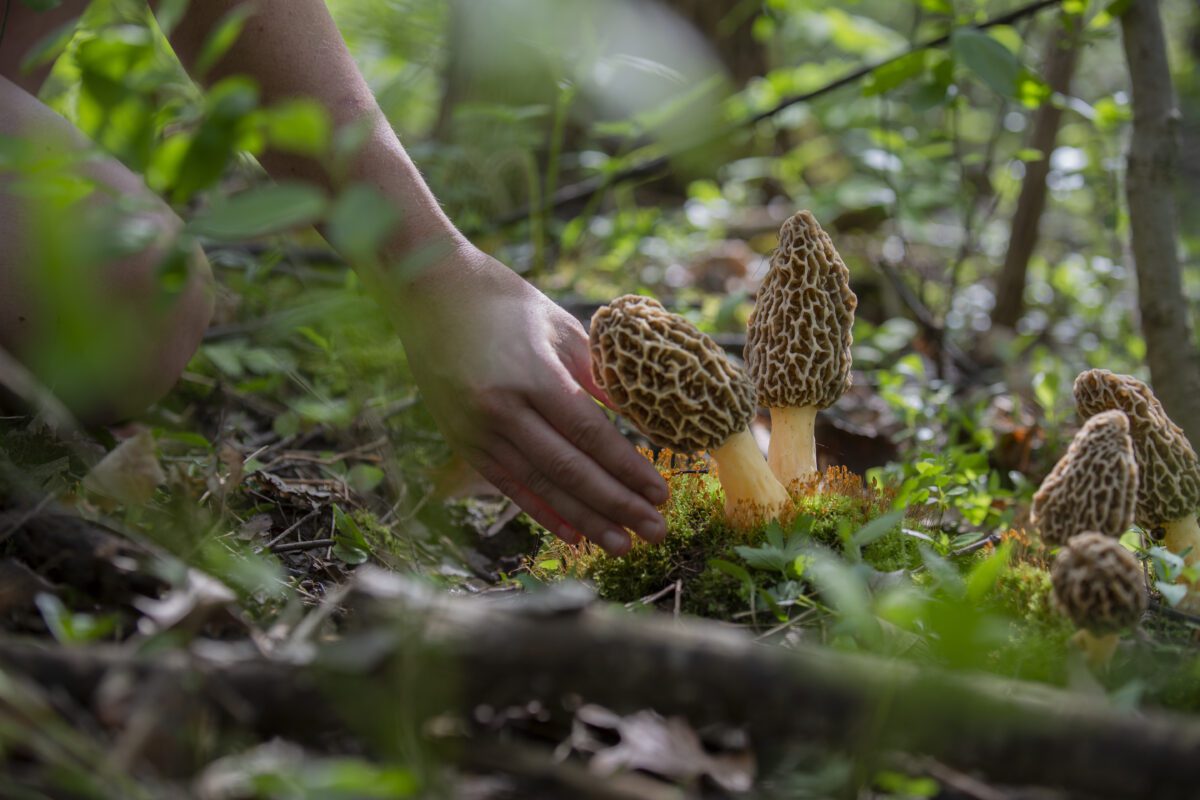
McIntosh finds morels in open fields, under cedar trees, in sand, clay soil and even gravel. Prime spots are around dead and decaying trees.
“The best trees are oak, elm, ash and sycamore,” says Jacob DeVecchio, owner of Oklahoma Fungi – an agricultural wholesaler based in OKC – and founder of Oklahoma’s annual October festival OkMushFest.
Bottomlands and creek banks within state parks often hide these delicacies that may fetch $30 to $110 per pound through Facebook, farmer’s markets and upscale restaurants.
“Don’t give up,” says McIntosh. “If you spot one, stop and look around, because chances are there will be more. And don’t be afraid to kick the leaves back.”
Foraging Safety
A key to foraging safely is knowing which mushrooms are edible and how to cook them thoroughly.
Foragers emphasize education via groups like the Oklahoma Mycological Society to distinguish edible mushrooms from toxic ones.
“People may think I’m this crazy guy on the mountain top always talking about mushrooms,” DeVecchio says. “But the reality is the moment I stop, there’s going to be no movement … as far as getting people educated about what mushrooms are edible and which ones are poisonous.”
Education, he says, may make the difference between delicacy and disaster.