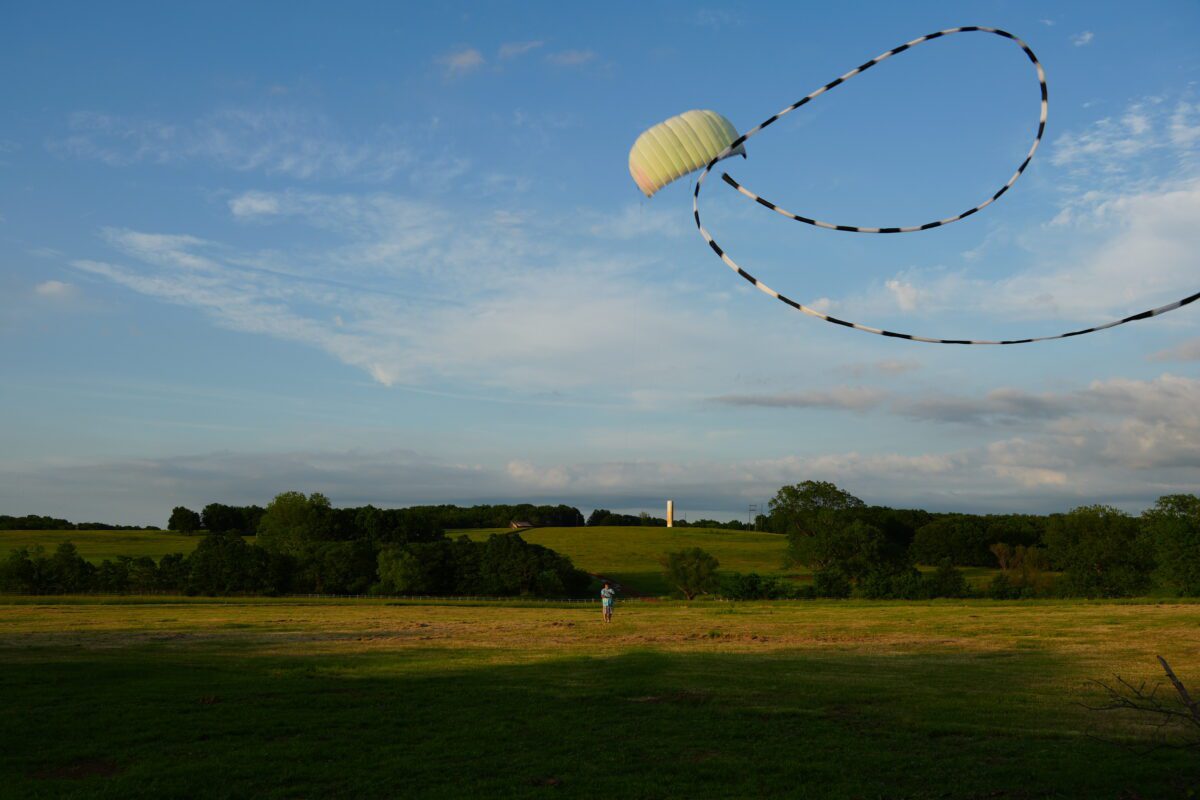
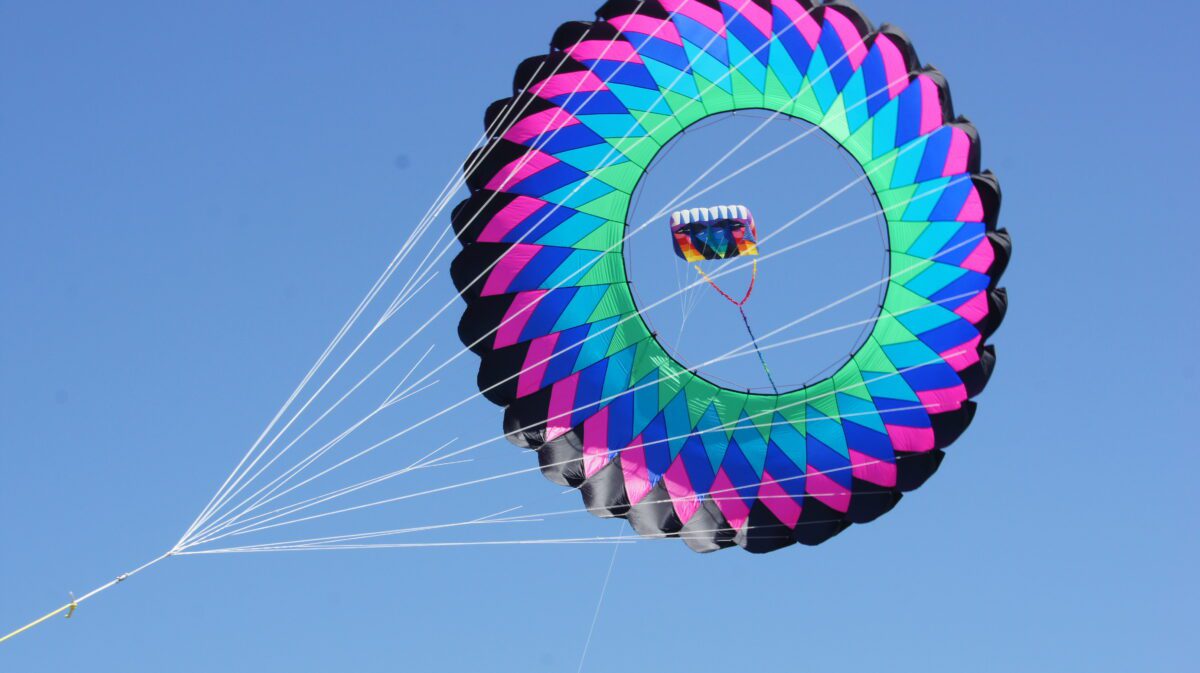
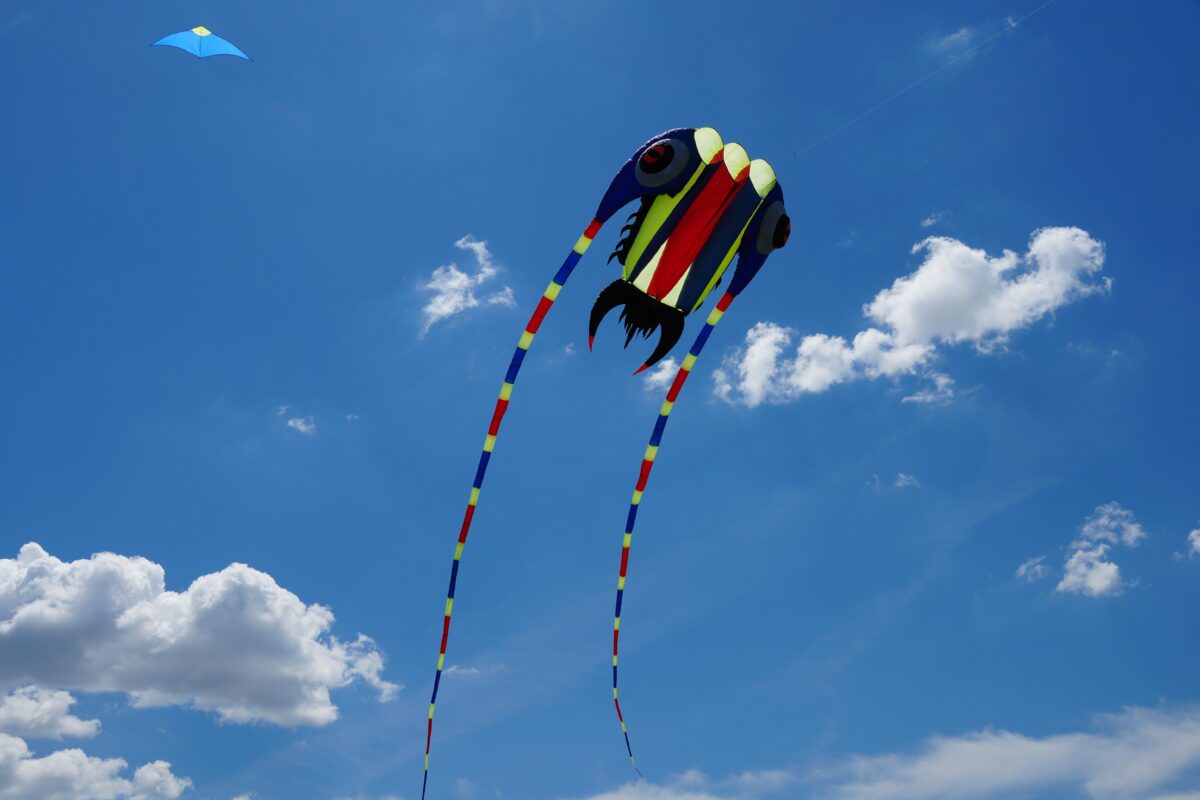
When the weather cooperates, there’s nothing quite like being outside on an afternoon in Oklahoma. One of the many ways people like to pass the time, especially when the wind is perfect, is by flying a kite.
“Kite flying has been around for over 3,000 years,” says Larry Stiles, president of Tulsa Wind Riders, a passionate club of kite-flying enthusiasts. “It started in China, where they used paper and bamboo. As for me, it started in 1980 with stunt kites.”
The Tulsa Wind Riders meet up around 43rd and Garnett to fly kites together. “We don’t have dues,” says president Larry Stiles, “The wind is free!” Photos by Tom Wallbank
Similar to regular kites, stunt kites have multiple lines and can be maneuvered in the air with more precise control.
A beautiful thing about kite flying? Age simply doesn’t matter when you’re getting into it.
“The age range is all ages,” says Stiles. “Younger kids like the stunt kites, whereas the older people like the single line kites. Just put them up, stake them down and let them fly.”
Whether you’re looking for a leisure activity or a fun way to alleviate stress and appreciate the Oklahoma skyline, kite flying is a hobby for everyone. If you’re not sure where to start, Stiles has some suggestions.
“You can purchase good quality kites all over the Internet or from kite stores,” says Stiles. “Here in Oklahoma, you can purchase kites from me, Lala’s Kites, on Facebook. I carry all kinds of colorful and unique [options].”
If you’re heading out to fly for the first time, the easiest tips for a good experience are making sure the kite is put together correctly and that the wind isn’t too strong.
“Keep your back to the wind,” Stiles advises. “You don’t need a whole lot of wind to fly, just a good wind around eight miles per hour. Many people think the windier the better, but that’s not true. Too much wind pressure will push your kite down.”
Another pro of kite flying is that the hobby can be as active – or as sedentary – as you wish.
“You don’t have to run with your kite. Just let the line out instead of pulling on it,” says Stiles.
Lastly, make sure you’ve picked the right spot to get the best uninterrupted wind.
“Stay away from trees and power lines,” he says. “Select a good open area to fly. Buildings and trees can disrupt the wind flow.”
If you’re looking to enjoy the hobby with a friend, a club is a fast and easy way to meet other likeminded kite enthusiasts. Stiles says that the Tulsa Wind Riders often meet up at East 43rd and South Garnett Road, and regularly update their Facebook with information.
“We don’t have dues, the wind is free,” he says. “Just come out and join us!”
And what makes kite flying so appealing to such a wide range of people? According to Stiles, it’s all about calmness and relaxation.
“Just put your kite up,” he says, “and let your worries fly away.”
At Edmond Gymnastics Academy, children as young as 18 months can attend classes. Many athletes from the Academy have gone on to compete on the collegiate level. Photo courtesy Edmond Gymnastics Academy
By the time Deana Martinez was three years old, “I was climbing all over everything,” she says. “So my mom put me in gymnastics.”
She thrived in the sport, and as a teenager started coaching as well as competing. She’s now been coaching for 30 years and owns Edmond Gymnastics Academy, where her students start as young as 18 months in the parent and tot classes, and often go on to compete at the collegiate level.
Martinez is head coach of a team that competes in club gymnastics, traveling to meets from December through May. The training is rigorous.
“They sacrifice a lot,” she says. “Most have to work out a minimum of four and a half hours a day, at least five days a week. Some do two-a-days.”
But there is a payoff.
Martinez says as she reflected on the women she competed with and against, “I realized that these women are very successful, and gymnastics has been the vehicle. I realized that the women that come out of gymnastics can pretty much accomplish anything they want to accomplish.”
Gymnastics, she says, “sets a child up for success in everything, including life. It helps with time management and goal setting.”
Her training helps kids who compete in other sports, Martinez says.
“For any sport they will be stronger, have better balance. The foundation of gymnastics leads to excelling in every sport.”
Her students usually know by their pre-teen years if they want to continue to the competitive level.
“Gymnastics has fear,” she acknowledges. “Because you are going to jump backwards on a beam. You need a certain amount of power and flexibility, and some of those things are genetic.”
Edmond Gymnastics competitors have earned scholarships to colleges across the nation. And the programs at the University of Oklahoma play a role in enthusiasm for the sport, even if not a lot of Oklahoma gymnasts are able to compete for their home state.
“OU has to recruit some percentage out of Oklahoma, but they are taking the very top in the nation,” Martinez says.
OU has won 12 national championships, tied for the most nationally, says Mike Houck, senior associate athletic director for the university.
“Since 2000, the Sooners have claimed nine NCAA team titles, 19 conference championships, 278 All-Americans and 41 individual national titles. Combine that with multiple Olympians and the most Nissen-Emery winners all-time, and you have the country’s premiere college program,” Houck says.
The women have racked up seven national championships. OU has advanced to the NCAA championships every year since 2004 and has produced a total of 136 individual conference champions, 227 NCAA All-Americans and 22 individual national champions all-time, Houck says.
Michael Kimball, an OU graduate, says his family started attending gymnastics meets after joining the Sooner Kids Club.
“The women’s gymnastics meets are definitely a favorite for both of my girls, and my wife and I love them too,” Kimball says. “The atmosphere is super family-friendly. There’s tons of action, and obviously the student-athletes are at the peak of their sport, including some former Olympic medalists we’ve seen compete in Norman.”
As a father of daughters, Kimball says, “one of the most important things to me is that there are thousands of fans in the stands — my daughters will grow up knowing it’s totally normal for thousands of paying fans to be at a women’s sporting event.”
Kimball says when they attended a women’s basketball game at Lloyd Noble Center for the first time, his older daughter asked, “Oh, does OU play basketball in the gymnastics arena?”
From left: Buck Atom, Rosie the Riveter, Meadow Gold Mack and Stella Atom stand guard over Route 66 and reflect the city’s blend of nostalgia, artistry and community pride. Photos by Gerardo Gonzalez
Over the years, the two best-known nicknames for Tulsa have had to do with petroleum: the Oil Capital of the World and the Magic Empire – the latter allegedly bestowed by the famous American General John J. “Black Jack” Pershing to reflect his perception of the city as an oil boomtown.
There’s another one making the rounds these days: Land of the Giants. And if it takes hold, it’ll be in great part because of the entrepreneur and businessperson Mary Beth Babcock. Back in 2019, she was responsible for bringing the 21-foot-tall statue of a space cowboy she named Buck Atom to Tulsa and getting it placed beside her Route 66 shop, Buck Atom’s Cosmic Curios, where it has since stood, a true example of a genuine roadside attraction.
Buck Atom was the first giant to land here; he was not the last. These days, four more of them adorn sections of the old Mother Road, ready to be discovered, visited, and photographed by local sightseers as well as by the increasing number of travelers rolling down the nostalgic highway during its centennial year.
If you’re from northeastern Oklahoma, you probably remember Babcock’s former store, Dwelling Spaces. Located on a corner in downtown Tulsa, it was around for a decade, offering all kinds of items, from clothing to books to music, with a big emphasis on material from local creators. In 2016, Dwelling Spaces closed its doors, and, for a year or so, Babcock applied herself to various retail and other jobs.
Then came an epiphany, helped along by either an amazing coincidence or some sort of cosmic synchronicity.
“I woke up one day and I said to myself, ‘What is it that you really want to do?’” she recalls. “I’d made things happen before, and I was confident enough in myself to think that if I went after what I really wanted, I could make it work. So I thought, ‘What is it? What do I want?’ And the answer was that I wanted to do retail, but something small.”
From left: Buck Atom, Meadow Gold Mack and Rosie the Riveter, alongside Stella Atom (main image) stand guard over Route 66 and reflect the city’s blend of nostalgia, artistry and community pride. Photos by Gerardo Gonzalez
Just about a half-hour later, as she recalls it, she was looking at Facebook and ran onto a picture of a building in Tulsa that had, in the 1950s, housed a PEMCO filling station. “Immediately, when I saw it, I said, ‘That’s it! I want a souvenir shop, in a gas station, on Route 66.’ It couldn’t have been more perfect. I asked, and there it was.”
And she did indeed make it work. But from the beginning, she felt that the place needed a mascot, something to draw the attention of passersby.
“When I was at Dwelling Spaces, I had an artist named Jeremy Luther create a character for the shop, an outer-space cowboy,” she says. “For a while he just lived in my computer, and then when the [PEMCO building] spot became available, I was like, ‘Oh, gosh, I can bring that space cowboy to life.’ He had to have a name, so ‘Buck’ was for the cowboy side and ‘Atom’ for the space side. I knew that a character like that could be so much fun to work with – to come up with a story for him and create merchandise.
“At that time, I had no clue he would become a 21-foot-tall roadside attraction,” she adds. “But once I got open, got the logo, got the merchandise in – well, I knew I needed some kind of attraction, because I was on historic Route 66.”
Although she didn’t quite connect it at the time, she remembered a long-ago visit to another Mother Road business – the Pops Soda Ranch in Arcadia, with its 66-foot soda-bottle sculpture out front.
“I thought then, ‘Man, this is so brilliant. It’s a new Route 66 attraction. The road’s been around for a lot of years, but this is new.’”
She also recalled a giant figure that had graced the city of Enid, her dad’s hometown, before moving down the road about 40 miles, where it towered over a business called Bud’s Salvage. Crafted to resemble the legendary strongman Paul Bunyan, axe in hand, it had been created from the mold of what fiberglass-statue aficionados know as the Muffler Man. Originally made in the ’60s for Phillips 66 gas stations, these figures had become iconic pieces of American pop culture.
Unfortunately, when Babcock’s brother David made a call to the salvage yard, it was no deal. The Bunyanesque figure was, Babcock recalls, “bringing too much traffic into their business.”
Then, one day, she was talking to Rhys Martin, president of the Route 66 Association, about the whole roadside-attraction idea. He put her onto a man in Illinois named Joel Baker – “the guru of all the giants,” she says – and he, in turn, introduced her to Mark Cline of Natural Bridge, Virginia, who had a mold available of the original Muffler Man. Sure, he could make one to her space-cowboy specifications. And in May of 2019 – following a significant amount of fundraising on Babcock’s part – the giant Buck Atom took his place on the Mother Road.
Muffler Men weren’t the only giant-sized fiberglass figures to come out of the ’60s. There were also what are known as Uniroyal Gals, originally created for the tire manufacturer. Since it only seemed logical to Babcock that Buck should have a female counterpart, Stella Atom arrived from Virginia a few years later to take her place on America’s Main Street.
“I got to design her, and she was like a giant paper doll for me,” says Babcock. “I wanted to throw in some memory of my mom, and every time I see a yellow butterfly I think of her, so there are yellow butterflies on Stella’s boots.”
Stella Atom arrived in town in June of 2024. Since then, Babcock’s retail outlets have expanded down the Mother Road to Tulsa’s old Meadow Gold Building, which houses some 66 local artists and their work, as well as the former Hardesty Press building across the street, where she now runs a store called Buck’s Vintage. And, as all this was going on, up went more statues: Meadow Gold Mack, Cowboy Bob and Rosie the Riveter. The latter, she says, was created in honor of Tulsa developer, Meadow Gold District Association member, and statue supporter Aaron Meek, whose mother was an actual “Rosie the Riveter” factory worker during World War II.
And, while the statues were all overseen by Mark Cline and shipped to her from Virginia, Babcock has made sure they also reflect local artistry. Such accoutrements as Stella’s ray gun, jet pack and bracelet and the rocket Buck holds, for instance, were done by Tulsa-area creators.
Babcock laughs when asked if more big statues could be on the way to the Land of the Giants.
“Ooh, that is yet to be seen,” she says. “But I’ve seen the magic that Buck brings, the people taking pictures with him, making memories with their families. Of course, back in the day these statues were made to reel people into your shop and, yes, people do come into the shop and want to buy a little souvenir. But I didn’t even know what I wanted when I started this. I just know that what the statues are doing now is filling my heart. And what’s beautiful is that they’re not only helping me, but they’re helping my neighbors. They’re helping the city. They’re helping the state. I just met with [the tourism and convention bureau] Visit Tulsa, and they want to talk about using Rosie and Stella for a women’s program. So it’s neat how they’re influencing people and getting them to be creative.
“You know,” she adds, “people over the past couple of years have been saying to me, ‘What are you doing for the [Route 66] centennial?’ And so I thought, ‘Well, I’m going to make more giants, create more experiences for people traveling Route 66.’ That was actually another motivation. I just thought, ‘Why not?’”
The suffix stan means “where one stands” or “land of,” so Tajikistan becomes land of the Tajiks, just as Scotland is the land of the Scots. In this case, the ‘stan’ has a lot of up and down to it. Ninety percent of Tajikistan is mountainous, and half of it is above 9,800 feet.
Except for China to the east, Tajikistan is surrounded by most of the other ‘stans,’ including Afghanistan to the south, which makes travel to that part of the country dicey. And steer clear of eastern Tajikistan, too – a little lawless. But that’s okay. The country has plenty going on elsewhere.
The country’s modern capital of Dushanbe (in the west) provides a comfortable home base to explore the metro of a million and nearby mountains. Dushanbe is so modern, much of its utilitarian Soviet-era architecture has been replaced with ambitious skyscrapers on wide avenues flanked by trees and art. The name Dushanbe means “Monday” in Tajik, so-named because for many years, Dushanbe was the only market town open on Mondays.
Those with a taste for history will enjoy the National Museum of Antiquities, where a 42-foot statue of Buddha in Nirvana lies in repose, skeletons still wear their jewelry and artifacts represent thousands of years and half a dozen cultures.
Head to the impressive Istiklol Monument, completed five years ago, for art by local artists on the lower floors and an observation deck on the 14th floor. In the evenings, the surrounding fountains dance in a multihued light show.
Take time for a leisurely stroll through Rudaki Park, named after the beloved Persian poet. Fountains, statues, outdoor art, gardens and a large lake fill the space, which is adjacent to Flag Pole Park, home of the fifth-largest flag pole in the world. The flag it flies weighs 1,540 pounds.
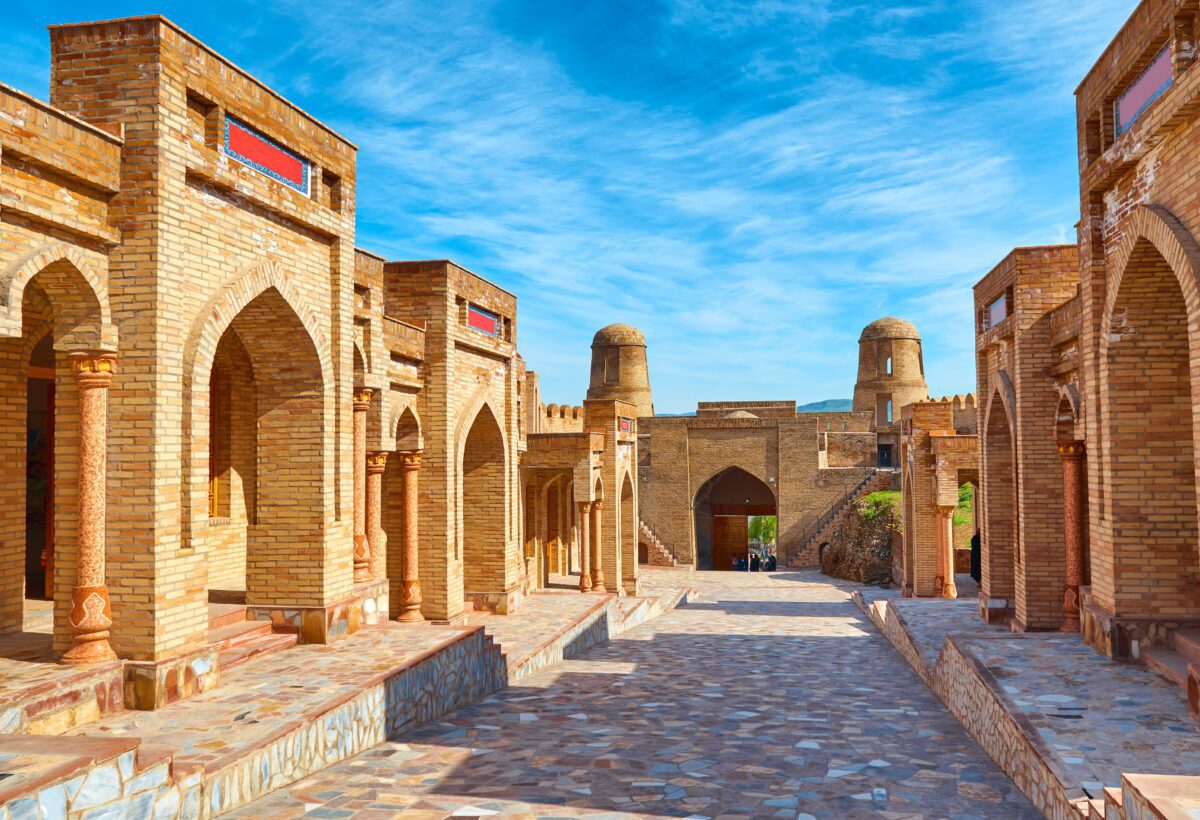
The Somoni Statue in DushanbeThe Palace of Nations, the residence of the President of TajikistanIskanderkul LakeThe territory of the Hissar fortress
Nearby is a stunning 80-foot statue of longtime Persian ruler Ismoil Somoni. The nation’s currency, the somoni, is named after him. And just beyond that is the National Museum of Tajikistan, a sprawling museum built in 1934 with a concentration on art and history.
Teahouses are called Chaykhana and they’re ubiquitous in Dushanbe, from the small and quaint to the cavernous. Two of the most notable are Toqi, known for its pilaf, and the National Tea House, shaped to resemble a watermelon, a key fruit in Tajik culture. Nowruz Palace began as a simple teahouse on Komsomol Lake, but then things got out of hand. Now it’s the largest in the world with intricate wood carvings, gold leaf ceilings and stained glass.
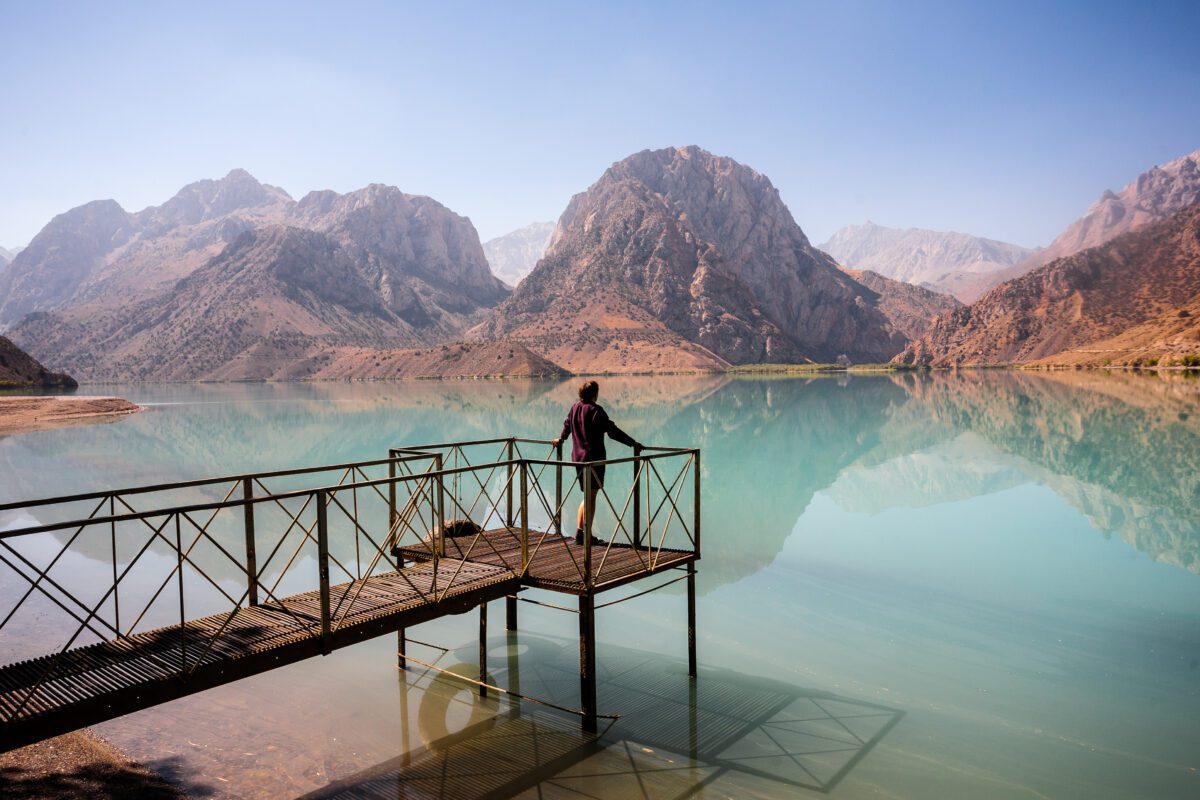
North and west of Dushanbe, the Fann Mountains are spiked with rugged, snow-capped peaks, some above 16,000 feet, offering all levels of hiking and climbing. For the adventurous, dozens of deep blue Alpine lakes and cascading waterfalls are hikeable, including Iskanderkul, once dubbed the Soviet Union’s most beautiful lake. Many glaciers can be found in the high country, some quite big.
Until the 15th century, the legendary Silk Road carried goods between East and West across Tajikistan’s mountainous terrain: jade, ivory, spices and much-sought-after textiles, especially silk from China. Today’s shoppers flock to mega retail complexes like the three-story Mehrgon Bazaar, whose architecture was inspired by the Silk Road and whose emphasis is food.
Persian flavors dominate Tajikistan’s cuisine with mutton featured in many dishes, such as osh, a rice and meat pilaf. Kurutob is also popular, made with yogurt, coriander, onions and flatbread. Qaymaq is a creamy mix of scrambled eggs and greens, and baklava can be found on many restaurant menus.
Stay at the Dushanbe Serena Hotel, a sophisticated glass tower with a spa, minutes from museums and great dining in the heart of the city.
According to the Centers For Disease Control and Prevention, an estimated 20% of U.S. adults live with chronic pain. Whether it’s the result of an injury or a medical condition, those suffering from chronic pain often experience limited mobility, additional health problems and mental health issues.
Samuel Korbe, M.D., is a pain medicine physician with Warren Clinic Pain Management in Tulsa. He specializes in the diagnosis, care and treatment of pain-related conditions and explains some of the impacts of chronic pain.
“If you break your arm, it’s very painful at first, but then your body begins to heal itself,” says Kobe. “Within a week it’s going to hurt less, and then in four to six weeks, your cast comes off and your arm is back to normal.”
Chronic pain, however, operates differently.
“With chronic pain, there has been an injury of some kind, but the pain remains and can be daily and unrelenting,” he explains. “People who experience pain in this way can feel hopeless, like there’s no end in sight, and it can affect their mental health and cause additional health effects.”
Korbe shares that many patients may also be dealing with trauma and post-traumatic stress disorder (PTSD), such as those who have had near-death experiences from a car accident or other injury event.
“Trauma, PTSD and psychological stress can compound chronic pain,” he says. “It’s important for patients to have a strong support system of family and friends to help them cope with both the physical and mental aspects of managing chronic pain.”
In the past, pain management often involved the use of opioids. However, after the opioid crisis revealed the devastating consequences of overuse, there have been significant changes in regulations as well as treatment plans.
“Opioids were previously over-emphasized with tragic results,” Korbe says. “While opioids can be extremely beneficial in certain situations, in the long run, they’re going to make things worse. We want people to live the healthiest and happiest lives they can, so we use as many different medical options as we can and try to minimize any opioid exposure as much as possible.”
Within Warren Clinic’s interventional pain clinic, treatment plans can include steroid injections, spinal cord stimulation, kyphoplasty, nerve blocks and ablations, where specialized heated needles help desensitize targeted nerves to provide more long-term pain relief.
Korbe also emphasizes the importance of exercise and physical therapy, noting that for anyone worried about their current pain or developing chronic pain, exercise is the number one preventive measure.
“As humans, we are made to be able to walk, to run, to carry things, to lift things and put them up over our head,” he says. “If we stop doing them, then it’s going to become harder and harder to do those in the future. How you live your life, your diet, your exercise, your lifestyle is one of the greatest factors within your control to try and avoid living with chronic pain.”
Water conservation matters in Oklahoma because our water resources are limited — and must support both today’s needs and those of future generations.
“With abnormally dry conditions across much of the state, and some portions of Oklahoma facing extreme drought, it’s important for everyone to do their part to conserve water,” says Kevin Wagner, Ph.D., the Oklahoma Water Resources Center director at Oklahoma State University.
The City of Oklahoma City Utilities Department’s Water Conservation Specialist, Kelsey Whorton, agrees that water conservation is critical.
“By using water wisely, we protect our rivers, lakes and groundwater while ensuring a reliable supply for homes, businesses and communities across the state,” she says.
Whorton says the two most common causes of high water bills are leaking toilets and broken or inefficient automatic irrigation systems, but adds that families can save thousands of gallons annually by incorporating certain habits.
“It is estimated that homeowners use two to four times more water in the summer,” says Wagner. “But conserving water year-round supports reliable water supplies throughout Oklahoma. Some things you can do are fix leaking faucets and fixtures, and implement water-conserving lawn and landscape strategies.”
Whorton mentions that conserving water inside can be simple.
“Turn off the faucet while you brush your teeth, shorten your showers and make sure you run the dishwasher or clothes washer only when you have a full load. Regularly check around your home for water leaks and make repairs to avoid surprise high water bills. Upgrade water-using appliances and fixtures to more water-efficient models.”
Small leaks can waste thousands of gallons of water monthly, and Wagner says that “according to the EPA, a leaky faucet that drips at the rate of one drip per second can waste more than 3,000 gallons per year. A leaking toilet can waste 15,000 gallons of water per month.”
Around your home’s exterior, make sure to regularly check automatic irrigation systems for leaks or broken parts, excessive run times and hidden programs.
“Often, reducing run time, or number of days per week that you water your lawn, can save thousands of gallons per month with little impact to your lawn’s health,” says Whorton. “Incorporating more drought-tolerant and native plant species is a way to reduce water use outdoors. These plants have adapted to our climate and can withstand periods of dry conditions.”
Outdoor water use in Oklahoma accounts for about 30% of residential water use, according to Wagner, who says that “mulching and using drip irrigation to water flowerbeds and using new irrigation technology can curb outdoor water use and save money.”
Where to Learn More
“Water conservation, whether from producers or homeowners, is increasingly important for many areas of Oklahoma,” says Wagner. “Areas like the Ogallala Aquifer have seen declining water levels for years, highlighting practices such as the OSU Extension’s Master Irrigation Program, which provides advanced training on irrigation water management and water conservation.”
OSU’s Oklahoma Water Resources Center has tips for everything from preparing pipes for winter, water conservation year round, and ways to check for leaks, to the latest information and research.
For a DIY sprinkler system checkup, or how to efficiently program an irrigation controller, go to SqueezeEveryDrop.com.
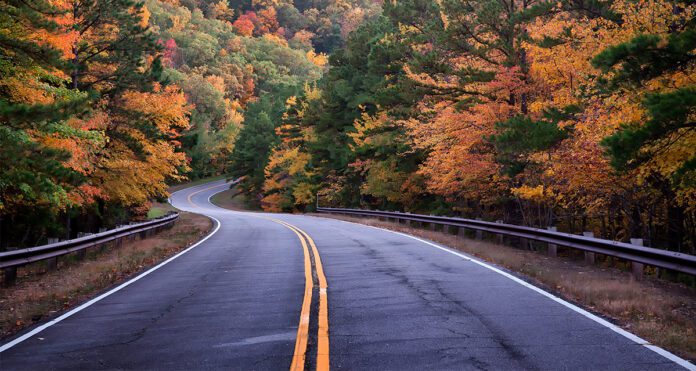
The Talimena Scenic Byway can be accessed from Heavener. Photo courtesy the City of Talihina
Whether you’re hiking in search of ancient mysteries, cruising scenic byways or casting a line in pristine lakes, Heavener, Oklahoma, offers a wealth of outdoor adventures and historical explorations in the heart of the Ouachita Mountains.
This southeastern Oklahoma town in Le Flore County invites visitors to trek wooded trails, camp under starry skies, picnic with panoramic views and delve into Viking lore at its famed runestone park. Beyond the trails, drive the winding Talimena National Scenic Byway for breathtaking overlooks, or head to nearby Lake Wister State Park for boating, fishing and family-friendly recreation. With a close-knit community vibe, Heavener blends history, mystery and nature into unforgettable experiences.
A small town of about 3,000 residents, Heavener thrives on manufacturing, retail and growing tourism drawn to its natural beauty and intriguing past.
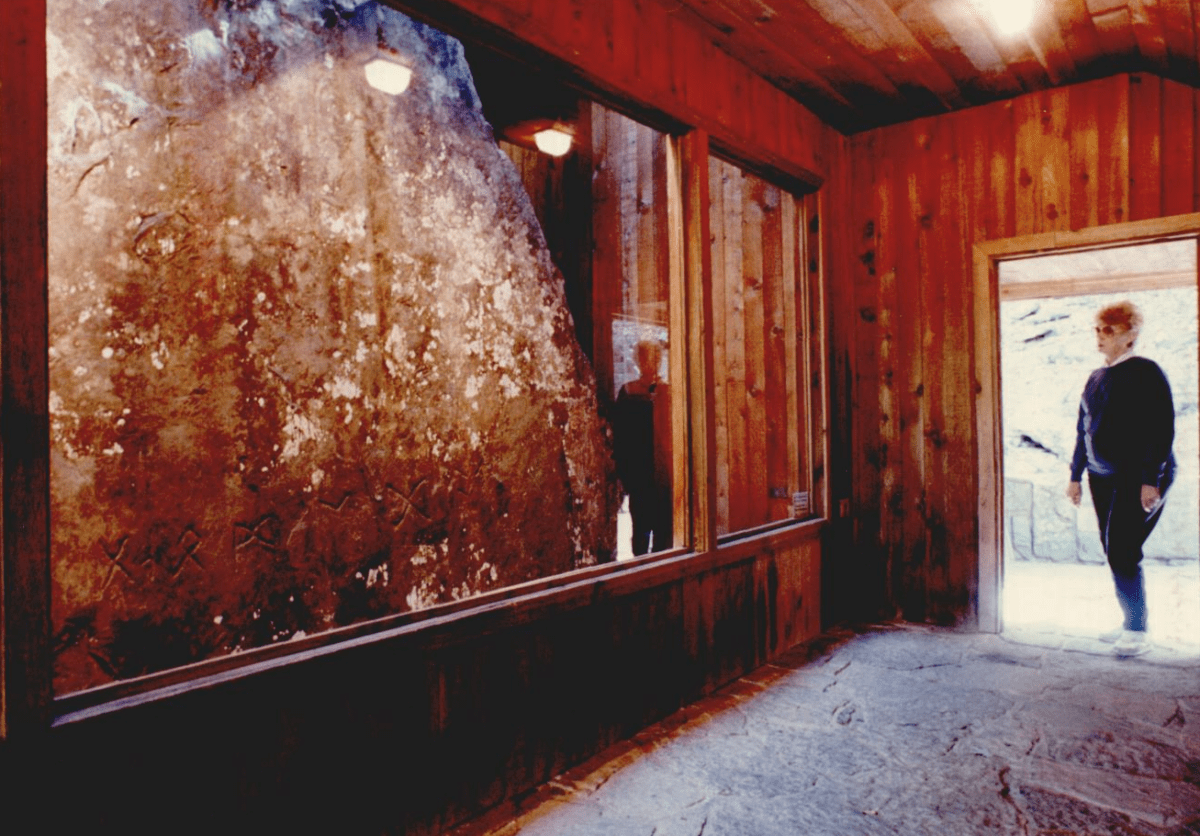
At the heart of Heavener’s allure is the Heavener Runestone Park, a scenic wonder and historic gem that draws guests intrigued by its enigmatic ancient runestone. This large sandstone slab, inscribed with runes, is believed by some to be a Viking marker dating back to around 1000 AD, suggesting Norse explorers ventured far inland via rivers like the Mississippi and Arkansas. Discovered in the 1920s, the stone’s origins remain controversial as some historians argue it’s a 19th-century hoax or creation by Scandinavian immigrants or locals. Regardless, the park, operated by the Friends of Heavener Runestone Inc. nonprofit, offers hiking trails, camping, picnicking and views of the surrounding forested hills.
Heavener Runestone Park is one of the town’s most alluring draws. Photo by Jim Argo courtesy OHS
“In 2011, the state did away with some parks including this one, so it was given to the City of Heavener, even if not in the city limits,” says Lynn Webster, president of Friends of Heavener Runestone Inc. “A nonprofit was formed to run it and operate it. It’s a free park, doesn’t cost to park or see the stones, operates off of donations, events, fundraisers and the gift shop.”
The Heavener Runestone Park Trail System enhances the experience, with paths winding through lush woodlands, leading to overlooks and the runestone itself. It’s ideal for hikers seeking moderate treks amid wildflowers and wildlife.
Beyond the park, Heavener serves as a key access point to the Talimena National Scenic Byway, a 54-mile stretch from Talihina to Mena, Arkansas. Built in the 1960s for panoramic vistas, the byway meanders along mountain ridges, offering overlooks and short trails. From Heavener, travelers can connect via Highway 271.
Just a short drive away, Lake Wister State Park spans 3,428 acres on the shores of Lake Wister, providing opportunities for boating, fishing, camping and hiking along 115 miles of shoreline. With cabins, RV sites, playgrounds and access to the Poteau River, it’s a family friendly haven for water enthusiasts.
Heavener embodies the spirit of rural Oklahoma: rich in lore, surrounded by natural wonders, and welcoming to explorers. Whether unraveling Viking mysteries or cruising scenic byways, this area invites visitors to disconnect and discover its timeless charm.
Main image credit:The Talimena Scenic Byway can be accessed from Heavener. Photo courtesy the City of Talihina
Caring for both body and mind becomes a powerful way to stay steady, strong and independent as people age.
Five areas of focus: mind, mobility, medications, multi-complexity and what matters most – help healthcare providers deliver holistic, patient-centered care, addressing the unique needs of older adults by looking beyond individual diseases to their overall well-being, according to Kathy Thompson, M.D., assistant professor of medicine at the Reynolds Section of Geriatric Medicine at the University of Oklahoma Health Sciences Center and medical director at Epworth Villa, a retirement community in Oklahoma City.
“Nobody asks for dementia,” she says. “Nobody wants cognitive decline, so maintaining cognition is important. One of the ways to keep our minds as healthy as possible is simply the same thing that’s been said over and over: good nutrition and exercise.”
Orthopedic surgeon Yogesh Mittal, M.D., of the Orthopaedic Center in Tulsa, explains that the nutrition basics to prioritize are staying well hydrated and eating enough high-quality protein, fiber and healthy fats to support muscle strength, digestion and energy.
“Brain-healthy foods like fruits, vegetables, whole grains, fish rich in omega-3s, nuts and olive oil, along with limiting processed foods and added sugars, help protect cognitive function and reduce inflammation,” he says.
Treating depression or comorbidities, like smoking, diabetes and heart disease, also are important to protecting cognitive health.
“There are some things that we can’t change, like our genetics, “ Thompson says, “but there are other things that we can change — and that’s where we as geriatricians try to help people focus.”
Mobility is essential as people age because it supports independence, reduces the risk of falls and allows older adults to remain active and confident in daily life.
“As we age, we need to focus on strength to decrease the risk of falls,” Mittal says. “This should involve exercise for balance, strength and flexibility on a daily basis.”
Mittal recommends trying to focus on simple, progressive exercises like heel-to-toe walks, single-leg stands, feet together stands, side leg raises or marching, sit-to-stands, toe raises, wall push-ups and resistance moves such as bicep curls.
“Patients can also incorporate mind-body activities like Tai Chi to enhance body awareness and flexibility and chair yoga for low-impact strength and mobility,” he says.
Managing various medications is another important component to healthy aging.
“Often, people are put on medications for a very good medical reason, and then over time, they may not need it because of the way our bodies change as we age,” Thompson says. “Every patient that I see gets a medication reconciliation and review. A lot of times, people don’t need some of the medicines that they’re on.”
Multi-complexity refers to helping people manage their own health conditions, medications and social factors that interact with one another, requiring a comprehensive, coordinated approach to care.
“Helping people be aware of what’s out there to help them is part of my job,” Thompson says. “When somebody is 80 or 90, they have many years of medical history, and that can be overwhelming.”
Determining what matters most is a conversation for older adults and their loved ones to have with a caring doctor.
“It’s my job to tell you everything I know, and then it’s your decision to make about what’s right for you,” Thompson says. “And whatever you decide, I respect that, even if it’s something that I recommend and you don’t want to do it.”
There’s power in preventative care when it comes to aging.
“It truly can lower the risks of chronic diseases, prevent serious complications and even help avoid premature deaths by catching issues early when they’re most treatable,” Mittal says.
A university education is expensive, and today’s students are increasingly seeking accommodations such as flexible schedules and better mental health support.
At Oklahoma Panhandle State University, “we do not equate flexibility with less rigor,” says university president Julie Dinger, Ph.D. “We see it as a modern delivery method paired with clear expectations. We are expanding both real-time and asynchronous options that reflect how students live and work today, including jobs, family responsibilities and rural distance, while still holding firm on professional standards such as attendance, deadlines, communication and integrity.”
In high-demand fields like aviation, healthcare and advanced manufacturing, OCCC works closely with industry partners to ensure programs align with workforce needs. Photo courtesy OCCC
Dinger says many OPSU programs offer flexible schedules, “but they still demand performance, communication and reliability, which are the skills employers consistently seek in OPSU graduates. Real-world readiness is the through-line in all of this.”
OPSU has expanded mental health support “in ways that meet students where they are,” Dinger says.
“In addition to a full-time licensed counselor on campus, OPSU students have free, 24/7 access to virtual health and well-being services through TimelyCare. This includes on-demand emotional support, scheduled counseling and self-care resources, with no insurance required. In a rural region like ours, on-demand access matters, and it reduces stigma by allowing students to seek help privately and quickly,” Dinger says.
Today’s higher education landscape is also competitive, as students and their families search for the universities they think will give them their best return on investment.
At the University of Oklahoma, “building relationships with prospective students and their families is one of our top priorities,” says Danielle Dunn, assistant vice president and director of communications and marketing for the Division of Enrollment Management. “The earlier we can connect with students and start building those relationships, the more we can help them through the college selection process.”
OCCC’s president, Mautra Staley Jones, describes the college as an innovation hub – a “responsive, student-centered institution designed to meet the evolving needs of our community and state.” Photo courtesy OCCC
Dinger says that at OPSU, “we compete by being unmistakably clear about our value. OPSU offers a high-touch, workforce-aligned education that is affordable and truly life-changing for rural Oklahoma and the broader region. At the same time, we are doing the hard internal work required to remain strong and sustainable for the long term. One example is the expansion of career-focused pathways through programs like Panhandle Tech, which allows high school students to earn college credit while completing a career certificate before they graduate.”
Along with student and family relationships, OU works “to build positive working relationships with high school administrators, teachers and community partners,” Dunn says. “As part of the recruitment process, prospective students and their families can tour campus, meet with professors and academic deans, engage with student life, participate in events and talk with current students. It is important students start to imagine themselves as members of the OU community.”
OPSU is ranked No. 1 in Oklahoma for affordability by NASDAQ and No. 1 for social mobility by Third Way and U.S. News and World Report, Dinger says.
“These outcomes reflect our commitment to access, student success and meaningful return on investment for students and families,” she says.
Dunn says that “throughout a student’s college journey, we communicate the value of an OU education, not just for the next four years, but for a lifetime. We know college is a significant investment, and OU is committed to affordability and access.”
The Ethics of AI
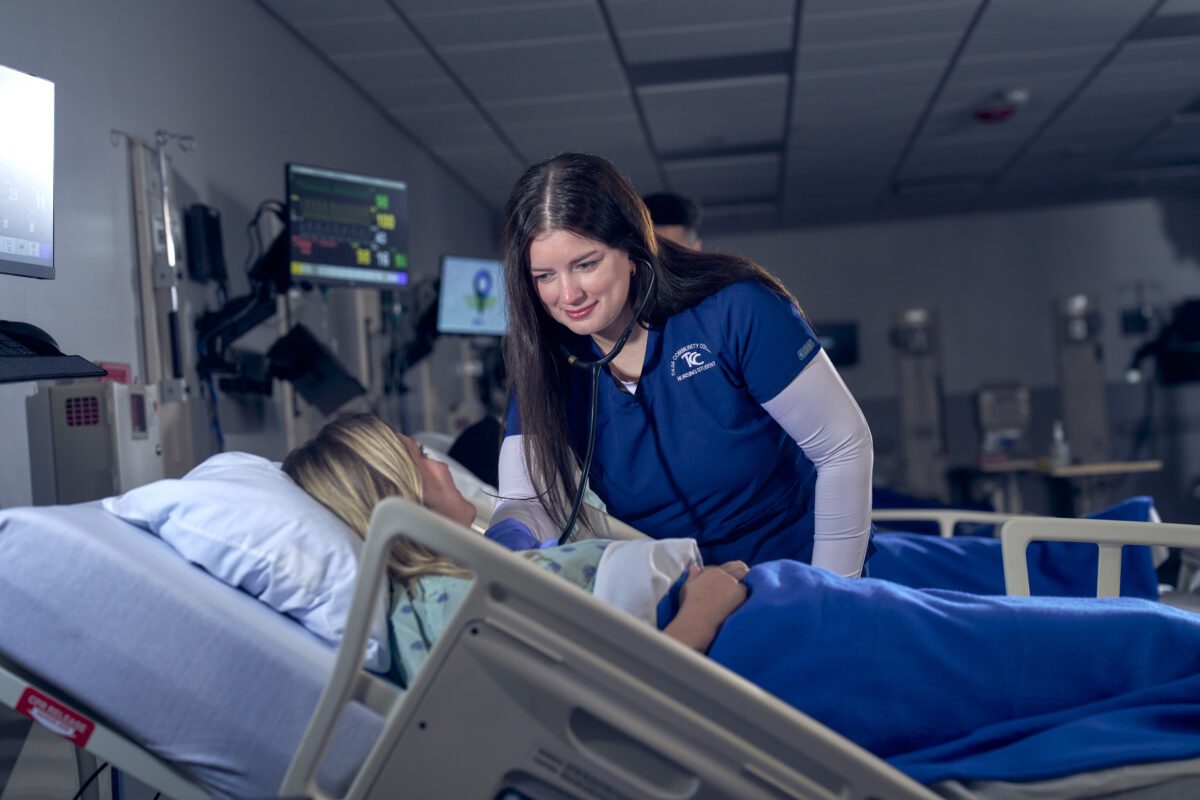
One of TCC’s largest objectives is making transfer to a four-year university as seamless as possible. Photo courtesy TCC
Artificial intelligence can accelerate learning and work, “but it cannot replace learning and work,” says Dinger. “We are approaching AI the same way we approach any powerful tool, by using it to raise the level of learning and service, not to bypass thinking. We are integrating AI where it improves effectiveness, such as analysis, drafting support and process efficiency, while putting guardrails in place around transparency, documentation and academic standards.”
In teaching and learning, “AI is positioned as a learning partner rather than a substitute for student effort,” Dinger continues. “It may support brainstorming, practice and revision, but mastery is demonstrated through human work such as in-class writing, oral defense, labs, authentic projects and documented learning processes. The goal is clear. AI can support the work, but it cannot replace the student’s thinking.”
TCC rep Kelsey Kane says that when it comes to AI, the focus is on teaching students to use it thoughtfully and responsibly. Photo courtesy TCC
At Tulsa Community College, “the focus is on teaching students to use AI thoughtfully and responsibly,” says spokesperson Kelsey Kane. “Rather than taking a one-size-fits-all approach, faculty have the flexibility to set AI guidelines that make sense for their courses.
“AI is also being used in practical ways, such as in Career Services, where tools help students prepare for job interviews and salary negotiations. The library is introducing AI literacy sessions to explore when and how it might be appropriate to use AI for research.”
Dinger says that on the operations side, “we are focused on practical, well-governed uses. These include drafting and summarizing routine communications, streamlining administrative workflows and reducing repetitive tasks so faculty and staff can spend more time working directly with students. This aligns with OPSU’s broader focus on adapting to emerging technologies while strengthening critical thinking and technological fluency.”
Dinger says OPSU “has moved beyond discussion and into formal policy with clear alignment to academic integrity. The university has adopted an Academic Use of Generative Artificial Intelligence policy that acknowledges student access to Copilot through Microsoft 365 and clearly defines when AI use is allowed or prohibited based on the course and specific assignment.”
When AI use is permitted, “disclosure is required,” Dinger says. “Students must include a statement describing how AI was used, including prompts, outputs, how those outputs informed their work and proper citation of the tool and version.”
In the end, Dinger says, “Academic integrity serves as the enforcement backbone. Unauthorized, undocumented or unethical use of AI is treated the same as other academic integrity violations, including plagiarism. OPSU also maintains publicly available academic integrity standards and clearly defined violation categories to ensure consistency, transparency and fairness.”
“We compete by being unmistakably clear about our value,” says OPSU president Julie Dinger, Ph.D. “OPSU offers high-touch, workforce-aligned education that is affordable and truly life-changing for rural Oklahoma.” Photo courtesy OPSU
Community Colleges as Innovation Hubs
Community colleges across Oklahoma are redefining what it means to prepare students for today’s workforce and tomorrow’s opportunities, says Mautra Staley Jones, Ed.D., president of Oklahoma City Community College.
“We see ourselves not only as places of learning, but as innovation hubs – responsive, student-centered institutions designed to meet the evolving needs of our communities and our state,” Jones says. “In high-demand fields such as aviation, healthcare and advanced manufacturing, OCCC works closely with industry partners to ensure that our programs align with real workforce needs. These short-term, high-impact credentials allow students to quickly gain relevant skills, earn industry-recognized certifications, and enter the workforce with confidence,” Jones says.
For many students, such programs provide immediate economic mobility while serving as a foundation for continued education, Jones says.
At OPSU, hands-on learning is part of a well-rounded, holistic education. Photo courtesy OPSU
“Community colleges are well-positioned to respond to workforce needs because of our close ties to the communities we serve,” says Angela Sivadon, Ph.D., senior vice president and chief academic officer for Tulsa Community College. “At TCC, industry advisory boards help shape certificate programs in areas like manufacturing, healthcare, aviation and tech by providing input on the skills employers are looking for. These relationships allow us to launch and adjust programs quickly while giving students an accessible path to in-demand careers. We also anticipate Workforce Pell Grants to open the door for more students to afford short-term training in high-demand fields.”
Equally important is the role community colleges play in supporting transfers to four-year institutions, Jones says.
“At OCCC, we have built strong partnerships with universities across Oklahoma and beyond, creating clear academic pathways that allow students to transfer credits efficiently and with purpose,” Jones says. “Through small class sizes, personalized advising, tutoring, mentoring programs and wrap- around services, we help students identify their strengths, clarify their goals and believe in their ability to succeed at the next level. By the time they transfer, our students meet the academic requirements and arrive prepared to excel,” Jones says.
Sivadon continues: “Our goal is to make transferring from TCC to a four-year university seamless and affordable,” Sivadon says. “We work closely with university transfer partners to align coursework, so students know early which classes will count toward a bachelor’s degree. TCC offers more than 170 bachelor’s degree pathways to over 15 universities, supported by transfer maps that lay out a semester-by-semester plan.”
Students can explore options through TCC’s Transfer Map Search tool, get support at transfer centers on all four main campuses and participate in transfer events, Sivadon says.
“Through a new partnership with the Tulsa Higher Education Consortium, we can also provide transportation for students to visit university partners for campus tours and transfer preview days,” Sivadon concludes.
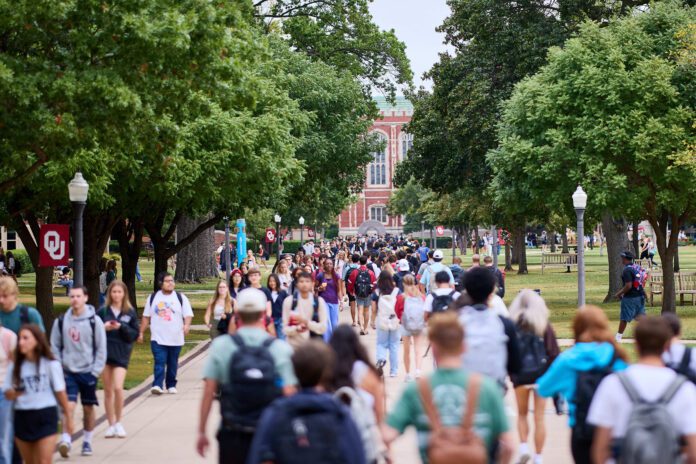
“We know that college is a significant investment,” says OU rep Danielle Dunn. “And OU is committed to affordability and access.” Photo courtesy OU
The Perks of Tech Schooling
A shining star in Oklahoma’s educational landscape is its CareerTech system, a network of 29 technology centers on 63 campuses across the state.
The technology centers serve high school and adult learners with specialized career training in more than 90 instructional areas.
High school students who live within a technology center district attend tuition-free, while adults pay a nominal tuition rate.
Students receive training in such fields as aviation, health care, HVAC, automotive, agriculture, hospitality, criminal justice, manufacturing, cosmetology and information technology.
Each technology center works closely with advisers from local industries to ensure students learn the skills needed to be valued members of the workforce.
With an annual enrollment of more than 520,000, CareerTech provides nationally recognized competency-based curriculum, education and training for specialized and customized courses and training opportunities. The curriculum is developed with the input of industry professionals to identify the knowledge needed to master an occupation, according to the website of the Oklahoma Department of Career and Technology Education.
Rethinking Gen Eds
The workforce is asking for graduates who have obtained a competency-driven education, and high education is responding.
“There is absolutely momentum in higher education toward competency-driven general education, particularly in areas like communication, critical thinking, digital and information literacy, quantitative reasoning, teamwork and ethical reasoning,” says Dinger. “Employers and communities are asking for graduates who can apply what they know, not just recall information.”
At OPSU, Dinger says, “our general education foundation already emphasizes core competencies such as oral and written communication, analytical and quantitative reasoning and social responsibility and cultural awareness.
The Private School Guide features a user-friendly chart spotlighting a range of private elementary, middle and high schools in Tulsa and Oklahoma City, to help compare student-teacher ratios, tuition costs, foreign language options, religious affiliations and more.