Home Blog Page 14

A Full Bloom of Performances

Photo by Jessie Kenney

Spring will soon arrive, and with it, a multitude of performances to enjoy.

In Tulsa, swing by the Tulsa PAC for pianist Dr. Milton Fernández Peña on March 4 as part of TPAC’s Brown Bag It series. Stick around the venue for comedian Jerry Seinfeld on March 6; as well as the Pembroke Players’ rendition of Shakespeare in Love on March 6-15. Other can’t-miss events at the PAC include the Boarte Piano Trio courtesy Chamber Music Tulsa on March 8; Stravinsky’s The Firebird courtesy Tulsa Symphony on March 14; Celebrity Attraction’s A Man Named Cash on March 20; and Tulsa Ballet’s Casanova from March 26-29. 

The schedule is jam-packed in OKC, as well. The Civic Center hosts a bevy of events, starting with The Neil Diamond Musical – A Beautiful Noise, March 3-8 courtesy OKC Broadway, followed by OKC Phil’s Masters of Music – Italy on March 14 and Symphonicon – Music from Comics, Sci-Fi and Games, March 27-28. Canterbury Voices returns to the Civic on March 21 for Canterbury Voices on Broadway, too. Lastly, take a jaunt to Edmond’s Armstrong Auditorium for two shows: Jazz at Lincoln Center on March 5 and Time for Three on March 16.

Nature Comes Alive

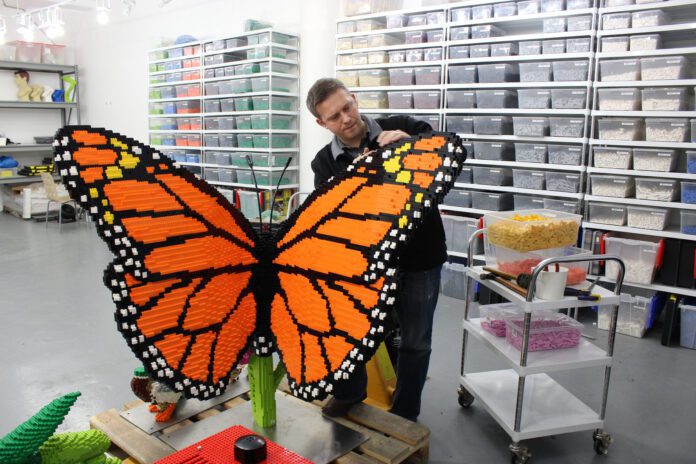
Photo courtesy Tulsa Botanic Garden

Tulsa is in for a treat this month – a treat that combines art, nature and everyone’s favorite childhood brick. Sean Kenney’s Nature Connects Made with LEGO bricks is coming to Tulsa Botanic Garden from March 1-May 4, transforming the gardens into an immersive, thought-provoking outdoor gallery.

Created by award-winning artist Sean Kenney, the exhibition features larger-than-life sculptures built entirely from LEGO bricks. From majestic animals to lush plants, each piece tells an important story about endangered species, fragile ecosystems and humanity’s role in protecting the natural world. The message is clear: just like LEGOs, everything in nature is beautifully interconnected.

Whether you’re an art lover, a nature enthusiast or someone who still secretly (or not-so-secretly) loves LEGO builds, this limited-time exhibition is just the ticket. The garden is open daily from 10 a.m. to 5 p.m., and tickets are on sale at tulsabotanic.org.

Saint Patrick’s Day Revelry

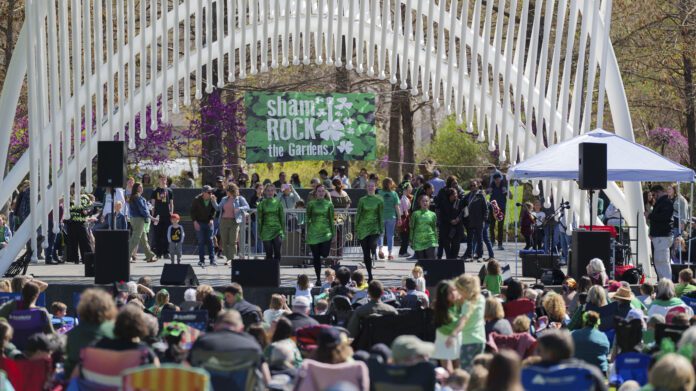
Photo courtesy Myriad Botanical Gardens

Don your brightest gren garb and venture out to a handful of exciting Saint Patrick’s Day events this month.

In T-Town, the Tulsa Irish Festival is the place to be. Happening at Cabin Boys Brewery from March 13-15, the festival offers live Celtic music, Irish dancing, curated vendors and Irish food, alongside craft beer, a kids’ area and authentic Irish activities like sheep herding. If you’d like to get active before the revelery, visit ShamROCK the ‘Ville in Bartlesville on March 7. The festivities include a 5K race and one-mile fun run with prizes and plenty of great costumes. On March 14, make sure to venture to Cherry Street for the Kilkenny’s block party, replete with drinks, music, games and delectable Irish fare.

In OKC, ShamROCK the Gardens returns to Myraid Botanical Gardens on March 17. Visitors can enjoy a bevy of food trucks, alongside Irish performers and plenty of family-friendly activities. Other can’t-miss happenings include the Stockyards City St. Patrick’s Parade on March 14 in Historic Stockyards City, offering a unique, family-friendly event merging Irish heritage with Western culture. Lastly, Norman residents are gearing up for the O’Connell’s Irish Pub all-day party on March 17, with green beer, live music, karaoke, a massive beer garden and traditional Irish food.

March Movies Worth the Trip

Ryan Gosling stars as Ryland Grace in PROJECT HAIL MARY, from Amazon MGM Studios; photo by Jonathan Olley, 2025 Amazon Content Services LLC. All Rights Reserved.

March has arrived, and with it, more movies. There are plenty of fun options this month, so it’s time to head out to the theaters and eat too much popcorn! 

First off, a monster film that looks like no other: The Bride! Written and directed by Maggie Gyllenhaal (The Lost Daughter), the story is a retelling of Mary Shelley’s 1818 novel Frankenstein: or, the Modern Prometheus, also drawing inspiration from the 1935 film Bride of Frankenstein. It stars Jessie Buckley (Hamnet) as the Bride and Christian Bale (Dark Knight) as Frankenstein’s Monster, along with Peter Sarsgaard (The Batman), Annette Bening (American Beauty), Jake Gyllenhaal (Prisoners) and Penelope Cruz (Blow). The aesthetic of 1930s Chicago is striking in the trailers, so hopefully the story can match the production value when it hits theaters on March 6.

For a big science fiction adventure, check out Project Hail Mary. Based on the 2021 novel of the same name by Andy Weir, the story follows Dr. Ryland Grace (Ryan Gosling) as he awakens on a spacecraft with no memory of his mission. Written by Drew Goddard, who previously adapted another Weir book The Martian, the film has potential to be another certified hit with a stellar cast and interesting sci-fi concepts. The directors, Phil Lord and Christopher Miller, have not helmed a film since 2014’s 22 Jump Street, so with any luck, they’ll be in top form when this releases on March 20. 

If you want a violent sequel I really didn’t think would ever happen, don’t miss Ready or Not 2: Here I Come. Following the first installment from 2019, Grace MacCaullay (Samara Weaving, Borderline) is captured and set back up for another night of “games” with the wealthiest families in the world. This time, however, she has her younger sister Faith (Kathryn Newton, Lisa Frankenstein) there to help, whether she wants to or not. The original premise was a fun and bloody time, with this trailer indicating that the brutality is still the primary focus. Elijah Wood also shows up as a lawyer and looks to be having the time of his life chewing every scene he’s in. It drops on March 27.

For a second helping of excessive violence, make sure to see They Will Kill You. When a woman answers a help-wanted ad to be a maid at an upscale building in Manhattan, she’s thrown into something much more sinister than she could imagine. Starring Zazie Beetz (Deadpool 2), Myha’la (Industry), Tom Felton (Harry Potter franchise), Heather Graham (Parenthood) and Patricia Arquette (Severence), the movie seems to go hard and fast with the murder, done in what appears to be a fun ’70s throwback with all the excessive blood splatter. Maybe a double feature with Ready or Not 2 is in order when this hits theaters on March 27. 

Lastly, a buddy action comedy with a bizarre premise and title: Mike & Nick & Nick & Alice. Starring Vince Vaughn, James Marsden (Enchanted), Eiza Gonzalez (Baby Driver) and Keith David (Hazbin Hotel), the story follows two gangsters and the woman they love trying to survive an incredibly dangerous night … but also a time machine is involved? The cast and set-up have promise, so we’ll see if it’s worth the price of admission when it lands on March 27. 

Closing Thoughts: Thomas Hill III

Photo courtesy Kimray

Thomas Hill III leads Kimray, an Oklahoma City-based manufacturer of oil and gas equipment that employs more than 600 people nationwide. The grandson of the company’s founder, Hill’s early pursuit of success ultimately led to a personal rock bottom, followed by a hard-won journey of recovery that transformed his life and leadership. Today, he is a passionate advocate for healthy workplace culture, mentoring emerging leaders through his book Recovering Leadership and his foundation, the Kimmell Foundation for Recovering Leadership. We caught up with Hill and got his thoughts on… 

… his early understanding of ‘success,’ and how it’s changed. 

Growing up as the grandson of Kimray’s founder meant I had success defined for me before I could even spell it. My family valued achievement, results and excellence. Everything got measured and compared. And somewhere along the way, I internalized the belief that my worth was tied directly to my performance.

That framework worked great until it didn’t. When I went through recovery, I discovered something uncomfortable: I had no idea who I was separate from what I could accomplish. Today, my definition of success looks radically different. It’s less about what I do and more about who I’m becoming. It’s showing up honestly in relationships. It’s being present with my kids without constantly thinking about the next work task. It’s leading from vulnerability instead of projecting confidence I don’t actually feel. The irony is that when I stopped trying to prove my worth through achievement, I became a better leader. 

… how his recovery has reshaped his leadership.

Recovery taught me that you can’t separate who you are at work from who you are everywhere else. For years, I thought I could compartmentalize and be one version of myself in the office and another version at home or with my friends. That was exhausting and ultimately impossible. When I started doing the hard work of getting honest about my own struggles, everything shifted.

At Kimray, that transformation showed up in how we think about psychological safety. I realized that as a leader, I hold enormous power over people’s lives. And if I’m leading from a place of my own unexamined insecurity or ego, I’m going to damage people without even realizing it. So, we started building a culture where it’s safe to tell the truth. We talk openly about mental health. We invest in counseling resources. We’ve learned that people perform better when they feel safe and when they’re treated like whole human beings instead of just production units.

… advice he would give to young leaders. 

Do your own work. Get into therapy. Find a good counselor, spiritual advisor, mentor, or someone who will tell you the truth about yourself even when it’s uncomfortable. Too many young leaders think they can muscle through on talent and ambition alone. But sustainable leadership requires ongoing personal growth. 

The other piece I’d add is to focus on being responsible to people, not for them. That distinction matters because when you try to be responsible for people, you end up micromanaging or rescuing or enabling. Real leadership empowers people to own their work and their growth and then supports them in that process.

… a truly healthy workplace culture.

A healthy workplace starts with trust. Not trust as a vague concept, but trust as a daily practice. It means your people believe you’re going to tell them the truth, even when it’s hard. It means they know you care about them as individuals, not just as contributors to the bottom line. In practice, that looks like leaders who do their own work first. You can’t create a healthy environment for other people if you’re operating from your own unexamined baggage. Then it extends to how decisions get made. We push authority to the people closest to the work instead of hoarding it at the top of the organizational chart. It means clear expectations paired with genuine care. We call that healthy accountability. Healthy culture also requires rhythms of rest. Our people can’t operate at full capacity all the time without burning out. You can’t just tell people to work smarter or be more efficient. You have to actually structure the work so people can sustain it over the long haul.

… the Kimmell Foundation. 

The Kimmell Foundation came out of a realization that what we’d built at Kimray shouldn’t stay inside our four walls. We have spent years figuring out – sometimes quite painfully – how to create a culture where people are valued, where mental health matters, and where trust drives everything. I kept meeting other leaders who wanted the same thing for their organizations but didn’t know where to start. 

The inspiration really came from the recovery community. In 12-step programs, there’s this principle that you can’t keep what you have unless you give it away. I’d received so much help, so much grace, and so many second chances. The Foundation became a way to pass that forward. We wanted to create a space where leaders could be honest about their struggles, where they could find community, and where they could access practical tools for building healthier organizations.

… finding empathy and purpose in a ‘traditional’ industry.

There’s an assumption that technical industries like ours need hard-driving, old-school leadership, like the command-and-control approach where the boss has all the answers and everyone else just executes. But that model is fundamentally broken. It kills innovation because people are too scared to speak up with new ideas. It destroys retention because talented people leave toxic environments. And it’s completely unnecessary.

At Kimray we’ve proven that you can be technically excellent and relationally healthy at the same time. Actually, those things reinforce each other. When people feel valued and safe, they bring their best thinking to work. They’re willing to experiment, to fail, to try again. They collaborate better because they’re not competing for political survival. Our innovation doesn’t come despite our people-first culture—it comes because of it.

We’ve also learned that purpose matters more than people realize, even in manufacturing. Our team members aren’t just making valves and pumps. They’re providing a good living for themselves and their families. They’re ensuring safe, efficient energy production that powers homes and businesses. They’re making a difference through hundreds of non-profit and educational organizations that Kimray supports.

… the future of Kimray, and who will lead it.

I am excited that we’re building something sustainable. Not just financially sustainable, though that matters. I mean culturally sustainable. We’re creating a leadership pipeline where the next generation isn’t just inheriting our systems but understands the why behind them. They’re being mentored in trust-first leadership. They’re learning to lead from self-awareness rather than ego. They’re being equipped to steward what we’ve built and make it even better.

The leaders we need going forward are people who’ve done their own inner work. They can’t lead others into health if they’re not pursuing it themselves. They need to be comfortable with ambiguity and complexity, because the challenges we’re facing don’t have simple answers. They need to value relationships over results, even though results still matter. They have to understand that their primary job is creating the conditions where other people can flourish, not being the hero who solves every problem.

I’m also excited about the technical innovations we’re pursuing—the products we’re developing, the problems we’re solving, and new ways we’re serving our customers. 

… advice he would give to young leaders. 

Do your own work. Get into therapy. Find a good counselor, spiritual advisor, mentor, or someone who will tell you the truth about yourself even when it’s uncomfortable. Too many young leaders think they can muscle through on talent and ambition alone. They believe leadership is about having the right answers, projecting confidence, and being impressive. But sustainable leadership requires ongoing personal growth, and you can’t do that work alone.

I spent years trying to be a good leader while ignoring my own brokenness. I thought I could compartmentalize and keep the messy parts hidden while performing well at work. That approach eventually imploded. I had to learn the hard way that who you are in private is who you are in public, even if nobody else sees it yet. Your unexamined insecurities leak out in how you manage people. Your ego shows up in how you make decisions. Your fear of failure drives you to control things that aren’t yours to control.

The other piece I’d add is to focus on being responsible to people, not for them. You’re responsible for creating clear expectations, providing resources, removing obstacles, and giving honest feedback. You’re not responsible for their happiness, their choices, or their outcomes. That distinction matters because when you try to be responsible for people, you end up micromanaging or rescuing or enabling. You take away their agency. Real leadership empowers people to own their work and their growth and then supports them in that process.

If I could go back and tell my younger self anything, it would be this: Your worth is not tied to your productivity. You don’t have to prove yourself. You’re already enough. Lead from that place of security instead of trying to earn approval through performance. That’s when you’ll stop using people as tools for your success and start serving them. That’s when leadership stops being about you and becomes about them. And paradoxically, that’s when you’ll become the kind of leader people actually want to follow.


A Legacy Beyond Erasure

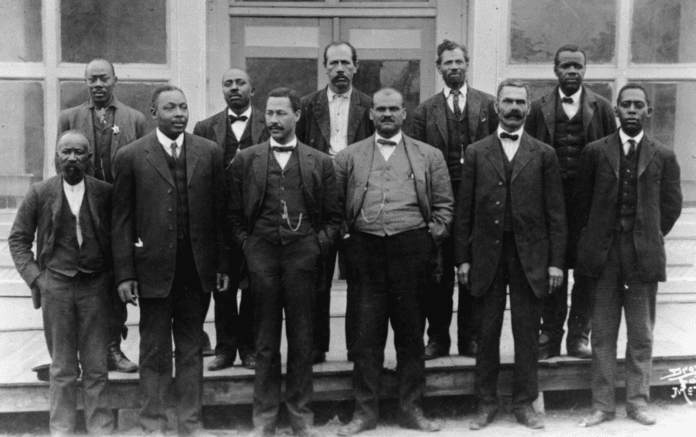
Members of the town council in Boley – an all-Black town in Oklahoma – pose for a photo in the early 1900s. All photos courtesy the Oklahoma Historical Society unless otherwise marked

Oklahoma wouldn’t be what it is today without the countless contributions of Black Americans. However, many of their stories are omitted from history textbooks. Celebrated every February, Black History Month aims to address this erasure, acting as a time to re-examine the past and celebrate the achievements of Black visionaries throughout history.  

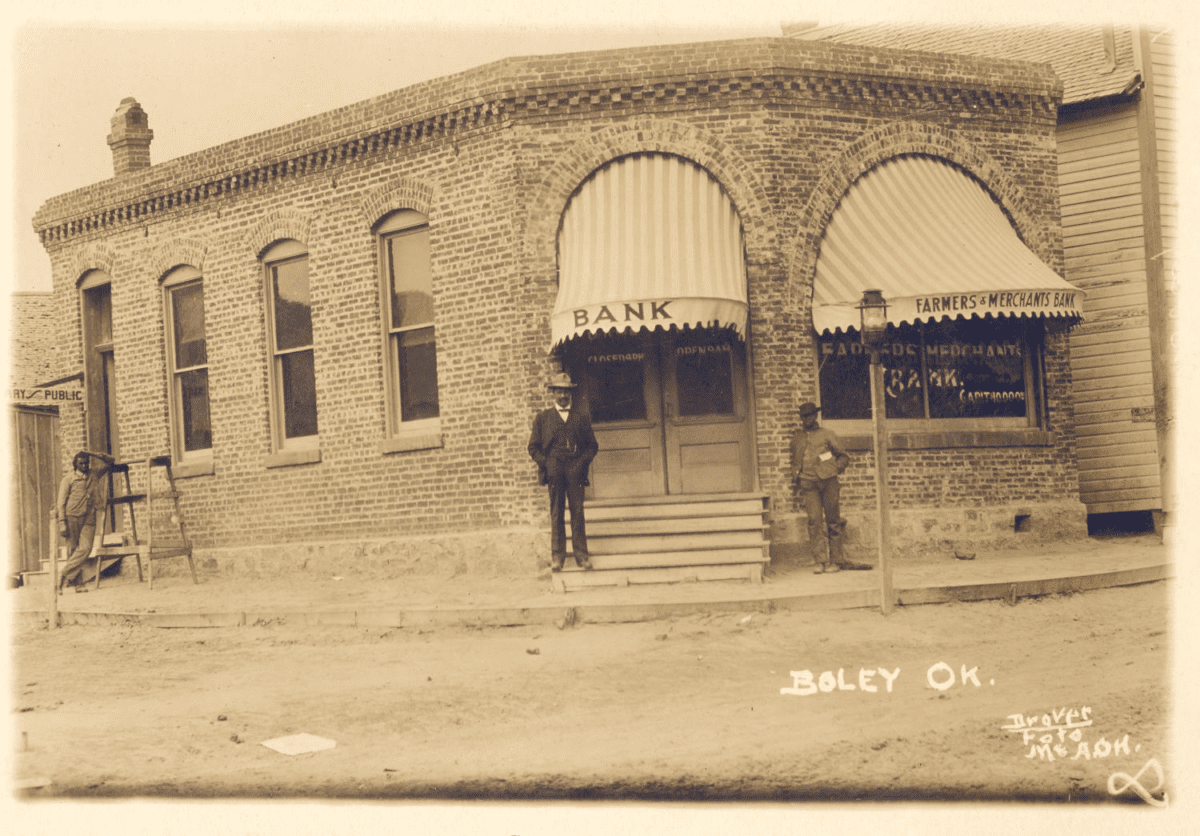
David J. Turner on the steps of Farmers and Merchants Bank in Boley, early 1900s

“As a historian, I have the fortune of studying these histories year-round,” shares Matthew Pearce, Ph.D., who serves as the State Historian at the Oklahoma Historical Society. “But I think it’s important that we commemorate Black History Month as a way to come together and acknowledge Black history and its importance to both Oklahoma and U.S. history.” 

African American Settlement in Indian Territory

Oklahoma has a unique history of African American settlement. The Trail of Tears, which is known for its connection to the Five Tribes, is also the reason the first African Americans arrived in present-day Oklahoma. 

Enslaved by the Five Tribes, Black Americans were forced to make the harsh journey along the Trail of Tears to Indian Territory with their slaveholders.  

“We know a good deal about Native American history, but even that can sometimes not always be fully appreciated, especially the intersection of Native and Black history here,” reflects Raymond Doswell, Ed.D, a public historian, educator and the executive director at Greenwood Rising in Tulsa. “I think it’s something that visitors – and I’ll say for myself too – find surprising.” 

During the Civil War, many enslaved people fought for the Union, forming four All-Black calvaries and infantries. Dubbed “Buffalo Soldiers,” these regiments represented 10% of the army’s effective strength and were pivotal in defeating the Confederacy. 

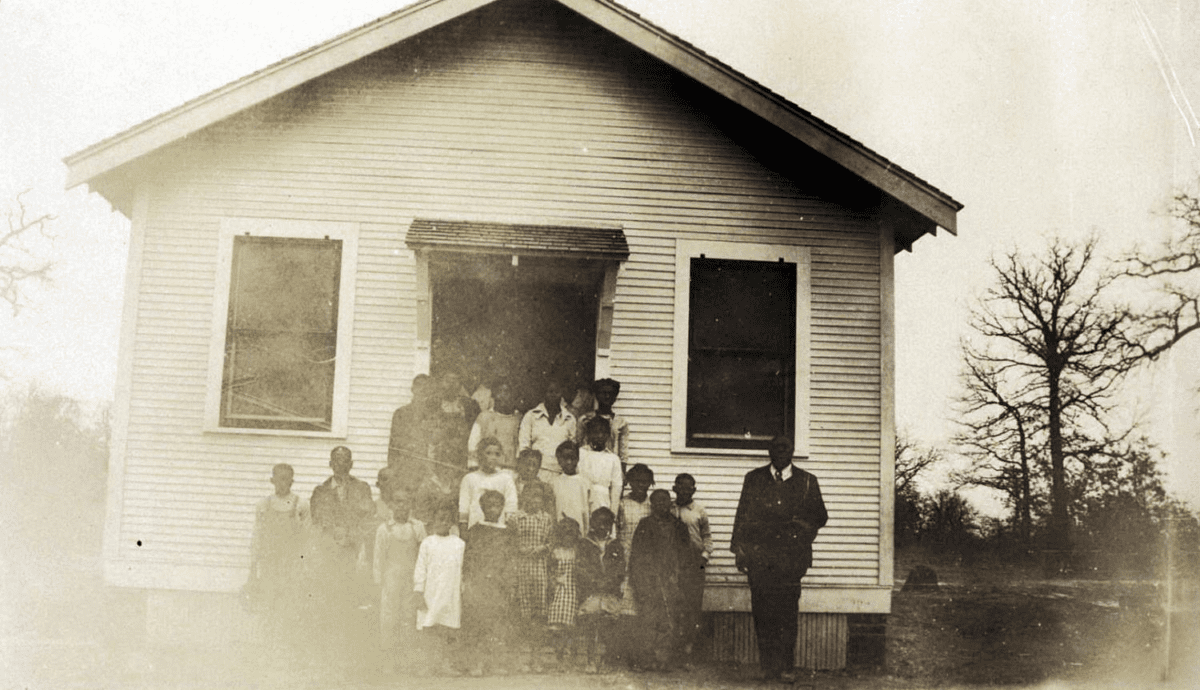
Students stand at Lone Oak Separate School, aided by the Rosenwald Fund; photo courtesy the Ardmore Public Library/OHS

The Rise of Oklahoma’s All-Black Towns 

Following the Emancipation Proclamation, many Freedmen migrated from the Deep South to Indian Territory, participating in the Oklahoma Land Runs. 

“It became an area where Black town promoters like E.P. McCabe pointed to Oklahoma territory as a potential haven for Black settlers,” explains Pearce. 

Between 1865 and 1920, more than 50 all-Black towns formed across the state. Among these towns, Boley was one of the largest, featuring a teeming business district with banks, cotton gins and a Grand Masonic Temple. 

Boley also became the birthplace of the oldest all-Black rodeo in the United States. Founded in 1903, the Boley Rodeo continues every Memorial Day weekend, paying tribute to the town’s rich Black American roots.  

Located in Oklahoma City, the Oklahoma History Center’s exhibit Realizing the Dream highlights the state’s African American history, including the rise and fall of Oklahoma’s All-Black towns, 11 of which still exist today. 

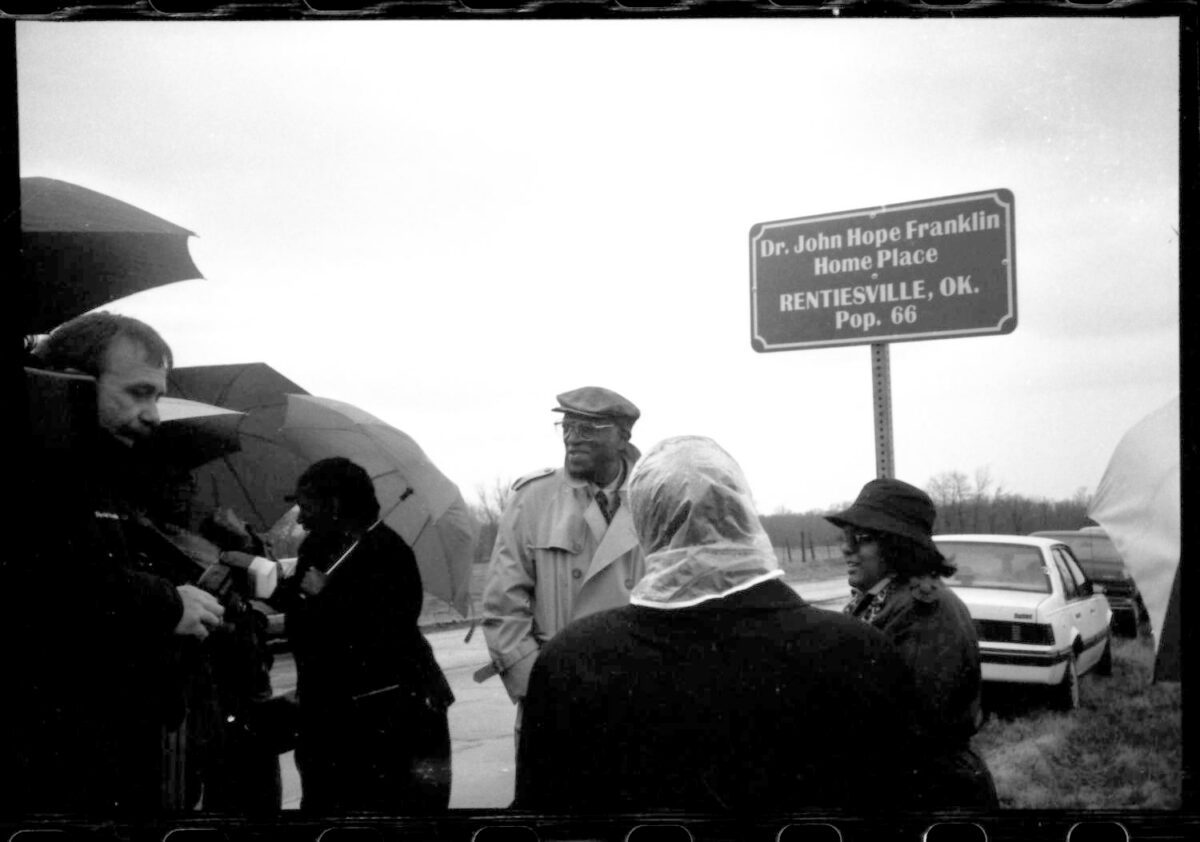
John Hope Franklin during the first annual Heritage Conference in Rentiesville, 1999

Remembering the Rosenwald Schools

During the 20th century, nearly 200 educational institutions for Black schoolchildren were constructed across the state. These schools were made possible by the Rosenwald Fund, a philanthropic program that was established by Julius Rosenwald. 

At least 11 of Oklahoma’s all-Black communities built schoolhouses through this program, including the Rosenwald Hall in Lima. Built in 1921, the Rosenwald Hall served as the community’s only elementary school for 45 years. 

Now defunct, the school is one of the only Rosenwald institutions that still stands. In 1984, the building was added to the National Register of Historic Places, and the community undertook efforts to raise $1.5 million to fully restore the school in 2023. 

The Legacy of Dr. John Hope Franklin

The Rosenwald Fund also created fellowship grants for African American artists, scientists and scholars. Among its recipients was Oklahoman historian John Hope Franklin, Ph.D.

Born in 1915, Franklin was the son of E.B. Franklin, a survivor of the Tulsa Race Massacre. Dedicated to education and public policy, Dr. John Hope Franklin worked as a member of the research team in the landmark Supreme Court case Brown v Board of Education. 

In honor of his legacy, the John Hope Franklin Center for Reconciliation was founded to promote reconciliation through community engagement and scholarly work. The center manages the John Hope Franklin Park in Tulsa, which serves as a memorial for remembering Oklahoma’s complex heritage.  

Greenwood Rising; photo courtesy Greenwood Rising Inc.

In December, the nonprofit launched a capital campaign to raise funds for the construction of a new facility in Tulsa’s Historic Greenwood District. The facility will provide a permanent space for hosting exhibitions and community events that retell a fuller story of Oklahoma history. To learn more, check out jhfcenter.org/capitalcampaign.  

Tulsa’s Historic Greenwood District

Welcoming 40,000 visitors annually, Greenwood Rising is dedicated to educating the public about Tulsa’s Historic Greenwood District. The award-winning museum accomplishes this by taking visitors on a narrative-driven, immersive experience that recounts the history of Tulsa’s “Black Wall Street.” 

“This is a history that many Oklahomans don’t know in spite of the fact that it happened in their home state… It’s quite eye-opening for them,” says Doswell. 

To further drive awareness, the museum has partnered with the Tulsa Police Department and Tulsa Public Schools to educate both police cadets and all eighth-grade TPS students about the creation, destruction and lasting impact of Greenwood. 

In celebration of its fifth anniversary, the museum will expand its community outreach and offer discounted admission to visitors on select days. To learn more, go to greenwoodrising.org. 

“In a climate where we’re trying to homogenize history, it’s important to understand and realize the diversity of stories in our histories,” says Doswell. “It’s not a pretty history in some respects, but there are some triumphs in there as well, and we need to embrace it all.”  

Featured photo credit: Members of the town council in Boley – an all-Black town in Oklahoma – pose for a photo in the early 1900s. All photos courtesy the Oklahoma Historical Society unless otherwise marked

Preserving the Glow

One of the most iconic neon signs on Route 66 is the Meadow Gold display, beaming from 11th Street and Quaker Avenue in Tulsa. Photo by Rhys Martin, Cloudless Lens Photography, courtesy the Tulsa Oklahoma Route 66 Association

Neon signs are some of the world’s most beautiful – and underappreciated – forms of art. First showcased back in 1910 by Georges Claude at the Paris Motor Show, neon signs have had an ever-expanding presence across the country for decades. The hub of the art form’s restoration and preservation, however, is found right here in Oklahoma. 

“Neon artists are called ‘glass benders’ because that’s literally what happens – heating up glass tubes and bending them into shapes,” says Rhys Martin, president of the Oklahoma Route 66 Association. “Restoring vintage neon takes a lot of work. Some of these old signs haven’t been lit in decades, and there are limited resources available to show what the colors originally were.”

Environmental conditions can play a factor, as well as the sad truth that trained professionals are simply hard to come by. 

“I’ve known some businesses that have had to hire shops hundreds of miles away. Some of these old signs aren’t the size you can just load into a truck bed,” says Martin. 

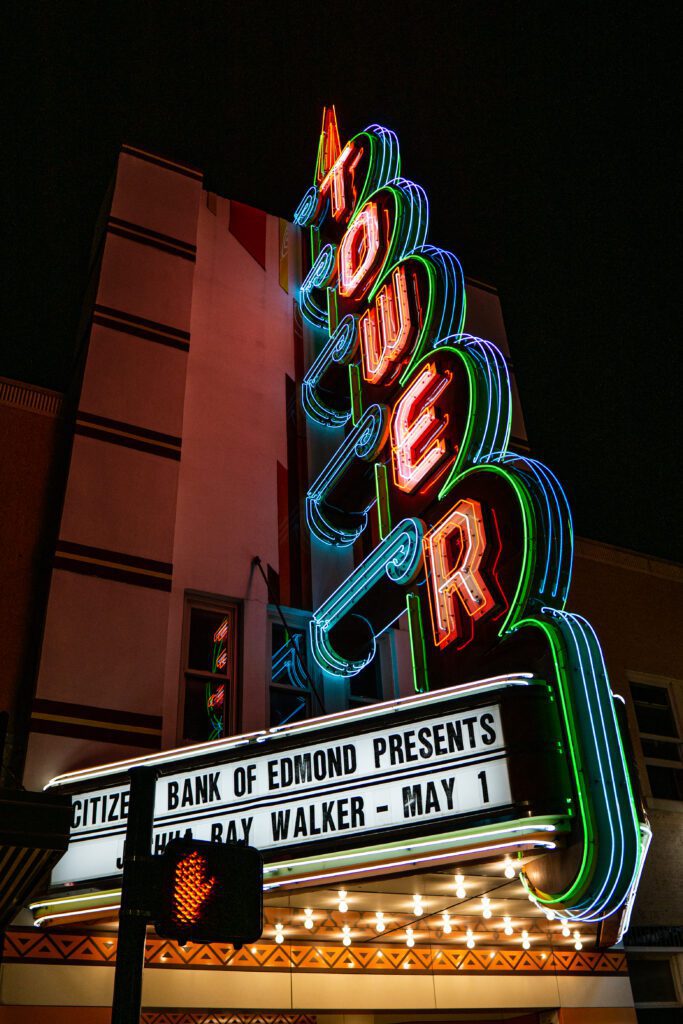
The Tower Theatre in OKC’s Uptown 23rd District is one of several eye-catching neon signs in Oklahoma. Photo by Rhys Martin, Cloudless Lens Photography

Thankfully, plenty of Oklahoma signs have been restored over the past few years with the help of grant funding. 

“Under the City of Tulsa/Route 66 Commission’s neon sign grant program, four of the eighty-five signs awarded grants since 2019 have been restorations in anticipation of the Route 66 Centennial,” says Autumn Tiller, an urban design planner at the Tulsa Planning Office. “Total cost for restoration of these signs total approximately $30,000. Signs brought back to their former glory include Billy Ray’s BBQ, Interparts of Tulsa, Thelma’s Bar and Circle Cinema.”

Martin says the beauty of these signs was just one reason he got interested in the art form.

“I originally got into Route 66 as a photographer, and the old neon was one of my favorite subjects,” he says. “I marveled at the signs that had survived the coming of the interstates, but also loved capturing the ghosts of once magnificent buzzing beacons. It’s been so wonderful to not only see old signs restored these last few years, but see newer business owners get the opportunity to add neon signage to their little slice of the Mother Road.” 

While the neon is a great way to slip back into nostalgic times, it also serves as a tourism booster for the state. 

“The grant program has increased the inventory of neon signs in Tulsa and provides attractions for locals, Route 66 enthusiasts and neon fans alike,” says Tiller. “Some commercial property owners along the Route include it as a condition within their business leases to encourage investment and participation in the program.” 

Martin agrees: neon signs are more than a beautiful thing to observe.

“A signature piece of art like a neon sign not only helps you stand out but calls to that particular flavor of traveler that seeks out these signs so that they can see them lit up,” he says. “That means they have to stay until the sun sets … and that means at least a meal and probably a hotel room. Great for economic development and great for local pride of place, too.” 

Ignoring “The Way It’s Done”

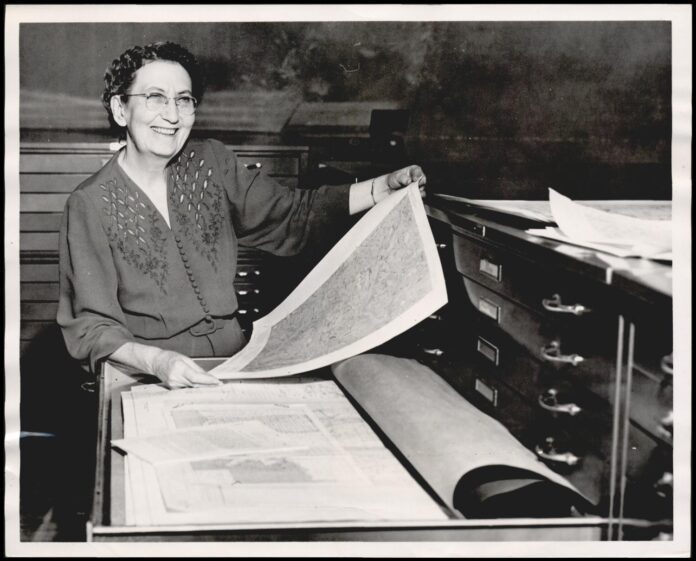
Dr. Angie Debo, a groundbreaking scholar, was one of the first major historians to document injustices against Native tribes in Oklahoma. Photo by Dean Hale courtesy OHS

Grace Hopper – a U.S. Navy rear admiral, mathematician and computer scientist – believed that the most dangerous phrase was: ‘We’ve always done it this way.’ Oklahoma trailblazers like Angie Debo, Ph.D., and Ada Lois Sipuel Fisher embodied that same forward-thinking mindset, paving the way for women to dare to achieve something greater.

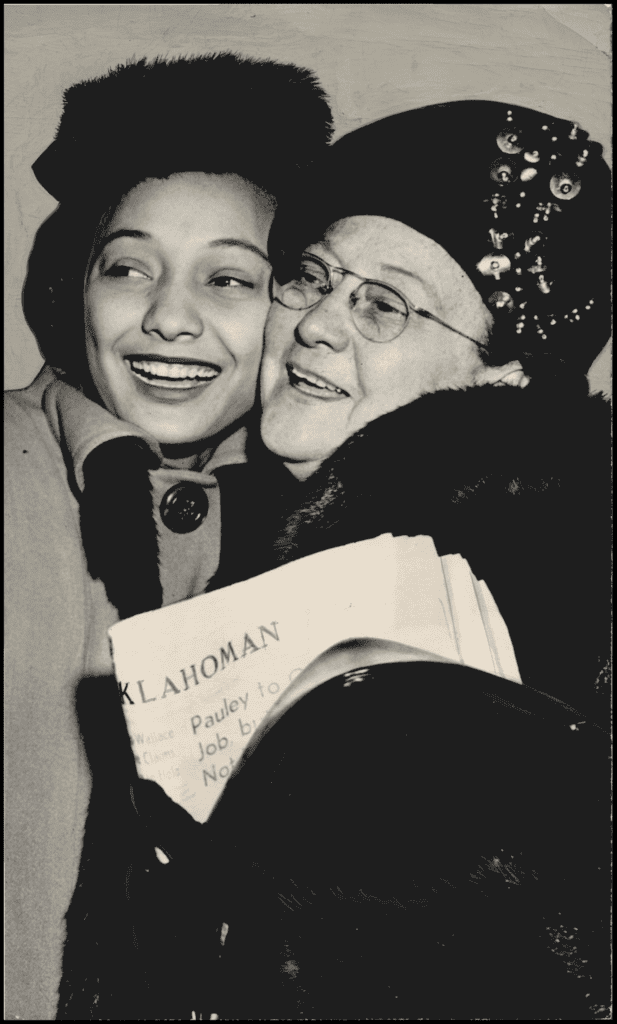
Ada Lois Sipuel Fisher (left) sued OU for entrance into their law school and won. Her advocacy paved the way for other landmark cases including Brown v. Board of Education. Photo by Joe Miller, courtesy OHS

Debo, an innovative scholar, was one of the first major historians to document injustices against Native tribes in Oklahoma. Born in 1890 in Beattie, Kansas, Debo moved to Marshall, Oklahoma Territory, with her family when she was nine years old. She graduated from the University of Oklahoma in 1918 with a degree in history, received her master’s degree from the University of Chicago in 1924, and earned her doctorate from OU in 1933.

In addition to teaching, she was a pastor and the director of the Federal Writers Project in Oklahoma. Debo authored nine books, edited three, co-authored another, wrote many chapters, articles and forewords, and presented numerous papers on Native Americans and Oklahoma history. She also lectured and traveled.

Debo served on the board of directors of the Oklahoma Chapter of the American Civil Liberties Union and the Association on American Indian Affairs. She made surveys for the Indian Rights Association and lobbied for land rights for Indians in Alaska and for water rights for the Havasupai and Pima in Arizona.

Debo was not often publicly commended because during her lifetime, her work challenged state and federal officials, blacklisting her from academic jobs. Some colleges wouldn’t hire her on as a professor simply because she was a woman. Despite this, Debo’s research shaped modern scholarship on Native history, and Oklahoma State University maintains an archive in her honor. 

Ada Lois Sipuel Fisher was born in 1924 in Chickasha. She was an excellent student — graduating from Lincoln High School in 1941 as valedictorian and enrolling at Arkansas A&M College, attending for one year. Sipuel transferred to Langston University in Oklahoma to study English and graduated with honors in 1945, but she dreamed of becoming a lawyer.

At the time, Oklahoma was segregated, but Sipuel sought admission to the University of Oklahoma’s College of Law anyway. She was denied admission due to her race. A three year legal battle with the district courts, Oklahoma Supreme Court and the U.S. Supreme Court ensued with the support of the National Association for the Advancement of Colored People (NAACP) and civic leaders across the state.

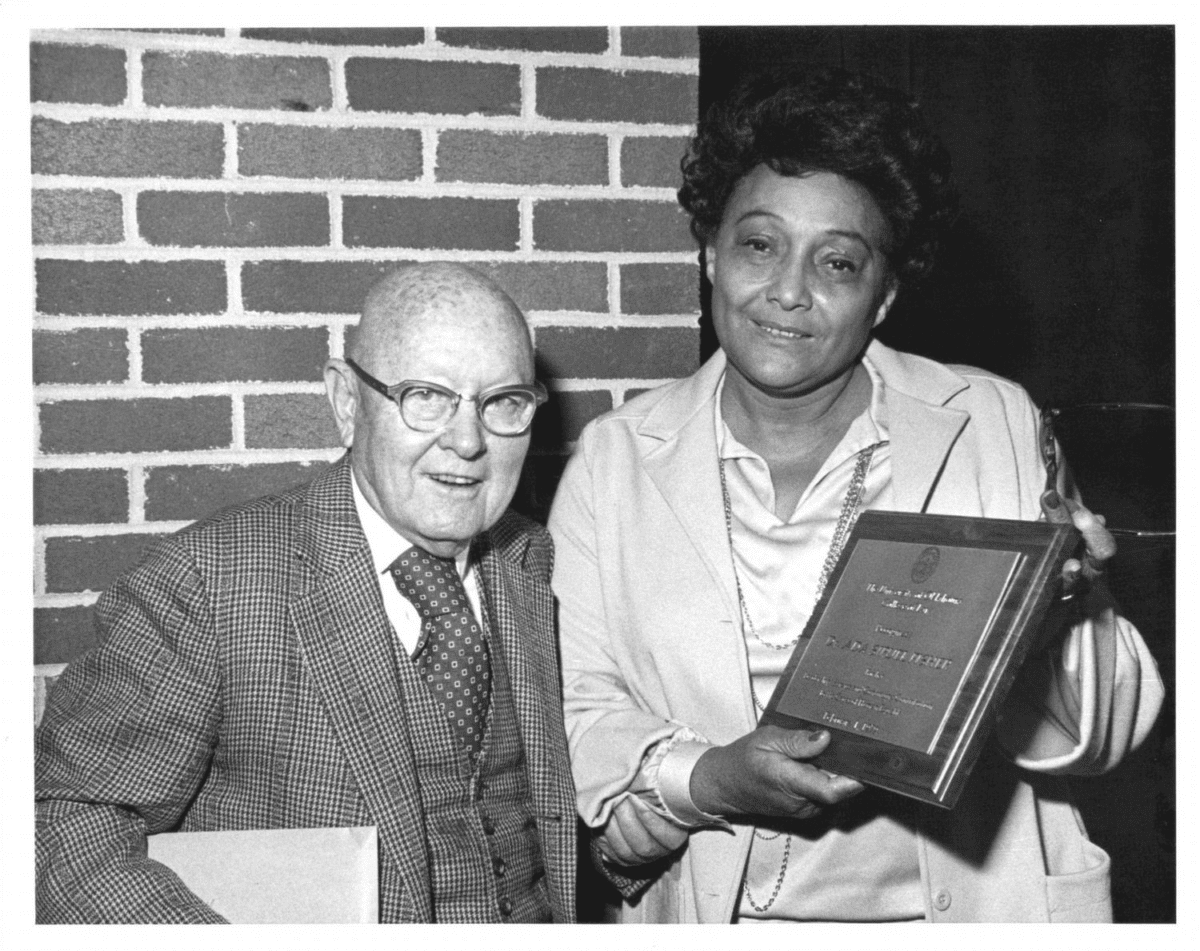
Ada Lois Sipuel Fisher; photo by Claude Long, courtesy OHS

Fisher and her team ultimately won the case, and she was able to enroll in the University of Oklahoma’s law school. Her case was groundbreaking — paving the way for desegregation in higher education in 1948. However, her story was overshadowed by the Brown v. Board of Education case, which ruled that U.S. state laws establishing racial segregation in public schools violate the Equal Protection Clause of the Fourteenth Amendment. 

Despite this, Fisher’s fight and win had a ripple effect for future students of color: the University of Oklahoma’s law school created a scholarship and lecture series in her name. 

Finding Love IRL

Digital matchmakers like Tinder, Bumble and Hinge are certainly holding onto relevance –  yet some soulmate searchers are telling dating apps: “It’s not me, it’s you.” Indeed, America’s top three dating apps report losing more than 100,000 users last year.

Fewer than one-quarter of Gen Z adults met their partner through a dating app, social media or online community, according to a Hims study. So some folks are putting their own twist on seeking true love. 

For example, an Oklahoma man recently stenciled his phone number and “Man seeks a wife,” on a placard and posted it along a rural road. And a California bachelorette is fielding 35,000 applications after using digital billboards to encourage gentlemen to fill out her online dating questionnaire.

Other date seekers are taking classes in art, cooking, photography, dancing, yoga or rock climbing to find “the one.” They’re visiting arcade bars, dog parks, libraries or churches. Some are even helping at animal shelters or food banks.

Whether you connect through social media or real life, here are some guidelines to help keep dating safe and fun.

First Date Safety Tips

  • Give your date a cursory internet search before you agree to go out. Check out LinkedIn for authenticity and TruthFinder for criminal activity.
  •  Agree on a casual daytime public venue, such as a coffee shop, brewery or park. 
  • Arrange your own transportation and don’t reveal your address.
  • Punctuality sets expectations for the date’s pacing and vibe – so avoid being late and always text if you’re running behind.
  • Let friends and family know of your date and pre-plan an exit strategy using a text code.
  • Keep an eye on your drink and food.
  • Trust your gut. If something seems off, therapist Pamela Garber says you can simply say, “Sorry, it’s not a match,” and leave.

First Impressions

Research shows you have a tenth of a second to make a good impression. So just relax and follow Louisiana Sen. John Kennedy’s advice:

“Always be yourself,” says Kennedy, “unless you suck.”

Assuming you don’t fall into that category, confidence is your dating superpower, says dating expert Matthew Hussey. Potential partners are not seeking someone who just needs a relationship, he says. The secret is showing up as your confident, authentic self, and bringing your own value to the table. Stop seeking mass approval, and look for someone who specifically appreciates your value. 

Meanwhile, be aware that communication reveals critical psychological traits.

“Boundaries, focus on the past, presentation of self … are all indicators of who the person is,” Garber says, “and potential for compatibility.”

Avoid knucklehead questions like: How much money do you make?

“I do think a well-meaning but verbally clumsy person is better than one who is verbally appropriate but masking issues under the surface,” Garber says.

Conversation Starters

Research suggests that being a good conversationalist can be more appealing than physical attractiveness. So, here are some questions to get you started:

  • What’s your funniest childhood memory?
  • Where would you like to travel and why?
  • What celebrity are you most like?
  • Have you ever seen a ghost?
  • Would you take a free ride on SpaceX?
  • What’s the strangest thing in your refrigerator?

Art Without Barriers

RACE Dance Collective based in OKC highlights underrepresented dance genres, creates professional development opportunities for local dancers and removes barriers to participation. Photos courtesy RACE Dance Collective

Smaller performing arts groups in Oklahoma are as unique and diverse as our landscape – gaining a foothold in the state’s cultural scene and working hard to reach their audiences. 

Although they lack the funding of their larger counterparts, these small but mighty companies have programming that is just as engaging. 

“What distinguishes RACE from … larger institutions is not what we do, but how we do it,” says Sheri Hayden, executive director of RACE Dance Collective based in OKC. “Our scale allows us to remain highly responsive, community-embedded and artist-centered. We prioritize underrepresented dance genres, create professional development opportunities for local dancers and remove barriers to participation through accessible initiatives.

“While larger institutions serve important roles within the regional arts ecosystem, RACE complements that work by centering access, representation and workforce development for artists and audiences who are often excluded from traditional dance spaces,” Hayden continues.

Kelli McLoud-Schingen, the founding artistic director of World Stage Theatre Company based in Tulsa, says that smaller organizations like hers have more freedom to explore more non-traditional spaces and subjects. 

“Our audience includes people who enjoy thought-provoking stories that linger long after the performance, those interested in stories from around the world, and individuals who may not be traditional theatre-goers but are drawn to the stories we tell,” she says. 

Of course, being a smaller organization often means working on a tighter budget. 

“Our marketing reach is primarily limited to word of mouth, social media and printed postcards and posters,” says McLoud-Schingen. “We do not have access to paid radio or television advertising, nor the large-scale promotional resources available to larger organizations. Our funding initially came solely from ticket sales, but over the past three to four years, we have also benefited from grants from local philanthropic organizations and individuals.”

Hayden agrees that word of mouth is powerful, “given our strong, connected community of dancers, students and families. Many audience members discover us through friends or relatives who take classes or perform with the company. We also use social media platforms, send digital newsletters and partner with local TV stations for interviews around major events.”

Since the pandemic, World Stage Theatre Company has grown. 

“We became the first theatre company in the city to operate a storefront performance space, expanded our board, secured new grant funding and strengthened our youth summer camp program,” shares McLoud-Schingen.

RACE has also experienced positive upticks post-pandemic. 

“When the pandemic began, RACE was still operating in a grassroots phase,” says Hayden. “The organization was entirely run by independent contractors and volunteers, programming was more limited, and there was not yet a consistent base of grant or donor support. As a result, when funding priorities shifted, RACE was not disproportionately impacted by the loss of contributed revenue. While earned income declined, leadership quickly pivoted and reimagined programming to remain active, connected and financially viable during an unprecedented time. 

“Since then, RACE has continued to survive and grow by intentionally creating safe, welcoming and community-centered spaces for dancers. As people returned to movement and in-person connection, RACE became a place where artists felt supported, seen and valued, regardless of background or experience level. The organization has expanded its programming, strengthened partnerships and built steady relationships with local and state funders.”