





















Home Blog Page 25

Tasty Tidbits

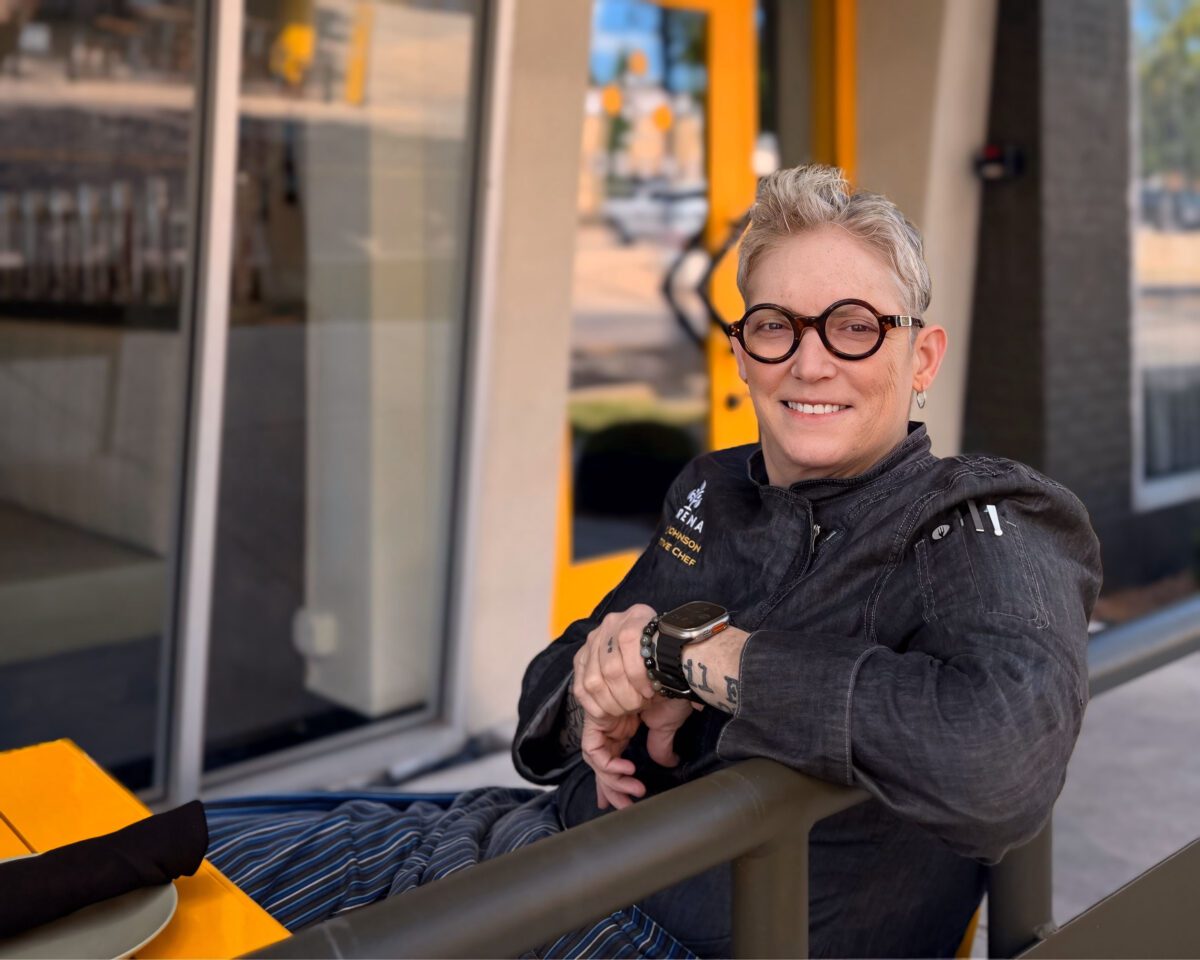
Photo courtesy Flo’s Smokehouse Eats

Flo’s Smokehouse Eats

Comfort food with a creative, culinary twist is the name of the game at Flo’s Smokehouse Eats. We often call restaurants ‘hidden gems,’ in this space, but Flo’s has to be the epitome of that concept.

Start with sandwiches, of which there are many. The birria grilled cheese is a diner favorite for a reason; the sandwich is a traditional grilled cheese stuffed with birria, cilantro and onions. Other sammies to try include the Mexi-Q Melt with your choice of meat, queso, pico and sliced cheese, as well as the Flor-Ta, which includes fresh bolillo bread, beans, cheese, asada, queso, onions and crema.

Burritos are another must-try, with the stand-out ‘Hot Cheetoh Burrito’: beans, rice, your choice of meat, hot Cheetos, pico, guac and salsa wrapped up in a fresh tortilla. 

Other often-ordered options include the baked mac and cheese, the elote corn, the loaded BBQ potato and the street tacos. Whatever you choose, you won’t be disappointed … although you may need to loosen your belt! 

Photo courtesy Inheritance Kitchen + Juicery

Inheritance Kitchen + Juicery 

If you’ve been in downtown Tulsa anytime over the last few years, chances are you’ve seen the large, all-white building on Detroit Ave. called Inheritance. Sprawling, full of light, and staffed with friendly folks, the joint now has a brand new location – with a drive-through – on Tulsa’s Brookside. 

Menu items are fairly similar, with healthy options like the vegan breakfast burrito, the mushroom sandwich, the classic burger (with a veggie patty, of course), the banh mi wrap and the jackfruit quesadilla. 

And while the dishes are delicious and healthy all at once, many would argue that the drinks at Inheritance are the star of the show. Try a bevy of vegan and gluten free smoothies, wellness shots, cold-pressed juices, coffees and seasonal drinks –including the Blue Antioxidant Latte, with butterfly pea flower powder, blue spirulina, maca, vanilla, maple syrup, and cinnamon with your choice of milk. 

Culprits

Spirits, steak and sushi can be found at the swanky, upscale, yet approachable Culprits in OKC. Located in Bricktown’s hotel the Renaissance, the modern steakhouse offers traditional fare for the old-school diners, as well as unique options for those looking to push their palette.

Photo by Danny Vo courtesy Culprit’s

Unlike many a super-serious steakhouse, Culprits is also open for breakfast and lunch. Early-bird plates range from crab cake Benedicts to French toast, shrimp and grits, tuna tacos, a bevy of sushi rolls and even a steak stir fry.

Come for dinner and you’ll see a few of the same menu items, but others reserved for nighttime dining. Starters include Thai chicken, flaming scallops, bone marrow and chow calamari. As for entrées, the tomahawk ribeye is a stand-out – a 48 oz. steak that’s pan-seared with rosemary, black garlic butter, chili crisp and blistered shoshitos. Other must-tries include the Dijon chicken, the surf and turf nigiri, the lamb persillade and the miso glazed salmon. 

Photo courtesy Perets Dessert & Coffee Bar

Perets Dessert & Coffee Bar

If you’ve got a sweet tooth and a love for quality coffee and tea, the charming Perets Dessert & Coffee Bar in OKC is the place for you. Located in the Paramount Building, Perets is the perfect spot for a business meeting, a hang with friends, a first date or just a quiet day alone.

The magic of Perets is that the menu is seasonal and ever-changing, but you can always expect house-made coffee syrups, small batch pastries, desserts and affogatos. Highlights include the pecan pie tart, the espresso martini mousse cake, the peppermint brownie and the grapefruit poppyseed cake. Drinks range from lattes to iced loose leaf teas, cappuccinos and matcha.

A Sizzling Summer on Stage

The Drunkard and the Olio; photo courtesy Tulsa Spotlight Theater

Escape the sweltering Oklahoma heat with some dynamic, entertaining performances on the stage this month.

In Tulsa, you’ve got ample opportunity to see The Drunkard and the Olio at the Spotlight Theater; after all, America’s longest-running play goes on every Saturday at 7 p.m. Another can’t-miss from Spotlight is The Stinky Feet Gang, running Aug. 1-3 and 8-10. Venture to the Tulsa PAC from Aug. 8-24 to enjoy Ragtime, a story set in early 20th century America that follows the worlds of an African American pianist, a Jewish immigrant and a wealthy white family as they collide. Other goodies this month include comedian Chris Distefano on Aug. 9 at the Hard Rock Hotel and Casino; the Chippendales on Aug. 14 at River Spirit Casino Resort; and The Crucible at Theatre Tulsa Studios, Aug. 15-24. 

In OKC, venture to the Oklahoma Shakespeare Gardens Outdoor Theatre for Love Labour’s Lost, running Aug. 7-17. Opera abounds at Civic Center Music Hall, with The Magic Flute on Aug. 14-15 and 17 presented by Painted Sky Opera. 

Get your tissues ready for Storyteller Theatre OKC’s rendition of A Little Princess, running Aug. 15-24 at the Civic. Lastly, see comedian and internet personality Kurtis Connor on his Goodfellow World Tour Aug. 17 at the Criterion. 

Horses, Baseball & Rowing, Oh My!

OklaFlow; photo courtesy Riversport OKC

Get ready for a varied sporting schedule in August.

In Tulsa, Expo Square is the hub for all things horse: The National Snaffle Bit Association’s World Show happens Aug. 8-17; the Reining Classic runs Aug. 23-21; and simulcast horse racing can be watched at the venue all month long. And, of course, America’s favorite pastime is going strong at the ONEOK Stadium: Drillers games happen Aug. 12-17 and 26-31.

Speaking of baseball, you can catch the OKC Comets in action at the Chickasaw Bricktown Ballpark Aug. 1-3, 12-17 and 26-31. Other OKC events include the American Quarter Horse Youth World Championship, Aug. 1-10 at the OKC Fairgrounds, as well as refreshing Sunset Paddles events, hosted by Riversport OKC, running Aug. 9 and 20 at the Boathouse District. Stick around Riversport for the OklaFlow Finals Aug. 15-17 – there, you’ll see some of the nation’s best surfers hit the Riversport waves. 

Around the state, get ready to rodeo. The Yukon FFA IPRA Rodeo runs Aug. 2-3 at the Canadian County Cowboy Church Arena in Yukon; the Will Rogers Memorial Rodeo stomps into town Aug. 4-9 at Vinita’s American Legion Rodeo Grounds; and the Cinmarron River Stampede Rodeo takes place on Aug. 7-10 at the Waynoka Rodeo Grounds.

A Whole Lotta Fun

Blue Whale Comedy Festival; photo by Patrick Witty Photography

Oklahoma teems with community events.

In Tulsa, head to the Global Gatherings World Festival on Aug. 9 at the Gathering Place to learn about the various cultures represented within the city lines. Next up, venture to the Arvest Convention Center for Oklahoma Comic Con on Aug. 9-10, then head to the Greenwood Film Festival Aug 10-14. The event, happening at OSU-Tulsa, will showcase Tulsa film pioneers and unearth important lessons from the past. The highly anticipated Blue Whale Comedy Festival runs Aug. 14-17 at various venues in downtown Tulsa, and another can’t-miss event is Wild Brew on Aug. 23, also at the Arvest Convention Center, which combines food and spirits to benefit the Sutton Avian Research Center. 

In OKC, flex your creative flair at the Painting Palooza event, Aug. 10-16 at the Champion Convention Center, or visit the downtown OKC Library for Litfest Aug. 23, a celebration of all things language arts. 

Around the state, the social calendar is packed. Visit the Firelake Fireflight Balloon Fest, Aug. 8-9 at 1702 S. Gordon Cooper Drive in Shawnee, or the Rush Springs Watermelon Festival, Aug. 9 at Jeff Davis Park. Creatives won’t want to miss the Cherokee Homecoming Art Show, running from Aug. 9-Sept. 6 at Tahlequah’s Cherokee Springs Plaza. Other events include the Cimarron Territorial Celebration/Cow Chip Throwing Contest, Aug. 18-23 at Beaver County Fairgrounds; the Blanchard Bluegrass Festival, Aug. 22-23 at Lions Park; and Rocklahoma, Aug 29-31 at 1421 W. 450 Rd. in Pryor.

Blockbusters and Buzz

Caught Stealing; photo courtesy Sony Pictures, all rights reserved.

As the back half of the year approaches, August is stacked with some truly must-see films – so leave your weekends open, because there’s something here for everyone.

Starting strong with a legacy sequel, don’t miss The Naked Gun. Starring Liam Neeson as Frank Drebin Jr., son of Frank Drebin Sr. – played by Leslie Nielsen in the original films and TV series Police Squad!, this sequel seems to understand all the elements that made the original funny. Directed by Akiva Schaffer, one of three members of The Lonely Island, a comedy troupe known for their SNL sketches and music, the film also stars Pamela Anderson and Paul Walter Hauser (Black Bird). Hopefully it can live up to the lofty standards of its predecessors when it releases on Aug. 1. 

For a mystery horror film, look no further than Weapons. The story is set in a small town where all but one child from a specific class disappear overnight. Directed by Zach Cregger, known for the 2022 horror film Barbarian, the film stars Josh Brolin, Julia Garner (Ozark), Alden Ehrenreich (Fair Play) and Benedict Wong (Doctor Strange) and looks to have some truly bone-chilling imagery. I thought Barbarian shined but fell apart in the final act, so maybe Creeger can pull it off a bit better this time when Weapons drops on Aug. 8.

If you’re looking for an action heavy sequel to a surprise hit, check out Nobody 2. Following Hutch Mansell (Bob Odenkirk, Better Call Saul) and his family as they adjust to the revelation that he’s a former government assassin, the trailer shows them attempting to take a summer vacation only to be bombarded by criminal forces. The cast includes Connie Nielsen (Gladiator), John Ortiz (American Fiction), Christopher Lloyd (Back to the Future) and Sharon Stone (Basic Instinct), and looks to be just as action-packed as the previous film, with long takes and superbly choreographed fight scenes. It hits theaters on Aug. 15.

For a crime thriller remake, don’t skip Highest 2 Lowest. Directed by Spike Lee and a remake and reinterpretation of Akira Kurosawa’s 1963 film High and Low, this film has all the hallmarks of a Spike Lee joint. Starring Denzel Washington and Jeffery Wright (Angels in America), the movie concerns a music mogul who is caught up in a ransom plot with heavy moral implications. The world premiere at Cannes came with positive reviews, with many saying it uses the bones of the original as a jumping off point to start a different conversation. It drops on Aug. 22 before going to Apple TV + on Sept. 5.

For a different kind of crime thriller, go see Caught Stealing. Based on the book of the same name, the film follows Hank Thompson, a former baseball player, who finds himself deeply imbedded in the criminal underworld of 1990’s New York. Starring Austin Butler (Elvis), Regina King (Shirley), Zoe Kravitz (The Batman) and Matt Smith (The Crown), and directed by Darren Aronofsky (Black Swan), everything here indicates an excellent outing when it releases on Aug. 29. 

Grayson Ardies

Photo courtesy the ODAA

Executive director of the Oklahoma Department of Aerospace and Aeronautics (ODAA), Grayson Ardies began his working with the department as an intern. In his tenure with the ODAA, Ardies has led many statewide agency initiatives and managed a two-year project that conducted an Aerospace and Aviation Economic Impact Study. An OU alum, Ardies is also a licensed commercial pilot and certified flight instructor. We caught up with Ardies and got his thoughts on… 

… his dedication to the ODAA. 

While at the University of Oklahoma participating in their aviation management degree program, I initially wanted to become a commercial airline pilot. Around the time I graduated (2009), the commercial airline industry was just recovering from the Great Recession and pilot jobs were hard to find, so I started a transition to a ground support role.  

During my final semester in college, I had an internship with the then Oklahoma Aeronautics Commission. I really enjoyed the internship and everything I learned, and apparently did a good enough job that they hired me on full-time as an airport inspector. The rest is history; I fell in love with helping the aviation and aerospace community of Oklahoma and had the opportunity to jump into various leadership roles along the way.  Every single day is exciting and offers up the opportunity to help grow the industry, and we can actually see the positive outcomes we have in the aerospace community. It’s those positive outcomes and impact on the public that keep me coming back every day.    
… how important his industry is to the fabric of Oklahoma.

This is something I can’t highlight enough, given this is our state’s second largest industry with $44 billion in annual economic impact. Aerospace and defense, particularly how the industry is situated with Oklahoma being the MRO (Maintenance, Repair and Overhaul) capital of the world, has been key to Oklahoma’s economy and weathering some of the downturns in the oil/gas industry and the agriculture industry. While aerospace and defense has its own boom/bust cycles, the industry can’t just defer MRO activities on aircraft. A company (airline, flight school, business flight department, etc.) can make an active choice on whether to buy a new aircraft, but they don’t have a choice on whether or not to maintain that aircraft.  It must be maintained to the appropriate FAA standards. 

… proudest accomplishments.

My proudest accomplishment probably has to go to our work in the aerospace education area and trying to get more young people interested in and engaged with this career field.  Oklahoma has held the top spot in the country for the last three years in terms of the number of high schools teaching aviation curriculum in the classroom, with 118 schools currently teaching it this school year. There are so many neat STEM learning opportunities within the aerospace field now; it’s truly amazing.  Every time I go speak to a classroom of students I share with them that if they can dream up the career, chances are, they can do that activity right here in Oklahoma within the aerospace and defense industry.

… goals.

The major goal we all have is to ensure that aerospace and defense becomes our state’s No. 1 industry, which we believe will ensure economic success for Oklahoma for decades to come. Starting in 2021, the legislature provided our agency with appropriations for the first time since the ’80s and ’90s. Over the last four years, we’ve embarked on a program to invest in pro-growth aviation infrastructure, not just at airports, but across the spectrum including UAS/AAM infrastructure such as radar and detection systems to enable UAS/AAM testing and aircraft engine test cell infrastructure.

Our long-term goal is to provide the bedrock foundation from which this industry can grow and flourish. There are probably too many short-term goals to mention them all, but we are currently underway with a new economic impact study which should be complete by early 2026, and while I don’t think we will have achieved that No. 1 industry status just yet, I think we have shown great progress from where we were in 2017 when our last study was conducted.

…his many responsibilities. 

Every day is different in this role, and that’s a major part of what keeps me coming back. Our agency has four core areas of responsibility: maintaining and strategically expanding the Oklahoma Airport System through calculated investments of federal, state and local funding; supporting the growth and vitality of the aerospace/defense industry by recommending pro-aerospace policy measures to the Legislature; bringing general awareness of this industry to all Oklahomans through events and celebrations; and partnering on the operation of aerospace specific programs such as ACES (Aerospace Commerce Economic Services) – focusing on promoting aerospace education and workforce development to ensure that the next generation of aerospace professionals is ready to take to the skies to support our growing industry, and creating a testbed environment to assist with integrating new technologies such unmanned aircraft systems and advanced air mobility aircraft to showcase that Oklahoma remains on the cutting edge of the aerospace industry.

A High-Speed Future

Construction is currently underway for the Brightline West high-speed rail project running through California and Nevada. Photos and renderings courtesy Brightline West

Rick Harnish is in tune with what’s happening across the United States when it comes to high-speed rail development, and right now, that list is short. But as executive director of the High Speed Rail Alliance (HSRA), he has hope. He carries around in his head a map of cities he would love to see connected. 

“If I were in charge, the federal government would be very focused on Chicago to New York, and Boston to Miami, and Chicago to Kansas City and then to Dallas-Fort Worth, San Antonio and onto Monterey,” Harnish says.

He defines high-speed rail travel as “half the time it would take to drive from station to station.”

Oklahoma, Harnish says, “should be working with Kansas, Texas and Missouri to link DFW with Kansas City.”

Given the current methods and levels of funding, high-speed rail in Oklahoma is not feasible, according to a statement from the Oklahoma Department of Transportation (ODOT) Rail Programs Division. 

“Due to the cost of the California and Texas [high-speed] projects being in the multiple billions of dollars, Oklahoma is focused on extending current passenger rail in the state, the Heartland Flyer, north to Newton, Kan., to connect Oklahoma to both the Texas Eagle and the Southwest Chief, if funding from Texas allows continuation of the Heartland Flyer,” ODOT says. 

ODOT began a high-speed intercity passenger rail study through a federal grant during the Obama administration, but the cost estimates were so high, the study was stopped.

“A high-speed rail alignment is required to be straight and flat, and would require new alignments,” ODOT says. “Right-of-way acquisition is only one of the challenges that stand in the way of high-speed rail in Oklahoma.”

Even if funds were available, ODOT says, “there would be several phases required, like a service development plan, National Environmental Policy Act, preliminary engineering, right-of-way acquisition and construction. Each of these phases would likely take years.”

Right now, the only high-speed project well out of the starting gate is a line that will connect Sacramento and San Francisco to Los Angeles and San Diego, with another stretching from Los Angeles to Las Vegas. Construction is underway on the California route, Harnish says, and preliminary work is happening on the Brightline West Las Vegas project. The goal is to open the Las Vegas line in time for the 2028 Olympics in Los Angeles.

“This will be the first to travel faster than 160 miles per hour,” Harnish says.

Development of the line between LA and Vegas, Harnish says, “was driven by a casino owner who knew this was important to his business. In some cases, the trains can run on tracks alongside the interstate, and this is a case where you could.”

The 218-mile Brightline West route will feature fully-electric trains traveling up to 200 mph alongside Interstate 15. 

Fed up with congested highways and air travel price hikes and delays, a record number of people chose passenger rail last year. But the nation has never had a dedicated high-speed rail line.  

“Right around World War II, we decided that the most important measurement of transportation performance was how fast you could drive from one place to another,” Harnish says. “Everything in governmental policy is around how fast can you drive, and ‘Can I park when I get there?’”

The federal government, and the states, need to start building high-speed lines in key places, Harnish says.

“And we need to work with the privately owned railroads to expand their infrastructure, so we can run a lot more passenger trains,” he continues.

Challenges include the fact that “private owners of existing railroads don’t want the liability of having high speed trains nearby,” Harnish says.

The proposed Brightline West station from above. Main image cutline: Construction is currently underway for the Brightline West high-speed rail project running through California and Nevada. Photos and renderings courtesy Brightline West

Oklahoma is part of a South Central region anchored by the fast-growing metropolitan areas of Dallas, Houston, San Antonio and Austin, according to the HSRA.

The region “also boasts globally renowned cities like New Orleans; natural wonders like the Ozark Mountains and the Texas Hill Country; and vibrant mid-sized cities like Little Rock, Oklahoma City and Tulsa,” the HSRA website says. “Momentum for connecting it with fast, frequent trains is building in several ways.”

A proposed Texas Central line would carry passengers the 240 miles between Dallas and Houston in less than 90 minutes. The private firm has received Federal Railroad Administration approval for an adapted version of trains used on the Tokaido Shinkansen line in Japan, which has had zero passenger fatalities or injuries since it began operation in 1964.

The electrified trains would operate on dedicated high-speed rails at maximum speeds of 205 mph for 18 hours per day, according to Texas Central, greatly reducing traffic on Interstate 45, one of the nation’s most deadly highways. 

Rail is the most efficient form of long-distance transportation.

“It’s roughly a third more energy-efficient than driving, overall, and electrified trains are dramatically more energy-efficient than diesel trains or airplanes,” the HSRA says.

A Craft of Boundless Horizons

The University of Central Oklahoma’s College of Fine Arts and Design offers programs that emphasize educating students holistically through transformative experiences. Photo courtesy UCO

Imagine a costume designer hunched over a sewing machine, stitching a gown destined to shimmer under stage lights, or sculpting a foam headpiece for a fantastical character. 

In Oklahoma, this isn’t a mere pastime; it’s a vibrant career path shaped by institutions like the University of Central Oklahoma (UCO), the University of Oklahoma (OU) and Oklahoma City University (OKCU). Through programs such as UCO’s Theatre Design and Technology, OU’s Drama BFA with an Emphasis on Costume Design, and OKCU’s Theatre Design and Production, Oklahomans are honing skills that secure them jobs at high schools, colleges and cultural hubs like Lyric Theatre of Oklahoma and the Tulsa Performing Arts Center. Some even catapult their talents nationwide – from Broadway stages to cruise ships, or a UCO grad now painting scenery at Universal Orlando Resort.

These programs extend far beyond costume making, offering a rich array of specialties: lighting design, sound engineering and production management. At UCO, the Theatre Arts Department, housed within the College of Fine Arts and Design, aligns its mission with the university’s broader vision. Becky McGuigan, associate professor of costume design and technical program head, says the program emphasizes educating students holistically through transformative experiences, a process enriched by participation in live theater production. 

Students at Oklahoma City University can often be found working in the costume lab. Photo by Meredith England courtesy Oklahoma City University

Faculty mentors shepherd students through costume, scenic, lighting, media and sound design, collaborating on productions spanning creative mediums like theater, opera, musical theater and dance. This interdisciplinary grind equips students with practical expertise and connections to diverse performers and directors.

OKCU mirrors this hands-on ethos. Alyssa Couturier-Herndon, professor of costume design and technology, explains that their BFA in costuming hones in on design and production, distinct from broader theater degrees. Students master collaboration, drawing, painting, sewing, pattern-making and administrative skills, then are put to work assisting designers, crafting costumes or designing shows for OKCU’s operas, musicals and plays. Partnerships with Oklahoma Children’s Theatre and OKC Ballet further expand their scope.

Couturier-Herndon dismantles a persistent stereotype: “I think there is a misconception that the only thing you can do with a degree in costuming is to become a designer.” 

She points out that for every designer role, ten technical positions exist alongside – like costume shop manager, draper, wardrobe crew or craft artisan. These craftspeople might mold accessories from thermoplastics or forge bespoke jewelry, showcasing the field’s breadth. McGuigan reinforces this, noting UCO grads land regional, national and international gigs in live theater, theme parks, cruise lines and film, often joining the International Alliance of Theatrical Stage Employees.

OU’s impact shines just as bright. Lloyd Cracknell, associate professor of costume design at the Helmerich School of Drama, shares that recent grads have served as costume designers for live performance, including Broadway, film and TV, including the television series The Gilded Age and New Amsterdam, adding, “there are many other backstage jobs, including wig design and maintenance, dressers and many summer stock jobs all over the country. Then we have had many students go on to M.F.A programs and form their own companies or give back by going into teaching.”

Oklahoma’s theater programs aren’t just degrees, they’re springboards. Whether through UCO’s transformative collaboration, OKCU’s practical precision, or OU’s far-reaching influence, these institutions forge professionals ready to illuminate stages or weave magic backstage. 

Costume design, it turns out, is a craft of boundless horizons.

An Earth-Shattering Education

OU offers bachelor’s, masters and Ph.D degrees in geophysics, which lend themselves to a career as a seismologist. Photo courtesy OU

Oklahoma has historically been one of the more earthquake-prone areas east of the Rocky Mountains. Our strongest earthquake, a magnitude 5.8, occurred in September 2016 near Pawnee – and a 5.1 magnitude hit Prague in February 2024.

The U.S. Geological Survey currently reports earthquake magnitudes using the Moment Magnitude scale. A magnitude 5.3 is a moderate earthquake, with a 6.3 on the strong end, and Chile’s 1960 Valdivia Earthquake as the strongest on record at a magnitude 9.5. Seismologists are those who keep track of these (literal) earth-shattering situations. 

The University of Oklahoma offers its School of Geosciences to those who want to study earthquakes – also known as seismology – for a living. Assistant professor of geophysics Junle Jiang says that “seismology is a discipline that studies the sudden failure – i.e. earthquakes – and vibrational motion – seismic waves – of Earth. It falls in the broader field of geophysics, or more broadly, geosciences.”

Jiang believes Oklahoma’s active earthquake situation is linked to underground wastewater disposal since the early 2010s.

“The overall seismic activities have subdued since 2016, but earthquake risk lingers,” he says. 

 But James Knapp, Ph.D., Oklahoma State University Boone Pickens Distinguished Chair of Geoscience, says that “earthquakes have existed a long time in Oklahoma. We had a magnitude 7 earthquake about 1,200 years ago,” he says. “Specialists studied an Oklahoma fault to find this information. This was long before we were messing around with oil and gas drilling.”

Oklahoma’s universities are training new seismologists, and Knapp says seismology is part of the OSU geophysics program, where students may choose to specialize in seismology. He says OSU has steadily seen an increase in student numbers in the geophysics program – which began in 2021.

Jiang says OU has also seen an uptick in geophysics students, largely due to increasing job opportunities in resource exploration and hazard mitigation.

“While geoscience knowledge is crucial, basic science and engineering are the foundation for geosciences,” says Jiang. “Many students from various STEM backgrounds can transition to a career in seismology or geophysics. A degree in seismology, or more broadly in geophysics, emphasizes hybrid skills of data collection and analytical modeling applied to real-world problems about Earth, hazards and resources.”

Knapp continues: “Seismology is an active, dynamic field. We want answers now, especially on when an earthquake will happen. But Earth does not operate on the human timetable.”

Geophysics 101 

Geophysics is a discovery science of the Earth and other planets using state-of-the-art technology that integrates geology, mathematics, physics and computer modeling. Geophysicists explore the Earth’s natural resources.

Both OU and OSU offer a bachelor of science degree in geophysics, while OU also offers graduate degrees in the subject – both a masters and Ph.D degree, as well as a minor starting in fall 2026. 

Knapp says the geophysics program requires a “certain level of math and physics.” For those leaning toward seismology, Jiang says students should be proficient in data analysis and computer programming, be familiar with knowledge in earth science and engineering, and develop skills in collaboration and communication.

Jiang mentions that seismologists acquire seismic data by collecting from a permanent monitoring network or setting up temporary monitoring instruments in the field.  

“They will also use computer programs to analyze large datasets to extract information and insights about earthquakes and subsurface structure. They may spend their regular day conducting field campaigns to collect data in teamwork, use computers for data processing, analysis, and visualization, or communicate their work in conferences, classrooms, or outreach events.”

Preserving Legacies

Pictured is Guthrie during the restoration of the city's Historic Downtown District. Photos courtesy the Oklahoma Historical Society

Many people have heard of the National Register of Historic Places, but may not fully understand what, exactly, it is. Most also do not realize that anyone can make suggestions and help get sites added to this prestigious list.

“We love working with the public and always welcome any input, suggestions or general questions about historically significant resources in our state,” says Michael Mayes, National Register coordinator with the State Historic Preservation Office (SHPO), a division of the Oklahoma Historical Society.

According to the National Park Service, which administers the list, the National Register of Historic Places is the official list of the nation’s historic places worthy of preservation. This effort to preserve U.S. history began with the Congressional Antiquities Act in 1906 and became what it is today through the 1966 National Historic Preservation Act.

“The National Historic Preservation Act of 1966 acknowledged the importance of protecting our national heritage from federal development,” says Mayes.

Spiro Mounds visitors pass Craig Mound, a burial spot for prehistoric Native Americans.

Mayes describes how the loss of Penn Station in New York City was a catalyst for the passage of the Act. Despite public support to save the early 20th-century masterpiece of the Beaux-Arts architectural style, the station was demolished in 1962 due to the lack of federally regulated guidelines for its protection. 

As of the end of 2024, there are 99,000 properties on the national list, with 1,430 districts, buildings, sites, structures and objects in Oklahoma. Inclusion on the list provides some limited protection and potential eligibility for funding options, but perhaps the most important benefit is the recognition of the site’s historical significance.

“Anyone can submit a nomination for any property to the State Historic Preservation Office,” says Mayes. However, SHPO recommends contacting their office initially to conduct a preliminary determination of eligibility before beginning the nomination process. 

To be eligible, a site must meet the National Register’s criteria for evaluation, which is initially discussed by either the property’s certified local government or, for sites on tribal lands or reservations, the Tribal Historic Preservation Officer and the Oklahoma Historic Preservation Review Committee. This committee, appointed by the governor, consists of experts in the subjects of historic archeology, prehistoric archeology, history, architectural history or architecture. Once the SHPO has signed the nomination, it goes to the National Parks Service for consideration.

When a site is officially added to the national register, the SHPO updates the state list on its website and sends out information. For anyone interested in the latest about historic preservation in our state, check out the Oklahoma Historical Society website and its publications.

A Handful of Oklahoma National Register Landmarks:

• Spiro Mound Group – LeFlore County

• Guthrie Historic District – Logan County

• Honey Springs Battlefield Site – Muskogee County

• Cain’s Ballroom – Tulsa County

• Eva Wood Frame Grain Elevator – Texas County

• Bacone College Historic District – Muskogee County

• Prairie House – Cleveland County

• Chisholm Springs Springhouse – Pottawatomie County