The Fort Gibson National Cemetery will host a Memorial Day service on May 26. Photo courtesy the Fort Gibson National Cemetery
Memorial Day in the United States is often conflated with the first big trip to the lake or a random day off from work – but its significance extends far beyond that.
“Memorial Day is based upon Major General John A. Logan of the Grand Army of the Republic (GAR) establishing ‘Decoration Day’ as a day to decorate the graves of Union soldiers in 1868,” says James Erb, a curator at the Muskogee War Memorial Park. “Then in 1971, the federal government established May 30th as a federal holiday.”
Erb, a U.S. Air Force veteran who served from 1970 to 1988, continues: “The meaning has changed over the years; today, it is a day to reflect on the sacrifices of members of our military services and first responders, and pay respect to them.”
According to Erb, Oklahomans can show that respect for the day and the fallen heroes by attending services and memorials that are being held in and around our local communities by service organizations such as the American Legion and the Veterans of Foreign Wars group.
If museums are more your thing, many offer tours and memorial services on this day of remembrance.
“There are several museums in Oklahoma that have military artifacts and displays,” says Erb. “By visiting them and learning more of our history, they will help keep these museums open and allow them the opportunity to teach a slice of American history.”
Erb, of course, encourages people to visit the museum he maintains – the Muskogee War Memorial Park Museum, home of the WWII submarine the U.S.S. Batfish, to “learn of the sacrifices and triumphs of the Submarine Service.”
Denise Nell, executive director of the Oklahoma National Guard Museum, is quick to stress the importance of our country’s history and sacrifices, evidenced in a service she’s planning for Memorial Day.
“It’s an important ceremony to remember the people who have given their lives in service for their country,” says Nell. “The week after Memorial Day, the museum will be closing for nearly a year to move to a new location and reopen in May of 2026. Come visit before it closes.”
Derrick Redd, director of the Fort Gibson National Cemetery, mentions that a guest speaker will be on hand to address the 10 a.m. memorial service put on by his organization, along with American flags gracing every headstone – a sight sure to evoke a feeling of pride in visitors.
“Oklahomans are a patriotic bunch and have always turned out to honor those who have paid the ultimate price to ensure American freedom,” says Erb. “Politics notwithstanding, this is a day to come together and pay tribute to these heroes. It is also appropriate to say ‘thank you’ to veterans you encounter in your daily endeavors.”
Memorial Day Weekend Events
Roots Ball
Town Center Mainstage, Medicine Park
May 23-25
Boley Rodeo
Main Street, Boley
May 24
Chuck Wagon Festival
National Cowboy & Western Heritage Museum, OKC
May 24-25
Memorial Day Commemoration
Oklahoma National Guard Museum, OKC
May 26
Fort Gibson Memorial Day Service
Fort Gibson National Cemetery
May 26
U.S.S. Batfish Memorial Day Commemoration
U.S.S. Batfish & War Memorial Park, Muskogee
May 26
Norman Veterans Car Show
Norman Veterans Center
May 31
Main image cutline: The Fort Gibson National Cemetery will host a Memorial Day service on May 26. Photo courtesy the Fort Gibson National Cemetery
Turner Falls Park features a stunning 77-foot waterfall, caves, hiking trails and swimming areas. Photo by Lori Duckworth/Oklahoma Tourism
Discover the natural beauty and rich history of the Arbuckle Mountains in Davis, where Turner Falls Park sits waiting to be explored and other nearby attractions like Pecan Valley Inn, the Arbuckle Historical Society Museum, Collings Castle and the 777 Zipline provide a perfect blend of relaxation and adventure.
Turner Falls Park features a stunning 77-foot waterfall, caves, hiking trails and swimming areas. It’s a popular destination for outdoor enthusiasts seeking natural beauty and adventure, and the park’s rugged landscape and crystal-clear waters make it one of Oklahoma’s top scenic attractions.
Turner Falls Park is named after Mazeppa Thomas Turner, who discovered the waterfall in the late 1800s after settling near Honey Creek. The park has been owned by the city of Davis since 1919.
“[The city of] Davis purchased 370 acres for the park from the Turner family in 1925, paying a reported sum of $17,000,” says Thomas Miller, the park’s operations manager.
Although it’s known for its waterfall, the park also features caves, natural swimming pools and diverse wildlife, making it a popular destination for naturalists, while the Arbuckle Mountains, some of the oldest formations in the U.S., provide a beautiful backdrop.
While exploration is welcomed at the park, individuals should put safety first.
“Visitors should keep in mind their personal health limitations and unfamiliarity of the park when venturing out onto trails and into the mountains,” Miller says. “We highly recommend, before leaving a group to venture out on your own, to make sure someone knows where you are going and set a time to arrive back with your party, have a fully charged cell phone with you, have plenty of water, and have a tracking app on your phone.”
A short drive from Turner Falls, Pecan Valley Inn Bed and Breakfast offers a charming and peaceful retreat in the countryside. The historic, Victorian-style inn provides cozy accommodations and a relaxing atmosphere, making it an ideal place to stay while exploring the Arbuckle Mountains and nearby attractions.
Located in downtown Davis, the Arbuckle Historical Society Museum preserves the region’s history through artifacts, photographs and exhibits. Visitors can learn about early settlers, Native American heritage and the development of Davis and the surrounding Arbuckle region.
Collings Castle, nestled within Turner Falls Park, is an abandoned, medieval-style stone castle built in the 1930s. It adds a unique historical element to the park, offering visitors a glimpse into the past while they explore the ruins and enjoy the surrounding nature.
For adrenaline junkies, 777 Zip offers an exhilarating zipline experience with breathtaking aerial views of the waterfall and Arbuckle Mountains.
The attraction was built in 2016 by Gary Fielding, a retired director of Falls Creek Conference Center.
“I was accustomed to being around 5,000 young people each week,” Fielding says. “I couldn’t just sit idle at home. [So] I installed the 777 Zipline, which cost $333,000, leasing the property from the City of Davis.”
Fielding promised the city they would donate the ride to the city in eight years, and in March 2024 he did just that. Fielding says the Chickasaw Nation has been instrumental in promoting 777, helping attract over 230,000 visitors from across the United States and other countries. Fielding offers senior citizen and military discounts, as well as group rates for schools, corporate groups and churches.
Whether you’re seeking adventure, relaxation or a deeper connection to Oklahoma’s history, this region has something for everyone.
Main image cutline:Turner Falls Park features a stunning 77-foot waterfall, caves, hiking trails and swimming areas. Photo by Lori Duckworth/Oklahoma Tourism
Both women and men suffer from many of the same illnesses and diseases. However, some conditions affect women more than men, such as osteoporosis, strokes and Alzheimer’s disease. While hormonal factors and longer life expectancies can play a role, there are also unique traits within the female body that require specialized healthcare and medical treatment.
“Women tend to live longer than men, largely because younger men have higher rates of death from accidents and injuries,” says Rachel Franklin, M.D., an OU Health family medicine physician and Regents Professor at the OU College of Medicine in Oklahoma City. “As people age, they also become more susceptible to conditions like osteoporosis, strokes and Alzheimer’s disease. That said, women’s bodies are quite different from men’s bodies, and often in unexpected ways. It’s more than a matter of hormones. Women have higher fat-to-lean muscle ratios, less stomach acid and less activity of some body processes.”
Franklin says these differences cause a number of issues. For example, women have higher blood alcohol levels after drinking the same amount as men – independent of their body weight – and a woman’s blood alcohol levels stay higher longer.
“The same is true for medicines that affect the brain: we are more easily affected by anxiety medicines, sleep aids and other substances that cross the boundary between our blood and brain,” she says. “Women have more side effects to medicines, including higher risks of dementia, breast, colon and esophageal cancers, and irregular heartbeats due to medications.”
In addition to these cancers, there are several female-specific cancers such as cervical, uterine and ovarian. The American Cancer Society estimates that in 2025 there will be approximately 69,000 new cases of uterine cancer, 21,000 new cases of ovarian cancer and 13,000 new cases of cervical cancer.
“Cancer is a scary word, but we should always remember that the number one killer of women continues to be heart disease,” says Franklin. “Heart disease kills more women than the next five causes of death combined, including all forms of cancer. One in three women die from heart disease, and women are less likely than men to survive a year after their first heart attack.”
According to the U.S. Centers for Disease Control and Prevention, in 2021, heart disease was responsible for the deaths of more than 310,000 women – or about 1 in every 5 female deaths. Other leading causes of death for that year included cancer, COVID-19, stroke and Alzheimer’s disease.
Women + Medical Research
“Throughout medical history, most research has focused on male bodies, and only now are we beginning to understand women’s unique health needs,” says Allen. “For example, standard heart attack risk calculators still don’t account for the impact of pregnancy. Conditions like pre-eclampsia and gestational diabetes can double, or even quadruple, a woman’s risk of heart disease, yet they remain overlooked in many assessments.”
According to the Gates Foundation, while women make up half of the world’s population, only one percent of healthcare research spending goes toward female-specific conditions not related to cancer. In addition, women were historically excluded from participating in clinical research trials until the subject was revisited in the 1980s, resulting in the U.S. Congress passing a law in 1993 requiring the inclusion of women and minorities in clinical research. As more women are included in clinical trials and medical research, the hope is to achieve greater equity in positive health outcomes.
Maternal Mortality: Sobering Statistics
According to the 2024 Health of Women and Children Report by the United Health Foundation, the rate of maternal mortality in the United States is the highest among high-income countries and Oklahoma recently ranked 47th in the nation for maternal and child health.
“Oklahoma is not unique in the challenges we face in maternal health care,” says Candice Meyer, D. O., medical director of women’s services for Warren Clinic in Tulsa. “As women in the U.S. expand their childbearing years longer, the average age of first-time mothers has risen. This means we are also seeing more chronic and pre-existing health issues in pregnancy, such as high blood pressure, diabetes and obesity.”
However, she says while there’s been an increase in maternal death rates in recent years, there’s also been a shift in awareness.
“There has been a large push for more research and education,” says Meyer. “This recognition has driven the development of new protocols and safety measures – specifically work in tighter control of hypertension and faster response times to postpartum hemorrhage. Hopefully, we see this impact with maternal measures improving in the upcoming months and years.”
Challenges within maternal healthcare include racial/ethnic disparities, complicated health conditions, financial constraints, a lack of access to maternal health care in rural areas and a lack of postpartum support.
“Reducing racial disparities and strengthening health equity must be a top priority,” says Meyer. “For so long, this was not included in the curriculum or managed by individual institutions, but now we are seeing more training in these areas, even at the medical school and residency levels. At Saint Francis, we have implemented educational training for OB/GYN physicians and maternal nursing staff on implicit bias and health equity which has helped improve care. We were recently recognized as High Performing by U.S. News & World Report for excellent Black maternal patient outcomes.”
Meyer believes that improving Oklahoma’s maternal mortality rates starts with improving access to care.
“This requires a multidisciplinary approach, incorporating both the primary physician and obstetrical team and increasing the availability of specialty services such as cardiology and maternal fetal medicine through outreach and virtual services,” she says. “The Saint Francis perinatal education team performs outreach teaching to rural and community sites regardless of health system affiliation so that no matter the patient’s location, they still receive the latest and highest standards of care. I see expanding virtual services and outreach programs such as these making huge improvements to access.”
She also notes that insurance and Medicaid providers have begun to expand coverage for postpartum care and doula services.
“These types of changes should continue to bring awareness to the state of maternal care and help us continue to improve outcomes and provide high-level care to our Oklahoma mothers,” says Meyers.
Staying Vigilant: Screenings and Tests to Schedule
Each year, preventative healthcare helps reduce the risk of diseases and disabilities, and saves lives. For women, there are several health screenings recommended at various ages that support a proactive approach in maintaining one’s health. Estacia Cooper, APRN-CNP, MSN, WHNP-BC, with Ascension St. John Women’s Health in Owasso, shares that it’s encouraged for visits with a women’s healthcare provider to begin during the teen years.
“These appointments are great opportunities for [teenagers] to learn about their health and healthy lifestyles, the menstrual cycle, healthy relationships and sexually transmitted infections,” says Cooper. “It’s also important to have a safe place to come and be able to ask questions regarding changes in the body with puberty and find out what is normal. These appointments do not require an exam, but if a concern or issue needs to be addressed, an exam may be recommended.”
For adult women, Cooper says yearly wellness exams are recommended. However, cervical cancer screening guidelines have changed to extend the time between Pap tests, also called a Pap smear.
“Today, there is more known about how cervical cancer develops and that there are certain types of HPV (human papillomavirus) that lead to cancer,” she says, adding that Pap testing or cervical cancer screening should begin at the age of 21. “The new guidelines prefer a Pap test only every three years for women between the ages of 21 to 29. For women aged 30 to 65, there are three options for cervical cancer screenings. The first option is a Pap test and an HPV test, also called co-testing every five years. The second option is a Pap test only every three years or, finally, HPV testing only every three years. If women over the age of 65 do not have a history of abnormal cervical cells or a history of cervical cancer and have had adequate testing prior to the age of 65, they may stop having Pap tests.”
Regarding breast cancer screenings, Cooper says women with an average risk of breast cancer should begin screening at age 40.
“Mammograms are safe and an important tool that can help identify breast cancer, even in women that do not have symptoms,” she says. “While the clinical breast exam and patient self-breast exams may miss cancer too small to feel, mammograms can detect breast cancer early. When cancer is found in the early stages it can be successfully treated. Women are encouraged to become familiar with their breasts, as sometimes there are signs that they may see and not always feel. If changes or concerns arise, they should notify their healthcare provider.”
Yearly exams with a primary care physician also serve as a critical touch point of healthcare.
“For adult women, the wellness appointment serves to assess general wellbeing and health risks and may include screening for infectious diseases, family planning, counseling and immunizations,” says Cooper. “What you know about your family history can help your healthcare provider individualize your health screenings and preventative care. Your family history gives us clues to potential risk factors to disease.”
She says identifying your risks for certain health conditions, such as high blood pressure, high cholesterol, diabetes or even cancer, can help you take steps toward potentially reducing your chances for disease. In addition, knowing your family history and risk factors helps your healthcare provider tailor your health plan – which could include early monitoring or screenings as needed.
“As women move to the menopause years, routine annual visits are still important,” she says. “Being able to discuss concerns or ask questions regarding your health as you age can help you continue to make healthy lifestyle choices, increasing the opportunity for optimal health in the later years. Colon cancer screening and bone density tests are other evaluations that can be offered and should be discussed with your healthcare provider regarding when to begin. Our bones change over time and go through processes of building and breaking down, and with age, this process of building bone slows, and break down occurs faster which weakens bones, increasing the risk of fractures. The bone density test screens for this weakening called osteoporosis.”
Despite one’s age, taking the time and energy to regularly evaluate one’s health and follow recommended screening guidelines can help foster a better quality of life and possibly avoid long-term healthcare costs.
Women have made significant strides as business owners and entrepreneurs in the last five years. Between 2019 and 2024, women-owned businesses increased by 17%, generating $3.3 trillion in revenue nationally, according to the 2025 Impact Report by Wells Fargo.
Despite these advancements, gender inequity still exists. Securing funding is one of the biggest hurdles that women face when launching a business, with only 1.9% of the venture capital funding going to female-founded companies.
This gap becomes even more stark for women who belong to minority groups.
“Native American women are one of the most underfunded, under-resourced founder groups,” says Chris Wright, the director of the Center for Innovation and Entrepreneurship at the University of Tulsa.
A lack of funding can be attributed to two reasons. First, investors are prone to gender and racial biases. In a study published by the Harvard Business School, men who made identical pitches as their female counterparts were 60% more likely to receive funding.
The second reason is that women may struggle with leveraging the right connections.
“There are a lot of ladies that I work with that have been a stay-at-home mom for ten years, and they don’t have a close circle of friends,” explains Lakisha Meade, manager of business and entrepreneurial services at REI Oklahoma. “Setting up that stream of networking and friends can be a process.”
Additionally, women shoulder the majority of responsibility when it comes to unpaid caregiving for their children. The added pressure can make it difficult for women to focus on growing their business while maintaining a work-life balance.
Financing for Women Business Owners
Despite funding disparities between men- and women-led businesses, organizations across the state are committed to helping close this gap.
REI Oklahoma, which is dedicated to cultivating economic growth, established the REI Women’s Business Center over 20 years ago as an avenue for women to access training, networking and one-on-one support for their businesses.
By connecting with the organization’s business lending program, women can secure loans that they may not qualify for otherwise.
“We focus on the startup businesses that can’t go to the bank for a traditional loan,” says James Harrington, the vice president of business resources at REI Oklahoma. “About 50% of the people that we help with loans are women.”
Small business owners that export goods outside of Oklahoma may qualify for grant funding through the State Trade Expansion Program (STEP), an initiative established by the U.S. Small Business Administration. In addition to STEP, the SBA offers several investment programs for small businesses focused on technology and research.
To help Cherokee women access capital, the Cherokee Nation and University of Tulsa partnered to create the AcceleratHER Fellowship, a 12-week hybrid program that provides funding, mentorship and culturally relevant training to selected fellows.
“It’s a detriment to the community that we don’t always get to see [Native women’s] brilliant ideas come to life,” says Tralynna Scott, the chief economist for the Cherokee Nation and the Cherokee Nation special envoy to the U.S. Department of Treasury. “We want to instill confidence in this sub-demographic of entrepreneurs to really give them the courage to go for it.”
Women that are accepted into the AcceleratHER program receive a $10,000 non-dilutive seed grant to kickstart their businesses.
“For our city to thrive, we need to have programs and resources that are accessible to everybody,” explains Wright. “[These programs] are a differentiator for the city of Tulsa.”
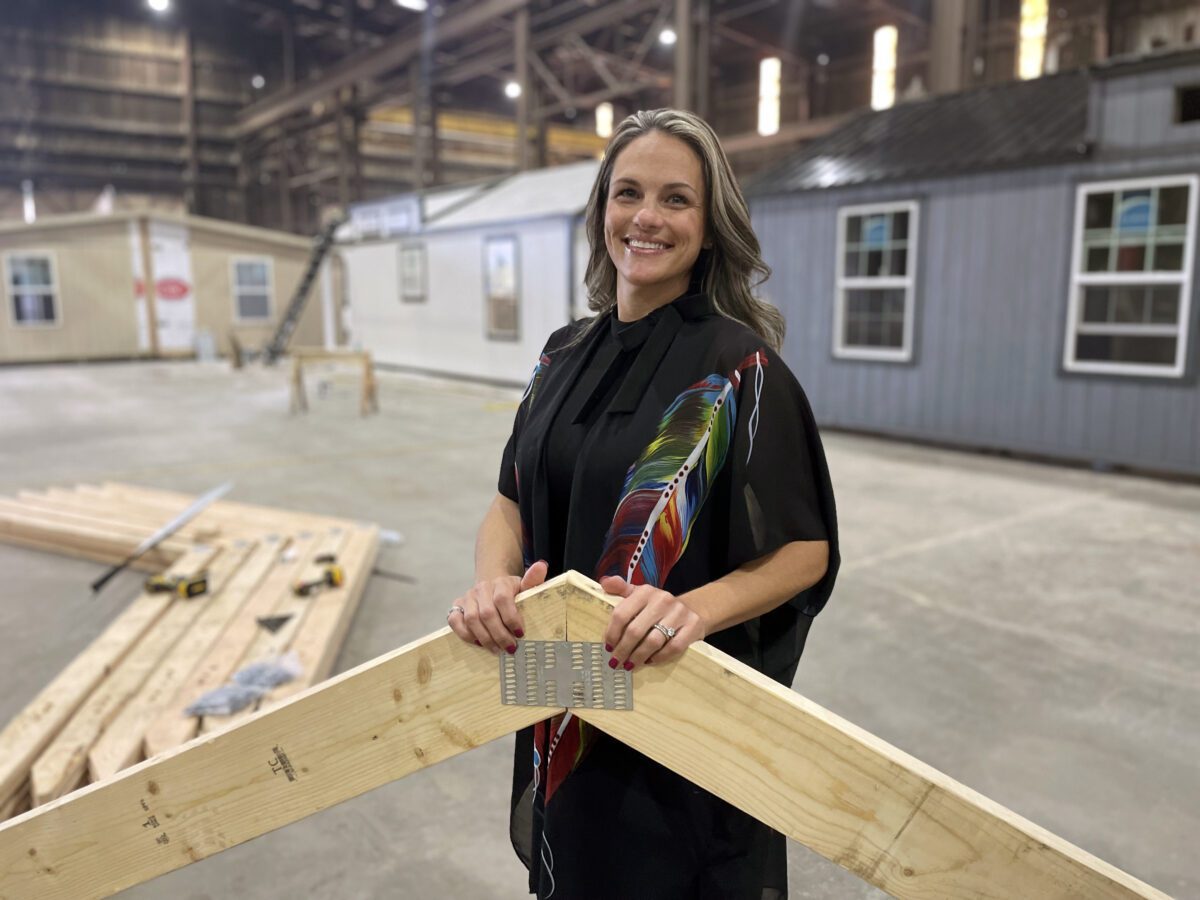
Amanda Thompson, a fellow of the AcceleratHER program, received national recognition for her business plan to help address unaffordable housing in Oklahoma via her company, Prime Craftsman Homes. Photo courtesy AcceleratHER
Forming a Community
Networking is an essential skill for business owners and entrepreneurs. Having a sense of community to turn to for support can help women navigate challenges they may encounter when establishing and running a business.
Forming solid connections can also help entrepreneurs identify sales leads and partnerships, stay in-the-know about emerging trends, and increase the visibility of their brand. There are a variety of networking opportunities available to women and small business owners that take place throughout the year.
The Oklahoma Department of Commerce (ODC) hosts a series of Lunch & Learn meetings to help empower entrepreneurs with business strategies and relevant information. Ray Little, the director of entrepreneurship and small business at the ODC, helps lead the program. Topics covered include business licensing, tax requirements and forms and certifications.
“I’ve always been an entrepreneur at heart, and it’s my passion to help people start and achieve their dreams,” shares Little. “That’s how you get wealth in this country, by starting your own business and creating something out of nothing.”
Similarly, REI Oklahoma puts on the OKC Women’s Business Breakfast every first Thursday of the month.
“Whether you’re looking for a bookkeeper, an attorney or women who are in similar industries, this [event] is about making connections,” says Meade.
Local chambers, like the Tulsa Regional Chamber of Commerce and the Greater Oklahoma City Area Chamber of Commerce, are great resources for business owners, too. Usually a small fee is required to join, but they offer extensive events and networking opportunities geared at businesses of all sizes.
Social media can also be a networking tool. Facebook communities like the Tulsa Small Business Moms and the Tulsa Business Owners Networking Group are inclusive, online spaces that enable local business owners and entrepreneurs to promote their services, ask questions and mingle at in-person events.
Women-Owned Businesses to Support
Women have been the founders of schools, publications and medical facilities long before statehood. They continue to play a pivotal role in commerce.
“We have 205 women-certified businesses here in Oklahoma, and I think that’s amazing,” says Little.
Amanda Thompson, who was a fellow of the AcceleratHER program, received national recognition for her innovative business plan to help address unaffordable housing in Oklahoma. Her business, Prime Craftsman Homes, has built 49 tiny homes since 2024.
“The women in the program really see a need not only for themselves, but for their community,” says Scott. “That’s what I love about female-owned businesses.”
On a mission to increase literacy and create a community space for Black and Brown people, Onikah Asamoa-Caesar founded Fulton Street Books & Coffee in 2020. At least 70% of the books that she curates for the store are written by people of color or marginalized communities. Other women-led businesses in Tulsa include Buck Atom’s Curio Shop, the Wildflower Café and Dog Dish.
Oklahoma City is home to several women-led businesses, as well. Founded by Tammy Greenman, Kelsey Karper, Laurent Massenat, Hugh Meade and Laura Phillips-Shin, Factory Obscura is an immersive art experience that strives to spark wonder and connection. Plant People, Painted Door and Boom Town Creamery are a few other beloved businesses in the area that are owned and operated by women.
What It Takes
Those who visit REI Women’s Business Center can access training, networking opportunities and one-on-one support for their business ideas. Photo courtesy of REI
The life of an entrepreneur is filled with uncertainty, adversity and sometimes, great success. Women that choose to establish a business often possess strong leadership skills and other characteristics.
Some of the key traits that an entrepreneur must have are adaptability and problem-solving. These characteristics help them overcome short-term roadblocks and rejection. Most businesses do not take off overnight; on average, it takes a small business at least 2–3 to start turning a profit.
“Resilience is important,” says Wright.
Business owners must have a strong vision for their business. By clearly articulating their short- and long-term goals, they can motivate others to buy into their ideas and give direction to stakeholders and employees.
Equally as important is a healthy dose of confidence and competitiveness. Business owners need to be willing to share their achievements, network and persuade investors to earn capital. They also need to understand what differentiates their company from other market options.
Without a doubt, every business leader needs an understanding of business fundamentals – from accounting to marketing.
“I’d recommend having a very good business plan to start with and doing some market research,” adds Harrington. “Connect with the people at REI Oklahoma and explore other resources to really build out a successful plan.”
Perfecting Your Pitch
Kayla Palmer, another fellow of the AcceleratHER program, is the founder of Palmer Construction & Marine Company. Photo courtesy AcceleratHER
Investors usually take a few minutes to listen and review a business pitch before making up their minds. Grab their attention, and be ready to strike while the iron is hot with these tips:
• Practice, practice, practice.
• Personalize your pitch to your audience.
• Communicate your business model and go-to market.
• Provide financials to illustrate how investors can benefit.
• End with a call to action.
As an entrepreneur, Wright weighs in on what makes a pitch great: “Some of the best pitches that I’ve seen are when the founders are able to communicate a real, personal connection to the problem they’re solving,” he says. “The storytelling component is really important.”
A scene during the Cherokee Outlet Opening, 1893. Photo courtesy the Oklahoma Historical Society
“OKLAHOMA, where the wind comes sweepin’ down the plain / And the wavin’ wheat can sure smell sweet / When the wind comes right behind the rain!”
Yes, yes – we’re sure you’ve heard our state’s iconic song, but do you know when and how Oklahoma was founded? How about some of the state’s most influential figures and key historical moments? Just how important Native Americans are to the fabric of our state’s success? Well, if not, you’re in luck – we outline all that and more in the following pages to remind you that the land we belong to is, indeed, quite grand.
Oklahoma’s Beginnings
It’s likely that no state has a more complicated and distinct origin than Oklahoma.
The area east of the Panhandle was acquired in the 1803 Louisiana Purchase, and soon became part of the schemes of Thomas Jefferson and succeeding presidents to force all Indian tribes west of the Mississippi River.
“Jefferson was convinced it would take many generations for white settlers to occupy all the Louisiana Purchase, and it took three,” says Oklahoma State Historian Matthew Pearce.
The first region to be known as Indian Territory would encompass the present states of Oklahoma, Kansas, Nebraska and part of Iowa. Relocation by treaty began soon after 1800, and the Indian Removal Act of 1830 forced large numbers to present-day Oklahoma on what became known as the Trail of Tears.
After Kansas and Nebraska entered the union, more Indians were moved further south to present-day Oklahoma. Plains tribes were placed on reservations in the western half of the territory.
The Dawes Severalty Act gave the government the power to break up communally held tribal land and allocate it to individuals. The Unassigned Lands in Oklahoma were then opened for non-Indian settlement through land runs, a lottery and an auction.
The greatest impetus for statehood began after the Land Run of 1889. About 50,000 settlers began to clamor for statehood so as to gain representation in Congress, according to the Oklahoma Historical Society.
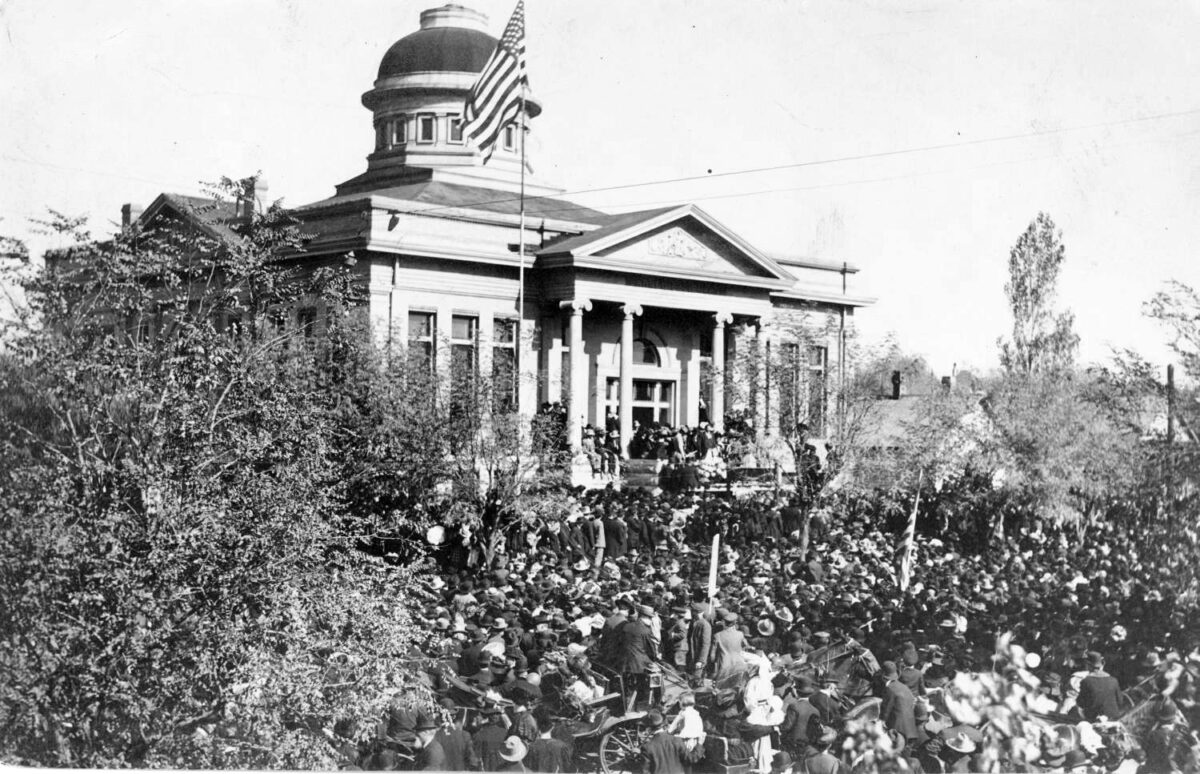
Leaders in Indian Territory favored double statehood. When it became apparent that would not happen, white settlers lobbied to join the two territories. Oklahoma was admitted to the union on Nov. 16, 1907, as the 46th state.
Oklahoma after the land runs looked differently than people might imagine, Pearce says.
“We think of a homesteading family in the middle of the prairie with a dugout,” he says. “But most people moved to a town or city. The railroads were in the area, and had been involved in platting town-sites. Settlers started purchasing town lots to establish businesses.”
Though Oklahoma would come to prosper as an agricultural state, “it was tough to farm, especially the first year. But people were drawn to the opportunity of a chance to own land. The United States was rapidly industrializing, but still there was the perception that the way you can make yourself is through farming.”
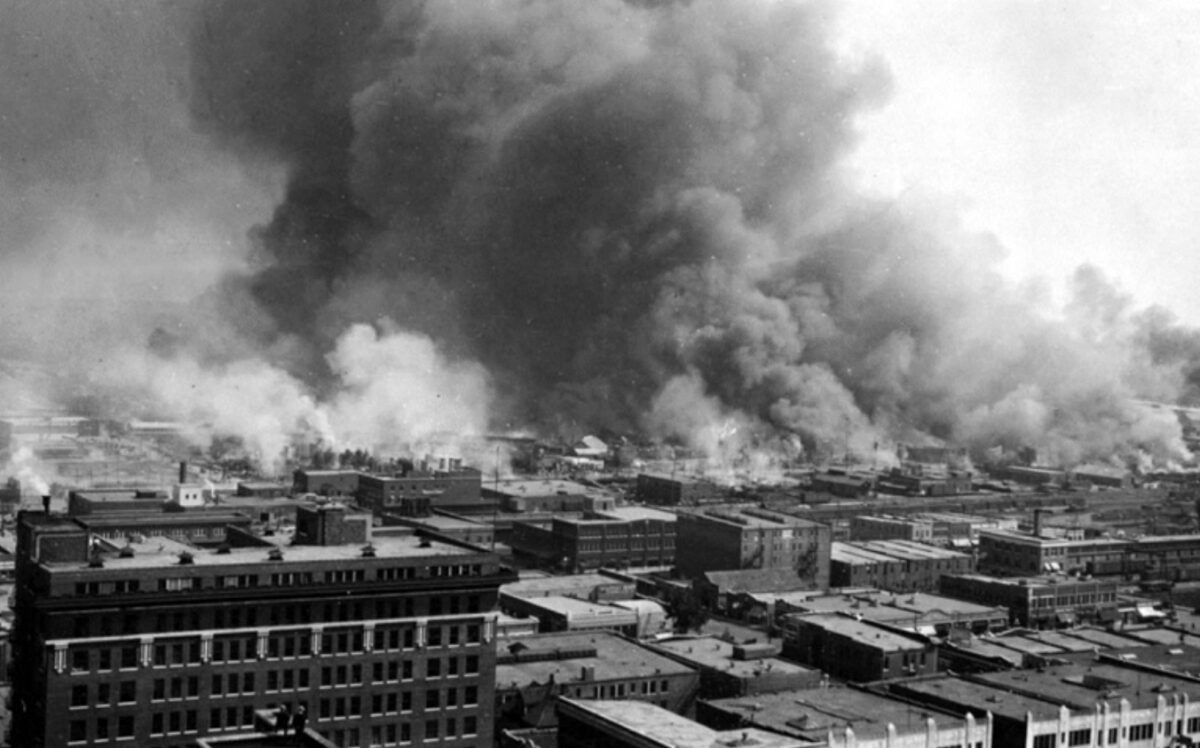
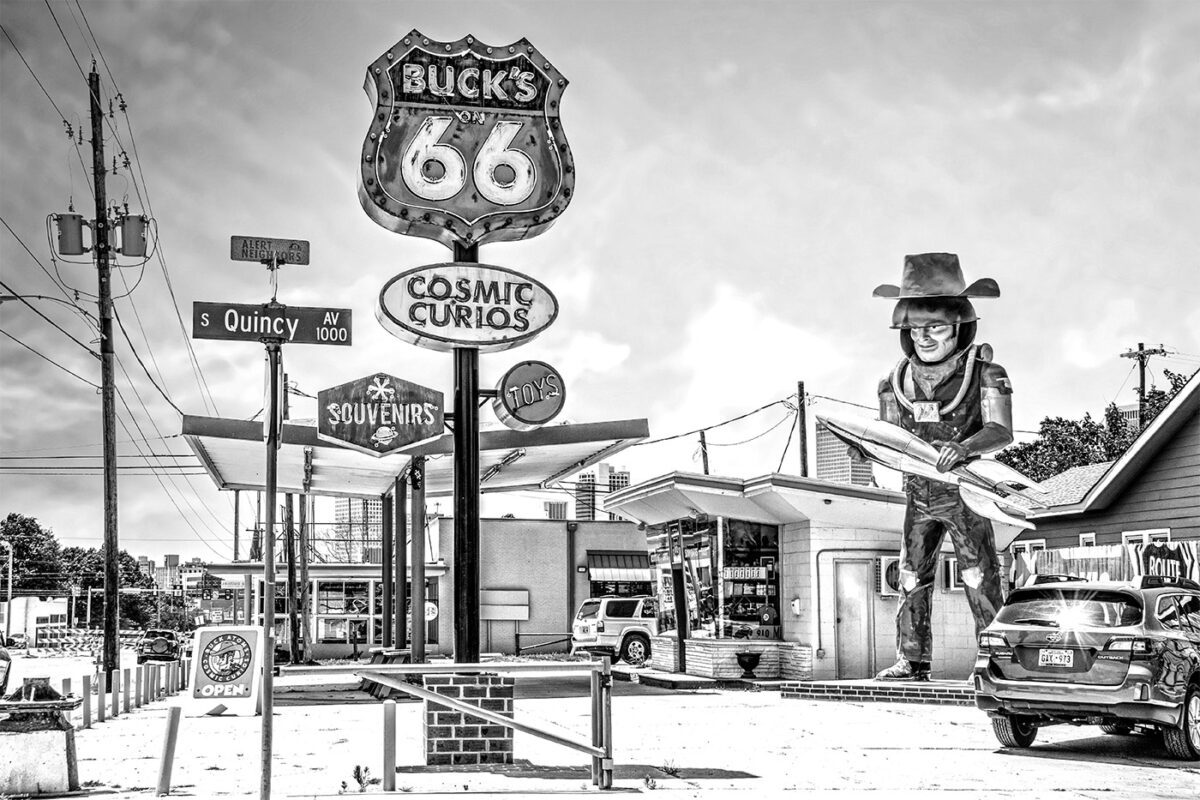
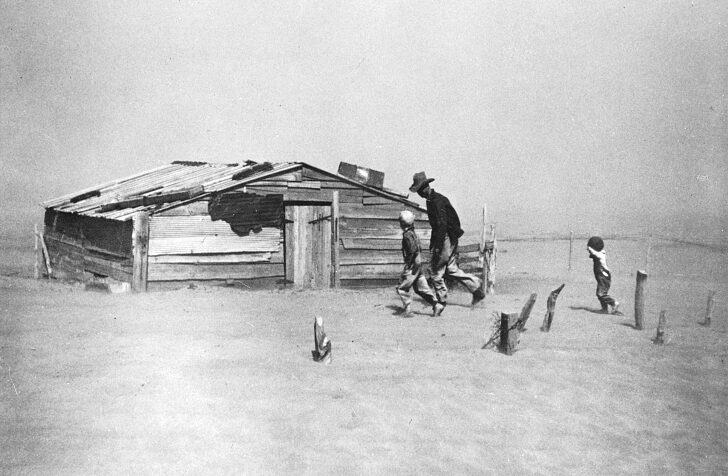
Governor Charles N. Haskell’s inauguration and Oklahoma Statehood Day in Guthrie, Nov. 16, 1907. Photo courtesy the Oklahoma Historical SocietyTulsa dominated by billowing smoke during the Tulsa Race Massacre, June, 1921. Photo courtesy the Library of CongressCurio and Souvenir Shop with neon signs from along Route 66 in Tulsa, June 2020. Photo courtesy the Oklahoma Historical SocietyA farmer and his sons walking into a dust storm in Cimarron County, Okla., April, 1936. Photo courtesy the Library of CongressCivil rights protesters in front of Green’s in Oklahoma City, circa 1964-1965. Photo courtesy the Oklahoma Historical Society
Major Moments in Okie History
Our Founding
After residents of the Twin Territories voted for statehood in 1907, President Theodore Roosevelt admitted Oklahoma as the 46th state on Nov. 16, 1907.
On Dec. 3, Roosevelt announced to Congress: “Oklahoma has become a state, standing on full equity with her elder sisters, and her future is assured by her great natural resources.”
Pearce says he finds Oklahoma history interesting “because it serves as a microcosm of so many regional, national and trans-national stories. We are a very diverse and multicultural state. That ties into our history stretching back to the forced expulsion of Native and enslaved people here, to more recent stories of people finding a home here, such as refugees from the fall of South Vietnam.”
The Tulsa Race Massacre
Oklahoma’s major historical moments rarely happened in a vacuum. The Tulsa Race Massacre on May 31, 1921, took place shortly after the end of World War I, Pearce noted.
“Many African-Americans had served in World War I, had been to France to experience a society absent of Jim Crow segregation. They came home and were expected to again become subservient. They started advocating openly for civil rights.”
But many white Americans were out to strengthen segregation, Pearce says, with similar incidents of racial violence breaking out in Chicago, St. Louis and other cities.
Route 66
Next year, Oklahomans will celebrate the 100th anniversary of Route 66. It’s a highway that remains significant today.
“By the 1940s and 1950s, highway travel is starting to replace railroads for goods and for leisure travel,” Pearce says. “We see the proliferation of car culture. Businesses were developed to cater to travelers’ needs.”
Today, tourism is one of the largest industries in Oklahoma, Pearce says. Motorists who make the Route 66 journey from Chicago to Santa Monica, Calif., are vital to the industry.
Route 66 became a primary route for migrants to California, especially during the Dust Bowl.
The Dust Bowl
“One of the most-requested topics for me to talk about is the Dust Bowl,” says Pearce, who works for the Oklahoma Historical Society. “There is no denying the absolute scale and severity of the Dust Bowl.”
The drought was worse in western Oklahoma and the Panhandle, but the exodus was greater elsewhere in the state, Pearce says.
In wheat country in western Oklahoman, “many farmers owned their land. The likelihood of them leaving their land was much less. But the migrant and tenant farmers in southern and eastern Oklahoma were forced out by landlords. They comprised what we think of as ‘Okies.’ Prices fell, and they stopped growing cotton.”
The Dust Bowl and Great Depression of the 1930s were followed by World War II, which brought a greater military presence to the state in the form of Tinker Air Force Base and other installations.
The Fight for Civil Rights
In 1948, the U.S. Supreme Court ruled in a case brought by Ada Lois Sipuel Fisher that the state must provide instruction for Black students equal to that of whites. Fisher became the first African-American admitted to the University of Oklahoma law school.
Ten years later, schoolteacher Clara Luper and her students pioneered Oklahoma City’s sit-in movement at downtown lunch counters.
Many civil rights activists trace their roots to the All-Black Towns, Pearce says, which were founded by formerly enslaved people who had come with Indian tribes or migrated to the territory after the Civil War.
Shirley Nero, a retired educator who grew up in the historically Black town of Clearview, was among Black students who worked to better their opportunities after enrolling at East Central University in the late 1960s.
“We were going to break the barrier,” Nero says. “The white kids weren’t mean or hateful, it was just the way they prevented you from doing things.”
A Black student group was formed.
“We had dances. We created and performed plays. We had floats in the parades,” says Nero. “We had queen candidates. We had study groups in the library. We made friends with the president of the college and met with him every other week.”
By the time she graduated, Nero says, “it had made a huge difference. They came to respect our group. We advocated for our own rights, for the right to have a part in the student government.”
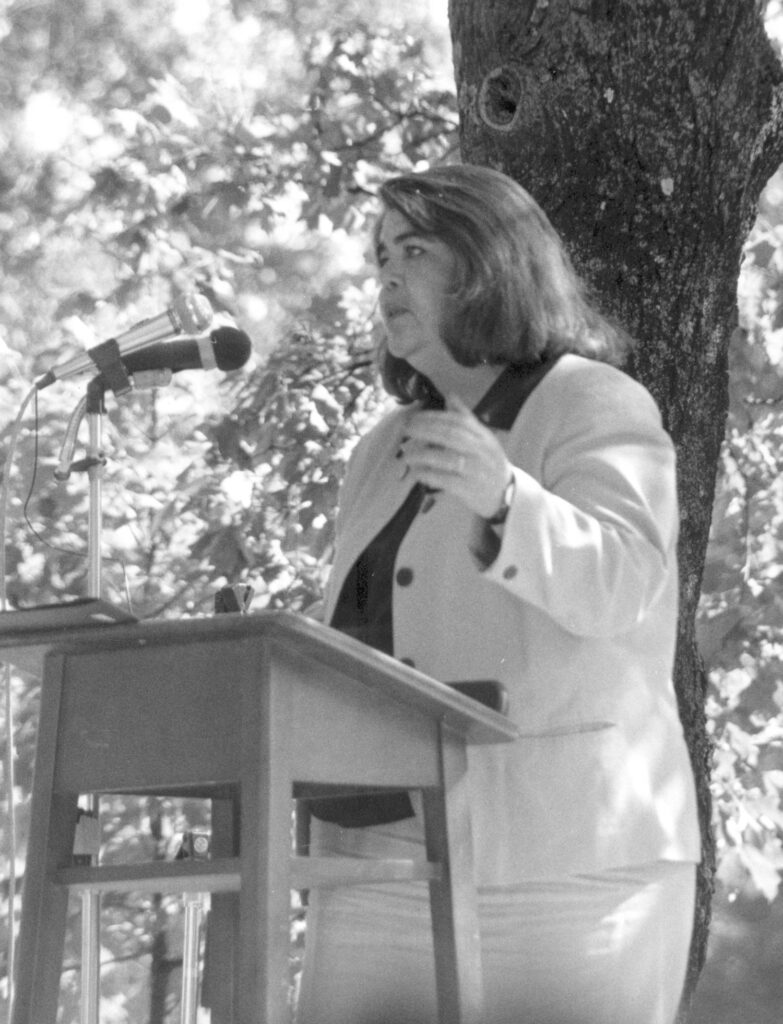
Wilma Mankiller, 1991. Photo courtesy the Oklahoma Historical Society
Sooner State Icons
Will Rogers was, in his day, the No. 1 radio personality, No. 1 at the movie box office, the nation’s most-sought-after public speaker and the most-read newspaper columnist, according to the curators at the Will Rogers Memorial Museum in Claremore.
Oklahoma has produced a giant share of luminaries, but for worldwide notoriety, it’s hard to beat William Penn Adair Rogers, born on Nov. 4, 1879, in Indian Territory near what would later become Oologah.
“Will Rogers’ human nature, wisdom and humor were nurtured on the sprawling frontier governed by Cherokee Indians,” according to his biography on the museum’s website. Rogers often expressed pride in his Native ancestry. He died in 1935 when a plane piloted by the famed Wiley Post crashed in Alaska.
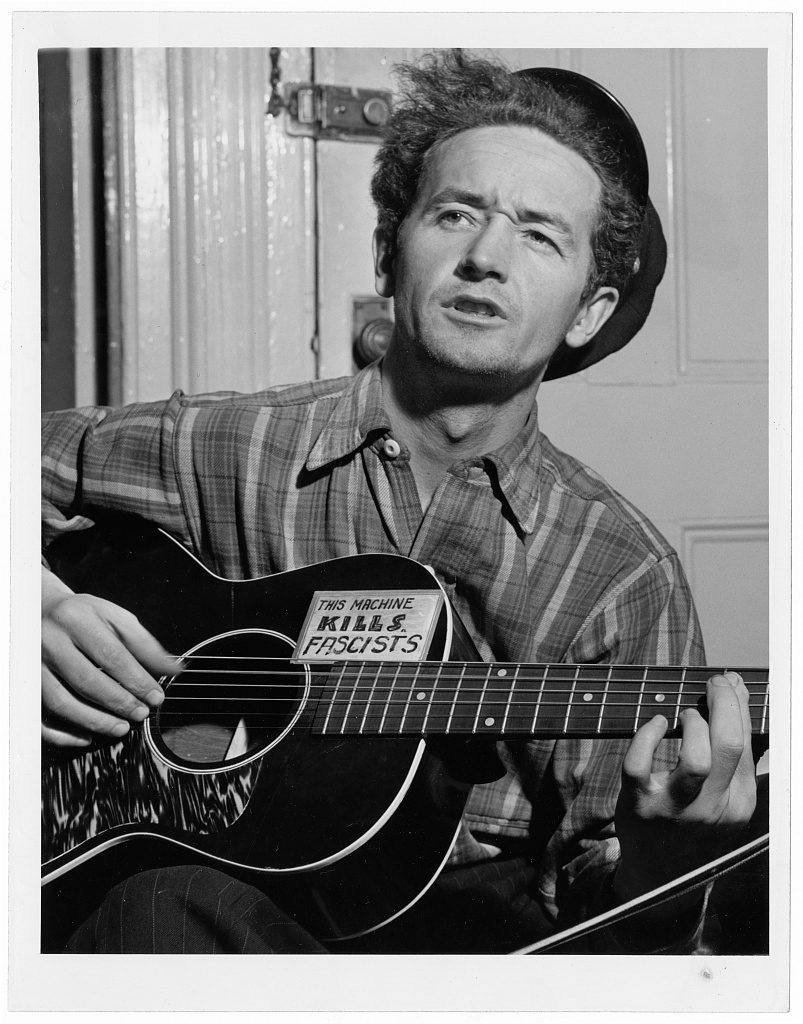
Woodrow “Woody” Guthrie, one of Oklahoma’s most creative native sons, wrote two autobiographical novels, numerous essays and articles, more than 1,000 songs and poems and hundreds of letters, according to the Oklahoma Historical Society. He was a major influence in the urban folk revival and social protest songwriting. Born on July 14, 1912, in Okemah, Guthrie moved to Pampa, Texas, in 1929, where he experienced the Dust Bowl years. He learned to play guitar, fiddle, banjo and mandolin. When he made money from playing at dances, he often gave it to someone he thought needed it more, according to the OHS.
Woody Guthrie, 1943. Photo courtesy the Library of Congress
In the early 1940s, he wrote some of his best-known songs including “So Long, It’s Been Good to Know You,” “This Land Is Your Land,” and “Bound for Glory.”
By 1950, Guthrie was showing symptoms of Huntington’s disease. He died on Oct. 3, 1967. His descendants, including son Arlo, have carried on his tradition of musical performance and social activism. A music festival is held in his honor every July in Okemah.
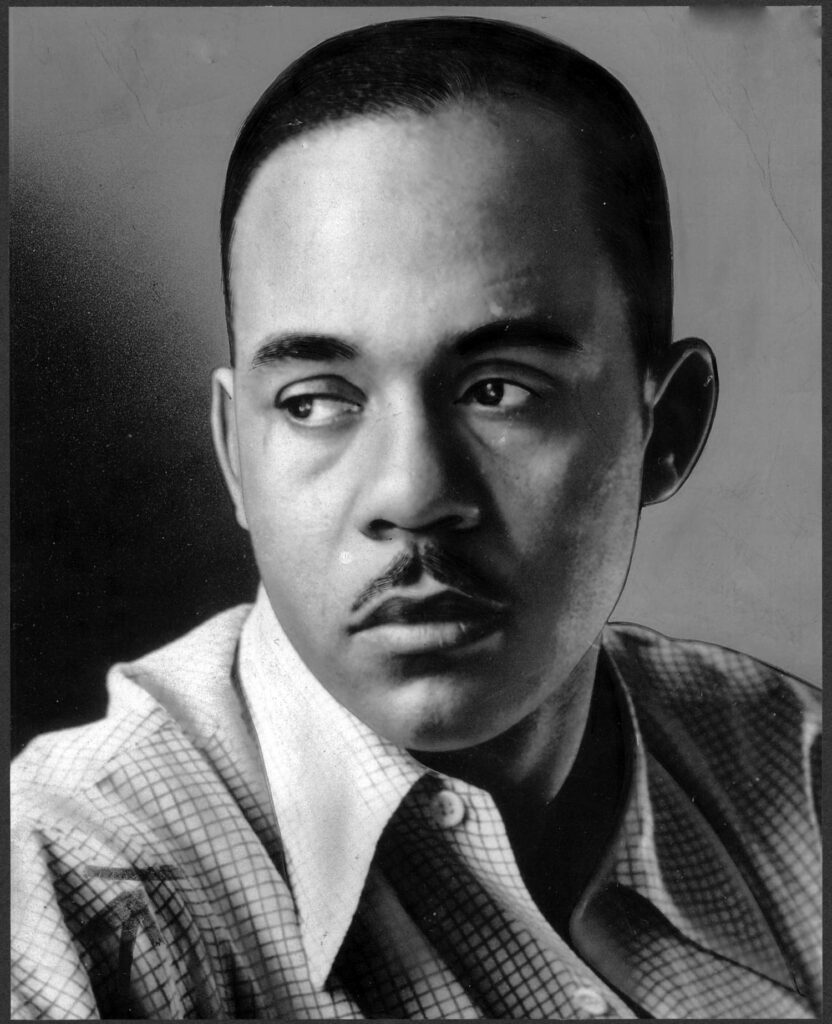
Ralph Waldo Ellison, born in OKC in 1914, was the grandson of slaves and is best known as the author of Invisible Man, the 1952 novel that addressed many of the social issues faced by African-Americans in the early 20th century. More than 40 years later, Nobel Prize winner Saul Bellow declared: “This book holds its own among the best novels of the century.”
Ellison spent the two years in Rome as a Fellow of the American Academy and taught at Bard College, the University of Chicago, Rutgers, Yale and New York University, according to the OHS. He died in 1994.
Actor, director and producer Ron Howard was born in Duncan in 1954. His father, Rance, majored in drama at the University of Oklahoma. Ron made his film debut at the age of 18 months. In 1960 was cast as Opie on The Andy Griffith Show. In the mid-1970s he became America’s favorite teenager in Happy Days.
Howard’s directorial debut came in 1977 with Grand Theft Auto, in which he also served as screenwriter and star. His smash hits include Splash, Night Shift, Cocoon, Parenthood, Apollo 13 and The Grinch. A 1992 film, Far and Away, told the story of an Irish couple who come to Oklahoma Territory to take part in the Cherokee Outlet Land Run, according to the OHS.
Ralph Ellison, 1952. Photo courtesy the Oklahoma Historical Society
Jim Thorpe, born in 1888 on the Sac and Fox Reservation, is remembered as one of the greatest sportsmen of the 20th century, winning two Olympic track and field golds and playing baseball, football and basketball at the highest level, according to Olympics.com.
In presenting Thorpe with two gold medals in Stockholm in July 1912, King Gustav V of Sweden said to him: “You sir, are the greatest athlete in the world.”
Thorpe played baseball for the Rocky Mount club in North Carolina in 1909 and 1910, receiving small payments. When a newspaper report about it appeared, it was deemed Thorpe had infringed the rules regarding amateurism, and in 1913 he was stripped of his titles. In 1983, some 30 years after his death, the International Olympic Committee reinstated his medals at an emotional ceremony attended by two of his children.
Wilma Mankiller, first female principal chief of the Cherokee Nation, was also the first woman elected chief of a major Native tribe, according to the National Women’s History Museum. Born in 1945, in Tahlequah, Mankiller moved with her family as a child to San Francisco as part of a Bureau of Indian Affairs’ relocation policy. In a 1993 interview, Mankiller described the move as “my own little Trail of Tears,” a reference to the forced removal of Cherokees to Indian Territory.
Mankiller worked to empower Native communities in California and would bring back that knowledge to Oklahoma. She founded the community development department for the Cherokee Nation, improving access to water and housing. She was elected principal chief in 1985 and led for 10 years. She was inducted into the National Women’s Hall of Fame in 1993, and in 1998 received the Presidential Medal of Freedom.
Native America’s Profound Impact
The history of Oklahoma’s Native population is typically associated with the Indian Removal Act of 1830, when members of such tribes as the Cherokee, Choctaw, Chickasaw, Muscogee (Creek) and Seminole were forced to migrate to what was then Indian Territory. But the Osage, Caddo, Pawnee, Wichita, Apache, Cheyenne, Arapaho, Comanche, Kiowa, Osage and several other tribes called the region home well before European colonization.
Regardless of when or how they arrived, what the tribes soon had in common was hardship resulting from U.S. government efforts to assimilate them, to take away their traditional forms of government and to undermine their cultures, says Megan Baker, a member of the Choctaw Nation and an assistant professor of anthropology at Northwestern University.
The 1975 Indian Self-Determination and Education Assistance Act brought hope and a sea of change. It allowed for tribes to have greater autonomy and assume responsibility for services administered to them by the federal government.
In other words, “self-government was coming back,” says Baker, who spent four years working for her tribe’s cultural preservation department while researching her Ph.D. “They could now govern themselves according to their own kind of culture. They had been taught to be ashamed of their culture. With self-determination they were becoming proud of their culture again.”
Self-determination brought economic development, which Baker witnessed when her family traveled from California to visit relatives in McCurtain County.
“Hochatown is crazy now, but back then there was nothing but forest,” she says. “I watched things pop up here and there. I was really interested in what the tribe was doing, how it was reshaping the area.”
Osage Nation Principal Chief Geoffrey Standing Bear, speaking in March during Sovereignty Day, summed up what self-determination means for his tribe.
“From where I sit, the Nation is doing very well,” Standing Bear said. “We are … getting that Osage back in our lives and I see it and you see it when these little children come and pray for us at our dinners in our own language; and it’s emotional, as it should be.”
Our Emblems
The scissor-tailed flycatcher was adopted in 1951 as the state bird, but it had not been an easy sell to the legislature, what with the bird only hanging around every summer long enough to reproduce.
“The scissortail was eventually chosen for its diet of harmful insects, its Oklahoma-centered nesting range and by the fortunate circumstance that no other state had designated it,” according to the Oklahoma Historical Society.
The mistletoe is Oklahoma’s oldest symbol, chosen as the Oklahoma Territory’s floral emblem in 1893. The mistletoe survived its designation when Oklahoma became a state after one senator “passionately orated on the subject, recalling that mistletoe was the only greenery available to decorate graves during the hard winter of 1889.”
In 1986, then-Rep. Kelly Haney wrote legislation naming the Indian blanket as the official wildflower. The new symbol was honored at a ceremony attended by more than 20 tribes. Haney later served in the state senate and as principal chief of the Seminole Nation, and was the creator of “The Guardian” statue that sits atop the state capitol.
The American bison was adopted as the state animal in 1972. The resolution states: “The magnificent animal was native to both the grasslands and woodlands of what is now Oklahoma and was significant in the cultures and ceremonies of many of the Indian tribes who lived in Oklahoma and have passed along their heritage to modern-day Oklahomans.”
The state monument is the Golden Driller, which stands in front of the Tulsa Expo Center. A plaque at the base reads: “Dedicated to the men of the petroleum industry who by their vision and daring have created from God’s abundance a better life for mankind.”
“Labor Omnia Vincit,” Latin for “work conquers all things,” was referred to as a motto in the 1893 statute describing the Grand Seal of the Territory of Oklahoma, according to the OHS.
In 1992, the honeybee became the state insect.
“The honeybee is critical to crop pollination and plays a vital role in our varied and plentiful food supply,” the resolution stated.
Main image cutline:A scene during the Cherokee Outlet Opening, 1893. Photo courtesy the Oklahoma Historical Society
With so many resources now available – from social media to podcasts and even artificial intelligence – you might say new investors have a wealth of financial information at their fingertips. While accessibility is a good thing, finding credible sources that have your best interest at heart can be tricky.
“I think the key word is ‘trust,’” says Tanya Wilson, client advisor at Arvest Wealth Management. “Getting information from a trusted source, whether that’s from a financial advisor or a podcast, that should be your top priority.”
Wilson explains that a financial advisor should be a fiduciary.
“What that means is someone that puts your best interest above his or her own interest,” she says. “There are plenty of things that can be learned from podcasts or classes or online sources, but keep in mind that that’s broad, general advice, and working with an advisor will help you tailor a plan that’s specific for your needs rather than just a one-size-fits-all approach that’s presented online or in a class or a podcast.”
John Symcox, senior vice president and chief innovation officer at First Fidelity Bank, says new investors can learn the basics of financial language from websites like Investopedia – but warns not to get all of your info from one place.
“The most important tip is to diversify your resources, look in many different places and pay attention to common themes and conflicting opinions,” Symcox says. “Stay off Reddit or social media when you are just beginning because there is so much uncited information.”
Symcox suggests identifying a few financial professionals to connect with – and meeting with them before taking any advice.
Wilson adds that finding a financial advisor, in person or online, should not cost you any money.
“It should never cost anything for an initial meeting with an advisor,” she says. “Upfront, if they offer a session or a meeting for a fee, that should be a red flag.”
Where to Start
Starting with a strong financial foundation, no matter how large or small your current assets are, is crucial, Wilson says.
“That foundation includes things such as an emergency savings plan, manageable debt and adequate insurance,” she says.
She recommends her clients have three to six months of living expenses in a savings account that is outside of the market, in the event that someone can’t work or has an unexpected expense.
“Like maybe they need new tires or they need a new hot water heater,” she says. “Having that account assures that they’re not going to have to take funds from a funded retirement account or another account that may have taxes or penalties due if they take a withdrawal.”
A debt review is important because it can look for opportunities to refinance debt at lower rates. Having adequate insurance, like life or disability insurance, is important, too, because those events can quickly derail your plan if you have an unexpected death or if a disability keeps you from working.
“Most of those coverage types are available through an employer and they’re very affordable through a group policy,” she says. “If you don’t have that, then you can seek those out outside of your employer. That just helps keep your financial plan on track.”
A clear budget is vital to understanding where your money goes, Symcox says.
“Saving and investing is about getting your money to work, so contributions are king,” he says. “Understand your emotional state with money. Investing will come with gains and losses, so the main question is what your risk appetite is.”
Keep in mind, he says, that success is subjective.
“Make sure you are clear on what success means to you,” he says. “Using the S.M.A.R.T. goals method to assess success is a great idea. Specific, measurable, achievable, relevant and time-bound investment goal setting helps to set realistic expectations.”
How to Mitigate and Calculate Risk
Investment professionals are conflicted in the area of risk, Symcox says.
“Different investments carry different risk exposures,” he says. “That is why diversification is the best way to manage risk overall. Thinking about industries, asset class, geography and other indicators that can affect a company’s performance.”
He says the riskiest investments are often ones that people make trying to chase returns.
“Typically, younger investors have time on their side, so it is better to think about contribution as the main objective,” he says. “As you age, preservation and limiting losses becomes more important.”
The degree of risk that’s necessary for everyone to reach their goals is unique to each investor, Wilson says.
“So while I may think of myself as risk-inverse or conservative, which I typically am, will taking a conservative approach that feels good to me help me reach my retirement goals? It may not,” she says. “But I have to take on some risk. I have to add risk to my portfolio so that I can reach my goals.”
Typically, investments that offer the highest risk also offer the highest reward.
“Let me use a college savings account as an example,” Wilson says. “Parents start those when they have a newborn or a very young child. And so when they do that, they have 18 years to invest the funds for growth. So they can afford to take on more risk when the child is young, because if there’s a market downturn during that time, they have time to recover it before needing the funds for college.”
The closer the child gets to age 18, the parents may want to shift the account to something that’s less risky to preserve the capital so that funds are available for college expenses when needed.
Investing Tips from the Pros
Start now. That’s Symcox’s advice to new investors.
“Start budgeting, start saving and start learning,” he says. “Use qualified accounts first if possible – 401K, 403B, IRAs and others.”
He suggests looking for ways to embed saving into your lifestyle, either by investing a potion of each paycheck, setting up a round-up or per-transaction saving, like $.25 per debit card transaction, or another method.
“Investing comes with ups and downs,” he says. “Be sure you are paying attention but not emotionally reacting. When the market goes down, then buy more shares. The worst mistake for beginners is they are scared at times and that makes them buy high and sell low.”
He recommends to buy and keep buying using a concept called “dollar-cost-averaging.”
“This flattens out the cost per share as the values fluctuate,” he says. “Learn how to hedge or mitigate the different risks with investment positions. There are many strategies to do this.”
Wilson suggests contributing into your 401k or other workplace retirement plan.
“At the very least, capture the match that may be offered by your employer,” she says. “This is the easiest way to save for retirement because it’s automatically deducted on your paycheck.”
Beyond that, Wilson says to always understand where and how your money is invested.
“Review your account statements quarterly,” she says. “Most likely, you’ll get a quarterly statement. And if you have retirement plans from previous employers, consider consolidating those to make it easier to track them.”
In short, plan ahead and steady the course.
“We plan for volatility because we know it’s going to happen,” Wilson says. “So getting on a good path, having a good savings rate, taking that disciplined approach – that’s what’s going to make you a successful investor.”
Main Investment Types
Bonds have low risk, stable returns and a variety of options, from government to corporate to municipal bonds.
“It’s company debt packaged and sold as bond shares,” Symcox says. “A way for a company or municipality to raise money with a promise to repay.” Bonds can be less risky than stocks.
“They’re typically suitable for clients that are seeking interest income,” Wilson says.
Stocks represent ownership in a business with the potential in sharing in that business’s profits.
“Equity ownership in the company receives dividend distributions from profit, or the purpose is for the company to grow and increase the value per share,” Symcox says. But there’s risk involved.
“They’re typically riskier than bonds and they’re more suitable for clients seeking long-term growth,” Wilson says. “And the key to that is long-term.”
Mutual funds are bundled stocks and bonds managed by a fund manager with a specific objective, Symcox says. He adds that it’s a good diversification strategy, but that investors should learn about share classes and expense ratios before entering into these.
“They’re not traded on an open exchange,” Wilson says. “They’re purchased directly from a mutual fund company and they’re suitable for clients that are seeking the benefit of diversification. If you’ve ever had a 401K, you’ve most likely owned a mutual fund.”
Real estate property investments can be packaged or individually invested, Symcox explains. He recommends investors understand the underlying properties, as they can come with unexpected expenses. Wilson agrees.
“A rental property can have hurdles to overcome because it will require a large down payment,” she says. “So this is suitable for clients that have time to service tenants and have the funds available for out-of-pocket expenses, like the down payment or maintenance taxes and insurance on the property.”
Index funds track a market index, like the S&P 500, Dow or Nasdaq 100.
“They are seldom exact to the indexes but are a great base for a broad diversified position,” Symcox says.
Wilson adds that index funds are passive investments.
“Those are appropriate for clients that are seeking movement that aligns with that index such as the S&P,” she says. “It’s not something that’s actively traded. When I say passive, it’s more of a buy and hold.”
ETF or exchange-traded funds are similar to mutual funds but are generally lower cost because they are not actively managed like mutual funds are, Symcox says.
“These are good for diversification and self-directed investment management,” he says.
Wilson agrees.
“A lot of times people confuse exchange traded funds with mutual funds,” she says. “An exchange traded fund is a collection of stocks that are sold together as one product or share, but they’re traded throughout the day on an exchange. They often have lower fees than a mutual fund.”
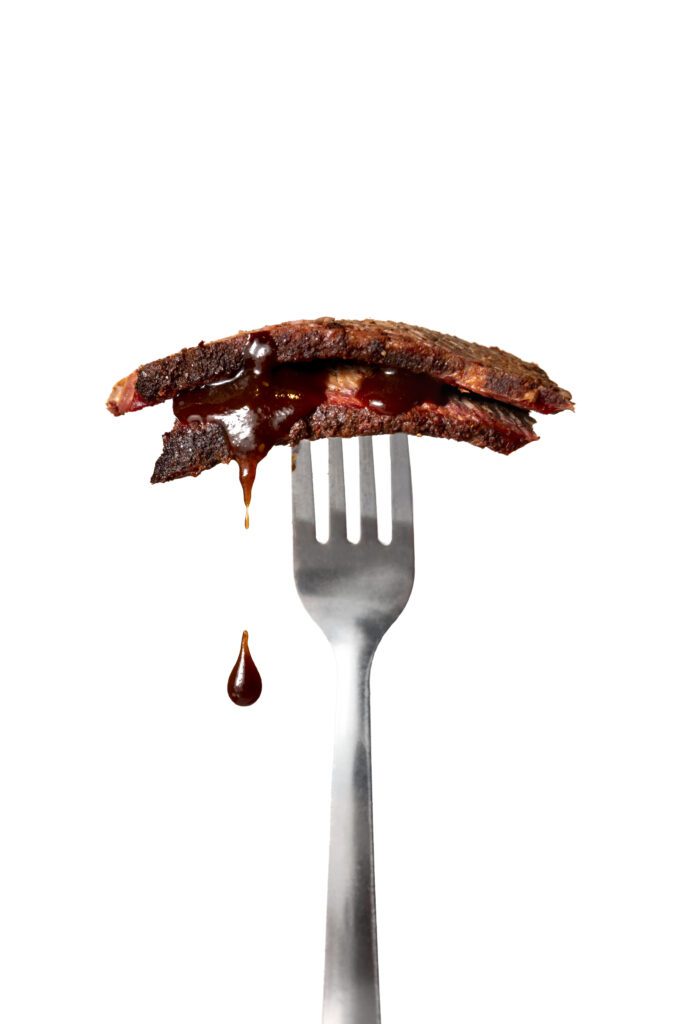
For as long as humans have wielded fire and meat, barbecue has existed – born as a practical cooking method, forged into a cultural commonality across continents, refined by technology and globalization, yet forever anchored in its primal, simple technique. Oklahoma is home to hundreds of BBQ restaurants and thousands of passionate pitmasters. We talk to a few of them about preferred cooking methods, grilling essentials, savory sauce predilections, and the beauty found in the communal nature of barbecue.
Barbecue’s Origins
Barbecue – perhaps the most primal cooking method to exist – has been around for centuries. But where did it originate?
In the book The Indigenous People of the Caribbean, Samuel M. Wilson uses archaeological and ethno-historical evidence to trace barbecue’s roots to the Caribbean islands, where Native traditions mingled with Spanish explorers’ techniques, and later European settlers’ adaptations. Fast forward to today, and barbecue is a rich tapestry of Native, African and European influences, woven into a distinctly American art form that shifts in flavor and flair from region to region.
American barbecue specifically has evolved over centuries, from Indigenous Caribbean tribes cooking meat over indirect flames using green wood, a method dubbed “barbacoa,” to the spread of BBQ techniques through the American South, often thanks to the comparative ease of raising pigs. By the pre-Civil War era, American southerners had refined the art of slow-cooking pork and beef to tender deliciousness.
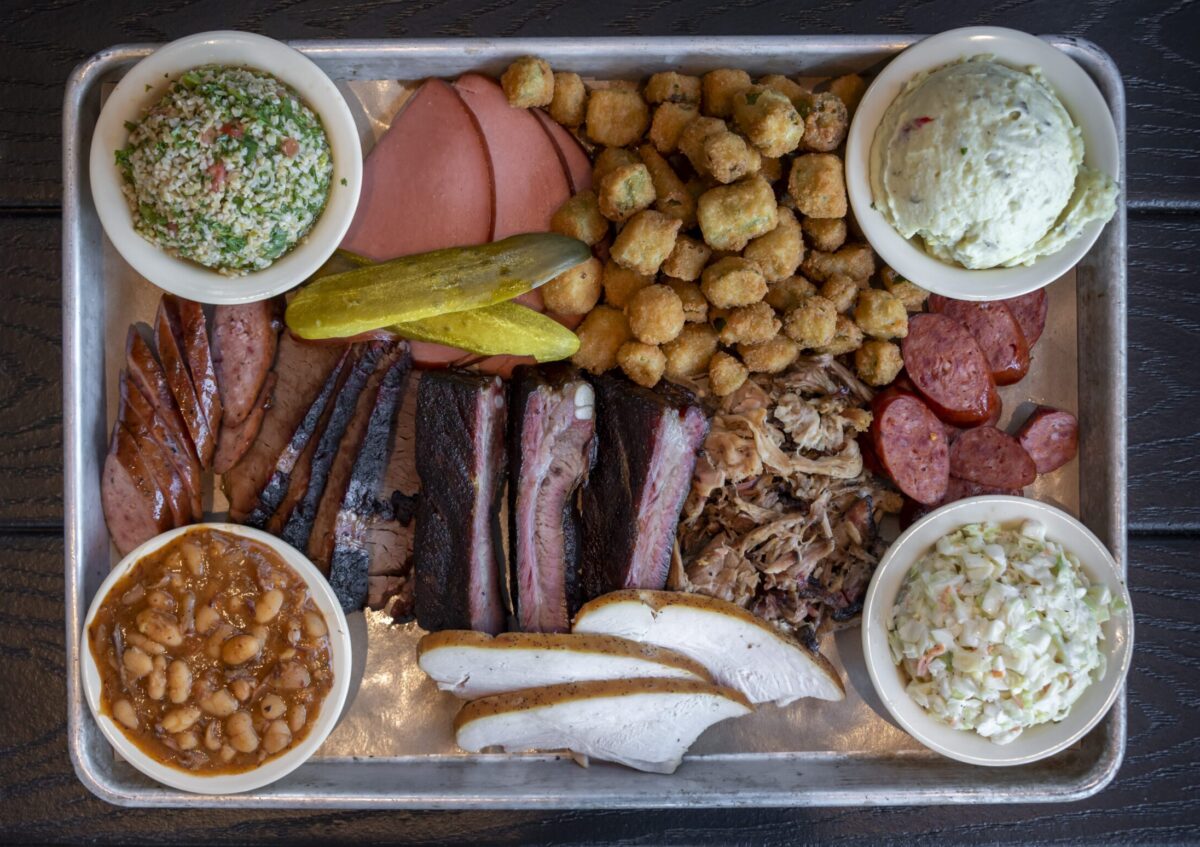
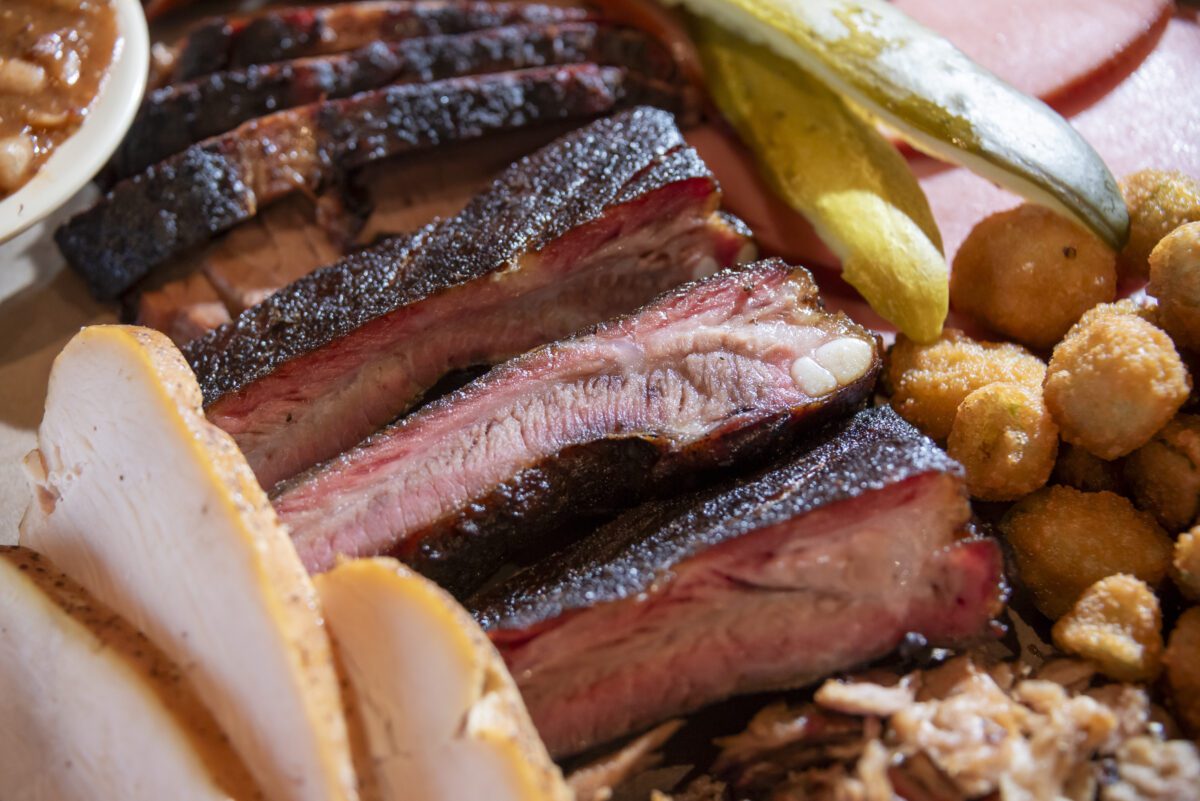
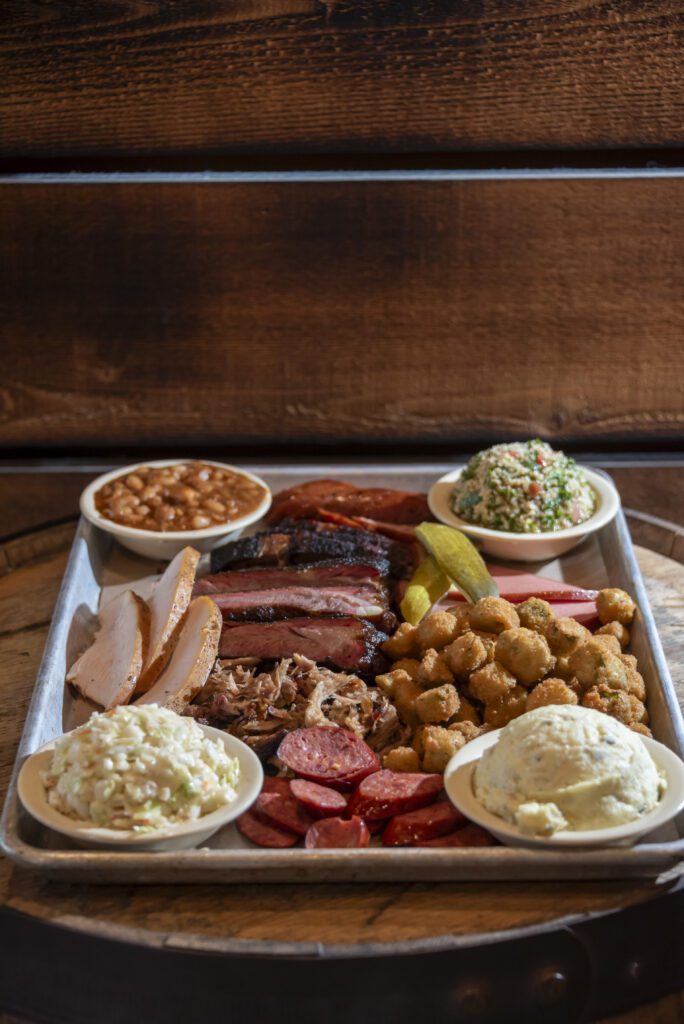
Platters at Albert G’s Bar-B-Q in Tulsa come with everything from brisket and bologna to tabouli and okra. Photo by Stephanie Phillips
Getting Lost in the Sauce
Some barbecue pros make their own sauces. Others slather on their favorite local or national brands. Some think the less sauce you use, the better, while others encourage generous utilizations. In the end, to sauce or not to sauce is a question personally posed to each pitmaster.
Chuck Gawey, owner of Tulsa based Albert G’s Bar-B-Q, created his own tomato-based sauces (classic and hot) over thirty years ago and still has it bottled in Sapulpa.
“There’s a lot of good sauce out there,” he says. “Really good ribs and brisket don’t need sauce, but it does add something. It’s personal preference.”
Oklahoma doesn’t have a single, universally defined barbecue sauce style like some other regions, as our state sits at a crossroads of barbecue traditions, with Texas to the south and Kansas City to the north. Sooner State barbecue sauces lean towards a sweet-and-spicy profile and tend to have a tomato base with sweetness from molasses, brown sugar or honey, along with a smack of heat from peppers, cayenne or hot sauce. Some pitmasters add Worcestershire sauce or mustard for some depth.
Low and Slow
Mac’s BBQ, Skiatook; photo courtesy Mac’s
From rotisserie to charcoal to an array of woods like hickory or mesquite, barbecue offers endless cooking possibilities. Yet Oklahoma’s pitmasters share a unifying mantra: Low and slow, the time-honored key to smoky goodness.
“For cooking big meats, like brisket or pork, I like low and slow cooking with pecan wood,” says Travis Clark, owner of Clark Crew Barbecue with locations in Tulsa and OKC. “We use that same pecan wood for our ribs, turkey and chicken, but at a higher temperature. For grilling, I love direct fire on open coals with a charcoal and wood mix. That’s for steaks, burgers, pork steaks and sausage.”
Matt Thompson, vice president of operations for Oklahoma BBQ behemoth Rib Crib, says that his team members are also “big fans of low and slow to make sure the smoke flavor is there,” he says. “Our smokers stay well below 300° which also helps tenderize the meat and keep it juicy.”
Gawey concurs; this method is tried and true.
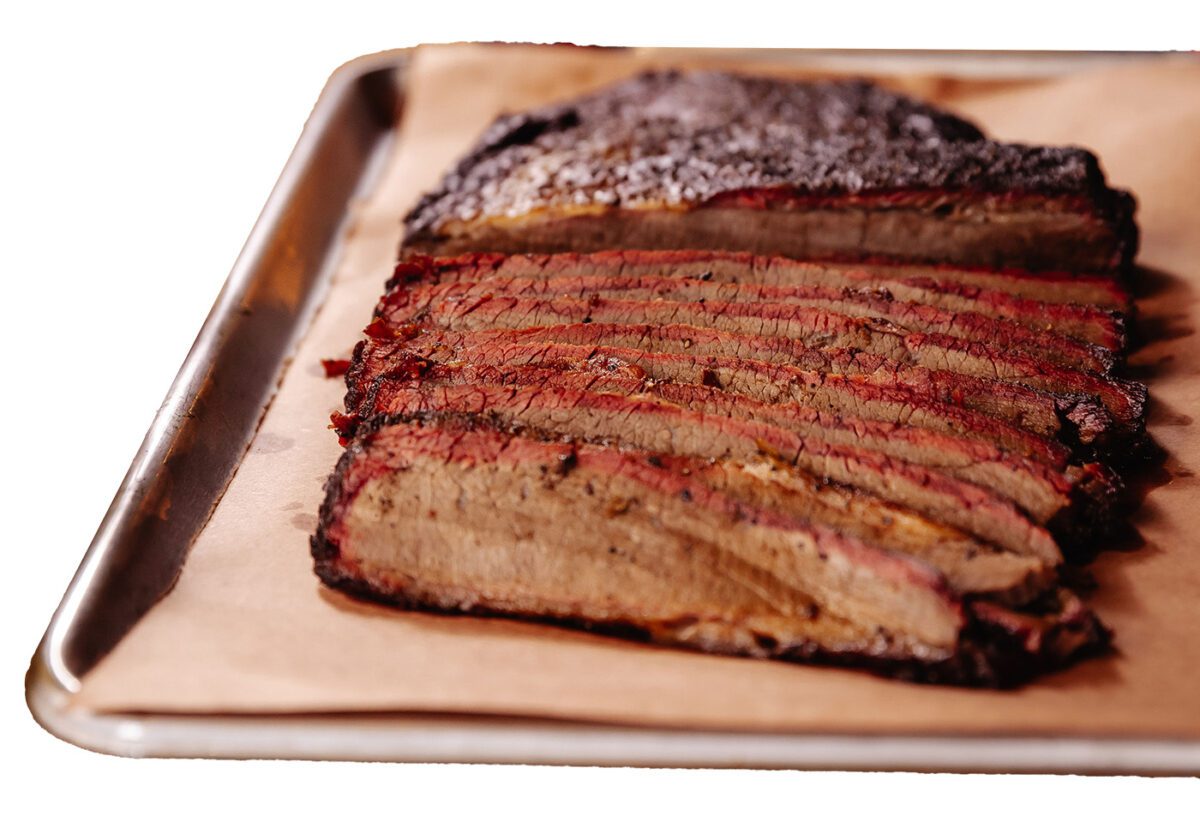
“Everything is indirect, every time,” he says. “Our pork butts and briskets go in the smoker at 6 p.m., and at 7:30 a.m. the next day I take it off. It’s low temperatures, and we use pecan and hickory. In the morning after I pull it off, we bump up the temperature a bit to 250 or so degrees to cook ribs, bologna and turkey.”
Tips from the Pitmasters
Deliciousness is in the eye (or, rather, stomach?) of the beholder, but Oklahoma pitmasters share insights into what makes barbecue truly tasty for them.
“We use all our own seasonings, and they are the same exact ones we sell,” says Clark. “[We’ve got] years of researching and testing these out at competitions. They are balanced, and complement the meat, but are not overpowering.
“The technique to focus on, then, is tenderness,” Clark continues. “Learn what it feels like when it’s done; it’s not always a temperature, as every piece of meat is different. And above all, don’t over-smoke your meat. Barbecue doesn’t have to be over-smoked. Find the balance you like.”
Rib Crib’s Thompson says the bark – the combo of spices, smoke and meat – is essential.
“That’s where a lot of wow factor comes in for barbecue,” he says. “When the bark is right, every bite is a ‘holy smokes’ moment. We slather and season to make sure there is a good bark, and use green hickory wood to put off more smoke.”
For Gawey, it’s all about the passion.
“It’s about caring about the products we’re putting out. It’s been 33 years now, but we can always do better,” he says. “A great rub is important too. We’ve had the same one all these years.”
In a heavily saturated barbecue market, each pitmaster needs something to help them stand out. Cindy Watts, owner of OKC’s Bedlam Bar-B-Cue, keeps her ‘gimmick’ simple: a focus on creating the highest quality product she can.
“We don’t want any hormones; it’s all-natural and grass-fed, unprocessed,” she says. “That usually – but not always – means the most expensive ingredients. Nothing frozen. And we make our own rubs and sauces that flavor everything.”
For Thompson, smoking meats daily and keeping things fresh is a major priority, too.
“Our craftsmen begin and end their days prepping meats and loading the smokers to make sure we can keep up with demand,” he says.
Iron Star Urban Barbecue, OKC; photo by Choate House
A Communal Dining Experience
Backyard barbecue bashes thrive on stellar meats, good company and a few key touches: ice-cold drinks, a steady flow of food, and a warm and welcoming vibe that keeps everyone mingling. Barbecue is, after all, a communal experience.
“A friend of mine, Mike Mills, always says that ‘barbecue is not a concept, barbecue is a culture.’ Barbecue brings people together,” says Clark. “We have huge, 30- to 40-top parties of guests all the time. It’s a communal type of food; people pass it and share it. Barbecue is the best food for that, it’s what we do at gatherings. It’s what brings families together.”
New Tech vs. Old School Craft
Clark Crew BBQ, Tulsa and OKC; photo courtesy Clark Crew
Cutting-edge grilling technologies are continually advancing, but local restaurant owners tend to stick to time-honored secrets forged through years of mastering the craft.
“I’m a master electrician by trade,” says Clark. “If you rely on something electronic, it will let you down. I’d prefer to invest in my people and training versus an electronic probe or machine that will fail. People can care about a piece of meat and have pride in it – no wireless probe can sense tenderness to know when it’s right.”
However, if you’re a backyard BBQ enthusiast who enjoys some gadgets at the grill, try:
• Smart grills that integrate app-based controls and WI-FI connectivity
• Robotic grill cleaners such as the Grillbot, which autonomously scrubs grates with motorized brushes
• Wireless meat thermometers like the Meater Pro, which probe with Bluetooth and Wi-Fi, and have a 165-foot range
• Laser surface thermometers like the Etekcity Infrared map out grill hot spots without contact, and temperature controllers like the Flame Boss 500, which fine-tune airflow in smokers via a fan system synced to a smartphone
Your Grilling Essentials
Ready to become a pitmaster? Here are some tools to utilize.
Grill: Choose a charcoal grill or gas grill. If you want to go more advanced, try a pellet grill or ceramic kamado.
Tongs: Long, sturdy, stainless-steel tongs about 16 inches long are ideal to flip meat.
Thermometer: A digital meat thermometer is critical for ensuring your food is cooked through.
Grill brush: Keep your grates clean and extend the life of your grill with a heavy-duty brush.
Basting brush: A silicone brush safely coats meat without losing bristles.
Chimney starter: For charcoal users, a chimney starter ignites coals quickly, so you can skip the lighter fluid.
Grill basket or skewer set: Perfect for veggies, shrimp or kebabs.
Cast iron skillet: Or a griddle to sear steaks, cook sides like veggies or cook bacon.
Heat-resistant gloves: Protect hands with leather or Kevlar gloves when handling hot grates or coals.
Fuel: Stock quality charcoal or hardwood pellets for pellet grills. Gas users need spare propane.
The Pros and Their Favorites
We asked our barbecue experts: What’s your favorite barbecue dish?
Cindy Watts: “I like our jalapenos poppers, the sliced brisket, oh, and our green rice – that’s a broccoli cheese rice casserole from my cousin’s grandmother’s family recipe.”
Travis Clark: “Brisket and burnt ends. It’s a longer, more challenging cook. If it’s not done right, it can turn out tough. But when you get it right, it’s some of the best meat you can eat. I like a chopped brisket sandwich with spicy sauce, personally.”
Matt Thompson: “I love sweet and sticky ribs with a bark that’s almost like candy. Tons of flavor, so tender – and nothing says ‘barbecue’ quite like that for me.”
Chuck Gawey: “It’s hard to pick one thing. A lot of time and effort go into the ribs and brisket. If I have a sandwich, I love our chopped brisket bologna combo, and I do use sauce. Oh, and our smoked turkey that is smoked and then dropped in the fryer.”
BurnCo Barbeque, Tulsa; photo courtesy BurnCo
Great Oklahoma Barbecue
Is this an exhaustive list of Oklahoma’s tastiest barbecue? No! So don’t get onto us if someone’s missing, capeesh? But it’s a great way to get started on your Okie BBQ journey…
Burn Co. Barbeque: The pitmaster rules the Hasty Bake at Burn Co. in Tulsa, turning out sought-after charcoal-smoked brisket, pulled pork, baby back ribs, sausages and quirky favorites like The Fatty, resplendent with bratwurst, hot links and smoked sausage.
Rib Crib: Since 1992, Oklahomans have frequented their favorite of more than 60 Rib Crib locations across eight states, where award-winning, slow-smoked-on-site daily meats are augmented by classic sides like fried okra and cowboy beans.
Albert G’s: From-scratch creations at Albert G’s include chopped brisket, hot links, Polish sausage, tabouli and coleslaw, with three convenient Tulsa locations.
The Butcher Barbecue Stand: Locals and travelers cruising historic Route 66 flock to the family-run Butcher Barbecue Stand in Wellston for mouthwatering, competition-grade barbecue.
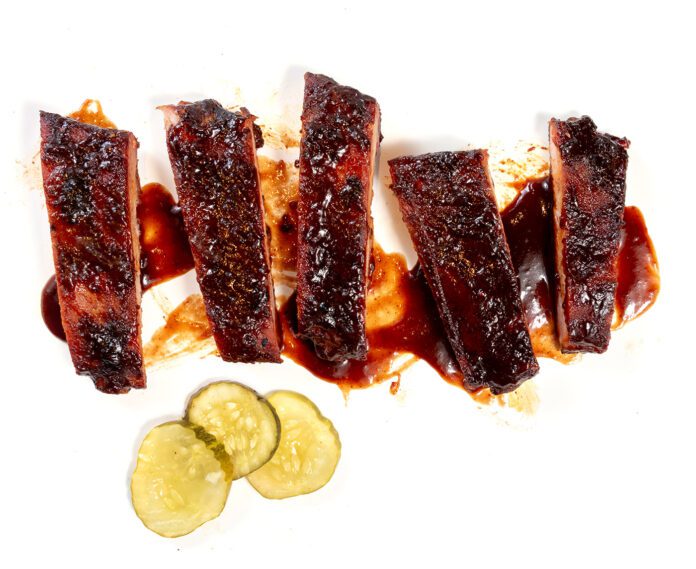
Oakhart Barbecue: Let your senses guide you to Oakhart Barbecue in Tulsa’s Pearl District, where central Texas-style barbecue is smoked low and slow over post oak. Standout menu items include pepper-rubbed spare ribs with a sweet glaze, succulent brisket, and house-made sausages.
Leon’s Smoke Shack: Family-run Leon’s Smoke Shack is a haven born from Leon Thompson’s passionate hobby, now thriving at two Tulsa locations. Crowd-pleasing dishes are smoked to perfection over a blend of pecan, hickory and post oak woods.
Mac’s: An iconic Skiatook hotspot, Mac’s Barbeque is a beloved institution opened by Mike and Vickie McMillian in 1985 and is still a no-frills, down home, family-run and award-winning barbecue joint serving up classics along with house specialties.
Smokies Hickory House: For over two decades, pitmaster Tom Eddings has been serving up smoky delights cooked over hickory wood at Smokies in Broken Arrow. This family-run gem is renowned for hearty platters loaded with brisket, pork, ribs, sausage and hot links.
Bedlam Bar-B-Q: Using curing and dry-rub applications, Bedlam Bar-B-Que and its long-held family recipes are sure to impress OKC diners. Make sure to try specials like smoked chicken on the bone and Edward’s Hot Plate, with pork hot links, jalapeno sausage and spicy cowboy beans.
Clark Crew Barbecue: Boasting hundreds of championships and competition honors, Clark Crew Barbecue, a cherished family-run Oklahoma icon, delivers expertly smoked Wagyu beef, smoked-then-fried wings, wood-fired pizza and irresistible desserts.
Iron Star Urban Barbecue: For nearly 25 years, Iron Star Urban Barbecue has dished out house-smoked meats kissed with a meticulously honed secret rub. Inspired by Oklahoma’s infamous lady outlaw Belle Starr, this upscale yet laid-back OKC gem remains a local favorite
Bonus Photo Gallery:
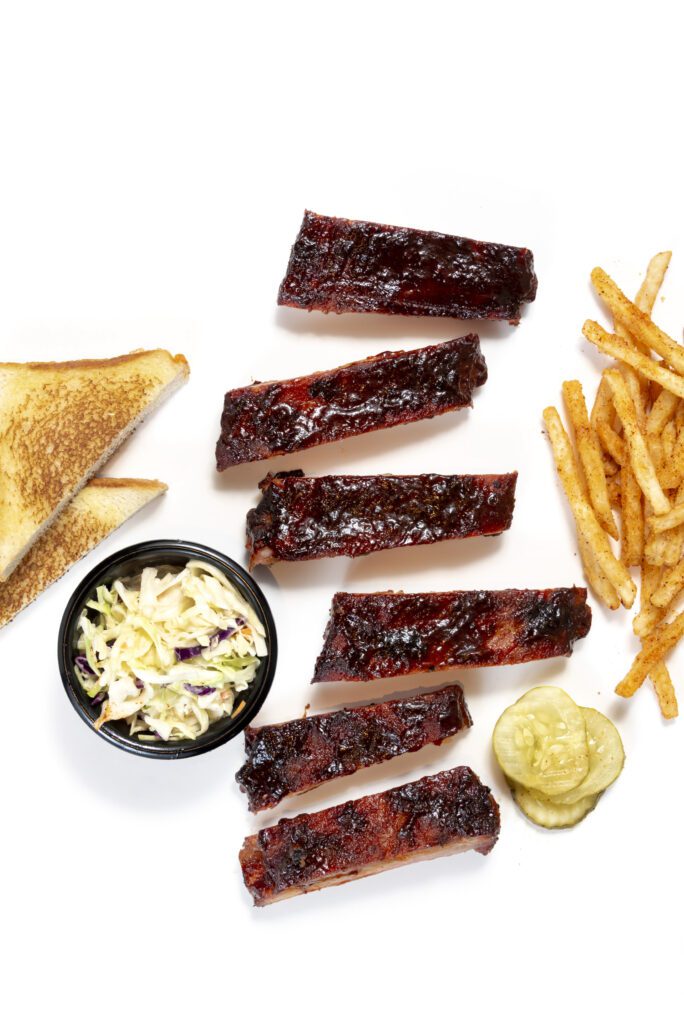
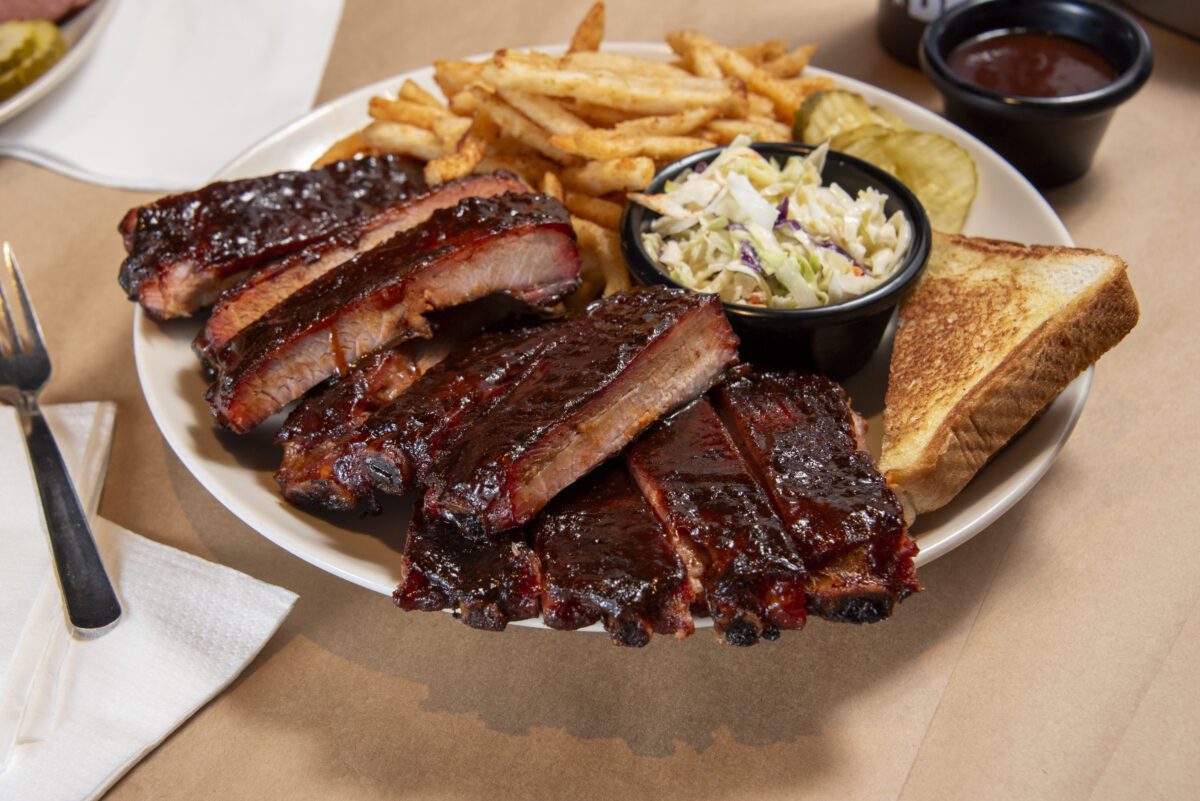
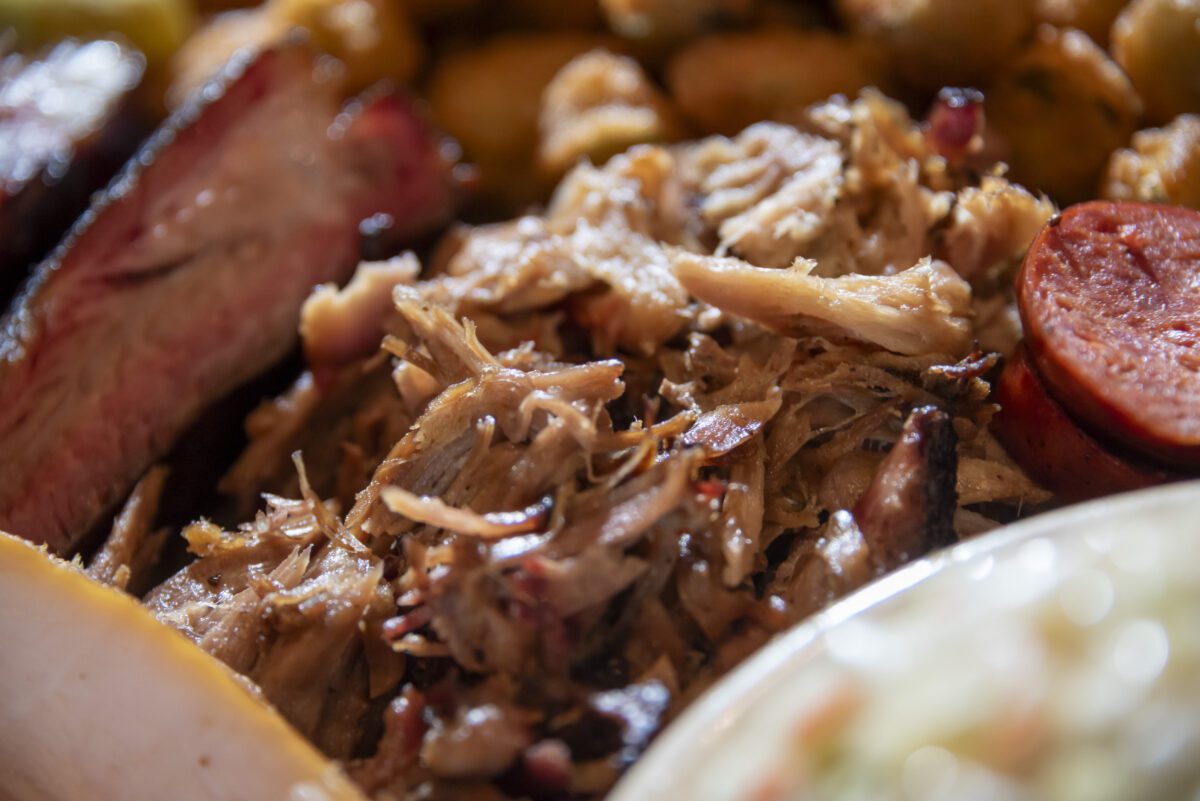
The Rib Dinner at Rib Crib comes with ten hickory-smoked ribs and two sides, which range from seasoned fries and mac and cheese to coleslaw and okra. Albert G’sRib CribAlbert G’sPlatters at Albert G’s Bar-B-Q in Tulsa come with everything from brisket and bologna to tabouli and okra. Rib Crib
All gallery photos and main image by Stephanie Phillips
Described as a “fresh twist on seafood accompanied by a premier lakefront view,” Hefner Grill on the shores of OKC’s Lake Hefner presents a timeless vibe, sophisticated cuisine and a service-driven staff .
Hefner Grill is open seven days a week for lunch and dinner, with brunch service on Saturday and Sunday. The all-day menu, which offers variety without overwhelming diners, includes starters like salt and pepper shrimp, crispy calamari, crab dip and lemon garlic hummus. For lighter fare, try the coconut chicken salad, with mixed greens, green apple, carrot, mango and radish in a citrus-ginger vinaigrette, or the ‘Shrimp Louie,’ with jumbo gulf shrimp, iceberg wedge lettuce, tomato, avocado, Thousand Island dressing and champagne vinaigrette.
Main entrees will impress. Try the fish and chips, or opt for the pecan crusted trout, replete with rice, seasonal vegetables and house-made tartar sauce. Other options include the hand cut filet, the New Orleans bayou shrimp and the sea bass. Fear not – those without an affinity for seafood can enjoy the classic cheeseburger, club sandwich or chicken ciabatta. For weekend morning visitors, the brunch menu presents omelettes, pancakes, quiche and an array of Benedicts.
On Monday through Friday from 3-6 p.m., in the bar and on the patio, enjoy ‘Social Hour’ deals, including discounted bar bites, like coconut shrimp and tuna tartare, as well as $8 classic cocktails like the Old Fashioned and Moscow Mule.
One of Tulsa’s best kept (and most delicious) secrets, Rengang and Co. offers authentic Indonesian cuisine from James Beard Award semifinalist Indri Bahar.
Start your experience off on the right foot with mouthwatering appetizers, including broccoli and meatball soup, martabak (deep fried, beef-filled pancakes) and bakso bakar – grilled beef meatball skewers. Other jajanans, or snacks, include beef broth soup, stream fish dumplings and deep fried tofu.
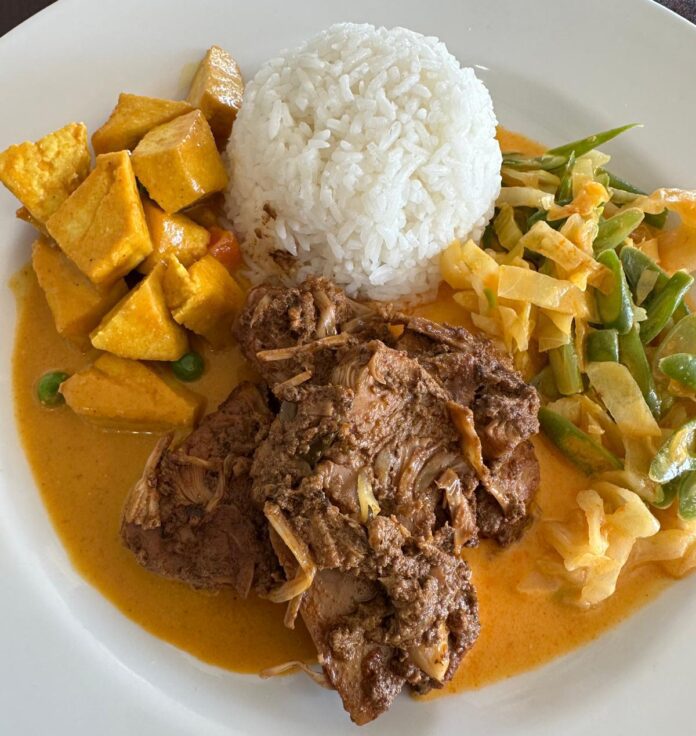
Entering entree territory, try the Rendang and Co. fried rice meal – dubbed an ‘All-Time Favorite’ – with beef rendang fried rice, chicken or lamb sate, a chicken wing, plus fried egg and garlic crackers. Another beloved dish is the bihun goreng, which comes with fried rice noodles, veggies and protein options including chicken, tofu, beef rendang or shrimp. Signature dishes at Rendang include the nasi padang, with beef, chicken or vegetable curry alongside a hard-boiled egg and red and green chili paste; as well tongseng kambing – fried lamb stew with house curry spices and soy sauce. Rendang also offers vegetarian dishes, a kid’s menu, lighter lunch fare and an assortment of drinks, including teas, sodas and hot options. Complete your experience with traditional Indonesian desserts and well-known sweet classics like fresh mango juice or an Oreo milkshake.
The milkshakes at MAD come in 25-ounce beer mugs, replete with brownies, candy, cereal and, of course, a cherry on top. Photos courtesy MAD Eats
The pre-COVID era was drawing to a close when Erik Reynolds, who helped kick-start Tulsa’s fine dining renaissance when he opened Smoke on Cherry Street eight years before, decided to build a branch of the restaurant in Owasso.
“My partners bought the property,” Reynolds recalls. “It was big enough for two restaurants, and we had to come up with something for the space. I decided to create something cool, family-friendly, with a relaxed, fun atmosphere. Now as a chef, diner food is really what I like. It’s simple, comforting, I love everything about it. A lot of chefs, like me, start their careers with fancy restaurants and then want to open something simple. It’s our roots. It’s classic American food. I wanted to take traditional dishes and do something better with them, elevate them.”
The idea thrilled him.
“We’ll have breakfast and street tacos and cool, fun appetizers,” he mentioned just before MAD Eats opened. “Fried chicken, champagne cocktails, local beers and ridiculously huge milkshakes.It’s going to be a madhouse!”
And indeed it was. There was a short lull because most people in Owasso thought that for dining purposes, you head to 96th Street, and MAD Eats is close to 76th. But when they learned about the sleek, bright and beautiful wood paneled dining space and just how delicious the food was, the crowds started pouring in. They still do.
“Last Saturday,” Reynolds says, “we had eight hundred customers. It gets crazy in here. We have four cooks on the line and two prepping and they serve all eight hundred. I pay well, but I run a tight ship.”
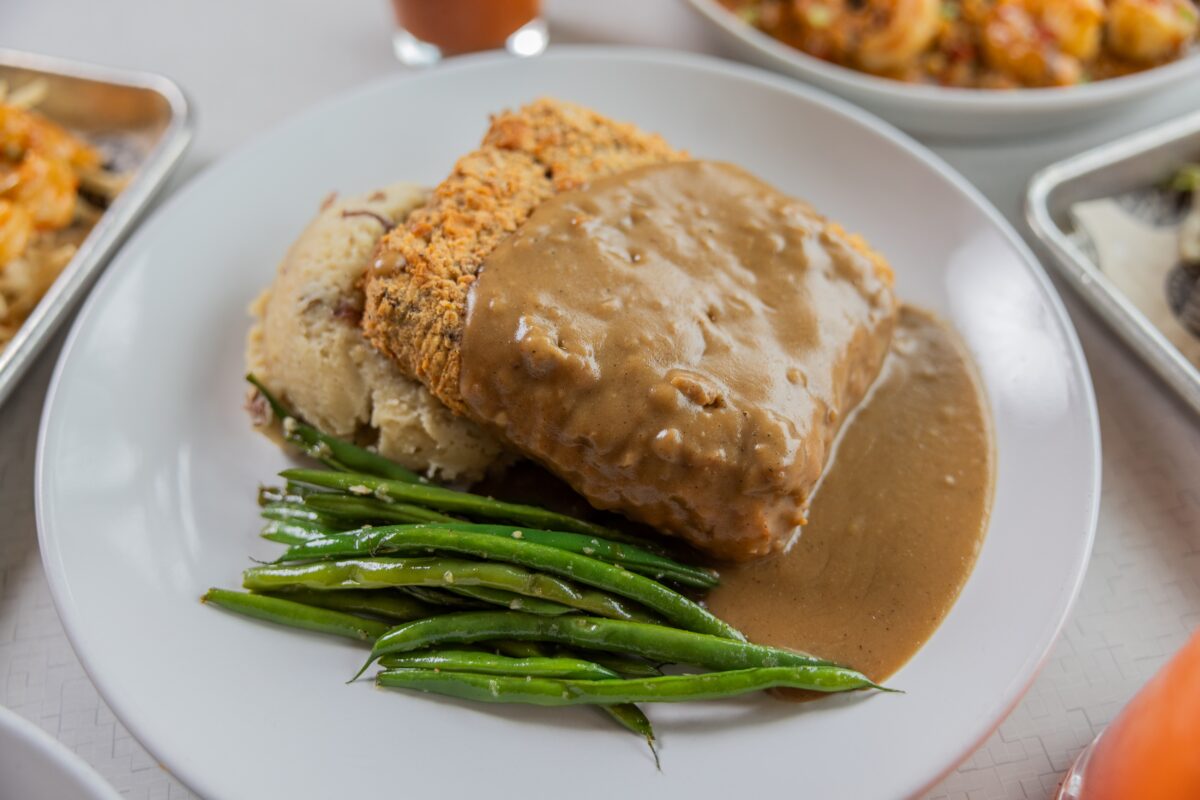
MAD stands for Modern American Diner. Reynolds created the concept, the logo (yes, there are T-shirts) and the menu. About 85% of what comes out of the busy kitchen is made from scratch. That includes the cakes and pies, all baked in-house and all delicious. It includes the breakfast items, served all day. It also includes the chicken-fried meatloaf. Most people, Reynolds says, are surprised by the dish but end up asking: “Why doesn’t everyone do it this way?”
Main image cutline: The milkshakes at MAD come in 25-ounce beer mugs, replete with brownies, candy, cereal and, of course, a cherry on top. Above: While diners are initially surprised by the chicken-fried meatloaf dish at MAD, they end their meal as staunch supporters, Erik Reynolds says. All photos courtesy MAD Eats
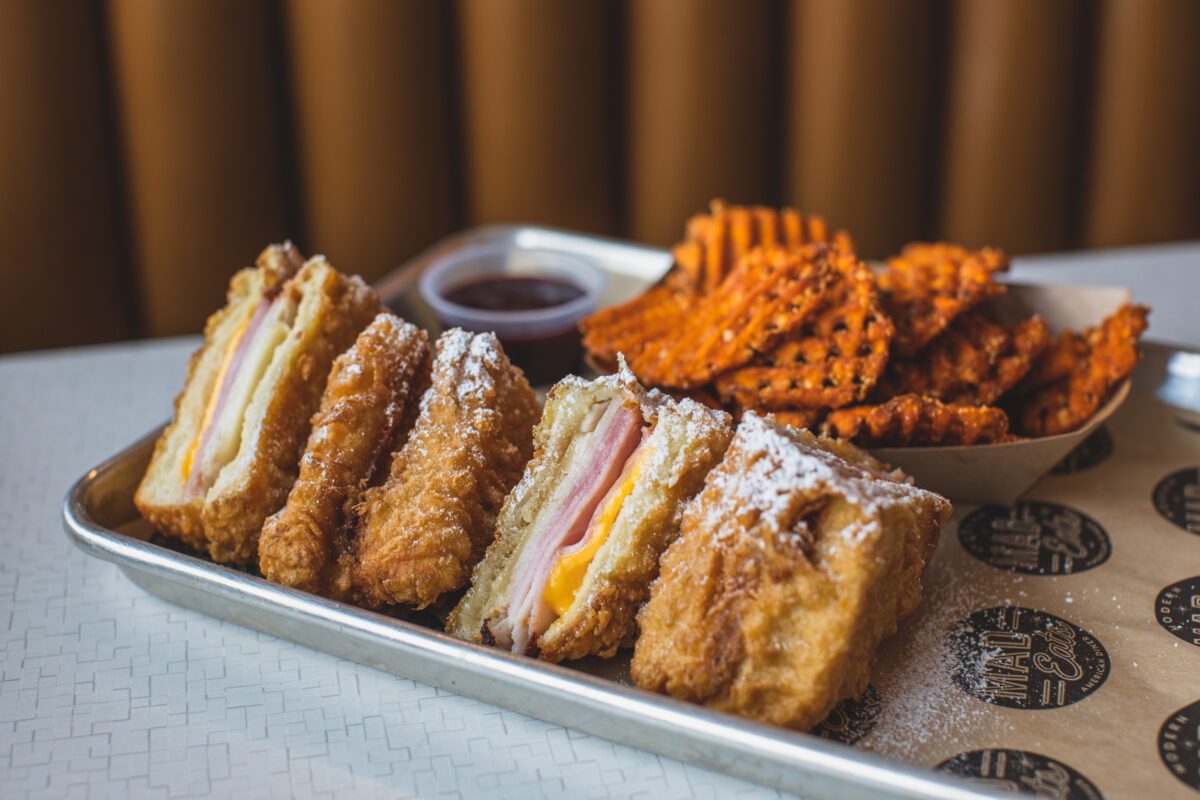
And that house-made touch also includes the Monte Cristo, a ham and cheese sandwich that’s fried, then dusted with sugar and raspberry-chipotle sauce. The sauce, Reynolds explains, imparts “a little bit of heat and smokiness, it’s just so good.” So good, indeed, that everyone used to order it, it had to be made from scratch for each order, and it jammed up the kitchen. Reynolds decreed it would be served Mondays only – but devoted fans protested. Now it’s back on the menu every day.
And it’s a long menu. There are nachos and tacos, burritos and four kinds of mac and cheese. (One features fried chicken tenders, buffalo sauce and creamy ranch in addition to the cheese.) There’s fish and chips, chicken-fried steak and lots of sandwiches. But the biggest hit? The milkshakes. They serve 200 to 300 every weekend. The shake comes in a big, 25-ounce beer mug, brimming with whipped cream. There’s flair on the side of the glass, icing with miniature cakes or M&Ms or maybe cotton candy stuck in. Kids’ eyes open wide when they see their shake arriving.
“Wow! All this for me?” They ask. (For adults who want to join in the sugary fun, they have boozy shakes, too.)
At MAD Eats, the food is so good that it’s so hard to stop eating. But, says Reynolds, “I’m here to please your palate and your tummy. I’m not here for your diet.”
One of MAD’s most popular dishes, the Monte Cristo, is a ham and cheese sandwich dusted with sugar and raspberry-chipotle sauce.