L-R: Mascots at the University of Oklahoma include Boomer, Top Daug and Sooner. Photo courtesy the University of Oklahoma
A myriad of mascots stand ready to excite, engage and entertain fans of Oklahoma schools. These costumed characters bring on the cheer and build camaraderie at games, rallies, parades and community events.
Take a peek behind the mask and explore some of the most unique mascots in the state, as well as celebrate the pivotal role these characters play in school lore.
A Creative Crew
Looking for a fierce mascot? Oklahoma has plenty. Consider the Durant Lions, the East Central University Tigers and the Noble Bears. There’s also plenty of whimsical ones – the Paoli Pugs, Alva GoldBugs and Mill Creek Bullfrogs. You can mix in fantastical, folkloric and out-of-this world sidekicks like the Purcell Dragons, the Atoka Wampus Cats and the Dickson Comets.
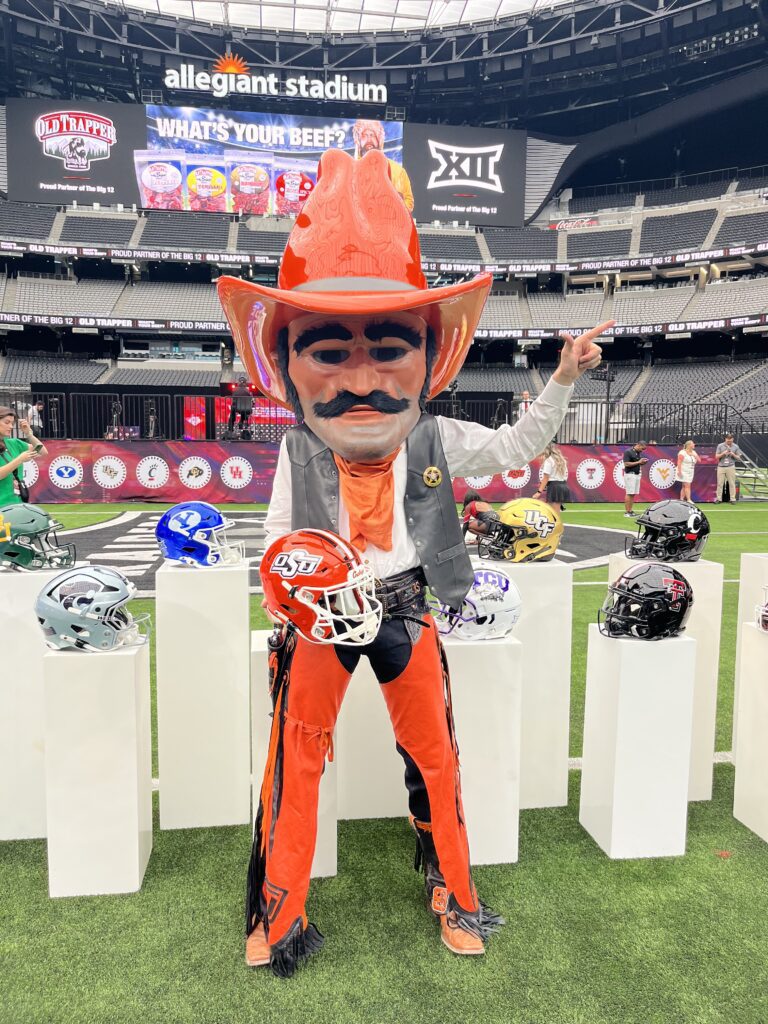
Oklahoma State University’s mascot, Pistol Pete, is seen not only at sporting events but also at weddings, community events and celebrations of life. “They are requested hundreds of times a year,” says Beki Jackson, OSU’s spirit coordinator and pom coach. Photo courtesy Oklahoma State University
Jason Sanders, principal of Purcell High School, says he enjoys the uniqueness of the school district’s mascot.
“It’s just really cool,” he says. “I think it’s fun when you have mascots that are a little more offbeat than the typical ones.”
The administrator mentions that he’s uncertain about the origin of the mascot, which was adopted in the 1930s, but the dragon itself is widely embraced by students and the community at large.
Sanders says he believes school mascots in smaller communities take on a meaningful role, since children are often attending the same school as their parents and grandparents. There’s pride in that connection of “once a dragon, always a dragon,” he says.
Miami Public Schools also embraces its unique mascot, the Wardog, says Jillian Douthit, the school system’s assistant superintendent.
“It’s the only school in the country that has that mascot, at least to our knowledge,” she says.
The history of the mascot dates back to the early 1900s when the term “wardog” originated from the local mining industry. It’s a term that was used to describe resilience and a strong work ethic, according to the district’s website. Douthit says a mascot like that plays a significant role.
“That’s the face of your district. That’s where your school pride stems from,” she says. “That’s telling everyone who you are and who you represent.”
Part of a Legacy
Students who serve as their school’s mascot will tell you it’s more than costumes and team cheers. There’s also endurance, showmanship and historical education.
Brayden Smith, who is one of the Pistol Pete mascots at Oklahoma State University, says he exercises in the heat of the summer to help prepare for high-temperature games. Smith says part of his work has also involved getting to know the history of Frank Eaton, the real-life inspiration for Pistol Pete.
“You’re going out and you’re representing Frank Eaton, his family, his legacy,” he says.
He mentions that one of his favorite parts about being Pistol Pete is the interaction with fans.
“You can see and feel the happiness of people when Pete comes into the room,” he says.
AJ Graffeo, University of Oklahoma’s head coach of the mascot team, says the mascots at the university, which include Boomer, Sooner and Top Daug, also work together on continuity, character work and skit building. For example, the mascots practice signing signatures the same way for autographs or striking similar poses in pics when they hold up the “No. 1” sign. They also add props and skits to entertain the crowds at games.
Ainsley Bond, co-captain of the OU mascot team, says she believes part of the appeal of the mascot is the consistency.
The mascots are “the people that you can rely on to see at every single game,” Bond says. “They’re there to support the university – and they’re there to see you.”
L-R: Mascots at the University of Oklahoma include Boomer, Top Daug and Sooner. Photo courtesy the University of Oklahoma
A Medley of Mascots
We’ve got more quirky mascots around Oklahoma for you.
Created in 1947, the Oklahoma Turnpike Authority (OTA) constructs, maintains, repairs and operates turnpike projects at locations authorized by the legislature and approved by the State Department of Transportation (ODOT). The OTA provided for construction of the state’s first turnpike – the Turner Turnpike. Today, Oklahoma has 12 turnpikes covering 630.1 miles.
“In 1947, Oklahoma did not have a paved, four-lane, high-speed highway,” says Lisa Shearer-Salim, OTA’s communications and marketing manager. “Our leaders were looking for ways to significantly improve transportation infrastructure in the state. The legislature knew there was a need for connecting and providing the infrastructure for further development of the state. But they needed an additional funding mechanism in their toolkit. That’s the genesis of how turnpikes began in Oklahoma.”
The state highway system is funded by the motor fuel tax (charged at the pump), federal funding and state appropriations. But the OTA network does not receive any tax mechanism. It is funded by tolls charged to users, and roughly 40% of those are out-of-state motorists.
“One of the most important aspects of the OTA network is that we provide a choice in travel,” says Shearer-Salim. “Typically, there is a state highway option nearby or connecting to a turnpike route.
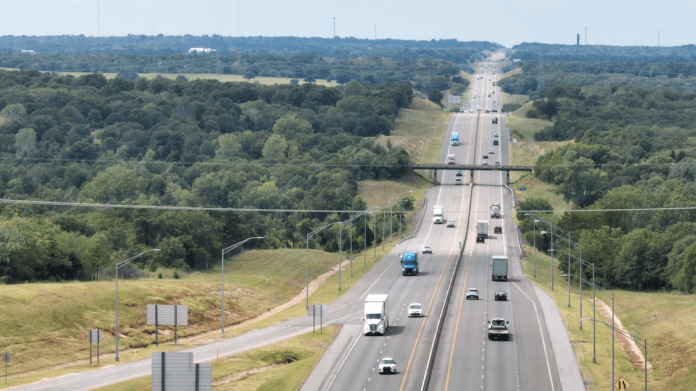
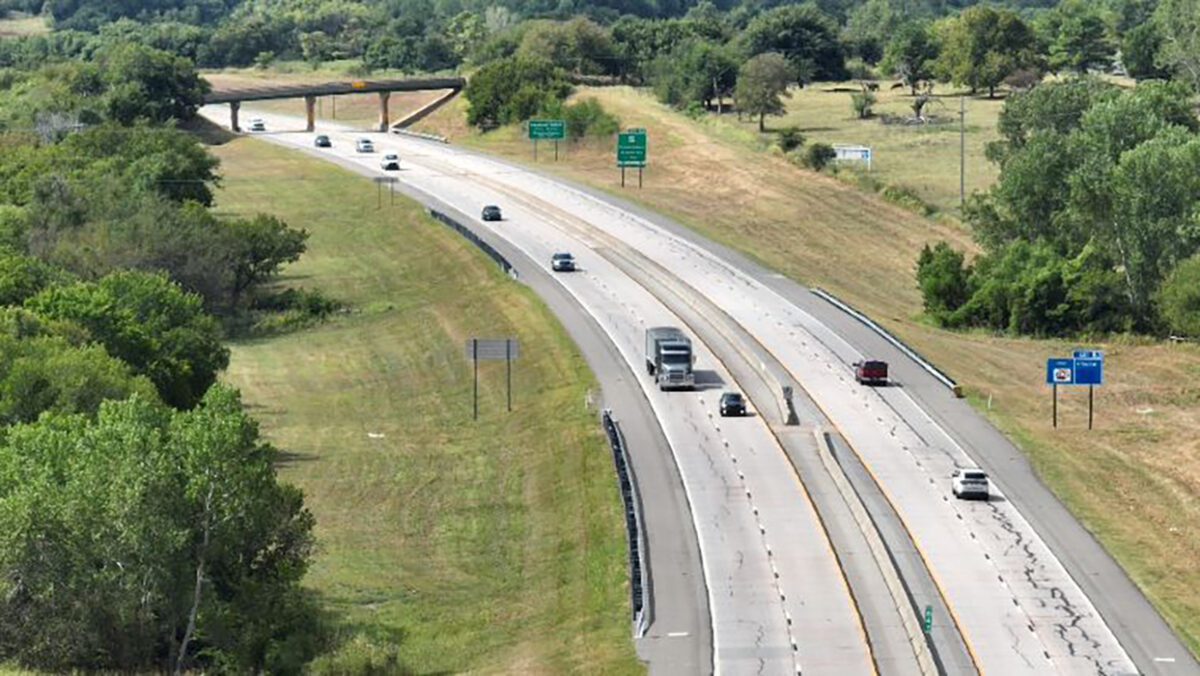
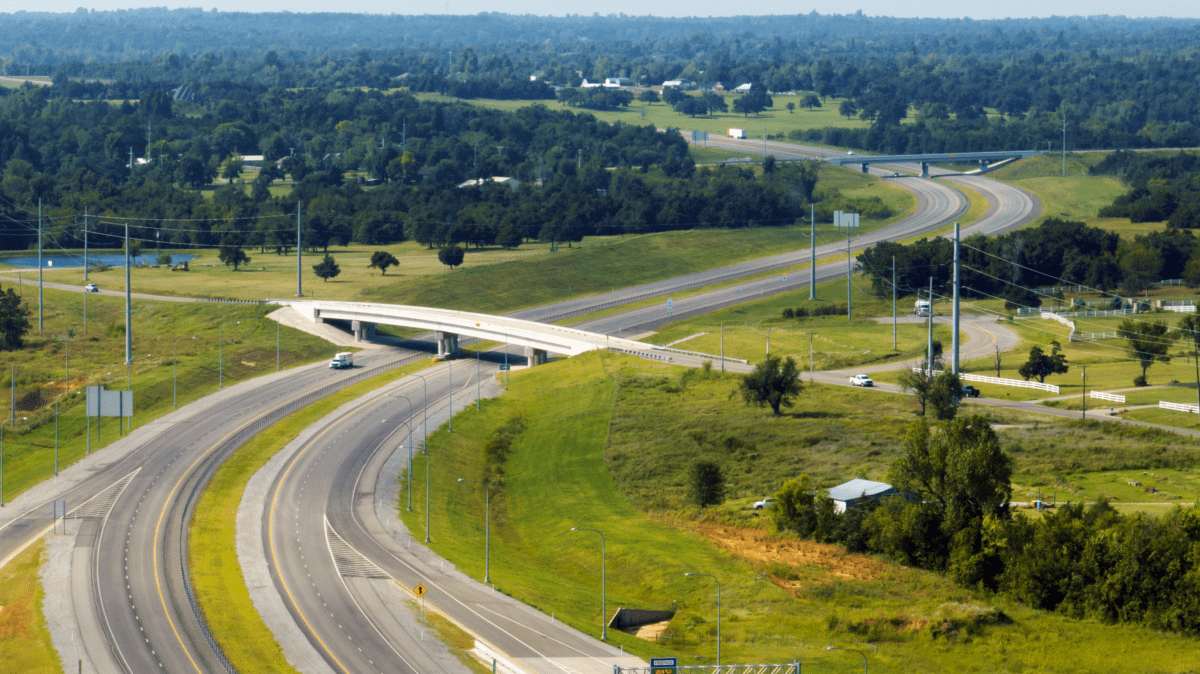
Creek TurnpikeH.E. Bailey TurnpikeKickapoo TurnpikeThe Oklahoma Turnpike Authority (OTA), created in the 1940s, constructs, maintains, repairs and operates turnpike projects across the state, including the Turner Turnpike, pictured here. Photos courtesy the OTA
“By introducing an alternative way to fund transportation, based on a pay-as-you-go model, it gives Oklahoma the opportunity to fill in the gaps in the transportation system. The turnpike network frees up ODOT to address other priorities in other areas of the state. There’s a lot of need in our state highway system for a lot of reasons, and there’s a very large backlog of necessary updates to the system. The OTA has filled in the gaps over the years in a timely fashion.”
OTA’s long range plans are addressing issues like widening the Turner Turnpike and the Will Rogers Turnpike, and adding new interchanges.
As well, the OTA funds about $20 million annually for the Oklahoma Highway Patrol troopers who are specifically assigned to the turnpike system. The OTA is working on increasing the number of troopers on the turnpikes.
PikePass Updates
The Turner Turnpike predated the advent of the nation’s interstate highway system.
“It was a modern marvel at the time,” Shearer-Salim says. “It was the first four-lane-divided highway west of the Mississippi. It has served the state incredibly well for 71 years.”
OTA’s initiative, the PIKEPASS electronic toll pass system, debuted in the early 1990s as one of the first in the nation.
“Today, we are going fully cashless,” Shearer-Salim says. “We have a camera system that reads your license plate and we match the license plate to the registered vehicle owner information.
“The No. 1 reason is safety. We have seen 500 crashes inside our toll booths, just in the last six years. In May this year, a car hit and knocked one of our toll booths off its base, with the toll booth attendant inside.”
By the end of 2024, all Oklahoma turnpikes will be converted to cashless. Motorists are guaranteed the lowest toll possible by getting a PIKEPASS at pikepass.com, through which their account is charged.
Or, OTA cameras read the car’s license tag and the motorist receives an invoice in the mail through the PlatePay system, which began in 2021. Go to PlatePay.com for information.
Kara Joy Troester Blythe began her ballet career at 16. She is now in her tenth season with OKC Ballet. Photo by Jana Carson
Ever wondered what it takes to join the ranks of Oklahoma’s most lauded performing arts companies? We profile three such artists from the OKC Ballet, Tulsa Opera and OKC Philharmonic to explore their day-to-days, education and interests outside the world of performance.
Kara Joy Troester Blythe
Oklahoma City Ballet
Always on her toes, Kara Joy Troester Blythe is starting her eighth season as a corps de ballet artist for Oklahoma City Ballet – and her tenth season as a professional ballet dancer.
Born and raised in Oklahoma City, Blythe left high school at 16 to train and finished her education online. She earned her first professional contract with the Kansas City Ballet at only 17, and danced there for two seasons before joining the OKC Ballet.
“I am looking forward to this upcoming season with OKCB where I will perform in Swan Lake for the third time in my career,” she says.
Though being a dancer is her primary job, Blythe also teaches ballet and pilates and is also completing a degree in kinesiology this year.
Leading up to a performance, Blythe starts each day with an hour and a half warm up class and then between two to five hours of rehearsal. She counts dancing as the Sugar Plum Fairy in The Nutcracker as one of her most memorable experiences.
“I’ve performed in hundreds of shows of The Nutcracker, so I know the music so well that I felt like I could truly become one with the dance,” she says.
Before she steps on stage, Blythe gets her heart rate up by jumping or running in place, and uses mental imagery to get ready for whatever she’s about to perform.
Outside work, Blythe volunteers for her church and cheers on the Oklahoma City Thunder. On weekends, she and her husband enjoy having brunch with friends at Neighborhood Jam or coffee at Stella Nova.
“My husband and I always like to try out new restaurants around town,” she says, “but we always go to Braum’s for a burger and shake.”
Stephanie Washington, a soprano with Tulsa Opera, also teaches music and offers private voice and piano lessons. Photo by Emily Steward
Stephanie Washington
Tulsa Opera
Stephanie Washington, coloratura soprano, is all about hitting the high notes — in music and in life. Washington rejoined Tulsa Opera last year as a Filstrup Resident Artist, making this her third official season with the program.
“I’m happy that I’m able to sing with a company like Tulsa Opera,” she says. “They’re just so supportive of local artists.”
Washington studied at Oberlin College and Conservatory in Ohio, and from there, her studies and apprenticeships took her to settings like New Mexico, Colorado and Santa Barbara, Calif.
In addition to opera, Washington is a K-8th grade music teacher, and offers private voice and piano lessons. You can also find her in the chamber choir at St. John’s Episcopal Church.
While stepping into the role of Juliet in Romeo and Juliet has been one of Washington’s favorites, she says performing an aria from the opera at New York’s Metropolitan Opera’s National Council Auditions is her most memorable performing arts experience. With Tulsa Opera, Washington says she also loved being part of Dead Man Walking.
“The composer of the opera actually came in,” she says, “so I was able to go out to dinner with him with the rest of the artists.”
Washington describes herself as “a big thrifter,” and on weekends enjoys visiting different shops around town. Lately, she’s been dabbling in gardening. She also enjoys spending time with her pit bull rescue, Jodi. With friends, she can often be spotted at Bird and Bottle.
“It’s just this restaurant tucked in the corner of a little shopping center,” she said. “They’ve got great martinis.”
Kate Pritchett
OKC Philharmonic
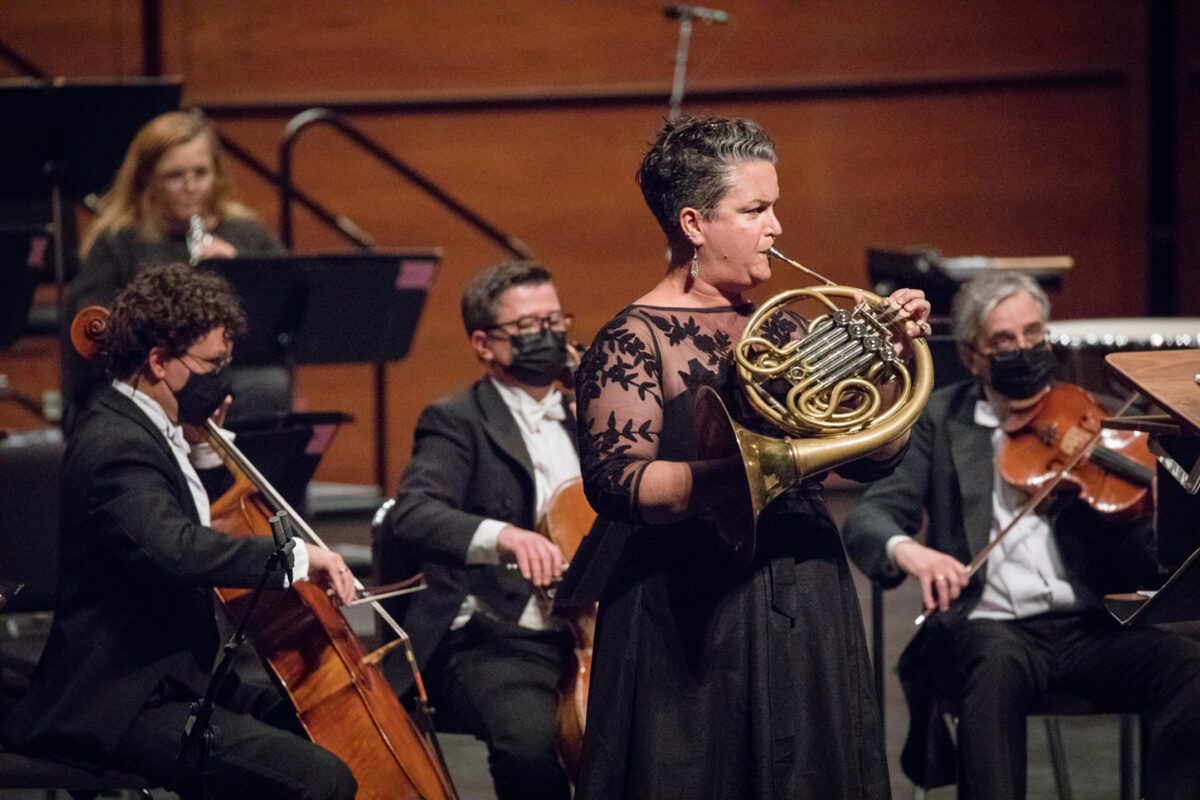
Kate Pritchett doesn’t mind tooting her own horn – at least when she’s performing with the Oklahoma City Philharmonic. She’s been playing the instrument since she was 12, joined OKCPhil in 2005 and earned the spot of principal horn in 2015.
Pritchett holds three degrees in instrumental performance and has played in orchestras in Colorado, Texas, New Zealand and Oklahoma. She has taught horn at the university level, including Oklahoma City University, and also plays a good bit of chamber music and other professional shows, she says.
Kate Pritchett, an accomplished musician with OKC Phil, joined the company in 2005. Photo courtesy OKC
“The Philharmonic comprises a lot of musicians like me – people who teach music during the day,” she says. “I start preparing music on my own for these concerts in the weeks before those rehearsals start.”
The OKC Phil performed Mahler’s Fifth Symphony a couple of years ago, which had been on Pritchett’s “bucket list.”
“The first horn is prominently featured in the third movement, with the widest extremes in dynamic level I can think of,” Pritchett says. “It was fun to be challenged in that way, and of course the piece itself is magnificent.”
Before she takes the stage, Pritchett likes to take a long walk to clear her head, and has been practicing yoga – which helps her mentally and physically.
“I always get my ‘chops’ ready to go with a good warmup routine,” she adds.
Around the city, Pritchett can often be found at Toast & Coffee on North Robinson.
“There’s a resident support dog [there],” says Pritchett, who has a Lab mix rescue herself named Hank. “I also love that they support a diverse and vibrant community in our city.”
Monroe Nichols (middle), a member of the state House of Representatives, is committed to diminishing homelessness to a “functional zero” level. Photo courtesy Monroe Nichols
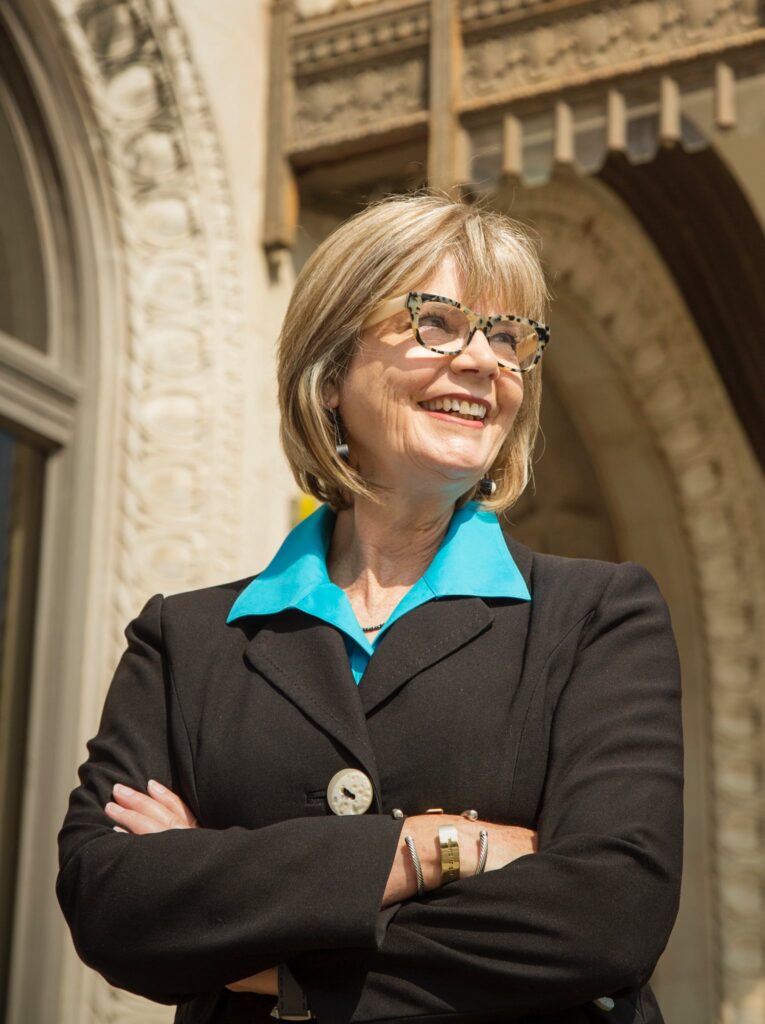
Democrats Monroe Nichols and Karen Keith, who emerged from the Aug. 27 mayoral primary as Tulsa’s top two choices, face each other again during a run-off on Nov. 5.
“There is not a more consequential position in elected office when it comes to impacting people’s lives in a positive way, than that of mayor,” says Nichols, who is wrapping up eight years as a member of the Oklahoma State House of Representatives.
“I love Tulsa, and having worked the last 16 years at the county and previously for Mayor [Robert] Lafortune, I see a number of things I would like to address, and am pretty much in a unique position to do so,” says Keith, who waived her chance for another term as Tulsa County Commissioner District 2 to run for mayor.
The Key Issues
Public education, homelessness and infrastructure are among key issues identified by the candidates.
“We have to get serious about improving student outcomes,” Nichols says. “Student outcomes are, in large part, driven by socio-economic challenges.”
Nichols says his plan includes creation of a mayor’s office of children, youth and families. He also wants to form a public-private partnership to be called the Teach in Tulsa Fund that would “incentivize teachers who are getting growth out of students to stay in the classroom.”
Keith says working to improve public education would be her first order of business.
Karen Keith, currently the Tulsa County Commissioner for District 2, says working to improve public education would be her first order of business as Tulsa mayor. Photo courtesy Karen Keith
“I come from a family of educators,” she says. “I was educated in the public school system. I want to be present for our educators, to support them.”
Keith’s agenda includes hiring more crossing guards and providing more lighting in areas “where kids are in the dark trying to get to school.”
She says she will work with philanthropic organizations to attract and retain teachers. One idea is that the down payment on a house would be covered for teachers who stay in the district for more than 5 years.
“Tulsa’s homeless crisis is getting worse every year,” Nichols says. “The role of the mayor moving forward is that we have to meet this challenge head on.”
Nichols’ ideas for achieving “functional zero homelessness” include reducing blighted properties by 60%; increasing affordable housing units by 6,000; reducing Tulsa’s eviction rate; and creating a citywide system of mental and substance abuse support. Functional zero homelessness, he says, means it’s “rare, brief and non-recurring.”
Keith says she is greatly concerned about the homeless crisis and believes affordable housing is a key factor.
“Every mayor has said they are going to fix our permitting and inspections departments, and it just hasn’t happened,” Keith says. “I’ve been working with the developers for a year now and I think we have a pretty good plan.”
For affordable housing especially, Keith says, “the process takes too long and it costs too much money. We just need to make it easier for them to do the work. And that includes Habitat for Humanity.”
A Bright Future
If elected, Nichols would be Tulsa’s first Black mayor.
“I don’t doubt that race is a part of it,” Nichols says in relation to Tulsans choosing their next mayor. “But I think people are starting to evaluate just who is best for the job.”
Keith says she has “worked across party lines for my entire career,” including state legislators and U.S. House and Senate members with whom she partnered to bring infrastructure funding to the state.
She was also endorsed by the Fraternal Order of Police, “and I am really proud of that,” she says. “We have an incredible police force. They are highly educated. Tulsa has a lot to be proud of with both our police and our firefighters, and all of our first responders, including EMSA.”
Nichols, who was endorsed by former Tulsa mayor Kathy Taylor and former Oklahoma governor Brad Henry, says: “Cities are where all the great innovation comes from. We have proven time and time again that Tulsa is a place where you can do things that haven’t been done anywhere else.”
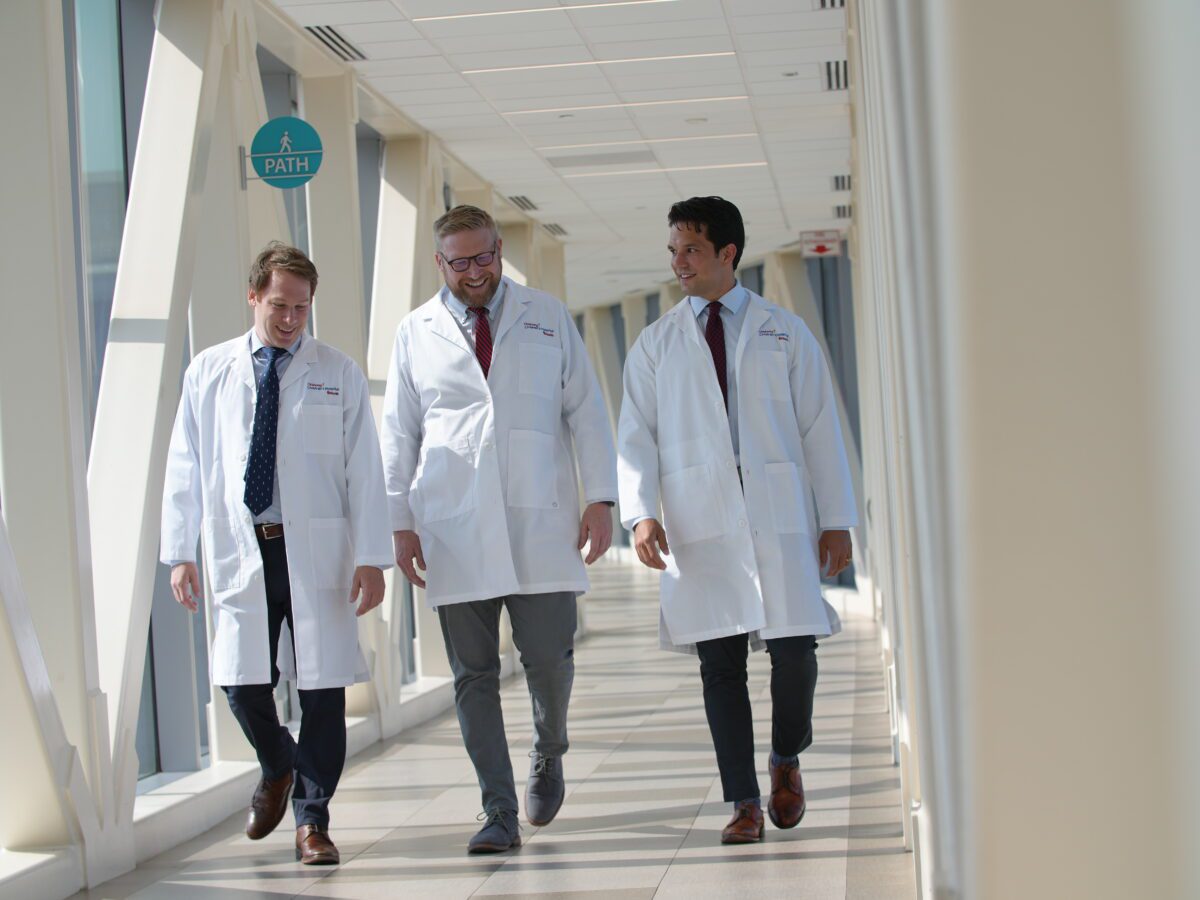
Visiting high schools, partnering up with technical schools and providing industry-leading pay are just a few of the ways OU Health attracts top-notch healthcare workers. Photos courtesy OU Health
The COVID-19 pandemic has taken a toll on the healthcare industry, especially when it comes to worker shortages – as these led to nationwide healthcare issues like decreased quality of care and longer wait times. On a state level, leadership in the industry is looking to hire and retain skilled healthcare workers through a variety of avenues. In fact, Jimmy Duncan, chief human resources officer for OU Health, says “the last three years have been more of an opportunity than a challenge.”
One thing the pandemic taught the healthcare industry, he says, is that “we could be more flexible.” OU Health now has remote employees living in 22 states, working in staff positions such as patient billing and telehealth.
A focus on recruitment and retention has led to enticements such as scholarships and tuition forgiveness, especially for registered nurses, Duncan says. Nurses, he mentions, are typically the most sought-after employees.
“We are always hiring RNs, techs and patient-care assistants,” he says. “They are the team members who are front-facing.”
OU Health has made a commitment to be well-staffed at its hospitals with support personnel such as nurse aides, which can allow RNs to focus on higher-level duties. The health system has continued since the height of the pandemic to emphasize market-leading pay, help for its employees to achieve work-life harmony – and just generally making its 11,000 team members feel valued, Duncan says.
The changing nature of the field means registered nurses have options beyond the clinical setting, such as public health nursing, health administration, forensics, legal consulting and informatics. Many have become traveling nurses, which is another option that became more visible during the early days of COVID.
“Healthcare only gets about 60% of the RNs who graduate,” Duncan says.
The nursing school at the University of Oklahoma accepts every student who qualifies, and last year had its largest freshman class ever, Duncan says. The program provides clinical training opportunities for nursing students and hires a high percentage of those graduates. The health system also partners with the medical school to train interns and residents.
“We are making sure we can support any resident that wants to come into our organization, especially with OU Health Sciences Center and the OU College of Nursing. We have more than 200 nursing residents at any one time,” Duncan says. “Our goal is to provide them with a job offer at the end of their experience.”
Oklahoma City’s place as one of the most populous metros in the United States makes it increasingly easier to attract healthcare workers from border states and beyond.
“We had a new-hire orientation this morning,” Duncan mentions during a phone call in August. “We had new employees from Washington state, Maryland, South Carolina and Minnesota.”
Duncan says the health system also visits high schools to promote healthcare careers and has partnerships with Francis Tuttle, Metro Tech and other institutions that train essential employees such as radiologists, phlebotomists and respiratory therapists.
Amplifying Rural Health
OU Health is not out to compete with smaller towns and systems for employees, Duncan says.
“We have partnerships with a lot of rural organizations and take a lot of our services to their communities. That’s how we address some of those workforce gaps. It’s our commitment to improve the health of all Oklahomans by touching every corner of the state. It’s not necessarily a competition for the workforce. We are all connected.”
OU Health appeals to many students and employees because of its academic adult medical center and children’s hospital, where “we take care of the sickest patients in the community,” Duncan says.
Potential employees are also attracted by the academic mission.
“We are always trying to find the next greatest cure,” he says. “The research component is so important.”
Taking pictures has become something many people do on a daily basis. After all, lives are defined by images. Much of the credit for this can be laid at the feet of smartphones. Many people take pictures merely to document their lives for future nostalgia or to share with friends and loved ones, but what about those who want to do more? When taking pictures becomes a serious hobby or even a profession, one way to improve skills and grow as a photographer is to join a club.
Oklahoma has several options for photography clubs, but perhaps the longest-running is the Oklahoma Camera Club (OCC). Formed in 1931 during the early days of photography and long before camera phones, the OCC holds meetings on two Tuesday evenings each month.
“[Our members] come to learn and share ideas, to develop their photographic skills, to enjoy the art of photography,” says OCC president Jaci Finch.
The mission of the club includes helping photographers, from beginning hobbyists to professionals, to advance their knowledge of photography through fellowship and sharing of information and skills. OCC is also a founding member of the national organization Photographic Society of America, which offers a wide range of learning opportunities for those interested in art form.
Another club that supports photographic pursuits in Oklahoma is the Oklahoma City Photography Group.
“Members can expect to improve their skills, learn from experts and connect with others who share their passion for photography,” says Magee Delos Santos, the group’s event manager. “It’s a practical, hands-on approach to learning, emphasizing fun and social interaction.”
The barriers for entrance are low for these clubs – no expertise required. Everyone is welcome and membership is not typically required to attend meetings. And no fancy, high-level equipment is expected either, though many of their members do enjoy practicing with actual cameras in addition to smartphone cameras. All skill levels are welcome.
“Whether someone is just starting out or has been photographing for years, they will find opportunities to grow and enhance their skills,” says Santos. “[Our] focus is on fostering a welcoming and engaging atmosphere where all members can feel comfortable and supported in their photographic journey.”
Pictured are a collection of photographs from Oklahoma Camera Club members:
Stanley Roth Shrine by Bryan HapkeLife on the Swamp by Lyuda CameronBoats in the Harbor by Wally LeeIt’s Easier with Your Eyes Closed by Ward ConawayCapital Dome by Joy Randall
Photographic Technology
At the Oklahoma Camera Club, there is an emphasis on learning all the technology throughout the photography process, both for actually taking photos and for editing them later.
“Most of our members are hobby photographers and have a real interest in developing a high level skill – using the technology required both to use the equipment for taking the picture and the computer skills for finishing their work [and] taking pride in the finished photographic image – projected, print or both,” says Finch.
The OCC offers classes that can help photographers enhance the images they have taken.
“The club members work together with the primary goals of having fun, sharing information, and learning both the technology and the art of photography,” says Finch.
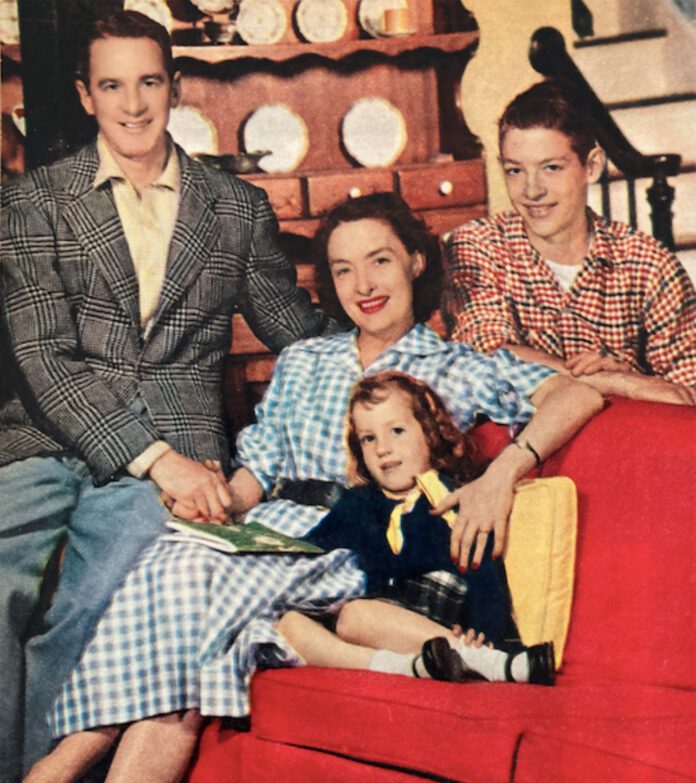
Oklahoma entertainer Flora Campbell (middle) was profiled in the August 1955 edition of TV Radio Mirror magazine. Photos courtesy the John Wooley Collection
If you’re ever in the mood to go looking for television pioneers, you could start right here in our state. Among those who made lasting marks in ’50s TV are Claremore native Patti Page, who had three shows on two different networks through most of that decade, complementing her numerous hit records; Tulsa’s Blake Edwards, who created the archetypal TV private eye, Peter Gunn, in 1958 (and went on to produce and direct a number of major theatrical features); and Oklahoma City’s Molly Bee, a young country-music singer who, in the early ‘50s, parlayed her status as a regular performer on a popular West Coast TV show, Hometown Jamboree, into a national career.
But before any of those folks ambled onto the small screen, there was someone else, a woman who’d left behind her native Nowata (and her subsequent hometowns of Bartlesville and Oklahoma City) for Broadway in the 1930s, where she’d ultimately scored substantial roles in such plays as Many Mansions, Foxhole in the Parlor (which co-starred Montgomery Clift, just prior to the start of his notable film career) and The Curious Savage, in which she shared top billing with famed silent-movie star Lillian Gish. Her name was Flora Campbell, and by 1950, when Curious Savage began its run, she’d also been exploring other forms of entertainment, specifically radio and television, for several years. In fact, she’d played Jo in what has to be the earliest TV adaptation of Little Women, broadcast during the 1939 holiday season, when there were only a few thousand TV sets in the whole country.
But as noteworthy as that appearance is, her status as a true trailblazer came a few years later, when she starred in television’s very first soap opera, Faraway Hill. Debuting on the now-long-defunct DuMont Network on Oct. 2, 1946, this serialized melodrama featured Campbell as a wealthy New Yorker named Karen St. John, who goes to live with relatives in the countryside after her husband’s death. There, she meets a handsome farmer and falls for him, only to find out he’s engaged to her cousin. Uh-oh.
It was the first recurring TV role for Campbell, but not her first soap opera. That particular form of entertainment, featuring a lead female character doing her best to keep things together during an unending barrage of daily challenges, familial and otherwise, had been introduced via radio in the very early 1930s – and had taken off. At that time, housewives made up the soaps’ target audience, so the episodes were generally broadcast on weekday mornings or afternoons, prime listening times for those who did their work at home. The shows were often sponsored by soaps or detergents – which gave the genre its nickname. By the time Faraway Hill came along, Campbell was already a soap-opera veteran, having played lead roles in both NBC Radio’s Brave Tomorrow and CBS Radio’s The Strange Romance of Evelyn Winters.
In addition to appearing on TV rather than radio, Faraway Hill broke some other conventions of the genre. It came on once a week, rather than daily, and it was broadcast in the evening. And while it was the first of its kind to air on television, it didn’t last long, expiring on Dec. 18, 1948. Interestingly enough, Campbell’s Karen St. John, the show’s main character, also died in the final episode, something else that seldom if ever happened in the radio soaps. Then again, there were still only a few thousand TV sets out there to chronicle her demise, as opposed to the millions of radios available to soap-opera listeners.
Unlike her character, Campbell persevered. She continued doing radio, TV and theater work, and by 1954 she was starring in another televised soap, CBS-TV’s Valiant Lady, taking over the title role of Helen Emerson from fellow stage and radio actress Nancy Coleman. That one did considerably better than Faraway Hill, running until late 1957.
An extensive article on Campbell in the August 1955 TV Radio Mirror indicates that Campbell initially had misgivings about playing Valiant Lady’s title character.
“She sounded so ‘noble’ that I was afraid she wouldn’t be a very interesting person,” Campbell told writer Mary Temple. “I was quite wrong about her. Helen Emerson is a warmhearted, delightful human being, a woman I admire and like.”
So did soap opera fans. By the time Campbell took over the role, there were TV sets in more than 60% of American households. Campbell appeared in a good percentage of those homes every weekday, becoming one of television’s earliest stars. In fact, according to newspaper columnist Jane Allison, she was “one of the most popular daytime heroines of all time.”
That writer’s pronouncement came in her July 18, 1957, “Hoosier in Manhattan” column, a feature of Indiana newspapers at the time. It was part of a story about Campbell’s leaving Valiant Lady. Since Campbell had taken on the role, wrote Allison, “[S]he has, in spite of the frantic communications from her fans, managed to be jilted in three most unfortunate romances, has suffered at least one major crisis a week, and many, many minor ones, and has (again with her viewers’ help) lived through a constant procession of nagging worries and fears attendant to the rearing three television children, all distinctly difficult cases.
“Two and a half years of that would tire anyone, whether he took his soap opera life seriously or not. And it has definitely tired Flora Campbell, who has lived Helen Emerson’s life almost as deeply and intensely as her own. When she goes off the air in August, she’s going off to rest, and unless she’s more valiant than she thinks she is at the moment, the next few weeks will be Flora Campbell’s swan song to the role of Helen Emerson.”
Sure enough, Valiant Lady left the air on Aug. 16, 1957, with Helen Emerson finally marrying Governor Lawrence Walker (played by John Graham) who’d been after her for quite some time. The show would not return. And while Flora Campbell could be seen at the movies and on TV in a small handful of supporting roles over the next couple of decades – notably in the long-running daytime soap Love Is A Many Splendored Thing – she appears to have devoted the majority of her time to her husband, Ben Cutler (called in his 2001 New York Times obituary “one of New York’s top four society bandleaders”), their son and daughter, and the remodeled Connecticut farmhouse where they all lived. In her TV Radio Mirror piece, Mary Temple noted that this attention to family was something both the real-life Flora Campbell and her soap opera alter-ego had in common – thanks in great part to Campbell’s Oklahoma upbringing.
“Sharing Helen Emerson’s strong feeling about family ties, Flora Campbell finds her a sympathetic person to play,” Temple wrote. “This feeling, fostered by having a family of her own, was bred in her during her Oklahoma childhood. Although her mother passed on some twenty years ago, she has never forgotten the brave woman who always had such great drive and ambition for her children. Flo says of her, ‘She went out to Oklahoma to teach school, and there she met my father. All her life she was interested in education. She was a Browning scholar, a bird lover who lectured on the subject in our home state and taught others to love them. Even her name was beautiful and unusual – Isis Justice Campbell.’”
Temple went on to note that Campbell’s father (whom sources say was a grocer in Nowata during Campbell’s early years), had retired to Coffeyville, Kansas, to be near a number of family members.
“They see Valiant Lady on television and tell her it’s like getting a letter from her,” wrote Temple. “‘It keeps us close,’ she says.”
On Nov. 6, 1978, Flora Campbell, Nowata-born television pioneer, died in Connecticut at the age of 67.
My thanks to Paul McSpadden for his help with this column.
Tierra del Fuego is about as far south as you can get while still being in civilization. It’s the land at the End of the World – the extreme southern tip of Argentina, just across the mythical Strait of Magellan in Patagonia. The island is also the jumping off point for stout-hearted Antarctica adventurers.
The gateway into Tierra del Fuego is its capital, Ushuaia, the southernmost city in the world. The town of 80,000 sits on a wide bay on the southern coast of Isla Grande de Tierra del Fuego and supports a lively light industrial port and emerging tourism.
Tierra del Fuego National ParkMartial GlacierThe Lighthouse at the End of the World in the Beagle ChannelUshuaia against the snow-capped Andes mountains
It’s a place of dramatic, rugged scenery. Looking out across Beagle Channel south of Ushuaia, you know that beyond the mountainous islands you can see is the 600-mile-wide Drake Passage and then Antarctica. In between is a kingdom of sculpted snow and ice, countless colonies of penguins, pods of breaching whales, sea lions, giant petrels, great wandering albatross and massive Andean condors, the largest flying birds in the world with wingspans of 12 feet.
Expedition ships traverse the Drake regularly for forays into Antarctica and a chance to walk contemplatively with throngs of penguins and seals, as well as to go on hikes to higher elevations for terrific views of icebergs and glaciers. For the ultimate experience, rent a sea kayak and explore these wildlife habitats silently.
There’s only one colony of charismatic King penguins on the continent, and it’s found at Pinguino Rey Park on Chile’s side of the Strait of Magellan. The Kings are second in size only to the Emperor and are wonderful divers. Visit in the summer and you may see some chicks. Over on Isla Martillo, you’re invited to mingle with genial colonies of Magellanic and Gentoo penguins who’ve made that island their home.
It was the Yamanas more than 10,000 years ago who called the area Tierra del Fuego, named after the large bonfires they kept going to brace against the cold weather. The indigenous tribe carved long, pointed canoes made of bark and featuring small fireplaces midships.
Despite its name, the “Train of the Prisoners” is actually a delightful steam-driven chain of coaches that merely traces the same route trains took years ago ferrying convicts in Ushuaia to work nearby timber fields. Today, VIP passengers enjoy three-course dinners. The excursion train, also known as the End of the World train, is a very good way to get into Tierra del Fuego National Park out along the coast, a remote part of the island that’s unusually rich in wildlife.
King penguins
Just a couple of miles outside of Ushuaia is something pretty special, the Martial glacier. Take a short hike, cross a couple of streams, catch the chairlift and viola for amazing vistas of Beagle Channel.
The 1884 lighthouse that inspired Jules Verne’s novel The Lighthouse at the End of the World still stands on a bay in Isla de los Estados, bidding sailors adios as they enter Antarctica.
In Ushuaia, many fine restaurants beckon with local specialties: Fuegian lamb (they say the dish’s nuanced flavors come from where the lambs pasture), Patagonian toothfish (aka Chilean sea bass) and the piece de resistance, king crab from the Southern Sea. Wherever you dine, follow it up with a cup of strong black Argentinian coffee cut with hot milk and see if they have some alfajores, local sweets filled with dulce de leche.
Stay at the Los Cauquenes Resort and Spa on Beagle Channel, a wooden lodge offering active adventures (like intriguing hikes) and a gorgeous setting. Also overlooking the Beagle is the Arakur Ushuaia Resort, with two heated pools and on-site stables situated in its own nature reserve.
Visit during their summer (November to March), when days are longer and the weather is mild.
According to the American Cancer Society, breast cancer remains one of the most common forms of cancer in American women, with 1 in 8 women expected to be diagnosed with invasive breast cancer in their lifetimes. Regular screening tests are the best way to detect cancer early, and guidelines for screenings have recently changed.
Wajeeha Razaq, M.D., who specializes in hematology and oncology at the OU Health Stephenson Cancer Center in Oklahoma City, says the United States Preventive Services Task Force revised its 2024 recommendations and now suggests starting routine biennial screenings at age 40, while both the American Cancer Society and European screening guidelines recommend starting screening at age 45.
“Many expert groups encourage shared decision-making for women in their 40s because of trade-offs between benefits and harms,” says Razaq.
For women ages 40 to 44, the American Cancer Society states that women “should have the choice to start yearly breast cancer screening with a mammogram if they wish to do so.” While the median age at the time of a breast cancer diagnosis is 62, half of women who develop breast cancer are 62 years or younger when diagnosed – with approximately nine percent of breast cancers occurring in women under age 45.
Razaq says in countries with established breast cancer screening programs, most breast cancers are found due to an abnormal mammogram.
“However, up to 15% of women are diagnosed with breast cancer due to the presence of a breast mass that is not detected on mammogram – known as mammographically occult disease – and another 30% present with a breast mass in the interval between mammograms,” says Razaq. “In addition, women without access to screening mammograms and younger women under 40 years who may not be undergoing routine screening mammograms may present with a breast or axillary mass with or without skin changes – and breast cancer can be painful or completely asymptomatic.”
She says hormone positive breast cancer is the most common type of breast cancer, while triple negative breast cancer makes up approximately 10-15% of cases and Her2 positive tumors make up an estimated 15% of cases.
Common breast cancer symptoms can include the discovery of a new lump or mass, swelling of all or part of a breast, skin dimpling, breast or nipple pain, nipple retraction and/or discharge, nipple or breast skin that is red, dry, flaking or thickened, and/or swollen lymph nodes under the arm or near the collarbone.
“For all women, I suggest that they should be very familiar with their breasts and any abnormality they see, they should report it to their primary care physician,” says Razaq, who recommends starting mammograms at age 40 and then following up with yearly exams.
“Women who have a personal history of breast, ovarian, peritoneal or fallopian tube cancer, certain genetic mutations (eg, BRCA1 or BRCA2, TP53), or a history of previous radiotherapy to the chest between ages 10 and 30 years, are at high risk for developing breast cancer. For patients with a lifetime risk of greater than 20 percent, I suggest a supplemental MRI in addition to mammography.”
Group therapy session in progress. The image presents a back view of a woman leading a discussion in a warm, sunlit room surrounded by attentive participants seated in a circle.
Life has its ups and downs – and when the downs get a little too low, reaching out for help via one of Oklahoma’s many support groups is an excellent, sometimes life-saving, choice to make.
Whether you are seeking information and guidance regarding a chronic medical condition such as cancer, grief support after the loss of a loved one, assistance with addiction, or just a place to talk with others about life’s struggles, there are likely to be other people in your area who have walked the same path you are navigating. But how can Oklahomans find relevant and legitimate support groups for the issues they face?
“There are many ways to find support groups, but I would suggest one starts by asking their primary care physician, a licensed therapist or simply [doing] an online search,” says Artisha Woody, founder and executive director of Locs of Strength, a group whose primary commitment is to African-American women diagnosed with breast cancer – many of whom may otherwise be at a loss for finding help. “Recent studies have shown that there’s a direct link to survivorship, improved health and increased moods by participating in support groups,” she says.
Support groups provide a safe space where individuals can be vulnerable about the challenges they face – while also allowing them to receive a break from everyday life and acknowledge viable solutions, all within a supportive group of peers.
Any breast cancer survivor, active patient and/or caregiver may reach the organization via email at [email protected], social media (Facebook and Instagram: Locs of Strength) or via telephone at 405-834-7980.
Josh Turzanski, director of Peer and Wellness Services at the Depression and Bipolar Support Alliance of Oklahoma, Inc. (DBSA), agrees that support groups can play a vital role in recovery.
“There are many issues people face nowadays,” Turzanski says. “Though I can’t relate to issues outside of the mental health arena, I can say that there are support groups out there for just about anything. You can always utilize the 988 and 211 resources.”
988, or the Mental Health Lifeline, is a direct line that connects callers with trained behavioral health professionals in Oklahoma. Additionally, 211 Oklahoma is a free, 24/7 statewide program that connects Oklahomans with information and referrals to health and human services.
Turzanski says support groups are a great way to share your story with others who have been dealing with the same situation, as well as to receive and give advice on coping. To contact DBSA, call 405-254-3994.
According to the Mayo Clinic, some of the benefits of joining a support group include the opportunity to reduce anxiety, depression and the general sense of fatigue that comes with an onslaught of distress.
The National Alliance on Mental Health (NAMI) has an Oklahoma chapter that can be reached at 1-800-850-6264 or by email at [email protected]. According to their website, NAMI Connection is a resource for those seeking advice and understanding of mental health conditions. Such conditions can disrupt the ability to feel emotions, express thoughts and connect with others. Successes, as well as challenges, are explored to help afflicted individuals and their families find potential solutions to their everyday problems.
The bottom line: searching for supportive communities and asking for help are never bad decisions – and they can even save a life.