The Edmond Police and Fire Departments work together to host the 9/11 Stair Climb and Memorial Run each year. Photos courtesy the City of Edmond
This year marks the 23rd anniversary of the September 11th attacks, in which 19 terrorists hijacked four U.S. commercial airliners on the east coast. The deadliest terrorist attacks in human history, 2,977 died from the initial events, with thousands more dying in later days, months and years due to complications from toxic exposure at the site.
There are numerous memorials and remembrances that occur worldwide each year, ranging from moments of silence to honor victims and first responders to museum exhibits, American flag displays, parades and other Patriot Day programming.
Right here in Oklahoma, many firefighters, police officers and other first responders participate in the 9/11 Stair Climb. This event, which also welcomes members of the military, bomb squad personnel, first responders and civilians, invites participants to come together to walk or climb the equivalent of 2,200 steps or 110 stories –the same amount in the World Trade Center. This act is often done in full firefighter gear or other first responder uniforms to both commemorate the heroes of the event and to raise money for local and national charities.
Edmond Police and Fire Departments will host once such 9/11 Stair Climb at the Edmond North High School football stadium on Patriot Day – Sept. 11.
“We started it on the twentieth anniversary in 2021, so this September will be our fourth year,” says Emily Ward, the public information specialist with the Edmond Police Department. “Police do a 5K around the track in their full uniform. Fire does a stair climb on the bleachers in their full gear.”
If you don’t feel confident in taking the task on, you’re still invited to join in the commemorative activities.
The Edmond Police and Fire Departments work together to host the 9/11 Stair Climb and Memorial Run each year. Photos courtesy the City of Edmond
“It’s open and free for anyone to come and participate in the run or stair climb,” says Ward. “But people are also welcome to come and cheer on those who are participating.”
Tulsa will also be hosting a Stair Climb, its eighth year running. Started in 2017 by the Tulsa International Association of Fire Fighters Local 176, the event was created not only to commemorate the sacrifices made that day, but also to raise money for Hydrants of Hope, a local charity organization with an important backstory.
“Hydrants of Hope was started by a Tulsa firefighter Mark Meyer who, when diagnosed with cancer in 2012, wanted to do something to help families of children facing cancer,” says Matthew Lay, president of Tulsa IAFF Local 176. “All proceeds from the organization go to help pay for travel, treatment, prescriptions or any other items needed to help battle pediatric cancer. All Oklahomans are welcome to come out and watch, support and commemorate.”
In the 23 years since the event, millions of dollars have been raised for fallen first responders and victims throughout the nation. This year’s effort hopes to continue that tradition as we approach nearly twenty-five years since that fateful day.
The accordion’s rhythmic melodies, including that sometimes oompah-pah jam, still resonate with music lovers of all genres. Its captivating sounds conjure up images of the Czech polka, the Polish mazurka, the Russian khorovod, the Norwegian Rheinlander, Mexican norteño and Latino-based mariachi.
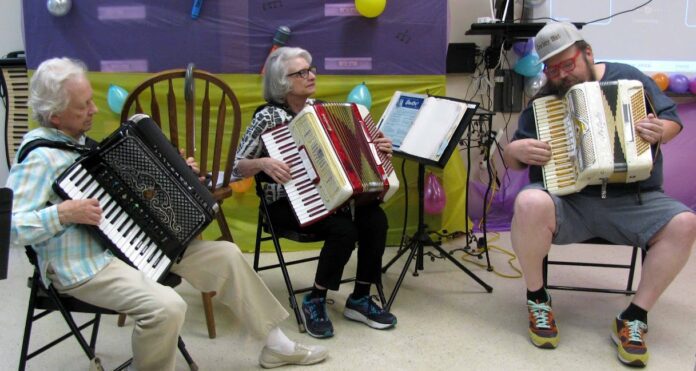
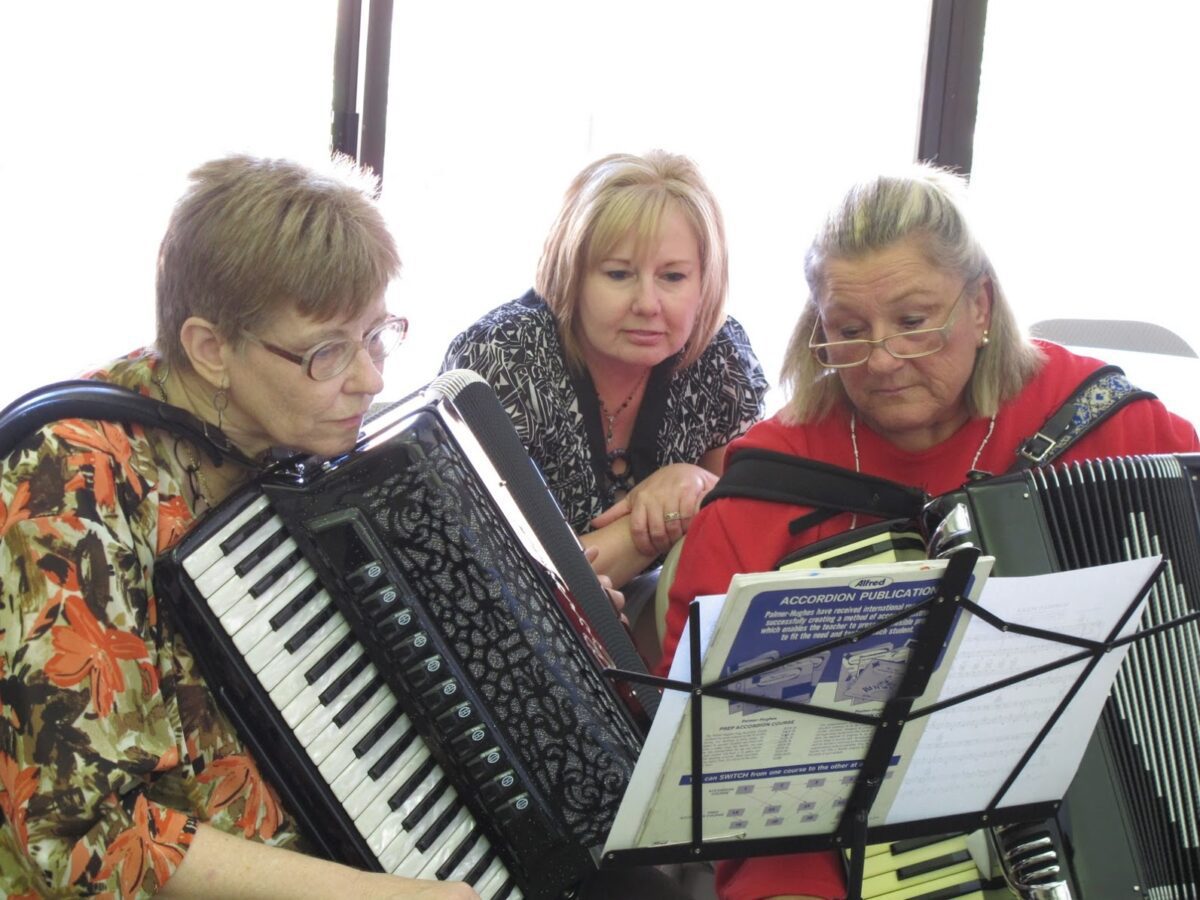
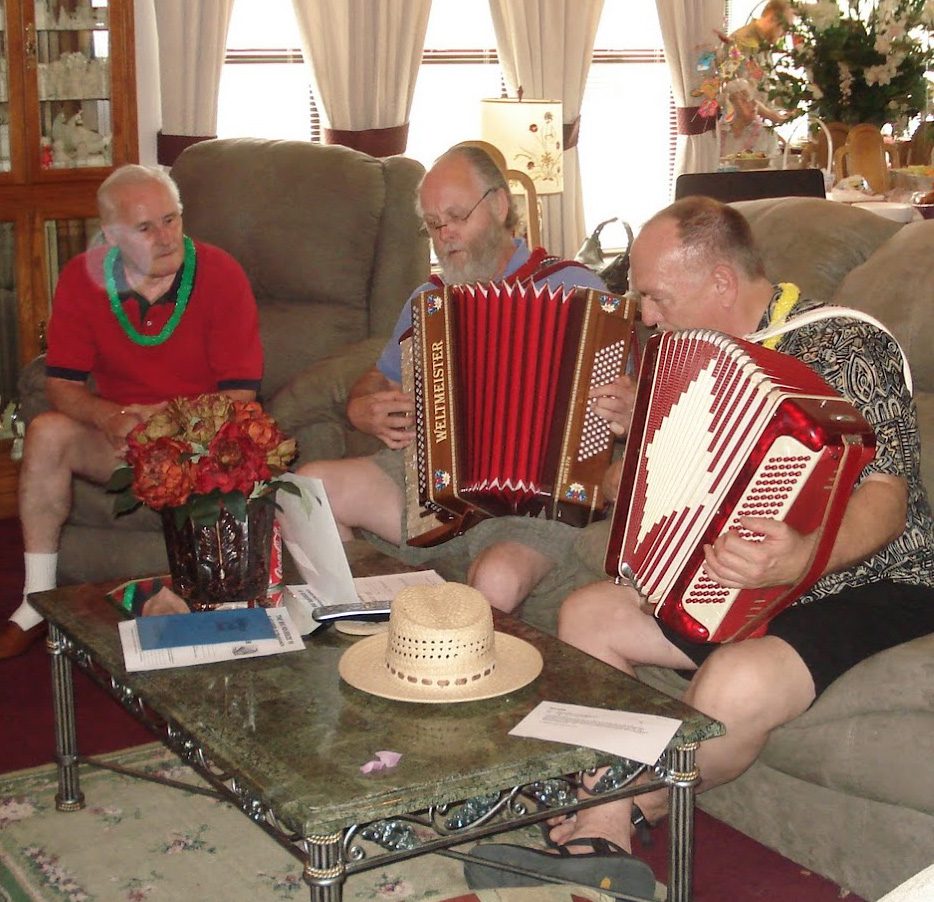
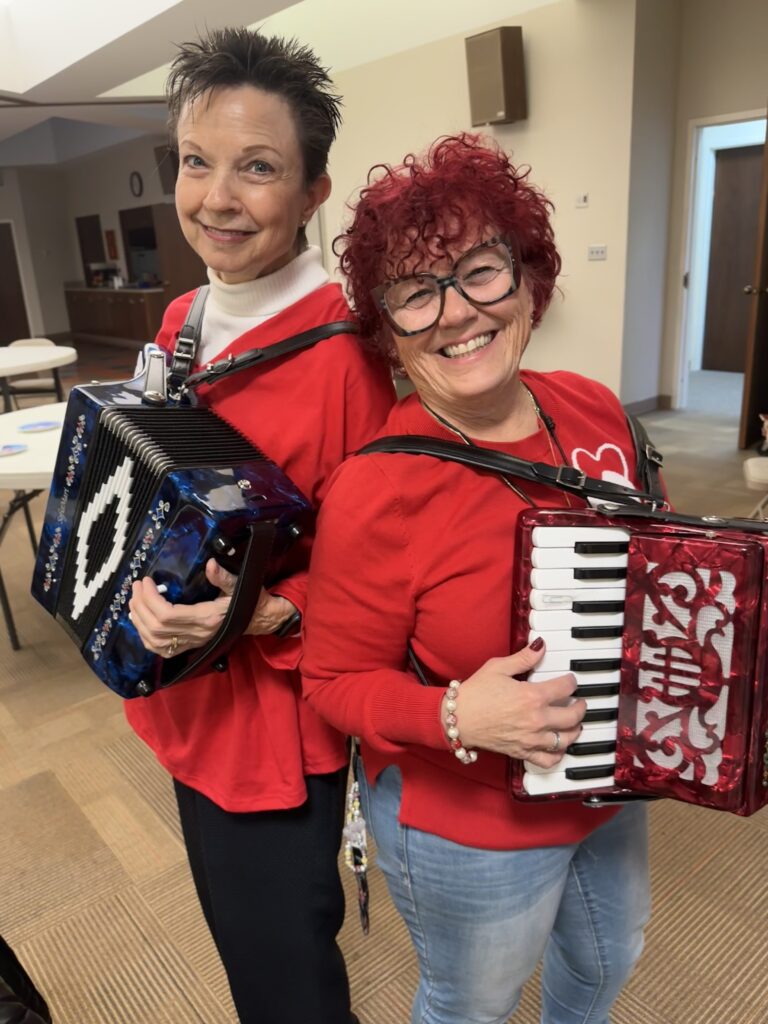
Members of the Oklahoma Accordion Club meet monthly to play, find performance opportunities and hone their crafts. Photos courtesy the Oklahoma Accordion Club
Known globally, squeeze boxes come in numerous sizes and types, and some are electronic. As a bellows-driven family of box-shaped musical instruments, accordions produce sound through airflow and vibrating reeds.
A Pennsylvania native, Dick Albreski began accordion lessons at age six. During high school, he played in a band for parties, weddings and dances within his Polish community. Of late, he has been the accordion player for the Bohemian Knights, a band that plays for Saturday night polka dances at Yukon’s Czech Hall.
“It’s not a hard instrument to learn,” says Albreski. “But it requires both hands to function at the same time. Your left hand will not function as your right. It will be completely different most of the time.”
Albreski founded the Oklahoma Accordion Club in Oklahoma City, which has monthly meetings where members help each other, play some music and pursue performance opportunities. As well, Albreski offers accordion lessons, and because of Zoom, he even has a student in England.
The club’s president, Maggie Abel, began learning the instrument in 2011.
“The accordion is a one-man band,” she says. “It’s unique and portable, and people find it fascinating. There’s no competition when you play a rare instrument.”
A member of the actively performing Tulsa Accordion Band, Irene Bookbinder wanted to take piano lessons, but her family didn’t have space for a piano. So, in fifth grade, she opted instead for accordion lessons.
“You have to read music to learn the accordion,” she says. “It is melodic, and you can make so many different sounds with it. It’s a versatile instrument and they’re beautiful to look at.”
Hoping the accordion’s popularity will continue to rise in the music world, Albreski says: “You need youth. The most important thing for the accordion would be youth.”
Accordion Origins
As a wind instrument invented during early 19th century Europe, the accordion quickly gained popularity throughout the continent. By the 1840s, Russians were manufacturing around 10,000 accordions annually.
But in 1863, a farmer in Castelfidardo, Italy, founded the Italian accordion industry, making the area the international accordion epicenter. The area reeled in skilled and inventive craftsmen who created unique accordion styles.
Several famous European composers took the instrument to a higher status. With mass migrations from Europe to the Americas from 1814 to 1913, immigrants arrived with musical instruments. And the Castelfidardo brothers founded an accordion factory in Philadelphia, Pennsylvania.
The accordion’s popularity surged across continents during the 20th century, and it symbolized cultural diversity and musical innovation. Accordions merged into popular American music such as jazz, country and even rock ‘n’ roll. Artists like Lawrence Welk popularized accordion music through television, exposing millions of viewers to the unique sounds.
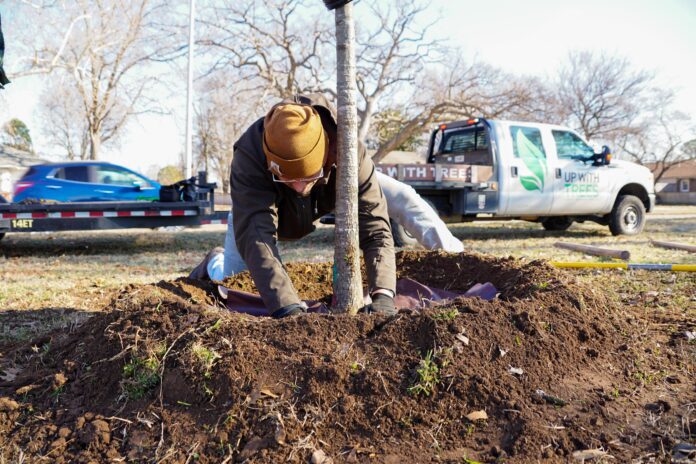
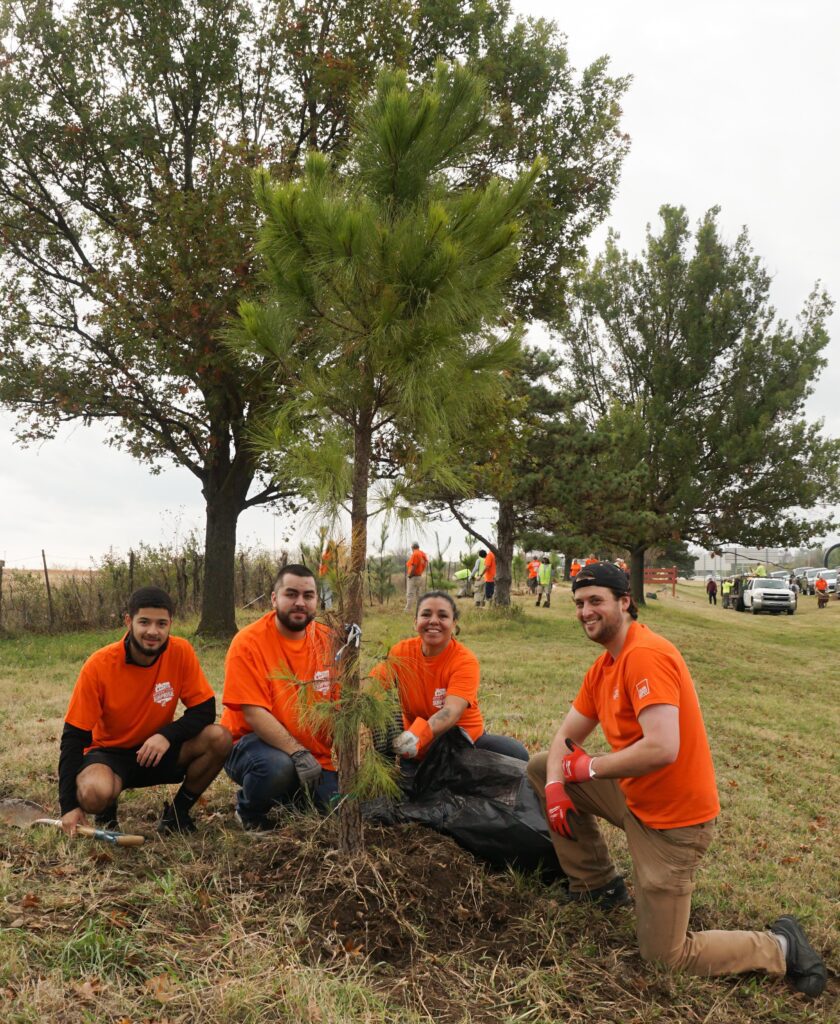
Up With Trees, began in 1976, plants trees in a variety of public spaces, including parks and schools, as well as along major highways and roadways. Photos courtesy Up With Trees
Studies have shown that gardening is good not only for your body, but your mind. In fact, according to studies published by Ohio State University, the University of Edinburgh and the National Institutes of Health, regular gardening may even reduce the risk of dementia. Additionally, specific bacteria in the soils can boost serotonin levels.
Now is the perfect time to get outside and dig in the dirt, but if you live if an apartment or don’t have a place to create a garden, it can be challenging to get those mind and body benefits.
This is where organizations like Up With Trees and Keep Oklahoma Beautiful can help both garden novices and pros get their gardening fix – all while improving the community.
Up With Trees began in 1976 when a student reached out to the city inquiring about how they were replacing trees removed because of street construction, says Shawn Davis, the organization’s community outreach director.
“Nearly 50 years and 40,000 trees later, Up With Trees continues to plant trees in public spaces so that our Tulsa community can benefit from cleaner air and water, shaded and cooler landscapes, and an overall more beautiful and healthier home,” says Davis. “Our mission is empowering, educating and serving communities by utilizing trees for their environmental, economic, and social benefits.”
Up With Trees plants and maintains trees in many public spaces, including parks and schools, as well as along major highways and roadways. Volunteers interested in planting trees can reach out from October through April, while those more interested in supporting maintenance efforts, such as pruning and weed eating, can join the group year-round.
“Our 2024 planting season has some exciting projects ahead, where we will enlist volunteers to plant to enliven citywide median locations and neighborhoods,” says Davis.
Keep Oklahoma Beautiful is another organization that depends on the enthusiasm of volunteers and their green thumbs.
“We have several unique programs designed for individuals, civic groups, communities, municipalities and organizations who want to make an impact,” says executive director Evelyn Schaefer. “We have an affiliate program of more than 50 organizations, from small towns to large cities. They are our boots on the ground, and are empowered through resources we provide, like grants, stipends and equipment, to host cleanup events, plan community gardens, paint dilapidated buildings and propose other projects that beautify, remediate litter and encourage recycling.
“We can provide free supplies like gloves, trash bags and safety vests throughout the year,” Schaefer continues. “Last year, we had more than 13,000 volunteers around the state perform some kind of cleanup activity.”
2026 marks the 100-year anniversary of Route 66. Keep Oklahoma Beautiful will be a leader in clean-up efforts in anticipation of the many events planned that year. As a part of the schedule, there will be flower and tree plantings as well as large-scale environmental clean-ups that include the collection of tires, batteries, dangerous chemicals, paint and other environmental hazards that would otherwise end up in a landfill.
Next year marks another exciting anniversary: 60 years of Keep Oklahoma Beautiful.
Up With Trees, began in 1976, plants trees in a variety of public spaces, including parks and schools, as well as along major highways and roadways. Photos courtesy Up With Trees
“Last year alone, 2.3 million pounds of trash were collected in the three-month Great American Cleanup effort. Nearly 31,000 trees, flowers and shrubs were planted. More than 13,000 volunteers cleared 4,900 acres and 2,665 miles of land of trash and debris,” says Schaefer. “Extrapolate that by the impact of programs over 60 years and you can begin to see what an impact Keep Oklahoma Beautiful has made.”
Gardening Safety Tips
• Take frequent breaks.
• Drink plenty of water.
• Wear sunscreen and a hat.
• Use proper left mechanics – lifting with your legs, not with your back.
• Choose the right tool for the job.
• Use a gardening stool or chair when weeding, or kneel or sit on a padded foam cushion.
The red-tailed hawk, indigenous to Oklahoma, can also be found everywhere from Alaska to the West Indies. Photo by Grayson Smith courtesy U.S. Fish and Wildlife Services
Oklahoma is home to a wide variety of animals, many of which are indigenous to the state. Gray foxes, bobcats, barred owls, eastern box turtles, gray squirrels and southern flying squirrels are just a few of the creatures you can find scurrying throughout the state.
“Oklahoma is blessed when it comes to fish and wildlife,” says Jena Donnell, communications and education specialist at the Oklahoma Department of Wildlife Conservation. “There are species like the red-tailed hawk and red-eared slider that are relatively common and do well in a mix of landscapes,” she says. However, the red-eared slider is on the list of the world’s 100 most invasive species.
“There are also species like the Sequoya slimy salamander or Delaware County cave crayfish that are only known to occur in Oklahoma,” Donnell says. The Sequoya slimy salamander is endemic to the Ouachita Mountains, while the cave crayfish resides in only three caves in Delaware Country, making them critically endangered.
Most of the species in Oklahoma are doing well, but there are a few, like the cave crayfish, that are struggling. More than twenty species of plants and animals that occur in Oklahoma are threatened or endangered, according to the U.S. Fish and Wildlife Service.
“The Wildlife Department U.S. Forest Service manages a small population of endangered red-cockaded woodpeckers in McCurtain County,” says Donnell. The woodpecker suffers from habitat fragmentation, as their pine trees are continuously removed.
The red-eared slider is a semi aquatic turtle native to Oklahoma.
Photo by Jena Donnell/Oklahoma Department of Wildlife Conservation
Being Environmental Stewards
What can we, as everyday citizens, do to be better stewards to the environment?
“In general, wild animals need wild spaces,” says Donnell. “Some species require large tracts of undeveloped land that mimic historic conditions. For those, maintaining native habitat on Wildlife Management Areas, National Wildlife Refuges, or nature preserves can provide the greatest benefit.”
However, plenty of animals do well in smaller spaces.
“Maintaining native plants and other habitat elements in a pasture or backyard can provide food, water and cover to a wide range of wildlife and benefit species on a local level,” says Donnell. Plenty more information about landscaping for wildlife can be found at wildlifedepartment.com.
Safely Interacting
Interacting with wildlife is also a wonderful activity that anyone can take part in. Even better, you can form a community through your observations.
“Oklahomans can experience wildlife in their backyards, at local parks, state parks, Wildlife Management Areas, National Wildlife Refuges and nature preserves,” says Donnell. “You can have positive encounters regardless of your experience or comfort level. It doesn’t matter if you’re a fledgling or experienced naturalist, if you’re watching from a window or hiking miles from the trailhead.”
If you come across a fun sighting and find yourself taking plenty of photos, sharing them is a great way to get involved with other naturalists.
“One way to reinforce your experiences and increase awareness/appreciation for Oklahoma’s wildlife is to share your sightings on free nature platforms like iNaturalist or eBird,” says Donnell. “Documenting the what, when and where details of your sighting can help you remember your wild encounters, help fellow naturalists plan their next adventure, and help biologists learn more about Oklahoma’s wildlife.”
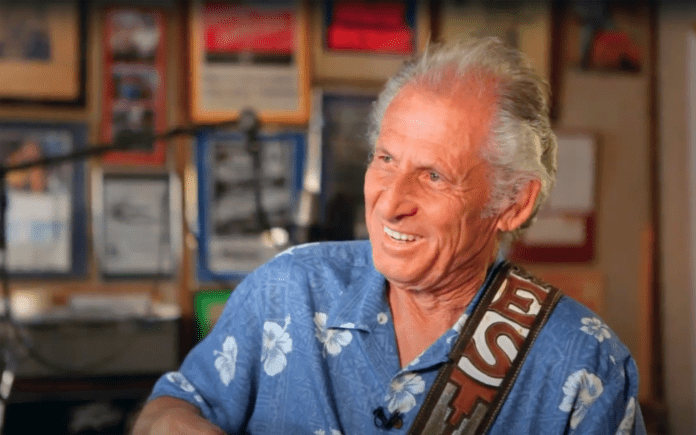
Wes Reynolds’ newest album, In the Afterglow, explores the grief of losing his son.
During a recording career that stretches back a remarkable 67 years, Tulsa’s Wes Reynolds has been inspired by a ton of different people, starting back in the late ’50s with classic rock ‘n’ rollers like Elvis, Chuck Berry and Little Richard. The inspiration for his newest disc, however, came from a much more personal and tragic place.
“This album came about because I wrote a song called ‘In the Afterglow,’” he explains. “It was a tribute to my oldest son, Corey, who died some years back. He had mental illness. He’d gone to Atlanta, Georgia. He was a journeyman electrician, and he started a business down there. He was pretty successful at it. Then things started going sideways. I did all that I could to try to help him, and finally I went down there, got him, moved him back here, and tried to get him some help.
“He just wouldn’t stay with that, you know? He’d disappear, and he’d be on the street, and I’d be out looking for him and not finding him. I worried a lot about him. Finally, I turned it all over to God, and when I did that, the next step was that he was gone. So I guess that’s what was supposed to happen.”
The song, which holds out hope for reuniting with loved ones in the next life, “just rolled out of me,” says Reynolds, as did another inspired by the loss of his son, “Life Without You.”
“I went through a lot just being a father that loved his son, and I know there are many people who have to experience mental illness with family and friends and so forth,” he adds. “I’d just like to maybe bring some awareness about that to people, to get people thinking about what they can do to help.”
While there are other deeply emotional numbers on the new disc, In the Afterglow is hardly a downbeat record. It opens with a classic Reynolds 12-bar blues, horn-accented, called “Bad Case of Love,” and ends with a reflective tune called “You Were Never Mine,” done in a 1950s ballad style that evokes the sense of loss that often accompanies nostalgic thoughts. Along the way, funky blues alternate with heartfelt ballads; there’s even a comedic tune (“To Far North”) bemoaning how hard okra, collard greens and hog jowls are to find once you leave our part of the country.
It’s Reynolds’ first record since 2009’s Burnin’ the Piano Down, and it marks his debut as a Muscle Shoals recording artist. Except for some vocals recut at Tulsa’s Church Studio, In the Afterglow was created entirely at Fame Recording Studios in Muscle Shoals, Ala., one of the longtime homes of the so-called Muscle Shoals Sound. That sound – R&B and funk elements like horns and Hammond organ combined with a kind of gritty country-influenced underpinning – echoes through Reynolds’ CD to great effect.
Why Muscle Shoals?
“I’d thought through the years that I’d like to go down there,” Reynolds says. “I had some other things I’d written, and I had the ways and means to record again. I did a song some time ago called ‘Doggone, My Doggone Dog’s Gone’ down in Nashville, with Elvis’s vocal group, the Jordanaires, behind me, so I was thinking about going back there. But then I thought, ‘Well, I’ll just go to Muscle Shoals and see what they’re all about.’”
He hired the band and called his own shots on the new disc. As you might imagine, that was a completely different experience than he’d had with his first record, “Trip to the Moon” – although that, too, was done at a place that would achieve an amount of fame.
In the 1950s, an Oklahoma City recording studio owned by Gene Sullivan, half of the country-music duo Wiley & Gene (“When My Blue Moon Turns to Gold Again”), became the destination for young Oklahomans experimenting with the new sounds of rock ‘n’ roll and rockabilly. Among their number was 15-year-old Wesley Reynolds of OKC, winner of a 1957 talent show sponsored by a Stillwater man named Bill Burden, owner of the small Rose Records label.
After he’d won the competition, Reynolds recalls, Burden “came to me and said, ‘We’re going to sign you to Rose Records and give you a two-record contract. And we’re gonna have a hit record. Now, I want you to go home and write a song called “Trip to the Moon.”’
“At that time, the headlines in the paper were all about how some day man was going to walk on the moon. So I go home and write – try to write – a thing called ‘Trip to the Moon.’ We went over to Gene Sullivan’s recording studio, and they had musicians from Al Good’s Orchestra to back me on this thing. I didn’t like that at all because I couldn’t get the sound I wanted, but I didn’t have anything to say about it.
“We recorded it, and they put it out on the Rose Records label. They took out a full-page ad in [the music-industry magazine] Cash Box, with my picture on it and the names of all the distributors and everything. They told me it cost $1,500. I quit school – my parents didn’t want me to, but they let me – and Rose Records put me on the road. We joined a tour with Gene Vincent, Jerry Lee Lewis and Ronnie Self, and we played the Cimarron Ballroom in Tulsa and went on to Joplin and Kansas City – about a two-week tour.”
Despite the promotion, “Trip to the Moon” didn’t make a significant impact on the national charts, and neither did his follow-up single, a rockabilly version of the Johnnie Lee Wills Western-swing hit “Rag Mop.” Reynolds recalls that he made no money on either one. (In fact, on the label for “Trip to the Moon,” Burden gets sole writing credit.) However, it was enough to launch Reynolds on a musical career that’s now lasted for well over six decades, re-igniting after he moved to southern California to live with his grandparents and go back to school, and continuing until 1970, when he quit the road and moved to Tulsa.
“I’d been playing the Vegas circuit for about five years at the time, all those towns in Nevada,” he remembers. “We were putting my son, Corey, in schools in Alaska, Washington, Oregon, California, Nevada. My mother and dad had moved to Tulsa, and my dad wanted me to move back and go into business with him, so I did.”
Reynolds continued, however, to play and record. He built a studio in his Tulsa home. And he found out that those teenage rockabilly records he’d cut in the distant past had made him something of a celebrity with hard-core fans of the genre.
“I went to Vegas last year and did the Viva Las Vegas rockabilly concert at the Orleans Hotel. It’s been going on for years. I did “Trip to the Moon” live there for the first time since I got off the road in ’58,” he notes with a chuckle. “A lot of people from Europe go to the thing; I get mail from Sweden, and Germany, and the UK, wanting autographed pictures. Evidently, I’ve stirred up a little commotion over there, and it’s all about that first record, and my next few records after that.”
At this writing, the Official Wes Reynolds Website was under construction. Featuring vintage posters and other career memorabilia along with Reynolds recordings, it was due to debut in August.
Reynolds’ 2023 performance of “Trip to the Moon,” in front of a packed house at the Viva Las Vegas event, has been preserved on YouTube.
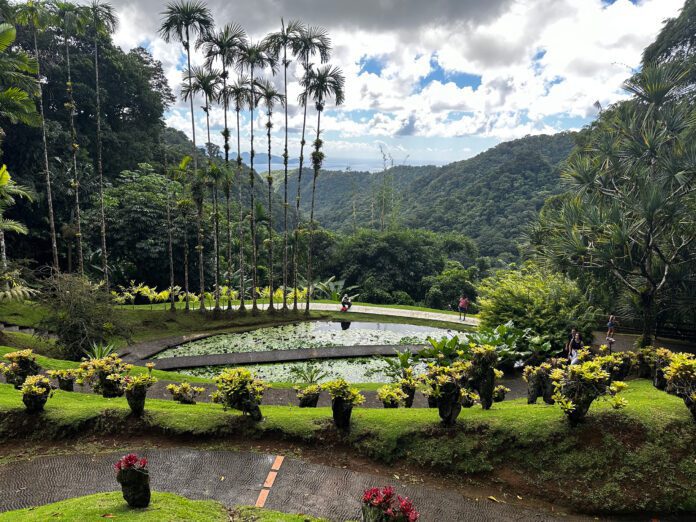
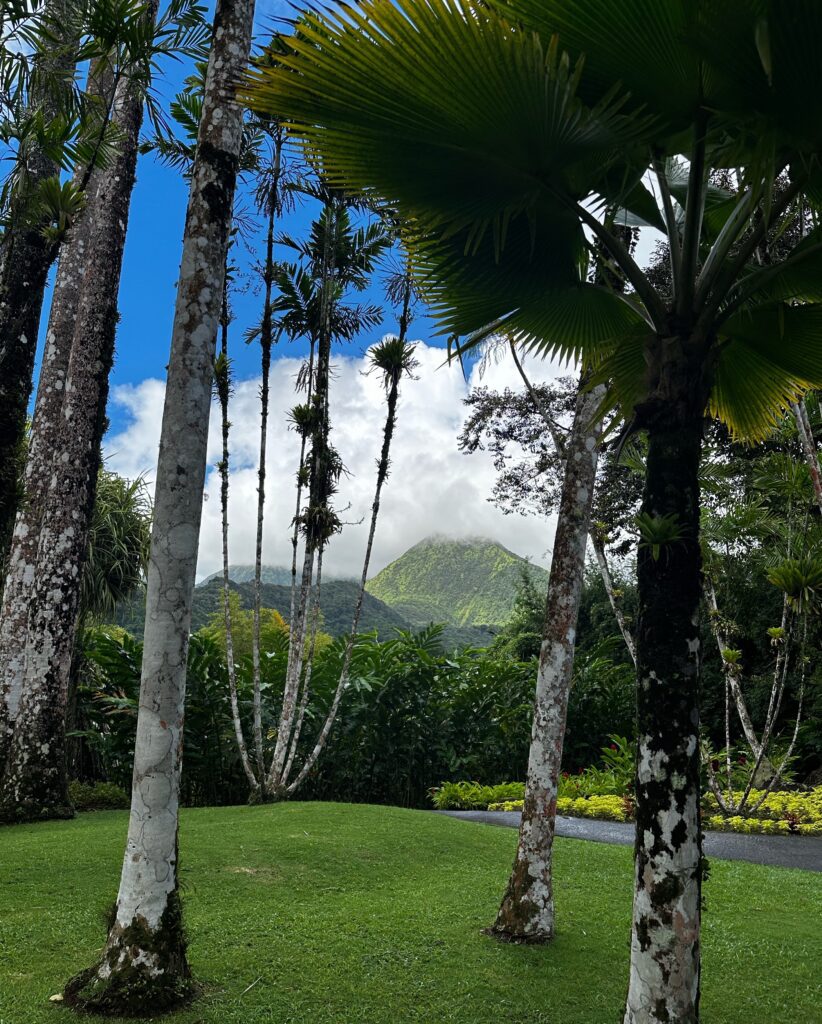
The French island of Martinique would be what some call a “hidden gem,” complete with beautiful beaches, historical artifacts and entertainment galore. Photos by Gina Michalopulos Kingsley
There are some places that you know are going to be extraordinary just by the feelings and reactions you experience upon arrival. Martinique is a perfect example. The port brims with enthusiastic and hospitable local “ambassadors” who sing, dance and drum you towards an unforgettable vacation.
Martinique, one of the French territories of the Caribbean and part of the French West Indies, seems to have everything a tourist would look for in a destination: The island has a good mix of urbanity and pastoral beauty; it is visitor-friendly and has good signage; and tourists can appreciate the cleanliness found throughout the island. A stunning visual in the city is the steeple of St. Louis Cathedral in the Fort-de-France area. Reportedly, the architect was fascinated by the Eiffel Tower, so he mimicked the style of it within the cathedral’s steeple. It exudes a French impression into the skyline.
Driving through the island, there are picturesque bridges, stunning architecture and acres upon acres of banana and sugarcane crops. The main languages spoken there are French and Martinican Creole.
Tour guides will fascinate you with their explanations of banana and sugarcane farming, as well as shower you with interesting historical facts. For example, the Empress Joséphine de Beauharnais (first wife of Emperor Napoleon I) was from Martinique. As well, Christopher Columbus reportedly introduced sugarcane to Martinique on his second voyage there in 1493.
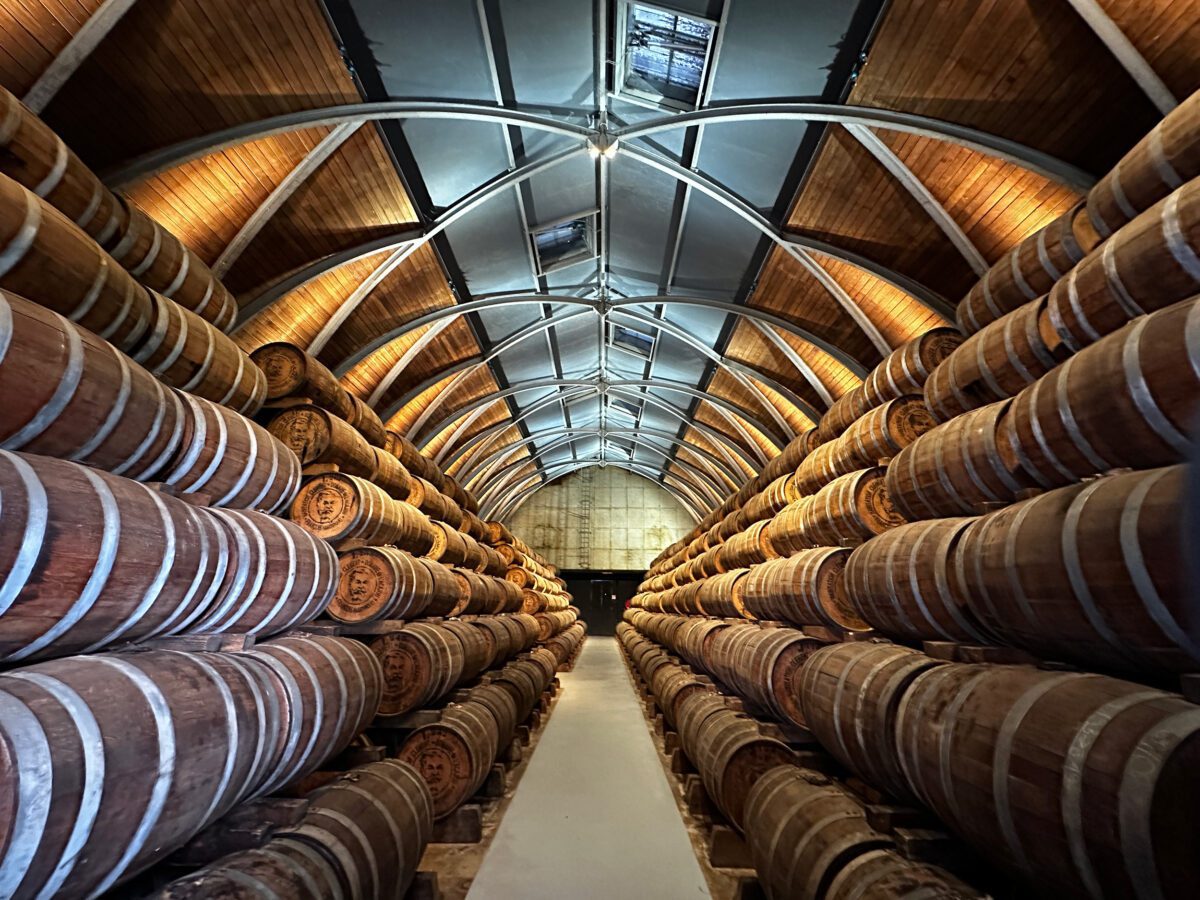
Visit the Clement Rum Distillery for a most delightful immersion into so many details that represent that Martinique mystique. So chic! Arriving there, you have so much to take in – it’s a tourist “whiplash” of visuals.
Sacré-Coeur BasilicaClement Rum DistilleryBalata GardensNymphea stellata – purple lotus flower
A sculpture garden beckons you to gawk and study the abstracts while the 300+ tropical plants also compete for your attention. An outdoor museum of historic rum distilling artifacts and machinery are on display for people to enjoy. Interestingly enough, they blend into the environs so as not to disrupt the landscape. The Creole mansion is a stunning villa filled with historic furniture. An art center also sits on the complex with artwork and mixed media representative of the Martinique history and lifestyle.
It’s no wonder this was the location where President George H. Bush and French President Francois Mitterrand held their historic meeting in 1991. The day is referred to as “the day America discovered Martinique,” and photos of the day are displayed on-site.
The rum distillery is impeccably curated and quite the sensory experience; you can smell notes of rum wafting through a fragrance tool at the push of a button. It feels like a Willy Wonka movie moment … but with rum instead of chocolate. Another important attraction is the Balata Gardens, a World Unesco Site. Shrouded in the mist of this actively volcanic island, Balata could be the Garden of Eden on Earth. Swinging bridges above and koi ponds below adorn the paths as you’re tucked away into a cooler microclimate haven.
Sacre-Coeur Basilica is another must-see. Signs of wear do not detract from the divine and somber feeling of this church. Candles, icons and statues throughout the basilica give a nice balance to your tours of rum distilleries, farms and rainforest gardens.
Culture aside, you can always relax at one of the many white sandy beaches of Martinique, and if you’re lucky, you’ll watch the antics of colorful sailboat passengers participating in races. There is so much jubilance in Martinique – a perfect blend of European influence and Caribbean natural beauty.
Main image credit: The French island of Martinique would be what some call a “hidden gem,” complete with beautiful beaches, historical artifacts and entertainment galore. Photos by Gina Michalopulos Kingsley
As medical communities continually strive to meet the needs of an ever-changing patient population, there’s been a greater focus on the ‘patient experience’ – an industry movement to define and improve the human experience within healthcare.
Jamie Di Piazza-Rodriguez, MSW, CPXP, is the manager of patient experience for Saint Francis Health System in Tulsa. Her department is relatively new, put in place two years ago, and it works with Warren Clinic and all Saint Francis hospital locations.
“We partner with the Beryl Institute, and they define the patient experience as the sum of all interactions, shaped by an organization’s culture, that influence patient perceptions across the continuum of care – and I like to say it’s the people that make the culture,” says Di Piazza-Rodriguez. “The patient experience encompasses a lot; we look at all the processes our patients face, from when they drive into the parking lot and throughout the entire journey they take within our health system.”
She says there are many ways her department gains the patient perspective, including regular collaboration with a patient family advisory council.
“Our patient family advisory council consists of patients, their family members and employees,” says Di Piazza-Rodriguez. “We gather and listen to their concerns and ideas. It welcomes discussion and helps us make changes that improve their care. For instance, our patients expressed that it was often difficult to make the long walk from the parking lot to the hospital, so we added valet and golf carts at some locations to meet this need.”
She also emphasizes that the surveys that patients complete don’t fall into a void – instead, they are reviewed and studied to help shape processes and develop tangible solutions.
“We look closely at the data to hear the voices of our patients,” she says, explaining that patients have the opportunity to participate in an exit survey after being discharged. “But we also partner with frontline staff, as well as employees within our system. Our departments have what we call unit-based councils, made up of leaders within the department. We work directly with them to learn what patients are saying and also how processes affect their work. Our goal is to work together to potentially elevate their communications or bring best practices to the forefront to help and empower their team.”
The ‘patient experience’ concept began over a decade ago and is now predominantly accepted as its own dimension of healthcare quality. The Agency for Healthcare Research and Quality (AHRQ), the lead federal agency charged with improving the safety and quality of healthcare for all Americans, recognizes the patient experience as an integral component of quality healthcare, citing it as a key step to more patient-centered care. In addition, it offers an explanation of the difference between patient experience and patient satisfaction – two terms often used interchangeably but that are fundamentally different.
According to AHRQ, “to assess patient experience, one must find out from patients whether something that should happen in a healthcare setting – such as clear communication with a provider – actually happened, or how often it happened. Patient satisfaction, on the other hand, is about whether a patient’s expectations about a health encounter were met.”
While two people can receive the same exact care, they may express different levels of satisfaction based upon their individual expectations. As a simple example, one patient may have expected less pain and a shorter procedure while another patient expected more pain and a longer procedure.
“Addressing the patient experience is a powerful thing,” says Di Piazza-Rodriguez. “The patients we treat are everything to their loved ones, so they want the best for them and so do we. It’s a privilege to take care of someone’s ‘everything.’ It’s a very exciting time as healthcare is changing and evolving for the benefit of our patients.”
Just the thought of running a marathon can be intimidating.
Whether you love running and just haven’t had time to participate in an event, or you want to challenge yourself to get truly in shape, there are steps you can take to get both your body and your mind ready.
“Start with a visit to the doctor if you don’t get regular checkups,” suggests Chuck Mikkelson, race director for the Oklahoma City Running Club. “I research for a training plan that fits with my current physical fitness and follow it. Local clubs or groups are a wonderful place to start. There isn’t one plan that fits everyone, so you should be flexible and find what works best for you.”
There can be hurdles along the way as you prepare for your first marathon, especially if you aren’t a seasoned runner. Mikkelson mentions that training can take 16 weeks or longer, and setbacks are just a part of the process.
“You will deal with exhaustion, sore muscles, nagging injuries … but one needs to be smart on when to cut back or push it,” he says. “Stay positive. You must love the small steps, as you don’t go from the couch to a marathon in a week. Over-training is worse than under training. Listen to your body.”
In most plans, runners will do a gradual increase in activity for three or four weeks, then taper off for a week to allow their body to heal.
Training in the summer – particularly in states where the heat can be as extreme as Oklahoma – can look much different than training in the winter.
“Most people in the heat will need to slow their pace and work on keeping hydrated between workouts,” says Mikkelson. “Workouts don’t do you much good if you are dehydrated and exhausted. In cold weather, warm up your muscles before pushing them to a higher intensity. You also need to hydrate even though it is cold; you are still losing fluids.”
Mikkelson adds that it takes time for your body to adapt to the changing seasons. Be sure you have the proper equipment, such as running shoes that fit your body mechanics.
“Find a local group, as there will be plenty of members that are willing to share what worked and did not work for them,” he says. “Plus, a group will help you get out the door and get in those long miles that are needed. Treat race day as a day to celebrate all the hard work it took to get there. Smile and be thankful for what you have accomplished.”
While it may seem like a tough hobby to break into, Mikkelson thinks many people can enjoy the thrill of marathon competition.
“While I’m no expert, I’ve achieved the feat of running marathons in all 50 states over the past 20 years,” he says. “Along the way, I’ve trained alongside thousands of runners, forged numerous friendships and had the pleasure of visiting every state in the U.S. – while enjoying a beer in each one.”
Preparing for Your Marathon
• Hydrate. The National Academy of Medicine recommends that athletic men drink 104 oz. of water (13 glasses) and athletic women drink 72 oz. (9 glasses) per day. Don’t go too far beyond this, as over-hydration can be dangerous.
• Carb load. Eat plenty of carbohydrates the night before your marathon.
• Avoid alcoholic beverages. Running whilst tipsy or hungover is a recipe for disaster.
• Get enough sleep. While you may be anxious, ensuring you get a full 8 hours is key to a strong run.
• Be prepared. Have clothes, shoes, protein packs, headphones and other items ready to go the night before.
• Give yourself time. Set your alarm early so you have a moment in the morning to relax and prepare.
Duncan, about three hours from Tulsa and 1.5 from Oklahoma City, offers outdoor recreation, educational opportunities and a vast business portfolio. Photos courtesy Duncan Convention & Visitors Bureau
Beginning its life as a critical stop on the historic Chisholm Trail – the famed path that, in the late 1800s, saw thousands of cattle herded from Texas to markets in Kansas – Duncan is an anchor of southwest Oklahoma that continues to leave its mark.
Far from isolated, the Stephens County seat of just over 23,000 residents offers abundant job opportunities and recreation for locals and visitors alike, alongside intriguing museums, recreation and retail shopping.
The rich offerings in Duncan start with the Simmons Center, a 105,000-square-foot entertainment and physical fitness complex that, for the past three decades-plus, has served as the hub of civic life.
Rex Outhier, executive director of the Simmons Center Foundation, says the complex attracts civic groups, hosts concerts, festivals, theater productions, conventions and banquets, and has a recreation center with two gyms, a swimming pool and a childcare center.
Duncan also has a series of five municipal lakes offering a variety of outdoor recreation, and a vibrant, historic downtown. For anyone keeping a checklist of Oklahoma’s must-visit locations, Duncan is surely on it.
Duncan is situated about 30 miles east of Lawton and 80 miles southwest of Oklahoma City, with U.S. Highway 81 running north and south through town. State Highway 7 provides an easy connection to Interstate 35, about 45 miles east of the city.
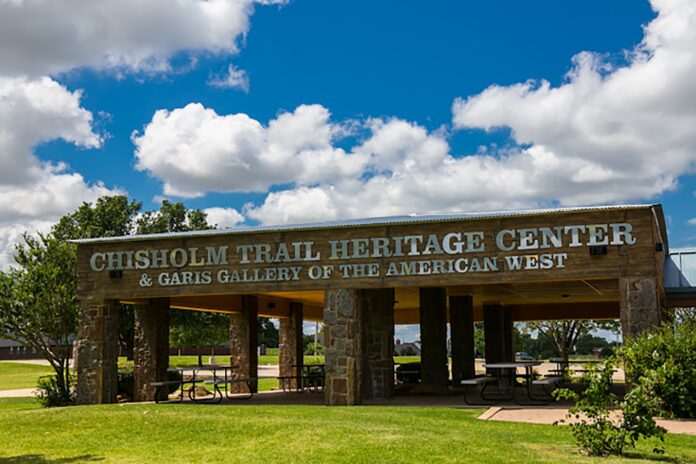
“Duncan is known for being the heart of the Chisholm Trail,” says Teri Knox, executive director of the Duncan Convention and Visitors Bureau. The Chisholm Trail Heritage Center, she said, is a “top ten western museum that brings visitors from all over the world to Duncan.”
The Chisholm Trail Heritage Center recently hosted a traveling exhibit that featured the life of Comanche leader Quanah Parker, an early-day Comanche leader, and his mother, Cynthia Ann Parker.
Jennings says the Visitors Bureau’s website offers a sample “weekend menu” that includes a smorgasbord of activities and attractions. Besides the Chisholm Trail center, Duncan has several other local museums.
Economically, Duncan is holding steady, says Lyle Roggow, president of the Duncan Area Economic Development Foundation.
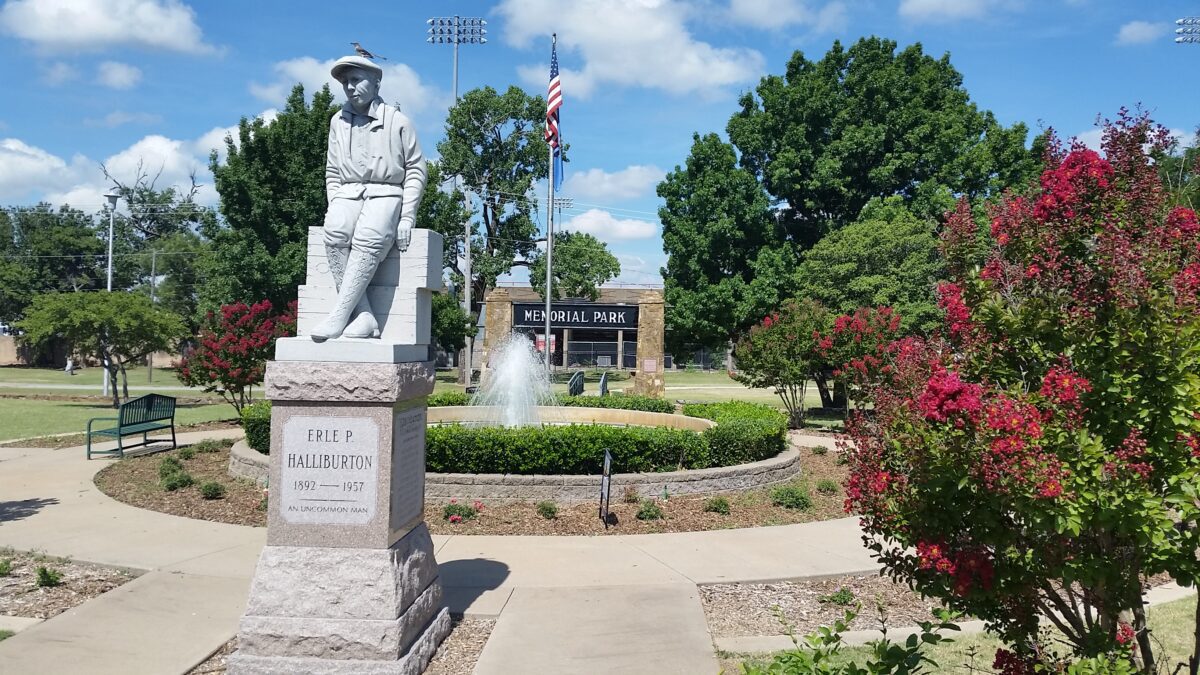
Energy production, embodied primarily by oil well service provider Halliburton, which got its start in Duncan, remains the city’s largest employer. But Halliburton is followed closely by a 21st-century health care entity, DRH, which serves the Stephens-Jefferson County area with hospitals, family care clinics, specialty clinics and a cancer center.
“There are job opportunities in Duncan that fit a lot of people’s needs,” Roggow says, describing Duncan as “an energy community that is trying hard to diversify.”
He mentions, as an example, Model 1, a newcomer to Duncan that retrofits buses, vans and other types of transportation. The company set up shop in Duncan last year, and now has 45 to 50 employees.
“It’s a unique business that is doing very well,” says Roggow.
Knox, meanwhile, calls inquirers’ attention to Duncan’s Main Street, which offers a variety of shops that carry antiques, western wear, home décor and other items. Additionally, Fuqua Park includes a water garden, amusement rides for kids, plus a gazebo ideal for weddings and picnic facilities. The park is the site of the Stephens County Historical Museum, located in Duncan’s former National Guard Armory.
The Rock Island 905 Railroad Museum, featuring a restored locomotive, presents an entertaining stop for rail fans and others curious about the railroad’s role in developing Oklahoma and Duncan.
Main image credit: Duncan, about three hours from Tulsa and 1.5 from Oklahoma City, offers outdoor recreation, educational opportunities and a vast business portfolio. Photos courtesy Duncan Convention & Visitors Bureau
Photos courtesy Duncan Convention & Visitors Bureau
For More Information
Duncan Convention & Visitors Bureau 580-252-2900 ext. 240 visitduncan.org
Simmons Center 580-252-2900 simmonscenter.com
Chisholm Trail Heritage Center 580-292-6692 onthechisholmtrail.com
Stephens County Historical Museum 580-252-0717 stcomuseum.com
Duncan Chamber of Commerce 580-255-3644 duncanchamber.com
City of Duncan 580-252-0250 duncanok.gov
Duncan Area Economic Development Foundation 580-255-9675 ok-duncan.com