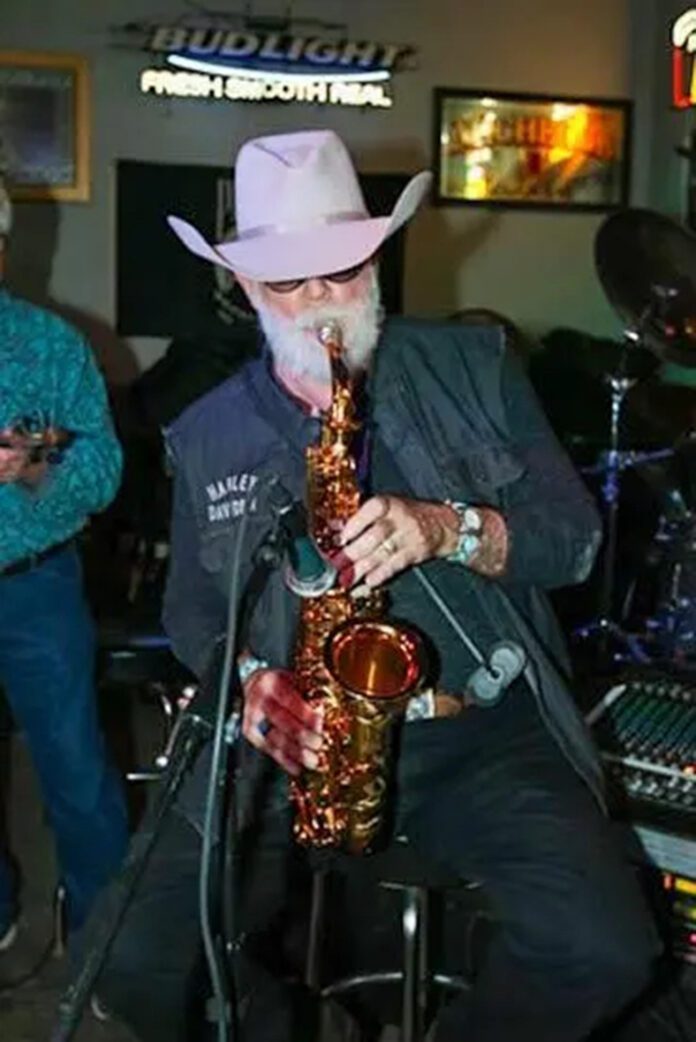
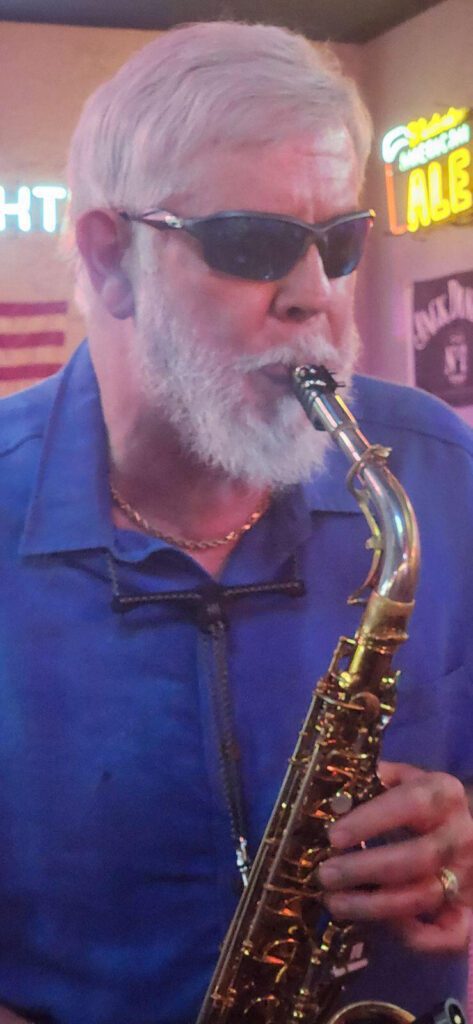
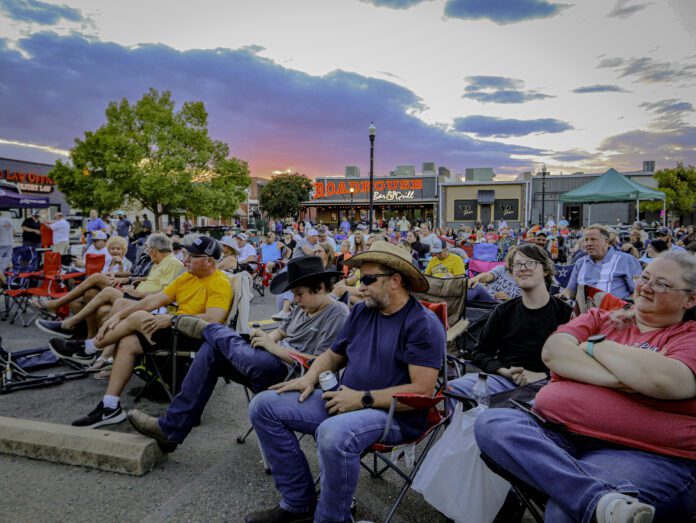
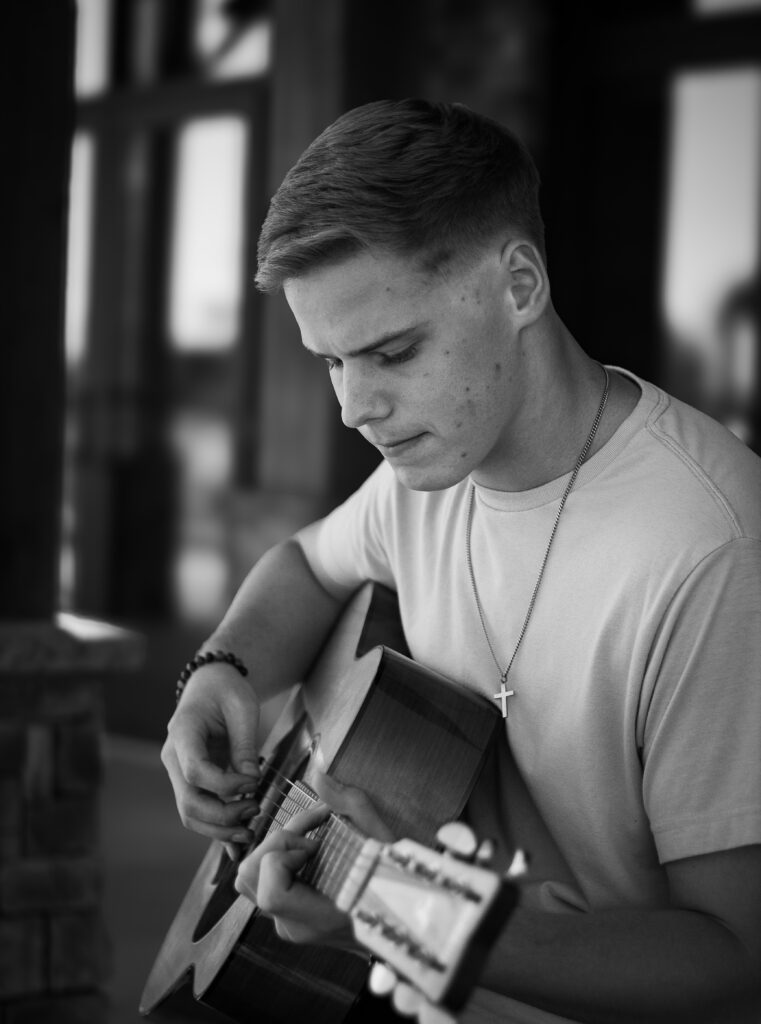
A veteran in the Tulsa music scene, Steve Wilkson currently plays twice monthly at Four Aces at 41st and Garnett. Photos courtesy Steve Wilkerson
When it comes to star-studded musical resumes, Steve Wilkerson’s is a tough one to top. A professional saxophonist since the age of 11, when he joined his dad’s Bartlesville-based dance band, and a graduate of the University of Tulsa’s school of music, Wilkerson went on to work in the West Coast music scene for more than a quarter of a century. Even a glance at his credits during that time gives an idea of the depth of his involvement: Michael Bolton, Barbra Streisand and Barry Manilow jump out at you, but so do the likes of Mel Torme, Tony Bennett and The Temptations. They are among the dozens of major names with whom Wilkerson toured, recorded and/or performed.
Yet for all of the starpower that illuminates Wilkerson’s career, the entity who’s had perhaps the biggest influence on his life is someone he doesn’t even know by name. Their meeting didn’t happen on any of the thousands of stages Wilkerson’s played on, or in one of the many recording studios where he’s laid down tracks for his own discs and others, but in a third-floor room next to the nurses’ station at Tulsa’s Hillcrest Medical Center. And the encounter wasn’t only life-changing, but life-saving as well.
It happened a couple of years ago. By that time, Wilkerson and his wife – the noted vocalist, guitarist and arranger Andrea Baker – had been back in Tulsa for some time, more or less retired from the business. Then, one morning while Wilkerson was making coffee and checking emails, he suddenly realized that he suddenly couldn’t read the words on his screen.
“They looked like hieroglyphics,” he remembers. “My wife was on the phone with a friend of hers from Michigan, and Andrea told her, ‘Steve can’t read his email.’”
“Her friend had lost her husband to a stroke, and she said, ‘He’s having a stroke. Get him to the hospital now.’”
Enlisting the help of their son, who lived nearby, Baker got Wilkerson to a Claremore hospital, and from there to the Stroke Center at Hillcrest in Tulsa.
“Hillcrest was great,” he says. “They had a neurologist waiting, and they got me in bed, and they said, ‘Well, we’ve got you on blood thinners. We’re just going to have to see what happens.’ But they were giving me a look that made me think, ‘Oh, man, maybe this is it.’
“That night, I realized the severity of the situation. They were waiting for another one to hit and just take me out. So I started praying, and I thanked God for everything in my life, for Andrea, for the people I’d played with, for the career I’d had. I said I really appreciated everything, and I guessed I was ready to come home now.”
Then, as he remembers it, he was trying to rest when “a weird gold light” started flashing on the wall by his bed, “like a kaleidoscope.” He figured it was the reflection of headlights in the parking lot, but when he looked out the window, everything was dark and quiet.
That was about 3:30 a.m., Wilkerson remembers. And he’ll never forget what happened next.
“Suddenly, in the room, here’s this guy, just standing there and looking at me. You know, when people look at you, their eyes move, but his didn’t. There was no vertical movement to them at all. He reached out like he was going to shake hands with me, but instead, he grabbed my wrist, and I went over like George Foreman had hit me. When I got up, no one was there.”
Photos courtesy Steve Wilkerson
Then, Wilkerson went to sleep. And when he awakened, he says, “I felt incredible. All the anxiety, everything, was gone. They came in to check on me, and the guy said, ‘You seem to act like nothing has happened.’ He had obviously been looking at my MRI’s.
“I said, ‘I haven’t felt this good in 27 years. I’d like to get out and take a walk if that’s okay.’
Wilkerson laughs.
“He sent the head of the stroke center in, and they couldn’t figure out why I was coming back after something like this, with no slurred speech or anything. They checked my face and all that, and the doctor said, ‘I think we just got lucky with you. I don’t think it’s your time. Maybe God wants you to keep playing the saxophone.’
“Not too long after that, I was in Eureka Springs, talking to this lady about my stroke and what had happened, and she told me, ‘Well, you sent a prayer of gratitude up. And you were spared. You encountered an angel on the third floor.’”
Three days after Wilkerson was admitted to Hillcrest, Baker took him home. Once there, he knew he had to find out what the stroke had done to his musical ability.
“I called my son and said, ‘Well, I’m getting ready to play. Send up a prayer, because this is going to be it.’ I started playing, and I played so fast and with such clarity – I was able to play things I’d never been able to play before. I thought, ‘Where did that come from?’ It was just bizarre.
“So now,” he says, “I’m playing my horn because I realize I’m supposed to continue doing that.”
While Andrea – who has her own very impressive resume – has been able to gear down and enjoy retirement, Wilkerson has once again been seeking gigs. With his credentials, it hasn’t been hard for him to find work. In fact, it often finds him.
“I’ve gotten some calls for the Symphony, and for some jazz things, and then I started getting calls from some rock ‘n’ rollers,” he explains. “David Thayer, a wonderful guitarist here in Tulsa, called me up and said, ‘Hey, would you like to come out and play in my band?’
“I thought, ‘You know, this late in the game, I’d really like to do that.’ So I started playing the second Sunday and the last Sunday of every month at Four Aces on 41st and Garnett. It’s an afternoon gig, 2 p.m. until 5:30, and it’s been so much fun. I mean, nobody’s asleep on the bandstand. There’s a lot of intensity. I brought in what I had, and it really affected Steve Pounds, who’s a wonderful drummer. He said, ‘Man, when you start playing, I float. I can feel it.’
“We’ve got Bruce Dunlap on bass, a really cool guy, and boy, we just take it to another level. Bill Taylor, who plays violin, is another wonderful guy. He and I are like the string and orchestral section. When David sings ‘Wichita Lineman,’ we play together, and the way we’ve got it miked, it’s incredible. David says, ‘It’s like I’ve got my own orchestra behind me.’
“So I’m having fun, playing with some of Oklahoma’s finest musicians,” he concludes. “We’re having a big time. I’m able to get into the David Sanborn style of playing. And Edgar Winter. I just got an Edgar Winter mouthpiece for my saxophone.”
In addition to his regular appearances with Thayer’s group, he’s also preparing to go into the studio with songwriter-guitarist Raymond Berry, who recently put together an all-star lineup of Tulsa musicians to record his composition “Swing into Cain’s.”
“Raymond’s going to bring me in on some of the tunes he’s doing, to add saxophone tracks and maybe some flute as well,” Wilkerson says. “So I’m looking forward to that, too. You know, man, I’m getting really busy.”
Clearly, he sees that as a good thing.
“Over at Four Aces,” he says, “I’ve had people come up to me who are almost in tears, saying, ‘Thank you. What you just played – you have no idea what it’s doing for me.” And I think, ‘Wow. I guess I’m doing some good for somebody.’”
“Anything is possible on a train: a great meal, a binge, a visit from card players, an intrigue, a good night’s sleep, and strangers’ monologues framed like Russian short stories.”
– Paul Theroux, The Great Railway Bazaar
What a way to get to know a country. Theroux is so right – riding the rails presents experiences and interactions like no other form of travel. Plus, if you’re going to Italy anyway, why not look around a little? Italy’s rail system is marvelous. Dozens of lines crisscross the country with high-speed as well as regional take-your-sweet-time trains.
Rome to Milan in Three Hours
It’s not hard to cover 300 miles in a hurry if you’re barreling through the Italian countryside at 220+ mph. Trenitalia high-speed trains connect cities and towns across Italy but the run from Italy’s political capital to its fashion capital offers bonus stops along the way at Florence and Bologna.
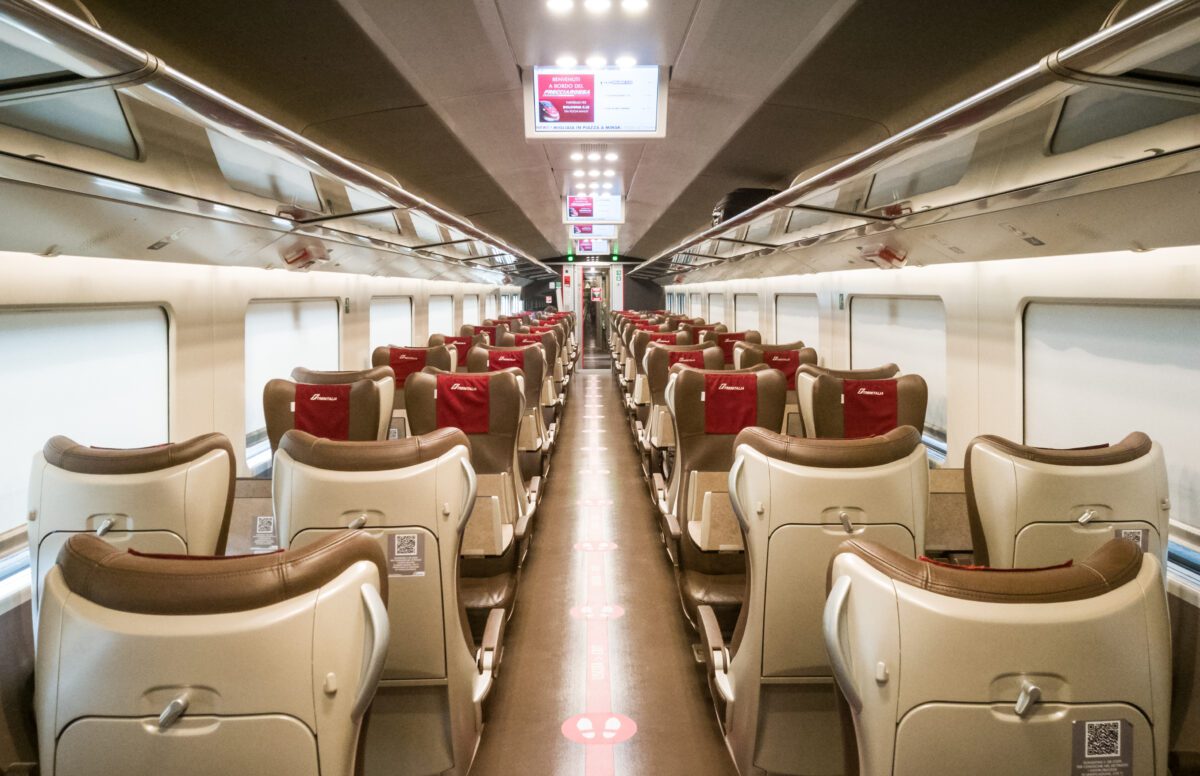
Trenitalia’s Frecciarossa (Red Arrow) 1000 are some of the world’s most efficient, quietest and most luxurious with leather seats and cafe-bars. The 1000 is also used on the Milan to Naples and the Bologna to Florence routes.
Frecciargento (Silver Arrow) high-speed trains, slightly slower than the Frecciarossa (only 155 mph), connect Rome to Venice and Verona in the north to the baroque city of Lecce in the south.
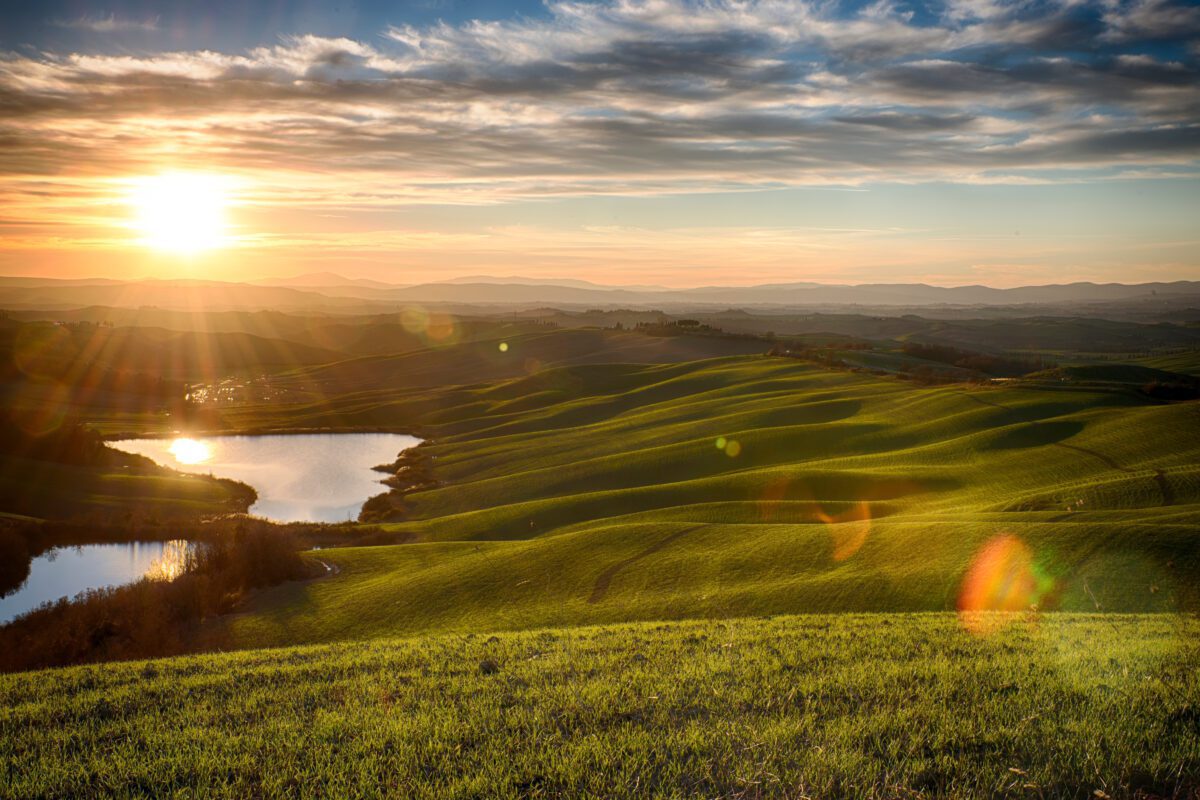
The wonderful art and architecture of the two cities of Florence and Venice is separated only by a two-hour high-speed train ride and the Tuscan countryside that links them is lovely. High speed trains also run between Milan and Venice and from Turin along Italy’s northwestern coast to Pisa and from Pisa to Rome.
Take a Train Ferry to Sicily
At the other end of the speed spectrum is the 11-hour Rome to Sicily run that traces the Tyrrhenian Sea coast along the southwestern edge of Italy, through Naples, past Mount Vesuvius and the Amalfi Coast and then onto a train ferry. Yes, entire rail coaches (with you inside) are loaded onto a large boat and borne across the Straits of Messina for a final run to Palermo, Sicily.
On the Italian Riviera, Cinque Terre is a quintet of charming fishing villages known for their focaccia, fresh seafood, pastel-colored homes and slow, relaxed lifestyle. A fast regional train connects all five.
The delightful Tirano to St. Moritz train originates in northern Italy and runs into the Heidi-like Swiss Alps by way of Bernina Pass. (See the Destinations piece in April 2024 of Oklahoma Magazine for more info.)
In the far northwest, what they call the “Railway of Marvels” starts in Cuneo, climbs through the Maritime Alps by way of spiral tunnels and high viaducts, meanders between France and Italy for a while and then descends 3,280 feet to Ventimiglia on the Italian Riviera. Along the way are all-star views of the alps, the coast and even the French Riviera as the train makes its way over to Nice.
For the utmost in rolling romantic elegance, it’s the Venice Simplon Orient Express from Venice to Paris. Lots of 1920s floral marquetry, Lalique glass panels, impeccable service and world-class cuisine. The stuff of legends.
Also running trains on the Paris to Venice route is Thello, cheaper with fewer frills than the Orient Express and it’s an overnighter. Your arrival the next morning in your new city is accompanied by a continental breakfast and your favorite newspaper.
Coming soon is the hotly-anticipated luxury train Orient Express La Dolce Vita, no relation to the other Orient Express but equally opulent. The bones for this new train are actually original Orient Express passenger cars found abandoned ten years ago in Poland and refurbished to include spacious suites featuring double beds, large picture windows and private bathrooms. The plan is for the reimagined train to make two-and three-night runs randomly across Italy starting in the spring of 2025.
Many people suffer from ‘poor circulation.’ It’s a common term – but what does it really mean and how does it affect one’s health?
To begin, the circulatory system consists of the heart and blood vessels that move blood throughout the body, providing oxygen, nutrients and hormones to muscles, tissues and organs, and in turn, removing waste products, such as carbon dioxide.
Jones Thomas, M.D., a vascular surgeon with INTEGRIS Health Cardiovascular Physicians in Oklahoma City, says a diagnosis of poor circulation starts with a thorough review of one’s medical history, alongside a physical exam.
“Poor circulation can be due to multiple causes including poor heart function or blockage of blood vessels,” says Jones. “Poor circulation can manifest with various symptoms depending on the location and organs involved. One of the most commonly encountered situations with poor circulation is in the legs, and symptoms initially start with aching, cramping and tiredness of the feet and calves that comes on and worsens with walking, and improves with rest.”
However, patients with more advanced issues involving poor circulation may experience cramping and aching pain even while resting, as well as wounds on the feet that won’t heal. In addition, Jones says poor circulation in other areas of the body may show other symptoms. For example, poor circulation involving the heart could result in chest pain during exertion, involving the brain could result in strokes or mini strokes, and involving the abdomen/intestines could result in pain while at rest or while eating.
Despite where a person is experiencing discomfort, it’s important to not ignore the symptoms of poor circulation, but rather work to find the root cause.
“It is unlikely that blood vessels from only one part of your body would be affected with narrowing or blockages,” says Jones. “If you have poor circulation in one part of your body, it is likely that [narrowing vessels] are found throughout your body at various degrees of severity. Diseases including diabetes, high cholesterol, high blood pressure or kidney disease can contribute to and accelerate narrowing and blockages of blood vessels throughout the body. If poor circulation is suspected, it is important to be evaluated for these other medical issues.”
For those wanting to try and improve their circulation, Jones says that in general, plaque buildup in the arteries, known as atherosclerosis, cannot be reversed with diet or medications.
“However, progression of plaque buildup can be slowed down or even stopped by optimizing cardiovascular health factors such as blood sugar, blood pressure and cholesterol, as well as decreasing injury to the blood vessels from toxins, such as found in cigarettes,” he says, adding that smoking has by far the most detrimental effects on blood vessels and the circulatory system.
Jones says diet and exercise can strengthen your heart and muscles to work more efficiently, even in the setting of some mild to moderate vascular disease.
“Maintaining a healthy circulatory system goes hand-in-hand with maintaining a healthy lifestyle – cutting down on extra or unhealthy sugars, fats and toxins, exercising more and optimizing cardiovascular risk factors as discussed above,” says Jones.
The Artisans and Gardeners Market offers handmade wares, and funds are earmarked for community projects.
Photo courtesy the Artisans and Gardeners Market
In Bristow, a community of just over 4,200 residents where a busy Main Street is a daily reminder of its presence on the original Route 66 highway, there’s a strong respect for the past – and an optimism about the future. In fact, anticipation is already building for the Mother Road’s centennial celebration, says Mayor Kris Wyatt, who’s at the forefront of a new burst of civic energy.
Wyatt was elected mayor last year after four years on the city council, and says that from her perspective, things in Bristow these days are “crazy busy.”
She continues: “It’s so fun – a lot of work, but I’m enjoying it so much.”
Bristow is in Creek County, about 35 miles southwest of Tulsa taking the Turner Turnpike, and 75 miles east of Oklahoma City. The original Route 66 goes through the heart of Bristow and forms the city’s Main Street.
Wyatt says infrastructure is booming; a new housing development has sprung up near Bristow’s Jones Memorial Airport, where a new terminal was dedicated in 2022. Fifty homes are under construction, and another 50 or so are coming this fall. Work is progressing on two industrial parks, while two convenience stores have recently opened. Developers are planning a groundbreaking for a hotel, as well.
“We have other things in the works,” Wyatt says. “I don’t want to say anything [more] until we have something signed.”
Wyatt is not alone in trying to put Bristow forward, as workers prepare for the Route 66 centennial in 2026 and other community events.
Ralena Groom is one of the organizers of Bristow’s 62nd Western Heritage Days Festival, Aug. 15-17, coinciding with the annual two-day Bristow Roundup Club Rodeo.
The Western Heritage Days Festival runs Aug. 15-17 and coincides with the annual Bristow Roundup Club Rodeo.
Photo courtesy the City of Bristow
To Groom, a lifelong Bristow resident, public service is a requirement – a lesson she says she learned from her father, who was mayor and served on the city council for 28 years.
“It was kind of impressed on us that we’re part of a community, and if you want it to [do well], you have to put some work into it.”
Groom says this year’s Western Heritage Days will be bigger than last year’s festival, which drew about 2,500 to town. Most of the events, including games, turtle races and other attractions, have been moved to Bristow’s city park area, which features an amphitheater and the city’s new Pirate Plunge water park.
The Bristow Historical Museum and Train Depot’s recent Voices and Votes exhibit from the Smithsonian drew several thousand visitors, says museum volunteer Linda Trigalet. The exhibit closed in mid-July, and Trigalet says the influx benefited several local businesses and restaurants.
“We had more people in two days than we’d normally have in a week to ten days,” she says.
Known originally by the Muscogee name “Choska Talfa” (Oak Town), and later renamed Woodland Queen, Bristow began as a trading post, prospered through Oklahoma’s rich oil and gas development, and is now benefiting from today’s burst of economic activity.
An ongoing turnpike expansion to six lanes surely will bring more development to town, Wyatt says, with Bristow in line for a second turnpike gate.
Another draw to Bristow is the Artisans and Gardeners Market. Vivian Taylor, market board member, says all funds from hat and shirt sales at the market are earmarked for community projects.
While many say July is the hottest month of the year, it gets dangerously toasty in Oklahoma during August. Heat-related threats come in all shapes and sizes – ranging from dangers to your budget to your body. The pros weigh in on how to beat the heat in whatever way you need to.
Budgeting Tips
Want to combat the August heat and boost your budget? Try these tips to save energy and some income during the dog says of summer.
Turn up the thermostat. By setting your thermostat to the highest comfortable temperature you can save some money. Each degree a thermostat is raised can save up to four percent on the cost of operating an air conditioner.
Take advantage of programs. Offered by utility companies like OG&E and Public Service Company of Oklahoma, the programs reduce or shift energy usage when energy demand is high for an overall cost savings. Both companies also offer weatherization programs for qualifying homeowners and renters to increase your home’s energy efficiency, such as with attic insulation, air and duct sealing and replacing light bulbs with energy-saving bulbs.
Become a “fan-atic.” Ceiling and portable fans can keep you cool without you having to lower your thermostat. Setting a fan’s motor to spin counterclockwise will push air down, which is what creates the wind chill and makes the room feel cooler.
Unplug electronics. Many electronics draw power even when turned off. Unplugging devices when they’re not in use can save energy.
Use better bulbs. Replace incandescent bulbs with LED or CFL bulbs, which use less energy and last longer.
Alter appliance use. Run dishwashers, washers and dryers during off-peak hours to take advantage of lower electricity rates.
Give your oven a rest. Skip the oven – and the heat it creates in your kitchen – and use your stovetop, microwave or air fryer, all of which typically run on less energy than an oven. Or get out and grill!
Close your blinds. Keep it cooler by letting less light in.
Give your AC some attention. Regular maintenance – replacing filters and cleaning vents – ensures that your air conditioning unit will run efficiently.
Stay Heat Aware
Alongside budgeting concerns, the summer heat can sometimes lead to serious health issues, such as heat stroke and heat exhaustion.
Heat stroke is a condition caused by your body overheating, usually because of prolonged exposure to, or physical exertion in, high temperatures. Heat stroke requires emergency treatment. Symptoms include high body temperature; hot, red, dry or damp skin; a fast, strong pulse; headache; dizziness; nausea; confusion; and loss of consciousness.
Heat exhaustion is a condition that also happens when your body overheats. Symptoms may include heavy sweating; cold, pale and clammy skin; nausea or vomiting; muscle cramps; tiredness or weakness, dizziness; headache; and fainting.
“Heat-related deaths are preventable. Protect yourself and others when it’s hot outside by staying cool, hydrated and informed,” says Erica Rankin-Riley, public information officer with the Oklahoma State Department of Health. Rankin-Riley offers the following suggestions to stay safe in the summer heat:
• Stay hydrated with water and avoid sugary beverages.
• Check your local news for extreme heat alerts and learn about any cooling shelters in your area.
• Do not leave children, dogs or anyone who cannot exit themselves in a park car during extreme heat. Cars can quickly heat up to dangerous and life-threatening temperatures.
Rankin-Riley advises to “make it a habit to check your entire vehicle before locking the doors and walking away,” she says. She suggests placing a personal item like a purse or phone in the back seat, “as another reminder to look before you lock.”
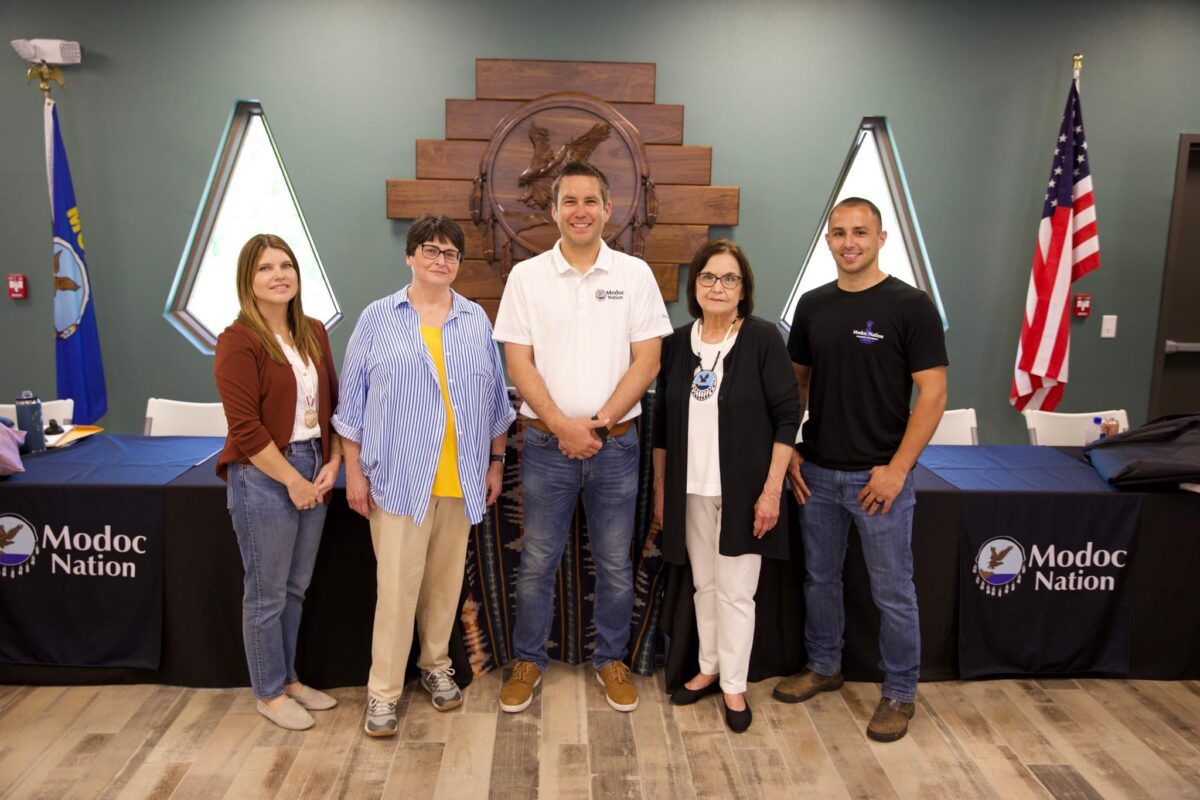
Oklahoma’s larger tribes are reaching some major milestones in areas like economic development, education, healthcare and cultural preservation. But it’s important to note that smaller tribes are also prospering, says Modoc Nation Chief Robert Burkybile.
“We have a bit of an advantage as a small tribe,” says Burkybile, who leads the Nation of 355 citizens. “We have people who want to work and see this thing succeed. We want to open doors for tribal members in the future.”
The small but mighty Modoc Nation is headquartered in Miami. Photo courtesy Modoc Nation
One flourishing program is a 400-head bison ranch. Thanks to a federal grant, the tribe processes about four bison a month and distributes the meat to tribal members and non-natives in Miami and Ottawa County, where the tribe is based. Cuts of meat are delivered to schools, food banks, nonprofits and to neighboring tribes.
“It provides nutrition for the community,” Burkybile says.
The tribe is constructing a new building, Healing House, for outpatient behavioral health services for youth and adults. Modoc Nation Health Services also includes a treatment center for adults with substance abuse and mental health disorders; therapy for children with developmental disabilities; an equine therapy program; and a fully-equipped exercise center.
Choctaw Nation
Choctaw Nation
Oklahoma Lt. Gov. Matt Pinnell praised the Choctaw Nation and all Oklahoma-based tribes during the May 23 grand opening of the Choctaw Landing Luxury Resort and Casino in Hochatown.
“You are leading the way in economic development,” Pinnell said. “Our tourism industry is the third-largest industry in the state because of our sovereign nations.”
Choctaw Chief Gary Batton mentions that the 100-room resort hotel created 400 jobs.
“There are more than 400 pieces of Native artwork on display throughout the resort,“ Batton says. “It’s a true cultural joy just to walk into the facility.”
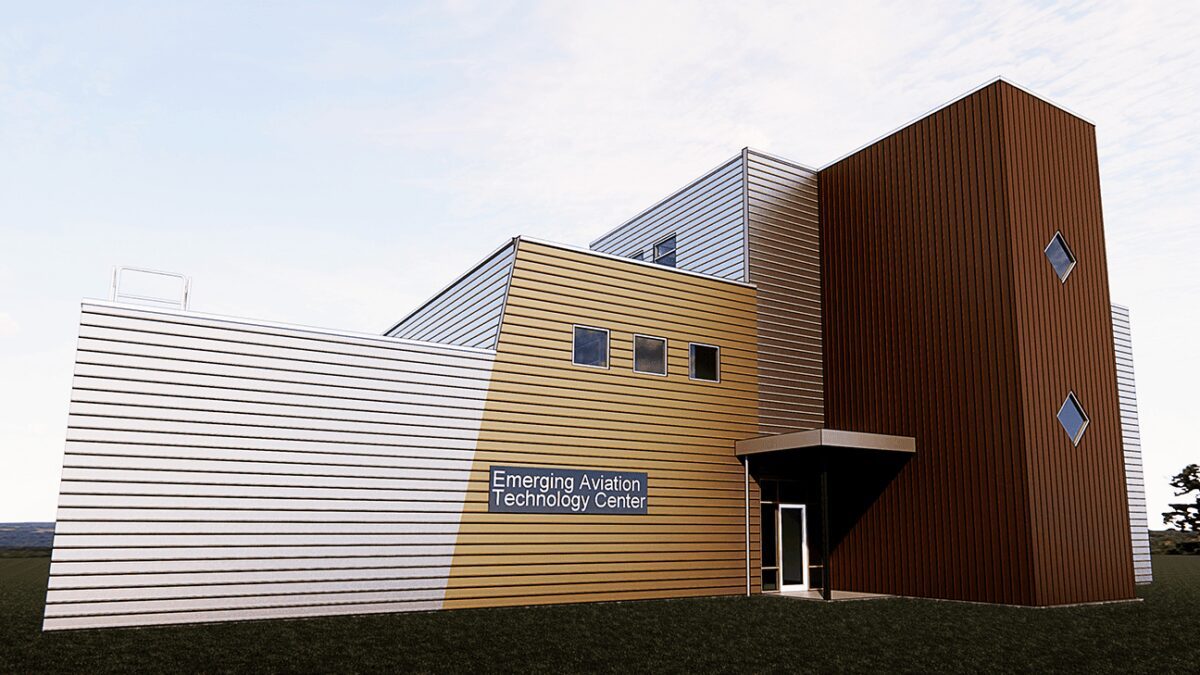
Choctaw Nation recently broke ground on the Emerging Aviation Technology Center, a hub for cutting-edge research on aerial system technologies. Rendering courtesy Choctaw Nation
James Grimsley is the executive director of advanced technology and initiatives for Emerging Aviation Technologies, a research facility located on more than 44,000 acres of land owned by the Choctaw Nation.
After more than 30 years of working in aviation research, “they made me an offer I couldn’t refuse,” says Grimsley, who also serves on the Oklahoma Transportation Commission. “I never thought I would have an opportunity on the reservation,” he says. “I grew up on the reservation, I know the culture.”
In October, the tribe broke ground near Redden on an Emerging Aviation Technology Center, which will be a hub for cutting-edge research on aerial system technologies. It’s one of ten sites chosen by the federal government for its Drone Integration Pilot Program. Much of the research focuses on the benefits of using drones in rural areas.
“If you live in Dallas and have a heart attack, an ambulance is four to seven minutes away, and usually they can save your life,” Grimsley says. “In southeast Oklahoma, it might be an hour or more away. Your zip code determines if you live or die.”
Lifesaving uses for drones may include sending an automated external defibrillator or an EpiPen to a rural residence, or transporting donor organs, Grimsley says.
Cherokee Nation
Cherokee Nation
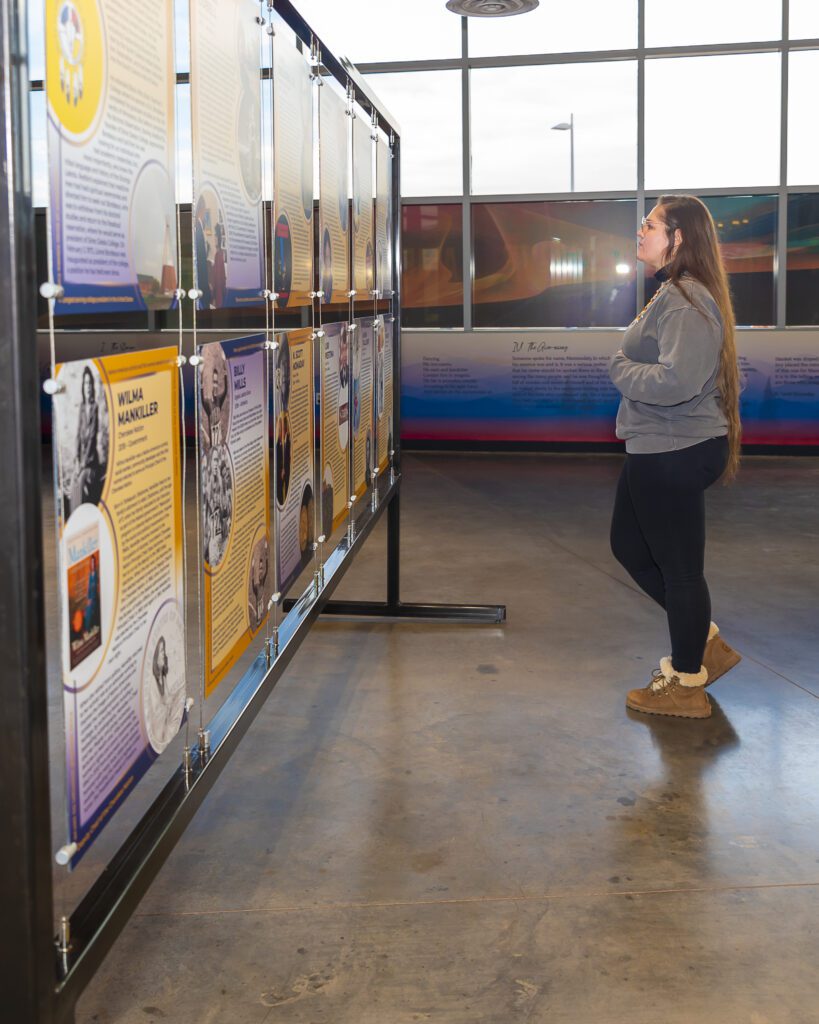
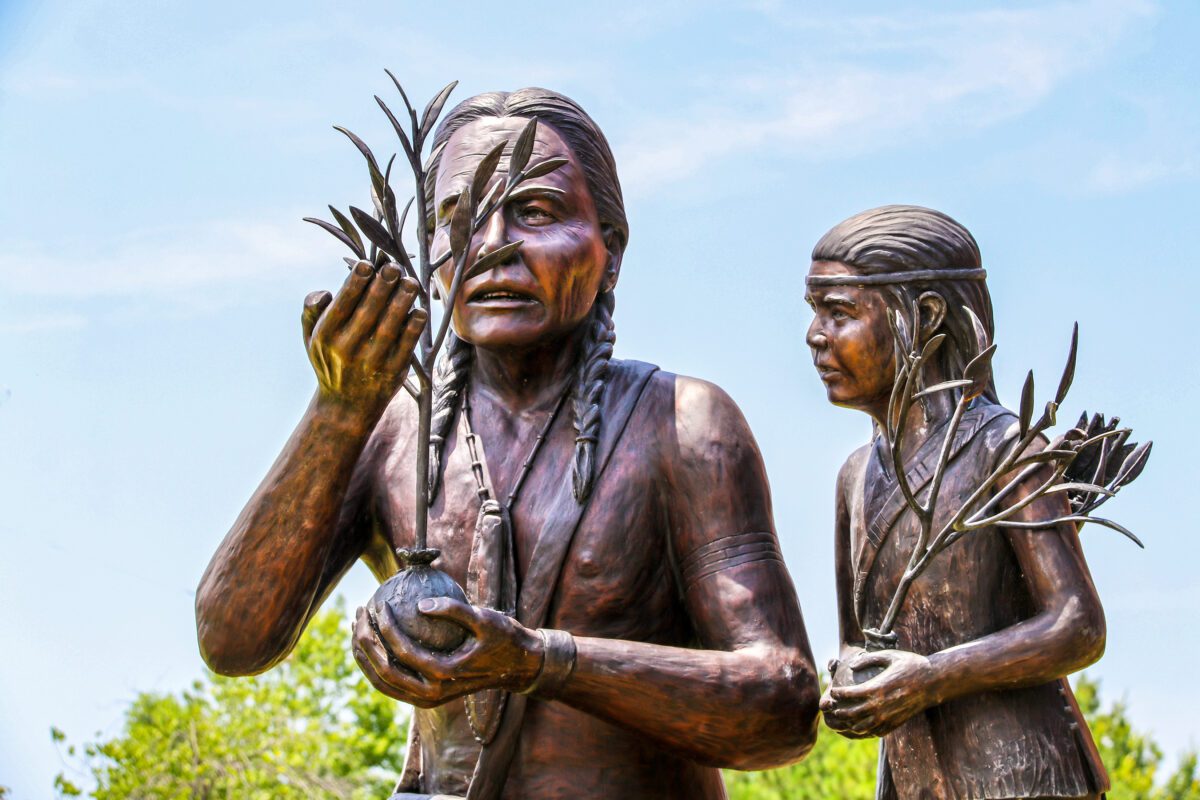
The Cherokee Nation broke ground in June for the $10 million Wilma P. Mankiller Cherokee Capitol Park.
“This project will not only transform unused land into a vibrant community space, but it also pays tribute to a remarkable leader who helped shape our tribe’s history as the first woman elected principal chief,” says Cherokee’s Principal Chief Chuck Hoskin Jr. The park is set to be completed in the fall of 2025.
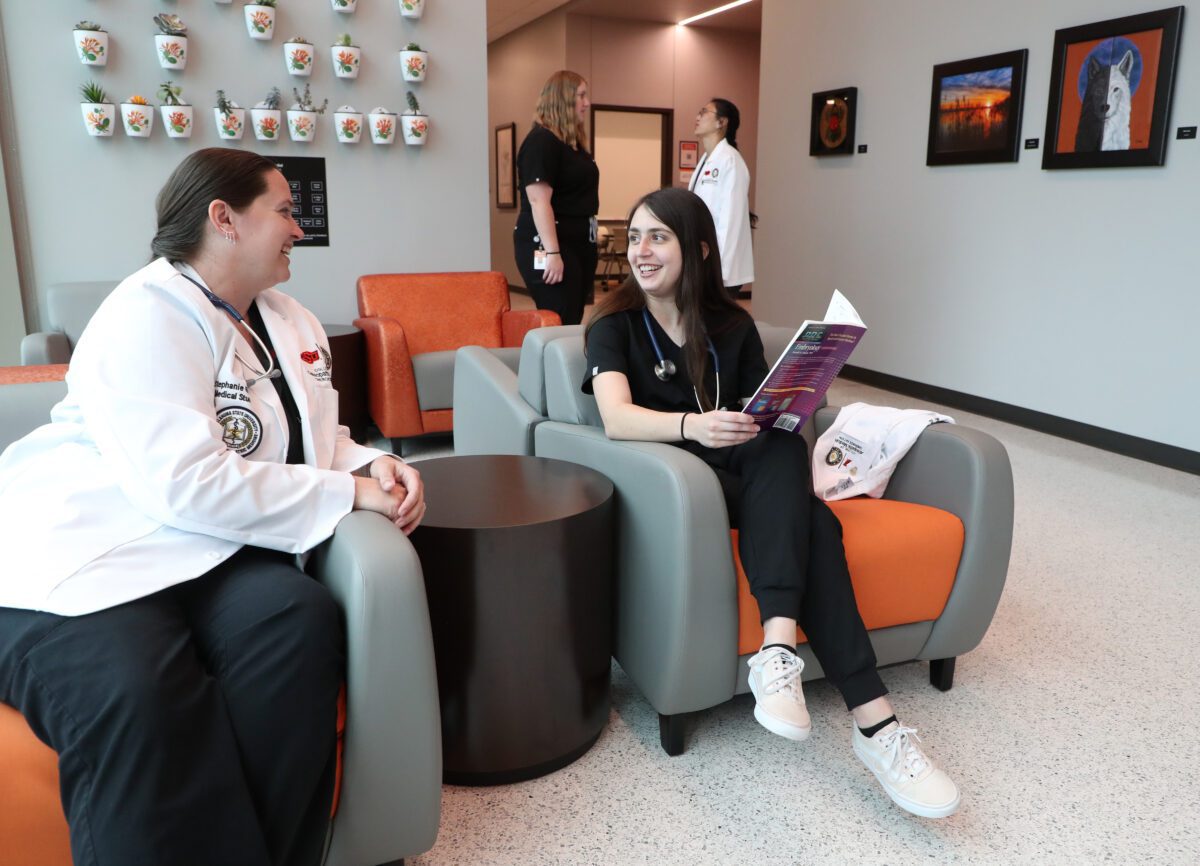
In May, Oklahoma State University’s College of Osteopathic Medicine at the Cherokee Nation graduated its first-ever class of physicians. OSU-COM at Cherokee Nation, the nation’s only tribally affiliated medical school, is located in the Nation’s capital, Tahlequah. The 85,000-square-foot facility offers anatomy labs, a simulation center with computer programmable manikins, lecture halls, classrooms and a wellness center.
OSU-COM at Cherokee Nation is the nation’s only tribally affiliated medical school.
Photo courtesy Cherokee Nation
“I believe that this partnership will advance quality health care for all by allowing us to teach a new generation of medical professionals to serve our communities for years to come,” says Hoskin Jr. “I wish each and every student the best as they begin this journey. They have our full support.”
Chickasaw Nation
Chickasaw Nation
Chickasaw Nation Gov. Bill Anoatubby led groundbreaking ceremonies June 26 to kick off construction of the Chickasaw Heritage Center within the tribe’s historic homeland in Mississippi.
Visitors to the CHC, to be completed in 2026, can learn about the tribe’s history from prehistoric times to 1837, prior to the tribe’s forced removal to Indian Territory.
The 162-acre campus will contain an exhibit hall, theater, café, art gallery, administrative offices, gift shop and playground. Walking trails will connect the campus to the Natchez Trace Parkway’s National Scenic Trail under an agreement with the National Park Service.
The Chickasaw Nation will soon open the OKANA Resort in OKC. Photo courtesy Chickasaw Nation
A project of the Chickasaw Inkana Foundation, the center is a collaborative effort by the state of Mississippi; Tupelo Convention and Visitors Bureau; city of Tupelo; individual donors; and the Chickasaw Nation.
The Chickasaw Nation’s OKANA Resort & Indoor Waterpark is scheduled to open in 2025, adjacent to First Americans Museum in Oklahoma City. The $400 million resort will feature more than 400 rooms with riverfront and lagoon views, more than a dozen food and beverage outlets, a family entertainment center, a conference center and community programming including live music.
Muscogee Nation
Muscogee Nation
Citizens of the Muscogee Nation can enjoy hunting and fishing in the treaty territories of other tribes participating in the Five Tribe Wildlife Management Reciprocity Agreement.
Tribal members and citizens of the Cherokee, Chickasaw, Choctaw, Muscogee and Seminole nations will allow hunting and fishing licenses issued through each tribe to be recognized by the other tribes on their reservation land. Most tribes allow for tribal membership cards to serve as the license. The agreement reached in July will allow the Five Tribes to collaborate on wildlife management and enhance their ability to manage natural resources.
“Since time immemorial, our people have been the original environmentalists, looking to the land for sustenance and abundant life,” says Muscogee Nation Principal Chief David Hill. “I’m proud of this new agreement with the Five Tribes, as it not only shows a strengthening of our sovereign rights to hunt and fish on these lands, but gives us greater autonomy over the care and preservation of them for generations that follow.”
A mural project that is a partnership between the Muscogee Nation and Okemah Mainstreet was established to showcase the beauty and richness of Mvskoke art and culture to visitors to Okemah’s downtown, which is undergoing enhancements.
Muscogee artist Joe Hopkins, of Chandler, Ariz., was chosen to create the mural. Hopkins previously painted murals for the city of Eufaula and the Riverwalk in Jenks. Hopkins says his artwork is inspired by the living cultures of tribal nations, and he draws from the past to infuse his works with a fresh take on Indigenous life.
Activism & Getting Involved
Tribal citizens, as well as their leaders, should be involved in law-making decisions, and a good place to start is by voting in tribal elections, Choctaw Nation officials say. However, voter turnout for tribal elections is only at about 28%, says Candace Perkins, the tribe’s director of voter registration.
“We always like to preach: your vote is your voice,” Perkins says. “Your vote really matters.”
Efforts to increase participation include media advertising, reaching out to Choctaw citizens who live outside Oklahoma and upgrading to online voter registration, Perkins says.
Sarah Jane Smallwood-Cocke, the tribe’s senior government affairs strategist, is involved in relationship-building and partnerships between the tribe and local governments, including the 78 municipalities on the reservation. She also encourages tribal citizens to run for local, state and federal office, and to apply for appointments to boards and commissions. Smallwood-Cocke says she tries to set an example by serving on the city council in Wilburton.
“The goal of our department is to make sure the Choctaw have a seat at the table,” she says. “Our job is to help our tribal members engage at every level of government.”
Tye Baker, senior director of the tribe’s Environmental Protection Service, was appointed in June to the White House Environmental Justice Advisory Council. Kelbie Kennedy, an attorney, was hired in 2022 as the first-ever national tribal affairs advocate for the Federal Emergency Management Agency. Choctaw Chief Gary Batton represents the eastern Oklahoma region on Interior Secretary Deb Haaland’s tribal advisory committee.
“We have to go to Washington, to make sure our voices are heard, to try to make policy changes,” says LaRenda Morgan, governmental affairs officer for the Cheyenne and Arapaho Tribes. “We have to be activists on behalf of our own tribes.”
Buying back land historically owned by tribes is an important form of activism, says Cornel Pewewardy, an associate professor of political science at the University of Central Oklahoma. Pewewardy, who is Comanche, retired in 2017 from Portland State University, where he was director of the Indigenous Nations Studies Program. His research focuses on racial and socioeconomic inequities within Indigenous education. He helped write Senate Bill 429, which allows Native American students in Oklahoma to wear their tribal regalia during commencement ceremonies.
“We are always in pursuit of land,” says Pewewardy. “Land is a part of economic development, and with that you get to exercise your power in agreements with the state and the federal government.”
Tribal Scholars
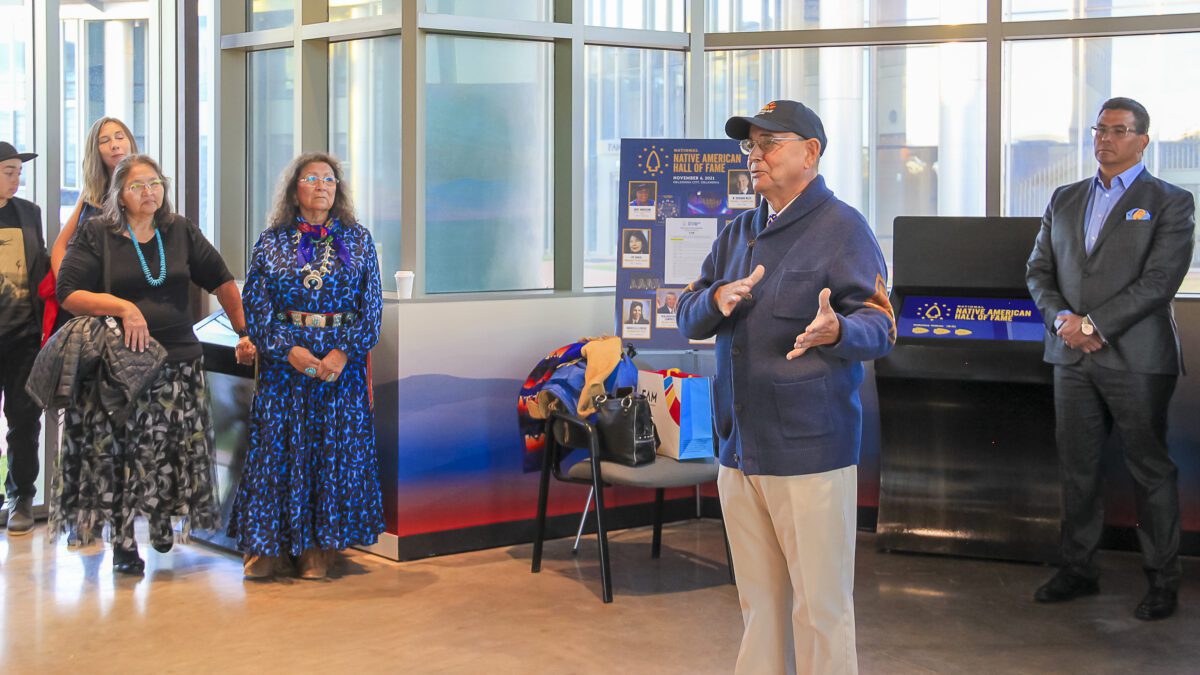
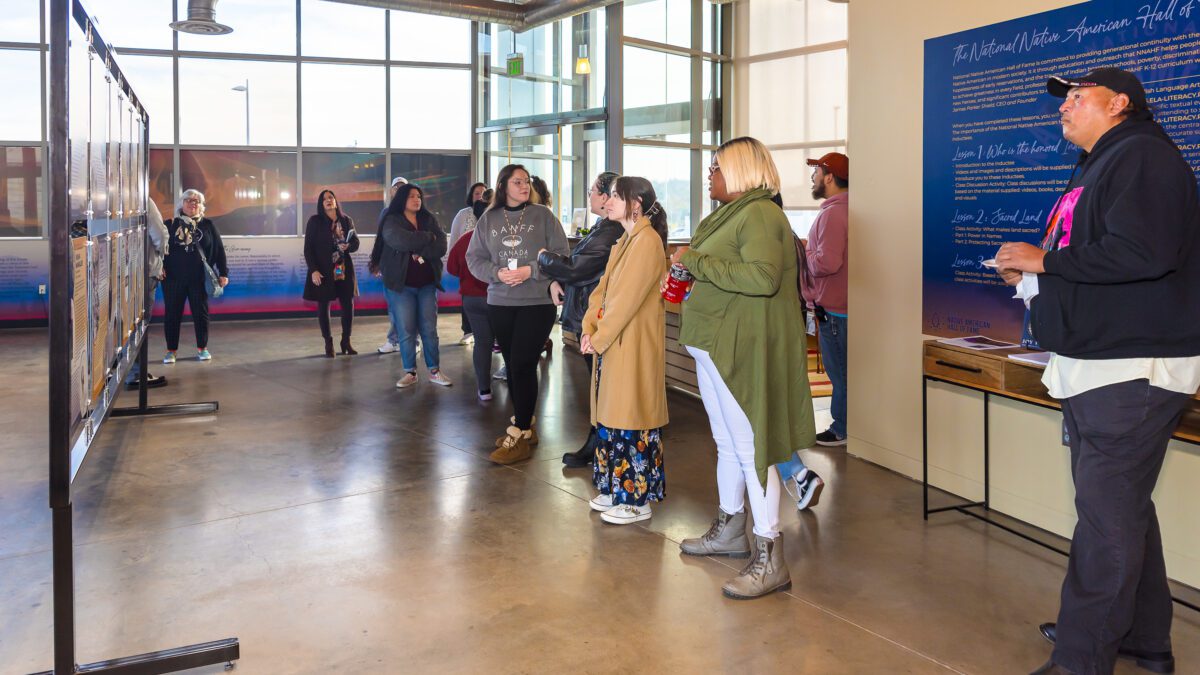
Oklahoma Natives in the entertainment industry have been “having a moment,” what with the popularity of Sterlin Harjo’s Reservation Dogs television series and movies such as News of the World and Killers of the Flower Moon. Native American writers, artists and artisans are perennially celebrated for their work – and rightly so. But many who are not necessarily household names have distinguished themselves in other career fields, says James Parker Shield, director of the National Native American Hall of Fame (NNAHOF) based in Great Falls, Mont.
“We should always remember those who blazed a path for other Natives to follow, who made our lives better,” Shield says. “By making Indian Country better, they have made America better.”
The National Native American Hall of Fame highlights a variety of trailblazers from Native nations. Photos courtesy the NNAHOF
Tresa Gouge, education coordinator for the NNAHOF, says one such trailblazer who comes to mind is Stephanie Burghart, executive director of Oklahoma Indian Legal Services.
“She is Kiowa,” Gouge says. “She provides assistance to low-income families and helps out with court services at all tribal courts in Oklahoma.”
Shield says many people have been mentored by the educators Henrietta Mann and the aforementioned Cornel Pewewardy.
“Henrietta Mann – we are inducting her into the hall of fame in October,” Shield says. “She’s been a highly regarded educator at the college level for many years. I’m sure she has a lot of proteges out there, people she has influenced and inspired to go into education.”
Mann, a citizen of the Cheyenne and Arapaho Tribes, is a professor of Native American Studies who has taught at the University of California at Berkeley, the University of Montana and Montana State University. She helped start Indian Studies programs at several universities and worked for the Bureau of Indian Affairs. She received the National Humanities Medal in 2021.
Bailey Walker, a Chickasaw citizen, is president of the American Indian Chamber of Commerce Oklahoma. He is president/CEO of Four Winds Strategy Group and director of tribal relations for Tribal Diagnostics.
“He’s very engaged in the business world,” Shield said. “Through his leadership he’s able to help other Native businesses.”
Sovereignty
The legal profession is important to tribes and tribal citizens for a number of reasons, not the least of which is the concept of sovereignty.
“To me, sovereignty means autonomy, that you know who you are, that you do things that your people have always done,” says Pewewardy. “The more people there are who think that way, the more of a sovereign nation you become. I’m happy to see a lot of lawyers, a lot of new lawyers, at the forefront.”
The Oklahoma State University Center for Sovereign Nations, founded in 2015, collaborates with tribal nations to maintain government-to-government relationships with the United States as well as states and municipalities.
“Long before the United States became a country, Indigenous Peoples were independent and self-governing sovereigns. Because they are sovereigns, tribes still govern their own members and remaining territory,” the OSU program explains on its website.
Morgan, from the Cheyenne and Arapaho Tribes, continues: “Every tribe has treaties that are living documents, that are still active today, but not always recognized by the government that created them. That’s where a lot of political issues begin, is with tribes not being able to exercise their sovereignty.”
Oklahoma City University announced in June the formation of the OCU Tribal Sovereignty Institute to be housed at its law school.
Osage Nation Principal Chief Geoffrey Standing Bear says that as a practicing attorney, he sees every day the prominence of sovereignty issues.
“We need information that is accessible to attorneys and policymakers and members of the public,” he says. “I think this institute can play a critical role in this regard, and I’m pleased to see it launch.”
Bridging the Gap
Many Oklahoma tribes have programs designed to address disparities in such areas as healthcare, education, child welfare and environmental protections.
When it comes to health disparities, “our big one is diabetes wellness,” says Morgan with the Cheyenne and Arapaho Tribes. The tribes offer classes in nutrition, fitness and other aspects of wellness and collaborate with Indian Health Services (IHS) dieticians.
“We often do weight loss challenges,” she continues. “We do health promotion events. We provide bison meat for people with diabetes, as well as eyeglasses.”
IHS, Moran says, “is providing tribal citizens as good a care as they would get elsewhere. I choose to go to IHS, because I believe they are targeted toward our diseases that are rampant.”
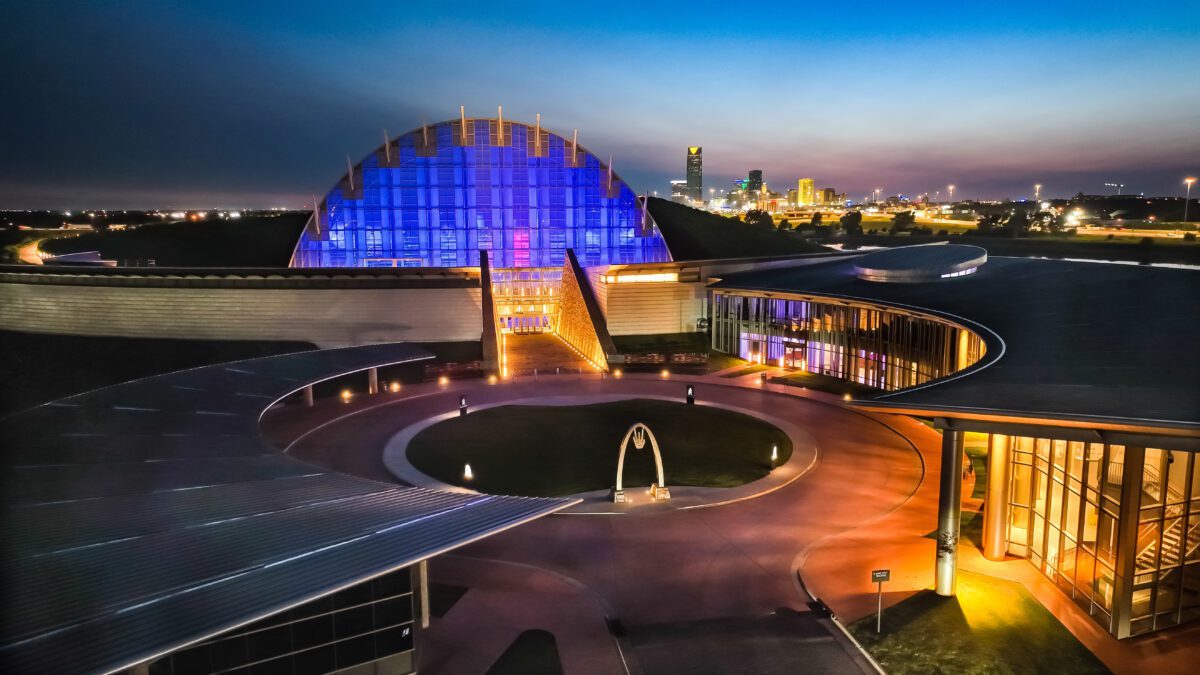
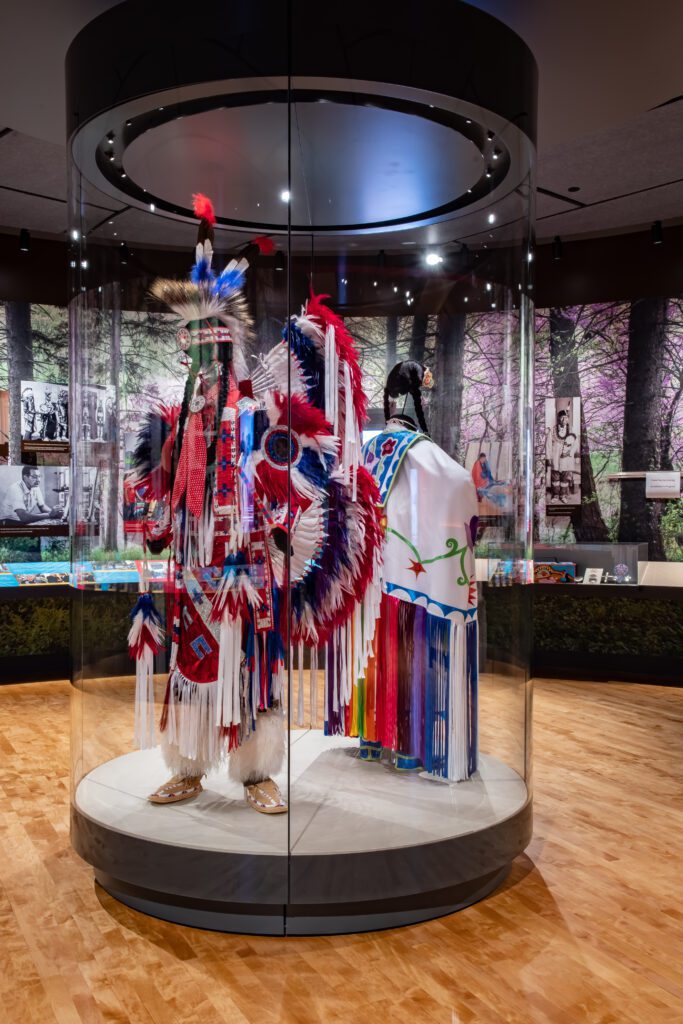
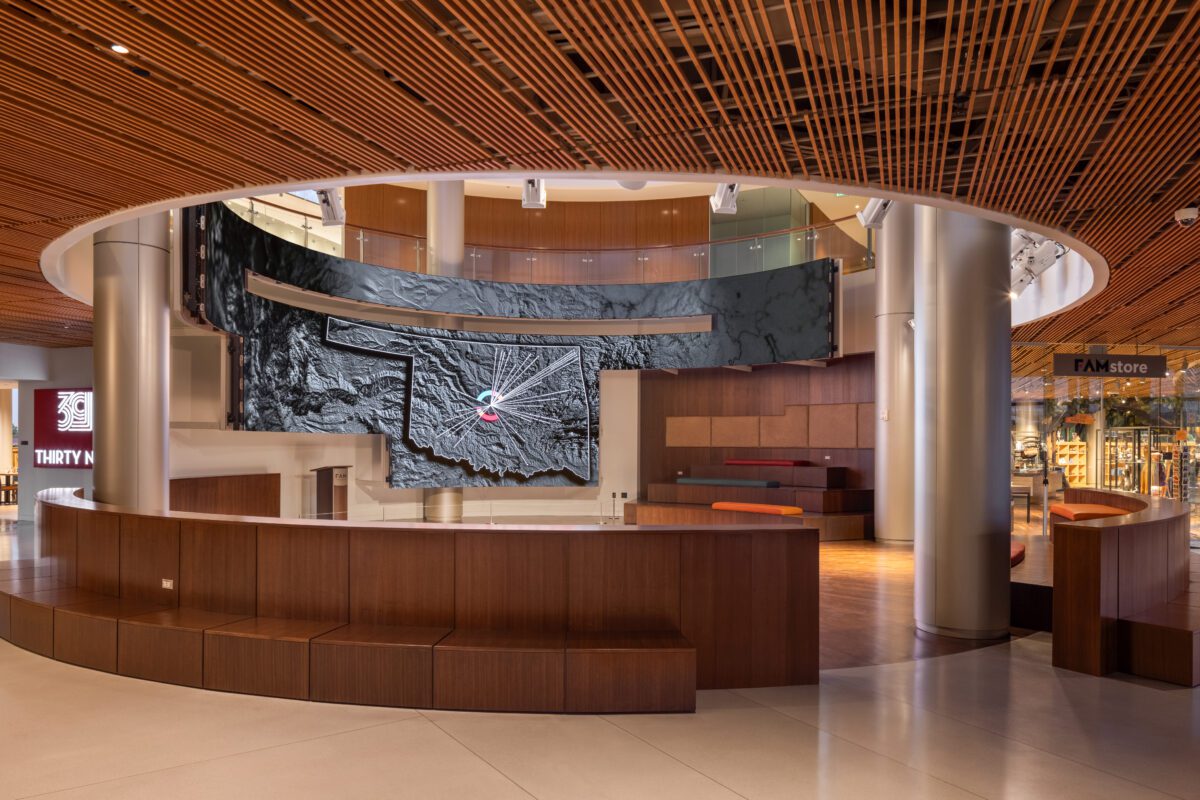
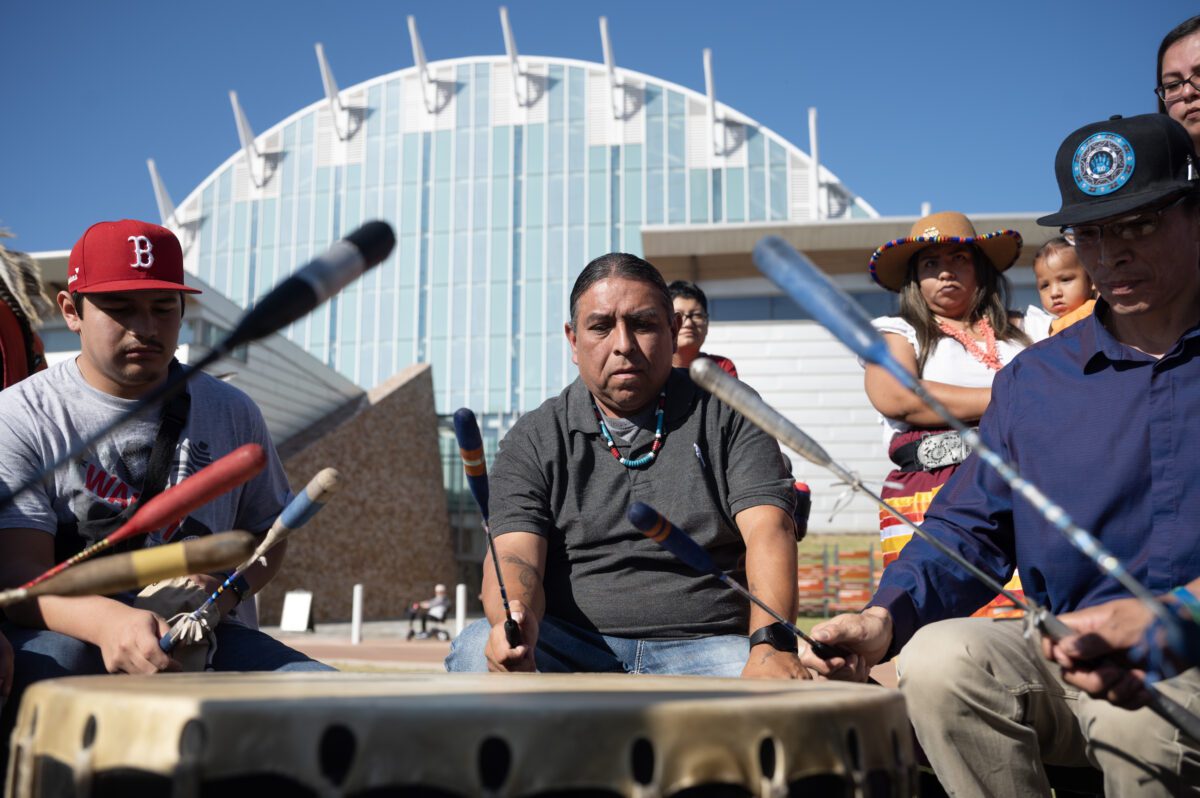
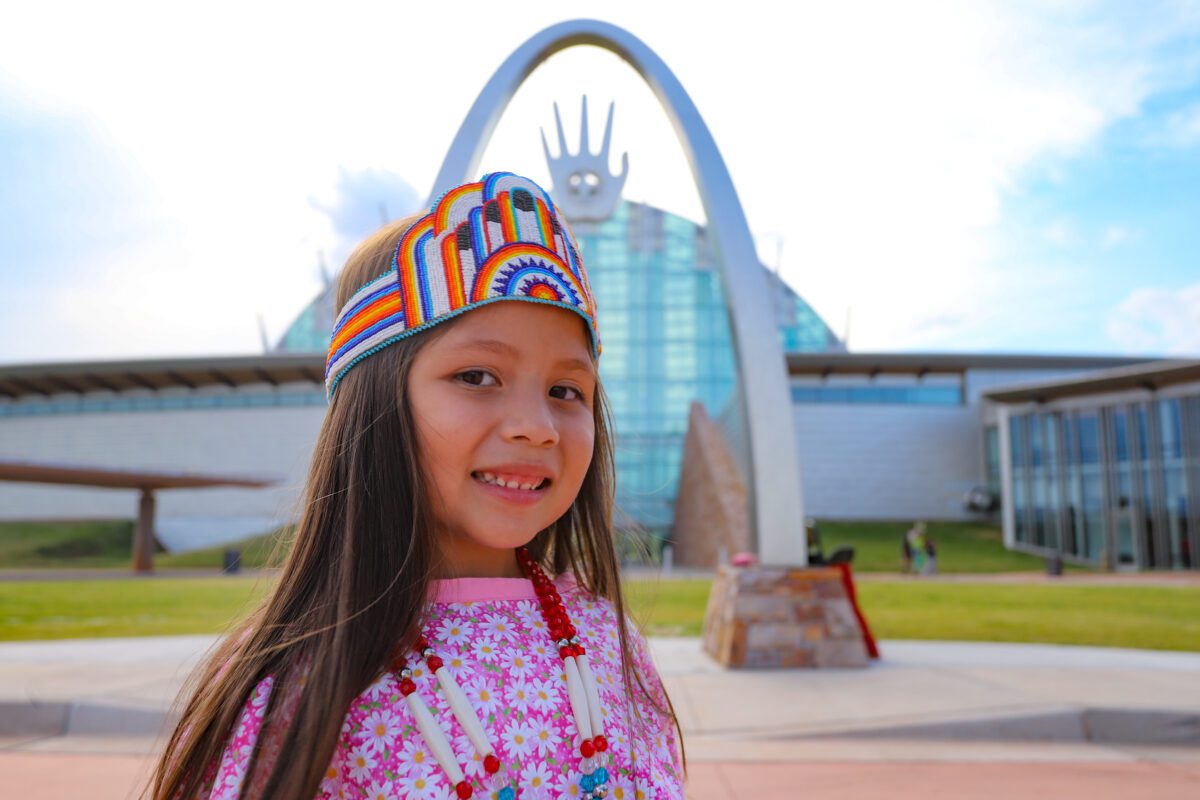
First Americans Museum in OKC showcases all Oklahoma-based tribes. Photos courtesy FAM
Pewewardy believes getting the right education is integral in bridging those noticeable gaps.
“The key to success is to get a diploma,” Pewewardy says. “We still have a high dropout rate. And the key to success in education is self-esteem.”
Boarding schools, Pewewardy says, “did not teach our people about who they are. They were ashamed to be Indigenous. So they tried their best to assimilate, but because of racism were not able to be equal.”
Native children who struggle in school “are being pushed into special education classes, and this causes a dilemma with their social skills. A lot of kids become hopeless about life. There’s still a high suicide rate among Natives,” Pewewardy continues.
Pewewardy, who spent three years as vice-chairman of the Comanche Nation, praises the creation of the Comanche Academy Charter School in Lawton. The mission of the free, accredited public school states in part that it “will nurture strong, compassionate bilingual young people who are committed to their personal and community health, wellness, relationships and progress.”
Tourism Draws
European visitors to Oklahoma “want to see what an Indian is,” Cheyenne and Arapaho Gov. Reggie Wassana says, and the state’s 39 tribes are working hard to tell their stories.
“Tourists across the state, the country and the world are very interested in learning more about First American people in an accurate, respectful way,” says Adrienne Lalli Hills, director of learning and community engagement at the OKC-based First Americans Museum (FAM). “People are realizing that it’s important that Native peoples are telling their own stories about themselves. We are doing that here at First Americans Museum. The majority of our staff are tribal citizens. That changes the way we think about educational programs, exhibits and public events. We have personal ties to the tribes.”
The museum offers exhibits and storytelling that depict all the tribes based in the state, but “many of our tribes do maintain their own cultural centers, libraries or some sort of visitor center,” Hills says. “And so we are careful to refer people to those sites as well.”
Hills says that it’s “so exciting to see people from all over the world come to First Americans Museum. It’s particularly exciting because we are telling our own stories on our turf.”
Visitors to FAM especially love the portion of the Oklahoma exhibition that addresses ancestral North America, Hills says.
“A lot of people do not realize that prior to European arrival, there were big cities here in North America that rivaled the size of European cities,” Hills says. “We had trade routes, we had music, we had sports, we had art and we had really sophisticated forms of government.”
Durant; photo courtesy the Durant Area Chamber of Commerce
Tulsa
Lortondale
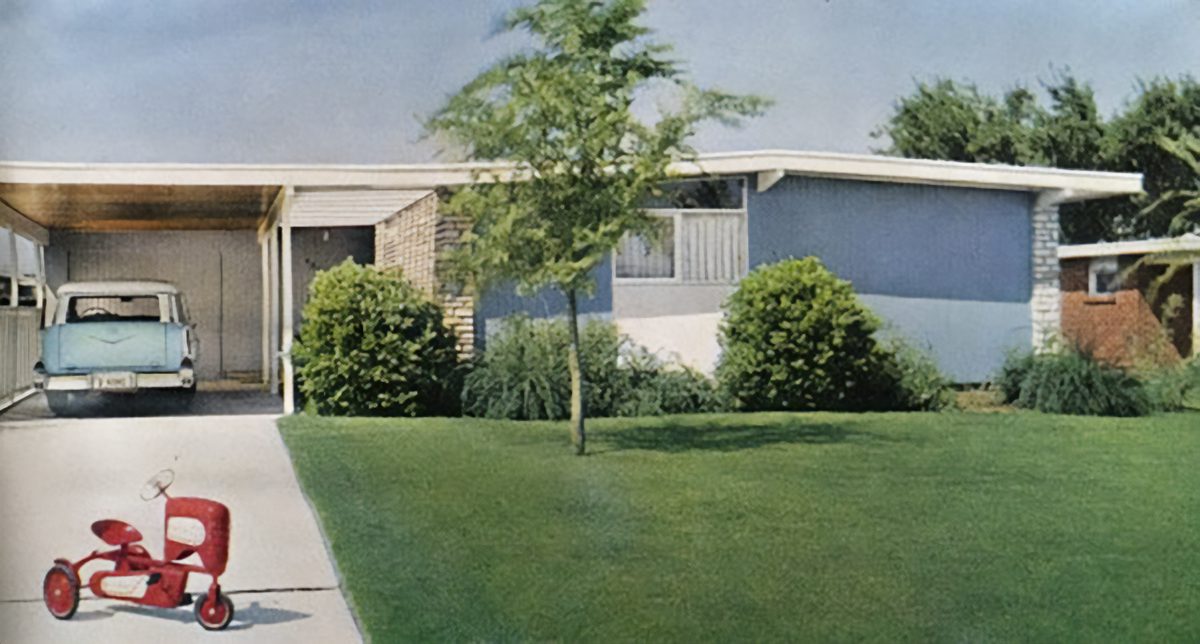
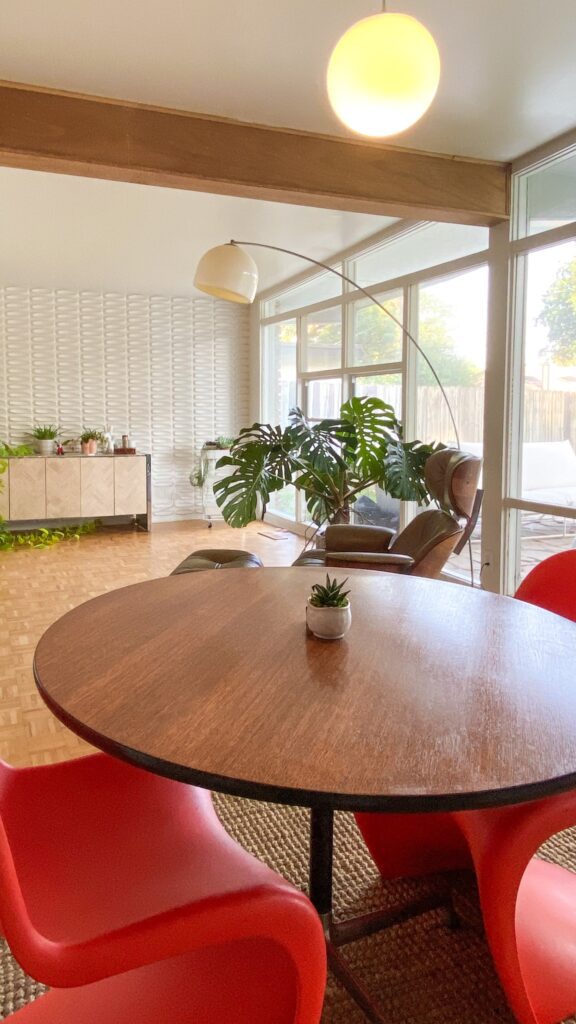
If Lortondale is known for one thing, it’s character. The historic Tulsa neighborhood, which prides itself on its mid century modern homes, was conceptualized by Tulsa architect Donald Honn and builder Howard Grubb in the 1950s.
Originally priced between $12,750 and $16,650, the homes in Lortondale have steadily increased over time.
Empty nesters interested in settling in Lortondale can tap into the neighborhood’s tight-knit community. Many residents participate in architecture-focused events, such as the neighborhood’s annual Tiki Party and Mid-Mod Crawl.
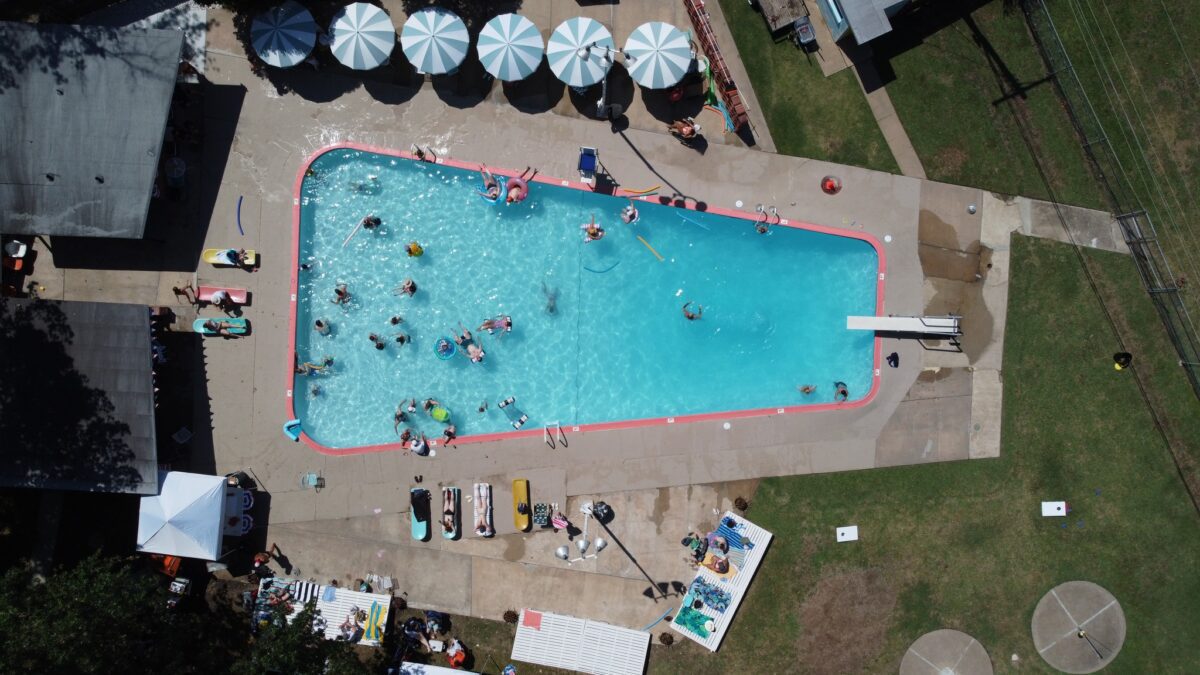
Another unique feature of Lortondale is its two community pools, which function as mainstays for neighborhood events. Throughout the year, residents gather by the poolside for movie nights, yoga classes, book discussions, live music and barbecues. To get unlimited access to the pools in the summertime, people can join the 5300 Club Pool or the Lortondale Pool Club.
Nestled in the heart of midtown Tulsa, Lortondale’s proximity to shopping and entertainment adds to its desirability.
Stillwater
Dubbed “America’s friendliest college town,” Stillwater has a lot to offer.
“We’re a small community of about 50,000; however, we have a major D1 university,” says Cristy Morrison, president and CEO at Visit Stillwater.
Stillwater; photo courtesy Visit Stillwater
The suburb has plenty for empty nesters in the way of sports. Oklahoma State University has built a reputation for its athletics programs, hosting sporting events throughout the year. The city is also the home to the National Wrestling Hall of Fame.
“The museum teaches people about the sport, the increasing popularity of women’s wrestling and the US presidents’ contributions to the sport,” explains Morrison.
Stillwater also prides itself for its legacy in the Red Dirt Music scene, which has originated acclaimed musicians like Garth Brooks, Tom Skinner and the Red Dirt Rangers.
Other leisure and entertainment in the area include the McKnight Center for Performing Arts, Eskimo Joe’s and Boomer Lake Park. Efforts to revitalize and expand Downtown Stillwater have been underway, too. In 2025, Stillwater will open Block 34, a downtown community space which will feature several outdoor amenities, including a beer garden and a musicians walkway.
Morrison, who has lived in Stillwater for 28 years, describes the community as laidback.
“I transferred here as a sophomore in college from the university in northern England,” she recalls. “I love it so much here that I never left.”
Owasso
Community-oriented and fast-growing, Owasso sits 15 miles northeast of Tulsa. Between 2010 and 2022, the city’s population grew by 36%. Despite its rapid expansion, Owasso maintains a close-knit, supportive culture.
Owasso launched the City of Character initiative in 2002, which promotes a monthly character trait that residents can strive to embody in their personal and professional lives.
The city further cultivates a sense of community and connectedness through its recreation and public events. Empty nesters can get to know their neighbors during Owasso’s Neighborhood Block Party, a citywide event that encourages residents to socialize with one another through self-organized activities, such as pet parades and cookie decorating. Other popular events include the Lawn & Garden Spring Fling, the Redbud Farmer’s Market and the Owasso Christmas Parade.
Owasso; photo courtesy the City of Owasso
As a suburb of Tulsa, Owasso has benefitted from excess funds collected from the Tulsa County Vision 2025 sales tax. The city has put those funds toward enhancing roadways and intersections, expanding its walking trail systems and opening a dog park. Local attractions, such as Centennial Park, the Mary Glass Performing Arts Center and the Downtown Redbud District also enrich the quality of life.
Carlton Landing
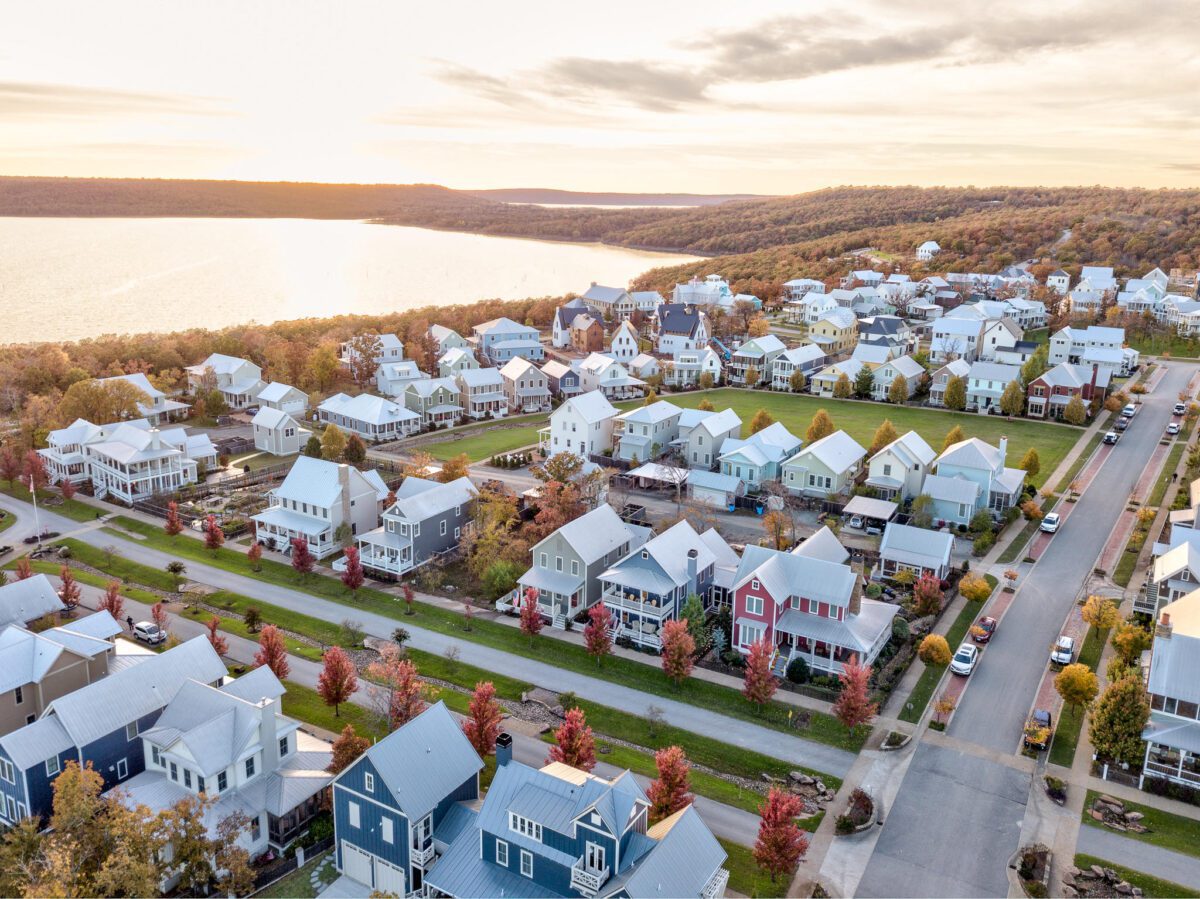
Carlton Landing is a master-planned, resort-style town that spans 600 miles of shoreline along Lake Eufaula. Established in 2013 with the vision to foster a community focused on sustainable, healthy living, Carlton Landing boasts 10+ community parks, connected by pedestrian pathways and boardwalks.
Carlton Landing; photo courtesy Carlton Landing
The town is divided into many walkable neighborhoods that make the most of the natural landscape. Each neighborhood is centered around a common space, such as a courtyard, park or community garden. As of 2022, the city has a population of 43 residents, with a median age of 54.
Paying homage to the pioneers in the Oklahoma Land Runs, the city’s designated architectural style is traditional American farmhouse.
Lake life is deeply embedded into the community. Residents can join the exclusive Carlton Landing Boat Club to get unlimited access to a private, luxury fleet of ski boats and pontoons. It also includes access to the club’s water gear, such as lifejackets, waterboards and water skis.
In addition to outdoor recreation, Carlton Landing features a community pool, a church and a fitness center. Residents can also enjoy a small collection of restaurants and pop-up shops.
OKC
Nichols Hills
Nichols Hills has a reputation as one of the most illustrious suburbs in the Oklahoma City area.
“I think that the prestige comes from the fact that there is a lot of charm, character and tradition,” says Sody Clements, the Mayor of Nichols Hills.
Although the city occupies less than two square miles, it is home to over 31 parks. In 2023, the city council formed and appointed a Public Arts Commission, which will further beautify the city by overseeing the installation of art exhibitions throughout its parks.
Nichols Hills; photo courtesy the City of Nichols Hills
The city’s emphasis on safety is another big draw. The Nichols Hills Fire Department has an average response time of 4 minutes and 38 seconds.
For leisure, residents can unwind and dine at the Classen Curve in the Nichols Hills Plaza, which offers a combination of market-exclusive brands and locally owned boutiques. The Oklahoma City Golf & Country Club is another popular attraction.
The median age for residents is 46 years, with the median income per capita at $194,579 in 2022 – three times the state median.
“Even though Nichols Hills is surrounded by Oklahoma City, we are our own little town,” says Clements. “I like living here because everywhere I go, I run into people I know.”
Gaillardia
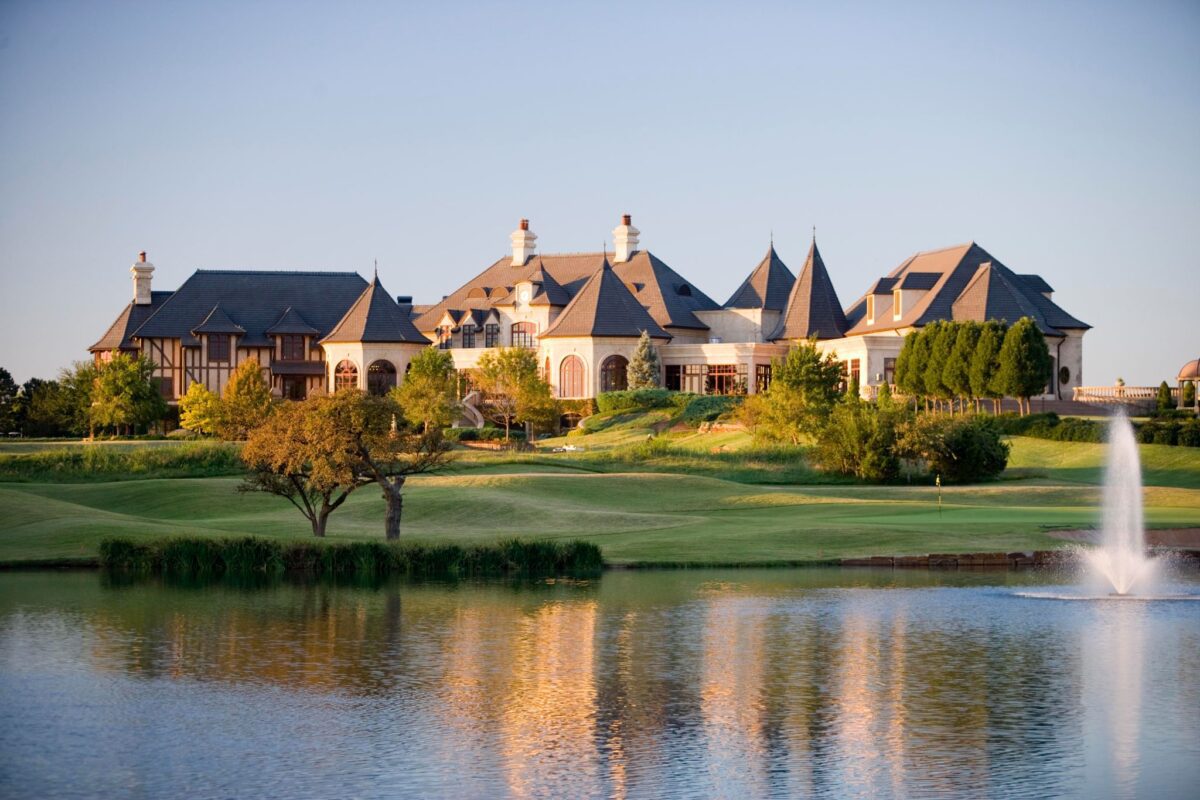
Named after the state’s official wildflower, Gaillardia is an opulent, gated neighborhood located in northwestern Oklahoma City. Situated on 600 acres, the neighborhood features the Old-World style Gaillardia Country Club, which is known for its world-class, championship golf course.
Gaillardia; photo courtesy Gaillardia Country Club
In addition to golf, the country club offers a fitness center, swimming pool, driving range and playground area. Members can take part in a variety of events.
Gaillardia is also known for its elegant, beautifully designed homes. Common architectural styles include French Country and French Normandy. Occupying large lots, the residences foster a sense of privacy.
The median estimated home value clocked at $1.54 million. Approximately 77% of the households are without children, and the median age of residents is 55 years.
Gaillardia is centrally located by several amenities, including the Quail Springs Mall, Lake Hefner, Chisholm Creek and Mercy Hospital.
Medicine Park
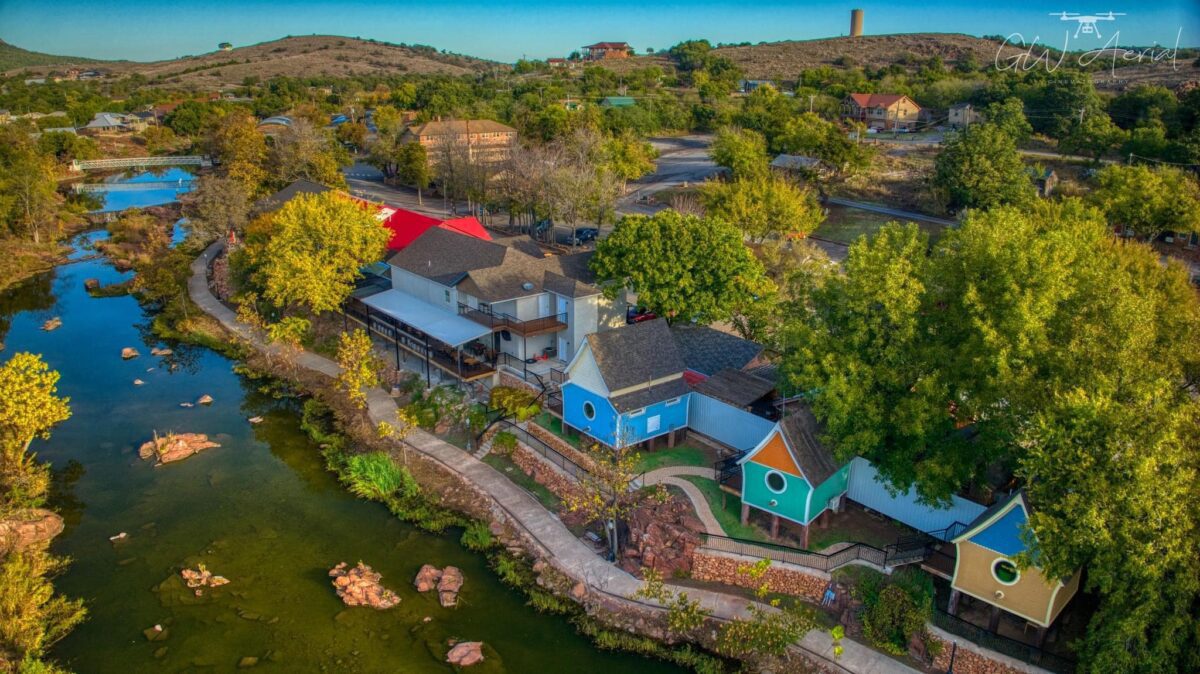
Medicine Park was established in 1908 as the state’s first resort town. With a population of 450, the small town provides empty nesters with the opportunity to unplug from the hustle and bustle of city life. In 2022, the city unveiled strategic plans to develop the local economy, public services and the area’s walkability by 2040. The city is also leaning into what it’s known for best – outdoor recreation.
Medicine Park; photo courtesy Medicine Park
“You can hike up Mount Scott and have a picnic or drive three hours into Green Country. I think[Medicine Park] has the best of everything,” says Rainette Rowland, Executive Director and CEO of the Medicine Park Aquarium and a resident for 12+ years.
The Wichita Wildlife Refuge is the backdrop for the town, spanning over 60,000 acres of grass prairies, freshwater lakes and mountainous terrain. Lake Lawtonka, which borders the city, is known for its teeming bass population, holding the state record for the largest-reeled smallmouth bass.
The diversity of wildlife is also a draw for bird watchers and animal lovers. On weekends, tourists and locals can visit the Medicine Park Aquarium, which showcases indigenous wildlife and a butterfly garden.
“We’re a very family-friendly community,” says Rowland. “There are all different local flavors of people, and we’re very nice and welcoming.”
Durant
Durant prides itself on its progressive community and diversified economy. The city serves as the capital of the Choctaw Nation, housing the tribe’s headquarters.
Residents can enjoy Durant’s small-town feel while partaking in a variety of community events. Starting this year, the city will host its inaugural sports festival in celebration of the community’s athleticism. Durant is also the site of the Magnolia Festival of Oklahoma, which features carnival rides, fair food, a 5K race and other family-friendly activities.
Local attractions include the Three Valley Museum, Old Icehouse and Choctaw Casino and Resort. The city operates 11 public parks, including the Durant Multi-Sports Complex.
Durant’s historic Main Street has been undergoing revitalization efforts. On Saturdays during select months, residents can gather together and shop for fresh produce, artisanal goods and floral arrangements at the Magnolia Farmers Market.
Another upside is the city’s close proximity to Lake Texoma, Oklahoma’s largest manmade lake.
Main image cutline: Durant; photo courtesy Visit Durant
Although the perceived threat of an enrollment cliff is looming, OU has had three consecutive record-breaking freshman classes. Photo courtesy OU
Trends in Education: What’s New and What’s Next
The world of education is fast-moving, with existing and emerging trends impacting the scholastic landscape – including reduced enrollment barriers, an uptick in artificial intelligence usage, increased student support and high-return academic programs to help ensure students earn degrees they can truly utilize.
Higher education continues to change at a rapid pace, says Jerrid Freeman, Ph.D., Northeastern State University president for student affairs and enrollment management.
“There are new and changing workforce demands – and what students are hoping to obtain,” Freeman says. “Both are influencing factors, but it is evident that students, both traditional and non-traditional, are still seeking educational opportunities. Northeastern State University continues to identify and understand the complexities of workforce demands and adjust its academic offerings to fulfill them.
Another major factor that influences education today is the need to balance the influence of technology and social media.
“AI might take the cake as the trend of the year,” says Jerrett Phillips, Ph.D., vice president for student affairs with Rogers State University. “With a plethora of higher education vendors moving swiftly to implement some version of Ai, the higher education landscape is going through a paradigm shift in terms of the student experience and customized education as services.”
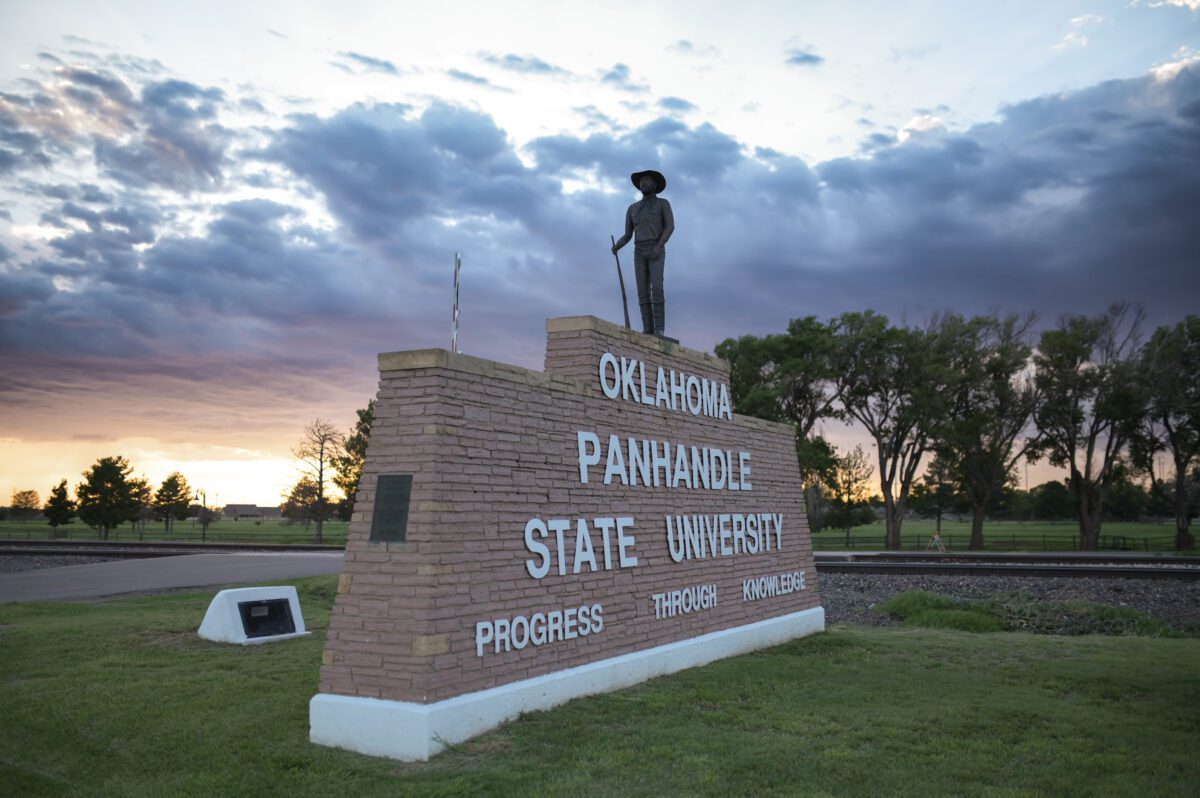
Alongside navigating the turbulent waters of artificial intelligence, it’s clear that today’s students also want flexibility and a say in how they are educated, says Julie Dinger, Ph.D., present of Oklahoma Panhandle State University.
“At OPSU, we are observing significant trends that reflect today’s students’ desire for more options and flexibility in their college experience,” she says. “Students are increasingly weighing the decision to attend school versus entering the workforce, choosing between online and in-person education, and considering traditional degrees versus short-term microcredentials. Consequently, our communication strategies have evolved to articulate well-defined career pathways to students, ensuring they understand the diverse opportunities available to them.”
Another trend discussed in this space in recent years was the threat of an enrollment cliff – or a significant multi-year decline in the number of traditional-age college students. At the University of Oklahoma, it seems that this particular trend has not come to pass.
“More students than ever are choosing OU, with record incoming classes that stand in stark contrast to sharp enrollment declines nationwide,” says a media relations representative with the university. “With three consecutive record-breaking freshman classes – and the fall 2024 incoming class on track to make it four straight years for historic class sizes – the University of Oklahoma is fulfilling its promise to offer a life-changing education at exceptional value.”
Photo courtesy the University of Oklahoma
Employability: How Universities Are Helping
For most, the goal of investing in a college degree is the promise of higher-paying job opportunities. Colleges are, in turn, seeking to help students become employable in addition to granting them that hard-earned degree.
Early career graduates need to present themselves to hiring managers as well-rounded employees, knowledgeable in soft and hard skills alike. To meet this need, schools are offering career readiness resources, job fairs, specific classes on succeeding in a professional environment, soft skill training, micro-credentials, internship opportunities and more.
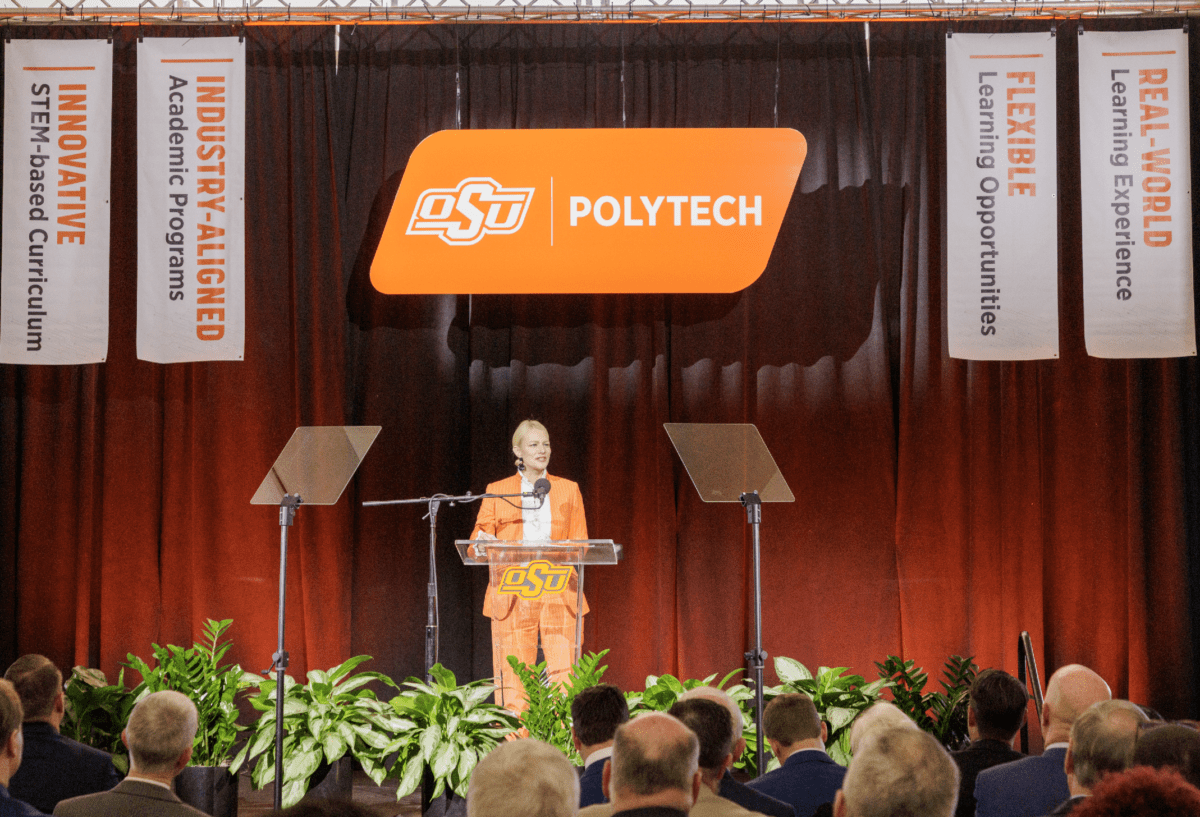
“A college education is enriching in many ways, including, of course, career advancement,” says Jeanette Mendez, Ph.D., Oklahoma State University’s provost and senior vice president. “To empower our graduates to be competitive in this global economy, we are coordinating efforts with business and industry partners to ensure students cultivate the in-demand skills and competencies that will differentiate OSU graduates.
“From hands-on research opportunities to a skills-based learning approach and the OSU Polytech initiative, we’re intentionally crafting programs aimed at ensuring our graduates have the skills, attitude and experience employers are seeking while streamlining programs across the OSU system to allow for more flexible options for students.”
At RSU, “we teach students how to think, not what to think,” says Phillips. “Inside of each classroom, we present theory and task students with looking at real world or practical hands-on experiences.
“We develop their critical thinking skills, ensure they become effective communicators, teach them 21st century soft skills, and help them establish community on- and off-campus so they better understand teamwork and working for the greater good.”
In-Demand Skills
The most in-demand new hire skillsets sought by today’s employers include an array of soft skills paired with a command of data analytics, a knowledge of AI programming and cloud computing. The next era of our workforce is being shaped right now by the newest technology – and affected by the speed with which it is evolving, says Dinger.
“Employers are increasingly seeking graduates with strong communication skills, including verbal communication, data literacy, AI prompt engineering, presentation and conflict resolution, and relationship building,” she says. “At OPSU, we ensure our programs meet these demands by engaging with business advisory committees composed of industry and workforce leaders who assess our program outcomes and provide valuable feedback. In response to these insights, we have integrated business communications into our general education curriculum. This industry-informed coursework provides our students with a competitive advantage in the workforce.”
At OU, says a rep with the school, “supporting Oklahoma’s workforce is one of [our] key priorities, and OU has significantly expanded enrollment in several key academic areas to support workforce demands, such as nursing, aviation and engineering. This fall, the OU Polytechnic Institute at OU-Tulsa welcomes its inaugural class. Combining cutting-edge curriculum in critical STEM fields with on-site training, the institute will equip graduates to transform Oklahoma industries and fuel economic prosperity.”
Photo courtesy Tulsa Community College
Helping Students Feel Safe
Student protests are as old as the concept of higher education – but with the ubiquitous nature of social media, such outcries have the power to gain more traction and incur more possible dividedness than ever before. Universities toe the line between supporting student rights while seeking to remain impartial to a certain student group, and above all, ensuring all students feel safe and welcome.
“RSU is a community of learners and, as such, we educate our students on how to be learned individuals about contemporary topics impacting our nation,” says Phillips. “Additionally, we help students learn to be objective and see all sides of an issue. We teach students to be civil in their discourse and expression of ideas. Generally, we have created a community that reflects the University’s mission and values, which allows us the opportunity to respect one another’s view and perspective.”
At OSU, “we support free speech and an environment that encourages the sharing of different ideas and perspectives,” says Mendez. “A robust public discourse is a positive contribution to the process of addressing society’s most pressing challenges, which is our charge as a land-grant institution. But we understand some issues are sensitive, and OSU offers a full complement of mental health and support services to ensure that all students, faculty and staff are heard, valued and supported.”
Personalized Learning: The Future of Higher Education
No two students are the same – and how each student learns is unique. Some students have ample time and energy for studying and preparing coursework because they are students only, while others are parents or have full-time jobs to support themselves. No matter the situation, any and all students deserve their shot at a college degree – and schools are working to best meet both the collective and individual needs of students.
“At RSU, we maintain small class sizes so that faculty can get to know their students by name and journey,” says Phillips. “We encourage 1:1 meeting opportunities with instructors and staff so that we not only teach a subject, but how to navigate business processes as well. We develop opportunities for peer-to-peer experiences that help students self-reflect about their own learning and experiences, while helping others at the same time.”
Photo courtesy St. John’s College, Santa Fe
At OSU, says Mendez, “we know each of our students has their own unique ideas and ambitions. They also have their own unique challenges, and we’ve crafted programming and resources to help all students succeed. With in-person, online and hybrid course options and a streamlined OSU system which includes our Stillwater, Tulsa, OSU-CHS, OSUIT and OSU-OKC locations, we are meeting students’ needs and meeting them where they are. “
OSU’s commitment to student needs is exemplified by QS Stars, a university rating system used by institutions worldwide which recently awarded OSU a 5-Star rating for its learning environment. The university was evaluated based on teaching indicators like faculty-student ratio, student satisfaction, retention rates and learning management system effectiveness. This ranking, Mendez says, reflects OSU’s commitment to crafting a learning environment where all students can learn and flourish.
Photo courtesy Oklahoma City Community College
The Price of an Education
It’s no secret that higher education costs continue to rise. In fact, between 1980 and 2020, the average price of tuition, fees, and room and board for an undergraduate degree increased 169%, according to a recent report from the Georgetown University Center on Education and the Workforce. While much of the cost increase is due to inflation, other factors are at work.
“The rising cost of higher education is influenced by many factors, and for OPSU, these are predominately external factors, including escalating health and property insurance costs, increased utility and operational expenses due to aging infrastructure – the average age of a building on our campus 60 years – and higher costs from contractors and vendors,” says Dinger.
Expenses associated with regulatory compliance contribute to the financial burden, she says. But the university is working to keep things affordable.
“To combat these costs, OPSU is committed to keeping education affordable,” says Dinger. “We operate a financial aid optimization process, ensuring that 100% of our students receive scholarships or grants, with 61% receiving Pell grants. Our dedication to helping students access higher education has earned us the No. 1 ranking in Oklahoma by Nasdaq for affordability.”
Photo courtesy Northeastern State University
Financial literacy for students taking on loans is another critical component of the university’s support system. This includes financial consulting through a financial aid team that “provides proactive and comprehensive financial literacy training, while our business office engages in proactive financial advising, helping students understand that education is an investment in their future and helping them make wise financial choices to treat education as a smart investment.”
NSU also focuses on remaining cost effective, says Freeman.
“It’s the only way to thrive in our new economic structure and system,” he says. “NSU continues to set itself apart from other institutions as a partner in students’ academic journey. Northeastern is here to help each scholar through the inevitable roadblocks and to remain a safe and caring place where students can find the support they need.”
At OSU, leadership understands the financial burden college can take upon students.
“Our goal is to lower the average debt of students who graduate with debt to $3,000 per year, and increase the percentage of students graduating student debt free to 60% beginning fall of 2026.” says Mendez. “It’s an ambitious goal, but at OSU, we’re fully committed to serving our students, supporting them and empowering them to reach their educational goals. And that begins with student access and affordability.”
The OSU/A&M Board of Regents’ recent decision to keep tuition and mandatory fees flat for a third straight year – marking five out of the last six years without an increase – is further reflection of OSU commitment.
Photo courtesy Oklahoma Panhandle State University
“Reducing student debt and prioritizing affordability are key factors in our effort to improve student retention, but student success also hinges on academic preparedness,” she says. “Our academic advisors are critical to student success and retention, and we aim to increase advising capacity by 20% as part of our strategic goal to increase our six-year graduation rate by 10% by 2027.”
A representative for OU says that a degree from its institution “is more affordable than it was five years ago. At a time when the cost of higher education is skyrocketing at other institutions nationwide, over the past five years, OU has grown need-based aid by 38%, increased the number of scholarships awarded by more than 20% and saved over $140 million in annual operating costs. As a result, 56% of OU undergraduate students graduate debt-free, compared to 45% at four-year public universities nationwide. OU’s commitment to keeping a college degree affordable and attainable, especially for those with the greatest need, is profound and has translated into real cost-savings.”
Intended major: International and Public Affairs through Brown’s Watson Institute! I know that I want to work as a civil servant when I’m older, and this concentration will help me analyze topics like security and development across both foreign and domestic lenses.
Biggest influence: My student council advisor, Mrs. Philippa Kelly. Over four years of Holland Hall Student Council and our partnership on the Oklahoma Association of Student Councils’ District Level, she had a great impact on my character and ability to lead large groups toward an event or project. From her I learned about servant leadership, long term large-scale planning, and how to best serve a community.
I would trade places for one day with: The President of the United States, because I can only imagine how many things are packed in their day. While the experience would surely be overwhelming, I’d love to see the true inner workings of our nation!
Hobbies and passions: Athletically, I enjoy distance running and competed in both cross country and track throughout high school, earning 6 total varsity letters! For the arts, I dove into Holland Hall’s choir and theater programs, completing a total of 8 plays over my high school years. Through junior programs at local organizations like Emergency Infant Services and the Food Bank of Eastern Oklahoma, I was introduced to service early on in high school and loved learning about the nonprofit advocacy side of this work!
Surprising fact: I love and have competed in the esport – competitive video game – Rocket League! Today, I compete on occasion through online tournaments and I coach peers at my school that have interest in earning placement on college teams or gaining scholarships.
Bonus tidbit: My high school cross-country running commitment was challenging because theater rehearsal and sports practice shared the same time slot. Although I could not run with my team for 90% of each season, my coach allowed me to compete if I ran solo workouts, maintaining my race times. Ultimately, I competed in four seasons, having to practice most often after rehearsal. During these periods, I averaged 11-hour school days – 7.5 hours of class, 2.5 hours of rehearsal and 1 hour of running.
Abby Feken
Riverfield Country Day School
Attending: George Washington University
Intended major: International Business. Since I was young, I have traveled to many countries and thoroughly enjoyed immersing myself in the different environments and understanding the distinct cultures. Through a career in International Business, I hope to apply strategy and innovation to the business world while focusing on the culture of international companies.
Biggest influence: My teachers Dr. Edwards and Miss James, and my mom. Dr. Edwards taught me the passion for learning through the analysis of narratives. Miss James encouraged me to push myself both academically and personally. My mom showed me that with passion and dedication, anything is possible.
Proudest achievement: Riverfield’s chapter of the National Honor Society had the unique opportunity to initiate a Valentine’s Service Day at Iron Gate. Seeing the community come together to support those in need was uplifting. I later received the Tim O’Halloran Award during graduation, an honor dedicated to a student who showcases leadership, character and citizenship.
I would trade places for one day with: Agatha Christie. I would love to see the vision of writing through her very own eyes and what calls her to psychological thrillers.
Twenty years down the line, I would like to be: Traveling around the world and eventually settling into a large city that can accommodate my ambitions with my own family.
Unique characteristics: I am someone who is adaptable to various environments and has always been curious about the world.
Hobbies and passions: I love reading, writing and being outside.
Bonus tidbit: When I was younger, I truly believed Abby Cadabby from Elmo was inspired by me simply because we shared the same name!
Cydnee O’Hara
Mingo Valley Christian
Attending: Oklahoma State University
Intended major: Nursing, because I have seen how impactful their role is and how needed they are.
Biggest influence: My parents, because of how much they push me to be a better person, love me even when I mess up, and continually represent Christ through their beliefs.
Proudest achievement: Being cast as Maria in The Sound of Music. This was my dream role, as I was Gretl when I was in the second grade. I am so thankful for everyone that made this happen for me, especially my director Nate Madden who I respect dearly.
Career plans: I am excited to explore all the different fields of nursing and see which specialty fits best for me.
I would trade places for one day with: My dog, because he just gets to stay home all day with no cares in the world!
Twenty years down the line, I would like to be: Married with kids and working as a registered nurse.
Unique characteristics: I think a characteristic that makes me stand out from other people my age is my willingness to work hard. Throughout high school I did so many activities while keeping up with my academics. I pushed myself, and it was challenging at times, but it was 100% worth it!
Hobbies and passions: I love participating in sports, such as volleyball, soccer and pom. I also love singing and going to random places with the people I love.
Surprising fact: I am afraid of butterflies!
Shilpi Bardhan
Jenks High School
Attending: Case Western Reserve University
Intended major: Applied Mathematics with a minor in Economics, Fintech and Artificial Intelligence. I’ve always loved math and its applications. Early in high school, I was exposed to the world of finance and developed a passion for business. I want to study the intricate mathematical concepts utilized in finance, as well as the capabilities of computing. I’m eager to explore the future possibilities at the intersection of these fields.
Biggest influence: Mrs. Lisa Sikes (sixth-grade math teacher), Mrs. Paula Dennis (school college counselor) and Dr. Justin McCrackin (human geography teacher). Each had a tremendous impact on the different paths I took over the past few years.
Proudest achievement: For many years, my dream was to create a product of my own and receive funding for it. In the summer prior to my junior year, I received seed funding for one of my apps. The funding allowed me to purchase the necessary equipment and software to build my apps. Since then, I have developed several, some of which are currently going through beta testing prior to being published.
Career plans: I am interested in becoming a quantitative analyst, a profession where I can conduct research while creating mathematical models to analyze different markets and identify opportunities for investment and growth.
I would trade places for one day with: Mark Cuban! He has been someone I’ve admired for a long time. When I was very young, I started watching Shark Tank and saw him recognize the potential in people.
Hobbies and passions: I enjoy traveling and hiking. Over the past year, I’ve picked up the practice of credit card point optimization, planning my trips to travel at minimal cost. I also have a passion for wildlife photography. On one of my most recent trips, I encountered wild monkeys and enjoyed photographing them from just five feet away as they approached our patio, capturing the intimate interactions of the troop.
Surprising fact: I am an extreme couponer! During the 2020 lockdown, I discovered ways to coupon digitally and from home. Since then, I’ve studied more about couponing and have accumulated a stockpile worth more than $8,000 in household items, which I was able to get for under $500.
Ella Newhouse
Cascia Hall Preparatory School
Attending: University of Oklahoma
Intended major: Chemical Biosciences with a minor in Medical Humanities as a member of the Medical Humanities Scholars Program through the Honors College. Majoring in chemical biosciences allows me to pursue research opportunities throughout college while staying on the pre-med track. Minoring in medical humanities expands my education to an interdisciplinary outlook on medicine beyond STEM courses.
Biggest influence: My dad. He is the ultimate encourager, never failing to support any of my ambitions with fervent enthusiasm.
Proudest achievement: Being named a 2024 U.S. Presidential Scholar by the Department of Education. When I received notification that I was a candidate for this prestigious award, I never assumed that I would go on to become one of two finalists in the state of Oklahoma.
Career plans: I plan to pursue a career as a physician. As a part of the Medical Humanities Scholars Program, I have been granted provisional acceptance into the OU College of Medicine following my undergraduate studies. I couldn’t be more excited!
I would trade places for one day with: My mom. I admire her so much for the work she has done both in her career as a pediatrician and as a mother.
Unique characteristics: I think my dedication to everything I undertake is a unique trait in comparison to many of my peers. I firmly believe that everything I commit to should be done with 100% effort, no matter how seemingly insignificant the task at hand may seem.
Hobbies and passions: I have been a swimmer for nearly my entire life, competing for both Cascia Hall and Jenks Trojan Swim Club. Swimming taught me dedication, patience and perseverance. Out of the pool, I have a passion for service. I served as the president of Cascia Hall’s Key Club chapter this past school year. Additionally, I was a member of the Youth Advisory Board and a frequent volunteer at Little Light House.
Surprising fact: I am obsessed with watching football. Gamedays in Norman are my favorite weekends of the year, and cheering on the Sooners is always a good time.
Bonus tidbit: I love to travel more than anything else! In the past few years, I have been to eleven different countries.
Jack Carson
Booker T. Washington High School
Attending: Massachusetts Institute of Technology
Intended major: Double majoring inElectrical Engineering and Computer Science/Philosophy
Biggest influence: Two professors at the University of Tulsa, Loyd Hook and Gabriel Leblanc, allowed me to pursue research in their labs. This fired my interest in science and allowed me to learn how to do research at a very young age.
Proudest achievement: Being accepted into the Research Science Institute after my junior year in high school. RSI only accepts 100 students from around the world for an all-expense-paid summer at MIT working in leading laboratories. It is arguably the most competitive science and math program in the world. I was the first person ever accepted from eastern Oklahoma.
Career plans: I intend to pursue a doctoral degree in a technical field and then devote myself to what D’Arcy Thompson called “the resolute unmaking of mysteries.”
I would trade places for one day with: Ilya Sutskever, one of leading figures in the development of deep neural nets, a co-founder of OpenAI and now the leader of Safe Superintelligence. Why? Because Sutskever is on the cutting edge of the most important issue of our time: the responsible development of powerful technologies.
Unique characteristics: I would hesitate to say that I do stand out from others my age. But any uniqueness lies in already demonstrating what has been called “mavericity” – that quality of making chaotic associations across disciplines that Ernst Mach rightfully believed to be the hallmark of a great scientist. I have mixed a great interest in poetry, painting and music with a love of math, chemistry and physics to generate some interesting scientific insights, leading to one published paper and several yet-to-be published ones.
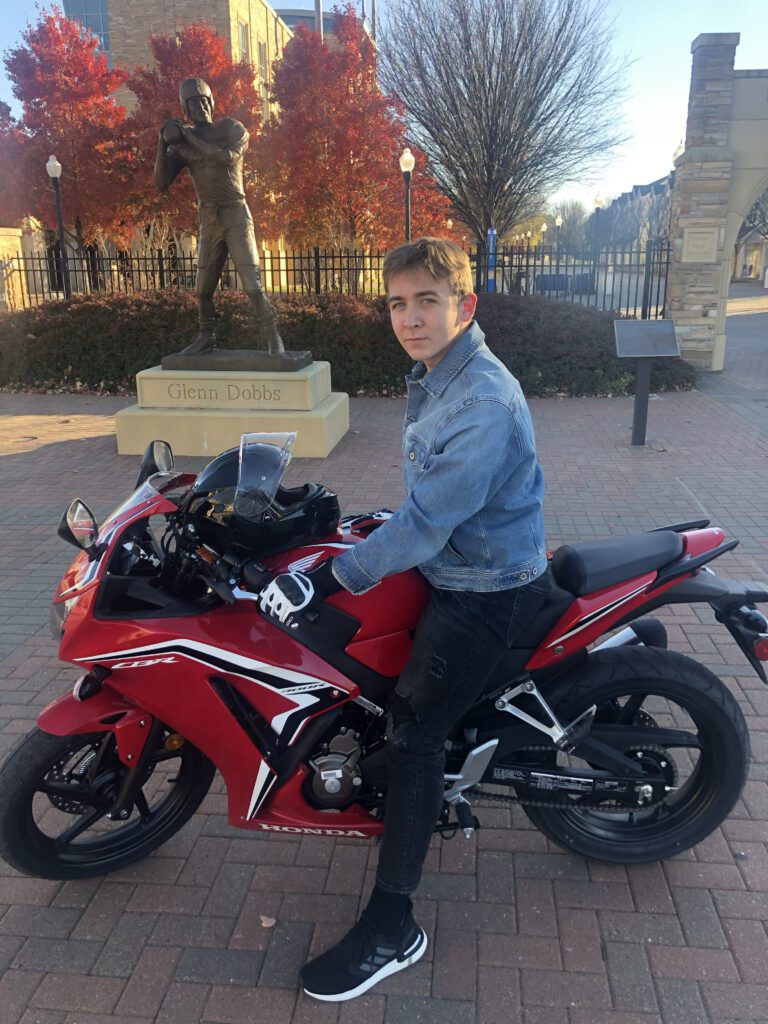
Hobbies and passions: I love motorcycles and music. I am racetrack-certified in motorcycles, and I play violin and viola, enjoy composing and conducting. I hope to continue these interests in college.
Surprising fact: I’m spending the summer trekking through ten nations in southern Africa.
Kyla Reed
Metro Christian Academy
Attending: Oklahoma State University
Intended major: Mechanical Engineering. Math and science have always been my favorite subjects, and engineering is a great path to gain more knowledge in those topics. I desire to build a solid foundation in engineering and use the skills I will learn to make a positive impact in the world.
Biggest influence: My Lord and Savior Jesus Christ. He is my Rock and Sustainer, and He is always there for me in the highs and lows. Knowing my identity is in Christ has helped me walk confidently through life with Him in every season.
Proudest achievement: Winning first place at the Sapulpa Invitational Golf Tournament. This was a very important moment for me because I tore my ACL eight months earlier and rehabbed tirelessly until I was in better physical shape than prior to my injury. It was truly a blessing for all the hard work I put in recovering my knee.
Career plans: I plan on obtaining an undergraduate and graduate degree in the field of engineering. I have always been interested in cars, so I aspire for a future career in the automotive industry.
I would trade places for one day with: Lewis Hamilton, a Formula 1 driver, because I would like to learn how to drive an F1 car and race on famous racetracks in Europe, taking turns at 200 miles per hour.
Twenty years down the line, I would like to be: Raising a family while working in the automotive industry, improving cars to be more affordable while also environmentally friendly. I would also like to be involved in my local church, mentoring younger girls.
Unique characteristics: I have always been an encourager, uplifting others to excel in whatever they are doing. I also have a positive outlook on life, which makes the hard days less hard and the good days even sweeter.
Hobbies and passions: I love playing the piano, messing around with different chords and notes, and trying to play songs by ear.
Surprising fact: During COVID, I learned how to juggle – whether they were oranges, apples or foam balls. Now I have a party trick wherever I go!
Bonus tidbit: I made my first hole-in-one this summer from 177 yards out with a 6-iron.
Lillian Smittle
Augustine Christian Academy
Attending: Central Christian College of the Bible, then transferring to the University of Missouri
Intended major: Cross-Cultural Ministry. My parents were both missionaries, and I’ve always been drawn to living in different places and learning about different cultures.
Biggest influence: One of my high school teachers, Mr. Post. He displayed what it looks like to be a lifelong learner and to live a life devoted to Christ.
Proudest achievement: Being my school’s valedictorian. I had to grow and push myself, and so I see it as both a personal and academic milestone.
Career plans: I am very set on respiratory therapy, as I have struggled with asthma for the majority of my life, and I want to be able to make the process of respiratory care less intimidating.
I would trade places for one day with: Neil Armstrong the day he walked on the moon. Being able to look out at the earth from such a distance all while literally creating history is so incredibly cool.
Twenty years down the line, I would like: To have a family. Hopefully, I will be working as a respiratory therapist, improving the lives of others in places that need medical assistance. I also hope to continue to spread the word of God, as He is where the joy is.
Unique characteristics: I believe I carry the quality of discernment, and I am determined in all areas of my life. I also have a genuine interest in getting to understand the lives of others.
Hobbies and passions: Hiking and rapelling are both things I love to do. I also love paddleboarding and swing dancing.
Surprising fact: I grew up learning both English and Spanish.
Bonus tidbit: I went skydiving with some of my best friends for a sort of joint birthday celebration, because we had promised each other when we were 15 that we would jump out of a plane together when we turned 18.
Ranee Nettey
Oklahoma School of Science and Mathematics
Attending: Emory University
Intended major: Human Health. From a young age, I’ve always loved helping others and checking on their wellbeing. As time passed, I became passionate about studying and solving the global factors that limit healthcare accessibility.
Biggest influence: The Lord, in whom I put my faith, has been my life’s guide. My family, consisting of my parents and older sister, have made endless sacrifices to ensure I have a strong foundation rooted in unwavering guidance. I also wouldn’t be the person I am without my amazing friends.
Proudest achievement: Receiving a full-ride, four-year scholarship to Emory through the QuestBridge National College Match process. My ability to pursue higher education without worrying about financial difficulties is a blessing and opportunity I am eager to fulfill!
Career plans: Dentistry, with the hopes of creating a non-profit organization that provides dental care to under-resourced communities.
I would trade places for one day with: A Broadway singer. I enjoy watching musicals, and I would love to capture the hearts of an audience through a musical performance.
Twenty years down the line, I would like to be: Publicly advocating and closing health disparities worldwide. I would love to have a family of my own filled with exciting adventures and maybe even release a few songs!
Unique characteristics: I have a very empathetic and caring nature. I resonate deeply with others and ensure everyone’s voice is heard. I’m also courageous. I stand up for myself and speak out against wrongdoings.
Hobbies and passions: I love songwriting, choreographing dance routines, embracing my Ghanaian culture and whipping up new recipes. Honestly, I’m always finding ways to fulfill my ambitious creativity!
Surprising fact: I know how to play the acoustic guitar, and I used to be in a band when I was younger.
Maddox Ellis
Mount St. Mary’s Catholic High School
Attending: University of Oklahoma
Intended major: Biochemistry. This major allows me to be fully prepared for medical school, while also learning about the interesting processes of living organisms.
Biggest influence: My parents. They are examples of how to live with kindness, generosity and a strong work ethic.
Proudest achievement: Finishing in the top 10% of my class and advancing to the baseball state semifinals.
Career plans: My ultimate goal is to attend medical school and become a physician.
I would trade places for one day with: Current or former president, as it is an opportunity to see the immense responsibilities and aspects of that role.
Twenty years down the line, I would like to be: In private practice in whichever medical field I specialize in. Along with this, I see myself having a family and doing everything that comes with this.
Unique characteristics: In comparison to others my age, I believe I have an extremely strong work ethic and willingness to go the extra mile. This is especially true in academics.
Hobbies and passions: A majority of my hobbies outside academics are physical activities. These include long-distance running, golfing and weightlifting.
Surprising fact: I have a twin sibling.
Bonus tidbit: I was voted “Most Likely to be Studying” as a high school superlative. I am ambidextrous or mixed-handed – I do around 50% of things left handed and the other 50% right handed.
Elizabeth Nguyen
Bishop Kelley High School
Attending: University of Oklahoma
Intended major: Nursing. I’ve always had an interest in sciences, and I knew that in the future I wanted to be in a career where I was able to interact with and help others.
Biggest influence: My family. Throughout my life, my parents and my older sister have been so crucial in helping guide me to where I am today by setting such great examples and goals to follow. And my younger sister and brother have always supported and inspired me in countless ways.
Proudest achievement: Being chosen to help lead Kairos, a senior retreat. Taking on a leadership role used to be very rare for me, but being able to finally overcome a lot of my anxieties and stage fright really helped me gain more confidence in myself and what I can accomplish.
Career plans: My career plans are to become an RN and possibly continue my studies to become a CRNA or nurse practitioner.
I would trade places for one day with: A music artist or pop star, like Sabrina Carpenter. It would be cool to be a celebrity for a day and be able to sing in front of giant crowds.
Twenty years down the line, I would like to be: With a family of my own and spending lots of time and having fun with family and friends.
Unique characteristics: I actually enjoy silence a lot of the time. I like to look out the window or at my surroundings and think.
Hobbies and passions: Outside of academics, I enjoy music and going to concerts with my friends and sisters, and I also love to cook and bake for my family.
Surprising fact: I swam competitively for two years and have been a lifeguard for three years.
Bonus tidbit: I’m really good at remembering lyrics and songs. I can usually name a song within a couple seconds of hearing it.
Junior Jonathan Nsengiyumva
Oklahoma Christian School
Attending: University of Ottawa
Intended major: Business Technology Management – a major that would put me in a good position to move back home to Rwanda and make an impact immediately.
Biggest influence: Both my parents. They’ve had to overcome so much adversity throughout their life, that I live to make them proud and to show them that their sacrifices weren’t in vain.
Proudest achievement: Winning a state [basketball] championship with not only my teammates but my best friends.
Career plans: I’m yet to decide what career to pursue but I’d like to be established in my career and then move home to Rwanda and help build my country up!
I would trade places for one day with: Shannon Sharpe, because I love talking basketball/sports and it’d be really cool to get paid for it!
Twenty years down the line, I would like to be: Moved back home, have my own family, live close to the rest of my siblings and parents, and be happy with what I do – a job that can help me sustain my family. But even more, so I hope I’m still having fun with life!
Unique characteristics: I’ve been taught how to clearly communicate my feelings without being disrespectful or unpleasant with anyone. I’ve also learned to walk in somebody else’s shoes before any judgment.
Hobbies and passions: I love basketball and sports, but I also love reading in my free time. Mostly, I enjoy spending time with my loved ones!
Philip J. Oh
Broken Arrow High School
Attending: Pomona College
Intended major: Mostly undecided. Economics is interesting, though.
Biggest influence: My father. He has taught me by example the art of pushing through even when I feel as though I can’t; he taught me what sacrifice was from a young age. Ever since, it has often been my greatest strength.
Proudest achievement: Becoming healthier. I spiked to 200 pounds when I was just 10 years old, so working hard at the gym and very slowly seeing results for about 6 years now has been a very important journey, and I’m proud that I stuck with it.
Career plans: I’m currently unsure of any plans or careers. I’m somewhat of a wild card at the moment.
I would trade places for one day with: Olympic judoka, Ono Shohei. I’m very curious as to how he is able to read his opponents so well while also having a perfect defense.
Twenty years down the line, I would like to be: Achieving a feasible level of personal peace, no longer plagued by an overabundance of ambition.
Unique characteristics: I’m very creative when it comes to planning the unexpected; whether I’m playing a video game, taking a test, or visualizing a team sport strategy, I’m able to come up with remarkably unpredictable strategies to use the resources I am given.
Hobbies and passions: I love practicing judo. It’s an activity I find to be simultaneously mentally entertaining and a good workout.
Surprising fact: Despite my built stature and rigorous exercise schedule, I love writing and reading poetry.
Bonus tidbit: I love drinking black coffee!
Magnolia Louise Kirt
Bishop McGuinness Catholic High School
Attending: Trinity University
Intended major: I am interested in majoring in Psychology or Biology. Both would prepare me for the career paths that I am considering.
Biggest influence: My freshman math teacher, cross-country coach and Venturing Crew sponsor, Mrs. Coats. She always gives herself fully to her commitments. For example, I am most grateful for the many times that she used her days off to take our outdoors club on outings and campouts which have provided some of my fondest high school memories. She inspires me to give my best effort in what I choose to do.
Proudest achievement: Running a 5K at my last high school meet, state, in under 21 minutes. It took a lot of determination, but my hard work throughout the season paid off.
Career plans: I’m interested in being a dietician or a physical therapist.
I would trade places for one day with: Tracy Chapman. Her talent and voice are incredible, while she gives off an air of soulfulness. “Fast Car” is my favorite song ever (I have it memorized on guitar), and the other songs she has written are also amazing.
Twenty years down the line, I would like to be: Truly content. Hopefully, I will be living in a place that I love with a big, happy family. In addition, I hope to travel all over the world and constantly take on new adventures.
Unique characteristics: I stand out because I am determined and I look on the bright side, attempting to stay positive in almost every situation.
Hobbies and passions: I love reading, rollerblading, camping/hiking/anything outdoors, and occasionally baking.
Surprising fact: I’ve been to more than 10 countries.
Bonus tidbit: I can recite the Greek alphabet!
Zachary King
Thomas Edison Preparatory School
Attending: Oklahoma Baptist University
Intended major: Family Therapy – I really feel like that is where the Lord is calling me. I am not completely sure why, but I feel like that is what He wants me to pursue.
Biggest influence: A couple that come to mind are my friends Brady and Caleb. They are from church and they have helped, guided and poured into me so much through high school. Another person is Mr. Mike Bakker. He is the leadership teacher at Edison, and he really helped me to step out and live out my faith in Jesus at Edison, even though he is not a Christian.
Proudest achievement: All that I do, I try to let Christ work through me. Galatians 2:20 is what I really try to live by.
Career plans: I would like to be a missionary as I get older.
I would trade places for one day with: A stunt man or something like that. I think it would be really cool to go and get to do a lot of crazy things.
Twenty years down the line, I would like to: Have a family and hopefully be overseas sharing the gospel.
Unique characteristics: I hope that my faith in Christ stands out and I hope that people can see Christ when they see me.
Hobbies and passions: I enjoy playing guitar, playing disc golf and playing volleyball.
Surprising fact: I play guitar!
Bonus tidbit: I used to play soccer as a kid, but I quit in middle school. I came back my senior year of high school, and we ended up winning state and I was able to start every game. It was kind of crazy and awesome all at the same time!
John Hughes
Casady School
Attending: Northwestern University
Intended major: Double majoring in Theater and Political Science, because I participated in many school theater productions and love studying the scripts of shows. I am drawn to political science because of my deep affection for our democracy and for my near-obsession with how the government operates.
Biggest influence: I consider many comedians, such as Martin Short, Dick York, Steve Martin, Julia Louis-Dreyfus, Don Knotts and Michael Richards as influences because of their impact on my own comedic timing, content and presence. Then again, I find former Speaker of the House Nancy Pelosi, Senate Majority Leader Chuck Schumer, and former Presidents Franklin D. Roosevelt, Abraham Lincoln, Theodore Roosevelt and George Washington as my largest political influences. But when it all boils down, I know of all of these people because of my parents.
Proudest achievement: What I do to ensure that everyone who is eligible to participate in our democracy has the chance to do so. I greatly enjoy hosting voter registration drives to help infuse our electorate with new blood, while the People, Pints, and Politics events that I helped create with state Rep. Trish Ranson (D-Stillwater) educate adults on the importance of participating in our democracy.
I would trade places for one day with: A member of Congress to experience what the actual day-to-day job looks like.
Twenty years down the line, I would like to be: Either a successful actor or a scriptwriter. I enjoy telling the stories of others, and I believe that either of these professions would bring me immense joy to participate in.
Unique characteristics: My sense of civic responsibility. I find importance in every election, even ones with difficult decisions or ones surrounded by apathy.
Hobbies and passions: My hobbies outside of academics include reading and writing, including researching history. I am a huge history buff, especially the history of the United States. I also enjoy studying maps and geography.
Surprising fact: My family and I have been known to drive to Dallas just to get lunch at In-N-Out, visit Buc-ee’s, and then head back home.
Dae’Mar Nealy
Union High School
Attending: Northeastern State University
Intended major: I plan to major in Sports Journalism or Sports Marketing. I love the energy, passion and team mentality that comes with sports, and I know I will miss it when I graduate.
Biggest influence: Travis and Liz Wood, for two reasons. First, when they took me into their house, they showed me the difference of dreams and goals. We don’t just sit around and hope they come true; we work, we chase, and we don’t stop when there is a bump in the road. Secondly, they showed me there is happiness in all circumstances. Life is never like you think it’s going to be but that doesn’t stop us from enjoying it.
Proudest achievement: I’m proud to be the first in my bloodline to go to attend college. I say bloodline because my family has grown so much with so many different people helping me along the way.
Career plans: Hopefully pursue sports media and work on a national level with the NCAA or NFL.
Unique characteristics: Even though I’m only 18, I feel like I’ve lived so many lives. I’m lucky to have a village of parents, family and friends and they have all influenced my life so much. If I had to name one trait, it would be my relentless love for other’s successes.
Hobbies and passions: Spending time with friends, giving back to my community and mentoring younger people.
Surprising fact: I love being on the farm! Grandad and Granny Jan have introduced me to the country, and I really love the farm life!
Bonus tidbit: As a freshman, my GPA was barely passing, and I was one absence away from repeating the grade. As a senior, I was named Senior of the Year, Football Team Captain and runner-up to “Mr. Union.” I tell this story not from a place of self-promotion, but because there are so many kids that were in the same place I was, and I want them to see that it’s doable. My turnaround was based almost 100% on the football program at Union. The coaches for a program like that weren’t going to let me get away with the nonsense I was pulling. Because they believed in me, I believed in myself. I won’t be able to repay Coach Fred and the staff for what they did for me, I just hope I’m able to pay it forward.
Photo by Matthew Murphy and Evan Zimmerman for MurphyMade
Celebrity Attractions
Kristin Dotson, CEO of Tulsa’s Celebrity Attractions, dubs the coming year as their “biggest season to date – with seven shows across nine playing weeks,” she says. This season also brings four Oklahoma premieres with Moulin Rouge! The Musical; Mrs. Doubtfire; Clue; and Back to the Future. With so many excellent musical options to consider, Dotson says putting together a season can be tough, and mentions that it starts by talking to the loyal patrons.
“We are in the lobby of every show we present, talking to the audience members to hear what they’re excited about and what’s on their Broadway wish list for Tulsa,” she says. “Many of our staff members travel to NYC to preview every show that is running on Broadway. Additionally, we are members of the Broadway League and the Independent Presenters Network, giving us connections to the industry to hear and invest in what is in the pipeline for Broadway and touring.”
Along with the aforementioned shows, Celebrity Attractions is also bringing MJ the Musical; Cirque de Soleil Songblazers; Les Miserables; and Wicked. For those not-so-wild about musicals or the theatre in general, Dotson encourages you to “give it a try. Start with something short, or something familiar. This season we have Clue – it’s not a musical and runs 90 minutes without intermission. For something familiar, sample Mrs. Doubtfire or Back to the Future. Just take the leap to be part of the energy of a live audience.” To learn more about Celebrity Attractions or to grab season tickets, visit celebrityattractions.com.
Main image credit:Photo by Matthew Murphy and Evan Zimmerman for MurphyMade
Tulsa Performing Arts Center
Photo courtesy TPAC
Tulsa’s go-to venue for all things performing arts and music, the Tulsa PAC hosts the works of major national companies and local theater makers alike. Just some of the many partners of the Tulsa PAC include Celebrity Attractions, Theatre Tulsa, Tulsa Opera, Chamber Music Tulsa, Tulsa Symphony and World Stage Theatre company.
With offerings that include concerts, musicals, plays, operas and comedy shows, the TPAC is a versatile and accessible hub for the arts community.
Alongside hosting a bevy of entertainment events, the TPAC’s nonprofit programs are “growing bigger than ever,” according to Amanda Nichols, the center’s director of communication. “We’ll bring yet another class of [Tulsa Public Schools] kindergartners through our doors for a free show, thanks to our Any Given Child program,” she says. “Arts in the Air, our free outdoor concert series, will be back this fall. The Discovery Awards will, once again, celebrate the best in local high school musical theatre talent and send two lucky high schoolers to New York City for their Broadway debuts. After two successful years, the Orbit Arts Festival will be back and bigger than ever in spring 2025. We even have a brand-new program, Next Narrative, which celebrates local high school acting talent.” For more information TPAC’s offerings and the 2024-2025 season, visit tulsapac.com.
OKC Ballet
Ballet, says OKC Ballet’s executive director, Jo Lynne Jones, “isn’t always pointe shoes and tutus.” In fact, she says the company’s 2024-2025 season has something for everyone – “from our free annual performance at Scissortail Park to Shorts which showcases edgy, contemporary performances. We are very intentional about making ballet more accessible to greater audiences, and music is a great device for that.”
This season kicks off with Ballet Under the Stars on Sept. 13 at Scissortail Park. The company then opens its Civic Center Music Hall season Oct. 18-20 with Peter Pan – where “everyone’s favorite characters [will be] flying across the stage,” says Jones.
Photo by Shevaun Williams
Other goodies include The Nutcracker in December, which will “debut new sets, costumes and choreography … thanks to the generous support of Devon Energy and The Chickasaw Nation.”
In February, the company offers Swan Lake, and finishes the season in May with a new ballet to music from the Flaming Lips. If you want to get in on the action, visit OKC Ballet on Sept. 14 for the 2nd Annual Dance Day.
“If you have not been to our fantastic studio, join us for Dance Day which will feature free classes and performances celebrating every style of dance you can imagine,” says Jones. “Come dance with us!” For more information on OKC Ballet’s season, visit okcballet.org.
Tulsa Opera
Photo by C. Andrew Nichols
Tulsa Opera, established in 1948, is the first professional performing arts organization in the state and the twelfth oldest opera company in North America. In its 76th season, Tulsa Opera’s line-up is sure to impress.
The fun begins Oct. 19 with Grand Voices: The Tulsa Opera Chorus in Concert. Combining the talents of the Tulsa Opera chorus and orchestra, Grand Voices offers a “thrilling concert of operatic chorus favorites,” according to Cindy Sadler, Tulsa Opera’s director of marketing. Next up is The Tragedy of Carmen, running Feb. 21 and 23. Following a disgraced nobleman-turned-soldier, Don José, and a beautiful, free-spirited Roma woman, Carmen, the show combines romance, tragedy and drama.
The Stabat Mater by Antonín Dvořák then runs April 26. Described as a “gorgeous, immersive experience of music, religious art and architecture,” by Sadler, the show follows the crucifixion of Jesus Christ through the eyes of Mother Mary. Following is Renée Fleming’s Voice of Nature: The Anthropocene on May 10. Starring superstar soprano Renée Fleming, hailed by The Guardian as the barrier-breaking “go-to soprano for royals, world leaders and Broadway musicals,” the show highlights a variety of Fleming’s works.
The season ends on a high note with The Hobbit on June 7-8; the show offers the talents of the Tulsa Youth Opera and follows J.R.R. Tolkien’s fantasy epic from beginning to end.
If you’re unsure about visiting the opera, Sadler has this to say: “Forget the stereotypes and give us a try! Opera truly is for everyone. It can make you laugh, cry, gasp and tap your toes along to the music.” For more information on Tulsa Opera and its season, visit tulsaopera.com.
OKCMOA
The Oklahoma City Museum of Art – which houses everything from paintings to prints, photographs and sculptures, offers a groundbreaking 2024-2025 exhibition season. Running from Aug. 24 to Jan. 5, a new show puts the works of one of the world’s most well-known artists, Pablo Picasso, front and center. Included in the exhibition are seventeen progressive proofs and two published linocuts, which “explore [Picasso’s] artistic process and one of printmaking’s most fascinating and demanding mediums, the linoleum cut print,” according to okcmoa.com. The show, organized by Townsend Art Advisory LLC, examines the printmaking output of the artist in his last years of life.
The Three Shades, at OKCMOA from Aug. 24 to Aug. 23, 2026, is a single-gallery installation “featuring one of the masterworks of modern sculpture, Auguste Rodin’s The Three Shades, on loan from a private collection,” according to the website. Often dubbed the “father of modern sculpture,” Rodin is considered one of the most renowned and influential French sculptors of the late nineteenth century. Lastly, Discovering Ansel Adams opens June 7 of next year. The exhibition provides “an unprecedented and eye-opening examination of the early career of one of America’s most renowned photographers,” according to okcmoa.com. With more than 100 photographs, the showcase spans Adam’s entire career. For more information about the museum’s programming and exhibition schedules, visit okcmoa.com.
Tulsa Ballet
Offering dynamic showcases from September through May, Tulsa Ballet’s 2024-2025 season welcomes beloved dance favorites and some new additions.
The season kicks off with Creations in Studio K, running Sept. 13-22, featuring works from three renowned female choreographers. “Each one of them brings something special to the program, which will make the 2024 Creation in Studio K performances strikingly unique,” says Marcello Angelini, Tulsa Ballet’s artistic director.
Photo by Josh New
Next up is Dracula, running Oct. 31-Nov. 3. Returning to the Tulsa Ballet stage for the first time since 2018, this tale of bloodlust and destruction provides “the perfect balance between storytelling, exciting dance, visual allure and the inevitability and consequences of Dracula’s magnetic grip on the opposite sex,” says Angelini.
Following is Peter and the Wolf, running both Nov. 8-9 and April 11-12. Scott Black, Tulsa Ballet’s managing director, dubs this piece as a “great entry point for someone who has never experienced a ballet performance.” A beloved Tulsa Ballet tradition, The Nutcracker, returns Dec. 8-22, followed by Alice in Wonderland, Feb. 27-March 2. The latter, an epic new work commissioned by Tulsa Ballet, was created by a team of artists who will bring the adventures of Alice to the other side of the looking glass to life. The season concludes with The Three Musketeers, April 3-6, as well as the Signature Series on May 8-11, which offers three spell-binding performances in one evening.
For more information about Tulsa Ballet’s upcoming season, visit tulsaballet.org.
It’s a busy time at Oklahoma City-based Oklahoma Contemporary, with much to look forward to.
“I am most excited about the incredible lineup of exhibitions and programs we have planned over the next year,” says Trent Riley, the center’s executive director. “From groundbreaking contemporary art shows such as Outré West: The American School of Architecture from Oklahoma to California and Hock E Aye Vi Edgar Heap of Birds: Honor Song, to dynamic programs such as our Second Saturday Sensory Friendly Hours and community conversations, the next year will provide more opportunities than ever before for the communities we serve to connect with contemporary art.”
Honor Song, which Riley describes as a profound tribute to the resilience and strength of Indigenous communities, opens in February.
“We believe that art has the power to provoke reflection, inspire empathy and spark positive change,” says Pablo Barrera (Wixáritari), an adjunct curator with Oklahoma Contemporary. “Edgar Heap of Birds’ artwork remains an important part of the American cultural landscape, and supporting artists like Heap of Birds speaks to Oklahoma Contemporary’s mission to promote diversity, equity and inclusion in the arts. We are excited to see how this exhibition will resonate with audiences and contribute to meaningful dialogue within the field.”
And to Oklahomans who wouldn’t normally find themselves looking at contemporary art in their off hours, Riley offers some words of encouragement. “Come and engage with the transformative power of creativity – you might just discover a newfound appreciation for the arts and learn a little about yourself too.” For more information on Oklahoma Contemporary’s exhibition schedules and other programming, visit oklahomacontemporary.org.
Photo courtesy McKnight Center for the Performing Arts
McKnight Center for the Performing Arts
Located in Stillwater, the McKnight Center for the Performing Arts is prepped and ready for a knockout 2024-2025 season.
The fun kicks off with three solo performances – Vince Gill on Sept. 12, Idina Menzel on Sept. 13 and Grace Potter on Sept. 20. Next up is the formidable Formosa Quartet on Sept. 24, alongside Time for Three – a Grammy Award-winning trio that offers classical music, Americana and singer-songwriter styles. on Oct. 4. Lyle Lovett visits on Oct. 12, followed by flutist and educator Claire Chase, and jazz artist Esperanza Spalding Nov. 15. Alongside a bevy of concerts in the line-up, McKnight also offers theatre; shows include Tina: The Tina Turner Musical on Nov. 6-7, Chicago the Musical on Feb. 22-23, and crowd favorite Mean Girls on April 15-16.
Other can’t-miss shows include the Chicago Symphony Orchestra on Jan. 23-24, the Martha Graham Dance Company on Feb. 8, and Yefim Bronfman on April 11.
For more information on the upcoming season, visit mcknightcenter.org.
108 Contemporary
Natural Rhythms: Hayley Nichols & Nic Annette Miller Aug. 2-Sept. 22
Kendall Ross & Taryn Singleton: Rose Colored Glasses Oct. 4-Nov. 24
VisionMakers2024 Dec. 6-Jan. 26
Doug Cannell Feb. 7-March 22
Red Heat Collective April 4-May 24
Joe Kissinger & Sarah Robl June 6-July 26
American Theatre Company
Patrimony Sept. 27-Oct. 6
A Christmas Carol Dec. 6-22
The Outsiders March 27-30
Always… Patsy Cline May 1-11
Armstrong Auditorium
Renee Fleming Sept. 12
Aznavoorian Sisters Nov. 7
Rachel Barton Pine Nov. 21
Boston Brass and Imani Winds Jan. 28
Czech Philharmonic Feb. 19
Les Arts Florissants Vivaldi’s Four Seasons March 17
Voctave March 27
BOK Center
Hozier Aug. 10
Barry Manilow Aug. 23
Future and Metro Boomin Aug. 25
Tucker Carlson Sept. 11
The Avett Brothers Sept. 18
Junior H Sept. 20
Jelly Roll Oct. 18
Korn Oct. 23
Whiskey Myers Nov. 1
Pink Nov. 8
Santa Fe Klan Nov. 9
Aerosmith Nov. 12
Little Big Town + Sugarland Nov. 23
Billy Strings Dec. 10
Zach Bryan Dec. 12-14
Broken Arrow Performing Arts Center
Kristin Chenoweth Christmas Dec. 7
Ana Gasteyer: Sugar & Booze Dec. 16
The Addams Family Feb. 20
The Cher Show April 28
Canterbury Voices
Loksi’ Shaali’ (Shell Shaker): A Chickasaw Opera Oct. 27
Sing We Now of Christmas Dec. 8
Eric Whitacre’s The Sacred Veil March 1
Crescendo! An Evening with Canterbury May 15
Celebrity Attractions
Moulin Rouge! The Musical Aug. 6-11
Bluey’s Big Play Sept. 3
MJ the Musical Oct. 15-20
Mrs. Doubtfire Nov. 12-17
Cirque de Soleil Songblazers, In partnership with TPAC Nov. 22-24
Les Miserables Jan. 21-26
Clue: A New Comedy Feb. 11-16
Back to the Future: The Musical April 15-20
Wicked May 28-June 15
Chamber Music Tulsa
Formosa Quartet Sept. 21-22
Miro Quartet Oct. 18-20
Trio Bohemo Nov. 15-17
Escher Quartet Feb. 8-9
Notos Quartet March 7-9
Kenari Quartet April 25-27
Civic Center Music Hall
Events listed are presented by the Civic Center Music Hall or out-of-state organizations; events presented by other local performing arts companies, also hosted at the Civic, are listed under the according company
Colin Mochrie & Brad Sherwood: Asking for Trouble Aug. 17
Franco Escamilla ‘1995’ Aug. 23
A Drag Queen Christmas Dec. 1
Discovery Lab
Educator Appreciation Night Aug. 8
Tinkerfest Sept. 7
Discovery After Dark Sept. 13
Imaginate by Ontario Science Centre Through November
Noon Year’s Eve Dec. 31
Introduce a Girl to Engineering February
Mad Scientist Ball April 26
First Americans Museum
One Place, Many Nations: Acknowledging the 39 Through 2025
OKLA HOMMA Ongoing
WINIKO: Life of an Object Ongoing
21st Century Mound Builders Ongoing
Vessels that Carried Us: Kiowa Cradleboards Ongoing
Chef Loretta’s Garden Ongoing
Fred Jones Jr. Museum of Art
Un/Natural Selections: Wildlife in Contemporary Art Through Sept. 24
Art Adventures
Sept. 17, Oct. 15, Nov. 19
Greenwood Rising
Still We Rise Ongoing
The Greenwood Spirit Ongoing
The Arc of Oppression Ongoing
The 1921 Tulsa Race Massacre Ongoing
Changing Fortunes Ongoing
A Journey Towards Reconciliation Ongoing
Jasmine Moran Children’s Museum
Worldwide Day of Play Sept. 28
We Are Thankful for Our Community Free Day Nov. 24
Noon Year’s Eve Dec. 31
Explorers Hall Ongoing
Main Street Ongoing
Science Wing Ongoing
Roesler Hall Ongoing
Living Arts
Dreams: An Exploration of the Strange and Unusual Sept. 6-Oct. 12
Dia de los Muertos Arts Festival & Exhibition Nov. 1-16
Faith Green & Lauren Hensen Dec. 6-21
Lyric Theatre of Oklahoma
Cinderella Through Aug. 4
Once on This Island Sept. 18-Oct. 6
Lyric’s A Christmas Carol Nov. 23-Dec. 27
Mabee Center
Promise Keepers: Daring Faith Aug. 9-10
Anne Wilson Sept. 12
The Complete Beatles Experience: Liverpool Legends Sept. 14
The Western Trail: The Greatest Cattle Trail of Them All at 150 Sept. 13-Jan. 5
Imprisoned but Empowered: Cheyenne Warrior Artists from Fort Marion Sept. 13-Jan. 5
Traditional Cowboy Arts Association Exhibition & Sale Sept. 27-Dec. 1
Small Works, Great Wonders Nov. 2-Dec. 1
OKC Ballet
Ballet Under the Stars Sept. 13
Peter Pan Oct. 18-20
Sensory-friendly version Oct. 19 The Nutcracker
Dec. 14-23 Sensory-friendly version Dec. 18
Swan Lake Feb. 7-16
Sensory-friendly version Feb. 15
Future Voices March 20-23
Shorts May 9-11
OKC Broadway
Bluey’s Big Play Aug. 15
Moulin Rouge! The Musical Sept. 3-15
Avatar: The Last Airbender in Concert Sept. 24
Spider-Man: Across the Spider-Verse Live in Concert Sept. 25
MJ The Musical Oct. 1-6
Dr. Seuss’ How the Grinch Stole Christmas! The Musical Nov. 6-10
Beetlejuice Nov. 19-24
Peter Pan March 18-23
Some Like It Hot April 1-6
& Juliet April 29-May 4
OKC Philharmonic
Sunday in the Park with the PHIL! Sept. 15
Opening Night with Midori Sept. 21
The Organ Symphony Oct. 12
Arrival from Sweden: The Music of ABBA Nov. 1-2
From the Highlands Nov. 16
A Very Merry Pops with Tony DeSare & Ashley Brown Dec. 6-7
Dichter Plays Grieg Jan. 11
Defying Gravity: Stephen Schwartz & Friends Jan. 24-25
Symphonies East & West Feb. 22
Pink Martini and China Forbes: 30th Anniversary Season March 7-8
Sarah Chang Returns March 15
The Music of Tina Turner April 11-12
World Premiere! April 19
Music of the Knights May 23-24
An Alpine Symphony May 17
OKC Town Hall
Seth Dillon Sept. 19
Joe Theismann Oct. 17
Chad Alexander Nov. 21
Stephen Moore Feb. 20
Joel Sartore March 20
Kayleigh McEnany April 17
Oklahoma City Museum of Art
Picasso Prints Exhibition Aug. 24-Jan. 5
The Three Shades Aug. 24-Aug. 23, 2026
Edith Head: The Golden Age of Hollywood Costume Design Through Sept. 29
Chihuly Then and Now: The Collection at Twenty Through Jan. 5
Discovering Ansel Adams June 5-Sept. 28, 2025
Cynthia Daignault: Oklahoma Ongoing
Oklahoma Contemporary
With Love presents “Freedom Story,” a Clara Luper Legac Arts Event Aug. 15
Community Conversation: SHELTER Aug. 17
Outré West Opening Celebration and Curator Panel Aug. 22
Outré West: The American School of Architecture from Oklahoma to California Aug. 22-Jan. 27
Second Saturdays Sept. 14, Oct. 12, Nov. 9, Dec. 14
Cure-8 Performances Oct. 3-5
Free Art Kits and Family Tours Nov. 30
Eduardo Sarabia: Green Vines Through Jan. 6
Jose Dávila Through Jan. 6
Shelter Through Jan. 6
Eva Schlegel: Multiple Voices Through Jan. 13
Hock E Aye Vi Edgar Heap of Birds Artist Talk Feb. 20
Hock E Aye Vi Edgar Heap of Birds: Honor Song February 2025
Oklahoma City Repertory Theatre
In partnership with Oklahoma Contemporary
The Thanksgiving Play Nov. 7-17
Under the Radar Jan. 17-19
What the Constitution Means to Me April 3-13
Frederick Douglas Now May 1-4
Oklahoma Shakespeare in the Park
Macbeth Aug. 1-18
Hamlet Sept. 12-29
Jane Austen’s Christmas Cracker Dec. 5-22
Painted Sky Opera
Lizzie Borden Sept. 26, 28, 29
Paycom Center
Childish Gambino Aug. 11
Queens of R&B Aug. 14
Barry Manilow Aug. 17
Grupo Frontera Aug. 18
Luke Bryan Aug. 22
Hozier Sept. 26
MercyMe Oct. 26
Creed Nov. 2
Lainey Wilson Nov. 7
Justin Timberlake Dec. 2
Alan Jackson Jan. 18
Philbrook Museum of Art
Celia Álvarez Muñoz: Breaking the Binding Through Aug. 25
Eduardo Sarabia: Ceiba Sagrada Through Dec. 28
American Artists, American Stories from the Pennsylvania Academy of the Fine Arts, 1776-1976 Sept. 25-Dec. 29
Here be Dragons: Mapping the Real and Imagined Through Dec. 29
Timo Fahler: Shrug Atlas Through June 1
Sam Noble Museum
Chase Earles: The History of Caddo Pottery Sept. 28
After-Hours Art Labs Oct. 1, 15, 29, and Nov. 12
Prehistoric Visions: Evolving Perspectives on Fossil Animals and Paleoart Through Dec. 1
Orientation Gallery Ongoing
Hall of World Cultures Ongoing
Hall of Natural Wonders Ongoing
Hall of the People of Oklahoma Ongoing
Hall of Ancient Life Ongoing
Science Museum Oklahoma
Out of the Toybox: The Toy Photography of Mitchel Wu Through Fall 2025
Currents: Turning the Tide on Ocean Conservation Through Sept. 8, 2025
Sherwin Miller Museum of Jewish Art
Spartan Boys: A Tulsa Jewish Story Through Sept. 9
Beyond the Mold: Unpacking Ken Doll’s Evolution Through Nov. 3
Curator’s Curios Through Dec. 31
Jacob’s Ladder Ongoing
Signature Symphony
Three is a Party Sept. 28
Spooky Jazz Night Oct. 29
Christmas in Tulsa Dec. 13-14
Pictures Reimagined Jan. 25
Tulsa Sings! Open Mic Night March 8
Go Big or Go Home April 26
Theatre Tulsa
Waitress Sept. 7-21
The Rocky Horror Picture Show Oct. 26, 31
Avenue Q: School Edition Nov. 8-10
Oliver! Jan. 10-26
[Title of Show] March 7-9
The Play That Goes Wrong March 20-25
Hello, Dolly! April 11-20
Alice in Wonderland Jr. May 23-25
Tulsa Air and Space Museum
CAF AirPower History Tour Oct. 18
Pacific Hanger Dance with Live Orchestra Music Oct. 26
Ray Booker Flight Lab Ongoing
Build Your Own Aircraft Simulator Ongoing
Bernouilli’s Principle Ongoing
Shuttle Simulator Ongoing
James E. Bertelsmeyer Planetarium Ongoing
Tulsa Ballet
Creations in Studio K Sept. 13-22
Bella Cucina: The Art of Food Oct. 9-26
Dracula Oct. 31-Nov. 3
Peter and the Wolf Nov. 8-9, April 11-12
The Nutcracker Festival Dec. 6-7
The Nutcracker Dec. 8-22
Alice in Wonderland Feb. 27-March 2
The Three Musketeers April 3-6
Signature Series May 8-11
Tulsa Botanic Garden
Autumn in the Botanic Garden September-October
Botanic Garden of Lights Select nights Dec. 4-Dec. 29
Tulsa Botanic Blooms March-April
Tulsa Chorale
Brahms Requiem Nov. 18
Rutter Requiem Feb. 10
Mozart Requiem with Tulsa Symphony Orchestra April 13
Tulsa Opera
Grand Voices: The Tulsa Opera Chorus in Concert Oct. 19
The Tragedy of Carmen Feb. 21, 23
The Stabat Mater by Antonín Dvořák April 26
Renée Fleming’s Voice of Nature: The Anthropocene May 10
A Reception with Renée Fleming May 10
The Hobbit June 7-8
Tulsa PAC
Events listed are presented by the TPAC or out-of-state agencies; events presented by other local performing arts companies, also to be hosted at the TPAC, are listed under the according company
Fiddler on the Roof Aug. 16
Paw Patrol Live! Heroes Unite Sept. 21-22
Fellowship for the Performing Arts presents: The Screwtape Letters Sept. 29
Jim Brickman: Comfort and Joy Nov. 14
Emery Entertainment presents: Christmas with C.S. Lewis Nov. 20-23
Tulsa Spotlight Theatre
Pollyanna Aug. 2-4
4th Annual Olio Follies Fundraiser Aug. 9
Evan Hughes Comedy Night Aug. 30, Sept. 27, Oct. 18, Nov. 29, Dec. 27
Gravestone Manor Oct. 4-6, 11-13
Christmas Toy School at the North Pole Dec. 6-8, 13-15
The Drunkard and the Olio Every Saturday
Tulsa Symphony
Ravel and Tchaikovsky Sept. 14
Chamber Music Series at 101 Archer: Death and the Maiden Sept. 20
Symphony Sessions at TU: Showcase Oct. 6
Brahms and Bartok Oct. 12
Chamber Music Series at 101 Archer: Mozart Nov. 22
Mariachi Christmas featuring Mariachi Los Camperos Nov. 30
Wagner’s Tristan and Isolde Jan. 11
Tchaikovsky’s Romeo and Juliet Feb. 1
Chamber Music Series at 101 Archer: Cinematic Feb. 14
Symphony Sessions at TU: Flare May 9
Dvorak and Strauss April 12
Chamber Music Series at 101 Archer: Brass April 25
Debussy and Rachmaninoff May 17
Tulsa Town Hall
Dr. Sanjay Gupta Sept. 14
Father Greg Boyle Nov. 8
Cheech Marin Jan. 31
Cristina Mittermeier March 21
Denise Kiernan April 11
Weitzenhoffer Family College of Fine Arts
Rita & L’heure Espagnole Sept. 26-29
As You Like It Oct. 11-13, 18-20
Oklahoma Festival Ballet Nov. 1, 3, 8-10
Rent Nov. 22-24, Dec. 6-8
Waiting for Lefty Feb. 7-9, 14-16
Rise & Fall of the City of Mahagonny March 6-9
The 25th Annual Puntam County Spelling Bee April 4-6, 11-13
Woody Guthrie Center
2024 Woody Guthrie Prize Sept. 25
Have You Heard? The War is Over: Phil Ochs and the 1960s Peace Movement Ongoing
My Eye to a Lens: Music Photography of David Gahr Ongoing