As student mental health needs continue to rise, school districts across Oklahoma are building more comprehensive systems to support students — recognizing that academic success depends on far more than what happens in the classroom.
At Tulsa Public Schools, that work has been years in the making. The district has developed a layered approach that combines social-emotional learning, on-campus support and extensive community partnerships.
“We sort of built that foundation of resiliency and wellness structures,” says Stephanie Andrews, executive director of Student and Family Support Services.
Today, the district partners with nearly 40 mental health agencies, many of which provide services directly on campus.
On any given year, those external partners serve between 4,000 and 5,000 students, Andrews says, while broader supports — from counseling groups to social workers and crisis response teams — reach tens of thousands more.
“We’re pretty convinced that with all those services, we hit around 20,000 or 21,000 of our students every year,” she says.
That network allows schools to respond quickly, whether a student needs ongoing therapy or immediate intervention during a crisis. But Andrews emphasized that schools are not meant to replace mental health systems — they are part of a larger ecosystem.
“We’re in the business of school,” she says. “But we’re willing to reduce any barriers and do everything we can to make sure students can graduate.”
In Tulsa, that philosophy centers on supporting the “whole child,” addressing mental health, wellness and family needs so students are better positioned to succeed academically. Even so, challenges persist.
“Our students are very different than they were even five years ago,” Andrews says. “Even with this amazing support, our teachers still feel under-resourced in knowing how to handle many of the challenging situations our young people are experiencing.”
In Oklahoma City Public Schools, leaders are also working to shift from reactive responses to more proactive support systems.
“We really promote making sure those foundational things are in place for our students so that they can learn,” says Petra Woodard, executive director of counseling, college and career readiness. “If they’re not present, mentally and physically, you can’t teach them.”
Rather than relying solely on counselors, OKCPS has focused on equipping teachers and administrators with the ability to recognize early warning signs and respond to student needs in real time.
“Historically, mental health has been treated like a fire: we call people to come put it out,” Woodard says. “What we want now is for educators to recognize the sparks early.”
The district has also invested in a K–12 curriculum focused on resilience, character development and future planning, helping students connect their current experiences to long-term goals.
“If students are connected to their future, they’re more likely to see value in what they’re doing now,” Woodard says.
Both leaders stressed that schools cannot do the work alone. Strong partnerships with families and community organizations remain essential to sustaining progress.
“It’s going to take all of us,” Woodard says.
As Oklahoma schools continue to evolve, one thing is clear: supporting student mental health is no longer an added service, it’s a fundamental part of helping students learn, grow and prepare for what comes next.
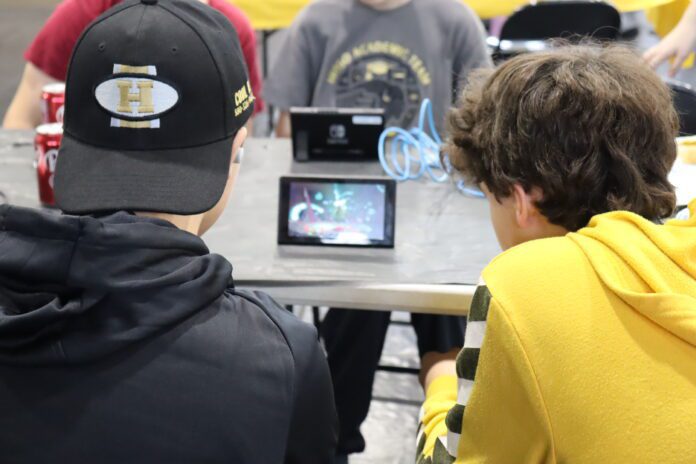
Students in Hugo middle and high school’s esports programs practice strategy, teamwork and skill development as part of a rapidly growing competitive gaming curriculum.
Photo courtesy Hugo Middle School
Over the past several years, many Oklahoma schools have added programming for esports – or electronic sports – organized, competitive video gaming. Much like any other sport, students can sign up for practices or classes dedicated to improving their skills, and ultimately test that skill out against other players.
“At Hugo Middle School, we launched our program three years ago,” says Taylor Perry, the school’s video production and esports instructor. “Our high school had already started an after-school esports club in 2022, and we wanted the opportunity to introduce students to the pathway earlier while also engaging learners who might not traditionally participate in athletics or other extracurricular activities.”
Mike Shipley, executive director and president of Oklahoma Scholastic Esports (OKSE) and an esports coach for Laverne Public Schools, agrees that clubs like these grant kids another pathway to community.
“If nothing else, it has given some students that previously didn’t have a sense of belonging because they weren’t athletes or into FFA a purpose at school,” he says. “Not only a purpose, but a community.”
The OKSE represents over 250 schools, expanding rapidly since its 2019 founding.
“Both high school and middle school leagues offer state championships, and each has class divisions in several games,” continues Shipley.
Although Hugo started with just one esports class, the demand for more was overwhelming.
“Because of that demand, we added an additional period the following year,” says Perry. “Today, I teach five periods of esports each day, which really speaks to how quickly students embraced the program once they realized it was something they could be passionate about at school.”
College scholarships are offered for those who truly excel.
“Since May of 2022, I have had over a dozen students accept esports scholarships to various colleges just at Laverne alone, while many other students across the state have accepted various esports scholarship offers as well,” says Shipley.
Perry notes that as of late, there are more esports scholarships than qualified students.
Members of Oklahoma Scholastic Esports compete in organized statewide leagues that connect more than 250 schools through competitive gaming and championship play.
Photo courtesy OKSE
“As more middle and high schools adopt esports programs, students are positioning themselves early for those opportunities,” she says. “For motivated players, the chances of earning an esports scholarship are very real and plentiful.”
STEM also plays a big role in the esports world – meaning that the activity is more than just “playing videogames,” leading to potential success careers in various industries.
“There are many STEM connections such as video game design, computer/networking support, production and videography/photography,” says Shipley. “There are also many career pathways not considered STEM such as marketing, apparel design, journalism and event management that can be gained leveraging esports as a means. Just like the NFL, there are numerous careers associated with esports outside of just the players.”
Although video games are often seen as a fun distraction, esports plays out like any other traditional sport, and practice makes perfect.
“One of the biggest wins for both students and parents is knowing that playing video games with friends isn’t just for fun. It is meaningful practice tied to success at school,” says Perry.
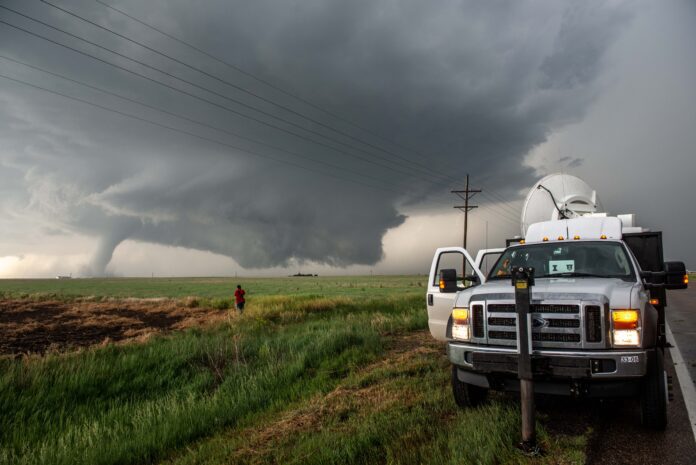
Storm chasers track severe weather across Oklahoma to study tornadoes, collect data and improve forecasting and warning systems.
Photo by Howard B. Bluestein, School of Meteorology, University of Oklahoma
Storm chasing is a well-known phenomenon, and we have our fair share of enthusiasts right here in Tornado Alley.
Howard Bluestein, Ph.D., Professor Emeritus and George Lynn Cross Research Professor at OU’s School of Meteorology, arrived at the university in 1976 as a visiting professor out of MIT, and his storm chasing start began in 1977.
“I was asked to lead a chase vehicle in a field experiment conducted jointly by OU and National Severe Storms Laboratory in 1977,” he shares. “Our observations were important in proving that Doppler radars could be used to improve tornado warnings.”
David Bodine, Ph.D., an associate professor at OU’s School of Meteorology and Advanced Radar Research Center, says that he started chasing during graduate school, “with a mobile phased array radar that we used to study super cells and tornadoes.”
Bodine chases using OU’s mobile radars, including the Rapid X-band Polarimetric Radar, and says that “chasing storms with a mobile radar allows us to target storms in the most probable location and get closer to scan the tornado’s winds near the ground. I enjoy being able to see the storm’s evolution and integrate these visual memories – and photos and videos – with our unique radar data to study why tornadoes form and what makes them so intense.”
Storm chasing safety is crucial.
“Safety is our most important goal,” says Bluestein. “We let the National Weather Service (NWS) know when we see a tornado and strive not to obstruct rescue efforts.”
Priorities should include responsible driving, maintaining situational awareness and keeping a safe distance from the storm.
“Safety and ethics within the chasing community are largely driven by individuals’ decisions,” says Bodine. “When chasing with our mobile radars, safety is our top priority since we are operating university vehicles under hazardous conditions. We will not compromise the safety of project participants or those around us to get better data. There will always be more storms and tornadoes.”
Due to the mainstreaming of storm chasing on social media, by both pros and amateurs, Bluestein has seen changes in chasing culture for better and for worse.
“Letting the NWS know where tornadoes are and moving on social media helps improve warnings,” he says. “However, posting photos and videos also attracts too many other chasers who clog the roads, making it difficult to identify places to set up our radars and collect data. Inexperienced chasers may make it dangerous for themselves and others.”
Nevertheless, social media provides more real-time thunderstorm streams, says Bodine, which “can increase awareness of severe weather events.” But he warns that increasing viewer numbers can drive riskier behaviors.
Advice For Amateur Storm Chasers
Bodine recommends “focusing on the quality and accuracy of your content, rather than trying to outcompete other chasers with risky behavior – such as getting too close to tornadoes. Matthew Cappucci from MyRadar is a great example of someone who chases professionally and curates excellent content,” he says.
Bluestein cautions attention seekers, but says “if you must, post photos and videos so that the NWS and other chasers can see them. Don’t get in the way of researchers and rescue personnel. Don’t try to out-do other chasers by getting too close to tornadoes and getting ever more spectacular videos. It’s too dangerous to do so. Spectacular videos can usually be obtained from a safe distance using telephone lenses. Do not speed or drive recklessly. Act responsibly!”
Roshan Pujari, CEO of Stardust Power, broke ground on a lithium refinery in Muskogee in January 2025, marking a major step in Oklahoma’s expansion into the critical minerals industry.
Photo and rendering courtesy Stardust Power
Oklahomans with an interest in the lithium industry agree on this: there is a learning curve.
Roshan Pujari, founder and CEO of Stardust Power, is an Oklahoma native who says he spent a couple of years just educating himself about the industry after his boutique investment firm was first approached in 2018. His study culminated in a venture poised to bring hundreds of well-paying jobs to eastern Oklahoma.
Stardust Power broke ground in January 2025 on a lithium refinery plant in Muskogee that will develop battery-grade lithium carbonate. Pujari says there is an “overwhelming demand for battery-grade lithium,” ranging from batteries for electric vehicles to handheld electronics to defense and space applications to energy storage systems for data centers.
Jay Shidler, director of business recruitment for the Oklahoma Department of Commerce, says he travels the world to stay abreast of what he calls the “critical minerals industry” and how Oklahoma can support it.
“Critical means that something manufactured depends on them,” Shidler says. “Lithium, nickel, cobalt, graphite – all those minerals will be required as we continuously grow. Many U.S. companies are making lithium batteries but getting most of the lithium from abroad.”
Oklahoma is becoming a critical minerals hub for processing and transporting, Shidler says, primarily because of its strategic location and ready worker pool.
“We are an energy state,” Shidler says. “We’ve been in oil and gas for decades. There are skills in the workforce here to move right into this industry.”
The state is also positioned in the heart of the nation, with interstate highway systems leading to the coasts, Class 1 rail and ports that connect with the Mississippi River shipping system.
Stardust Power plans to refine lithium taken from brines sourced from across North America, including “produced water” from Oklahoma’s oil and gas industry. The end product, a fine, white powder, will be sold to battery manufacturers.
“Produced water is a term for fluids produced during oil and gas production, separate from drinking water,” says Nick Hayman, Ph.D., director and state geologist of the Oklahoma Geological Survey, which is based at the OU’s Mewbourne College of Earth and Energy.
Lithium can be stored in water, clay and rock, Hayman says. And while minimal mining for critical minerals takes place in Oklahoma, that does not mean they are not to be found, he says.
A rendering shows the planned lithium refinery facility in Muskogee, which will produce battery-grade materials to meet growing global demand.
The Smackover Formation, which runs beneath Texas, Arkansas, Louisiana, Mississippi, Alabama and the Florida Panhandle, is a significant lithium brine resource, Hayman says. It’s especially productive in southern Arkansas.
“Because the Smackover Formation is such a well-known formation but doesn’t come into Oklahoma, it sits there making fun of us,” Hayman says. “The point people miss is that the Smackover is one of many lithium-bearing systems.”
Lithium is one of the most abundant elements in the world, Pujari says, and the United States “has potentially the fourth-largest reserves of lithium, in hard rock and brine form.”
In the meantime, Oklahoma’s entry into the supply chain includes Blue Whale Materials, which opened last year in Bartlesville, Shidler says.
“They are able to take existing battery-grade material and grind it down into a black mass and sell it, so it doesn’t have to go back to China,” Shidler explains.
The product is sold to companies such as American Li-on in Atoka, “which extracts lithium as one of the materials out of that black mass, and re-sells it in the United States to create a closed-loop system,” says Shidler.
Pujari says Stardust employees have spent the past couple of years on the permitting process, and in January obtained the final significant clearance, the air quality construction permit from the Oklahoma Department of Environmental Quality.
“We are doing the financing now,” Pujari says. “We would like to start construction this year.”
Students at the Oklahoma Aviation Academy in Norman gain hands-on experience, preparing for careers ranging from piloting to engineering.
Photo courtesy the OAA
Oklahoma, a national leader in the aviation and aerospace industry, serves as a hub of continuous innovation. Despite a successful output, the sector faces a pressing challenge: aerospace companies are continuously seeking qualified personnel in every facet of the industry, and even with an average wage of $74,000, there is still a critical workforce shortage.
“Aerospace is Oklahoma’s second leading economic driver, second leading industry, and moving up quickly,” says Paula Kedy, the statewide Aerospace STEM Education Manager at Oklahoma Aerospace & Aeronautics. “So I think it is important that we look at how we ready students to enter the workforce. Most of [us in this industry] realize you can’t wait until they’re at the college level to try to meet those needs.”
Across the state, programs are working to address that shortage at the high school level. Norman Public Schools (NPS) is just one of the school districts attempting to rectify the issue through the Oklahoma Aviation Academy (OAA). With the assistance of the University of Oklahoma, Moore Norman Technology Center and industry partners from both the public and private sectors, the school district is creating the next generation of aerospace and aviation leaders.
“The Oklahoma Aviation Academy at Norman Public Schools has provided almost 300 students with a STEM education themed around aviation, aerospace and engineering,” says Terry Adams, OAA director at NPS. “Many students will pursue careers in aviation, such as piloting, UAS operations, air traffic control, aviation maintenance and weather forecasting.”
Through the OAA, students utilize a hands-on approach that transforms a traditional educational environment into an authentic connection to high-tech industry readiness. The OAA also provides educational pathways for students to connect directly with higher education, career tech and industry partners such as the Sooner Flight Academy, ensuring career readiness in the high-demand areas of aviation and aerospace.
There are two pathways for students. The first is the Flight Pathway, which brings students into either a pilot pathway or the Unmanned Aircraft Systems (UAS) remote drone pilot pathway. The second guides junior and senior high school students into the Tango Flight Pathway, where they pursue a cutting-edge curriculum with a strong mechanical, electrical and aerospace engineering foundation, helping them gain the skills needed to build an FAA-certified airplane.
The Oklahoma Department of Aerospace & Aeronautics supports workforce development across the state, helping connect education programs with the needs of the growing aerospace industry.
Photo courtesy the ODAA
The OAA also offers career programs in collaboration with Moore-Norman Technology Center, where students can begin working towards industry training and certification in Aviation Airframe and Powerplant (A&P) Mechanics, computers, IT, visual arts or engineering. An additional offering is the Civil Air Patrol Cadet Program (CAP), with a curriculum focused on leadership, aerospace, fitness and character. The cadets participate in these four areas and advance through a series of achievements to earn honors and increased responsibilities.
Students can earn transferable college credits through multiple semesters of college-level coursework in both general education and the University of Oklahoma School of Aviation. Other options for students graduating from the OAA at NPS are to enter the military or become employed as an aviation, aerospace, engineering, or STEM-related industry professional.
For students concerned about funding, Oklahoma offers scholarships and grants; there are even exclusive scholarships available for GirlVenture attendees and Women in Aviation International scholarships. Programs like the Sooner Flight Academy and broader industry partnerships also create early exposure and potential apprenticeship-style experiences that can help offset traditional barriers to entry, particularly for aspiring pilots.
Oklahoma has left no stone unturned when it comes to providing the best workforce in the aviation and aerospace industry, with 149 schools in the state’s five districts offering innovative education for the next generation of these sectors’ leaders.
Krislyn Arthurs’ Honky Tonk PhD showcases her gritty, unflinching songwriting style, exploring themes of resilience, toxic relationships and personal empowerment.
Photos by Harley Johnson
Honky Tonk PhD, the newly released debut album from Oklahoma’s Krislyn Arthurs, overflows with attitude, darkness, candor and clenched-fist toughness. With such self-penned tunes as “Missin’ Man” (a first-person number about an abused woman who finally has enough), “Daddy Tried” (concerning a daughter’s penchant for bad romances), the trailer-park-queen anthem “Double Wide,” and the title track, in which Arthurs sings about coming “from a long line of losers,” this Medford-raised singer-songwriter conveys the image of an unapologetically tough tarnished angel who’s not to be trifled with. Her publicist, Brandy Reed, wrote me that she thinks Arthurs’ music “draws blood before you even know you’ve been hit” – an apt description of the effect conveyed by several of the songs on the disc.
Arthurs’ persona is nothing if not convincing. It is, however, also one that hardly emerged overnight. In fact, when her husband booked her first real gig – after she’d been writing, singing and playing her music mostly for herself for around two years while pursuing a career in dentistry– the performer her audience saw couldn’t have been more different.
“I had such severe stage fright, I didn’t know how I was going to make it through,” she recalls. “Usually, when I’d sing in front of anyone, my throat would go dry, to the point that I couldn’t even squeak out a word. Or I’d throw up. So after my husband told me about booking the show, I had three or four days to get myself mentally prepared. That day, I did not eat. I went to work, came home and played that night – my first show.”
For a while, it looked as though it might also be her last.
“It was in Pond Creek, Oklahoma, ten minutes from my hometown, at a bar that was, at the time, called Rand-Shan’s,” she says. “I had a little girl who was a couple of grades behind me in high school, and I’d invited her to come sit in and play guitar with me. We had never run a P.A. or a sound system, and we’d gone out and bought the cheapest rig we could find, just enough to have some sound. So we were doing the best we could, but unfortunately half the bar could not hear because there were so many people in there and they were so loud.
“About halfway through the show, the bar manager said, ‘Girl, you’re going to have to get this figured out, or we’re going to have to cut you off.’”
That little admonition became the pivotal moment in Krislyn Arthurs’ career. Admitting that she went into the bar without “any confidence,” she remembers that the manager’s warning triggered an immediate and powerful response.
“Something just came over me,” she says, “and I thought, ‘I don’t want to do anything else. I want to prove that I can do this. I love this.’
“So I finished the show, and from there, I’ve never looked back. I’ve booked myself anywhere and everywhere that would let me in. I’ve played for free. I’ve played for five people. I’ve played for anybody that would listen. And then, in 2020, after playing solo for five or six years, I decided to start a band.”
Once sidelined by stage fright, Krislyn Arthurs now commands the spotlight, bringing the raw emotion of Honky Tonk PhD to audiences across Oklahoma and beyond.
Since her Pond Creek epiphany, Arthurs has indeed racked up a lot of performances, both solo and with her group, headlining and opening. As an opener, she’s appeared with such fellow up-and-coming singer-songwriters as Braxton Keith, Josh Meloy, William Beckmann and Jerrod Niemann. Like Arthurs, they’re generally categorized as “country,” but – as is the case with a lot of acts from our region of the U.S.A. – they blend a lot of other influences into what they do.
So does Arthurs, who’s been compared to country stars like Miranda Lambert and Gretchen Wilson.
“I take those comparisons as a compliment, because I was raised on [Wilson’s song] ‘Redneck Woman’ and [Lambert’s] ‘Gunpowder and Lead,’” she says with a chuckle. “But I actually grew up as a scene kid in a farm town, so I was the odd one out. When everybody else was listening to traditional country, I was into the pop-punk scene. I’m influenced by a lot of that. I’m a huge Paramore and Avril Lavigne fan. I love the [Oklahoma-based] All-American Rejects and Fall Out Boy. I have a lot of punk roots and, to this day, I really enjoy that type of music. So I’ve tried to incorporate what I enjoy and still be traditional.
“My main goal with my career is never to really put myself in a box,” she adds. “We could go out and open for Stevie Nicks, or we could go and open for Cody Canada, or for Taylor Hunnicutt, who’s more Southern rock. It’s just so fun getting to be diverse, and, as an artist, to be able to showcase the many sides of myself.”
With the new album release, the side likely to get the most attention is the one I mentioned earlier – her unflinching willingness to explore and comment on the darker side of human nature, especially when it comes to male-female relationships. Well before the Honky Tonk PhD disc, Arthurs was writing and performing material like “The Judge,” a tale of domestic-violence retribution. In the music video, which can be viewed on YouTube, Arthurs is first seen getting a shovel out of the back of a pickup, and you know from the beginning she’s not going to be digging up nightcrawlers for a fishing trip.
“‘The Judge’ is one of my favorite songs, because in my mind, when I was writing it, I was thinking about what would have happened if the woman had stayed [in an abusive relationship],” she says. “It’s like this is what happens finally, you know. I’ve had family members who have had to call the police, and the police haven’t done anything about it, and if they try to, their hands are tied. They don’t have enough proof. And a lot of times, a domestic-violence situation doesn’t end until a catastrophe happens.
“I try to put as much realism in my music as I can, whether it’s about my life or somebody else’s life. I have great parents and a great family, but I saw quite a few things growing up. Sometimes, as a child, you’re exposed to things that make you have to grow up a little bit more, things that really stick with you.”
For her, one of the biggest of those things was domestic abuse.
“In the ‘90s and early 2000s, domestic violence was, a lot of times, swept under the rug,” she says. “Our grandparents, even our parents, maybe, thought it was acceptable. You were always told to stick it through – that you couldn’t just leave. Doing that wasn’t accepted, especially in our small towns. So, with my music, I want women to understand that they control the power in their lives.
“I feel like sometimes we’re not given our own power, that we’re not allowed to do something unless a man says it’s allowed,” she adds. “Thankfully, I don’t have to experience that, but I know there are so many women in the world who do, who struggle to get out of domestic-violence situations. I actually had one myself, before I met my husband. So I love having the platform and the voice to speak for people – men and women, may I say – to remind them that we have the power to control the narratives of our lives, and to make the best of our own situations.”
Storybook cottages are roofed with thatch, accented by shutters of bold colors and surrounded by dense, romantic gardens. Oh, and the only way to get anywhere is by climbing aboard a self-driven whisper boat (fluisterboot), so named because, you guessed it, they’re electric.
Welcome to Giethoorn (geet-horn), a water-rich village in the Netherlands interwoven by miles of tranquil canals fronted by fairy tale homes, lush flower-filled landscaping, shops, cafés and no cars. Wait, what?
There are no cars because there are no roads. Everything happens on the canals. Shopping, accommodations, eateries. You park outside of town and grab a boat, a bicycle or hoof it. Getting around is made easier by the 177 wooden bridges crossing the canals, many festooned with boxes filled with geraniums and hydrangeas. Ah, to sit in a café by the side of a canal watching silent boats slide by, the peace only broken by the sometimes noisy ducks and swans.
The Dutch have a lot of experience handling water and reclaiming land and even though Giethoorn is inland, 70 miles northeast of Amsterdam, it sits on old marshes that once were laden with peat, an essential fuel 800 years ago. The digging for the peat (back then done by hand) created lakes and ditches were dug to transport the peat, ditches that became the town’s canals. All that excavating also uncovered great deposits of goat horns, hence the name, Giethoorn.
Many older homes in town are now small hotels, such as De Dames Van De Jonge Hotel Restaurant, serving locally-sourced dishes since 1958, and Hotel de Harmonie, with waterside terraces for your morning coffee. At Waterresort Bodelaeke, luxuriate in privacy in a detached villa, enjoy a sauna and then access the water via your own personal jetty.
For a good look at the origins of Giethoorn and how the Netherlanders lived 100 years ago, the Museum Giethoorn ‘t Olde Maat Uus is the place. The living museum is actually a traditional farmhouse with furnished rooms, costumed reenactors and a nearby boathouse.
Amethyst geodes are on display at the De Oude Aarde in Giethoorn, along with a large collection of gemstones, fossils and phosphorescent rocks. Around the corner and down the next canal is the Gloria Maris Schelpengalerie, specializing in coral and pearl jewelry and its namesake, the Gloria Maris shell. They have two of the precious four-inch mollusk shells.
It’s interesting that for a place that eschews the automobile, one of its most popular museums is Histomobil, a collection of old cars, carriages, motorcycles, tools and toys. A small pub is also on site.
Smart shoppers gravitate to the exquisite blue and white Delftware ceramics, hand-crafted wooden items (besides shoes) and the famous Dutch cheeses, Gouda and Edam.
Local dishes at the small, homey cafés are likely to feature thin Dutch pancakes, fish of some sort (Giethoorn is surrounded by lakes; smoked eel and perch are popular) and a stew they call stamppot, made with vegetables, mashed potatoes and smoked sausage or meatballs.
The village is surrounded by the Weerribben-Wieden National Park, one of the largest wetland nature reserves in Europe. Its many walking trails through reed beds and marsh forests bring visitors close to European otters, roe deer, purple herons and white-tailed eagles.
For a 360-view of Giethoorn, tour boats with narration also ply the canals. And for a truly immersive experience, rent a canoe, kayak or stand-up paddleboard and tackle the canals face-to-face.
Fans of the tulip will want to be in the village May through August when the blooms are at their peak. The 2,600 villagers are fastidious about their foliage. In the winter, ice-skaters take advantage of the frozen canals and later take refuge in nearby cafés with hot chocolate and mulled wine.
There’s no better place to start reorganizing your home than the pantry. As the epicenter of every kitchen, a well-kept pantry goes a long way with simplifying meal planning, especially for families with children.
Pantries are a soft spot for Lauryl Pingel and Aubry Mayfield-Loats, the co-founders of Stay Golden Organizing, a Tulsa-based luxury organizing and home management service.
“We can tackle [pantries] in about half a day, and it’s usually a quick, immediate transformation,” says Pingel.
The Do’s and Don’ts
No matter how cluttered, Mayfield-Loats and Pingel start every project by pulling everything out of their clients’ pantries and sorting the food items into groups.
“It can get really scary,” jokes Mayfield-Loats. “It always gets worse before it gets better.”
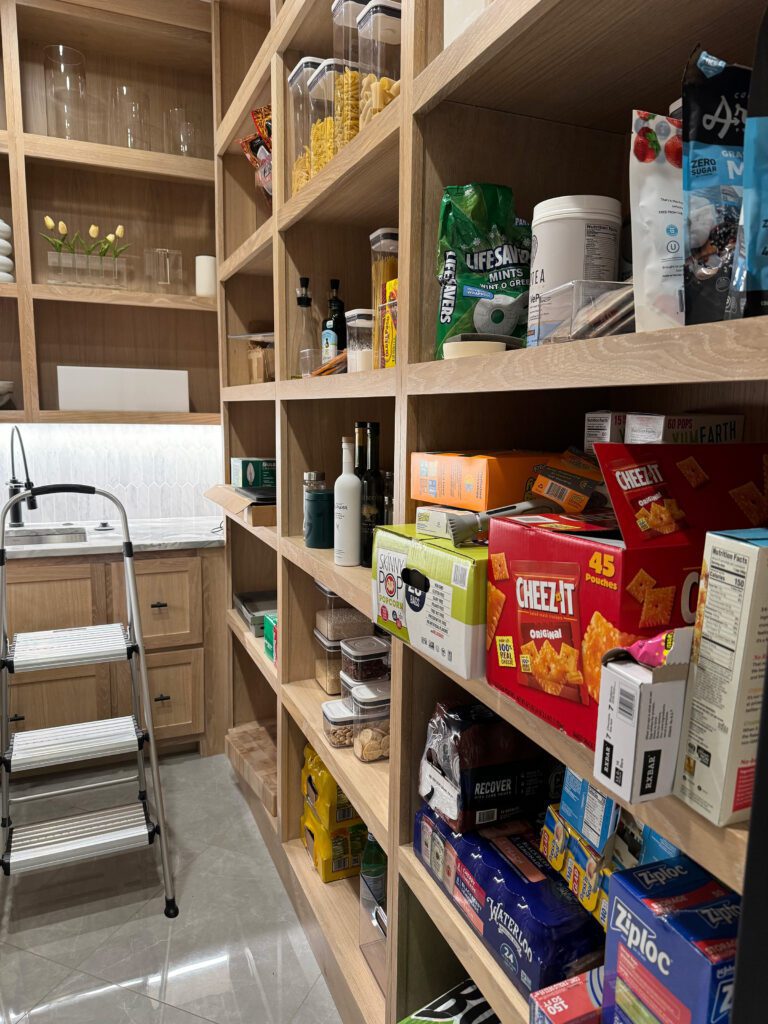
A before-and-after look at a pantry transformed by Stay Golden Organizing shows how strategic sorting, storage solutions and custom labeling can turn clutter into a clean, functional space. A before-and-after look at a pantry transformed by Stay Golden Organizing shows how strategic sorting, storage solutions and custom labeling can turn clutter into a clean, functional space. Photos courtesy Stay Golden Organizing
Next, they create designated zones for different foods, placing frequently used items in easy-to-reach places. With a clear idea of the pantry’s contents, they can also purchase additional storage, such as wicker baskets and food canisters, if needed.
Although endless rows of mason jars are the hallmark of Pinterest pantry inspiration, the pair recommends keeping storage simple.
“So many of our clients are busy families…to have to decant 15 snacks into different canisters – we just find that most people don’t have time for that,” says Mayfield-Loats.
The duo also creates custom vinyl labels for their clients to help them keep their pantries organized long-term.
“We’ve done [vinyl labels] from day one,” says Pingel. “It’s very time consuming, but we feel like it looks the prettiest.”
Hacks for Limited Space
Overcoming tight spaces can be a challenge, but getting rid of clutter is the first step. To start, the duo recommends checking for and getting rid of expired foods.
To hide clutter without monopolizing floor space, Pingel and Mayfield-Loats often rely on stackable food cubbies. They also utilize Lazy Susans.
“You can pop peanut butter, honey, sauces, dressings and vinegars on there, and they can really up your space for a small price,” says Pingel.
However, the duo emphasizes that keeping a pantry organized often requires cultivating new habits.
“If you don’t have a walk-in pantry, bulk shopping at Costco may not be your best bet… So we try to encourage our clients, that once their system is set, really use those baskets and bins as your boundary,” explains Pingel.
This Year’s Trends
Not every trend lasts, but blending open shelving with closed cabinetry doesn’t seem to be going anywhere soon.
“I think people are starting to realize that floor-to-ceiling shelves are not always the best, because some things are nice to conceal,” adds Mayfield-Loats.
The duo has also noticed accessibility taking the forefront in pantry projects, with many clients installing shelving and cabinetry in places where children can reach.
Although the general-store aesthetic and warm minimalism are popular right now, Mayfield-Loats and Pingel strive to match the inside of every client’s pantry to the rest of their home.
“We really thrive on making beautiful and functional spaces,” says Pingel. “When we leave, we want people to feel like they could take the door off of their pantry if they want.”
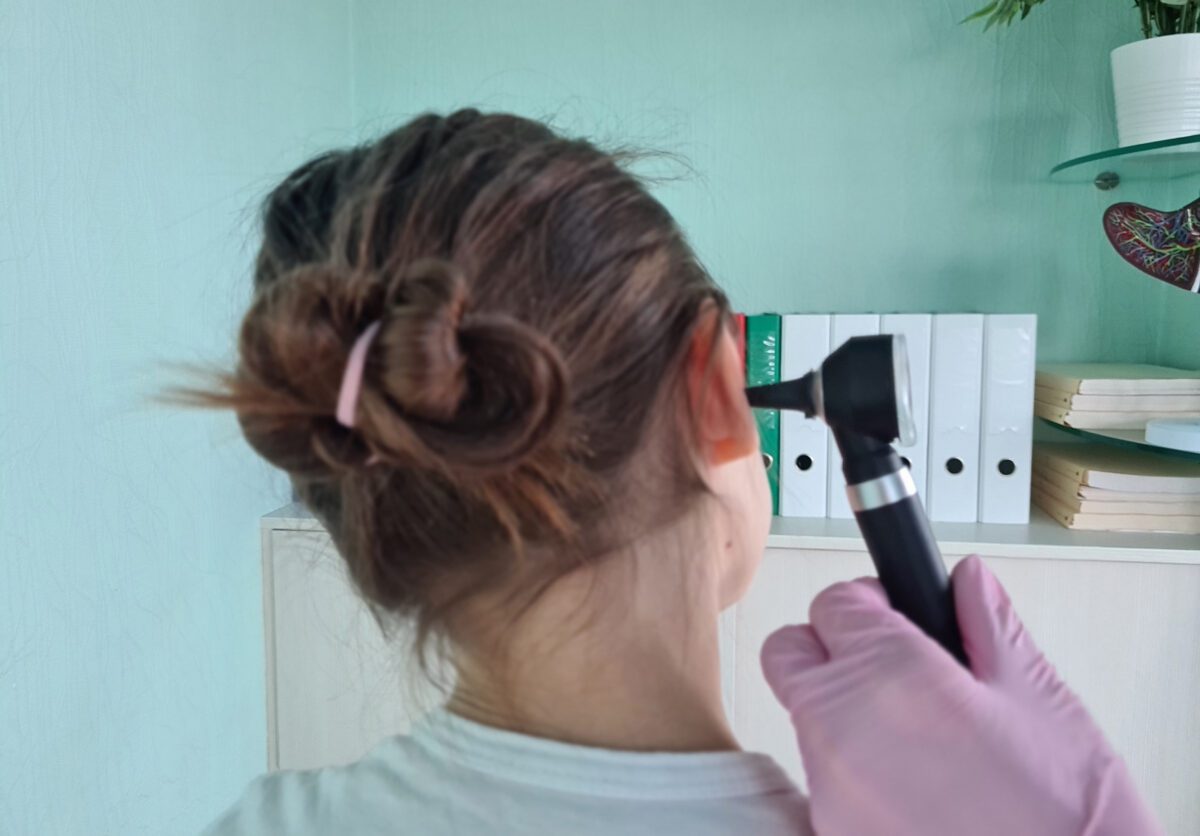
Pediatric ear, nose and throat (ENT) specialists provide unique care that children need. A child’s facial and sinus structure is significantly different than an adult’s. Babies are born with only the ethmoid and maxillary sinuses, and the sphenoid and frontal sinuses develop later in childhood. Children also experience dramatic changes in facial growth and throughout their development can encounter various ENT-related issues, including chronic sinus infections and sleep apnea.
Jeremy Foon, M.D., M.P.H., is an otolaryngologist with Eastern Oklahoma Ear, Nose & Throat, Inc. in Tulsa. His areas of expertise include pediatric ENT, allergy management, medical and surgical management of sinus issues, head and neck surgery, and sleep apnea surgery. Along with adults, his office treats children from birth to age 18.
“Pediatric ENT is something our practice is very passionate about,” says Foon. “We value all kids and manage all pediatric ENT-related issues.”
He says common reasons for parents to seek care from a pediatric ENT include ear infections, hearing loss, tongue ties, snoring and recurrent tonsil infections.
In children, it’s important for problems to be diagnosed quickly and treated effectively. For instance, hearing loss can impact speech and language skills and could be caused by an infection, fluid buildup or congenital issues.
Children are also impacted by seasonal allergies, with Oklahoma often ranked as one of the worst states in the nation for these issues. Nationally, the Centers for Disease Control and Prevention reports that one in five children in the United States suffer from seasonal allergies.
“Many people don’t realize that we provide comprehensive allergy care,” says Foon. “This includes allergy medication management, allergy testing and allergy shots or sublingual drops.”
He also shares that one of the most under recognized issues in children is sleep apnea.
“In a large portion of children this is due to enlarged tonsils and adenoids,” he says. “Symptoms include snoring, mouth breathing, dental issues, hyperactivity and poor focus. Longterm, this can lead to other issues like heart disease.”
The American Heart Association reports that approximately six percent of all U.S. children and adolescents have obstructive sleep apnea. In addition, mild cases of sleep apnea, defined as two pauses in breathing per hour, are associated with a higher risk of metabolic syndrome in children.
“If your child has these issues, please consider having your pediatrician check your child’s tonsils or come see us in the ENT clinic,” says Foon.
Children aren’t just small adults – their unique anatomy and rapid development require specialized care. Pediatric ENT specialists offer the expertise needed to support a child’s long-term health and development.
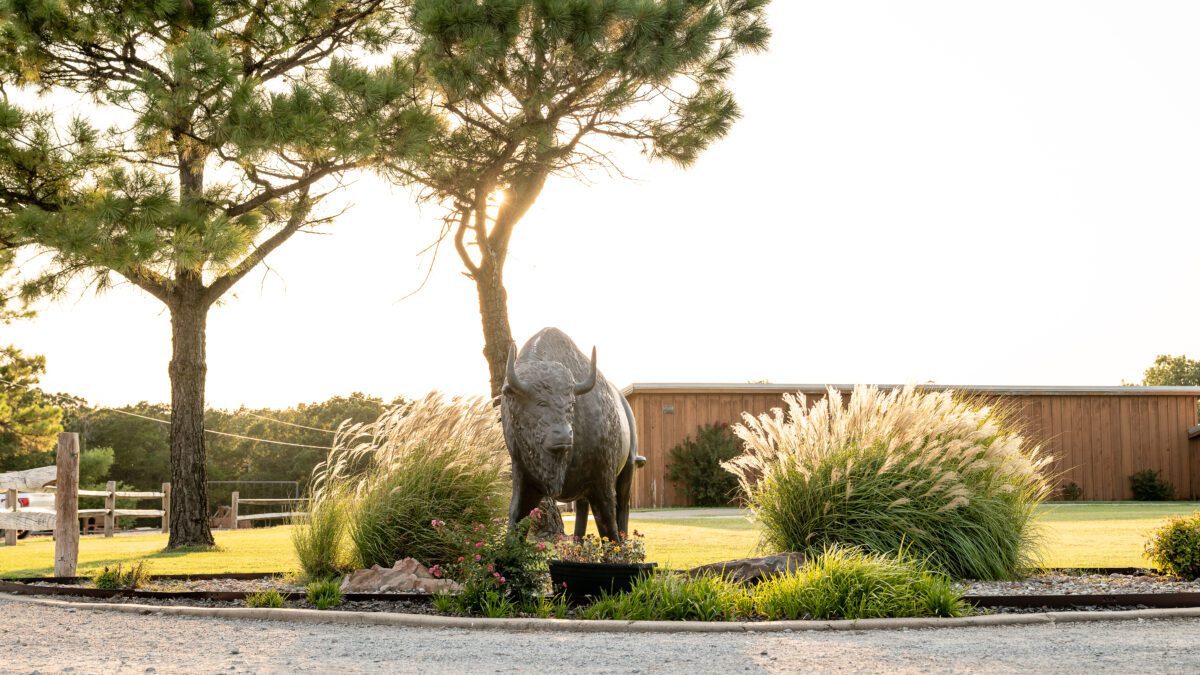
Tatanka Ranch in Stroud offers 1,000 acres of pristine countryside, with a lodge, guest house, cabins, rock-scaped pool and spa, fishing ponds and horse trails.
Photo courtesy Tatanka Ranch
Stroud has established itself as a vibrant midpoint stop along historic Route 66, perfectly positioned between Tulsa and Oklahoma City at the junction with State Highway 99. Founded in 1892 and named for developer James W. Stroud, the locale once thrived as a “whiskey town” in Oklahoma Territory, where saloons served thirsty cowboys and cowgirls alongside travelers crossing from the “dry” Indian Territory. That rowdy era ended with statehood in 1907, but Stroud’s spirit endures through its Route 66 legacy and current attractions that blend nostalgia with fresh experiences.
In the early 20th century, cotton farming fueled the local economy, supported by banks, newspapers, cotton gins and a cottonseed oil gin. A notable event came in 1915 when outlaw Henry Starr and his gang tried robbing both banks, sparking a shootout that led to Starr’s four-year imprisonment.
Visitors now venture to Stroud for its living Route 66 charm. The iconic Rock Café, a must-visit restaurant built in 1939 and listed on the National Register of Historic Places, remains a bustling diner where road trippers grab hearty meals amid classic Americana vibes.
Main Street hosts the Route 66 Spirit of America Museum, a recent addition that honors the enduring American spirit of bold thinking, cooperation and a love of learning. Opened in June 2023, the museum invites visitors to view life as a journey, celebrate how dreams shape unprecedented futures, and draw inspiration from real and fictional heroes whose values can propel the nation — and the world — toward its next great advances. Through large and small exhibits, along with educational programs (including some in the Wonder Woman Theater), the museum explores the true spirit of Route 66.
Tatanka Ranch is just one of many draws in Stroud, and can sleep up to 82 people for one booking. Photo courtesy Tatanka RanchOpened in June 2023, the Route 66 Spirit of America Museum invites visitors to view life as a journey, celebrate how dreams shape unprecedented futures, and draw inspiration from real and fictional heroes.
Photo courtesy the Route 66 Spirit of America Museum
For relaxation, Tatanka Ranch offers an elegant escape on 1,000 acres of pristine countryside, with a lodge, guest house, cabins, rock-scaped pool and spa, fishing ponds and horse trails.
“We hold weddings, family reunions, corporate events, music festivals and more,” says manager Ally Grill. “A big draw is our lodging on-site with a capacity for 82 people along with 1,000 beautiful acres, horseback riding, swimming – it’s all just really beautiful.” Bookings are required.
Old Stroud Trading Post & Pawn brings fun for all ages. Charles and Haley Mash took over the business in March 2025.
“We … brought in a family experience specialty shop,” says Charles Mash. “With nostalgic candy, classic bottled sodas, ice cream vendors and more, we get visitors from all over the world traveling on Route 66. It’s a fun stop for kids and for adults reliving their childhood. We’re more than a pawn shop, as pawns are a service we offer – not who we are.”
Community spirit shines at Stroud Arts, home to the Local Artist Gallery in the C.W. Wright Auditorium lobby, open before shows. Upcoming performances include the sparkling musical Beauty and the Beast, July 24, 26 and 27; the classic melodrama Pure as the Driven Snow, on July 25, 26 and 27; and the Children’s Theatre Workshop’s The Tinderbox adaptation on July 25 and 26.
Stroud combines rich history with welcoming modern draws, creating an ideal spot for road trippers seeking authentic experiences along America’s Mother Road.