




















In my 20 years of writing this column, I’ve naturally spotlighted some people more than once. But I suspect I’ve devoted more words here to Tulsa’s music impresario, Jim Halsey, than I have to anyone else.
Of course, there are good reasons for that. When I joined the entertainment section of the Tulsa World, back in 1983, the Tulsa-based Jim Halsey Company had been the No. 1 country-music booking agency in the world for some time, with his organization representing a huge percentage of country stars – along with some big names from other genres as well. At the time, Halsey himself was personally guiding the careers of such superstars as Roy Clark, Hank Thompson and the Oak Ridge Boys. Jim Halsey and his clients were consistent newsmakers then – for a long time, it seemed like we were running at least a story a week related to the Halsey Company in some way or another.
Forty years later, Jim Halsey – at age 95 – is still a luminary, not only continuing as the manager of the Oak Ridge Boys and working with other acts but also looking ahead to a number of projects, including exhibitions of the immense and invaluable music business memorabilia he’s collected during his nearly eight decades as a promoter and manager – some of which is now seeing the light of day at the Museum of Tulsa History. More about that shortly.
On June 2, Halsey is scheduled to be awarded the Country Music Association’s Touring Lifetime Achievement Award, given, according to the CMA website, to “an individual who has accomplished the highest level in the Country Music field of touring.” The presentation will be done via a video linkup between Nashville, where the award is officially being presented, and Tulsa, where Halsey and his career are set to be celebrated at an event called “An Evening with Impresario Jim Halsey,” taking place at the Oral Roberts University Global Learning Center and benefiting Oklahoma students pursuing careers in the music industry. I’m proud to say that I’ve been asked to emcee that celebration, where I’ll join not only Jim and his artist wife, Minisa Crumbo Halsey, but also a number of entertainers from various genres who’ve worked with Halsey through the years. Although rosters can change, as I write this the artists scheduled to perform include Jana Jae, Don White, Rodney Lay, Shelby Eicher, Alaska and Madi, Barron Ryan, Leona Mitchell and Kyle Dillingham.
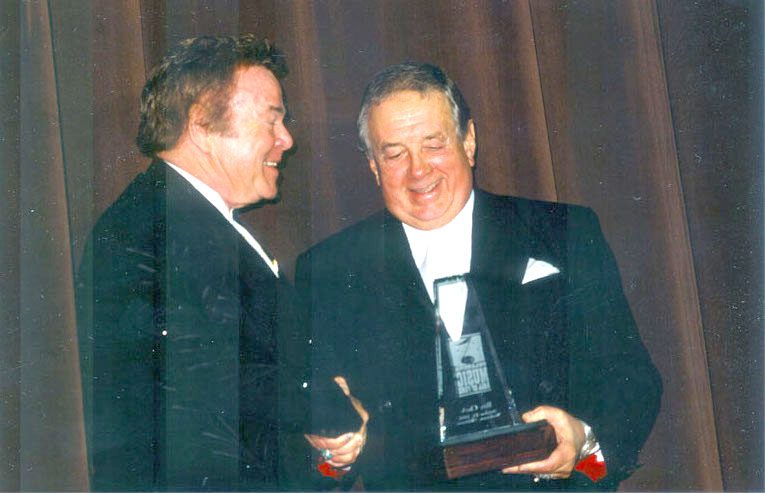
Photo by John Southern
While not having anything like that kind of space, MOTH has already begun exhibiting some of Halsey’s major pieces, including the piano that Tulsa legend Leon Russell played on his 2010 Union Tour with Elton John.
“Our relationship with Jim began by being centered mainly around Leon Russell,” says MOTH CEO David Goldenberg. “People just love seeing that piano and knowing that the two of them played it.
“Elton John said, ‘There would be no Elton John if there were not a Leon Russell.’ And add to that the impact Jim Halsey had on Leon Russell, and on so many other artists. It’s phenomenal. Jim Halsey really represents the music of the 20th century; he’s probably the most prominent promoter of that century. So we’re thrilled to have that for our first, if you’ll excuse my calling it this, eye-candy exhibit. It also includes an autographed guitar from Leon and a jacket of his. We have his hat. So that first piece is very much Leon Russell.
“Now,” he adds, “the second piece we’re developing is not yet in its full form. We keep adding to it. But it’s got Roy Clark’s guitar, signed, and his boots and overalls from Hee Haw. We have Wanda Jackson’s guitar and one of her dresses. We’re building this place, if you will, in the museum that’s going to be devoted to music.”
“There’s probably a million dollars worth of stuff in there already,” Halsey says of MOTH, “including a Hank Thompson suit made by [the famous tailor] Nudie that’s just fantastic. It’s worth $85,000, and it’s on display.”
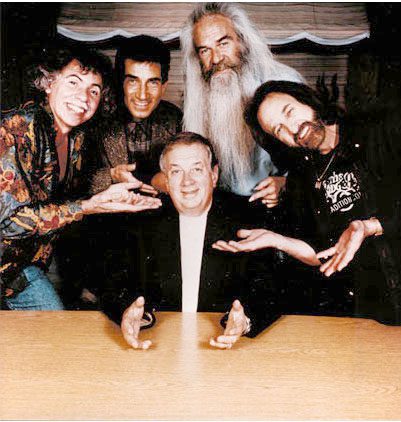
For all of that, however, Halsey knows that no matter how enthusiastic and cooperative Goldenberg and the MOTH staff are, space limitations will ultimately prohibit exhibiting all, or even a major part, of his collection. He’s grateful to MOTH and its people, as well as the folks who run the Independence Historical Museum and Art Center. At the same time, he longs for something even bigger, and his words give an idea of the incredible scope and depth of his collection as well as his desire to see all, or at least most, of it on public display.
“You know,” he says, “the largest tourist attraction in the state of Tennessee is the Country Music Hall of Fame in Nashville. Tulsa needs something like that – a major exhibition of music-business awards, citations, memorabilia, instruments, stage wear, gold and platinum albums, and photos. We have over a million photos. No one in America has a collection like ours, with Annie Leibovitz, Dezo Hoffmann, Bruno Barnard of Hollywood, David Montgomery. These are the top photographers in the world, and we have an exhibition of their work that goes out. Recently, it was up at Pittsburg State University in Pittsburg, Kansas.
“We have over 126 gold and platinum album awards from the various artists we’ve represented over the years; twenty-some of them are from Oklahoma,” he adds. “We have tons of eye candy that’s still in storage and in boxes. Nobody other than the Country Music Hall of Fame has the extent, or the magnitude, of what we have. It just needs to be displayed in Tulsa, and MOTH has given us an opportunity.
“People need to see this type of thing,” Halsey concludes. “They’re not only entertained and stimulated by it, but it’s educational. It creates inspiration. What we’re trying to do with it is not only get it out there where people can get some entertainment and enjoyment out of it, but they can also say, ‘How did this happen? Did this happen in Tulsa?’”
And, certainly, it did.