











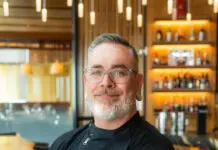
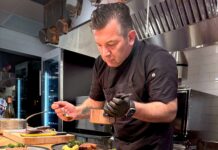




Colin Sato’s father is from Kobe, Japan. He knows how to prepare many Japanese everyday dishes and cooked them throughout Colin’s childhood.
“He makes better karaage than we do,” Colin confesses.

Sato has many happy memories of these long-ago meals, and in Japanese, a joyful memory of bygone days is called natsukashii. If this were any other restaurant, this would be the story of Colin’s dreams brought to life, natsukashii embodied. But this restaurant is run not by Sato, but by Et Al, the James Beard semifinalist chef’s collective where work, decision-making and profits are shared more or less equally, and most of the team bristles at the thought of Natsukashii being pigeon-holed as a Japanese restaurant.
It’s quite a large team — and each of them has put a lot of time and effort into fulfilling their own dreams. Maria Kim creates the magical, shimmering drinks, Austin McAfee leads the non-alcoholic beverage program, Jacob Howard carefully curates the coffee served, Andrea Schultz sources and prepares the high-grade matcha (powdered green tea). Chloe Butler’s pastries have, for years, attracted a loyal following -— and that’s her main contribution here. Sato leads the savory program – small plates and entrees – but has four directors, each an experienced chef, to aid him.

And yet the team has spent so many months working on this project that, even when explaining why it’s not a Japanese restaurant, they use Japanese phrases. I asked Sam Luna, an engineer from Texas who never dreamed of cooking for a living before he took a cooking class led by Colin Sato, to explain what Natsukashii is.
“It’s a lot of things,” he replies, “a well-oiled machine with lots of moving parts. I’d ask, what time of day? At different times, it’s different things. From 8:00 a.m. to 2:00 p.m., it’s
like a kissaten. After that, it’s an izakaya.”
A kissaten is a Japanese café and tearoom, an izakaya is a Japanese bar – a lively, convivial place where food is served along with drinks. Colin expands on this.
“At 8:00 a.m., we serve breakfast. French style pastries from Chloe with Japanese touches. There’s an egg and cheese sandwich with a fried pork cutlet that satisfies like the best cheeseburger ever. Around midday is lunch, casual and fast, featuring donburi (the rice bowls that were so popular at Et Al’s Dumpling Night), noodles, potato salad – tasty and easy.
“Then comes dinner. Everything is meant to be shareable and reasonably priced. You should order five or six dishes, build a meal. I love the mackerel. We get it flown in fresh from Boston. This is literal natsukashii for me. If I had that, I’d also order a vegetable like Chinese broccoli – it comes in a big beautiful bowl – or cabbage. I’d get something fried, something pickled, something grilled.”
Luna adds: “And if you’re a newbie and the menu leaves you totally lost, just ask your server. Tell them your budget and vibe – ‘I want traditional Japanese, or I’m a picky eater’ – and they will take it from there, creating a tasting menu just for you.”
It’s 5:00 p.m. now, and, though it’s a weekday, the restaurant is full within a few minutes. I remember Greg Hughes telling me how he opened In The Raw back 30 years ago, and for the first year, it was almost empty. Nobody would dream of eating raw fish. Has Tulsa changed? I ask.

“Yes,” says Luna, “Tulsa’s appetite has grown. And besides, we don’t have to please everyone in Tulsa, just enough people to form a community.”
Sato adds: “We cook wonderful things people don’t know about, but when they try them, they fall in love.”
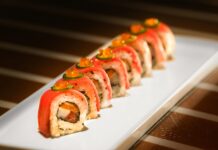
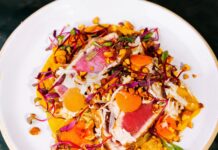
Featured photo credit: A conglomerate restaurant of multiple passionate chefs and beverage experts, Natsukashii offers breakfast, lunch and dinner options, including the mushroom laab with local mushrooms and crispy quinoa. Photos by Henry Ninde of NVM Studios