“You should get yourself a hobby,” Lisa McIlroy told her husband, Austin. This was back around 2015 as they sat relaxing in a big log cabin – one that Austin and his friends built for his parents.
“Well, I like beer,” said Austin. “That could be my hobby.”
What began as an off-hand joke became a life-long passion: Austin’s new-found vocation led him to schools in Chicago and Munich. The former English teacher then became a certified master brewer, and a year later, he and Lisa founded a brewery in Tulsa named after that very moment on the porch. Thus, Cabin Boys Brewery, located at 1717 E. Seventh Street, was born. Earlier this year, they acquired a large building on North Main in the Tulsa Arts District, which last housed Prairie Brewpub until early 2021.
Austin, brewpub manager Erick Cravens and their workers spent the first half of the year rebuilding, making the space their own, preparing for the mid-July opening of their new venture. (But don’t worry – they plan to keep the old venue open, too!)
“It’s going to have polished but rustic vibes,” says Geoffrey van Glabbeek. “Austin made the sturdy wood tables and the long wood bar. Our tagline is ‘crafted for community.’ That’s why those tables are so big; we want people to come in, meet new people, have a good time, share beer and eat great food.”
And that great food is where van Glabbeek comes in; he’s the executive chef. He’s a great choice because he used to spend summers in Holland with his uncles and, perhaps influenced by his Munich schooling, Austin also brews in German and Belgian styles. The beer is a lot like what van Glabbeek remembers, he says.
Of course back then, he had no idea he’d be a chef. When he was five, he wanted to be a policeman, and later on, a computer engineer. He’d always loved to cook, but he never thought of it as a potential career until the day he took a summer job at downtown Tulsa’s upscale Adam’s Mark hotel. The hotel’s head chef, Jacques Lissonet – a French native – was extremely passionate about food. That passion was contagious.
That next fall, back in college, van Glabbeek found himself phoning Lissonet asking for a part-time job; he missed the kitchen. Soon after, he started working full-time, first at Tulsa’s Biga, then Stonehorse, and then he became a student at the Culinary Institute of America. After graduating, he had his pick of jobs, but he chose to work in small, innovative restaurants that were far ahead of their time, such as the now-closed Lava Noshery and 105 Degrees.
He’s similarly trying to push the envelope here at Cabin Boys, but subtly. He wants to serve dishes that are approachable and fun.
“We’re baking a pretzel the size of a small pizza and serving it with charcuterie,” he enthuses. “I’m blending chocolate ganache with bruleed marshmallow; that’s a dippable smore! We’re making our own nduja sausage and we’ll serve it warm with shishito peppers. That and a glass of our Belgian single ale would make a great afternoon.
I use Cabin Boys beers a lot in cooking, not as a gimmick but because they always elevate the taste. I use our IPA to make the demi-glace for our steak. It also goes in a dish I make with shallots that I pickle in-house. We have a great, rich Belgian Quad, and I use it in a caramel sauce for our tunnel fries. It also goes in the mushroom gravy for our poutine.
“I challenge all my line cooks to come up with new dishes that include beer. I want to hear my line cooks’ ideas, because I never want to be the kind of chef who just hands his cooks a recipe and orders them to make it.”
Photo credit: Boundary-pushing yet familiar cuisine will be a new addition to Cabin Boy’s location in downtown Tulsa. Options include the buttermilk fried chicken sandwich (left) and the pub burger (right). Photo by Jess Karin
You can wave goodbye to the summer heat at a variety of community events this month.
In Tulsa, the Greenwood Film Festival takes place Aug. 2-6 at OSU-Tulsa. There, you’ll enjoy inspirational stories, panels and events.
In OKC, don’t miss the Oklahoma City Renovation and Landscaping Show, Aug. 4-6 at the Oklahoma City Fairgrounds, where you can learn more about remodeling, building and landscaping. At Remington Park, horror enthusiasts can enjoy Horror Con from Aug. 5-6. Or, visit OKC’s Military Park on Aug. 19 for the Asian District Night Market Festival.
Hungry? Enjoy the Rush Springs Watermelon Festival and Rodeo, Aug. 10-12 at Jeff Davis Park; celebrate the local watermelon crop and experience activities, carnival rides and plenty of family-friendly entertainment. Get sky-high with the FireLake Firelight Balloon Festival, running Aug. 11-12 at 1702 S. Gordon Cooper Dr. in Shawnee. Hosted by the Citizen Potawatomi Nation, the event offers tethered balloon rides, gorgeous views and a 5K. Other can’t-miss events include the Blanchard Bluegrass Festival, Aug. 18-19 at Lions Park; and the Will Rogers Memorial Rodeo and Parade, Aug. 23-26 at North Park and the American Legion Rodeo Grounds in Vinita.
August melds together a variety of sporting events for just about any interest.
In Tulsa, the FC continues its soccer matches at ONEOK Field on Aug. 4, 18 and 23. Stick around the venue for the Tulsa Drillers as they take on later-season foes; games are Aug. 8-13 and 29-31. Fans of mixed martial arts and kickboxing won’t want to miss XFN 389 at River Spirit Casino Resort on Aug 11. Other sports events in T-Town include the Tulsa Reining Classic, Aug. 25-Sept. 3 at Expo Square; and the Top Rank Boxing ESPN event, Aug. 26 at the Hard Rock Hotel and Casino Tulsa.
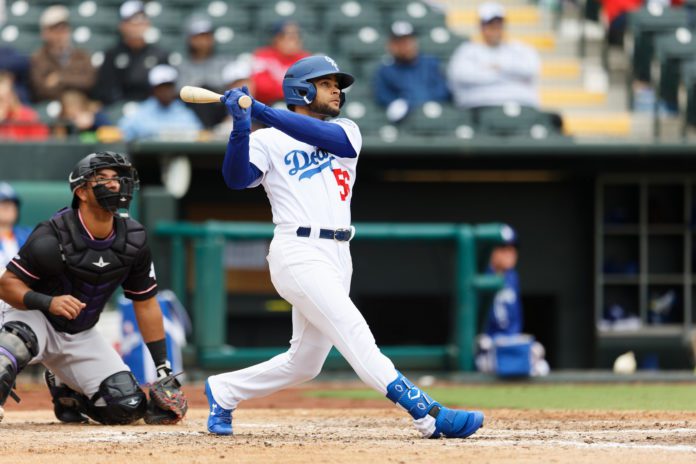
Baseball fans can get their fill in our state’s capital Aug. 1-6, 22-27 and 29-31 with the OKC Dodgers, playing at home at the Chickasaw Bricktown Ballpark. Softball lovers should also visit the USA Softball Hall of Fame Complex from Aug. 10-13 for the USA Softball All-American Games. Enjoy other unique events including the Twister City Roller Derby Bout, Aug. 5 at Edmond’s Arctic Edge Ice Arena; and the AQHYA World Championship Show, running through Aug. 6 at the Oklahoma State Fairgrounds.
Around the state, you won’t want to miss a variety of equine and rodeo events, including the Tuttle Rodeo, Aug. 4-6 at Shrock Park Arena; the All Star Team Roping Finals, Aug. 7-13 at Guthrie’s Lazy E Arena; and the Okmulgee Invitational Rodeo and Festival, Aug. 11-12 at the Bob Arrington Rodeo Arena.
Photo credit:Photo by Eddie Kelly courtesy OKC Dodgers
Cool off in the great indoors with a variety of art exhibitions and performances this month.
Living Arts presents the Oh, Tulsa! Biennial from Aug. 4-18. The exhibition spotlights the unique talents of the Tulsa creative community in a celebration of art and culture. You can also head to 108 Contemporary for Linda Lopez & Mathew McConnell: Live from the Moon, running Aug. 4-Sept. 24.
In OKC, art lovers can enjoy American Farmer from Aug. 25-Oct. 18 at the National Cowboy and Western Heritage Museum. The exhibitions features photography from Paul Mobley, who set out to capture the soul of America’s farm communities. Another gem to explore is Eva Schlegel: Multiple Voices, running Aug. 31 through Jan. 13, 2025 at Oklahoma Contemporary. This will be the first public art display in the United States by Eva Schlegel, the Austria-based artist known for engineering steel and mirrors. Other shows include 200 Years of Doctrine of Discovery: Johnson V. M’Intosh and the Indian Removal Act, running through Aug. 31 at the First Americans Museum, and True Nature: Rodin and the Age of Impressionism, running through Oct. 22 at the OKCMOA. The latter will showcase 100 artworks – including sculptures, paintings, prints and photographs – of renowned artist Auguste Rodin.
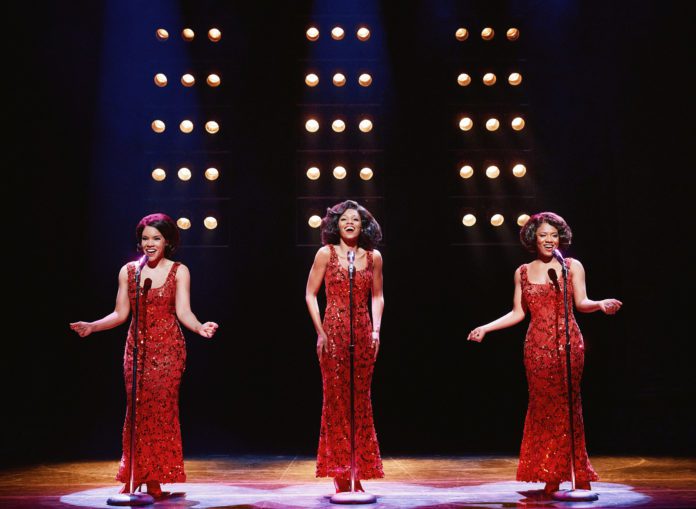
For performing arts, enjoy the Get Lucky World Tour on Aug. 5 at Tulsa’s River Spirit Casino Resort, alongside Oklahoma Shakespeare’s Shakespeare in Love on Aug. 10-20 at OKC’s Shakespeare Gardens. Additionally, visit OKC’s Civic Center Music Hall on Aug. 15-20 for Ain’t Too Proud, brought by OKC Broadway and highlighting the Temptations’ journey from Detroit to the big leagues.
Photo credit: Ain’t Too Proud, photo by Emilio Madrid courtesy OKC Broadway
After a summer of blockbusters, August arrives on its heels with even more stories for you to sink your teeth into. From animation to another iteration of Star Wars, this month should have something for everyone.
First up, the four green brothers are back with Teenage Mutant Ninja Turtles: Mutant Mayhem. Based on the comics, the premise involves the four brothers – Leonardo, Donatello, Michelangelo and Raphael – trying to acclimate in NYC despite their mutant appearances. The turtles are voiced by actual teens this time around, mostly lesser known actors, while the rest of the cast is made up of big names like Jackie Chan, John Cena, Seth Rogen, Paul Rudd and Ice Cube. Although the voice cast is not ideal (use real voice actors please!), the animation style looks unique, giving the film a style all its own. It leaves the sewers Aug. 2.
For a bizarre gaming/racing hybrid film, check out Gran Turismo. The film is inspired by the life of Jann Mardenborough, a British professional driver, and his rise to fame through video game competitions that eventually led to real races. Starring Archie Madekwe (Voyagers), David Harbour (Stranger Things), and Orlando Bloom, the film looks like a fun combination of video games and races. Directed by Neill Blomkamp (District 9), the style and wild story will hopefully be a fun ride when it hits theaters on Aug. 11.
For a neo-noir classic, make sure to catch the 20th anniversary showing of Oldboy. A South Korean film from 2003 directed by Park Chan-wook (also director of last year’s Decision to Leave), the plot concerns Oh Dae-su, who, after being imprisoned for 15 years by an unknown captor, is finally released and must try and decipher what has happened to him. Critically acclaimed for its violence and tale of revenge, the film is not for the squeamish. It returns to theaters on Aug. 16.
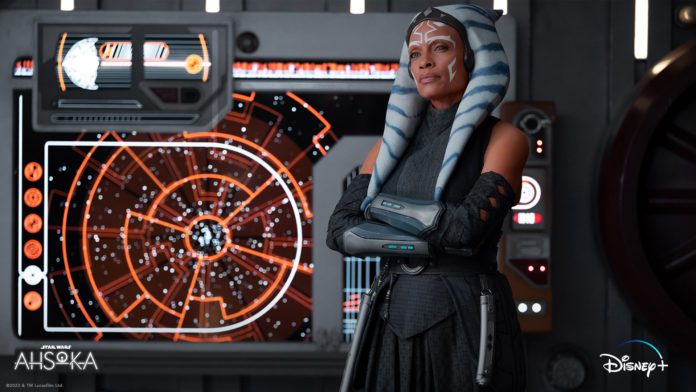
For your space opera fix, look no further than Ahsoka. The latest in the Star Wars television series rollout, the show focuses on the title character Ahsoka Tano and her investigation into the growing threat to the galaxy after the Empire’s fall. Rosario Dawson reprises her role from The Mandalorian, and the remaining cast includes Mary Elizabeth Winstead (Scott Pilgrim), Hayden Christensen (Star Wars Episode II) and Ray Stevenson (Punisher). A well-known villain from the expanded universe books in the ‘90s, Grand Admiral Thrawn, will also be making his live action debut played by Lars Mikkelsen (Face to Face). It hits Disney Plus on Aug. 23.
Lastly, check out the limited series Bodyguard. Released in 2018, the show stars Richard Madden (Game of Thrones) as police sergeant David Budd, an army vet assigned as a principal protection officer for Home Secretary Julia Montague. A taught political thriller with excellent action and wonderfully written characters, it’s a great six episode series to binge over a week. It’s currently streaming on Netflix.
Sherry Marshall, who has worked with Science Museum Oklahoma for 29 years, knew early on that a career in the sciences was her calling. She began at the museum when it was the Omniplex, and has held roles including direction of education, director of the Oklahoma Museum Network, and VP of programs before becoming president and CEO in 2016.
Outside work, Marshall serves as an advisor for the National Science Foundation, the Institute for Museum and Library Services, Oklahoma State University Physics, and the Oklahoma Established Program to Stimulate Competitive Research. Marshall lives in Edmond with her husband. We caught up with her and got her thoughts on …
… what has kept her at the museum for nearly three decades.
I have always had a genuine love of science. Omniplex and John E. Kirkpatrick played important roles in shaping that in me. I was one of the first students through a summer camp at the museum when it opened in this location, and I even wrote about how I wanted to work there someday.
Early in my career, I worked with Admiral Kirkpatrick and learned how deeply he cared about the community and how essential the museum is for the quality of life in OKC. I wholeheartedly believe in the museum’s mission and the positive impact it has in people’s lives. It is an honor to be able to continue Admiral Kirkpatrick’s vision.
… her proudest accomplishments to date.
I am quite proud of how the museum has expanded access, reach and reputation through revitalized programs, such as our state-wide educational outreach, SMO 21+ adult events, exhibit development, as well as through successfully completing our American Alliance of Museums re-accreditation.
This mark of distinction validates that the museum adheres to the highest of standards in mission and operations, and demonstrates meaningful community impact.
A great example of all of this is found in our yearly celebration, Tinkerfest. This event features hands-on explorations facilitated by staff and over 200 community partners and volunteers. The diversity of activities in one location allows anyone to discover the importance of curiosity and pushing through challenges, finding the benefit of just tinkering around. The museum saw its largest one day attendance ever at a Tinkerfest. And as proof of concept of our great new programs, we just finished a fiscal year with the highest yearly attendance ever.
Other big accomplishments may not be the most visible, as we focus on continuously updating the building and infrastructure, ensuring everyone’s visit is safe, comfortable and clean.
… what she imagines for Science Museum Oklahoma in ten years.
We will always be here to introduce discovery and innovation, embrace curiosity and grow critical thinkers to better navigate the world. Just like science is an ongoing process, the museum should constantly evolve, finding new approaches to share discoveries and increase access to knowledge.
I hope the heart and culture of our staff, with their commitment to making every experience the best experience, never changes.
… what she wishes people knew about the museum.
Science Museum Oklahoma is one of the largest science museums in the nation, and one of the largest art museums in the state. While we have many different exhibits, topics and experiences, you will find art and science threaded throughout that bring them all together.
You see the beauty of color and light in shadows, the ballet of smoke in fluid dynamics, and design in aircraft that appears to defy the laws of physics. There is something for anyone at any age to love here.
… the power of a worthy mission.
Staying with an institution over time affords you the privilege of seeing long-term results of investments. Witnessing the power of this museum in the community hits deep. You can’t help but to beam when you see a former summer camp student or star employee go out and change the world.
I recently received a copy of a former museum apprentice’s doctoral dissertation, where they thanked the museum for how it shaped who they are today. Science Museum Oklahoma is a springboard to the innovators of tomorrow. Don’t underestimate the power of a worthy mission and passionate community to make a big difference in the world.
… goals she still wishes to reach.
I am excited to bring attention to not just the museum, but to our state as we open up a world-class planetarium unlike any other. I am proud to play any role in helping the world recognize what our state has to offer and highlighting our exceptional community to a wider audience.
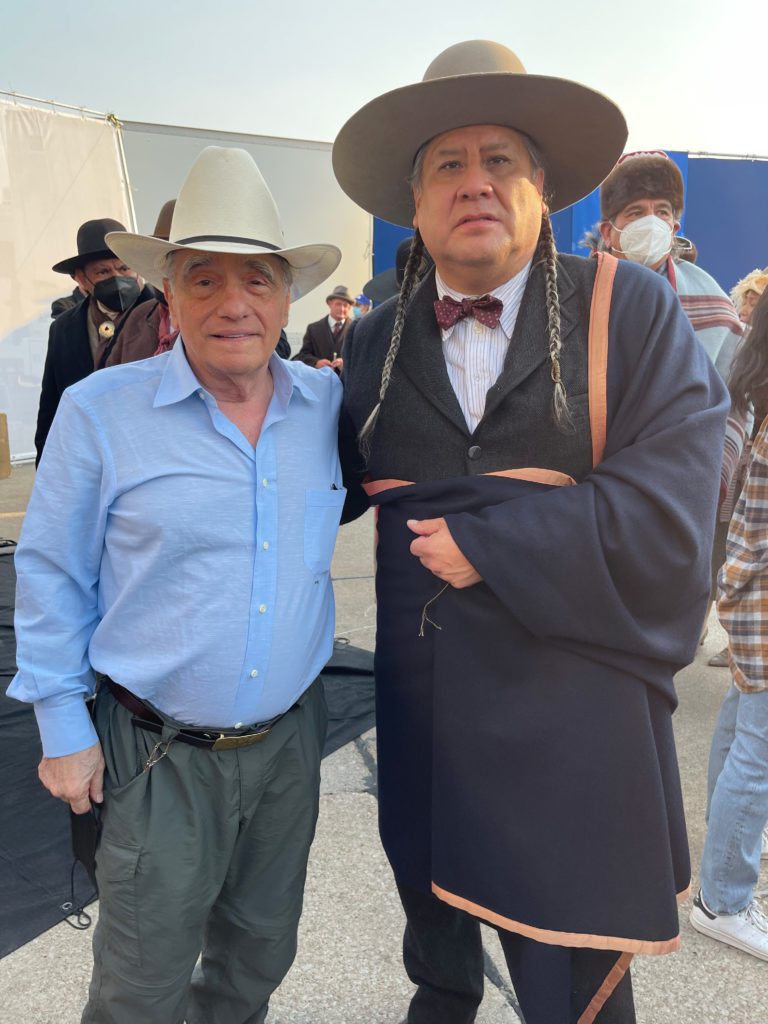
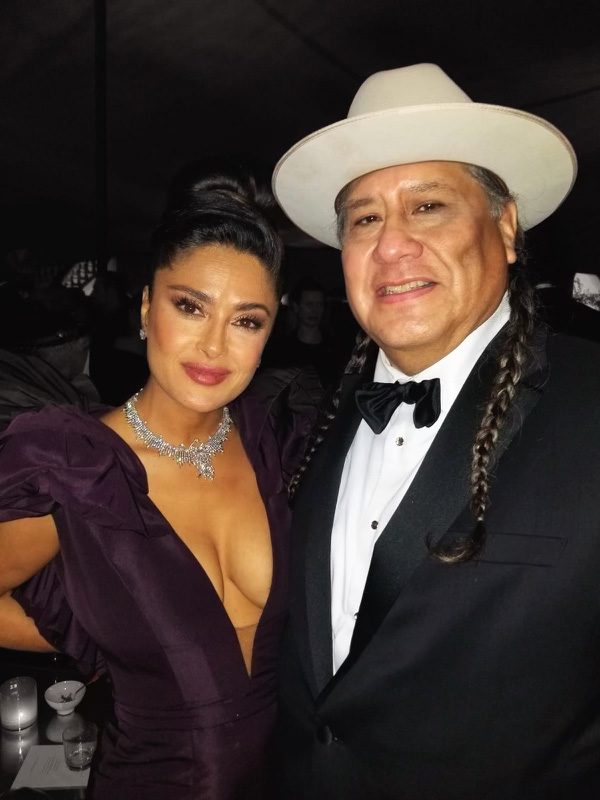
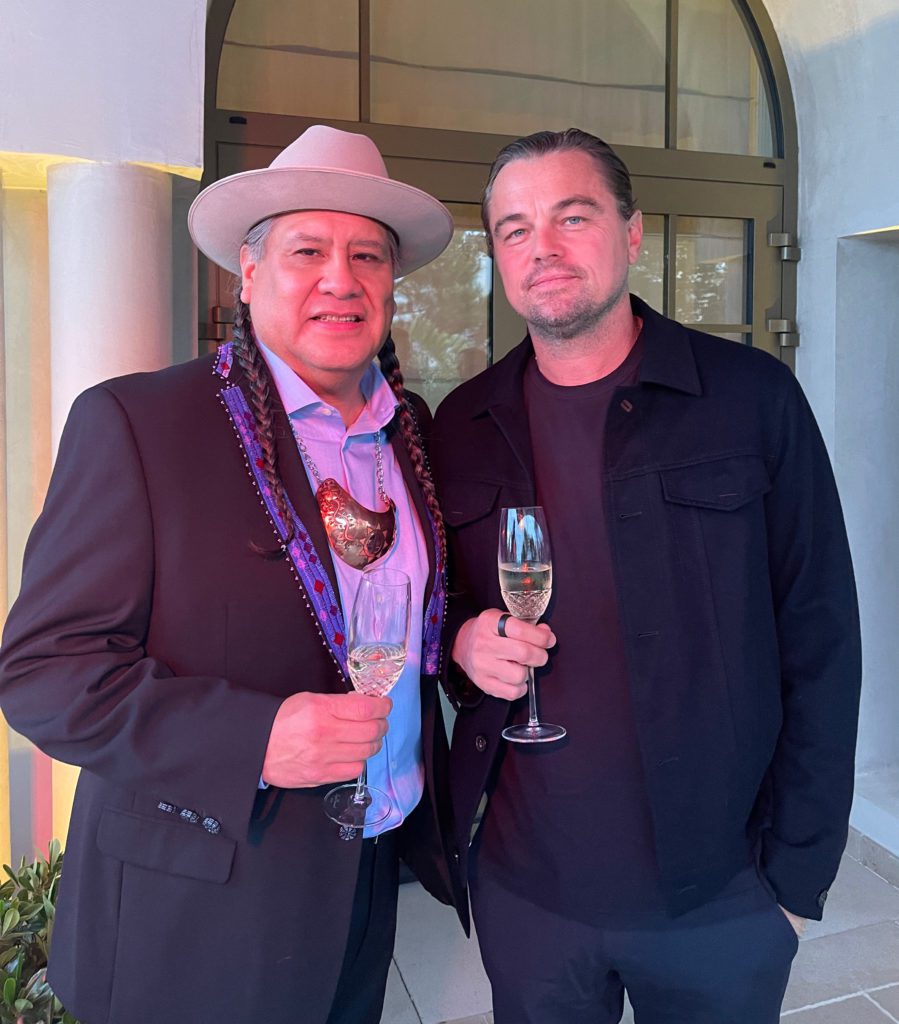
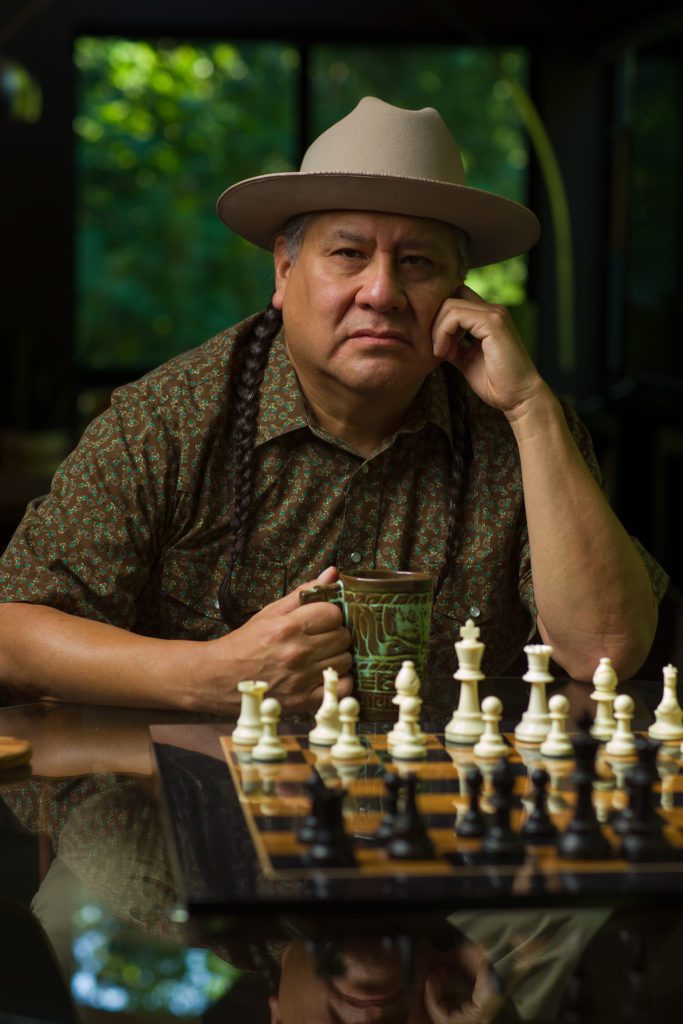
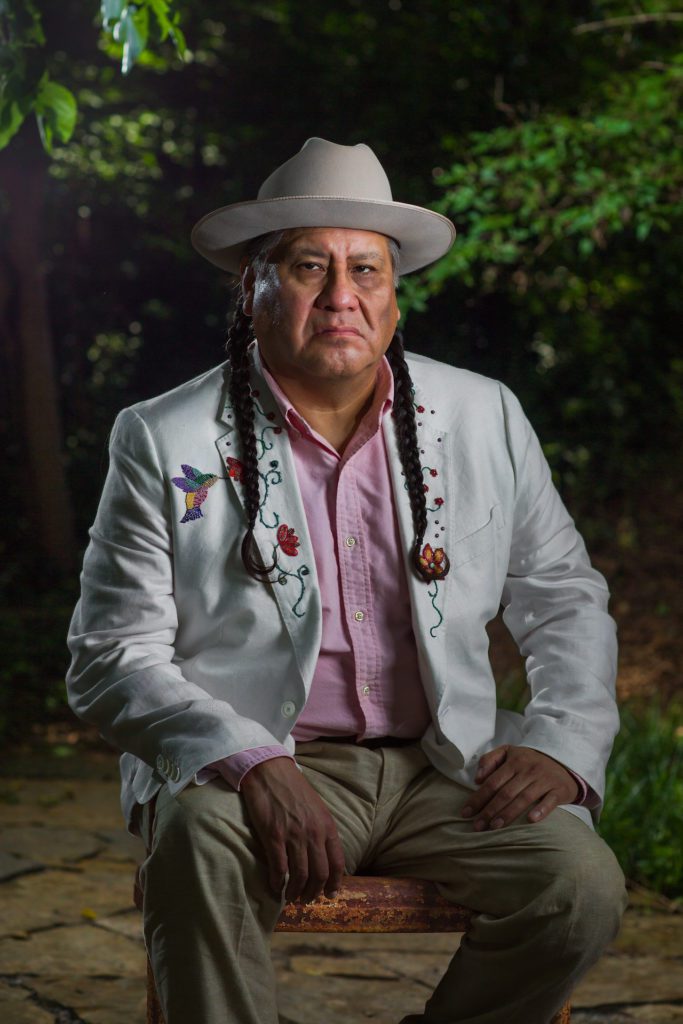
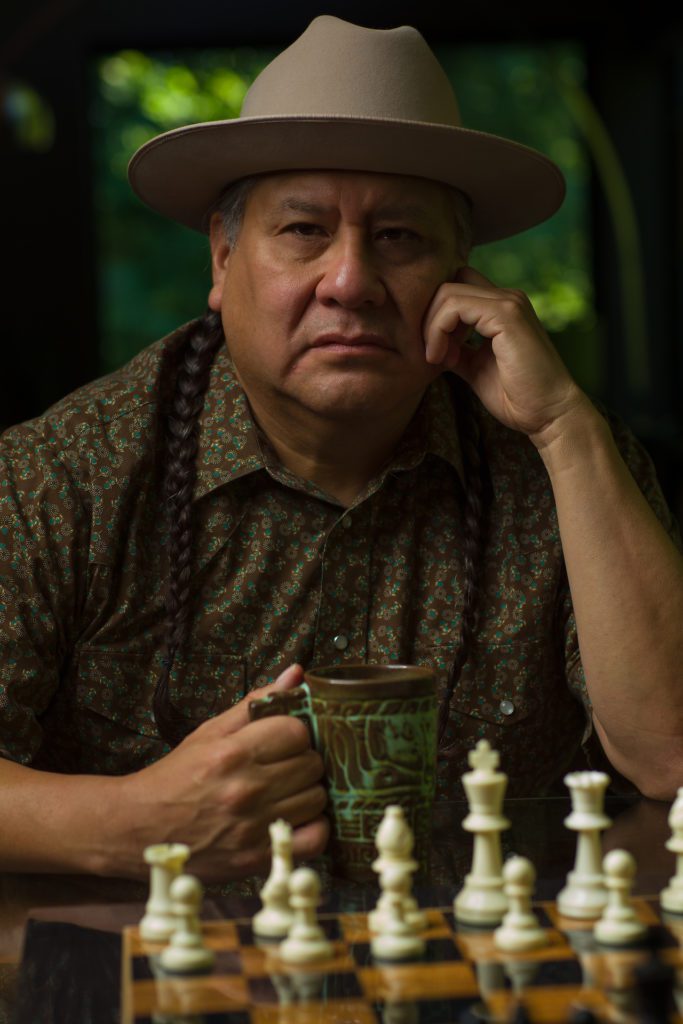
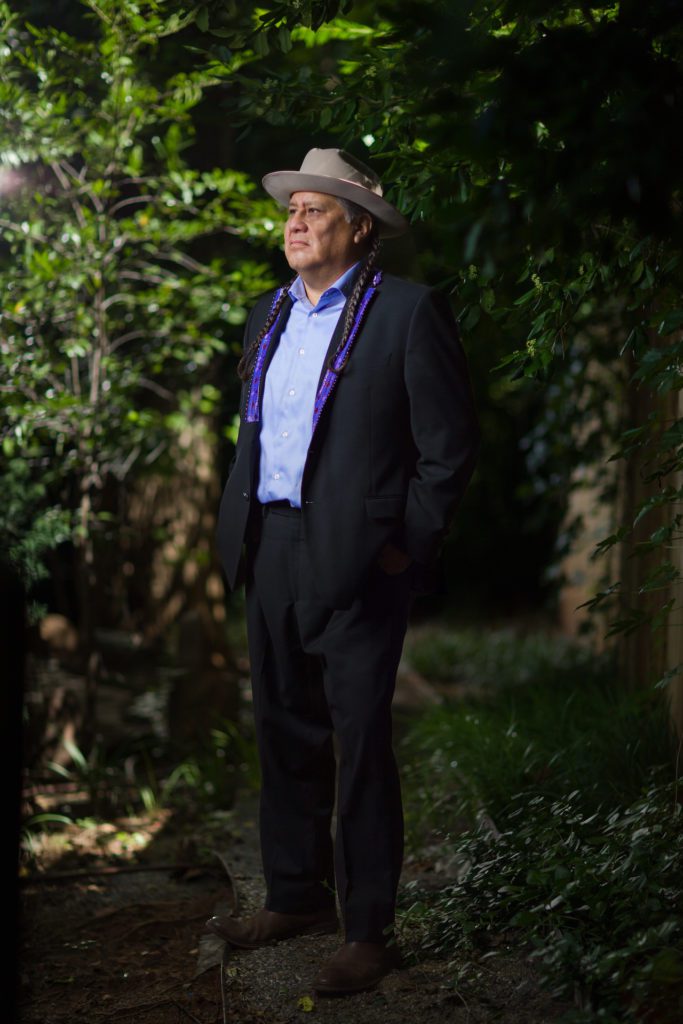
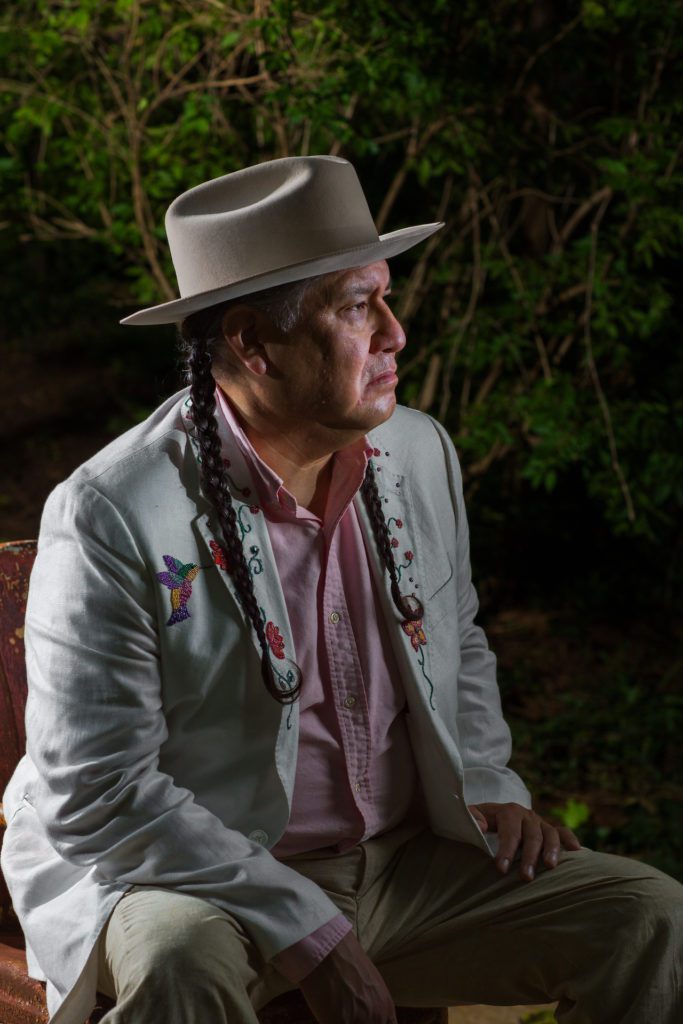
Actor, entrepreneur and consultant Yancey Red Corn poses with director Martin Scorsese (above), Selma Hayek (left) and Leonardo DiCaprio (below) at the premiere of Killers of the Flower Moon during the Cannes Film Festival in late May. Photos courtesy Yancey Red Corn
It was a red carpet appearance like no other.
Yancey Red Corn and Osage Nation Chief Geoffrey Standing Bear, shoulders wrapped in symbolically meaningful tribal blankets, stood shoulder-to-shoulder with Killers of the Flower Moon star Leonardo DeCaprio as they posed for photographs.
Principal actor Lily Gladstone and other Native women invited to the premiere at the May 20 Cannes Film Festival wore spectacular gowns by Native designers, or blankets and shawls handmade by family members.
The photos and video were stunning, and so was what happened inside the theater: a nine-minute standing ovation for the Martin Scorsese film, shot in Oklahoma and based on the nonfiction book by David Grann. The movie also stars Robert DeNiro, Jesse Plemons and Brendan Fraser, telling the story of oil-rich Osage Indians murdered for their headrights during the “Osage Reign of Terror” in the 1920s. The movie is scheduled for an October opening.
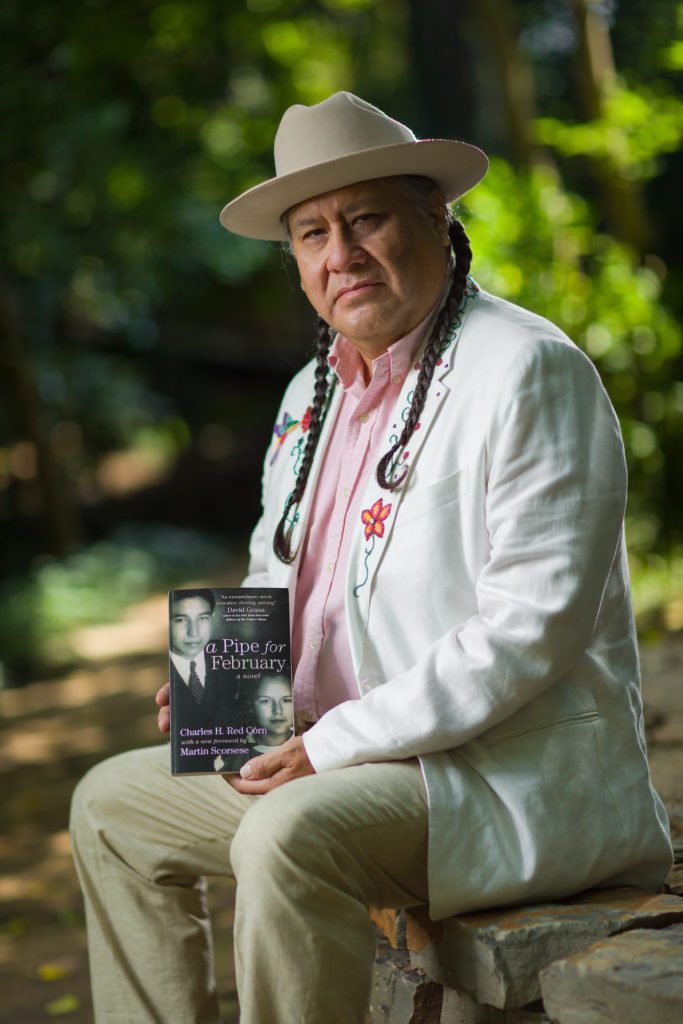
Red Corn, an entrepreneur who lives in Norman, plays the role of Chief Bonnicastle. While the chief is not featured in Grann’s book, he is a character in A Pipe for February, a novel written by Yancey Red Corn’s father, Charles H. Red Corn, who died in 2017. Scorsese relied heavily on the novel as he made changes to the script after meeting people in Osage County.
Red Corn, a tribal name-giver who has been dancing in Osage ceremonies since the age of three, was invited to help oversee historical and cultural accuracy.
“They used me as a consultant, so I felt like I was part of the process,” he says.
Red Corn assists families in choosing Osage names for their children, and the red broadcloth he wore over his tuxedo at Cannes was his name-giver blanket, made by his mother and sister and trimmed in ribbon. His mother is the acclaimed Caddo potter Jeri Redcorn, and his sister, Moira, a Pawhuska physician and artist, was Red Corn’s guest for the trip to France.
Talee Red Corn, Yancey’s cousin with whom he grew up in the Pawhuska Osage Indian Village, sat beside him that day in the limo as they approached the theater. Talee portrays an Osage priest in the movie.
“I told [Talee], let’s just walk on that red carpet like we walk into our dances in Pawhuska: like we belong there,” says Red Corn.
Dozens of tribal citizens worked as staff members and extras as the film was being shot, Red Corn mentions.
“Everywhere I looked, I would see Osage people that I knew,” he says.
The movie was not easy to watch, Red Corn says, “but it’s a great film, and it’s a story that needs to be told.”
Red Corn, who plays Chief Bonnicastle in Flower Moon, says the movie wasn’t easy to watch, but it is a “story that needs to be told.” Photo by Brent Fuchs
Infrastructure Updates
An 11-story hotel with more than 400 rooms. Indoor and outdoor waterparks, a family entertainment center, an art market, retail shops and several dining options. It’s called the Okana Resort, and although it’s not scheduled to open until the spring of 2025, the $400 million project is already changing the landscape at OKC’s First Americans Museum.
“We expect to add about 800 jobs to the Oklahoma City area, and a $97 million economic impact the first year,” says Chickasaw Lt. Gov. Chris Anoatubby.
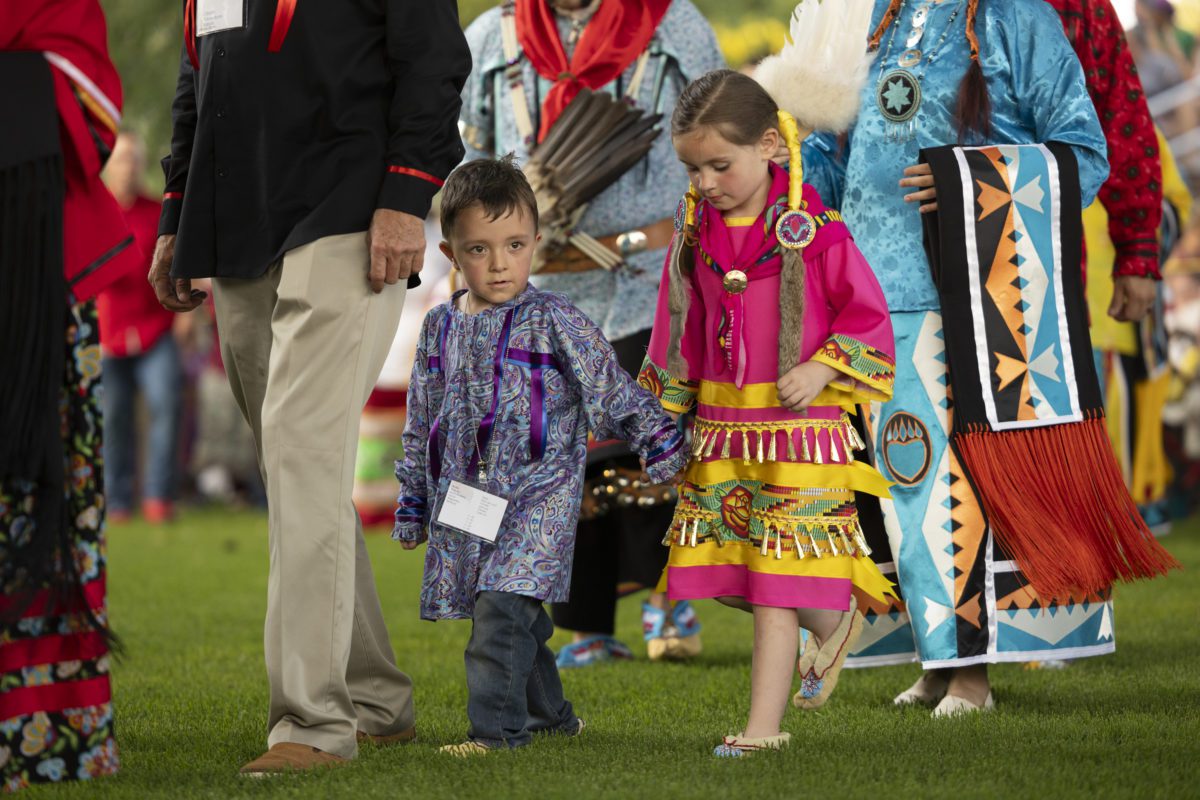
Young members of Citizen Potawatomi Nation walk during the Nation’s Grand Entry event. Photo courtesy the Citizen Potawatomi Nation
“It will complement the First Americans Museum as well, because that’s really the centerpiece,” he adds.
The Chickasaw Nation has more than 100 businesses scattered across its tribal boundaries, with construction and expansion projects planned or underway for casino resorts in several cities.
Anoatubby says he’s excited about a partnership with Indian Health Service to build a hospital in the Newcastle area. The tribe has hospitals in such cities as Tahlequah, Claremore, Lawton and Okemah, but none in the OKC metro.
“One of our goals is to try to get healthcare services no more than an hour away from all tribal citizens,” says Anoatubby. “All of our facilities are very highly utilized. We serve members of other tribes as well.”
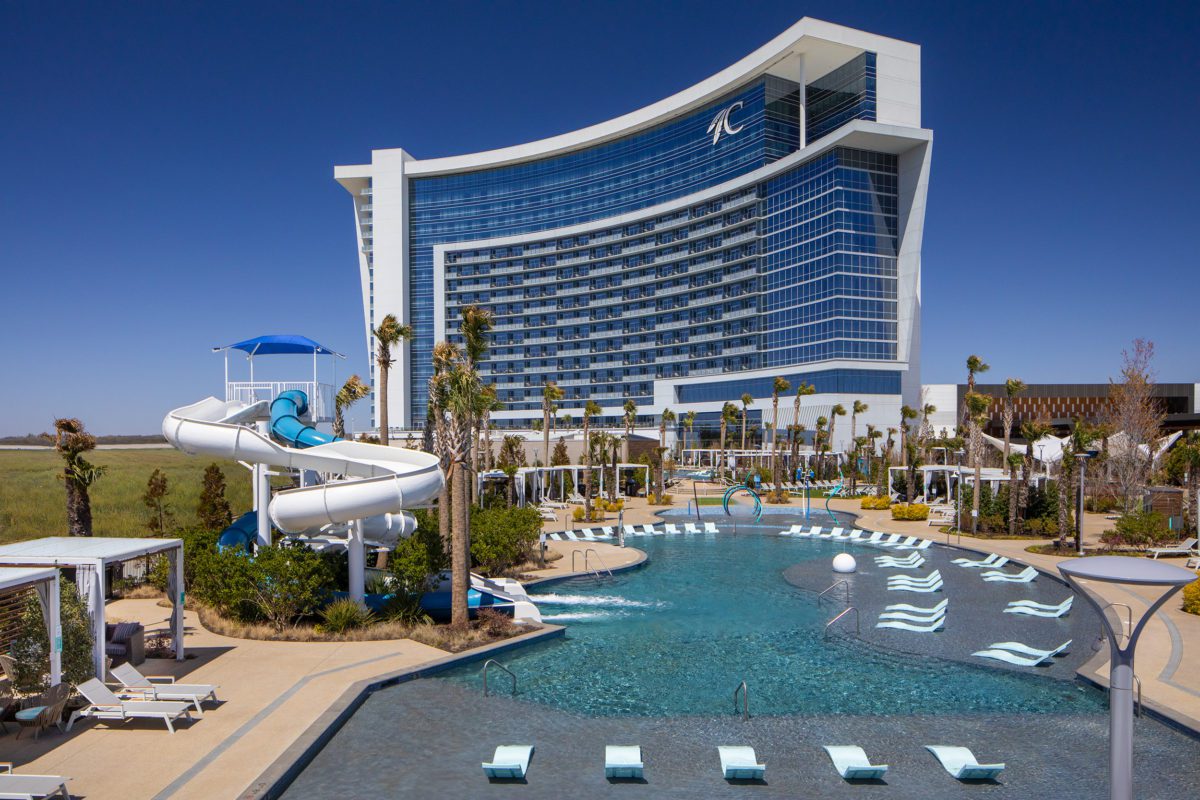
Infrastructure helmed by Native American Nations is booming – including the Durant-based Choctaw Casino and Resort. Photo courtesy the Choctaw Nation
The Cherokee Nation broke ground in April on a $400 million hospital that will replace the nearly 40-year-old W.W. Hastings Hospital in Tahlequah.
“To start building the walls that will bear our future citizens, save countless Cherokee lives and heal and comfort our sick in their most critical time of need is a defining moment in the Cherokee Nation,” Principal Chief Chuck Hoskin Jr. said during the ceremony.
The Choctaw Nation partnered with country music legend Reba McEntire to create Reba’s Place, a dining and entertainment venue that opened this year in Atoka.
“The opening of Reba’s Place has created more than 100 jobs, and about 50% of those positions are filled by members of a recognized tribe. We’ve seen more than 230,000 visitors stop by the restaurant, resulting in an annual impact of more than $11 million to the area,” says Tammye Gwin, senior executive officer for the tribe’s Division of Strategic Development.
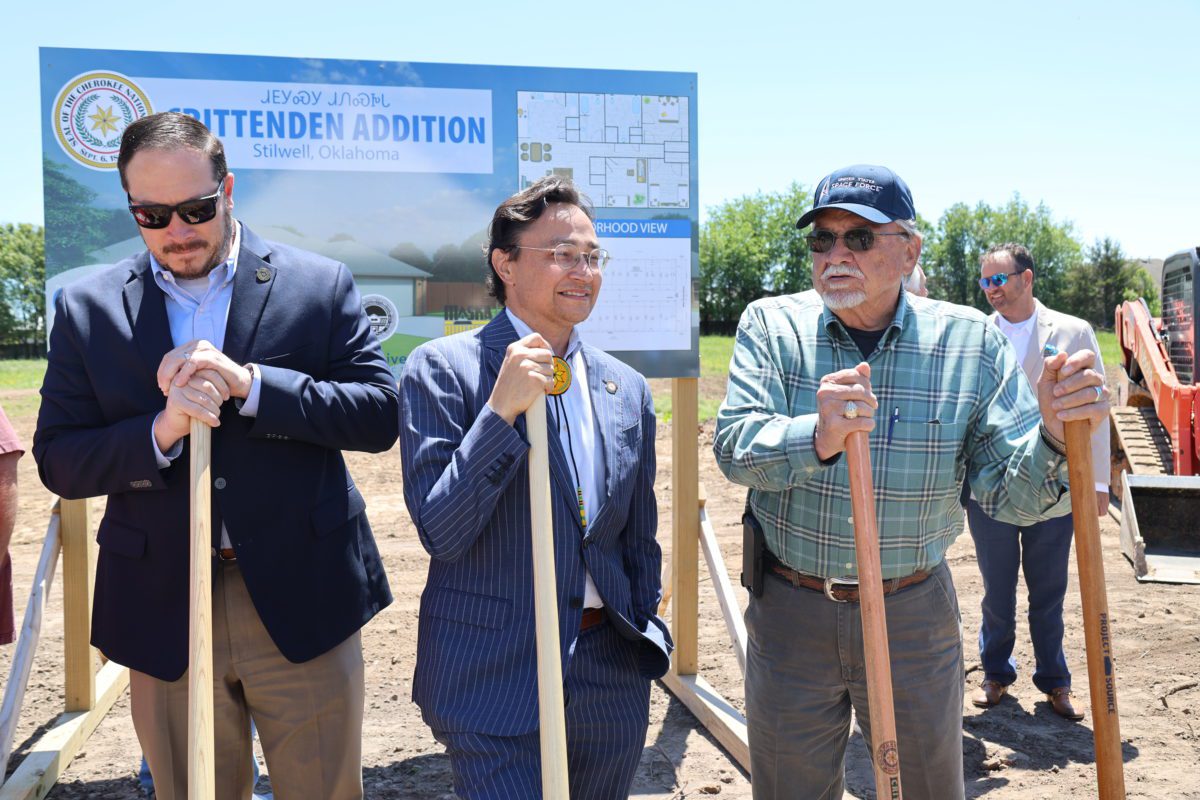
Chuck Hoskin, Jr. (center), chief of the Cherokee Nation, commences the Crittenden Housing Groundbreaking in Stilwell. Photo courtesy the Cherokee Nation
“Another project we are very excited about is the $238 million Choctaw Landing in Hochatown,” Gwin says. “We broke ground on the resort in 2022, and it is scheduled to open next spring. The resort’s opening will create more than 400 jobs in southeast Oklahoma and will create an annual economic impact of $95 million for the region.”
Citizen Potawatomi Nation Chairman John “Rocky” Barrett, speaking during the June Sovereignty Symposium in Oklahoma City, said tribal operations are constantly growing.
“Medical, housing, commercial, government, infrastructure … we are expanding all of them,” Barrett says.
The tribe has 2,200 employees with about 200 jobs unfilled, Barrett says.
“We have increased wages up to 50% and still can’t fill jobs,” he says. “We will need to reach down into high schools and tech schools to augment training and work with unions on apprenticeship programs, to get skilled labor back in Indian Country.”
Female Leaders in Native America
“I want to be remembered as the person who helped Indigenous people restore faith in themselves,” Wilma Mankiller wrote in her autobiography, Mankiller: A Chief and Her People.
Mankiller was the first woman principal chief of the Cherokee Nation, doubling tribal enrollment and focusing on health care, housing and education during her tenure from 1985-1995.
Native women across Oklahoma continue her legacy by serving as elected officials and heads of tribal services.
Deborah Dotson, now in her second term, was the first elected woman president of the Delaware Nation. Women also serve the Anadarko-based tribe as vice president, secretary and treasurer.
Dotson, a former paralegal, started her political career in 2015 when she was elected as a committee person. After a couple of years observing the tribal president at work and not always agreeing with him, she said to herself, “I can do this. I can be president.”
Since she took office, tribal enrollment has grown by more than 700 due to drop
ping the blood-quantum requirement in favor of lineal descendancy. Burial assistance was increased from $3,000 to $6,000, and tuition assistance was raised from $3,000 to $6,000 per semester for non-Pell grant students.
After Terri Parton was elected president of the Wichita and Affiliated Tribes in 2012, “everything we did was for the people,” she says. “We bought land. We did after-school programs. We went after a lot of grants. As long as your vision is all the same, the disagreements you can set aside.”
An Emphasis on Education
The Choctaw Nation is among many Oklahoma tribes that offer education assistance to citizens and employees, says Gwin. The career development department offers financial assistance to students seeking a certification or license through a college or vocational/technical school.
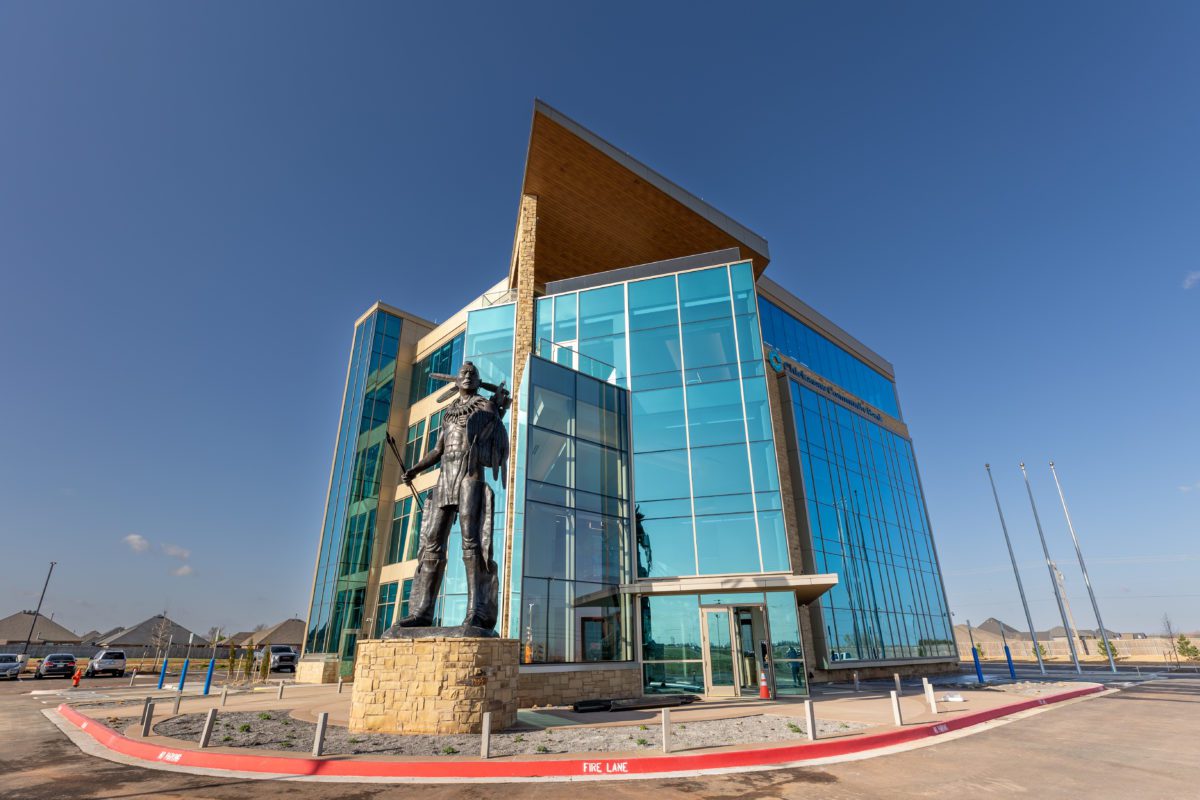
The Chickasaw Community Bank, headquartered in OKC, assists with everything from personal and business banking to tribal lending. Photo courtesy the Chickasaw Nation
Choctaw Nation employees have access to $2,500 a semester in tuition reimbursement.
The higher education program helps tribal citizens pursuing degrees at accredited colleges and universities. Last year, Choctaw Nation provided more than 10,600 scholarships.
There’s also a one-time $300 payment for clothing purposes. More than 2,100 students received the college clothing allowance last year.
The tribe offers a one-time payment of $500 for technology purposes, Gwin says, and last year, more than 1,300 students receive a technology allowance.
The Concurrent Assistance Program offers financial assistance to qualified high school students attending an accredited college or university. Funding amounts are $200 for three hours of college credit or $400 for three or more college credit hours. More than 420 students received concurrent assistance scholarships last year.
The Higher Education Stole Program offers a Choctaw Nation stole valued at $53 to eligible graduating students.
“Last year, we distributed 690 stoles to graduates,” says Gwin.
The Chickasaw Nation has more than 6,000 tribal citizens enrolled in college.
“We help support them with scholarships to the tune of $28 million,” says Anoatubby.
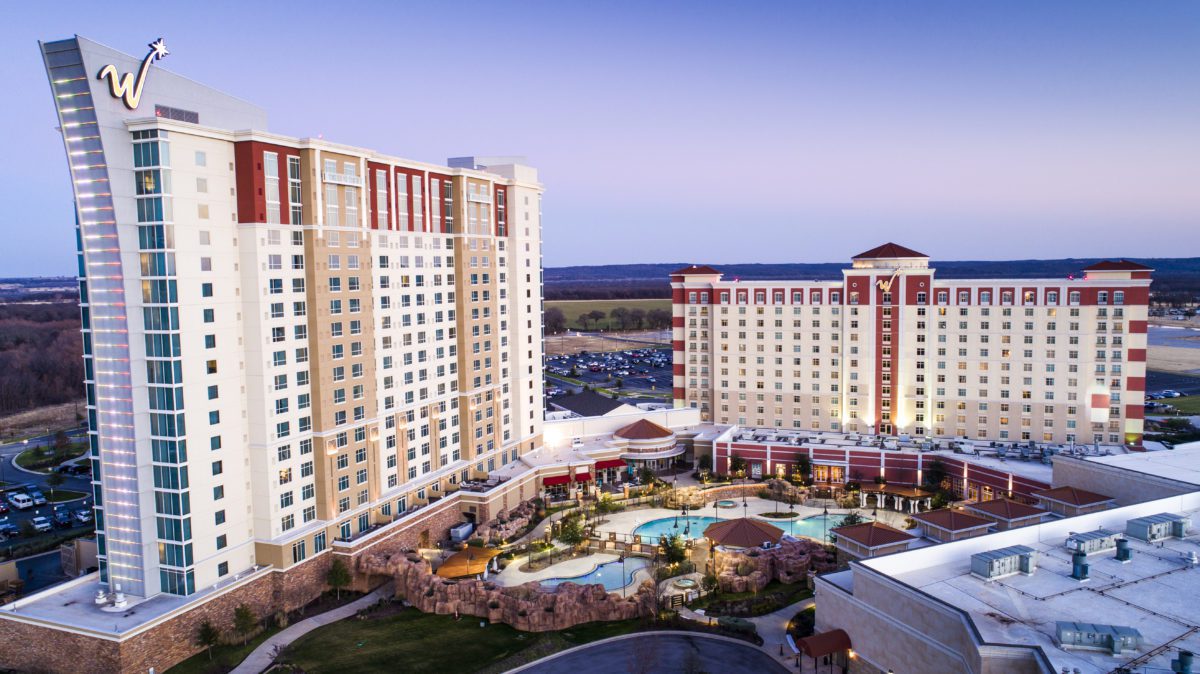
Owned and operated by the Chickasaw Nation, the WinStar World Casino and Resort is located in Thackerville. Photo courtesy the Chickasaw Nation
The Native American Hall of Fame
James Parker Shield was just 19 when he met the person who would become his lifelong mentor. His name was Ernie Stevens Sr., and he’s now a member of the National Native American Hall of Fame. This citizen of the Oneida Nation was an advocate for Native rights and tribal self-governance who worked for a long list of social and political agencies; he was also the first staff director of the federal Senate Select Committee on Indian Affairs.
“Ernie was my hero when I was in Washington, D.C.,” says Shield. “He took an interest in me, he encouraged me, he introduced me to people.”
Shield went home to Montana, studied history, started his own career and for 18 years was a board member of the Lewis and Clark Interpretive Center.
And when he founded the National Native American Hall of Fame in 2016, it was people like as Stevens he had in mind.
“These role models that we have in the Hall of Fame, they can inspire younger Native Americans,” says Shields.
After a few years in Great Falls, Mont., the Hall of Fame has been moved to First Americans Museum in Oklahoma City. The invitation came from FAM director James Pepper Henry, and Shield says his board thought it was a great idea to move to a facility in the center of the country with a climate better suited for year-round tourism.
And the 39 tribes based in Oklahoma will always be well-represented as the Hall of Fame chooses board members and new inductees, says Shield.
The Hall of Fame opened in March in an ancillary building that was once a welcome center for FAM. Once the money is raised, a wing will be built to house it. Currently, admission to the Hall of Fame is free for people who don’t also visit FAM.
Induction ceremonies started in 2018 and have been held at FAM since 2021. This year’s induction is set for Oct. 14, and members of the 2023 class are government leader Joe DeLaCruz, Quinault Indian Nation; actor Will Sampson, Muscogee Nation; writer Leslie Marmon Silko, Laguna Pueblo; journalist Mark Trahant, Shoshone-Bannock Tribes; attorney Richard Trudell, Santee Dakota Sioux Tribe; and educator and activist LaNada War Jack, Shoshone-Bannock.
Other tribes in Oklahoma with citizens in the Hall of Fame include the Pawnee, Cherokee, Kiowa, Sac and Fox, Chickasaw, Comanche and Osage nations. Shield, who is Chippewa, says the mission has been expanded to include an educational outreach to secondary schools, and he foresees activities such as art exhibits and a symposium for Native writers.
Learn More:
At nativehalloffame.org, you can find photos and biographies of each of the people who have been inducted into the National Native American Hall of Fame since the first class in 2018. There was no induction in 2020.
Luminaries chosen so far from among the tribes in Oklahoma include Jim Thorpe, Maria Tallchief, N. Scott Momaday, Wilma Mankiller, Allan Houser, John Herrington, Wes Studi, Pascal Poolaw, Bill Anoatubby, Joy Harjo and Mary Golda Ross.
The mission of the Hall of Fame is to honor the achievements of Native American path-makers in contemporary society, starting with the Civil War period, in such categories as entertainment, government, science, education, communications, advocacy, business, culture and athletics.
ONLINE EXCLUSIVE: BONUS GALLERY WITH YANCEY REDCORN
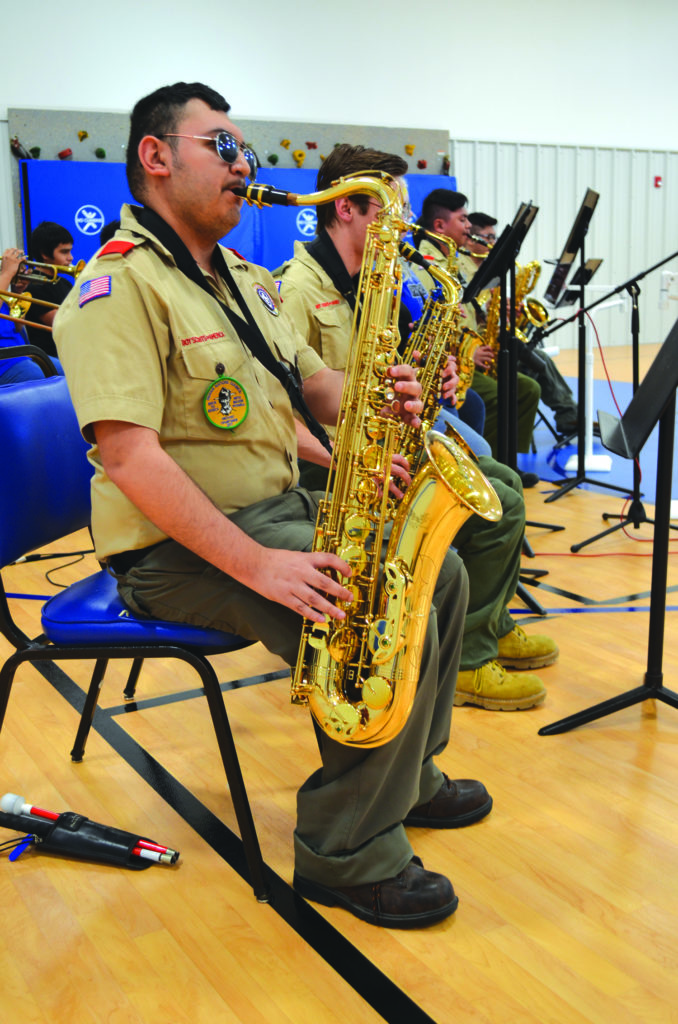
The Oklahoma Department of Rehabilitation Services, along with having an award-winning jazz band, assists people with disabilities with employment, education, independent living and more. Photos courtesy the ODRS
If you’re looking for a program that can assist with enjoying life to the fullest while better functioning with disabilities, the Oklahoma Department of Rehabilitation Services (DRS) is ready to help.
With a slogan of “empowering people with disabilities,” the department’s dedicated staff members assist Oklahomans with disabilities navigate 25 career planning, employment, education and independent living programs. The team also guides clients through applying for and receiving Social Security determinations due to eligibility based on medical conditions.
“DRS helped 184,082 people in state, fiscal [year] 2022,” says Jody Harlan, DRS’ communications director. “Staff in five program divisions provide these services in every county in Oklahoma.”
Vocational Rehabilitation (VR) assists those jobseekers with disabilities that are non-visual to become self-sufficient through independent living and employment programs. For those who are hard-of-hearing or deaf, VR has offices that accommodate Oklahomans from offices in Tulsa and Oklahoma City.
This program offers various forms of assistance, including medical and psychological assessments, counseling services and treatment of disabilities to enhance employment opportunities. With training and education, the use of assistive technology, job placement and post-employment services, many Oklahomans with disabilities are able to obtain and retain jobs as well as move ahead in their careers.
The Oklahoma Department of Rehabilitation Services, along with having an award-winning jazz band, assists people with disabilities with employment, education, independent living and more. Photos courtesy the ODRS
“Services for the Blind also provides specialized travel and mobility training and specialized in-home rehabilitation teaching to help job seekers prepare for work, and seniors ages 55 years and older to remain in their homes,” says Harlan.
Services for the Blind and Visually Impaired also operates the Oklahoma Library for the Blind and Physically Handicapped.
“The division also establishes and assists Business Enterprise Program managers who operate their own food service business, and the Older Blind Independent Living Program,” says Harlan.
Other divisions are the Oklahoma School for the Blind in Muskogee and the Oklahoma School for the Deaf in Sulphur. These statewide resource centers provide free education curriculum that meet state standards and provide disability-specific instruction – which is not readily found at other public schools in Oklahoma.
“OSB and OSD provide sports, clubs and social experiences for students who live on campus Monday through Thursday and transport students home for weekends, holidays and summer break,” says Harlan. “Commuter students also attend classes but go home after school to nearby communities. OSB and OSD also provide free summer school programs and outreach services for students who attend other public schools, their families and educators.”
While OSB has a bevy of other programs, a favorite is the award-winning jazz band.
OSD offers a free online American Sign Language program that has been attended by more than 350,000 people from 30 different countries.
Harlan is proud to note that both OSB and OSD had 100% graduation rates in the 2021-2022 school year.
The disability specialists, para-professionals and medical/psychological consultants at Disability Determination Services (DDS) review applicant’s work and medical histories to determine medical eligibility for Social Security Disability Insurance and Supplemental Security Income benefits.Following federal eligibility guidelines, DDS staff weed out fraudulent claims with a 92.2% accuracy rate.
According to Harlan, DRS maintains a popular online Disability Resource Guide at okdrs.gov/guide/home which lists contact information and brief summaries for more than 2,000 social service and disability resources.
“This resource has averaged up to 10,000 hits each month,” says Harlan. “For general information about DRS services, visitokdrs.gov or phone 1-800-1845-8476 during business hours to talk with a live – not recorded – customer representative.”
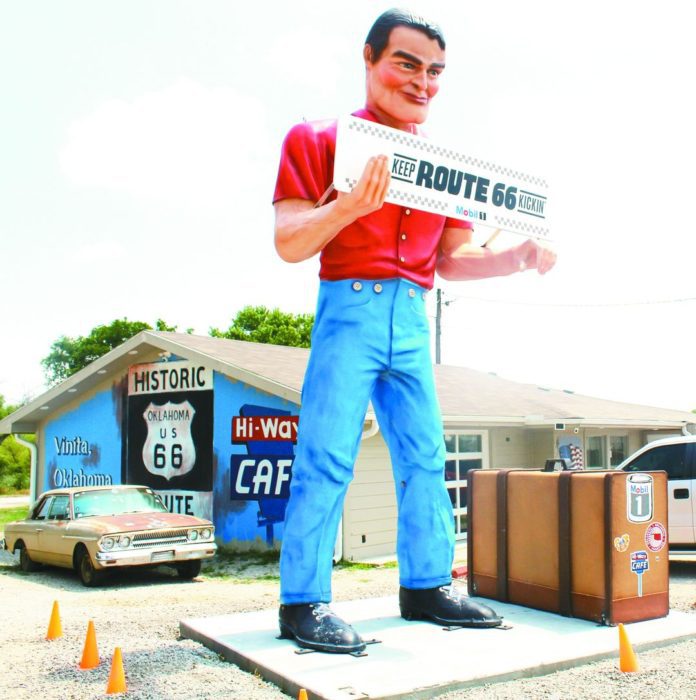
Big Bill stands sentry outside Vinita’s
Hi-Way Cafe.
Beth Hilburn, co-owner of the Hi-Way Café at the west edge of Vinita, is bothered that people following Route 66 have been bypassing her hometown of Vinita. She may not need to worry about that much longer, however, if plans announced in July for a major tourist attraction materialize.
Officials announced that a 125-acre theme park, part of a 1,000-acre tourist development, is planned for a site just west of Grand Lake on Route 66. The American Heartland Theme Park and Resort, with its first phase set to open in 2025, will include a 300-room hotel, indoor water park and other amenities.
Before the big announcement, Hilburn had taken the lack of traffic into her own hands. Together with volunteers, she and her husband, Alan, brought a 22-foot-tall fiberglass statue to town. Muffler Man, used in a synthetic motor oil promotion along Route 66, now stands sentry outside the Hi-Way Café. Muffler Man even has an additional name – Big Bill, in honor of Hilburn’s father. Her parents owned the nearby Western Motel during Route 66’s heyday.
“We just felt like Big Bill needed to be watching over us,” says Hilburn.
She hopes the imposing statue will entice more people to take the historic Route 66 through town, rather than staying on the nearby Will Rogers Turnpike.
“We’re trying to generate as much as we can for Oklahoma,” she says. “We know people are going through and driving right by. We have to get people to stop and spend their money in Vinita.”
Already, she says, “people are stopping by to take pictures with him.”
If the effort to increase traffic through Vinita succeeds, visitors will find a bustling community of 5,500 folks. Sitting roughly halfway between Tulsa and Joplin, Mo., Vinita is about 35 miles from the borders of Kansas, Arkansas and Missouri.
In addition to Big Bill, visitors will find other attractions throughout Vinita and nearby. The city’s website, in fact, proclaims Vinita as a place “where the golden prairies meet the foothills of the Ozarks.”
Vinita might be better known for another landmark, one that traverses the turnpike – the Will Rogers Archway. Built in 1957 and at that time proclaimed as the largest McDonald’s in the world, the 52-foot-tall archway now is owned by the state of Oklahoma. A McDonald’s that’s closer in size to most others in the hamburger chain still occupies part of the space, along with a sandwich shop, service station and convenience store.
McDonald’s manager Zachary Laning says customers frequently ask about the Archway, remembering that the store was once the company’s largest. No longer the biggest store, Laning says, the Vinita store retains one distinction:
“We’re the only store inside a state landmark,” he says.
The renovated Archway was reopened in 2014. With its spectacular turnpike view, the Archway serves as a gathering place for community events.
Added to the mix of Vinita attractions is the Cherokee Nation’s two-story, 9,400-square-foot Anna Mitchell Cultural and Welcome Center, situated on eight acres just off I-44. Named for a renowned Cherokee artist, the center opened a year ago and offers travelers valuable information, indoor and outdoor Cherokee art displays and a venue for meetings, events and classes.
In July, the tribe hosted its first-ever ribbon skirt fashion show at the Cultural Center. Whitney Dittman, Cherokee Nation Business’ communications manager, says the event drew a crowd of more than 300, with another 300 participating in a livestream.
Vinita will also host one of the state’s longest-running rodeos, the annual Will Rogers Memorial Rodeo, Aug. 22-26.
Brian Prince, city clerk and acting economic and community development director, says Vinita, his hometown, is well worth the visit.
“Vinita has been a great community for my family and a lot of other families,” says Prince. “You can’t go down the street without waving at someone you know.”
Did You Know?
A few miles south of Vinita is the Civil War Cabin Creek Battlefield site. In September 1864, a Confederate force of 2,000, mainly Gen. Stand Watie’s Indian Brigade, intercepted a 130-wagon supply chain headed to nearby Fort Gibson, loaded with about $1.5 million worth of goods.
Gen. Watie’s forces captured the supply chain after a heavy battle, which was the last major Civil War engagement in Indian Territory.
The Oklahoma Historical Society says that while not considered historically significant to the war’s outcome, the battle encouraged the Confederate troops under Gen. Watie to fight until June 1865, when Watie became the last Confederate general to surrender.