Home Blog Page 13

The City’s Harvest

For those interested in urban foraging, Restoration Farms in Peggs offers homestead classes, tours and plant ID walks. Photo courtesy Restoration Farms

While living solely off the land may not be practical for most people, everyone can enjoy the bounty of Oklahoma on occasion through the practice of urban foraging. Wild mushrooms, herbs and fruits can all be found in nature, and, if harvested responsibly, can be a source of nutritious, unprocessed and chemical-free food.

“Foraging is what people have done for millennia to either supplement their food and medicine or to find all of their food and medicine,” says Ashley Clouse, owner of Restoration Farms in Peggs. “It used to be commonplace, but then with industrialization and urbanization, a lot of that information got lost. In 2020, there was a resurgence of the practice as people begin to see how fragile our food systems are.”

Spring and summer is the prime time for foraging flowers, berries, fruits and mushrooms. Fall brings persimmons, more mushrooms and nuts — but even as winter arrives, there’s plenty to be found.

“A few common things are rose hips, acorns, pecans, hackberries, pine, spruce, juniper berries/eastern red cedar berries and oyster mushrooms,” Clouse says. “Even though not everything is green and growing, you can practice identifying plants and trees in their winter form so you know where to watch for them when they pop back up in spring.” 

Michael Ruzycki, owner of Ruzycki Farms in Jones along with his wife, Emily, is in his eighteenth growing season. In addition to running the farm, he also has an interest in plants harvested in the wild, and he makes use of their medicinal benefits.

“There are a lot of wild elderberries out there, which I also grow on my farm,” Ruzycki says. “You can find them in the ditches on the side of the road. Those have high antioxidants, and you can make a juice out of them. Goldenrod, the bright yellow flower you often see along roads, has respiratory benefits. Dandelion flowers, leaves and roots are all medicinal. ” 

In Oklahoma, national parks like Chickasaw National Recreation Area, Ouachita National Forest and Black Kettle National Grassland are great places to look for wild plants. Bluff Creek Park, located in Oklahoma City, has hosted guided foraging walks and McGee Creek Reservoir, found in Atoka County, is a forested area where you may also find wild edibles. 

When it comes to proper foraging, also known as wildcrafting, Clouse says there’s a code of ethics to be followed. Positive identification and safety are top of the list.

“We recommend using at least three ways to check your identification when you’re learning a plant,” Clouse says. “We want to make sure that the plant is in a safe location and that the plant is actually safe to work with.”

Ruzycki says it’s also important to wash what you find, especially from along a roadside. 

“What you find in the wild might have what we call road dust, brake particles, metals and spray chemicals on it,” he says.

While foraging is allowed on most public lands in Oklahoma, it’s always good to double check that you have permission to harvest. 

 “It’s really important in a lot of Native traditions to include getting permission from the plants, and that’s a beautiful practice if it resonates with you,” says Clouse.

Sustainability is the fourth ethic followed by responsible foragers, Clouse adds, which involves taking no more than 10% of what is found in the wild.

Becoming hunter gatherers — even for an afternoon — can offer benefits beyond the food and medicine it provides.

“Whether it’s to connect more with the world around you or spend time outside together with the family,” Clouse says, “it should be fun. Start small so you won’t get overwhelmed. Focus on a few plants and really get to know them.”

The Write Stuff

Heller Theatre Company offers Double Feature: an annual show that presents two one-act plays by local creators. Photos by C. Andrew Nichols Photos

Shadia Dahlal is in a hurry. The belly dancer and acclaimed playwright has a date in a few minutes.

“I’m going to have coffee with a hot young actor who wants to talk about theater,” she says breezily. 

The California native, 74, sports a new hip, two new knees and a can-do attitude.

“Sometimes people my age are a drag,” she confides. 

The performing arts community in Oklahoma includes about 116 theaters and likeminded organizations. They’re packed with bold, diverse, quirky folks, much like Dahlal – an actor, director, choreographer, producer, educator and writer.  She moved to Tulsa in 1992, after a 14-year professional belly dancing career. She later joined Heller Theatre Company as a playwright-in-residence from 2019 to 2023, where she wrote plays and supported other creators. Heller produced three of Dahlal’s works, including her zombie apocalypse tale, Oklahoma Red.

“My inspiration, most of it, comes from what I see in the news,” says Dahlal. “And I love magical realism. I love horror.”

When it comes to finding your “process,” you don’t have to wear a purple Bob Ross mullet, gulp homemade hot sauce and sing in a heavy metal band to release your inner artist … but it works for prolific writer and filmmaker Eric Howerton, Ph.D. The Oklahoma State-University-Tulsa associate professor, who also directs the school’s Center for Poets and Writers, partnered up with Andrew Bateman to write the multi-award-winning dark comedy film, Go Down, Diller, about a father, a daughter and a talking bear.

Asked about his process, Howerton says he pictures his writing as a movie in his head while he goes along.

“But sometimes I have a weird image, you know, like nine bald mannequins buried up to their knees in the desert,” he says. “I don’t know. I have to find a way to get there,” Howerton adds with a laugh.

PJ Sosko says he was an odd choice to play Ernest Hemingway in the off-Broadway play The Jazz Age.

“I am six inches too small and [weigh] about 150 pounds less,” Sosko says. “But because that director saw me read Hemingway … ” he got the part. 

The actor, writer and director worked in New York over three decades before the COVID-19 pandemic pushed him, his wife Marta and daughter Quinn to Tulsa. The move didn’t slow him down one bit; Sosko continued racking up acting credits ranging from Reservation Dogs to The Girls on the Bus. Sosko also produces Sittin’ With The Sosk podcast, and he hosts the free Sandbox monthly event in Tulsa’s Circle Cinema, where actors cold-read local writers’ works.

Like Howerton and Dahlal, he considers such collaboration critical.

“It is a collaborative sport. Because it’s tough to do it solitarily,” Sosko says. “What I believe in is getting out and doing a reading. Hear it out loud. You have to hear it outside of your head.”

Whether it’s on a big screen, small screen or stage, Sosko says the purpose is consistent. 

“I think the writer’s goal is to highlight the human condition, right?” he says.

Songs for the Season

Musicians Brad and Mary Kay Henderson recently released a holiday record. The duo also plays a bevy of Christmas shows in a ten-piece band each December. Photo courtesy Brad Henderson

Back in August of 1986, when I was working for the entertainment section of the Tulsa World, I wrote a review of a Mabee Center concert headlining singer Cristy Lane. Lane, as you might remember, was still riding fairly high at the time, thanks in great part to the huge splash made by her country-gospel chart-topper “One Day at a Time,” some six years earlier. 

Looking again at that review, however, I saw that I was most impressed by a local opening act named Mary Kay Harshaw, whom I called “a convincing singer” with “a natural, unaffected stage presence, excellent range, and fine dynamics.”

Nearly 40 years later, she’s still all those things. As Mary Kay Henderson, she serves as the primary vocalist on a brand-new holiday album, A Very Merry Christmas. The disc features many of this area’s top musicians, including keyboardist, bassist, and vocalist Brad Henderson, who married Harshaw the year after she opened for Lane. He was one of the two instrumentalists with her at that show, and he laughingly remembers the now-quaint digital keyboard and Commodore 64 computer he had onstage that night. 

The December after their wedding, they did the first of what would become a long line of Christmas shows, playing a benefit for Muskogee’s Kelly B. Todd Cerebral Palsy Center. 

“We put together a team of people we liked playing music with, and, literally, the rest is history,” Henderson notes. “Since then, we have not missed a year of doing at least four or five Christmas concerts every December, usually with three singers, four horns, and a piano, bass, and drums. So it’s a ten-piece group. We go out and do things like the Simple Simon’s [pizza chain] corporate Christmas parties and stuff like that – churches, civic clubs, whoever wants Christmas music. 

“Over the years, we’ve worked on arrangements, and when we find one that sticks, one that we like, we add it to the book. When we finished last year’s season, I thought, ‘Why don’t we have a recording of all this? We’re not getting any younger.’ So in January, we started putting tracks together, picking our favorite ones we’d done over the years – or some of our favorites. We couldn’t put ‘em all on one album. Some of those arrangements have been with us for quite a while, and some of them I wrote last year. I even wrote [new] arrangements for the project.” 

The result is an engaging, jazzy disc – attributed to “Brad & Mary Kay Henderson with friends” – that reflects not only the decades the musicians have been playing these songs together but also the sterling credentials of the participants themselves, who are some of the very best players around. Those familiar with Tulsa music and musicians, especially in the jazz arena, will immediately recognize names like Rod Clark (trombone), Vic Anderson and Tommy Poole (saxophones), Jared Johnson (drums), and the Hendersons themselves. Then there’s Pat Savage, the veteran Tulsa guitarist Brad and Mary Kay first encountered on a long-ago recording session. 

“Yeah, it was way back there,” he recalls. “In fact, it was actually for a cassette.” He laughs. “We didn’t know Pat. We walked into the studio thinking we were going to see [owner] Johnny Graham. But he was busy, so he sent Pat to help us. It was kind of a country-gospel project, and Pat said, ‘This needs some guitar.’ 

“I don’t play guitar, so I told him, ‘Yeah, but we’re already out of budget.’

“And he said, ‘It needs guitar badly enough that I’d do it for free.’ 

“I’d never heard him play. I didn’t know he played. But when he broke out his Strat [a Fender Stratocaster electric guitar], I was like, ‘Oh my gosh. Yeah, you’ll do.’” 

Other top-drawer musicians on A Very Merry Christmas include vocalists John Ward and Shannon Johnson, trumpeters Scott Copeland and Bill Gable, organist Blair Masters, pianist Sean Giddings, saxophonist Roberto Rabello, French horn player Marsha Wilson, drummer Greg Sadler, and a reed player billed on the liner notes as Dr. Justin Pierce, whom Henderson met when Pierce was the jazz-band director at Oklahoma Baptist University in Shawnee. 

Another musician, trumpeter Steve Goforth, is featured on “O Little Town of Bethlehem.” The only instrumental on the whole disc, it carries a distinctly elegiac quality. Goforth died in 2020, following an accident on his ranch near Chelsea. 

“He was my best friend, as well as my hunting and fishing buddy,” says Henderson. “He played all the shows with us for many, many years. The basis of that track [‘ O Little Town of Bethlehem’] was on one of his Christmas albums that I produced for him. It was four trumpets, and a shaker, and maybe an upright bass or something. No band to it. Very sparse, and really cool. So I got permission from his widow to edit it and use it, and we just kind of split it up in chunks and added guitar and keyboards and a drum set. That was one of the most fun parts of the project: ‘How do we make this more, and still honor Steve and make him the star of this [track]?’

While the majority of the numbers on A Very Merry Christmas are first-class renditions of secular favorites like “Home for the Holidays” and “Christmas Time Is Here,” the disc concludes with a pair of faith-based numbers, “Hope Has Hands” and “Somewhere It’s Snowing.” 

“For Mary Kay and me and some of the guys in the band, our faith is very much a part of what we are,” explains Henderson. “The sacred part is very deliberate. It makes a lot of sense for that to be the final part of the statement. We’re celebrating all this other stuff because we have a reason to celebrate, and that’s the birth of Christ.” 

The band will have copies of A Very Merry Christmas for sale at their holiday shows this month. Contact Henderson at [email protected] for ordering information. 

Arctic Glory in Greenland

Brightly colored homes and cafes dot the shoreline in Greenland's capital city of Nuuk.

It was actually Erik the Red who gave the world’s largest island its name a thousand years ago, when the Norse explorer was trying to get folks back home in Iceland to help him settle this new, inhospitable land. The name Greenland sounded enticing, he reasoned, and in truth some of it was green, just not very much of it.

But Erik’s marketing strategy worked. He convinced hundreds of Icelandic Vikings to set sail across 500 miles of open ocean to an island they knew very little about. Of 25 ships, 14 made it, and the first European settlement in Greenland was born. 

The Norse fell on hard times, however, and about the time of Columbus, the settlements died out completely. Resilient, hardy Inuits (descendants of the Thule people) came across from Canada and thrived, giving us, among other things, the sea kayak, snow goggles and ice-block domed houses. 

Then, sometime in the 1700s, the Danes made a claim on the island and no one challenged them on it. Now, Greenland is a self-governing territory of Denmark with a population of about 57,000, concentrated mainly along the southwest coast. Ninety percent of Greenland is Inuit, the rest Danish.

In the capital, Nuuk (rhymes with duke), the shoreline is dotted with cafes and brightly-colored houses. Down by the water, the boardwalk offers views framed by 3,970-foot Sermitsiaq mountain. Nuuk is where the culture is: the Katuaq Center for concerts, the Nuuk Art Museum for works by local artists, and the Greenland National Museum for mummies, whale blubber vats and Inuit skinboats.

Calling Greenland a tourism hotspot is a bit of a stretch, but there has definitely been a rise in the number of foreign visitors over the last few years. A new international airport was dedicated in Nuuk in 2024, plus many arrive by cruise ship. But for the true Greenland experience, book a cabin on the overnight ferry from Nuuk north to the seaport of Ilulissat. 

Along the way, your ferry will stop at small coastal villages where the natives are especially friendly and welcoming. Yes, the ferry is also their mail ship, so they’re glad to see you, but opportunities exist for immersive adventure travel experiences.

Views from a Greenland ferry showcase fjords, icebergs, and the incomparable Northern Lights.

As the ferry navigates the fjords and rocky coastline, you’ll see humpback whales, seals, white-tailed eagles and narwhals, those enchanting spiral-tusked “unicorns of the sea” whales. 

Up the coast, Ilulissat is more touristy and smaller than Nuuk but the hiking is outstanding on trails above and along Disko Bay. A ferry runs out to Disko Island, where the sounds of breaching whales and calving glaciers fill the arctic air. It’s a large island with black sand beaches, waterfalls, a handful of shops and restaurants, plus a hotel.

The new Ilulissat Icefjord Center – designed architecturally to resemble the wings of a snowy owl in flight – overlooks the 25-mile Icefjord, scene of frequent calving. From the center, it’s a short boardwalk stroll to the Icefjord and Sermermiut, an abandoned Inuit settlement. Both the Ilulissat Icefjord and Sermermiut are UNESCO World Heritage sites.

While in Greenland, pick up scarves and hats made from the warm underfur wool of muskox. Local jewelry often uses rubies and rare tugtupite, both mined on the island.

Be sure to try the national dish, suaasat (SOO-ah-saht), a thick savory soup made with seal or reindeer. The seafood is fresh and plentiful, and you’ll find muskox on the menu in the form of steaks, roasts and burgers.

In Nuuk, stay at the Hotel Nordbo, with an on-site restaurant in the thick of the city, close to museums, street art and the beautiful Malik indoor swimming center, a large complex of heated pools, saunas and solarium.

In Ilulissat, check into Ilulissat Stay-Seawatch Retreat on the coast featuring its own private beach and incomparable views of the Northern Lights.

A Serious Wake Up Call

For many Americans, getting a good night’s sleep is nearly impossible due to a chronic sleep-related breathing disorder: sleep apnea. The most common type of sleep apnea — which is known to cause pauses in breathing during sleep — is obstructive sleep apnea (OSA). According to the National Sleep Foundation, more than 50 million Americans are estimated to have OSA, while only 20% of cases are diagnosed. 

Amritanshu Singh, D.O., an internal medicine physician with Warren Clinic Sleep Medicine in Tulsa, says sleep apnea often goes undiagnosed because many patients are unaware of the symptoms, which can include loud snoring, gasping or choking sounds during sleep, morning headaches and daytime fatigue. 

“The primary risk factor for developing obstructive sleep apnea is obesity, especially those with central adiposity (increased waist circumference) and large necks,” says Singh. 

He adds that while the risk factor of weight can be managed, other factors can’t be controlled including one’s age, sex and any craniofacial abnormalities such as a short lower jaw.

While men are reported to have the highest prevalence of sleep apnea, women are disproportionately affected by sleep apnea after menopause, often due to weakened upper airway muscles and hormonal changes. 

A recent study by the University of Michigan research department found that “women with known or suspected sleep apnea were more likely than men to have symptoms or a diagnosis of dementia at every age level.”

Key factors within this finding were that women with moderate sleep apnea may have a greater risk of cardiovascular disease and are more likely to have insomnia. In addition, OSA and the effects of sleep deprivation and fragmentation are associated with inflammatory changes in the brain that may also contribute to cognitive decline. 

“It’s important to recognize symptoms such as snoring, witnessed pauses in breathing [apneas] and daytime sleepiness that may be signs of sleep apnea,” says Singh. “Other underreported symptoms include daytime fatigue and insomnia. Patients should talk to their doctor if they experience any of these symptoms as they may benefit from therapy.”

Singh says the most common treatments for OSA include continuous positive airway pressure (CPAP) therapy, mandibular advancement devices and nerve stimulator therapy. 

“There are also new medications being studied for the treatment for sleep apnea,” he says. “Recently, the FDA approved Zepbound for the treatment of sleep apnea in obese patients.”

In combination with a reduced-calorie diet and increased physical activity, Zepbound is an injectable prescription medicine that may help adults with moderate-to-severe OSA.

For anyone having trouble sleeping or staying asleep, Singh recommends seeking help rather than continuing to struggle. 

“There are now many more available testing options — including home tests which do not require a patient to sleep in a sleep lab overnight,” says Singh. “As treatment options expand, patients usually have the choice between multiple modalities in treating the disease. If you treat the underlying sleep apnea, the hope is that patients will experience more restful sleep throughout the night and have more energy during the day.”

Small Town, Big Spirit

Nestled in Grady County, just 40 minutes southwest of Oklahoma City, Chickasha is a lively town of 16,000 that weaves together Native American heritage, quirky attractions and a festive spirit. 

Pat Cunningham, a lifelong resident of Chickasha and curator of the Grady County Museum, has greeted visitors from all 50 U.S. states — along with 18 countries. 

“When you check out Chickasha, the Grady County Museum is a great place to start. Be sure to walk around and take in the sights,” she says.

The winter season, she shares, is the perfect time to stop by.

“Every year from Thanksgiving to New Year’s, don’t miss the spectacle at Shannon Springs Park with the 3.5 million bulbs that form the Festival of Light,” she says. 

This 22-acre holiday extravaganza, ranked among America’s top 10 light displays, dazzles with drive-through routes and themed stops.

Chickasha’s central location makes it a hub for the surrounding region, connecting nearby cities like Norman and Oklahoma City. History enthusiasts will find treasures at the museum, and at the Verden Separate School. The museum recently acquired a trove of artifacts from a local church founded in the 1890s and is seeking volunteers to help catalog these historical gems. 

The town’s unique flair shines through its bevy of attractions. A 50-foot leg lamp, straight out of A Christmas Story, stands proudly in the Arts Plaza, pulling in fans from afar. Twice a year, Chickasha hosts the world’s largest auto swap meets, where thousands of vendors showcase vintage car parts and classics. Downtown streets burst with color thanks to six vibrant murals, transforming sidewalks into an artistic canvas.

Chickasha’s past is as rich as its present. The Chisholm Trail, a famed 19th-century cattle route, carved its path through town, leaving a Wild West legacy in the historic downtown, now on the National Register of Historic Places. From 1910 to 1927, the Chickasha Street Railway’s electric trolleys gave this prairie town a modern edge. 

During World War II, the Wilson and Bonfils Flying School trained over 8,000 cadets, and its site now serves as the municipal airport with a 5,100-foot runway. 

Once called the “Cotton Capital” after the 1899 Chickasha Cotton Oil Company, the town also sits on a vast natural gas field, powering industries like horse trailer manufacturing. 

USAO, established in 1908 as a women’s college, is the nation’s only state-supported public liberal arts university, blending STEM and arts on a campus with a history of four name changes. In 2024, Chickasha’s landscapes stole the spotlight in the blockbuster Twisters, cementing its place in cinematic history.

With its murals, history and holiday magic, Chickasha is a small town with big surprises. Come for the giant leg lamp, linger for the swap meets, and let this Oklahoma treasure captivate you.

A New Type of Independence

Hoffman Homes, which offers luxury downsizing as well as low maintenance residential living, has no age restrictions and ample communities across the state. Photo courtesy Hoffman Homes

Across Oklahoma, new neighborhoods are emerging for empty nesters, and for those who are 55+. These spaces cater to those wanting to stay active, social and independent, while combining that autonomy with maintenance-free living.

Lorri Williams is the Oklahoma City sales manager for Hoffman Homes, which offers luxury downsizing, as well as low maintenance homes for adult communities in one-of-a-kind neighborhoods. There are no age restrictions for residents, and the amenities are ample.

Highland 55, with locations in Edmond and a new development coming to Broken Arrow, is a 55+ community neighborhood with numerous amenities curated for older age demographics. Photo courtesy Highland 55

“What sets us apart is that we created a unique concept for your next stage of life,” Williams says. “Our homes are designed to maximize square footage, using only the best materials and the utmost craftsmanship. We custom design your floor plan and other details that give your home the wow factor. We offer an active adult community lifestyle.”

Hoffman Homes offers a variety of living options across the state, with some of their communities already at maximum capacity. These include The Lakes at Rabbit Run in Broken Arrow, with a 30-acre gated community, 100 lots and single-story homes; Bellarose, in OKC near Gaillardia, with single-story custom homes in a 15-acre gated space; The Abbey at Coffee Creek in Edmond, a 43-unit luxury townhome community with single-story duplexes and fourplexes; Rabbit Ridge at Oak Tree in Edmond, a 12-acre, single-story neighborhood overlooking Oak Tree Country Club; Duck Creek Estates in Mounds, an 80-acre rural luxury community with single or two-story home sites; Antler Falls in northeast Broken Arrow, a 45-acre community with 149 home sites; and Antler Falls in Broken Arrow, which is still under construction and set to open in the fall of 2026.

David Z. Forrest is a partner in the ownership of Highland 55 at Spring Creek in Edmond, which is a 55+ retirement community with numerous amenities curated for older age demographics. Forrest says these new types of communities are taking root primarily in areas such as Edmond, Mustang, Yukon, Moore, Norman and Oklahoma City. Besides the Edmond location, Highland 55 has a site in the pre-development stage, Highland 55 at Mission Hills, in Broken Arrow. 

Photo courtesy Highland 55

Forrest says older models of age restricted communities typically fall into two different types. One is the “for sale” communities. The other is senior independent living facilities, which are often located in a continuum of care campus settings that typically involve assisted living and/or memory care facilities on the same campus.

But Forrest says these new communities are called “Active Adult” or “Active Lifestyle” communities. 

“What sets our rental model apart from more traditional retirement communities is the lack of a requirement for an expensive upfront fee,” he shares.

Residents move to Highland 55 to simplify their lifestyles and live among other like-minded residents. 

“All maintenance and literally everything, including real estate taxes and property insurance, are taken care of,” says Forrest. “We offer amenities and programs which cater to and encourage social interaction and a healthy active environment.”

He continues: “This is not your grandfather’s retirement community. Communities like Highland 55 give our residents more freedom to do what they think is important. They are only bound by a traditional rental agreement. This version gives our residents more freedom to do what they want to do.” 

Main image credit: Photo courtesy Hoffman Homes

On Thin Ice

Inevitably, summer’s lazy, warm days have already morphed into a brisk and intense Oklahoma cold, with the looming possibility of harsh weather and dangerous driving conditions.

When that happens, the best advice, usually obtainable from a variety of news and information sources, is to just stay put at home.

Shawn Steward, public and government affairs manager for AAA Oklahoma, makes that exact point, even for drivers who are skilled in navigating snowy or icy streets. 

“Even if you can drive well in winter conditions, not everyone else can,” he says. “Don’t tempt fate. Stay home until crews can properly clear roadways.”

Predictions about Oklahoma winters are often contested. For example, The Old Farmer’s Almanac predicted a moderately harsh winter season for the central U.S., while its rival publication, the Farmer’s Almanac, foresaw a more traditional winter season.

But as Oklahomans know, that can mean almost anything – so it’s best, Steward says, to be prepared, no matter the predictions.

Prepare with both knowledge of how to drive as safely as possible when snow or ice strikes and by getting your vehicle ready for bad weather. Oklahoma doesn’t get as much winter weather as other parts of the country, says Steward, so the first snow or ice storm can take people by surprise. 

His advice is to “take everything slower” when driving, accelerating and turning. “When braking, make sure you leave plenty of space between your car and the vehicle in front,”  he says.

Steward cites statistics from AAA’s Foundation for Traffic Safety that show on average, about one-third of crashes during wintertime driving occur in adverse weather or road surface conditions.

“Ice and snow can cause significant safety problems by reducing visibility and making it difficult to maneuver or stop,” he says “It’s important for drivers to be cautious and take it slow if they have to get out on the roads.”

Another bit of advice comes from T.J. Gerlach, a district public relations officer for the Oklahoma Department of Transportation. He urges people to watch out for snowplows working to clear snow-packed roads, and not to pass a snowplow.

“We ask drivers to remain two hundred to three hundred feet behind plows,” Gerlach says. “That’s the length of about four or five school buses.” 

Steward, meanwhile, urges car owners to start thinking about car problems that might lie ahead should bad weather invade Oklahoma, paying attention to a car’s battery and tires. 

This fall, AAA was already busy with sending out early reminders in various forms before snow or ice came calling. The AAA website has a collection of reminders about what to do if a driver gets caught in unsafe conditions. More advice can be found from the website offered by the National Highway Traffic Safety Administration, nhtsa.gov.

Slippery driving conditions will inevitably produce fender-benders and more serious collisions, says Jessica Stegner, who operates Tim’s Body Worx, a body shop in Guthrie, and is vice president of a three-year-old trade group, the Oklahoma Auto Body Association. Stegner says it was formed primarily to train and educate its members on the best, current approaches to body repairs.

Fortunately, she says, “Oklahoma doesn’t have winters like some other states do,” but “there are still fender-benders,” with most body shops in Oklahoma getting busier after a bout of adverse driving conditions.

For More Information

AAA Oklahoma 
888-458-6222
cluballiance.aaa.com

National Highway Traffic Safety Administration
nhtsa.gov

Oklahoma Department of Transportation
405-522-8000
oklahoma.gov/odot

Wrapping Joy

Gift wrapping is an art form that takes center stage at the holidays. A beautifully wrapped present adds an element of surprise and excitement to gift-giving. Like other creative arts, gift wrapping is a skill — one that demands practice. 

Mother-daughter duo Brenda Thomason and Britton Green co-own Paper + More, an Oklahoma City boutique specializing in fine stationery and one-of-a-kind gifts. 

“Our store has always provided gift wrapping services with professional techniques,” says Green. “That standard has carried through the 43 years that Paper + More has been in business.”  

Red, green, gold and silver are traditional color palettes for holiday gift wrap. However, unconventional designs and shades are on the rise. 

“The trend for Christmas décor the last couple of years has been a lot of bright colors,” says Green. “We saw a lot of pink, turquoise and other really fun colors.” 

For a more minimalist look, brown paper packaging and twine is a timeless combination. Dried flowers, small bells and stencils can be added to the outside of the paper to give it a more elevated feel. 

Upcycled and eco-friendly materials, such as reusable gift boxes and newspapers, are popular among consumers looking for thrifty alternatives. Furoshiki, an ancient Japanese method that involves wrapping gifts in pieces of scrap fabric, can also be accomplished with reused materials. 

Expert Tips & Techniques

One of the most important factors in achieving a professional look is selecting high-quality supplies. 

“It all starts with the quality of the paper,” shares Green. 

Premium, heavy-weight wrapping paper is less likely to wrinkle and tear when handled. It also includes gridlines, which are helpful for measuring and cutting wrapping paper with a strong level of precision. 

Make sure to lay your gift on a flat surface with the print-side facing down when measuring your paper. For crisp, seamless folds, use double-sided tape.

“Match your pattern on the back and use double-stick tape underneath the fold so there isn’t tape showing on the outside,” says Thomason. 

To wrap odd-shaped objects, place them inside of a larger box or sack first. If the object won’t fit, Thomason recommends trying out the “Tootsie Roll method,” which involves rolling up the item in a large piece of paper securing both ends with ribbon. 

While gift-wrapping may feel like another to-do, Green recommends making the experience a fun holiday tradition. 

“I personally love to spread out on my floor, turn on a Christmas movie and get a fire going,” she says. “It’s something special that you’re doing for someone else, so it does make you feel good if you get in the right mindset about it.” 

Supporting Local

Paper + More has thousands of rolls of gift wrap available in store, along with handmade ribbons and bows, gift tags, acrylic ornaments and more. “We’re a small business, and so truly it’s the customers that bring us so much joy,” says Green. “To see the store full of people shopping and looking for something unique that they can’t get on Amazon or a big box store means the world to us… it feels like a community, and that’s what we love so much about it.” 

Main image credit: Photo courtesy Paper + More

Digital Exclusive: Scene

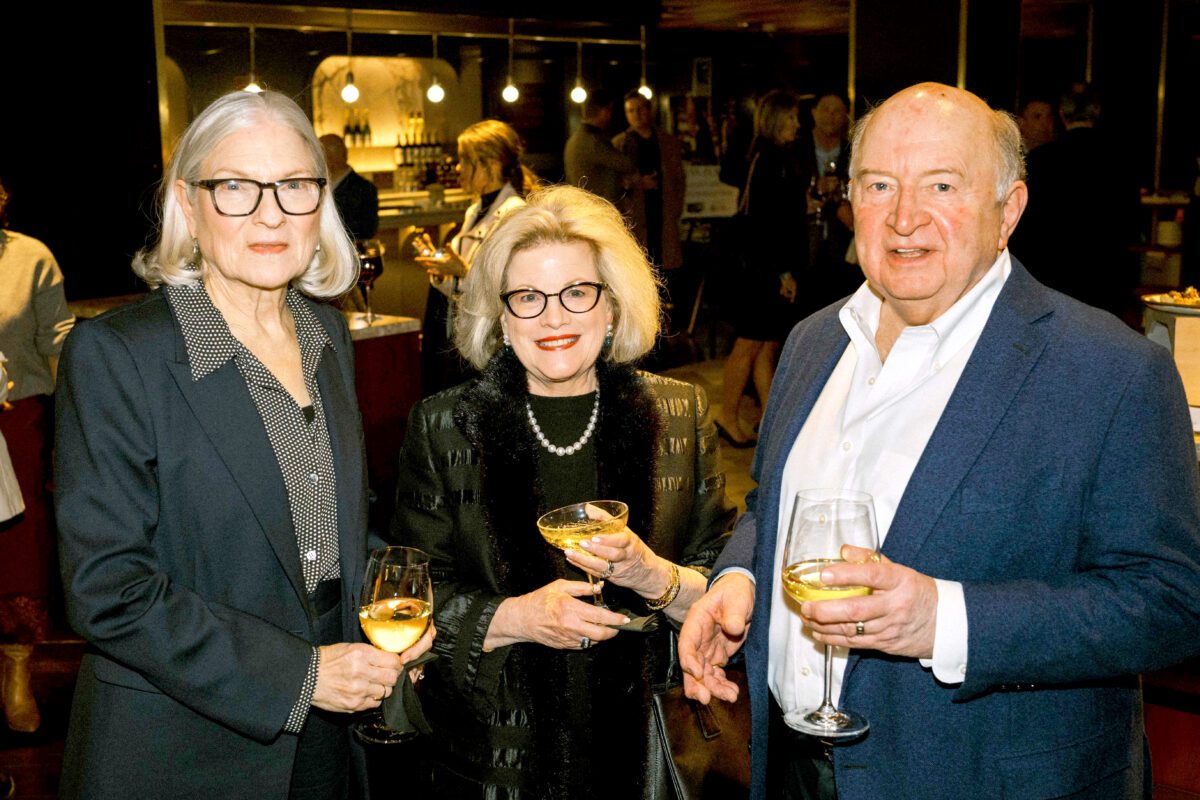
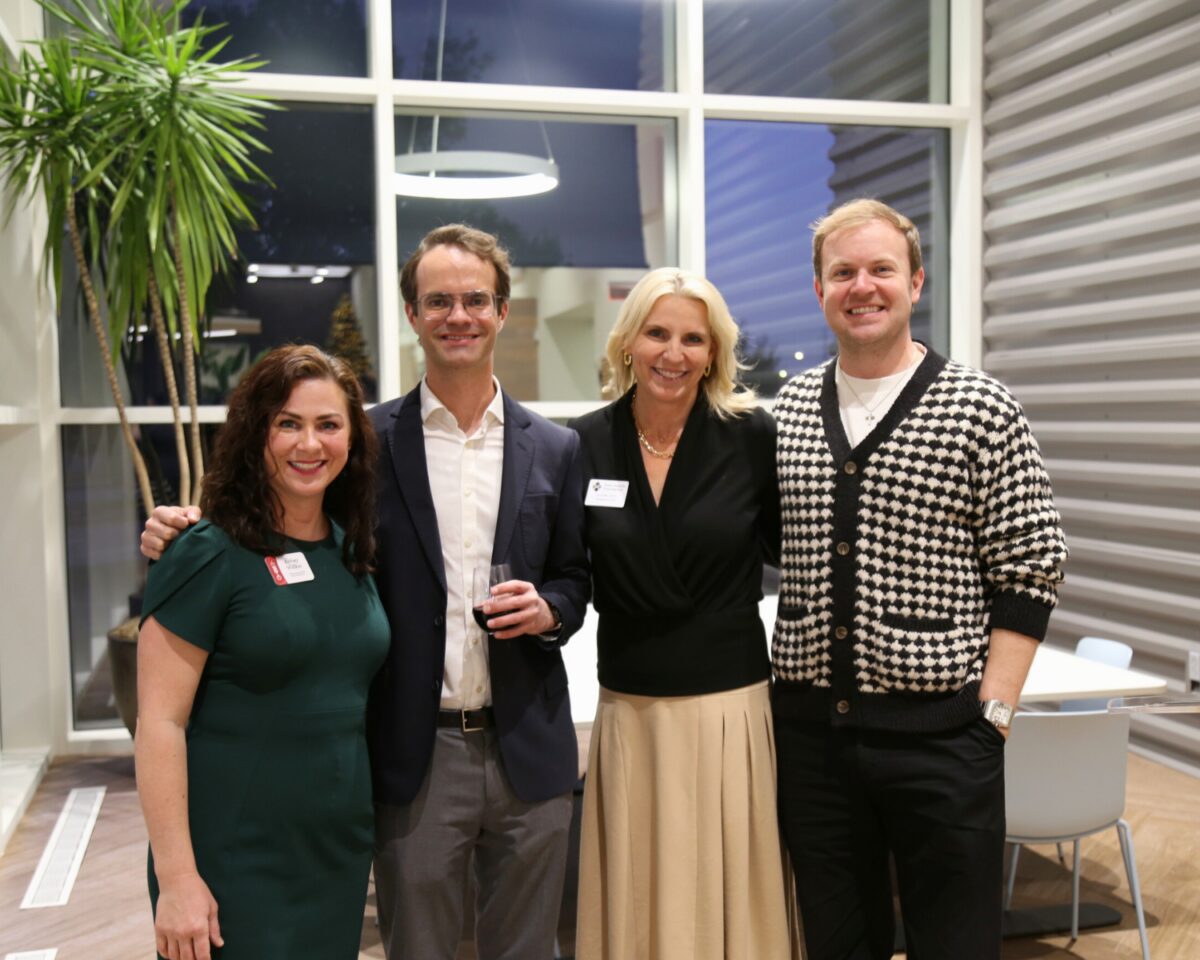
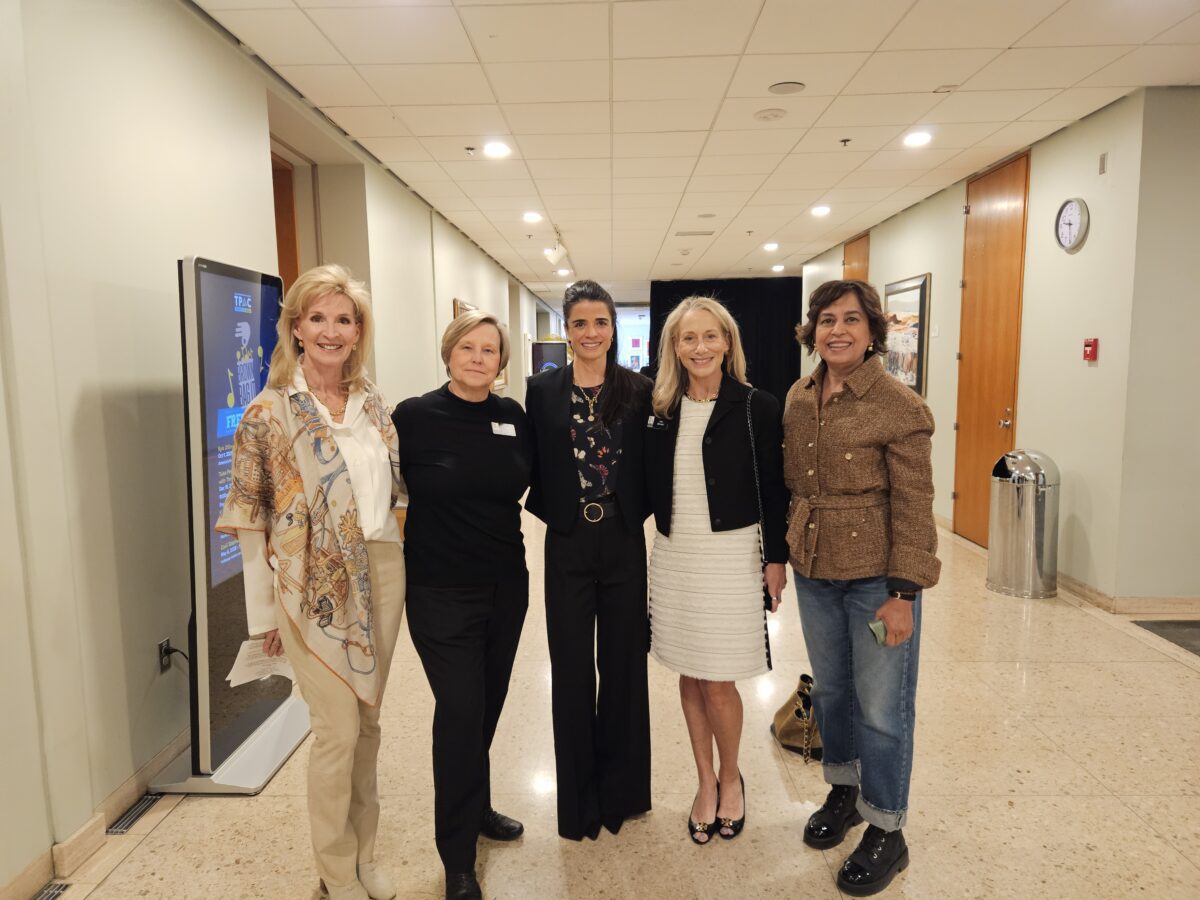
Ruth Ann & Craig Regens, Kaleigh Ewing, Reyna & Miguel Figueroa; Maestro’s Ball, Oklahoma City Philharmonic