











Carnivores will certainly be flocking to District Burger, with two locations in Jenks and Broken Arrow.
If you couldn’t glean it from the name, the burgers are the star of the menu at District. Try the iconic Oklahoma onion burger: two smash patties with onions, American cheese and housemade burger sauce, or the Wagyu: an 8 oz. patty with cheddar, tallow onions, truffle sauce and jalapeno jelly – all locally sourced.
Chicken sandwiches include the Southern, with crispy fried chicken, lettuce, tomato, onion and pickles, as well as the Pesto, with grilled chicken, tomato, arugula, mozzarella and pesto mayo. Veggie lovers can enjoy the Torta with a black bean patty, onions, jalapenos, pepperjack cheese and avocado, or opt for the vegan chicken sandwich with all the fixings. District also offers a handful of shakes, craft cocktails, a variation of starters, plus breakfast and brunch menus.
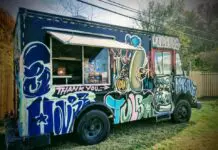
Photo courtesy Sweet Lisa’s
Sweet Lisa’s Cafe
Nestled within Tulsa’s Greenwood District, Sweet Lisa’s Cafe serves up soul food done right. Combos are the name of the game, with fish, chicken, porkchops and burgers on deck, too.
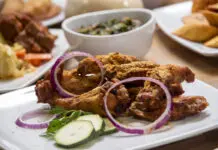
Try the catfish combo, with two filets, your choice of two sides, plus toast. Other highlights include the wing combo, wing sandwich, chicken breast combo and whole bone-in fish combo. Extras and singles range from tilapia to wings, porkchops, cornbread and chicken breast. Burgers are can’t-miss as well – try the cheeseburger, and don’t forget to add bacon and cheese. Make sure to ask about the specials, too!
Nhinja Sushi
Photo courtesy Nhinja Sushi
With four locations in the OKC metro, Nhinja Sushi is your go-to for a quick lunch or leisurely dinner.
Begin your experience with classic apps like lettuce wraps, steamed gyoza, spring rolls or tempura fried shrimp. For those looking for smaller portions, soups and salads include the seaweed salad, seared ahi tuna salad and miso soup.
You’ll find just about every sushi roll you could want – with fillings ranging from steak to shrimp, veggies, tuna, yellowtail and more. Nhinja also offers an array of sashimi and nigiri options. For those hoping for a safer option, fear not – Nhinja has shrimp lo mein and chicken fried rice, too, as well as options for kids, family meals and more.
Photo courtesy Fogo de Chao
Fogo de Chão
For an upscale, authentic Brazilian steakhouse experience, venture to Fogo de Chão in OKC. Guests begin with dishes like jumbo shrimp cocktail, chilled lobster and shrimp, or the seafood tower – with lobster, shrimp, snow crab and mussels. Shareable sides include the indulgent lobster mac and cheese, crispy Yucca fries and the burrata and roasted tomatoes.
If you want to go the traditional route, try the ‘Churrasco Experience,’ in which diners enjoy a variety of fired-roasted meat cuts, including sirloin, roasted chicken and lamb chops. Other entrees include cauliflower steak, pan-seared salmon and Chilean seabass.
Fogo de Chão also offers brunch and lunch, alongside cocktail and dessert menus.
Photo by Daniel Boud courtesy Celebrity Attractions
Kick off 2026 in style with entertainment options galore.
At the Tulsa PAC, Theatre Tulsa presents the beloved Frozen from Jan. 9-25. While you’re there, don’t miss Signature Symphony’s III – Brahms’ Symphony No. 2 on Jan. 10, or Celebrity Attractions Hadestown, back by popular demand on Jan. 14-15. The month concludes at the PAC with Disney’s Beauty and the Beast, running Jan. 30-Feb. 1 courtesy Celebrity Attractions. (Psst – if you find yourself in OKC, the show also runs at the Civic Center from Jan. 20-25). Other Tulsa gems include Signature Symphony’s Copland and the Wild West on Jan. 24 at the TCC Van Trease PACE, as well as Tulsa Opera’s presentation of The Pirates of Penzance on Jan. 30 and Feb. 1 at the Lorton Performance Center.
In Oklahoma City, the Civic Center hosts OKC Phil for two performances this month: Mozart’s Rivals – Race to the Top on Jan. 10, as well as Tango Caliente! – a night of seductive tango classics – on Jan. 30 and 31. Oklahoma City Community College also welcomes Afrique en Cirque, offering African circus arts, traditional dance and the mesmerizing rhythms, on Jan. 13.
Outside the metro, support local theaters by visiting the Bartlesville Community Center for The Choir of Man on Jan. 20 and Guthrie’s Pollard Theatre for Funniest Night of Your Life from Jan. 23-25.
While it may be freezing outside, indoor sports are bigger and better than ever this month.
In Tulsa, the Oilers take to the ice at the BOK Center January 2-4 and 16-17. If you’d instead like to watch some remote-controlled car races, head over to Expo Square for the RC Chili Bowl, Jan. 7-17. In conjunction, the Chili Bowl Nationals run Jan. 12-17, when spectators can enjoy indoor dirt track sprint car racing – often dubbed “Racing’s Winter Super Bowl” for dirt racing. Stick around Expo Square for the American Finals Rodeo, Jan. 29-31, or loop back around to the BOK Center on Jan. 23-24 for PRB (Professional Bull Riding).
In Oklahoma City, NBA champs the OKC Thunder play at the Paycom Center all month long, alongside the G-League OKC Blue. Venture to the OKC State Fair Park for the 2026 Cattlemen’s Congress on Jan. 3-15 – North America’s largest cattle show, bringing together cattlemen to showcase, market and sell production cattle. Lastly, head to Lazy E Arena in Guthrie on Jan. 15-18 for the International Finals Rodeo, where the top 15 cowboys and cowgirls from across the U.S. and Canada compete for world championship titles.
In Tulsa, the Oklahoma Boat Expo comes to the Arvest Convention Center on Jan. 9-11, when visitors can stroll through booths featuring a variety of outdoor products. After, head to the Oklahoma Card Show on Jan. 10-11 to view (and maybe purchase) a bevy of sports cards, Pokemon cards, TCGs and other collectibles. Another community event is the Tulsa Foundation for Architecture’s monthly tours, happening Jan. 17 at the Benedictine Sisters of St. Joseph Monastery. If you want to get out and get active, visit the Go Short, Go Long, Go Very Long run on Jan. 17 at Tulsa River Parks and participate in a 5K, 10K, 25K or 50K. Lastly, celebrate the legacy of a hero at the Tulsa Martin Luther King Jr. Parade on Jan. 19, starting at N. Detroit and John Hope Franklin Blvd.
In OKC, options are endless: Try the OKC Spirit Fair on Jan. 10-11 at the Reed Conference Center, or the OKC RV and Boat Show on Jan. 16-18 at the OKC State Fair Park. For a quirky weekend exploration, try the National Pigeon Association Grand National Show, also at the OKC State Fair Park on Jan. 23-25. And if you’re holding onto the Christmas spirit, the Edmond Ice Rink at Mitch Park is open until Feb. 1.
Outside Tulsa and OKC, there’s an event for everyone. Visit the KNID Agrifest, Jan. 9-10 at the Chisholm Trail Expo Center in Enid; the Big Om Yoga Retreat, Jan. 9-11 at Sequoyah State Park Lodge in Hulbert; the HERPS Oklahoma Exotic Reptile and Pet Show, Jan. 10-11 at the Heart of Oklahoma Expo Center in Shawnee; the Mad Dog Demolition Derby, Jan. 17 at the Claremore Expo Center; the Duncan Monster Truck Wars, Jan. 17 at the Stephens County Fairgrounds in Duncan; or the MLK Day Parade and Celebration, Jan. 19, starting at 625 E. Main St. in Ardmore.
A Private Life; photo courtesy Sony Pictures Classics, all rights reserved
January is an oddity for films. Often seen as a dumping ground for low budget schlock that likely won’t bring in much revenue, I’ve managed to cobble together a hopeful list that might just break the trend.
For your crime genre fix, don’t miss Dead Man’s Wire. Based on the true story of Tony Kiritsis, the plot follows his kidnapping of a mortgage broker and the subsequent standoff that ensued. Starring Bill Skarsgard (It), Dacre Montgomery (Stranger Things), Cary Elwes (The Princess Bride) and Al Pacino (Heat), along with being directed by Gus Van Sant (Good Will Hunting), the film is stacked with talent. Early reviews are positive, so we’ll see for ourselves when it hits theaters on Jan. 9.
If you want a bit of French cinema, take a look at A Private Life. Jodie Foster (True Detective: Night Country) stars as a renowned psychiatrist who begins an investigation into the death of one of her patients – which she’s convinced is actually a homicide. The entire film is in French, and it looks to be a fun black comedy and an excellent way to broaden your cinematic horizons when it opens on Jan. 16.
For an action thriller that has “January” written all over it, look no further than The Rip. Starring Matt Damon (The Bourne Identity) and Ben Affleck (The Town), the story follows a team of Miami cops who discover a large sum of cash during a raid, leading to loyalties being put on the line. The trailer looks like it has sizzling action and some fun performances from Damon and Affleck, along with very cliché police action thriller movie tropes. Director Joe Carnahan has a respectable career with winners like The Grey and Boss Level, so hopefully he can helm another success here when it hits Netflix on Jan. 16.
If science fiction is your bag, check out Good Luck, Have Fun, Don’t Die. Sam Rockwell (Three Billboards Outside Ebbing, Missouri) stars as a man from the future who travels back to the past to recruit a specific number of people to help him save the world from rogue artificial intelligence. Directed by Gore Verbinski, known for the first three films in the Pirates of the Caribbean franchise, this will be his first directorial effort since 2016, with hopefully better results than his last two films. The plot is unique and Rockwell is always a joy to watch, but we’ll find out for sure on Jan. 30.
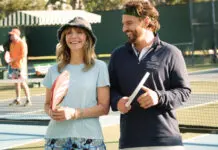
Lastly, if you’re looking for a psychological thriller, don’t skip Send Help. The plot follows Linda Liddle (Rachel McAdams, Game Night) who is stranded on a deserted island after a plane crash with the only other survivor – her boss, Bradley (Dylan O’Brien, Maze Runner). The two, despite their past differences, must work together to survive. The movie looks to have some excellent rapport between the two bitter leads, along with what appears to be some horror elements tossed in courtesy of director Sam Raimi (Evil Dead). It releases on Jan. 30.
Tulsa’s 41st mayor Monroe Nichols IV has spent his first year in office prioritizing tackling homelessness, boosting student success, enhancing public safety and increasing affordable housing. We caught up with Nichols and got his thoughts on …
… ending homelessness in Tulsa by 2030.
Our goal of reaching functional zero homelessness by 2030 is ambitious, but after one year in office, we’re proving it’s achievable. The progress we’re making is the result of deep coordination across departments, across agencies and across the nonprofit, private and philanthropic sectors. Earlier this year, I signed an executive order on homelessness establishing four priorities: a coordinated multi-agency encampment decommissioning plan; expanding shelter capacity; preparing for winter weather; and reducing evictions. We’ve acted on each of those: Our winter shelter opened this November and is serving Tulsans in need, helping expand the number of beds we have available this winter; we have reached an agreement with Tulsa County to purchase the former Juvenile Detention Center so we can establish Tulsa’s first true low-barrier shelter; our eviction mitigation coalition is now meeting, bringing landlords, renters and service providers to the same table; and alongside our partners, we recently launched Safe Move Tulsa – Tulsa’s coordinated effort to end street homelessness.
… focusing on day-to-day maintenance and long-term infrastructure.
A great city has to deliver on both: the basics that residents see every day, and the long-term investments that shape our future. Over the last several years, Tulsans voted three different times to implement critical infrastructure projects that we’re now seeing implemented across our city. We’re delivering on what we promised and creating a city that is more resilient and ready for our future. Because of these investments, Tulsa is continuing to see the largest streets improvements project in our city’s history, and I’m proud of the continuous work of our teams to deliver on that investment.
At the same time, we’re improving internal systems: streamlining permitting, strengthening department coordination, and creating tools that allow residents to track progress in real time. That means we can handle the day-to-day streetlights, potholes, and repairs more efficiently while still moving forward on major projects like housing expansion, public safety investments, and economic development.
… addressing recruitment and retention challenges within the police department.
Like cities across the country, Tulsa faces a police staffing shortage. In November, I was honored to … tag along with the TPD recruiting team on a trip to UNT in Denton, Texas. That was a great reminder of what it takes to bring the best to Tulsa, and I know if we continue to prioritize our officers and our public safety teams through investment, we’ll bring the best and brightest to Tulsa. Over the last year, we graduated two police academies, and another is underway with some of the strongest enrollment in recent memory. Crime is down across all levels, even with staffing challenges, which speaks to the professionalism and dedication of our officers. But public safety is no longer just the responsibility of law enforcement. We’ve expanded mental health response teams, diverting more than 4,000 calls from police and fire to trained clinicians. These numbers are a great reminder that safety is strongest when enforcement and community engagement work hand in hand. That’s why we’re planning to launch a Community Task Force to provide ongoing input on our Alternative Response Strategy.
… what “success” would look like at the end of his first term.
Success to me means Tulsans can look around their city and clearly see the difference we’ve made: Fewer people living on the streets because we scaled the strategies that work; 6,000 new affordable housing units that were built, blight that was significantly reduced and our neighborhoods were revitalized; police and fire departments that are fully staffed, well supported, and have the alternative strategies in place to thrive; children with safe places to go after school, robust summer learning opportunities and a pathway to economic mobility; businesses – large and small – choosing to invest here because we invested in ourselves; and tribal nations, working hand-in-hand with the City to make Tulsa the best city it can be. Most of all, I hope Tulsans can see that we’re facing big challenges, and instead of backing down, we’re stepping up and choosing progress.
… creating avenues for residents to engage directly with City Hall.
Tulsans expect to be engaged in the decisions shaping their city, and we are meeting that expectation by making government more accessible and transparent. Since I took office, we’ve held ten Community Conversations across Tulsa to talk about our vision, share our City leadership and hear from Tulsans about what matters most to them. We’ve launched tools to make us more transparent – including the Housing Tracker Map so residents can see exactly where development is happening and track our priorities around housing in real-time. And we’re also engaging directly with families through the new Office of Children, Youth and Families, which is led in partnership with ImpactTulsa. All of this work is led with the intent to bring Tulsans of all backgrounds together to hear their voices and expertise to help shape the future of our city.
… what drives and grounds him.
I’m grounded in the belief that the best indicator on how a city is doing is how it treats vulnerable people, particularly its children and youth. I remind myself of that every day and it’s something that sticks with me every time I enter City Hall. While public life can be demanding, staying connected to residents, listening to their experiences, their frustrations and their hopes is something that I take with me everywhere I go. I mentioned this in my State of the City speech, but moments like sitting down with the East Central Girls Flag Football Team and hearing what they need from their city – which was “safe places to go that don’t cost a lot of money, and job opportunities” – remind me why this work truly matters. At the end of the day, it is an honor of a lifetime to serve as mayor, and the responsibility itself keeps me grounded.
…improving student outcomes.
Improving outcomes for young people is core to our vision for Tulsa’s future. That’s why we created the Office of Children, Youth, and Families that is staffed by ImpactTulsa and designed to work directly with schools, nonprofits, and higher education partners to align efforts. Our goal is to put 15,000 additional Tulsa children on a path to economic mobility by 2030. Already, the office has established a Children’s Cabinet and helped coordinate the City’s response when families lost SNAP benefits and federal worker lost pay. We’re also developing a youth workforce initiative that would create 1,200 job opportunities for teens and open 22,000 after-school slots every year. These initiatives link students to education, enrichment, mentorship, and career pathways. From cradle to career, our role is to build strong partnerships and create the conditions where every child in Tulsa can thrive.
At Arvest Winterfest, Tulsans will find ice skating, a 44-foot Christmas tree, hot cocoa and an igloo village.Photo courtesy Arvest Winterfest
Even in the hardest of times, people can find joy in holiday traditions. Centered on reflection and gratitude, the holiday season is time to give back to friends, family and those less fortunate.
Organizations across the state are doing just that. Throughout December, Oklahomans can find ways to connect and make a lasting impact in their community by participating in charitable deeds and locally organized festivities.
Christmas Under the Bridge
For 12 years, City Lights Tulsa has been serving people experiencing homelessness through compassionate outreach and housing support. Aimed at making the holidays a special time for all, the organization is bringing back its annual Christmas Under the Bridge program in 2025.
The Thursday before Christmas, volunteers at City Lights Tulsa will be giving away clothing, warm meals and gifts during Christmas Under the Bridge. Photo courtesy City Lights Tulsa
Every Thursday, volunteers with City Lights feed hundreds of people under the bridge at Maybelle Avenue and Reconciliation Way. The Thursday before Christmas, Dec. 18, volunteers will give away clothing, warm meals and gifts to hundreds of people in need.
“We’ve had carolers before, and we always serve a special meal,” says Haley Kardokus, the director of development and communications at City Lights. “It’s a chance for people to feel like they’re a part of a community and can participate in things that people with housing get to do.”
City Lights is also preparing to reactivate its emergency mobile outreach program during times of extreme weather, distributing hot hands, blankets and other essentials to people in encampments. To make both programs possible, the organization relies on donations and a dedicated group of volunteers.
“There’s room for everyone, and it’s a great place to build relationships,” says Kardokus. “As much as we are serving our neighbors, it’s also a gift to the person who is serving; it really shows you the humanity of the people living next to us.”
Last Christmas, Toys for Tots distributed more than 40,000 toys to children in the Oklahoma City area. Motivated to deliver hope to those less fortunate, the organizers behind the program are working to reach more kids than ever before.
“Whether it’s 50 or 100 more kids, being able to go further with the campaign is ultimately what we want to do,” says Staff Sergeant Natasha Gann, who oversees the program.
Starting in Los Angeles in 1947, Toys for Tots has rapidly grown into a nationwide program that serves millions of families annually. Its mission is to collect new, unwrapped toys every holiday to distribute to children in need.
People can drop off toys at participating locations across the state until Dec. 15. In the days leading up to Christmas, the organization relies on volunteers to transport, store, organize and wrap toys.
“We’re all about joining in, whether it’s the smallest of contributions,” says Gann.
By removing the financial pressure of shopping for gifts, families can focus on what matters most: spending time with each other.
“Seeing the smiles and the joy on the parents’ and children’s faces is priceless,” says Gann. “Even if it is a couple toys, it’s taking that stress off of them, which is huge in itself.”
Downtown in December; courtesy Downtown Oklahoma City Partnership
Downtown in December
Organized by Downtown OKC and presented by Devon Energy, Downtown in December brings together over thirty holiday events and activities into the heart of the city. Launched in 2002, the event was created with the goal of revitalizing the city’s downtown stretch. By drawing people to this area, the event has helped generate over $6 million in additional funds for local business owners since 2013.
“Many small businesses count on this time of the year, and every purchase [they get] really strengthens our community,” says Danielle Dodson, the director of marketing and communications at Downtown OKC.
Running through the end of January, the event features ice skating, holiday pop-up shops, photos with Santa and other family-friendly activities. Lights on Broadway will also return on select Saturdays, transforming Automobile Alley into a stunning display of 600,000 Christmas lights.
Planning Downtown in December is a year-round effort for event organizers.
“There truly is something magical about being downtown and seeing all these families take photos and kids skating for the first time at the Devon ice rink,” says Dodson. “Those shared moments make all the hard work worth it.”
Nestled in the heart of downtown Tulsa, Winterfest is celebrating its 18th anniversary this year. The community event, which features an open-air ice-skating rink, has steadily grown to attract over 150,000 visitors annually.
Bringing dozens of events together is a full-time job for organizers.
“It is year-round planning,” says Holly Harper, who is the tenant and special events manager for the BOK Center. “We’ve already started talking about next year’s event.”
This year, Winterfest will introduce a new program, Student Night, in partnership with Tulsa Community College. Beginning Dec. 5, TCC students can get a 50% discount on skating tickets every Friday evening.
Visitors can experience the festival’s mainstay attractions, including a 44-foot Christmas tree, hot cocoa and an igloo village. Focused on making a difference in the community, Food Drive Mondays and Warmth Wednesdays will also return this year.
Visitors that participate in Winterfest’s donation drives will receive a 50% discount on skating tickets.
“For us, Winterfest is really an opportunity to stay involved in the community and give back,” reflects Harper.
Featured photo credit: At Arvest Winterfest, Tulsans will find ice skating, a 44-foot Christmas tree, hot cocoa and an igloo village. Photo by Phil Clarkin courtesy Arvest Winterfest
Shawn Shropshire, owner of SDS Knifeworks in Piedmont, is recognized for frontier-inspired knives and sheaths as well as Native American and European Viking influences.
Photos by SharpByCoop
In 1978, Mark Carter took up welding at a vocational technical school, then transitioned to building oilfield pressure tanks and shoeing horses. For 35 years, he was a City of Moore firefighter, and he retired in 2018. Now he owns MC Iron Blacksmithing & Welding in Stillwater.
“I make anything, from hand-forged wall art, fireplace tools and table bases to gates and handrails,” says Carter. “I have a couple of different forges that heat the metal to approximately 2,000 degrees — then I forge them with a hammer and different tools on a 125 pound anvil. For gates and handrails, I also incorporate welding equipment.”
Improving his skills through workshops and classes, Carter hand forges items and uses tools to fabricate.
Shawn Shropshire, owner of SDS Knifeworks in Piedmont, is recognized for frontier-inspired knives and sheaths as well as Native American and European Viking influences.
Photos by SharpByCoop
“I stay as busy as I want,” he says. “My favorite thing is for someone to say is, ‘I know what I want but I just can’t find it.’”
The owner of SDS Knifeworks in Piedmont, Shawn Shropshire is an East Central University alumni, and was an Oklahoma City police officer for 20 years.
“When I found metal work and forging, it just felt right,” says Shropshire, who began making knives as a hobby two decades ago. “The shop is hot in the summer, cold in the winter and usually doesn’t smell too good. But it’s where I feel most comfortable.”
Known primarily for making cutlery, Shropshire produces custom, handmade knives and related items. He works with organic materials, and is recognized for frontier-inspired knives and sheaths as well as Native American and European Viking influences. Shropshire’s customers pepper the U.S., and are also in Europe, South America, New Zealand and the Middle East. His blacksmith travels are global.
Because he makes luxury items, Shropshire’s demand fluctuates. But his orders stay backed up for at least a year.
“Typically I start with raw steel, forge to shape, then finish, grind, heat treat, clean that up, and fit a guard and handle before finally hand sanding and making a sheath for it. Each knife is different, so each sheath is fitted to the specific knife. Some of the sheaths I build, such as frontier style, rawhide, can take nearly as long to make as the knives.”
The Resurgence of Blacksmithing
An ancient art, blacksmithing involves heating metal in a fire or furnace to make it soft enough to hammer, bend and shape into useful or decorative items. By the Middle Ages, a local blacksmith shop, or smithy, was common. Blacksmithing declined with automation, but has recently resurged as a hobby, paralleling the call for traditional craftsmanship. The global market is moving blacksmithing’s popularity and cultural presence forward through television, social media and competitions.
In 2021, Shropshire won the “Best Forged Blade Knife” Competition at the 32nd Salon International du Couteau d’Art et de Collection (SICAC) in Paris. He won the “Best Bowie” Competition at the 2022 Texas Select Custom Cutlery Event in Bellville, Texas. His champion status in the History Channel Season 5 Episode 39 “Forged in Fire Champion” took him into a full-time career.
There are various Oklahoma blacksmithing groups, including the Oklahoma Knife Group LLC, Okie Blacksmiths, and Saltfork Craftsmen Artist-Blacksmith Association.
Wedgewood Village Amusement Park operated in northwest Oklahoma City with a carousel, swimming and boating activities, and a roller coaster.
It closed in 1969. Photo by Jim Lucas courtesy OHS
Though many of Oklahoma’s beloved amusement parks have long since closed or been torn down, their stories reveal a fascinating glimpse into the state’s evolving culture of fun and recreation. Years ago, for those who couldn’t make it to Six Flags Over Texas, many family-owned amusement parks offered a perfect in-between stop for a vacation. Some are still operating today, like Frontier City, which opened in 1958 on the heavily traveled Route 66 and I-35 in northeast Oklahoma City. Others weren’t so lucky – and closed their gates to the public for various reasons.
“Delmar Garden in Oklahoma City, open from 1902 to 1910, was known as the premier amusement park in Oklahoma territory,” says Matthew Pearce, Ph.D., a state historian with the Oklahoma Historical Society. “It was located south of downtown Oklahoma City along the present Oklahoma River. It closed due to persistent flooding.”
The park offered a swimming pool and a variety of other attractions such as horse races, baseball games, restaurants and a hotel, says Pearce. Belle Isle Park in north Oklahoma City (near the present Penn Square Mall) offered similar amenities.
Not all our Oklahoma amusement parks have a smooth history. Like many private parks in Oklahoma, Doe Doe Park was a segregated facility open only to white patrons. The park was notable for having a large swimming pool at a time when the City of Lawton did not provide an integrated, public alternative.
“During the summer of 1966, civil rights activists staged protests at the park entrance demanding equal access,” says Pearce. “Clara Luper even led a march of approximately 100 individuals from Oklahoma City overnight to Lawton to protest.”
The park was integrated a year or two later, but closed in the mid-1980s. The bridges that originally provided entry to and from the park are preserved in Lawton’s Bridge Park, while the amusement park itself has been replaced by an apartment complex.
OKC’s Delmar Garden, opened in 1902, was the territory’s premier amusement park, although it closed in 1910 due to persistent flooding. Photo courtesy OHS
Other amusement parks dotted the Oklahoma landscape. According to The Encyclopedia of Oklahoma History and Culture, Wedgewood Village Amusement Park operated in northwest Oklahoma City in the late 1950s and ’60s. Wedgewood had a carousel, swimming and boating activities, a roller coaster, and other standard park amenities, although it closed in 1969.
In the mid-1920s, William Falkenberg established Crystal City Amusement Park next to (and later, eventually absorbing) Electric Park. He added an ever-growing number of rides, including the large Zingo roller coaster. The park became known for its Casa Loma dance hall, as well. The dance hall and bathhouse burned down in the mid-1950s, and the park soon disappeared.
Lakeview Amusement Park saved some of the Crystal City rides and opened near Mohawk Zoo. Another fun addendum for Tulsans was the Sand Springs Amusement Park, at the end of the Sand Springs Railway line, beginning in 1911 and lasting until the mid-1930s.
Near Jenks, the Skyline Amusement Park thrived from the mid-1950s until the modern Bell’s Amusement Park out-competed it in the late 1960s. In 1969, Skyline management sold the park to a Tulsa liquor distributor who renamed it Indian Nations Park, which closed a year later.
Bell’s, which still flourished at the turn of the twenty-first century, began in 1951, and had a stellar reputation due to its iconic Zingo roller coaster, built in memory of Crystal City’s old Zingo. While there was some stir about Bell’s returning to Broken Arrow back in 2021, owners decided not to move forward with the project in 2023.
Main image cutline: Wedgewood Village Amusement Park operated in northwest Oklahoma City with a carousel, swimming and boating activities, and a roller coaster. It closed in 1969. Photo by Jim Lucas courtesy OHS
Kris Kanaly’s signature style is dubbed “Galactiverse,” and explores ultra-flat abstractions where landscapes merge with otherworldly forms. Photo courtesy Kris Kanaly
Culture and history saturate the walls of Oklahoma in the form of murals, which tell stories of past and present, representing all who have called Oklahoma home.
Mural painting, one of the oldest forms of art, dates back to the Prehistoric Era. Over time, techniques have evolved, but the intents remain the same: cultural expression and social commentary.
“Murals have a tremendous impact on a community,” says Kris Kanaly, a muralist based in Oklahoma City. “They create unique places that attract visitors and increase property value. They provide communities with identity and offer spaces for expression. Murals build pride, improve quality of life, support citizen retention and even give businesses a reason to invest in the area.”
In Tulsa, Hightail Creative Co., run by Kayley Giacomo and Raygen Treat, handles everything from branding and digital design to mural and sign painting. They agree: murals only offer upsides.
“Murals greatly impact our local communities in a positive way,” Giacomo says. “They increase pedestrian foot traffic, boost business revenue, have huge ROI, engage community, provide a sense of safety, appeal to youth and special groups, revitalize spaces, build cultural identity and attract tourism — all while supporting artists and their craft along the way.”
Hightail Creative Co., helmed by Kayley Giacomo and Raygen Treat, has created a bevy of murals around Tulsa and beyond. Photo courtesy Hightail Creative Co.
Every muralist has their own unique process when it comes to creating art. For Hightail, a women-, Indigenous- and queer-owned business, the process begins with an inquiry. The team then gathers information about the site, the mural’s size, the client’s goals and the overall vision.
Kanaly, working under the moniker of “Pyramid Guy,” says that he finds that “all different variables can affect each project.”
After the pre-planning process, the mural completion turnaround is usually quick. For Hightail, the painting process can take a few days to a week, but murals of a larger size or immersive detail could take several weeks. Treat and Giacomo are brush painters, which often takes longer than using spray paint, but they “believe in the longevity and quality of brush application,” Giacomo says.
For Kanaly, the pre-planning sometimes takes no time at all. He says if it’s for a festival, he may just sketch a spontaneous idea onto the wall, while “commission jobs usually involve a sketch for approval, specific requests and mural permits that need to be approved by city officials, which can take weeks to months.”
Kanaly’s Abstract Passages is his largest mural to date — it’s a six-lane underpass leading into Bricktown in Oklahoma City, painted in 2017. It took a month to create. He says one of his favorite murals done by another artist is Dylan Bradway’s 7-story tall flower — one of the largest murals in downtown OKC.
The Plaza District is the go-to place for murals in the state’s capital, says Kanaly.
“Plaza Walls has been our premier display of mural art from artists all over the world,” he shares.
Living on Tulsa Time is one of both Treat and Giacomo’s favorites they’ve created together; you can spot it on the corner of Reconciliation Way and Boston, near Guthrie Green, in downtown Tulsa.
“We completed this piece to celebrate Tulsa and to coincide with Mayfest,” says Giacomo.
Other favorites of the duo are FUNKTIFIED, located in Broken Arrow on Main Street, Zink Lake, a collaborative piece between the River Parks Authority and a bevy of local artists near 18th and Riverside, and Howdy, a custom design for Empire Slice House in Stillwater.
Main image cutline:Kris Kanaly’s signature style is dubbed “Galactiverse,” and explores ultra-flat abstractions where landscapes merge with otherworldly forms. Photo courtesy Kris Kanaly