As cold and flu season begins, how to avoid being sick becomes a hot topic, along with the many products on the market claiming to boost the immune system. To understand what’s essential to strengthen our immunity to common ailments, Linda Sullivan, D.O., a family medicine physician with Saint Francis Health System in Tulsa, provides some insight.
“People often think we have to do these elaborate things to boost our immune system, but really it’s all the things your mother likely told you,” says Sullivan. “Don’t smoke and get plenty of rest – eight hours if you can – and exercise regularly, at least three to four times a week, because exercise does help the immune system. You also need to eat a healthy diet that includes lots of fruits and vegetables – and citrus, which is perfect because it’s in season.”
She says while many people take extra vitamin C during the winter months, it may not be necessary and may not help prevent them from getting sick.
“Most people who consume a Western (a.k.a. American) diet receive enough vitamin C,” says Sullivan. “A few years ago, there was a study where participants took an extra 500 milligrams of vitamin C a day. The study looked at whether or not those people were sick less often than those who didn’t take extra vitamin C, and it concluded that they weren’t. However, there was one subset of individuals who regularly did intense exercise, such as marathon runners, and they appeared to get less colds when they were exercising a lot and taking additional vitamin C.”
She shares that getting your daily recommended vitamins from food offers the most benefits.
“If you eat an orange, you’re getting vitamin C but also fiber, and it has less sugar than a glass of orange juice,” she says. “However, if you don’t like oranges or if there’s some reason you can’t tolerate them, there’s many other foods rich in vitamin C, or you can take a vitamin C supplement.”
Also, when it comes to avoiding illnesses, thoroughly washing your hands is a simple step that people often rush through. According to the U.S. Centers for Disease Control and Prevention (CDC), scientific studies have shown that a person needs to scrub their hands for 20 seconds to remove harmful germs and chemicals – the equivalent of singing the ‘Happy Birthday’ song twice.
“If you don’t have soap and water, using alcohol hand sanitizer is very effective; we use it in the office and hospital settings,” says Sullivan. “Also, if you’re in public, high traffic areas, try to avoid high touch surfaces such as doorknobs and try to avoid touching your face.”
She also recommends everyone staying up-to-date on vaccinations – especially if you’re considered high risk due to health issues.
“People will often decide not to get the flu vaccine because they say it won’t keep them from getting the flu,” she says. “That’s true, but the flu shot isn’t designed to keep you from getting the flu, it’s designed to keep you from being hospitalized and potentially dying. Many people die from the flu each year and we’re still seeing COVID-19 deaths, although they’ve declined.”
The CDC currently recommends that everyone six months and older should receive the flu vaccine and COVID-19 vaccine, and adults over age 60 should receive the respiratory syncytial virus (RSV) vaccine. Older adults with certain medical conditions and infants up to 12 months of age are at an increased risk of severe RSV disease.
As cold and flu season begins, how to avoid being sick becomes a hot topic, along with the many products on the market claiming to boost the immune system. To understand what’s essential to strengthen our immunity to common ailments, Linda Sullivan, D.O., a family medicine physician with Saint Francis Health System in Tulsa, provides some insight.
“People often think we have to do these elaborate things to boost our immune system, but really it’s all the things your mother likely told you,” says Sullivan. “Don’t smoke and get plenty of rest – eight hours if you can – and exercise regularly, at least three to four times a week, because exercise does help the immune system. You also need to eat a healthy diet that includes lots of fruits and vegetables – and citrus, which is perfect because it’s in season.”
She says while many people take extra vitamin C during the winter months, it may not be necessary and may not help prevent them from getting sick.
“Most people who consume a Western (a.k.a. American) diet receive enough vitamin C,” says Sullivan. “A few years ago, there was a study where participants took an extra 500 milligrams of vitamin C a day. The study looked at whether or not those people were sick less often than those who didn’t take extra vitamin C, and it concluded that they weren’t. However, there was one subset of individuals who regularly did intense exercise, such as marathon runners, and they appeared to get less colds when they were exercising a lot and taking additional vitamin C.”
She shares that getting your daily recommended vitamins from food offers the most benefits.
“If you eat an orange, you’re getting vitamin C but also fiber, and it has less sugar than a glass of orange juice,” she says. “However, if you don’t like oranges or if there’s some reason you can’t tolerate them, there’s many other foods rich in vitamin C, or you can take a vitamin C supplement.”
Also, when it comes to avoiding illnesses, thoroughly washing your hands is a simple step that people often rush through. According to the U.S. Centers for Disease Control and Prevention (CDC), scientific studies have shown that a person needs to scrub their hands for 20 seconds to remove harmful germs and chemicals – the equivalent of singing the ‘Happy Birthday’ song twice.
“If you don’t have soap and water, using alcohol hand sanitizer is very effective; we use it in the office and hospital settings,” says Sullivan. “Also, if you’re in public, high traffic areas, try to avoid high touch surfaces such as doorknobs and try to avoid touching your face.”
She also recommends everyone staying up-to-date on vaccinations – especially if you’re considered high risk due to health issues.
“People will often decide not to get the flu vaccine because they say it won’t keep them from getting the flu,” she says. “That’s true, but the flu shot isn’t designed to keep you from getting the flu, it’s designed to keep you from being hospitalized and potentially dying. Many people die from the flu each year and we’re still seeing COVID-19 deaths, although they’ve declined.”
The CDC currently recommends that everyone six months and older should receive the flu vaccine and COVID-19 vaccine, and adults over age 60 should receive the respiratory syncytial virus (RSV) vaccine. Older adults with certain medical conditions and infants up to 12 months of age are at an increased risk of severe RSV disease.
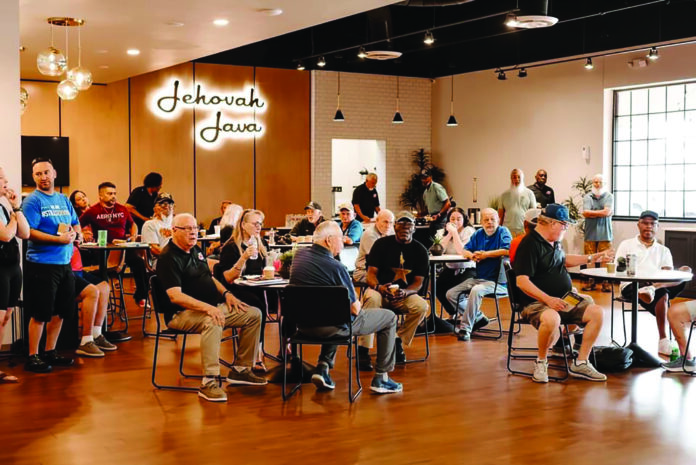
Vet Chat started in 2018. The group consists of veterans and service members who gather at Cornerstone Church in Midwest City to connect, share resources and build friendships.
Photo courtesy Vet Chat
Although retired from the Air Force, Alfonso Garza Jr. and Leo Webster remain actively involved in a vital mission: supporting, educating and collaborating with fellow veterans. Both have a passion for connecting these people with programs and services ranging from education to healthcare to housing.
In fact, Garza – the programs administrator for the Veterans Mental Health and Suicide Prevention program with the Oklahoma Department of Veterans Affairs – says one of the main issues that service men and women face is that they are simply unaware that “there is help, that people care and that there are resources available.”
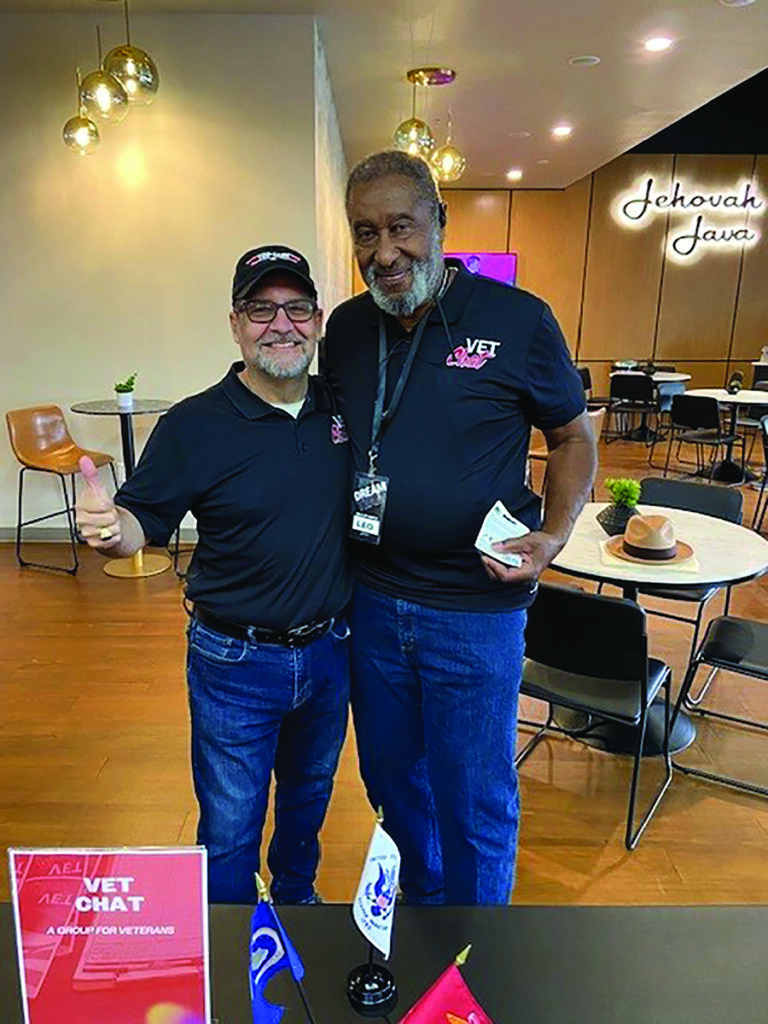
Retired veterans Alfonso Garza (left) and Leo Webster are passionate about helping fellow brothers and sisters in arms. Garza works with the Oklahoma Department of Veterans Affairs and Webster started Vet Chat gatherings in Midwest City. Photo courtesy Garza and Webster
That focus on offering help fuels Garza’s work, which includes outreach efforts into communities, colleges, veterans’ groups and military reserve units. He also enjoys networking and learning about groups that are carrying out his shared mission.
“I’m all over the state,” says Garza, who served in the Air Force for 22+ years. “I’m always casting the net to see who has the same passion.”
Webster, who has collaborated with Garza, started a program called Vet Chat in 2018, where veterans and service members gather monthly at Cornerstone Church in Midwest City to connect, share resources and build friendships.
“We just want to meet the need – for whatever that need is,” says Webster, who served in the Air Force for 24 years.
The group has grown from about eight people, who initially congregated at Webster’s home, into nearly 60 today. Webster’s goal is 100. Vet Chat discusses topics that impact fellow veterans or active-duty service members. Webster mentions another benefit is that the gatherings help build camaraderie among veterans and let them know the support that is available.
“Now I feel like it’s time for us to serve them in whatever way we can,” says Webster. “Because they have given so much and asked for nothing, we need to be there for them now.”
There’s more work that can be done, Webster and Garza agree. Getting involved in organizations that help veterans, sharing resources with veterans or simply taking the time to check in on the veterans in your life can lead to lasting impacts.
“Everybody can make a difference,” says Garza. “We can’t forget that.”
Another way to give back this month is by helping the less fortunate through the holidays. In fact, you can deliver smiles, cheer and a nutritional meal via a variety of nonprofits, including Meals on Wheels – which offers food, wellness checks and caring contact to senior residents in and around Tulsa and OKC.
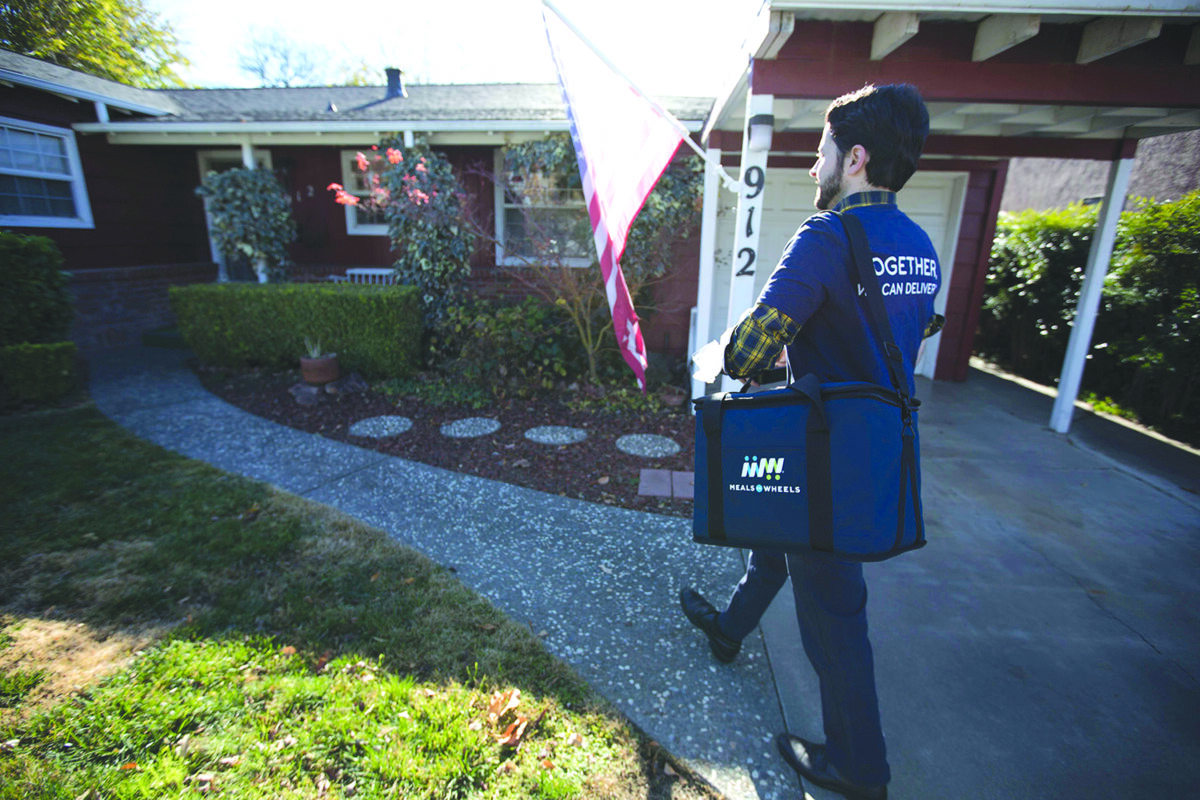
Volunteers are needed year-round with Meals on Wheels Metro Tulsa, and opportunities are available that can accommodate a variety of schedules. Photo courtesy Meals on Wheels
Volunteers are needed year-round, and there are opportunities that can accommodate a variety of schedules, says Nicholas Bryant, marketing and communication coordinator with Meals on Wheels Metro Tulsa.
“We always need substitute meal delivery drivers that can fill in for us as their schedule allows each week,” he says. “There is no minimum time commitment required to be a volunteer, and several of our programs provide very flexible options for every type of schedule.”
Bryant also mentions one of the biggest needs facing the Tulsa-based organization right now is a scarcity of meal delivery drivers in the northeast and northwest Tulsa areas – these drivers will “help with our transition back to hot meal delivery for clients, multiple days per week.”
Anyone is welcome to help out at Meals on Wheels – volunteers range from high school students to grandparents.
“You can volunteer at any age for most of our programs, as long as you are with someone over the age of 18 while volunteering,” Bryant says. “We also have many adult volunteers that like to bring friends and family with them while volunteering, including their children or grandchildren. It’s a great opportunity for family bonding.”
Volunteering with the organization also helps further the mission of providing meals and meaningful moments with seniors in the community.
“In addition to the benefit our meals provide, we live up to our saying of ‘more than just a meal’ by providing caring contact to our homebound clients to help fight the triple threat of aging: loss of independence, social isolation/loneliness and lack of nutrition/hunger,” says Bryant.
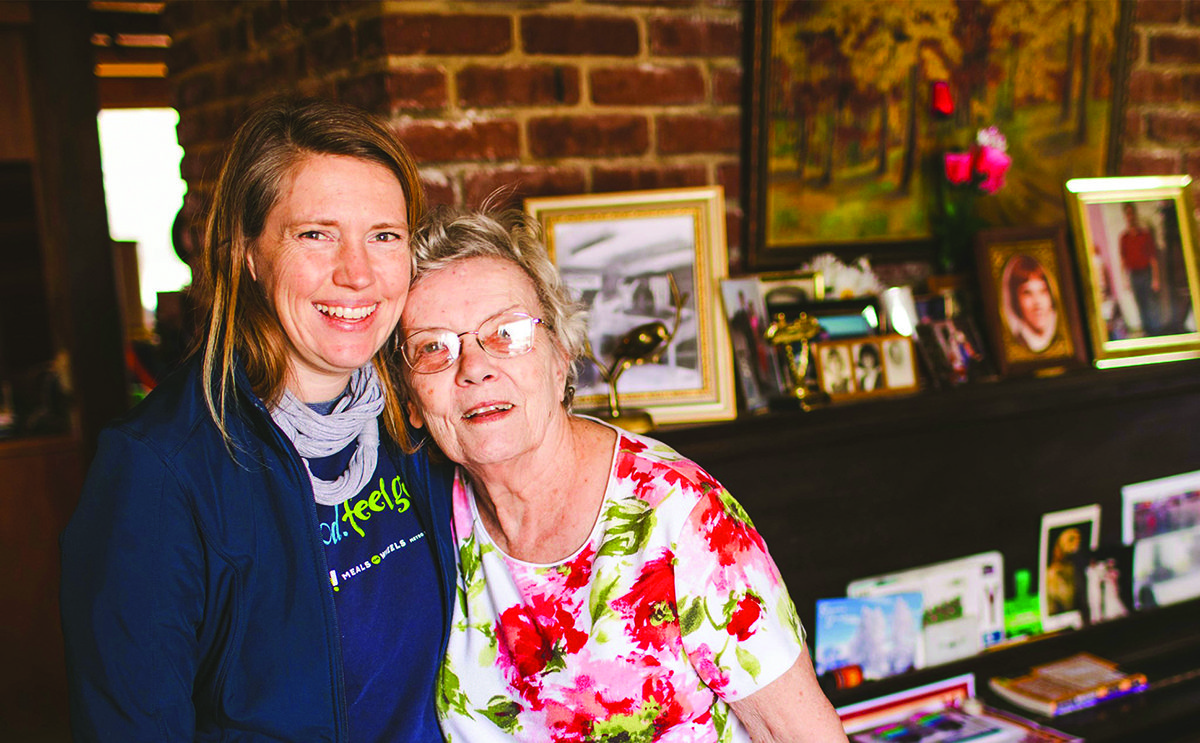
He adds: “For many of our clients, our volunteers may be the only people they see or talk to all week.” Those interactions have a lasting effect on the clients, of course, but also the volunteers.
“Many of our volunteers have expressed that they get just as much out of being a volunteer with us, as our clients do from receiving services,” Bryant says.
Meals on Wheels, a nonprofit with locations in Tulsa and Oklahoma City, provides nutritious meals, wellness checks and caring contact to senior residents. Photo courtesy Meals on Wheels
Helping Out Veterans Near You
• Perform home repairs or household chores for a veteran in your neighborhood.
• Donate your time to help a veteran-based organization.
• Share your skills. Are you tech savvy or a whiz at tax preparation? Consider donating your talents to veterans in your area.
• Provide transportation. Volunteer your time to help veterans get to medical appointments. One example is the Volunteer Transportation Network from the U.S. Department of Veterans Affairs that offers transportation for veterans seeking services from a VA facility.
• Send a note of thanks. If you know a veteran in your neighborhood, consider leaving them a note to thank them for their service. You can also submit letters to Operation Gratitude, which delivers letters, cards and care packages to veterans and military personnel.
Schindler, a 150-year-old global manufacturer of elevators, has offices in Tulsa. Photo courtesy Schindler
Elevators. They take us to upper floors and down to basements, saving steps and making multi-floor buildings and skyscrapers viable for living and working.
“It’s something many people don’t consider in their daily lives, but [elevators are] as common as the automobile or airplane as a method of moving people safely,” says Brandon Shultz, branch manager for Schindler Elevators and Escalators in Oklahoma. The 150-year-old company’s international presence moves two billion people every day on elevators, escalators and moving walks.
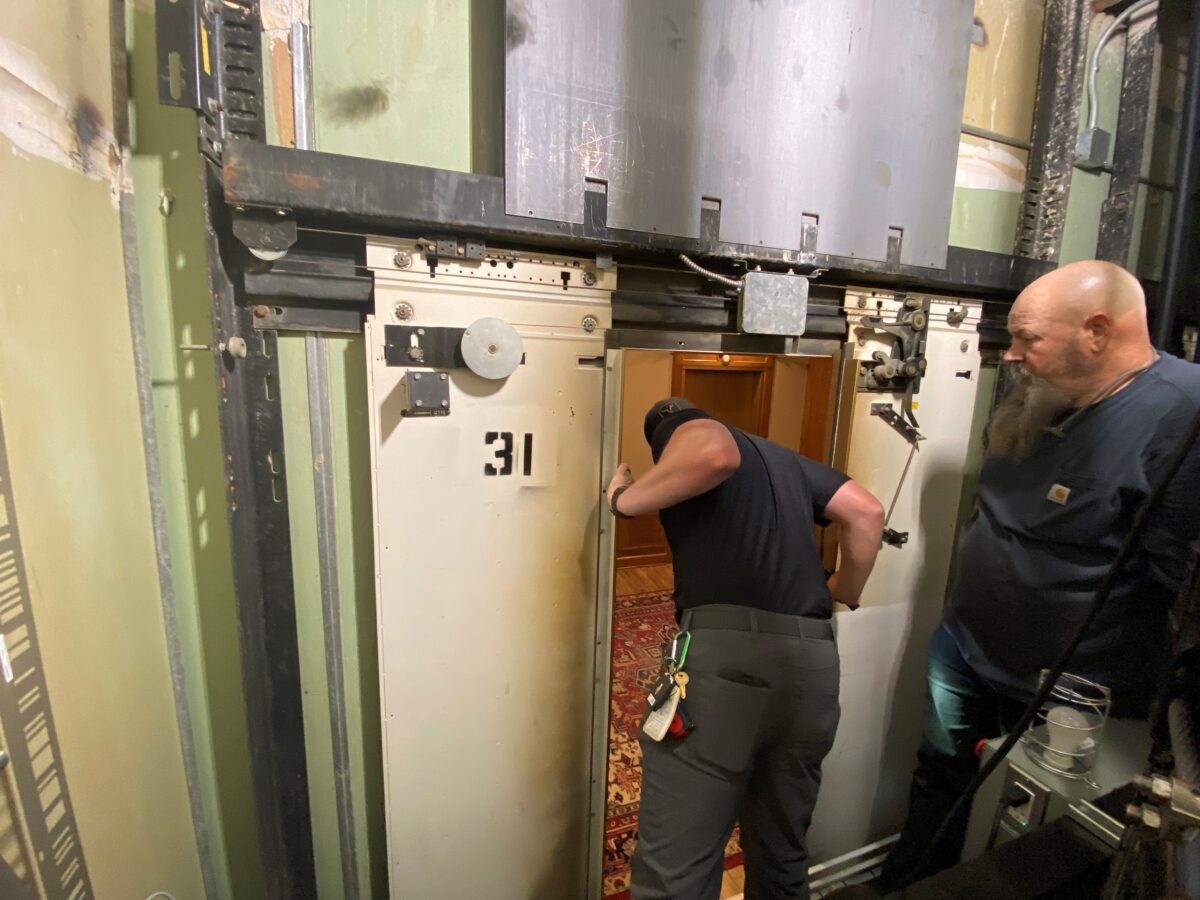
The Oklahoma Department of Labor inspects and maintains elevators across the state. Photo courtesy ODL
In Oklahoma, there are a handful of major elevator manufacturing and installation companies, says Jim Williams, director of the safety standards division for the Oklahoma Department of Labor (ODL). The ODL has jurisdiction over elevator standards across the entire state, except for the City of Oklahoma City, which has its own codes and oversight for both elevators and escalators.
“A licensed inspector must approve the plans for any new installations, and once the elevator is installed, it must pass an acceptance test before being put into service,” says Williams. “After the acceptance, the elevator must be inspected either every year or every other year, depending on the type of elevator. If the elevator passes each annual or biannual inspection, the elevator is issued a Certificate of Operation, which is required to be in plain view or at least available to be viewed by the public.”
ODL has jurisdiction over 77 counties’ elevators and escalators with public access – although not in private residences, says Oklahoma Labor Commissioner Leslie Osborn.
“The Department of Labor oversees workplace safety, labor laws and, over the years, the legislature has added safety tasks,” says Osborn. “For example, we check every aspect of asbestos abatement. We also check commercial grade hot water heating due to the explosion of a commercial grade boiler in Oklahoma City in the past. Elevators are just one of the things we oversee. We keep people safe in the background.”
So just how safe are elevators? Since public elevators must, by law, display inspection notices, they are “generally incredibly safe,” says Williams, “as long as all tests and inspections remain current and routine maintenance is maintained. But it is estimated that elevators cause about 30 deaths and 17,000 injuries annually in the United States.”
Photo courtesy Schindler
What should the average person be aware of before they step into that moving space that travels, in Oklahoma, as high as 50 stories into the sky at the Devon Tower – or maybe someday at the proposed Legend Tower that, at 1,907 feet, would make it the highest building in the nation?
“Any elevator operating without a current Certificate of Operation may indicate a problem,” says Williams. “Otherwise, any elevator that is rough, loud or doesn’t stop exactly level with the floor, presents a dangerous situation.”
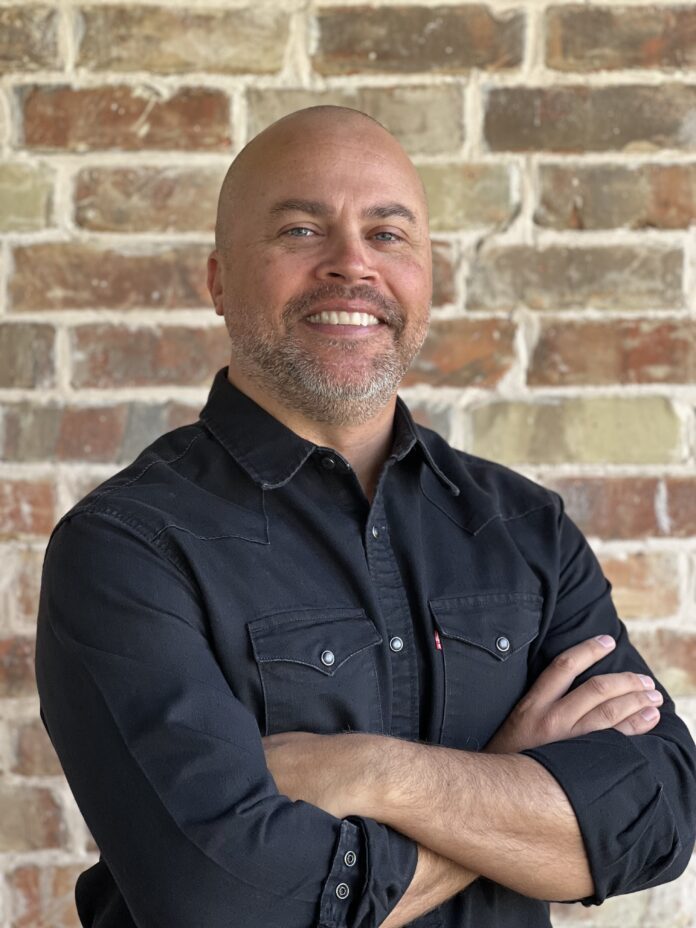
Tim Long discovered his love for painting at an early age.
“I was encouraged by my parents, teachers and classmates,” says Long. “Around third grade, I realized I was pretty good at art and knew it was something I wanted to do. I checked out a book from the school library called Indian Values: Past and Present by Lu Celia Wise, and the paintings I saw in it were amazing. My drawings quickly started emulating the Bacone School artists I saw in this book.”
Fast forward a few years and Long needed a Father’s Day present. Little did he know this one necessity would cement his passion.
“My mom suggested I make something for him,” Long says. “I made a painting based on a George Catlin piece in the Bacone style using model airplane paints. As soon as I was done with that piece, I knew I was a painter – and that painting and art would be part of my life until the day I die.”
Long says he continued to paint through high school and college but slowed down as he got older and started working.
“Towards the end of 2019, I found myself with some extra time, and my wife encouraged me to start painting again. It didn’t take too long to get into the swing of things and I now make sure to make time for painting.”
Long says his biggest inspirations are found right here in Oklahoma.
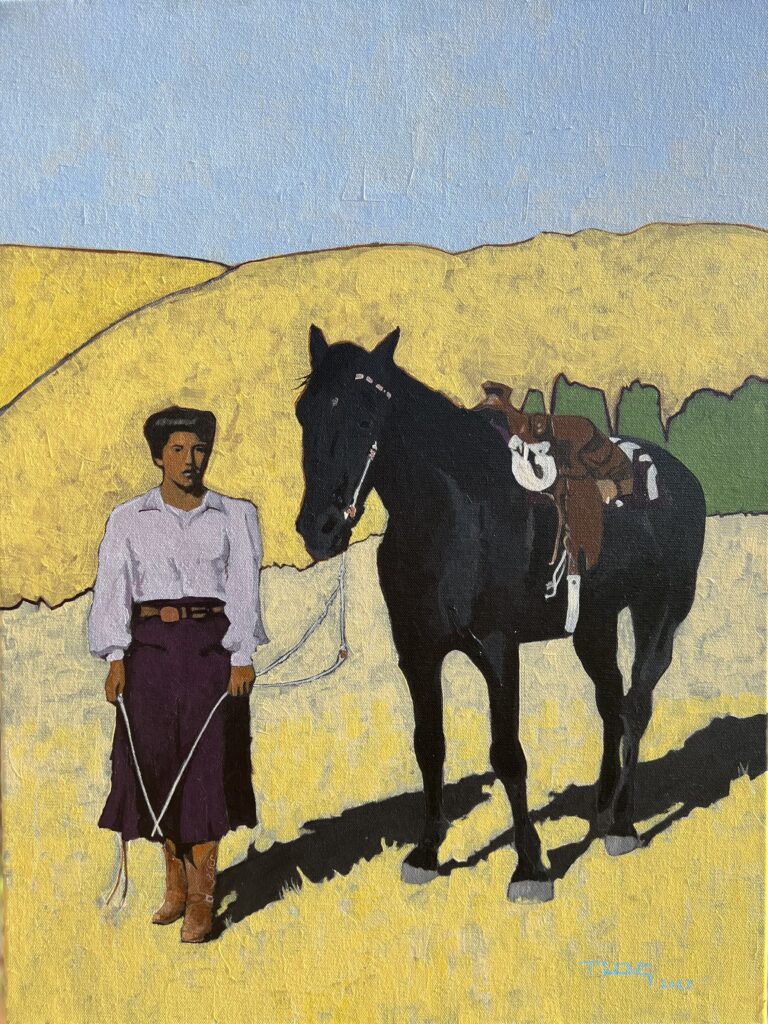
Tim Long creates works inspired by Oklahoma – with subject matter ranging from his own family history to Native American culture. Photos and art courtesy Tim Long
“The people, cultures and landscapes are diverse – and I feel like inspiration is all around,” he says. “Having been inspired by many Native American artists and growing up in a state with 39 sovereign nations, I draw a lot of inspiration from Native American culture and art.”
However, in the last couple of years, Long has been using old, black and white photos from his family as references for his art.
“It allows me to use history as a lens and subject matter for my art and connect with my past,” Long says. “Obviously, the viewer won’t know my family history or stories behind the reference photos but I’m pretty certain they’ve seen old photos of their own families with men in cowboy hats and overalls, ladies on horses, or guys standing around after a Sunday dinner, and can relate or make up their own stories.”
Long says he likes to take a modern approach with his art even though the subject matter is mainly from the past.
“My degree is in history,” Long says. “I’ve looked through that lens in my approach to art. I like to create work that is not quite finished and leave the viewer with the ability to fill in the blanks or finish the story of that piece.”
His work is ever-expanding and in the future, he would like to do a series of paintings on Oklahoma musicians, past and present.
“There are so many musicians and influencers who come from this state, and people hear them every day and don’t know they are from Oklahoma,” he says. “I would like to shine a little light on them.”
Oklahoma, he says, has all the inspiration he needs as an artist.
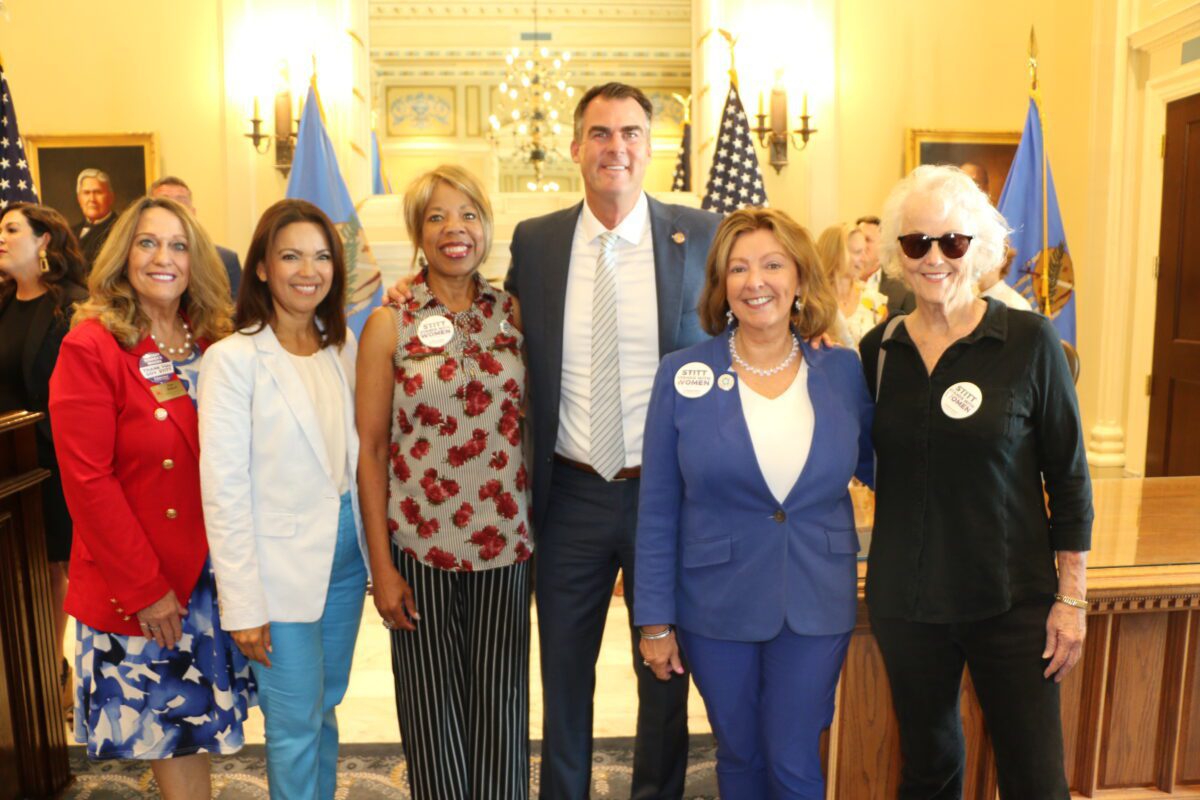
The Oklahoma Commission on the Status of Women, alongside running the Oklahoma Women’s Hall of Fame, works to eradicate issues targeting women, including domestic violence and human trafficking. Photos courtesy OCSW
Created as a state commission in 1994, the Oklahoma Commission on the Status of Women (OCSW) is committed to improving the lives of Oklahoma women and girls.
“The Commission is the official voice for women at the state capitol, serving in an advisory capacity to the governor, legislature and state agencies on quality of life and economic opportunity issues,” says Brenda Jones Barwick, founder of Jones PR and the OCSW chair through 2025.
Barwick says that most of OCSW’s accomplishments are realized by raising awareness of challenges women face, and then fulfilled through legislation and creation of non-profits that provide specific services for women.
For example, in conjunction with certified partners, OCSW has worked to explain the types of human trafficking prevalent in Oklahoma, and to assist with highlighting barriers to data collection. As well, OCSW has called attention to the resources Oklahoma needs to rehabilitate human trafficking survivors.
“The areas where the Commission has had the most success include raising the alarm on human trafficking ten years ago,” Barwick says. “Today, there are at least six organizations providing services to survivors.”
Oklahoma remains the state with the highest female incarceration rates. However, OCSW has purposed to reduce the rate of non-violent, low-risk women offenders, while enhancing public safety. Barwick says OCSW has “reduced the incarcerated population of women from No. 1 in the world” through a public agenda action plan.
Photos courtesy OCSW
OCSW has also worked to make some domestic violence-related crimes felonies. And through a non-partisan statewide initiative – designed to assist Oklahoma women who are interested in reaching political parity through government appointments – OCSW identifies, recommends and encourages women to apply for appointments to statewide agency boards and commissions.
“OCSW conducted community conversations statewide, encouraging women to be counted in the 2020 census,” says Barwick. “Most recently, OCSW hosted a summit that resulted in legislation to help women gain access to affordable childcare.”
Barwick says the OCSW biennial Solutions, Initiatives, Strategies (SIS) Summit is the most important programming conducted by the Commission. “It brings together the top subject matter experts on one specific topic that is most concerning to women at that particular moment in time,” says Barwick. “Following the summit, a report to the governor and the legislature is provided on policy and legislation recommendations to address the specific issue that is a barrier to women pursuing quality of life and economic opportunities. OCSW has hosted SIS summits on healthcare, mental health, domestic violence, childcare services, obesity, incarceration, and human trafficking.”
The Oklahoma Women’s Hall of Fame
Established in 1982 by Governor George Nigh and sponsored by OCSW, the Oklahoma Women’s Hall of Fame honors Oklahoma women who align with the OCSW’s mission to “improve the quality of life for women, children and families in Oklahoma.” Inductees are often pioneers in their fields, and have made significant contributions to Oklahoma while serving as role models to others.
The 2024 HOF class includes Nancy Anthony, Marilyn Maurer Hugon, Edie Roodman, Jane Semple Umsted, Crystal Stovall and Molly Wehrenberg. They were inducted in late September.
“The inductees are selected among nominations submitted by the public by a committee that comprises notable women who lead businesses, leadership organizations, and former inductees,” says Barwick.
Jacob Fincham-Dukes, a long-jump athlete from England, graduated from Oklahoma State University. Photos courtesy Jacob Fincham-Dukes
Coming off a stellar performance at the 2024 Summer Olympics in Paris, OSU alum Jacob Fincham-Dukes of Harrogate, England, is still relishing in a dream come true. He represented his country in the long jump and placed in the top five.
“It has been something that I’ve been dreaming about for almost the last decade,” Fincham-Dukes says. “The energy was other-worldly. The village environment is cool, but nothing beats stepping out into that stadium, hearing [and] feeling the energy of 80,000 people. I’ll never forget it.”
Fincham-Dukes missed going to the 2021 Summer Olympics due to an injury that kept him out for 11 months.
“I knew after missing that Olympics I needed to be in Paris, and nothing was going to stop me,” he says. “I outperformed my world ranking; I came in ranked 20th and finished fifth, so I’ll be forever pleased at how well I represented myself.”
Fincham-Dukes attended OSU from 2015-2022, earning three undergraduate degrees in sports management, marketing and entrepreneurship, followed by a master’s in business administration.
The athlete says the road that led him to OSU from the UK was simple.
“Coach Z [Zivile Pukstas] recruited me for track and field,” he says. “She found me at a competition in the UK [and] gave me the prospectus. I spoke with her again at the world junior championships back in 2014. I visited campus in, I believe, February of 2015 and the rest is history.”
During college, he mainly competed in the long jump but was also on the 4×100 meter relay for a few seasons.
“I think my favorite accomplishments would be the four All-American awards I received,” he says. “And winning the indoor Big 12 title as a team my freshman year is something I’ll never forget – we won by a point and a half.”
Now in Dallas, Fincham-Dukes trains while working full-time in quality assurance for ISN.
“I thought I would’ve struggled with that balance more than I did when I started working, but I just do it side by side,” he says. “Mondays and Thursdays I’m up at 5 a.m. and head to the gym, go to work then work out again after work. Tuesdays and Fridays, [I’m] up at 6, work, then head to work out again.”
Fincham-Dukes’ road to the Olympics included earning a place as a top 32 long jump athlete in the world.
“I spent the season building up my results,” he says. “I also placed fourth at the European Championships this year and that boosted my rankings further.”
Then he won the British National Championships – cementing his place in Paris.
After the Olympics, Fincham-Dukes didn’t slow down. He continued training a few more weeks to compete at the Zurich Diamond League in September and now plans to take time to “completely relax” before getting ready for next season.
Outside of track and field, Fincham-Dukes enjoys spending time with his wife, Kylie, finding good places to eat, playing video games and hanging out with friends. His favorite place to grab food in Stillwater is Chicos on Perkins — and he’s also a fan of Eischen’s Bar in Okarche.
“Really, I just do anything to completely switch my mind off,” he says. “I spend the week working as well as training seven or eight times a week, so when I relax, I need to relax hard and just switch off.”
As 2024 draws to a close, it’s crucial for individuals to make financial preparations to put themselves in the best position heading into the new year. Here are some tips to help jumpstart your taxes.
Analyze and Assess
Start by reviewing your budget and expenditures. Analyze where you spent more or less than anticipated and adjust your budget for the upcoming year. This review can help identify areas where you might save more or reallocate funds to meet new financial goals.
Assess your contributions to retirement accounts such as 401(k)s, traditional IRAs, and/or Roth IRAs. For 2024, you have until the tax filing deadline in April 2025 to make contributions to an IRA for the current tax year. Increasing your contributions enhances your retirement savings and may provide tax benefits.
“I recommend contributing to and funding one’s retirement accounts to the maximum annual amount,” says David Karimian, financial advisor at Prime Wealth Management – Ameriprise Financial in Tulsa. “Different retirement accounts have different deadlines, so know the deadline for your account and contribute the maximum as soon as possible.”
Another habit to get into is reflecting on your financial goals for the upcoming year. Whether you’re saving for a major purchase, building an emergency fund or reducing debt, having clear goals will guide your future financial decisions and budgeting.
Tax Preparations
Gather and review your income records and deductible expenses. This includes W-2s, 1099s and receipts for deductible expenses like medical costs, mortgage interest and student loan interest. Understanding what deductions you can claim and ensuring you have proper documentation is critical for accurate tax filing.
If you have flexible spending accounts (FSAs) or health savings accounts (HSAs), use these funds before the end of the year, especially if they are subject to “use-it-or-lose-it” rules. Also, review any carryover provisions for FSAs, if applicable, and make sure you’re getting the most out of your accounts.
“Contributions for HSAs, for example, go into the account pre-taxed and [can be used] tax free,” Karimian says. “It’s also possible to invest [HSA contributions] and the growth of those investments are tax free. An HSA is one of the best accounts that one can have and people should be making sure that they take advantage of that.”
Additionally, make sure to evaluate your tax withholding(s) for the year. If you find that you owe a significant amount of taxes, or alternatively, if you’re getting a large refund, it may be wise to adjust your withholding to better match your tax liability and avoid surprises next year.
Impact of Charitable Giving on Taxes
Contributions to qualified charitable organizations that are made by Dec. 31st may be deductible from your taxable income for the year. Keep accurate records, obtain receipts for all donations and ensure they are in good condition. If you’re over 70 ½, consider making a Qualified Charitable Distributions (QCD) from your IRA. This can directly satisfy your required minimum distributions (RMDs) and exclude the distribution from taxable income, which could reduce your overall tax liability.
“People over age 70 ½ are typically taking money out of their retirement account(s) for various reasons,” Karimian says. “One reason could be they need the money to live on, others may make withdrawals for tax advantages, or, if they’re subject to required minimum distributions, those dollars could be donated to a charity and become non-taxable to the investor and the charity, and do count toward the minimum distribution.”
Resources for Financial Planning
It’s a great idea to consult with a certified financial planner or advisor who can provide personalized advice based on your individual financial situation.
“The tax firm or certified public account that prepares one’s taxes typically has a worksheet that goes through any examples that have taxable implications,” Karimian says. “As you go through that worksheet, you’re checking off the things that apply to your situation.”
If you file your own tax returns, utilizing tax preparation software can streamline the process. Websites like the IRS.gov, financial news outlets and personal finance blogs often provide valuable insights, as well.
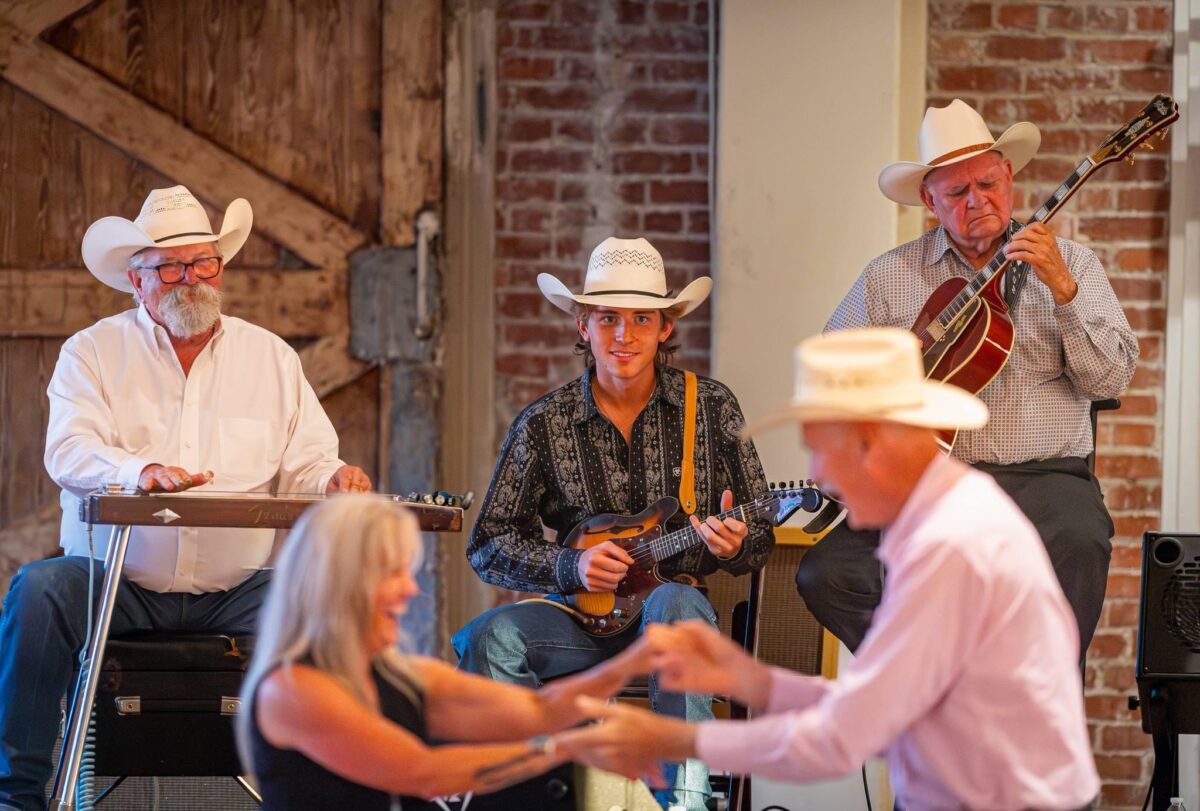
Oklahoma Swing, a Western swing eight-piece, is set to play at the Pawhuska Western Swing Festival on Nov. 15-16.
Photos courtesy Greg Burgess
Although it’s been well over a half-century now, Edmond’s Greg Burgess still remembers with crystal clarity the first time he ever heard a Bob Wills song.
“We were horse people, and me and my dad were going to feed horses one day when ‘Roly Poly’ came on the radio,” he recalls. “I’d never heard that style of music before. I didn’t even play music then. But it immediately touched my soul, you know? It just reached out and grabbed hold of me and I thought, ‘Man, I love that.’”
That style of music, he would come to find out, was known as Western swing, the danceable musical amalgam honed and nationally popularized in the 1930s by Wills – a Texas expatriate working out of Tulsa – and his Texas Playboys band. As things turned out, the love Burgess had for it never faded, leading him to take fiddle lessons from Oklahoma Western-swing giant “Famous Amos” Hedrick, among others, and ultimately to a 40-year career as a professional fiddler and guitarist. For half that time, he was a member of the late musical innovator Byron Berline’s band, based out of Guthrie.
Although Berline’s group was known primarily as a bluegrass outfit, its members – including Berline himself – could swing with the best of them. They even did a terrific all-Western-swing CD, 2014’s Swingin’.
And right here may be a good place to briefly note the similarities and differences between bluegrass and Western swing. While both are predominantly played by stringed instruments, Western swing is a dance music, arising out of the ranches and, later, the honky-tonks of the American Southwest. Bluegrass music’s origins, on the other hand, blended folk tunes with gospel. Coming out of the South’s Appalachian Mountains, it continues to have more to do with playing and listening than it does with dancing. Musicians proficient in both styles, like Burgess, have many other ideas about how the genres differ. He believes, for instance, that “bluegrass is as far from Western swing as jazz is from Western swing – totally different. Western swing is more laid back, more about phrasing and timing.”
For many years, Burgess and Western-swing-savvy bandmates like bassist Richard Sharp and drummer Steve Short transitioned easily between swing and bluegrass, working steadily with Berline’s group. After their bandleader’s 2021 death, those three and other Berline band members continued playing together, predominantly bluegrass gigs.
Then, says Burgess, he was contacted by a musician named John Blair. Blair was the son of still another great Oklahoma Western-swing figure, Ramona Reed, the former Bob Wills vocalist who had passed away in the summer of 2022. Soon afterwards, members of the Oklahoma Music Hall of Fame contacted her family about honoring her at their next induction ceremony.
“John reached out to me because I’d played at Ramona’s memorial service,” remembers Burgess. “He asked if I would help him put together a swing band that could do a little tribute to his mom at the induction. So I did, and when we got through playing that, we realized how much fun we’d had, and how much we loved playing Western swing. So we said, ‘Well, let’s just keep the band together and see if we can play some.’ None of us were really interested in how much money we might make; we just wanted to play good music and have fun.”
In addition to Sharp and Short, Burgess also recruited Blair, a vocalist and fiddler, and another performer with the same skill set, Wetumka’s Bo Posey; well-known Oklahoma guitarist Joe Settlemires, one of a vanishing number of musicians left on the planet who actually played with Bob Wills; Claremore-based steel-guitarist Bobby Baker, another veteran player with vast and impressive Western-swing credentials; and mandolinist Henry Byron Burgess, Greg’s 17-year-old son. (Yes, his middle name is a tribute to Greg’s former bandleader.)
“We’re an eight-piece band,” Greg Burgess says. “John Blair lives in Virginia, so he’s not with us all the time, but his kids go to OSU and he’s hoping to move to Stillwater. Then he’d be with the band more. And Henry actually works for Rick Faris, a Grammy-nominated bluegrass guy out of Kentucky. He plays with us every chance he can.
“Joe Settlemires and Bobby Baker – those guys are just great players,” he adds. “And Steve and Richard are just amazing. Richard is probably the best swing-bass player around, and of course Steve’s played with everybody, from Reba McEntire to Leon McAuliffe. Joe plays that old-style rhythm, like [Western-swing great] Benny Garcia, so when you get Joe and Richard and Steve, that rhythm section, together – oh, my gosh, it’s just incredible.”
Just out of the starting blocks, Oklahoma Swing landed a regular gig at the Guthrie Depot, where they’ve since been playing dances to steadily increasing crowds. “It’s a wonderful ballroom,” says Burgess, “and the people at the Depot, Adam and Abigail Ropp, have been gracious enough to let us call that place home.
“When we decided to do this, we said, ‘Well, we’re going to play swing.’ And that’s what we do. I’ve had people come up and make requests, and I’ll say, ‘Well, we can play that, but I made a vow to everybody in the band we weren’t going to play shuffles [or other non-swing styles]. We were going to play Western-swing music.’ So that’s what we do, and now we’re starting to get some traction, and people are starting to take notice, and we’ve got a new album out.”
The band also has an appearance scheduled for Nov. 16 as a headliner at the Pawhuska Western Swing Festival. The event, which also features the Brazos Valley Boys, includes a fiddle contest that, Burgess hopes, will offer a competition for younger players as well as an open division.
“We want to get the kids over there and kind of introduce them to Western swing,” he explains. “A good way to preserve and promote that music is to get younger people involved. So we’re trying to re-introduce it to the people who knew the music when they were younger – maybe their parents listened to it – and then to try to introduce it to younger people. We have family-friendly dances, so people under 15 are free to get in. And we do get some parents bringing their kids.”
But whether an audience member is a preteen or an octogenarian, the mission of Oklahoma Swing’s members remains the same: to share this classic feel-good music once again with as many people as they can.
“We played a barbecue and dance at a retirement community here in Edmond, and I watched the people making their way up to the buffet line,” says Burgess. “When we started playing, they perked up, and they were listening, and by the time they got their food and headed for their tables, they were dancing. And then, some of ‘em started singing. I had a lady come up to me and say, ‘I haven’t heard this music since I was a kid. But I know the words to every song.’ They were all just so happy.
“Western-swing music took this country, especially Oklahoma and Texas, through a lot of hard times,’ he concludes. “And, you know, it still has the power to create those good feelings.”
The new Oklahoma Swing CD, Somewhere North of San Antone, is available on internet streaming services and in a hard-copy format. More information on the band and the disc is available atoklahomaswing.com. For details on the Pawhuska Western Swing Festival, set for Nov. 15-16, see pawhuskawesternswingfestival.com.
Port of St John's; photo by Gina Michalopulos Kingsley
If you’re looking for variety on a Caribbean island, Antigua is the place for you. Also called Antigua and Barbuda, this charming island cluster is full of surprises.
The colorful port entrance immediately charms and ingratiates you. This travel writer was welcomed by jovial boat operators dancing and posing atop their boat for the camera. The barracks style buildings remind you of a bygone era when Antigua was first established. The skyline is defined by the St. John’s Cathedral and its Baroque towers. A historic site is Nelson’s Dockyard, an original maritime hub located in the English Harbor. It also serves as a yachting hub now.
Touring around the island, the wilderness leaves a strong impression. A distinguishing feature from other Leeward Islands is the absence of forests, mountains, rivers and springs. There’s a rustic beauty and a vast expanse of sea.
Port of St John’s; photo by Gina Michalopulos KingsleyShirley Heights, Antigua view; photo stockA child on her way to school; photo by Gina Michalopulos KingsleySaint John’s Cathedral; photo by Gina Michalopulos Kingsley
Swimming with the stingrays is a specific excursion to enjoy in Antigua and is a major part of the island’s tourism business. Sailing out to the stingrays is a breathtaking way to appreciate Antigua’s beauty. The stunning water and horizon is relaxing and intoxicating as a pontoon boat ferries you to the stingray area. Guides give directions on how to interact with the stingrays and pose for pictures. The experience is both communal and thrilling. You’ll feel like a kid again engaging with the sea creatures, until the end of the excursion, which includes a drink of rum, of course! What is more Caribbean than that? Other popular activities include deep sea fishing, golfing, snorkeling and sea kayaking.
Driving around the terrain of banana and sugarcane crops, you’ll also see the whimsical art of Antiguans. For example, a fence made out of car parts is both quirky and creative. Murals and graffiti decorate the neighborhoods and landscape. The homes are as eclectic and vibrant as the people.
There’s a large mangrove ecosystem comprising much of the terrain. Acres of wilderness make it seem astounding that the Cricket World Cup was held in Antigua in 2007. Another impressive detail is that there are 365 beaches; one for every day of the year.
The sister island, Barbuda, has its own unique features – and it reportedly houses Princess Diana’s favorite Caribbean beach. Also called “the coral island,” Barbuda boasts a beach with pink sand, which is created by the combination of crushed coral blending with sand. Bird watchers should know that Barbuda is also home to the largest nesting Frigate bird colony in the western hemisphere.
As for the cultural highlights, a stroll through the city center exposes you to the friendly townspeople and their daily lives. People gather at the spice and craft market or shop at the fruit vendors. The street scene is stimulating as you watch the activities of the locals. From school children in uniforms to men in rasta turbans, the array is both welcoming and diverse. Gazing at the architecture of St. John’s Cathedral is a must. Poised on a steep street, it’s a stunning visual. Heritage Quay Shopping is the district for finding local crafts, duty-free shops and souvenirs.
Trying the cuisine is also recommended. West Indian, French and West African influences offer an infusion of flavors. Some specialties to try are the Dukuna dumpling, chicken stew, and vegetables cooked in a spicy Creole sauce. Luxuriate in the resorts while immersing in the culture.
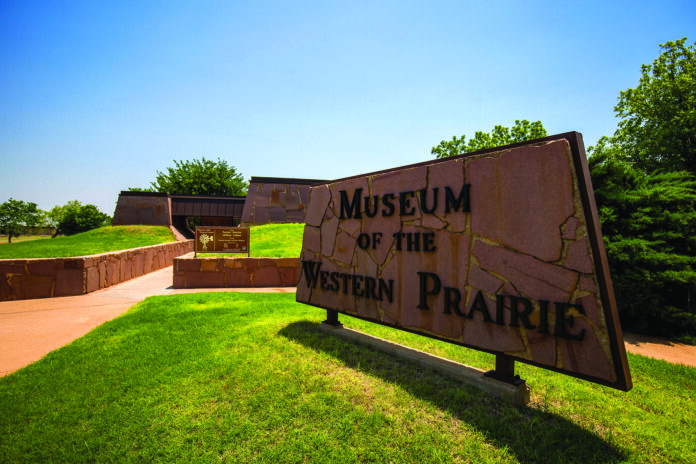
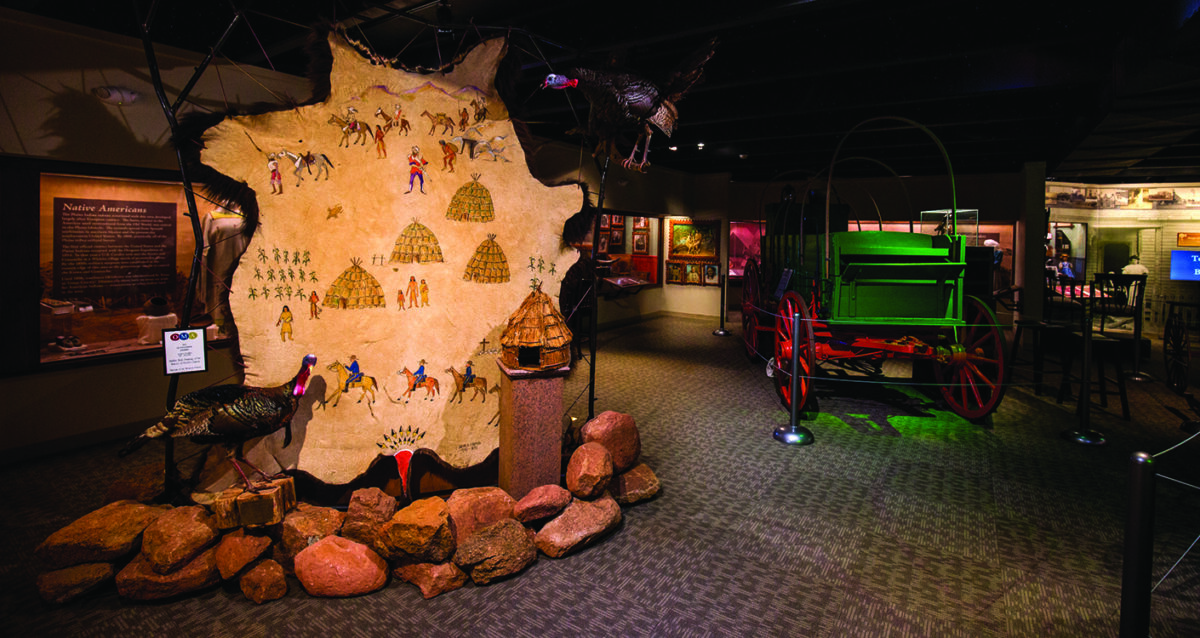
One draw in Altus is the Museum of the Western Prairie, which explores the history of the area. Photos courtesy the Museum of the Western Prairie
Never mind that Altus, population an estimated 18,000, is somewhat isolated in Oklahoma’s southwest corner. And never mind that the city is surrounded by some of the most unusual, albeit hauntingly beautiful, landscape this state can offer. Local leaders attest, with ample evidence, that the quality of life in Altus, the county seat of Jackson County, is better than good – not only for its residents, but for tourists attracted to the Jackson County seat by a smorgasbord of activities throughout the year.
Most events are sponsored by the Altus Chamber of Commerce, Altus Main Street or the city’s Parks and Recreation Department. Western Oklahoma State College offers its own slate of attractions, and the Museum of the Western Prairie traces the area’s history. Nearby, the State of Oklahoma’s Quartz Mountain State Park beckons with outdoor recreation and scenery.
Altus Parks and Recreation director Michael Shive says his department’s charge is to enhance life’s richness for residents, while increasing tourism.
“We’re tasked with bringing a better quality of life” to Altus, he says. With an array of offerings nearly every weekend, “people can stay here and enjoy quality events and not have to travel.”
One draw in Altus is the Museum of the Western Prairie, which explores the history of the area. Photos courtesy the Museum of the Western Prairie
Chamber of Commerce President and CEO Jenny Groves put it another way.
People, she says, “usually move here kicking and screaming because they think there’s nothing to do here – but they leave kicking and screaming because there’s something to do all the time.”
Altus is the home of Altus Air Force Base, one of four major military installations in Oklahoma. Established in 1943 as Altus Army Airfield, with a mission of training young pilots, the base has become the United States Air Force’s premier air mobility training location, home to the Air Force’s 97th Air Mobility Wing. According to its website, more than 2,000 U.S. and foreign students are trained at Altus AFB annually.
Major events scheduled in town this fall, Groves says, include the Altus Balloon Festival Nov. 9-10 at the city’s Hangar 36 at the Quartz Mountain Regional Airport, and the Chamber’s annual Christmas Parade, set for Dec. 14. Groves mentions that the parade will include between 60 and 75 floats, with participants joining the parade from all over southwest Oklahoma.
A major event scheduled for April 12-13 of next year is the Altus Air Power Stampede.
“That’s one that everyone looks forward to,” Groves says. “People will line the streets to watch it.”
The giant air show is held every three or four years and draws thousands to the Altus AFB.
Shive says the city recently completed renovation of its aquatic center, and that the downtown Altus Reservoir with its fishing pier and swim beach draws visitors each year. Lynna Wilmes, executive director of Altus Main Street, says the city’s downtown was placed on the National Register of Historic Places in 2018 as part of an effort to refurbish the historic Orient Hotel for senior residents.
“Most of our downtown is over one-hundred years old,” she says.
A few miles north of the city, Quartz Mountain State Park cradles the shores of Lake Altus-Lugert, and offers an array of outdoor activities. Since the 1970s, the park has been home to the Oklahoma Arts Institute’s summer and fall arts programming with a stone amphitheater built for outdoor performances.