
















Product photos by Natalie Green.










Product photos by Natalie Green.
Product photos by Natalie Green.
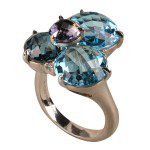
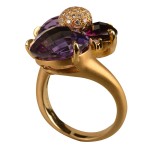


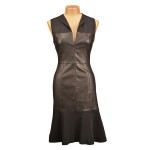
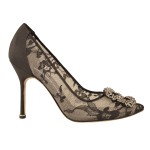
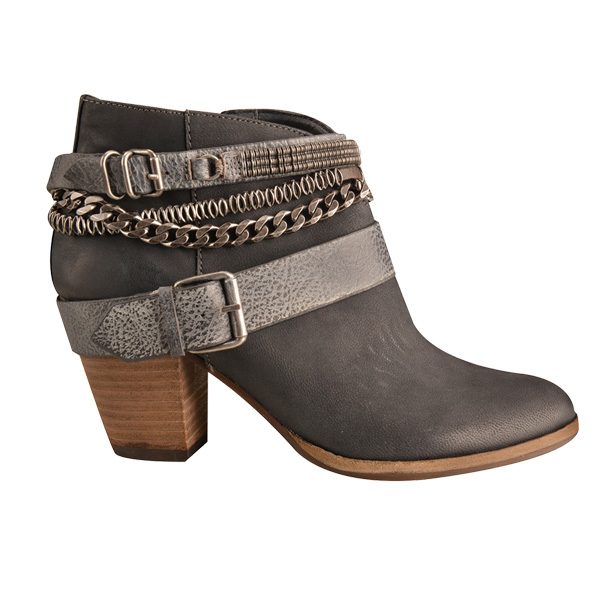
Product photos by Natalie Green.



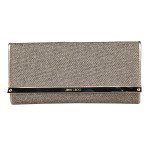









Transitioning from a Country French-style home where they reared their children, a couple of empty nesters decided they were ready for a change of style in a new home suited for entertaining.
After discovering a 1970s-era home located in the Philbrook Museum area, the Tulsa couple solicited the expertise of husband-and-wife team John and Sherri Duvall, owners of Duvall Architects and Interiors in Tulsa. Tony Jordan, owner of contractors Jordan & Sons, handled the extensive 18-month renovation, although the planning process with the Duvalls began six months earlier.
“The house was dark and dated,” explains Sherri Duvall. “Plus, the floor plan was very chopped up.”
The goal was to create a series of open spaces that flowed seamlessly from one room to the next. And while the overall design is decidedly modern, it was important to the couple to incorporate treasured family antiques into the planning.
The living room is a perfect example of the collaborative success between the Duvalls and the homeowners’ interior designer, Doug Deckard. The existing vaulted ceiling was accented with a custom multi-tiered light fixture, and the clean lines of the white upholstered pieces have been juxtaposed with existing antiques. New wood floors with a glazed finish were added throughout the house.
The kitchen showcases one of the most dramatic changes. Not only was the small, dark space completely gutted, a wall was removed, blending the kitchen, eating area and den into a great room that’s both airy and bright.

“She (the homeowner) likes to cook, and the couple enjoys entertaining,” says Sherri Duvall.
Nearby, a casual eating space was created with a curved, built-in seating area accented by a classic Mid-century oval Saarinen table by Knoll. The striking multiglobe light fixture is from Arteriors. The valance hides solar sunshades, controlled remotely.
An eight-foot diameter mahogany inlay table captures attention in the dining room. Inherited antique chairs from the 1800s are casually blended with richly upholstered Parsons chairs. The three-foot diameter blown art glass light fixture is by famed Italian artist Paolo Venini and was purchased from an antiques dealer in New York. It sparkles against a quartzite wall covering on the ceiling and the platinum leaf adorning the dining room walls.
In what had been a fourth bedroom, architect John Duvall created a “his” master closet and bathroom as well as a library. The original master bathroom was gutted and renovated for “her” with countertops of Sea Pearl marble and Carrara Blanco tile for the flooring. The original master closet was also renovated and detailed by Sherri Duvall. The chandelier from the couple’s previous home was brought into the new.
A combination of existing and new furnishings creates the soft and relaxing feel of the couple’s master bedroom. The area rug is custom made, and the milk glass Mid-century lamps were discovered in Dallas.
A set of patio doors was replaced by the expansive Nanawall system, creating an extension of the house to an outdoor living area. John Pitezel, owner of JP Construction, renovated the existing swimming pool and also added a spa, while Clare Ashby, ASLA, created the landscape design.





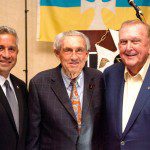
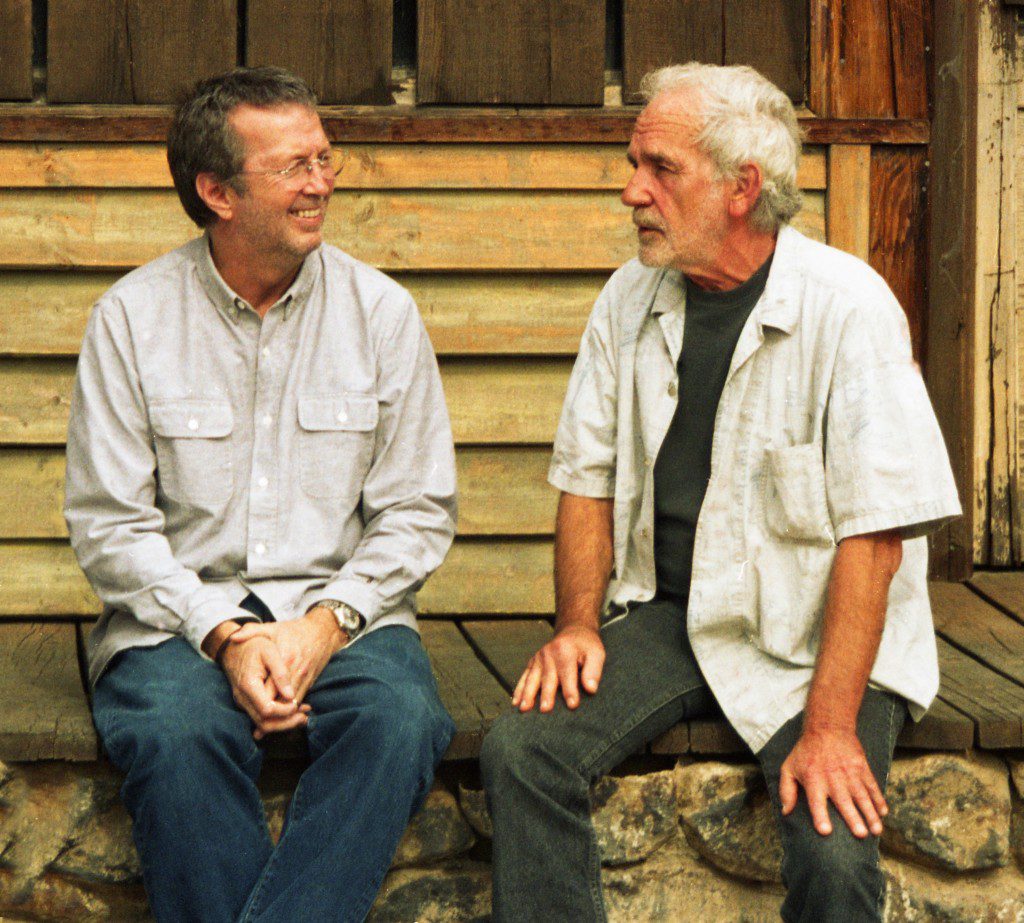
What seemed to be an offhand comment made during a sad occasion turned into something far greater for Don White, the veteran Tulsa-based singer, songwriter and guitarist.
The occasion was the August 2013 funeral of White’s friend J.J. Cale, the man responsible in great part for popularizing that deep-groove, blues- and country-tinged rock ‘n’ roll style often referred to as the classic Tulsa Sound. Held on the West Coast, where Cale had lived, the invitation-only service included several of Cale’s hometown friends, including such well-known musicians as Jim Karstein, Jim Markham, David Teegarden, Jamie Oldaker, Jim Keltner and Steve Ripley.[pullquote]”Eric played ‘After Midnight,’ I think, and then he said, ‘My whole career comes from two people: [famed Delta bluesman] Robert Johnson and J.J. Cale.’”[/pullquote]
The comment came from Eric Clapton, a friend and tireless supporter of Cale ever since Clapton scored his first hit record with Cale’s composition, “After Midnight,” in 1970. Clapton subsequently spent quite a bit of time in Tulsa, recruiting his mid-’70s band from the area.
“Everybody else who was there [from Tulsa] knew Eric,” recalls White. “When he was hanging around Tulsa, I guess I was on the road or something; anyway, I only met him that day, at the funeral. We were all kind of standing around the cemetery, talking, and Eric says, ‘I was wanting [Cale] to help me with my next record, but that can’t happen now, I guess.’”
The talk turned to another Tulsa legend, keyboardist Walt Richmond, who’d been working regularly with Clapton on tour and in the studio.
“Eric said, ‘Oh, yeah, Walt’ll be on the next record.’ Then he looked at me and said, ‘You should be on it, too.’”
White laughs.
“I said, ‘How do you know I’m worth a damn? You’ve never heard me play.’”
A few hours later, that was no longer true. Adjourning to McCabe’s Guitar Shop in Santa Monica, White and the rest of the Tulsa contingent joined others in remembering Cale with both words and music. When it came time for the latter, Clapton and White took the stage first, with Keltner on drums.
“Eric played ‘After Midnight,’ I think, and then he said, ‘My whole career comes from two people: [famed Delta bluesman] Robert Johnson and J.J. Cale.’
“We played another one, and he got down, and Keltner got down, and I called up Markham and Karstein and [guitarist] Don Preston. We did about three or four songs, so Eric heard me play and sing,” he says.
White’s been in the music business a long time – plenty long enough to know that more often than not, people talk about doing things they have no real intention of doing. Still, he says, he couldn’t help but think about how nice it would be to maybe “just get one rhythm guitar track on one song” on a Clapton album.
He’d only had a couple of weeks to consider it when the phone rang. The caller on the other end identified himself as “Eric.”
“‘Hi, Eric.’ I said. He said, ‘Eric Clapton.’” White laughs again. “I said, ‘How you doing, Eric?’
“He didn’t say, ‘I want you to come out and play on my new record.’ He’s not like that. He said, ‘I’m doing a tribute album to [Cale], and I thought maybe you’d like to come out and be in the band.’
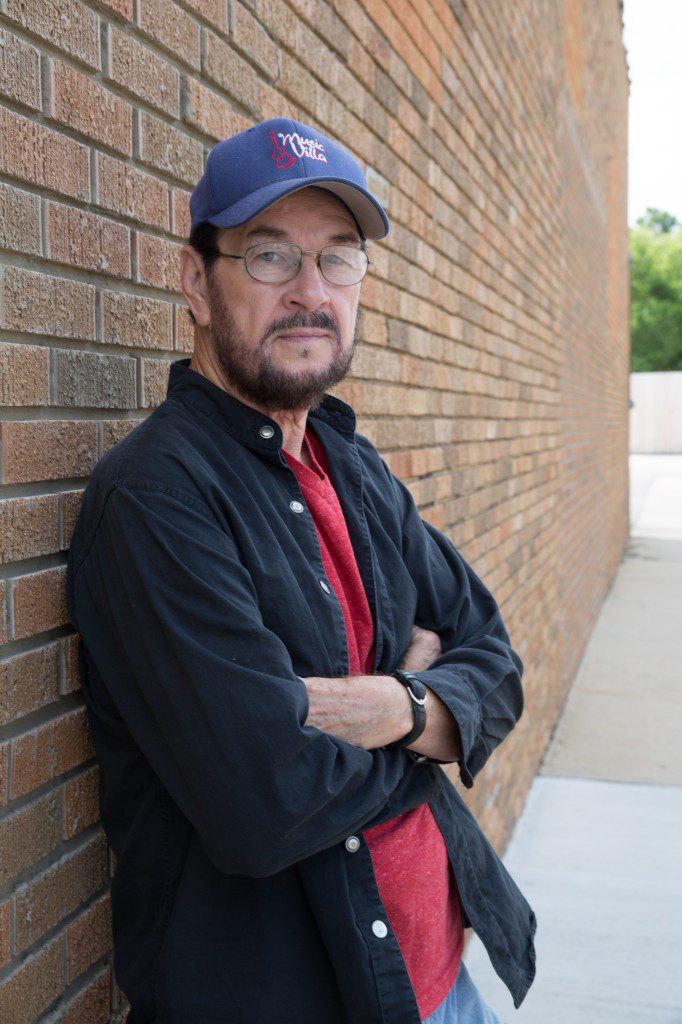
“Well, that was too cool. I said, ‘You bet.’ And he said, ‘I thought maybe you’d like to sing two or three songs on it.’ So I went out there, and that’s what I did.”
He did it in some pretty good company, too. As one of the featured vocalists, White is part of a stellar group that includes Tom Petty, Mark Knopfler, John Mayer, Willie Nelson and Cale’s widow, vocalist-guitarist Christine Lakeland.
“One of the ones I do is called ‘Train to Nowhere,’” he says. “It ended up with Mark Knopfler and me in a sort of duet. It’s a Cale song, but it’s never been released. Christine found it. I think she brought in two or three that he’d recorded at his house.”
Although most of the songs on the disc are Cale originals, it also includes a new version of the 1954 Ray Price country shuffle “I’ll Be There (If You Ever Want Me)” – a song Cale covered on his 1974 album, Okie. Clapton backs up White on the vocals for the new version, making for “a real country-sounding track,” White says.
With “I’ll Be There” and its melding of country and rock ‘n’ roll, White returns to the sound that brought Cale into his Tulsa band almost a half-century ago.
“Cale was already popular around town, and he’d go to Oklahoma City and record and make little records,” White remembers. “So he was kind of my idol before I ever met him. Then, I got to be friends with [keyboardist] Larry Bell, and Bell was in that Tulsa clique. So all of a sudden, I was in that clique, hanging out with rock ‘n’ rollers. And I got to know Cale.”
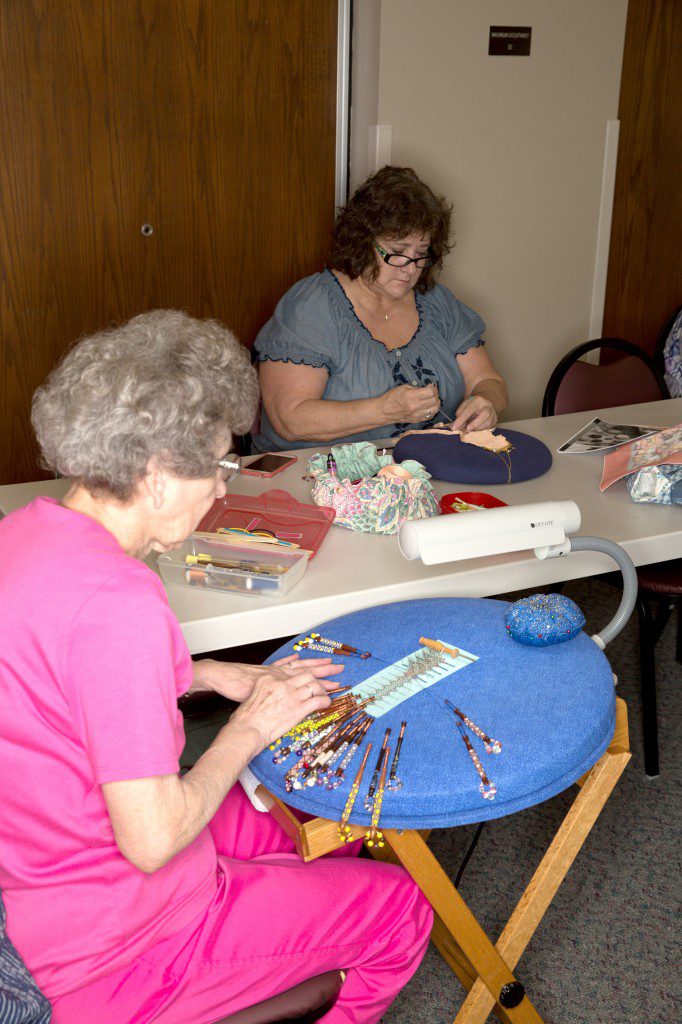
The word “lace” conjures up the image of doilies and wedding gowns to most people, but for the members of the Lacemakers Guild of Oklahoma, a rich history dances in their minds as they thread each delicate loop.[pullquote]“Within the process is solace – a time of peace, reflection and the satisfaction of the completed web,”[/pullquote]
“Lacemaking is part of the history of humanity,” says group librarian Sue Welch. “It connects us to our ancestors.” LGO founder Deborah Beever has studied this history since 1983 and can recount centuries-old stories of crime and conflict surrounding the esteemed craft that has become a peaceful pastime.
“Lace became a huge industry, and competition between countries was fierce,” Beever explains. “Under one restrictive trade law, a lacemaker was forbidden to travel and make lace outside the boundaries of his or her country upon penalty of death. Due to these laws, smuggling became rampant and quite creative. Lace was inserted into loaves of bread, hidden in coffins and sewn into linings of clothing.”
The lacemaking tradition lives on by the hands of the guild’s members. They gather monthly to share their work and learn from each other, finding comfort in this ancient skill.
“Within the process is solace – a time of peace, reflection and the satisfaction of the completed web,” says Bart Elwell, LGO vice president and treasurer. “For many, lacemaking is a vacation from the chaotic beeps, buzzings and digital overload of today’s world, and yet it still stimulates the mind – honing skills of problem solving and cultivating creative inspiration.”
It is a diverse and ever-evolving practice with a time commitment that can range from a few hours to several months, depending on the size and intricacy of the piece. Many lacemakers are drawn to a method called tatting that uses a simple device called a shuttle to guide the thread into a variety of designs.
“The ring and chain pattern of tatting is very distinctive,” says LGO president Paula Barnes. “I also like that it cannot be replicated by machine.”
The guild will share its art with the public on Oct. 4 during the 20th Annual Lace Embrace event at the Tri County Technology Center in Bartlesville. There will be demonstrations, classes and contests to help spread interest and enthusiasm about the craft.
“It will always take a new generation to sustain the art of lacemaking,” says Elwell. “I am always surprised and encouraged to see the number of young lacemakers who attend regional lace days and international conventions. They are energetic, bring fresh ideas and have the confidence to jump right into an art form that has much to offer.”
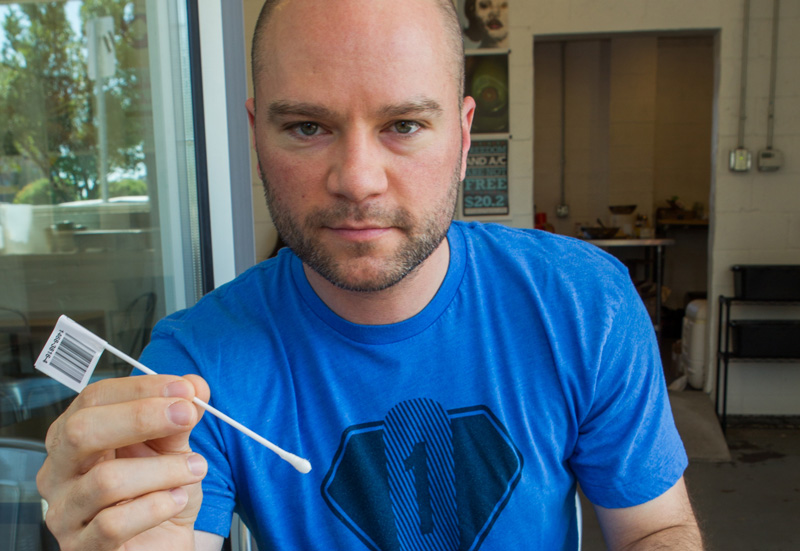
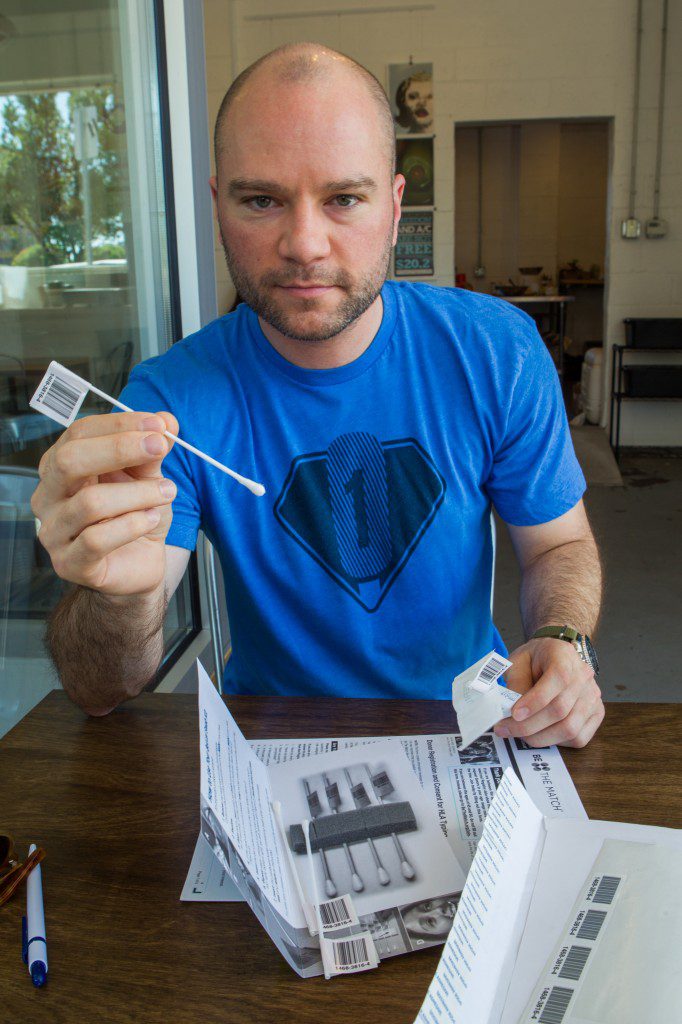
Five years ago, Oklahoma City resident Marshall Matlock received a bone marrow transplant that saved his life and inspired him to create the Swab Squad. The organization, which spreads awareness of the need for bone marrow donors, helps the Oklahoma Blood Institute expand its donor registry.
In spring 2009, Matlock began having persistent joint pain. He was diagnosed with acute myelogenous leukemia (AML), instantly admitted to the hospital and prescribed a course of chemotherapy.
Matlock’s blood counts, however, failed to recover after two rounds of chemotherapy, making a bone marrow transplant his only chance for survival. As with 70 percent of patients in need of a donor, Matlock had no genetic matches among his family and relied on the Be The Match registry to find one. Within a few weeks, a match was found – a 19-year-old girl in Europe.
What inspired you to create the Swab Squad?
For two years, I knew nothing more than basic information about my donor. But in September 2011, I received a letter from my hospital with her name and contact information and was finally able to tell her ‘thank you’ for giving me the gift of life.
To give back to the organization that saved my life, I knew I had to help grow the Be The Match registry. Although worldwide marrow registries now contain millions of members, seven out of 10 patients never find the donor they need.
Determined to improve that number, a group of friends and family agreed to help me create the Swab Squad. We are a portable, pop-up marrow drive designed to easily integrate into popular events around the city and state. Our hope is that it provides a non-threatening, approachable place to talk about the need for marrow donors, dispel myths around the transplant process and recruit new donors for the Be The Match registry.
What are the biggest myths surrounding the marrow transplant process?
A big part of our Swab Squad mission is to dispel myths around the transplant process. Many haven’t heard of Be The Match or know the giant need for donors, but often, the ones who have [heard] arrive with misconceptions about it being a very painful process. I really enjoy bringing the news that 85 percent of donations are akin to a lengthy blood donation and that the other 15 percent, where marrow is taken from the hip, are done under general anesthesia with no pain during the procedure.
What are some success stories from your organization?
We’ve been able to recruit more than 300 new potential donors for Be The Match in Oklahoma City since we started. Of those, two have come up as donor matches for patients in need of a transplant. It’s a great feeling to know our efforts can make it possible for cancer patients to get the second chance at life that I was given.
How would you describe the relationships between marrow donors and recipients?
It’s an amazing feeling to be walking around with my donor’s cells inside me. It’s a daily reminder of the sacrifice she made for me and how much I owe her and Be The Match for saving my life. There’s a single person on the other side of the world with whom I’m inextricably linked; I have her DNA, her blood type, even her allergies. That gratitude drives our Swab Squad mission; we want every patient to get the chance to fight.
Moving forward, what new things would you hope to accomplish with the Swab Squad?
In addition to continuing to recruit potential donors for Be The Match in Oklahoma City, we’d love to inspire groups in other cities in Oklahoma and beyond to join our effort to grow the donor registry. We really want to attack the percentage of patients finding a match and drive it up by growing the pool of potential donors. The first step in that fight is to make the public aware of the need for donors and to effectively communicate how the small act of a cheek swab can lead to the opportunity to save a life. We think it’s a no-brainer.
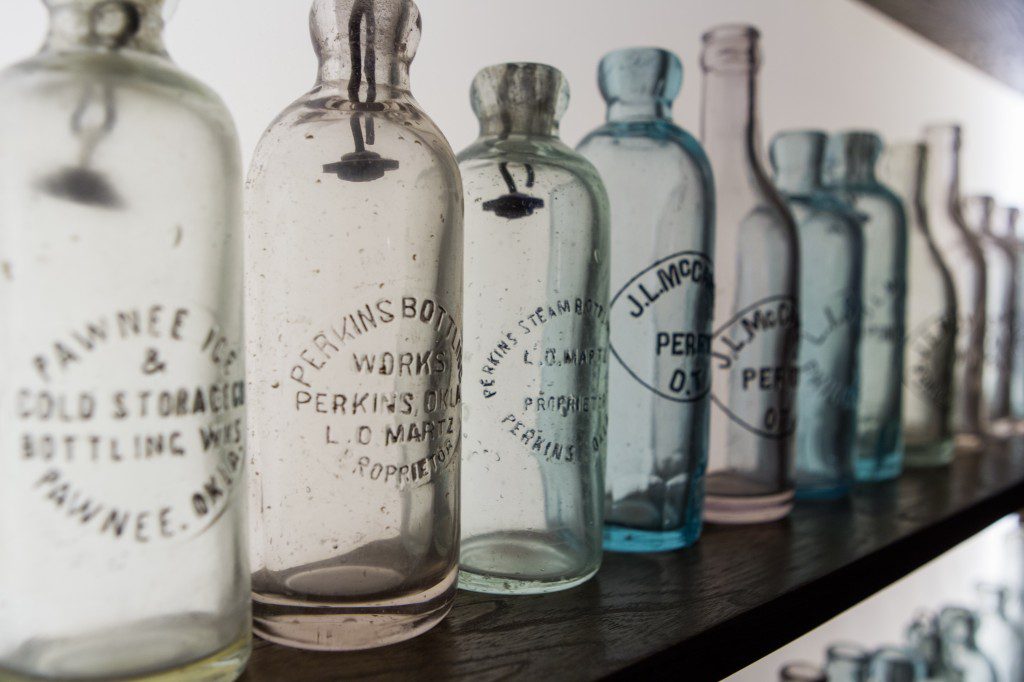
It is no ordinary suburban garage wherein a box of brushes fashioned from buffalo bones more than a century ago rests alongside a similarly aged Chinese jar and a couple of Western-style guns, now largely consumed by rust. But then, the owner of this garage is no ordinary man.[pullquote]“When you find something that someone’s thrown away, you have to realize that you’re the first person to touch it since they threw it in the garbage,” he says. “So it’s almost like having a connection with these people.”[/pullquote]
“I’ve always collected stuff,” says Johnnie Fletcher, a Mustang resident and founder of the Oklahoma Territory Bottle and Relic Club, whose members travel throughout the state and beyond, digging up artifacts of the American West with a pioneer spirit all their own.
Utilizing a combination of historical maps and modern probes, Fletcher and his colleagues locate houses from pre-statehood days and obtain permission to dig a few feet into the ground where the outhouses once stood. Outhouses are the loci of refuse, including plenty of discarded physical objects. The strategy has worked surprisingly well over the years, Fletcher says.
“We’re pretty good salespeople when it comes to getting permission,” he says.
In fact, he has met with the threat of physical violence only once, and that was from a renter in Kansas who stated his willingness to “bust a cap” on the friendly collectors. Homeowners, however, generally react positively to the results of a dig and with getting to keep some of the historic treasures uncovered in exchange for allowing access to their property.
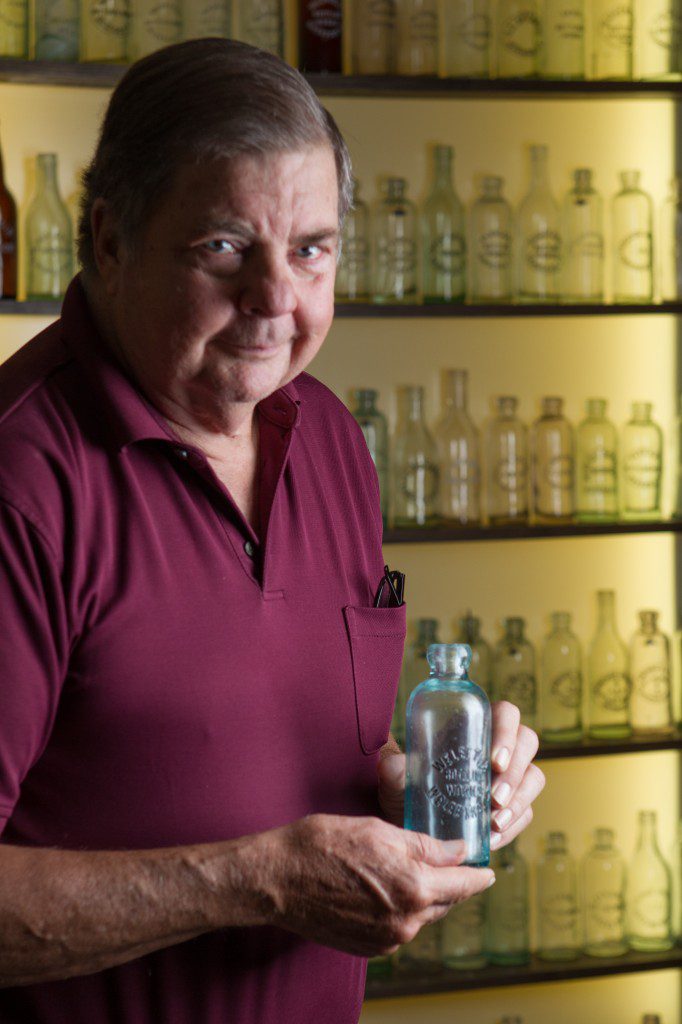
“Most people are kind of curious,” Fletcher says. “They really don’t think you’re going to find anything, so they’re pretty shocked when we dig up an old bottle out of their backyard.”
While Fletcher’s efforts have taken him as far afield as New Orleans and yielded things as random as wooden bowling balls, his area of focus is pre-1907 Oklahoma bottles. For this was a land of Indian tribes and boomers and – once a town became big enough – bottling works.
Various liquids – soda pop, alcohol, medicine, alcohol disguised as medicine – were once contained in these bottles, which stand on his garage shelves proud and unbroken, most of them handsomely embossed with names and points of origin like “Wagoner, I.T.”
The “I.T.” stands for Indian Territory, where it all began, not just for Oklahoma but for Fletcher, whose yen for collecting can be traced back to his childhood on a farm about 15 miles from Hinton, where he would walk for miles in search of American Indian arrowheads.
After a career that included stints in the Navy, with the police and ownership of an alarm company, Fletcher’s love for state history and the “Go West” era shines brighter than ever.
“When you find something that someone’s thrown away, you have to realize that you’re the first person to touch it since they threw it in the garbage,” he says. “So it’s almost like having a connection with these people.”
Month after month, we present a colorful kaleidoscope of the people, places and culture that make Oklahoma such a fascinating place.
© Oklahoma Magazine