




















Home Blog Page 628

The Elegance Of Simplicity

Lucky’s Restaurant’s roasted halibut with grilled eggplant and asparagus on top of a Romesco sauce is an explosion of flavor. Photos by Brandon Scott.

Tall and rugged with tousled hair, he’s the sort of man you’d expect to see hanging 10 above a soaring wave or relaxing aboard a luxury yacht. But Brandon Benelli worked for three years in the California kitchen of Napa Valley’s French Laundry, considered one of world’s finest restaurants, cooking alongside its owner, the legendary Thomas Keller.

“It was the most challenging experience of my life,” he says.

Before that, he graduated from America’s premier cooking school, the Culinary Institute of America. Then came travels in Europe – honing his skills by cooking at a trattoria in the ancient Tuscan town of Montevarchi, Italy. Somewhere in between, he spent a year as Hugh Hefner’s butler in the Playboy Mansion. And now, he is in Tulsa, taking a quick break moments before beginning the second day of his new job as the executive chef of Lucky’s Restaurant.[pullquote]“It used to be just New York, San Francisco and Paris,” Benelli says, “but now it’s nationwide. It’s Omaha, it’s Atlanta, it’s Kansas City … and it’s Tulsa.”[/pullquote]

Next to him is his brother and new boss, Matt Kelley, also a CIA graduate, chef and owner of Lucky’s.

When it opened on Cherry Street, Lucky’s was packed nightly for dinner by eager foodies wowed by sophisticated entrees such as the Riesling chicken, distinguished by a fruity, floral bouquet of wine with a hint of lemongrass contrasting with earthy enoki mushrooms in a rich stock. At brunch, guests craving Lucky’s eggs and chicken fried steak lined up out the door.

In the years since those first days, Lucky’s has become even better. Kelley offers fun, creative, weekly specials like glazed slow-roasted pork belly with gingered carrot puree and red-eye gravy made from molasses, coffee, ham and bacon, as well as grilled bison with scarlet runner beans in a Oaxacan mole negro, blackberry compote and crispy red Russian kale. And now, Lucky’s enters a new era with Benelli.
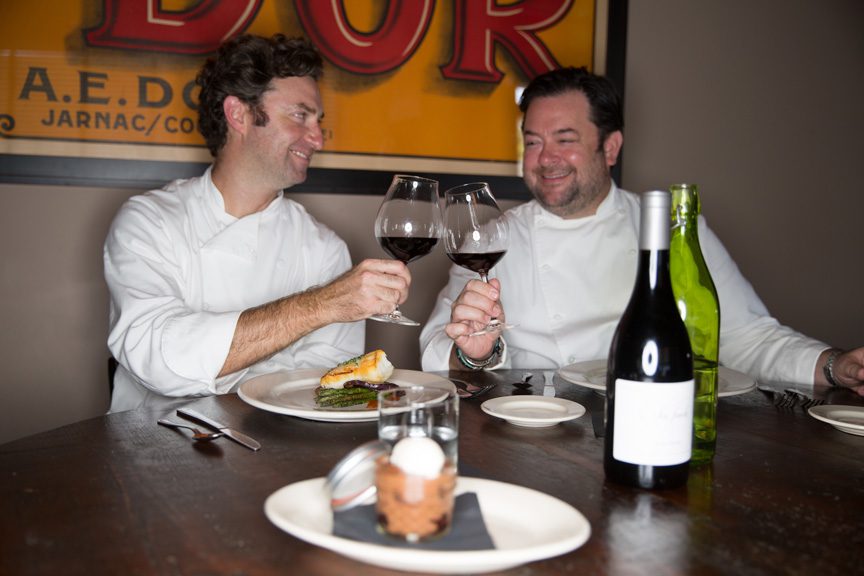
 Brothers Brandon Benelli (left) and Matt Kelley make culinary perfection from the simplicity of good flavors and food. Photos by Brandon Scott.
Brothers Brandon Benelli (left) and Matt Kelley make culinary perfection from the simplicity of good flavors and food. Photo by Brandon Scott.

From their days cooking in California, where they had easy access to some of the finest produce anywhere, both brothers continue a solid practice.

“I learned to source the finest ingredients and keep the food simple: simply prepared but perfectly prepared,” Kelley says.

“I call it ‘the elegance of simplicity,’” Benelli adds.

Everything is local, made possible through Lucky’s contracts with Southwood Farm & Market and Grogg’s Green Barn, both local businesses. Even the Lucky’s bar is sold on this idea. Bartender Liz Pounds – affable, graceful and dignified – uses only the freshest fruits and herbs to design her brews.

“I’m a liquid alchemist,” she says.

Benelli puts that philosophy to work in the kitchen.

“Try this,” he says, brandishing an entrée he prepared and plated in fewer than 10 minutes – two chunks of fish and glistening green asparagus nestled in a corner of the dish with a bright scarlet swirl covering the rest of the plate.

The seared-to-perfection roast beef filet served at Lucky’s Restaurant with shallot  bacon puree, sweet Bixby corn and homegrown shishito peppers. Photo by Brandon Scott.
The seared-to-perfection roast beef filet served at Lucky’s Restaurant with shallot
bacon puree, sweet Bixby corn and homegrown shishito peppers. Photo by Brandon Scott.

“That’s romesco sauce,” Benelli explains, “and the fish is halibut cheeks.” The taste yields an explosion of flavor that is the essence of beach living, sunshine and fresh-caught goodness. “Now that’s what I mean when I say ‘the elegance of simplicity,’” says Benelli.

A few years ago, Kelley muses, you wouldn’t find a chef of Benelli’s caliber in Tulsa. “But things have changed a lot in the past five years, thanks to … all the brand new restauranteurs.”

Benelli agrees.

“It used to be just New York, San Francisco and Paris,” Benelli says, “but now it’s nationwide. It’s Omaha, it’s Atlanta, it’s Kansas City … and it’s Tulsa.” 1536 E. 15th St., Tulsa. www.luckysrestauranttulsa.com

The Road to “Coupleness”

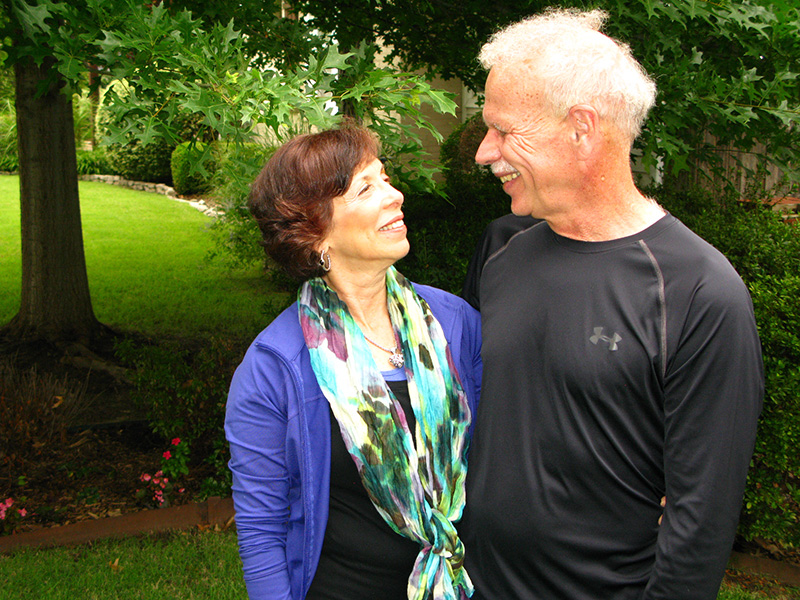
Faith and Danny Boudreau met when they were both 23 years old and students at Rutgers University.

Couples who have been married for decades are respected and admired. But how exactly do two people come together to share their lives with such success and longevity?

Photo by Karen Shade.

Danny and Faith Boudreau

Married 42 years

One night in October, Danny and Faith met in the elevator at Rutgers University in New Brunswick, N.J., where they attended graduate school for social work. They were both 23 years old.

“Danny usually played basketball that night, but because it was raining, he found himself at the library,” Faith says. “He asked me about being in a certain class with him, and I tried to reply coyly, even though I knew he was in that class. We exited the elevator and went to our separate desks at the library, but within minutes he approached me with a question about our mutual class – either indicating that he was not very smart or that he was interested in me.”[pullquote]“We now have a more mature and relaxed relationship. We know each other’s strengths and shortcomings, so we don’t need to compete or impress one another. Our communication has improved, and so has our patience with one another.”[/pullquote]

They talked for the next three hours. Faith says she knew right away that something was different about Danny.

“I phoned my mother late that night and told her that I just met the boy I am going to marry. She told me not to do anything foolish, and I didn’t. Although we started dating that next day, we did not marry until two years later,” Faith says.

After 42 years of marriage, the Boudreaus remain together. The couple moved to Tulsa in 1973 when Danny began law school at The University of Tulsa.

“We have been Oklahomans ever since,” Danny says. “Both of our children, a boy and a girl, were born here, too.”

Faith and Danny Boudreau met when they were both 23 years old and students at Rutgers University.

In the beginning, much of their attention was given to their children and other parts of their lives, Danny says.
“The early years of our marriage were consumed with raising our children, career issues and, in many respects, just growing up together,” he says. “The latter years have allowed us the time to focus on each other and the quality of our marriage.”

And although having children proved to keep the Boudreaus very busy, Faith and Danny agree that the births of their children brought the happiest moments to their marriage.

“They have provided us with immeasurable joy and a healthy dose of humility,” Danny adds.

But no couple is lucky enough to soar from happiness to bliss throughout their entire relationship. Maintaining a successful marriage also means weathering the hardships together. One of the worst came in 2003, when Faith was diagnosed with Stage IV non-Hodgkin’s lymphoma.

“All at the same time, [Danny] was commuting from Oklahoma City to Tulsa during the week as part of his work. I was still working as a school counselor, and both of our kids were graduating from college. We also assumed responsibility for aging parents. And my progress in treatment was somewhat of a roller coaster ride,” Faith says.

The couple says the entire family’s flexibility, stamina, loyalty and sense of humor pulled them through.

“We also depended on a strong support system of friends and family, faith and hope. We both have been diagnosed with serious illnesses over the years – Dan with rheumatoid arthritis and me with cancer. But we have learned that our love and ability to interact with others and to thrive need not be defined by those challenges,” Faith says.

Today, Danny is a former lawyer and judge who now provides arbitration and mediation services. Faith is a clinical social worker, a job from which one never retires, she says.

“I regularly volunteer at local schools, and I am one of the founding members of Celebrating the Art of Healing, an annual educational symposium for cancer survivors, their caregivers, adult family members and others,” Faith says.

Members of the St. John Siegfried Health Club, the Boudreaus are committed to keeping physically fit. At 67, Danny plays adult competitive soccer and participates in national age-categorized tournaments. They both love to travel.

And after 42 years of marriage, Faith and Danny can say that having a sense of humor, treating one another with respect and, most importantly, communicating are the important ingredients of a lasting relationship.

“We now have a more mature and relaxed relationship. We know each other’s strengths and shortcomings, so we don’t need to compete or impress one another. Our communication has improved, and so has our patience with one another,” Danny says.

Gridiron Glory

Michael Langish / Shutterstock.com


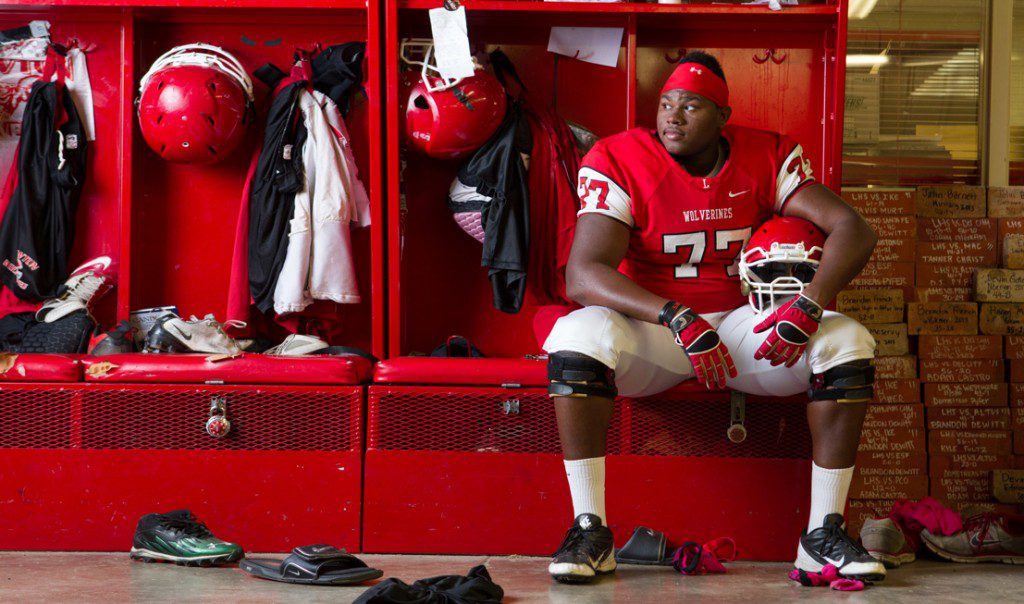
The chill of an early fall night, the roar of the crowd, the thwack of bodies smashing into one another, all fighting to get their hands on a coveted piece of leather, to be the one to carry it across the goal line for six points. This is Oklahoma football.

For most Oklahoma high schoolers, summer break is a chance to catch up with friends, earn a little extra money at a part-time job and enjoy being a teenager.

For some, however, summertime is a time to work out, to practice drills, to improve their game.

More than 340 school districts in Oklahoma, representing 44 districts in eight class sizes, offer football as an extracurricular activity to its students. According to Van Shea Iven, director of media relations for the Oklahoma Secondary School Activities Association, around 16,500 students played football during the 2012-2013 season. From small, eight-man football teams to the largest, most respected and feared 6A squads, players take the field each week with the intention of pushing themselves further. For most, the ultimate reward will be a winning season, perhaps a district championship. A handful will win it all and receive state championship rings and the public’s adoration for their efforts.

While plenty of Oklahoma students go on to play college football, there are a few talented players who are recruited by elite programs around the country. Ranked nationally by sports websites and watched by some of the country’s most storied college football programs – think Alabama, Southern California, the University of Oklahoma – these players have the privilege of choosing their school and the squad they will suit up for.

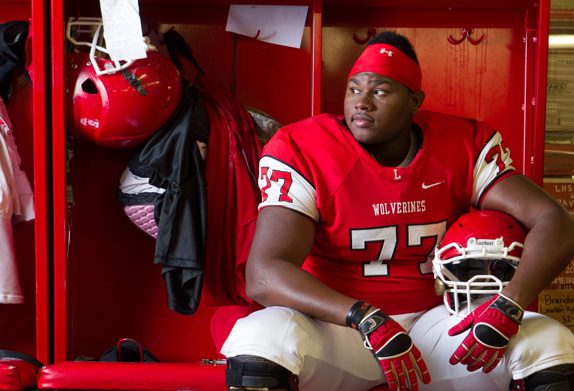
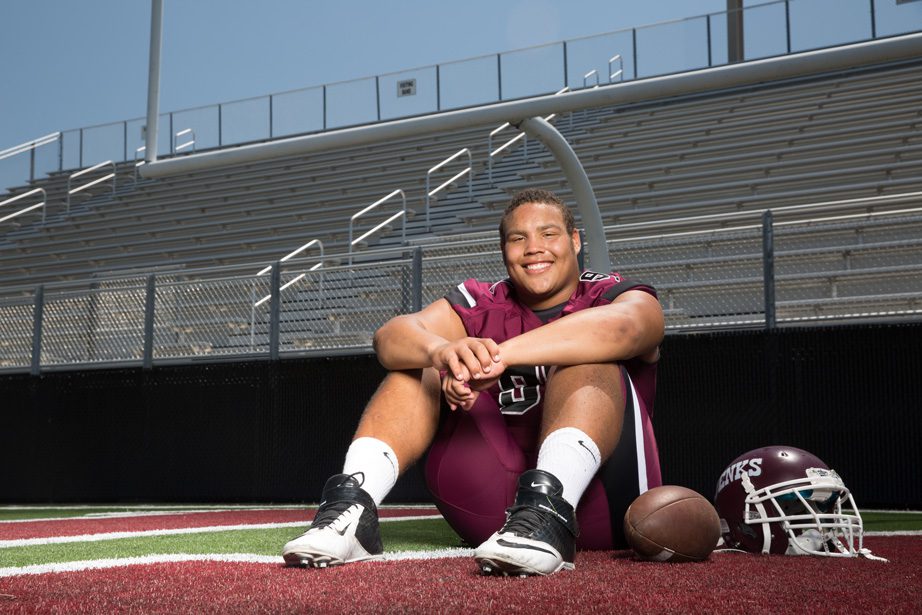
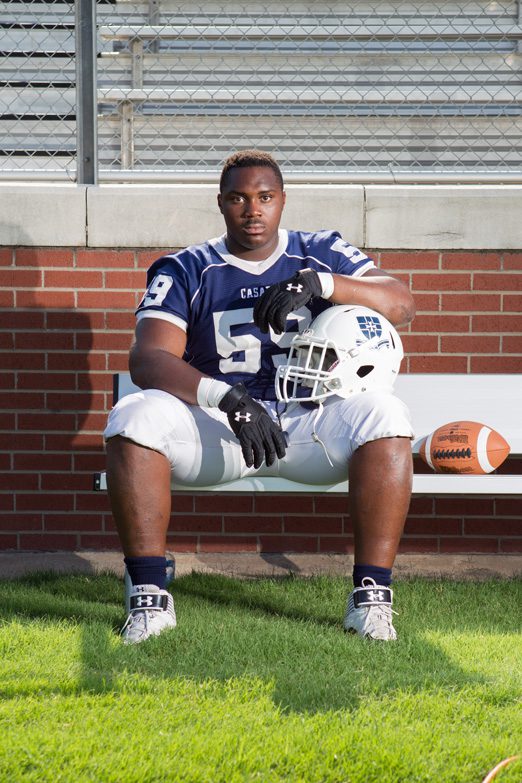
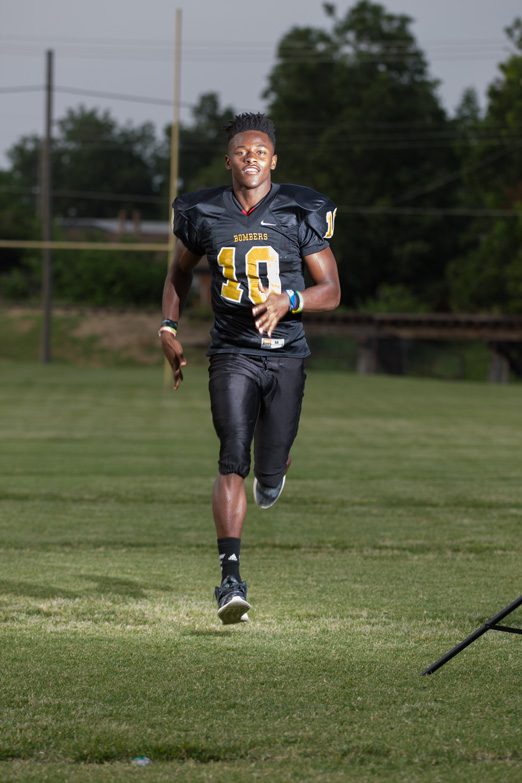
Certainly Jalin Barnett of Lawton High School, Marquise Overton of Jenks High School, Will Sunderland Jr. of Midwest City High School and Josh Wariboko of Casady School look forward to successful senior years, but their ultimate reward is yet to come. High school senior year is not the end of football glory for these players; it’s just the beginning.

Photo by Brandon Scott.

Marquise Overton

Jenks High School
Defensive Tackle
Committed to the University of Oklahoma
★★★★ Recruit
Rivals.com Ranking: No. 186

What Jenks High School special teams coordinator and director of college recruiting Carl Johnson says: “The first thing you notice about Q is that he’s physically dominating, and he plays that way. He plays hard every single play, and that’s hard for some big guys. He loves the game, plays with passion and he will be integral to our success this season. OU is getting themselves a really good football player and a very good young man.”


Photo by Brent Fuchs.

Josh Wariboko

Casady School
Offensive Lineman
Undeclared
★★★★ Recruit
ESPN 300 Ranking: No. 174
Rivals.com Ranking: No. 83

What he says: The expectations we have this year are very high. We have great coaches … We’re expecting nothing less than a SPC (Southwest Preparatory Conference) title this year.”

What Casady School Head Football Coach Koby Scoville says: “As a player, he is extra physical and tough. He’s one of our better linemen we’ve had. He can take out one guy, and he’s onto another … He’s nice, caring and outgoing on and off the field, and he’s rarely ever been arrogant. I don’t think I’ve ever heard him talk back to a coach. He’s always thankful.”


Photo by Brent Fuchs.

Will Sunderland Jr.

Midwest City High School
Safety
Undeclared
★★★★ Recruit
ESPN 300 Ranking: No. 220
Rivals.com Ranking: No. 136

What he says: “I love the game of football. I have passion for it. My family likes football, and I have family members who played college football. My goal is to go to college and finish four years in three and be the first one in my family to play in the NFL.”


Photo by Brent Fuchs.

Jalin Barnett

Lawton High School
Right tackle
Undeclared
★★★★ Recruit
ESPN 300 Ranking: No. 43
Rivals.com Ranking: No. 122

What he says: “My work ethic is what makes me so good.”

What Lawton High School football coach Randy Breeze says: “Obviously, Jalin’s a very big man, but one of the things that makes him stand out [from other tackles around the country], he has the ability to pull, wrap around the center to the left, find a linebacker and knock a linebacker down.

He benches over 350 pounds. He wears a size 17 shoe, and he’s still growing. He’s also very humble. As good a football player as he is, he’s even a better person off the field.”

Healing Our Heroes

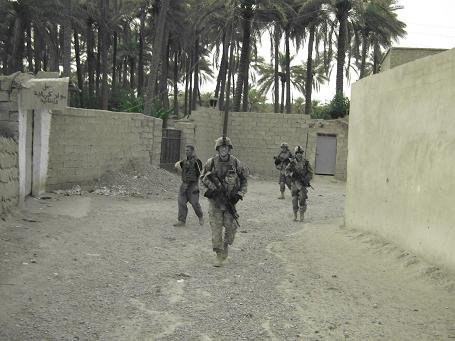
Among the many injuries veterans carry back with them from their deployments are post-traumatic Stress disorder, traumatic brain injury and moral injury, which occurs when faith or personal values are compromised by participating in or supporting combat actions. Photo courtesy Russell Whitehead.
Above left: combat and losing friends while serving in iraq affected russell whitehead (pictured) so much he went into a downward spiral on his return home. Photo courtesy russell whitehead.
Combat and losing friends while serving in Iraq affected Russell Whitehead (pictured) so much he went into a downward spiral on his return home. Photo courtesy Russell Whitehead.

To call recent events at the U.S. Department of Veterans Affairs a “scandal” would be kind. First, veterans and civilians alike reeled upon discovering the vast backlog of veterans’ medical claims. More recently, deception regarding waiting lists at many VA hospitals across the nation shocked the public, and led to the resignation of VA Secretary Eric Shinseki this past May.

“Accessing the U.S. Department of Veterans Affairs may be a veteran’s most serious challenge to getting benefits and services there,” says Jim Lyall, a veteran of the Vietnam War and associate director for the Tulsa-based Community Service Council.

Where do these events leave the veterans of U.S. armed services, especially those in Oklahoma, a state that is home to one of the highest populations of veterans and National Guardsmen in the nation?[pullquote]“Approximately 20 percent of returning service members reportedly are returning with post-traumatic stress disorder (PTSD), another 20 percent with traumatic brain injury (TBI) and many with physical injuries.”[/pullquote]

“No state has deployed more soldiers per capita than Oklahoma,” says Carla Tanner, senior planner for the Community Service Council. “More than 63 percent of the National Guard has been deployed, either to Iraq or Afghanistan; over a third of those have been deployed multiple times. These National Guard or reservists often are faced with issues quite different from the ‘active duty’ soldiers. They leave and return, often without many of their co-workers, neighbors or friends recognizing that they left. When they return, they must fight for their jobs and reintegrate into their community without the supports that active-duty installations provide. Thus, they have an intense feeling of isolation. Their families lack the support they would usually receive at military installations.”

Regardless of the vehicle through which a veteran serves, none return from a conflict unchanged, she says.

“Approximately 20 percent of returning service members reportedly are returning with post-traumatic stress disorder (PTSD), another 20 percent with traumatic brain injury (TBI) and many with physical injuries. The returning vets report struggles with finding jobs, behavioral health issues, family struggles and feelings of severe hypervigilance, isolation and homelessness,” Tanner says.

For many soldiers who have returned from Operation Iraqi Freedom and Operation Enduring Freedom, their homecoming offers little relief. Despite a staggering array of addictions, mental illness and trauma, they often loathe seeking treatment.

Army veteran Russell Whitehead today credits the tulsa county veterans treatment court with helping him recover and find the right path again.  photo by Brandon Scott.
Army veteran Russell Whitehead today credits the tulsa county veterans treatment court with helping him recover and find the right path again. Photo by Brandon Scott.

 “In Oklahoma, a major challenge that veterans and the community must address is the aftermath of the multiple deployments of the Oklahoma National Guard and reservists,” says Rose Ewing, planning director of the Tulsa County Veterans Treatment Court. “Many of these veterans suffer with issues of PTSD, TBI and other mental health challenges, including depressive disorders and suicidal ideation. Many veterans live and breathe the warrior’s ethos of ‘don’t show weakness, don’t ask for help, don’t admit you’re struggling.’ To deal with these symptoms, many veterans turn to alcohol and drugs to manage.”

Veterans face many other problems.

“Many veterans cannot manage being exposed to large crowds, loud noises or unexpected movements due to their combat experience. This leads to many adjustment issues and creates difficulty in domestic situations and maintaining employment,” Ewing adds.

Negative perceptions of seeking help often keep veterans from asking for it.

“A huge barrier for veterans needing behavioral health help is the stigma that exists,” Tanner says. “They fear that having a record of receiving behavioral health services will keep them from furthering their military career or hinder their ability to develop a career in the police or fire departments.”

Luxe Deluxe

Photography by Nathan Harmon


See behind the scenes of the fall fashion shoot in the video below.

Managing The Moving Parts

Photo by Shutterstock.

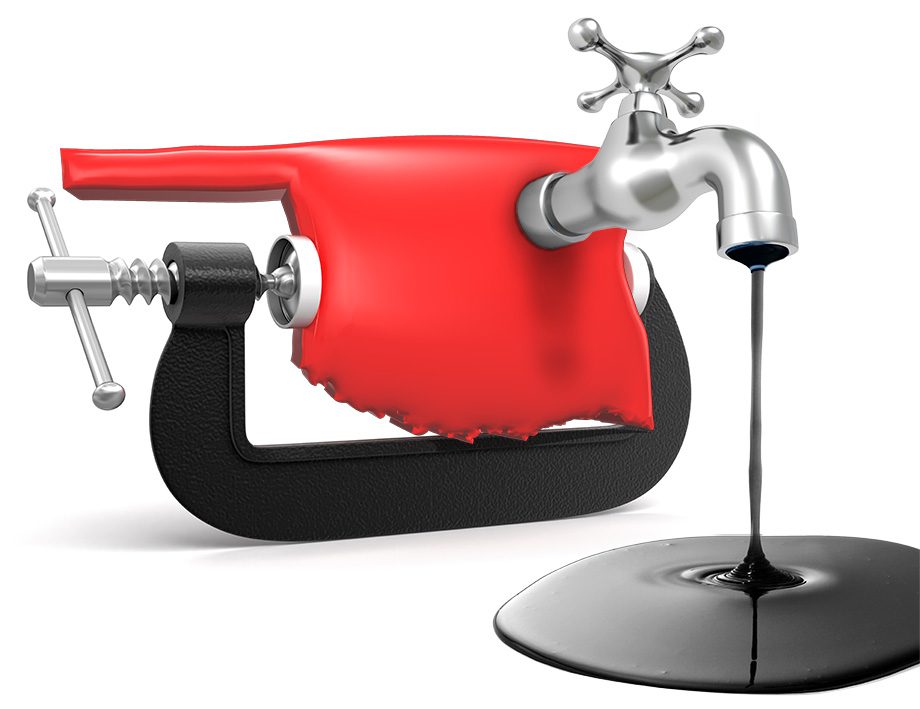
With the advent of horizontal drilling and hydraulic fracturing, new oil wells are going up around the state at a record pace and with a rhythm that harkens back to Oklahoma’s original oil boom. Sitting behind those new technologies are dozens of others. Manufacturers and service providers are hustling to stay ahead of the curve.

“In this day and age, information is not what’s important. It’s more about how you process it. We’ve got more information than we know what to do with,” says Thomas Hill, vice president of business development for Oklahoma City’s Kimray Inc.[pullquote]“I’ve got 800 employees. If I can get them thinking about the same thing and give them the tools and the opportunity to change process, then I’ve got a million ideas to work with.”[/pullquote]

The 800-person company manufactures control equipment – valves, thermostats and the like – for the energy industry. The evolution of recovery and storage in the industry requires Kimray to stay on the bleeding edge.

Technology is not the only thing that changes quickly. Regulations can change at the drop of a political hat, too.

“We can move quickly if the industry changes or if environmental regulations change. We’re able to adapt our products to meet those needs,” says Sheri Vanhooser, vice president of sales and business development for Compressco, a manufacturing company that offers wellhead compression and other services that facilitate oil and gas recovery.

The company has found a way to help its customers stay compliant with EPA regulations while also making it more profitable for the client company by increasing its productivity. Among other services, the company offers vapor recovery for storage tanks, driving up its clients’ profits by capturing natural gas that otherwise would go to waste and sending it to the sales line.

Compressco operates its own manufacturing facilities. And while it maintains its headquarters in Oklahoma City, the majority of its employees are in the field with the company’s customers at locations around the world. Close contact with customers is key.

Kimray shares a similar viewpoint.

“The way we stay on top is with our relationships with our customers,” says Hill. “We’re in the field with our customers daily. We talk with them about what they’re doing and the challenges they face. We like to be right there helping them apply our products at the same time, looking at whether there are nuances that need to be developed or changed to help them meet their needs.”

Staying current means keeping its employees up to date, as well.

“I’m absolutely sold on training and educating our employee base,” says Hill. “I’ve got 800 employees. If I can get them thinking about the same thing and give them the tools and the opportunity to change process, then I’ve got a million ideas to work with. And most of them are good.”


This story is part of an Oklahoma Energy Special Report. Continue reading additional stories from the report below.


Oklahoma’s Energy

Fifteen years ago, movers and shakers wondered what the next engine of Oklahoma commerce would be. Oil and gas reservoirs were tapping out, and wind power wasn’t advanced enough to pick up the slack. Small, independent oil and gas producers started falling out of the market.

Then along came horizontal drilling.

“The industry has dramatically changed from what it was. We drill horizontal wells almost exclusively now. If you tell someone you want to drill a vertical well, they look at you like you’ve taken leave of your senses,” says Kim Hatfield, CEO of Oklahoma City’s Crawley Petroleum.[pullquote]“The big challenges for us are, first, keeping up with technology. Second, this is a terribly capital-intensive game. All of this horizontal drilling and hydraulic fracturing is wonderfully effective but horribly expensive.” [/pullquote]

Hatfield runs a successful independent oil and gas production business. The company employs 43 and sports the culture of a family-run enterprise. It’s no Exxon-Mobile or British Petroleum, but that’s by design. Hatfield, like other small, independent producers, likes doing things his way. And he’s good at it.

Being an independent producer doesn’t necessarily mean being small in impact. But the average independent

producer employs only 14 people, according to testimony delivered to the U.S. Congress in 2013 by Robert Sullivan, chairman of the Oklahoma Independent Petroleum Association and CEO of Sullivan and Company.

With fewer people, resources and less capital to spread around, independent producers specialize, focusing entirely on the “upstream” side of the business: Finding and getting oil out of the ground any way they can. They’re behind 95 percent of the wells operated in the U.S., and they account for 68 percent of domestic production.

Sullivan is eager to share the numbers that independent producers put on the boards year after year. As the chairman of the Oklahoma Independent Petroleum Association, he shared them with Congress on a few occasions. Independents account for more than three percent of the total U.S. workforce, provide more than 4 million jobs and generate almost four percent of the country’s gross domestic product.

Successful operators demonstrate a commitment to excellence that makes them competitive players. Unlike larger companies, they’re not vertically integrated. They do not own refineries, and they do not pump gas. Yet they’re not relegated to the peripheries of the industry. They’re smack dab in the middle, finding and getting oil out of the ground with a precision and speed giving the big guys a run for the money.

“The big challenges for us are, first, keeping up with technology. Second, this is a terribly capital-intensive game. All of this horizontal drilling and hydraulic fracturing is wonderfully effective but horribly expensive,” says Sullivan.

With better technology, wells produce more, but the ante has been “upped.” Wells that cost $2 million in the late 1990s cost around $8 million today.

Over the last decade, the cost of technology has increased by a factor of four, give or take a million. But without that technology – specifically, horizontal drilling and hydraulic fracturing – getting the oil out of the ground would be impossible.

Staying on the cutting edge is challenging for smaller companies without the research and development resources of their larger competitors.

“The industry is becoming more reliant on science and technology than it used to be. Keeping up is a daily challenge. We rely a lot on our geolo

geologists, and it’s a learning curve. Every day we learn something. You take the same ingredients today and make a different cake than you made 15 or 20 years ago,” says Sullivan.

It’s quite a cake, too. Business has been so good for independent producers over the last five years that OIPA is calling for an end to the federal government’s 30-year-old export ban. Thanks to shale fields, oil production has climbed to 1986 levels over the past five years.

Being smaller means being leaner. It’s easier to find efficiencies and, of course, there are fewer mouths to feed. Chaparral Energy has learned how to squeeze more oil out of the ground. When vertical wells start tapping out, bigger companies move on. Chaparral Energy moves in.

One of its two specialties is carbon dioxide enhanced recovery, reclaiming gas that would normally be released into the atmosphere and pumping it back into the well to increase pressure and output. When successful, it increases the well’s longevity by up to 15 percent. Chaparral is the third largest provider of enhanced recovery in the nation. It owns the largest recovery unit in the state, which is employed in Osage County.

Independents can capitalize on their size to take advantage of oil finds and fields that aren’t big enough to capture the attention of larger, integrated producers.

“If you discover a field that has the potential for a lot of wells, that really moves the needles for an independent. It makes a big difference. But the bigger the company, the bigger it needs to be to make an impact,” says Hatfield.

Chaparral also goes for the “pure play” and specializes in local oil and gas holdings. The company recently divested itself of fields in Texas and New Mexico in order to concentrate on the mid-continent oil field. The two-year-old strategy has worked. With roughly 700 employees, Chaparral recently produced one million barrels in one month.

“We’re not in North Dakota. We’re not in South Texas. We’re not offshore. We’re pure play in the mid-continent,” says Earl Reynolds, vice president of business development at Chaparral. “We believe that will benefit our shareholders because we’ll realize economies of scale. We’ll become much more efficient, and we’ll be more effective at being the best. Mother Nature gave us a great set of rocks to explore here, and we’re focusing all of our resources, capital and people on them.”

The shale boom has legs, and as long as smaller producers keep their eyes on the prize, they’ll be poised to grow. But they’ll choose not to. For them, small is the most important ingredient of success.


This story is part of an Oklahoma Energy Special Report. Continue reading additional stories from the report below.


If You’re Going…

The Golden Gate Bridge is but one of the wonders San Francisco has to offer visitors. Photo by Can Balcioglu, courtesy San Francisco Travel Association.

Every city assumes a characteristic and identity. Philadelphia is all for the underdog and industry. Paris is romantic. New York is for dreamers and the energy of endless possibility. San Francisco, however, is golden. There are those who say the City by the Bay is the American mainstay of colorful cuisine, culture and striking architecture. Yet, no matter how many times you’ve been to this jewel of central California’s coastline, there’s always more to discover beyond Haight-Ashbury, Victorian row houses and Chinatown. San Francisco is constantly changing – keeping the world guessing and coming back for more.

de Young Museum

San Francisco’s most unique museum is also its oldest: The de Young Museum’s history goes back to the California Midwinter International Exposition of 1894. But the structures that housed exotic curiosities back then have long since given way to the copper-sheathed, eco-conscious facility that opened in 2005. Elements of the original Golden Gate Park institution, however, are still everywhere. At a distance and from a certain angle, the museum’s tower looks like a space age Mesoamerican pyramid shooting through forest canopy. Up close, it’s a metallic-webbed arrowhead pointing the way to spectacular collections of ancient to modern art. www.deyoung.famsf.org

The Exploratorium

A spirit of experimentation prevails to this day in San Francisco, and nothing proclaims it more literally than The Exploratorium. At its founding in 1969 by Frank Oppenheimer, the original center at the city’s Palace of Fine Arts was a science funhouse, but the Exploratorium was moved a few years ago to the dramatically renovated Pier 15 on the SF Embarcadero. There, The Exploratorium takes on a new dimension of hands-on learning through more than 150 exhibits, each designed to make the experience of discovery both engaging and personal for all ages. www.exploratorium.edu

Madam Tussauds San Francisco

The sixth Madam Tussauds gallery in the U.S. opened this summer in San Francisco. For most, the halls of life-like wax figures representing figures from history, sports champions and entertainment celebrities are as close as we’ll ever get to the real thing. Want to take a selfie with Rihanna, Muhammed Ali or Leonardo DiCaprio? Go for it – guests can get up close to all of them as well as Janis Joplin, Harvey Milk and others in the Spirit of San Francisco exhibit. Madam Tussauds San Francisco is located on Fisherman’s Wharf. www.madametussauds.com/sanfrancisco

Alcatraz Island

For a good part of the time that it’s been known as Alcatraz Island, “The Rock” in San Francisco Bay has been fortified for the purposes of keeping others out (as a U.S. army installation) or keeping people in (as a famous prison). Today, Alcatraz Island is a National Historic Landmark, and the National Park Service has found other uses for the land and now-closed prison facilities, including as a center for local history, a bird sanctuary and space for inspired art exhibitions. The island’s history makes such exhibits as the multimedia @Large: Ai Weiwei on Alcatraz, scheduled to open Sept. 27, especially poignant – Ai Weiwei, the outspoken Chinese artist, human rights activist and critic of the Chinese government, is creating this art installation in Beijing because authorities forbid him to leave the country. www.nps.gov/alca

SFJAZZ Center

An old American music form found a new home in 2013 when SFJAZZ Center opened in the once-seedy Hayes Valley neighborhood. Innovation revived the district, now alive with restaurants and shops and an easy stroll from such music centers as Davies Symphony Hall and the San Francisco Conservatory of Music. On stage, visitors will hear some of the hottest jazz artists today paying homage to the greats from Ethel Waters to Chet Baker. The third season at SFJAZZ opens this month with the Eliane Elias Trio. The rest of the season includes the Joshua Redman Trio, Caetano Velosa and Chris Botti. www.sfjazz.org.

See It In Print

Tory Burch patterned shopper, $295, Saks Fifth Avenue.

Photos by Natalie Green.

It’s A Man’s World

Blue Les Copains white button-down blouse, $345, and black fur vest, $645, Saks Fifth Avenue.

Photos by Natalie Green.