Home Blog Page 643

A Love Letter
To Cain’s Ballroom

A photo of the neon star and disco ball affixed to the ceiling of Cain's Ballroom at a recent show. Photo by Jami Mattox.

I attended my very first Cain’s Ballroom concert on April 4, 1996. I was 15. A few friends and I (accompanied by a parent) traveled from our small town nearby to see the famously short-lived band, The Presidents of the United States of America, perform its wacky songs. I was not familiar with Cain’s at that time, nor its rich history and the role it played in the genre known as western swing.

Walking into Cain’s as a teenager was an otherworldly experience. The heavy, old-fashioned burgundy curtain that draped the stage, proclaiming Cain’s as the “Home of Bob Wills,” hung in stark juxtaposition to the pop rock music played on-stage. The oversized portraits of western swing and country music stars that have played at Cain’s lined the walls, as they do today, reminding all that this square of downtown Tulsa is hallowed ground.

Now, 18 years later and armed with a driver’s license, I have visited Cain’s dozens of times. I lost track of how many concerts I’ve attended, how many songs I’ve danced to, how much I’ve spent on tickets. I’ve seen world-class musicians perform, hung out backstage with bands and made new friends as well as reconnected with old. I have sung along, clapped my hands and cried to countless songs.

Cain’s Ballroom is my favorite place in the world. I feel pride each time a musician pays homage to the venue, acknowledges its importance to the history of music in America. Cain’s Ballroom is an ambassador of Tulsa, and the artists that are fortunate enough to play there instantly become part of that rich heritage.

A photo of the neon star and disco ball affixed to the ceiling of Cain’s Ballroom at a recent show. Photo by Jami Mattox.

As much as I love that historic dance hall, contributing editor John Wooley loves it even more. A musical historian and host of radio’s “Swing On This,” broadcast each Saturday evening on 89.5 KWGS, John is an expert on western swing and its history in Tulsa. We began exchanging emails several months ago about a feature that would capture the legacy of western swing and its place in Tulsa. Sure, we all know that Bob Wills played his fiddle and led his Texas Playboys on that famed stage, but how did they end up there? John tells the story in “The Capital of Western Swing,” an informed and colorful look into the genre that started in Texas but grew into its own – and became what it is today – inside the walls and on the dance floor of Cain’s Ballroom.

The folks that attended those early dances at Cain’s were not that different from the concertgoers of today. They were looking for respite from the daily grind of life, hoping to escape into good music, good dancing and good company on a Saturday night. That spirit of excitement and escapism lives on in concert veterans and in the excitement of those who attend their first show at Cain’s, awed by the burgundy curtain, oversized portraits, the blazing neon star affixed to the ceiling and enormity of history contained in a small dance hall.

Jami Mattox
Managing Editor

Mvskoke Nation Festival 2014

Courtesy.

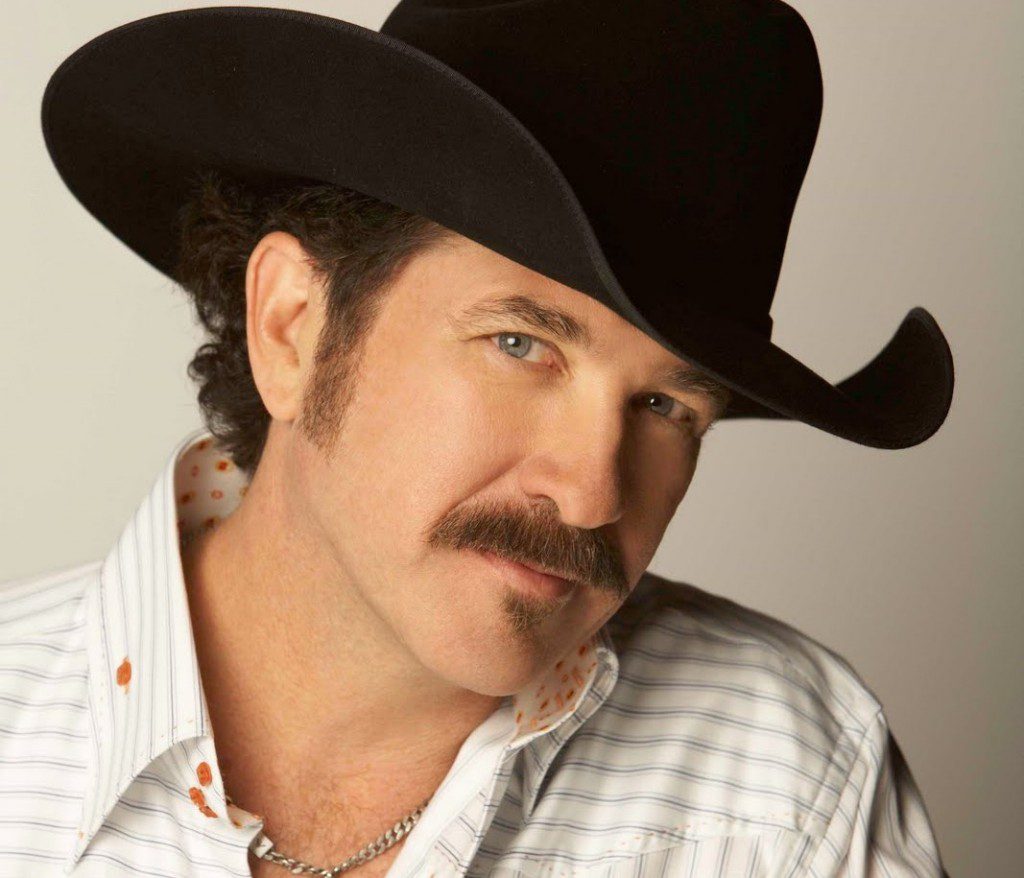
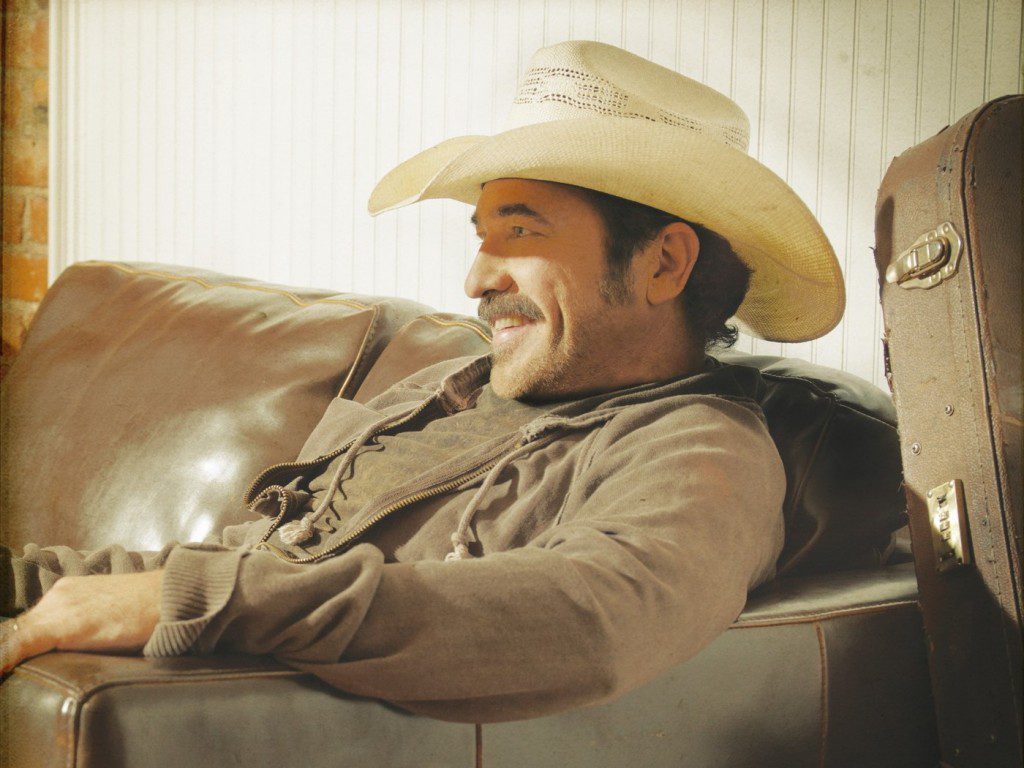
Kix Brooks headlines the free concerts at Mvskoke Nation Festival 2014 this weekend. Courtesy.

Thursday, June 26-Sunday, June 29

For 40 years, the Muscogee (Creek) Nation has held a summer festival to celebrate its tribal heritage, identity and culture. Just as in years past, the tribe hopes everyone will join the fun at this weekend’s Mvskoke Nation Festival. The core of the festival begins at 6 p.m. Thursday, June 26, with a stomp dance. Look for arts and crafts vendors, the all-Indian rodeo, children’s fair, golf tournament, cornstalk shooting and cultural demonstrations through Saturday, June 28. Kix Brooks and Diamond Rio take the festival stage Friday night, while Buddy Guy and The Jacksons play Saturday night. Also look for an appearance from R.J. and Jay Paul Molinere from History Channel’s Swamp People. All events are free, open to the public and held at the tribe’s Claude Cox Omniplex, 555 Tank Farm Road, in Okmulgee. See a complete festival schedule at www.creekfestival.com.

LibertyFest 2014

Courtesy.

Courtesy.
Courtesy.

Begins Thursday, June 26

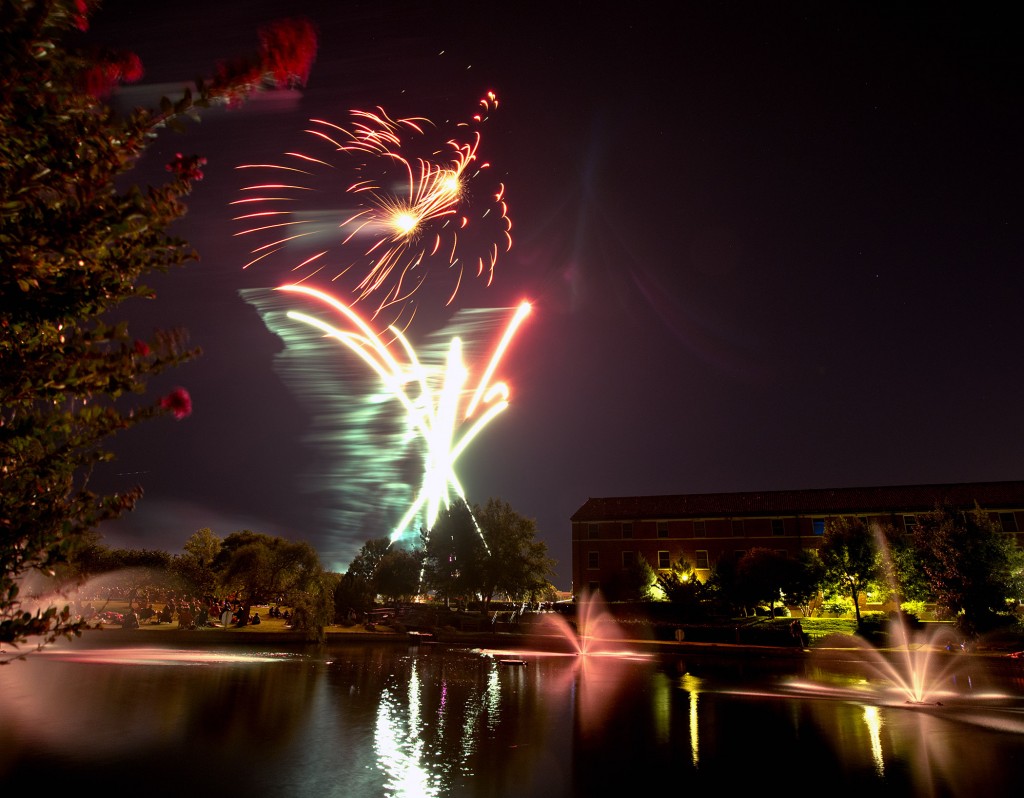
By now, everyone in the state knows that Edmond’s LibertyFest is one of the nation’s top-rated Independence Day events – so says CNN and USA Today. Attracting more than 125,000 visitors annually to partake in the many LibertyFest events isn’t the hard part – organizing a week-plus worth of parades, concerts, food events and more, on the hand, is another feat. LibertyFest 2014 gets underway Thursday, June 26, with the Concert in the Park at Mitchell Hall Theatre on the University of Central Oklahoma campus, 100 N. University Drive, in Edmond. The UCO Summer Band takes the stage at 7:30 p.m. The long weekend continues with the Cardboard Boat Regatta at 6:30 p.m. Friday, June 27 at Arcadia Lake in Edmond Park, and a full slate of fun for Saturday, June 28, to Sunday, June, 28. Look for a rodeo, KiteFest, A Taste of Edmond, Road Rally and more. The fun concludes with a parade, ParkFest and fireworks on July 4. For more, visit www.libertyfest.org.

Rock & Rescue

Eric Isselee/shutterstock.com

Eric Isselee/shutterstock.com

Saturday, June 28, 10 a.m.-2 p.m.

Show your support for local animal rescue groups and humane societies while you rock. Oklahoma Alliance for Animals holds the seventh annual Rock & Rescue, a day of live music and festivities for you and your pooch pals at the Guthrie Green, 111 E. Brady St., Tulsa, from 10 a.m. to 2 p.m. Saturday, June 28. The event will include food and pet-related vendors and services along with dogs and cats available for adoption from area shelters and rescue organizations. There will also be pet contests plus $20 microchip implanting available. All proceeds from Rock & Rescue benefit OAA. For more, visit www.animalallianceok.org.

Real Women Have Curves

Courtesy.

Courtesy.
Courtesy.

Friday, June 27-Saturday, June 28

The lives, secrets and ambitions of five immigrant women working in an East Los Angeles sewing factory are the next special exhibition at Living Arts of Tulsa. Tulsa Latino Theater Company brings the play Real Women Have Curves to the gallery at 307 E. Brady St., for two performances. The play by Josefina Lopez inspired the 2002 film starring America Ferrera as Ana, a young Mexican-American woman who dreams of getting out of the barrio and becoming an important writer as she and her factory co-workers struggle to meet an impossible work order deadline. Tulsa Latino Theater Company may be a newcomer to Tulsa arts, but company coordinator Shadia Dahlal isn’t – Dahlal has presented her Tulsa Folkloric Dance Theatre at the annual SummerStage Festival in past years, and brings her latest venture to the inaugural SummerStage Tulsa Fringe for two performances. Shows are at 7:30 p.m. Friday, June 27, and Saturday, June 28. Tickets are $12-$15. For more, visit www.livingarts.org.

At Home Without A Range

Photos courtesy Kent Rollins.

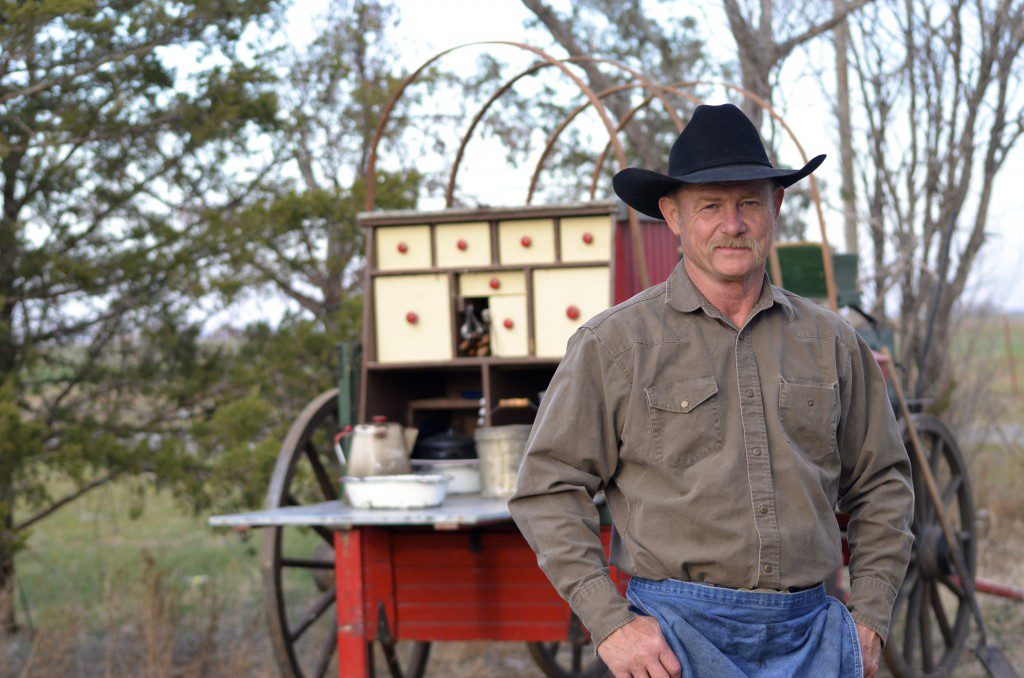
“I’m not a chef; I’m a cook,” demurs Kent Rollins.

Despite this modesty, Rollins, operator of the Red River Ranch Chuck Wagon and Oklahoma’s official chuck wagon cook, has gained national attention for his down-home style. Rollins specializes in cowboy cuisine cooked the old-fashioned way: in a Dutch oven or cast iron skillet placed over a campfire.[pullquote]“Life is simple where I come from; so’s the cooking. It’s just people that make it complicated,” [/pullquote]

Rollins first learned cooking as a child growing up on his family’s ranch, where everyone had to lend a hand.

“None of them had the title of chef – it was mother, grandmother, aunt, friend, neighbor,” he says of his influences.

This communal spirit has stayed with Rollins through his life. Since the 1980s, he has operated his chuck wagon, cooking for ranches across the Southwest. Over time his reputation has grown, Rollins says, “by word-of-mouth and a full stomach.”

These days he and his wife, Shannon, stay busy. In addition to their ranch cooking, the couple provides catering for businesses and parties of up to 500. Customers seek them out, Rollins says, because of the ambience and sense of history their rustic set-up brings.

“My stove has no knob on it, and my kitchen sure doesn’t have any electricity. We do it all off the back of the chuck wagon,” he says.

The allure of the Old West also brings people from all over the country and even overseas to Rollins’ home in Hollis, where he holds cooking classes. Small groups of four to six people experience the cowboy cooking style first-hand, learning basics like beans and bacon as well as more advanced recipes. Rollins says he is particularly fond of baking bread and biscuits because of the precision needed to make them turn out right.

Rollins’ unique style and welcoming manner have helped him catch the eye of television producers. He’s made occasional appearances on the Food Network since 1996, most notably in an episode of Throwdown with Bobby Flay, where he schooled the famed chef in the art of chicken fried steak. He also participated in Chopped: Grill Masters. Over the summer, Rollins will appear on NBC’s Food Fighters. Though he has enjoyed his various brushes with fame, Rollins prefers simplicity. He has found himself having to explain to others how food so simple can taste so good.

“Life is simple where I come from; so’s the cooking. It’s just people that make it complicated,” Rollins explains.

With all the recent exposure, Rollins hopes to increase awareness of and appreciation for the traditions of the cowboy lifestyle. In addition to cooking, Rollins is a storyteller and poet preserving a sense of the past he has inherited. The chuck wagon style of cooking, with Dutch ovens and campfires, goes back at least to the 1870s. Despite the intervening years, the process is much the same today.

By giving people a love of cowboy food, Rollins hopes to keep alive the entire way of life, which he sees as an important link to America’s past. That quest, perhaps more than anything, seems to keep Rollins going. Whether he’s catering for a business or a bar mitzvah, hosting students on his ranch or battling chefs on national television, Rollins never loses sight of the reason he cooks.

“When you can share food and a thought and a laugh, the meal you just had becomes a banquet,” he says.

For Rollins it’s more than a sentiment – it’s a way of life.

Preserving Oklahoma

The Salina Courthouse is a recent success story of Preservation Oklahoma. Photos courtesy Preservation Oklahoma.

The Salina Courthouse is a recent success story of Preservation Oklahoma. Photos courtesy Preservation Oklahoma.

[pullquote]“The Endangered Historic Places List is an effort to raise awareness about historic sites and preservation issues, but it has also been a powerful mechanism for saving significant buildings,”[/pullquote]Many are familiar with the plight of endangered species in Oklahoma, but what about endangered historic places? Preservation Oklahoma, a nonprofit organization based in Oklahoma City, addresses just that. The organization, now in its 21st year of helping preserve and protect historic Oklahoma structures and spaces, recently announced its 2014 list of Oklahoma’s Most Endangered Historic Places. The list includes Westhope, a 1929 home built by Frank Lloyd Wright; J. Paul Getty Bunker, a structure that served as the famed oilman’s home during World War II; the Union Bus Station and surrounding block in downtown Oklahoma City; the Oklahoma State Capitol; and the Eastern Oklahoma Tuberculosis Sanatorium in Talihina.

Preservation Oklahoma hopes that the sites on this year’s list will benefit from attention and draw focus to diverse places represented in the state’s history, says David Pettyjohn, the organization’s executive director.

Buildings that have appeared on earlier lists have gone on to be restored, he adds. The Mayo Hotel in downtown Tulsa serves as a great example of an endangered historic place that was brought back to life.

“The Endangered Historic Places List is an effort to raise awareness about historic sites and preservation issues, but it has also been a powerful mechanism for saving significant buildings,” Pettyjohn says.

For more about the list, visit www.preservationok.org.

Dropping in on History

Antoinette Roach stands below the restored sign that hung outside her grandparents’ hardware store in Oklahoma City’s Deep Deuce neighborhood. Photo by Brent Fuchs.


Only a select group of people had the privilege of sitting in the living room of civil rights icon and Oklahoman Clara Luper, listening to her and other black leaders plan their fight for equality.

Now visitors to the Oklahoma History Center can get an idea of the experience in the museum’s recently renovated and reopened its Realizing the Dream exhibit.

When the center opened in 2005, the exhibit was one of the three original displays.[pullquote]“My grandparents owned an entire little strip of property that included the Walker’s Hardware Store, a restaurant, a men’s clothing store and a hotel,” [/pullquote]

“It was time to give it (the exhibit) a whole new look,” says Larry O’Dell, historian at the Oklahoma History Center.

The renovated exhibit features a faithful recreation of Luper’s Oklahoma City living room, where she welcomed leaders in the black community to talk strategy. Visitors can also pick up her phone and hear recordings of Luper and other civil rights movement leaders in conversation.

A recreation of the lunch counter at Katz Drug Store – a downtown Oklahoma City business and site of Luper’s famous sit-in protest of segregation – has been updated. The center added a partial recreation of the Richard Lewis Barber Shop, originally located in Oklahoma City’s Deep Deuce neighborhood (east of downtown) and a hub within the city’s one-time all-black community for many years.

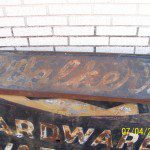
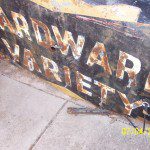
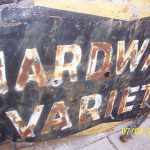
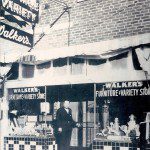
Other businesses are featured prominently in the exhibit. A large sign from Walker’s Hardware, formerly located in a strip of black-owned businesses in Deep Deuce, has been added to the display.

Oklahoma City resident Antoinette Roach’s family owned some of those businesses, and she helped save the vintage sign.

“My grandparents owned an entire little strip of property that included the Walker’s Hardware Store, a restaurant, a men’s clothing store and a hotel,” says Roach.

As Deep Deuce’s fortunes declined, Roach’s mother managed to save the Walker’s Hardware Store sign, removing it from the building in the 1970s. From there it languished in a series of garages for decades until Roach was able find a place that would restore and display the sign.

“It took us seven years to actually get the sign in a museum,” says Roach. “I’m pretty persistent.”

Finding Nantucket

Each summer, the population of Nantucket, Mass., swells. Between May and August, the island off the tip of Massachusetts absorbs more than 50,000 temporary “residents” – all eager to partake of one of the nation’s best locations for beaches and colonial history.

Yet, the “shoulder seasons” (as the early spring and fall are often called) are great times to visit; and autumn, some will tell you, is the best season to take in postcard-perfect Nantucket.

Hotels, inns and restaurants typically lower their rates from the summer dash, which makes exploring the island –14 miles long and 3.5 miles wide – even more attractive. Loaded with history, stories, amazingly preserved buildings and scenery that will make you think you’ve stepped into Herman Melville’s Moby Dick, Nantucket is a National Historic Landmark District.

A wealthy whaling superpower from the late 1600s through the first half of the 1800s, Nantucket owes part of its appeal today to a sandbar of silt that eventually formed in its harbor and prevented large whaling ships from entering. Also, by the middle of the 19th century, the whale oil trade declined, and many residents followed the market, the call of California gold and other opportunities to the mainland. And, a fire in 1846 destroying 40 acres of the town and the wharves forced others to leave. Many of the town’s remaining structures and homes were largely forgotten and isolated along with much of the island until developers in the 1950s began restoring them with goals to create an upscale vacation destination.

Nantucket – the name derived from a word believed to mean “faraway island” from the Wampanoag people, who were living there before English settlement – is no longer isolated, and neither is it only for the affluent. During the fall shoulder season, the weather is still warm enough for many of the attractions and outdoor activities such as boating, biking, fishing, bird-watching, beach combing and hiking for which it is famed.

Conservation

Nantucket’s rugged, natural beauty is prized for its diverse terrain – from salt marshes and beaches to small forests and ponds. The Coskata-Coatue Wildlife Refuge on the island’s northeastern edge features such variety and is a prime location for observing deer, birds and other wildlife, making it a popular attraction. Named for America’s first female astronomer, the Maria Mitchell Association is an organization with a history museum, space observatories, aquarium and a mission to prevent light pollution and study the area’s marine life. During tourist season, it offers hands-on science programs for all ages and an aquarium of locally collected specimens. Although its season ends Aug. 30 and most of the sea life are released the following day, MMA offers private and public programs through the year. Walking is strongly encouraged on the island, and the Nantucket Conservation Foundation opens public lands for a variety of recreation, including hiking, picnicking, fishing and sight-seeing. Protected lands include beaches, grasslands, cranberry bogs, woodlands and swamps.

Preservation

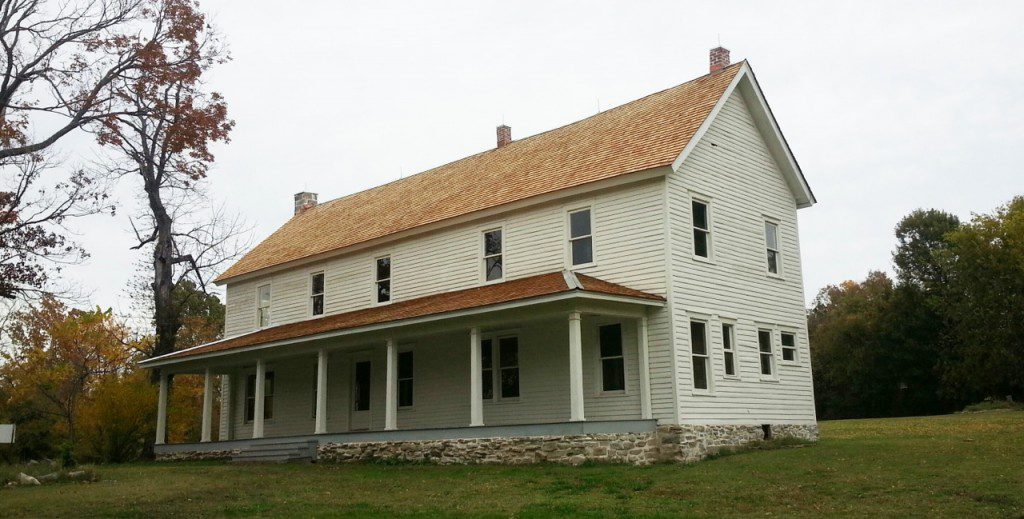
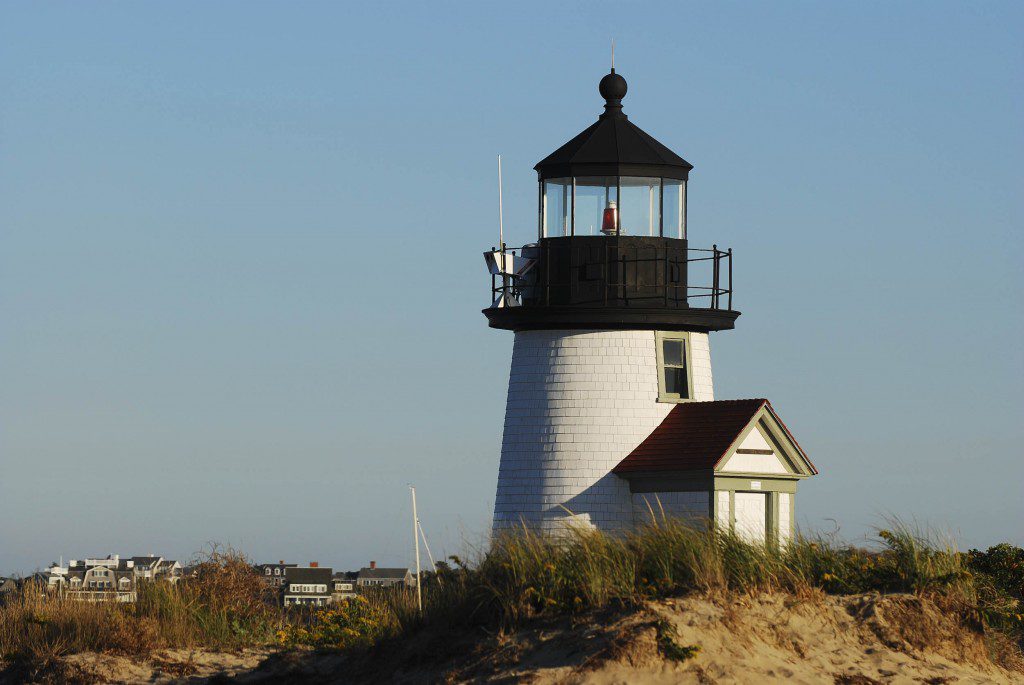
Nantucket was settled by the English after a merchant/missionary sold his original land deed to a group of investors in 1659. From there, buildings, houses and an industry were built. The Nantucket Whaling Museum, housed in a former candle factory, includes the 46-foot-long skeleton of a sperm whale, long boats, harpoons and portraits of seafarers and their families along with other items from the period of Nantucket’s seagoing dominance. The surprisingly well-intact Jethro Coffin House, located north of the town center, is the oldest residence on the island and was built in 1686 for the blacksmith and his wife as a wedding gift. Coffin was the grandson of Tristram Coffin, one of the island’s first white settlers. The restored African Meeting House stands as a silent reminder of the island’s African-American community in the 18th and 19th centuries. Visitors will discover the importance of the whaling industry to free blacks before the American Civil War and Nantucket’s role in the Abolitionist Movement. A young Frederick Douglass was invited to speak at the Nantucket Atheneum, built a year after the original was destroyed in the 1846 fire. Other notables who have spoken there are Ralph Waldo Emerson, Henry David Thoreau, Horace Greeley and Lucretia Mott. Other structures of note include Brant Point Light, built in 1746 and the second-oldest lighthouse in the U.S., and the Old Mill, also built in 1746 and the oldest functioning mill in the country.

Perspiration

Rent a bike and ride to the island’s many beaches. If you’re staying in town, beaches on Nantucket’s south side are but a few miles away. And you’ll find plenty of bike paths – more than 30 miles and mostly paved.

The calmer waters of Jetties Beach make it ideal for swimming and water sports in warm weather, which lingers in August and September. Constructed at the end of the 19th century, the granite jetties created to make a safe passage into the harbor still stand.

Surfside, a south-facing beach, is a leisurely two miles from town. Like nearby Miacomet and Cisco, the surf can be heavy as it faces the open Atlantic Ocean, but it’s a favorite for families looking to picnic or fly kites and play games.

Six miles away, riders discover Siasconset, located at the east shore. Visitors often find seals on the beach. Up the shore at Great Point, you’ll find some of the island’s best fishing along with a sweet view of the Great Point Lighthouse.

At A Glance

Access: Visitors reach Nantucket through Nantucket Memorial Airport, located on the south side of the island and open to charter flights such as JetBlue, United Express and Delta Connection. To arrive the old-fashioned way, visitors can make their way to the city of Hyannis on the Massachusetts mainland and ferry or steamship across Nantucket Sound. On-island transportation includes shuttle bus, taxi, rental car and bicycle.
Climate: Compared to the mainland, generally cooler in summer and warmer in winters thanks to the oceanic influence. Temperatures in August and September linger with highs in the 70s. Temperatures drop to upper 50s by late October.
Main attractions: Beaches, Brant Point Light, boating, Nantucket Reds clothing at Murray’s Toggery Shop.

Festival Time

12th Annual Cranberry Festival – Oct. 11: Guests can watch the harvest and learn the island’s history of cranberry farming at the Milestone Cranberry Bog, one of the last two commercial cranberry bogs on Nantucket. This year’s festival will also feature live entertainment, children’s activities, barbecue and agriculture tours. www.nantucketconservation.org.
Nantucket Maritime Festival – Sept. 20: Last year’s festival included tours of the island’s U.S. Coast Guard station and shellfish propagation lab along with oyster shucking contests, boat races, paddleboarding, harpoon throwing on the beach, aquatic touch tanks and dredging and net making demonstrations with the Egan Maritime Institute, “honoring Nantucket’s maritime traditions.” www.nantucketshipwreck.org
Nantucket Birding Festival – Oct. 16-19: The Linda Loring Nature Foundation hosts the fourth annual outing taking bird-watchers to locations often left off visitor’s guides. In addition to seeing some of the island’s native bird species, last year’s group got a glimpse of a “lost” Calliope hummingbird, North America’s smallest bird species native to the western half of the continent. www.llnf.org

Stay In Style

Historical: The Jared Coffin House, built in 1845 by the wealthy ship builder for which it’s named, is a three-story mansion that escaped the big fire in 1846. Located at the center of town, the inn combines traditional charm with 21st-century amenities, including Nantucket Prime, an upscale steakhouse. www.jaredcoffinhouse.com
Contemporary: If you’re the traveler who prefers to leave the history at the museum, the Veranda House’s contemporary décor and comforts are for you. Near the shore, the hotel’s “retro-chic” rooms overlook the harbor. Some rooms have private verandas to really enjoy those views. www.theverandahouse.com
Romantic: The Summer House Cottages grace Nantucket’s eastern shore in Siasconset. Facing the open Atlantic, the cottages offer the ultimate in privacy that extends to the private beach below the bluff. In its favor are tasteful shabby chic décor, dining and proximity to Sankaty Head Golf Course, open to nonmembers from October to May. www.thesummerhouse.com

Visit Online

www.nantucketchamber.org

Humor Troupes

Photo by Brent Fuchs.

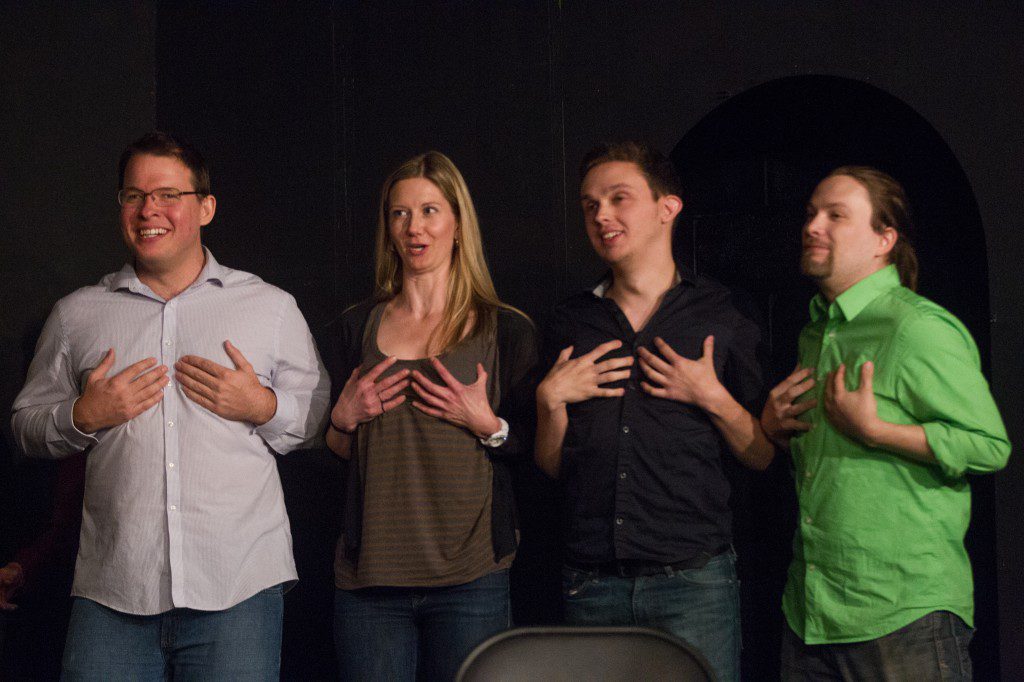
In low-lit theaters across the state, groups of Oklahomans eagerly prepare for the unknown. They appear in troupes with clever names: The MiDolls, Twinprov, Spontaniacs, Everybody & Their Dog and Bard Trek, to name a few. They rehearse for weeks, but when they perform, their shows are unscripted. Their motto is “yes, and.” Their mission is to make people laugh. They are improvisers, and they are asking for audience suggestions.

“People say we’re the best-kept secret in Oklahoma,” says Clint Vrazel, artistic and education director for OKC Improv. “The fun we have is contagious.”[pullquote]“We received a request from a Chicago troupe asking if they can perform the Villain format there,” says Vrazel. “If Chicago’s eye is on Oklahoma City for ideas, it seems we have something special down here.”[/pullquote]

Indeed, people are catching on; the comedy scene in Oklahoma is growing exponentially.

“Casting directors, teachers, bosses and spouses are recommending us to their students, actors and employees,” says Vrazel. “Our classes are selling out a month in advance.”

As the community of improvisers expands, more seats in the audience are filled through word-of-mouth alone. These audiences are finding out improv comes in many varieties.

“Originally, they really only understood short-form improv, which is what they saw on [the television show] Whose Line is it Anyway? But when you go out to improv theater, you’ll see a lot more long form,” says Sue Ellen Reiman, who performs with a few Oklahoma City groups, including the MiDolls, and teaches improv.

One example of this long-form improv is a show Vrazel is involved with called Villain: The Musical, which creates epic musicals on the spot and has garnered national attention for it.

“We received a request from a Chicago troupe asking if they can perform the Villain format there,” says Vrazel. “If Chicago’s eye is on Oklahoma City for ideas, it seems we have something special down here.”

While the improv community and fanbase is increasing, it is not yet a livelihood for most players in Oklahoma.

“In many cases, it’s more of a hobby at this point than it is an occupation,” says Reiman. “But for many of us, it’s a passion. People have met great groups of friends, and the community is really thriving.”

According to Vrazel, this struggle to make comedy a viable pursuit in Oklahoma has forced comedians to experiment more with their craft.

“It’s harder to make a living, but I think you’re more likely to see something original and brave in Oklahoma,” he says. “We don’t have as much pressure to conform, and that’s a great thing.”

This lack of conformity lends itself to a diverse array of improv in Oklahoma, allowing everyone to find a form they enjoy.

We’re the best bargain in Oklahoma City,” says Reiman. “The shows are inexpensive. You can see one in an hour. So have dinner, see a show, go get a drink. It’s a full date right there on the corner.”