




















Home Blog Page 742

Made In Oklahoma

Turn on the evening news or a weekend morning business program, and one is bound to be bombarded with at least one perspective most talking heads share: manufacturing, the backbone of the 20th century American economy, is history. Such doom-and-gloom perspectives are generally accompanied by video of closed plants in Pennsylvania, Ohio, New Jersey or other once-heavy manufacturing states.

Those same economic surveyors will present plenty of reasons why: the off-shoring of labor-intensive work to nations where laborers don’t earn a living wage; the reticence of Americans to take labor-intensive work; alternately, either there isn’t enough high-wage union labor or there is too much high-wage union labor; the ubiquitous “greed” of business; too much regulation or not enough; NAFTA, etc. But it is pronounced as a certainty on a regular basis that since one can see fewer plumes of factory smoke rising from the vantage point of the rooftops of national media headquarters, manufacturing must, indeed, be dead.

The thing is, one might not want to make that argument merely from the talking points provided in three-minute news segments – at least not to anyone in Oklahoma. In fact, manufacturing in Oklahoma, and arguably in states with similar business landscapes, is doing just fine; employing tens of thousands of people, contributing to the economy, powering the state’s sexier industries such as energy, aerospace and agriculture, and generally resembling the once-relevant industrial states of the American Rust Belt.

“I hear people talking about how manufacturing is dead nationwide, that it’s just not as critical,” says Chuck Prucha, president/CEO of the Oklahoma Manufacturing Alliance. “But still we’re the source of 20 percent of the world’s manufacturing output, and that number hasn’t changed a lot.”
Prucha, who has first-hand manufacturing experience, adds that at one time he didn’t think of Oklahoma as being highly industrialized. “I really didn’t,” he says. “But manufacturing represents 12.5 percent of the state’s economy. People think of the economy here as being agriculture-heavy, but agriculture represents only 1.7 percent of the economy. It’s different than what the average person might think. There are 135,000 workers in manufacturing in Oklahoma, which is huge.”

Mike Seney, senior vice president, Policy Analysis & Strategic Planning at the Oklahoma State Chamber of Commerce, places national manufacturing relevance in even more surprising context. “Taken alone, the U.S. manufacturing sector would be the 10th largest economy in the world, ahead of the entire economies of India and Korea,” Seney says. “It contributes $1.8 trillion to the U.S. economy each year. Generally speaking, it’s a high-wage field. Wages in manufacturing, for example, in Oklahoma are 17-20 percent higher than those outside the sector.”
 

“Tulsa used to be The Oil Capital of the World. Well, it is still the heat transfer capital.”

As Seney and other experts see it, manufacturing has changed since its perceived heyday, and those unfamiliar with the American heartland and American south simply don’t recognize it.

“It’s political,” Seney adds. “It’s a case of sour grapes for Rust Belt states.”

He says after World War II, the U.S. rebuilt Europe and Japan but ignored Rust Belt states that had driven the war effort. Crumbling infrastructure spurred a southward migration in search of cheap labor.

This scenario undoubtedly benefits Oklahoma, but it isn’t necessarily the primary reason manufacturing enjoys a healthy environment. Rather, manufacturing underlies the state’s better-known and larger industries – most notably, the energy and aerospace sectors.

“People think aerospace and energy when they think Oklahoma,” says Oklahoma Department of Commerce Research, Economy and Policy Director Deidre Myers. “They don’t think that manufacturing is the cornerstone. In energy, we’re a key producer of equipment; we have a real niche in aerospace and defense. People probably also don’t think about manufacturing when it comes to agriculture and bio-tech, but it is key.”

Seney also says Oklahoma’s manufacturing sector has embraced diversification and adapted with the times.

He gives examples. “The oil and gas industries might need valves, for sure,” Seney says. “But those same valves can be made to work for water extraction. You also have to see the larger picture. A company might be very good at making parts for a very big industry, and that’s all they make. But it’s smaller companies that make the components – the nuts and bolts – for many different companies.”

Still, it hasn’t all been smooth sailing. Like most, Oklahoma’s manufacturing sector took a big hit during the recession, but by 2010 it emerged as a leader.

“Manufacturing in Oklahoma is not only healthy and strong but also growing,” Seney adds. “We’ve had job increases at a time when many places have seen decreases.”

Myers says that not only has the sector been strong, it has been “one of the key drivers of the state’s recovery.”

Other Factors

Economic experts don’t deny that the state’s energy and aerospace sectors are key markets for and drivers of Oklahoma manufacturing success. But they cite other reasons as well – reasons also often cited as key ingredients in the vibrancy of the aforementioned industries.

“Manufacturers here are part of larger systems that are very competitive in the 21st century, and it is important for manufacturers to recognize that they are part of a system,” Myers says. “Those other areas in the system can’t be successful without manufacturing.”

Myers also pointed out that Oklahoma is a “pro-business” state in terms of public policy and taxation. Other factors are the low costs of land and energy and a position in the center of a transportation network able to reach both coasts and Mexico with relative ease.

Seney believes the Oklahoma Department of Career and Technology Education is another key.

“We’ve always had strong CareerTech systems – probably some of the best in the world,” Seney says.

Seney recounts an anecdote from more than four decades ago that illustrates the symbiotic relationship between the manufacturing sector and CareerTech systems.

“This manufacturer opened in Muskogee, and the first piece of equipment they bought they had installed across the street in a CareerTech institution so that students could be trained on it,” Seney says. Only afterward was the machinery installed at the actual factory – with trained workers already adept.

From his vantage point at the OMA, Prucha points out that intangibles play a role in the success of manufacturing sector here as well.
 

“Taken alone, the U.S. manufacturing sector would be the 10th largest economy in the world.”

“I’ve always felt like the work ethic here is superior,” Prucha says. “I’ve run plants in other parts of the country, and I feel the Oklahoma work force is harder working and more reliable.”

Prucha also referenced policy that has incentivized manufacturers to locate and remain in Oklahoma. “Just in the last couple of years with Gov. (Mary) Fallin’s emphasis on manufacturing and small business growth, our ability to function in manufacturing has reached a higher level.”
Still, challenges remain despite optimism about the future of the sector.

“If we can tackle issues like worker’s compensation and some others, we will continue in this growth cycle,” Prucha says.

Oklahoma’s Worker’s Compensation system is cited as one of the nation’s most onerous to business, costly and abused. The business community almost universally references it as the state’s largest detriment to business.

Prucha also says that the changing nature of manufacturing calls for additional opportunities for employee education and training.

Myers and Seney say that evaluating the future of the sector is not easy in a national and global environment with so many negative factors – what they perceive as a lack of leadership at the national level and huge, unanswered questions about the cost of doing business, national fiscal policy, European financial insecurity and numerous other issues.

“In the mid- to long-term, I’m incredibly bullish on the Oklahoma economy and on manufacturing in particular because of production value here, access to markets and the competitive advantages that Oklahoma has,” Myers says.

While Seney says that much of the future of the sector is up in the air because of Washington politics, he points out an interesting factor advantaging Oklahoma.

“We have 25 hub cities,” he says. “Almost every one has a core manufacturing plant. They will draw employees from 50 miles away, and 90 percent of the population lives in driving range of those plants. Those jobs produce great benefits.”

Seney says he could see a model where one member of a family worked in one of those hub cities, while another family member, or members, work in the traditional agriculture sector.

“It’s an ideal model for Oklahoma manufacturing because it is not all located in Oklahoma City,” Seney says. “That means to me that the manufacturing base is solid and a very important component of the state economy.”

While economic and political leaders continue to espouse and support the manufacturing sector all around Oklahoma, what do the experiences of real-life companies have to say about the trends? We spoke to five diverse operations about their recent experiences.

Where the Rubber Hits the Road

Lawton, Okla., is one of those hub cities described by Seney. Eighty miles southwest of Oklahoma City, the seat of Comanche County has just fewer than 100,000 residents, and for years, its proximity to Fort Sill was its chief economic engine. But in 1977, Goodyear broke ground on a manufacturing plant for consumer and commercial tires, and the company has become essential to the entire region.

“We have employees from all over southwestern Oklahoma,” says Plant Manager Brent Copeland. “Mostly, they come from the three- or four-county area, but there are a few who come from as far away as Norman.”

Given its distance from the state’s population hubs, it’s been considered a secret to many, but it’s hardly a secret to those in southwestern Oklahoma. The plant operates 24 hours a day, employs 2,400 associates and 350 contractors and is one of the largest plants of its type in the U.S.
“Since we first broke ground, we have had 10 major expansions,” Copeland says. “We started with 1.4 million square feet; we’re up to 2.7 million square feet and 63 acres.”

Over the same time period, the factory has increased production three-fold and today provides consumer and commercial tires primarily to the U.S., but also to markets abroad. However, it isn’t just about production at Goodyear in Lawton. It’s also about being a cornerstone of the community – besides returning around $2 billion into the local economy on an annualized basis, Copeland says.

“We’re very involved with the city and with the state,” Copeland says. “We’re a huge part of the United Way here. We raised $717,000 – about 47 percent of all Lawton-Fort Sill giving. That’s a comment on the quality and involvement of our associates.”

Copeland says that the plant’s location provides the benefit of a work force he respects.

“Obviously, one of our assets is our work force as well as the work ethics of our associates,” he adds. “They’re productive, engaged employees.”

As far as his prognosis for the future, Copeland has mixed feelings. On one hand, he says that the plant’s competitiveness has it running at full steam even in a down economy.

Entrepreneurialism And Industry

Advanced Research Chemicals, Inc. (ARC) illustrates the entrepreneurial nature of the manufacturing sector. The company is in its 26th year, and it is an Oklahoma original.

“My father, Dr. Dayal Meshri, was in school at Cornell studying chemistry, and he got a job offer to come to Oklahoma in 1969,” says Dr. Sanjay Meshri, the company’s executive vice president. “He took the job and worked for that company for 19 years.”

Only then did Meshri launch ARC with few resources.

“It was a start-up that began with two people,” Sanjay Meshri says. “My dad was in his 50s and cashed in his 401(k).”

In 1996, Sanjay Meshri joined the family business as its sixth employee.

Today, ARC employs 85 people, has a substantial presence as part of the community at the Port of Catoosa and has “a strategic plan to double in size by 2015,” Meshri says.

“Our customers are mostly on the coasts, but we like the people here. They’re honest and friendly.”

ARC also illustrates the importance of manufacturing as a part of a larger system. ARC is known as a reliable resource in the field of specialty chemicals. Many of the world’s largest companies are closely associated with ARC as business partners in the manufacturing of specialty materials for their products.

Sanjay Meshri says that while the company has had the opportunity to relocate, it has remained committed to its Oklahoma hub. “My father has been here more than 50 years, he likes the people here, the cost of living is good and even top scientists we recruit end up liking it here. Our customers are mostly on the coasts, but we like the people here. They’re honest and friendly.”

Although ARC utilizes trucks and rail to move its product, its location at the Port of Catoosa is also a benefit. “Everyone here is involved somehow in manufacturing, and it is a good group of people,” Meshri says.

While recruiting employees with the special skills isn’t always easy, Meshri says the company is both committed to Oklahoma and optimistic about the future.

“We feel very good about the company and about the state,” Sanjay Meshri says.

An In-house System

At Tulsa’s Express Group Holdings LLC, they know a little something about business systems and integration. The five companies in the group engineer, design and fabricate heat transfer and environmental compliance technologies, principally for the energy exploration, power generation, refining, chemical and mining industries.

But it hasn’t always been so, according to Phil Childers, chief technology officer. He says the engineering entity was always under-capitalized but saw an opportunity a little more than a decade ago.

“In 2000, we saw opportunities to join forces with (a pre-existing manufacturer) – we would design products, and the manufacturing would be done by others,” Childers explains.

Perhaps, more importantly, around the same time the growing company made another tactical decision – to remain in Oklahoma.

“We made a conscious decision to pursue markets that allowed us to stay in Oklahoma around 2000, while some of our competitors moved off-shore,” Childers says.

“There are a lot of opportunities for people here but we have to get them back into schools.”

Express Metal Fabricators, the manufacturing part of the group, was added, and the company has witnessed expansion since. Currently, the company employs between 350 and 400 people and has its collective eye seeking others.

“We’ve just started to see growth after being fairly stable,” Childers says. “We’ve probably added 25 to 30 percent in the engineering end, and we are actively seeking people.”

Childers cites Oklahoma’s strong work ethic as one benefit, but he cites another that many in the industry might not be aware of.

“Tulsa used to be the Oil Capital of the World,” Childers says. “Well, it is still the heat transfer capital. Many companies were built to support the oil and gas industry, and while many of the white-collar jobs have moved to Houston, much of the manufacturing end has remained here. The infrastructure is here, and when you want people who know the industry, this is where you look.”

Childers is bullish on the future. “We’re optimistic,” he says. “Oil, gas and fossil fuels are not things we’re going to get away from in the next 10-20 years. We’re planning on growth, and we’re planning on staying in Oklahoma.”

Shuttering The Sooner State

Those businessmen who have done it attest to the satisfaction of building a business from the ground up, and if national reports are to be believed, Oklahoma is a good place for that opportunity.

It’s a scenario Chris Tietz knows well. In 1987 he and a partner launched Kirtz Shutters in Stillwater, specializing in plantation shutters. The one problem they faced: plantation shutters weren’t exactly in wide use in Oklahoma.

“We were carpenters and had no work to do,” says Tietz. “We looked at other options, including moving out of state.”

Fortunately, a client who’d previously lived in California liked Tietz’s work and wanted plantation shutters.

“When I was finished, we made samples and took them around to people who we thought might be interested,” Tietz says. “I thought there was an opportunity. I think that if you are in manufacturing, particularly if not related to energy, you have to be very good at what you do, and you have to be creative.”

Using home and garden shows in the region, Tietz helped introduce the market to a product relatively new to many.

As the homegrown business expanded, it employed more than 70. In the wake of the recession, the number is now 34, Tietz says. But that creativity Tietz cited enabled the company to modify and move on.

“As shutters became more of a commodity, they became available everywhere, and there are cheaper foreign products available,” Tietz says. “So my objective is to push the higher end, the elite, those who don’t want cookie-cutter products from a big-box store.”

Tietz says the company motto is, “You draw it, you want it, we build it.”

“Adaptability is key. The market necessitated a change in the overall direction of the business,” Tietz says. “It’s nice to pick the low-hanging fruit, but I felt like we needed to do something different.”

Like most others in the sector, Tietz is upbeat about the forecast of manufacturing in Oklahoma. “I think people will always want manufacturing jobs, even if it isn’t the biggest part of the economy. A lot of people don’t want to work behind a desk or serve food. It can’t be an entirely service economy.”

Vision And Verve

One might say that Larry Mocha, president of Air Power Systems Company, Inc. (APSCO), has seen the good and the challenging days for the well-known Oklahoma company.

“My father started the company in 1964 when I graduated high school – I used to come home on weekends and build cylinders,” says Mocha. “I graduated college in 1970, and I was the first person he hired. Six months later, I was the first person laid off.”

Mocha spent two years in the insurance business. He returned to APSCO in 1972, where he worked for his father until the senior Mocha passed away in 1984 – shortly after the legendary downturn in the oil market.

“The greatest thing I learned from my father was how to handle tough times,” Mocha says.

Mocha parlayed that intestinal fortitude through the recession that followed shortly thereafter in 1986. A pair of lawsuits in 1989 also set the company back.

“I remember Christmas 1986, people were worrying about their holiday bonuses and I was worried about making payroll,” he says.

Reinventing the company and what it did was key to survival, Mocha says. “We’ve come a long way since then, redefining who we are. In the ‘90s, we switched from providing for oil fields to dump trucks.”

Subsequent change to EPA policy forced further innovation, but the company kept pace with everything fate and government threw at it. APSCO has been growing since its floor in 2009 when sales fell to $4.4 million, Mocha says.

APSCO manufactures pneumatic cylinders, controls and valves for the mobile, truck equipment and automotive markets. In 2012, APSCO broke $10 million in sales for the first time. And, although they have sub-contracted a small portion of work overseas, Mocha says that they are bringing that back to the U.S. and that the company is about to make a significant investment in infrastructure.

Mocha also says that he believes manufacturing can and should work domestically.

“We can compete and be successful,” Mocha says. “When buying in China, we’ve found that when we get a crateful of product, if tolerances are off, we’re then bartering for junk and have to re-machine. It’s very complicated. It’s easier, simpler and better for the economy to manufacture in Oklahoma.”

Mocha’s optimistic view of the sector in Oklahoma includes confidence in the work force, state leadership and system of educating potential employees – although he says the latter still needs an infusion of effort. “There are a lot of opportunities for people here but we have to get them back into schools,” he says.

Overall, Mocha, like so many others who have succeeded through innovation and adaptability, sees these as exciting times in manufacturing.

“It’s a good time, but a challenging time,” Mocha says.

John Fullbright

In the wake of receiving a Grammy Award nomination but a few months ago, John Fullbright, it seems, is receiving his due. The Bearden native has quickly gained notice for his folky way with music and its roots in blues, country and gospel since he became a contender for a Grammy Award under the category of “Americana.” Bonnie Raitt ultimately took the honors in March, but it left everyone wanting to know more about the fresh-faced 24-year-old with the blues-seared chords. If you ask anyone at the Blue Door in Oklahoma City, the lad from around Woody Guthrie’s way is worth listening to over and over again. Maybe that’s why the venue frequently books him for two or three consecutive nights at a time. Blue Door has him May 10-12. Unfortunately, those shows sold out two months ago, but you still can catch him at Tulsa International Mayfest’s free stage show on May 16 with Monte Montgomery. Check out more at www.tulsamayfest.org and keep an eye on www.bluedoorokc.com for his next scheduled appearance.

And They’re Off

May is the time for flowers and celebrating Mom, but horse racing enthusiasts know the first Saturday in May as the Kentucky Derby. Nicknamed the “Greatest Two Minutes in Sports,” this much-celebrated equestrian event is steeped in tradition, grandeur and lots of fun. Few people know the ins and outs of planning a stellar Kentucky Derby party like Shelley Steger, event planner for Remington Park in Oklahoma City.

Remington Park hosts a tea party on Derby Day, complete with a hat contest. However, if you want to host a Derby party at home, Steger offers a few suggestions.

Since roses are the official flower of the Derby, Steger suggests incorporating them in the décor, possibly as a centerpiece.

When it comes to food and drink, there are a few essentials. Mint juleps are a must, along with Derby pie, laden with chocolate chips and whiskey. Hot Brown sandwiches – an open-faced sandwich of turkey and bacon covered in Mornay sauce and broiled until the bread crisps and the sauce browns – is also traditional Derby fare.

In keeping with a more formal theme, the food could include passed hors d’oeuvres like rumaki (pieces of water chestnut and duck or chicken liver wrapped in bacon) or even slices of Hot Brown or Derby pie cut into small pieces and arranged on small doilies on a silver tray.

Seems like such a grand event would be bound to old school etiquette and myriad dos and don’ts, but Steger says this is not the case. The only rule is to have a good time and cheer on your favorite horse.

Traditional Mint Julep

6 to 8 mint leaves
1 tbsp. sugar
Crushed ice
2 1/2 ounces bourbon
Splash simple syrup
Sprig mint, for garnish

Put the mint leaves and the sugar in the bottom of a tall glass. With the handle of a wooden spoon, crush and mash the leaves to extract the flavor. Fill the glass with crushed (not cubed) ice. Pour in the bourbon. Top with a splash of simple syrup. With a long-handled spoon, jiggle (not stir) to chill and mix. Garnish with a sprig of mint.

Recipe courtesy Foodnetwork.com.

Don’t Just Sit There

Our modern workday is vastly different from past generations. Technology has made us more efficient in the workplace. However, these advances come with serious health concerns.  

Research has linked a sedentary lifestyle with elevated blood pressure, high blood sugar, obesity, cardiovascular disease, diabetes, cancer and even premature death, says Jennifer Daley, exercise specialist with Saint Francis Health System. “Prolonged sitting can also lead to back aches, headaches and restlessness, and we can even become lethargic.”

Karen Massey, community wellness dietitian with Integris Health System, confirms sitting for long periods of time is linked to a number of health risks and adds an increased risk of blood clots to the list.

“When we sit almost motionless for extended periods of time, the body recognizes that there’s no need to keep basal metabolic rate in full-throttle,” explains Massey. “Our bodies go into a ‘sleep’ mode, turning off extra calorie-burning that isn’t needed while not in active use.”

Even regular gym-goers are at risk.

“People who regularly run or work out at a gym often figure that doing so offsets the fact that they sit the rest of the day,” says Massey. “The risk of sitting differs from the benefits of exercise, a difficult concept to embrace especially for those who regularly engage in exercise.”

Sedentary does not just mean someone who does not exercise regularly, but means someone who is sitting for the majority of their day, says Daley.

“It’s not just about having an exercise routine or being a regular exerciser but being active all day,” says Daley. “Ultimately, we must compare the time we spend sitting versus the time we spend standing and even the amount of time we spend exercising.”

But don’t stop your exercise routine. It’s important. Everyone needs both, Daley and Massey agree.  

While prolonged sitting has serious health consequences, the solution is simple: move.

“You don’t have to be all that sophisticated,” says Massey. “Set your print cue to print at a location which forces you to walk to retrieve your copy. Don’t use the closest bathroom – walk to a farther one.”

“Get up and walk to talk to a co-worker instead of calling them on the phone or sending them an email, “suggests Daley. “Keep some small hand weights or bottles of water at your desk that you can pick up and perform different arm exercises while you are reading e-mails, talking on the phone or listening to a webinar.”

The essential goal is to wake up the circuitry, keep blood flowing and stimulate the muscles into active mode, encourages Massey.

“Make a personal goal to take a walk break, stretch break or just a wiggle break every 60-90 minutes,” advises Massey.

Daley recommends standing up every 30 minutes to prevent stiffness.  

“Stand while you are talking on the phone,” offers Daley. “The simple act of standing can burn as many as 50 more calories per hour.”

Don’t feel guilty about taking time for these much-needed breaks.

“Understand that taking time out for yourself is not selfish; you are making yourself a better person and a better employee,” says Daley.

Oklahoma Music

Located smack in the middle of the country, Oklahoma is at a cultural crossroads that gives us an exceptionally rich and varied musical heritage. Oklahoma played a huge role in the evolution of jazz, Red Dirt and Western swing, but its citizens have touched every genre of music. We’ve narrowed our list down to more than 75 worthy of special attention, but we could have easily listed hundreds more.


Check out our gallery of 75 (plus a few extra we couldn't leave out – Okay, there's almost 100) people, places and moments.


Visit Oklahoma Magazine on Spotify  to hear the Oklahoma artists featured in our May issue.


Advanced Research

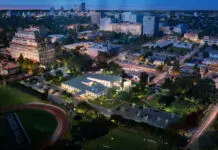
Gilcrease Museum, an examplar of American art, rare books and history, has been a Tulsa staple since its founding in 1949, and it’s only getting bigger. The museum is set to substantially expand in 2014 with the completion of the Helmerich Center for American Research, which was announced in 2010.

The construction, an 18-month project spearheaded by a donation from the Helmerich family, led by The University of Tulsa and bolstered by more than $17.5 million in contributions from the city’s philanthropic community, will add 25,000 square feet of floor space to the campus, including new spaces for the museum’s extensive archives, a seminar room and a conservation laboratory, as well as new spaces for the public.

Dr. Duane King, executive director of Gilcrease Museum, says that the project’s completion will be not only a great resource for researchers, but also a boon for students and the public to see seminars and get hands-on experience with materials that they might otherwise not have easy access to.

One of the first tasks of the Research Center will be to digitize the extensive holdings of Gilcrease Museum and make them available electronically, says King. “We will be able to provide not only greater access to the collection, but also interaction between the scholars working at the museum and the university with researchers and scholars elsewhere.”

With the construction of new educational spaces, King says the museum will be able to expand its educational programs, which it offers in partnership with The University of Tulsa, to more students than ever before. Working in the Helmerich Center’s facilities will also allow students a greater access to internships and scholarships, as well as invaluable practical experience and hands-on, face-to-face learning with seasoned experts in history.

“We fully expect to have seminars, conferences, lectures with people onsite as well as with scholars and researchers from around the world,” King says. “So those students who are planning careers in the museum profession have the opportunity to receive high-quality classroom instruction as well as practical experience in a museum setting.”

In addition to bolstering education for local Oklahoma students and the public, the Helmerich Center will also more prominently place Tulsa’s Gilcrease Museum as a player in the international intellectual community, curating and fostering exhibits that tour worldwide, having just closed an exhibit in Florence, Italy, that attracted an audience of 300,000.

Back home, for the current season, Gilcrease Museum is currently one of the nation’s only three museums to host a travelling exhibit of the artworks of the western painter Edgar Payne, as well as a majestic collection of rare National Geographic photographs documenting the history of the west.

The Bill T. Jones/Arnie Zane Dance Company

Saturday, April 27-Sunday, April 28

The Bill T. Jones/Arnie Zane Dance Company makes its Oklahoma debut this weekend at the Cascia Hall Performing Arts Center with two performances that are certain to make the enrollment to ballet schools shoot up. Celebrating its 30th anniversary, the company was labeled “groundbreaking” when it began as a collaboration of its namesakes. Decades later, the rest of the world knows it, too. Watch the troupe as it presents D-Man in the Waters, Spent Days Out Yonder and other pieces at the Tulsa venue located at 2520 S. Yorktown Ave. Shows are at 8 p.m. Saturday, April 27, and at 3 p.m. Sunday, April 28. Tickets, which are $15-$50, are available at www.choregus.org.

8

Thursday, April 25-Saturday, April 27, at 7:30 p.m.

The battle over California’s Proposition 8 hits the Tulsa Performing Arts Center as three Tulsa theater groups combine talents to present 8, a drama re-enacting parts of a key 2010 federal court trial on the constitutionality of denying same-sex marriage. Theatre Tulsa, Odeum Theatre Company and Theatre Pops will hold a staged reading of the piece by award-winning screenwriter Dustin Lance Black (Milk, J. Edgar, HBO’s Big Love) just weeks after the U.S. Supreme Court heard the debate. 8 premiered in September 2011 and later moved onto Los Angeles with a cast of film actors that included Brad Pitt, George Clooney, Kevin Bacon and others. This production boasts some faces familiar to the Tulsa theater scene, including Craig Walter, Chad Oliverson and Heather Sams. Show times are 7:30 p.m. Thursday, April 25-Saturday, April 27, in the Tulsa Performing Arts Center’s Liddy Doenges Theatre, 110 E. Second St. Tickets $12, available at www.myticketoffice.com and at the PAC box office. This play is recommended for a mature audience.

Extreme Racing at Remington Park

Sunday, April 28, at 1:30 p.m.

Remington Park goes wild Sunday with Extreme Racing at the Oklahoma City racetrack. Presented by the Oklahoma Quarter Horse Racing Association, jockeys line up at the gate on camels, ostriches and (new this year) zebras. There will also be an event called “Flying” Pig Racing on the plaza. One can only wonder. Extreme Racing is for all ages, and spectators will have a chance to get up close to the animals racing outside of Henry Hudon’s Pub at the track through the weekend leading up to the races. Admission is free to Remington Park, One Remington Place. Extreme Racing begins at 1:30 p.m. Sunday, April 28. For more details, see www.remingtonpark.com.

Fleetwood Mac at the BOK Center

Wednesday, May 1, at 8 p.m.

When Stevie Nicks hinted last year that the remaining members of Fleetwood Mac were signed on to tour, the news traveled fast and wide – so proves the appeal of a band that formed in the late 1960s, reached great heights in the ‘70s and ‘80s, and has been on top ever since. While Christine McVie may have retired from the group (at least for now), Mick Fleetwood, John McVie, Lindsey Buckingham and Nicks show they are still tied together through a body of work that has made the band and its music more than just classic. Fleetwood Mac said it best: “Don’t stop.” The band hits the BOK Center, 200 S. Denver Ave., next week. Show time is at 8 p.m. Wednesday, May 1, and tickets are $49.50-$149.50. Get them online at www.bokcenter.com.