OKC Thunder player Luguentz Dort – alongside participating in a variety of Thunder Cares iniatives – started his own foundation in Montreal, Canada. Photo courtesy the OKC Thunder
The Seattle SuperSonics came to Oklahoma City in 2008 and became the Thunder; since then, the team has remained beloved, winning a division title in the 2010-11 season and a Western Conference championship in the 2011-12 season.
While strength and showmanship on the basketball court are big factors in the Thunder’s status as a cherished part of Oklahoma culture, some may say the team’s best work happens off the court in the communities players call home.
In addition to the phenomenal work of the Thunder Cares Foundation, Thunder community activities in the Oklahoma region include conducting basketball and art camps, playing bingo with residents at local nursing homes, reading stories to kids and volunteering with Positive Tomorrows – a nonprofit that partners with families experiencing homelessness to educate children and create pathways to success.
The Thunder also sponsors the Rolling Thunder book bus, in partnership with American Fidelity. This year, the Thunder is also spearheading a Black Heritage Creative Contest. Students in grades 9-12 are invited to submit an original poster that describes or depicts an inspirational experience, moment or an individual in Black history and how the students have been personally inspired. Winners will receive a Thunder uniform and warm-up suit, and tickets to games in February 2024.
The holiday season is an important time for Thunder community partners. Players participate in church giveaways and projects to ensure that those in need have necessary items for the season.
Each player has his favorite charities – and some even operate foundations and community programs themselves. Luguentz Dort, for example, has his own foundation in Montreal, Canada, called the Maizon Dort Foundation, where he works within the communities he once lived.
Another player, Shai Gilgeous-Alexander, has taken an interest in art and creative pursuits, conducting camps with kids at Oklahoma Contemporary’s art space. Children participating in these camps paint custom sneakers and end the programming with a fashion show.
“It is important to be good stewards of the community’s love and trust,” says Christine Berney, the Thunder’s vice president of community engagement. “It’s fun work and very important to us.”
Thunder forward Jaylin Williams says he loves participating with Thunder Cares, but is most proud of the basketball camp he conducted this past summer. The camp was held at the same high school he went to in Fort Smith, Ark.
“The moment that sticks with me is the day I was leaving one of the camps, and all the kids were running up to me and giving me hugs,” he says. “It was clear that it meant a lot to them that I was there.”
When asked about the upcoming season, Williams says his main goal is simply to improve, since he spent a lot of time last year learning the basics of being in the NBA.
“I just want to continue to do better, and anticipate what my teammates need,” he says. “To build on that chemistry with the team.”
Guard Aaron Wiggins is also passionate about community involvement. He loves the back-to-school backpack drives and helping kids get the tools they need to thrive. Wiggins recently went with Dort to his basketball camp back in Montreal.
“At the camp, some of the kids wanted to play one-on-one with me, and afterwards they had questions about how to improve their game,” says Wiggins. “It was rewarding to be able to help them grow in their skills and effectiveness – on and off the court. It’s an honor to be a role model in the community.”
Musician Barron Ryan recently released a book and song, both titled “Honey, If It Wasn’t For You.” Photo courtesy PR By the Book
Most music is, in some sense, a collaboration. Often, it’s a posthumous one. Anytime an artist sets out to perform a piece of music he or she didn’t write, the result is always going to be a combination of the original creator’s work and the approach of the artist or artists interpreting it.
Tulsa-based pianist Barron Ryan, who’s become quite well known for putting his own spins on material ranging from classical to contemporary, knows that as well as anyone. At the same time, he knows that his latest collaboration is something special, a true and equal fusing of talents – even though his collaborator died a full half-dozen years before Ryan was born.
Ryan tells the whole tale in his new illustrated book, Honey, If It Wasn’t for You, which is also the name of the song (included with the book) he crafted in conjunction with the late songwriter Don Feagin. The book’s author is Ryan, the song’s writers are Feagin and Ryan, and, as the book relates, their musical partnership includes a third party. It’s Feagin’s widow, Linda, who is in many ways responsible for both song and book.
“I played with the Tulsa Symphony in 2018 as the featured pianist in a concert featuring local talent, and Linda was in the audience,” recalls Ryan. “We didn’t meet that night, but months later I got a call, asking if I’d be available to play a cocktail party; the host had seen me and was keen on having me play. I accepted, and that’s when I met Linda. She was the host, and she was very warm and supportive and interested in my work.
“I was encouraged and gratified by her gracious spirit,” he adds, “and we came to be in a place where she felt comfortable enough telling me that her husband was a songwriter, that he had died at the age of 38 of cystic fibrosis, and that he had left materials behind. She invited me to look at them, just to see what would happen. But she also insisted that if I didn’t see any potential I didn’t have to do anything. It was open-ended on her part.”
The Feagins had lived in Dallas, and Don had worked at a full-time job before his illness. Then, for the final six years of his life, he spent his time writing and pitching songs to a variety of artists, mostly in the country genre. Two of his numbers, “Country Music” and “Jesus Is Your Savior, Child,” were recorded by Charley Pride, one of country music’s all-time greats.
Although those were the only two songs of his to see major-label release, Feagin kept shopping demos of his work to a variety of recording acts, even as his health deteriorated.
“Linda told me that in the hospital, as he was ending his last days, he was still writing songs,” says Ryan.
It was 2021, 40 years after Feagin’s death, when his widow invited Ryan to look through the boxes of his material.
“We’re talking about dozens of lyric sheets, 50 or so, with words and maybe chord symbols,” Ryan says. “And then just as many if not more songs that were finished, along with demo reels. I thought those would be interesting to hear, but if a song was already finished, there wouldn’t be much for me to do. I wanted to look at his lyric sheets and add my own music.”
After much exploration, he settled on one called “Honey, If It Wasn’t for You,” which Feagin had written about his wife.
“I thought, ‘If I’m going to do anything with this material, it needs to be a great story,’” explains Ryan. “Don was an integral part of the story, I did what I could to contribute, and then, to bring Linda, the subject of the song, into it – that gave us all as much agency as possible in this story.
“Don was a country writer, mostly, so I knew this would be a country-ish tune, and country tunes are generally pretty simple melodically and harmonically,” he adds. “I thought this should be a comfortable melody and a comfortable-feeling tune. It was also something I would need to sing, and since my singing voice is not great, it couldn’t be too acrobatic vocally. So I just landed on something that felt right. I had a hard time staying up with and writing down what I was thinking, because it all came rather quickly.”
After that, it was time for Ryan, who’s played before hundreds of thousands of people all over the world, to sit down in a living room setting and perform the song to an audience of one. He felt, he says, “a unique sort of nervousness” when he did “Honey, If It Wasn’t for You” in front of its subject, Linda Feagin.
“I didn’t look at her while I was playing, but I thought, ‘This is very moving,’ and, honestly, I expected her to be a puddle of tears,” he remembers. “Then I turned to her, and she was misty-eyed, but she was also less overwhelmed and more analytical than I expected. She said that it seemed like the tune and the lyrics were perfectly suited.
“Sometime soon after, she told me that when she read the lyrics, a week or two before I performed the tune for her, that she didn’t love them,” he adds. “But when I put them to music, she said the lyrics made sense to her.”
Since then, the lyrics have apparently been making sense to a lot of people. Or at least making an impression. Even before the book was published, Ryan had begun using the song as a closing number for just about every one of his concerts, prefacing it with the text from his book.
“I play it at the end because I usually play piano music [without lyrics] and to play it in the middle would just seem strange,” notes Ryan. “But whenever I read the book and then perform the song, there is absolute silence. Without exception, it’s the most powerful of all the music I present in concert. So I’ve had the benefit of seeing that the story worked even before the book came out.
“This is my first book,” he adds. “But I’ve been focused on stories for almost the entirety of my professional career. The music I play in concert – I try to tell a story with it. You can almost think of the music as an illustration of the story that I tell. So, in that sense, this is not outside my comfort zone. It’s simply the newest iteration of that style, that approach, to sharing music.”
Even shorn of the book-length backstory, however, he believes the song works, that the words and music convey an important message not only to those involved with bringing the number to life, but to all who hear it.
“I hope it gives Linda a sense of the love her husband had for her and of the love and appreciation that I have for her,” he says. “And then, I hope it does the same thing for everyone else who listens to it, that it helps them feel a sense of the love that surrounds them. That’s what music does. It gives you the sense that someone cares about you – enough to write a song, to paint a picture, to give you flowers, to cook you a meal, because that person knows it will make your life feel full. That’s what I hope this song can do.”
Honey, If it Wasn’t for You, with full-color illustrations by Cali Ward, is available online at book.barronryan.com in both hardcover and E-book formats. The song, included with each book, can also be accessed on streaming platforms.
Although the eight Canary Islands lie just 60 miles off the coast of Morocco, Africa, they belong to Spain and have for six centuries. Born of volcanoes, this land of eternal spring enjoys lots of sunshine and an average daytime high of 77° year ’round, earning the isles the nickname of Europe’s Hawaii (apologies to the Azores in Portugal, which also claims the moniker).
Of the eight, Fuerteventura is the oldest, with topography ranging from mountains of 2,600 feet to barren Mars-like terrain to more than 90 miles of alternating marshmallow-white, gold and black sand beaches.
The Canary Islands, off the coast of Africa, beckon to travelers around the globe.
The surfing at Flag Beach on Fuerteventura’s northeast coast is superb thanks to prevailing winds from the north-northwest. All surfing disciplines are welcome: wind, kite, board and wing foil.
As you’re nailing that tube ride, you’re sure to notice Lobos Island off to the northeast. You’ll probably also see a ferry or two taking folks to Lobos from the resort town of Corralejo just up the coast. The island boasts a magnificent bay with calm, shallow waters and white sand beaches, one lighthouse and a restaurant.
Sotavento Beach adorns the southeast coast of Fuerteventura with crystal-clear lagoons and sand the color of cotton candy, backed by volcanic mountains. The beach itself runs for a couple of miles taking trekkers past swimming holes and tidal pools.
An area on the island’s west side is thought to have been the first to come to the surface after volcanic eruptions formed what is now the islands. The Ajuy Natural Monument provides awesome views and some amazing natural caves. Not too far away, Ajuy beach is dressed for the occasion, sporting black sand along with white, breaking waves.
In central Fuerteventura, grab your hiking boots and tackle the trails of rugged Natural Monument Mountain Cardon. Or find a beach, strap on scuba tanks and search for turtles, dolphins and whales in the Atlantic.
The island’s hot spot is Corralejo: hip restaurants, wine bars, fish bistros and a bumping nightlife scene offering everything from disco to karaoke. Experience some of the world’s freshest seafood in fine-dining broils overlooking the marina.
Ten miles south of Corralejo, the island does a 180 and hands you La Oliva, a quiet, history infused hamlet counterbalancing Corralejo’s vibrancy. The former center of power on Fuerteventura is filled with handsome 17th-century colonial architecture, like the “Colonels’ House,” white-washed townhouses, palm trees, a grain museum, art galleries and the town’s centerpiece, the Church of Our Lady of La Candelaria.
Time your visit to include a Tuesday or Friday morning when the La Oliva market takes center stage with farm-to-table produce, indigenous crafts, handmade shell jewelry, local spices and robust mojo picón sauces made with intense blends of cayenne peppers and paprika.
Native foods to savor include gofio, roasted corn flour; frangollo, a dessert made with goat’s milk, sugar, almonds and raisins; and limpets, a mollusk found in sea stones and prepared with mojo picón. The sea bass and cherne are also plentiful.
Stay in northern Fuerteventura to soak up the relaxed vibes of El Cotillo, Corralejo and Lajares. The Avanti Lifestyle Hotel sits right on the beach in Corralejo with terrific views everywhere you look, especially from the hotel’s rooftop Jacuzzi.
On the east coast, the Sheraton Beach, Golf and Spa Resort is sandwiched between 36 beautiful sea-view golf holes (plus 18 miniature golf holes). After the links, hit the spa and rejuvenate in an ice igloo or hammam.
Yes, there are canary birds on the Canaries. They’re named after the islands, which got it from the Latin words Canariae Insulae, meaning “islands of the dogs,” most likely a reference to monk seals – a.k.a. sea dogs.
Foodborne illnesses can wreak havoc on the body. Symptoms include nausea, vomiting, abdominal pain, diarrhea and even fever, says Jacob Tipps, M.D., a family medicine physician with INTEGRIS Health Medical Group – Cross Timbers in Edmond.
Often referred to as food poisoning, foodborne illnesses are caused by bacteria, viruses and/or parasites.
“The two most common bacterial sources are salmonella and clostridium perfringens, with the most common viral cause being norovirus,” says Tipps. “Symptoms of foodborne illness can appear hours after eating contaminated food, or may not appear until days later depending on the organism.”
Typically, treatment for a foodborne illness is predominantly supportive care, says Tipps, with the goals being to drink plenty of fluids, eat small, low-fat meals and rest as much as needed.
“The best options for rehydration are oral rehydration solutions such as Pedialyte, however sports drinks such as Gatorade or Powerade are acceptable in otherwise healthy adults who are not dehydrated,” he says.
While most people recover quickly from food poisoning, there may be times when medical attention is needed, especially if you develop bloody diarrhea.
“If your symptoms are not getting better, your doctor may order stool cultures to look for specific infections that are causing your symptoms,” says Tipps. “Antibiotics are not usually needed, and in some cases can make the illness worse. Antidiarrheal medications such as loperamide (Imodium) can be useful for symptomatic treatment of watery diarrhea. Your doctor may also prescribe an anti-nausea medication to help treat vomiting so that you can maintain hydration.”
If you become sick, it’s also important to stay away from others during the duration.
“If you do have diarrhea and/or vomiting, you should be cautious to avoid spreading the infection,” he says. “Limit contact with others and make sure to wash your hands frequently. You are considered contagious for at least as long as vomiting or diarrhea continues.”
Staying Safe
To help lower your risk of consuming contaminated food, there are a few simple rules you can follow.
“The most important thing is food safety,” says Tipps. “Don’t drink raw [unpasteurized] milk. Wash fruits and vegetables thoroughly before eating, using cold water. Use precooked or perishable foods as soon as possible, and never leave cooked foods at room temperature for more than two hours.”
Additional tips from the Oklahoma State Department of Health include washing hands, utensils and cutting boards before and after contact with raw meat, poultry, seafood and eggs, as well as keeping items separated.
When working with raw food, be sure to keep it away from ready-to-eat foods such as fruits and vegetables. Use a food thermometer to determine whether or not food has been cooked thoroughly. Recommended internal temperatures are 145°F for roasts and steaks, 165°F for whole poultry and 160°F for ground meats. To adequately refrigerate foods – because colder temperatures help slow the growth of disease-causing pathogens – set your refrigerator to 40°F or colder, and the freezer should be kept at 0°F.
Established the same year that Oklahoma became a state – 1907 – Blanchard has spent much of its existence serving as what some might call a “bedroom community,” i.e. somewhat isolated, yet within a few minutes’ reach of a major metro (in this case, Oklahoma City).
Lately, however, U.S. Census figures have borne out what is becoming most evident: Blanchard is shedding its bedroom status and growing into a more vibrant community with a personality all its own.
The city is on the cusp of offering visitors a significant reason to stop by. This fall, construction is nearing completion of a unique memorial in the downtown area that will pay tribute to the nation’s military veterans: the Veterans Memorial Park on Blanchard’s main thoroughfare. Blanchard Mayor Michael Scalf, Sr. is also chairman of the organization spearheading construction and financing of the memorial. He believes it will prove to be something worth a detour off Oklahoma’s interstate highways.
Dedication of the memorial (which is roughly patterned after a memorial in Jeffersontown, Ky., that Scalf saw while on a vacation), is tentatively scheduled for November – just in time for the annual Veterans Day observance.
Inclusion in the memorial is open to any veteran throughout the U.S., “as far back as the Civil War,” says Scalf. Commemorative, opaque glass bricks are being sold to help finance the project, with the design allowing up to 1,500 honorees’ names.
About 500 bricks had been sold at this writing in late August, with funds raised from brick sales and from major corporate donors.
Blanchard sits at the intersection of U.S. 62 and SH 76, located about 30 miles southwest of OKC. It’s close to the intersection of Interstates 40, 44 and 35 that pass through OKC. Scalf says that until recent years, the lack of direct interstate access has hampered Blanchard’s growth. There is ample evidence, however, that the city is overcoming that deficit, and the memorial will help immensely.
Blanchard began as a railroad community situated in western McClain County, but the recent growth has pushed the city into neighboring Grady County. In fact, Winter Creek, an upscale housing development that features an 18-hole golf course, lies in the newer area on Blanchard’s west side.
The mayor saysanothersimilar development is anticipated on the west side of the city, and recent hints of still another development on Blanchard’s east side have residents buzzing.
Blanchard is showing significant population growth, sitting at just under 10,000, according to U.S. Census figures. By contrast, the city’s 1980 population was about 1,600.
Cheryl Hendricks, Blanchard Chamber of Commerce’s executive director, is a 20-year resident of the city. She says economic activity has picked up markedly in recent years.
“We have a few smaller businesses that are feeling an economic crunch,” says Hendricks, “but overall, we’re doing pretty good.”
The Chamber of Commerce, in its appeal to prospective businesses and residents, touts the city’s warmth and benefits of a small town, all while providing easy access to a major metro.
Events throughout the year include a May festival, an annual Independence Day celebration that Scalf says draws 7,000 to 9,000 people, a two-day bluegrass festival in August, and a downtown Christmas parade.
While remaining tight-lipped, Hendricks said “big things” may be coming that will affect Blanchard in a positive way.
“They will make everyone happy,” she says.
The Veterans Memorial Park in Blanchard is set to open this fall. Photo by Michael Scalf
It’s Halloween night. Your kids are dressed up, excited and raring to go. But how do you keep these enthusiastic trick-or-treaters safe?
“For smaller children, make sure they are always accompanied by an adult,” says MSgt. Gary Knight of the Oklahoma City Police Department’s office of media relations. “For older children, if they don’t want an adult with them, make sure you know where they will be, and ensure they are with a group. There are plenty of phone apps to help you monitor your kid’s location.”
For those parents who worry about Halloween treats being tampered with, Knight can calm some of those fears.
“I’ve been a police officer in OKC for 33 years,” he says. “In that time, I’ve never known of a case here of poison or razor blades being placed in candy. It is exceedingly rare, even on a national scale.”
The Biggest Safety Issues
So if tampered-with candy isn’t the biggest issue for kids on Halloween, what is?
“By far, the greatest threat to kids on Halloween is automobiles,” says Knight. “Make sure the children wear something reflective, if possible. Instruct them to be extra careful when crossing the street. It can be difficult for drivers to see small children who dart out into the street from between parked cars.”
The National Safety Council’s website gives more tips on having a less frightful experience on this spooky night.
Most important for children to remember: do not go into a stranger’s home or get into a stranger’s car.
For older kids who don’t want to hang out with parents, plan a trick-or-treating route beforehand and be sure the entire evening’s route is one you have approved and are familiar with.
While complex costumes can appear to be more fun, simple can be safer. Select an outfit that is not going to cause “trip-and-fall” hazards because of a heavy, sight-obscuring mask or draped layers of material. The National Safety Council suggests opting for face makeup instead of a mask. Be sure to select makeup that is non-toxic.
When choosing costumes and wigs, ensure the tags specifically state the items are fire resistant.
Use candles with batteries for lighting pumpkins.
Have a new driver in the family? Encourage them to be a passenger when going out on Halloween. Seasoned drivers should be on the lookout for children who:
• Forget typical safety rules and are walking in the middle of roads or are crossing through medians and on curbs;
• Enter and exit driveways without being aware of the surrounding vehicles; and
• Wear dark or hard-to-see clothing and costumes.
“We ask that drivers be extra vigilant in neighborhoods on Halloween, as there will most certainly be a lot more kids than usual on foot,” says Knight.
Be safe. Be spooky. Have fun!
Fun and Quirky Candy Alternatives
Want to opt out of giving candy, but don’t want to be the boring one on the block? Try:
• Granola bars
• Juice boxes
• Mini water bottles (in addition to another item on this list, of course)
Aerial view of the downtown cityscape and fall color of Veterans Park at Tulsa, Oklahoma
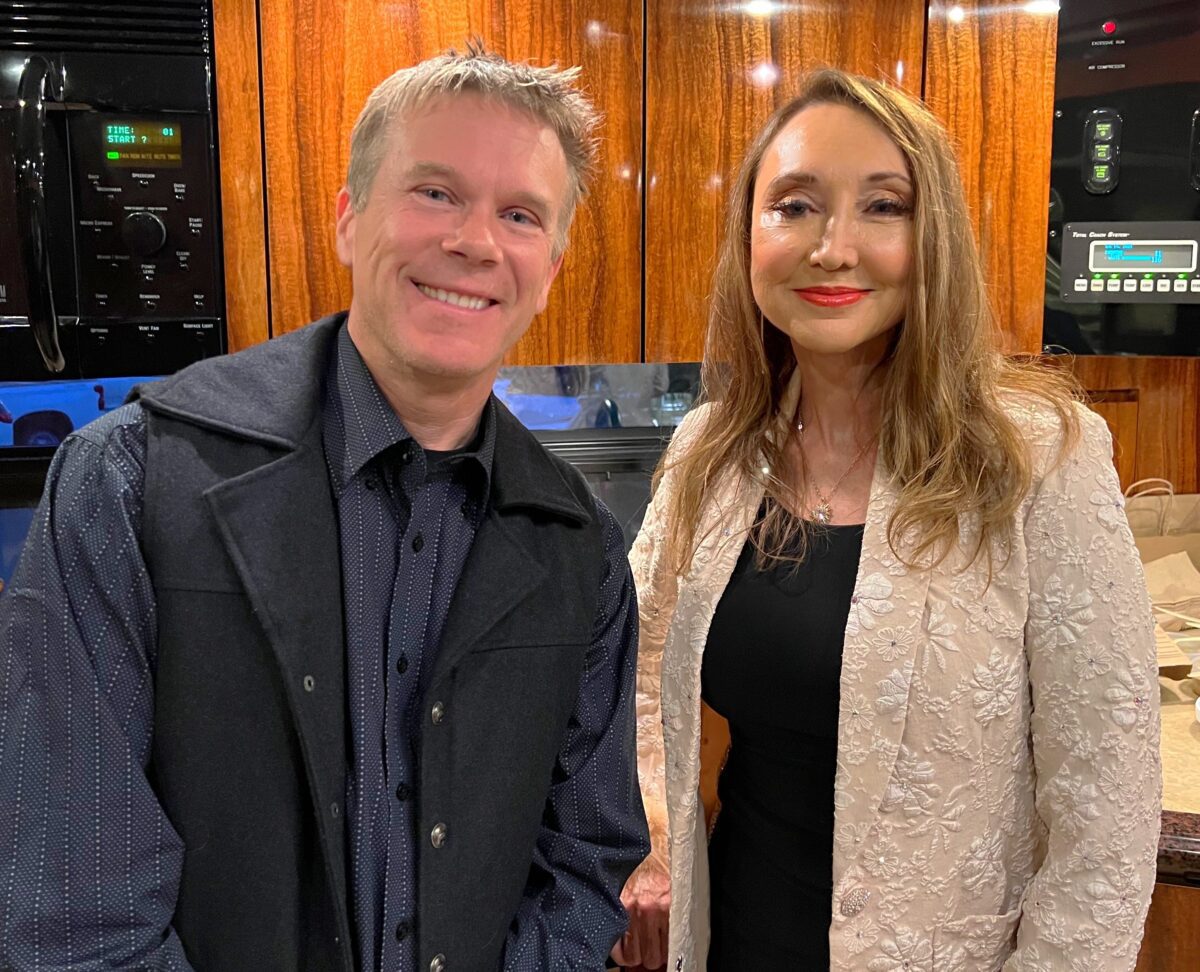
Alexander Mickelthwate, Pam Tillis; Oklahoma
Historical Society Benefit, OKC PhilharmonicBob Beard, Maura Guten, Johnie & Krystal Hampton;
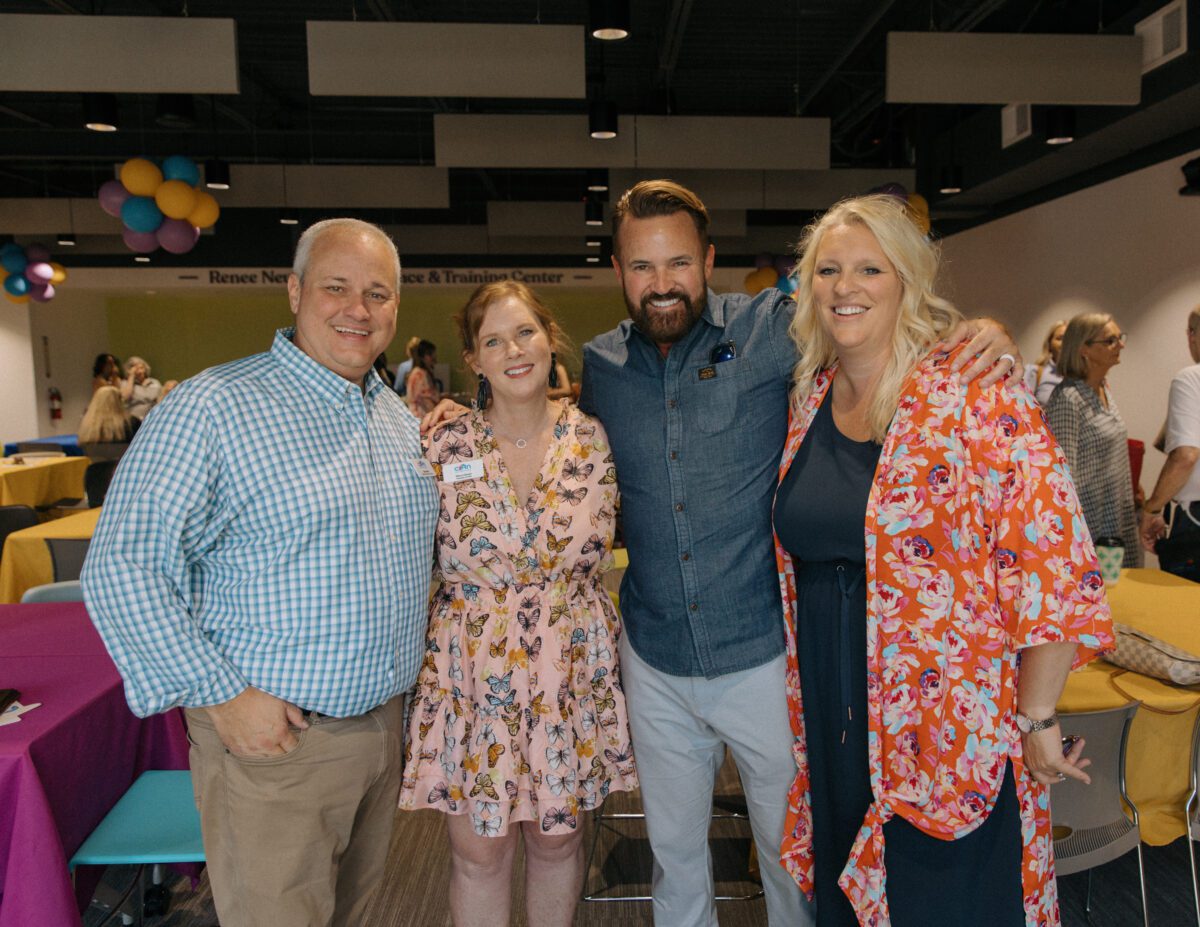
Ribbon Cutting Event, Child Advocacy Network, TulsaBrad & Kim Henry, Amy & Andrew Weyrich, Cathy & Frank Keating;
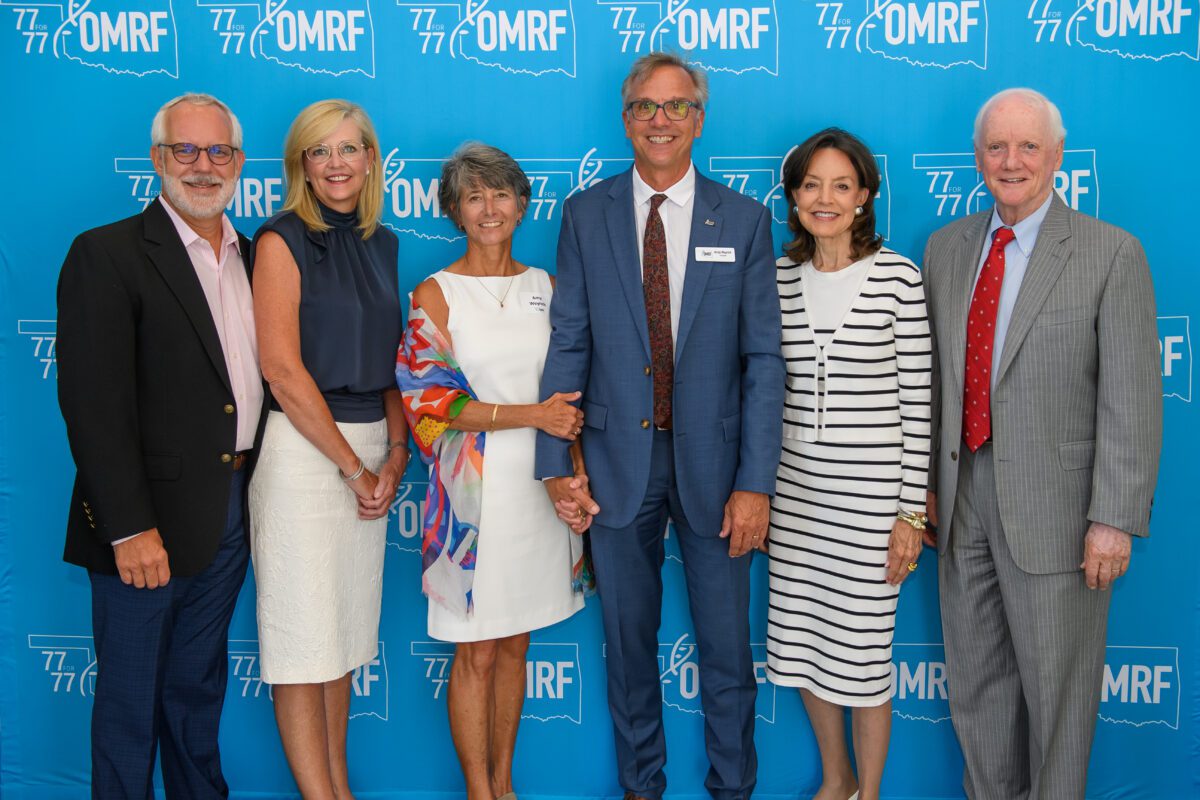
77 for 77 OKC Kickoff Event, Oklahoma Medical Research Foundation, OKC Brett Venable, Wes Pebsworth, Jacob Odom, Steve Jordan;
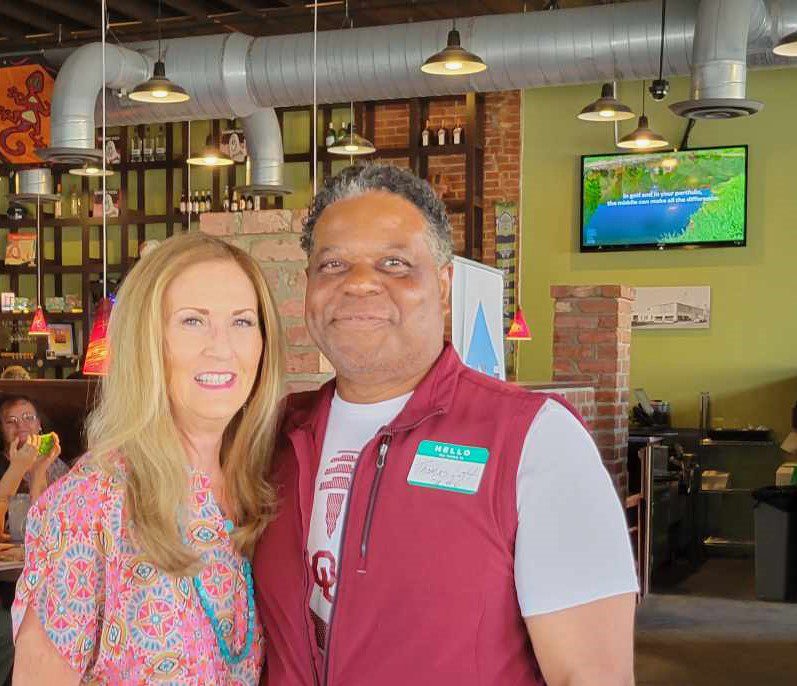
Care Keeper Luncheon, Hospitality House of TulsaJudy Sellmyer, Thomas Lott; Celebrity Wait Night,
Upward Transitions, OKC Asia Freeman, Melissa Shaginoff, Joel Issak; Protection: Adaptation & Resistance Exhibition opening, Living Arts, TulsaKathryn Johnson, Kellie Currie, Susan Raupe, Kyndra McKinstry;
Summer Soirée, Wes Welker Foundation, OKC Diane Harvey, Amy Douglas, Lindsey Burns, Beth Jansen; Summer Soirée, Wes Welker Foundation, OKCCharlotte Gargis, Kim Stewart, Adam Robinson, Jake Law, Carlyle Gargis; STEAMM Lab Grand Opening,The Salvation Army – Tulsa Area CommandDonna & Gordon Moeller, Eric & Jacque Scholl, Denise Chambers;
WildBrew 2023, Sutton Avian Research Center, Tulsa Stephanie Bice, Kendall Wolz; Stand Up For Kids Luncheon, Care Center, OKC
Keeping mentally sharp as we age is as important as staying physically fit. Our brain, like any other part of the body, benefits from a healthy lifestyle with efforts made to support and strengthen mental acuity.
“In addition to a healthy diet and regular exercise, individuals can keep their brain healthy by staying mentally active through activities like puzzles, reading and learning new skills,” says Kenny Susanto, M.D., a neurologist with Ascension St. John Medical Group. “Social engagement, quality sleep, stress management and staying hydrated are also helpful – and recognizing that mental health is an important aspect of our brain, I would also recommend doing mindfulness exercises and meditation.”
He says mental decline varies by individual and also depends on baseline cognitive capabilities.
“Common early symptoms may include forgetfulness, and more complex things such as getting lost in familiar places and/or forgetting how to do the sequence of things that one is used to doing tends to be more specific,” says Susanto.
While some changes can be mild and attributed to normal aging, he says if these changes begin to interfere with daily life, then it’s wise to consult a healthcare professional for evaluation. As treatment for dementia evolves, Susanto shares that a new drug was recently approved by the Food and Drug Administration to treat early Alzheimer’s disease.
“There are a lot of things being researched currently, not limited to medications, neuroimaging techniques and AI technologies,” he says.
The Eyes
Technological advancements in the field of ophthalmology are providing new treatments for a variety of diseases and conditions that affect the eye.
Victoria Bugg, M.D., an ophthalmologist with Dean McGee Eye Institute in Oklahoma City, says there are many new and exciting innovations that can help patients with glaucoma, cataracts and other vision conditions.
Dr. Victoria Bugg says new medical innovations can help patients with glaucoma, cataracts and other eye conditions. Photo courtesy Dean McGee Eye Institute
“Glaucoma is a disease of the optic nerve that can be associated with a higher eye pressure and can often be treated with eye drops,” says Bugg. “However, if surgery is needed, there are now several surgical procedures that are efficacious at lowering the eye pressure with less side effects than more traditional glaucoma surgery.”
Some of these surgeries can be done at the same time as cataract surgery, and patients should talk to their ophthalmologist to see if they would be a good candidate for one of these treatments.
Fuchs endothelial dystrophy, a disease that causes corneal swelling and blurry vision, previously required a full thickness cornea transplant when it reached the end stages.
“Today, cornea surgeons are able to do a partial transplant of only the most posterior portion of the cornea,” says Bugg. “This procedure is significantly less invasive than a full thickness corneal transplant, and has less risk for complications during surgery and afterwards.”
Cataract surgery, Bugg’s specialty, allows individuals to not only treat the cataract, but also correct their vision.
“Everyone is born with a lens inside their eye, which can become cloudier and cause blurry vision as we age. At that point, it’s considered a cataract,” she says. “We do the surgery as an outpatient, under local anesthesia. While looking under a microscope, we make small incisions on the side of the eye, break up the cataract lens, and vacuum it out. We then place an acrylic lens inside the eye that will stay there forever, and there are a variety of lens implants available that can help correct nearsightedness, farsightedness or astigmatism.”
However, with any surgery, there are risks and potential side effects.
“Before any eye procedure, I encourage everyone to have an in-depth conversation with their surgeon to ensure the benefits outweigh the risks,” says Bugg.
The Joints
Healthy shoulder and hip joints are critical to mobility – allowing us to move freely and easily throughout our daily activities. But sometimes, injuries, disease or chronic wear and tear can limit our movements, and relief may only be found through a surgical procedure.
“While most people would like to avoid surgery – and we do try many nonsurgical options – there are times when surgery is what’s needed to correct a problem,” says Jacob Worsham, M.D., an orthopedic sports medicine surgeon with Tulsa’s Advanced Orthopedics of Oklahoma. “With any treatment plan or procedure, our goal is to help our patients return to doing the things they enjoy.”
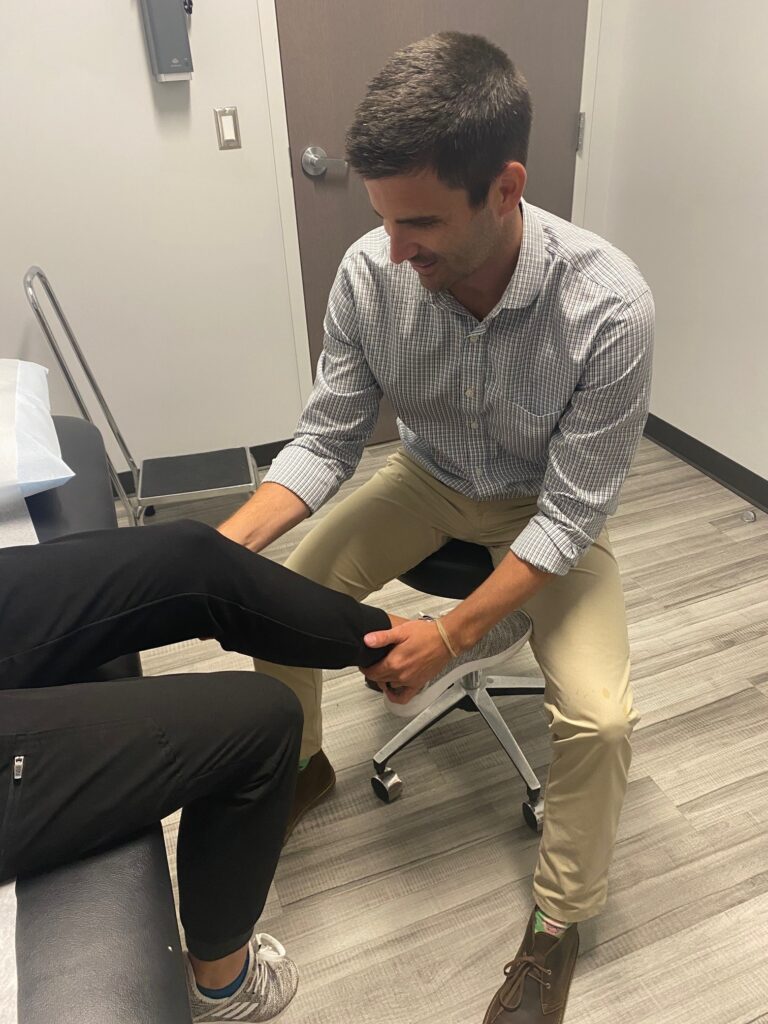
Experts at Advanced Orthopedics of Oklahoma offer both non-invasive and surgical options for their patients. Photo courtesy Advanced Orthopedics
Common shoulder surgeries include rotator cuff, labrum, impingement, fracture repairs and shoulder replacement.
Worsham says there are two main types of shoulder surgeries – an arthroscopic procedure where small keyhole incisions are made in the shoulder for a scope and other instruments to be inserted; and an open shoulder procedure, where a single large incision is made into the shoulder. The type of surgery required is dependent upon the diagnosis.
For shoulder replacement surgery, the diagnosis is usually arthritis or a nonfunctional rotator cuff; options include a partial shoulder replacement, anatomic total shoulder replacement or reverse total shoulder replacement.
“If the rotator cuff is intact, then a normal or anatomic shoulder replacement can be performed. However, if you have any deficiencies in the rotator cuff muscles, then you may need a reverse total shoulder replacement,” he says.
With a reverse total shoulder replacement, the implant is placed backwards with the ball attached to the shoulder bone and the socket attached to the upper arm bone or humerus.
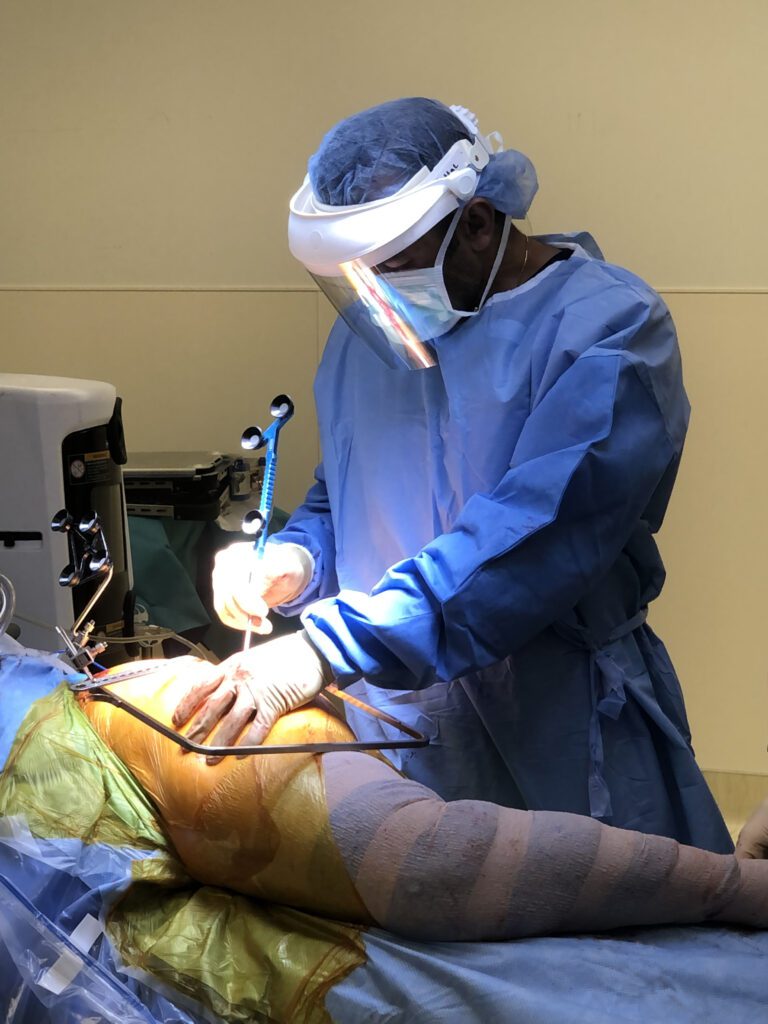
Dr. Yogesh Mittal says most hip replacements should last for up to 15 years. Photo courtesy The Orthopaedic Center
“By switching the ball and the socket, your deltoid muscle takes over the function of lifting your arm,” says Worsham.
For a partial shoulder replacement, also called a shoulder hemiarthroplasty, only the humeral head is replaced.
“Shoulder replacements are very successful, and when done for the right patient and right diagnosis, it can really change people’s daily lives by allowing greater mobility,” he says.
Yogesh Mittal, M.D., an orthopedic surgeon with the Orthopaedic Center in Tulsa, says patients who are candidates for hip replacement surgery have usually tried a variety of other treatment options, including medication, injections, physical therapy and weight loss to alleviate pain – but with no success.
“If your hip is keeping you from being happy and doing the things you want, whether it be from pain or loss of function, please consult a surgeon,” he says. “We can help in so many ways. We now have better implants with better bearing surfaces that wear better and last longer – usually 15 years is ideal, but they last even longer at times. Also, recent advances include robotic technology, which has revolutionized the industry and improved the surgical experience immensely.”
The Mouth
Third molars, called wisdom teeth, are located in the back corners of the mouth, both on the top and bottom, and have the potential of being painful problems.
“Often, wisdom teeth begin to cause pain and discomfort in the teenage years or early twenties,” says Cody H. Mumma, DDS, an oral and maxillofacial surgeon with Eastern Oklahoma Oral & Maxillofacial Surgery in Tulsa. “Many times, wisdom teeth become impacted, or stuck in the gums and bone. Swelling and pain of the gums overlying a wisdom tooth is often the first symptom, and this can eventually lead to a cavity with more pain and discomfort.”
Along with the possibility of infection, an impacted wisdom tooth can also develop a follicular cyst around the impaction and, as it grows, can damage the surrounding jaw bone and teeth.
“My best advice is to remove wisdom teeth early. As we age, wisdom teeth become more challenging to remove and complications can occur more often,” says Mumma. “While the procedure of removing wisdom teeth hasn’t changed much, I would encourage those seeking removal of their wisdom teeth to consult with an oral and maxillofacial surgeon, as we are specially trained in this procedure and the complications that can occur.”
The Heart
The American Heart Association and American College of Cardiology recently updated its chronic coronary disease guidelines. Aleicia Mack, D.O., a cardiologist with INTEGRIS Health Heart Hospital in Edmond, explains the importance of these recommendations and their effect on caring for those with heart disease.
“Clinical practice guidelines have a direct impact on the daily treatment and care of patients with coronary artery disease,” says Mack. “These guidelines were created to offer evidence-based recommendations for managing patients at different stages of the disease, from those at risk to those with a confirmed diagnosis. The ultimate objective is to provide patient-centered, high-quality care.”
Heart health recommendations include eating well, controlling blood pressure, and avoiding trans fats and secondhand smoke. Photo courtesy INTEGRIS Health Heart Hospital/Ackerman McQueen
She says one main focus within the guidelines is to continue “adopting a patient-centered, team approach to cardiovascular care with an emphasis on lifestyle changes, such as healthy eating and regular physical activity in addition to medical therapy.”
For instance, for anyone living with heart disease or trying to avoid it, there are many best practices to follow – from avoiding trans fat and certain medications to limiting exposure to secondhand smoke. Studies have shown that adults who are exposed to secondhand smoke increase their risk of developing coronary heart disease by 25-30% and exposures as brief as 30 minutes can result in damage to blood vessels and tissue.
Risk factors for lung cancer, says Norman Regional’s Dr. Sergio Garcia, include smoking and radon exposure. However, 25% of new lung cancer cases occur in people who have never smoked. Photo courtesy Norman Regional Health System
The Lungs
According to the American Lung Association, more than 34 million Americans live with a chronic lung disease. Additionally, lung cancer is the leading cause of cancer deaths in the United States.
Sergio Garcia, M.D., a pulmonologist with Norman Regional Health System, says there are many common causes of lung disease.
“For example, smoking is associated with COPD (chronic obstructive lung disease), cancers and some interstitial lung diseases, and environmental factors may affect us and predispose us for asthma or interstitial lung diseases,” says Garcia. “Also, many types of cancer of the lung exist and are treated differently and behave differently.”
He says risk factors, beyond smoking, include radon and asbestos exposure – but it’s also important to know that 25% of new lung cancer cases occur in people who have never smoked.
“The most common symptoms of lung disease include breathlessness, a persistent cough, weight loss, wheezing, fatigue, chest pain, mucus production and coughing up blood,” says Garcia, adding that lung cancer screenings are a regular preventative health check. “A lung cancer screening is meant to find lung cancer at an earlier stage, when survival rates are better. You should consider getting screened for lung cancer if you are aged 50 to 80 years old, smoke now or quit within the past 15 years, and have a 20-pack a year history.”
Photo courtesy Norman Regional Health System
The Stomach
These days, people are paying more attention to their gut health – a broad term used to describe the body’s digestive system – and a healthy stomach is essential for a healthy gut.
Scott Hendrickson, D.O., a gastroenterologist with Gastroenterology Specialists in Tulsa, says to maintain a healthy stomach it’s important to reduce your consumption of known irritants.
“Examples of these include excessive alcohol, smoking and NSAIDS [like] ibuprofen and naproxen,” he says. “And some acid blocking drugs – omeprazole, pantoprazole – can drastically increase the pH in the stomach, which affects the digestion of foods and minerals and can lead to overall poor gut health.”
He also recommends avoiding or limiting your intake of processed meats, salt-cured foods, fried foods and artificial sweeteners.
“There is some evidence that frequent consumption of charred meats – charcoaling, smoking – and foods cooked at very high temperatures can produce carcinogens which may contribute to stomach cancer,” he says.
Inflammation of the stomach lining, called gastritis, can present a variety of symptoms, says Hendrickson, including upper abdominal pain, nausea, early fullness or pain after eating.
“Stomach ulcers are a more severe and deep disruption of the stomach lining,” he says. “Symptoms can be abdominal pain, bleeding and anemia, and most of the symptoms common to gastritis. Ulcers can be caused by NSAIDs, a bacteria called H. pylori, cancer and other causes.”
Distinguishing stomach problems from other areas of the digestive tract, such as the small bowel and colon, can be difficult. If symptoms are persistent or severe, Hendrickson says to visit your primary care physician or a gastroenterologist to be evaluated and receive the appropriate treatment.
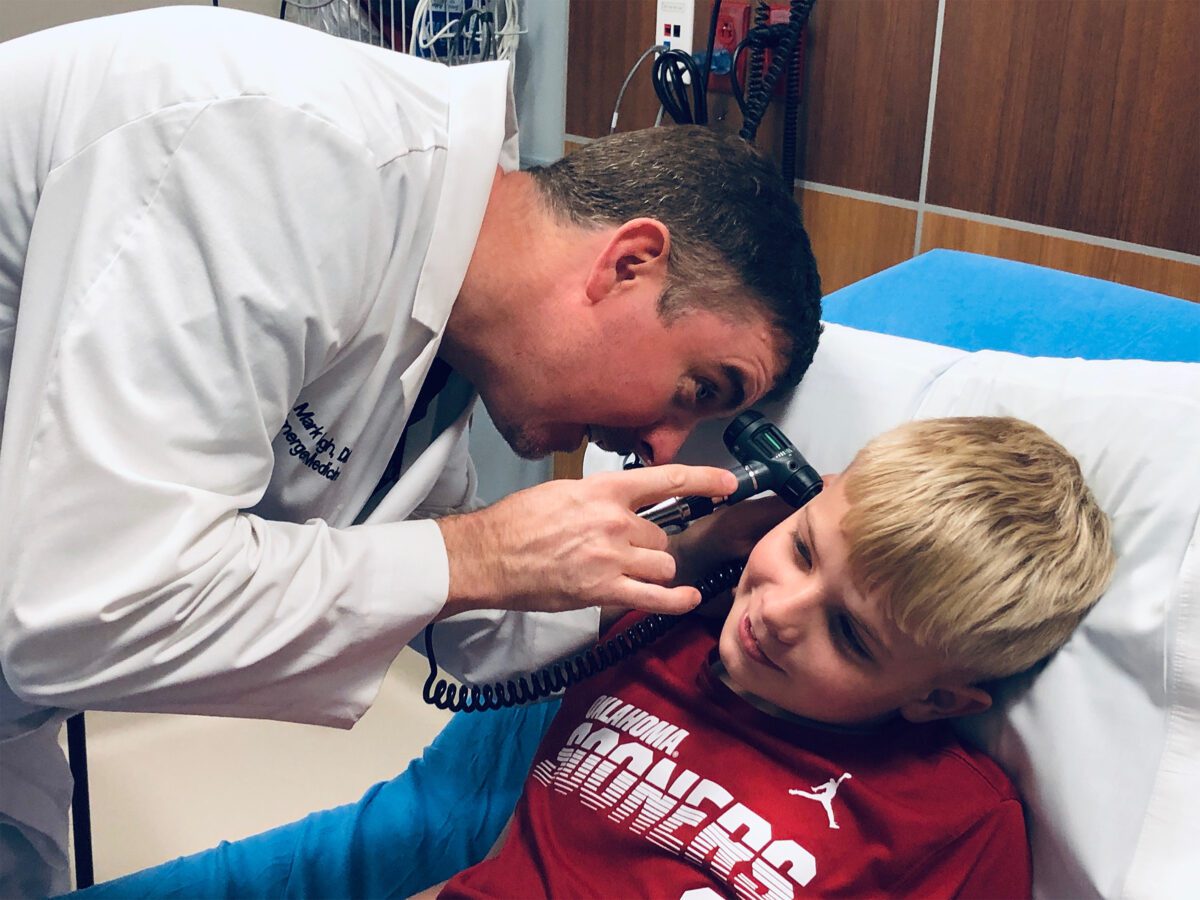
Dr. Mark Blubaugh of Tulsa ER & Hospital says that speed and precision are both necessary skills to have as an emergency medicine physician. Photo courtesy Tulsa ER & Hospital
The Importance of Emergency Medicine
Remaining calm and working quickly and efficiently during a medical crisis are just parts of the job for emergency medicine physicians. Mark Blubaugh, D.O., partner and medical director at Tulsa ER & Hospital, says the ability to make informed decisions under high-stress conditions is paramount.
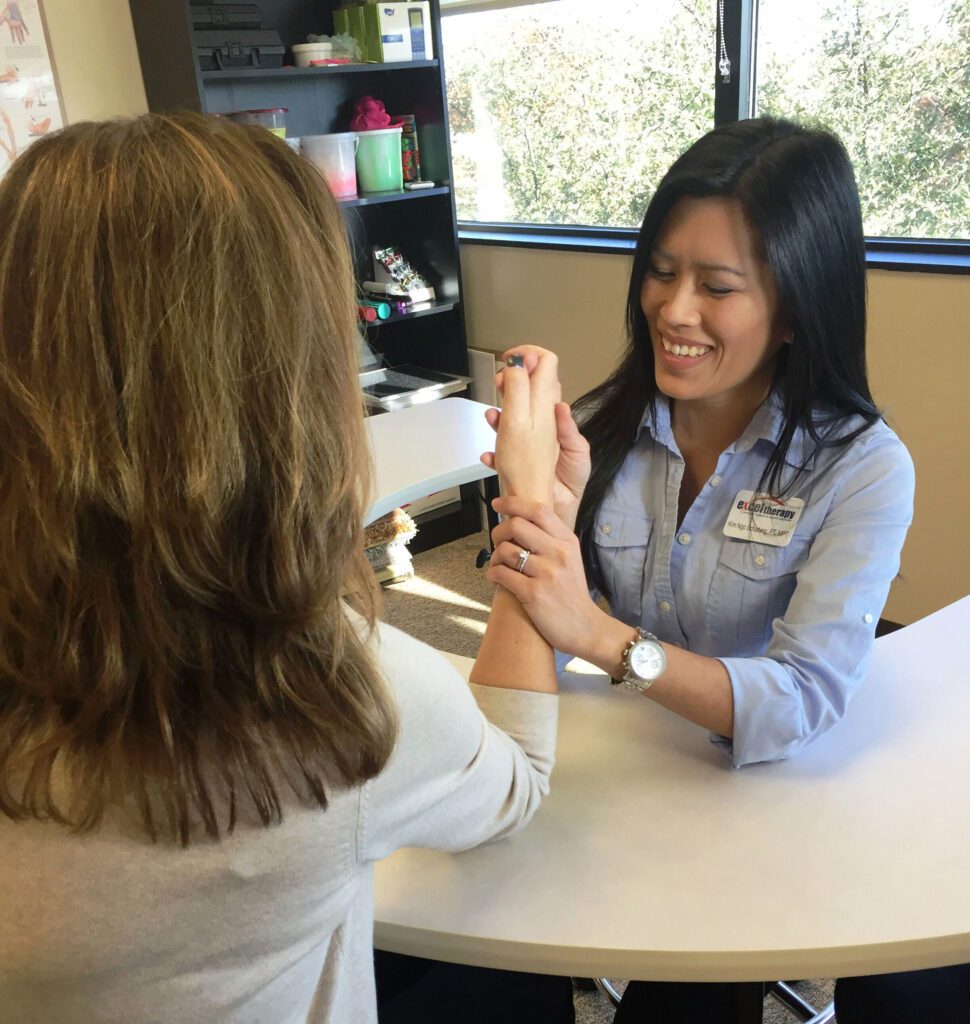
Physical therapy can benefit those with chronic pain or physical limitations. Photo courtesy Excel Therapy
“Rapidly identifying the underlying cause of a patient’s symptoms is crucial, as well as the ability to assess complex situations, prioritize interventions and adapt strategies in limited time and often with limited information,” says Blubaugh. “The ability to work collaboratively, delegate tasks and lead a team is vital, and emotional resilience is essential to maintain composure and cope with difficult situations.”
When emergency medicine physicians assess a patient in physical distress, Blubaugh says they follow a structured approach to quickly manage the situation. While exact steps and decisions will vary, the process begins with a primary assessment.
“The physician begins by quickly evaluating the patient’s general condition and addressing immediate life-threatening issues,” he says. “This is often done using the ‘ABC’s’ – Airway, Breathing and Circulation. Ensuring the patient has a patent airway for breathing, assessing the patient’s breathing pattern, rate and effort, and checking the patient’s heart rate, blood pressure and perfusion.”
After ensuring the ABC’s are stable, physicians then begin the standard history and physical exam to further assess the patient’s condition, and additional tests and treatments may be required for diagnosis and care. While some patients are discharged, others may need surgery or a stay in the intensive care unit (ICU).
Blubaugh says those in emergency medicine think differently about patient care than most specialties. Identifying the most potentially dangerous life or limb-threatening conditions is first and foremost – and while a definitive diagnosis may not be achieved during the emergency visit, patients can be reassured that, if possible, their emergent conditions will be stabilized.
The Pros of Physical Therapy
Mike Flanary, physical therapist and co-owner of Excel Therapy, says physical therapy can be beneficial to anyone who is having pain or physical limitations in performing daily activities, recreational activities, or due to a sports-related injury, surgery or just a gradual onset of symptoms.
“Any orthopedic – muscle, tendon, bone or joint – problem can be treated by a physical therapist, but the most common body parts are shoulder, knee, hip, neck, back, foot and ankle,” says Flanary. “Physical therapists focus on improving a patient’s mobility, strength, movement and posture based on each individual’s needs to help them reach their goals and improve their functional ability. Although physical therapy may require a person to attend two to three times per week, the benefits outweigh the alternative.”
While some may consider physical therapy as being only exercises such as stretching or strengthening, Flanary says many other treatments can be applied based upon a patient’s condition.
“Other techniques, such as functional dry needling, instrument-assisted soft tissue mobilization (Astym®), muscle energy techniques and manual therapy techniques can be applied to an individual’s treatment plan,” he says. “In Oklahoma, direct access allows you to be treated by a physical therapist for up to 30 days without a prescription for physical therapy – except Medicare, Medicaid or worker’s compensation, which requires a prescription. Most, if not all, insurances cover physical therapy.”
Vertigo’s Prevalence
Sudden dizziness or the sensation that you’re spinning when you’re not is called vertigo. And while not a disease itself, it can be a symptom of many other health conditions.
There are two main types of vertigo: peripheral and central. The most common, peripheral, is caused by issues with the inner ear or vestibular nerve, which is responsible for helping maintain balance. Subtypes of peripheral vertigo include benign paroxysmal positional vertigo (BPPV), labyrinthitis, vestibular neuritis and Ménière’s disease. Central vertigo occurs when an individual is suffering from a condition affecting the brain, such as an infection, stroke or traumatic brain injury.
“Time is brain” when it comes to strokes. Saint Francis Health System offers two stroke centers – one in Tulsa and one in Muskogee. Photo courtesy Saint Francis
Since most people are unaware of when vertigo will strike and how long an episode will last, it’s critical to visit a physician – often an ear, nose and throat (ENT) specialist – to determine the cause of the vertigo. When experiencing vertigo, a few recommendations to help ease the dizziness are to move slowly when standing or turning your head; lying in a dark, quiet room; squatting down instead of bending over at the waist when picking something up; sleeping with your head elevated on pillows; and taking care to reduce the potential of falls.
Source: Cleveland Clinic
Stroke: Know the Signs
According to the Stroke Awareness Foundation, ischemic strokes represent about 87% of all strokes. Within 59 seconds, an ischemic stroke can potentially kill 1.9 million brain cells and cause varying levels of disability. In an ischemic stroke, a blood vessel becomes blocked by a blood clot and cuts off oxygen to a portion of the brain.
“When a patient has suffered an ischemic stroke, there are a variety of prognosis factors used, such as the NIH stroke scale score, where the greater the score means the greater severity of stroke, and imaging studies like MRIs and CT scans,” says Steven Hoover, M.D., an interventional neurologist with Saint Francis Health System in Tulsa. “But if a clot is cleared quickly enough, even with a severe stroke, patients can have a positive outcome.”
Within 59 seconds, ischemic strokes can kill 1.9 million brain cells. However, medical technology has greatly improved, giving stroke patients greater chances for recovery. Photo courtesy Ascension St. John Health System
The most common drugs used to break up a clot that is disrupting the blood flow within the brain is thrombolytics, and ideally they should be given within three hours of experiencing a stroke to prevent long-term damage.
“The advent of thrombolytic agents was a big change in stroke care,” says Hoover. “Previously, we didn’t have any way to lessen the severity of the stroke and could only offer patients supportive care and treatments.”
Other technology that changed the landscape of stroke treatment has been the mechanical thrombectomy – a minimally invasive procedure using specialized equipment to surgically remove the blood clot.
“The mechanical thrombectomy has tremendously improved the outcome for stroke patients and, depending upon a patient’s condition, can be conducted within 24 hours after a stroke,” he says. “However, with all stroke care, the earlier treatment is received, the better.”
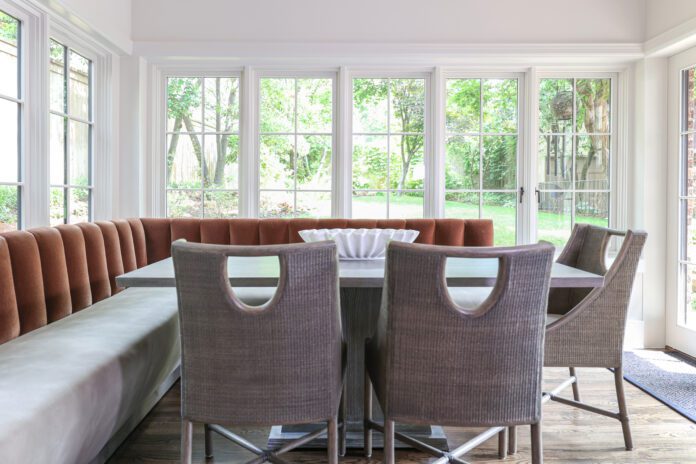
The dining table, chairs and rugs in this nook were all sourced from Duvall Atelier.
An Entertainer’s Dream Space
This historic Tulsa domicile received a face-lift in the kitchen, dining and bath areas. Created in 1922, the home was built upon a sturdy foundation that could support a wide-scale renovation.
Spearheading the project was Duvall Atelier, which offers interior design and architecture services alongside a retail shop and showroom. John Duvall served as head architect and Sherri Duvall served as head interior designer; this husband and wife duo brought a bevy of creative and sophisticated solutions to the space.
An Overall Look
The powder bath, which was relocated to make more room for the kitchen, has abstract, patterned wall coverings and a “moody aesthetic.” All photos of this project by Sarah Baker Photography
“We squeezed every inch out of the space,” says Sherri Duvall.
Because the original footprint of the kitchen and hall bath was limited, the powder room was relocated to grant additional space to the kitchen.
By creating an archway, the kitchen opens to the existing dining and living rooms, bringing in plenty of natural light. Since the homeowners entertain weekly, the new space needed – and got – a better flow. State-of-the-art lighting accents the homeowners extensive original art collection, with a new sound system to boot. For a fresh update, the wall color was lightened and complementary cabinetry colors worked with the home’s aesthetic.
Kitchen
The kitchen now boasts a professional, 48-inch Thermador brand range that integrates two induction burners onto the gas top.
The island, which has ample seating, has two dishwashers that flank a large, deep sink. A Thermador brand refrigerator and freezer towers bookend the appliance wall and are conveniently located for efficient cooking.
The refrigerator in the butler pantry provides reach-in access for bottled beverages and coffee creamers.This seamless kitchen has two dishwashers and a Thermador brand refrigerator.
Butler Pantry and Coffee Bar
Floor-to-ceiling storage for china and pantry items and “secret” center doors reveal the hidden walk-in butler pantry and coffee bar area. This space, which includes extra pantry shelving, has refrigerator drawers providing reach-in access for bottled beverages and coffee creamers.
The microwave oven located here keeps the appliance out of the main kitchen’s valuable real estate.
Dining
Since the homeowners entertain often, the new archway allows a direct connection to the formal dining. New to the formal dining room is a dining table, chairs and hand-knotted rug, all sourced from Duvall Atelier.
In the dining nook, new windows and a three-panel patio door bring in natural light while providing gorgeous views of the back patio area and its landscaping. A custom-designed corner banquette, made of suede and mohair, accompanies the custom-designed dining table.
“This banquette maximized the seating capacity and brought a comfy-cozy element to this space that is used daily,” says Duvall.
Powder Room
The relocated bath, which Duvall described as having a “moody aesthetic,” features a concrete sink and a floating vanity cabinet. A natural brass faucet and sconces adorn the area while the abstract patterned wall covering ties in with the black “flannel” marble hexagon floor tiles.
The Duvalls, through creative thinking and collaboration, achieved the optimal entertaining space for their clients.
Aesthetics and Practicality
Built in 1973, this ranch-style home received a kitchen remodel that incorporates a cozy dining nook. The kitchen, remodeled and designed by TimerLane Interiors, includes a custom banquette area created by Huntington ID, a full-service residential and commercial interior design firm located in Tulsa. Tracy Huntington, owner and interior designer, highlights this project.
Inspired by the home’s 1970s aesthetic, this remodel utilizes warm wood tones, classic cabinetry along and brass fixtures.
All photos of this project by Sarah Baker Photography
An Overall Look
This 3,000-square-foot home has a wide-ranging color scheme that combines earth tones with blue accents. One standout accomplishment was the design and installation of a truly unique custom banquette.
“It is the focal point of the kitchen,” says Huntington, “showcasing a perfect balance of aesthetics and practicality.”
Kitchen
Inspired by the home’s 1970s roots, this remodel incorporates warm wood tones, classic cabinetry and eye-catching brass fixtures.
The modern circular table and chairs give ample seating while a modern light fixture adds visual interest.
“Our favorite kitchen elements are the stained cabinets, large island and the custom banquette,” says Huntington.
Dining Nook
The nook, which is used daily, infuses stylish elements like faux leather fabric and a custom-channeled texture making it a “one-of-a-kind” design feature. The custom-made curved banquette optimizes the space, as opposed to filling the area with a traditional configuration of a dining table and chairs. Through its design, the banquette also encourages conversation and togetherness.
The modern circular table and chairs give ample seating while a modern light fixture floats above. With four windows bringing in natural light, the area has become a beautiful, comfortable and stylish place to eat and socialize.
“We designed the breakfast nook with family gatherings in mind,” says Huntington.
This remodel centered around the wants and needs of the home owners, who requested a casual, family friendly seating in their kitchen. They also desired a warm color scheme along with a comfortable design.
“It’s truly satisfying when functional spaces are transformed into beautiful areas,” says Huntington.
Two Historic Home Renovations
Design firm Kitchen Ideas, located in Tulsa, focuses on complete remodels of kitchens and bathrooms. Founded in 1976 by Roger Shollmier, the design company is now owned by Michael Thorp. Design Team member Janae Dixon walks through two recent kitchen remodels tackled by the company.
Kitchen 1: Staying True to an Era
Built in 1925, this home is in a historic neighborhood of Tulsa. The kitchen, which had previously been divided into three spaces, was converted into one open area.
“We wanted to make sure to stay true to the history of the house while modernizing the space,” says Dixon.
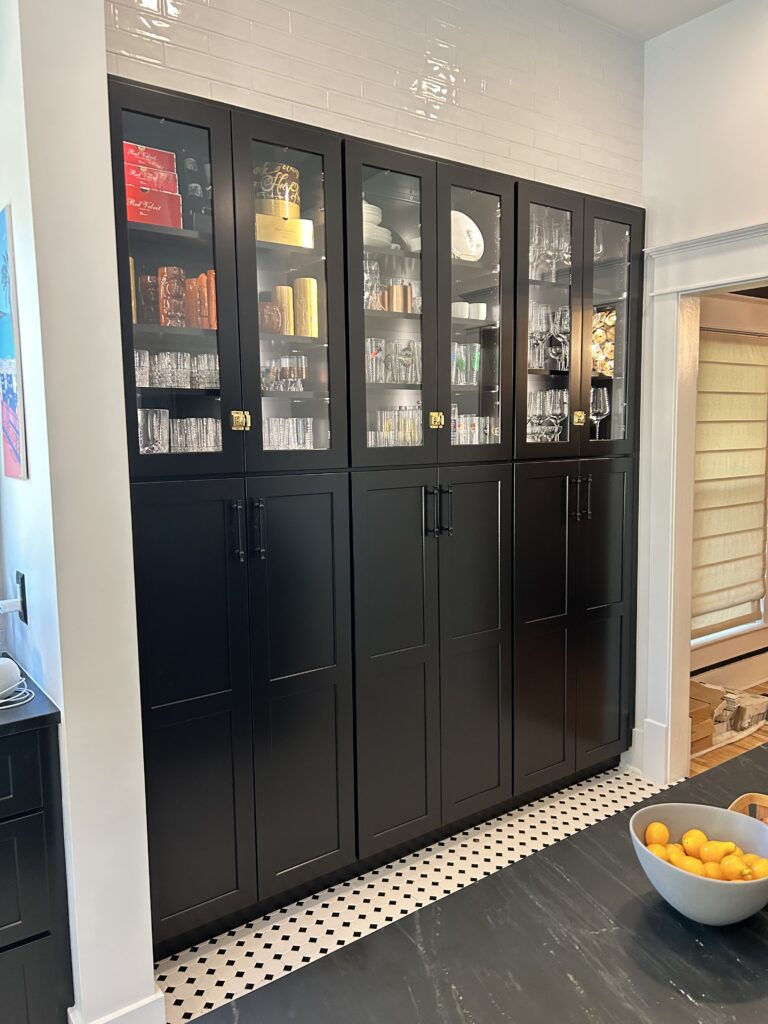
The homeowners’ kitchen design ideas were inspired by the bistros they’ve visited on their trips to France. Photo courtesy Kitchen IdeasThe lighted glass display cabinet is one of designer Janae Dixon’s favorite parts of this updated kitchen. Photo courtesy Kitchen Ideas
An Overall Look
The homeowners, who were inspired by the bistros they visited during numerous trips to France, often cook fresh meals based on what is available at local farmer’s markets. So, they wanted a renovated, fresh kitchen in which to cook.
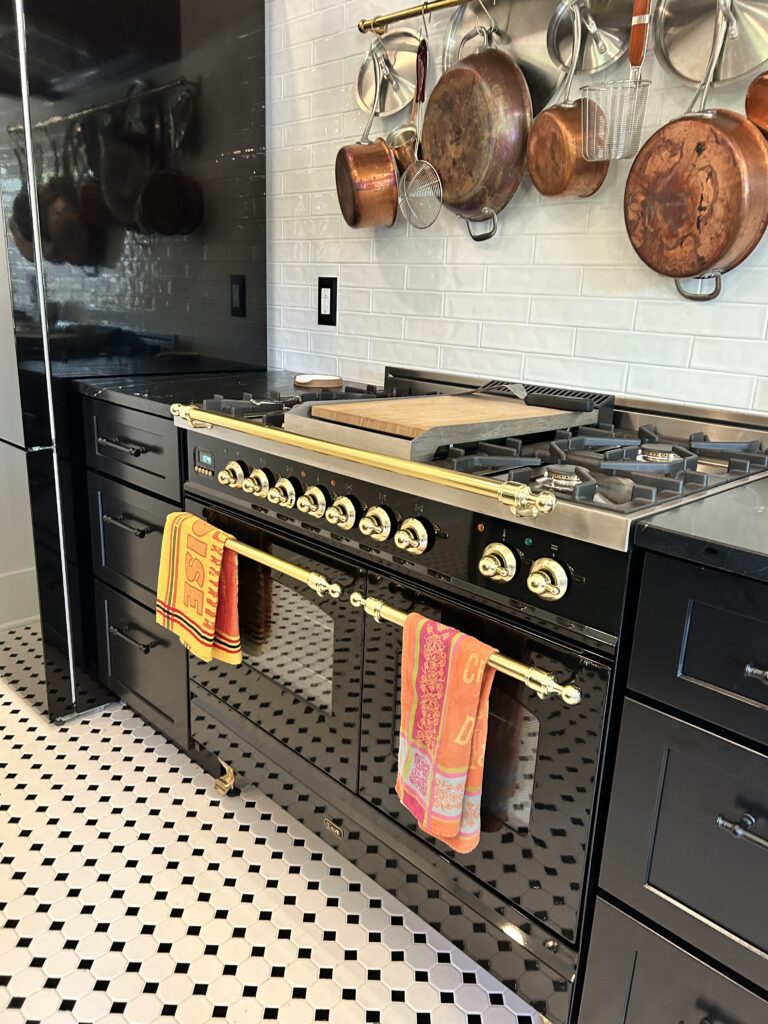
The kitchen has a Ilve brand range, which also boats a pizza oven and rotisserie.
Keeping the kitchen enclosed – as opposed to opening it up to the dining room – was a design element requested by the homeowners. They also wanted an island with no seating or appliances so that it served solely as a prep area. The color palette is black and white with pops of natural wood.
A few of Dixon’s favorite elements in this updated kitchen include the soapstone countertops with flecks of gold, the tiled wall behind the range, the custom-stained and -designed stove vent hood and the lighted glass display cabinet.
Kitchen 2: Cozy and Inviting
This Tulsa home, built in 1929, has a color scheme of warm gray and black, along with accents of natural wood.
“By using warm tones and natural elements such as the stained wood and soapstone counters, we were able to keep the kitchen cozy and inviting and cohesive with the entire house,” says Dixon, who was the head designer on this remodel.
With warm tones and natural elements, this kitchen provides a cozy and inviting atmosphere. Photo by Jess Renae Photography This kitchen remodel included a wall removal to ensure the homeowners could socialize while cooking. Photo by Jess Renae Photography
The Overall Look
In this kitchen remodel, the owners desired a space to cook while not feeling isolated from others during entertaining. A wall was partially removed, and widening the opening created a better flow into the adjacent rooms. An exterior door and window were also removed to repurpose the existing space.
The previously unused eating nook is now a bar area, with floor-to-ceiling pantry cabinets along with an abundance of drawers.
“It needed to have good flow and space for their family while maintaining warmth and coziness,” says Dixon.
Dixon’s favorite elements are the new larger window that lets in loads of natural light as well as the soapstone backsplash. A walnut cabinet, now a hidden coffee bar, is one of the homeowners’ favorite elements of the remodel.
The Kitchen Ideas team successfully renovated two distinct kitchens and gave the homeowners their desired serene spaces.
A Journey to Tranquility
This ranch-style home in Tulsa, with its modern and organic aesthetic, was built in 2016. Interior design professional Jill Croka – owner and creative director of Jill Croka Designs – helmed the creation of the kitchen and primary bathroom. The design studio, established in 2010, offers a full range of interior design services.
The brushed Bulthaup cabinets are one of designer Jill Croka’s favorite elements in this kitchen.
All photos of this project by Adam Murphy Photography
The homeowner desired a calming space that provided room for an art collection. Also important was a kitchen and great room designed for entertaining – all while retaining an intimate feel.
The goal of the kitchen was to be a place of serenity while being visually captivating. In the primary bathroom, the focus was to achieve a spa-like atmosphere that could become a haven for restoration and renewal.
The primary bathroom’s tub showcases exposed plumbing, creating a visually interesting element.
Providing warmth within the color scheme is a mix of natural wood tones, stone and blue hues, all of which the homeowner gravitates toward. The smoky blues used are a neutral color that work well throughout the home. Clean craftsmanship and simple details made for challenges to details such as concrete joints and hardware. All was neatly resolved – resulting in a beautiful and harmonious home.
“There are always challenges in construction,” Croka says. “Solving those issues can create an incredible design.”
Dulce Vita marble and a stunning Lindsey Adleman chandelier were the inspiration and cornerstones for this new space. The brushed Bulthaup cabinets and the chandelier itself are Croka’s favorite elements in this kitchen, and she wanted the area to remain open to the rest of the home.
“I wanted the kitchen to be a part of the great room,” she says.
To achieve a spa-like atmosphere in the primary bath, leathered stone with lavender and blue hues were used, while also mixing in woodwork of brushed ash with a custom-stain. Special elements include the stone wall behind the soaker tub, which is flanked by two floor-to-ceiling windows that bring in natural light.
The tub’s exposed plumbing makes an artful and visually interesting element. In this bathroom, Croka’s favorite features are the rose-colored plumbing fixtures and the leathered stone.
Across from the free-standing tub is a bank of storage cabinets and drawers. The floating two-sink vanity with a large mirror and luxurious lighting create a truly peaceful atmosphere.
“The custom lighting elevates the space to the spa-like vibe we were after,” she says.
Family Friendly and Sophisticated
Completed in 2021, this newly built stunning home is located in the Nichols Hills area of Oklahoma City. Ross See, principal of Sees Design, helmed the project.
Sees Design focuses on creating unique and personalized living spaces. The company’s services encompass the complete design process – from selecting materials to managing projects, interior architecture and designing exteriors.
The kitchen features a Calcutta marble island, perfect for family dining and entertainment. All photos of this project by Stephen Karlish
This specific home, which is a unique blend of “romantic modernism,” offers a contemporary twist on traditional design.
An Overall Look
See handpicked the architect and builder for this project: Scott Torode and Chris Candelaria, respectively. The family, a second-generation client of Sees Design, desired a home that is “family friendly” while maintaining a mature, sophisticated design.
That being said, there are plenty of spaces for the kids to play – such as hidden lofts in their rooms – while an in-wall water dispenser in the pantry is convenient for everyone. Also utilized is furniture created with “performance fabric,” making it stain-resistant and a practical choice for formal and informal areas in the home.
Kitchen
Creating a typical kitchen where appliances are the focus was not the goal for this client.
The pantry, which has hidden appliances including the refrigerator and microwave, is suited for functionality and privacy.
“Instead, we centered it around an amazing Calcutta marble island, perfect for family dining and entertainment,” says See.
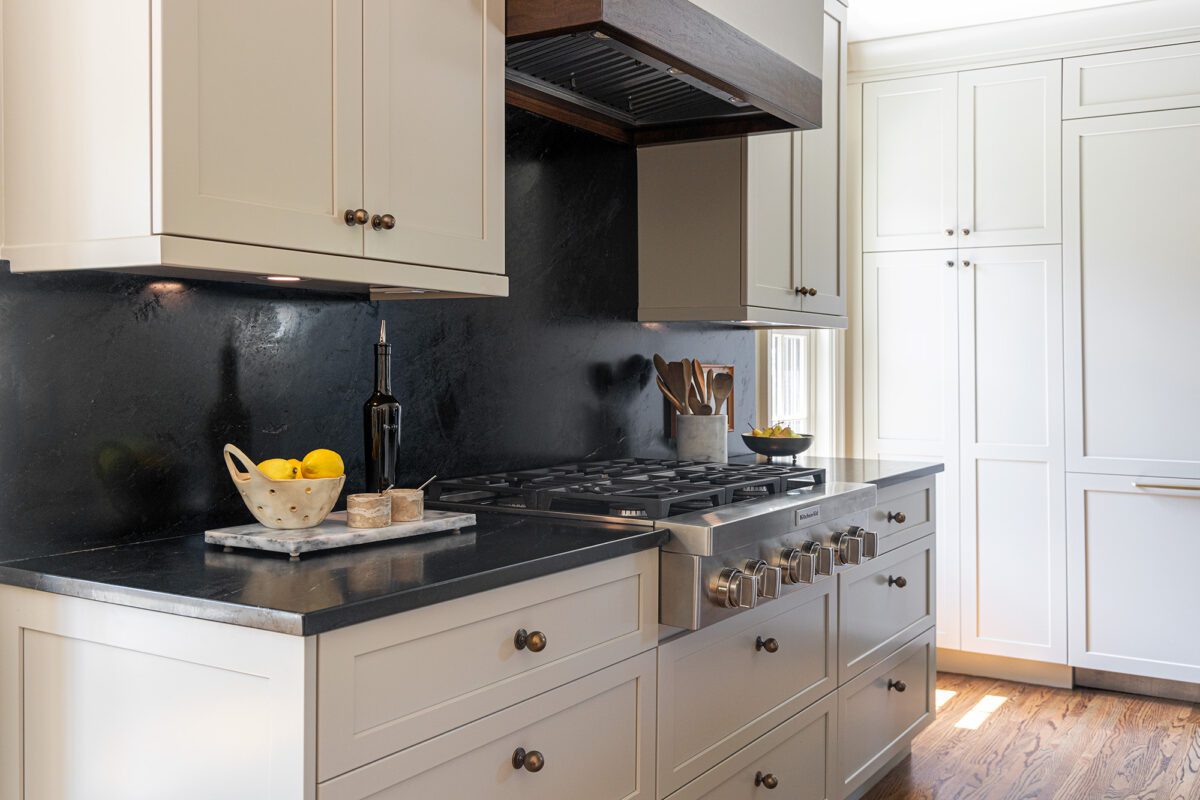
Some of See’s favorite elements here are the custom Venetian plaster vent hood, the Ann Sacks Zelig handmade fish scale tile and the impressive French cook top burner on the 60-inch Wolf brand stove.
Pantry
From daily coffee to toasting, this pantry is an essential space for the family. The room has hidden appliances, like the refrigerator and microwave, and is perfectly suited for functionality and privacy.
“This space plays a significant role in daily routines,” says See.
The pantry achieves functionality while maintaining a spacious feel. The mirrored backsplash and the “dark moody vibe” from the high gloss paint opens the space and creates a roomy atmosphere.
Primary Bathroom
This luxurious bathroom has an oversized tub on a pedestal, a shower with a double-head faucet and a Neorest brand heated toilet – leading the way to relaxation and pampering.
This luxurious bathroom boasts an oversized tub on a pedestal.
“The primary goal here,” says See, “was to provide a tranquil space for our clients. This bathroom truly reflects our client’s tastes.”
A mosaic marble tile floor, which has hints of purple, was created by Kelly Wearstler, and the Terrazzo slab shower adds a dramatic twist to this space. The antique mirrored wall behind the tub, which gives a “touch of timelessness,” is another favorite element.
Spotlight: Streamlined with Maximum Efficiency
If you’re looking to bring your kitchen into the future, luxury brand Gaggenau can help. But where to start? The Range, Reconsidered may be a good place.
Photos courtesy Gaggenau
Seamlessly join together modular cooktops, including the Gaggenau Vario 400 series cooktop, Teppanyaki grill, electric grill and induction with an oven, combi-steam oven, combi-microwave oven, plus a vacuuming or warming drawer below.
Also enticing is the discreet downdraft ventilation. The Vario 400 Series Downdraft System offers uninterrupted sight lines, ideal for open-plan living, plus effortless, quiet cleaning of the air – all without a hood.
Spotlight: Ahead of the Curve
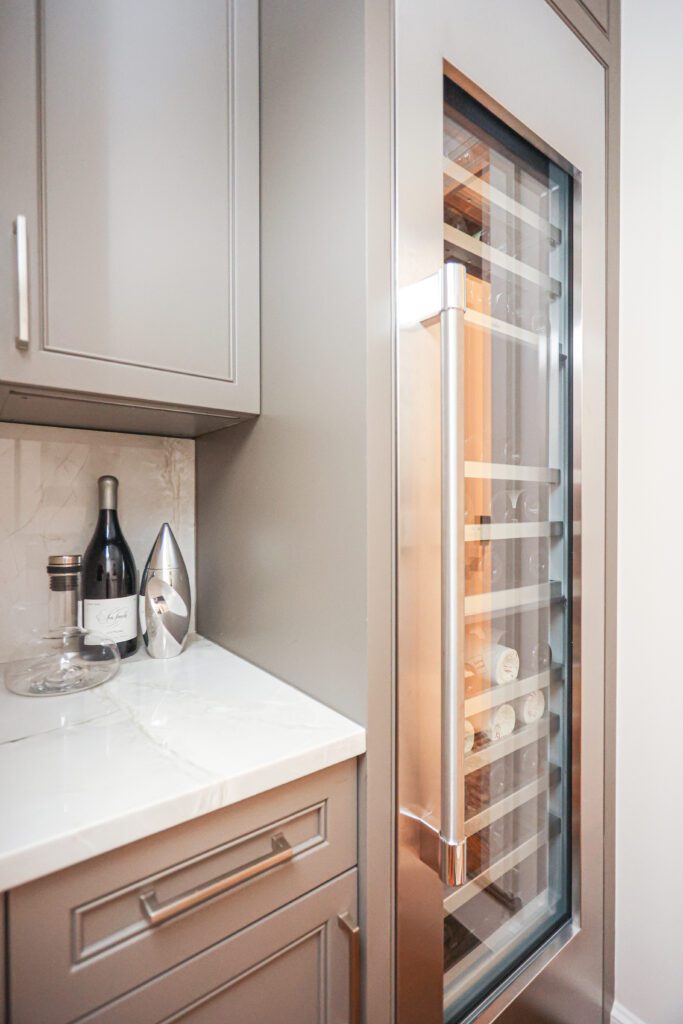
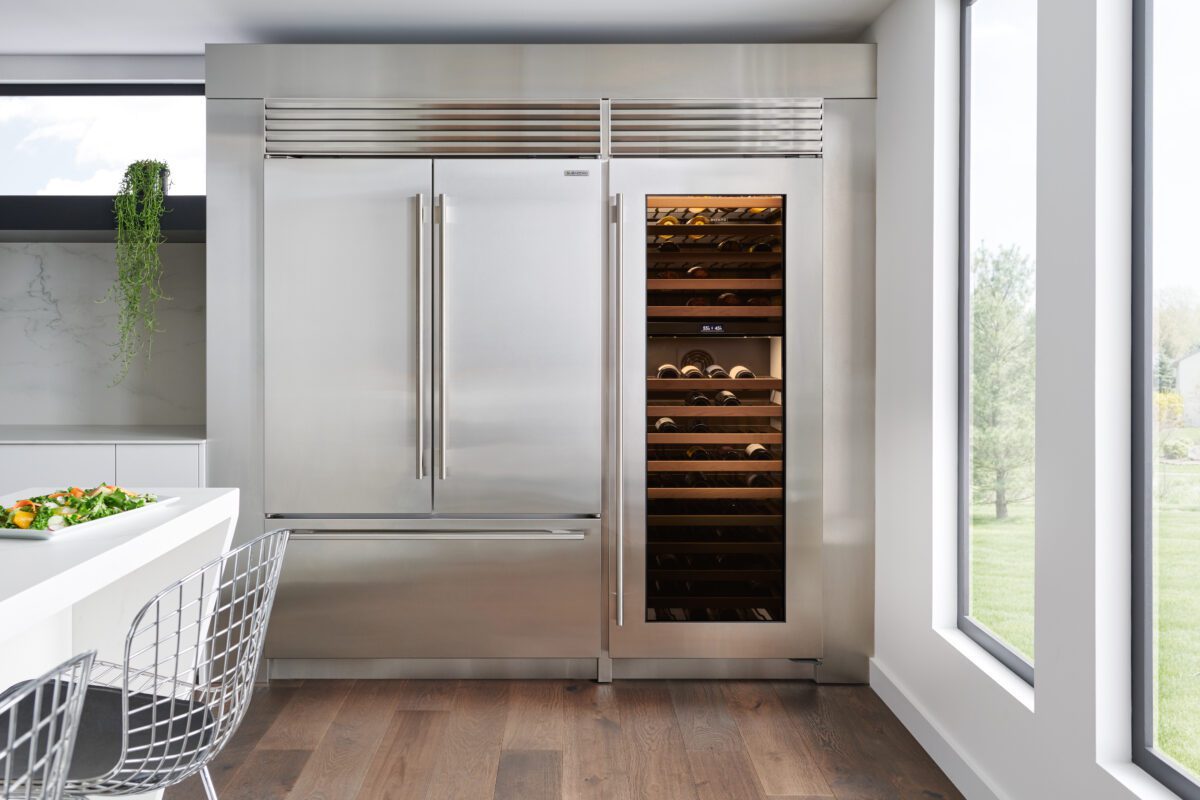
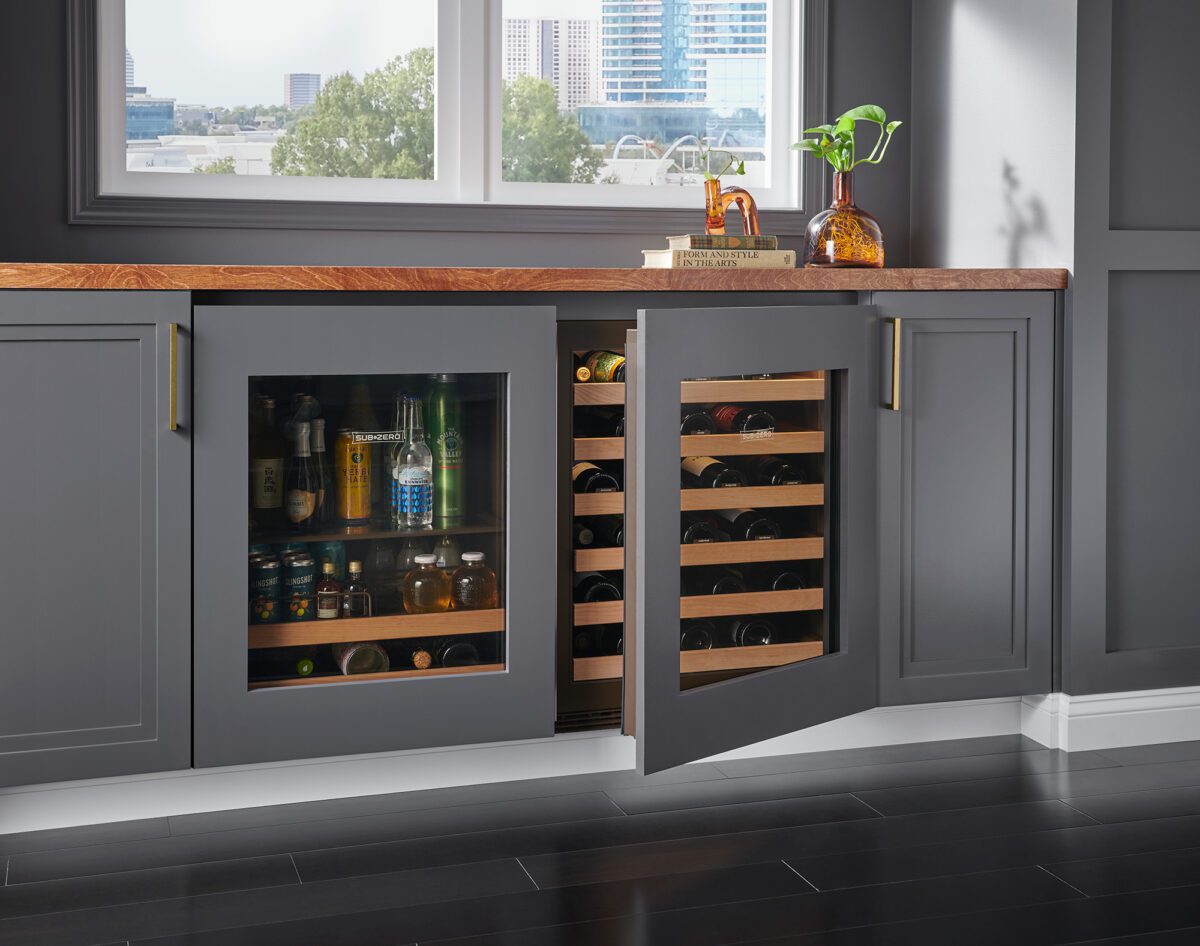
Wine aficionados should invest in Sub-Zero’s Designer Undercounter Wine Storage, which offers a sleek and sophisticated solution for storing your favorite bottles. The product – alongside providing guards against heat, humidity, light and vibrations – also comes with endless customization options to fit your space.
Photos courtesy Sub-Zero/Hunter PR
Also from Sub-Zero, the Classic Series Classic French Door Refrigerator offers a timeless design and features like Split Climate intelligent cooling and ClearSight LED lighting. It’s available in signature stainless steel and panel-ready options and works to keep food fresher for longer.
Spotlight:Revamp Your Space
Photos courtesy Miele
Keeping things aesthetically pleasing while delivering the optimum output is where Miele appliances come in.
For those with a love for fresh produce, the PerfectCool Built-in Bottom Mount Refrigerator/Freezer is a must-buy. The product offers active humidification, meaning your produce will stay fresh five times longer. How? The PerfectFresh Active technology converts water droplets into vapor and releases it in the form of a waterfall. Other perks include a built-in ice maker, adjustable glass shelving and uniform temperature distribution.
If you’re hoping to revamp the entire kitchen, Miele’s Generation 7000 line of built-in appliances offers a combinable range of products, from conventional and combi-steam ovens to coffee systems.
Spotlight: Master of the Kitchen
Combining bold and professional style with the newest technologies, the Wolf Professional Induction Range seamlessly integrates within any kitchen and provides precise temperature control.
Another option for dependable and delicious results is the Wolf Induction Cooktop, which presents a scratch-resistant and easy-to-clean ceramic glass surface, along with heat control and nearly instantaneous temperature response.
Photos courtesy Wolf/Hunter PR
For those still partial to a gas oven, the Wolf Dual Fuel Range is just the ticket – ensuring guesswork-free cooking. The range comes with patented gas sealed burners on top and a Dual VertiFlow convection system below.
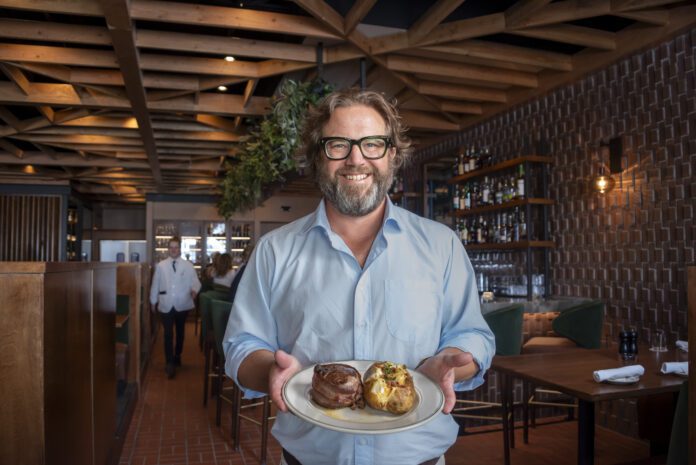
Elliot Nelson, leader of McNellie’s Restaurant Group, opened his newest concept, Jimmy’s Chophouse, over the summer. All photos by Stephanie Phillips
The night Elliot Nelson told his parents he was building a big Irish pub in downtown Tulsa, they drove to see the neighborhood for themselves. What they found was a collection of dark, deserted streets, punctuated by low-slung, dilapidated shells of hundred-year-old warehouses.
They couldn’t see the future, so they didn’t know that after several years of working 100-hour weeks for $17,000 a year, living on leftover hamburgers and beer prepared for patrons who never showed up, their Elliot would become a glorious success – hailed by many as the “King of Tulsa” for that big Irish pub – McNellie’s. What they did know, however, was that the city had been trying for decades to develop that area of downtown, and were met with failure. And yet, they gave him their total support.
“My mom used to tell me,” Nelson recalls, “that you can do anything you can set your mind to. Maybe there were some days when she regretted telling me that, but my parents lavished me with unrelenting support and unconditional love. They wanted to support my dreams.”
Perhaps that’s why Nelson’s newest venue, Jimmy’s Chophouse, is named for his father.
Growing up in Tulsa, Nelson never imagined he’d be a restaurateur. But, he says, he should have.
“Childhood memories of food and restaurants are the memories that stick with me the longest,” he says. “Even little things, like looking forward to the check because that’s when they give you bright green wrapped Andes mints. My favorite thing in life is going out to a restaurant and sharing a meal with people.”
Nelson and his family went out a lot, often on Sundays. They’d go to places like Italian Inn, Jamil’s and Celebrity Club, places with dark, old dining rooms and red leather booths. When Italian film director Federico Fellini wanted to pay homage to his childhood, he created one of his greatest masterpieces, Amarcord, a film that critic Roger Ebert said was “made entirely out of nostalgia and joy.” Nelson is not a filmmaker, so he, instead, created Jimmy’s with those exact same ingredients.
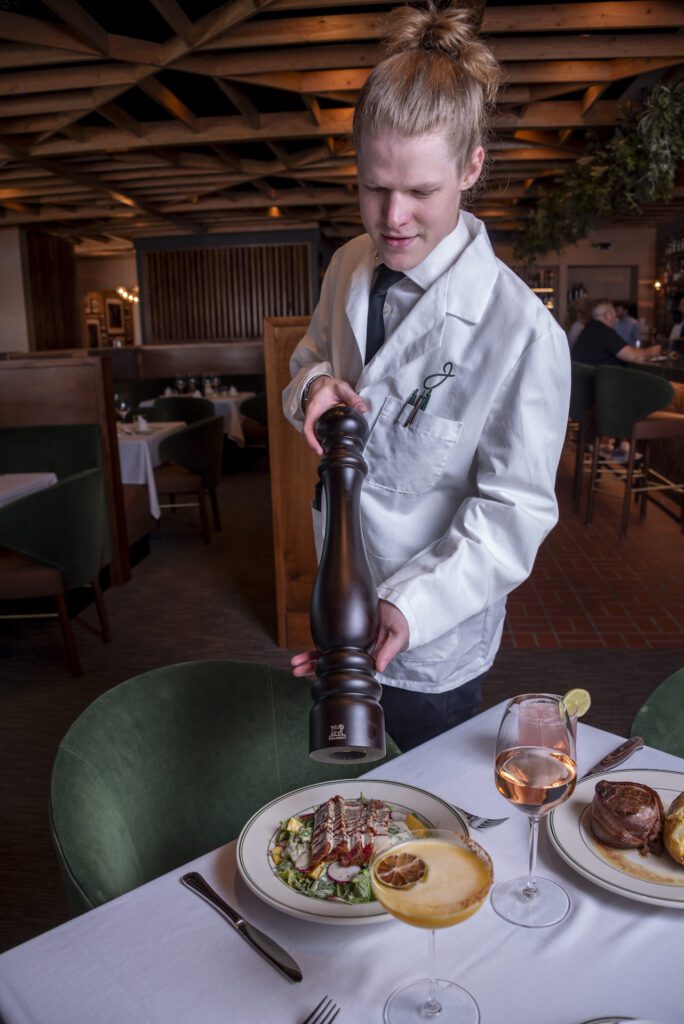
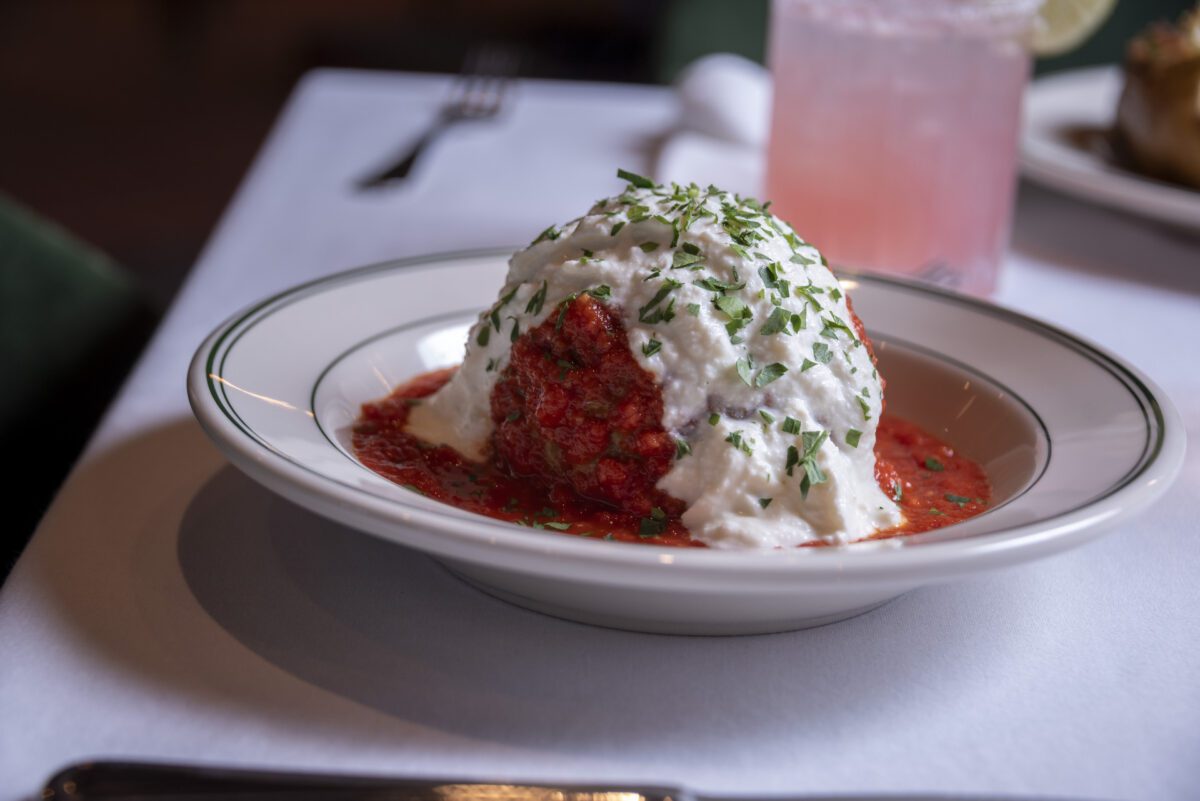
Jimmy’s Chophouse owner Elliot NelsonBacon-wrapped filet with loaded baked potatoFront: Hibiscus margarita Left: Mango mescal sour Back: Summer Water rose Peppering up the ahi tuna saladAhi tuna salad with the mango mescal sourGiant meatballAhi tuna salad, giant meatball, bacon wrapped filet, loaded baked potato and an assortment of cocktailsBanana split
One thing Nelson admires most about his father is that “Dad treated people well and cared for them no matter what their station.” From him, Nelson learned to assemble a strong team. Which was how he built Jimmy’s.
For example, he told his executive chef Ben Alexander, James Beard semi-finalist and food genius, that he wanted a 12-ounce meatball. Alexander went through at least ten versions before he created the rich, juicy giant that’s on the menu today.
“Ben has so much pride in his product,” says Nelson. “That’s why he puts so much time and care in.”
That’s the hallmark of the food you’re served at Jimmy’s. They are classic dishes from Nelson’s childhood memories, but recreated with so much care that they are better than they’ve ever been. Take the stalwart of fine dining, the chicken breast. Here, it’s cooked very slowly, and frequently basted in duck fat.
“Yes – it’s still chicken breast,” says Nelson, “but care and attention make it spectacular.”
And so it is for the entire menu. The steaks, aged beauties from Creekstone Farms, are superb of course, but so are the other entrees, including sea bass, shrimp scampi, spaghetti with that giant meatball and many more.
All are served with elegance amidst the sort of gleaming wood and modern decor you’d see in a 1950s movie. And every meal at Jimmy’s begins with a complimentary relish tray – with the same breadsticks and cheese dip that Nelson remembers so vividly from Italian Inn. Later, when your bill comes, it arrives with those shiny green Andes mints.