




















As far back as Ptolemy in A.D. 150, astronomers have sought a closer look at the cosmos. The famed astronomer named twelve constellations that became the zodiac, and forty-eight constellations in all, visible during different seasons throughout the year.
The night sky has surely fascinated observers for centuries, but the tools used to explore it have changed dramatically. On clear nights, free of light pollution and other atmospheric toxins, smart phones are now strong enough for night sky astrophotography, according to Gil Garcia of the University of Oklahoma’s Department of Physics and Astronomy. Utilizing camera settings of five-minute exposures creates the possibility of photographing hundreds of stars.
Of course, even the best camera settings cannot overcome one obstacle that affects astronomers at every level: light pollution. Two decades ago in Sky and Telescope Magazine, astronomer John E. Bortle discussed this issue, inventing the Bortle scale of 1-9, with one being the least amount of light pollution and nine assigned to areas with the most. But, even if a location suffers from a lot of light pollution, high-quality telescopes can capture the galaxies above.
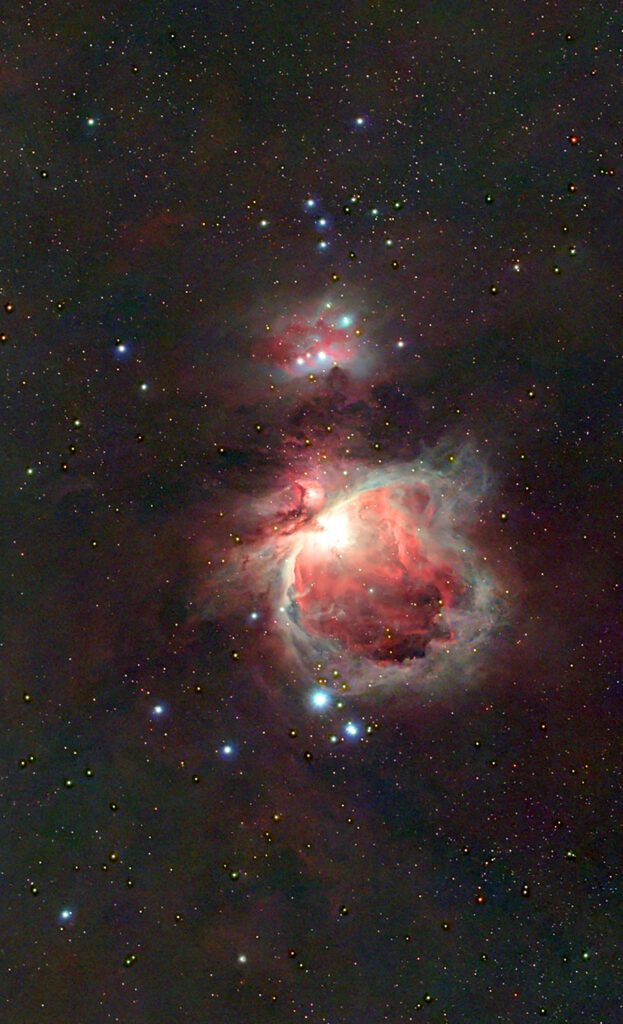
“You see these beautiful images coming from world class telescopes,” says Tucker Capps, also with the Department of Physics and Astronomy at OU. “Those cameras are super powerful, and they have a lot of things working for them, like the JWST [James Webb Space Telescope], they’re actually looking through no atmosphere, whereas, ground-based telescopes have to look through the atmosphere. The thing that makes these images so incredible, though, is how much light you gather, how many photons, how much light you collect from the object and stack on top of the image.”
Finding darker skies is as important as choosing the right camera. Quartz Mountain State Park, located in Lone Wolf, Oklahoma, scores a mere three on the Bortle scale. The best time to capture great images is typically the spring, which Garcia calls “galaxy season.”
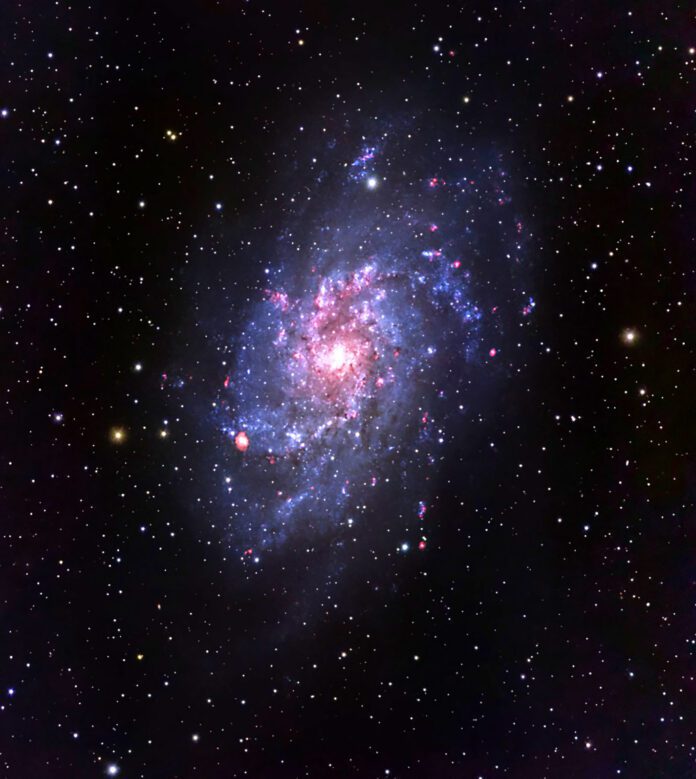
“That is when you get the chance to take pictures of all these galaxies in the sky, like the Whirlpool Galaxy, Bode’s Galaxy and the Pinwheel Galaxy. Those are all spring targets for night sky photography,” he says. “Comets and things that are going around the sun, they’re all on a clock. We’re able to time them very precisely, and they repeat regularly.”
That’s if light pollution is minimal or non-existent. As Capps puts it, “even the darkest sky in Oklahoma is not the darkest sky you can have.”
Brad Ferguson, president of the Oklahoma City Astronomy Club, says light pollution’s negative effects are vast.
“Light pollution not only erases the sky, but it has an effect on wildlife, too,” he says.
The consequences extend beyond astronomy. Scientists and conservationists say excessive nighttime lighting disrupts natural systems that have relied on darkness for millions of years. According to the Director of Conservation for the Oklahoma Chapter of the Nature Conservancy, Katie Gillies, “electric lights also reduce the visibility of stars, which birds use to navigate.”
Solutions that will help both wildlife and future astronomers are as simple as turning house lights off at night during the spring and fall aviary migrations and during other specific times of year, such as “galaxy season.”