





















The Brain
Lifestyle Choices + Brain Health
A healthy lifestyle doesn’t just protect our physical health – it shapes our brain health, too. So, do the choices we make in our 20s and 30s affect our cognitive health decades later in our 60s and 70s?
According to Ajay Joseph, M.D., an interventional cardiologist and Lifestyle Medicine medical director with Saint Francis Heart and Vascular Institute in Tulsa, the answer is a resounding yes.
“It is absolutely true that the choices that we make early in life have a tremendous impact on cognitive health in our 60s, 70s and beyond,” says Joseph. “Decades ago, one of the central lessons we learned was the importance of lifestyle changes to protect our cardiovascular system and reduce the risk of heart attack. It should come as no surprise that the same is true of the brain – the blood vessels, nerves and tissues are all interconnected and subject to the same influences. What’s new is that over the last few years, several large and well-designed studies have proven the benefits of healthy lifestyle choices with regard to brain health, too.”
Joseph notes that it’s genuinely exciting that new medications are becoming available to reduce the burden of cognitive change in patients with Alzheimer’s disease.
“But the real power comes in taking positive steps to reduce the likelihood of Alzheimer’s disease developing in the first place,” says Joseph. “With the advent of Lifestyle Medicine, we now have scientifically validated evidence to guide us in specific areas that help keep our brains healthy. Encouragingly, recent large trials suggest that for people already showing early warning signs – mild cognitive impairment or subjective memory concerns – can meaningfully slow the pace of decline, and some individuals even see real improvement in cognitive function.”

Knowing prevention is key, Joseph offers the following recommendations for supporting brain health.
• Eat well. Follow a Mediterranean or MIND diet built around vegetables, berries, nuts, whole grains and fish, while limiting red meat and processed foods.
• Manage your overall health. Controlling blood pressure,
cholesterol and diabetes benefits the heart and brain alike.
• Stay active, physically and mentally. Regular exercise is
essential, and so is exercising your brain: reading, learning a new skill or language and picking up new hobbies all help keep the mind sharp.
• Sleep well. Adequate, healthy sleep matters more than ever.
• Manage stress. A regular meditation or mindfulness practice,
even just a few minutes a day, helps protect the brain from chronic stress.
• Stay connected. Social engagement with family, friends and
community is one of the most protective – and most overlooked – habits for a healthy brain.
• Protect against injury. Wear a helmet when cycling or doing other activities where even a mild head trauma could occur; as we age, the brain takes longer to heal.
How AI is Impacting Stroke Care
Artificial Intelligence (AI) is transforming medical care – including how doctors identify and diagnose strokes.
“One of the essential tenets of treating stroke is, ‘time is brain,’” says Christopher C. Glisson, D.O., neurologist and medical director of Warren Neuroscience Institute at Saint Francis Health System in Tulsa. “The use of AI has the potential to revolutionize the care we provide to patients, at the very moment when every second counts.”
Glisson explains that no two stroke patients look exactly the same – symptoms vary depending on which part of the brain is affected, and whether the stroke is ischemic (caused by a blockage of blood flow) or hemorrhagic (caused by bleeding in the brain, sometimes from a ruptured blood vessel or aneurysm).
“We rely on emergent neuroimaging to determine the best treatment for the patient, and while these studies can be obtained quickly, interpreting the findings requires careful review of more than 1,000 images in a very short period of time,” he says. “If the abnormality is clear, the radiologist can generally identify it quickly. But with more subtle findings, like a small aneurysm that might be obscured by blood, it can be much more difficult.”
That’s where AI comes in. It can be trained to screen an entire series of hundreds and hundreds of images in just a few seconds, flagging exactly where physicians should focus. Radiologists can then validate the findings and advise the care team, so treatment moves faster and more accurately.
“We expect this will allow earlier and more comprehensive detection not only of stroke but also of other important findings that will improve the care of our patients,” says Glisson.
The Eyes
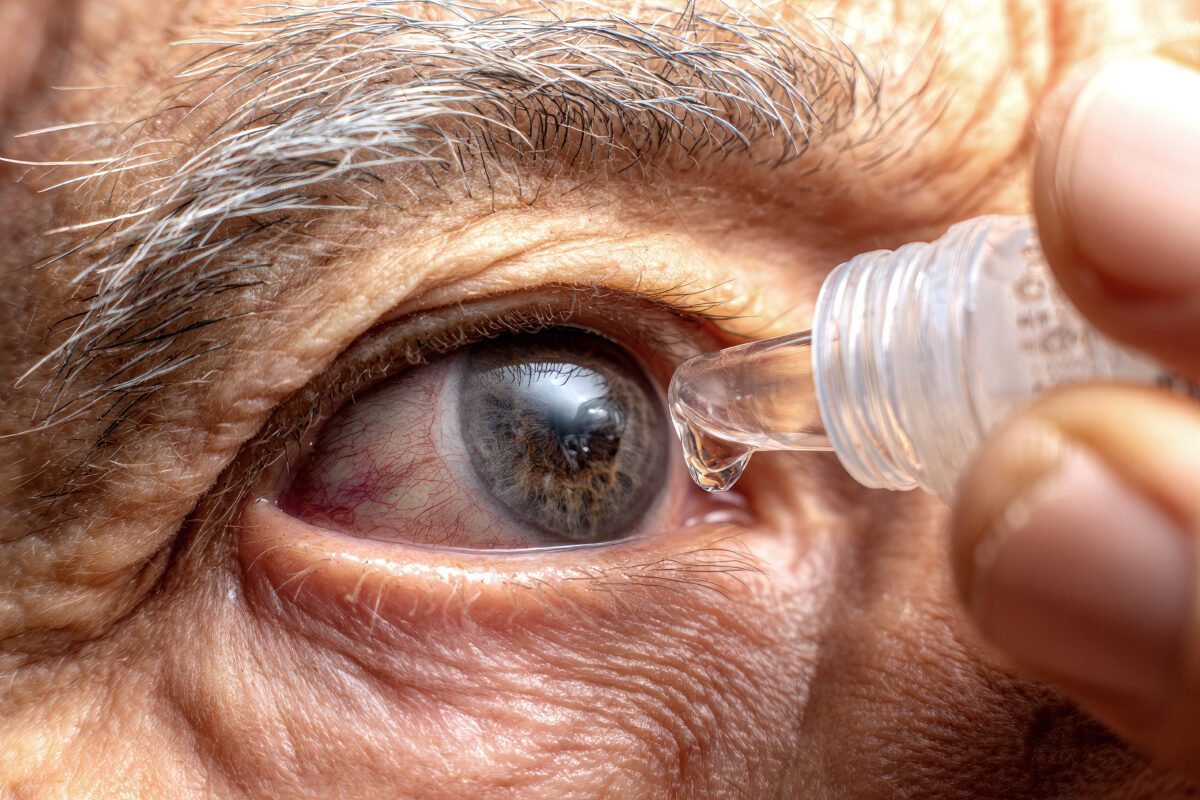
Advances in Cataract Care
Steven R. Sarkisian, Jr., M.D. is the founder and CEO of Oklahoma Eye Surgeons in Oklahoma City and specializes in premium laser cataract surgery and minimally invasive glaucoma surgery (MIGS). He shares his insights on how cataract surgery has drastically improved over the last few years.
“Cataract surgery has evolved dramatically,” he says. “The most updated and precise imaging, combined with an expanding intraocular lens (IOL) technology, allow us to tailor treatment to each individual. At Oklahoma Eye Surgeons, we are one of the few in the city that bundles the robotic laser with every Premium or Toric IOL, and we were the first to use the newest cataract removal machine in Oklahoma.”
That combination of imaging and laser technology is reshaping the surgery itself. Robotic laser cataract surgery, Sarkisian notes, is an important advancement in precision and personalization.
“The ALLY Adaptive Cataract Treatment System uses robotic laser technology to automate several critical steps and combines them with traditional cataract surgery in one integrated setting,” he says. “This gives the surgeon greater control and efficiency while allowing treatment to be customized to each patient’s unique eye.”
Alongside surgery, the selected lens plays an equally important role in the outcome. One of the most meaningful advances in cataract surgery, Sarkisian says, is the ability to personalize vision with the intraocular lens (IOL).
“Everyone undergoing cataract surgery has to have an IOL,” he explains. “The Toric IOL corrects astigmatism at the time of surgery, providing sharper, more dependable single-distance vision than can even be achieved with astigmatic correction in glasses or contact lenses. Lifestyle or premium bifocal or trifocal lenses offer a broader range of vision, as well as astigmatism correction, for patients who wish to be less dependent on glasses for everyday activities. Sophisticated measurements help us select and precisely position the appropriate lens, but the decision is always individualized to the patient’s eye health, visual priorities and expectations.”
Trifocal lenses, in particular, now have fewer side effects and a 99% satisfaction rate.
“We are not simply removing a cataract,” Sarkisian says. “We are developing a thoughtful visual plan that supports the patient’s needs and quality of life.”

The Ears, Nose & Throat
New Options for Thyroid Nodules
As a specialist in thyroid and parathyroid surgery, Christopher Siemens, M.D., an otolaryngologist with Eastern Oklahoma Ear Nose & Throat in Tulsa, has experienced firsthand the advancements in less invasive thyroid care, offering patients shorter recovery times and even incision-free procedures.
“The biggest shift in thyroid care over the past several years has come in two forms,” says Siemens. “First, on the cancer side, the American Thyroid Association guidelines have evolved significantly. We now know that many thyroid cancers can be treated just as effectively with a lobectomy – removing only the affected half of the thyroid – rather than a total thyroidectomy followed by radioactive iodine, which was the standard approach for years. For the right patients, that means preserving thyroid function, avoiding lifelong hormone replacement, and skipping radioactive iodine altogether, all without compromising cure rates.
“Second, for benign nodules – which make up the large majority of what we find we now have radiofrequency ablation (RFA) as a non-surgical treatment option,” he says. “Using real-time ultrasound guidance, we can direct a thin probe into a symptomatic nodule and deliver controlled heat that shrinks it gradually over the following months, often by half or more. It’s done entirely in the office, with no incision, no hospital stay and a same-day return to normal activities. Together, these shifts mean far fewer patients need a full, invasive operation than a decade ago – and that’s a real change in how we think about thyroid care.”
These techniques aren’t for everyone. Nodules with suspicious features on ultrasound or biopsy still require surgical evaluation, making a tailored, individualized approach to patient care essential.
“No two thyroid nodules, or patients, are exactly alike,” says Siemens. “A nodule’s size, location, whether it’s solid or cystic and what a biopsy shows all shape what the right treatment looks like, and so does the patient in front of me: their symptoms, their priorities, whether they want to avoid surgery if possible, even their life circumstances at that moment. Two patients with what looks like a similar nodule on paper can have very different best paths forward. That’s why the first step is always a thorough evaluation –ultrasound, and biopsy when indicated, before any conversation about treatment. Individualized care means making sure the treatment fits the patient, not the other way around.”
Within his focused sub-specialty in thyroid and parathyroid disease, Siemens has built his practice around offering the full range of options, from biopsy and monitoring to minimally invasive treatments like RFA and ethanol ablation to surgery when it’s genuinely the best path.
“My goal for every patient is the same: an accurate diagnosis first, then a clear, honest conversation about every option available – not just the one I happen to perform,” he says.

The Heart
Knowing Your Numbers
A healthy heart and a strong cardiovascular system are essential to supporting a fit body. It’s why the American Heart Association promotes its ‘Know Your Numbers’ initiative, encouraging everyone to track vital health markers such as blood pressure, blood sugar and cholesterol levels, and body mass index or BMI.
Dhanushya Amaratunga, M.D., a cardiologist at INTEGRIS Health Heart Hospital in Oklahoma City, says knowing these numbers offers a snapshot of your overall health and can identify problems early, even before symptoms start.
“Blood pressure, blood sugar, cholesterol and weight are all important markers of cardiovascular and metabolic health,” says Amaratunga. “When we know these numbers, we can recognize our risks and take steps to address them early. Prevention is always better than the cure, and understanding your numbers is an important first step toward prevention.”
She explains that all of these health markers are impacted by many of the same factors, including diet, physical activity, sleep, stress and overall lifestyle.
“Genetics also play an important role, so some people may be more predisposed to conditions like high blood pressure, diabetes or high cholesterol,” says Amaratunga. “The important thing to remember is that while we cannot change our genetics, we can influence many of the other factors through healthy lifestyle choices and sometimes with medical treatment. Looking at these numbers together gives us a much better picture of a person’s overall health and cardiovascular risk.”
High blood pressure and high cholesterol are known as ‘silent killers.’ A person may be suffering from one or both of these issues without any obvious symptoms and be at a greater risk of heart attack or stroke. It’s another reason why knowing your levels can help determine your future health and longevity.
“When we know our numbers and take steps to keep them in a healthy range, we can lower our risk of major medical problems such as heart disease, stroke, diabetes and kidney disease,” says Amaratunga. “The goal is not just to live longer, but to live healthier and remain active and independent for as long as possible…and even small changes made early can have a huge impact over the course of a lifetime.”

Sleep
How Sleep Changes with Age
As one gets older, it’s common to struggle with sleep. According to a recent survey by AARP, seventy percent of adults 40 and over report having difficulty sleeping – and nearly the same percentage reported struggling with sleep for more than two years. However, just because you’re older doesn’t mean you don’t still need your rest. Middle-aged and older adults should still try for seven to nine hours of sleep a night.
Experts share that disrupted sleep is often the result of sleep disorders, health conditions, or for women, a symptom of perimenopause, menopause and other hormonal changes. The Sleep Foundation explains that our circadian rhythms or sleep-wake cycles shift with age, gradually causing the internal body clock to move, resulting in individuals becoming sleepy earlier in the evening and waking up earlier in the morning. The quality of sleep also diminishes, with adults spending more time in a light and restless sleep state rather than a deep sleep.
While some changes in sleep are a normal part of aging, poor sleep shouldn’t simply be accepted as inevitable. A few healthy sleep habits can help you get the restorative rest you need. Keep a regular sleep schedule to support a natural sleep-wake cycle. Limit screen time before bed, and create a calming and inviting sleep environment. Avoid drinking too much caffeine throughout the day and stay physically active, as even light exercise can help improve sleep. Also, check with your doctor in case a new medication or sleep disorder like sleep apnea could be affecting your slumber.