



















Imagine, you’re a veterinarian with a tiny kitten in need of a splint far smaller than anything commercially available. You can search and search, but what you need simply doesn’t exist. If you’re in Oklahoma City with access to the Metropolitan Library System (MLS), however, you can create exactly what you need for your little patient.
How is that possible? The MLS offers free access to 3D printers. The kitten’s splint is just one example of how 3D printing has moved beyond engineering labs and manufacturing floors to be used by artists, hobbyists, students and everyday creators.
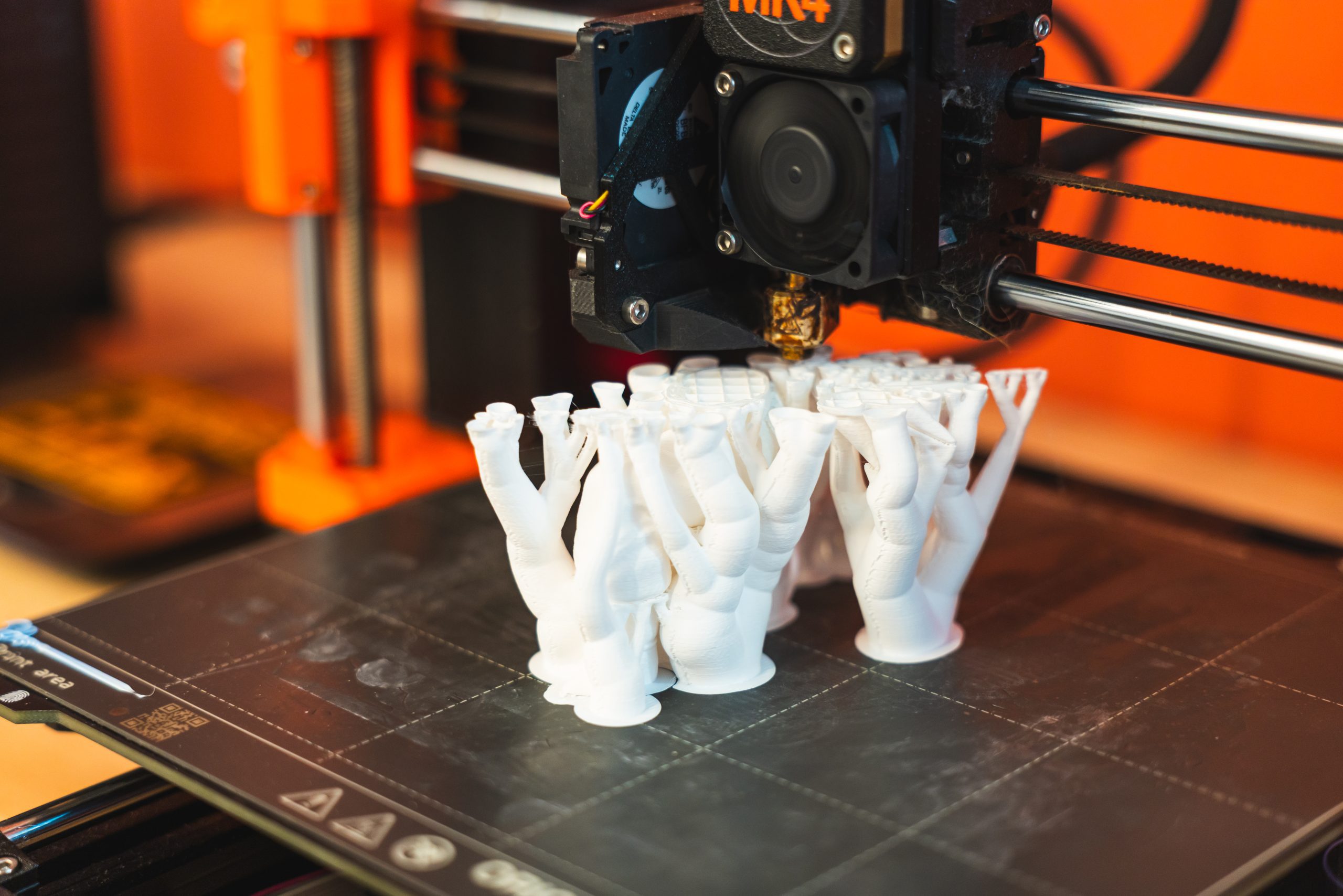
Though the technology looks like magic to untrained eyes, the process is fairly simple. Lindsay Jones, a librarian at the Belle Isle Library in the MLS, describes it as “using a hot glue gun that’s controlled by a robot.” Following a digital blueprint, the printer forms a solid object from melted plastic, building it layer by layer.
“It’s a little like building something with LEGO bricks,” she says, “except the bricks are so thin you can barely see them.”
Developed in the 1980s for rapid prototyping, 3D printing has expanded into an incredibly accessible tool for creativity and problem-solving. At the library, patrons create replacement parts for household items, organizers, phone stands, gaming pieces, cosplay items, cookie cutters and classroom materials using free designs available online.
“You don’t have to be an engineer or an artist to enjoy a makerspace,” says Jones. “You just have to be curious!”
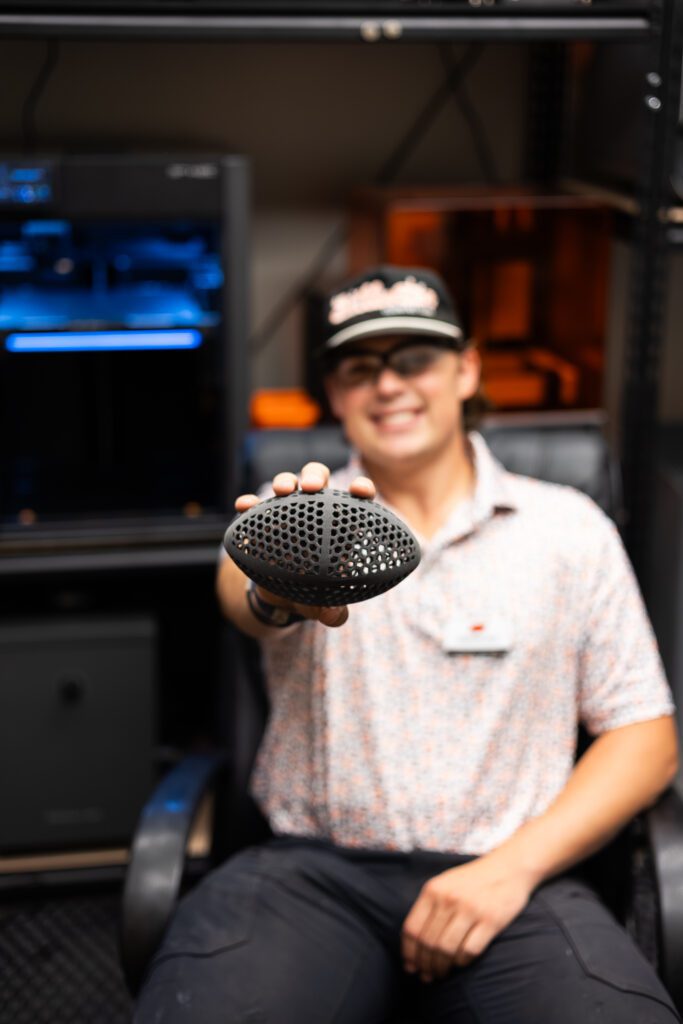
The technology has also come a long way. Jodi Prouty, the interim director at the Oklahoma State University’s New Product Development Center, notes that when she was an intern ten years ago, the printers were “great … but frustrating to keep running correctly and troubleshoot.”
Today, she says, “I am amazed at how far printers have come in such a short time.”
At OSU, 3D printers funded by the Oklahoma Center of the Advancement of Science and Technology (OCAST) for the Inventor’s Assistance Service Program, support prototyping, test-fit parts, proof of concept designs, sand casting and mold creation. The technology allows businesses and entrepreneurs to test and refine products before investing in full-scale production, saving time and money.
As the technology continues to evolve, so do its possibilities. Jones notes that access remains an important part of the library’s mission: “Not everyone can afford the equipment, but everyone deserves the chance to explore their curiosity and develop new skills.”
Daniel Chesney, library manager at the Belle Isle Library, sees that access expanding beyond the library itself.
“I see the makerspace breaking out beyond the library doors,” he says, with equipment that could eventually be checked out and used in people’s own spaces.
However, the future of 3D printing extends far beyond makerspaces. Prouty expects the technology to continue growing rapidly as printers become more advanced and their applications become more widely understood. From replacing a broken household part to developing the next generation of products, 3D printing is increasingly giving people the ability to turn an idea into something they can hold in their hands.