





















Rather than getting your dopamine dose through endless scrolling, flex your brain muscles by heading
to an Oklahoma escape room – good to the last plot.
There are plenty of mind-bending options at Tulsa’s popular The Xcapery.
In their flagship game, Philtower Mystery, somebody has kidnapped wealthy oilman Waite Phillips. Your mission: Grab a fedora and step into the minds of 1920s detectives to outsmart those dastardly Chicago gangsters.
But what if you’re craving something outrageously weird? Book a bed at Morningside Hospital. This bizarre vintage hospital experience involves gamers ad-libbing with “Nurse Dolly,” played by Heidi Vergara, who channels her inner Nurse Ratched.
“It blows people’s minds,” she says.
You must find your patient release papers before staffers administer your diabolical medical treatment. You may not leave with your mind scrambled, but nervous giggles are guaranteed.
“You’re just jumping into the creativity of somebody’s mind,” says Vergara, who co-founded The Xcapery with her husband, Herman.
Back in the day, dopamine drove Oklahoma oil booms. Today, the brain’s reward chemical drives players searching for hidden clues inside these rooms.
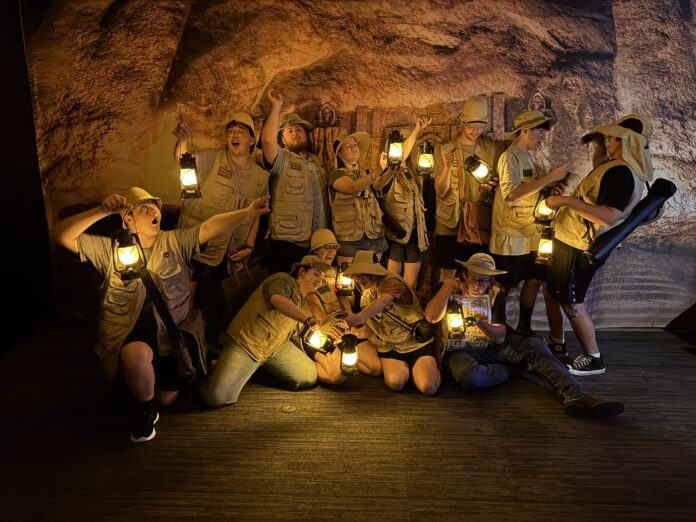
The mere anticipation of uncovering secrets builds tension, sparking curiosity and creative problem-solving. Players become shrewd archaeological detectives skulking through Tulsa’s underground tunnels.
“Probably our top two best players are engineers and farmers,” says Vergara. “They’re very good at coming up with a solution very quickly, on the spot. Because they do that every day.”
Studies show that fear and time-pressure squash logic. Indeed, players’ biggest psychological mistake is worrying about time, says Dan Arnett, designer and founder of Baker Street Escapes in Oklahoma City.
Arnett recalls one moment when a clock ticked ominously. A brilliant group had just a few puzzles left. Someone gasped: Just 12 minutes left!
“We’ve lost!” someone moaned.
Morale dropped. Momentum tanked. Cleverness faltered.
“Mentally, they’d been defeated,”
says Arnett.
Many immersive designers dialed down countdown clocks around 2017. Modern lighting changes and audio cues kept up the pace without panic. And players got better.
Fear thwarts aspiring puzzle masters, too.
“People puzzle terribly when they’re afraid,” Arnett says. “If you introduce fear, logic goes out the window.
For years, designers weaponized fear – something new-age escape room creators tend to stay further away from.
“Back in the day, they designed games to defeat you,” Arnett adds.
Old-school rooms encouraged winners to trumpet T-shirts emblazoned with “I Escaped!” These shirts made designers try harder to defeat players.
Eventually, the trend shifted from cheap jump scares to story-driven, immersive games and blockbuster sets, like Baker Street’s high-stakes Blast from the Past, blending Hollywood magic, artist-recreated wall murals and storytelling.
That said, you don’t need gallons of coffee or a glowing smartphone screen to keep you entertained. You can get that dopamine fix by stepping inside a beautiful trap and rolling out before the door slams shut.
“Now,” says Arnett, “you’re Indiana Jones!”