


















Agriculture is one of Oklahoma’s top industries, with a staggering economic impact statewide. Oklahoma’s farmers and ranchers are feeding the nation, and the newest generations are plugging into 21st century technology while keeping traditional methods alive.
Scott Cheek and his extended family own Cheek Ranch near Yukon, where they raise beef cattle. Cheek is the fourth generation on a ranch that has been in the family for over 80 years. He grew up working the property, and took over operations in 2021.
Cheek says the ranch has been “tracking cattle data for years, and will soon start using e-collar systems to track and move cattle more often between pastures with less labor and less stress on the cattle,” he says. “We rely on regenerative practices like cover crops, rotational grazing and natural fertilization practices.”
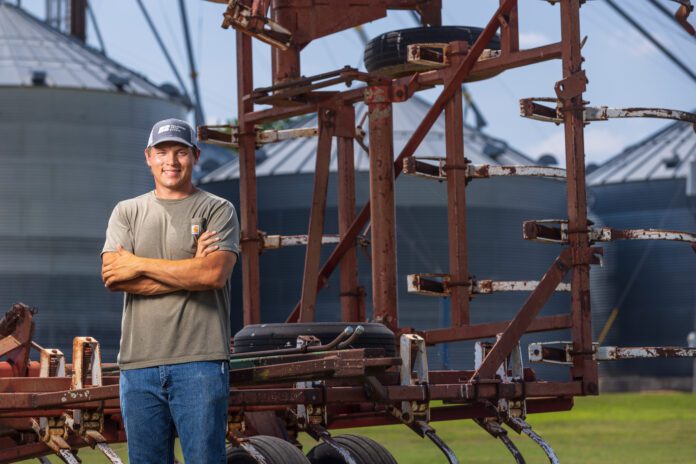
A third generation farmer, Lincoln Muller and his extended family are growing cotton, milo and mung beans on Muller Farms near Martha. Muller grew up working the farm.
“We use precision agriculture a lot in our operation, and use GPS on a daily basis,” he shares. “We also do a lot of soil mapping and use variable rate control when applying fertilizer and/or lime to our ground. We use drones to identify problem areas and locate drip leaks in our fields.”
Muller strongly believes in crop rotation, cover crops and no-till for soil health, and uses natural amendments to feed soil biology.
As the fifth generation involved in Ottawa County agriculture, Dillon Johnson and his father own Johnson Brothers Grain & Livestock, where he says they grow double crop wheat and soybeans.
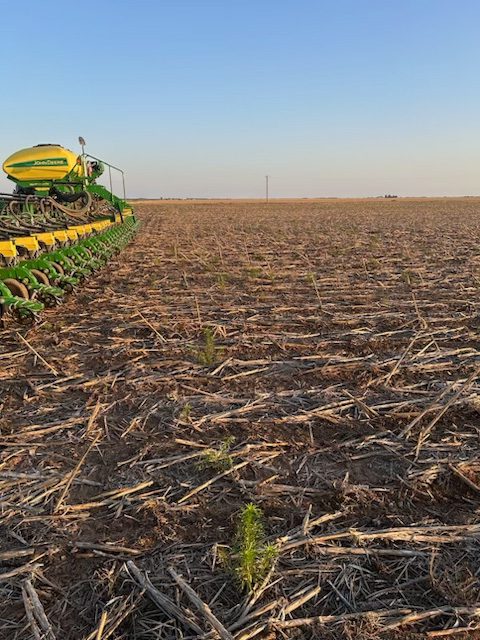
Photo courtesy Muller Farms
“We run 1,000 head of momma cows, calving in fall and spring,” he says. “We keep the calves weaning, backgrounding them to 800-900 pounds. We have been largely no-till for 25 years, and have taken part in the Climate Smart Ag program for two years.”
Johnson uses AI for business management operations, and data tracking and processing for cattle. He’s found LLMs (Large Language Models – advanced artificial intelligence tools that process text, images and data) useful for decision making.
Although they are bringing new technology into the mix, Cheek, Muller and Johnson are working their operations alongside several generations of family that continue using some traditional methods. Cheek Ranch still grows hay to feed cattle through the winter. The Muller family members are still doing all the primary farm work, including producing food for their own family. Johnson Brothers Grain & Livestock grows corn for silage for cattle, still uses equipment they’ve had for decades, and they prefer equipment that doesn’t require a computer or programmer.
Challenges and Sustainability
All three producers agree that finding good labor is a problem. Plus, equipment costs hurt farmers, because the price of commodities is at a low while equipment goes up annually. So they struggle with cash flow challenges at times.
However, these producers have transitioned their operations to make them sustainable. Muller Farms is direct selling deer and chicken feed. Cheek Ranch has built a successful online retail beef business at cheekranch.com.
Because Johnson Brothers Grain & Livestock owns its own equipment, the Johnsons pick up custom harvesting jobs, and they also sell silage to neighbors. They’ve expanded their cow herd which has led to a strong performance from their beef enterprise.