We all know that the meteorologists and staff at the National Weather Center in Norman have an important job in bringing warnings to those in harm’s way due to extreme weather. This is the chance to get behind-the-scenes knowledge of how things work at the NWC. The National Weather Festival will showcase the state-of-the-art facilities, including the National Weather Service forecast operation areas and the brand-new Radar Innovations Laboratory. Hourly weather balloon launches will be performed by Oklahoma City TV meteorologists. There will also be robot demonstrations and other emergency vehicle displays. The fun begins at 10 a.m. Saturday, Nov. 1, at the National Weather Center, 120 David L. Boren Blvd., in Norman. For more information, visit www.nwc.ou.edu.
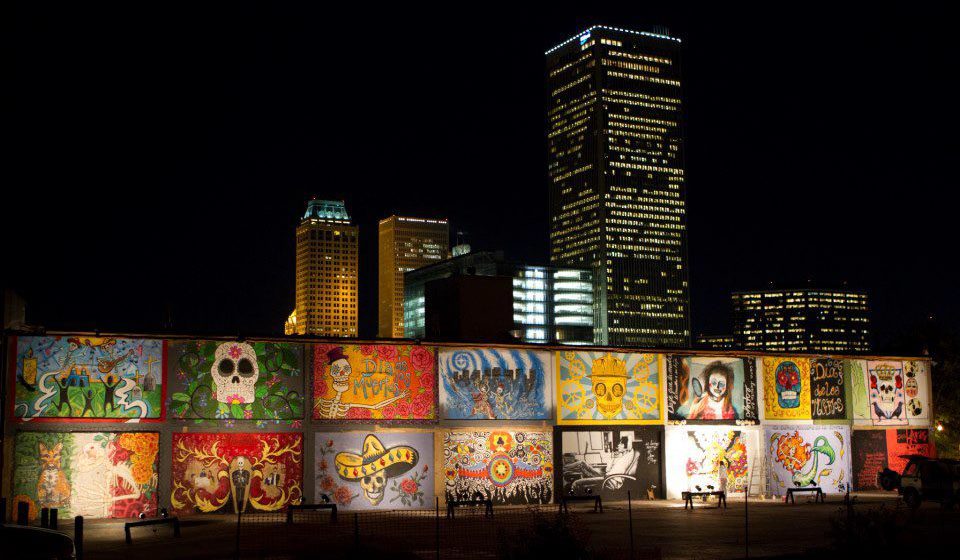
Twenty years ago, Living Arts of Tulsa hosted its first Day of the Dead Arts Festival, homage to the Hispanic holiday, Dia de los Muertos. Two decades later, the once-small festival has grown to become one of the most anticipated events of the year in the Brady Arts District and features music, dance, art exhibitions in the tradition of altar-decorating and more. The festival, which begins at 3 p.m. Saturday, Nov. 1, takes place on the streets around Living Arts of Tulsa, 307 E. Brady St., in Tulsa. Admission to the festival is $5 (children 12 and under are free) at the gate. For more information on the festival, visit www.livingarts.org.
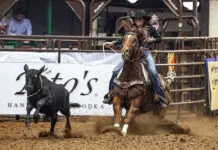
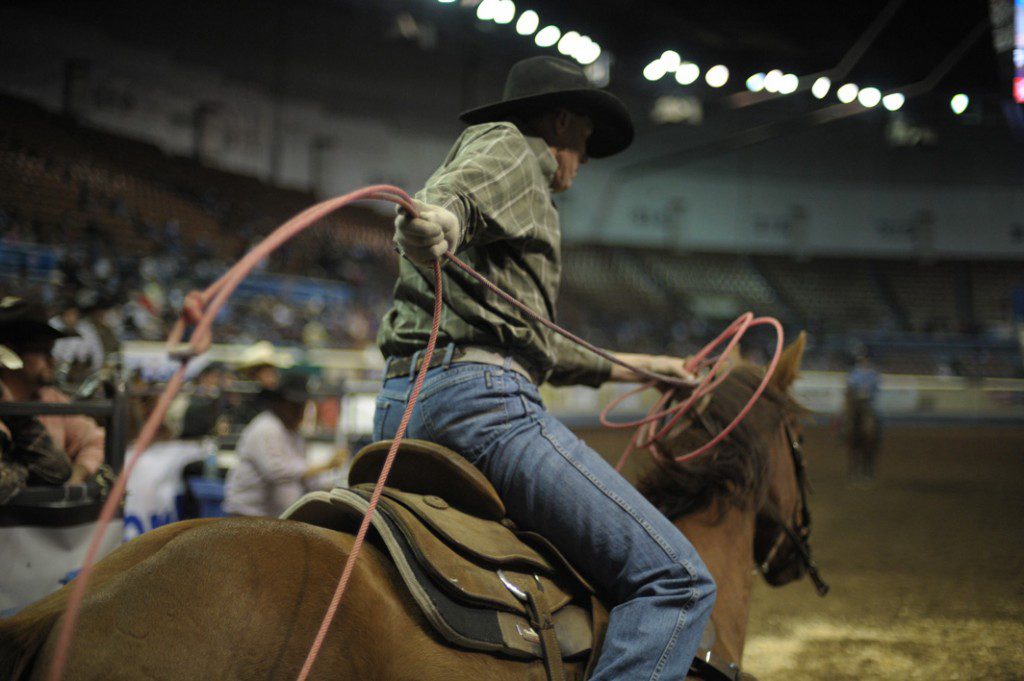
Lasso the action at the U.S. Team Roping Championships, continuing this weekend at Oklahoma State Fair Park, 3001 General Pershing Blvd., in Oklahoma City. The big competition winds down on Sunday, Nov. 2, but not before the event’s biggest winners are decided. The event attracts the country’s best rodeo roping teams to compete for big prizes and honors with categories in a variety of age groups. Activities begin at 8 a.m. each morning and continue into the evening. For a complete schedule, including competition times, visit www.ustrc.com.
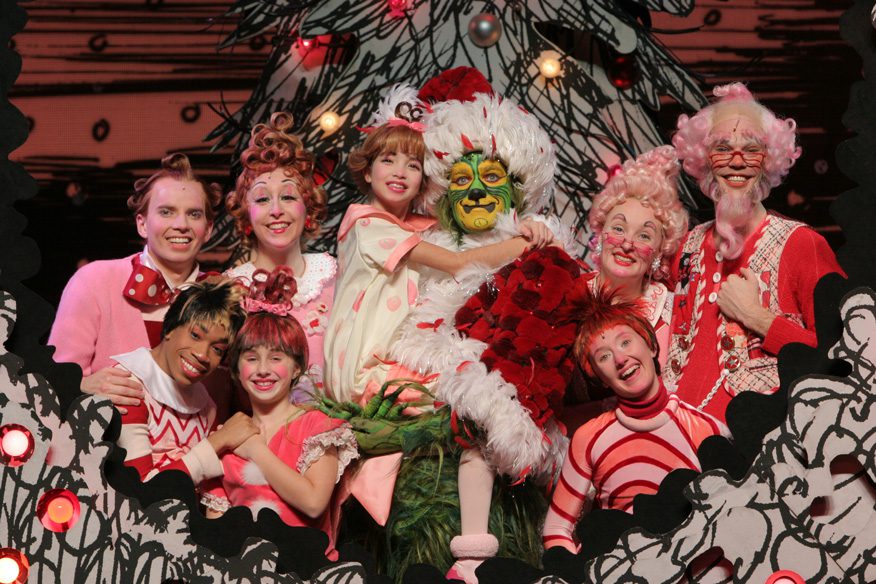
The Grinch comes out to play for Halloween at the Oklahoma City Civic Center Music Hall. The hit musical Dr. Seuss’ How the Grinch Stole Christmas continues its run at 201 N. Walker Ave., Oklahoma City, with seven more performances through Sunday, Nov. 2. Tickets are $20-$65. Based on the beloved Dr. Seuss book about the grouchy Grinch, his loyal dog (Max) and the happy Whoville village he plots against, the touring musical will move to the Tulsa Performing Arts Center’s Chapman Music Hall, 101 E. Third St., and opens on Tuesday, Nov. 4, at 7:30 p.m. A total of 10 performances are slated for Tulsa with tickets from $20-$60. Tickets to shows at both venues are available at www.myticketoffice.com.
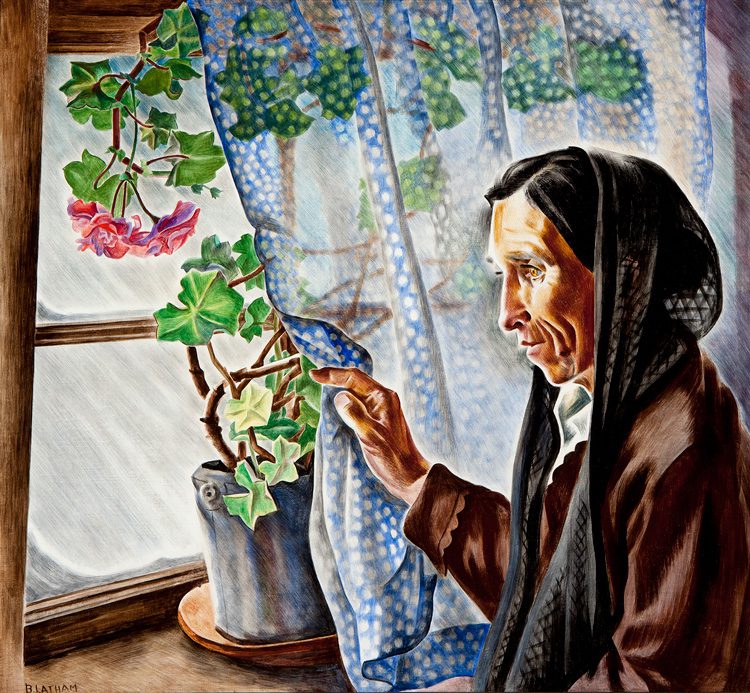
“The Blizzard” by Barbara Latham. Courtesy Philbrook Museum of Art.
Opens Sunday, Nov. 2
There are numerous “power couples” in the art world of the early to mid 20th century. Diego Rivera and Frida Kahlo come to mind along with Georgia O’Keeffe and Alfred Stieglitz. Howard Cook and Barbara Latham may not be the most famous of these pairings, but their marriage and union in art remain one its most adventurous. Philbrook Museum of Art explores the influence each artist exerted over the other’s works as well as their collective contribution to the school of art that formed in Taos, N.M. Their rendered studies of the American Southwest and its cultures in paint and printings are the focus of A Creative Union: Howard Cook & Barbara Latham, a new exhibition opening Sunday, Nov. 2 at Philbrook, 2727 S. Rockford Road, in Tulsa. The show will include about 20 paintings and prints from the 1920 to the ‘50s revealing the couples’ shared experiences and explorations. The exhibit closes Jan. 4. For more, visit www.philbrook.org.
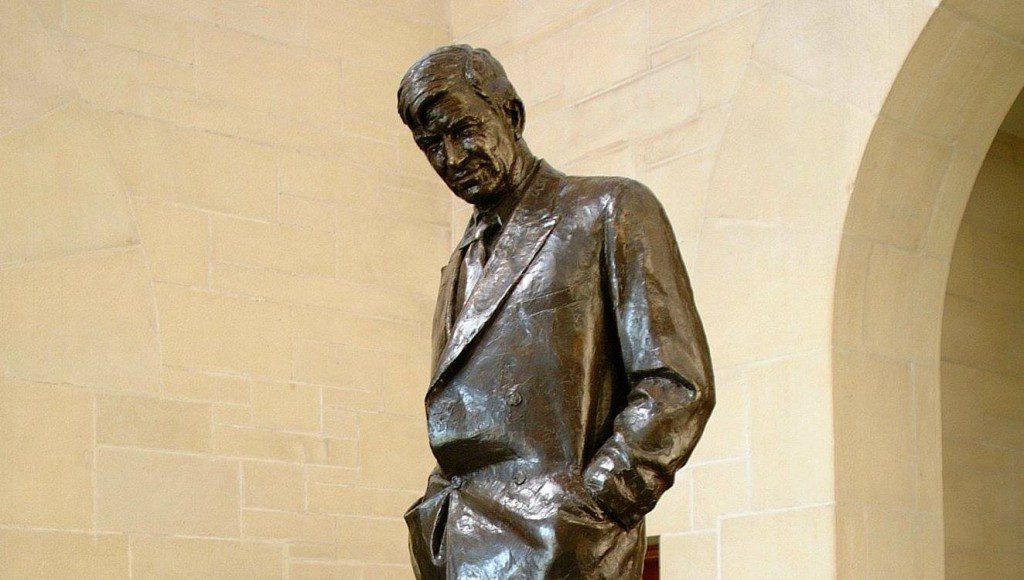
Will Rogers statue by Jo Davidson. Courtesy Will Rogers Memorial Museums.
Will Rogers statue by Jo Davidson. Courtesy Will Rogers Memorial Museums.
Saturday, Nov. 1-Tuesday, Nov. 4
Claremore remembers favorite son Will Rogers this weekend with a series of events honoring the actor, columnist and humorist. Born on a family ranch near Oologah when the region was still considered Indian Territory, Rogers went on to become a great entertainer and celebrity, first as a trick-rope cowboy act on the vaudeville stage and later for his philosophical wit, humor and commentary in print and on film. Will Rogers Days, the annual celebration, attests to the legacy of the man who never forgot his Oklahoma beginnings and Cherokee heritage. This year’s events begin with the Will Rogers Days Parade in downtown Claremore at 10 a.m. Saturday, Nov. 1. Also on Saturday, the Will Rogers Memorial Museum, 1720 W. Will Rogers Blvd., in Claremore opens the doors for a traditional Cherokee lunch. At 1 p.m., the Indian Women’s Pocahontas Club will hold its Hats Off to Will program and a wreath-laying memorial. On Sunday, Nov. 2, the museum’s theater holds a Mid-Afternoon Frolic, a talent show from 2-4 p.m. Then, Children’s Day at the Museum welcomes Rogers’ youngest fans to the museum from 10 a.m-1 p.m. on Monday, Nov. 3 (reservations for this event are required). Finally, everyone is invited to enjoy birthday cake and entertainment at Will Rogers Birthplace Ranch, 9501 E. 380 Road, near Oologah. The event includes area students and champion trick roper Kowboy Kal from 10-11:30 a.m. Tuesday, Nov. 4. For more, visit www.willrogers.com.
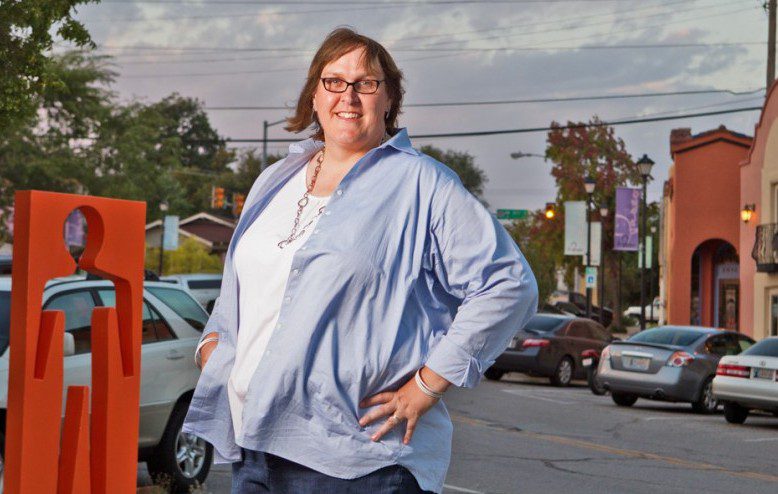
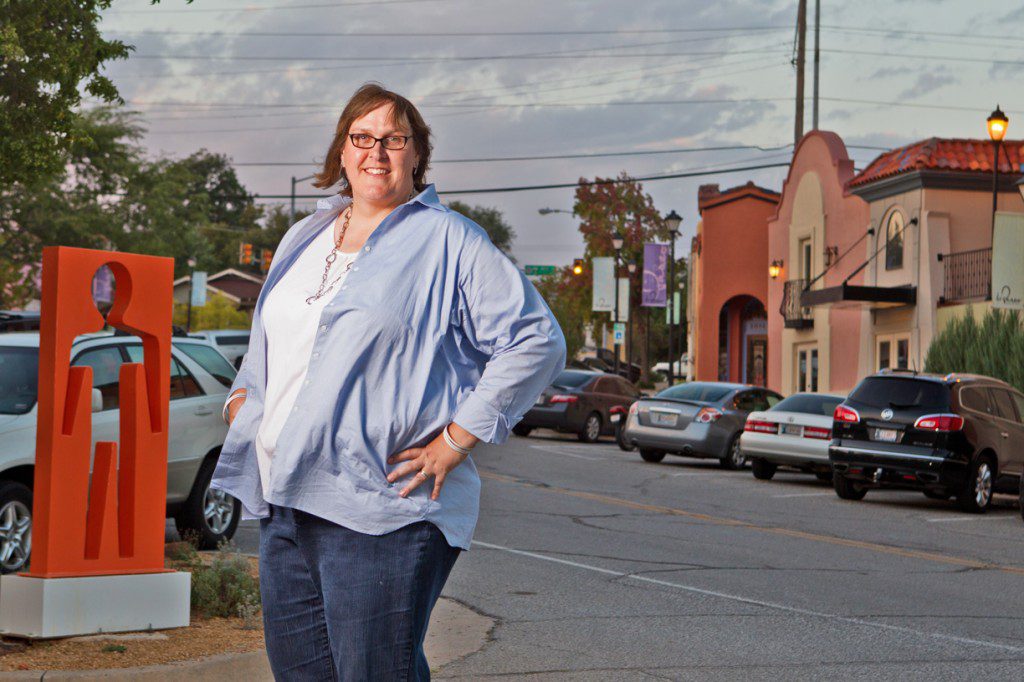
Paula Sophia’s campaign to represent Oklahoma’s 88th State House district failed, but she plans to keep fighting for Oklahoma. Photo by Brent Fuchs.
Some Oklahomans leave their state at the earliest chance. Others bemoan its perceived deficiencies but remain residents, never finding the opportunity or marshaling the willpower to move away.
Oklahoma City’s Paula Sophia does not fall into either category. After losing a Democratic primary runoff election in August for Oklahoma House District 88 by 22 votes, her outlook – on the district, on the city, on the state as a whole – is optimistic.
“Oklahoma City can be a really vibrant, new place, with vibrant, new ideas,” she says. “A hundred years ago it was that kind of place. It’s had its ups and downs, and people here are pretty resilient.”
Had she won, Sophia would have been the state’s first openly transgender elected representative. People outside of Oklahoma took notice and made tentative offers of support but could never quite square Sophia’s candidacy with prevailing assumptions about the state she wanted to represent. There were a lot of questions of viability, she says.[pullquote]“There is never, ever continuous, perpetual prosperity, but the more diverse that you are, the better off that you’ll be, and the ups and downs won’t be so dramatic,”[/pullquote]
“Those of us who live here rub up against those attitudes, but by and large, Oklahoma and Oklahoma City in particular are a lot more tolerant, a lot more appreciative of diversity than the national scene might think,” she says. “The really aggressive and abrasive conservative voices get the attention, but I think sometimes at the expense of the more moderate and progressive voices.”
The transgender angle was played up in the media during the race, but Sophia’s reaction to such headlines has always been one of modesty coupled with a steadfast aversion to being labeled a “novelty” candidate. Rather, she focuses on issues that resonate around class and economic opportunity – issues, she says, that are important to everyone. These include a living wage, access to education and collective bargaining.
Sophia also emphasizes the need for economic diversity – fostering and growing a variety of industries in the state alongside the powerful presence of oil and gas, with its inherent boom-and-bust fluctuations. Having grown up in a family that was adversely affected by the oil bust of the early 1980s (her father lost his job), Sophia remembers the statewide devastation.
“There is never, ever continuous, perpetual prosperity, but the more diverse that you are, the better off that you’ll be, and the ups and downs won’t be so dramatic,” she says.
Sophia cannot say if she plans to run again in the next election cycle, but her eyes twinkle as she considers the idea. It would depend upon a number of variables, she says, including the extent to which Jason Dunnington – who goes into the general election without an opposing Republican candidate – pursues a progressive agenda agreeable to constituents of the district.
Sophia has no plans of leaving the city she has called home for decades, over which time she worked in law enforcement for 22 years before branching into writing, teaching and politics.
“I think the really essential part of activism is to try to bloom where you’re planted,” she says, “and make a difference where you are.”
Marie Hicks, co-owner of Nothing Bundt Cakes in Tulsa, sells nostalgia.
Photos by Brandon Scott.
Marie Hicks, co-owner of Nothing Bundt Cakes in Tulsa, sells nostalgia. Photos by Brandon Scott.
Bundt cakes are practically a national pastime. Having a bundt pan in the kitchen meant that there would be warm, moist cakes, perfect with an ice-cold glass of milk. But bundt cakes, which reached a peak in popularity in the 1940s and ‘50s, have experienced a decline over the last half-century. Luckily, there’s a bakery that’s hoping to bring back the nostalgia and art of the bundt cake. Nothing Bundt Cake, a franchised bakery specializing inbundt cakes of all sizes and for all occasions, now has locations in Oklahoma City and Tulsa. Started in 1997 by two women who yearned for a bakery that used fresh ingredients in their cakes, the bakery now has dozens of locations around the country. From full-size bundts to “bundtinis,” bite-size bundt cakes, cakes come in at least 10 flavors. Vibrant red velvet is studded with chocolate chips, and cinnamon swirl is both spicy and sweet. Lemon, carrot cake and chocolate-chocolate chip are also popular variations..
Marie Hicks, co-owner and operator of the Tulsa location, says bundt cakes are an experience.
“The concept is a nostaligic wink to the past. It’s not just cake. My grandmother used to make bundt cakes, and that’s what we’re trying to bring back, that comfort,” she says.
Selling memories has never been so delicious or fun. 2520 W. Memorial Rd., Suite B, Oklahoma City; 7890 E. 106th Place S., Building V, Suite 10, Tulsa. www.nothingbundtcakes.com
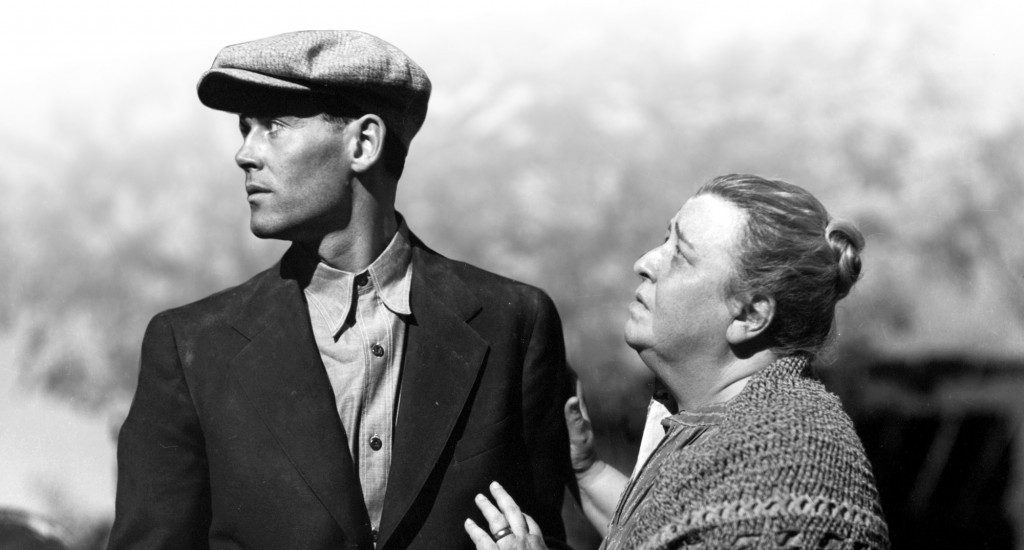
Henry Fonda and Jane Darwell star as tom joad and his mother in the 1940 film The Grapes of Wrath, adapted from the John Steinbeck novel. Photos courtesy of 20th Century Fox.
“You and me got sense. Them Okies got no sense and no feeling. They ain’t human. Human beings wouldn’t live the way they do. Human beings couldn’t stand to be so miserable. – Needles, Calif., service-station attendant (played by Robert Shaw) to his co-worker (Ben Hall) in the 1940 film The Grapes of Wrath.”
To her dying day, my mother could never understand the gravitational-like pull that John Steinbeck’s work exerted on me. As far as she was concerned, he’d taken the name “Okie,” promoted it into a grossly unfair label indicating people of low intelligence and lower class, and then almost personally slapped it on her back and the backs of those around her for the world to see and scorn.
A movie poster for the film.
In a sense, she was right. The publication – released 75 years ago – and subsequent success of Steinbeck’s The Grapes of Wrath had shown, with relentless clarity, the horrible working and living conditions of the migrant farm workers and others who’d left the middle of America for California in the 1930s (while fiction, it was based on Steinbeck’s own observations). The popularization of “Okie” as a negative term became an unintended consequence of the novel’s runaway popularity.
Steinbeck, however, neither invented it nor made it a pejorative. That distinction goes to a California journalist who appropriated the word to describe a phenomenon he, like Steinbeck, witnessed first-hand. In an entry in the Oklahoma Historical Society’s online Encyclopedia of Oklahoma History and Culture, Carolyn G. Hanneman explains the origin of the label, noting, “In the early twentieth century people from Oklahoma were occasionally nicknamed ‘Okies,’ a special appellation that seemed a natural shortening of the state’s name.”
Then, she adds: “In the 1930s, California newspaper reporter Ben Reddick wrote a series of articles on the movement of farm laborers into California and observed that many came in cars with tags from Oklahoma. Reddick seized the Oklahoma nickname and began to apply it to all migrants. Indeed, the term ‘Okie’ took on the same negativity as a racial or ethnic slur.”
But it was certainly Steinbeck, a native Californian, and his hugely influential bestseller, that planted that slur in many minds. Okies – and, by inference, all Oklahomans – were uneducated, unwashed and unwanted, especially in California, where many of them ended up.
Those migrants from the Midwest, following the time-honored American tradition of heading west for a better life, didn’t have a lot of choices. Their diaspora had its roots in the days just after World War I, when the joyous news of the armistice also signaled the end of some huge markets for crops and meat – both here and abroad – since there were no longer vast numbers of soldiers to be fed by their governments. The grinding down from a wartime to peacetime economy led to a couple of U.S. recessions over the next four years, and farmers found themselves going into debt in order to buy new equipment that would, theoretically, increase the yield of their land and keep their incomes from dropping too precipitously.
Then came Oct. 29, 1929, and the stock market crash that echoed around the world. The Great Depression was on, and soon, in Oklahoma and its surrounding states, so were the drought and gale-force winds of the Dust Bowl.
According to the National Endowment for the Arts’ Reader’s Guide for The Grapes of Wrath, when the westward migrations described in Steinbeck’s book began in earnest, “the Depression unemployment rate was pushing 30 percent, and California entrepreneurs were spreading rumors of better days to the west.”
Unable to grow anything in the ravaged, windblown soil, those whose living came from agriculture – especially tenant farmers like Steinbeck’s Joads, who worked and lived on rented land – became incapable of paying their landlords, often resulting in the seizure of their homes and acreages. Even subsistence farmers were starving.
My mother knew about all of this. Raised in northeastern Oklahoma in the ‘20s and early ‘30s, she and her siblings experienced the Dust Bowl and its privations personally. One of the stories she told concerned her Chelsea High School graduation ceremony in 1934. Like most teen girls of the time, my mother liked to dress sharply, but the only shoes she could afford for graduation were the cheapest the Sears, Roebuck & Co. catalog had to offer, and they were adorned with big buckles, which she thought looked hideous. So when the shoes arrived in the mail, she cut the buckles off and tried to make them look like they’d never had any at all.
She said that her family, the Seelys, had been luckier than most, because her dad had a job running an oil lease. That meant he had a steady, if small, paycheck, which was something to be coveted during those Dust Bowl days. Every time the check arrived, he would go to town and buy staples like flour, sugar and lard – and always in duplicate. That was because their next-door neighbors were farmers, and, because of the adverse growing conditions, they couldn’t even raise enough crops to feed themselves. So he would always take them, as a gift, the same load of groceries that he’d bought for his family.
This, of course, is pretty much what Ma Joad does at the makeshift migrant camp in Grapes, when she feeds as many of the starving kids as she can from the meager family stewpot. I used to try to explain that to my mom, to tell her that Steinbeck wasn’t making fun of Oklahomans but showing their character, their values and their determination to work for whatever they got, along with promoting the idea her own father had put into action: Families take care of other families, because we’re all one family. If she’d just look a little deeper, I’d say, she’d see how much the characters in The Grapes of Wrath were like our own people.
She would not look deeper. She would not look at all. John Steinbeck had embarrassed her profoundly, and she would never forgive him.
“I arise to say to you, my colleagues, and to every honest, square-minded reader in America, that the painting Steinbeck made in his book is a lie, a damnable lie, a black, infernal creation of a twisted, distorted mind. Though I regret that there is a mind in America such as his, let it be a matter of record for all the tenant farmers of America that I have denied this lie for them …
“Some have said this book exposes a condition and a character of people, but the truth is this book exposes nothing but the total depravity, vulgarity and degraded mentality of the author.” – U.S. Rep. Lyle H. Boren, a democrat from Oklahoma, during the third session of the 76th U.S. Congress in 1940, as published in the Congressional Record.
Yes, there were many Oklahomans besides my mother who hated The Grapes of Wrath – or, at least, hated what they believed it stood for. Congressman Boren, father of University of Oklahoma President David Boren, was himself the son of a tenant farmer, so his vituperation had something to do with the fact that the book struck so close to home. Also – and this is often overlooked – by the time Grapes came out, the worst days of both the Great Depression and the Dust Bowl were over, and Oklahoma farming and ranching were both on the rebound. The conditions that formed the backdrop for Steinbeck’s novel – the same conditions that had driven his Joads and many thousands of real-life families westward – were rapidly becoming better, and some tried to act as if they’d never been as bad as they were.
An editorial cartoon in the Sept. 25, 1941, Daily Oklahoman, for instance, depicted a huge mound of produce with an Oklahoma farmer sitting atop it – “jeering,” wrote Martin Shockley in the January 1944 issue of American Literature, “at a small and anguished Steinbeck holding a copy of The Grapes of Wrath.” The caption read, “Now eat every gol-durn word of it,” conveniently ignoring the fact that the Oklahoma soil from only a few years earlier – the time in which Grapes was set – hardly yielded such a rich bounty.
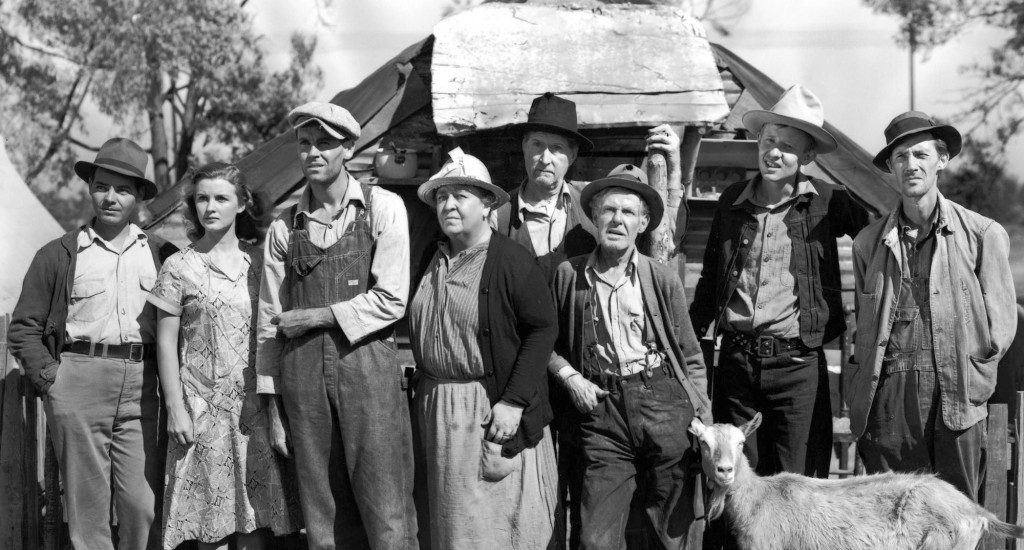
The cast of the film “The Grapes of Wrath.”
Still, some did note legitimate inaccuracies in the book. Shockley, in his article “The Reception of Grapes of Wrath in Oklahoma,” quoted several of these commentators, including Houston Ward, then the county agent for Sequoyah County. In a March 16, 1940, interview on Oklahoma City radio station WKY, Ward noted that people in his county were upset with the “obvious errors” in the book, including putting the Sequoyah County seat of Sallisaw “in the Dust Bowl region” (it was just far enough east to escape the designation); “having Grandpa Joad yearning for enough California grapes to squish all over his face when, in reality, Sallisaw is one of the greatest grape growing regions in the nation,” and “making the tractor as the cause of the farmers’ disposition when in reality there are only 40 tractors in all Sequoyah County.”
Ward did add that these inaccuracies made Sequoyah Countians so upset that “they are inclined to overlook the moral lesson the book teaches,” making him one of the few public critics of the book’s accuracy to also acknowledge its value. Most, like Boren, did not.
Others in the state focused their resentment and anger on the entire population of California. A piece from the April 26, 1940, edition of the Stillwater Gazette announced a new group called the Oklahoma’s California Heckler’s Club, organized by employees of Mid-Continent Petroleum Corporation in Tulsa. Creating the motto, “A heckle a day will keep a Californian at bay,” the members intended to “make California take back what she’s been dishing out” by adopting a program that, among other things, would “provide Chamber of Commerce publicity to all Californians who can read.”
Californians, meanwhile, were not all that pleased with Steinbeck’s work, either. The characterization of the state’s major ranchers, farmers and canners as rapacious exploiters of the desperate Okies didn’t sit well with management, especially with the Associated Farmers of California, a powerful anti-union group that started up in 1934, at least in part as a response to the rising tide of migrants. Incensed by the publication of Grapes, the members fought to have Steinbeck retract some of what he’d written. His refusals only angered them more; an idea of the intensity of their feelings against the writer can be seen in an excerpt from the novelist’s letter to his friend, Carlton A. Sheffield, on June 23, 1940. Referring to the Associated Farmers, Steinbeck wrote:
“They can’t shoot me now because it would be too obvious and because I have placed certain informations (sic) in the hands of [FBI head] J. Edgar Hoover in case I take a nose dive. So I think I am personally safe enough except for automobile accidents etc. and rape and stuff like that (sic) so I am a little careful not to go anywhere alone nor to do anything without witnesses. Seems silly but I have been carefully instructed by people who know the ropes.”
Both Oklahomans and Californians didn’t get any happier in March of 1940, when the movie version of The Grapes of Wrath hit America’s theater screens. There had been some public concern, especially from the Oklahoma Chamber of Commerce, that 20th Century-Fox wanted to film in Oklahoma, thereby adding insult to injury in some minds. In fact, it was mostly filmed in California, although a crew did surreptitiously sneak into the state – claiming to be connected with a picture called Route 66 – and spent a bit of time filming secondary footage along the highway. Very little of that made it into the movie, although the sharp-eyed viewer will spot a few Oklahoma road signs and, in a montage, the Beckham County Courthouse in Sayre.
“I only knew that they had to wind up still moving on.” – Grapes of Wrath screenwriter Nunnally Johnson, interviewed by Tom Stempel in 1969 for a University of California oral history, on the ending he chose for the movie.
Although they are separate entities with very different endings, it’s impossible to separate The Grapes of Wrath novel from the film, especially when it comes to the impact both have had on our state. Director John Ford won an Oscar for the picture, as did character actor Jane Darwell, who played Ma Joad; the film’s five other nominations included one for best picture, best lead actor (Henry Fonda as Tom Joad) and best screenplay, for Steinbeck’s friend Johnson.
The movie is credited with inspiring Woody Guthrie to write his series of Dust Bowl ballads, including “Tom Joad,” which makes direct references to the Fonda character and his experiences. Much later, Bruce Springsteen – after hearing “Tom Joad,” reading Grapes and watching the movie – wrote “The Ghost of Tom Joad,” which became the title track of his Grammy Award-winning 1995 album.
The synergy of book and movie doesn’t just motivate great musicians. Over the years, The Grapes of Wrath has continued to exert a profound influence not only on what Oklahoma and Oklahomans mean to the rest of the world, but on the way we in the state feel about ourselves. We’ve spent about three generations trying to come to terms with the word “Okie,” and many of us are still ambivalent about it, even though those who actually lived through the Dust Bowl make up an ever-dwindling demographic.
“I think people view the word a little differently now,” says Karen Neurohr, an associate professor and librarian at Oklahoma State University in Stillwater. In 2007, during the Oklahoma Centennial, the OSU Library and Stillwater Public Library were the primary sponsors of a major event called The Big Read, joining with the National Endowment for the Arts to encourage people to read The Grapes of Wrath and attend public discussions and other events centered around the book.
“What I see now in Oklahoma,” she adds, “is how the term ‘Okie’ is embraced and celebrated. It’s on t-shirts, it’s on coffee mugs, it’s something that people are proud of. But back then, the way the term was used was something that was troublesome.”
Perhaps Dewey F. Bartlett helped change those perceptions. Beginning in 1968, our 19th governor made a heroic stab at turning a negative into a positive when he launched a campaign that embraced the word as an acronym for “Oklahoma, Key to Intelligence and Enterprise.” (According to historian Hanneman, the idea actually came from Robert L. Haught, press secretary to Henry Bellmon, whom Bartlett succeeded.) There were gold-colored lapel pins, contests and lots of speeches in which Bartlett would often apply other definitions to OKIE (Oklahoma: Key to Individual Enthusiasm, Key to International Energy, etc.). He designated celebrities like President Richard Nixon, Prince Charles and Andy Griffith honorary Okies. He even petitioned dictionary editors to adjust their definitions of the term.
“The OKIE program brought national and international attention to the Sooner State,” wrote Hanneman, but it all screeched to a halt in 1970, when David Hall was elected Oklahoma governor. Because the new governor did not support the OKIE program, and there was some public opposition to the revival of the word,” Hanneman noted, “the public relations venture ended.”
“A fourth of the respondents in a nationwide poll, when asked the first thing that came to mind when they heard the word ‘Oklahoma,’ said they thought of the Broadway musical of the same name…
“By comparison, only 2 percent mentioned the John Steinbeck novel, Grapes of Wrath, or the Dust Bowl that inspired the book. That suggests the old Dust Bowl image of the state is disappearing. That’s good.” – Tulsa World editorial, Feb. 8, 2007
You have to wonder what the results would’ve been if Zogby International had taken its poll (commissioned, incidentally, by the Oklahoma Chamber of Commerce) only in our state instead of nationally. The evaluations for Stillwater’s Big Read program, also from 2007, indicate that a lot more than two percent of Oklahoma’s people still live with the Dust Bowl and The Grapes of Wrath as a cultural memory, even if time has caused the negative images to loosen their hold.
“Most of our participants were in the 55- to-64-year-old range, and most of them had an advanced degree, and they read quite a bit,” says Neurohr. “Some of them did say they remembered how the word ‘Okie’ was used, in a derogatory way, and they still didn’t like the term. But we had a lot more people who weren’t bothered by it than were.
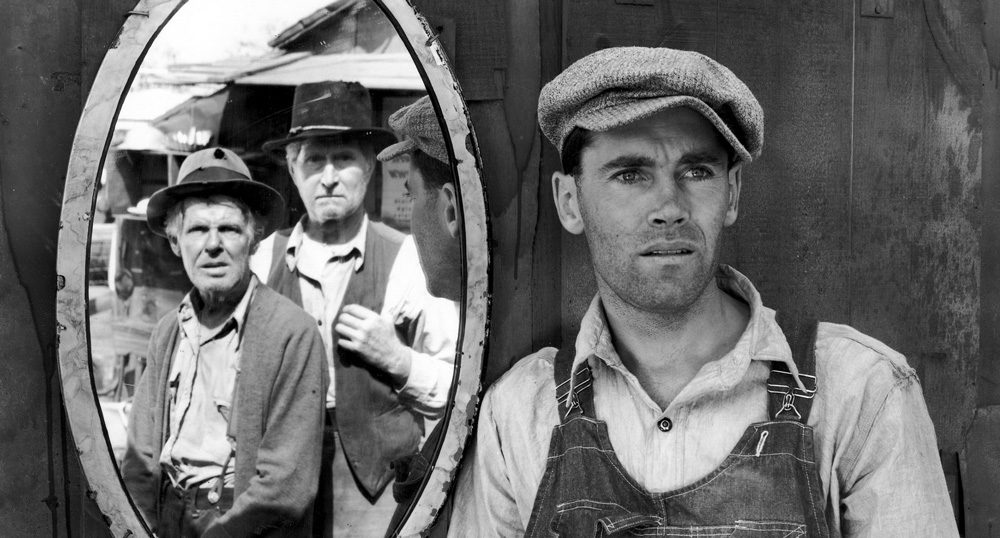
A scene from the film “The Grapes of Wrath.”
“One person commented that in her house, the word ‘Okie’ was used for those who left, and the people who stayed behind in Oklahoma you would never call ‘Okies.’ I thought that was interesting.”
Of course, some of those who left eventually came back – but many did not. In another way, perhaps they’re still here, still the members of the one big family, the one big soul that underpins Steinbeck’s book.
Back in 1998, the Red Dirt Rangers, that most Oklahoman of bands, played a job in Weedpatch, Calif., site of the government migrant camp where Steinbeck had begun his research for what would become The Grapes of Wrath.
“They decided to have a festival there, and they called it Dust Bowl Days,” recalls Rangers vocalist and mandolinist John Cooper. “Of course, all the adults from that time were long dead, and their kids were in their 70s and 80s. But everyone dressed up in clothing from that era, and there were a couple of old jalopies and stuff like that around.
“We played on a flatbed trailer for several hundred folks, and the first thing that struck me was when we looked out into the audience, and all those faces just looked – familiar. I thought, ‘Boy, I know these people.’ And it didn’t take long before they were asking, ‘Hey, do you know my cousin so-and-so in Watonga?’
“It was an easy camaraderie with that crowd,” he concludes. “Those were our people.”
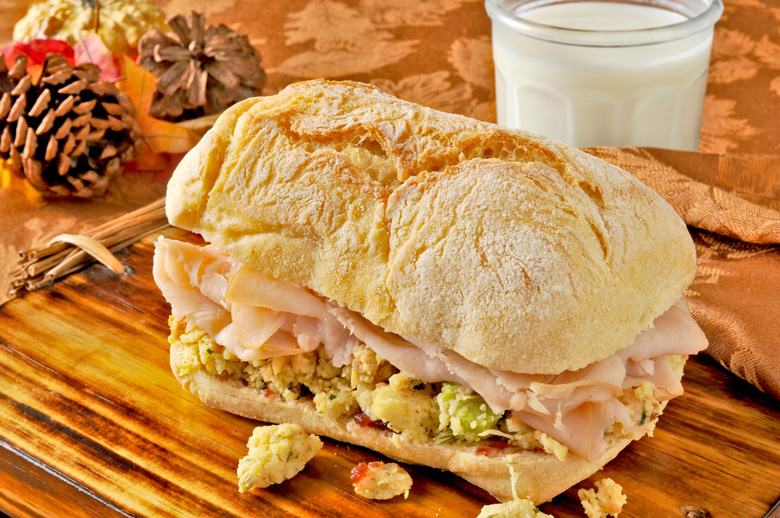
One of the best things about Thanksgiving is the leftovers. Turkey, dressing, cranberry sauce, mashed potatoes – the Thanksgiving spread only grows more flavorful the next day. On the now-legendary Friends episode, Ross Geller discusses the Thanksgiving sandwich his sister, Monica, makes. It includes a host of fillings, including a piece of bread soaked in gravy, known as the “moist-maker.” His discovery of the theft of the sandwich by an unknown coworker and subsequent meltdown, leading to the term “Red Ross,” is the stuff of legends. But that is just how good a leftover sandwich can be.
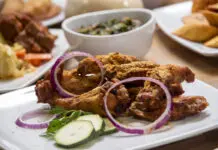
Philip Kaiser, owner of Cosmo Café, where the Thanksgiving sandwich makes an appearance on the menu year-round, says theirs is constructed with smoked turkey, cream cheese, cranberry relish, hot stuffing and tomatoes. It’s a delicious bite that evokes Thanksgiving 365 days a year, and it’s a great inspiration for an at-home version. 3334 S. Peoria Ave., Tulsa. www.cosmo-café.com




















 bundt cakes of all sizes and for all occasions, now has locations in Oklahoma City and Tulsa. Started in 1997 by two women who yearned for a bakery that used fresh ingredients in their cakes, the bakery now has dozens of locations around the country. From full-size bundts to “bundtinis,” bite-size bundt cakes, cakes come in at least 10 flavors. Vibrant red velvet is studded with chocolate chips, and cinnamon swirl is both spicy and sweet. Lemon, carrot cake and chocolate-chocolate chip are also popular variations..