








Home Blog Page 679

Bringing the Undead to Life

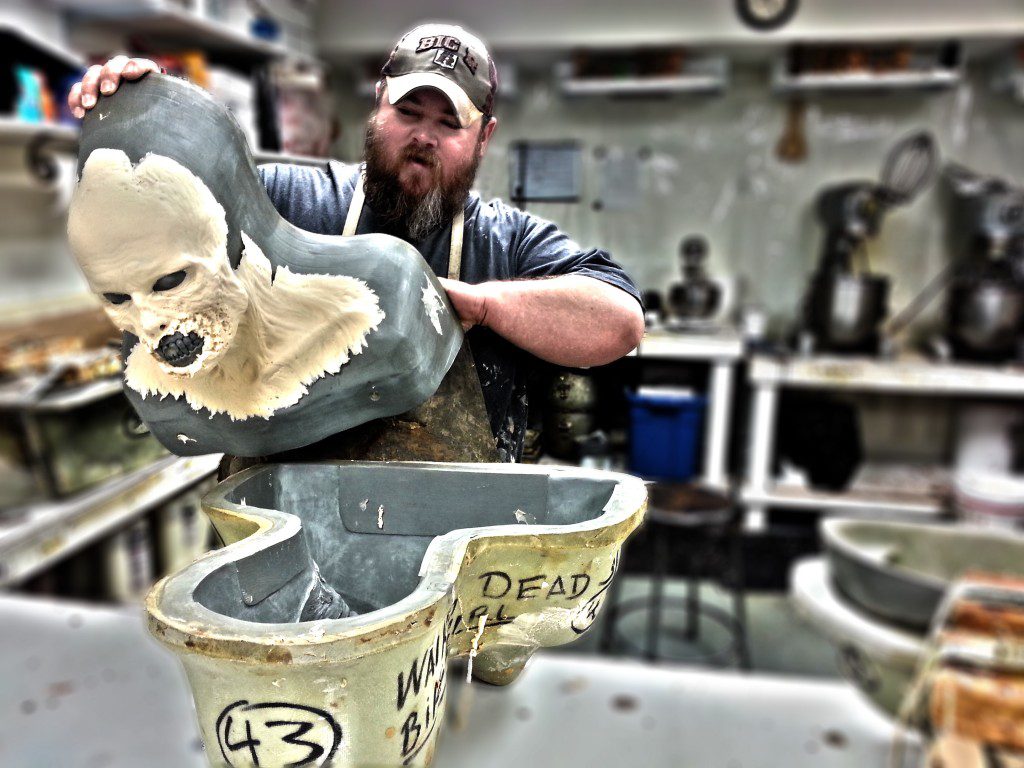
Special effects expert Derek Krout brings a creature to life in the KNB EFX studios. Photo courtesy Derek Krout.

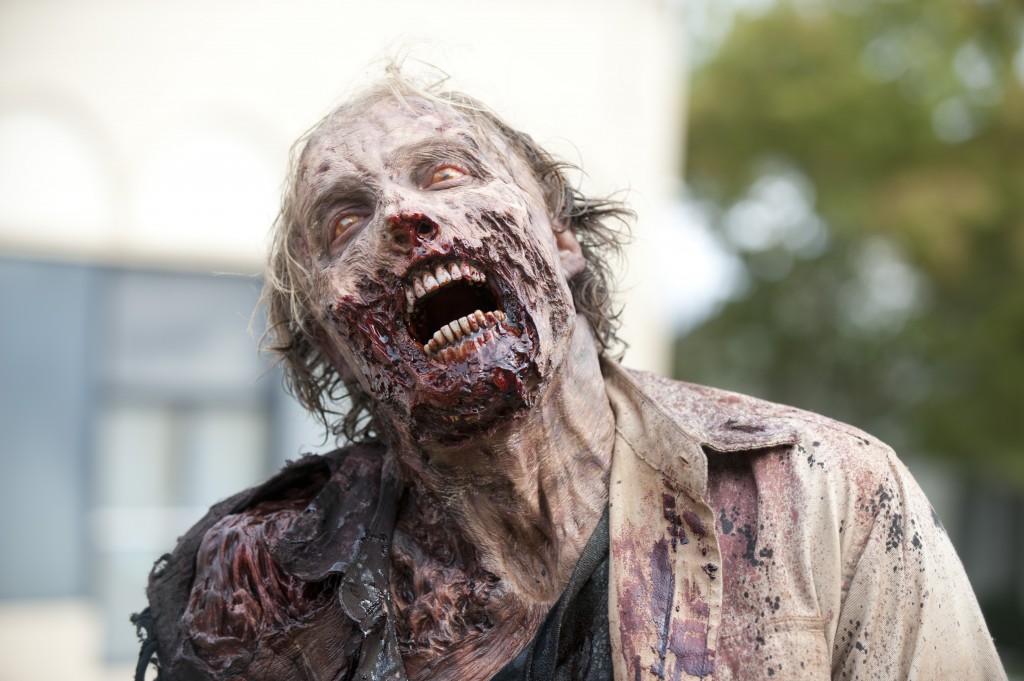
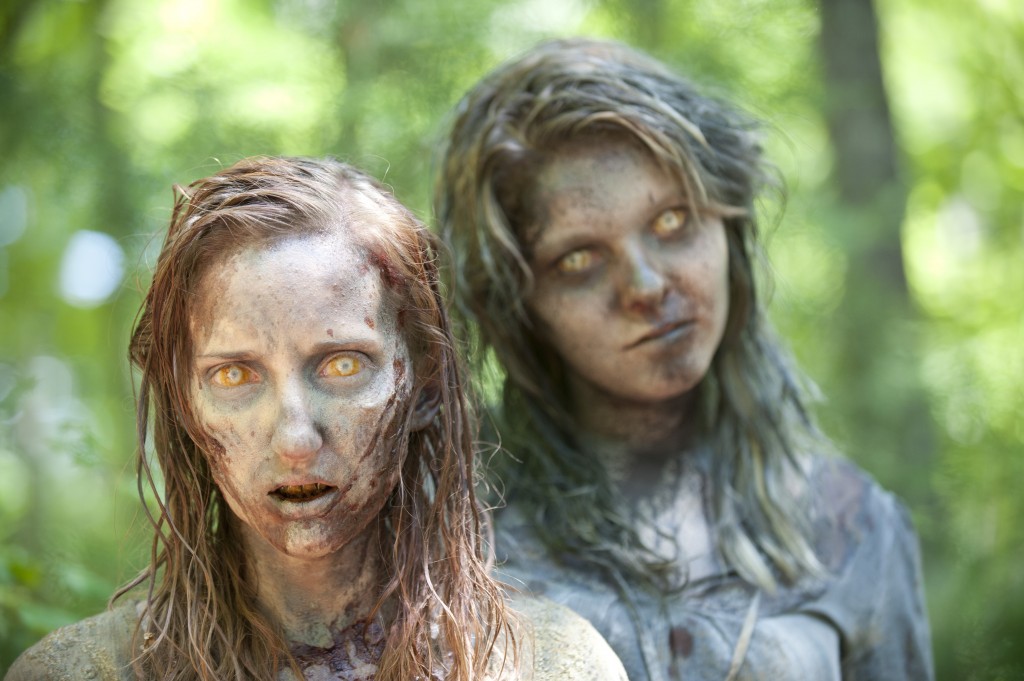
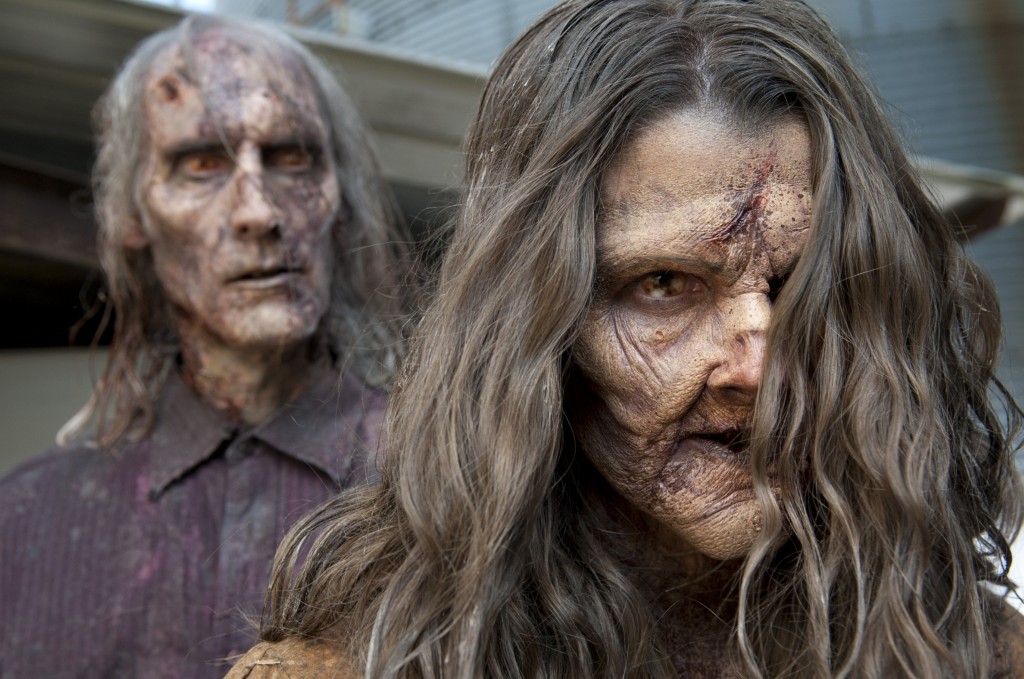
“You want the audience to believe those zombies are real. You want them to believe they’re alive. It’s crucial that it looks as real as possible, that you actually scare people if they see it and believe it. I want them, hours after they see the show, to think there could be zombies lurking around their house.”
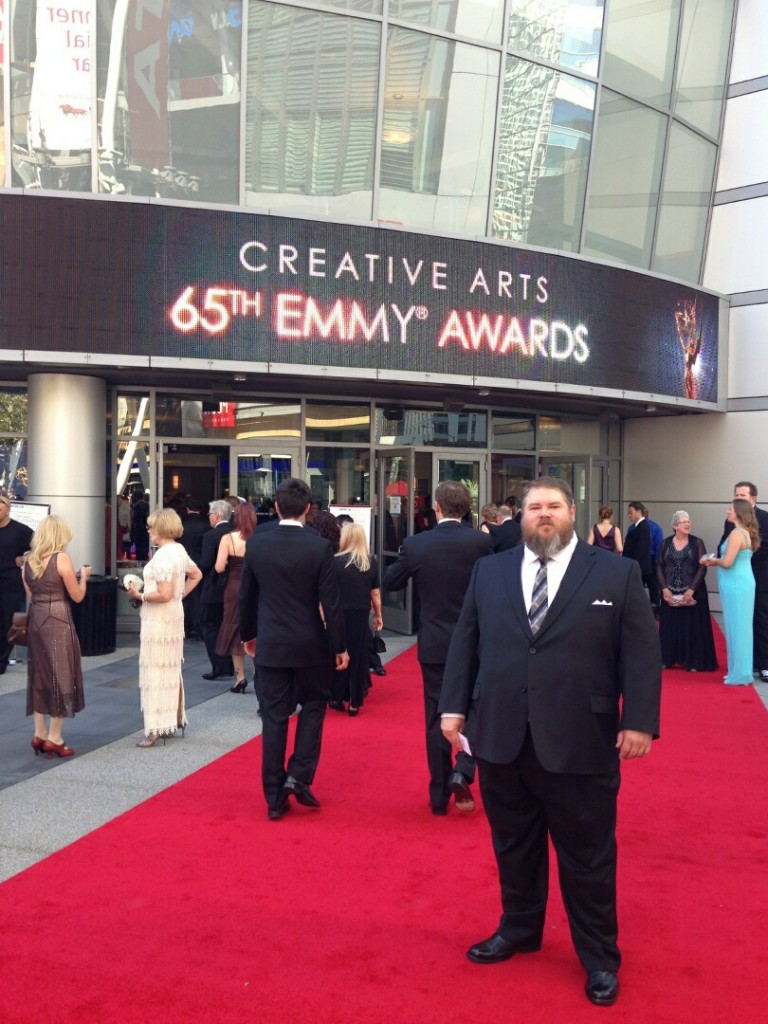
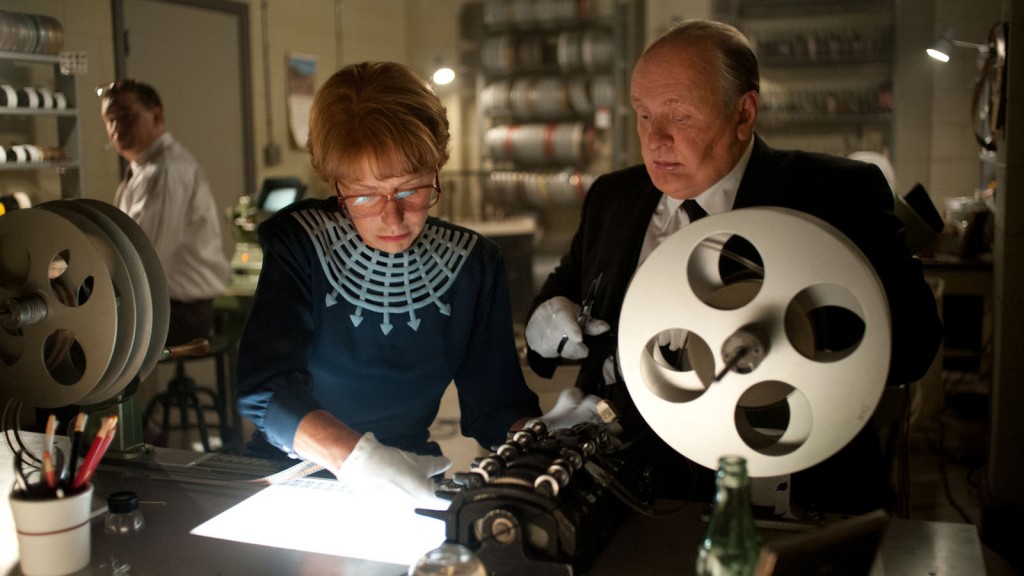
Although abject terror isn’t always his goal, this is the standard to which Derek Krout, prosthetics designer for KNB EXF group, holds himself. The 38-year-old Tulsa native has made a name for himself as one of Hollywood’s top special effects guys. He’s nominated for an Emmy for his outstanding work on AMC’s smash-hit zombie drama The Walking Dead. Emmy nominations are heavyweight Hollywood stuff, but Krout approaches it with the natural, confident humility of an Oklahoman.

“Nomination for an Emmy is a huge honor. I’m up there representing Oklahoma… KNB has won Emmys the last three years in a row. I contributed to that. When things like this happen, I always think of where I started from. That’s Oklahoma.” (Krout didn’t take home an Emmy from the Sept. 15 presentation of the Creative Arts Emmy Awards, but, as he says, “there is always next year.”)

Krout is a craftsman, an artist of sorts. He heads up the prosthetics department at KNB EFX, one of the most prominent special effects shops in Hollywood. KNB isn’t a CGI house. It’s not what they do. KNB produces physical, lifelike body suits that convey incredible realism for, say, the aliens in Predators. And then there are smaller but important challenges, such as making wounded soldiers in The Pacific look as genuine as if they’d fought real battles.

Krout and his colleagues tell the stories within the stories. Good masks or makeup shorten the time needed to develop a character. They quickly, efficiently and wordlessly tell a good portion of a character’s story. They give depth to plots. If they’re convincing zombies, no narration is needed to explain them. The audience sees and believes and immediately sympathizes with the undead threat to their favorite characters.

“We’re very critical about what we see on screen. Sometimes we see things that other people don’t. We’ll look at something and think, ‘That doesn’t look good,’ or ‘Wow, did you see that bad edge?’ If it looks bad, it can kill the story. It can damage a film. The special effects have to look great. There’s no two ways about it.”

If Krout’s an artist, then his canvases are foam, gelatin, alginate, silicone, gypsum and anything else that yields the results he strives for. He employs them to sculpt, mold and cast the masks and other “appliances” that bring the real to the outlandish. Sometimes it all comes down to hair and fur. The upper halves of the quite hairy minotaurs in the Narnia series were the work of Krout’s department.

Krout’s latest gig will thrill comic book fans. He led the effort to transform Jamie Foxx into Elektro, the sociopathic villain in the upcoming Amazing Spider-Man 2. It was six months of work for Krout’s department, but he insists that it was a lot of fun. He also insists that Foxx will look great. And why wouldn’t he? Krout’s proven himself on countless films and television shows: The Walking Dead, Predators, The Pacific, Sin City, The Grey and the Narnia films.

Krout’s evolution into a special effects genius had a modest, even mundane, genesis. He simply asked himself the same question again and again. How, he wondered, do special effects artists make those creatures and monsters so real?

“Even as a kid I was inspired. Friday the 13th. Nightmare on Elm Street. Those classic 1980s

horror movies terrified me, but I loved to watch them. I snuck down to the basement and watched them every chance I got. I watched and wondered, ‘How did they get Jason to look so real? Why did Freddie Kruger look so authentic?’ That was it for me. That’s where it all started.”

After college, Krout kicked around Tulsa, doing set and wardrobe work for various small films and television shows. Eventually, he landed at Stage One Scenic, a Tulsa company that contracted out for everything from set construction to special effects. That was his in. It was an opportunity to get practical with his passion. He used the occasional special effects job as a springboard to get into a special effects makeup school. Then it was California or bust. He was 27.

Krout leveraged another of his Oklahoman qualities: determination. It was his mission, he says, to make things work in California. He ate a lot of peanut butter and jelly sandwiches when he arrived, but it paid off. He didn’t want to be the guy that calls home to ask his parents to subsidize his dream. He did it on his own.

“Oklahoma taught me that if I worked hard enough at something, I could achieve it. Every time I sat there thinking, ‘I don’t think I can do this. I don’t think I’m going to make it out here,’ I’d think about home. I know so many friends that would never give up. Then I sat there thinking, ‘I can do this.’ That’s just one reason I love Oklahoma. It’s still my home.”

Krout’s sitting on the edge of a new phase in his career. Ever since Jurassic Park debuted with box office shattering records 20 years ago, CGI has been all the rage in the special

effects industry. Some experts are already pronouncing physical special effects, the makeup and prosthetics, dead. Krout disagrees. He foresees an explosion of physical effects, even as CGI techniques become more sophisticated and capable.

“It’s funny. Sometimes CGI helps us. There are things that physical effects can’t accomplish. The same is true of CGI. There are things that, to make a special effect work, have to be done physically. They scratch our backs and we scratch their backs. They help us with certain things and we help them with certain things. We’ll always be doing physical special effects, from creature suits to the simplest, tiniest subtle makeup. The combination of both creates an amazing film if it’s done right. Some really cool stuff comes out of that partnership.”

Krout credits a lot of people for his success. Mom, dad, brothers, his girlfriend, mentors and countless friends. H loves his job. He’s one of the lucky ones. He follows his heart to work every day. If he keeps up the momentum he’s built over the last decade, he won’t have to think about the first Emmy. He’ll be thinking about the tenth — and the ones that follow it.
LibertyFest

If you live in the Oklahoma City metropolitan area, chances are pretty good that you’ve spent at least one Independence Day in Edmond. If you haven’t, both CNN and USA Today recommend that you spend this Fourth of July at LibertyFest 2011. Besides, can more than 125,000 visitors annually be wrong? Edmond’s big independence splash begins with events on June 25 and concludes with fire works over Edmond’s University of Central Oklahoma campus. What else is happening? You’ll find a car show, rodeo, concert in the park, parade, scholarship pageant and KiteFest, to name just a few. With activities for all ages – from chalk drawing for children to A Taste of Edmond for grown-ups – LibertyFest celebrates the Declaration of Independence every year as if it were for the first time. Get ready for the fireworks over Oklahoma. For a complete schedule and details, go to www.libertyfest.org.

Art: Momentum Tulsa

Art waits for no one. If you close your eyes at this year’s showing at Momentum Tulsa: Art Doesn’t Stand Still, you just may miss something incredible. The truth is, you can’t easily predict what will make it into the collection. When the annual exhibit of work by Oklahoma artists ages 30 and under is installed Oct. 8 at Living Arts of Tulsa, audiences will once again line up to view some of the freshest, most provocative works to open a show all year. Momentum Tulsa features painting, photography, sculpture, film, performance and artwork refusing to be pigeonholed by definition. The Oklahoma Visual Arts Coalition chooses the works to be displayed through Oct. 27, but most of the work will not be selected until the few weeks leading up the big event. Oklahoma City gets its own Momentum event in early spring, so this show is special to Tulsa. You might think so, too. www.ovac-ok.org

Rhapsody In Blue

Trick-or-treat weekend

The weekend

Halloween falls in the middle of the week this year. Rather than getting ready and festive on a school night, families can bring their little ones to the many attractions slated for the weekend before one the most fun holidays of the year.

Edmond’s Arcadia Lake gets started early on its Storybook Forest, which opens 5:30-8:30 p.m. Wednesday, Oct. 23, through Oct. 30. Characters and scenes from classic and favorite children’s stories come to life. There will also be hayrides, games, campfires and treats (www.edmondok.com). Out at Oklahoma City’s Boathouse District, take the family to Haunt the River, Saturday, Oct. 26-Sunday, Oct. 27. Riversport Adventures turns creepy just for the occasion (www.oklahomariverevents.org) with pumpkin’ chunkin’ from the Zombie Zip, the Boo Zone, Candy Corn Climb and more with adventure passes ($35 for adults and $25 for youth).

The zoo is where it’s at for Halloween tricks and fun. Oklahoma City Zoo brings back Haunt the Zoo for Halloween, Saturday, Oct. 26-Oct. 31 (www.okczoo.com) with plenty of goodies, themed booths and more for the kiddies. HallowZOOeen is also back at Tulsa Zoo, Sunday, Oct. 27-Oct. 31, with carnival-style games, grab treats and a cool place to get all dressed up in costumes (www.tulsazoo.org).

Want more in Tulsa? Try Brookside’s annual BooHaHa festival (www.brooksidetheplacetobe.com) along South Peoria Avenue between 33rd and 41st streets. Trick-or-treat among the merchants beginning at 11 a.m. and stay for the costume contests (kids and pets) as well as the parade on Sunday, Oct. 27. Why have only one Halloween fair in town when you can have two simultaneously? Downtown Tulsa has Ghouls on the Green at the Guthrie Green (www.guthriegreen.com) from 11 a.m.-3 p.m. Sunday, Oct. 27, with a special Halloween market, costume contests, art and crafts for families and trick-or-treating. Ever wanted to take a hayride through town? Here’s your chance!

Oklahoma City celebrates the late afternoon with the Magic Lantern Celebration, 3-7:30 p.m. Sunday, Oct. 27, in the Paseo Arts District (www.thepaseo.com). Children can create their costumes, and when the sun goes down, everyone transforms. Live music and a parade with street performers and dancers are the highlight for this favorite harvest-themed event. If Halloween isn’t quite your mode, Tulsa has the Fall Carnival at Hunter Park (www.lobc.net) from 3-5 p.m. Sunday, Oct. 27, while the Shepherd’s Pumpkin Festival continues through Wednesday, Oct. 30, at Claremore’s Shepherd’s Cross with pumpkin carving, a hay maze, scarecrow making, petting zoo, hay rides and farm exhibits (www.shepherdscross.com).

The Billionaire Next Door

When it comes to talking with billionaires, only one from Oklahoma can make you feel like you’ve just shot the breeze with the friendly gent who held the door open for you while you were both entering a restaurant.

That down-to-earth Oklahoma demeanor and self-made billionaire status are not the only things that Harold Hamm shares with his hero, the late Sam Walton; he also shares with him the kind of persistence and focus on a bigger picture that turns dreams into realities.

His passion for his profession and ability to not only recognize opportunity, but to take risks and grab hold, has secured his business, Continental Resources Inc., as one of the largest privately owned oil and gas exploration companies in the country.

As founder, chairman and CEO, Hamm has weathered the ebb and flow of the energy industry to turn Continental into a major player known for exploiting reserves that others have given up on or found too expensive to tap.

Currently ranked as Forbes’ 39th wealthiest American – and 136th wealthiest person in the world – Hamm has amassed personal wealth in excess of $5 billion.

He says his forte is that of being a “very good” oil and gas conjurer, but that’s just Midwestern modesty.

Having built a huge reserve of crude oil from scratch, his humble beginnings taught him the value of a good day’s work for a good day’s pay – a simple philosophy that has certainly worked well for him.

Starting From Scratch

The youngest of 13 children, Hamm was raised by his hard-working parents in a one bedroom house, without electricity or running water, in rural Lexington, Okla.

As sharecroppers, his family never owned their land and survived by working for landowners pulling cotton, hauling hay and other laborious jobs.

At home, everyone in the close-knit family had a job to do – from the youngest to the oldest – and they all worked for the family unit.

Hamm remembers gathering eggs and feeding the family’s animals as a little boy, and recalls the hearty work ethic such tasks instilled in him at an early age.
 

“One of the first toys I ever played with was a little truck with a Pillsbury baking soda can wired onto it. That was my tank truck.”

“We took a larger role within the family and contributed in every way that we could to help improve our life. A strong work ethic was engrained in us right off the bat, and we all knew we had our parts and roles to fulfill,” he says.

“When I was growing up, we didn’t have a TV, so dreams would go a long way. I remember one of the first toys I ever played with was a little truck with a Pillsbury baking soda can wired onto it. That was my tank truck.”

After high school, although he aspired to pursue a degree, Hamm couldn’t afford college, so he took a job working for a contractor in the oil field service in Enid.

It was there where his entrepreneurial ambitions were born, and seeds perhaps sprouted from childhood memories of that Pillsbury tank truck began to take on a whole new life.

“I had never been around people in the oil business until I came to Enid, and after observing them, I realized they were a little bit different from everyone else – they were a generous, charismatic and very exciting crowd… an interesting group that I knew that I wanted to be a part of,” he says.

“I had done very well working for a contractor, helping to build his business up, and I felt that I could be successful.”

Encouraged to venture out and start a business of his own, Hamm began to pick the brains of professionals, learning everything he could while developing a passion for oil and gas.

At the age of 20, Hamm took over payments on a water pump truck and established his first company – Harold Hamm Tank Truck Services – hauling mud and hauling water to rigs, which would later become what Continental is today.

“Over the years, I started doing research in oil and gas, and the more I read about it the more it appealed to me. So I changed my dreams to something perhaps bigger, and wanted to eventually pursue that. When I got the opportunity, my attention became focused on becoming an oil and gas explorationist.”

Black Gold And Beyond

Devoting his spare time to researching maps, Hamm eventually came upon potential in a small oil play running across the counties of Alfalfa, Woods and Major in northwest Oklahoma.

After buying up leases in the area, he took a chance and drilled a “wildcat” exploratory well in one that had been started years before but hadn’t yet been hit.

The excitement and uncertainty of taking a risk like that very first play, where almost everything he had was on the line, Hamm says is one of the most enjoyable aspects of his work.

“I remember with that first well, (the landowner) Mr. Bradly would come out and sit with me sometimes on the rig and say, ‘Harold, why do you think there’s oil here? There’s not any oil here,’ which really goes against the grain because usually every farmer thinks he’s sitting on the mother lode. But Mr. Bradly didn’t,” Hamm recalls.

“Sure enough, though, there was oil and the well came in pretty big – starting at 20 barrels an hour and 480 a day. As you can imagine, he was extremely pleased – as was I.”

Thus began a trend of re-drilling for oil, using modern day innovation and information to discover what may have been overlooked before technology was available to enable a hit.

“That first well got us off and started, but what it really did for me was allow me to go to college and pursue an education in the field that I needed, which was petroleum geology, so I could better develop my skills to find oil and gas.”

Contrary to the conventional, it’s safe to say that Hamm did it all backwards: He made his fortune in the oil patch, then invested his money in a college education.

He credits the degree he earned at Phillips University in Enid to helping him grow as a businessman, calling it one of the most important investments he has made.

“You know a lot of things that go on in your life that you just know you should be doing? Well, college was one of those things. Its effects were huge and prepared me for a good career. It let me realize the extent of the dreams I had and has been absolutely essential to everything I’ve done.”

Booms, Busts And Innovation

With a pricing environment as lucrative as the energy industry’s, Hamm has inevitably faced booms and busts that have threatened as much famine as they have offered feasts, particularly in the ‘80s when the bust came and prices fell to less than half of what they had been at their peak.

To stay on top, Hamm says that keeping debt low has been crucial, and always staying in a good business financial position has gone a long way in allowing Continental to rebound when opportunity came along after tough times.

“We’ve survived some prices when oil went to $8 a barrel, and we had to shut down everything. Those were some pretty tough times. This business is not easy, particularly when you start looking for bigger projects and meaningful plays. The more risk that you take with some of these bigger plays, it can get really challenging,” he explains.

As is most often the case when pursuing the aspirations of a bigger picture’s vision, Hamm and Continental’s success has involved continual evolution and maneuvering of bold moves.

During the late 1980s, the company began to shift their reserve and production profiles toward crude oil, believing its valuation potential exceeded that of natural gas.
 

Harold Hamm and his wife Sue Ann have committed at least $10 million in support of the Oklahoma Diabetes Center at the University of Oklahoma Health Sciences Center.

“I work with a very talented team of experts, and we’ve got a great synergy amongst us, particularly with innovation in finding oil and gas. As one of the foremost developers of crude oil in the U.S., we’re certainly doing that in huge measures today with the source rocks themselves,” says Hamm.

In 1993, Continental expanded into the Rocky Mountain region, first into the Red River Units of Montana and the Dakotas, and then into the Bakken Shale play in Montana and North Dakota.

The company has since become the third largest crude oil producer in the Rocky Mountain region, and of particular significance, the largest leaseholder and driller in the Bakken Shale, America’s “oil bonanza.”

Hamm says one of his biggest milestones has been ongoing since Continental first hit upon Cedar Hills Fields in the Bakken formation in 1995, which was at the time the biggest onshore discovery the U.S. had seen in more than 20 years.

“One of our biggest ‘Aha!’ moments is with the Bakken Formation to produce the shale rocks (source rocks) themselves. That’s a tremendous deal, and when fully developed, may have the potential to produce as much as 24 billion barrels,” Hamm says.

“We’ve certainly learned that the unconventional play that has come about with the source rocks themselves is tremendous. That has been a real eye opener, and I’m proud of the role that Continental has been able to play in that technology.

“The revolution that’s been brought about with the new technology available is huge, and it’s been done basically from operators with vision in this country that had faith and courage to go out and get it done – and these are the independents, not the major oil companies.”

He says that the major oil companies who basically left America to go international over the years are now buying back – attempting to buy out independents and buy into the plays that independents have already secured.

“The large players are finding out that they’ve missed out on big deals back home. Some of them were very, very doubtful as to what could be done, and when they finally woke up they’d missed the boat.

“For the first time since 1997, with the new onshore U.S. production, we lowered the imports in this country to less than 50 percent, and stopped the decline in production in the U.S. in 2005. That goes against everything everybody thinks these days – that production is declining and oil and gas is going to run out soon. Those things are just not correct,” Hamm adds.

Investing in the Future

If there’s one underlying theme to Hamm’s story, one might say it’s the importance of making good investments – be it in business, education, the future of where your passions lie or causes on which you take a stance.

In 2007, Hamm and his wife Sue Ann committed $7 million in support of the Oklahoma Diabetes Center at the University of Oklahoma Health Sciences Center through their charitable foundation.

They later gave an additional $3 million to help acquire the building that is now the Harold Hamm Oklahoma Diabetes Center.

Hamm, himself a type 2 diabetic, says he anticipates the center becoming one of the largest regional centers in the country.

“This is a disease that can get serious real quick after diagnosis if you can’t get the right help. The center has helped a lot of people get that help,” he says.

“Research has done phenomenal things, lots for the future. Over $50 million in grants for research got funding going in big way. I’ve seen so much progress already – the center has touched a lot of lives.”

As for his own life, the energy tycoon – who enjoys quail and pheasant hunting, golf and learning about other cultures through travel – says he tried retirement once as a younger man, but just couldn’t seem to find enough to keep his busy mind occupied.

“I just don’t see myself retiring. I like what I do. I work with a whole lot of good people and I have fun in the field. I think it’s important to be a spokesperson for the business you are in, and I want to continue to help tell the story that needs to be told.”

Your Pet's Doctor – now at your home!

Is your schedule too hectic to take your pet to the veterinary hospital? Is your pet afraid of going to the vet? Dr. Kristie Plunkett and The Mobile Veterinary Hospital of Tulsa are here to help!

By having your animal examined and treated by Dr. Kristie Plunkett in the comfort of your own home, there is no need to gather kids, load your pet in the car, or fight traffic. With flexible appointments, you get to choose a time that’s convenient for you.

Dr. Kristie Plunkett will provide your pet with her complete, undivided care and attention for the duration of the visit. Because we see our clients one at a time, you will have ample opportunity to discuss any questions or concerns you have about your pet’s health.

A visit to the vet can be an incredibly stressful, even traumatic, experience for many pets. A veterinary house call provides a comfortable, relaxed environment for your pet, which can result in a more accurate diagnosis and/or more effective treatment.

Dr Plunkett offers preventive/wellness services, surgery, digital x-rays, bloodwork, dental cleanings and much more. She sees almost all species including dogs, cats, guinea pigs, gerbils, mice, rats, hamsters, rabbits, ferrets, hedge hogs, chinchillas, birds, reptiles, snakes and some wildlife.

Make veterinary visits less stressful and schedule your next appointment with The Mobile Veterinary Hospital of Tulsa.

To receive special pet care tips and information from The Mobile Veterinary Hospital of Tulsa, text MOBILEVET to 90947.

To learn more about The Mobile Veterinary Hospital of Tulsa, visit their page here.,

Check This

Every marriage counselor, family attorney and money manager in the land cites financial problems as the number one cause of divorce. Wildly popular bestselling author and radio host, David Ramsay, visits the topic frequently on his weekly show. A New York Times study recently revealed that money fights among couples are the most reliable predictors of divorce. Everybody agrees: Failure to talk about money and work out the finances before tying the knot makes for fights.

Hidden debt is the number one offender. Imagine finding out on the honeymoon that your new spouse’s debt will cost dozens of times more than your celebratory getaway.

“Every couple should fully disclose their debts and assets prior to marriage,” says Warren Henson III, an Oklahoma City family attorney who’s seen more than his fair share of marital implosions over money. “After marriage, those debts need to remain separate, and funds shouldn’t be comingled in joint bank accounts. Doing so means both spouses’ funds are subject to collection by the creditors of the spouse in debt.”

Newlyweds should dedicate effort to working out a mutually acceptable budget that recognizes their shared values and goals. Living beyond the budget will eventually catch up to a couple.

For some, a best course of action might be to keep all finances separate until the marriage shows endurance. Unless otherwise specified, once married, what’s his is hers and what’s hers is his. If your spouse decides to take back the ring, the court may decide to wrap that ring in your money.

The first step up the best approach is for newlyweds to seek the advice of a mutually acceptable counselor – preferably one with money management experience. “The worst scenario I’ve seen involved a wealthy, completely liquid client that also had extensive real estate holdings. A few months into the marriage, the husband’s gambling habit came to light. Their pastor advised them to combine the assets in order to build an equal footing in their marriage. The gambling habit didn’t go away and, as expected, eroded the underpinnings of the marriage. Combining those assets cost the wife hundreds of thousands of dollars in the subsequent divorce action when the estate was divided equally by the court,” says Henson.

Having the talk isn’t easy. Finances are stressful enough without dragging a lifelong commitment into the picture. But having that talk will go a long way toward producing a commitment that lasts a lifetime.

Art: Altared Spaces 

Art is sacred at Living Arts of Tulsa’s Altared Spaces, where late loved ones are honored through timeless tradition in thoroughly contemporary ways. As part of the annual Day of the Dead Festival, the contemporary art gallery located in the Brady Arts District invites artists to decorate altars in memoriam to someone. Just as those who practice the ages-old Mexican custom of bringing marigolds, favorite foods, candies and personal mementos of the remembered person to celebrate life, the artists erect temporary monuments testament to the unique personality of the family or friend honored. And, just as decorating tombs and headstones is held during the Dia de los Muertos holiday on Nov. 1, Altared Spaces opens the same day as part of Living Arts Day of the Dead Arts Festival. Throw in some fire dancing, music, food, art/crafts vendors and a street party, and you have a night uniquely Tulsa and celebratory of both “living” and “arts.” www.livingarts.org