




















With the recent passing of U.S. Senator Lindsey Graham, reportedly from an aortic dissection, there’s been a spotlight on this rare and life-threatening medical emergency. The National Institutes of Health estimates that approximately 13,000 Americans die each year from aortic dissections. While often fatal, recognizing symptoms and understanding your risk factors can help you know when to seek immediate medical care.
What is an Aortic Dissection?
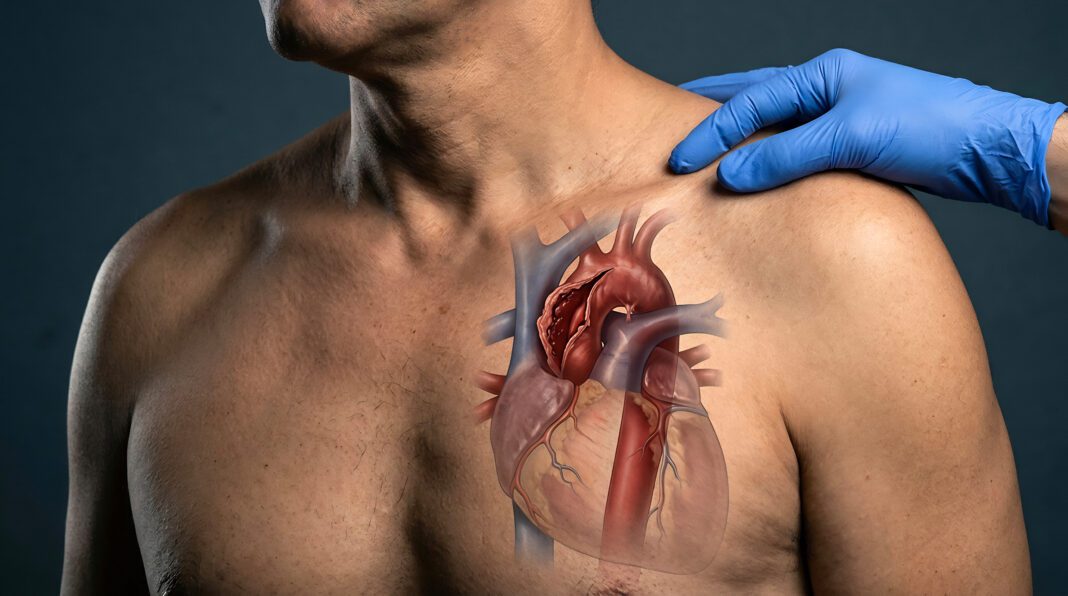
Andres Guerra, M.D., a vascular surgeon with Saint Francis Heart and Vascular Institute in Tulsa, explains that an aortic dissection is a tear of the inner lining of the aorta wall.
“The aorta is the largest and main blood vessel of the body that supplies blood to the brain, organs and extremities,” says Guerra. “This tear allows blood to flow between the layers of the vessel wall and forces them apart, creating a false channel, which can weaken the wall and lead to aneurysms or rupture.”
Dissections are classified by where they occur.
“A Type A dissection involves a tear in the aorta that is closer to the heart, specifically in the ascending aorta,” he says. “A Type B dissection involves a tear in the descending aorta, or after where the left subclavian artery branches off.”
Who’s at Risk?
Guerra’s colleague, Kelleigh D. Fletcher, PA-C, says men are twice as likely to have a dissection, and it tends to occur earlier in life for men than for women.
“It’s more common in men over the age of 50 and women over the age of 70,” she says.
Some risk factors are outside your control, including age and genetics. Connective tissue disorders like Marfan syndrome and Ehlers-Danlos syndrome can also increase your risk. In addition, if a first-degree relative has had a dissection or aneurysm, your risk increases by roughly six-fold.
Other risk factors are things you can control: smoking is the number one risk factor, along with stimulant use (like cocaine or methamphetamine) and high blood pressure.
“High blood pressure leads to shear stress of the vessel wall,” says Fletcher. “Even having blood pressure that’s moderately controlled – like systolic pressures in the 150s to 160s – over the years leads to stress and weakening of the artery walls.”

Recognizing the Symptoms
Symptoms of an aortic dissection may include, but are not limited to, sudden-onset severe chest pain or pain between the shoulder blades – sometimes described as a tearing or stabbing sensation that radiates down the back, arms or legs. Some people may also experience sweating, dizziness or lightheadedness, or have abdominal pain.
“Both types of dissection pose significant risks, including potentially life-threatening complications if not promptly treated,” says Guerra. “A dissection can lead to strokes, heart attacks, permanent organ damage, paralysis, kidney failure, amputation of legs or arms and death.
He says the mortality rate for a type A dissection climbs one to two percent per hour within the first 48 hrs.
“Even after getting to the hospital and having surgical intervention, there is still an approximately 20% risk of death – versus more than 50% if there’s no surgical treatment.”
For a Type B dissection, the mortality rate is about 13-16%, whether treated with surgery or medical management alone.
“Depending on the location of the dissection and the hospital’s capabilities, multiple surgical options are available,” says Guerra. “Here at Saint Francis Heart and Vascular Institute, we’re equipped to treat straightforward aortic dissections as well as very complex dissections.”
As awareness of aortic dissection grows, so does the understanding that it can strike with little warning. Experts say the best defense is prevention through a healthy lifestyle – paired with recognizing symptoms early and seeking emergency care immediately.